Linda's Literary Home

Category: Cowboy Poetry

  • Stephen Vincent Benét’s “The Ballad of William Sycamore”

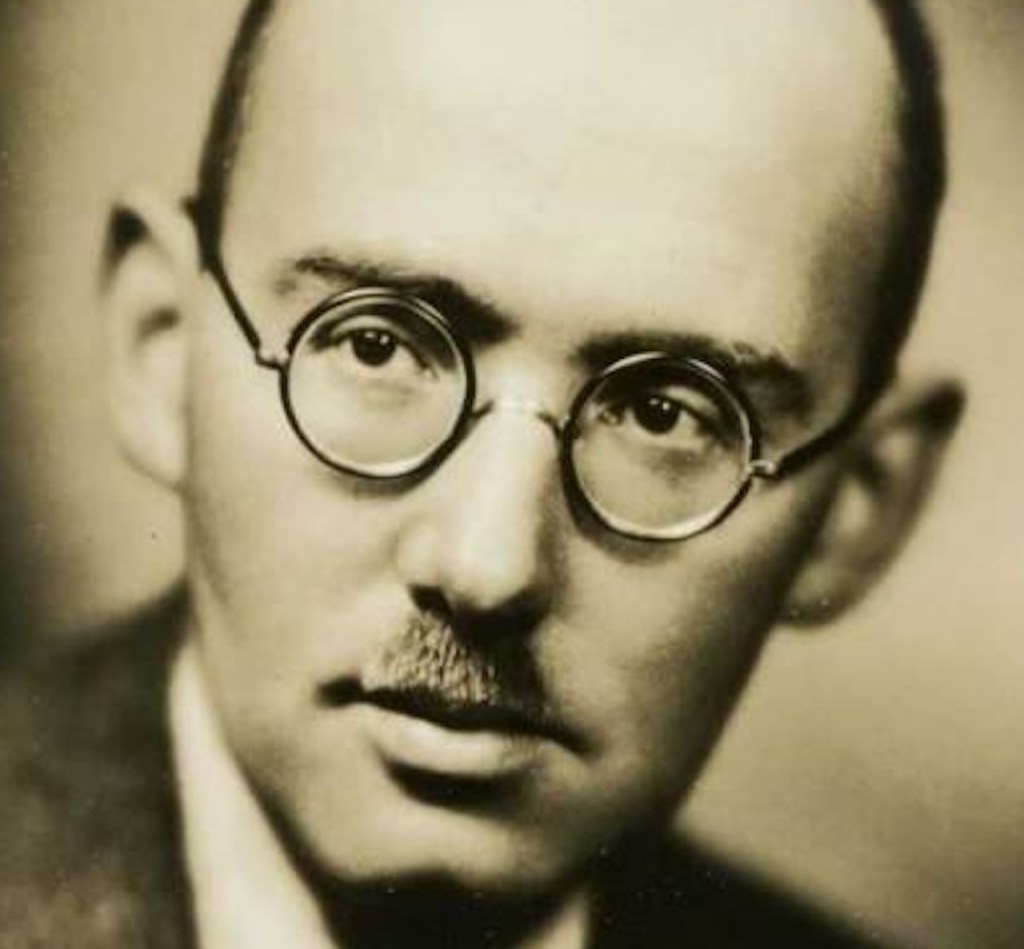
    Image:  Stephen Vincent Benét

    Stephen Vincent Benét’s “The Ballad of William Sycamore”

    Not strictly a cowboy poem, Benét’s ballad, however, offers the mind-set of an individual close to the land, preferring the rural life to the urban.

    Introduction and Text of “The Ballad of William Sycamore”

    Stephen Vincent Benét’s “The Ballad of William Sycamore” features 19 rimed, stanzas of traditional ballad form. The subject is the rustic life of William Sycamore, narrated by Sycamore himself from just before his birth to after his death.

    The Ballad of William Sycamore

    My father, he was a mountaineer,
    His fist was a knotty hammer;
    He was quick on his feet as a running deer,
    And he spoke with a Yankee stammer.

    My mother, she was merry and brave,
    And so she came to her labor,
    With a tall green fir for her doctor grave
    And a stream for her comforting neighbor.

    And some are wrapped in the linen fine,
    And some like a godling’s scion;
    But I was cradled on twigs of pine
    In the skin of a mountain lion.

    And some remember a white, starched lap
    And a ewer with silver handles;
    But I remember a coonskin cap
    And the smell of bayberry candles.

    The cabin logs, with the bark still rough,
    And my mother who laughed at trifles,
    And the tall, lank visitors, brown as snuff,
    With their long, straight squirrel-rifles.

    I can hear them dance, like a foggy song,
    Through the deepest one of my slumbers,
    The fiddle squeaking the boots along
    And my father calling the numbers.

    The quick feet shaking the puncheon-floor,
    And the fiddle squealing and squealing,
    Till the dried herbs rattled above the door
    And the dust went up to the ceiling.

    There are children lucky from dawn till dusk,
    But never a child so lucky!
    For I cut my teeth on “Money Musk”
    In the Bloody Ground of Kentucky!

    When I grew as tall as the Indian corn,
    My father had little to lend me,
    But he gave me his great, old powder-horn
    And his woodsman’s skill to befriend me.

    With a leather shirt to cover my back,
    And a redskin nose to unravel
    Each forest sign, I carried my pack
    As far as a scout could travel.

    Till I lost my boyhood and found my wife,
    A girl like a Salem clipper!
    A woman straight as a hunting-knife
    With eyes as bright as the Dipper!

    We cleared our camp where the buffalo feed,
    Unheard-of streams were our flagons;
    And I sowed my sons like the apple-seed
    On the trail of the Western wagons.

    They were right, tight boys, never sulky or slow,
    A fruitful, a goodly muster.
    The eldest died at the Alamo.
    The youngest fell with Custer.

    The letter that told it burned my hand.
    Yet we smiled and said, “So be it!”
    But I could not live when they fenced the land,
    For it broke my heart to see it.

    I saddled a red, unbroken colt
    And rode him into the day there;
    And he threw me down like a thunderbolt
    And rolled on me as I lay there.

    The hunter’s whistle hummed in my ear
    As the city-men tried to move me,
    And I died in my boots like a pioneer
    With the whole wide sky above me.

    Now I lie in the heart of the fat, black soil,
    Like the seed of the prairie-thistle;
    It has washed my bones with honey and oil
    And picked them clean as a whistle.

    And my youth returns, like the rains of Spring,
    And my sons, like the wild-geese flying;
    And I lie and hear the meadow-lark sing
    And have much content in my dying.

    Go play with the towns you have built of blocks,
    The towns where you would have bound me!
    I sleep in my earth like a tired fox,
    And my buffalo have found me.

    Reading: 

    Commentary on “The Ballad of William Sycamore”

    Speaking from two unlikely locales, William Sycamore narrates a fascinating tale of a fanciful life.

    First Movement: Rough and Tumble Parents

    The speaker describes his parents as scrappy, rough survivors. His mountaineer father had fists that resembled hammers; he ran as fast as a deer, and had a Yankee accent.  His mother was merry and brave and also quite a tough woman, giving birth to the narrator under a tall green fir with no one to help her but “a stream for her comforting neighbor.”

    While some folks can boast of clean linen fine to swaddle them, Sycamores cradle was a pile of pine twigs and he was wrapped in the skin of a mountain lion. Instead of “a starched lap / And a ewer with silver handles,” he recalls “a coonskin cap / And the smell of bayberry candles.”

    Thus, Sycamore has set the scene of his nativity as rustic and rural, no modern conveniences to spoil him. He idealizes those attributes as he sees them making him strong and capable of surviving in a dangerous world.

    Second Movement: Fun in the Cabin

    Sycamore describes the cabin in which he grew up by focusing on the fun he saw the adults have when they played music and danced. Their visitors were tall, lank, “brown as snuff,” and they brought their long, straight squirrel rifles with them.

    He focuses on the fiddle squealing and the dancing to a foggy song. The raucous partying was so intense that it rattled the herbs hanging over the door and caused a great cloud of dust to rise to the ceiling. He considers himself a lucky child to have experienced such, as well as being able to “cut [his] teeth on ‘Money Musk’ / In the Bloody Ground of Kentucky!”

    Third Movement:  Tall as Indian Corn

    The speaker reports that he grew as tall as the Indian corn, and while his father had little to offer him in things, his father did give him a woodsman skill, which he found helpful. With his homespun gear, a leather shirt on his back, he was able to navigate the woodlands like a profession scout.

    Fourth Movement: A Sturdy Wife

    Reaching adulthood, Sycamore married a sturdy woman, whom he describes as “straight as a hunting-knife / With eyes as bright as the Dipper!” The couple built their home where the buffalo feed, where the streams had no names. They raised sons who were “right, tight boys, never sulky or slow.” 

    The oldest son died at the Alamo, and the youngest died with Custer. While the letters delivering the news of their fallen sons “burned [his] hand,” the grieving parents stoically said, “so be it!” and push ahead with their lives.  What finally broke the speaker’s heart, however, was the fencing of his land, referring the government parceling land to individual owners.

    Fifth Movement:  Gutsy, Self-Reliance

    The speaker still shows his gutsy, self-reliance in his breaking of a colt that bucked him off and rolled over him.  After he recovered, however, he continues to hunt, and while the “city-men tried to move [him],” he refused to be influenced by any city ways. He died “in [his] boots like a pioneer /  With the whole wide sky above [him].”

    Sixth Movement:  Speaking from Beyond

    Speaking from beyond the grave somewhat like a Spoon River resident, only with more verve and no regret, William Sycamore describes his astral environment as a fairly heavenly place.

    He is young again, reminding him of spring rain that returns every year, and his sons are free souls reminding him of wild geese in flight.  He hears the meadow-lark, and he avers that he is very contented in his after-life state.

    Sycamore disdained the city, as most rustics do, so he uses his final stanza to get in one last dig: “Go play with the town you have built of blocks.” He then insists that he would never be bound by a town, but instead he sleeps “in my earth like a tired fox, / And my buffalo have found me.”  In his peaceful, afterlife existence, William Sycamore differs greatly from the typical Spoon River reporter.

    image: Stephen Vincent Benét – Commemorative Stamp 

    Brief Life Sketch of Stephen Vincent Benét

    The works of Stephen Vincent Benét (1898–1943) [1] have influenced many other writers.  Cowboy poet Joel Nelson claims that “The Ballad of William Sycamore” made him fall in love with poetry.  Dee Brown’s title Bury my Heart at Wounded Knee comes directly from the final line of Benét’s poem titled “American Names” [2].

    The book-length poem, John Brown’s Body, won him his first Pulitzer Prize in 1929 and remains the poet’s most famous work. Benét first published “The Ballad of William Sycamore” in the New Republic in 1922.    Benét’s literary talent extended to other forms, including short fiction and novels.  He also excelled in writing screenplays, librettos, an even radio broadcasts.

    Born July 22, 1898, in Bethlehem, Pennsylvania [3] Benét graduated from Yale University in 1919 where instead of a typical thesis, he substituted his third collection of poems.  His father was a military man who appreciated literary studies.  His brother William and his sister Laura both became writers as well.

    Benét’s first novel The Beginning of Wisdom was published in 1921, after which he relocated to France to study at the Sorbonne.  He married the writer Rosemary Carr, and they returned to the USA in 1923, where his writing career blossomed.

    The writer won the O. Henry Story Prize and a Roosevelt Medal, in addition to a second Pulitzer Prize, which was awarded posthumously in 1944 for Western Star.  Just a week before spring of 1943, Benét succumbed to a heart attack in New York City; he was four month shy of his 45th birthday.

    Sources

    [1]  Editors.  “Stephen Vincent Benét.”  Academy of American Poets. Accessed January 13, 2026.

    [2] Darla Sue Dollman.  “Buy My Heart at Wounded Knee and Stephen Vincent Benét.” Wild West History.  October 4, 2013.

    [3] Editors.  “Stephen Vincent Benét.”  Poetry Foundation.  Accessed January 13, 2026.
  • Brad McClain’s “Cowboy Christmas”

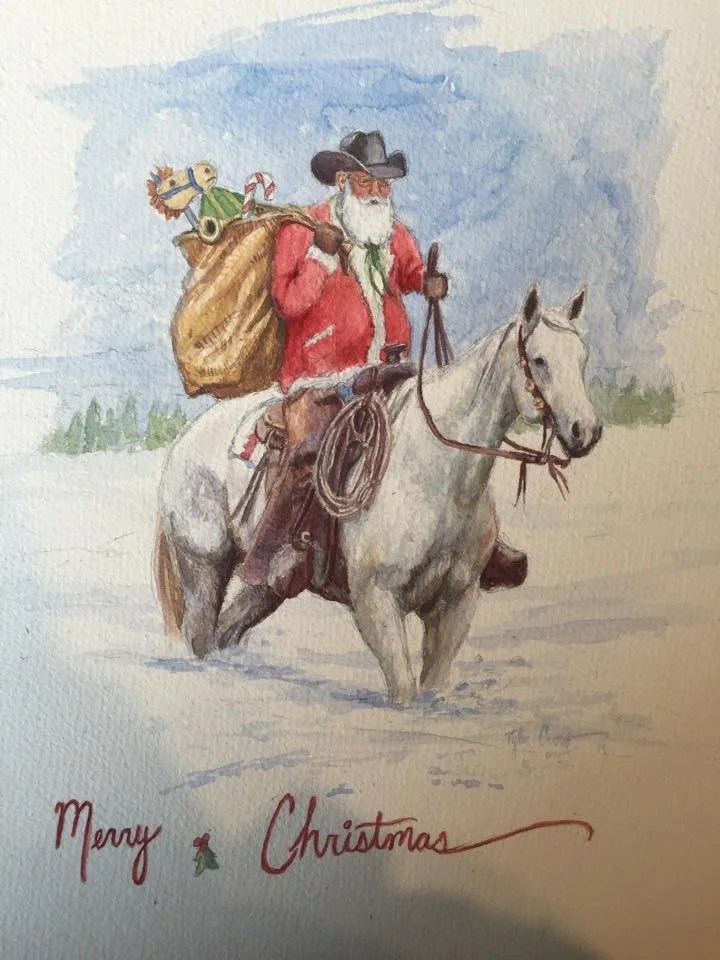
    Image: Merry Christmas  – Art by Tyler Crow, used by permission

    From an internet site dedicated to his Christian faith and affinity for cowboy culture God’s Horseback Gospel, Brad McClain’s “Cowboy Christmas” celebrates the congeniality of friends gathering to observe the Christmas season.  It offers the traditional energy and fun-loving atmosphere of most cowboy Christmas poetry.

    The two prose pieces following the poem further extend the faithful worship included in Mr. McClain’s purpose for creating his webpage—to glorify God and introduce others to a kind of spiritual awakening that they may not have known existed.

    Brad McClain’s “Cowboy Christmas”

    A countrified tradition,
    Was part of yester-year,
    When the cowboys’ main ambition,
    Was to spread some Christmas cheer.

    The ranch folk friend and families,
    Would come from far and wide,
    Trottin’ through the winter breeze,
    On Christmas Eve they’d ride.

    For food and fun and merriment,
    Twin fiddles filled the air,
    And everyone’s so glad they went,
    And goodwill everywhere.

    Kids a’chasin’ kids around,
    Oldsters smile and wave,
    All the festive sights and sounds,
    And a cowboy gettin’ brave,

    Enough to ask that gal to dance,
    And of course she says she will,
    He never thought he had a chance,
    And if a look could kill,

    Her Daddy watches carefully,
    He remembers to that age,
    Her mama takes it prayerfully,
    It helps her fear assuage.

    But nothin’ like a Christmas waltz,
    And nothin’ like young love,
    And nobody is findin’ faults,
    And lots to be proud of.

    And when the egg nog’s mostly gone,
    And the kids are ‘bout asleep,
    The hugs and handshakes linger long,
    And the night is gettin’ deep,

    And then all head for hearth and home,
    They jingle all the way,
    Snow drifts ‘cross the sandy loam,
    And soon comes Christmas Day.

    The evening wanes, kids tucked in bed,
    Gifts set beneath the tree,
    Stockings filled all green and red,
    A prayer for you and me.

    The Cowboy Christmas, all are blessed,
    Praise for the Savior’s birth,
    God gave to each His gracious rest,
    Good will and peace on earth.

    “Praise the Lord, the God of Israel, because He has visited and redeemed His people.  He has sent us a mighty Savior from the royal line of His servant David.” (Luke 1:68-69, NLT)

    Christmas is a festival of praise.  All the fun, food, music, lights and fellowship are because God has given us His greatest give- the Savior!  God has always been the One who saves, but now the ultimate salvation has entered the world and for one reason- to save that which is lost.  How sad that some of those who need it the most seem to feel it the least.  And how wonderful it is when someone discovers the love that meets them exactly where they are in order to take them where they have always should have been!  The devil lies when he claims to have the best party.  Jesus is the Lord of the dance and it’s time we put aside our fickleness and followed Him.  Christmas is a good time to get the party started!

  • Henry Lawson’s “Ballad of the Drover”

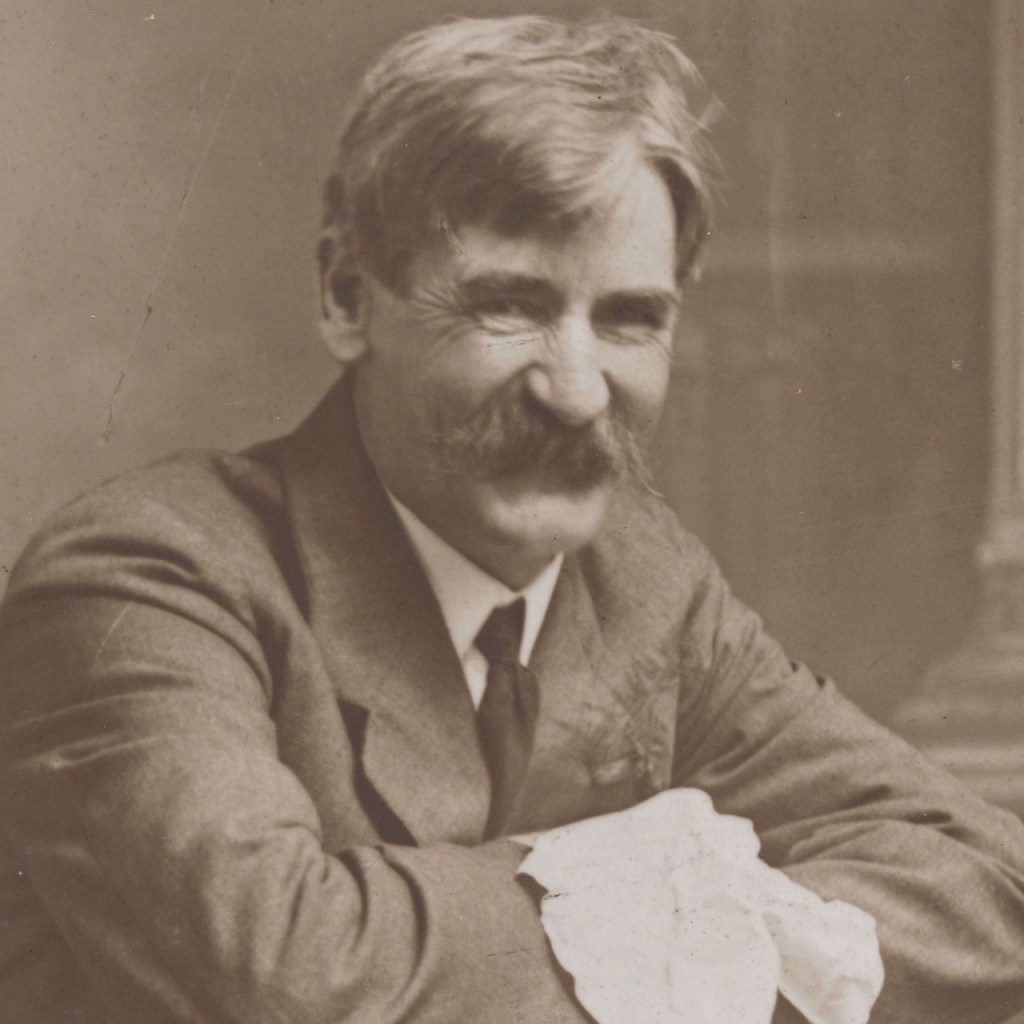
    Image:  Henry Lawson

    Henry Lawson’s “Ballad of the Drover”

    In Henry Lawson’s “Ballad of the Drover,” the sound of camp gear clanging as the horses thunder along becomes a melancholy image and refrain.

    About Henry Lawson  “…he knew intimately the real Australia, and was its greatest minstrel.” —Billy Hughes, Australian Prime Minister 1915-23

    Introduction and Text of Henry Lawson’s “Ballad of the Drover”

    Henry Lawson’s “The Ballad of the Drover” narrates a melancholy story of a young cowboy/drover who succumbs in a flood as he is journeying to his beloved home from his difficult work.

    Ballad of the Drover

    Across the stony ridges,
    Across the rolling plain,
    Young Harry Dale, the drover,
    Comes riding home again.
    And well his stock-horse bears him,
    And light of heart is he,
    And stoutly his old packhorse
    Is trotting by his knee.

    Up Queensland way with cattle
    He’s traveled regions vast,
    And many months have vanished
    Since home-folks saw him last.
    He hums a song of someone
    He hopes to marry soon;
    And hobble-chains and camp-ware
    Keep jingling to the tune.

    Beyond the hazy dado
    Against the lower skies
    And yon blue line of ranges
    The station homestead lies.
    And thitherward the drover
    Jogs through the lazy noon,
    While hobble-chains and camp-ware
    Are jingling to a tune.

    An hour has filled the heavens
    With storm-clouds inky black;
    At times the lightning trickles
    Around the drover’s track;
    But Harry pushes onward,
    His horses’ strength he tries,
    In hope to reach the river
    Before the flood shall rise.

    The thunder, pealing o’er him,
    Goes rumbling down the plain;
    And sweet on thirsty pastures
    Beats fast the splashing rain;
    Then every creek and gully
    Sends forth its tribute flood
    The river runs a banker,
    All stained with yellow mud.

    Now Harry speaks to Rover,
    The best dog on the plains,
    And to his hardy horses,
    And strokes their shaggy manes:
    “We’ve breasted bigger rivers
    When Hoods were at their height,
    Nor shall this gutter stop us
    From getting home tonight!”

    The thunder growls a warning,
    The blue, forked lightning’s gleam;
    The drover turns his horses
    To swim the fatal stream.
    But, oh! the flood runs stronger
    Than e’er it ran before;
    The saddle-horse is failing,
    And only half-way o’er!

    When flashes next the lightning
    The flood’s grey breast is blank;
    A cattle-dog and packhorse
    Are struggling up the bank.
    But in the lonely homestead
    The girl shall wait in vain
    He’ll never pass the stations
    In charge of stock again.

    The faithful dog a moment
    Lies panting on the bank,
    Then plunges through the current
    To where his master sank.
    And round and round in circles
    He fights with failing strength,
    Till, gripped by wilder waters,
    He fails and sinks at length.

    Across the flooded lowlands
    And slopes of sodden loam
    The packhorse struggles bravely
    To take dumb tidings home;
    And mud-stained, wet, and weary,
    He goes by rock and tree,
    With clanging chains and tinware
    All sounding eerily.

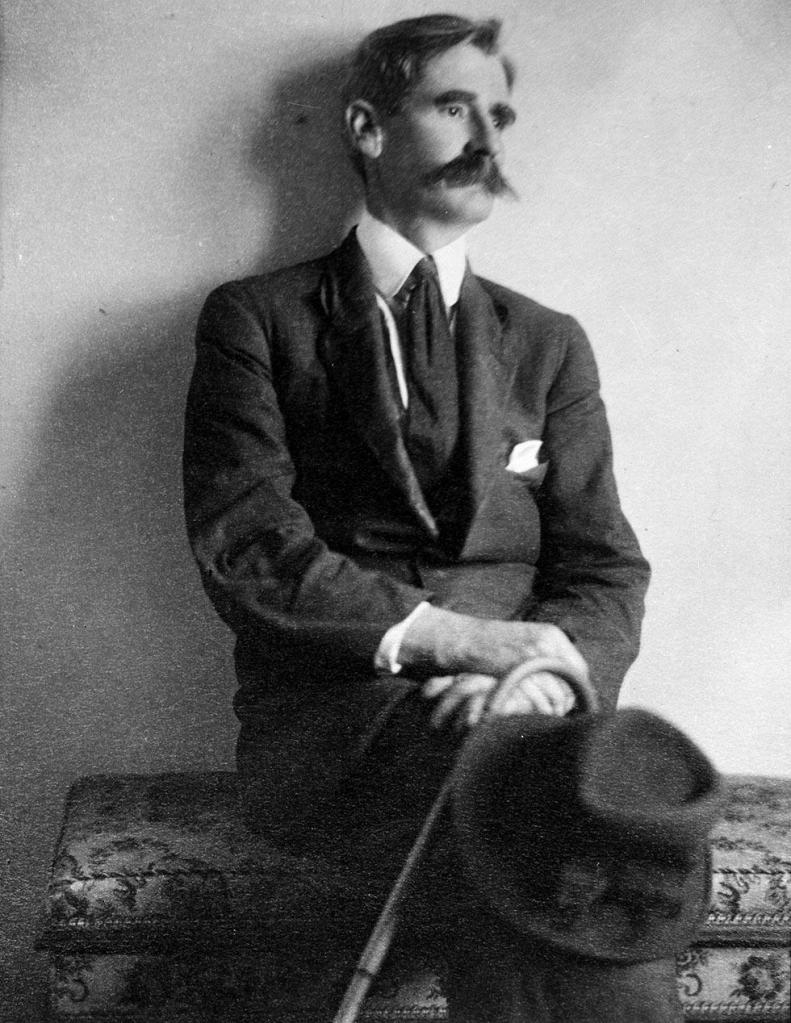
    Image: Henry Lawson 

    Commentary on Henry Lawson’s “Ballad of the Drover”

    The sound of camp gear clanging as the horses thunder along becomes a melancholy image that pulls together this ballad as it sadly concludes in heartache.

    Stanzas 1-2:  Journeying Home

    Across the stony ridges,
    Across the rolling plain,
    Young Harry Dale, the drover,
    Comes riding home again.
    And well his stock-horse bears him,
    And light of heart is he,
    And stoutly his old packhorse
    Is trotting by his knee.

    Up Queensland way with cattle
    He’s traveled regions vast,
    And many months have vanished
    Since home-folks saw him last.
    He hums a song of someone
    He hopes to marry soon;
    And hobble-chains and camp-ware
    Keep jingling to the tune.

    The narrator describes the young drover, Harry Dale, as light of heart because he is on his journey to his home. Accompanying Harry are his dog, Rover, his stock-horse, on which he rides, and his packhorse that “[i]s trotting by his knee.”

    Harry has been gone many months and has not seen his family for those many months. He has been driving cattle “[u]p Queensland way,” and has travelled regions vast. As he rides, Harry muses on his fiancee and hums a song, indicating his happiness in anticipation of seeing her again.  

    The narrator ends the second movement with what becomes something of a limited refrain: “And hobble-chains and camp-ware / Keep jingling to the tune.” And indeed this line is repeated, but only in two other movements. 

    Stanzas 3-4:  Riding at Noon

    Beyond the hazy dado
    Against the lower skies
    And yon blue line of ranges
    The station homestead lies.
    And thitherward the drover
    Jogs through the lazy noon,
    While hobble-chains and camp-ware
    Are jingling to a tune.

    An hour has filled the heavens
    With storm-clouds inky black;
    At times the lightning trickles
    Around the drover’s track;
    But Harry pushes onward,
    His horses’ strength he tries,
    In hope to reach the river
    Before the flood shall rise.

    The rider continues toward his station homestead which lies just beyond a blue line of ranges. He rides now around noon time, and the narrator describes the view off in the distant as hazy and the noon as lazy. Again the narrator repeats his near refrain, “While hobble-chains and camp-ware / Are jingling to a tune.”

    This line foreshadows the dark conclusion of his ballad. The weather turns threatening within an hour. Dark storm clouds filled the heavens. Lightning threatened the little party as they journey on. The drover believes he can “reach the river / Before the flood shall rise.”

    Stanzas 5-6: “The thunder, pealing o’er him”

    The thunder, pealing o’er him,
    Goes rumbling down the plain;
    And sweet on thirsty pastures
    Beats fast the splashing rain;
    Then every creek and gully
    Sends forth its tribute flood
    The river runs a banker,
    All stained with yellow mud.

    Now Harry speaks to Rover,
    The best dog on the plains,
    And to his hardy horses,
    And strokes their shaggy manes:
    “We’ve breasted bigger rivers
    When Hoods were at their height,
    Nor shall this gutter stop us
    From getting home tonight!”

    The storm quickly turns deadly with thunder pealing “o’er him,” as it waters the “thirsty pastures.” But the rain is coming very fast, the creeks begin to rise, and “the river runs a banker / All stained with yellow mud.”  Harry addresses his dog, Rover, and his hardy horses, telling them confidently that they have weathered bigger storms than these. Nothing will stop them from getting home tonight! 

    Stanzas 7-8:  Thunder and Lightning

    The thunder growls a warning,
    The blue, forked lightning’s gleam;
    The drover turns his horses
    To swim the fatal stream.
    But, oh! the flood runs stronger
    Than e’er it ran before;
    The saddle-horse is failing,
    And only half-way o’er!

    When flashes next the lightning
    The flood’s grey breast is blank;
    A cattle-dog and packhorse
    Are struggling up the bank.
    But in the lonely homestead
    The girl shall wait in vain
    He’ll never pass the stations
    In charge of stock again.

    With the thunder clapping all around and the lightning threatening the little party, they enter the river, but this flood is stronger than any they had thus far experienced, and they begin to sink before half way across the river.   By the time the lightning bursts again, Rover and the packhorse are struggling to get out of the river, and poor Harry has drowned, along with his stock-horse. 

    Stanzas 9-10:    A Faithful Dog

    The faithful dog a moment
    Lies panting on the bank,
    Then plunges through the current
    To where his master sank.
    And round and round in circles
    He fights with failing strength,
    Till, gripped by wilder waters,
    He fails and sinks at length.

    Across the flooded lowlands
    And slopes of sodden loam
    The packhorse struggles bravely
    To take dumb tidings home;
    And mud-stained, wet, and weary,
    He goes by rock and tree,
    With clanging chains and tinware
    All sounding eerily.

    Rover, being a faithful dog, returns to the middle of river to try to save Harry, but the strength of the water is just too much for the poor dog; he becomes the rivers third victim.  Only the packhorse makes it through the storm alive, and the narrator leaves his listeners with a melancholy image of the poor horse as he “take[s] dumb tidings home.”  

    Harry’s poor family will be greeted by “a mud-stained, wet, and weary packhorse, and clanging chains and tinware / All sounding eerily.”   The refrain of the clanging utensils concludes the tragic tale.

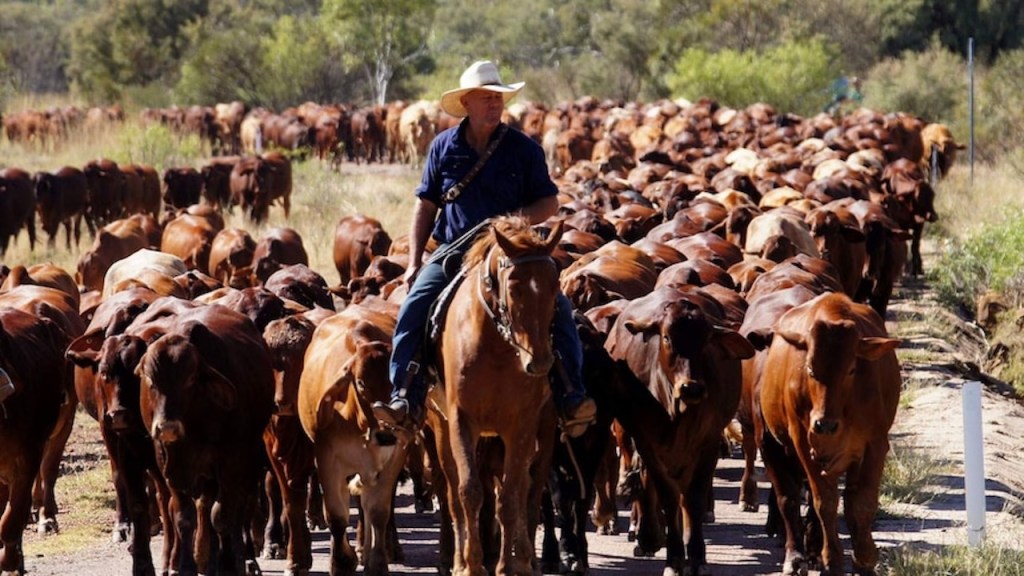
    Image: Harry Redford Cattle Drive in Queensland  Barcaldine Regional Council

  • E. A. Brininstool’s “Christmas Week in Sagebrush”

    Image:  E. A. Brininstool 

    E. A. Brininstool’s “Christmas Week in Sagebrush”

    E. A. Brininstool’s “Christmas Week in Sagebrush” dramatizes the activities offered in the little town of Sagebrush as the cow pokes, their families, and friends do some shopping and spending on entertainment.

    Introduction with Text of “Christmas Week in Sagebrush”

    Earl Alonzo Brininstool, (E.A.), was born in Warsaw, New York, October 11, 1870.  He wrote and published many articles and books about the Indian Wars, including Fighting Indian Warriors, The Life and Death of Crazy Horse,” and Fighting Red Cloud’s Warriors. Professionally, he passed most of his life in Los Angeles, California.  

    Brininstool’s poem, “Christmas Week in Sagebrush,” appeared in his 1914 book, Trail Dust of a Maverick: Verses of Cowboy Life, the Cattle Range and Desert.  He died at his home in Hollywood, California, on July 28, 1957.

    “Christmas Week in Sagebrush” plays out in five quatrains, and as many cowboy genre poems do, offers a delightful, rhythmic cadence in cowboy dialect, dramatizing the small town of Sagebrush as it fills with the cowboys and their families and friends during the week of Christmas. 

    The cowboy dialect gives the verse an Old West flavor.  Its colorful images pop, as the speaker describes the events in perfectly riming couplets, with the traditional ballad rhythm pattern.

    Christmas Week in Sagebrush

    It is Christmas week in Sagebrush, and the old town’s only store
    Never had, sence it was opened, such a run o’ trade before.
    Ev’ry rancher is a-blowin’ his “dinero” full and free,
    Buyin’ gim-cracks for the young’uns to put on the Christmas tree. 

    The cowboys ride in muffled in their wolf-skin coats and chaps,
    And the rancher’s wife is wearin’ all her extry furs and wraps;
    ‘Cuz nobody takes no chances on a norther breakin’ loose,
    Fer a blizzard on the prairy’s purty apt to raise the deuce.

    The ponies that are standin’ all a-shiver at the rack,
    Champ their bits, and paw and nicker for their riders to come back;
    Ev’ry poker joint is runnin’, and there’s faro and roulette,
    And the booze-joints are a-grabbin’ all the punchers they can get.

    The picter show is crowded full o’ riders off the range
    Who are watchin’ actor cowboys doin’ stunts that’s new and strange;
    Ev’ry film brings groans and hisses, ‘cuz the guys upon the screen
    Go through lots o’ monkey bizness that a cow ranch never seen.

    From the dance halls comes the echoes of a squeaky violin,
    Where the painted dames are ropin’ all the gay cowpunchers in;
    For it’s Christmas week in Sagebrush, and there won’t a puncher go
    Back to ride the wintry ranges when he has a cent to blow!

    Commentary on “Christmas Week in Sagebrush”

    The cowboys and their ken do some shopping and also enjoy some entertainment during a week that includes the sacred holiday of Christmas.

    First Stanza:  The Town Store

    It is Christmas week in Sagebrush, and the old town’s only store
    Never had, sence it was opened, such a run o’ trade before.
    Ev’ry rancher is a-blowin’ his “dinero” full and free,
    Buyin’ gim-cracks for the young’uns to put on the Christmas tree.

    The speaker sets the stage for the events as he first first focuses on the old town’s only store.  The establishment is doing a booming business this week, so big that its never seen so much buying and selling since it first opened.

    All the ranchers and cowboys in the vicinity have come into town to spend their “dinero.” And they will not return home until they have spent every cent. They won’t forget their children on this shopping extravaganza as they are purchasing toys and trinkets—some of which are suitable for decorating the Christmas tree.

    Second Stanza:  Riding to Town

    The cowboys ride in muffled in their wolf-skin coats and chaps,
    And the rancher’s wife is wearin’ all her extry furs and wraps;
    ‘Cuz nobody takes no chances on a norther breakin’ loose,
    Fer a blizzard on the prairy’s purty apt to raise the deuce.

    The speaker describes the cowboys as they ride into town; they are muffled in their wolf-skin coats and chaps. And their wives are all bundled up in “extry furs and wraps” because they don’t want to get caught in a storm that might come whipping up as they make their journey into town.  

    Getting caught in a norther would be a devilish experience, “fer a blizzard on the prairys purty apt to raise the deuce.” But traveling all wrapped up in their wintry best should protect them. 

    Third Stanza:   As Horses Wait 

    The ponies that are standin’ all a-shiver at the rack,
    Champ their bits, and paw and nicker for their riders to come back;
    Ev’ry poker joint is runnin’, and there’s faro and roulette,
    And the booze-joints are a-grabbin’ all the punchers they can get.

    As the cowboys, families, and friends do their gallivanting through town, the horses stand lined up “at the rack,” and they are shivering, wishing to be on the move again: “they Champ their bits, and paw and nicker for their riders to come back.” 

    And not only is the little general store busy, but the entertainment establishments are also full of activity. The poker joints are filled with revelers playing cards, as well as faro and roulette while the bars and saloons are welcoming as many customers as they handle, likely enjoy the booming business.

    Fourth Stanza:   At the Theatre 

    The picter show is crowded full o’ riders off the range
    Who are watchin’ actor cowboys doin’ stunts that’s new and strange;
    Ev’ry film brings groans and hisses, ‘cuz the guys upon the screen
    Go through lots o’ monkey bizness that a cow ranch never seen.

    The movie theatre is full of viewers who are enjoying seeing cowboy actors perform their “stunts”—some of which strike the real cowboys as odd.  The cowboy’s critical eye can detect the various deviations from reality, as they whoop it up and yell at the screen.  They think some of the maneuvers are “monkey bizness” because they are seeing stunts that the real cowboys do not experience.

    Fifth Stanza:   Something for Everybody

    From the dance halls comes the echoes of a squeaky violin,
    Where the painted dames are ropin’ all the gay cowpunchers in;
    For it’s Christmas week in Sagebrush, and there won’t a puncher go
    Back to ride the wintry ranges when he has a cent to blow!

    Adult entertainment is also in evidence as the dance halls emit the echoes of “squeaky violin” music and women with lots of make-up attract the happy cowboys, who are full of energy and eager to spend their money.

    The town of Sagebrush during Christmas week seems to offer something for everybody, and no cow puncher will get back on his horse “to ride the wintry ranges” until he has spent every red cent.

  • S. Omar Barker’s “Three Wise Men”

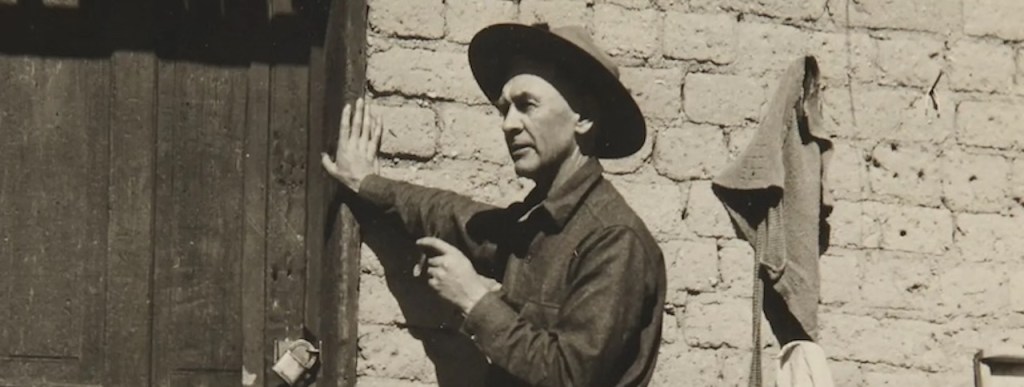
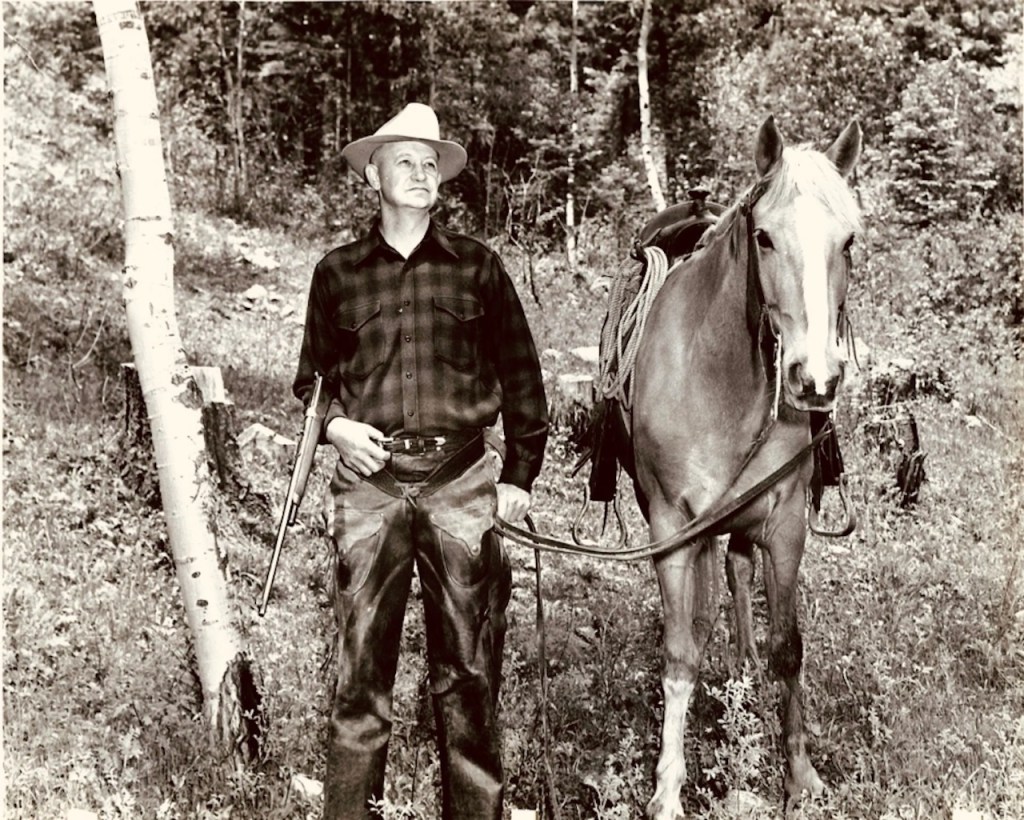
    Image: S. Omar Barker with Horse The Estate of S. Omar Barker

    S. Omar Barker’s “Three Wise Men”

    S. Omar Barker’s Christmas poem dramatizes a tale about three lonesome cowboys camped far out on the prairie.  Because they are so far from home, they hanker to be celebrating Christmas in the tradition way.

    Introduction with Text of “Three Wise Men”

    S. Omar Barker’s “Three Wise Men” narrates a story of the Magi in an American Southwest setting with cowboys performing the roles of the three wise men.  The story, of course, seeks to parallel that of the story of the first Christmas.

    Barker’s poem dramatizes a tale about three lonesome cowboys camped far out on the prairie.  Because they are so far from home, they hanker after a celebration of Christmas in the good old-fashioned, traditional way.  The story features the cowboy dialect and plays out in riming couplets. 

    Three Wise Men

    Back in the days when cattle range was prairies wide and lone,
    Three Bar Z hands was winter-camped upon the Cimarrón.
    Their callin’ names was Booger Bill and Pinto Pete and Tug,
    And though their little dugout camp was plenty warm and snug,
    They got plumb discontented, for with Christmas drawin’ near,
    They couldn’t see no prospects of no kind of Christmas cheer.

    Pete spoke about the bailes he’d be missin’ up at Taos.
    Tug said he’d give his gizzard just to see a human house
    Alight with Christmas candles; and ol’ Booger Bill avowed
    He’s shoot the next galoot who spoke of Christmas cheer out loud.
    They sure did have the lonesomes, but the the first of Christmas week,
    A wagonload of immigrants made camp off down the creek.

    They’d come out from Missouri and was headin’ farther west,
    But had to stop a little while and give their team a rest.
    They seemed to be pore nester folks, with maybe six or eight
    As hungry lookin’, barefoot kids as ever licked a plate.
    “We’ve just got beans to offer you,” the wagon woman smiled,
    “But if you boys will join us, I will have a big pot b’iled
    On Christmas day for dinner, and we’ll do the best we kin
    To make it seem like Christmas time, although our plates are tin!”

    Them cowboys sort of stammered, but they promised her they’d come,
    Then loped back to their dugout camp, and things begun to hum.
    They whittled with their pocketknives, they sewed with rawhide threads,
    They hammered and they braided and they raveled rope to shreds.
    They butchered out a yearlin’, and they baked a big ol’ roast.
    They scratched their heads to figger out what kids would like the most,
    Till when they went on Christmas day to share the nesters’ chuck,
    They had a packhorse loaded with their homemade Christmas truck:

    Bandanna dolls for little gals, with raveled rope for hair;
    Some whittled wooden guns for boys, and for each kind a pair
    Of rough-made rawhide moccasins.  You should have seen the look
    Upon that nester woman’s face when from their pack they took
    A batch of pies plumb full of prunes, some taffy made of lick,
    And a pan of sourdough biscuits right around four inches thick.

    That ain’t the total tally, but it sort of gives a view
    Of what three lonesome cowboys figgered out to try and do
    To cure the Christmas lonesomes on the Cimarrón, amid
    The wild coyotes and cattle–and they found it sure ‘nough did.

    Reading 

    Commentary on “Three Wise Men”

    Barker’s Christmas poem dramatizes a tale about three lonesome cowboys camped far out on the prairie. Because they are so far from home, they hanker to be celebrating Christmas in the tradition way.

    First Stanza: No Christmas Cheer This Year

    Back in the days when cattle range was prairies wide and lone,
    Three Bar Z hands was winter-camped upon the Cimarrón.
    Their callin’ names was Booger Bill and Pinto Pete and Tug,
    And though their little dugout camp was plenty warm and snug,
    They got plumb discontented, for with Christmas drawin’ near,
    They couldn’t see no prospects of no kind of Christmas cheer.

    The narrator begins by reporting that three cowhands from the Bar Z ranch are winter-camped upon the Cimarrn. Their names, that is, their nicknames are Booger Bill, Pinto Pete, and Tug.

    Even though their dugout camp was comfortable enough, the trio started to lament that they could see “no prospects of no kind of Christmas cheer.” With Christmas nearing, they were becoming melancholy about being so far from civilization and home.

    Second Stanza:  Three Cowpokes Deep in Christmas Blues

    Pete spoke about the bailes he’d be missin’ up at Taos.
    Tug said he’d give his gizzard just to see a human house
    Alight with Christmas candles; and ol’ Booger Bill avowed
    He’s shoot the next galoot who spoke of Christmas cheer out loud.
    They sure did have the lonesomes, but the the first of Christmas week,
    A wagonload of immigrants made camp off down the creek.

    Pete complained that he would miss out on the dances (bailes) up at Taos. Tug missed seeing a human house, saying colorfully, he’d give his gizzard just to see just one. Bill was so morose that he threatened “to shoot the next galoot who spoke of Christmas cheer out loud.”

    All three cowpokes were deep in the Christmas blues, missing civilization all decked out in Christmas attire and the social events that accompany the season. Then a wagonload of travelers made camp off down the creek.

    Third Stanza:   Folks Moving West

    They’d come out from Missouri and was headin’ farther west,But had to stop a little while and give their team a rest.
    They seemed to be pore nester folks, with maybe six or eight
    As hungry lookin’, barefoot kids as ever licked a plate.
    “We’ve just got beans to offer you,” the wagon woman smiled,
    “But if you boys will join us, I will have a big pot b’iled
    On Christmas day for dinner, and we’ll do the best we kin
    To make it seem like Christmas time, although our plates are tin!”

    This load of immigrants is traveling from Missouri and “headin farther west.” They had to stop to let their animals revive themselves before pressing on. These travelers are very poor with “hungry lookin, barefoot kids.” There must have been six or eight people in the party “all pore nester folks.”

    The woman of the group smiled pleasantly and invited the cowboy trio to join them for Christmas. Even though they have only beans to offer them, she promises to make it seem like Christmas time despite their impoverished lot and their plates being tin.

    Fourth Stanza:  Homemade Christmas Stuff

    Them cowboys sort of stammered, but they promised her they’d come,
    Then loped back to their dugout camp, and things begun to hum.
    They whittled with their pocketknives, they sewed with rawhide threads,
    They hammered and they braided and they raveled rope to shreds.
    They butchered out a yearlin’, and they baked a big ol’ roast.
    They scratched their heads to figger out what kids would like the most,
    Till when they went on Christmas day to share the nesters’ chuck,
    They had a packhorse loaded with their homemade Christmas truck:

    The cowboys feel somewhat dubious at first but promise to return on Christmas. Then after the three have returned to their camp, they begin creating all sorts of gifts for the travelers with whom they would celebrate Christmas.

    They whittled with pocketknives, they sewed with rawhide threads making toys for the children. They hammered and they braided to make dolls for the girls. They whittled toy guns for the boys. They butchered a yearling and made a roast to take to the party. When Christmas day arrived, they loaded up their packhorse and headed off to the celebration.

    Fifth Stanza: Wise Men Bearing Gifts

    Bandanna dolls for little gals, with raveled rope for hair;
    Some whittled wooden guns for boys, and for each kind a pair
    Of rough-made rawhide moccasins.  You should have seen the look
    Upon that nester woman’s face when from their pack they took
    A batch of pies plumb full of prunes, some taffy made of lick,
    And a pan of sourdough biscuits right around four inches thick.

    The wise men came bearing gifts for the children including rawhide moccasins. The wagon woman looked astonished as they produced from the packhorse a batch of pies “plumb full of prunes, taffy, and sourdough biscuits.”

    Sixth Stanza: Cure for the Christmas Blues

    That ain’t the total tally, but it sort of gives a view
    Of what three lonesome cowboys figgered out to try and do
    To cure the Christmas lonesomes on the Cimarrón, amid
    The wild coyotes and cattle–and they found it sure ‘nough did.

    The narrator makes it clear that those wise men also brought many other items that helped the little traveling party and the lonely cowboys celebrate Christmas. The Christmas blues was “cure[d],” and among the wild coyotes and cattle, the little group of wise cowboys resurrected the spirit of Christmas with their big hearts and generous giving.

  • S. Omar Barker’s “A Cowboy’s Christmas Prayer”

    Image:  S. Omar Barker – Texas Trail of Fame

    S. Omar Barker’s “A Cowboy’s Christmas Prayer”

    S. Omar Barker’s Christmas poem “A Cowboy’s Christmas Prayer” features a humble cowpoke, who is not accustomed to praying but is offering his heart-felt supplication at Christmas time.  As he prays, he reveals the qualities and issues of his life that are most important to him.

    Introduction with Text of “A Cowboy’s Christmas Prayer”

    This Christmas prayer/poem composed by cowboy poet, S. Omar Barker, allows a humble rider-of-the-range to express his deeply held wishes as he offers a supplication to the Lord for the good of all mankind.  The cowboy prayer is framed as a ballad-style narration emphasizing the simple, humble nature of the cowpoke.

    The ballad-influenced piece plays out in cowboy dialect and  in riming couplets.  Its stanza breaks are uneven with two single-line bridges that dissect the drama at important points to emphasize the shift in theme and tone.

    A Cowboy’s Christmas Prayer

    I ain’t much good at prayin’, and You may not know me, Lord —
    For I ain’t much seen in churches, where they preach Thy Holy Word.
    But you may have observed me out here on the lonely plains,
    A-lookin’ after cattle, feelin’ thankful when it rains.

    Admirin’ Thy great handiwork.

    The miracle of the grass,
    Aware of Thy kind Spirit, in the way it comes to pass
    That hired men on horseback and the livestock that we tend
    Can look up at the stars at night, and know we’ve got a Friend.

    So here’s ol’ Christmas comin’ on, remindin’ us again
    Of Him whose coming brought good will into the hearts of men.
    A cowboy ain’t a preacher, Lord, but if You’ll hear my prayer,
    I’ll ask as good as we have got for all men everywhere

    Don’t let no hearts be bitter, Lord.
    Don’t let no child be cold.
    Make easy the beds for them that’s sick and them that’s weak and old.
    Let kindness bless the trail we ride, no matter what we’re after,
    And sorter keep us on Your side, in tears as well as laughter.

    I’ve seen ol’ cows a-starvin’ — and it ain’t no happy sight;
    Please don’t leave no one hungry, Lord, on Thy Good Christmas Night —
    No man, no child, no woman, and no critter on four feet
    I’ll do my doggone best to help you find ’em chuck to eat.

    I’m just a sinful cowpoke, Lord — ain’t got no business prayin’
    But still I hope you’ll ketch a word or two, of what I’m sayin’:
    We speak of Merry Christmas, Lord—

    I reckon You’ll agree —

    There ain’t no Merry Christmas for nobody that ain’t free!
    So one thing more I ask You, Lord: just help us what You can
    To save some seeds of freedom for the future Sons of Man!

    Reading

    Commentary on “A Cowboy’s Christmas Prayer”

    S. Omar Barker’s “A Cowboy’s Christmas Prayer” dramatizes the prayer offered by a humble cowboy who is unaccustomed to praying and unacquainted with church services but who holds the blessings from the Creator very dear to his heart.  He expresses his gratitude for the simple life he lives and asks his Creator to bless others with kindness and prosperity.

    First Movement:  A Humble Prayer

    I ain’t much good at prayin’, and You may not know me, Lord —
    For I ain’t much seen in churches, where they preach Thy Holy Word.
    But you may have observed me out here on the lonely plains,
    A-lookin’ after cattle, feelin’ thankful when it rains.

    In the first quatrain, the supplicating cowboy begins by addressing the Lord, suggesting that the Lord may not even be acquainted with the cowboy; he then gives the reasons that he feels the Lord may not know him.  He has not attended church very often, and he knows that’s where they preach His “Holy Word.”

    However, the cowboy then suggests that perhaps the Creator has seen him out on the plains doing his work of watching “after cattle.”  The cowboy adds what he likely feels may be a useful introduction to the Lord Creator:  he has felt thankful for the rain that keeps life supported.

    Second Movement:  A Single-Line Bridge

    Admirin’ Thy great handiwork.

    The cowboy adds another positive feature in his heretofore somewhat tentative relationship with the Almighty: he has always admired the “great handiwork” that he often observes as he rides the range in the great outdoors.

    This line appears alone and emphasizes the important idea that the cowboy has always kept the Creator near to his heart by feeling enthralled by all of what He has created.  The cowboy is likely remembering the wide-open plains, the mountains, the trees, vegetation of the prairie, the night sky full of stars, and the cattle that he himself drives and protects. 

    This single line offers a useful bridge between the moments of prayer that supplicates, as it brings the Divine back into the cowboy’s consciousness.

    Third Movement:   Miracles in Creation

    The miracle of the grass,
    Aware of Thy kind Spirit, in the way it comes to pass
    That hired men on horseback and the livestock that we tend
    Can look up at the stars at night, and know we’ve got a Friend.

    The next quatrain offers a few specific examples of the great Lord’s “handiwork.”  The cowboy first mentions the grass, which he describes as a “miracle.”  He then avers that even as a simply cowpoke he feels the nature of the Lord is kindness.

    And through that “kind Spirit,” he reports that somehow the graceful occasion exists that those hired hands who work riding horseback and tending livestock are able to observe the sky full of “stars at night.”

    The cowboy makes it clear that such a sight fills his heart with gratitude that he and his fellow workers “got a Friend.”  His relationship with the Lord has blossomed even as he admits his tentative relationship with church and prayer.

    Fourth Movement:  Good Will

    So here’s ol’ Christmas comin’ on, remindin’ us again
    Of Him whose coming brought good will into the hearts of men.
    A cowboy ain’t a preacher, Lord, but if You’ll hear my prayer,
    I’ll ask as good as we have got for all men everywhere.

    Likely the coming of the season of Christmas has been the impetus for the cowboy to be offering this halting prayer.  So he now tells the Lord that the coming of Christmas has reminded him of Jesus the Christ, Who “brought good will” into men’s hearts.

    Even though he “ain’t a preacher,” the cowboy expresses the hope that the Lord will still hear his prayer.  He promises to supplicate for the “good” of everyone everywhere.  He wishes that all men may be as blessed as he his.  His gratitude keeps his own heart open to the Lord’s grace.

    Fifth Movement:  Prayer of a Simple Soul

    Don’t let no hearts be bitter, Lord.
    Don’t let no child be cold.
    Make easy the beds for them that’s sick and them that’s weak and old.
    Let kindness bless the trail we ride, no matter what we’re after,
    And sorter keep us on Your side, in tears as well as laughter.

    In the next cinquain, the speaker offers a catalogue of blessings that he wishes to ask of the Lord.  He asks that no bitterness reside in the hearts of men, as he asks that “no child be cold.”  

    He asks the Lord comfort those who are ill and make their convalescence go smoothly.  He also wish ease and comfort for those who are old and weak.  He asks kind-heartedness remain a feature of the “trail we ride.” He then asks the Creator to keep humanity on His side throughout good times as well as bad times.

    Sixth Movement:  Praying for Others’ Welfare

    I’ve seen ol’ cows a-starvin’ — and it ain’t no happy sight;
    Please don’t leave no one hungry, Lord, on Thy Good Christmas Night —
    No man, no child, no woman, and no critter on four feet
    I’ll do my doggone best to help you find ’em chuck to eat.

    Returning to the quatrain-form for the sixth movement, the speaker focuses on hunger; he has observed cows that are starving to death, and that sight weighs heavily on his heart and mind; thus, he begs the Lord to “leave no one hungry.” 

    This deprivation is so important to him that he asks that “no man, no child, no woman” be allowed to go hungry.  But he also wants the Lord to protect all animals from the fate of hunger.  He then promises to help the Lord in finding food for all who are hungry.

    Seventh Movement:  Self-Deprecation 

    I’m just a sinful cowpoke, Lord — ain’t got no business prayin’
    But still I hope you’ll ketch a word or two, of what I’m sayin’:
    We speak of Merry Christmas, Lord—

    In the next tercet, the cowboy again engages in self-deprecation, saying he is “just a sinful cowpoke” and he does not deserve to be “prayin’.”  Still, he expresses the hope that the Creator will hear at least “a word or two” of his prayer.  

    The cowboy/speaker then begins a thought which is so important that he offers merely the opening of it, allowing its conclusion to spread over another bridge and into the final tercet.  He begins by reporting that “[w]e speak of Merry Christmas, Lord—.”

    Eighth Movement:  Agreement with His Lord

    I reckon You’ll agree —

    The speaker then creates a second bridge between thoughts.  This time he inserts the important notion he thinks the Lord will agree with what he is about to propose. By beginning the thought in the conclusion of the seventh movement, allowing it to marinate through the eighth bridge movement, he has created a small mystery that emphasizes the utterly vital importance of his final thought.

    Ninth Movement:  Freedom Is Vital

    There ain’t no Merry Christmas for nobody that ain’t free!
    So one thing more I ask You, Lord: just help us what You can
    To save some seeds of freedom for the future Sons of Man!

    Finally, the cowboy issues his important claim before God and world that the most important possession that mankind must retain is “freedom.”  There can be no “Merry Christmas” unless humanity is free to enjoy it; no happiness can exists for any individual “that ain’t free!”

    Thus, the cowboy’s final supplication is that the Lord “save some seeds of freedom for the future Sons of Man!”  He asks his Creator to allow the love and hope of freedom to grow with mankind in all lands for all time.

  • Badger Clark’s “A Cowboy’s Prayer”

    Image: Badger Clark

    Badger Clark’s “A Cowboy’s Prayer”

    Badger Clark’s ballad consists of four riming octets, nostalgically dramatizing a celebration of his gratitude to God for his way of life.

    Introduction and Text of “A Cowboy’s Prayer”

    Badger Clark’s “A Cowboy’s Prayer” with the subtitle “Written for Mother”offers a prayer that would make any mother proud, as he celebrates his free lifestyle of living on the open range. Each octet stanza features the rime scheme ABABCDCD. This Badger classic was first published in  The Pacific Monthly, in December of 1906.

    About this poem/prayer, Katie Lee writes in her classic history of cowboy songs and poems starkly titled Ten Thousand Goddam Cattle, A History of the American Cowboy in Song, Story, and Verse, “The language is true to his free-roving spirit and gives insight to the code he lived by the things he expected of himself.”

    A Cowboy’s Prayer

    (Written for Mother)

    Oh Lord, I’ve never lived where churches grow.
    I love creation better as it stood
    That day You finished it so long ago
    And looked upon Your work and called it good.
    I know that others find You in the light
    That’s sifted down through tinted window panes,
    And yet I seem to feel You near tonight
    In this dim, quiet starlight on the plains. 

    I thank You, Lord, that I am placed so well,
    That You have made my freedom so complete;
    That I’m no slave of whistle, clock or bell,
    Nor weak-eyed prisoner of wall and street.
    Just let me live my life as I’ve begun
    And give me work that’s open to the sky;
    Make me a pardner of the wind and sun,
    And I won’t ask a life that’s soft or high.

    Let me be easy on the man that’s down;
    Let me be square and generous with all.
    I’m careless sometimes, Lord, when I’m in town,
    But never let ’em say I’m mean or small!
    Make me as big and open as the plains,
    As honest as the hawse between my knees,
    Clean as the wind that blows behind the rains,
    Free as the hawk that circles down the breeze!

    Forgive me, Lord, if sometimes I forget.
    You know about the reasons that are hid.
    You understand the things that gall and fret;
    You know me better than my mother did.
    Just keep an eye on all that’s done and said
    And right me, sometimes, when I turn aside,
    And guide me on the long, dim, trail ahead
    That stretches upward toward the Great Divide.

    Clark’s “A Cowboy’s Prayer”

    Commentary on “A Cowboy’s Prayer”

    This poem, written in the traditional ballad form, reveals a grateful cowboy, who loves his rustic way of life and gives thanks for God for it. 

    First Stanza:  Addressing the Lord

    Oh Lord, I’ve never lived where churches grow.
    I love creation better as it stood
    That day You finished it so long ago
    And looked upon Your work and called it good.
    I know that others find You in the light
    That’s sifted down through tinted window panes,
    And yet I seem to feel You near tonight
    In this dim, quiet starlight on the plains. 

    The speaker begins his payer by addressing the Lord, telling Him that he has never been one to attend church, because “[he’s]  never lived where churches grow.” But he admits that he loves creation just as the Lord finished it before mankind began to build things.

    The speaker then confides that while others may find the Lord “in the light that is sifted down through tinted window panes,” he feels Him near, “In this dim, quiet starlight on the plains.” The speaker wants to assure the Divine that despite his absence from houses of worship, he worships without a house while simply stationed out on the open plains created by the Great Creator.

    Second Stanza:  Thanking the Lord

    I thank You, Lord, that I am placed so well,
    That You have made my freedom so complete;
    That I’m no slave of whistle, clock or bell,
    Nor weak-eyed prisoner of wall and street.
    Just let me live my life as I’ve begun
    And give me work that’s open to the sky;
    Make me a pardner of the wind and sun,
    And I won’t ask a life that’s soft or high.

    The speaker offers his heartfelt gratitude to the Lord for his blessings. He is especially grateful that the Lord has made “[his] freedom so complete.” He then catalogues the places where he would not feel so free, places where he would have to heed the call “of whistle, clock or bell.”

    He asks the Lord to continue blessing him this way: “Just let me live my life as I’ve begun / And give me work that’s open to the sky.” He avers that he will not ever be asking “for a life that’s soft or high.”

    Third Stanza:  Praying for Wisdom

    Let me be easy on the man that’s down;
    Let me be square and generous with all.
    I’m careless sometimes, Lord, when I’m in town,
    But never let ’em say I’m mean or small!
    Make me as big and open as the plains,
    As honest as the hawse between my knees,
    Clean as the wind that blows behind the rains,
    Free as the hawk that circles down the breeze!

    The speaker then asks for the guidance and wisdom to treat other people with respect and honor. He admits that sometimes he is careless, especially when he is in town. But he asks that he never be mean or small. He wants others to think well of him because he behaves properly.

    The speaker asks for three things, honesty, cleanliness, and freedom. Thus, he asks the Lord to make him,  “As honest as the hawse between my knees, / Clean as the wind that blows behind the rains, / Free as the hawk that circles down the breeze!”

    Fourth Stanza:  Praying for Guidance

    Forgive me, Lord, if sometimes I forget.
    You know about the reasons that are hid.
    You understand the things that gall and fret;
    You know me better than my mother did.
    Just keep an eye on all that’s done and said
    And right me, sometimes, when I turn aside,
    And guide me on the long, dim, trail ahead
    That stretches upward toward the Great Divide.

    Again, the speaker acknowledges that he is not perfect, that at times he forgets proper behavior. He admits that he does not know all that God knows: “You know about the reasons that are hid.” And he declares that the Lord knows him “better than my mother did.”

    So the speaker asks God to guard and guide him by watching over him, and when he misbehaves, he begs the Lord to “right me, sometimes, when I turn aside.” He asks God to be with him as he moves “on the long, dim, trail ahead / That stretches up toward the Great Divide”. He masterly employs the metaphoric Great Divide to signal the afterworld as well as a great Western geological phenomenon.

    Image: Badger Clark

  • Buck Ramsey’s “Christmas Waltz”

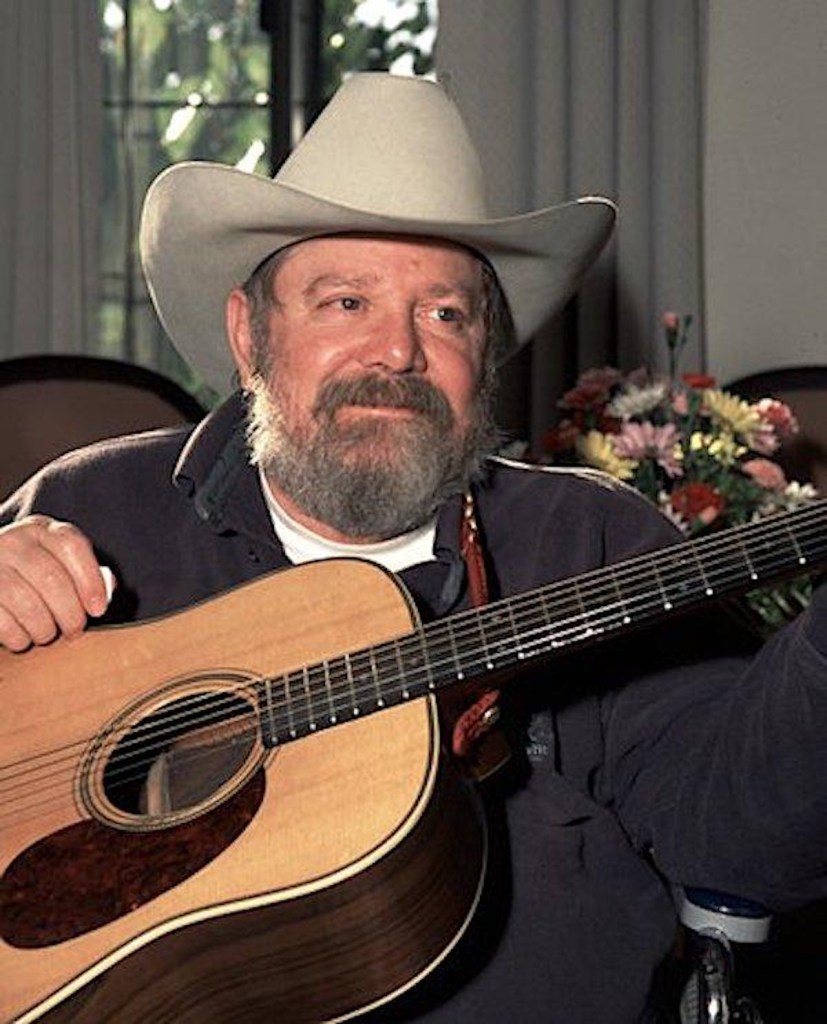
    Image:  Buck Ramsey

    Buck Ramsey’s “Christmas Waltz”

    Buck Ramsey’s “Christmas Waltz” dramatizes a holiday celebration on the ranch.  The participants all join in a joyful preparation for their celebration as they keep their faith central and focused.

    Introduction and Text of “Christmas Waltz”

    Buck Ramsey is considered the “Father of Cowboy Poetry.”  Many of his poems, which have also been rendered in song, have become classics in the cowboy poetry genre.

    Ramsey’s “Christmas Waltz” stages a cowboy Christmas celebration with a tree from the big ranch that was selected way back in summer.  The ranch hands then experience a rambunctious good time as they acknowledge their joy in the birth of a “baby boy born in a cow shed.”

    This traditionally flavored ballad offers many colorful images of cowboy culture from the American West as the folks prepare for a big feast to recognize and celebrate their faith that keeps them grounded throughout the year.

    Christmas Waltz

    The winter is here and the old year is passing,
    The sun in its circle winds far in the south.
    It’s time to bring cheer to a cold, snowbound cow camp,
    It’s Christmas tree time of the year for the house.  

    Go ride to the cedar break rim of a canyon,
    Down by where the river takes creek water clear,
    And saddle-sleigh home us a fine shapely evergreen
    Picked out while prowling the pasture this year.

    While Fair strings the berries and popcorn and whatnots
    And Ty braids the wreaths out of leather and vines,
    Old Dunder, he whittles and whistles old carols
    And fills them with stories of fine olden times.

    He talks of a baby boy born in a cow shed,
    All swaddled in tatters and laid in a trough,
    Who, growing up, gave away all he could gather
    And taught us that what is not given is lost.

    It’s morning of Christmas and long before dawning
    The camp hands are risen to ready the feast.
    But with the fires glowing they don warm apparel
    And go out to gaze on the Star of the East.

    They cobbler the plums they put up back in summer,
    They bake a wild turkey and roast backstrap deer,
    They dollop the sourdough for rising and baking,
    And pass each to each now the brown jug of cheer.

    The dinner is done and they pass out the presents,
    Their three each they open with handshakes and hugs,
    Then Ty gets his guitar and Fred gets his fiddle
    While Dunder and Fair laugh and roll back the rugs.

    The tunes that they play melt the chill from the winter
    As Dunder and Fair waltz and two-step along.
    They play, sing and dance till the next morning’s dawning
    Then all of the their slumbers are filled with this song.

    Musical Version Buck Ramsey’s “Christmas Waltz”  

    Commentary on “Christmas Waltz”

    A cowboy Christmas filled with family, friends, and good times allows the narrator to colorfully describe even scientific facts.

    First Stanza: It Winter Time

    The winter is here and the old year is passing,
    The sun in its circle winds far in the south.
    It’s time to bring cheer to a cold, snowbound cow camp,
    It’s Christmas tree time of the year for the house.  

    The cowboy/speaker starts off his celebration of the Christmas season by reporting, “winter is here”; he continues to offer a description of the time of year by averring that the old year is almost over, and the sun has moved “far to the south.”

    Around Christmas time, the sun is in the Tropic of Capricorn in the southern hemisphere; thus, the speaker colorfully reports that scientific fact, “sun in its circle winds far in the south.”  

    Interestingly, the speaker then describes the Christmas holiday season as being “Christmas tree time” at the ranch, placing emphasis on the tree as the center of decoration for the season.   The speaker is full of joy that a big Christmas tree will soon stand tall in the ranch house.

    Second Stanza:   The Big Christmas Tree

    Go ride to the cedar break rim of a canyon,
    Down by where the river takes creek water clear,
    And saddle-sleigh home us a fine shapely evergreen
    Picked out while prowling the pasture this year.

    The cowboy/speaker then reports to his audience where that big Christmas tree comes from: during the summer, while looking over the pasture, the speaker had spotted the perfect tree that stood down along the river where the water was clear as crystal. 

    The speaker had made a mental note to remember exactly where it stood so he could send another cowboy to fetch it as Christmas time was on its way.  He so admired that “shapely evergreen” that he had no difficulty remembering exactly where he saw it.

    Third Stanza: Fair Decorating

    While Fair strings the berries and popcorn and whatnots
    And Ty braids the wreaths out of leather and vines,
    Old Dunder, he whittles and whistles old carols
    And fills them with stories of fine olden times.

    A gal named “Fair” will help decorate the grand tree with berries and popcorn on a string. Another cow-hand named “Ty” will put up wreaths fashioned out of vines and leather.

    While each ranch hand attends to his part in the decorating, the old cowboy they call “Old Dunder” will be whittling while he whistles old Christmas carols, and he will be telling stories of the olden days.

    The speaker makes it clear that everyone involved with this celebration is fulled with the joy of the season as they tend to their appointed tasks.  Each member of the party, no doubt, looks forward to the fine gathering they are anticipating as they work to bring about the holiday appearance.

    Fourth Stanza:  Testimony

    He talks of a baby boy born in a cow shed,
    All swaddled in tatters and laid in a trough,
    Who, growing up, gave away all he could gather
    And taught us that what is not given is lost.

    Old Dunder will be the one who will offer testimony regarding the reason for the season, “a baby boy born in a cow shed.” He will mention how Jesus “gave away” all material possessions in order to demonstrate for humanity the vital importance of giving.

    The cowboy colloquial of having the baby Christ “born in a cow shed” adds to the American West flavor of the ballad.  The “born in a manger” theme easily translates to cowboy lingo for the cow poke who retains his love and respect for American culture, influenced by Jesus the Christ.

    Each aspect of the American culture can be expressed through unique images and language common to each group that has become integral to the melting pot of languages and cultures while remaining purely American.

    Fifth Stanza:   Christmas Morning

    It’s morning of Christmas and long before dawning
    The camp hands are risen to ready the feast.
    But with the fires glowing they don warm apparel
    And go out to gaze on the Star of the East.

    Finally, Christmas day has arrived. Even well before the light of day, the ranch hands are up and wide awake, getting ready to start blazing up fires for cooking.  But before they commence their chores for the big celebration, they go outside, “to gaze on the Star of the East”; this annual ritual is the heart of their cowboy prayer that they gratefully offer as part of their celebration.  

    While the partying and feasting remain a central part of the poem’s theme, the birth of their Christian faith also figures strongly in that celebration as they ready the ranch and their hearts and minds for keeping their faith strong and vibrant.

    Sixth Stanza:  Time to Cook

    They cobbler the plums they put up back in summer,
    They bake a wild turkey and roast backstrap deer,
    They dollop the sourdough for rising and baking,
    And pass each to each now the brown jug of cheer.

    Finally, the cooking begins.  They whip up plum cobbler using the plums they had stored up back in summer. The revelers bake wild turkey and roast backstrap deer; they also bake sourdough bread, as they continue to pass around “the brown jug of cheer.”

    Seventh Stanza:  A Big Dinner

    The dinner is done and they pass out the presents,
    Their three each they open with handshakes and hugs,
    Then Ty gets his guitar and Fred gets his fiddle
    While Dunder and Fair laugh and roll back the rugs.

    They all enjoy their big dinner, and then they all gather around the beautiful Christmas tree to exchange their gifts.  Each partier receives at least three presents for which they are very grateful and easily express their gratitude to one another. They hug and shake hands to show gratitude for their bounty.  

    After the gift exchange, they are now ready for music and dancing.  Old Dunder and Fair roll back the rugs for the dancing.  Fred starts his fiddle-playing, while Ty warms up his guitar.

    Eighth Stanza:  Music and Fun Times

    The tunes that they play melt the chill from the winter
    As Dunder and Fair waltz and two-step along.
    They play, sing and dance till the next morning’s dawning
    Then all of the their slumbers are filled with this song.

    The music is rollicking and lively, and everyone has a great time.  It seems the robust celebration takes the chill off the bitter winter weather.  The dancing continues way past dawn; every one sings and dances until morning.   After the partiers finally say good-night and drift off to sleep, the music and singing will keep on playing in their dreams.  

    The theme of Christmas cheer and the beautiful faith each cowboy experiences will play out as the images from this ballad continue to influence their work and play in the coming year.

    Image:  Buck Ramsey “Father of Cowboy Poetry

  • A. B. “Banjo” Paterson’s “Clancy of the Overflow”

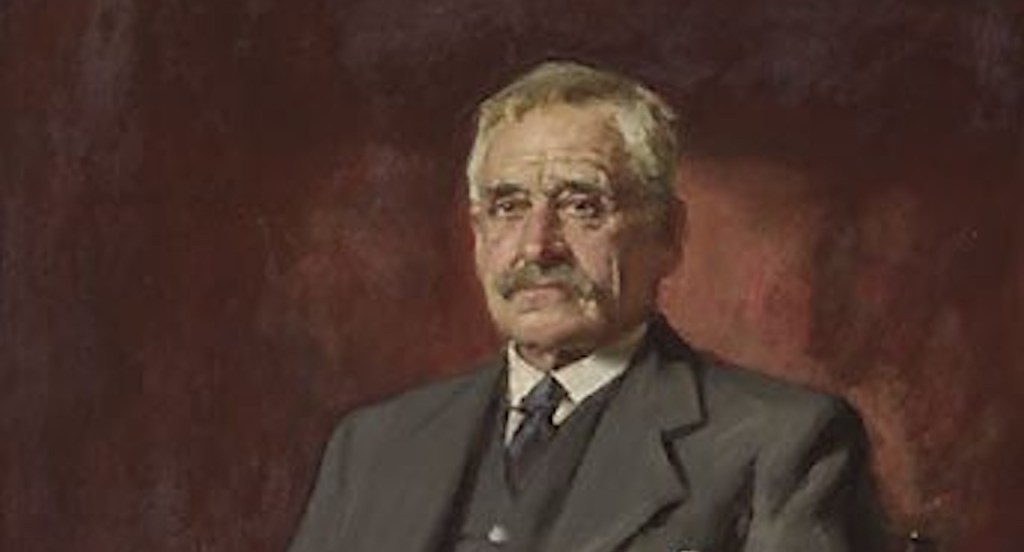
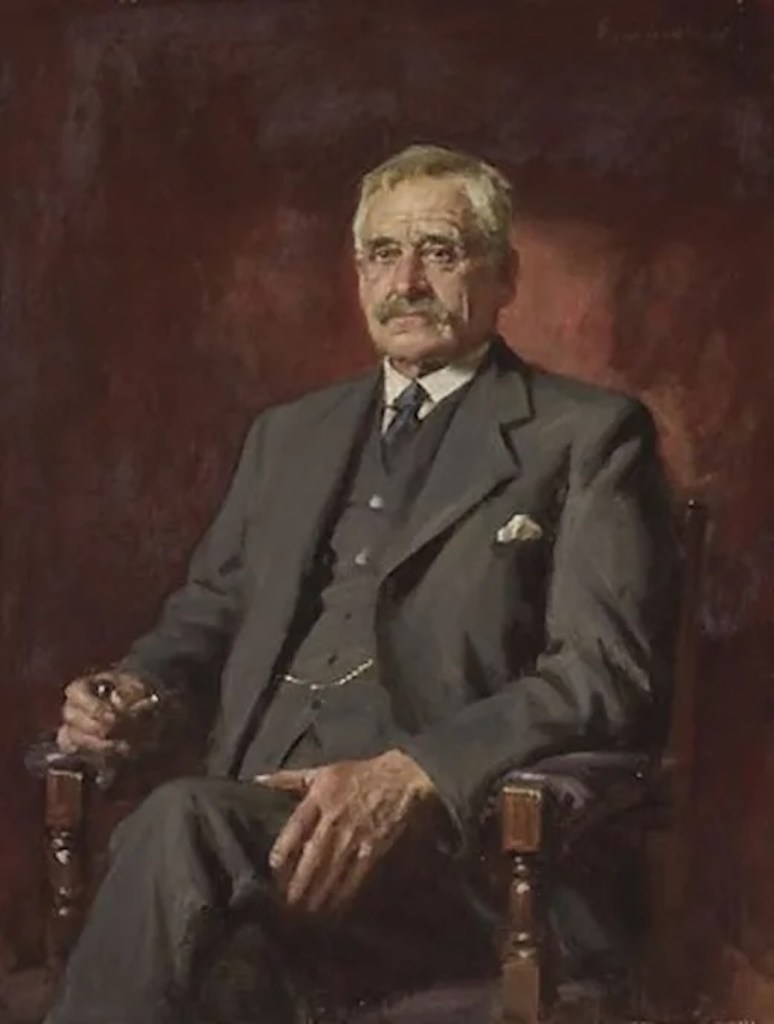
    Image:  Banjo Paterson Portrait – John Longstaff (1861 – 1941)

    A. B. “Banjo” Paterson’s “Clancy of the Overflow”

    A city-dweller, painting a picture of dirt, noise, and hustling about in the city,  imagines what his life would be like if he could trade places with a drover (cowboy) in the outback, where life would be grounded in nature with many pleasurable sights and sounds.

    Introduction and Text of “Clancy of the Overflow”

    The speaker in A. B. “Banjo” Paterson’s “Clancy of the Overflow” is a city-dweller, who thinks he would like to change his life and become a cowboy in the outback. The speaker was prompted to dramatize and romanticize that life after he met a chap named Clancy.

    The poem features eight ballad-form quatrains, each with the basic end-rime scheme, ABCB.  The second and third lines of each quatrain feature an internal rime, in addition to the end-rimes.   The following uses the first stanza to exemplify the internal and end-rime schemes:

    A . . . A   letter . . . better
    . . . . . B   . . . . . . . .  ago
    C . . .  C  knew him . . . to him
    . . . . . B   . . . . . . . .   overflow

    The lines are long with a jaunty rhythm, making the poem ripe for turning into a song.

    Clancy of the Overflow

    I had written him a letter which I had, for want of better
       Knowledge, sent to where I met him down the Lachlan, years ago,
    He was shearing when I knew him, so I sent the letter to him,
       Just “on spec”, addressed as follows: “Clancy, of The Overflow”.

    And an answer came directed in a writing unexpected,
       (And I think the same was written in a thumbnail dipped in tar)
    ‘Twas his shearing mate who wrote it, and verbatim I will quote it:
       “Clancy’s gone to Queensland droving, and we don’t know where he are.”

    In my wild erratic fancy visions come to me of Clancy
       Gone a-droving “down the Cooper” where the western drovers go;
    As the stock are slowly stringing, Clancy rides behind them singing,
       For the drover’s life has pleasures that the townsfolk never know.

    And the bush hath friends to meet him, and their kindly voices greet him
       In the murmur of the breezes and the river on its bars,
    And he sees the vision splendid of the sunlit plains extended,
      And at night the wondrous glory of the everlasting stars.

    I am sitting in my dingy little office, where a stingy
        Ray of sunlight struggles feebly down between the houses tall,
    And the foetid air and gritty of the dusty, dirty city
       Through the open window floating, spreads its foulness over all.

    And in place of lowing cattle, I can hear the fiendish rattle
       Of the tramways and the buses making hurry down the street,
    And the language uninviting of the gutter children fighting,
       Comes fitfully and faintly through the ceaseless tramp of feet.

    And the hurrying people daunt me, and their pallid faces haunt me
      As they shoulder one another in their rush and nervous haste,
    With their eager eyes and greedy, and their stunted forms and weedy,
       For townsfolk have no time to grow, they have no time to waste.

    And I somehow fancy that I’d like to change with Clancy,
       Like to take a turn at droving where the seasons come and go,
    While he faced the round eternal of the cashbook and the journal –
       But I doubt he’d suit the office, Clancy, of “The Overflow”.

    Reading of Banjo Paterson’s “Clancy of the Overflow”

    Commentary on Banjo Paterson’s “Clancy of the Overflow”

    People who reside in large cities from time to time muse on the idea of being or becoming a country dweller.  Country folk do the same, but it seems less often than the city-dweller, who likes to romanticize the life of their rustic fellows.

    First Stanza:  A Letter to Clancy

    I had written him a letter which I had, for want of better
       Knowledge, sent to where I met him down the Lachlan, years ago,
    He was shearing when I knew him, so I sent the letter to him,
       Just “on spec”, addressed as follows: “Clancy, of The Overflow”.

    The first quatrain remains very simple, offering a mere tease regarding the drama that will be unfolding.  The speaker reports that he wrote a letter to Clancy with simple address, “Clancy, of the Overflow.” The speaker had met Clancy while the latter was shearing sheep.

    Second Stanza:  Receives a Response

    And an answer came directed in a writing unexpected,
       (And I think the same was written in a thumbnail dipped in tar)
    ‘Twas his shearing mate who wrote it, and verbatim I will quote it:
       “Clancy’s gone to Queensland droving, and we don’t know where he are.”

    The speaker receives a response to his letter that revealed no one knew where Clancy was at present, although he had gone to Queensland droving. The speaker adds the colorful detail that the letter appeared to have been “written with thumb-nail dipped in tar.”

    Third Stanza:   Wild Imaginings

    In my wild erratic fancy visions come to me of Clancy
       Gone a-droving “down the Cooper” where the western drovers go;
    As the stock are slowly stringing, Clancy rides behind them singing,
       For the drover’s life has pleasures that the townsfolk never know.

    The speaker then begins his wild erratic fancy, envisioning Clancy driving his herd singing and enjoying kind of peaceful “pleasures” that city-dwellers, such as the speaker himself, never experience.  The speaker is now off to musing on those supposed pleasures of living a rustic life.

    Fourth Stanza:  Natural Beauties

    And the bush hath friends to meet him, and their kindly voices greet him
       In the murmur of the breezes and the river on its bars,
    And he sees the vision splendid of the sunlit plains extended,
      And at night the wondrous glory of the everlasting stars.

    The speaker imagines Clancy with his friends who greet him with their kindly voices. He hears the murmur of the breezes. He sees a beautiful river and observes the splendor of the sunlit plain extending for miles. And, of course, Clancy enjoys seeing “the wondrous glory of the everlasting stars.” All of these natural beauties elude the city-dweller.

    Fifth Stanza:   Bemoaning City Life

    I am sitting in my dingy little office, where a stingy
        Ray of sunlight struggles feebly down between the houses tall,
    And the foetid air and gritty of the dusty, dirty city
       Through the open window floating, spreads its foulness over all.

    The city-dwelling speaker then plainly bemoans his own lot as he sits in his dingy little office where only a sliver of sunlight is able to penetrate. The air is polluted and floats into the office through the window, “spread[ing] its foulness over all.”

    Sixth Stanza:  Enduring City Noise

    And in place of lowing cattle, I can hear the fiendish rattle
       Of the tramways and the buses making hurry down the street,
    And the language uninviting of the gutter children fighting,
       Comes fitfully and faintly through the ceaseless tramp of feet.

    Instead of Clancy’s pleasant sounds of lowing cattle, the poor speaker’s ears are accosted by the metallic, screeching noise of “tramways and the buses.” He also must endure hearing the foul language of children fighting in the streets. And there is “the ceaseless tramp of feet.”  Hearing so many people rushing hither and yon also annoys the speaker as he continues to endure city life.

    Seventh Stanza:  Stuffed in a Small Place

    And the hurrying people daunt me, and their pallid faces haunt me
      As they shoulder one another in their rush and nervous haste,
    With their eager eyes and greedy, and their stunted forms and weedy,
       For townsfolk have no time to grow, they have no time to waste.

    So many people hurrying here and there, their “pallid faces haunt” the speaker. They seem to be stuffed into the small space of the city as they shoulder one another in the rush and nervous haste. He decries that the fact that city dwellers in their hurry to get to work have not time for other endeavors.  The speaker feels that such a rushing madness stunts the growth of the people who have no time for leisure; to them leisure would be considered a waste of time. 

    Eighth Stanza:  The Grass Is Always Greener

    And I somehow fancy that I’d like to change with Clancy,
       Like to take a turn at droving where the seasons come and go,
    While he faced the round eternal of the cashbook and the journal –
       But I doubt he’d suit the office, Clancy, of “The Overflow”.

    Finally, the speaker admits that he prefers to believe that he would like to change places with Clancy. The speaker would like to be out there herding those animals in the outback “where the seasons come and go.” He would like to let Clancy do his “cashbook” work, but he figures that job would probably not be well suited to the outback cowboy.

    Full Image – Banjo Paterson

  • David Althouse’s “Cowboy Christmas Carol”

    Image:  David Althouse

    David Althouse’s “Cowboy Christmas Carol”

    A “hard-bitten ol’ cowpoke” experiences a mystical experience that changes his heart in the Christmas ballad.  He will carry his new change of heart into his daily cow poking life as he honors “the Great Trail Boss in the Sky.”

    Introduction with Text of “Cowboy Christmas Carol”

    The speaker in cowboy poet David Althouse’s “Cowboy Christmas Carol” spins a deeply spiritual yarn about an old cowboy whose mystical experience leads him to a state of grace and thankfulness that he had been lacking—even though he had lived a relatively carefree life in the open prairie that he loved.

    Cowboy Christmas Carol

    For a hard-bitten ol’ cowpoke like me a Christmas ain’t always merry;
    I’ve spent most of ’em  a-ridin’ fences, a-sleepin’ in line cabins out on the prairie.
    So for most a my hard life the spirit of Christmas did not abide within my heart.
    How I come to possess the spirit is the story I hafta impart.

    Tha year was ’87 and I was a-follerin’ doggie trails,
    A-drinkin’ rot gut whiskey to forget about my life’s travails.
    Ih was two days from the line cabin, at a far off lonely place,
    A-roundin’ up some strays, the snow whippin’ crost my face.

    Night came of a-suddin’ so’s I bedded down to rest,
    A tin can full o’ hot coffee a-restin’ crost my chest.
    Of a-suddin’ I heard somthin’ a-flutterin’ down from the skies.
    I taken a closer look an I couldn’t believe my eyes.

    It looked to be some kind o’ Christmas Angel from the first I did suspect,
    What with all the sugar plums a-hangin’ ’round ‘er neck.
    Holly laced ‘er halo an’ lustrous pearls adorned ‘er wings,
    An’ ‘er sweet little silver bell voice was a-trillin’ little ting-a-ling-a-lings.

    “Cast away your fears, cowboy,” she says,  “I’m an Angel sent from on High,
    And I’m here to do the bidding of the Great Trail Boss in the Sky.”
    Dadgumit she talked! She’s a bonafide Angel fer shore!
    Was I’a-goin’ feral or was it that bad hooch I drank the night afore?

    “It isn’t the whiskey,” she says, a-readin’ my mind.
    “You don’t even know it cowboy, but it’s Christmas time.”
    She had me dead to rights on that one, an’ it caused me much chagrin,
    Causin’ the last time I partook a Christmas was back in … heck, I don’t know when.

    “Why, thar ain’t no time fer Christmas out ‘ere Angel,” I says. “It’s absolut’ absurd.
    I’ve got fences to mend an’ orn’ry doggies to git back to the herd!”
    She says, “You’ve sunk lower than the wild beasts, lower than a longhorn steer,
    For even the furry animals keep Christmas once a year.”

    “Critters a-keepin’ Christmas?” I says. “Now this I gotta see!”
    “Very well, cowboy,” she says. “Come fly the night sky with me.”
    Well my eyes got as big as poker chips when flyin’ she did suggest.
     “Just take hold of my arm, cowboy,”  she says, “and I’ll do the rest.”

    To a quiet faraway meadow we flew, to a lonely stand o’ pines,
    An’ when I looked down a’neath them trees I was in fer a big surprise.
    Fer a-layin’ thar a’neath them trees all cuddled up on the ground,
    Was ever’ kind o’ furry critter anywhere to be found.

    Rabbits, squirrels, birds and deer all a-layin’ in one spot,
    With a coyote, wolf and mountain lion a-standin’ guard over the entire lot.
    She says, “They’re huddled together because the spirit of Christmas fills the air.”
    “Mebbe so,” I says, “But them smaller critters should be a-scampin’ outa thar!”

    “They’ve nothing of which to worry,” she says. “Peace fill their hearts upon this night.”
    “Whatever ya thank,” I says, ” but they’d best make dust afore first  light.”
    Yet, as I beheld this miracle, I recollect I shed some tears,
    A-rememberin’ all the wasted Christmases of my long-gone yesteryears.

    I vowed I’d do thangs different, that I’d make another start,
    That ever’ day I had left I’d keep Christmas merry in my heart.
    Then I gave thanks to this ‘ere Angel fer a-savin’ me from my demise.
    She just smiled an angelic smile then she a-fluttered back up to the skies.

    A-many a year has passed since I beheld that angelic sight,
    An’ I’ve tried to keep the promise I made to her upon that night.
    Now I’m proud to herd these doggies, an watch over ’em  with all I know —
    Like extry hay fer the runt calves, when it’s a-freezin’ an’ a-blowin’ snow.

    And now I’m thankful that I’m a cowboy, a-roamin’ the trails a-wild an’ free,
    A-watchin’ over these orn’ry doggies like the Great Trail Boss a-watches over me.

    Commentary on “Cowboy Christmas Carol”

    The idea that the sentiment of Christmas belongs in each heart every day of the year and not just on one celebrated day enjoys widespread lip-service, although it is seldom achieved.  This old cowboy intends to change that fact, at least, for himself .

    First Movement:   Cowboy Work Comes First

    For a hard-bitten ol’ cowpoke like me a Christmas ain’t always merry;
    I’ve spent most of ’em  a-ridin’ fences, a-sleepin’ in line cabins out on the prairie.
    So for most a my hard life the spirit of Christmas did not abide within my heart.
    How I come to possess the spirit is the story I hafta impart.

    Tha year was ’87 and I was a-follerin’ doggie trails,
    A-drinkin’ rot gut whiskey to forget about my life’s travails.
    Ih was two days from the line cabin, at a far off lonely place,
    A-roundin’ up some strays, the snow whippin’ crost my face.

    The speaker is a cowboy who has been practicing his profession for many years, and he admits that mending fences while tending cattle out on the prairie has not always been conducive to observing and celebrating Christmas.  He has felt that his mind and heart had been spiritually dry for a long time, but then something happened to change his heart.

    During one Christmas season, the speaker was out on the prairie rounding up some stray “doggies,” drinking “rot gut whiskey,” which helped him forget his hard life.  He found himself alone, many miles from the “line cabin.”  It was cold with snow whipping about his face.

    Second Movement:   A Mystical Being Appears

    Night came of a-suddin’ so’s I bedded down to rest,
    A tin can full o’ hot coffee a-restin’ crost my chest.
    Of a-suddin’ I heard somthin’ a-flutterin’ down from the skies.
    I taken a closer look an I couldn’t believe my eyes.

    It looked to be some kind o’ Christmas Angel from the first I did suspect,
    What with all the sugar plums a-hangin’ ’round ‘er neck.
    Holly laced ‘er halo an’ lustrous pearls adorned ‘er wings,
    An’ ‘er sweet little silver bell voice was a-trillin’ little ting-a-ling-a-lings.

    The speaker has bedded down for the night with a tin of hot coffee placed on his chest to help drive out some of the cold.  With the night’s seemingly sudden arrival, he sees a celestial being approaching from the sky.

    The cowboy describes the being in typical cowboy fashion, mentioning “sugar plums,” decorating the form of what appears to be an angel with “lustrous pearls” on her wings.  He even hears her voice that sounds like a “sweet little silver bell.”  

    Third Movement:   Sent by the “Great Trail Boss”

    “Cast away your fears, cowboy,” she says,  “I’m an Angel sent from on High,
    And I’m here to do the bidding of the Great Trail Boss in the Sky.”
    Dadgumit she talked! She’s a bonafide Angel fer shore!
    Was I’a-goin’ feral or was it that bad hooch I drank the night afore?

    “It isn’t the whiskey,” she says, a-readin’ my mind.
    “You don’t even know it cowboy, but it’s Christmas time.”
    She had me dead to rights on that one, an’ it caused me much chagrin,
    Causin’ the last time I partook a Christmas was back in … heck, I don’t know when.

    The being does not keep the cowboy guessing who she is; she identifies herself as an “Angel,” and she informs him that she is being sent by the Divine or in cowboy talk that “Great Trail Boss in the Sky.”   Furthermore, she instructs him not to fear.

    Of course, the speaker is wonderstruck at first that this Angel sent from “on High” would be visiting him.  He suspects he is hallucinating from the bad whiskey or that he is just going wild in the brain.

    The Angel tells him that her appearance has nothing to do with the whiskey.  He knows then he is in the presence of something divine because she is reading his mind.  She then informs him that it is Christmas time, insisting that he did not even know that season was upon him.

    The cowboy has to admit that she has him “dead to rights”—he had not been aware of Christmas for so long that he had actually forgotten the last time he had thought about that season.

    Fourth Movement:   Too Busy to Celebrate

    “Why, thar ain’t no time fer Christmas out ‘ere Angel,” I says. “It’s absolut’ absurd.
    I’ve got fences to mend an’ orn’ry doggies to git back to the herd!”
    She says, “You’ve sunk lower than the wild beasts, lower than a longhorn steer,
    For even the furry animals keep Christmas once a year.”

    “Critters a-keepin’ Christmas?” I says. “Now this I gotta see!”
    “Very well, cowboy,” she says. “Come fly the night sky with me.”
    Well my eyes got as big as poker chips when flyin’ she did suggest.
     “Just take hold of my arm, cowboy,”  she says, “and I’ll do the rest.”

    Then the speaker protests that there is no opportunity for observing Christmas out here on the prairie with “orn’ry doggies” and “fences to mend.”  But to his excuses, the Angel counters that he has allowed himself to sink lower than the animals, adding that at this time of year even the animals celebrate the spirit of Christmas.

    The cowboy protests that “critters a-keepin’ Christmas” is something he would have to see to believe.  And so the Angel tells him to take hold of her arm, and they will “fly the night sky” to a place where she will prove the truth of her statement. With eyes as big as “poker chips,” the cowboy obeys the Angel, and they fly off.

    Fifth Movement:   An Astral Meadow

    To a quiet faraway meadow we flew, to a lonely stand o’ pines,
    An’ when I looked down a’neath them trees I was in fer a big surprise.
    Fer a-layin’ thar a’neath them trees all cuddled up on the ground,
    Was ever’ kind o’ furry critter anywhere to be found.

    Rabbits, squirrels, birds and deer all a-layin’ in one spot,
    With a coyote, wolf and mountain lion a-standin’ guard over the entire lot.
    She says, “They’re huddled together because the spirit of Christmas fills the air.”
    “Mebbe so,” I says, “But them smaller critters should be a-scampin’ outa thar!”

    The Angel brings him to an astral meadow that looks very much like a place the cowboy would recognize with a “lonely stand o’ pines.”  But when he looks down, he can see “rabbits, squirrels, birds and deer,” and “a coyote, wolf and mountain lion” are guarding them all as they rest peacefully in one area.

    This inspiring scene offers an allusion to Isaiah 11:6 (KJV), describing the peace that reigns with the experience of Christ-consciousness:  

    The wolf also shall dwell with the lamb, and the leopard shall lie down with the kid; and the calf and the young lion and the fatling together; and a little child shall lead them.

    The Angel explains that the animals had all huddled together because the spirit of Christmas is filling the atmosphere  But the cowboy, practical man that he is, remarks that those little critters ought be scampering away from those bigger, dangerous ones.

    Sixth Movement:   The Peaceful Night

    “They’ve nothing of which to worry,” she says. “Peace fill their hearts upon this night.”
    “Whatever ya thank,” I says, ” but they’d best make dust afore first  light.”
    Yet, as I beheld this miracle, I recollect I shed some tears,
    A-rememberin’ all the wasted Christmases of my long-gone yesteryears.

    I vowed I’d do thangs different, that I’d make another start,
    That ever’ day I had left I’d keep Christmas merry in my heart.
    Then I gave thanks to this ‘ere Angel fer a-savin’ me from my demise.
    She just smiled an angelic smile then she a-fluttered back up to the skies.


    The Angel insists that it is only peace that reigns upon this night; yet the cowboy still insists that those little critter better be making “dust” before dawn. Yet, even in his practical, worldly stance, the cowboy finds himself moved to tears, remembering all of his many past “wasted Christmases.”   And he then finds that his heart is changed.  

    The cowboy vows to keep Christmas in his heart from now on. He knows that his life has been saved from his “demise” by this Angel of God, who after smiling at the cowboy’s gratitude “a-fluttered back up” from whence she came.

    Seventh Movement:   Thankful for Being a Cowboy

    A-many a year has passed since I beheld that angelic sight,
    An’ I’ve tried to keep the promise I made to her upon that night.
    Now I’m proud to herd these doggies, an watch over ’em  with all I know—
    Like extry hay fer the runt calves, when it’s a-freezin’ an’ a-blowin’ snow.

    And now I’m thankful that I’m a cowboy, a-roamin’ the trails a-wild an’ free,
    A-watchin’ over these orn’ry doggies like the Great Trail Boss a-watches over me.

    The cowboy’s story demonstrates a change of heart, from one who had focused too much on the material world to one who would henceforth keep the spiritual world in his consciousness.   Although he had always been a good man, because of the mystical experience of being reminded to keep Christ-Consciousness in his heart, mind, and soul, he becomes even better.

    From the moment of that experience on, the speaker becomes thankful for his life.  He becomes more aware that “the Great Trail Boss” watches over him the way He watches over the cattle.  That mystical experience places God’s essence in the cowboy’s awareness, allowing the cowboy to realize his love for the Divine every day of his life.

    This inspirational tale reminds readers of the omnipresence of God.  The cowboy speaks his own language and honors his Maker in his own personal terms.  The name of God used by the cowpoke—”the Great Trail Boss”—demonstrates the uniqueness and closeness that he personally maintains with his Divine Creator. 

    The many names for God simply represent God’s different aspects and varied relationships with His children, as only One Divine Being exists and unifies each heart, mind, and soul of humanity.