Image: David Althouse
David Althouse’s “How Pecos Bill Saved Christmas”
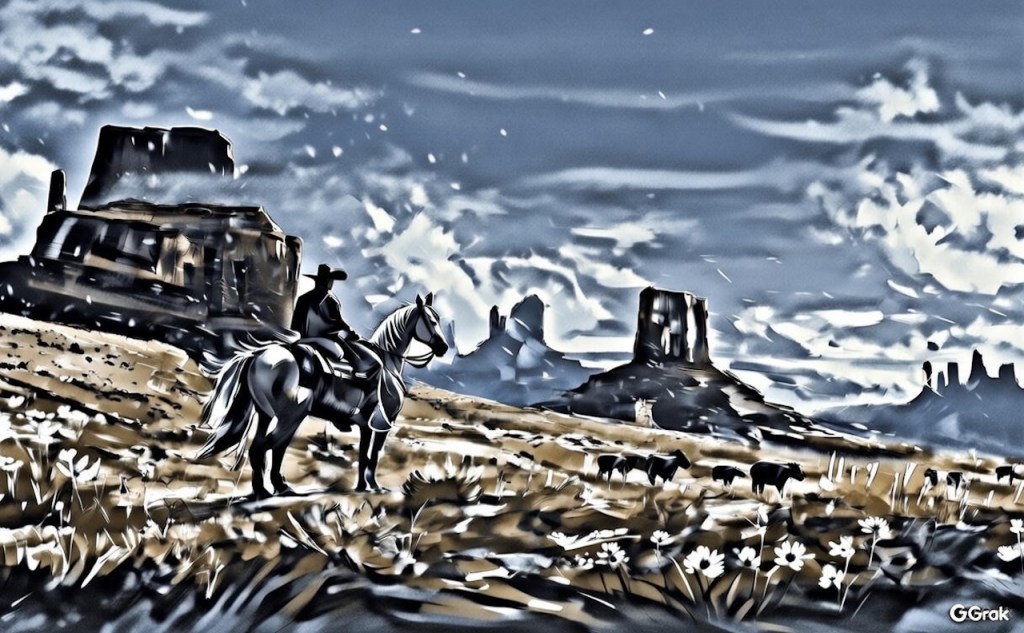
The legendary hero, Pecos Bill, gargling with nitroglycerin and chewing on habanero peppers, saved Christmas one year. Accompanied by his horse, Widow Maker, Pecos Bill performs his extreme acts throughout cowboy folklore.
Introduction with Text of “How Pecos Bill Saved Christmas”
The legend of Pecos Bill first appeared in 1917 [1] when Edward O’Reilly published a collection of the tales about Bill in The Century Magazine. In 1923, the stories were reprinted in a book titled The Saga of Pecos Bill.
Like other characters from the folklore genre such as Paul Bunyan [2], Pecos Bill remains a figure of controversy. According to F. E. Abernethy, “Pecos Bill seems to have been more the product of journalism than folklore” [3].
Journalist Edward O’Reilly had claimed that the stories of Pecos Bill were told by cowboys who handed them down in the oral tradition as they expanded westward settling Texas, New Mexico, and Arizona. But then O’Reilly filed a lawsuit against a plagiarizer of one of his articles featuring Pecos Bill.
O’Reilly then admitted that he had invented Pecos Bill. J. Frank Dobie of the Texas Folklore Society has affirmed that Pecos Bill had not been heard of until O’Reilly’s stories began appearing in 1917.
Whether Pecos Bill is genuine “folklore” or “fakelore” [4], his character has stolen the hearts of readers since he first appeared. A widely known version of the Pecos Bill legend is James Cloyd Bowman’s Pecos Bill: The Greatest Cowboy of All Time, first published in 1937, winning the Newbery Honor in 1938.
After remaining out of print since 1970, the book was republished in 2007 with added illustrations by Laura Bannon.
Pecos Bill and Christmas
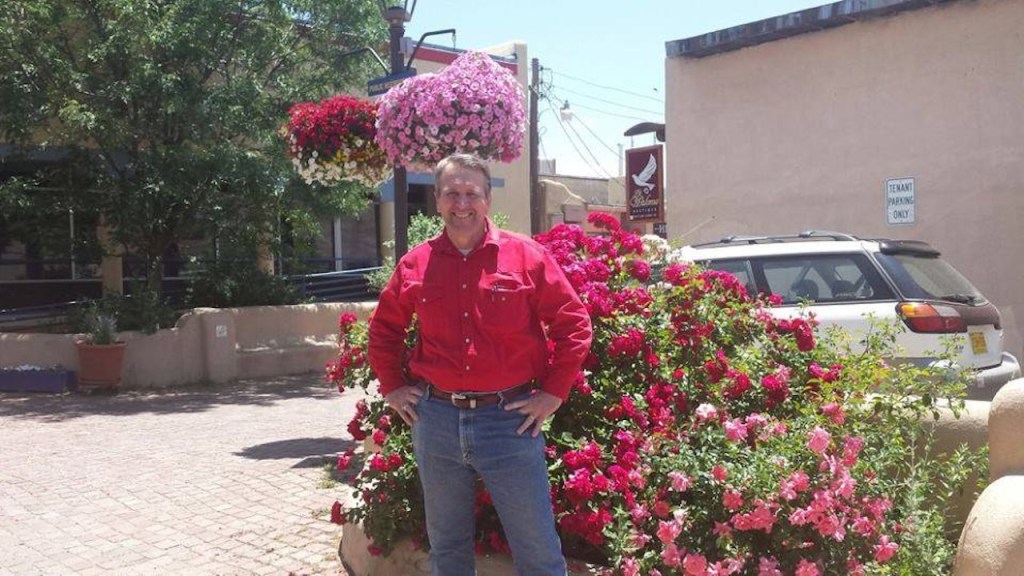
Cowboy poet David Althouse, in his hilarious drama titled “How Pecos Bill Saved Christmas,” features this controversial but still fascinating character from cowboy lore, who performs extraordinary acts and boasts a bizarre history.
For example, Pecos Bill was supposedly bounced off a wagon heading west as a newborn infant, was left behind by his unwitting parents, and then raised by coyotes. That auspicious (or perhaps inauspicious) beginning sets the stage for the many fantastic events in the adventures of Pecos Bill.
Narrated in 16 riming couplets, Althouse’s “How Pecos Bill Saved Christmas” represents one of those bizarre, outrageous events that readers have come to expect from this unlikely hero.
How Pecos Bill Saved Christmas
You’ve heard the tales of Pecos Bill, a western hero bold and true—
Like his paintin’ deserts, ridin’ twisters, and marryin’ up with Slue-Foot Sue.
Atop Widow Maker, his cantankerous steed, live rattlesnake whip in tow,
Pecos swung a mighty wide loop, ‘twas a one-man Wild West show.
So it would’ve come to no surprise to those who knew him best,
Pecos once saved Christmas when it was almost cancelled way out west.
Pecos was winterin’ in Colorado at his cabin two miles high,
When he stood up to look southwesterly to the Arizona sky.
His eagle eyes could take in country most normal eyes couldn’t see,
And he spotted somethin’ white where the Grand Canyon was supposed to be.
The worst winter storm in history had filled the great chasm up with snow,
And soon he spotted reindeer antlers stickin’ up from down below.
Well, Pecos knew no such reindeer lived out in Arizona land,
So he knew St. Nick was trapped with his sleigh and reindeer band.
Great times call for great men, and such was true upon this night;
Christmas hung in the balance, and Pecos aimed to set it right.
Pecos whistled for Widow Maker, and the ornery hoss was there post haste,
And they took off like a lightening bolt with little time to waste.
In just a couple of minutes they were at the canyon rim;
Pecos looks at Widow Maker and then he says to him,
“I’m gonna gargle some nitroglycerin mixed with habaneros don’t you know,
And I’m gonna blow it through the canyon and melt down all that snow!”
Now, Pecos was a known spitter, and could prove it with his deeds,
Having practiced with tobacco juice and watermelon seeds.
He chews on the habaneros and swishes the nitroglycerin all around,
Plants his feet, pulls in some air, and then—he unwound!
This fireball of a concoction blast through the canyon—end-to-end—
Allowin’ the Christmas sleigh to elevate and fly off in the wind.
Now if you doubt this story, and think it doesn’t make much sense,
Next time you’re at the canyon just look at the evidence.
Great fire-burnt canyon rocks were left behind from Bill’s fiery spray,
Which is why they’re reddish orange even to this day.
© 2009 David Althouse
“How Pecos Bill Saved Christmas” is reprinted here with kind permission from cowboy poet/novelist, David Althouse.
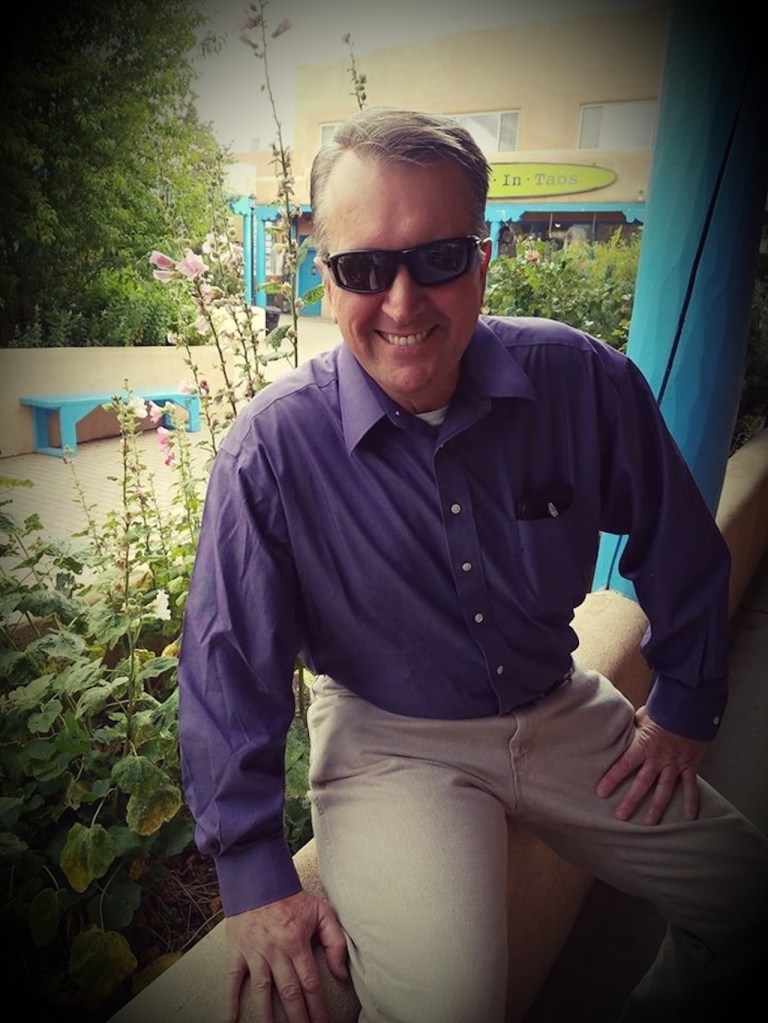
Image: David Althouse
Commentary on “How Pecos Bill Saved Christmas”
Why are the rocks in the Grand Canyon a burnt-orange color? Find out what saving Christmas has to to with the color of canyon rocks.
First Movement: Following Tradition
You’ve heard the tales of Pecos Bill, a western hero bold and true—
Like his paintin’ deserts, ridin’ twisters, and marryin’ up with Slue-Foot Sue.
Atop Widow Maker, his cantankerous steed, live rattlesnake whip in tow,
Pecos swung a mighty wide loop, ‘twas a one-man Wild West show.
So it would’ve come to no surprise to those who knew him best,
Pecos once saved Christmas when it was almost cancelled way out west.
Pecos was winterin’ in Colorado at his cabin two miles high,
When he stood up to look southwesterly to the Arizona sky.
The first movement treats readers to some of the traditional accoutrements of Pecos Bill: he painted desserts, rode tornadoes (was said to have lassoed one), rode a horse named Widow Maker, used a live rattlesnake as whip, and married an equally outlandish character named “Slue-Foot Sue.”
This movement also introduces the first element that will result in Pecos Bill’s saving Christmas. He was spending his winter in Colorado in his “two mile high” cabin, and he happened to look toward the southwest observing the “Arizona sky.”
Second Movement: Farsighted
His eagle eyes could take in country most normal eyes couldn’t see,
And he spotted somethin’ white where the Grand Canyon was supposed to be.
The worst winter storm in history had filled the great chasm up with snow,
And soon he spotted reindeer antlers stickin’ up from down below.
Well, Pecos knew no such reindeer lived out in Arizona land,
So he knew St. Nick was trapped with his sleigh and reindeer band.
Great times call for great men, and such was true upon this night;
Christmas hung in the balance, and Pecos aimed to set it right.
Pecos Bill was able to see Arizona from Colorado because of his “eagle eyes,” and he saw that the Grand Canyon was filled with snow from “the worst winter storm in history.” But he also saw “antlers stickin’ up” through that snow, and he knew there were no deer like that in Arizona. He figured immediately that Santa Claus had gotten trapped during that worst blizzard in history.
Third Movement: Spewing Nitro
Pecos whistled for Widow Maker, and the ornery hoss was there post haste,
And they took off like a lightening bolt with little time to waste.
In just a couple of minutes they were at the canyon rim;
Pecos looks at Widow Maker and then he says to him,
“I’m gonna gargle some nitroglycerin mixed with habaneros don’t you know,
And I’m gonna blow it through the canyon and melt down all that snow!”
Now, Pecos was a known spitter, and could prove it with his deeds,
Having practiced with tobacco juice and watermelon seeds.
So Bill whistles for Widow Maker, and they are off “like a lightning bolt.” In only two minutes, they arrive on the rim of the Grand Canyon. Bill announces to Widow Maker that he is going to mix up a batch of nitroglycerin and habanero peppers in his throat and them spew that mixture through the canyon to melt the snow.
Pecos Bill had practiced spitting using “tobacco juice and watermelon seeds,” and he had become quite expert in that practice. Thus, he could spew the nitro and habanero juice through the canyon to melt the snow to release Santa Claus and his hapless reindeer.
Fourth Movement: Evidence That It Happened
He chews on the habaneros and swishes the nitroglycerin all around,
Plants his feet, pulls in some air, and then—he unwound!
This fireball of a concoction blast through the canyon—end-to-end—
Allowin’ the Christmas sleigh to elevate and fly off in the wind.
Now if you doubt this story, and think it doesn’t make much sense,
Next time you’re at the canyon just look at the evidence.
Great fire-burnt canyon rocks were left behind from Bill’s fiery spray,
Which is why they’re reddish orange even to this day.
So Bill does as he said he would. He chews up some habanero peppers, the hottest of the peppers, along with some nitroglycerin. He then stands and spits it through the canyon.
The combination of nitro and hot peppers raises a “fireball of a concoction” which flashes through the canyon melting the snow and then Santa and his sleigh pulled by the reindeer could rise out of the canyon, catch the wind, and fly off to complete their task of delivering gifts to the world’s children.
The narrator then remarks that even though his readers/listeners might think the story sounds too fantastic to be true, he points out the the evidence of its veracity is the color of the canyon rocks which have remained even to the present day a color he calls “great fire-burnt” or “reddish orange.”
Most important of all, however, is that Pecos Bill saved Christmas that year, and everyone can be grateful for that.
Sources
[1] Kathy Weiser. Pecos Bill – A Legend of Frontier Spirit. Legends of America. Updated May 2017.
[2] Editors. “Paul Bunyan.” Britannica. Accessed December 7, 2025.
[3] F. E. Abernethy. “Pecos Bill.” Encyclopedia of he Great Plains. 2011.
[4] Marshall W. Fishwick. “Sons of Paul: Folklore or Fakelore?” Western Folklore. Vol. 18, No. 4. October 1959. Via JSTOR.
“The Ballad of Pecos Bill” Roy Rogers
The Legend of Pecos Bill
 Linda's Literary Home