Linda's Literary Home

Category: Elizabeth Barrett Browning

  • Elizabeth Barrett Browning’s Sonnet 34 “With the same heart, I said, I’ll answer thee”

    Image: Elizabeth Barrett Browning – Baylor University

    Elizabeth Barrett Browning’s Sonnet 34 “With the same heart, I said, I’ll answer thee”

    Returning to the melancholy character in sonnet 34 “With the same heart, I said, I’ll answer thee,” as she has so often maintained, the speaker contrasts her light-hearted childhood’s response with her serious maturity.

    Introduction and Text of Sonnet 34 “With the same heart, I said, I’ll answer thee”

    The character speaking in Barrett Browning’s Sonnet 34 “With the same heart, I said, I’ll answer thee” from Sonnets from the Portuguese has returned to her melancholy attitude.  Now she is contrasting her happy, carefree childhood years to her very stern and serious life as a mature adult.

    The speaker however is addressing her belovèd, imploring him to consider how important he is to her.  As earnest, obedient, and steadfast as she was as a child, now her constancy with her belovèd is even more in evidence.    The speaker continues to build her case for deserving the love of such an accomplished man, whom she considers to be much above her own station in life.  

    Sonnet 34 “With the same heart, I said, I’ll answer thee”

    With the same heart, I said, I’ll answer thee
    As those, when thou shalt call me by my name—
    Lo, the vain promise! is the same, the same,
    Perplexed and ruffled by life’s strategy?
    When called before, I told how hastily
    I dropped my flowers or brake off from a game,
    To run and answer with the smile that came
    At play last moment, and went on with me
    Through my obedience. When I answer now,
    I drop a grave thought, break from solitude;
    Yet still my heart goes to thee—ponder how—
    Not as to a single good, but all my good!
    Lay thy hand on it, best one, and allow
    That no child’s foot could run fast as this blood.

    Commentary on Sonnet 34 “With the same heart, I said, I’ll answer thee”

    Returning to the melancholy character she has so often maintained, the speaker contrasts her light-hearted childhood’s response with her serious maturity.

    First Quatrain:  The Necessity of Consistency

    With the same heart, I said, I’ll answer thee
    As those, when thou shalt call me by my name—
    Lo, the vain promise! is the same, the same,
    Perplexed and ruffled by life’s strategy?

    The pensive speaker professes a need to be consistent; thus, she repeats the word “same” three times in three lines.  She is of the “same heart” as she was earlier in her lifetime.  She is called by “[her] name.  But she is unsure about “life’s strategy.”  She is even “perplexed and ruffled” by it.

    The speaker hopes to convince herself that love has merely continued to flow into around her life.  She also demands from her new love relationship a constant heart as she lovingly and gently makes demands on her belovèd.

    Second Quatrain:  The Obedient One

    When called before, I told how hastily
    I dropped my flowers or brake off from a game,
    To run and answer with the smile that came
    At play last moment, and went on with me

    Earlier in her lifetime, the melancholy speaker had played the obedient one, coming when called, dropping her “flowers” or leaving off her “game.”   She ran to answer and even “with a smile” she appeared. Such behavior continued because of her dedication to obedience.

    The speaker needs to be always consistent in her emotional responses.  The static melancholy that she has experienced has programmed her to need a steady environment, even if she must create it from fragments of memory and emotional responses from the past.

    First Tercet:  Adult Life Different Details

    Through my obedience. When I answer now,
    I drop a grave thought, break from solitude;
    Yet still my heart goes to thee—ponder how—

    Now the specific details of life are a bit different.  Instead of games and flowers, she answers from the position of having dropped “a grave thought” or a “break from solitude.”  But her heart goes now always to the belovèd.  She spills out a command before venturing on, telling her beloved to “ponder how . . . .” 

    Even though the details of her adult life are different, her emotional responses are essentially the same.  Her same heart-responses continue to guide her.  Her new love relationship has become even more important to her than any relationship before.

    Second Tercet:  From Childhood to Adulthood

    Not as to a single good, but all my good!
    Lay thy hand on it, best one, and allow
    That no child’s foot could run fast as this blood.

    The speaker then concludes that the good her beloved has done her is not one in one single area but in “all my good!”  She asks her beloved to understand that as fleet foot as she was at obedience as child, she is much faster at running to her belovèd than she could have ever been in her earlier life.  

    The speaker’s blood now runs faster and with more passion than ever her foot did as a child.  As important to her as were her earlier loves, her new belovèd has become even more vital to her life.

    The speaker’s melancholy seems to be desperate for her lover to grasp his importance to her.  Thus, she continues to compare and contrast her life’s environments from childhood to maturity.

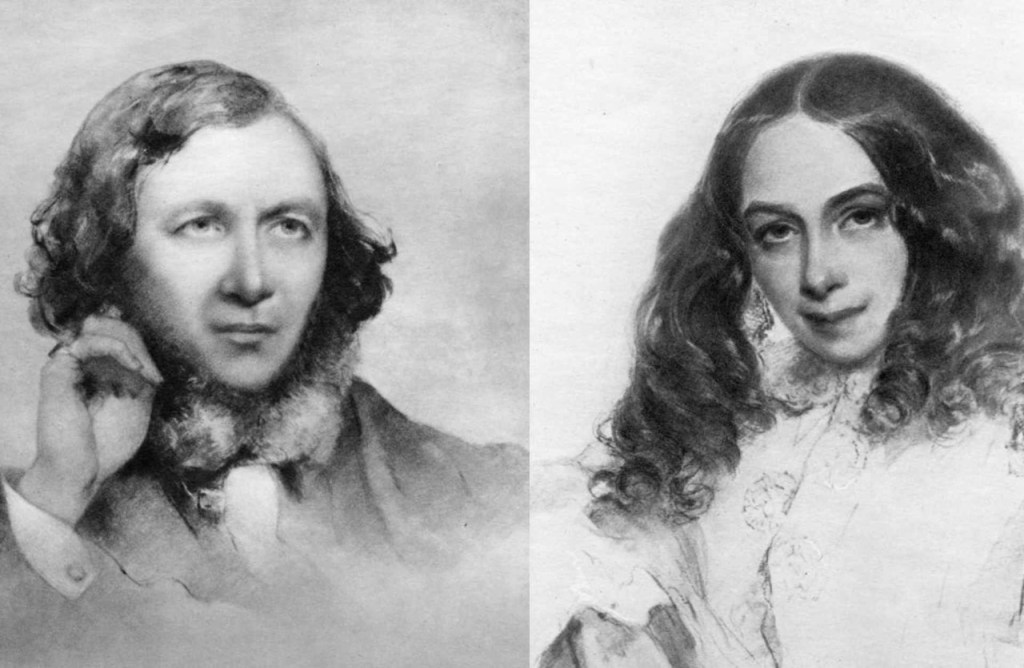
    Image: Elizabeth Barrett Browning and Robert Browning – 1852. Portraits painted by Thomas Buchanan Read
  • Elizabeth Barrett Browning’s Sonnet 33 “Yes, call me by my pet-name! let me hear”

    Image: Elizabeth Barrett and Robert Browning – Two Poets in Love

    Elizabeth Barrett Browning’s Sonnet 33 “Yes, call me by my pet-name! let me hear”

    In sonnet 33 Yes, call me by my pet-name! let me hear,” the speaker relives a happy event of her childhood after her belovèd calls her by her childhood nickname.  She is taking every opportunity to experience joyful feelings, after suffering through deep melancholy for most of her life.

    Introduction and Text of Sonnet 33 “Yes, call me by my pet-name! let me hear”

    In Elizabeth Barrett Browning’s  sonnet 33 “Yes, call me by my pet-name! let me hear”from Sonnets from the Portuguese, the speaker encourages her belovèd to call her by her childhood “pet-name” because it reminds her of a happy time in her life.  She appears to be taking pains to remain in a positive frame of mind.

    The speaker is not only composing a loving tribute to her belovèd, but she is also revealing her journey from psychological misery to mental and physical happiness in a relationship.  

    Sonnet 33 “Yes, call me by my pet-name! let me hear”

    Yes, call me by my pet-name! let me hear
    The name I used to run at, when a child,
    From innocent play, and leave the cowslips piled,
    To glance up in some face that proved me dear
    With the look of its eyes. I miss the clear
    Fond voices which, being drawn and reconciled
    Into the music of Heaven’s undefiled,
    Call me no longer. Silence on the bier,
    While I call God—call God!—So let thy mouth
    Be heir to those who are now exanimate. Gather the north flowers to complete the south,
    And catch the early love up in the late.
    Yes, call me by that name,—and I, in truth,
    With the same heart, will answer and not wait.

    Reading of Sonnet 33

    Commentary on Sonnet 33 “Yes, call me by my pet-name! let me hear”

     In Elizabeth Barrett Browning’s Sonnet 33 “Yes, call me by my pet-name! let me hear,” the speaker is reliving a happy event of her childhood after her belovèd calls her by her childhood nickname.

    First Quatrain:   A Memory from Childhood

    Yes, call me by my pet-name! let me hear
    The name I used to run at, when a child,
    From innocent play, and leave the cowslips piled,
    To glance up in some face that proved me dear

    The speaker addresses her belovèd; she exclaims, “Yes, call me by my pet-name!”—which indicates that he has, perhaps out-of-the-blue, called her by that name. Her reaction seems to surprise her, and she encourages him to continue to call her by that name.

    The surprised speaker remembers that as a child a family member (or some other person whom she loved and respected) would call her by her pet-name to come from whatever she was playing so innocently as children are wont to do.

    And she would then come running, leaving behind a pile of flowers that she had gathered.  The speaker, as that child she is now remembering, would look up into the pleasant face of the one who had called her and feel that she was cherished as she saw that love was beaming from the eyes of that person.

    Second Quatrain:  The Silence of the Departed

    With the look of its eyes. I miss the clear
    Fond voices which, being drawn and reconciled
    Into the music of Heaven’s undefiled,
    Call me no longer. Silence on the bier,

    The speaker reports that she misses those sweet beloved voices that called to her, for now those voice are silent and are residing in “Heaven,” from where they can no longer be heard calling to her.  There is only silence emanated from a coffin-like locus.   The speaker is once again drifting into her customary melancholy, decrying the silence that now emanates from the deceased.

    The speaker does not identify who these “voices” are: it could be a mother, father, aunt, uncle, or any relative or friend by whom she felt loved when they called her by her pet-name.   The speaker’s emphasis is on the feeling she is trying to recollect, however, not on the specific individual who engendered that fond feeling.

    First Tercet:  Appealing to God

    While I call God—call God!—So let thy mouth
    Be heir to those who are now exanimate. Gather the north flowers to complete the south,

    Continuing in the melancholy vein, the speaker reveals that with those fond voices silent in death, she called on God in her grief. She emphasizes her appeal to God by repeating, “call God—call God!” The speaker then urges her belovèd to let those words fall from his lips—that same words in her pet-name that came from her belovèds who are now deceased.

    As she asks him to do as her loving relatives had done and call her by her pet-name.  She is being taken her back to a fond past memory. Her belovèd suitor is then “gather[ing] the north flowers to complete the south.”   She metaphorically likens direction to time: north is past, south is present.

    Second Tercet:  Past Pleasantry, Present Passion

    And catch the early love up in the late.
    Yes, call me by that name,—and I, in truth,
    With the same heart, will answer and not wait.

    The emotional speaker adds that by hearing her present love speak those nostalgic words, the two loves coalesce and  begin drawing together her past pleasantry with the present that now holds so much love for her.

    Again the speaker exhorts him, “yes, call me by that name.” And she adds that she will respond to him, feeling the same love that she felt before—this love that will not allow her to procrastinate in her response to his fond gesture.

  • Elizabeth Barrett Browning’s Sonnet 32 “The first time that the sun rose on thine oath”

    Image: Elizabeth Barrett Browning – Getty Images

    Elizabeth Barrett Browning’s Sonnet 32 “The first time that the sun rose on thine oath”

    The speaker in Elizabeth Barrett Browning’s sonnet 32 finds her confidence first expanding and then shrinking again on her journey through her adventure to love.

    Introduction and Text of Sonnet 32 “The first time that the sun rose on thine oath”

    In Elizabeth Barrett Browning’s sonnet 32, the speaker once more struggles with her persistent lack of self-worth.  However, the speaker finally decides that by choosing to devalue her own self-worth, at the same time, she is also assigning less value to her belovèd, an intolerable idea that she then attempts mightily to immediately correct.

    Sonnet 32 “The first time that the sun rose on thine oath”

    The first time that the sun rose on thine oath
    To love me, I looked forward to the moon
    To slacken all those bonds which seemed too soon
    And quickly tied to make a lasting troth.
    Quick-loving hearts, I thought, may quickly loathe;
    And, looking on myself, I seemed not one
    For such man’s love;—more like an out-of-tune
    Worn viol, a good singer would be wroth
    To spoil his song with, and which, snatched in haste,
    Is laid down at the first ill-sounding note.
    I did not wrong myself so, but I placed
    A wrong on thee. For perfect strains may float
    ’Neath master-hands, from instruments defaced,—
    And great souls, at one stroke, may do and doat.

    Commentary on Sonnet 32 “The first time that the sun rose on thine oath”

    The speaker in sonnet 32 finds her confidence first increasing and then shrinking again on her journey to her adventures in love.

    First Quatrain: To Soon to Endure

    The first time that the sun rose on thine oath
    To love me, I looked forward to the moon
    To slacken all those bonds which seemed too soon
    And quickly tied to make a lasting troth.

    The first quatrain finds the speaker announcing that after her belovèd first pronounced his love for her, she became lodged in the sorrowful thought that this love might have come “too soon / And quickly tied” to endure for long. 

    The ensuing vow of love which was completed with the rising sun caused her to “look forward” to night time and the moon. She assumed that time of day would abstract her weakened possession of her new love situation.

    This speaker is, of course, again doubting her ability to bring out such a love from this high-stationed man.  The powerful feelings of negative self-worth seem to be permeating and leading her heart’s feelings and her head’s thought processes.

    Second Quatrain: Come Quickly, Leave Quickly

    Quick-loving hearts, I thought, may quickly loathe;
    And, looking on myself, I seemed not one
    For such man’s love;—more like an out-of-tune
    Worn viol, a good singer would be wroth

    The speaker believes that if love comes too quickly, it will then be apt to leave just as quickly.  She thus also emphasizes her sad thought that she does not believe she is entirely worthy of “such man’s love.”    The speaker then likens herself to some “out-of-tune / Worn viol,” which implies that she possesses not enough gifts to play along side such “a good singer.”

    The speaker deems that the good singer, represented in her accomplished poet/suitor, “would be wroth,” to let her accompany him. She suspects that her own lack of talent would besmirch that of her lover’s brilliant talents.

    First Tercet:  An Out-of-Tune Instrument

    To spoil his song with, and which, snatched in haste,
    Is laid down at the first ill-sounding note.
    I did not wrong myself so, but I placed

    The speaker therefore suggests that her belovèd might have made a rash decision in picking her as his partner; thus, she thinks that she will be sent away, “at the first ill-sounding note.”   However, the speaker then immediately shifts her gaze.

    As the speaker still clings to her assessment of herself as an “out-of-tuned viol,” she goes on to maintain that she has not incorrectly evaluated herself, but she does believe that she has been mistaken about her belovèd’s possessions of knowledge, strength, and capability.

    Second Tercet: Clinging to Inferiority

    A wrong on thee. For perfect strains may float
    ’Neath master-hands, from instruments defaced,—
    And great souls, at one stroke, may do and doat.

    Despite the fact that the speaker may be an out-of-tune musical instrument, her belovèd, who is a skillful master may possess the delicious ability of heralding forth from her damaged instrument, “perfect strains.”   

    The speaker’s belovèd after all possesses “master-hands.” She determines her acceptance, with a sufficient and thoroughly axiomatic bit of wit, as she states that, “great souls, at one stroke, may do and dote.”

    The speaker’s timid thought and evaluation of her own inferiority remains so entrenched that she always seems to manage to cling to it.   She implies that the great souls, who are capable of achieving great things, also possess the talent for “doat[ing]” on the things they love, despite any lack of worthiness those things may possess.

  • Elizabeth Barrett Browning’s Sonnet 31 “Thou comest! all is said without a word”  

    Image: Elizabeth Barrett Browning – NPG, London

    Elizabeth Barrett Browning’s Sonnet 31 “Thou comest! all is said without a word”  

    Elizabeth Barrett Browning’s speaker in sonnet 31 “Thou comest! all is said without a word” continues to explore her self-doubt, as she seems to be reverting to her old melancholy ways of thinking. 

    Introduction and Text of Sonnet 31 “Thou comest! all is said without a word”

    The speaker in Elizabeth Barrett Browning’s sonnet 31 “Thou comest! all is said without a word” from Sonnets from the Portuguese seems to be backsliding into her earlier cloud of self-doubt.  Again, she seems to be questioning her good fortune at attracting such a fine belovèd suitor.

    This always musing speaker has grown so accustomed to indulging in sorrow and melancholy that she continues to find it difficult to accept that she can now breathe the fresh air of love, faith, hope, and happiness.  The speaker thus is continuing to examine her plight, and self-doubt seems to return to haunt her without relief.

    Sonnet 31 “Thou comest! all is said without a word”

    Thou comest! all is said without a word.
    I sit beneath thy looks as children do
    In the noon-sun, with souls that tremble through
    Their happy eyelids from an unaverred
    Yet prodigal inward joy. Behold, I erred
    In that last doubt! and yet I cannot rue
    The sin most, but the occasion—that we two
    Should for a moment stand unministered
    By a mutual presence. Ah, keep near and close,
    Thou dovelike help! and, when my fears would rise,
    With thy broad heart serenely interpose:
    Brood down with thy divine sufficiencies
    These thoughts which tremble when bereft of those,
    Like callow birds left desert to the skies.

    Commentary on Sonnet 31 “Thou comest! all is said without a word”

    The speaker in sonnet 31 “Thou comest! all is said without a word” is again exploring her self-doubt and sorrowful life.  It does seem that melancholy must remain a part of her existence.

    First Quatrain:  Returning to Melancholy

    Thou comest! all is said without a word.
    I sit beneath thy looks as children do
    In the noon-sun, with souls that tremble through
    Their happy eyelids from an unaverred

    The speaker in sonnet 31 “Thou comest! all is said without a word” again finds herself rethinking one of her earlier episodes of doubt that return to her from time to time despite her growing confidence in the love of her belovèd suitor. 

    The speaker excitedly exclaims, “Thou comest!”—as if she is utterly surprised that he should return. She reports that neither speaks, and she sits in his gaze somewhat as children would do “in the noon-sun.” 

    Their souls are engaged and “tremble” at the “inward joy,” even though they hardly understand the meaning or eventual consequences of that joy. As is often the case with this speaker, she is somewhat taken aback by her own emotions.

    Second Quatrain:  Feeling Like a Prodigal

    Yet prodigal inward joy. Behold, I erred
    In that last doubt! and yet I cannot rue
    The sin most, but the occasion—that we two
    Should for a moment stand unministered

    The speaker feels as “prodigal” now as she has felt quite early in this budding relationship. As the reader has seen many times before, the speaker’s confidence waxes and wanes. First, she trusts the strength of this new love and then again a “doubt” will creep into her mind.

    The speaker has begun to employ code words that hint of a marriage ceremony which she, no doubt, has difficulty believing will ever come to fruition.  The speaker, indeed, wonders if the two of them will ever stand and take the vows of husband and wife.

    First Tercet:  A Pathetic Plea

    By a mutual presence. Ah, keep near and close,
    Thou dovelike help! and, when my fears would rise,
    With thy broad heart serenely interpose:

    The half-sorrowful speaker offers a pathetic plea, half to her belovèd and half to her own pride, begging that his love remain “near and close,” as she calls his assistance “dovelike.”  The speaker now understands, however, that she will continue to experience those doubts, and likely her “fears would rise” repeatedly.

    The speaker continues to assert that her belovèd has a “broad heart,” and she believes in his ability to remain stable, an eventuality which seems to give her a feeling of steadiness.  The doubting speaker cannot trust her own ability to trust, but she can keep faith that her belovèd will remain strong enough to lift her out of her slough of constant doubt.

    Second Tercet:  The Simple Knowledge of Being Loved

    Brood down with thy divine sufficiencies
    These thoughts which tremble when bereft of those,
    Like callow birds left desert to the skies.

    Taking comfort in her belovèd’s strength and endurance, the speaker asserts that she will be able to endure life in the simple knowledge of being loved by such a strong soul. Again, speaking half to her belovèd and half to her own soul, the speaker likens her own soul to baby birds that have been left “to the skies.”

    But as those “callow birds” are nurtured by “divine sufficiencies,” the speaker determines to strive to attain and keep the faith that will eventually lead her to her own self-sufficiency. 

    But the speaker will also continue to implore and glorify the relationship with her belovèd, in whose glow she will continue to bask as she proceeds on her journey toward love and fulfillment.

  • Elizabeth Barrett Browning’s Sonnet 30 “I see thine image through my tears to-night”

    Image:  Robert Browning and Elizabeth Barrett Browning – history.com

    Elizabeth Barrett Browning’s Sonnet 30 “I see thine image through my tears to-night”

    The speaker in Elizabeth Barrett Browning’s sonnet 30 “I see thine image through my tears to-night” is indulging herself in doubts as she contemplates the thought that her belovèd is little more than a fantasy.

    Introduction and Text of Sonnet 30 “I see thine image through my tears to-night”

    Elizabeth Barrett Browning’s sonnet 30 “I see thine image through my tears to-night” from Sonnets from the Portuguese dramatizes the regression of the speaker as she wonders if she has merely created dreamlike the love of her belovèd.

    Sonnet 30 “I see thine image through my tears to-night” gives the speaker the space to indulge  in doubts.  She allows herself to go backward to her earlier stage of melancholy.  To her distress, she is now contemplating the possibility, and to her the likelihood, that her lover is little more than a fantasy without a shred of reality.

    Sonnet 30 “I see thine image through my tears to-night”

    I see thine image through my tears to-night,
    And yet to-day I saw thee smiling. How
    Refer the cause?—Beloved, is it thou
    Or I, who makes me sad? The acolyte
    Amid the chanted joy and thankful rite
    May so fall flat, with pale insensate brow,
    On the altar-stair. I hear thy voice and vow,
    Perplexed, uncertain, since thou art out of sight,
    As he, in his swooning ears, the choir’s Amen.
    Beloved, dost thou love? or did I see all
    The glory as I dreamed, and fainted when
    Too vehement light dilated my ideal,
    For my soul’s eyes? Will that light come again,
    As now these tears come—falling hot and real?

    Commentary on Sonnet 30 “I see thine image through my tears to-night”

    The speaker is indulging herself in doubts as she contemplates the thought that her belovèd is little more than a fantasy.  She is finding it difficult again to maintain her posture of happiness because her habit for sorrow.

    First Quatrain:  Remembering An Earlier Visit

    I see thine image through my tears to-night,
    And yet to-day I saw thee smiling. How
    Refer the cause?—Beloved, is it thou
    Or I, who makes me sad? The acolyte

    The speaker remarks that she is shedding tears as she appears to be looking at his picture or perhaps just visualizing him as in a dream.  The now sorrowful speaker ponders the cause of her tears, addressing her belovèd with a question regarding the origin of her tears. 

    She asks him if she is the cause of her sadness or if he is the origin.  With a strange juxtaposition, the speaker then begins to imagine a ceremony, perhaps, the wedding of her belovèd and herself.

    Second Quatrain:  A Dream-State Visualization

    Amid the chanted joy and thankful rite
    May so fall flat, with pale insensate brow,
    On the altar-stair. I hear thy voice and vow,
    Perplexed, uncertain, since thou art out of sight,

    In her dream-state, the speaker visualizes an attendant to the service, and “the acolyte” stumbles and falls “flat” “[o]n the altar-stair.”   Such an unexpected accident provides not only a comic outrage but also a farcical intrusion into such the solemn occasion.

    The speaker’s imagination is allowing her to hallucinate; no doubt such a nightmare comes from the hypersensitive nature of the speaker.   The reader is aware of the intensity of this speaker’s emotions as she has gone from a nearly complete recluse with feelings of abandonment to the betrothed of a suitor, whom she deems much above her class in society.

    The speaker then asserts that she “hear[s his] voice and vow.” But his voice and vow are “perplexed” and “uncertain.” And he is “out of sight.” Again, the reader detects those old feelings of doubt that the speaker has suffered since the beginning of these adventures in romance.

    First Tercet:  Contemplating Possibilities

    As he, in his swooning ears, the choir’s Amen.
    Beloved, dost thou love? or did I see all
    The glory as I dreamed, and fainted when

    The speaker wonders if the stumbling attendant has been overwhelmed by “the choir’s Amen.” And then she contemplates the possibility that she is dreaming this love that has become so important to her, and thus she questions, “Belovèd, dost thou love?”  Or perhaps, the agitated speaker has, in fact, dreamed it all, for she wonders, “did I see all / The glory as I dreamed?” 

    If it is nothing but a dream, it would be quite natural for her to stumble and fall; thus, it was not an assistant but the speaker herself who has stumbled and fallen upon those altar steps.

    Second Tercet:  To Believe Good Fortune

    Too vehement light dilated my ideal,
    For my soul’s eyes? Will that light come again,
    As now these tears come—falling hot and real?

    The speaker considers the possibility that again she has allowed herself to believe in the good fortune of finding a loving mate as brilliant as her belovèd suitor seems to be.  And now the fact may be that it was all a fantasy; perhaps, the glow from her suitor has been exaggerated in her own mine.

    The speaker cannot help but wonder and therefore she puts to him the question, “Will that light come again?”   And the desperate speaker then compares that urgency to “these tears” that she now emphasizes are “falling hot and real?”

  • Elizabeth Barrett Browning’s Sonnet 29 “I think of thee!—my thoughts do twine and bud”

    Image: Elizabeth Barrett Browning – Baylor University

    Elizabeth Barrett Browning’s Sonnet 29 “I think of thee!—my thoughts do twine and bud”

    Elizabeth Barrett Browning’s speaker in sonnet 29 “I think of thee!—my thoughts do twine and bud” allows her thoughts to create a tether that is ultimately unnecessary for two lovers who share such a unique bond.

    Introduction and Text of Sonnet 29 “I think of thee!—my thoughts do twine and bud”

    Elizabeth Barrett Browning’s sonnet 29 “I think of thee!—my thoughts do twine and bud” from Sonnets from the Portuguese dramatizes the closeness of the speaker with her belovèd.  Even as her thoughts encircle him, she insists that ultimately she is so closely united with him that she need not think of him at all. 

    The speaker and her illustrious suitor share a special closeness that keeps them together.  The speaker of this sonnet permits her thoughts to create a drama featuring a tether that will bind the two lovers into a unique bond.

    Sonnet 29 “I think of thee!—my thoughts do twine and bud”

    I think of thee!—my thoughts do twine and bud
    About thee, as wild vines, about a tree,
    Put out broad leaves, and soon there’s nought to see
    Except the straggling green which hides the wood.
    Yet, O my palm-tree, be it understood
    I will not have my thoughts instead of thee
    Who art dearer, better! Rather, instantly
    Renew thy presence; as a strong tree should,
    Rustle thy boughs and set thy trunk all bare,
    And let these bands of greenery which insphere thee
    Drop heavily down,—burst, shattered, everywhere!
    Because, in this deep joy to see and hear thee
    And breathe within thy shadow a new air,
    I do not think of thee—I am too near thee.

    Commentary on Sonnet 29 “I think of thee!—my thoughts do twine and bud”

    The speaker in sonnet 29 “I think of thee!—my thoughts do twine and bud”is now allowing her thoughts to create a tether that is ultimately unnecessary for two lovers who share such a unique bond.

    First Quatrain:  Vining Thoughts

    I think of thee!—my thoughts do twine and bud
    About thee, as wild vines, about a tree,
    Put out broad leaves, and soon there’s nought to see
    Except the straggling green which hides the wood.

    The speaker addresses her belovèd, telling him that she thinks of him.   She then goes on to describe the scene that her thoughts of him create.  The speaker’s thoughts seem to resemble a vine that grows up wrapping itself around him as a Morning Glory vine would do—growing up to encircle a tree or fence post.

    The speaker likens her foliage-thoughts to that vine wrapping around a tree or a post, and as it grows up the structure, it grows large, lush leaves.  These leaves soon cover the tree until there is nothing visible except the vine. The wood of the tree has completely vanished under the cover of the vine.

    Second Quatrain:  Better than Her Thoughts

    Yet, O my palm-tree, be it understood
    I will not have my thoughts instead of thee
    Who art dearer, better! Rather, instantly
    Renew thy presence; as a strong tree should,

    The speaker then shrieks in horror that her thoughts have obliterated her belovèd, for she does not wish for that to happen.  The speaker then exclaims, addressing him, “O, my palm-tree,” and insisting that she does not intend for her thoughts to obliterate him. She asserts that she cherishes him much more than she does her thoughts of him.

    The enraptured speaker then commands him to dislodge himself from her thoughts, so that he will once again shine through. He is as strong as a tree is strong, and the wood of the tree should always shine through the obtrusive vines, regardless of how prolific their foliage.

    First Tercet:  A Living Presence

    Rustle thy boughs and set thy trunk all bare,
    And let these bands of greenery which insphere thee
    Drop heavily down,—burst, shattered, everywhere!

    The speaker continues her command, insisting that he remain a physical presence, complete and whole, uncovered by her misty thoughts.   She wants him to extricate himself from her thoughts and become the living presence that she so adores.

    The excited speaker then insists that he break those imaginary bonds of green foliage that she has concocted and that have encircled him, so that the greenery will fall in a heavy heap, as they split apart in their zeal to reveal him.   The speaker’s little drama succinctly reveals the heated passion of her love for her belovèd suitor.

    Second Tercet:  Affirming Passion

    Because, in this deep joy to see and hear thee
    And breathe within thy shadow a new air,
    I do not think of thee—I am too near thee.

    Finally, the speaker affirms her passion by revealing how desirous she is of merely being able to “breath” within the same environment where her belovèd remains.    Her thoughts that wrap and cover her belovèd merely represent the closeness she enjoys with him.

    She remains so close to him that she need not think of him at all, because she insists, “I am too near thee.” It is a closeness that she reveres as she revels in the magic of its ability to engender in her feelings of deep love and devotion.

  • Elizabeth Barrett Browning’s Sonnet 28 “My letters! all dead paper, mute and white!”

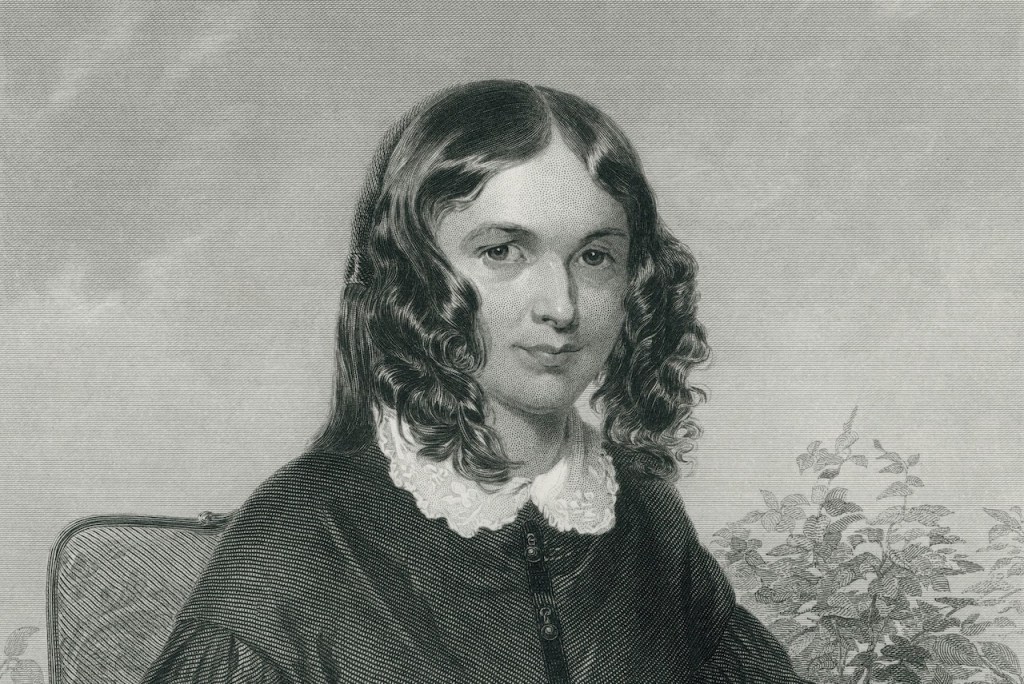
    Image: Elizabeth Barrett Browning – Engraving from original Painting by Chappel, 1872. (Photo by: Universal History Archive/Universal Images Group via Getty Images)

    Elizabeth Barrett Browning’s Sonnet 28 “My letters! all dead paper, mute and white!”

    In Elizabeth Barrett Browning’s sonnet 28 “My letters! all dead paper, mute and white!,” the speaker reacts to each stage of the growing love relationship, while she is looking through a bundle of love letters. 

    Introduction and Text of Sonnet 28 “My letters! all dead paper, mute and white!

    Elizabeth Barrett Browning’s sonnet 28 “My letters! all dead paper, mute and white!” from Sonnets from the Portuguese is dramatizing the speaker’s uncomplicated activity of perusing a bunch of her love letters.  

    She loosens the cord that binds them and then begins to report certain significant details from each missive.  Each one,  on which the decides to report, unveils a stage in the maturing relationship of the two lovers from friend to soul-mate.

    Sonnet 28  “My letters! all dead paper, mute and white!”

    My letters! all dead paper, mute and white!
    And yet they seem alive and quivering
    Against my tremulous hands which lose the string
    And let them drop down on my knee to-night.
    This said,—he wished to have me in his sight
    Once, as a friend: this fixed a day in spring
    To come and touch my hand … a simple thing,
    Yet I wept for it!—this, … the paper’s light …
    Said, Dear, I love thee; and I sank and quailed
    As if God’s future thundered on my past.
    This said, I am thine—and so its ink has paled
    With lying at my heart that beat too fast.
    And this … O Love, thy words have ill availed
    If, what this said, I dared repeat at last!

    Commentary on Sonnet 28 “My letters! all dead paper, mute and white!”

    The speaker in Elizabeth Barrett Browning’s Sonnet 28 “My letters! all dead paper, mute and white!” is looking at the love letters from her beloved suitor and reacting to each step in the growth of their love relationship.

    First Quatrain: Letters That Live

    My letters! all dead paper, mute and white!
    And yet they seem alive and quivering
    Against my tremulous hands which lose the string
    And let them drop down on my knee to-night.

    The speaker begins by exclaiming “My letters!” She sits with a bundle of her letters in her hands and commences to muse aloud her response to fact that they even exist. She insists that they are actually nothing more than “dead paper, mute and white!”  But because she is aware of the story that they contain, she claims that they seem to be “alive and quivering.” 

    Of course, it is the trembling of her hands that causes them to “quiver.” She has untied the cord that binds the letters together in a bunch, and her “tremulous hands” then permit those letters to “drop down on her knee.”

    Second Quatrain:  Each Letter a Pronouncement

    This said,—he wished to have me in his sight
    Once, as a friend: this fixed a day in spring
    To come and touch my hand … a simple thing,
    Yet I wept for it!—this, … the paper’s light …

    The speaker, in the second quatrain, commences her report on what each letter pronounces. The first one that she selects is telling her that her suitor at first desired to visit her for the purpose of friendship.  

    After all they are both poets, and poets are likely to enjoy friendship with other poets.  Thus, at the outset, the two poets experienced friendship, and she was pleasantly surprised that he even wished to visit her.

    In the next missive she on which she focuses, he informs her her that he would like to visit and hold her hand; appropriately and timely, that day was a spring day.  The romance inherent in these image choices is full of possibilities; yet, she regards the event “a simple thing.”  Still, even though it may be simple, it brings tears to her eyes.

    First Tercet:   What God Judges

    Said, Dear, I love thee; and I sank and quailed
    As if God’s future thundered on my past.
    This said, I am thine—and so its ink has paled

    The next epistle with paper that is “light” informs her, “Dear, I love thee.” To this astonishing avowal, she exerts a passionate and extreme reaction.  She sinks back in her seat with a startled cry for she felt as if God had declared some momentous decree on her past life.

    As this sonnet sequence has progressively revealed, this speaker has passed quite a solitary and painfully sorrowful life.  However, her past now is being put in judgment by God, and God is proclaiming that her future will not be replicating her sad past.

    Second Tercet:  Next to a Fast-Beating Heart

    With lying at my heart that beat too fast.
    And this … O Love, thy words have ill availed
    If, what this said, I dared repeat at last!

    The next letter avows to her that he belongs to her. The speaker has so treasured this letter that she has caused the ink to become pale from holding it to her fast-beating heart.  The speaker has figuratively held this letter to her fast-beating heart, and that holding has metaphorically caused the ink to lighten.

    The last epistle inflames her so much that she cannot allow herself to voice any of it nor even offer a hint of what it announces.  Nevertheless, the continuing progress of the sonnet sequence allows the reader to remain perfectly satisfied with what might be a unsatisfying because inconclusive conclusion because the speaker chose to reveal nothing from the final letter’s contents.

  • Elizabeth Barrett Browning’s Sonnet 27 “My own Belovèd, who hast lifted me”

    Image: Elizabeth Barrett and Robert Browning – Two Poets in Love

    Elizabeth Barrett Browning’s Sonnet 27 “My own Belovèd, who hast lifted me”

    The speaker in Elizabeth Barrett Browning’s sonnet 27  “My own Belovèd, who hast lifted me” alludes to the Greek mythological Asphodel Meadows to dramatize her life’s transformation after meeting her belovèd.

    Introduction and Text of Sonnet 27 “My own Belovèd, who hast lifted me”

    In Elizabeth Barrett Browning’s sonnet 27 “My own Belovèd, who hast lifted me” from Sonnets from the Portuguese, the speaker again is dramatizing the contrast between how her life was before she met her belovèd fiancé and how it is now that she has found the love of her life. 

    In this sonnet, the speaker employs an allusion to the Greek mythological “Asphodel Meadows” in order to dramatize the transformation her life has undergone after meeting and growing close to her belovèd.

    The speaker asserts the contrast between her life after meeting her belovèd to her former miserable state of being in order to establish herself firmly in the relationship, which she had earlier attempted to deny.

    Sonnet 27 “My own Belovèd, who hast lifted me”

    My own Belovèd, who hast lifted me
    From this drear flat of earth where I was thrown,
    And, in betwixt the languid ringlets, blown
    A life-breath, till the forehead hopefully
    Shines out again, as all the angels see,
    Before thy saving kiss! My own, my own,
    Who camest to me when the world was gone,
    And I who looked for only God, found thee!
    I find thee; I am safe, and strong, and glad.
    As one who stands in dewless asphodel,
    Looks backward on the tedious time he had
    In the upper life,—so I, with bosom-swell,
    Make witness, here, between the good and bad,
    That Love, as strong as Death, retrieves as well.

    Commentary on Sonnet 27 “My own Belovèd, who hast lifted me”

    The speaker in sonnet 27 “My own Belovèd, who hast lifted me” is alluding to the Greek mythological Asphodel Meadows to dramatize her life’s transformation after meeting her belovèd.

    First Quatrain:  A Cruel Life

    My own Belovèd, who hast lifted me
    From this drear flat of earth where I was thrown,
    And, in betwixt the languid ringlets, blown
    A life-breath, till the forehead hopefully

    The speaker begins by addressing her belovèd directly, telling him again about how he came to her at her lowest point of depression.  Her belovèd has raised the speaker from the depths of utter despair which she now describes as “this drear flat of earth where I was thrown.” 

    The speaker’s life has been so cruel to her that she felt that she was not only sinking but was also violently “thrown” to her lowest level. Even the speaker’s hair had become limp and lifeless as her “languid ringlets” attested, until her lover had “blown / A life-breath” and her forehead would finally come alive with brightness.

    Second Quatrain:  An Infusion of Hope

    Shines out again, as all the angels see,
    Before thy saving kiss! My own, my own,
    Who camest to me when the world was gone,
    And I who looked for only God, found thee!

    After the speaker’s belovèd suitor had lovingly kissed her pale forehead, she then became infused with the hope that she would brighten, “as all the angels see.” 

    The speaker then exclaims and repeats, “My own, my own”; he is now her own belovèd who has entered her life at a time when there seemed to be nothing in the world for which she could go on living.

    This sonnet, unfortunately, may sounds a bit as if the speaker has chosen her human lover over God. The speaker reports that she sought “only God,” before her belovèd’s arrival, but then unexpectedly she “found thee!” 

    However, in earlier sonnets, this speaker has made it clear that she is thankful to God for sending her belovèd and that God knows what is appropriate for His children.

    Thus, the speaker is not suggesting that her suitor is replacing God in the life; she is expressing the fact that now she has a human love in her life, as well as God’s. 

    She has already acknowledged that God was in her life as she struggled to become closer to the Divine Creator.  The difference is that her Creator has now brought her together with a soul mate for the continuation of her earthy incarnation.

    First Tercet:   Celebration of Love

    I find thee; I am safe, and strong, and glad.
    As one who stands in dewless asphodel,
    Looks backward on the tedious time he had

    The speaker continues to celebrate finding her human love, as she reports the uplifting feelings she now experiences: “I am safe, and strong, and glad.”  The speaker then employs the allusion to the Greek mythological positioning of souls in the afterlife, stating, “As one who stands in dewless asphodel.” 

    The “Asphodel Meadows” are located between heaven and hell, and she thus likens herself to an individual positioned between the ultimate good and ultimate bad.   As the speaker “looks backward” to her old life, she deems that time “tedious” compared to how she feels now.

    Second Tercet:  The Superior Action of Love 

    In the upper life,—so I, with bosom-swell,
    Make witness, here, between the good and bad,
    That Love, as strong as Death, retrieves as well.

    The speaker now sees herself as one testifying that while “Death” ushers a soul to a different level of being, she has discovered that “Love” does so as well.   And the speaker’s reaction with a “bosom-swell” demonstrates that she is witness to the superior action of love.

  • Elizabeth Barrett Browning’s Sonnet 26 “I lived with visions for my company”

    Image: Elizabeth Barrett Browning – NPG, London

    Elizabeth Barrett Browning’s Sonnet 26 “I lived with visions for my company”

    In sonnet 26 “I lived with visions for my company,” Elizabeth Barrett Browning’s speaker is dramatizing the difference between her early, private fantasy world and her new world of reality as now occasioned by her belovèd, accomplished suitor.

    Introduction and Text of Sonnet 26 “I lived with visions for my company”

    Elizabeth Barrett Browning’s sonnet 26 from Sonnets from the Portuguese dramatizes the marvelous nature of reality as opposed to the fantasy world of daydreaming.   The speaker has discovered that no matter how wonderfully her own imagination creates, it cannot compete with the reality that God grants.

    The speaker’s life had been closed off from the larger world of people and ideas.  As her fantasy dreams began to fade, however, she was fortunate enough to find better dreams that became reality, as her soulmate entered her life.

    Sonnet 26 “I lived with visions for my company”

    I lived with visions for my company
    Instead of men and women, years ago,
    And found them gentle mates, nor thought to know
    A sweeter music than they played to me.
    But soon their trailing purple was not free
    Of this world’s dust, their lutes did silent grow,
    And I myself grew faint and blind below
    Their vanishing eyes. Then THOU didst come—to be,
    Belovèd, what they seemed. Their shining fronts,
    Their songs, their splendors (better, yet the same,
    As river-water hallowed into fonts),
    Met in thee, and from out thee overcame
    My soul with satisfaction of all wants:
    Because God’s gifts put man’s best dreams to shame.

    Commentary on Sonnet 26 “I lived with visions for my company”

    The speaker is dramatizing the difference between her early fantasy world and the world of reality as now represented by her belovèd suitor.

    First Quatrain:  Imagination for Company

    I lived with visions for my company
    Instead of men and women, years ago,
    And found them gentle mates, nor thought to know
    A sweeter music than they played to me.

    The speaker recalls that she once spent her time in the company of “visions,” instead of real, flesh-and-blood people. She is, no doubt, referring to the authors whose works she had read, studied, and translated. 

    The speaker found their company very pleasant and did not ever think to desire any other kind of relationship.  Her lack of self-esteem likely rendered her somewhat helpless, making her think that all she deserved was this completely isolated life.

    The speaker has many times reported on her isolated life. She lived alone and did not seek a human relationship; in her personal sadness, she suffered, but she also assuaged that sadness with literature, enjoying the association of the thoughts and ideas of those literary giants.

    Second Quatrain:  Perfection Showing Its Flaws

    But soon their trailing purple was not free
    Of this world’s dust, their lutes did silent grow,
    And I myself grew faint and blind below
    Their vanishing eyes. Then THOU didst come—to be,

    At first, the speaker thought that such company would sustain her in perpetuity, but she ultimately found that their supposed perfections began to show their flaws.  Their supposed perfection also reveal the unpleasantries of society.  And thus, she began to enjoy and listen to them less and less.

    The utter royalty of the kings and queens of letters started to fade, and their music started to fall on ears grown too satisfied and jaded to continue enjoying those works. She even found herself becoming even more  diminished as she continued to lose interest in that earlier company.

    First Tercet:  The Belovèd Enters

    Belovèd, what they seemed. Their shining fronts,
    Their songs, their splendors (better, yet the same,
    As river-water hallowed into fonts),

    Fortunately for the speaker, her belovèd entered her life, and he became the reality that showed up her fantasy for the less glorious state it was.  She realized that that fantasy has not satisfied her as much as she had earlier thought.   The imagined relationships with the authors of literary works faded as the reality of a real-life, flesh-and-blood poet filled her life.

    The beauty and glimmering presence of magical literary friends flowed through the speaker’s life as “river water hallowed into fonts.” She had modeled her life on the ephemeral glory of thoughts and ideas as they appeared in poems and art.

    Second Tercet:  Metaphysical Beauty and Reality

    Met in thee, and from out thee overcame
    My soul with satisfaction of all wants:
    Because God’s gifts put man’s best dreams to shame.

    All of the metaphysical beauty coupled itself with the thoughts and dreams of a poet and combined, rolling itself into the reality of her belovèd.  His love for her came to represent everything she had ever wanted; he filled “[her] soul with satisfaction of all wants.” When he came into her life, he brought fruition of her earlier dreams and fantasies.

    Despite the stunning dreams that she had allowed to soothe her suffering soul earlier in her life, she can now aver, “God’s gifts put man’s best dreams to shame.” Again, she acknowledges that her belovèd is a gift from God.

  • Elizabeth Barrett Browning’s Sonnet 25 “A heavy heart, Belovèd, have I borne”

    Image:  Robert Browning and Elizabeth Barrett Browning – history.com

    Elizabeth Barrett Browning’s Sonnet 25 “A heavy heart, Belovèd, have I borne”

    Elizabeth Barrett Browning’s speaker revisits her former sorrow to contrast her earlier “heavy heart” with the light heartedness she now enjoys because of her belovèd fiancé.

    Introduction and Text of Sonnet 25 “A heavy heart, Belovèd, have I borne”

    Elizabeth Barrett Browning’s sonnet 25 from Sonnets from the Portuguese dramatizes the transformation of the speaker’s “heavy heart” of misery into a welcoming home of life and love. She credits her belovèd suitor for her ability to transcend her earlier sorrows.

    The speaker continues to gain confidence in herself and the possibility that she can be loved by one whose status she deems so far above her own.  She began in utter denial of any such luck, but as the muses, prays, and contemplates the motives and the behavior of her beloved, she becomes more convinced of his genuine affection for her.

    Elizabeth Barrett Browning’s speaker revisits her former sadness and melancholy in order to contrast that earlier “heavy heart” with the light heartedness she now has begun to enjoy because of the genuine feelings she now detects in her belovèd life partner.

    Sonnet 25 “A heavy heart, Belovèd, have I borne”

    A heavy heart, Belovèd, have I borne
    From year to year until I saw thy face,
    And sorrow after sorrow took the place
    Of all those natural joys as lightly worn
    As the stringed pearls, each lifted in its turn
    By a beating heart at dance-time. Hopes apace
    Were changed to long despairs, till God’s own grace
    Could scarcely lift above the world forlorn
    My heavy heart. Then thou didst bid me bring
    And let it drop adown thy calmly great
    Deep being! Fast it sinketh, as a thing
    Which its own nature doth precipitate,
    While thine doth close above it, mediating
    Betwixt the stars and the unaccomplished fate.

    Commentary on Sonnet 25 “A heavy heart, Belovèd, have I borne”

    The speaker is revisiting her former sorrow and contrasting her earlier “heavy heart” to the light heartedness she now enjoys because of her belovèd suitor.

    First Quatrain:   A Storehouse of Metaphors for Misery

    A heavy heart, Belovèd, have I borne
    From year to year until I saw thy face,
    And sorrow after sorrow took the place
    Of all those natural joys as lightly worn

    The speaker addressing her belovèd recalls that before she “saw [his] face,” she was afflicted with a “heavy heart.” She suffered a long line of sorrows instead of “all those natural joys” that young woman usually experience so easily.

    This speaker has so often alluded to her sorrow that the reader is not surprised that it appears again in dramatic form. Her storehouse of metaphors that elucidate her misery is large and varied.

    Second Quatrain:  Sorrows Like a String of Pearls

    As the stringed pearls, each lifted in its turn
    By a beating heart at dance-time. Hopes apace
    Were changed to long despairs, till God’s own grace
    Could scarcely lift above the world forlorn

    The speaker compares that long life of “sorrow after sorrow” to a string of pearls and supplies the image of a young woman at a dance, who fingers her pearls as she waits with rapidly “beating heart” to be asked to dance.

    The speaker sees herself as a wallflower and as that metaphoric self stood waiting to be chosen, her hopes were dashed and “were changed to long despairs.” She remained alone and lonely until her belovèd, now future life partner,  mercifully through the grace of God rescued her.

    First Tercet:   Love Warm and Soothing

    My heavy heart. Then thou didst bid me bring
    And let it drop adown thy calmly great
    Deep being! Fast it sinketh, as a thing

    Inordinately, the speaker was so distressed with her burden of a sad, depressed heart that it was difficult even for “God’s own grace” to raise from her that melancholy. In a pain-producing world, her heart that had felt complete dejection. But fortunately her belovèd appeared. He beckoned her, accepted her, and welcomed her to let go of her suspicion and take into her soul the reality of his love for her.

    The speaker’s gentleman friend’s loving affection was like a warm soothing pool of fresh water into which she could drop her painful “heavy heart” to have it washed clean of its sorrowful burden. Her heavy heart sank quickly to bottom of his welcoming comfort as if it belonged in that very place.

    Second Tercet:   Adoring Care

    Which its own nature doth precipitate,
    While thine doth close above it, mediating
    Betwixt the stars and the unaccomplished fate.

    The speaker’s emotional self was thus comforted by her belovèd’s adoring care; she felt that she had come home for the first time. His love enclosed her and lifted her to where she could sense her destiny as majestic as a celestial being “mediating / Betwixt the stars and the unaccomplished fate.”

    The speaker has offered her belovèd a dramatic celebration of her change of heart and credited him with transforming her heavy load of sorrow and dejection into a light sensory gift that has become conducive of heaven.