D. H. Lawrence’s Women in Love offers a study of the 20th-century issue of the divided nature of the human mind. The flawed characters of Rupert and Ursula reveal an unsolvable problem that continues to plague the conscience of humanity, as it struggles for proper behavior.
Lawrentian Irony
D. H. Lawrence’s novel Women in Love has remained the novelist’s most complex yet subtle works. A superficial reading seems to reveal that the two main characters, Rupert Birkin and Ursula Brangwen, are moving toward Lawrence’s notion of the ideal love, that is, unity in love.
On the contrary, however, is the fact that the couple’s unsatisfactory marriage highlights the Lawrentian irony that promotes the satire in which the novelist has steeped his most complex novel.
The Symbol of Fidelity
In A Reader’s Guide to D. H. Lawrence, Philip Hobsbaum points out that the opal ring that Rupert gives to Ursula symbolizes fidelity. Of the trio of rings Rupert casually hands Ursula—a sapphire and a topaz as well as the opal—only the opal fits her ring finger.
Lawrence’s use of the opal indicates irony; a literal interpretation of the meaning of the opal would render the novel a simplistic story with a happy ending. A close analysis of the characters in this work and of Lawrence’s idea of modern man’s divided nature reveals that this novel is a highly complex satire of that divided nature.
Both Hobsbaum and Richard Aldington have applauded Lawrence’s genius for satire as it is demonstrated in Women in Love. According to Lawrence’s own ethic expounded in Psychoanalysis and the Unconscious, “the goal in life is the coming to perfection of each single individual” (100).
Lawrence further explains that “recognition of the abysmal other” and “the twofold passionate flux of sympathetic love, subjective abdominal and objective devotional” must balance and be equally accepted by the individual. Individuals must achieve this equilibrium before they can experience an ideal relationship.
The Lawrentian Balance
According to his ideas of equilibrium, Lawrence creates the characters of his novels who thus satirize the imbalance in modern man and woman. Ursula, at the point in the novel that she is fitted with the ring symbolizing fidelity, has not achieved the Lawrentian balance. And neither has the character, Rupert, who is about to become her lover. Both Rupert and Ursula have a void in their lives—a void that they never know how to fill.
Ursula’s former lover Skrebensky, whom readers met in The Rainbow, was unable to fill the void for her, and Rupert’s relationship with Hermione has left him empty as well. Because these characters are not perfected as individuals, they bring their imperfections to their relationships with their lovers.
That the ring fitting Ursula’s ring finger symbolizes fidelity highlights the irony of their situations. Neither character—Rupert who gives the ring, nor Ursula whom it fits—is capable of fidelity because they are still unfaithful to their own true nature, the unified nature that knows how to recognize and accept that “abysmal other.”
These characters exemplify modern man and woman who have not reached the Lawrentian perfection, whose failure to recognize that they have divided their psyches “has torn the modern world into two halves, the one half warring for the voluntary, objective, separatist control, the other for the pure sympathetic” (100).
Appearances
The fact that Rupert and Ursula do marry and verbally declare fidelity effects the situation against which the irony is directed. Ostensibly, the couple strives to unite, but at the deep personal level where unity ultimately prevails, they remain divided. According to F. H. Langman,
The tale, if we can trust it, simply does not present the marriage of Birkin and Ursula as ideal in itself or as an adequate solution to the problems presented. On the contrary, an important thesis of the novel is that no fully satisfying personal relationship is possible to people placed, like Birkin and Ursula, in a social and religious vacuum. (81-82)
Lawrence emphasizes repeatedly in his Psychoanalysis and the Unconscious: “No human being can develop save through the polarized connection with other beings” (108). His character Rupert Birkin insists that he cannot feel complete without a deep bond of love with a man as well as with a woman.
It is Rupert’s failure to come to terms with his sexual orientation that underscores his split psyche, and his marriage to Ursula cannot serve to weld it. In his original opening chapter to Women in Love called “A Prologue,” Lawrence explicitly elucidates Rupert’s affinities:
He wanted to be in love with a woman. He wanted all the while to feel this kindled, loving attraction towards a beautiful woman, that he would often feel toward a handsome man. But he could not. Whenever it was a case of a woman, there entered in too much spiritual, sisterly love; or else, in reaction, there was only a bestial, callous sort of lust. (58)
Lawrence delineates Rupert’s sexual orientation quite clearly in his rejected draft and the impact of Rupert’s repressing that nature becomes the focus, however covert, in the published version.
According to George H. Ford, Lawrence decided against the explicit portrayal of Rupert’s same-sex attraction because he feared censorship. He had just been through the ordeal of censorship with The Rainbow and could not afford it again so soon (39-40).
Split Psyche
Ursula does not relieve Rupert’s burden of a split psyche; she cannot even understand him. Their violent disagreements continue throughout their relationship. On occasions, she merely acquiesces to his wishes; an example of this acquiescence is the “Chair” episode. They purchase an old chair and Rupert declaims against materialism.
The couple then bickers about the merits of Jane Austen’s England and their own, and finally, for what seems an unmotivated capitulation, Ursula just gives in and says she agrees that they need no possessions, and thus she donates the chair to a young, scruffy-looking city couple whom Lawrence describes as a couple also falling far from his ideal of balance and perfection in love.
Lawrence tells readers in his rejected chapter that Rupert is divided against himself: “he kept this secret [‘his spasmodic affinity for the men he saw’] even from himself” (61). Because he cannot even bring his feelings before his own scrutiny, he has little hope of making the Lawrentian connection with Ursula—a connection which only balanced beings can achieve.
Infidelity to Self
As Langman writes, “The most painful question in the whole novel, a question that precisely reveals the limited value of the experiment in marriage, is Ursula’s question: ‘why aren’t I enough?’” (86) Ursula claims that Rupert is enough for her, and because she feels this way, she cannot come to terms with Rupert’s inclinations. Rupert has learned to repress his nature, but according to Lawrence, that kind of repression goes against the self—it represents infidelity to the self (Psych. 108).
Rupert and Ursula’s relationship, therefore, is not the nourishing meeting of souls that they at times during their affair have claimed it to be. The opal ring serves as an important device for satirizing that relationship. The irony that Ursula’s ring finger fits the symbol of fidelity foreshadows the marriage which solves no problems, but, in the words of George H. Ford, “the possibility is left, as in the best of Lawrence’s writings, dangling” (41).
At the end of the couple’s final conversation, readers observe that they are indeed left only with a possibility. Rupert and Ursula are still not united but still struggling with conflicting attitudes. The death of Gerald has left Rupert without a man to love; he says: “I wanted eternal union with a man too: another kind of love.” Ursula counters: “I don’t believe it. It’s an obstinacy, a theory, a perversity.”
Ursula then continues: “You can’t have two kinds of love. Why should you!” And Rupert responds: “It seems as if I can’t. Yet I wanted it.” And Rupert’s and the novel’s final words are: “‘I don’t believe that,’ he answered.” Whether this couple ever finds that Lawrentian ideal of perfection no doubt remains a possibility, but the satire remains intact. The opal ring, symbol of fidelity, fits Ursula’s finger, but the fidelity between the partners remains illusive.
A slightly abbreviated version of this article first appeared in The Explicator, Volume 46, Number 2, Winter 1988.
Works Cited
Aldington, Richard. Introduction. Women in Love. By D. H. Lawrence. New York: Viking P, 1960. ix-xii. Print.
Ford, George H. “Notes to Lawrence’s Prologue to Women in Love.” The Rainbow and Women in Love: A Casebook. Ed. Colin Clarke. London: Macmillan, 1969. 35-42. Print.
Hobsbaum, Philip. A Reader’s Guide to D. H. Lawrence. New York: Thames and Hudson, 1981. Print.
Langman, F. H. “Women in Love.” Critics on D. H. Lawrence: Readings in Literary Criticism. Ed. W. T. Andrews. 81-87. Print.
Lawrence, D. H. “Prologue to Women in Love.” The Rainbow and Women in Love: A Casebook. Ed. Colin Clarke. London: Macmillan, 1969. 43-64. Print.
Image: Book cover Women in Love from my personal library
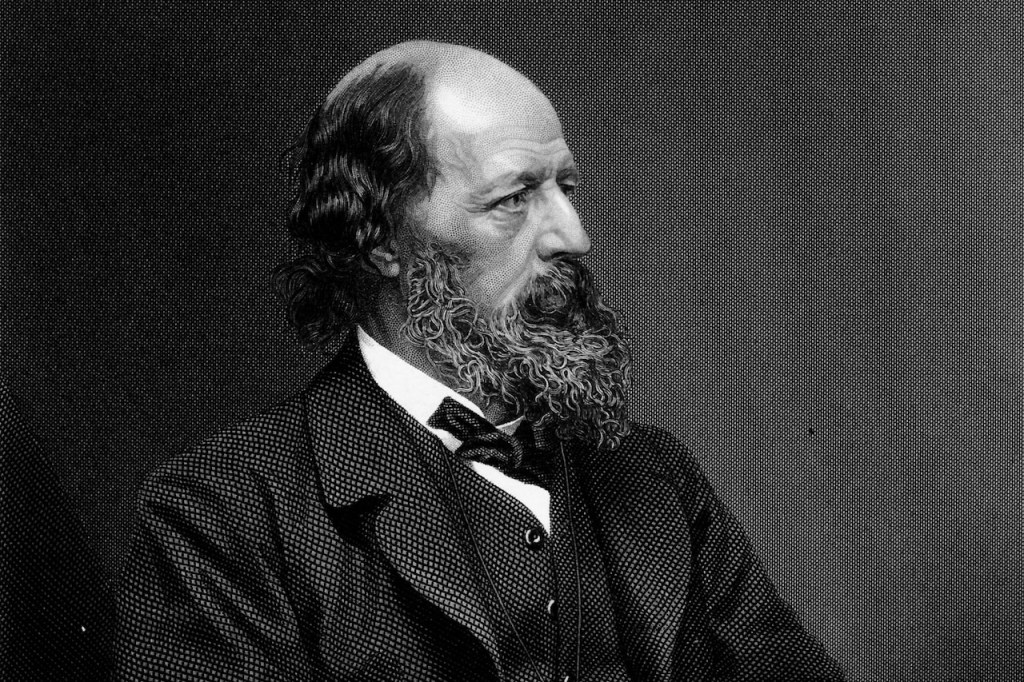
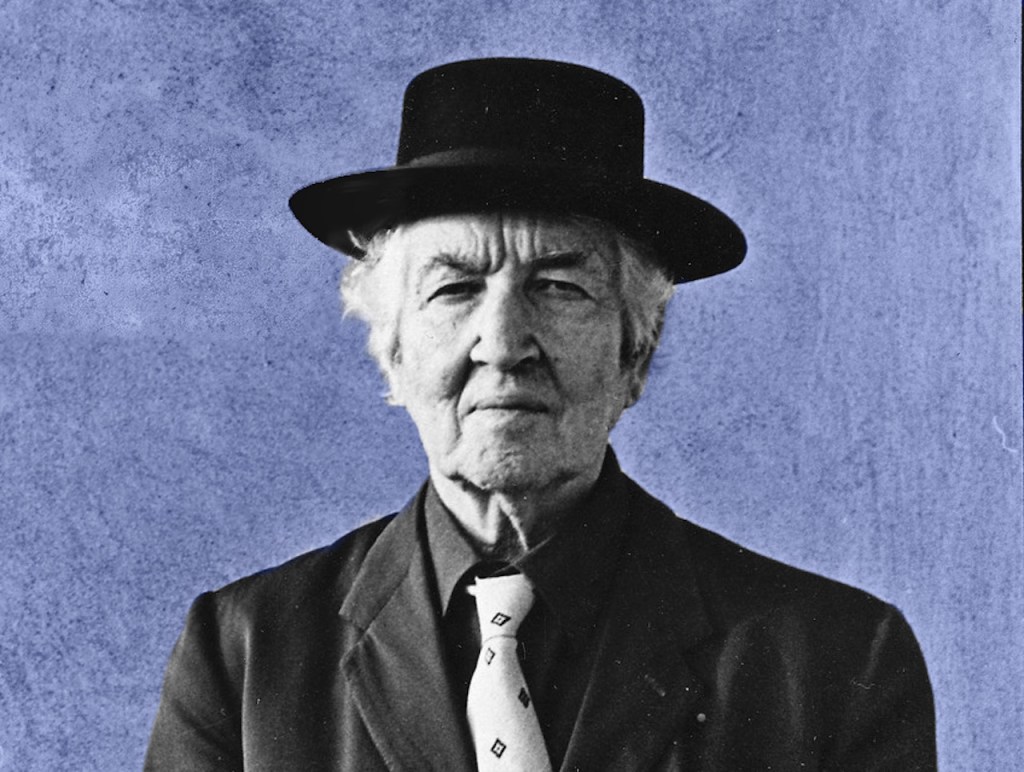
Image: A. E. Housman Photo by Hulton-Deutsch/Hulton-Deutsch Collection/Corbis via Getty Images
A.E. Housman’s Poem XXVII “Is my team ploughing”
Two speakers appear in A. E. Housman’s “Is my team ploughing”: one a dead man, the other his living friend. The dead man asks for a report about how things are going now that he has died.
Introduction and Text of “Is my team ploughing”
A E. Housman’s “Is my team ploughing” (XXVII) appears in A Shropshire Lad, the poet’s well-known, somewhat autobiographical collection. In the poem, a deceased man questions a living friend about various aspects of their life together before the dead man died.
The eight stanzas are sectioned into question and response, similar to an interview, with the dead man beginning with a question. The dead man’s questions appear in quotation marks, followed by the living friend’s response without quotation marks.
XXVII Is my team ploughing
“Is my team ploughing, That I was used to drive And hear the harness jingle When I was man alive?”
Ay, the horses trample, The harness jingles now; No change though you lie under The land you used to plough.
“Is football playing Along the river shore, With lads to chase the leather, Now I stand up no more?”
Ay the ball is flying, The lads play heart and soul; The goal stands up, the keeper Stands up to keep the goal.
“Is my girl happy, That I thought hard to leave, And has she tired of weeping As she lies down at eve?”
Ay, she lies down lightly, She lies not down to weep: Your girl is well contented. Be still, my lad, and sleep.
“Is my friend hearty, Now I am thin and pine, And has he found to sleep in A better bed than mine?”
Yes, lad, I lie easy, I lie as lads would choose; I cheer a dead man’s sweetheart, Never ask me whose.
Commentary on “Is my team ploughing”
Two speakers appear in these lines: one a dead man, the other his living friend. The dead man asks for a report about how things are going now that he has died.
First Stanza: The Dead Man Asks a Question
“Is my team ploughing, That I was used to drive And hear the harness jingle When I was man alive?”
The dead man begins by asking a question of his friend who is still alive. The deceased wishes to find out if his team of horses that he employed in ploughing his fields is still performing that function.
Therefore he puts the question to his friend: “Is my team ploughing?” Continuing he adds, “That I used to drive, / And hear the harness jingle.” The dead speaker, no longer possessing the capability of tilling his farm fields, nor of listening to the jingling of the horses’ harnesses, seeks answers to the mystery of how those still living are functioning now that the deceased is no longer “man alive.”
Second Stanzas: The Living Man Responds
Ay, the horses trample, The harness jingles now; No change though you lie under The land you used to plough.
The friend immediately responds that the horses are indeed continuing to plough and their harnesses are still making their jingling sounds. Life has continued on as before the deceased became deceased. Everything goes on as it did before the poor dead farmer’s body was placed “under / The land [he] used to plough.”
Third Stanza: No Longer Able to Play
“Is football playing Along the river shore, With lads to chase the leather, Now I stand up no more?”
The dead speaker then wants to know if their other friends are still playing football; he shows that he remembers where they used to play, adding the colorful fact of the boys chasing the ball as they played their game.
He emphasizes his current status to his living friend that he can no long join in the game. He makes sure the friend does not forget that being dead he can no longer play and enjoy himself as he did before.
Fourth Stanzas: Contrast Between the Living and the Dead
Ay the ball is flying, The lads play heart and soul; The goal stands up, the keeper Stands up to keep the goal.
The friend then responds that yes the boys are still playing their lively game. He stresses his positive answer, saying, the goal is still in place and the goalie still performs his task in the game. By repeating the term “stands” the speaker emphasizes the contrast between the living players and the deceased questioner who can no longer “stand.”
Fifth Stanza: Hated to Leave His Sweetheart
“Is my girl happy, That I thought hard to leave, And has she tired of weeping As she lies down at eve?”
The dead man then queries after his girlfriend. He hated having to leave her, and he says, he “thought hard” on the issue. He wonders if she has ceased mourning the loss of him, as he surmises that his sweetheart would have bitterly mourned his passing and that she might still be in mourning for him.
Sixth Stanza: A Well-Satisfied Sweetheart
Ay, she lies down lightly, She lies not down to weep: Your girl is well contented. Be still, my lad, and sleep.
However, the friend assures the dead man that the sweetheart is well satisfied, and as she lies down in bed at night, she is not pining nor shedding tears. This turning point reveals that the friend may not be such a good friend to the dead man as it might have seemed; the living friend knows too much about the sweetheart and has revealed to the dead man more than the poor fool would have wanted to know.
Seventh Stanza: His Hearty Friend
“Is my friend hearty, Now I am thin and pine, And has he found to sleep in A better bed than mine?”
The dead speaker then poses a final question about his friend, the one he has been interviewing all along. The dead man asks if his friend is “hearty,” as he once again emphasizes his own status as a dead man. Instead of “hearty,” he is “thin and pine.” Thus he asks if the still living friend has found a better place to sleep than the grave. Is it possible that the dead already knows, or suspects, the answer to that question?
Eighth Stanza: Quite Well and Sleeping Well
Yes, lad, I lie easy, I lie as lads would choose; I cheer a dead man’s sweetheart, Never ask me whose.
The living friend then assures his dead friend that he is quite well, and he sleeps well. And he adds, “I cheer a dead man’s sweetheart.” When the living friend, who has usurped the place of the dead man with the latter’s sweetheart, adds, “Never ask me whose,” the questioning does cease.
But how likely is it that the dead man does not already have the answers to all of his questions? The dead man’s questions seem to elicit responses that unveil the treachery of his so-called living friend. Such an examination of possibilities places before the minds of readers and listeners the unending route of knowledge, experience, and truth that does not end with death.
The Extended Paradox of a Dead Man Speaking
Readers of A.E. Housman’s “Is my team ploughing” may react to the implausibility of a dead man holding a conversation with a living man. That reaction will depend on how literally one takes the conversation. Obviously, a literal conversation is impossible; thus, one must consider the fact that the conversation itself is a figure of speech, an extended paradox.
Paradoxes, which at first seem absurd, are justified upon further explanation. But how does one justify a conversation between a dead man and a living man? Only the living man can be offering a report of this conversation; thus, the dead man’s part of the conversation is also coming from the mind of the living man. But why would a living man hold such a conversation, even if imaginary?
The answer is that the living man is being tormented with guilt at the way he treated the dead man while the latter was living, and now that his so-called friend is dead, he is committing the ultimate sin against their friendship by taking his place with the dead man’s sweetheart. The living friend is merely attempting to assuage his own guilty conscience by holding the imaginary conversation in which he seems to be attempting to solace his former friend.
Lucille Clifton’s “at the cemetery, walnut grove plantation, south carolina, 1989”
In Lucille Clifton’s unconventionally capitalized titled poem “at the cemetery, walnut grove plantation, south carolina, 1989,” the speaker offers a lament that dramatizes the omission of the mention of slavery during a tour the poet took of Walnut Grove Plantation in South Carolina in 1989.
Introduction with the Text from “at the cemetery, walnut grove plantation, south carolina, 1989”
The United States of America in the twenty-first century has become replete with attempts to abolish history [1]. Examples include removing statues of noted individuals such as Frederick Douglass [2], and many others [3], changing names of public buildings, colleges, and streets [4].
Poet Lucille Clifton encountered a situation that had attempted to abolish history, and she was greatly offended by that attempt—so offended that she wrote this poem about this issue! Clifton has remarked, “You see, we cannot ignore history. History doesn’t go away. The past isn’t back there, the past is here too.”
After being asked, “Is it part of poetry’s job to recover history, to proclaim it, and to correct it when necessary?,” she responded, “Yes. All that may be needed is that the injustice in the world be mentioned so that nobody can ever say, ‘Nobody told me’.”
W. H. Auden once quipped in his tribute poem, “In Memory of W. B. Yeats” [5], “Poetry makes nothing happen.” However, sometimes in quiet ways that may snowball into movements, poetry may be able to start the ball rolling, and one might hope that Clifton’s little verse may serve to save history lessons from disappearance.
at the cemetery, walnut grove plantation, south carolina, 1989
among the rocks at walnut grove your silence drumming in my bones, tell me your names.
nobody mentioned slaves and yet the curious tools shine with your fingerprints. nobody mentioned slaves but somebody did this work who had no guide, no stone, who moulders under rock.
tell me your names, tell me your bashful names and I will testify.
the inventory lists ten slaves but only men were recognized.
among the rocks at walnut grove some of these honored dead were dark some of these dark were slaves some of these slaves were women some of them did this honored work. tell me your names foremothers, brothers, tell me your dishonored names.
here lies here lies here lies here lies hear
Reading: Lucille Clifton reading her poem, “at the cemetery, walnut grove plantation, south carolina, 1989”
Commentary on “at the cemetery, walnut grove plantation, south carolina, 1989”
This poem is voicing its plaintive lament that there was no mention of slavery during a tour the poet took of Walnut Grove Plantation in South Carolina in 1989. The omission is particularly galling because the place is a plantation in the South.
The history of such a place would be replete with information about that heinous institution. Simply ignoring an issue because it is unpleasant can do more harm than good. No problem was ever solved by ignoring it.
First Stanza: Addressing a Ghost-Like Presence
among the rocks at walnut grove your silence drumming in my bones, tell me your names.
In “at the cemetery, walnut grove plantation, south carolina, 1989,” the speaker addresses the ghost-like presences of the imagined slaves about which she knows nothing.
She is convinced that there had to be slaves on this large plantation that was thriving in the early nineteenth century. She dramatically claims that the silence of the slaves was “drumming / in [her] bones.” And she asks them to “tell [her] [their] names.”
Second Stanza: Intuiting a Presence
nobody mentioned slaves and yet the curious tools shine with your fingerprints. nobody mentioned slaves but somebody did this work who had no guide, no stone, who moulders under rock.
The speaker has likely come to take the plantation tour hoping to get a sense of the slaves that she believed worked there. She fancies that even though the tour guide has never mentioned slaves, she feels that she is intuiting their presence. Even though she did not hear the word “slave,” the very tools that are present seem to testify that slave left their fingerprints on them.
Since “somebody” had to have done that work, she reasons that it had to be the slaves. The owners of the plantation, Charles and Mary Moore, had ten children; those “fingerprints” may also be from those children who likely also worked on the plantation. Still, the speaker’s intuition allows her to create her speculative drama as she assumes that those slaves now “moulder[ ] under rock.”
Third Stanza: Who Are You?
tell me your names, tell me your bashful names and I will testify.
The speaker then begs the ghosts to tell her their names, and she “will testify” for them. Her testimony may not be thorough, but as least it is more than the nothing at all she is receiving from this historically filtered tour.
If the slaves existed, they lived and worked as such. Perhaps, she wishes simply to cite their names, which is an admirable thought, despite the impossibility of ever knowing those names.
Fourth Stanza: Proof of Their Existence
the inventory lists ten slaves but only men were recognized.
The speaker then reports that the list of “inventory” did mention ten male slaves. This possible factoid affords the female speaker another issue over which to express indignation: that the female slaves are not even listed as inventoried property.
Fifth Stanza: Slaves in the Cemetery
among the rocks at walnut grove some of these honored dead were dark some of these dark were slaves some of these slaves were women some of them did this honored work. tell me your names foremothers, brothers, tell me your dishonored names.
The speaker then muses that in the cemetery some of those buried must be slaves, and, of course, some of those slaves were women. They all did “honored work.” Again, the speaker demands of the imagined ghostly presences that they reveal their names.
They were “foremothers, brothers,” and she wants to know their “dishonored names.” They are “dishonored” because the speaker does not know their names and has no hope of finding out exactly who they were. While revision of historical facts remains an abomination, total erasure from the historical record is even worse.
Sixth Stanza: Who Lies Buried Here?
here lies here lies here lies here lies hear
The final five lines of the poem repeat the line “here lies” four times and ends with “hear.” She would like to add a name to each line, but since she is unable to do so, she offers one last command: she wants them to “hear” that she would honor them if she could.
CLIFTON: Well, let me tell you what happened with that poem. I went to Walnut Grove Plantation in South Carolina in 1989 and I was the only person of color on the tour. It’s a wonderful two thousand acres, but on the tour there was no mention of slaves. The plantation had the original furniture, and the guide talked about the difficulty of the work for a small family, but there was no mention of slavery. Now I’m very nosy–I want to know everything when I travel to give readings, all the gossip, everything. I like to know what happened here, so I always ask about the people who were here before these people? And then the uncomfortable question always is “Where are they now?”
Well, Walnut Grove Plantation has the family burying ground, and on the sides of the roped-off path leading to that burying ground there are crosses and rocks and other things sitting on edge that to me clearly mark the graves of slaves. So I asked, “Why don’t you mention slaves?” The first answer was “Maybe the guide didn’t want to embarrass you.” “Well,” I said, “I’m not a slave. I don’t know why he would think I’d be embarrassed.” Then I asked again, and the answer was, “Maybe they didn’t have any.” Well, they had two thousand acres in South Carolina in the early part of the nineteenth century. Be serious!
When I suggested that the guide check the inventory–because slaves were considered property and were often inventoried–they discovered that the plantation had an inventory of ten slaves, but they might have had more because women weren’t counted. Now, well, I had to find out about that! I mean, some things say, hey, like “No!” Then when I learned that the women were not considered valuable enough to inventory, I definitely wanted to write about that.
MOYERS: What do you want the readers to do at the end of the poem when you change the word “here” to “hear”?
CLIFTON: I want them to recognize that only half the truth was being told. At that time schoolchildren were taken there on field trips to Walnut Grove, and half the children in the town were denied the knowledge that their ancestors had helped to build that plantation. That is unjust, and I’m into justice big-time.
I read that poem in South Carolina a lot, and someone in the audience–I think she was the director of the group which has restored the plantation–wrote me a letter saying that she just didn’t realize. Two years ago they began building a model slave cabin, and now they are going to include all the people who lived there in the tour. So that’s one poem doing something, making a difference. Then once when I did a reading at the nearby town a woman came up and told me that her family had owned Walnut Grove, but she had never gone back—she was ashamed—so I said the next time I come here, we must go together. You see, we cannot ignore history. History doesn’t go away. The past isn’t back there, the past is here too.
MOYERS: Is it part of poetry’s job to recover history, to proclaim it, and to correct it when necessary?
CLIFTON: Yes. All that may be needed is that the injustice in the world be mentioned so that nobody can ever say, “Nobody told me.”
Lucille Clifton has composed a delightfully funny and entertaining poem about the unlikely subject of big hips. While most ladies feel less than full of pride for a big rear end, Clifton’s speaker gleams with pride over her wide bottom. The speaker has nothing but praise for her huge keister.
Introduction with Text of “homage to my hips”
The speaker in Lucille Clifton’s hilarious little ditty is gloating about an unlikely target for gloat—the physical feature that many woman would prefer to hide. But this speaker is filled with pride about her possession of a huge set of hips; thus, she colorfully and insistently flaunts those “magic” hips.
Lucille Clifton’s style is unique. She has no compunction about keeping her letters all in lower case. Often in the hands of much less talented craftsman, such a departure from traditional grammar/mechanics looks like mere showing off or trying to put forth the rebel- without-a-cause attitude, as the verse then cannot support that departure.
But Clifton’s unusual enjambment also works well, while in the hands of a poetaster the same attempt at odd line breaks merely disrupts meaning while demonstrating immaturity and amateurishness.
homage to my hips
these hips are big hips they need space to move around in. they don’t fit into little petty places. these hips are free hips. they don’t like to be held back. these hips have never been enslaved, they go where they want to go they do what they want to do. these hips are mighty hips. these hips are magic hips. i have known them to put a spell on a man and spin him like a top!
Commentary on “homage to my hips”
In Lucille Clifton’s “homage to my hips,” a big-hipped woman celebrates the size of her big bottom. She elucidates her pride of size in her colorful little drama, revealing her satisfaction with the humble yet significant pride-showing word “homage.”
One almost wants to think of the title as “homage to my big hips,” but Lucille had the foresight to allow the reader to discover the reason for that “homage” after experiencing the poem itself.
First Movement: Big -Hipped and Proud
these hips are big hips they need space to move around in. they don’t fit into little petty places.
The speaker begins with the provocative statement, “these hips are big hips.” Such audacity would take the wind out of the sails of any name-calling huckster who would try to make this speaker’s rump the butt of any joke.
This woman is proud her big hips, and her pride is infectious; she plans to crow about her big hips and make people know the importance of her huge posterior. The speaker then claims that her hips need lots of space “to / move around in.” She doesn’t just sit on that humongous keister; she moves it around.
She is an active broad; she’s in your face. So she demands room to move her behind. She gives no quarter to anyone who would denigrate her big bottom.
This speaker will not tolerate anything “little” or “petty.” She is influenced by her big rear to see all the world as a humungous opportunity to do things, to move around as a big, strong force. She sees life itself full of space for all things “big” which she has discovered to be a beautiful thing.
Second Movement: Free-Hipped and Profound
these hips are free hips. they don’t like to be held back. these hips have never been enslaved, they go where they want to go they do what they want to do.
Those big hips cannot squeeze into small spaces. Those small places are simply too “little” for her, and they represent “petty places” that will not allow the expanse of freedom she demands for herself, her life, and her mind.
As her hips are broad, so is her mind. She will not be limited physically or mentally. She belongs to the world where profundity reigns. She brooks no little-minded thinkers. Her big hips are “free hips.” They go where they wish, and they do as they please.
Those expansive hips are wide as the cosmos. They have elevated her level of courage. Enslaved lesser hips and minds can just get out of her way. She will push her big hips into any place that will accommodate them.
She will not allow the mediocre minds to put her in chains. Her hips will never abide by any restraints; they move where they desire to move and when they desire to move. They keep on moving; they keep on achieving what her broad mind can imagine.
This big-hipped speaker is proud of her accomplishments, and those big hips are a large part of that achievement. She will sing to her hips as she transcends the limitations that would hem them and her round.
This speaker’s world is big like her hips; her mind is even bigger than those big hips. And she will have everyone take notice. There will never be a place or a person who can limit this strong woman, whose hips have now become a symbol for her strength, liberation, and determination for success.
Third Movement: Magic-Hipped and Glory-Hipped
these hips are magic hips. i have known them to put a spell on a man and spin him like a top!
Spreading out in all directions, the mental acuity of this big-hipped woman will not be stopped from accomplishing all the glory, wisdom, and rewards her ability can bring her. Her hips “do what they want to do.”
She cannot be caged or shrunk by social standards. Thin hips are for small minds, and her mind is big like her hips. The speaker then hints that those hips have not kept a big fat woman from enjoying sexual experience once thought to belong only to thin, emaciated supermodels. Her hips are “magic.”
They can capture the imagination and attention of any man, and then after they capture the man, they can cause him to succumb to her will. That spinning-top man comes under spell because of those hips that perform their spell-working.
The speaker has no compunction about bragging up those big hips. She wants men and women alike to understand that she is proud of that prominent physical feature.
This declaration is her protest against smallness in any form—especially when it comes to her bottom. She gloats about a physical feature that many woman would wish to hide, but she is full of pride about her big keister as she flaunts those spell-binding, “magic” hips.
Arna Bontemps’ speaker makes a statement about three classifications of humankind, employing subtle but bitter irony to further his point of view.
Introduction with Text of “God Give to Men”
Arna Bontemps’ “God Give to Men” disguises its bitter irony in a prayer, in which the speaker seems to be asking God for certain gifts for each of three classifications of human beings: “the yellow man,” “blue-eyed men,” and “black man.”
The speaker’s subtle but bitter irony reveals his contempt as he actually denigrates two of classifications. The speaker does not reveal explicitly to which classification he belongs. Thus, readers are given some latitude to interpret the significance of each gift the speaker wishes to bestow on each class of men.
An interesting thought experiment might include reading the poem from three different perspectives. That is, if the speaker is a “yellow man,” what do his gifts to that class mean? Also, if he is one of the “blue-eyed men,” how does that change the significance of each gift? And if he is a member of the “black man” classification, how might that impact his choices?
The Weakness of Stereotyping
It should be noted that the speaker engages heavily in stereotyping for all three classifications. Such a weakness could encourage the thought that this speaker does not belong to any of the classifications to which he is referring; for example, perhaps he is a red man or a brown man of Hispanic or Middle Eastern heritage, or perhaps he is an Indian from India.
By stereotyping each classification of man and men, the speaker offers nothing of substance regarding each, but the question does arise regarding the possible animus he holds for certain of the classifications.
Singular vs Plural
Interestingly, the speaker refers to the first classification as “the yellow man,” while designating the second group as “blue-eyed men.” Then he returns to the singular for the third group. That distinction from singular for the “yellow man” to plural for the “blue-eyed men” and then back to singular for the “black man” offers an issue for interpretation.
Might pluralizing the “blue-eyed” indicate the speaker’s level of familiarity with that group? Perhaps he simply finds the plural more rhythmic in its employment of pronouns. Or perhaps, it a simple rookie mistake. Such distinctions remain for each reader to decide.
God Give to Men
God give the yellow man an easy breeze at blossom time. Grant his eager, slanting eyes to cover every land and dream of afterwhile.
Give blue-eyed men their swivel chairs to whirl in tall buildings. Allow them many ships at sea, and on land, soldiers and policemen.
For black man, God, no need to bother more but only fill afresh his meed of laughter, his cup of tears.
God suffer little men the taste of soul’s desire.
Commentary on Arna Bontemps “God Give to Men”
In this poem, the speaker puts on display stereotypes that he holds regarding three classifications of humankind. His evaluation of each classification becomes apparent through the gifts that he asks the Creator to bestow on each.
First Stanza: The Yellow Man
God give the yellow man an easy breeze at blossom time. Grant his eager, slanting eyes to cover every land and dream of afterwhile.
In the first stanza, the speaker asks God to grant “the yellow man” gentle winds as he engages his “slanting eyes” observing the beauty of “blossom time.” He then asks that this yellow man be afforded the prescience to peer into the “afterwhile.”
The two gifts that the speaker is asking from God for the “yellow man” reveal two stereotypes that Westerners entertain regarding their Eastern brothers and sisters. The first gift of “an easy breeze at blossom time” shows that the speaker has been influenced by Japanese and Chinese fine paintings that depict delicate “blossoms.”
In his second gift to the “yellow man,” the speaker is engaging the stereotype that assumes all Asians adhere to the tenets of reincarnation and karma. He wishes God to grant this Eastern man the ability to see with his “slanting eyes” “every land and dream / of afterwhile.”
The magnanimity of both these gifts, however, is diminished by the mere fact that both gifts are based on stereotypes, not the individual heart-felt desire that each human being be given appropriate gifts from God.
But the insincerity of these stereotypical gifts becomes more than merely trivial. The speaker is denigrating the yellow man for engaging in the mere frivolity of light sense pleasure; that “easy breeze at blossom time” thus competes with more important life-sustaining vital gifts that the speaker could have assigned the yellow man.
Note also that a poet writing today would be pilloried for using an expression such a “slanting eyes” to refer to an Asian individual—that is, unless that poet is of the ilk of LeRoi Jones, aka Amiri Baraka or Arna Bontemps.
Second Stanza: The Blue-Eyed Men
Give blue-eyed men their swivel chairs to whirl in tall buildings. Allow them many ships at sea, and on land, soldiers and policemen.
For the “blue-eyed men,” the speaker asks that God give them skyscrapers with office equipment, as well as mighty navies and armies with “soldiers” as well as “policemen.” Again, as with the yellow man, the speaker employs a mere stereotype to designate which two gifts he thinks God should grant. The first gift that God should grant the blue eyes is the comfortable chairs in office buildings that are tall.
The speaker is presenting the stereotype that blue-eyed men are materialists who work in offices with “swivel chairs” in “tall buildings.” The second gift of vast military force and police officers again stereotypes the “blue-eyed men” as interested only in power and force.
By honing in on these two particular gifts instrumental in the use of force, the speaker reduces those men with blue eyes to power hungry monstrosities. As this classification is much less of a protected class in the 21st century, the poet writing today could get away with much more invective stereotyping even than this one.
Third Stanza: The Black Man
For black man, God, no need to bother more but only fill afresh his meed of laughter, his cup of tears.
The speaker then asks God’s gift to the “black man” be nothing special—just let him laugh plenty and cry as needed. This classification dictates that it suffer the other classes to precede it, as this classification remains humble. But the humility remains a mere façade as the bitter irony of the speaker’s requests has demonstrated his scant knowledge of all three classifications.
A stereotype can describe only a surface level of qualities, for example, the notion that black people all have rhythm and love watermelon and fried chicken becomes ludicrous after observation of real individuals forming this classification. Yet, less obnoxious stereotypes are just as insidious, as they stand in for individual knowledge and mask ultimate reality.
Fourth Stanza: Suffering Their Desires
God suffer little men the taste of soul’s desire.
The fourth stanza consists of only two lines that ask a generalized gift from God. The speaker wishes that each man of each classification “suffer” “the taste of soul’s desire.” Essentially, the speaker is asking God make sure each of these “little men” are afflicted with whatever punishment they deserve for entertaining the desires that they hold.
The speaker has assigned each classification of human beings a “soul’s desire,” but that desire has been determined by a very biased speaker, who holds bitter contempt for his other-racial fellows.
Asking God to grant each group of mankind their wishes, the speaker assumes that the yellow man wants to experience pretty flowers and contemplate the after life and that the blue-eyed men wish to accrue wealth and power.
However, black man needs nothing at all; he remains so humble that all he wants is just to laugh and cry as he sees fit. Thus the speaker is also implying that heretofore the black man has been denied his ability to laugh and cry according to his dictates. But now through his humble prayer, the speaker hopes that God will give these well-deserved gifts, and then all will be right with the world.
Reaping Bitter Fruit
Readers likely wonder what may be the significance of race for the black poet Arno Bontemps. The following poem by Bontemps is one example that demonstrates the poet’s attitude toward race:
A Black Man Talks of Reaping
I have sown beside all waters in my day. I planted deep, within my heart the fear That wind or fowl would take the grain away. I planted safe against this stark, lean year. I scattered seed enough to plant the land In rows from Canada to Mexico But for my reaping only what the hand Can hold at once is all that I can show. Yet what I sowed and what the orchard yields My brother’s sons are gathering stalk and root, Small wonder then my children glean in fields They have not sown, and feed on bitter fruit.
The speaker in the Bontemps “The Black Man Speaks of Reaping” portrays black labor as vast, careful, but undercompensated; the speaker’s harvest is stolen by others, leaving descendants to glean only bitter, inherited injustice.
While Bontemps did not spout bitter personal hatred toward his fellows of other races—as did LeRoi Jones, aka Amiri Baraka—Bontemps did often decry the limitations he perceived that were placed on the black race. He then often expressed his bitterness with irony and satire.
In “God Give to Men,” Bontemps has crafted a speaker, who is demonstrating a bitter attitude directed toward the races of men not his own, and although the piece engages subtle irony, it loses its heft because of the focus on stereotypes.
Image: Percy Bysshe Shelley – Amelia Curran 1819 – National Portrait Gallery, London
Percy Bysshe Shelley’s “The Sensitive Plant”
Percy Bysshe Shelley’s “The Sensitive Plant” features a poetic drama of an Eden-like garden with the mimosa plant and a Mother-Nature-like personification, a presence that tends the garden. After the drama plays out, the speaker engages in a philosophical musing on the meaning of life and death.
Introduction with Text of “The Sensitive Plant”
Percy Bysshe Shelley’s “The Sensitive Plant” plays out in three numbered parts and a conclusion.
Part 1 yields a whopping 28 stanzas: 26 quatrains and 2 cinquains); Part 2 contains 15 quatrains; Part 3 again another whopping 27 quatrains and one cinquain; the Conclusion plays out with only 6 quatrains.
The piece is a rather long 311-line poem with its 74 quatrains, each of which consists of two riming couplets, and three cinquains, each featuring a riming couplet and a riming tercet.
Shelley’s philosophical bent is on full display in this piece. While it portends to describe the mimosa plant, whose leaves will move in response to touch, it also offers a statement about humankind by comparison.
The Sensitive Plant
Part 1
A Sensitive Plant in a garden grew, And the young winds fed it with silver dew, And it opened its fan-like leaves to the light. And closed them beneath the kisses of Night.
And the Spring arose on the garden fair, Like the Spirit of Love felt everywhere; And each flower and herb on Earth’s dark breast Rose from the dreams of its wintry rest.
But none ever trembled and panted with bliss In the garden, the field, or the wilderness, Like a doe in the noontide with love’s sweet want, As the companionless Sensitive Plant.
The snowdrop, and then the violet, Arose from the ground with warm rain wet, And their breath was mixed with fresh odour, sent From the turf, like the voice and the instrument.
Then the pied wind-flowers and the tulip tall, And narcissi, the fairest among them all, Who gaze on their eyes in the stream’s recess, Till they die of their own dear loveliness;
And the Naiad-like lily of the vale, Whom youth makes so fair and passion so pale That the light of its tremulous bells is seen Through their pavilions of tender green;
And the hyacinth purple, and white, and blue, Which flung from its bells a sweet peal anew Of music so delicate, soft, and intense, It was felt like an odour within the sense;
And the rose like a nymph to the bath addressed, Which unveiled the depth of her glowing breast, Till, fold after fold, to the fainting air The soul of her beauty and love lay bare:
And the wand-like lily, which lifted up, As a Maenad, its moonlight-coloured cup, Till the fiery star, which is its eye, Gazed through clear dew on the tender sky;
And the jessamine faint, and the sweet tuberose, The sweetest flower for scent that blows; And all rare blossoms from every clime Grew in that garden in perfect prime.
And on the stream whose inconstant bosom Was pranked, under boughs of embowering blossom, With golden and green light, slanting through Their heaven of many a tangled hue,
Broad water-lilies lay tremulously, And starry river-buds glimmered by, And around them the soft stream did glide and dance With a motion of sweet sound and radiance.
And the sinuous paths of lawn and of moss, Which led through the garden along and across, Some open at once to the sun and the breeze, Some lost among bowers of blossoming trees,
Were all paved with daisies and delicate bells As fair as the fabulous asphodels, And flow’rets which, drooping as day drooped too, Fell into pavilions, white, purple, and blue, To roof the glow-worm from the evening dew.
And from this undefiled Paradise The flowers (as an infant’s awakening eyes Smile on its mother, whose singing sweet Can first lull, and at last must awaken it),
When Heaven’s blithe winds had unfolded them, As mine-lamps enkindle a hidden gem, Shone smiling to Heaven, and every one Shared joy in the light of the gentle sun;
For each one was interpenetrated With the light and the odour its neighbour shed, Like young lovers whom youth and love make dear Wrapped and filled by their mutual atmosphere.
But the Sensitive Plant which could give small fruit Of the love which it felt from the leaf to the root, Received more than all, it loved more than ever, Where none wanted but it, could belong to the giver,—
For the Sensitive Plant has no bright flower; Radiance and odour are not its dower; It loves, even like Love, its deep heart is full, It desires what it has not, the Beautiful!
The light winds which from unsustaining wings Shed the music of many murmurings; The beams which dart from many a star Of the flowers whose hues they bear afar;
The plumed insects swift and free, Like golden boats on a sunny sea, Laden with light and odour, which pass Over the gleam of the living grass;
The unseen clouds of the dew, which lie Like fire in the flowers till the sun rides high, Then wander like spirits among the spheres, Each cloud faint with the fragrance it bears;
The quivering vapours of dim noontide, Which like a sea o’er the warm earth glide, In which every sound, and odour, and beam, Move, as reeds in a single stream;
Each and all like ministering angels were For the Sensitive Plant sweet joy to bear, Whilst the lagging hours of the day went by Like windless clouds o’er a tender sky.
And when evening descended from Heaven above, And the Earth was all rest, and the air was all love, And delight, though less bright, was far more deep, And the day’s veil fell from the world of sleep,
And the beasts, and the birds, and the insects were drowned In an ocean of dreams without a sound; Whose waves never mark, though they ever impress The light sand which paves it, consciousness;
(Only overhead the sweet nightingale Ever sang more sweet as the day might fail, And snatches of its Elysian chant Were mixed with the dreams of the Sensitive Plant);—
The Sensitive Plant was the earliest Upgathered into the bosom of rest; A sweet child weary of its delight, The feeblest and yet the favourite, Cradled within the embrace of Night.
Part 2
There was a Power in this sweet place, An Eve in this Eden; a ruling Grace Which to the flowers, did they waken or dream, Was as God is to the starry scheme.
A Lady, the wonder of her kind, Whose form was upborne by a lovely mind Which, dilating, had moulded her mien and motion Like a sea-flower unfolded beneath the ocean
Tended the garden from morn to even: And the meteors of that sublunar Heaven, Like the lamps of the air when Night walks forth, Laughed round her footsteps up from the Earth!
She had no companion of mortal race, But her tremulous breath and her flushing face Told, whilst the morn kissed the sleep from her eyes, That her dreams were less slumber than Paradise:
As if some bright Spirit for her sweet sake Had deserted Heaven while the stars were awake, As if yet around her he lingering were, Though the veil of daylight concealed him from her.
Her step seemed to pity the grass it pressed; You might hear by the heaving of her breast, That the coming and going of the wind Brought pleasure there and left passion behind.
And wherever her aery footstep trod, Her trailing hair from the grassy sod Erased its light vestige, with shadowy sweep, Like a sunny storm o’er the dark green deep.
I doubt not the flowers of that garden sweet Rejoiced in the sound of her gentle feet; I doubt not they felt the spirit that came From her glowing fingers through all their frame.
She sprinkled bright water from the stream On those that were faint with the sunny beam; And out of the cups of the heavy flowers She emptied the rain of the thunder-showers.
She lifted their heads with her tender hands, And sustained them with rods and osier-bands; If the flowers had been her own infants, she Could never have nursed them more tenderly.
And all killing insects and gnawing worms, And things of obscene and unlovely forms, She bore, in a basket of Indian woof, Into the rough woods far aloof,—
In a basket, of grasses and wild-flowers full, The freshest her gentle hands could pull For the poor banished insects, whose intent, Although they did ill, was innocent.
But the bee and the beamlike ephemeris Whose path is the lightning’s, and soft moths that kiss The sweet lips of the flowers, and harm not, did she Make her attendant angels be.
And many an antenatal tomb, Where butterflies dream of the life to come, She left clinging round the smooth and dark Edge of the odorous cedar bark.
This fairest creature from earliest Spring Thus moved through the garden ministering All the sweet season of summer tide, And ere the first leaf looked brown—she died!
Part 3
Three days the flowers of the garden fair, Like stars when the moon is awakened, were, Or the waves of Baiae, ere luminous She floats up through the smoke of Vesuvius.
And on the fourth, the Sensitive Plant Felt the sound of the funeral chant, And the steps of the bearers, heavy and slow, And the sobs of the mourners, deep and low;
The weary sound and the heavy breath, And the silent motions of passing death, And the smell, cold, oppressive, and dank, Sent through the pores of the coffin-plank;
The dark grass, and the flowers among the grass, Were bright with tears as the crowd did pass; From their sighs the wind caught a mournful tone, And sate in the pines, and gave groan for groan.
The garden, once fair, became cold and foul, Like the corpse of her who had been its soul, Which at first was lovely as if in sleep, Then slowly changed, till it grew a heap To make men tremble who never weep.
Swift Summer into the Autumn flowed, And frost in the mist of the morning rode, Though the noonday sun looked clear and bright, Mocking the spoil of the secret night.
The rose-leaves, like flakes of crimson snow, Paved the turf and the moss below. The lilies were drooping, and white, and wan, Like the head and the skin of a dying man.
And Indian plants, of scent and hue The sweetest that ever were fed on dew, Leaf by leaf, day after day, Were massed into the common clay.
And the leaves, brown, yellow, and gray, and red, And white with the whiteness of what is dead, Like troops of ghosts on the dry wind passed; Their whistling noise made the birds aghast.
And the gusty winds waked the winged seeds, Out of their birthplace of ugly weeds, Till they clung round many a sweet flower’s stem, Which rotted into the earth with them.
The water-blooms under the rivulet Fell from the stalks on which they were set; And the eddies drove them here and there, As the winds did those of the upper air.
Then the rain came down, and the broken stalks Were bent and tangled across the walks; And the leafless network of parasite bowers Massed into ruin; and all sweet flowers.
Between the time of the wind and the snow All loathliest weeds began to grow, Whose coarse leaves were splashed with many a speck, Like the water-snake’s belly and the toad’s back.
And thistles, and nettles, and darnels rank, And the dock, and henbane, and hemlock dank, Stretched out its long and hollow shank, And stifled the air till the dead wind stank.
And plants, at whose names the verse feels loath, Filled the place with a monstrous undergrowth, Prickly, and pulpous, and blistering, and blue, Livid, and starred with a lurid dew.
And agarics, and fungi, with mildew and mould Started like mist from the wet ground cold; Pale, fleshy, as if the decaying dead With a spirit of growth had been animated!
Spawn, weeds, and filth, a leprous scum, Made the running rivulet thick and dumb, And at its outlet flags huge as stakes Dammed it up with roots knotted like water-snakes.
And hour by hour, when the air was still, The vapours arose which have strength to kill; At morn they were seen, at noon they were felt, At night they were darkness no star could melt.
And unctuous meteors from spray to spray Crept and flitted in broad noonday Unseen; every branch on which they alit By a venomous blight was burned and bit.
The Sensitive Plant, like one forbid, Wept, and the tears within each lid Of its folded leaves, which together grew, Were changed to a blight of frozen glue.
For the leaves soon fell, and the branches soon By the heavy axe of the blast were hewn; The sap shrank to the root through every pore As blood to a heart that will beat no more.
For Winter came: the wind was his whip: One choppy finger was on his lip: He had torn the cataracts from the hills And they clanked at his girdle like manacles;
His breath was a chain which without a sound The earth, and the air, and the water bound; He came, fiercely driven, in his chariot-throne By the tenfold blasts of the Arctic zone.
Then the weeds which were forms of living death Fled from the frost to the earth beneath. Their decay and sudden flight from frost Was but like the vanishing of a ghost!
And under the roots of the Sensitive Plant The moles and the dormice died for want: The birds dropped stiff from the frozen air And were caught in the branches naked and bare.
First there came down a thawing rain And its dull drops froze on the boughs again; Then there steamed up a freezing dew Which to the drops of the thaw-rain grew;
And a northern whirlwind, wandering about Like a wolf that had smelt a dead child out, Shook the boughs thus laden, and heavy, and stiff, And snapped them off with his rigid griff.
When Winter had gone and Spring came back The Sensitive Plant was a leafless wreck; But the mandrakes, and toadstools, and docks, and darnels, Rose like the dead from their ruined charnels.
Conclusion
Whether the Sensitive Plant, or that Which within its boughs like a Spirit sat, Ere its outward form had known decay, Now felt this change, I cannot say.
Whether that Lady’s gentle mind, No longer with the form combined Which scattered love, as stars do light, Found sadness, where it left delight,
I dare not guess; but in this life Of error, ignorance, and strife, Where nothing is, but all things seem, And we the shadows of the dream,
It is a modest creed, and yet Pleasant if one considers it, To own that death itself must be, Like all the rest, a mockery.
That garden sweet, that lady fair, And all sweet shapes and odours there, In truth have never passed away: ’Tis we, ’tis ours, are changed; not they.
For love, and beauty, and delight, There is no death nor change: their might Exceeds our organs, which endure No light, being themselves obscure.
Parts 1–3 dramatize spring/summer growth in a garden and fall/winter death and decay. In the conclusion, the speaker offers his philosophical musing on the meaning of it all.
Part 1: Observing a Unique Plant
In Part 1 of Percy Bysshe Shelley’s long piece, the speaker makes the observation that the mimosa plant is the only one that “tremble[s]” when touched.
He adds the claim that when touched, the plant not only trembled, but it also “panted with bliss.” He calls the “Sensitive Plant” companionless, likely because it is the only plant that produces that movement upon being touched.
The speaker goes through all manner of machinations to imbue the plant with favorable yet ultimately human qualities.
An example is in the 26th stanza when the speaker remarks that the plant actually has “consciousness”—not a new idea entirely but one seldom observed in intellectual discourse.
Part 2: The Ministering Lady
In Part 2 of Shelley’s long drama, the speaker introduces the presence of “A Lady,” who tends the garden.
This feminine presence is also referred to as “a Power” and an “Eve in this Eden,” whose relationship with the inmates of the garden resembles that of “God [ ] to the starry scheme.”
While this “Lady” functions as Mother Nature in many ways with her caring for the plants, her own nature departs markedly from Mother Nature, for as summer moves into autumn, the Lady dies.
Mother Nature does not die; she continues to minister through all seasons and all weather conditions. Indeed, Mother Nature is simply a metaphoric mother aspect of the one father God, Who is the Creator of all things.
Nevertheless, the “Lady,” who ministers in Shelley’s edenic piece, remains a Mother-Nature-like presence; she is the personification of the force that maintains the plants and other garden creations during their heyday of spring and summer.
Thus, in this piece, after the Lady dies, autumn brings on what that season always fetches—death and decay.
Without the presence of this nurturing Lady, a sinister force takes hold and as always happens during the cooling of the weather, the plant kingdom experiences death or dormancy until the reawakening the next spring.
Part 3: The Lady’s Death Heralds Autumn/Winter
Part 3 features the continued act of dying and decaying of the plants in the garden. After a three-day respite, the on-set of autumn becomes apparent to the “Sensitive Plant,” which “Felt the sound of the funeral chant.”
The speaker reports the mourning of the garden members for the late Lady; her passing has brought about great sorrow in the garden.
Images of darkness and dread engulf the atmosphere as the Lady’s dead presence is laid to rest: “And the smell, cold, oppressive, and dank, / Sent through the pores of the coffin-plank.”
The fourth quatrain of Part 3 exemplifies the mood heralded by the passing of the Lady: the grass is dark; the flowers yielded tears and sighs that resulted in a “mournful tone,” and the pines sent out many groans.
The speaker then turns the seasonal onset into a drama with images that describe the result from death of the mother-like presence.
In the final cinquain, the onset of autumn is revealed: the garden is now “cold and foul” wherein it once was “fair.” It resembles a corpse, having lost its “soul.” It becomes so grievous as to make men tremble.
Such a change in the countenance of the garden creatures was enough to affect even the most guarded manly qualities of those men who “never weep,” but yet now they “tremble” at the onslaught of the deathly season.
The remaining quatrains continue to provoke sorrow and loss with such couplets as “Swift Summer into the Autumn flowed, / And frost in the mist of the morning rode” and “Then the rain came down, and the broken stalks / Were bent and tangled across the walks.”
And the “Sensitive Plant” itself suffered the changing conditions: it “wept” and the tears caused its “folded leaves” to turn into “a blight of frozen glue.”
Then winter arrives: “For Winter came: the wind was his whip: / One choppy finger was on his lip.” And winter continues to perform his duties of transforming all living things to brown, stiff, still models of their former selves.
The speaker describes the “weeds” as being “forms of living death” and as those forms flee from the frost, their “decay” is likened to the “vanishing of a ghost!”
Again, the speaker returns to the “Sensitive Plant” to describe how under the plant’s roots “mold and dormice died for want.” And birds simply stiffen and drop from the sky, their lifeless bodies “caught in the branches naked and bare.”
After a “thawing rain,” whose “dull drops” immediately froze in the trees, a freezing dew “steamed up” which continued the freeze.
The speaker then describes this severe winter with its “northern whirlwind” as a “wolf” that has sniffed out “a dead child.” That wind shook the frozen tree limb so hard they snapped.
Then suddenly, winter is gone and spring is returning, but the Sensitive Plant is now a “leafless wreck.”
However, other woodland creatures, including “the mandrakes, and toadstools, and docks, and darnels,” “rose like the dead from their ruined charnels.”
Thus, the speaker has ended his foray into reimagining the changes involved in seasonal moving from spring/summer with its fecund growth and beauty to fall/winter with its death and decay.
Conclusion: A Philosophical Musing
The speaker now engages in a philosophical discourse which includes his musing on his description of the natural occurrence and what it all means.
He first confesses that he does not know how the “Sensitive Plant” might have felt about “this change.”
Furthermore, he cannot hazard a guess as to how the “Lady” felt about the situation.
He wonders if she felt sadness. And though he dares not guess how the “Sensitive Plant” and the “Lady” felt, he is now ready to offer his own thoughts on the issue of life and death.
He declares that this life is filled with “error, ignorance, and strife,” and “we” (humanity) seem to be little more than the “shadows of a dream.”
Thus, he has determined what he calls a “modest creed” is nevertheless pleasant to consider that “death” is nothing more than a “mockery.”
In fact, it is all a mockery. He then states that all of the sweetness and beauty contained within the Edenic garden, which he has so thoroughly described, remain, that is, those etheric qualities did not and do not change.
He says, “’Tis we, ’tis ours, are changed; not they.”
He then declares that love, beauty, and delight do not die or change. Those qualities, being ineffable, possess a power (“might”) that surpasses the human ability to comprehend.
Our human capacity—presented here by “our organs”—remains in darkness for those “organs” “endure / No light, being themselves obscure.”
The speaker is implying that the human heart and mind are, in fact, capable of enduring light.
But because of a willful blindness, many remain in a state of moribund, abject mental and spiritual poverty—where light cannot penetrate until a change of heart and mind is effected.
Note: Use of “Rime” vs “Rhyme”
Dr. Samuel Johnson introduced the form “rhyme” into English in the 18th century, mistakenly thinking that the term was a Greek derivative of “rythmos.”
Stephen Crane’s “The Wayfarer” and Other Versanelles
One of novelist Stephen Crane’s most admired versanelles, “The Wayfarer,” makes a profound statement about how rarely the path to “truth” is traveled. The three other versanelles offer interesting though less profound themes.
Introduction: Three Versanelles by Stephen Crane
Stephen Crane is most widely noted for his important American Civil War (1861-1865) novel, The Red Badge of Courage. He is credited with the founding of the Naturalist Movement in novel writing through this second novel. About Crane’s literary talent, novelist Ralph Ellison has famously remarked,
The important point is that between Twain and the emergence of the driving honesty and social responsibility of Faulkner, no artist of Crane’s caliber looked so steadily at the wholeness of American life and discovered such far-reaching symbolic equivalents for its unceasing state of civil war. Crane’s work remains fresh today because he was a great artist, but perhaps he became a great artist because under conditions of pressure and panic he stuck to his guns.
Writing in several diverse fields, Crane began his writing career as a journalist, earning the highest salary ever afforded newspaper correspondents for his reporting from Cuba.
In addition to his novel, Red Badge of Courage, he brought out two collections of poems, TheBlack Riders and Other Lines, published by Copeland & Day in 1895 and War Is Kind published by Frederick A. Stokes in 1899. Cornell University Press published The Complete Poems of Stephen Crane in 1972.
While Crane’s prowess as a novelist has earned him a permanent place in American literary history, his poems do not reach any exalted level. These little dramas are interesting and useful in their ideational configuration, but ultimately they do not bring forth any moment of rare observation.
When a novelist (or even a playwright) tries his hand as poetry, the result is often lackluster, as also may be observed in the poetry of novelist D. H. Lawrence and playwright Tennessee Williams. A notable exception to this rule is the Shakespeare writer, who penned both classic plays as well as poetry.
The Poetry Device “Versanelle”
The versanelle, a term that I coined for use in my commentaries about poems, is usually quite short, twenty lines or fewer; it gathers to an enigmatic punch line that implies an observation about human behavior. It often describes a scene as it tells its very short tale, sometimes quite mysterious and tantalizing, yet often something quite mundane.
It may use ordinary poetic devices such as metaphor, image, personification, metonymy, and simile, or it may simply rely on other colorful language.
Stephen Crane’s Three Important Versanelles
The novelist’s little sequence of poems that appeared in Edmund Clarence Stedman’s An American Anthology demonstrates the useful form, versanelle, that poets from time to time engage.
First Versanelle: “The Wayfarer”
The wayfarer Perceiving the pathway to truth, Was struck with astonishment. It was thickly grown with weeds. “Ha,” he said, “I see that none has passed here In a long time.” Later he saw that each weed Was a singular knife. “Well,” he mumbled at last, “Doubtless there are other roads.”
Reading of “The Wayfarer”
Commentary on “The Wayfarer”
In novelist Stephen Crane’s much anthologized “The Wayfarer,” the speaker imparts a little tale about a traveler who sets out to travel down the “pathway to truth.” The traveler is at once “struck with astonishment” that the pathway is overgrown with weeds.
So the traveler remarks that obviously nobody has traveled down this path for quite some time. Then he notices that each weed is actually “a singular knife.” It is at this point that the traveler decides he will also abandon this pathway to truth and look for another road.
The implication of this scenario is that like all the others who have tried and then abandoned the way to truth, this traveler will not get to truth either, because he would prefer to travel an easier path.
While the implication remains fascinating and holds a certain amount of accuracy—the pathway to truth seems to be lightly trodden—the reason for this particular traveler to abandon this pathway seems quite prudent. If each weed were a “knife,” he likely could not have reached his goal without considerable damage or even death.
Even though the way to truth may often be difficult, it surely does not offer such a means to damage and death. Only the ignorant would be likely to follow such a path. Obviously, Crane’s philosophical powers met with obstacles of distraction as he attempted to structure his thought into drama.
Second Versanelle: “There was a land where lived no violets”
There was a land where lived no violets. A traveller at once demanded: “Why?” The people told him: “Once the violets of this place spoke thus: ‘Until some woman freely gives her lover To another woman We will fight in bloody scuffle.’” Sadly the people added: “There are no violets here.”
Reading of “The Violets”:
Commentary on “There was a land where lived no violets”
In “There was a land where lived no violets,” the speaker relates a tale that accounts for there being no violets growing in a certain location. A traveler asks the residents why there are no violets in the area.
They tell him that violets used to proliferate there, but then once upon a time the violets made the odd announcement, “Until some woman freely gives her lover / To another woman / We will fight in bloody scuffle.”
The local residents therefore professed, “There are no violets here.” The absence of violets demonstrated that the violets fought a bloody battle, and the battle continued until the last violet was dead, and thus no more existed to reproduce. Clearly, not all of Crane’s versanelles can be judged a total success!
Third Versanelle: “‘Scaped” (“Once I knew a fine song”)
Once I knew a fine song, —It is true, believe me,— It was all of birds, And I held them in a basket; When I opened the wicket, Heavens! they all flew away. I cried, “Come back, Little Thoughts!” But they only laughed. They flew on Until they were as sand Thrown between me and the sky.
Reading of “‘Scaped”
Commentary on “‘Scaped” (“Once I knew a fine song”)
In Stephen Crane’s versanelle titled, “‘Scaped,” (also titled “Once I knew a fine song”), the speaker reports that he used to know a “fine song.” He interjects to demand that the listener believe him because “It is true.” He continues, “It was all of birds.” He kept them “in a basket,” and surprisingly, when he opened the basket door, all the birds “flew away.”
The speaker demanded of them, “Come back, Little Thoughts!” But of course, they just “laughed” at him and continued on their flight. Then they suddenly transformed into “sand” that seemed to be, “Thrown between [himself] and the sky.”
Instead of protecting the “fine song” that might have lived in perpetuity in his wonderful mind, he let the grace notes escape, and they devolved into meaninglessness.
Edwin Arlington Robinson’s “Richard Cory” offers a fascinating portrayal of its subject—a rich, well-respected man commits suicide. This poems demonstrates that literal language virtually completely free from literary devices can function poetically.
Introduction with Text of “Richard Cory”
Readers are indeed shocked into questioning “why?” as in the final stanza they are accosted with the line delivering the message that Richard Cory one night, “Went home and put a bullet through his head.”
The question provoked by this act does not appear to have a definite answer, but it does convincingly imply that despite outward appearances and wealth, one may feel so empty inside that one prefers death to life.
The speaker represents all those neighbors who thought Richard Cory’s life was far superior to their own. However, it becomes clear that they had been led astray by outward appearance.
Had they been able to become acquainted with the inner life of the man they so admired, they might have discovered the specifics of Richard Cory’s existence. But for purposes of the poem, only the mystery is necessary; indeed, it is preferable because life is full of such mysteries.
Richard Cory
Whenever Richard Cory went down town, We people on the pavement looked at him: He was a gentleman from sole to crown, Clean favored, and imperially slim.
And he was always quietly arrayed, And he was always human when he talked; But still he fluttered pulses when he said, “Good-morning,” and he glittered when he walked.
And he was rich—yes, richer than a king— And admirably schooled in every grace: In fine, we thought that he was everything To make us wish that we were in his place.
So on we worked, and waited for the light, And went without the meat, and cursed the bread; And Richard Cory, one calm summer night, Went home and put a bullet through his head.
Reading
Commentary on “Richard Cory”
Edwin Arlington Robinson’s “Richard Cory” renders its message in quite a literal poem, virtually devoid of any figurative language—appropriate for both the speaker and the subject of the poem.
First Stanza: The Richness of Literal Language
Whenever Richard Cory went down town, We people on the pavement looked at him: He was a gentleman from sole to crown, Clean favored, and imperially slim.
Although the poem employs no poetic device such as metaphor, symbol, or simile, its use of language is rich and full. The opening line exemplifies the richness: if Richard Cory “went down town,” then he had been uptown.
Stereotypically, being uptown indicates a neighborhood where the well-to-do lived. This dichotomy continues throughout the poem: a dichotomy of contrast between the wealthy and the less well off. The poem’s speaker is one of the less well off, those who thought of Richard Cory as being “richer than as king.”
Those “on the pavement” indicate the working class, apartment dwellers who struggled to survive, while Richard Cory moved in the circle of ladies and gentlemen—not just men and women who work hard for their meagre pittance.
Richard Cory was “a gentleman from sole to crown”—from his feet to his head. “Crown” is a pun, meaning top of the head as well as the head ornament of a king. “Crown” is, in fact, the only term in the poem that offers a slightly figurative use.
The poem functions quite well without any obvious figurative language. The fact that this poem remains quite literal demonstrates that literal language completely free from literary devices can function poetically.
Second Stanza: A Nice Man
And he was always quietly arrayed, And he was always human when he talked; But still he fluttered pulses when he said, “Good-morning,” and he glittered when he walked.
Despite Richard Cory’s being so rich and kingly, the man was still a very nice human being. He did not snub people; he engaged pleasantly with them. The speaker, who is obviously obsessed with Richard Cory’s status, and no doubt a bit envious, would have expected Cory’s behavior to have been arrogant. But the opposite was true.
Still Cory’s appearance dazzled those who encountered him. He made the common folk a little uneasy when he spoke to them, even though he was affable and friendly and seemed to be happy. Those common folk seemed unable to identify with Cory simply because of the differences between the classes.
Richard Cory actually seems to have similar attributes to the folks who admired him. He likely shared their mores, education level, and interests, but he differed only because of his wealth. His admirers perceive Cory to be from a different “class.”
They would consider him high class as opposed to their middle or low classes. Even in a supposed “classless” American society, citizens have always made distinctions based on class which is normally based on wealth, rather than heredity.
What makes classes different in America is that citizens have the ability to move between classes. Those born rich may not remain so; and those born poor have the opportunity to rise.
Third Stanza: The Vacuousness of Envy
And he was rich—yes, richer than a king— And admirably schooled in every grace: In fine, we thought that he was everything To make us wish that we were in his place.
The speaker, likely because of his nervous admiration of Cory, exaggerates Cory’s wealth by claiming he was “richer than a king.” In addition to being financially successful, Cory was well educated.
He possessed knowledge, and he also possessed the grace with which to behave properly. The speaker and his milieu concluded that Richard Cory possessed everything a human being needed to be successful. They envied him; thus, they wanted to be Richard Cory.
As the poem progresses, however, it will be realized that such claims regarding Richard Cory must be taken only provisionally. It will become obvious that those “people on the pavement” have completely misread the qualities of Richard Cory, especially after learning of the wealthy, accomplished gentleman’s final act.
Fourth Stanza: Looks Can Be Deceiving
So on we worked, and waited for the light, And went without the meat, and cursed the bread; And Richard Cory, one calm summer night, Went home and put a bullet through his head.
In the two opening lines of the last stanza of the poem, once again differences between the two socio-economic classes are dramatized. The working, struggling folk “on the pavement” worked and struggled so that one day they too could be like Richard Cory.
They worked, struggled, and complained. Then the irony of their complaining unfolds when this paragon of virtue that they had idolized and idealized “went home and put a bullet through his head.”
This act told them that looks can, indeed, be deceiving.
Dramatizing a Truth
The poem, “Richard Cory,” dramatizes a truth about life with all its appearances, contradictory evidence, and unexpected occurrences, confirming that life and human behavior, indeed, remain a mystery.
The poet has accomplished this achievement in a fine poem without one metaphor, simile, or other poetic device. The literal language is rich and deep and without nuance. It does its job like the people on the pavement, and it does it without gloss and glitter.
This lack of figurative or “poetic” language is not an anomaly; many fine poems do not rely on any figurative language such a metaphor, image, personification, simile, or other literary device.
The only requirement for a poem to function well is that the language be authentic and possess levels of truth. Readers must be able to identify with the claims beings made, even if such claims do not reflect the readers’ views or knowledge.
Simon and Garfunkel’s Song Based on “Richard Cory”
Simon and Garfunkel adapted the basic premise of this poem and fashioned it into a song that purports to fill in some information. The song actually transforms the story into a more macabre situation than is offered in the poem. For example, the chorus remarks,
But I work in his factory And I curse the life I’m living And I curse my poverty And I wish that I could be Richard Cory.
The chorus is repeated after every verse, which is the tradition for songs. However, because that particular chorus is repeated verbatim even after Cory put the bullet in his head, it is jarring and, at first, seems nonsensical. Why would the narrator continue to wish to be Richard Cory even after Cory killed himself?
One might assume that the “people on the pavement” would have changed their minds about admiring and idolizing Richard Cory after he put a bullet through his head. The song seems to take another tack: because the narrator in the song finds his life so degrading, he wishes he could be like Richard Cory and also end his life.
Alfred, Lord Tennyson’s “Come Not, When I Am Dead” features qualities of the versanelle form, using stark images as it concludes its message in just twelve short lines.
Introduction and Text of “Come Not, When I Am Dead”
Alfred, Lord Tennyson’s versanelle, “Come Not,When I am Dead,” features two rimed sestets each with the rime scheme, ABABCC. Each sestet features a concluding couplet with the same rime. The poem dramatizes the theme of a spurned lover who speaks harsh words to the one who has jilted him.
Come not, When I am Dead
Come not, when I am dead, To drop thy foolish tears upon my grave, To trample round my fallen head, And vex the unhappy dust thou wouldst not save. There let the wind sweep and the plover cry; But thou, go by.
Child, if it were thine error or thy crime I care no longer, being all unblest: Wed whom thou wilt, but I am sick of Time, And I desire to rest. Pass on, weak heart, and leave me where I lie: Go by, go by.
Commentary on “Come Not, When I Am Dead”
The speaker is dramatizing an unusual, acerbic message for a former lover.
First Sestet: No Visiting
Come not, when I am dead, To drop thy foolish tears upon my grave, To trample round my fallen head, And vex the unhappy dust thou wouldst not save. There let the wind sweep and the plover cry; But thou, go by.
The speaker addresses his former lover with the intention of showing her that she is silly, so silly that after his death, the speaker does not welcome her to come to his grave and mourn his passing. He does not want her to “drop [her] foolish tears upon [his grave].”
Furthermore, the speaker does not want her “to trample round [his] fallen head.” He paints her as a graceless person grinding the dirt around his grave into “unhappy dust.” True lovers who truly mourn the loss of a lover would want to scoop up some of that dirt and save it, but not his lover; she would merely cause his grave to look untidy.
The speaker demands that she not visit his resting place but instead merely “let the wind sweep” in place of her skirts swishing around his grave. He welcomes a crying bird and imagines its plaint more appropriate than the “foolish tears” of his faithless former love. Thus, the speaker demands that she “go by.” She should just keep walking past his grave and not stop and pretend to care.
Second Sestet: Keep Walking
Child, if it were thine error or thy crime I care no longer, being all unblest: Wed whom thou wilt, but I am sick of Time, And I desire to rest. Pass on, weak heart, and leave me where I lie: Go by, go by.
Continuing his disdain for his fickle lover, the speaker addresses her by calling her “Child.” He speculates that if she was, in fact, the cause of his death, he “care[s] no longer.” Indicating that at one time he cared very much, he makes it clear that now he does not.
She abandoned him and caused him to be “unblest” by her love, and even if her departure has killed him, he does not welcome her pretense or acknowledgment that she once cared for him.
The speaker tells her to “[w]ed whom thou wilt.” By this remark, he is, again, trying to demonstrate his current apathy. But he adds that he is “sick of Time, / And [he] desire[s] to rest.” His protest reveals that the love he lost has taken a mighty toll on him; it has made him not care for anything in life any longer.
The speaker then commands her once again to keep away, to keep walking, not to stop at his grave, but simply “Go by, go by.” He repeats for a third time that he wants her pass by his grave and not stop to mourn him.
A Common Theme
The speaker, of course, has not died but uses the imagined occasion of his death to emphasize how destructive to his heart has been the break with the lover addressed in the poem. This ploy remains a common theme for many lost love poems, but an unusual choice for Tennyson, who is famous for his profundity.
Robert Hayden’s “Those Winter Sundays” is an American (Innovative) sonnet, and it is one of the best poems written in the English language, particularly in the American vernacular.
Introduction and Text of “Those Winter Sundays”
Robert Hayden’s speaker in this nearly perfect innovative sonnet “Those Winter Sundays” is a man reflecting on his attitude and behavior during his childhood. Specifically, the speaker is remembering and dramatizing an event that involved his father. He comes to the conclusion that he should have behaved more kindly and respectfully toward his father who did so much for him.
Looking back at childish ways often reveals immature attitudes and behaviors. Such reminiscing can lead to feelings of guilt and recrimination for the immature behavior and selfish attitudes that are so common to youth. But those feelings prompted by contrasting an adult’s understanding to a child’s understanding need to be assuaged by forgiveness and knowledge of the human condition.
The speaker in this poem shows a mature, well-balanced attitude regarding his younger self that corrects the human tendency to castigate that younger self. He realizes that if he had known better he would have behaved better.
Those Winter Sundays
Sundays too my father got up early and put his clothes on in the blueblack cold, then with cracked hands that ached from labor in the weekday weather made banked fires blaze. No one ever thanked him.
I’d wake and hear the cold splintering, breaking. When the rooms were warm, he’d call, and slowly I would rise and dress, fearing the chronic angers of that house,
Speaking indifferently to him, who had driven out the cold and polished my good shoes as well. What did I know, what did I know of love’s austere and lonely offices?
Robert Hayden reading “Those Winter Sundays”
Commentary on “Those Winter Sundays”
This excellent sonnet “Those Winter Sundays” is one of the best poems written in the English language, and Robert Hayden is one the finest poets writing in the American vernacular.
First Stanza: The Plain Truth
Sundays too my father got up early and put his clothes on in the blueblack cold, then with cracked hands that ached from labor in the weekday weather made banked fires blaze. No one ever thanked him.
The speaker begins by reporting the unvarnished fact that even on Sundays, the day that most people are apt to sleep in, his father as usual “got up early.” The father got up early and put on his clothes in a very cold house. The father then built the fire in the stove that would warm the rooms to make it comfortable for the rest of the family to rise without suffering the cold that the father had done.
The speaker refers to the kind of cold that the house experienced as “blueblack.” That descriptor provides an intense image that renders that cold as biting and bitter. That the cold was so intense further strengthens the love and affection that the father felt for his family, and the misery he was willing to suffer in order to make life more comfortable for his loved ones.
Even though the father had worked hard during the week to the point of having to suffer “cracked hands” from all his hard labor, the father still without pause got up even on Sundays to assure that his family’s comfort was provided. The image “made / banked fires blaze” arises from the custom of piling up wood inside the stove or fireplace to keep a low-level fire smoldering for long periods of time, such as over night.
This procedure then makes it easier for the wood to blaze into full flames faster than its would have done without the banking. Thus, the fire is made faster and more easily in the morning when it is most necessary. The poet has created a speaker whose freshness of language infuses his message with all of the characteristics of a dramatic masterpiece. The images build, dramatizing as well as relaying information, implying attitudes as well as stating them.
The poet’s skill has created a well-placed infusion of feeling, as he has his speaker plainly claim, referring to the father, “No one ever thanked him.” The speaker’s remorse is revealed; he makes it clear that he wishes he had thanked his father for his sacrifices, but alas, he did not. Furthermore, no one did, and that omission now grieves the adult as he looks back on the situation.
Second Stanza: The Duties of a Father
I’d wake and hear the cold splintering, breaking. When the rooms were warm, he’d call, and slowly I would rise and dress, fearing the chronic angers of that house,
Because of the father’s loving attention, the speaker could stay in bed warm and snug until the house was no longer suffering that “blueblack” cold but instead was all toasty warm. After the speaker wakes up but while still in bed, he can hear the cold being driven out of the house. He describes what he hears as “splintering, breaking.”
Again, the poet has infused a marvelous set of images that intensifies the meaning and skillfully dramatizes the events of this nearly perfect sonnet. What the speaker hears literally is his father chopping up wood, but to the child-speaker’s ears, it seemed as though the cold were literally being cracked and broken.
After the father had heated the house, he would call for his son to get up and get dressed. The speaker would do so, although “slowly.” Even though he was only a child, he always seemed to remain aware of the “chronic angers of that house.” The line “fearing the chronic angers of that house” seems to leave open some frightening possibilities for interpretation, and as might be expected, some critics have assumed that those angers signal an abusive father.
But such an interpretation makes no sense, however, unless one has overlooked the main message of the poem. The speaker would not likely be focusing on thanking the father, if he were testifying that the father had been an abuser. The “angers of the house” more likely refer to the house itself.
It likely had other issues beside the morning cold, for example, it might have had broken windows, leaky or noisy pipes, rodents, shabby furniture, or perhaps the floor-boards creaked when walked upon, or the roof leaked when it rained. After all, the speaker does designate that those angers belonged to the “house,” not to his father or to any other family member or resident of the house.
If meaning in a poem is derived from the poet’s biography, the poet’s actual meaning in the poem can become skewed. Readers must always look first and foremost to the poem for its meaning, not at the biography of the poet.
Third Stanza: The Indifference of Youth
Speaking indifferently to him, who had driven out the cold and polished my good shoes as well. What did I know, what did I know of love’s austere and lonely offices?
In the final stanza, the speaker demonstrates that he now understands the sacrifices his father made for him and the rest of the family. Undeniably, the speaker feels shame that he often spoke so “indifferently” to this father. The speaker thus suggests that if he could go back and correct that mistake, he would speak to his father with the love and devotion that he now realizes the father deserved.
Not only had the father “driven out the cold” for him and the rest of the family, but he had also polished the speaker’s shoes. These tokens of love become symbols for all of the other duties that the father must have performed for the family. It is quite likely that the father also cooked breakfast of this son, drove him to church or school, or to wherever the son needed to go.
The speaker then asserts his all important remark, framing it as a question: “What did I know, what did I know / of love’s austere and lonely offices?” Far from excusing his childhood behavior, the speaker is, instead, very eloquently explaining it: he was just a child. And as a child, he did not have the maturity to perceive that his father was performing selfless acts. Few, if any, children are ever blessed with such foresight.
Because the speaker repeats the question “what did I know?,” he is emphasizing his childhood lack of awareness. The speaker simply did not know what it was like to be a father, with the responsibilities of caring for children and running a household, of going to work each week-day to keep the family fed, clothed, and warm with a roof over their heads.
If the speaker had been capable of processing all of this complex, adult activity, he would have behaved differently—not “indifferently” toward his father. With his adult awareness though maturity, the speaker is now able to offer a corrective to all those who have experienced those same feelings of guilt for past childhood immaturity.
Why should any adult continue to suffer from the guilt and recrimination over childhood immaturity when it is so simple?: Children simply do not know any better. Children cannot behave in ways that remain out of their range of knowledge.
Once they do know better as mature adults, and though they may continue to wish they had done better, they should be able to leave off the abject guilt and get on with their lives. This poem’s spiritual level of thought and feeling renders it the marvelous, nearly perfect poem that it is.
The poet’s skill in crafting his dramatic sonnet filled with poignant memories that offer universal succor to readers elevates its stature to the nearly sublime. Such a poetic achievement remains rare in 20th century secular poetry, so thoroughly infused with the postmodern muck of unprompted anger and the inability to recognize and accept truth.