The late Charles James Kirk, Charlie Kirk, is most noted as the founder of the organization Turning Point USA, created to assist young voters in understanding the values and policies that make life in America prosperous, safe, and spiritually satisfying.
The Growth of a Movement
Born Charles James Kirk on October 14, 1993, to Robert and Kathryn Kirk in Arlington Heights, Illinois, Charlie Kirk graduated from Wheeling High School in 2012; for one semester, he attended Harper College a community college in Palatine, Illinois [1]. As a junior in high school he applied to West Point and was rejected.
While still in high school at age 18, Kirk and a group of friends began laying the foundation for what later became Turning Point USA (TPUSA) [2]. His main reason for dropping out of college was to use his time and effort in growing Turning Point, whose purpose was the supply the education for young people that felt was lacking.
His semester at Harper College, as well as his observation of the lack of informed young voters, convinced him that in general college did more harm than good in passing on to the coming generation the accurate history and values of America [3].
Kirk’s grassroots organization grew rapidly into a national phenomenon, and by 2025, TPUSA had multiplied into chapters numbering in the thousands, including chapters in universities, high schools, and even online.
“Prove Me Wrong”
Shortly after launching Turning Point USA, Charlie Kirk started holding sessions he labeled “Prove Me Wrong” on college campuses [4]. He would invite those students in the crowd who opposed his views to come forward to the microphone to debate issues. These sessions became widely popular, with views on Youtube and TikTok numbering in the billions.
Some of the public universities across the United States, where Kirk spoke and held his “Prove Me Wrong” sessions include Arizona State University (2018), the University of California–Berkeley (2019), and Ohio State University (2019), and many others.
At each session, Kirk first delivered his statement on a hot-button political or cultural issue, including free speech, immigration, abortion, or taxation. He then invited those students in the crowd who disagreed with his positions to come forward, speak into a microphone, and “prove him wrong.”
The verbal duels were recorded and made publicly available through YouTube, TikTok, and other media platforms, becoming widely popular, numbering in the billions by the mid-2020s.
Kirk’s goal was to persuade these young voters; he employed a civil tone, never demeaning them or talking down to them as he relied on verifiable facts and logical analyses to support his claims.
Through he own experience, Kirk became aware that the college/university environment fosters Marxist ideology, which is antithetical to the American way life that values freedom, individuality, and actual diversity of thought.
His “Prove Me Wrong” debates offered a forum for respectful exchange of ideas, something the average college classroom has long abandoned in favor of indoctrinating students on what to think rather than how to think. These sessions always attracted large number of students, most of them Kirk supporters, but many of them detractors, to whom Kirk most directly spoke.
Kirk’s engagement with his opposition always remained civil, respectful, and he even expressed admiration for his challengers for their courage and for their attempts to engage and think critically.
Political analysts have credited Kirk’s “Prove Me Wrong” sessions as playing a key role in assisting in the increasing interest of young people in the political process. These sessions along with other activities of Turning Point, as well as, Kirk’s charismatic performance and personality have had a great uplifting influence on the whole of society both old and young.
Kirk held the conviction that persuasion with facts and logic was more influential than partisan oneupmanship. His engagement with students was often the first opportunity they had been given to think and express their views.
Political Stance
Charlie Kirk’s politics centered on three basic issues: free speech, limited government, and free markets. Thus he advocated for deregulation. Furthermore, he supported school-choice initiatives, pro-life/pro-family commitment, and a strong approach to national defense.
Along with Andrew Breitbart, he believed that politics was downstream form culture. Culturally, Kirk argued against the tenets of what has become known as “woke” orthodoxy.
Kirk’s ultimate strategic purpose was to help win elections, which he believed meant winning the hearts, minds, and habits of the younger generation. Thus he directed his message primarily to young people, especially those who are experiencing the aridity of the college camps.
He also emphasized life-affirming activities such as career choice, marriage and family life, and civic duty. The topics he chose to address could often be associated with his core values.
Religious Faith
Charlie Kirk’s Christian faith was the driving force both for his life and his political activism. He believed in the importance of the role of faith in any strategy for cultural renewal.
He personally maintained a daily routine that not only bolstered his faith but kept his mind centered in spirituality. Daily, he read from the Holy Bible, prayed, examined his inner motives [5]. He also maintained a “Sabbath practice,” which meant observing a day of quiet meditation without worldly engagements such as news reports.
Kirk was raised in a Christian family and as a adult became more intensely dedicated to his faith. He remained aware that his faith enhanced his ability to engage publicly and to lead his organization.
Charlie Kirk did not argue for a state sponsored religion. He well understood that the state is prohibited from establishing a religion in order that individuals could practice and worship their religion as they wished.
Kirk’s rhetoric often expressed political struggles in theological terms. Moral questions about family, gender, and identity were not merely policy items but spiritual battles: he believed that cultural trends were demonstrating spiritual decay and that spirituality need to be revived.
His ideas resonated with conservative Christians who believed that secular elites had diminished the influence of faith in public institutions. His ideas and unique voice made him a prominent presence in American politics.
While some critics have denigrated his stance with the label “Christian nationalist,” he described his purpose in civic, not religious terms. His knew that teaching religion by example not rhetoric was more important and effective for today’s youth [6].
Kirk’s religious faith also shaped his alliances and media platforms. He partnered with Christian media (e.g., Salem Media) and evangelical leaders who amplified his message. His faith remained the central focus for his personal identity and his political strategy.
Death and Legacy
The “Charlie Kirk Effect” is felt in his enduring influence as co-founder and CEO of Turning Point USA (TPUSA) and on mobilizing and educating young conservatives.
After his assassination on September 10, 2025, at Utah Valley University during the launch of his “American Comeback Tour,” the name and influence of Charlie Kirk spread far and wide, as it had never been before. This heinous act was immediately recognized as an event that elevated the once spiritual and political activist to the status of a martyr (7).
Although there is a presence of his organization on at least 3500 campuses, reports have claimed that requests for new chapters all over the world are numbering about 120,000, growing every day.
Charlie Kirk’s work focused on promoting fiscal responsibility, free markets, limited government, and faith-based values among high school and college students. By the time of his death at age 31, TPUSA’s annual revenue had grown to nearly $85 million in 2024, fueled by major donors and events like the 2025 Student Action Summit, which drew 5,000 attendees in Tampa, and the Young Women’s Leadership Summit, which hosted over 3,000 participants in Texas.
As mentioned earlier, Kirk’s approach emphasized grassroots activism, including the establishment of student chapters for leadership training and on-campus debates in his signature “Prove Me Wrong” style.
These efforts reached millions through social media—he attracted 2.8 million followers on X—and initiatives like the “You’re Being Brainwashed” tour, which visited 25 campuses in 2024 to boost Gen Z voter turnout for Donald Trump’s presidential campaign.
As a close Trump ally, Kirk attended the 2025 inauguration, played golf with the president days before, and served as a personal aide to Donald Trump, Jr. during the 2016 election. Kirk’s media presence extended to hosting The Charlie Kirk Show podcast and a weekday talk show on Trinity Broadcasting Network that began in February 2025.
Kirk’s educational vision went beyond activism. He launched Turning Point Academy in 2025 to counter “woke ideology” by creating Christian schools rooted in biblical principles, with the first brick-and-mortar site at Dream City Christian in Phoenix.
Through Turning Point Faith, Kirk partnered with evangelical leaders for tours framing elections as spiritual battles. These programs trained young leaders, with TPUSA alumni entering roles in conservative politics and media.
The assassination—a targeted shooting by 22-year-old Tyler Robinson from a rooftop 125 meters away—drew widespread condemnation as a “political assassination” from Utah Governor Spencer Cox and President Trump, who announced a posthumous Presidential Medal of Freedom for Kirk.
The event, attended by about 3,000 people, prompted campus closures and a manhunt that ended with Robinson’s arrest. In its aftermath, TPUSA reported over 32,000 inquiries for new campus chapters within 48 hours, followed by 18,000 more requests after widow Erika Kirk’s address, signaling a surge in engagement.
Erika Kirk was unanimously elected CEO and Chair of the Board on September 18, 2025, fulfilling Charlie’s expressed wishes and vowing to expand TPUSA tenfold. The tour continues, with the next stop at Colorado State University on September 18.
Arizona Senate President Warren Petersen also proposed renaming Loop 202 the “Charlie Kirk Memorial Loop 202” to honor his Arizona roots.
Charlie Kirk Effect
The “Charlie Kirk Effect” is present in this institutional momentum: a network of chapters, donor support, and media infrastructure that equips young conservatives with tools for civic and political involvement.
Kirk’s books, such as Time for a Turning Point (2016), and his emphasis on family (8), faith, and patriotism continue to inspire. Globally, TPUSA’s model has influenced groups in the UK and beyond.
Charlie Kirk’s legacy will be measured by the sustained growth of these efforts and the leaders they produce, ensuring his mission endures.
How to Read a Poem with Understanding and Appreciation
If you believe that a poem “can mean anything you want it to mean,” let me show the fallacy of that notion. While some poems may be open to more than one interpretation, that does not mean that all interpretations are accurate. Without understanding, appreciation is impossible.
Introduction: Dispelling a Nonsensical Notion
The nonsensical idea that a poem can mean anything you want it to mean likely arises from the fact that poems do require a special reading. One reads a piece of prose, such as a newspaper article, rather quickly, looking for basic pieces of information.
Reading a poem, however, requires more time and close thinking. The experience of reading a poem is an event that must be savored. You have to consider the meaning of metaphors, images, similes, and other poetic devices in order to appreciate and understand the text of a poem.
Reading a short story requires more thought than the newspaper article because like the poem a short story might employ literary even poetic devices that may need an airing.
Still, one may give a more casual, quick reading to a short story, play, or literary essay than to any poem. Poems employ intense, crystallized thought, and they require a special reading for accurate understanding and appreciation.
This essay offers six suggestions for understanding and appreciating poems. The following is a brief summary of those suggestions:
A word in a poem retains its original denotative meaning.
A word in a poem may also take on additional or connotative meanings.
A nutshell definition of a poem: A poem is an artistic expression of what it feels like to experience the emotional life of a human being.
While right and wrong interpretations can exist, and there are usually two levels of meanings, poems do not always focus on the profound issues that humanity faces.
Life experience and understanding may affect the reading of a poem.
The special reading by varying degrees is always required.
Linda Pastan’s “Marks”
Using the poem “Marks” by the late poet Linda Pastan, we will consider the notion that a poem “can mean anything you want it to” and then we will compare that notion to an interpretation that addresses the poem accurately.
Marks
My husband gives me an A for last night’s supper, an incomplete for my ironing, a B plus in bed. My son says I am average, an average mother, but if I put my mind to it I could improve. My daughter believes in Pass/Fail and tells me I pass. Wait ’til they learn I’m dropping out.
Based on the notion that a poem can mean anything you want it to mean, I offer the following claim for the meaning of this poem:
This poems means that death is part of all our lives, and we should learn to accept it. In the poem “Marks” stands for people. Some of us are A’s, some of us are B+’s, some of us are average, some pass, and some fail.
The speaker of the poem is a gay male, and his husband has just died. He “dropped out” — because he wasn’t happy with the speaker leaving the ironing “incomplete.”
He probably needed his shirt, and it wasn’t ironed, so he had to wear it wrinkled. The speaker of the poem believes that his children are weird for calling him mother, so he decided to commit suicide too; we know this, because he says in the last line, “I’m dropping out.” But all of this could have been avoided if they had realized that death is part of life, and we must learn to accept it.
Now compare this claim about meaning to the following:
In the poem “Marks” the speaker is using a school metaphor to vent her frustration at being constantly evaluated by her family. “Marks” means grades, and each family member has his or her own system of grading the mother: the husband uses letter grades, giving his wife an “A / for last night’s supper.”
She gets and “I”—incomplete—for ironing, because no doubt she didn’t finish and probably left some of his clothes unironed. All of the grades are good grades, except for the ironing, but then an incomplete can be converted to an “A” as soon as the work is finished.
The son is less discriminating than the husband; he just claims his mom is average, but he also thinks she has potential to become above average “if / [she puts her] mind to it.” The daughter uses the pass/fail system, and the good news is the mother passes.
The mother, though, is somewhat perturbed by all this grading; after all running a household is not school, so stop all this evaluating, for goodness sakes, and so she says, “Wait ’til they learn / I’m dropping out.” Keeping the school metaphor, she employs the verbs “learn” and “dropping out.”
Now the question is, what does the mother mean by saying she’s dropping out? Does she mean she’s leaving the household, divorcing the husband, abandoning the children? Does she mean she’s going to commit suicide? I suggest that these measures are too drastic. The situation is not that ominous.
After all, her “marks” are really good ones: A, B+, I (which can be replaced with an A); average, with the potential to be above average; and pass. The family is not negatively marking her. Why would she be motivated to abandon the family or commit suicide for getting such good marks?
I suggest that her “dropping out” is a mild exaggeration and probably indicates that she is no longer going to care if they evaluate her. She’s dropping out of the school metaphor; she will no longer consider herself open to evaluation.
The poem is too playful to allow for the dire interpretation of family abandonment and suicide. The school metaphor makes it playful.
In order to hint at abandonment or suicide I would argue that a speaker might use a legal metaphor, claim that she had been judged wrongly, imply that she was committed to prison unjustly; then the speaker might imply family abandonment or suicide.
Now which claim makes more sense? It should be obvious that the first claim is preposterous, and I’ll concede that in formulating it, I have exaggerated—but only a little.
When I taught English composition at Ball State University, students often turned in essays that were similar to that erroneous reading. And many students coming into my classes brought the notion that “a poem can mean anything you want it to mean.” The notion is widespread.
Walking to Bracken Library on the BSU campus one day, I overheard a heated conversation between a young woman and her companion. I heard her say distinctly, complaining about her English composition instructor: “But I write poetry, and poetry doesn’t have to make sense.” What is the point of writing anything that doesn’t make sense?
Words have meanings, and whether or not you choose to acknowledge their meanings, they still have them. When you say the word “sun,” those who know that word will think of the big star that warms the Earth. They will not think of chocolate, socks, or death. Their first thought is the object that the word “sun” is designated to “mean.” That is the word’s denotative meaning.
There is no problem with this understanding until we encounter that word (or any word) in a poem. Many students have inferred from their early encounters with poetry that words in poems never retain their denotative meaning. So “sun” in a poem does not ever mean that big star that warms our planet; it will mean something different, and only the teacher knows what it is.
Even as they believe it, students balk at the notion that only the teacher has the answer and therefore come away with the idea that since words always mean something different in poems, they must mean anything you want them to mean.
I have had students tell me that they never got the same thing out of a poem that the teacher did. And the students think they were always wrong, and the teacher was always right. This situation makes no sense to the student, and so in self-defense, they come away with the idea that “a poem can mean anything you want it to mean.”
At least that gives the students some self-esteem; it’s better than believing that only the teacher has an answer, and the student will forever remain clueless about finding the answer.
But what is the answer? Why do poems present such a problem? Do words never retain their denotative meanings in poems? The solution to this problem is really a simple one. But it has become complex through a series of misunderstandings.
Six Suggestions for Reading a Poem: Focusing on Sylvia Plath’s “Morning Song”
Students often believe that all poems deal only with deep philosophical issues of life and death and then give moral advice. Recall how the fake interpretation above concluded with the remark, “But all of this could have been avoided if they had realized that death is part of life, and we must learn to accept it.”
But the poem “Marks” had no such function. It is a playful poem that gives no thought to the profundities of life and death. Not quite as playful as Pastan’s “Marks,” Plath’s poem “Morning Song” focuses on the relationship between a new mother and her newborn. And while it does not address issues of great moral profundity, it does reveal a fact of life regarding the important relationship between mother and child.
Sylvia Plath’s “Morning Song”
Love set you going like a fat gold watch. The midwife slapped your footsoles, and your bald cry Took its place among the elements.
Our voices echo, magnifying your arrival. New statue. In a drafty museum, your nakedness Shadows our safety. We stand round blankly as walls.
I’m no more your mother Than the cloud that distills a mirror to reflect its own slow Effacement at the wind’s hand.
All night your moth-breath Flickers among the flat pink roses. I wake to listen: A far sea moves in my ear.
One cry, and I stumble from bed, cow-heavy and floral In my Victorian nightgown. Your mouth opens clean as a cat’s. The window square
Whitens and swallows its dull stars. And now you try Your handful of notes; The clear vowels rise like balloons.
Focusing on Sylvia Plath’s poem, “Morning Song,” the following six suggestions offer ways of studying the poem closely, understanding how words in a poem work, and how to believe those actual words without trying to pull out profundities that are not there.
1. Denotative Meaning
Words in poems retain their meaning.
“Love” means love. “Statue” means statue. “Balloons” means balloons.
2. Connotative Meaning
Words in a poem may also take on additional meaning.
“Love set you going like a fat, gold watch.”
“Love” takes on the additional meaning of “conception of the child,” as well as the emotional and sexual attraction that drew the parents together in the act that resulted in the “conception” of the child.
“Our voices echo, magnifying your arrival. New statue. In a drafty museum . . .”
“Statue” takes on the additional meaning or connotation that the baby is like a new statue that a museum has recently added to its collection.
“And now you try Your handful of notes; The clear vowels rise like balloons.”
“Balloons” refer to the baby’s sounds. The sounds seem to move upward, light and airy and colorful.
Notice how in each instance the words must first be understood to still keep their original, denotative meaning, and then on second, or perhaps third, reading and thinking, the reader discovers that those words have taken on additional, or connotative meanings as well. Notice also that one cannot get to the connotative, additional meaning, without the original, denotative meanings.
Therefore, always think first of the original, denotation meanings of the words, and then through the context of the poem you will be able to discern the additional, connotative meanings. And that is, of course, where the piece of work becomes a “poem.”
3. Nutshell Definition of a Poem
A poem is an artistic representation of what it feels like to experience the emotional life of a human being.
We human beings are not satisfied with prose when it comes to representing our emotions. For example, a prose rendering of the poem, “Morning Song,” may run something like this:
I am supposedly your mother, I conceived you, gave birth to you, but somehow, even as I run to you and care for you, I feel that you are a stranger to me.
Notice how bland and unremarkable this rendering is. The artist/poet is moved to explore those basic feelings and share them in a more specific and colorful medium; therefore, instead of the prosaic claim, “I conceived you,” the poet dramatizes it by saying, “Love set you going like a fat, gold watch.”
Instead of saying, “I am supposedly your mother,” the poet portrays that idea dramatically: “I’m no more your mother / Than the cloud that distills a mirror to reflect its own slow / Effacement at the wind’s hand.”
Instead of the dull remark, “I feel you are a stranger to me,” the poet compares the baby to a new statue in a museum, and later states, “Your mouth opens clean as a cat’s.”
Statues in museums are not intimate objects, and cats are universally noted to be independent creatures. So the point here is that as we are living this life and experiencing it, we react to it in unique ways; we each have our own attitudes toward experiences.
One mother might acknowledge only the closeness she feels for her child, while another stresses the distance she feels. That is where interpretation comes in, and that is also the place where students have been led astray.
They asked me every semester, “Are we supposed to give you our own interpretation or the right one?” Again that idea that only the teacher knows the right interpretation, and now, if lucky, this teacher will let me state my own idea whether it is right or not.
4. Right and Wrong Interpretations and Two Levels of Meaning
By now it should be abundantly clear that there can be right and wrong interpretations of a poem. A poem has two levels of meaning, the surface level which includes the subject and event or simply what is going on in the poem; the deep meaning (sometimes inaccurately called “hidden meaning” by beginners) which includes the interpretation.
Interpretation results from the reader’s discerning the implications of the surface level meaning. Confusing the two levels of meaning, the student settles for the notion that a poem can mean anything. It is one thing not to realize in the poem “Morning Song” that the speaker is a new mother speaking to her newborn baby, and not realizing that the mother seems to feel two ways about her baby.
And some students do not discern this elementary level of meaning; some students upon first encountering this poem have claimed that the speaker is a bird speaking to the sun, or a grandmother speaking to a grandchild.
Of course, after a closer look, most students come to understand that truly the speaker is a mother speaking to her newborn. But others remain in a vague haze, continuing to believe, “if I want, I can still think it is a bird talking to the sun.”
5. Life Experience and Understanding
Your own life experience will affect your understanding of a poem. But it will affect the interpretation more than it should affect understanding surface meaning, if you have grasped the suggestions offered in 1-4. Especially that the words still have their same meaning, although they may take on some additional meaning.
Obviously, a woman who has given birth and experienced nurturing a newborn will interpret meaning from the Plath poem that an inexperienced woman or man may not. But the inexperienced young woman or man is still able to recognize a mother speaking to an infant.
Take the line, “The midwife slapped your footsoles”: why would a bird make such a remark to the sun? Would a bird listen to the sun’s “moth-breath” all night? Imagine a bird claiming to be “cow-heavy and floral” in a Victorian night gown.
Obviously, the recognition of such common images is not denied the inexperienced in childbirth. Only the inexperienced in poetry reading find these words and images baffling.
6. The Special Reading: Focusing on Emily Dickinson’s “After great pain, a formal feeling comes”
The purpose of poetry is not primarily to convey information. A poem requires a special reading, different from a newspaper article that you read quickly for the facts. A poem requires repeated readings/listenings. As does your favorite song. You do not listen to your favorite music to get the latest news.
You listen to be transported by the music, to experience the emotion of the lyric, to be entertained by the drama. It is the same with poems. You read them to get back your emotional experience.
You have experienced profound pain in your life, and deep in your soul you remember what it was like, but you have probably not dramatized it. You discover the following poem, and you say to yourself, “Yes, that’s the way it was. Yes, Emily Dickinson understood pain the same way I did, and she lived over a century ago, look at this, how universal my pain is.”
And you are suddenly bound up with art and the rest of humanity in ways you did not know existed. Read the following poem Emily Dickinson’s “After great pain, a formal feeling comes” carefully and closely and see if you can identify with its description of experiencing pain.
Emily Dickinson’s “After great pain, a formal feeling comes”
After great pain, a formal feeling comes – The Nerves sit ceremonious, like Tombs – The stiff Heart questions was it He, that bore, And Yesterday, or Centuries before?
The Feet, mechanical, go round – Of Ground, or Air, or Ought – A Wooden way Regardless grown, A Quartz contentment, like a stone –
This is the Hour of Lead – Remembered, if outlived, As Freezing persons, recollect the Snow – First – Chill – then Stupor – then the letting go –
Not all poems offer moral advice nor do they delve into philosophical aspects of morality. Sometimes a poem just contains an experience of fun and laughter; sometimes it dramatizes painful and sorrowful experiences.
This Dickinson poem, while it focuses on a serious and even painful experience, does not offer advice about the experience. Most poems exist simply to dramatize the experience, not to teach others about how to behave or feel.
Now, if you still believe that a poem can mean anything you want it to, what do you want this one to mean?
This glossary offers definitions of the terms used in my poem commentaries. Most of them have been in service for centuries, but I have also coined a number of terms that have never been used before, such as “versagraph,” conflating “verse paragraph,” and “scatter rime,” an innovative rime scheme.
Introduction: Poems, Doggerel, and Poetry Classifications
Every field of study has its scholars, critics, and commentarians, who employ terminological tools appropriate to their unique purposes. Sometimes that set of terms is called “jargon.” Poetry commentary has its own jargon, and so I am offering this set of definitions to assist in the understanding of my commentaries.
In the cosmos of poetry, there are genuine poems, and then there are pieces that masquerade as poems. Such false “poems” are labeled “doggerel.” Some writers make the distinction between a genuine poem and doggerel by labeling the latter “verse.” I will refer to the really bad “poems” as “doggerel.” And because I find it unpleasant as well as misleading to refer to a piece of doggerel as a poem, I will often refer to the so-called “poem” as a “piece.”
Classic Poetry includes poems recognized before 1920 and poems studied widely in secondary schools and college classes, to be distinguished from Classical Poetry, which refers only to the poetry of antiquity: Hindu, Persian, Greek, and Roman.
Contemporary Poetry includes poems recognized after 1920, especially those of Modernism, Postmodernism, and 21st century works.
For the most part, I do not classify poetry through political correctness or identity politics; therefore, I avoid labeling poets by their race or nationality. If discussion of race, ethnicity, religion, sex, or nationality is integral to the commentary of poem, I offer explanations with full discussions.
But I avoid labeling poets or poems through those classifications. I do believe that labeling by nationality is less egregious and can be more useful than labeling by race; thus, “American” poetry may be legitimately distinguished from “British” or “World.”
Writing about Poetry
Individuals who write about poetry fall into several distinguishable categories, depending on the focus of each writer. Some poetry enthusiasts write simply as fans of poetry and wish only to share their feelings.
Others who have dedicated their lives and/or careers to the study of poetry fall into the following five distinctive categories, each with a different depth and purpose of study: (1) analysis, (2) explication, (3) criticism, (4) scholarship, and (5) commentary. The following list offers a brief description of each category of poetry study and writing focus:
(1) Analysis: examines and discusses in some detail a poem in terms of its parts, similar to explication but less exhaustive and extensive. The late Professor Laurence Perrine remains American’s finest and most thorough poetry analyst. His text book, Sound and Sense: An Introduction to Poetry, has been used in many college classrooms since the first edition appeared in 1956.
(2) Explication: explains how the poem’s use of poetic devices implies its message. While the term “explicate” comes from the Latin “explicare,” meaning to unfold, it is useful to think of the term “explication” as a conflation of explain + implication when referring to poetry; thus an explication explains the implications of the poetic devices used in the poem. The best place to go for poetry explication is the quarterly journal, The Explicator, which began publishing in 1942.
(3) Critic: emphasizes the evaluation of poems, whether the poems works well in expressing its meaning. Helen Vendler is a leading American poetry critic. According to the Poetry Foundation, “Vendler is regarded as among the finest and most acute of contemporary poetry critics.”
(4) Scholar: emphasizes the research and study of poetry. Dana Gioia, Former California Poet laureate and Chairman of the National Endowment for the Arts, is an important American poetry scholar, as well as a fine poet.
(5) Commentarian: combines the work of analysis, explication, research, and evaluation to emphasize effect and meaning (concept created by Linda Sue Grimes).Thus my work with poems is that of a commentarian as I rely on analysis, explication, scholarly research and study in critically observing and reporting on the effects and meanings of poems. Despite my fairly in-depth study of each poem, my commentaries are motivated primarily by my personal, informed reaction to the poem.
Glossary of Poetic Devices
This glossary of terms features definitions for the most widely employed poetic devices (literary devices) that I use in poetry commentaries. Most are traditional poetic devices that have been in service for decades, even centuries.
However, since the turn of the 21st century, I have also coined a number of terms necessary for my commentaries; my coined terms are marked and italicized with each glossary definition.d terms are marked with each glossary definition.
Commonly Used Figures: Literal vs Figurative
While many poems remain quite literal, most employ some forms of figurative language; expressing and describing human emotional experience remain ineffable by nature. For example, one cannot exhaustively with complete accuracy describe the taste of an orange.
One may say an orange tastes sweet, but so do apples, pumpkin pie, chocolate cake, and even antifreeze. Obviously, an orange tastes nothing like any of those. Thus, to describe the taste of an orange one might employ figurative language: perhaps an orange tastes like sunshine mixed with smiles. Of course, the only way to know what an orange tastes like is to taste it.
Because poetry expresses human experience through emotion, one cannot expect to experience everything that others have done, but one can experience a taste of what others have experienced in comparison to one’s own. Figurative language through its colorful creativity assists in imparting the essence of the otherwise ineffable.
Literal language can be understood at face value; it expresses meaning without employing any literary devices that require interpretation. For example: The opening lines from E. A. Robinson’s “Richard Cory,” “Whenever Richard Cory went down town, / We people on the pavement looked at him,” is quite literal.
Figurative language requires interpretation because taken at face value it sounds non-sensical. For example: the only figure in E. A. Robinson’s “Richard Cory,” is the line, “And he was rich—yes, richer than a king,” which is an example of hyperbole (exaggeration). While Cory was likely very rich in estimation of his poor neighbors, it is not likely he was actually “richer than a king.”
The following figures or poetic devices are the ones that are most important for most poems. This list is not exhaustive because my commentaries do not explicate or analyze; they merely offer a general, personal response to poems, but those responses remain sensitive to these most prominent devices:
Image: any sense perceived snapshot. Therefore, there are visual (sight), auditory (sound), tactile (touch), gustatory (taste), olfactory (smell) images. Example: Robert Browning’s “A tap at the pane, the quick sharp scratch / And blue spurt of a lighted match” offers images of sound, sight, and smell.
Metaphor: a comparison of unlike entities in order to dramatize or portray the sensed reality of the subject. One of the best metaphors in American poetry is Robert Frost’s “leaves got up in a coil and hissed / Blindly struck at my knee and missed,” from his poem, “Bereft.”
Simile: similar to a metaphor but uses the words “like” or “as”; thus the comparison remains weaker because it is more tentative. Metaphor claims that one thing “is” another, while simile claims one thing is merely “like” another; or in case of an action comparison, one act is “as” another. One of the best similes in American poetry is Sylvia Plath’s in her poem, “Mirror”: “In me she has drowned a young girl, and in me an old woman / Rises toward her day after day, like a terrible fish.”
The simile, “like a terrible fish,” is part of two lines that contain an image and a metaphor. The metaphoric act is the drowning of a young girl, which offers an image along with a second image of the rising old woman, who as she rises looks like “a terrible fish.”
Hyperbole: exaggeration for the purpose of emphasis, and often for comic effect. For example, in Andrew Marvell’s “To His Coy Mistress,” the speaker offers numerous examples of hyperbole, such as “I would / Love you ten years before the flood,” wherein the speaker makes the outlandish claim that he would love this woman he is attempting to seduce for a long stretch of time that would extend back so far that no one can calculate that extent.
Personification: anthropomorphizing plants, animals, inanimate objects, concepts, or abstract ideas. An excellent example of personification is Emily Dickinson’s “Because I could not stop for Death,” which metaphorically frames the occasion of dying as a carriage ride with Death personified as a gentleman caller. Similar to personification is the following rare device:
Avianification (rare): giving inanimate objects, concepts, abstract ideas, or other creatures the qualities of a bird: for example, from Phillis Wheatley’s “A Hymn to the Evening,” “From the zephyr’s wing, / Exhales the incense of the blooming spring.” (term coined by Linda Sue Grimes)
Pathetic Fallacy: a literary device, coined by John Ruskin, in which human emotions or qualities are attributed to aspects of nature or inanimate objects (a form of personification), often to reflect a character’s mood or intensify the atmosphere.
Stanzas and Other Poetic Units
The “stanza” is the traditional unit within classic poems. It may consist of any number of lines and still be considered a stanzaic unit. Contemporary poems may also employ these units depending The following numerical clusters of lines may appear in classic poems:
Couplet: two lines Tercet: three lines Quatrain: four linesCinquain: five linesSestet: six lines, usually first stanza or part of a Petrarchan sonnetSeptet: seven lines Octave: eight lines, usually the second stanza or part of a Petrarchan sonnet
Stanzas with lines from 9 and upward will be named according to the Latin term for the number; for example, the Latin term for the number 9 is “novem”; thus the name for a stanza with 9 lines is “novtet.” The Latin term for the number 10 is “decem”; thus the name for a stanza with 10 lines is “dectet.” Eleven lines is therefore “undectet,” twelve “duodectet,” etc.
Fortunately, stanzas are seldom extended to line numbers above eight; therefore, I have coined the terms for stanzas with lines numbering above eight:
Novtet: Nine lines Dectet: Ten lines Undectet: Eleven lines Duodectet: Twelves lines
Doggetet: unit of lines in a piece of doggerel (term coined by Linda Sue Grimes)
Versagraph: traditionally expressed as a “verse paragraph”; a free verse
paragraph, usually unrimed, unmetered group of lines (a term coined by Linda Sue Grimes)
Movement: along with “versagraph,” the movement is also a basic unit of lines for a free verse poem; however, a movement may not be limited to a single unit, but may be based primarily on the content, theme, or subject of the movement.
Also, the line units of a traditional stanzaic poem may be labeled “movements,” if the importance of the poem is more dependent on its movements than its stanzaic units (concept created by Linda Sue Grimes).
Rime (often spelled, “rhyme”)
Cluster Rime: groups of riming words appearing along with unrimed words, AAABBBBCCDEED.
End-rime: the most common rime, usually producing a consistent rime-scheme, such as the English sonnet: ABABCDCDEFEFGG.
Internal rime: a line’s final word riming with a word within the line: ‘”While I nodded, nearly napping, suddenly there came a tapping.”
Scatter rime: appears in no definite scheme, AABCDDEFGG, but becomes apparent as it affects meaning (coined by Linda Sue Grimes).
Slant rime, near rime, off rime: pairs of words that are merely close in rime: to-day / victory; tell / still; arm / exclaim.
(Please note: Dr. Samuel Johnson introduced the form “rhyme” into English in the 18th century, mistakenly thinking that the term was a Greek derivative of “rythmos.” Thus, “rhyme” is an etymological error. For my explanation for using only the original form “rime,” please see “Rime vs Rhyme: Dr. Samuel Johnson’s Error.”)
Forms of Poetry
Elegy: a poem or song composed as a tribute to a person who has died; most often written to be used in ceremonies for high-ranking personages, such as Walt Whitman’s “When Lilacs Last in the Dooryard Bloom’d” mourning the death of the Great Emancipator President Abraham Lincoln and Ella Wheeler Wilcox’s “The Queen’s Last Ride,” which mourns and celebrates the reign of Queen Victoria upon the queen’s death in 1901. Robert Frost’s “To E. T.” serves as a more common type of elegy to his friend and fellow poet Edward Thomas, who was killed in war.
Miselegy: a piece of doggerel that attempts to elegize a figure whose deeds were not heroic or noble but often criminal or anti-social, example Cornelius Eady’s “Renée Nicole Good Is Murdered.”
Sonnet: the most commonly employed form of poem since the early 13th century. Types of sonnets include the Italian (Petrarchan), English (Spenserian, Elizabethan or Shakespearean), American (Innovative). Also, various combinations of these sonnets exist as innovative sonnets.
Elizabethan Sonnet (Shakespearean or English ): Three rimed quatrains and one rimed couplet in iambic pentameter. Each quatrain has its own theme or subtopic with a volta or turn of thought comprising the third quatrain. Rime scheme is ABABCDCDEFEFGG.
Petrarchan Sonnet (Italian): One octave and one sestet, with a volta appearing in the first tercet of the sestet. Traditional rime scheme is ABBAABBACDCDCD, but may vary widely. See Barrett Browning’ Sonnets from the Portuguese for a masterful example of use of the Italian sonnet.
Spenserian Sonnet: This style sonnet dispenses with the English sonnet tradition of assigning each quatrain a slightly different task with a third quatrain volta or turn of thought, maintaining the same theme or subtopic throughout. Rime scheme is ABABBCBCCDCDEE, instead of ABABCDCDEFEFGG.
American (Innovative):A fourteen line poem, often incorporating features from traditional sonnets; usually unrimed without a specific rhythmic pattern, but retains the emphatic lyrical discourse of the traditional sonnet (definition delineated and stabilized by Linda Sue Grimes)
American (Near-Sonnet): An 11-13 line poem, often incorporating features from traditional sonnet, often unrimed and unrhythmed but retains the lyric intensity of traditional sonnets (term coined by Linda Sue Grimes)
Curtal Sonnet: An eleven line poem, coined by Gerard Manley Hopkins to describe the form employed in his poems, “Peace” and “Pied Beauty.”
Other Common Forms of Poetry
Villanelle: a tightly structured 19-line poem that features only two rimes and two refrains. One of the most anthologized villanelles is Dylan Thomas’ “Do not go gentle into that good night.”
Versanelle: a short, usually 20 lines or fewer, narration that comments on human nature or behavior, and may employ any of the usual poetic devices (term coined by Linda Sue Grimes) For a thorough discussion of this form, please visit “The Versanelle: A Verse Form With a Punch.”
Voice in Poetry
First Person Voice: Poets often speak in a poem as if they are the narrators, employing the first person pronouns. This voice may be tricky, and many beginning poetry readers mistake the “speaker” of the poem for the “poet.”
It is safer when discussing a poem to refer to “the speaker” instead of “the poet.” Most poems are little dramas like plays instead of being expository in nature. Even the Confessional Movement employed the technique of speaking the poem through a speaker.
Second Person: Often a poet will seem to be addressing a second person in the poem, employing the second person pronoun “you,” and while it may be the situation of actually addressing another person, often the poet is addressing himself or herself. The poet him/herself is thus the “you” in the poem. (See “Self-Reflexive You” listed below in “Other Terms.”)
Omniscient Voice: The speaker of a poem is often an omniscient narrator who seems to be reporting the message of the poem. The omniscient voice in narration is one who knows the entire situation of the piece but is not usually part of the scene. This voice is similar to the omniscient narrator in fiction such as novels and short stories.
Cosmic Voice: Similar to the omniscient voice, the cosmic voice is also all-knowing. The difference between the omniscient and cosmic voice is that the latter’s knowledge extends ever farther. Not only does the cosmic voice know all that is currently happening, but it also knows what happened throughout historical time and space.
Periods of time and stretches of space may expand or contract as needed as the cosmic seer reports what he sees, hears, or otherwise experiences. Although a “cosmic voice” may come to a poet through a vivid imagination, it transcends the imagination as a truth teller.
The cosmic voice and its communications reveal truth through deep intuition. The soul of the speaker employing the cosmic voice is, even if only temporarily, aware of its vast and profound knowledge. The cosmic voice moves from a place far beyond sense awareness.
Readers/listeners who hear the cosmic voice and understand it are moved beyond their own sense awareness to comprehend the unity of all created things. They move into the realm of their Creator and return as transformed beings for having experienced the Sacred Locus. (The concept of the “Cosmic Voice” was created by Linda Sue Grimes.)
Other Terms
I am continuing the process of adding terms and definitions as they become necessary for advancing my commentaries, whether they are terms already in traditional service or whether they are ones that I coin.
Loose Musing: A brain-storming activity that often results in non-sense pieces, which get left without order. Also the act of free-writing that remains disorganized without the revision required to allow the images to impart coherent and cohesive meaning (term coined by Linda Sue Grimes). An excellent example of a piece resulting from loose-musing is Margaret Atwood’s “In the Secular Night.” Such pieces often result in doggerel.
Occasional Poem: A poem written for a special event (or occasion), such as Robert Frost’s “Dedication,” written for the inauguration of President John F. Kennedy. The piece remained unread and instead Frost recited the poem that Kennedy had asked him to read, “The Gift Outright.” For a brief history of the “Occasional Poem,” please visit the Academy of American Poets.
Bellumsympathic Writing: usually in poem form but may also apply to other literary genres, these pieces express the inner turmoil brought on by human relationships. Word origin: “bellum” from the Latin for “war”; “sympathic” altered adjectival form for “sympathy.” (term coined by Linda Sue Grimes)
Self-Reflexive Second-and/or Third-Person: When speaking to themselves in poems, sometimes poets have their speakers address themselves as “you,” which is second person singular, the pronoun used to address a second person whom one is addressing. They also on occasion refer to themselves in the third person he or she.
An example of self-reflexive second-person use is Allen Tate’s “Ode on the Confederate Dead.” T. S. Eliot’s “Preludes” features examples of both self-reflexive second- and third-person uses.
I am not aware that this procedure has been given a label; therefore, I am labeling it the “self-reflexive second-person” when the speaker addresses himself as “you” and “self-reflexive third-person” when the speaker addresses himself as “he or she.” (terms coined by Linda Sue Grimes)
Poetry and Politics under the Influence of Postmodernism
Although many dissemblers in both fields of poetry and politics have tainted those fields through pretense and duplicity, a good measure of skepticism, the one valuable tenet of postmodernism, remains a useful asset in genuine literature and authentic statesmanship.
The Basics of Postmodernism
In general, the tenets of postmodernism [1] work against most traditions in Western civilization, including but not limited to tight structure in works of art, received moral tenets, family values and structure, legal imperatives, and attitudes toward subjects such as patriotism, beauty, love, truth, and religion.
This oppositional stance includes viewing the world through a lens of skepticism, and while too often the works produced by those heavily invested in subterfuge seem to be using a rather fogged lens, nevertheless, skepticism has its place in human activity.
The issue regarding whether “truth” exists has suffered greatly within the confines of the postmodernist mind-set, resulting in the notion that “Postmodernist truth [2] is hence that there is no truth.”
A result of this pernicious idea that there is no truth—that all truth is relative—is demonstrated in the following narrative, regarding Oprah Winfrey’s receiving a life-time achievement award at the 75th Golden Globe Awards:
[Winfrey is speaking]: “I want to say that I value the press more than ever before as we try to navigate these complicated times, which brings me to this: What I know for sure is that speaking your truth is the most powerful tool we all have…For too long, women have not been heard or believed if they dared to speak their truth to the power of those men, but their time is up. Their time is up!” [emphasis added]
Winfrey did not say that women were speaking the truth, because in the postmodern world, there is no absolute truth, only narrative. Only “your truth” or “my truth.” As Ben Shapiro recently tweeted, “There is no such thing as ‘your truth.’ There is the truth and your opinion.” [3]
The very claim that “there is no truth” negates itself, as poet and essayist David Solway has explained:
Ironically, the governing canon such postmodern revisionists espouse, namely, the relativity of all truth claims, applies to everything, apparently, but their own absolute insights and pronouncements about the relativity of truth claims. All facts are fictive except their own. [4]
Apparently, even those postmodernists who concocted and spread that notion have remained humble enough not to add the caveat, “except for this statement,” likely already seeing the absurdity of the claim or perhaps remaining blind to its implication.
Postmodern Poetry
Nevertheless, the idea of relativism has taken hold and has wrought havoc in many fields of endeavor, including poetry, which has become a vague shadow of itself, as Anis Shivani’s scatter-shot review [5] of Paul Hoover’s Postmodern American Poetry: A Norton Anthology demonstrates.
Often the works of art produced through the fog of nihilism result in disjoined imagery which never coalesces around meaning. Many postmodernist poets have succumbed to the notion that they can spew anything forth in broken lines and have it accepted as “poetry.” Often even without a system of thought which the basic skepticism of postmodernism should supply, these postmods have perpetrated a fraud upon the reading public.
If a poet does not attempt to write something that makes sense even to herself, she should not expect her works to be admired by others. Unfortunately, too many so-called poets have allowed themselves to be lured by that method. Yet others have simply accepted revisionist versions of history and fallen for the idea of victimhood, categorized by the politics of identity.
A Notable Exception
Although Allen Ginsberg’s poem “Howl” stands at the beginning of the postmodernist era in America, the piece has stood the test of time as holding value for literary studies. Ginsberg’s poem, whose style is loosely based on that of Walt Whitman’s Leaves of Grass, provides a view of American life that informs that portion of society that would never consider taking the trips of a Ginsberg or a Kerouac.
Regardless of whether one agrees with or appreciates a work of art or not, that art’s message can be useful. Even if a work displays nonsense or spews nihilism, immorality, or naïveté, art consumers are entitled to experience such a piece and should be allowed to determine their own thoughts and feelings about the work.
While poetry’s main function is not for reporting facts and information, poems do include facts as they focus mainly on expressing human experience of emotion and feeling. Despite Ginsberg’s focus on debauchery and degradation, his poem’s reportage of certain facts can remain useful in comprehending the milieu in which Ginsberg and his ilk operated.
The Curse of Censorship
If poets are cowed by the possibility that misreadings of their poems may arise and thus they allow that possibility to influence what they write, they are permitting themselves to be censured and censored. No form of censorship should be condoned—even those poets, whose works are not admirable such as Bly, Glück, and Rich, must be permitted a hearing. Honest, heartfelt claptrap is better than timorous, duplicitous flattery.
However, readers should always vehemently speak out against senseless blather, filled with nihilistic whining and blaming others for perceived victimhood. Further response to such unsatisfying texts is preferable to attempting to cancel what one does not admire or censor that with which one does not agree. Regarding censorship, John Stuart Mill in his essay, “On Liberty,” has averred,
the peculiar evil of silencing the expression of an opinion is, that it is robbing the human race; posterity as well as the existing generation; those who dis- sent from the opinion, still more than those who hold it. If the opinion is right, they are deprived of the opportunity of exchanging error for truth: if wrong, they lose, what is almost as great a benefit, the clearer perception and livelier impression of truth, produced by its collision with error. [6]
Capitalizing on this same line of thinking, Justice Louis Brandeis composed the Counterspeech Doctrine [7] in which he declared, “If there be time to expose through discussion, the falsehoods and fallacies, to avert the evil by the processes of education, the remedy to be applied is more speech, not enforced silence” [7].
Under the vacuous influence of postmodern thought, poetry has become devalued and under-appreciated, and the same emptiness and misdirection can be detected in the arena of politics. The once respected status of statesmanship, which originally intended to represent only temporary service [8] to the nation through elected government posts, has too often degenerated into a career of influence-peddling.
This degradation of statesmanship has its greatest example in the Biden family, as nationally acclaimed Professor Jonathan Turley [9] and the research of esteemed journalist Miranda Devine [10] so thoroughly demonstrate. Victor Davis Hanson offers a useful overview and introduction to the issue of political postmodernism:
All presidents have, at one time or another, fudged on the truth. Most politicians pad their résumés and airbrush away their sins. But what is new about political lying is the present notion that lies are not necessarily lies anymore — a reflection of the relativism that infects our entire culture.
Postmodernism (the cultural fad “after modernism”) went well beyond questioning norms and rules. It attacked the very idea of having any rules at all. Postmodernist relativists claimed that things like “truth” were mere fictions to preserve elite privilege. Unfortunately, bad ideas like that have a habit of poisoning an entire society — and now they have. [11]
The postmodern mind-set, touting relativism often surrenders to abject hypocrisy. Within the political arena [12], certain issues must be revisited from time to time as the society changes—for example, the institution of slavery, women’s suffrage, and same-sex experience. Care should be taken not to judge unfairly the good just because it is not perfect.
Perfection in an imperfect world remains a fantasy—something most school children learn, or used to learn, by the end of grade school. In their expectation and pursuit of the “perfect,” many postmods have indulged in the melancholy of nihilism [13], seeking to abolish certain societal strictures. Their wishlists for proper behavior are too often based only on personal preference.
Such illogical thought leads only to more melancholy and ultimately to the chaos of anarchy through which no organized society can exist. Politicians who engage in the extreme tenets of relativism do so in order to pander to influence groups for the purpose of securing votes, not of serving their constituents’ actual needs.
The poet and essayist David Solway has observed and written extensively about the threats of relativism and how those threats undermine the values attained and held within the Judeo-Christian ethic, vital to the continued strength of Western civilization. Individual rights including free speech, freedom of religion, freedom of peaceable assembly, guaranteed by the US Constitution and Declaration of Independence hold little to no sway under the auspices of relativism.
Furthermore, turned on their heads as they are thought of as “sub-cultural attitudes or culture-specific assumptions” are such issues as gender equality, traditional matrimony, habeas corpus, and even the basic rule of law. Relativism assumes that the forces that govern a civilized society do not necessarily apply to all people. Thus, David Solway concludes,
It is this relativistic sentiment that informed President Obama’s Cairo speech. Alluding to the muddy concept of the “will of the people,” Obama deposed that “Each nation gives life to this principle in its own way, grounded in the traditions of its own people.” Barack Obama is America’s first postmodern president.
Postmodern Presidencies: Obama’s Lie of the Year / Biden’s First Lie of His Presidency
President Barack Obama’s tentative relationship with truth also has marked him as “America’s first postmodern president.” His most widely spread prevarication was one of his earliest: “if you like your health plan, you can keep it”—deemed by the left-leaning PolitiFact “Lie of the Year” [14].
Additionally, Matt Margolis, political commentator for PJMedia, has documented the “29 scandals” [15] of the preposterously touted “scandal-free” Obama administration. Regarding the postmodernism of the current Oval Office occupier, Joe Biden, Julio M. Shilling, political scientist and director of the CubanAmerican Voice, writes that the Biden presidency is being administered more like a “regime” than a “government.”
That the press behaves as an arm of the Democratic Party feeds into this evaluation, as does the fact the private businesses and government have become aligned as in fascist regimes. Thus, Shilling explains,
A regime includes a government but additionally brings with it a set of institutions, laws, rituals, belief systems and a power structure. To merely identify the Biden Administration as simply a government would be flawed. This is a postmodern presidency. [16]
Further discussion regarding the postmodern presidency of the current administration is offered by the Cornell Review’s Joe Silverstein [17]. Silverstein addresses the first lie told by Joe Biden, as the former VP began his campaign for the presidency—his original reason for running for president.
In Biden’s announcement that he would be seeking the nomination for president, the former vice president repeated the vile already debunked claim circulating about his predecessor: “good people on both sides” became the fake rallying cry for Biden and his ilk. Opposition media had spread the lie that President Trump had praised the neo-nazis and white supremacists who clashed with the protesters at the removal of Robert E. Lee’s statue in Charlottesville—now labeled the “Charlottesville Hoax” [18].
When President Donald Trump said there were “good people on both sides,” he was referring to the protestors’ two sides: those who wanted the statue down and those who did not. He was not referring to the extremists white nationalists and neo-nazis who tried to take advantage of the protest to seek publicity. And in that same speech, Trump made that distinction perfectly clear.
Silverstein also points out the prevarication by Biden that his administration “didn’t have the vaccine,” until after he took office. Yet, Biden had already been vaccinated while Trump was still president.
Silverstein explains that academic postmodernism has declaimed on the “no objective reality” notion and that flaw has influenced culture. He avers that the claim that facts can come from bias has led some professors to assert that “math is racist.” Because of such anomalies, Silverstein chides Republican politicos for not engaging and giving an airing to Biden’s claim that “we choose truth over facts” as Biden campaigned in Iowa. Silverstein avers,
By dismissing Biden’s comment as a mere gaffe, they missed an important opportunity to highlight Biden’s allegiance to the ideological far Left. His remarks represented more than a mere verbal slip-up: they demonstrated Biden’s commitment to an ideology hellbent on destroying America.
An Unsavory Collision: Politics and Poetry
Even Joe Biden’s choice of poet to perform at his inaugural ceremony put on display one of the most current fads in postmodern poetry, as the very young spoken-word (Hip-Hop) artist, Amanda Gorman, celebrated her president with a text that can be described only as a word salad, filled with bland, even meaningless platitudes.
True to the sycophantic postmodernist flair for uncritical criticism, Maya King and Nolan D. McCaskill offer their disingenuous appraisal of Gorman and her pedestrian piece in their article on Politico, “The political roots of Amanda Gorman’s genius” [19].
A Caveat
The basic original tenet of informed skepticism can result in useful works. However, because too much of postmodern thought has resulted in fake and fraudulent works, readers must be continually vigilant while experiencing contemporary poetry. Separating the genuine from the disingenuous is necessary to avoid falling prey to literary charlatans. The same vigilance is necessary in vetting politicians who are committed to relativistic truth telling that too often equals blatant lying.
One has to wonder how certain lies can continue with such strength as the “Charlottesville Hoax” proffered by Biden, as he threw his hat in ring to run for president, because what President Trump actually said can so easily be found on the internet. Did Biden not know that Trump said, “I’m not talking about the neo-Nazis and white nationalists because they should be condemned totally.”
Whether Biden knew or not, his deplorable prevarication equals dereliction of duty: if he knew, he blatantly lied; if he did not know, he should have, and that lapse in knowledge places part of the blame on his advisors.
Currently, America now awaits the likely dangerous results arising from the debacle [20] of the American military withdrawal from Afghanistan. As political pundit, Tom Borelli, has averred, “President Biden’s promise that the Taliban will not take over Afghanistan will go down as a huge lie.” With the remaining years of the Biden occupancy of the Oval Office, it is quite likely that many more examples of postmodern political dreck will fill media pages and spotlights.
Relief from Postmodern Denial of Truth
In order to alleviate the disservice done to the culture by a movement based on denying reality and truth, readers, thinkers, citizens from all walks of life, races, and ethnic groups should take it upon themselves to become and remain as informed as possible.
Citizens must engage with ideas by reading and listening to texts from widely different sources, and must do so carefully and closely so they can make the appropriate connections that lead to accurate meaning.
Readers need to look up words, learn the meanings of symbols, and determine whether a text, speech, lecture, or any discourse is primarily literal, figurative, or satiric. Most of all individuals must retain some skepticism, which remains the best and virtually the only positive tenet of the otherwise vile, culture-destroying movement known as postmodernism.
Sources
[1] Editors. “Postmodernism.” Britannica. Accessed August 30, 2021.
[2] Editors. “Postmodernist Truth.” Changing Minds. Accessed August 30, 2021.
[6] John Stuart Mill. “On Liberty.” EE-T Project Portal. Accessed August 31, 2021. PDF file.
[7] David L. Hudson, Jr. “Counterspeech Doctrine.” The First Amendment Encyclopedia. Middle Tennessee State University. Updated December 2017. Originally published 2009.
The poetry-focused Fugitive-Agrarian Literary Movement grew out of informal meetings held by English professors at Vanderbilt University, John Crowe Ransom and Walter Clyde Curry, meeting with a group of their undergraduate students to discuss the art of poetry.
H. L. Mencken’s Attack on Southern Culture
In 1917, journalist H. L. Mencken, whose acerbic fulminations in cultural criticism tweaked the culture during the early- to mid-20th century, published his essay, “Sahara of the Bozart,” filled with the contemporaneous stereotypes circling against the American South [1].
No doubt Mencken’s unfair stereotyping of the Southern intellectual literary culture took its toll on the hearts and minds of the poets who would become known as the Fugitives.
Mencken’s essay begins with the quotation by J. Gordon Coogler, “Alas, for the South! Her books have grown fewer- / She never was much given to literature.” And then Mencken flings himself into his philippic, stating that the poetaster Coogler is “the last bard of Dixie.”
Mencken contends that “[d]own there a poet is now almost as rare as an oboe-player, a dry-point etcher or a metaphysician. It is, indeed, amazing to contemplate so vast a vacuity.” In a reissuing of that essay in the late 1970s, the following quotation from Mencken appears:
. . . there is reason to believe that my attack had something to do with that revival of Southern letters which followed in the middle 1920’s.
Mencken was likely referring to the group of Fugitive poets, whose works ultimately changed that perception of the Southern mental capacity for literature.
In 1914 in Nashville, Tennessee, John Crowe Ransom and Walter Clyde Curry began holding meetings at the home of James Marshall Frank and his brother-in-law Sidney M. Hirsch to discuss poetry and related issues with undergraduate students [2].
That same year, a major literary movement began with the appearance of the magazine The Fugitive. Ransom and Curry served as professors of English at Vanderbilt University in Nashville.
The meetings were suspended while several group members served in WWI, but they resumed in 1920. The original group members, Ransom, Curry, and Hirsch, were joined by Donald Davidson, William Yandell Elliott, Stanley Johnson, and Alec B. Stevenson.
Later Merrill Moore, Allen Tate, Jesse Wills, Alfred Starr, and Robert Penn Warren joined the group. After winning the Nashville Poetry Prize in 1924, Laura Riding was invited to join the group.
Criticism and Creativity
At the meetings the poets handed out copies of their poems, read their poems aloud, and then the others would respond, offering thorough critical analyses. Strong poems would motivate lively discussions, while weak poems would simply be passed over with little or no response. Donald Davidson found the thorough critiques helpful; he declared,
this severe discipline made us self-conscious craftsmen, abhorring looseness of expression, perfectly aware that a somewhat cold-blooded process of revision, after the first ardor of creation had subsided, would do no harm to art.
Founding the Magazine: The Fugitive
After the group had accumulated a large collection of poems, Sidney Hirsch proposed the idea of starting a magazine. They decided to use a secret ballot to vote for the poems to include. They did not appoint an editor, but Donald Davidson took the tally of the poems’ votes.
Alec B. Stevenson suggested the title for magazine The Fugitive about which Allen Tate says, “a Fugitive was quite simply a Poet: the Wanderer, or even the Wander Jew, the Outcast, the man who carries the secret wisdom around the world.”
The first issue of The Fugitive appeared in April 1922, and the last was printed in December 1925. Supported by the Associated Retailers of Nashville, the magazine was always successful and never lacked funds.
Eschewing romantic sentimentalism while emulating traditional forms, these poets were considered experimental because they were unpublished novices, except for John Crowe Ransom, who had published a volume of poetry titled Poems about God in 1919.
The Highest Calling of the Human Mind
The Fugitives shared strong bonds of beliefs about what poetry should be; according to scholar, Jay Clayton, they believed that “poetry is the highest calling of the human mind” [3]. They held similar notions about nature and society and about God and humanity.
From 1914, with its first meeting until approximately 1930, when the Agrarian Movement replaced it, the Fugitive Movement forged a pattern and path for poetry that has made its mark on American Poetry. Donald Davidson has described the Fugitive philosophy:
the pursuit of poetry as an art was the conclusion of the whole matter of living, learning, and being. It subsumed everything, but it was also as natural and reasonable an act as conversation on the front porch.
One Door Closes, Another One Opens
After Donald Davidson’s Fugitives: An Anthology of Verse appeared in 1928, the movement gave way to its successor the Agrarians. The Fugitive Movement focused on form in poetry, and then a slightly new focus brought an emphasis on content.
The Fugitives became concerned that the South was evolving away from its agrarian/country roots and taking on too many characteristics of an industrial/urban society. The main emphasis was always on attitude more than economic specifics.
From the focus on Southern Agrarianism came the book of twelve essays, I’ll Take My Stand: The South and the Agrarian Tradition, by the following writers: John Crowe Ransom, Donald Davidson, Frank Lawrence Owsley, John Gould Fletcher, Lyle H. Lanier, Allen Tate, Herman Clarence Nixon, Andrew Nelson Lytle, Robert Penn Warren, John Donald Wade, Henry Blue Kline, and Stark Young [4].
The Fugitives were responsible for creating an influential literary movement that motivated poets to examine their craft and their motives as they composed. And as the movement morphed into the Agrarian Movement, it provided an additional impetus for poets to consider their very paths through life and the best ways to follow them.
The Goal of the Fugitives and Agrarians
The main objective of the Fugitive movement poets followed by the Agrarians was not to bring on a nostalgic return to an old-fashioned, farm/plantation lifestyle; instead, their goal was to place the attention of humanity on spirituality instead of on what appeared to be a burgeoning emphasis on the material level of being [5].
As poets and people of a literary bent, these poets and writers hoped to influence humanity to remain human, loving, and caring about values and ideas, keeping the striving for wealth and material goods in its proper place [6].
Contemporary emphasis on identity politics and political correctness has taken the spotlight off the works and once again placed too much emphasis on the writer’s identity. Such an emphasis inherently leads to a heavy emphasis on materialism over spirituality.
Of all the Fugitives, John Crowe Ransom stands out as the father of New Criticism, a theory that has strongly influenced literary criticism since it inception. A further stellar literary accomplishment for Ransom is that he was the founder of the Kenyon Review, an influential literary magazine.
With the publication of this book The New Criticism in 1941, John Crowe Ransom left his mark on the literary world. His revolutionary way of talking about literary works, especially poetry, became an important feature in literary criticism, remaining the major theory during the decades leading up to the 1970s.
And although after the 1970s that new critical way of discussing literature gave way to poststructuralism, reader-response theory, and deconstruction theory, many of Ransom’s main ideas have remained part of all ways of looking at literature, especially the new critical emphasis on “close-reading.”
The central issue that new critical thought brought to literary studies is the emphasis on the text itself, rather than on the biography of the writer or the historical and societal circumstances in which the writer composed. While these issues may be considered overall, the first consideration must be the text itself [7].
New criticism sought to make literary studies more objective and scientific, instead of the heretofore subjectivity that often yielded little more than opinion and personal reaction. The idea that a poem can mean anything [8] one wishes it to mean arose out this pre-New Criticism romantic misunderstanding of the function of literary works.
Ransom sought to elevate and enlarge the science of criticism so that that literary endeavor might achieve the true purpose for its existence: “to define and enjoy the aesthetic or characteristic values of literature.”
A return to new critical thinking and its emphasis on the text instead of on the identity of the writer would result in a literary world, where readers would not confuse [7] the song-lyric-entertainment style of HipHop/Rap artists with genuine, literary-functional poetry.
Video: John Crowe Ransom
Sources
[1] H. L. Mencken’s “Sahara of the Bozart.” The American Scene: A Reader. New York: Alfred A. Knopf. 1977.
[2] Mark G. Malvasi. “The Fugitives.” The Tennessee Encyclopedia of History and Culture. Updated: March 1, 2018.
[3] Jay Clayton. “The Fugitives.” NPT. YouTube. Sep 30, 2009.
[4] Thomas H. Landess. “Fugitive Agrarians.” The American Conservative. May 17, 2011.
[5] Twelve Southerners. I’ll Take My Stand: The South and the Agrarian Tradition. Louisiana State University Press. January 1, 1978. Print.
Dr. Johnson’s Etymological Error: From Rime to Rhyme
In the 18th century, Dr. Samuel Johnson (1709-1784) made an etymological error that poets, scholars, critics, and editors even today continue to perpetuate. Johnson incorrectly surmised that “rime” was a derivative of “rythmos”; thus he altered the spelling from “rime” to “rhyme.”
Professor Laurence Perrine’s “Rime”
In 1956, an English professor at Southern Methodist University wrote and began publishing his textbook, Sound and Sense: An Introduction to Poetry. Professor Laurence Perrine’s book has enjoyed such success that it has never been out of print, reaching its 15th edition in 2017.
In his first nine editions, Professor Perrine employed the spelling “rime” in his discussion of that literary device.
However, beginning with the 10th edition, the new editors of the book, Thomas A. Arp and Greg Johnson, in their postmodern wisdom, succumbed to Dr. Johnson’s error and altered Professor Perrine’s spelling to “rhyme.”
In capitulating to Dr. Johnson’s etymological error, Arp and Johnson, are disavowing the wisdom of such literary geniuses as William Shakespeare (Sonnets 16, 17, 32, 38, 55, 106) [1] and Samuel Taylor Coleridge (The Rime of the Ancient Mariner) [2].
The erroneous spelling now employed in Perrine’s classic is especially galling because the Perrine textbook introduced several generations of students, including my own, to the joys of poetry.
Unfortunately, the Perrine editors are not the only ones imposing this etymological error upon the world of poetry. Many (more likely most) editors continue to insist upon the erroneous form.
Editorial Choice
It is likely that most non-literary readers currently believe that the term “rime” labels only a kind of ice, but too many poets, writers, printers, editors, and publishers insist on the Johnsonian error in the spelling of that superlatively fine English word in its original form.
Some editors may consider the term interchangeable, but many others actually insist that the awkward “rhyme” be used. For decades, editors and publishers have inclined toward Dr. Johnson’s error “rhyme” to the original pristine spelling “rime.”
For example, because I continue to employ the original spelling instead of the Johnsonian error on my poem commentaries at HubPages, I was required by the HubPage editors to offer the following disclaimer in my articles that use that term:
Please note: Dr. Samuel Johnson introduced the form “rhyme” into English in the 18th century, mistakenly thinking that the term was a Greek derivative of “rythmos.” Thus “rhyme” is an etymological error. For my explanation for using only the original form “rime,” please see “Rime vs Rhyme: Dr. Samuel Johnson’s Error.”
While the soft-censorship editors of HubPages did allow my choice, they still insisted that I explain my seeming idiosyncrasy.
I became acquainted with a poet/editor on a listsesrve discussion group. I decided to interview him and post the exchange in a HubPages article. Before publishing the online interview with a poet and editor, I conducted a written pre-interview conversation with the individual. In his message, he employed the term three times all with Johnsonian error “rhyme.”
After I suggested that that usage was the result of an error, sending him the resource for my suggestion, he just shrugged it off, insisting that getting published is more important than historical accuracy of individual words.
While it is bad enough that even one editor holds such a view, it is unfortunate that this editor’s attitude sums up that of most editors regarding this issue. However, this man also considers himself a poet, not only an editor, but in this case his editor’s hat sat more firmly upon his skull than the poet’s.
Poets used to be known for their insistence upon accuracy in word and image employment—not for what the collective may think of their usage.
(Food for thought: This poet/editor also offered the following bizarre opinion about poetry writing in general: “Writing is a political act even if you’re consciously trying ‘not’ to be political. So poetry can be … no, ‘must be’ … used for activism.” While some might think the idea that poetry must promote activism is the height of balderdash, others will likely remain true believers.)
(I have deliberately avoided using the poet/editor’s name, hoping to avoid a complication neither of us needs. Beside the point of mentioning him was not for his sake but for the issue of the use of the inaccurate spelling “rhyme.”)
Origin of the Term “Rhyme”
The Old English term “hrim” had morphed into the form “rime” in Middle English, the period during which Geoffrey Chaucer was writing; the term remained “rime” through Shakespeare’s era, on through the Victorian period, until the 19th century.
English printers then began spelling the perfectly fine English term “rime” as the erroneous “rhyme.”
Those ill-advised printers allowed themselves to be led astray by Dr. Samuel Johnson, a scholar with a stellar reputation, who was most noted for his 1755 classic work, A Dictionary of the English Language.
But Johnson was wrong on this count; he mistakenly surmised that the term “rime” was a Greek derivative of “rythmos,” and thus pronounced that the accurate spelling should be founded on that derivation.
Shakespeare Sonnets’ Use of “Rime”
The Shakespeare writer always spells that term “rime” in the sonnets, which were first published in 1609 [3]. The sonnets were composed two centuries before the Johnsonian etymological error was inducted into the lexicon.
Unfortunately, contemporary readers will find that many editors have altered the spelling [4] of Shakespeare to comply with the good doctor’s error.
Shakespeare! The world’s foremost literary genius! The bard for all time. Yet, modern editors think they are equipped to correct the spelling of the most admired poet of the Western world.
Coleridge’s The Rime of the Ancient Mariner
Most search engines point to the Coleridgian original spelling of “rime” in his classic work, The Rime of the Ancient Mariner. Some editors, however, have succumbed to the Johnsonian error—even a page from the Gutenberg Project uses “rhyme”—but most editions of Coleridge’s Ancient Mariner keep the spelling “rime.”
All of the authoritative texts of Coleridge’s poem, including those featured at Poetry Foundation [5], Bartley.com: Great Books Online [6], and Academy of American Poets [7], present the poet’s original spelling “rime.”
How does Coleridge’s choice go relatively unscathed, but Shakespeare has to be corrected? Coleridge’s title was not indicating a type of ice; it was referring metonymically to the poem itself whose 626 lines are displayed in an ABCB rime scheme.
Why I Prefer Rime, Not Rhyme
As a poet, poetry commentator, and general seeker of truth and accuracy, I always employ the spelling of “rime” for two main reasons:
It goes against my conscience to participate in furthering the prolongation of an error.
A fundamental rule of all written discourse dictates brevity in use of language: the first rule of writing instruction consists of the admonition never to use a big word, when a small one will work as well, and never employ two words when one will work.
Simply compare by sight the two terms:
rime and rhyme
“Rime” remains a form of crisp, clear, four letters without any superfluous mark.
“Rhyme” displays with one more letter, which is a silent “h” and a “y” standing in place where the more convenient and identically pronounced “i” should stand. Thus “rime” is decidedly the better choice than the awkward “rhyme.”
The unfortunate perpetuation of Johnson’s etymological error will likely keep on littering the landscape of poetry with its ugly spelling “rhyme,” while the clean, crisp spelling “rime,” in my opinion, should be regaining its place in the literary world of poetry
Insults for My Opinion
I have received a handful of insulting messages, castigating me for how stupid I am to be insisting on the originalist position on this term. Yes, I understand the notion that because the error is so widely accepted, it would engender untold pain and heartache to try to alter it.
As I earlier explained, so many editors have succumbed to this error that too writers who seek publication have no choice but also to succumb.
However, I am also aware that language does change over the centuries, but those changes are not based on errors; instead, they are based on convenience that usually shortens words instead of lengthening them and adding silent letters.
The following insightful suggestion from Lucy Sherriff’s “11 Spelling Changes That Would Make The English Language WAY Easier” [8] includes the following:
6. rhyme to rime Poetry and music lovers know how much trouble this word can cause. With y taking the role of a vowel and h making a ghostly appearance, the word rhyme would be greatly improved by the alternate spelling rime. In fact, rime was the original spelling of the word, changed in the 17th century by association with the Latin word rhythmus. (my emphasis added)
Although Sherriff’s historical claims are a bit off (see “Rhyme, Ryme, or Rime“) [9], her main point is spot on.
Diminishing Device Usage
Poetry long ago ended its love affair with the poetic device known as “rime.” And as I offer commentaries on earlier poems that do employ that device, I am often not required to speak about that particular issue, unless it has some direct influence on meaning or aesthetic pleasure.
From now on, unless a rime scheme, or other use of rime, remains a salient feature of the poem influencing meaning or aesthetics, I plan to ignore rimes and rime-schemes.
Also, “rime” has long been my least favorite poetic device because it has so often been employed in ways that blur meaning rather than clarify it. If choosing a “rime” word becomes more important than choosing a more exact word for its meaning, then the poem suffers.
I believe that it has become obvious that the choice of rime-over-meaning happens too often, particularly with postmodern poetry, even as most postmods do eschew rime.
Masters such as the Shakespeare writer, Emily Dickinson, and James Weldon Johnson have been able to use “rime” with great success to enhance rhythm as well as meaning.
But the postmodernists put an end to any serious focus and genuine aesthetics in literary works. That they often abstain from riming actually becomes a positive feature of their babble.
Ultimately, I am willing to concede that the issue is not worth staging a campaign to alter minds, hearts, and thus usage. But for those times in which it becomes necessary to address the issue, I will continue to employ “rime” not “rhyme,” simply because it is the original and, to my mind, the accurate form.
Sources
[1] William Shakespeare. “Shakespeare’s sonnets: being a reproduction in facsimile of the first edition, 1609, from the copy in the Malone collection in the Bodleian library.” Sonnets 16, 17, 32, 38, 55, 106. Internet Archive. Accessed April 4, 2021.
The Problem of Race: Junk Science, Faulty Metaphor
Scientists have revealed the fallacy of employing race to classify human beings. Still, the metaphor of color remains a strong societal force. Prejudice requires no reason—only willingness to believe despite evidence. Thus the metaphor of color continues to influence human relationships and cheapen the culture.
The Junk Science of Race
Early in the nineteenth century, Samuel Morton, a Philadelphia physician, who was considered an important scientist, formulated the theory of “race” based on his collection of skulls.
Skulls from the collection of Samuel Morton, the father of scientific racism, illustrate his classification of people into five races—which arose, he claimed, from separate acts of creation. From left to right: a black woman and a white man, both American; an indigenous man from Mexico; a Chinese woman; and a Malaysian man. —Photo by Robert Clark, Penn Museum
Measuring the skulls, Morton called his procedure “craniometry” and claimed that this procedure determined that there are five races, and each race represented a different level of intelligence:
Caucasians (white) stood at the top of Morton’s hierarchy
Mongolians (yellow) came second
Southeast Asians next (olive), followed by
American Indians (aka Native Americans) (red) with
Ethiopians (black) bringing up the rear and the lowest level of intelligence.
Morton’s racial classifications along with their intelligence markers that placed whites at the top and blacks at the bottom found favor with promoters of slavery in the United States before the American Civil War (1861-1865).
According to Paul Wolff Mitchell, an anthropologist at the University of Pennsylvania, “[Morton’s race theory] had a lot of influence, particularly in the South.”
Morton’s pernicious legacy stemmed from the lack of scientific knowledge at the time regarding human DNA and how physical characteristics are passed on from one generation to the next. Upon Morton’s death in 1851, the Charleston Medical Journal in South Carolina lauded the doctor for “giving to the negro his true position as an inferior race.”
Nearly two centuries later, through the many gains in scientific knowledge, scientists have debunked Morton’s theory, and currently he is considered to be the “father of scientific racism”:
To an uncomfortable degree we still live with Morton’s legacy: Racial distinctions continue to shape our politics, our neighborhoods, and our sense of self. This is the case even though what science actually has to tell us about race is just the opposite of what Morton contended. [1]
The Human Genome
In June 2000, at a groundbreaking announcement ceremony in the White House Rose Garden, scientists Francis Collins and Craig Venter revealed that “the completion of a draft sequence of the human genome” had been accomplished.
The project’s purpose was to aid in understanding the nature of human biology in order to assist public health and medical professionals in preventing and treating diseases. Additionally, on the issue of race, Dr. Venter reported the following:
On that day Venter and Collins emphasized that their work confirmed that human genetic diversity cannot be captured by the concept of race and demonstrated that all humans have genome sequences that are 99.9% identical. …Venter said “the concept of race has no genetic or scientific basis.” [2]
Scientists Call for Race Categories To Be “Phased Out”
Regarding the concept of race, Michael Yudell, professor of public health at Drexel University claims,
It’s a concept we think is too crude to provide useful information, it’s a concept that has social meaning that interferes in the scientific understanding of human genetic diversity and it’s a concept that we are not the first to call upon moving away from. [3]
As Professor Jan Sapp, Biology Department at York University, Toronto, has stated, “Science has exposed the myth of race.”
In his review of two recent books on the issue, Race?: Debunking a Scientific Myth, by Ian Tattersall and Rob DeSalle, and Race and the Genetic Revolution: Science, Myth, and Culture, edited by Sheldon Krimsky and Kathleen Sloan, Professor Sapp offers the following summary of the two works:
Although biologists and cultural anthropologists long supposed that human races—genetically distinct populations within the same species—have a true existence in nature, many social scientists and geneticists maintain today that there simply is no valid biological basis for the concept. The consensus among Western researchers today is that human races are sociocultural constructs. Still, the concept of human race as an objective biological reality persists in science and in society. It is high time that policy makers, educators and those in the medical-industrial complex rid themselves of the misconception of race as type or as genetic population. (4)
Many contemporary scientists are insisting that “racial categories are weak proxies for genetic diversity” and are calling for categories on race to be “phased out.” The scientific community, including those associated with the Human Genome Project and other geneticists point out that most of the US population are immigrants from various “homelands.”
Thus, describing groups of people becomes a complex task. And they insist that “race”—that is, grouping folks as Caucasian, Asian or African—is not scientifically useful:
the most immediately obvious characteristic of “race’ is that describing most of us as Caucasian, Asian or African is far too simple. Despite attempts by the US Census Bureau to expand its definitions, the term “race” does not describe most of us with the subtlety and complexity required to capture and appreciate our genetic diversity. Unfortunately, this oversimplification has had many tragic effects.
Thus, these scientists are calling for the U.S. National Academies of Sciences, Engineering and Medicine to assemble a group of experts in biology and social science to study the issue and formulate a better concept for addressing the useless racial category that interferes with research in genetics [5].
Ashley Montagu’s Man’s Most Dangerous Myth: The Fallacy of Race
After earning a PhD in anthropology at Columbia University in 1936, widely noted scientist Ashley Montagu studied Australian aboriginal culture and in 1949 founded and chaired the anthropology department at Rutgers University. But Montagu had written and published his seminal work, Man’s Most Dangerous Myth: The Fallacy of Race, in 1942.
The following excerpt from that work demonstrates Montagu’s reasoning in determining that race is a social construct rather than a scientific fact:
As far as research and observation have been able to prove, the chromosome number of all the human races is the same, and all of the five, seven, or ten races (depending on who we follow) are inter-fertile. The blood of all races is built of the same pattern of agglutinins and antigens, and the appropriate blood type from one race can be transfused into any other without untoward effect. Thus in spite of the questionable physical differences between groups of people, an imposing substrate of similarity underlies these differences.
Montagu’s work was so controversial at the time that academia turned against him, but his ideas have influenced succeeding generations of scientists [6].
Even though “race” remains a strong societal influence, especially for those who have managed to gain financially through identity politics and political correctness, the world of hard science continues to unearth examples of the dangers of relying on race as reality in distinguishing differences between and among human beings.
The Faulty Metaphor of Color
The poetic device “metaphor” is employed mostly by poets in their poems. A metaphor says that one thing is another very different thing for literary effect, for example, Robert Frost’s speaker in his poem “Bereft” describes the activity of leaves with the following metaphor:
Leaves got up in a coil and hissed Blindly struck at my knees and missed.
Frost is metaphorically saying that leaves are a snake. But no human being has ever insisted that “leaves” are the same as “snakes,” yet that is exactly what has happened to the metaphor of color.
Science is demonstrating more and more clearly that there is only one “race”—the human race, and I would like to offer the suggestion that, after the metaphor of color has been correctly interpreted, it becomes obvious that there is only one skin color: brown, ranging from light brown to dark brown.
The various skin “colors”—white, yellow, red, olive, and black—are only exaggerations of the actual shades, hues, and tones of human skin. This exaggeration functions in the current vernacular as a metaphor. Human skin is never literally “white,” “black,” “red,” “olive,” or “yellow.”
From so-called “white Caucasians” to supposedly “black Africans,” the range of skin tones may resemble the color of winter grass to a deep chocolate, but no human being ever appears with skin that can be described literally by the prevailing metaphor of colors.
Skin Color: An Insidious Classification
Possibly influenced by Samual Morton’s 5-race theory, the currentrace count usually stands at three: Caucasoid, Mongoloid, and Negroid [7]. But identifying members of each of these so-called races becomes impossible, as many scientists have asserted.
The most insidious as well as the most popular quality used in the attempt to classify human beings according to race is skin tone: black, white, yellow, red, olive. Yet, as I suggest, there is not one single individual on this planet whose skin color is literally black, white, yellow, red, or olive.
The skin color of all human beings, that is, members of the only true scientific race—”human race, homo sapiens“— is brown: from light brown, metaphorically called “white” to dark brown, metaphorically called “black.”
And all shades, hues, and tones in between, some of which are metaphorically called “yellow,” “red,” and sometimes “olive.” Even the lightest skin tone is not literally “white,” and the darkest “skin tone” is not literally black.
The Equator and Skin Tone
The closer the individual lives to the Equator the darker the skin tone. This fact is common sense. The stronger the sun’s rays striking the skin, the more melanin is made by the body. Melanin protects the skin from the sun:
Melanin, the skin’s brown pigment, is a natural sunscreen that protects tropical peoples from the many harmful effects of ultraviolet (UV) rays. [8]
Clearly, not all Caucasoids are “white,” that is, light brown; not all Negroids are “black,” that is, dark brown. The Mongoloid skin tone also exhibits a wide range of brown hues—none literally yellow or red.
The metaphor of color has served only to segregate and denigrate groups of people. In time, perhaps science will prevail and the metaphor of color will be interpreted to be what it is, only a metaphor.
Race Often Confused with Religion and Nationality
The terms “race” and “racism” have virtually lost meaning in current parlance [9]. However, “race” refers only to the major three classes: Caucasoid, Mongoloid, and Negroid. But as already noted, these categories of race have been debunked as non-scientific.
“Religion” refers to faith traditions of the five major world religions: Hinduism, Buddhism, Judaism, Christianity, and Islam, [10] along with the various branches that have grown from these major categories.
By recategorizing the followers of Judaism as a “race,” Adolf Hitler and the Nazis exerted their political power to exterminate their own Jewish German citizens. That redefinition and misidentification led directly to the Holocaust [11]. The fact that the Judaic ethnicity was recategorized as a “race”—and widely accepted—offers further evidence of the unreality of the racial concept.
“Nationality” refers to the region of the earth that individuals inhabit, particularly the nation or country. Again, misidentification occurs with such claims as some “whites” are “racist” against Hispanics. But “Hispanic” refers to nationality, not race.
A Hispanic may be of any of the so-called races. The country from which an individuals originate does not dictate their “race.” Both Jews and Hispanics (or Latinos, Latinas) may be of any of the race classes.
A Negroid individual may be Jewish, if Judaism is his religion, for example, the late famous singer/actor Sammy Davis, Jr., was a black man of the Jewish faith. Also any individual will be Hispanic, if he is a native of Spain or Latin America.
The confusion of race with religion and nationality reveals the fact that human classifications, as they currently exist, are inadequate because they are too often inaccurate.
As with the Hitlerian Nazis, those classifications have foisted upon humanity worldwide holocausts [12] and other pogroms [13]. If humanity must classify itself, perhaps it should be on the look out for a better criterion for classification than that of race.
Neo-Racism on the Rise
While racism was on the wane in America, especially after passage of the Civil Rights Act of 1964, a new wave of the racist plague has begun to increase, ironically becoming especially pronounced after the election of Barack Obama, America’s first black president [14].
The irony of deteriorating race relations in America after twice electing a black president speaks volumes for the insidiousness of the emphasis placed on race and skin color.
Also, the rise in popularity of race huckster Ibram X. Kendi and the fallacious ideology of critical race theory (CRT) have taken center stage in the identity politics area, turning the racial divide on its head, revising the history of racism with alarming and dangerous falsehoods.
As Christopher Rufo explains, “Kendi is a false prophet — and his religion of ‘antiracism’ is nothing more than a marketing-friendly recapitulation of the academic left’s most pernicious ideas.”
According to Kendi, “When I see racial disparities, I see racism.” Asked to define racism, he opined in a circular and tautological fashion, “a collection of racist policies that lead to racial inequity that are substantiated by racist ideas” [15].
An important rule of rhetoric is that a term cannot be defined by using the same term; thus, Kendi simply goes on a merry-go-round of word salad employing repeatedly the term he is pretending to define. He feigns a definition of “racism” by essentially saying, “Racism is racism.”
Even as Kendi has revealed himself as a lightweight in the struggle against racism, the result of identity politics taken to extremes with CRT has become the scapegoating of the “white race.”
Instead of arguing for equality for all people, CRT hucksters are demanding the abolishing of “whiteness” [16], including the goal of terminating “white” people [17], just as the Nazis attempted to wipe out the Jews.
As the so-called “white race” now becomes the target for denigration, segregation, and ultimate elimination, the unfortunate fact remains that human beings are still in the misguided process of judging, hating, and killing one another because of the misuse of a metaphor.
Osama bin Laden’s “Letter to the American People”: Revisiting Hyperbolic Propaganda
After the heinous Hamas attack on Israel on October 7, 2024, a number of young people seemed to become enthralled with the bin Laden letter, gushing their support on TikTok. The Guardian then removed the letter that had been on their website for two decades.
Opining that the letter should be read and not censored, I decided to capture it and display it here. Following the letter itself, I have placed two videos examining the issue of a number of young people, who seemed to want to side with the terrorist over their own country’s values.
I am, therefore, offering the full transcript of the letter, allegedly written by the late terrorist Osama bin Laden. He claims that he wished to explain to the American people why he decided to kill a large number of them on September 11, 2001.
The propagandistic nature of this piece is on full display, as well as the false notions that pepper the misunderstanding of history spewed by bin Laden and his ilk. It should be remembered that this deluded mass murderer’s “victory” was forfeited through his violent death, as described on the History website:
Osama bin Laden, the mastermind behind the September 11, 2001, terrorist attacks in the United States, is killed by U.S. forces during a raid on his compound hideout in Pakistan. The notorious, 54-year-old leader of Al Qaeda, the terrorist network of Islamic extremists, had been the target of a nearly decade-long international manhunt.
The raid began around 1 a.m. local time (4 p.m. EST on May 1, 2011 in the United States), when 23 U.S. Navy SEALs in two Black Hawk helicopters descended on the compound in Abbottabad, a tourist and military center north of Pakistan’s capital, Islamabad. One of the helicopters crash-landed into the compound but no one aboard was hurt.
During the raid, which lasted approximately 40 minutes, five people, including bin Laden and one of his adult sons, were killed by U.S. gunfire. No Americans were injured in the assault. Afterward, bin Laden’s body was flown by helicopter to Afghanistan for official identification, then buried at an undisclosed location in the Arabian Sea less than 24 hours after his death, in accordance with Islamic practice.
Terrorist bin Laden begins his diatribe with the widespread revisionist version of the history of “Palestine.” For an accurate discussion of that history, please see Jerrold L. Sobel’s “There Was Never a Country Called Palestine.”
Reading of the Letter:
Osama bin Laden’s “Letter to the American People”
The full transcript of the letter ibegins here:
November 24, 2002
In the Name of Allah, the Most Gracious, the Most Merciful,
“Permission to fight (against disbelievers) is given to those (believers) who are fought against, because they have been wronged and surely, Allah is Able to give them (believers) victory.” [Quran 22:39]
“Those who believe, fight in the Cause of Allah, and those who disbelieve, fight in the cause of Taghut (anything worshipped other than Allah e.g. Satan). So fight you against the friends of Satan; ever feeble is indeed the plot of Satan.”[Quran 4:76]
Some American writers have published articles under the title ‘On what basis are we fighting?’. These articles have generated a number of responses, some of which adhered to the truth and were based on Islamic Law, and others which have not. Here we wanted to outline the truth – as an explanation and warning – hoping for Allah’s reward, seeking success and support from Him.
While seeking Allah’s help, we form our reply based on two questions directed at the Americans:
(Q1) Why are we fighting and opposing you?
(Q2) What are we calling you to, and what do we want from you?
As for the first question: Why are we fighting and opposing you? The answer is very simple:
(1) Because you attacked us and continue to attack us.
a) You attacked us in Palestine:
(i) Palestine, which has sunk under military occupation for more than 80 years. The British handed over Palestine, with your help and your support, to the Jews, who have occupied it for more than 50 years; years overflowing with oppression, tyranny, crimes, killing, expulsion, destruction and devastation. The creation and continuation of Israel is one of the greatest crimes, and you are the leaders of its criminals. And of course there is no need to explain and prove the degree of American support for Israel. The creation of Israel is a crime which must be erased. Each and every person whose hands have become polluted in the contribution towards this crime must pay its*price, and pay for it heavily.
(ii) It brings us both laughter and tears to see that you have not yet tired of repeating your fabricated lies that the Jews have a historical right to Palestine, as it was promised to them in the Torah. Anyone who disputes with them on this alleged fact is accused of anti-semitism. This is one of the most fallacious, widely-circulated fabrications in history. The people of Palestine are pure Arabs and original Semites. It is the Muslims who are the inheritors of Moses (peace be upon him) and the inheritors of the real Torah that has not been changed. Muslims believe in all of the Prophets, including Abraham, Moses, Jesus and Muhammad, peace and blessings of Allah be upon them all. If the followers of Moses have been promised a right to Palestine in the Torah, then the Muslims are the most worthy nation of this.
When the Muslims conquered Palestine and drove out the Romans, Palestine and Jerusalem returned to Islam, the religion of all the Prophets peace be upon them. Therefore, the call to a historical right to Palestine cannot be raised against the Islamic Ummah that believes in all the Prophets of Allah (peace and blessings be upon them) – and we make no distinction between them.
(iii) The blood pouring out of Palestine must be equally revenged. You must know that the Palestinians do not cry alone; their women are not widowed alone; their sons are not orphaned alone.
(b) You attacked us in Somalia; you supported the Russian atrocities against us in Chechnya, the Indian oppression against us in Kashmir, and the Jewish aggression against us in Lebanon.
(c) Under your supervision, consent and orders, the governments of our countries which act as your agents, attack us on a daily basis;
These governments prevent our people from establishing the Islamic Shariah, using violence and lies to do so.(
These governments give us a taste of humiliation, and place us in a large prison of fear and subdual.
(iii) These governments steal our Ummah’s wealth and sell them to you at a paltry price.
(iv) These governments have surrendered to the Jews, and handed them most of Palestine, acknowledging the existence of their state over the dismembered limbs of their own people.
(v) The removal of these governments is an obligation upon us, and a necessary step to free the Ummah, to make the Shariah the supreme law and to regain Palestine. And our fight against these governments is not separate from our fight against you.
(d) You steal our wealth and oil at paltry prices because of your international influence and military threats. This theft is indeed the biggest theft ever witnessed by mankind in the history of the world.
(e) Your forces occupy our countries; you spread your military bases throughout them; you corrupt our lands, and you besiege our sanctities, to protect the security of the Jews and to ensure the continuity of your pillage of our treasures.
(f) You have starved the Muslims of Iraq, where children die every day. It is a wonder that more than 1.5 million Iraqi children have died as a result of your sanctions, and you did not show concern. Yet when 3000 of your people died, the entire world rises and has not yet sat down.
(g) You have supported the Jews in their idea that Jerusalem is their eternal capital, and agreed to move your embassy there. With your help and under your protection, the Israelis are planning to destroy the Al-Aqsa mosque. Under the protection of your weapons, Sharon entered the Al-Aqsa mosque, to pollute it as a preparation to capture and destroy it.
(2) These tragedies and calamities are only a few examples of your oppression and aggression against us. It is commanded by our religion and intellect that the oppressed have a right to return the aggression. Do not await anything from us but Jihad, resistance and revenge. Is it in any way rational to expect that after America has attacked us for more than half a century, that we will then leave her to live in security and peace?!!
(3) You may then dispute that all the above does not justify aggression against civilians, for crimes they did not commit and offenses in which they did not partake:
(a) This argument contradicts your continuous repetition that America is the land of freedom, and its leaders in this world. Therefore, the American people are the ones who choose their government by way of their own free will; a choice which stems from their agreement to its policies. Thus the American people have chosen, consented to, and affirmed their support for the Israeli oppression of the Palestinians, the occupation and usurpation of their land, and its continuous killing, torture, punishment and expulsion of the Palestinians. The American people have the ability and choice to refuse the policies of their Government and even to change it if they want.
(b) The American people are the ones who pay the taxes which fund the planes that bomb us in Afghanistan, the tanks that strike and destroy our homes in Palestine, the armies which occupy our lands in the Arabian Gulf, and the fleets which ensure the blockade of Iraq. These tax dollars are given to Israel for it to continue to attack us and penetrate our lands. So the American people are the ones who fund the attacks against us, and they are the ones who oversee the expenditure of these monies in the way they wish, through their elected candidates.
(c) Also the American army is part of the American people. It is these very same people who are shamelessly helping the Jews fight against us.
(d) The American people are the ones who employ both their men and their women in the American Forces which attack us.
(e) This is why the American people cannot be not innocent of all the crimes committed by the Americans and Jews against us.
(f) Allah, the Almighty, legislated the permission and the option to take revenge. Thus, if we are attacked, then we have the right to attack back. Whoever has destroyed our villages and towns, then we have the right to destroy their villages and towns. Whoever has stolen or wealth, then we have the right to destroy their economy. And whoever has killed our civilians, then we have the right to kill theirs.
The American Government and press still refuses to answer the question:
Why did they attack us in New York and Washington?
If Sharon is a man of peace in the eyes of Bush, then we are also men of peace!!! America does not understand the language of manners and principles, so we are addressing it using the language it understands.
(Q2) As for the second question that we want to answer: What are we calling you to, and what do we want from you?
(1) The first thing that we are calling you to is Islam.
(a) The religion of the Unification of God; of freedom from associating partners with Him, and rejection of this; of complete love of Him, the Exalted; of complete submission to His Laws; and of the discarding of all the opinions, orders, theories and religions which contradict with the religion He sent down to His Prophet Muhammad (peace be upon him). Islam is the religion of all the prophets, and makes no distinction between them – peace be upon them all.
It is to this religion that we call you; the seal of all the previous religions. It is the religion of Unification of God, sincerity, the best of manners, righteousness, mercy, honor, purity, and piety. It is the religion of showing kindness to others, establishing justice between them, granting them their rights, and defending the oppressed and the persecuted. It is the religion of enjoining the good and forbidding the evil with the hand, tongue and heart. It is the religion of Jihad in the way of Allah so that Allah’s Word and religion reign Supreme. And it is the religion of unity and agreement on the obedience to Allah, and total equality between all people, without regarding their color, sex, or language.
b) It is the religion whose book – the Quran – will remain preserved and unchanged, after the other Divine books and messages have been changed. The Quran is the miracle until the Day of Judgment. Allah has challenged anyone to bring a book like the Quran or even ten verses like it.
(2) The second thing we call you to, is to stop your oppression, lies, immorality and debauchery that has spread among you.
(a) We call you to be a people of manners, principles, honor, and purity; to reject the immoral acts of fornication, homosexuality, intoxicants, gambling’s, and trading with interest.
We call you to all of this that you may be freed from that which you have become caught up in; that you may be freed from the deceptive lies that you are a great nation, that your leaders spread amongst you to conceal from you the despicable state to which you have reached.
(b) It is saddening to tell you that you are the worst civilization witnessed by the history of mankind:
(i) You are the nation who, rather than ruling by the Shariah of Allah in its Constitution and Laws, choose to invent your own laws as you will and desire. You separate religion from your policies, contradicting the pure nature which affirms Absolute Authority to the lord and your Creator. You flee from the embarrassing question posed to you: How is it possible for Allah the Almighty to create His creation, grant them power over all the creatures and land, grant them all the amenities of life, and then deny them that which they are most in need of: knowledge of the laws which govern their lives?
(ii) You are the nation that permits Usury, which has been forbidden by all the religions. Yet you build your economy and investments on Usury. As a result of this, in all its different forms and guises, the Jews have taken control of your economy, through which they have then taken control of your media, and now control all aspects of your life making you their servants and achieving their aims at your expense; precisely what Benjamin Franklin warned you against.
(iii) You are a nation that permits the production, trading and usage of intoxicants. You also permit drugs, and only forbid the trade of them, even though your nation is the largest consumer of them.
(iv) You are a nation that permits acts of immorality, and you consider them to be pillars of personal freedom. You have continued to sink down this abyss from level to level until incest has spread amongst you, in the face of which neither your sense of honour nor your laws object.
Who can forget your President Clinton’s immoral acts committed in the official Oval office? After that you did not even bring him to account, other than that he ‘made a mistake’, after which everything passed with no punishment. Is there a worse kind of event for which your name will go down in history and remembered by nations?
(v) You are a nation that permits gambling in its all forms. The companies practice this as well, resulting in the investments becoming active and the criminals becoming rich.
(vi) You are a nation that exploits women like consumer products or advertising tools calling upon customers to purchase them. You use women to serve passengers, visitors, and strangers to increase your profit margins. You then rant that you support the liberation of women.
(vii) You are a nation that practices the trade of sex in all its forms, directly and indirectly. Giant corporations and establishments are established on this, under the name of art, entertainment, tourism and freedom, and other deceptive names you attribute to it.
(viii) and because of all this, you have been described in history as a nation that spreads diseases that were unknown to man in the past. Go ahead and boast to the nations of man, that you brought them AIDS as a Satanic American Invention.
(xi) You have destroyed nature with your industrial waste and gases more than any other nation in history. Despite this, you refuse to sign the Kyoto agreement so that you can secure the profit of your greedy companies and industries.
(x) Your law is the law of the rich and wealthy people, who hold sway in their political parties, and fund their election campaigns with their gifts. Behind them stand the Jews, who control your policies, media and economy.
(xi) That which you are singled out for in the history of mankind, is that you have used your force to destroy mankind more than any other nation in history; not to defend principles and values, but to hasten to secure your interests and profits. You who dropped a nuclear bomb on Japan, even though Japan was ready to negotiate an end to the war. How many acts of oppression, tyranny and injustice have you carried out, O callers to freedom?
(xii) Let us not forget one of your major characteristics: your duality in both manners and values; your hypocrisy in manners and principles. All*manners, principles and values have two scales: one for you and one for the others.
(a) The freedom and democracy that you call to is for yourselves and for white race only; as for the rest of the world, you impose upon them your monstrous, destructive policies and Governments, which you call the ‘American friends’. Yet you prevent them from establishing democracies. When the Islamic party in Algeria wanted to practice democracy and they won the election, you unleashed your agents in the Algerian army onto them, and to attack them with tanks and guns, to imprison them and torture them – a new lesson from the ‘American book of democracy’!!!
(b) Your policy on prohibiting and forcibly removing weapons of mass destruction to ensure world peace: it only applies to those countries which you do not permit to possess such weapons. As for the countries you consent to, such as Israel, then they are allowed to keep and use such weapons to defend their security. Anyone else who you suspect might be manufacturing or keeping these kinds of weapons, you call them criminals and you take military action against them.
(c) You are the last ones to respect the resolutions and policies of International Law, yet you claim to want to selectively punish anyone else who does the same. Israel has for more than 50 years been pushing UN resolutions and rules against the wall with the full support of America.
(d) As for the war criminals which you censure and form criminal courts for – you shamelessly ask that your own are granted immunity!! However, history will not forget the war crimes that you committed against the Muslims and the rest of the world; those you have killed in Japan, Afghanistan, Somalia, Lebanon and Iraq will remain a shame that you will never be able to escape. It will suffice to remind you of your latest war crimes in Afghanistan, in which densely populated innocent civilian villages were destroyed, bombs were dropped on mosques causing the roof of the mosque to come crashing down on the heads of the Muslims praying inside. You are the ones who broke the agreement with the Mujahideen when they left Qunduz, bombing them in Jangi fort, and killing more than 1,000 of your prisoners through suffocation and thirst. Allah alone knows how many people have died by torture at the hands of you and your agents. Your planes remain in the Afghan skies, looking for anyone remotely suspicious.
(e) You have claimed to be the vanguards of Human Rights, and your Ministry of Foreign affairs issues annual reports containing statistics of those countries that violate any Human Rights. However, all these things vanished when the Mujahideen hit you, and you then implemented the methods of the same documented governments that you used to curse. In America, you captured thousands of Muslims and Arabs, took them into custody with neither reason, court trial, nor even disclosing their names. You issued newer, harsher laws.
What happens in Guantanamo is a historical embarrassment to America and its values, and it screams into your faces – you hypocrites, “What is the value of your signature on any agreement or treaty?”
(3) What we call you to thirdly is to take an honest stance with yourselves – and I doubt you will do so to discover that you are a nation without principles or manners, and that the values and principles to you are something which you merely demand from others, not that which yourself must adhere to.
(4) We also advise you to stop supporting Israel, and to end your support of the Indians in Kashmir, the Russians against the Chechens and to also cease supporting the Manila Government against the Muslims in Southern Philippines.
(5) We also advise you to pack your luggage and get out of our lands. We desire for your goodness, guidance, and righteousness, so do not force us to send you back as cargo in coffins.
(6) Sixthly, we call upon you to end your support of the corrupt leaders in our countries. Do not interfere in our politics and method of education. Leave us alone, or else expect us in New York and Washington.
(7) We also call you to deal with us and interact with us on the basis of mutual interests and benefits, rather than the policies of sub dual, theft and occupation, and not to continue your policy of supporting the Jews because this will result in more disasters for you.
If you fail to respond to all these conditions, then prepare for fight with the Islamic Nation. The Nation of Monotheism, that puts complete trust on Allah and fears none other than Him. The Nation which is addressed by its Quran with the words: “Do you fear them? Allah has more right that you should fear Him if you are believers. Fight against them so that Allah will punish them by your hands and disgrace them and give you victory over them and heal the breasts of believing people. And remove the anger of their (believers’) hearts. Allah accepts the repentance of whom He wills. Allah is All-Knowing, All-Wise.” [Quran 9:13-1]
The Nation of honor and respect: “But honour, power and glory belong to Allah, and to His Messenger (Muhammad- peace be upon him) and to the believers.” [Quran 63:8]
“So do not become weak (against your enemy), nor be sad, and you will be*superior (in victory )if you are indeed (true) believers” [Quran 3:139]
The Nation of Martyrdom; the Nation that desires death more than you desire life:
“Think not of those who are killed in the way of Allah as dead. Nay, they are alive with their Lord, and they are being provided for. They rejoice in what Allah has bestowed upon them from His bounty and rejoice for the sake of those who have not yet joined them, but are left behind (not yet martyred) that on them no fear shall come, nor shall they grieve. They rejoice in a grace and a bounty from Allah, and that Allah will not waste the reward of the believers.” [Quran 3:169-171]
The Nation of victory and success that Allah has promised: “It is He Who has sent His Messenger (Muhammad peace be upon him) with guidance and the religion of truth (Islam), to make it victorious over all other religions even though the Polytheists hate it.” [Quran 61:9]
“Allah has decreed that “Verily it is I and My Messengers who shall be victorious, All-Powerful, All-Mighty.” [Quran 58:21]
The Islamic Nation that was able to dismiss and destroy the previous evil Empires like yourself; the Nation that rejects your attacks, wishes to remove your evils, and is prepared to fight you. You are well aware that the Islamic Nation, from the very core of its soul, despises your haughtiness and arrogance.
If the Americans refuse to listen to our advice and the goodness, guidance and righteousness that we call them to, then be aware that you will lose this Crusade Bush began, just like the other previous Crusades in which you were humiliated by the hands of the Mujahideen, fleeing to your home in great silence and disgrace. If the Americans do not respond, then their fate will be that of the Soviets who fled from Afghanistan to deal with their military defeat, political breakup, ideological downfall, and economic bankruptcy.
This is our message to the Americans, as an answer to theirs. Do they now know why we fight them and over which form of ignorance, by the permission of Allah, we shall be victorious?
🕉
After the heinous Hamas attack on Israel on October 7, 2024, a number of young people seemed to become enthralled with the bin Laden letter, gushing their support on TikTok. The following two videos examine that phenomenon:
Ever since the 18th century, when Edward Jenner experimented with formulating a preventative for small pox, controversy has surrounded the use of vaccines. Vaccines have become a multi-billion dollar enterprise, and vaccine manufacturers now control most of the information about their product.
Edward Jenner’s Theory
In the closing years of the 18th century, a pharmacist named Edward Jenner began experimenting and seeking a preventative for the scourge of small pox, a dreadful disease that killed and maimed many of those who contracted it.
Jenner had heard of milkmaids who had contracted cowpox and then had become immune to small pox; thus, he formulated the theory [1] that has become the basis for vaccination: that small pox immunity could be effected by surviving the cowpox disease.
To test his theory, Jenner secured fluid from Sarah Nelmes, a milkmaid, who had survived cowpox; he injected the fluid into the arm of James Phipps, an eight-year-old boy, who had been healthy.
The boy then suffered cowpox and recuperated, and six weeks later, Jenner injected the boy with fluid taken from a small pox pustule. When the boy failed to suffer small pox, Jenner concluded that his theory had been proved correct.
The problem with this happy tale of science is that the boy, James Phipps, died of tuberculosis at the age of 20. Also, Jenner had injected his own son with his small pox vaccine, who exhibited a negative reaction and began showing signs of mental retardation.
Jenner’s son also died of tuberculosis at age 21. In the 19th century, it was discovered that the small pox vaccination was linked to tuberculosis (consumption). Dr. Alexander Wilder, editor of The New York Medical Times and professor of pathology, explained:
Vaccination is the infusion of contaminating element into the system, and after such contamination you can never be sure of regaining the former purity of the body. Consumption follows in the wake of vaccination as certainly as effect follows cause.
The science of vaccines even in the 21st century has remained unchanged since Jenner’s theory was promulgated in the late 18th century.
While most fields of science have progressed exponentially, for example, from the Earth-centered universe to the Sun-centered galaxy, the equivocal theory of Edward Jenner’s vaccinology has remained the “settled science,” despite the many great strides in understanding of vaccines that have been made in every century since Jenner’s first discovery.
These new discoveries offer an abundance of evidence for questioning the notion that Jenner was correct and that vaccines are, indeed, safe and effective.
Legally Protected Yet “Unavoidably Unsafe”
In the United States, the measles vaccine [2] was introduced in 1963, followed by the mumps vaccine in 1967, and then rubella in 1969. In the early seventies after the three shots were combined into a single MMR dose, schools began requiring that students be vaccinated to enter.
After these mass vaccination programs began, vaccine injuries and death began to skyrocket. During in the the 1970s and 1980s, vaccine-related injuries and death resulted in lawsuits against vaccine makers.
The drug manufacturers were paying out millions of dollars to the plaintiffs of these lawsuits, and they threatened to stop manufacturing vaccines. Health officials became alarmed even though they admit that vaccines can cause both injury and death.
The powerful health care industry lobbied congress and in 1986, the governing body passed the law that prevents vaccine makers from being sued for the injuries and death that result from their products.
In the 2010 court case, Bruesewitz v. Wyeth LLC [3], the Supreme Court guaranteed that vaccine manufacturers, despite the fact that their product is deemed “unavoidably unsafe,” will remain protected from legal action against them.
Instead of suing a vaccine maker, those injured by vaccines can seek compensation from a government program known as the Vaccine Court or the National Vaccine Injury Compensation Program (VICP) after reports to the Vaccine Adverse Event Reporting System (VAERS). According to the Health Resources & Services Administration (HRSA) [4],
Since 1988, over 26,046 petitions have been filed with the VICP. Over that 30-year time period, 22,132 petitions have been adjudicated, with 9,738 of those determined to be compensable, while 12,394 were dismissed. Total compensation paid over the life of the program is approximately $4.9 billion.
Parents with healthy, thriving children who changed into difficult, withdrawn, unhealthy children after a vaccine have begun to speak up and question the heretofore claimed safety and efficacy of those inoculations.
And now with the rushed manufacture of the newest vaccine for COVID-19, the question of vaccine efficacy and safety has taken the spotlight, and more citizens than ever before are faced with the vaccine question. The following issues lead to questioning the safety and efficacy of vaccines:
Controversy has always swirled around the issue of vaccines from the beginning [5].
Vaccines have never been tested in any meaningful way, that is, against a placebo; thus, there is no evidence for the claim that they are safe and effective. RFK,Jr. Lawsuit against HHS [6].
Manufacturers of vaccines cannot be sued [7] when their product causes an injury or death. Therefore, they have no incentive to improve or maintain the purity and safety of their product.
Vaccine ingredients [8] particularly aluminum and mercury have been proven to damage human health.
Rates of autism [9] have increased as the number of vaccines required for children have increased. Not only autism but a host of other illnesses afflict American children, rendering them the sickest in the world, suffering ADD, ADHD, asthma, and SIDS.
The case of Hannah Poling [10].
Dr. Frank DeStefano, former CDC Director of Immunization Safety, has admitted [11] that “vaccines might rarely trigger autism.” “I guess, that, that is a possibility. It’s hard to predict who those children might be, but certainly, individual cases can be studied to look at those possibilities.”
Vaccine Advocates Refuse to Debate
Robert F. Kennedy, Jr., and Alan Dershowitz participated in a debate [12], in which Kennedy presents a well-researched, in depth set of facts about the issue, as Dershowitz shows only how meagre is his own knowledge on the issue.
Dershowitz’s major point focuses only on a legal issue: if vaccines are safe and effective, then the Supreme Court would likely side with the branches of government in requiring all citizens to be vaccinated. But the law professor has nothing to offer to address the questionable claim that vaccines are, in fact, safe and effective. About the debate, Kennedy has said,
I want to thank Alan for participating in this debate. I’ve actually been trying to do a debate on this issue for 15 years. I’ve asked Peter Hotez, I’ve asked Paul Offit, and Ian Lipkin. I’ve asked all of the major leaders who are promoting vaccines to debate me and none of them have. And I think it’s really important for our democracy to be able to have spirited, civil discussions about important issues like this.
If pro-vaccine apologists, such as Drs. Paul Offit [13], Peter Hotez [14], and Ian Lipkin [15] remain so confident about their stance, it seems that they would gladly debate Kennedy in order to demonstrate their superior knowledge and to reassure the public that vaccines are safe and effective.
That the pro-vaccine apologists continue to refuse to debate the issue suggests a weakness that discredits their claims, making it vital that the public become aware of both sides of the issue.
This issue [16] remains controversial, even as new reports on the injuries and deaths from vaccines are being provided daily; yet many current mainstream media often make it difficult to acquire information when it counters the pharmaceutical claims for vaccine safety and efficacy.
The practice of social media platforms such as YouTube, Twitter (until recently converted to X), and Facebook of deleting and canceling alternative voices has become an obstacle to finding reliable resources for data. Despite the difficulty of remaining informed about the vaccine issue, the research is out there. One simply needs to do some digging to find it.
[15] Kent Heckenlively, JD. “The Case Against Ian Lipkin.” BolenReport: Science Based Analysis of the North American Health Care System. Accessed December 30, 2023.
In addition to the sources already cited, the following is a list of links to scientists, physicians, nurses, and activists who have offered analyses on this issue.
Many of these sources originally appeared on YouTube but were later censored and disappeared. Luckily, many of them now exist on rumble, the free speech competitor of YouTube.
The following resources relate specifically to COVID:
J. Roberts/Medical Veritas 5 (2008). “The dangerous impurities of vaccines.” EXCERPT: In 1998 and 1999 scientists representing the World Health Organization (WHO) met with the senior vaccine regulatory scientists of the USA and UK at the National Institutes of Health (NIH) in Washington D.C. to discuss the safety of the manufacturing methods employed to produce vaccines. No journalists were present but official transcripts were kept. What they record is that all the many experts that spoke expressed grave concern over the safety of the manufacturing process currently employed to make the licensed vaccines, such as MMR, flu, yellow fever, and polio. It was reported by leading experts that the vaccines could not be purified, were “primitive,” made on “crude materials,” and the manufacturers could not meet lowered government standards.
Alliance for Human Research Protection. “How the case against Andrew Wakefield was concocted.” EXCERPT: The case against Andrew Wakefield was funded by Murdoch; hatched by Brian Deer; launched in the Sunday Times; magnified by the BMJ.
End All Disease. “Gandhi On Vaccines: ‘One Of The Most Fatal Delusions Of Our Time’.” EXCERPT: Almost one century ago, Gandhi published a book where he deconstructed the dangers and lack of effectiveness of vaccines and the agendas surrounding them. His voice rings true now more than ever.
Highwire. “Dr. McCullough Meets Dr. Geert Vanden Bossche.” EXCERPT: We covered how ill-advised mass vaccination with outdated mRNA vaccines continues to apply non-sterilizing ecological pressures on SARS-CoV-2 which work to: 1) prolong the pandemic 2) drive more mutations 3) increase transmissibility.
Refuting the Big Lie That the “Three/Fifths Compromise” Enshrined Slavery in the U. S. Constitution
The “Three/Fifths Compromise 1787” permitted the Southern slave states to count 60% of their slave population for representation—even though slaves were property, not citizens. That compromise did not state—or even imply—that each slave was only “three/fifths of a person.”
Representation, Not Percentage of Personhood
The delegates to the Constitutional Convention [1] met in Philadelphia from May 25 to September 17, 1787, for the purpose of revising the Articles of Confederation.
That document had proven too weak to address the issues that the newly formed nation was facing. Alexander Hamilton and James Madison had believed that revising the Articles was impossible and that a complete overhaul was necessary.
Thus, the members of the Constitutional Convention scrapped the Articles of Confederation in favor of composing a new document, which, of course, resulted in the Constitution, under which the U.S. has been governed since its ratification.
The convention members were confronted with two problems as they were creating the sections regarding representation in the House of Representatives and the Senate. States with small populations demanded that each state have equal representation, while large states demanded that representation be based of population. The respective demands would guarantee a desired advantage for each state.
The Constitutional conveners thus solved that problem by allowing the upper house to have 2 senators, while the lower house would have a number of representatives based on population.
However, after this fix of representation, a second issue arose: slave states demanded that slaves be counted for purposes of representation, even though slaves would not be afforded the right to vote or otherwise participate in citizenship.
Free states insisted that no slaves be counted because counting non-participating individuals would give the slave states an unfair advantage. That advantage would mean that abolishing slavery would be next to impossible. In effect, if slaves were counted for purposes of representation, that slave count would help perpetuate slavery.
Slaves Were Not Voting Citizens
Slaves possessed no rights of citizenship [2]: they could not vote, run for office, or participate in any civic discussion. Slaves were not citizens; they were property [3] in a similar sense that cattle and cotton were property.
Slave were not even allowed to learn how to read; they were kept illiterate and uneducated in order to keep them subservient. Keeping slaves as property was a priority in the slave states. And by counting slaves, their population would overpower the free states who would seek the end of slavery.
While far from being a perfect solution, the “Three/Fifths Compromise” settled the issue of counting the slave populace: instead of counting the entire population of slaves, it allowed slave states to count three/fifths of that total number for the purpose of representation.
Nowhere in that Compromise or in the Constitution does it state or even imply that each slave is only three/fifths of a person. The sole purpose of the compromise was to determine representation in the House of Representatives, not the percentage of personhood each individual slave possessed.
The slave states demanded full counting of slaves, while the free states demanded that none of the slave population count, because slaves were not citizens.
Following the logic that the “Three/Fifths Compromise” deemed each slave three/fifths of a human, the slave owners were insisting that their slaves were fully human. The free states, who later worked to abolish slavery, were implying that slaves had no personhood at all: Both of those propositions are patently absurd and opposite of the intentions of the slave and free states.
The slave states wanted it both ways essentially: for the purpose of representation, they wanted slaves to be counted as citizens, but in every other capacity, they wanted slaves to remains non-citizens or mere property.
The following excerpt, Article 1, Section 2, Paragraph 3, from the Constitution [4] shows clearly that the “Three/Fifths Compromise” does not refer to the individual personhood of each slave:
Representatives and direct Taxes shall be apportioned among the several States which may be included within this Union, according to their respective Numbers, which shall be determined by adding to the whole Number of free Persons, including those bound to Service for a Number of Years, and excluding Indians not taxed, three fifths of all other Persons. (emphasis added)
The “three fifths of all other Persons” designates the slave population and any other groups not specifically names; it does not designate that the personhood of each person in those groups is only three/fifths that of a free, tax-paying citizen.
The terms “Negroes,” “black,” “slaves,” and “slavery” do not appear in “Three/Fifths Compromise” of the U.S. Constitution.
The term “slavery” appears in the Thirteenth Amendment to “enshrine” the abolition of that evil institution. The term “slave” appears in the Fourteenth Amendment in the phrase “emancipation of any slave.”
The Fourteenth Amendment guaranteed that the former slave-holders could not petition the government for reparations for losing their slaves. Thus, those amendments, added in 1865, were not in place when Frederick Douglass [5], the foremost black abolitionist in the 1840s remarked,
If the Constitution were intended to be by its framers and adopters a slave-holding instrument, then why would neither “slavery,” “slave-holding,” nor “slave” be anywhere found in it?
Image 2: Frederick Douglass Portrait by Greg Groesch/The Washington Times
First Step to the Abolition of Slavery
The founders [6] of the United States of America and framers of the Constitution were well aware of the travesty of slavery and well understood that that institution could not endure, despite the fact that some of them owned plantations supported by slave labor.
However, as it is with most deeply ingrained cultural traditions, that evil societal feature could not be mandated in a document that was needed to help govern the young country.
Possibly, if the free states had insisted that the slave states not count any of their slave population, it would have been impossible to frame the new governing document.
Also possible was the eruption of warring factions that might have resulted in an earlier civil war. Those two eventualities were avoided through the “Three/Fifths Compromise.”
In order to assure that the southern slaves states accept the new document, the framers had to make the concession of allowing those states to count part of their slave population. But that concession can be viewed as the first step toward eradicating slavery from the country. It allowed the Constitution to become the governing document of the young nation.
By the strength of that document’s tenets, the nation was able to end the institution of slavey while remaining unified, after suffering the bloody Civil War that did occur from 1861 to 1865.
The great Founding Father, Frederick Douglass, who worked to abolish slavery understood that the ideals and words of those earlier statesmen had laid the groundwork to eliminate that evil institution. Douglass averred [7],
Notwithstanding the dark picture I have this day presented, of the state of the nation, I do not despair of this country. There are forces in operation, which must inevitably, work the downfall of slavery . . .
Discerning historians, looking back with an open mind, have determined that certain compromises such as the “Three/Fifths Compromise 1787” have, in fact, functioned for “the downfall of slavery.”
The Three/Fifths Big Lie Persists
False notions known as big lies, have staying power because they have been loudly repeated by the perpetrators until they become ingrained in the culture. Even though the phrase, “the big lie” [8], was popularized by Adolf Hitler [9] and his propaganda minister, Joseph Goebbels, American statist politicians have never been immune to employing that concept to smear their opponents.
The “Three/Fifths Compromise 1787” has been widely misrepresented as enshrining slavery in the U. S. Constitution, deeming that a slave was only three/fifths of a person. However, nowhere in the United States Constitution does the text state or even imply that the personhood of each black individual is only “three/fifths of a person.”
That persistent falsehood has been debunked repeatedly, yet it remains part of a popular mythology. The institution of slavery and the decades of Jim Crow Laws and Black Codes remain permanent stains on the history of the United States.
And those issues need to be addressed, explained, and understood, but what Americans do not need is for political operatives to falsify that history to make it more heinous than it was.
The falsehood that blacks were once considered three/fifths of a person needs to be addressed and refuted whenever and wherever it resurfaces. As Malik Simba from BlackPast.org explains,
Often misinterpreted to mean that African Americans as individuals are considered three-fifths of a person or that they are three-fifths of a citizen of the U.S., the three-fifths clause (Article I, Section 2, of the U.S. Constitution of 1787) in fact declared that for purposes of representation in Congress, enslaved blacks in a state would be counted as three-fifths of the number of white inhabitants of that state. [10]
Despite the many explanations and corrections from historians and other Constitutional experts [11], which are widely available online, the false claim that blacks were considered to be only “three/fifths a person” continues to appear regularly.
Some critics assert that the U.S. Constitution enshrined slavery [12] with the “Three/Fifths Compromise of 1787,” and others make the inaccurate statement that blacks in the U.S. were thought to be three/fifths of a person at one point in history.
Two particularly egregious examples of this “big lie” come from two high level, otherwise knowledgeable government officials: Condoleezza Rice [13], 66th Secretary of State and General Mark Milley [14], 20th chairman of the Pentagon’s Joint Chiefs of Staff.
Secretary Rice, in speeches abroad has claimed [15], “In the original U.S. Constitution, I was only three-fifths of a person.” And General Mark Milley, refers to that falsehood, as he mistakes the fraction as “three/fourths” [16] instead of “three/fifths.”
These misstatements by such accomplished and knowledgeable individuals demonstrate how widespread and deep some errors have been carved into the culture. It is past time to discard this “big lie” along with other false notion [17] that the Democratic and Republican Parties switched sides on race.
The accurate teaching of history must become a valued part of education if America is to remain free and prosperous.
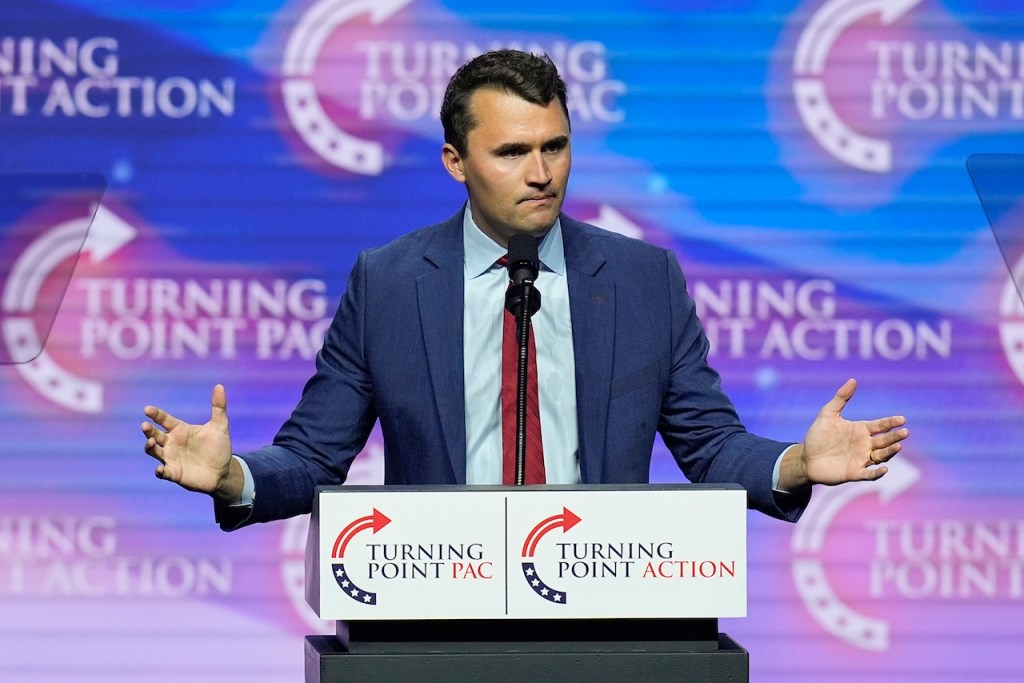



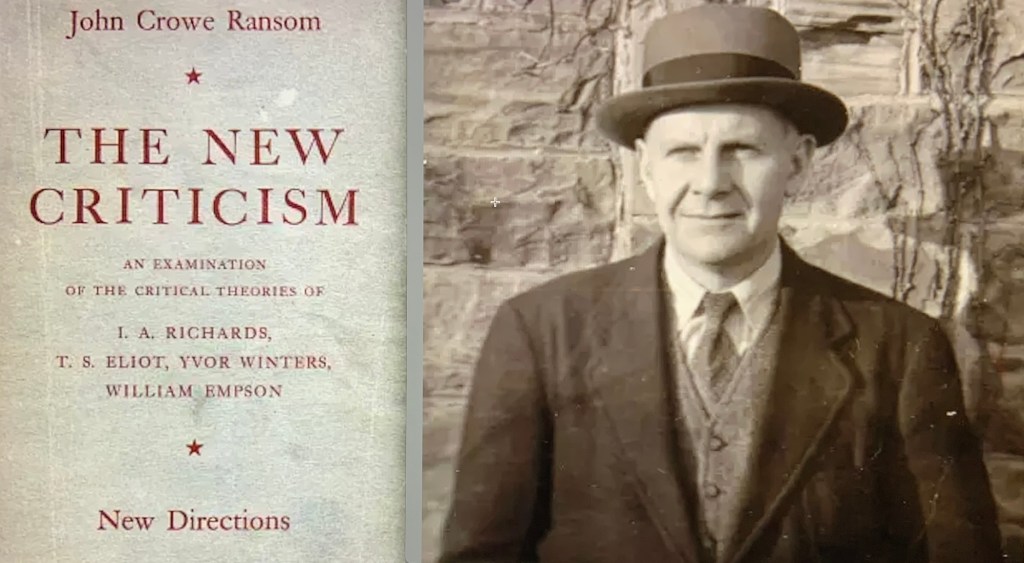
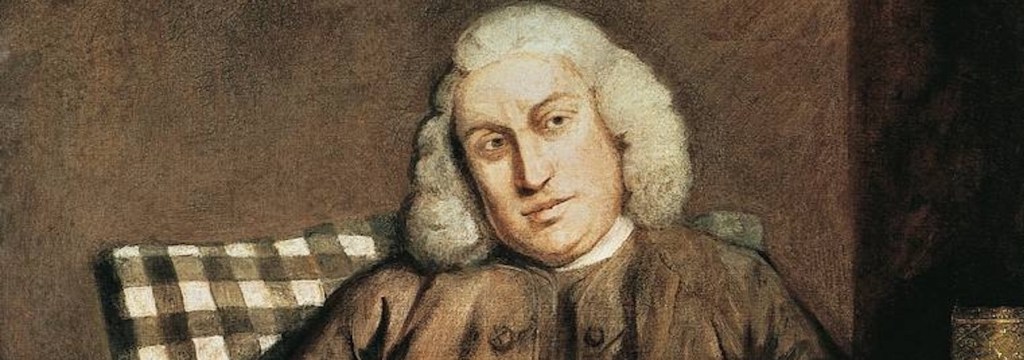



 Linda's Literary Home