In addition to poetry, James Weldon Johnson also composed many songs that have become popular. His bluesy poem/song “Sence You Went Away” features a southern dialect and captures the melancholy that surrounds the individual who has lost a loved one.
Introduction and Text “Sence You Went Away”
James Weldon Johnson’s “Sence You Went Away” creates a speaker/singer who bemoans the loss of a loved one. The poem/song consists of four stanzas, each with the rime scheme AAAB, wherein the final line constitutes the refrain in which the speaker reveals the reason for his melancholy.
The repetition of “seems lak to me” and “sence you went away” emphasizes the pain and sorrow the speaker is experiencing. The refrain becomes a chant-like repetition as he progresses through his report of all that is making him sad. And he is addressing his expressions of sorrow to the individual, who is now absent from his life.
As a poem this works quite well, and as a song it works even more nicely. The poem/song’s use of dialect gives it an authenticity that increases the communication of pain and sorrow. The speaker/singer incorporates and inflicts his sorrow on the world around him, while at the same time making it clear that these transformations are happening within himself.
Sence You Went Away
Seems lak to me de stars don’t shine so bright, Seems lak to me de sun done loss his light, Seems lak to me der’s nothin’ goin’ right, Sence you went away.
Seems lak to me de sky ain’t half so blue, Seems lak to me dat eve’ything wants you, Seems lak to me I don’t know what to do, Sence you went away.
Seems lak to me dat eve’ything is wrong, Seems lak to me de day’s jes twice ez long, Seems lak to me de bird’s forgot his song, Sence you went away.
Seems lak to me I jes can’t he’p but sigh, Seems lak to me ma th’oat keeps gittin’ dry, Seems lak to me a tear stays in ma eye, Sence you went away.
Commentary on “Sence You Went Away”
James Weldon Johnson, an accomplished poet, also composed many songs that have become quite popular. His bluesy “Sence You Went Away” features a southern dialect. Johnson was a Southerner, having been born in 1871 and raised in Jacksonville, Florida, only relocating to New York in 1901.
First Stanza: Expressing Sorrow
Seems lak to me de stars don’t shine so bright, Seems lak to me de sun done loss his light, Seems lak to me der’s nothin’ goin’ right, Sence you went away.
The speaker is addressing an individual, who is likely a former lover or very good friend. The speaker expresses his sorrow by reporting that both the sun and stars do not seem to be shedding light now because of the absence of the addressee. The reader/listener learns nothing about the person who has gone away, only that the speaker’s life has been adversely affected by the loved one’s absence.
Not only do the speaker’s eyes seem no longer to perceive light, but he also feels that nothing in his life is proceeding correctly. He makes it clear that he is not asserting that the world itself has changed; he is merely revealing how things “seem” to him as he repeats throughout the poem, “seems lak to me,” that is, “seems like to me.”
Second Stanza: Absence of Sun
Seems lak to me de sky ain’t half so blue, Seems lak to me dat eve’ything wants you, Seems lak to me I don’t know what to do, Sence you went away.
The absence of sun and starlight affect the shade of the blue sky, which is now presenting itself as only “half” its normal shade. Everything reminds him that he is missing his belovèd. It even appears that everything he sees and does yearns to have this individual back in its purview.
The speaker’s intense exaggeration emphasizes his desire for the return of his missing loved one. Everywhere he looks he sees merely an absence that causes him pain and suffering. He even confesses that he feels unable to decide what he should be doing, if anything at all.
Third Stanza: Nothing Is Right
Seems lak to me dat eve’ything is wrong, Seems lak to me de day’s jes twice ez long, Seems lak to me de bird’s forgot his song, Sence you went away.
Again, the speaker/singer asserts that nothing seems right for him anymore; thus, he feels that “ev’ything is wrong.” And he reveals that time seems to lag because of his sorrow. Pain and suffering cause the human mind and heart to feel time as an oppressor, and that kind of oppression makes minutes seem like hours and days like weeks.
Nature in the form of singing birds is lost on him, and he thus suggests that those birds have even forgotten to sings. His melancholy grays out all of his senses, especially seeing and hearing. Life has lost its luster, light has escaped him, and even pleasant sounds are no longer detectable. And still again, he repeats the reason for his feeling that everything is so wrong in his life.
Fourth Stanza: Fog of Sorrow
Seems lak to me I jes can’t he’p but sigh, Seems lak to me ma th’oat keeps gittin’ dry, Seems lak to me a tear stays in ma eye, Sence you went away.
Finally, the speaker reveals his own behavior has been influenced by the sad fact that the addressee has gone away. He cannot seem to stop sighing, and his throat dries up. He also continue to weep, as he endures the pain of loss.
His physical functions are out of kilter: what needs to be wet is dry, and what needs to be dry is wet. The speaker’s world has transformed into a melancholy fog of sorrow and disorientation—all because his belovèd has gone away.
Kris Delmhorst’s Musical Version of Johnson’s Lyric
There are extant several different musical versions of James Weldon Johnson’s lyric “Sence You Went Away.” I suggest that Kris Delmhorst’s rendition fits perfectly with the sentiment and atmosphere of that lyric. While the other versions are entertaining and well-done, Delmhorst’s version and her singing remain the best in accomplishing the task of capturing the exact feeling of Johnson’s lyric.
Kris Delmhorst singing her version of Johnson’s “Sense You Went Away”
James Weldon Johnson’s funeral oration, “Go Down Death,” offers one the most beautiful and heartfelt expressions of the soul’s journey through life.
Introduction and Text of “Go Down Death”
The epigraph to James Weldon Johnson’s poem, “Go Down Death,” from God’s Trombones: Seven Negro Sermons in Verse, identifies the poem as a dramatic “funeral oration.” This dramatization of the soul’s journey from life to death and beyond remains one of the most beautiful metaphoric expressions on the subject.
The poem, “Go Down Death,” features ten versagraphs in which a pastor ministers to a grieving family. The uplifting sermon remains an example of Johnson’s marvelous craftsmanship with words and profound ideas regarding life and death.
Go Down Death
(A Funeral Sermon)
Weep not, weep not, She is not dead; She’s resting in the bosom of Jesus. Heart-broken husband—weep no more; Grief-stricken son—weep no more; Left-lonesome daughter —weep no more; She only just gone home.
Day before yesterday morning, God was looking down from his great, high heaven, Looking down on all his children, And his eye fell on Sister Caroline, Tossing on her bed of pain. And God’s big heart was touched with pity, With the everlasting pity.
And God sat back on his throne, And he commanded that tall, bright angel standing at his right hand: Call me Death! And that tall, bright angel cried in a voice That broke like a clap of thunder: Call Death!—Call Death! And the echo sounded down the streets of heaven Till it reached away back to that shadowy place, Where Death waits with his pale, white horses.
And Death heard the summons, And he leaped on his fastest horse, Pale as a sheet in the moonlight. Up the golden street Death galloped, And the hooves of his horses struck fire from the gold, But they didn’t make no sound. Up Death rode to the Great White Throne, And waited for God’s command.
And God said: Go down, Death, go down, Go down to Savannah, Georgia, Down in Yamacraw, And find Sister Caroline. She’s borne the burden and heat of the day, She’s labored long in my vineyard, And she’s tired— She’s weary— Go down, Death, and bring her to me.
And Death didn’t say a word, But he loosed the reins on his pale, white horse, And he clamped the spurs to his bloodless sides, And out and down he rode, Through heaven’s pearly gates, Past suns and moons and stars; on Death rode, Leaving the lightning’s flash behind; Straight down he came.
While we were watching round her bed, She turned her eyes and looked away, She saw what we couldn’t see; She saw Old Death. She saw Old Death Coming like a falling star. But Death didn’t frighten Sister Caroline; He looked to her like a welcome friend. And she whispered to us: I’m going home, And she smiled and closed her eyes.
And Death took her up like a baby, And she lay in his icy arms, But she didn’t feel no chill. And death began to ride again— Up beyond the evening star, Into the glittering light of glory, On to the Great White Throne. And there he laid Sister Caroline On the loving breast of Jesus.
And Jesus took his own hand and wiped away her tears, And he smoothed the furrows from her face, And the angels sang a little song, And Jesus rocked her in his arms, And kept a-saying: Take your rest, Take your rest.
Weep not—weep not, She is not dead; She’s resting in the bosom of Jesus.
Wintley Phipps’ amazing recitation of “Go Down, Death”
Commentary on “Go Down Death”
James Weldon Johnson’s “Go Down Death,” a dramatization of the soul’s journey from life to death and beyond, remains one of the most beautiful metaphoric expressions on the subject.
First Versagraph: A Command not to Weep
Weep not, weep not, She is not dead; She’s resting in the bosom of Jesus. Heart-broken husband—weep no more; Grief-stricken son—weep no more; Left-lonesome daughter —weep no more; She only just gone home.
The often rhythmic, deeply dramatic oration begins with a refrain, “Weep not, weep not.” This command is directed to the family of a deceased woman, who is survived by a “Heart-broken husband, a Grief-stricken son, and a Left-lonesome daughter.”
The minister delivering the funeral sermon tasks himself with convincing the grieving family that their loved one is not dead, because she is resting in the bosom of Jesus, and she has only just gone home.
Second Versagraph: God’s Pity and What’s Often Forgotten
Day before yesterday morning, God was looking down from his great, high heaven, Looking down on all his children, And his eye fell on Sister Caroline, Tossing on her bed of pain. And God’s big heart was touched with pity, With the everlasting pity.
The minister creates a beautiful narrative beginning on the day just before the beloved died. He says that God was looking down from his great, high heaven, and He happened to glimpse Sister Caroline, who was “tossing on her bed of pain.” God in His great mercy was filled “with everlasting pity.”
The minister weaves a beautiful narrative designed not only to relieve the pain of the mourners but also to let them know a truth that is so often forgotten at the time of loss and grieving at death.
Third Versagraph: A Creature not to be Feared
And God sat back on his throne, And he commanded that tall, bright angel standing at his right hand: Call me Death! And that tall, bright angel cried in a voice That broke like a clap of thunder: Call Death!—Call Death! And the echo sounded down the streets of heaven Till it reached away back to that shadowy place, Where Death waits with his pale, white horses.
God instructed His “tall, bright angel” standing on His right to summon Death. The angel then summoned Death from the darkness in which he is always waiting with his pack of white horses.
Death is now becoming an anthropomorphic creature who will perform a function directed by God. If God is directing the creative Death, then mourners will begin to understand that Death is not a creature to be feared, only to be understood as a servant of the Belovèd Lord.
Fourth Versagraph: Death before the Great White Throne
And Death heard the summons, And he leaped on his fastest horse, Pale as a sheet in the moonlight. Up the golden street Death galloped, And the hooves of his horses struck fire from the gold, But they didn’t make no sound. Up Death rode to the Great White Throne, And waited for God’s command.
Hearing the call, Death leaps on his fastest stead. Death is pale in the moonlight, but he continues on, speeding down the golden street. And although the horses’ hooves “struck fire f rom the the gold,” no sound emanated from the clash. Finally, Death arrives at the Great White Throne, where he waits for God to give him his orders.
Fifth Versagraph: Death Goes down to Georgia
And God said: Go down, Death, go down, Go down to Savannah, Georgia, Down in Yamacraw, And find Sister Caroline. She’s borne the burden and heat of the day, She’s labored long in my vineyard, And she’s tired— She’s weary— Go down, Death, and bring her to me.
God commands Death to travel down to Georgia in Savannah. There he must find “Sister Caroline.” The poor sister has suffered for a long time; she has been a valiant laborer for God. Now she has grown too tired and too debilitated to continue on in her present incarnation.
Thus, God instructs Death to fetch the soul of Sister Caroline to Him. Knowing that Death is simply the conveyance employed by the Blessèd Creator to bring His children home is a concept that can bring comfort and relief to the mourners.
Sixth Versagraph: Death Obeys God’s Command
And Death didn’t say a word, But he loosed the reins on his pale, white horse, And he clamped the spurs to his bloodless sides, And out and down he rode, Through heaven’s pearly gates, Past suns and moons and stars; on Death rode, Leaving the lightning’s flash behind; Straight down he came.
Without uttering a sound, Death immediately complies with God’s command. Death rides out through “the pearly gates, / Past suns and moons and stars.” He heads straight down to Sister Caroline, to whom God had directed him.
Understanding the nature of God’s servant “Death” continues to build hope and understanding in the heart of the mourners. Their grieving can be assuaged and directed to a whole new arena of theological thought and practice.
Seventh Versagraph: Welcoming God’s Emissary
While we were watching round her bed, She turned her eyes and looked away, She saw what we couldn’t see; She saw Old Death. She saw Old Death Coming like a falling star. But Death didn’t frighten Sister Caroline; He looked to her like a welcome friend. And she whispered to us: I’m going home, And she smiled and closed her eyes.
Upon seeing Death approaching, Sister Caroline welcomes him as if he were an old friend, and she informs the others who were standing around her, ministering to her, that she was not afraid. Sister Caroline then tells them she is going home, as she smiles and closes her eyes for the last time.
By seeing that the dying soul can be so accepting of her new circumstance of leaving the physical body and the earth level of existence, the mourners continue to grow in acceptance as they become capable of letting their grief go. They can replace grief with the joy of knowing God and God’s ways.
That God simply uses Death for his own purposes goes a long way to healing the misunderstanding that one life on earth is all each soul has. The physical level of being becomes a mere step in the evolution through which the soul passes on its way back to its permanent home in God.
Eighth Versagraph: The Soul Moving into the Astral World
And Death took her up like a baby, And she lay in his icy arms, But she didn’t feel no chill. And death began to ride again— Up beyond the evening star, Into the glittering light of glory, On to the Great White Throne. And there he laid Sister Caroline On the loving breast of Jesus.
Death then takes Sister Caroline in his arms as he would a baby. Even though Death’s arm were icy, she experiences no cold. Sister is now able to feel with her astral body, not her physical encasement.
Again Death rides beyond the physical evening star and on into the astral light of “glory.” He approaches the great throne of God and commits the soul of Sister Caroline to the loving care of Christ.
Ninth Versagraph: Sister Shed Delusion of Earth Life
And Jesus took his own hand and wiped away her tears, And he smoothed the furrows from her face, And the angels sang a little song, And Jesus rocked her in his arms, And kept a-saying: Take your rest, Take your rest.
Jesus brushes away all sorrow from the soul of Sister Caroline. She soothes her, and she loses the deep furrows that marred her face, after long living in the world of sorrows and trials. The angels then serenade her as Christ comforts her. Sister Caroline can finally rest from her all her trials and tribulations; she can now shed the delusion that kept her hidebound as she passed through life on the physical plane.
Tenth Versagraph: Repeated Command not to Weep
Weep not—weep not, She is not dead; She’s resting in the bosom of Jesus.
The minister then repeats his opening refrain, “Weep not—weep not, / She is not dead; / She’s resting in the bosom of Jesus.” The refrain becomes a chant that will relieve all souls of pain and headache. Resting in the bosom of Christ will now become the aspiration for all listeners as they begin to understand truly that, “she is not dead.”
They will become aware that if Sister Caroline is not dead, neither will they die, when the time to leave this earth comes. They will understand that their own souls can look forward to resting in the arms of Jesus the Christ.
A poetic retelling of the story about Noah and the Ark, this dramatic poem is one of Johnson’s seven sermons in verse from his collection, God’s Trombones. At certain points in the story, the narrator offers his own interpretations, embellishing the tale and adding further interesting features.
Introduction and Text of “Noah Built the Ark”
James Weldon Johnson’s “Noah Built the Ark” offers an entertaining and educational experience in poetry. Johnson’s clear vision in biblical lore is on full display in his narrative retelling of the Noah and the Ark story from Genesis 6:9–9:17 KJV. The poet is offering an oratory tone in the style of a southern black preacher. His retelling features such plain language that even a child can understand the images and events immediately.
Johnson brought out his collection God’s Trombones: Seven Negro Sermons in Verse in 1927. The collection begins with a prayer, “Listen Lord–A Prayer,” and then features seven verse-sermons, “The Creation,” “The Prodigal Son,” “Go Down Death,” “Noah Built the Ark,” “The Crucifixion,” “Let My People Go,” and “The Judgment Day.”
During his lifetime, Johnson had attended many church services throughout the South, and he was inspired by the oratorical style of the many black preachers, whose preaching he admired. A Southerner himself born in Jacksonville, Florida, Johnson had an ear for dialect and rhythms in speech. All of his poetry is enhanced by his talent for language and its specialties of speech.
Noah Built the Ark
In the cool of the day— God was walking— Around in the Garden of Eden. And except for the beasts, eating in the fields, And except for the birds, flying through the trees, The garden looked like it was deserted. And God called out and said: Adam, Adam, where art thou? And Adam, with Eve behind his back, Came out from where he was hiding. And God said: Adam, What hast thou done? Thou hast eaten of the tree! And Adam, With his head hung down, Blamed it on the woman.
For after God made the first man Adam, He breathed a sleep upon him; Then he took out of Adam one of his ribs, And out of that rib made woman. And God put the man and woman together In the beautiful Garden of Eden, With nothing to do the whole day long But play all around in the garden. And God called Adam before him, And he said to him; Listen now, Adam, Of all the fruit in the garden you can eat, Except of the tree of knowledge; For the day thou eatest of that tree, Thou shalt surely die.
Then pretty soon along came Satan. Old Satan came like a snake in the grass To try out his tricks on the woman. I imagine I can see Old Satan now A-sidling up to the woman, I imagine the first word Satan said was: Eve, you’re surely good looking. I imagine he brought her a present, too,— And, if there was such a thing in those ancient days, He brought her a looking-glass.
And Eve and Satan got friendly— Then Eve got to walking on shaky ground; Don’t ever get friendly with Satan.— And they started to talk about the garden, And Satan said: Tell me, how do you like The fruit on the nice, tall, blooming tree Standing in the middle of the garden? And Eve said: That’s the forbidden fruit, Which if we eat we die.
And Satan laughed a devilish little laugh, And he said to the woman: God’s fooling you, Eve; That’s the sweetest fruit in the garden, I know you can eat that forbidden fruit, And I know that you will not die.
And Eve looked at the forbidden fruit, And it was red and ripe and juicy. And Eve took a taste, and she offered it to Adam, And Adam wasn’t able to refuse; So he took a bite, and they both sat down And ate the forbidden fruit.— Back there, six thousand years ago, Man first fell by woman— Lord, and he’s doing the same today.
And that’s how sin got into this world. And man, as he multiplied on the earth, Increased in wickedness and sin. He went on down from sin to sin, From wickedness to wickedness, Murder and lust and violence, All kinds of fornications, Till the earth was corrupt and rotten with flesh, An abomination in God’s sight.
And God was angry at the sins of men. And God got sorry that he ever made man. And he said: I will destroy him. I’ll bring down judgment on him with a flood. I’ll destroy ev’rything on the face of the earth, Man, beasts and birds, and creeping things. And he did— Ev’rything but the fishes.
But Noah was a just and righteous man. Noah walked and talked with God. And, one day, God said to Noah, He said: Noah, build thee an ark. Build it out of gopher wood. Build it good and strong. Pitch it within and pitch it without. And build it according to the measurements That I will give to thee. Build it for you and all your house, And to save the seeds of life on earth; For I’m going to send down a mighty flood To destroy this wicked world
And Noah commenced to work on the ark. And he worked for about one hundred years. And ev’ry day the crowd came round To make fun of Old Man Noah. And they laughed and they said: Tell us, old man, Where do you expect to sail that boat Up here amongst the hills?
But Noah kept on a-working. And ev’ry once in a while Old Noah would stop, He’d lay down his hammer and lay down his saw, And take his staff in hand; And with his long, white beard a-flying in the wind, And the gospel light a-gleaming from his eye, Old Noah would preach God’s word:
Sinners, oh, sinners, Repent, for the judgment is at hand. Sinners, oh, sinners, Repent, for the time is drawing nigh. God’s wrath is gathering in the sky. God’s a-going to rain down rain on rain. God’s a-going to loosen up the bottom of the deep, And drown this wicked world. Sinners, repent while yet there’s time For God to change his mind.
Some smart young fellow said: This old man’s Got water on the brain. And the crowd all laughed—Lord, but didn’t they laugh; And they paid no mind to Noah, But kept on sinning just the same.
One bright and sunny morning, Not a cloud nowhere to be seen, God said to Noah: Get in the ark! And Noah and his folks all got in the ark, And all the animals, two by two, A he and a she marched in. Then God said: Noah, Bar the door! And Noah barred the door.
And a little black spot begun to spread, Like a bottle of ink spilling over the sky; And the thunder rolled like a rumbling drum; And the lightning jumped from pole to pole; And it rained down rain, rain, rain, Great God, but didn’t it rain! For forty days and forty nights Waters poured down and waters gushed up; And the dry land turned to sea. And the old ark-a she begun to ride; The old ark-a she begun to rock; Sinners came a-running down to the ark; Sinners came a-swimming all round the ark; Sinners pleaded and sinners prayed— Sinners wept and sinners wailed— But Noah’d done barred the door.
And the trees and the hills and the mountain tops Slipped underneath the waters. And the old ark sailed that lonely sea— For twelve long months she sailed that sea, A sea without a shore.
Then the waters begun to settle down, And the ark touched bottom on the tallest peak Of old Mount Ararat. The dove brought Noah the olive leaf, And Noah when he saw that the grass was green, Opened up the ark, and they all climbed down, The folks, and the animals, two by two, Down from the mount to the valley. And Noah wept and fell on his face And hugged and kissed the dry ground.
And then— God hung out his rainbow cross the sky, And he said to Noah: That’s my sign! No more will I judge the world by flood— Next time I’ll rain down fire.
Recitation of “Noah Built the Ark”:
Commentary on “Noah Built the Ark”
While the basic story remains a parallel to the original, the narrator offers his own embellishments at certain points that any listener will recognize as departures from the biblical version. This embellishments stem from the narrator’s personal interpretations of the image and events.
First Movement: Original Creation
The actual story featuring Noah and the ark begins in the third movement; the narrator first builds up to the purpose for Noah having to build the ark. Thus, the opening scenes show God just after having created Adam and Eve, summoning them to hold them responsible for their disobedience.
God knows that they have done the one and only thing He had told them not to do: they have eaten of the “tree of knowledge.” God had told them if they disobeyed this one rule, they would die.
Unfortunately, Satan had persuaded Eve to eat of the fruit, making her believe that God was lying to her. Thus, she ate and convinced Adam to eat, and soon they had lost their paradise in Eden.
The narrator creatively describes the characters in his narrative in colorful ways, for example he had “Old Satan” “[a]-silding up the woman.” Then Satan, who moves “like a snake in the grass,” appeals to the woman’s vanity telling her “you’re surely good looking” and then imagining that Satan gave Eve a gift of a “looking-glass” to emphasize her vanity.
Second Movement: Satan’s Seduction
The narrator now goes into some detail as he has Satan seducing Eve to commit the one sin she had been warned against. Satan belts forth a “devilish little laugh” upon hearing that God had told that pair that they would die if they ate of the forbidden fruit. Satan tells Eve, “God’s fooling you.” He then tells her that the fruit she is forbidden is the “sweetest fruit in the garden” and insists that she can enjoy that fruit without dying.
Eve is convinced, eats the fruit, convinces Adam to eat the fruit, and “Man first fell by woman— / Lord, and he’s doing the same today.” The narrator jokingly demonstrates the rift that began between man and woman with the committing of the original sin.
So now mankind multiplied upon the earth, and not only did people increase, but “wickedness and sin” also increased, and kept on increasing until the corruption became “[a]n abomination in God’s sight.”
Third Movement: Corruption and Anger
The corruption made God angry, and the narrator states that “God got sorry that he ever made man.” And then God decides to destroy mankind by flooding the earth. The narrator says that God planned to destroy all life on earth—except “the fishes.”
The narrator is inserting a bit of comedy into his narration because he knows everyone already is aware that God, in fact, instructed Noah to save all animal life. The claim that God would save only the “fishes” is funny, though, because the fishes are the only life forms that can live in the water, a fact that would obviate the necessity of bringing a pair of them into the ark for saving, as was done with the land animals.
Because Noah was not a man of sin and corruption but a “just and righteous man,” who “walked and talked with God,” God chooses Noah to be his instrument in saving a portion of His Creation.
Thus, God instructs Noah to build an ark for which God gives specific instructions: to be made of gopherwood, “good and strong,” pitched inside and out, and according to the dimensions handed down by the Creator.
God tells Noah that He is going to send down a flood to “destroy this wicked world.” But the house/family of Noah would be spared, and God wanted Noah to help Him “save the seeds of life on earth.”
Noah then obeys God’s command, begins building the ark, working for “one hundred years,” experiencing ridicule daily as folks “make fun of Old Man Noah,” quipping, “Where do you expect to sail that boat / Up here amongst the hills?”
Fourth Movement: Building and Preaching
Noah remains undeterred, working on the ark, but every now and then, he would cease his ark building and offer a sermon. In his sermon, he would tell the “sinners” that they needed to repent because God was going to send “rain down rain on rain.”
Because of all the sinning and corruption, God’s wrath would “drown this wicked world.” Noah encourages the sinners to turn their lives around while there is still time for “God to change his mind.” In response to Noah, a laughing young reprobate quips: “This old man’s / Got water on the brain.” And then everyone else laughs.
Paying no attention to Noah’s warning, they keep on sinning. Then on a bright, sunny morning, the day had come. God instructs Noah to gather pairs of animals and take them along with his family into the ark and “Bar the door!” Then similar to ink spilling over a page, a black spot in the sky begins to spread, and the rain begins—pouring rain for forty days and night.
And many sinners come to the ark “a-running” and “a-swimming” around the ark, pleading to be let in, but it is too late. Though the sinners continue to weep and wail, “Noah’d done barred the door.”
Fifth Movement: The Promise
The narrator then describes the flooded earth, where trees, hills, mountain tops all “slipped underneath the waters.” And for “twelve long months,” the ark sails on a sea that possesses no shore.
Finally, the waters begin to recede, and ark settles down on the tall peak of Mount Ararat. A dove appears to Noah with an olive leaf, altering him that the flood is over, and anew beginning is at hand for all of the inmates of the Ark.
After leaving the ark, the righteous Noah “wept and fell on his face / And hugged and kissed the dry ground.” God then stretches a “rainbow across the sky” and promises Noah that the rainbow would be his reminder that He would never again “judge the world by flood.”
But then God warns that “Next time I’ll rain down fire.” Throughout his retelling of the Noah and the Ark story, the narrator has often added embellishments stemming from his own idiosyncratic interpretations.
The narrator’s final embellishment that God promised to end the world next by fire cannot be found in the biblical KJV version of that tale, but many instances in that version of the Holy Scripture do imply that God might employ the fire element the next time He feels compelled to destroy His Creation.
A true “Renaissance man,” James Weldon Johnson wrote some the best spiritual poems and songs in the American literary canon. He also held positions as attorney, diplomat, professor, and activist in a political party, fighting for the civil rights of black Americans.
Note on Term Usage: Before the late 1980s in the United States, the terms “Negro,” “colored,” and “black” were accepted widely in American English parlance. While the term “Negro” had started to lose it popularity in the 1960s, it wasn’t until 1988 that the Reverend Jesse Jackson began insisting that Americans adopt the phrase “African American.” The earlier more accurate terms were the custom at the time that James Weldon Johnson was writing.
Early Life and Schooling
James Weldon Johnson was born on June 17, 1871, in Jacksonville, Florida, [1] to James Johnson, of Virginia, who had held a position as headwaiter at a resort hotel, and Helen Louise Dillet, of the Bahamas, who had served as a teacher in Florida.
His parents raised James to be a strong, independent man. The future poet became a free-thinker as his parents encouraged him to understand that he was capable of achieving all the success in life for which he sought to strive.
In 1894, after completing the bachelor’s degree at Atlanta University, he accepted a position as principal at the Edwin M. Stanton School. His mother had taught at that school. In his position as principal of Stanton, he made great improvements in the curriculum, adding grades 9 and 10.
While serving at the Stanton school as principal, Johnson founded the newspaper, The Daily American. The paper remained in publication for only a year, but it served as a lever for Johnson’s role as an activist, bringing him to the attention of Booker T. Washington and W.E.B. DuBois, two of the most influential activists of the civil rights movement.
Johnson began the study of law in Thomas Ledwith’s law office in Jacksonville, Florida, in 1896 [2]. He passed the bar exam in 1898 and was admitted to the Florida bar. He practiced law for several years and then decided to pursue other lines of work.
From New York City to the Diplomatic Corp
To engage a career in songwriting, in 1901 James and his brother Rosamond moved to New York City. They became partners with Bob Cole and accepted a publishing contract which paid a $1200 monthly stipend. That income amounted to a fortune in the early 20th century.
During the next half decade, the Johnson brothers wrote and produced a whopping 200 songs for both Broadway and for other formats. Their substantial list of hits include titles such as “Didn’t He Ramble,” “Under the Bamboo Tree,” and “The Old Flag Never Touched the Ground.”
Along with Bob Cole, the Johnsons earned a outstanding reputation as a musical trio. They became known affectionately as “Those Ebony Offenbachs.” While they eschewed the artistry of the minstrel show stereotypes, they did agree to create simplified versions of black life of rustics for white audiences that seemed to relish such fare.
But their most important contribution includes a suite of six songs titled The Evolution of Ragtime, a documentary which has remained important for recording the black experience in contributing to music. Residing in New York also allowed Johnson the opportunity to attend Columbia University, where he engaged formally in the study literature and creative writing.
Johnson also began his civil rights activism in Republican Party politics. While serving as the treasurer of New York’s Colored Republican Club, he wrote two songs for Theodore Roosevelt’s 1904 presidential campaign. Roosevelt won that campaign, becoming the 26h president of the United States.
The black national civil rights leadership divided into two factions: one remained traditional and was led by Booker T. Washington. The other faction turned radical and was headed up by W.E.B. Du Bois. Johnson chose to follow Washington and the traditionalists.
Washington’s leadership had offered the appropriate influence and had helped Roosevelt win the presidency. Thus, Washington exerted his influence again to have Johnson appointed as the U.S. consulate to Venezuela.
Johnson’s stint in Venezuela afforded him time to create poetry. There he composed his magnificent, nearly perfect sonnet, “Mother Night,” during this time. Also, during this three year period of service as consul on Venezuela, he was able to finish his novel, The Autobiography of an Ex-Coloured Man.
After Johnson’s service in Venezuela, he received a promotion that relocated him to Nicaragua. His job in Nicaragua became more demanding, allowing him less time for literary efforts.
Back to New York and the Harlem Renaissance
In 1900, Johnson composed the hymn “Lift Ev’ry Voice and Sing” for a school celebration of Abraham Lincoln’s birthday [3]. His brother Rosamond later added the melody to the lyric. In 1919, the National Association for Advancement of Colored People (NAACP) designated the song the “Negro National Hymn (Anthem).”
In 1913, because of the inauguration of Woodrow Wilson, a Democrat, Johnson resigned his foreign service position and returned to the U.S.A. In New York, Johnson began writing for New York’s prestigious black newspaper, the New York Age. He wrote essays explaining and promoting the importance of the hard-work ethic and education.
Johnson’s traditionalism kept his position more in line with Booker T. Washington than with the radical militant W.E.B. Du Bois. Despite those differences in ideologies, Johnson remained on good terms with both activists.
In 1916, after Du Bois suggested the position to Johnson, he accepted the role as secretary in the NAACP. In 1920, Johnson led the organization as president. Despite his many activist duties with the NAACP, Johnson dedicated himself to writing full time. In 1917, he published his first collection of poems, Fifty Years and Other Poems. That collection received great critical acclaim and established him as an important voice in the Harem Renaissance Movement.
Johnson continued writing and publishing; he also served as editor for numerous volumes of poetry, such as The Book of American Negro Poetry (1922), The Book of American Negro Spirituals (1925), and The Second Book of Negro Spirituals(1926).
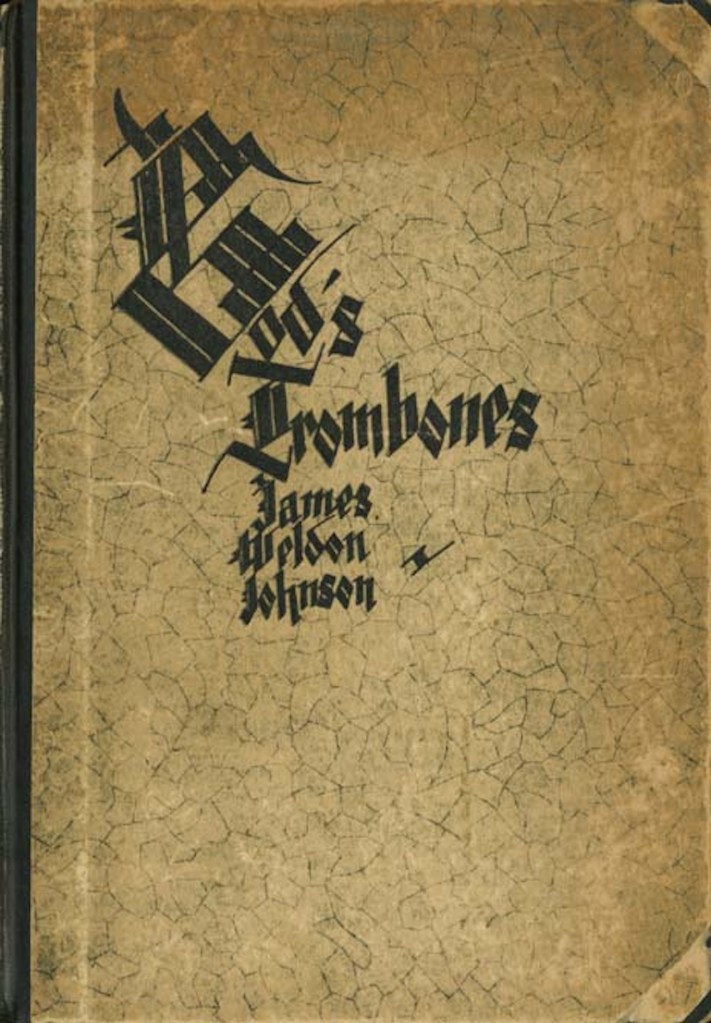
In 1927, Johnson published his second book of poems God’s Trombones: Seven Negro Sermons in Verse [4]. Again, his collection received much praise from critics.Dorothy Canfield Fisher, a best-selling author and activist for education reform, stated in a letter about Johnson’s style:
. . . heart-shakingly beautiful and original, with the peculiar piercing tenderness and intimacy which seems to me special gifts of the Negro. It is a profound satisfaction to find those special qualities so exquisitely expressed.
Back to Teaching
After his retirement from the NAACP, Johnson continued writing. He also served as professor at New York University. Johnson’s stellar reputation again preceded him; as he joined the NYU faculty, Deborah Shapiro testified:
Dr. James Weldon Johnson was already a world-renowned poet, novelist, and educator when he arrived at the School of Education in 1934. His faculty appointment was in the Department of Educational Sociology, yet Johnson’s influence did not end there. As the first black professor at NYU, Johnson broke a crucial color barrier, inspiring further efforts toward racial equality both within and outside the boundaries of Washington Square.
Death
In 1938 at age 67, Johnson was killed in an automobile accident in Wiscasset, Maine, after a train crashed into the vehicle in which the poet was a passenger. His funeral, held in Harlem, New York, was attended by over 2000 individuals.
Johnson’s creative power and activism rendered him a true “Renaissance man,” who lived a full life. He penned some of the finest poetry and songs ever to appear on the American literary and music scenes. Johnson’s life creed bestows on the world an uplifting inspiration after which any individual might choose to chisel his life:
I will not allow one prejudiced person or one million or one hundred million to blight my life. I will not let prejudice or any of its attendant humiliations and injustices bear me down to spiritual defeat. My inner life is mine, and I shall defend and maintain its integrity against all the powers of hell. [5]
The poet’s body is interred in Green-Wood Cemetery in Brooklyn, New York [6]. In an unconventional final expression, his body has been arrayed in his favorite lounging cape, with his hands clutching a copy of his collection God’s Trombones.
Sources
[1] Editors. “James Weldon Johnson.” Famous African Americans. Accessed January 27, 2023.


 Linda's Literary Home