Original Short Fiction: “Graveyard Whistler’s Fourth Flash Fiction Find” (4)
The Graveyard Whistler has become quite enthusiastic about “flash fiction,” offering his fourth installment of the little stories. Stay tuned for a brief bio of “Belmonte Segwic” (aka “The Graveyard Whistler”) coming soon!
Fiction Alert! This story is fiction. It does not depict any real person or actual event.
Introduction by the Graveyard Whistler
Graveyard Whistler at it, again! I continue to find pieces of literature that just blow my mind, so I feel compelled to share them. Thus, I am continuing with this series of little narrations that have come to be known as “flash fiction.”
There are several online sites that offer this genre of literature, but most have upward of a 500 words or more. These little gems that I found seldom break 50, including the title! They exemplify an amazing feat and thus continue to fascinate me! I think I am in love!
And now I am considering a new label for this very, very short narrative. “Flash fiction” does not seem to fit. I’ll get back to you on that. Maybe I could run a contest to get help me rename this genre. Maybe! Maybe! Maybe!
A Bit of Background
The following set of five that I offer here are reconstituted narratives based on a set I found on a site that no longer exists, “Stone Gulch Literary Arts,” also known as “Stone Gulch Literary Home,” whose owner has given me permission to use the literary offerings he had place on the site. He lost his interest in literature and will likely become an attorney once he finishes law school and passes the bar exam.
Interestingly, “Stoney,” my nickname for him because he refuses to reveal his identity, sports a PhD in American Literature and serves as a full professor in the English department at a midwestern state university. He has given me permission to anything I want with his abandoned works.
And I might add, for my purposes, that lit site offers a treasure chest of goodies—from the flash fiction to highly sensual poems to short stories full of dark and dreary twists and turns to airy mystical stuff. It even delves into some political treatises analysis that is quite fascinating even insightful.
Five Flash Fiction Pieces
So, I am continuing to share the flash fiction pieces. Here are the new five. Each story contains only five sentences. But each boasts an opening, a conflict, and a conclusion—a feat which I am finding fascinating!
Getting Forgetful
The unsigned card arrived two days after Edna’s birthday. The card was beautiful and very personal. But it gave no clue as to who had posted it. Edna asked relatives and friends about the card. Six weeks later, Edna’s mother remembered sending the card.
A Country Picnic
I’ll bring the tea, and Sue can bring the cake. Where should we have our picnic this year? Same as last year, at Eddie’s Country Hide-a-Way. But Eddie sold that home. Yeah, I know; I bought it but kept the name!
Poems with Chunks of Ice
Winton wanted so much to become a famous poet. At college she became friends with Ashton and Flannory. Flannory became jealous that Ashton liked Winton’s poems. Winton had no interest in Ashton, Flannory, or their poems. After graduation, Flannory left Ashton for a novelist.
Raising the Pane
Lucette did not understand English well. She hired Johann to help her with her English lessons. Johann asked Lucette for a raise to keep tutoring her. Lucette put up the window. Johann jumped out and never returned.
Of Course, You Don’t Know Me
Candy brought six pies to the reunion banquet at Chicago Town High School. Jackson brought his fiddle and played it for the dancing. Astrid danced and ate pie and conversed with everyone. Martha finally admitted she did not know Astrid. Astrid finally admitted she had crashed the reunion and had actually graduated from a school in Toledo.
A Final Statement from the Graveyard Whistler
This installment features five of these flash fiction pieces. I’ll continue to add more later. But I’ll probably explore into other genres before I continue with these.
I am procrastinating hugely in writing my dissertation because at this point I am not finding as much information as I had anticipated on the topic of irony. I am considering changing my focus to a simple ideas of “variety” in the literary world because I am finding that literature, both ancient and modern contemporary, does offer such a wide array of different topics, genres, issues, attitudes, and styles. I could likely revamp a whole new glossary of literary devices if I put my mind to it, and I might just have to do that!
My advisor is somewhat dismayed at my dilly-dallying but hey, it’s my life—not hers!
Fiction Alert! This story is fiction. It does not depict any real person or actual event.
Graveyard Whistler’s Career Update and Third Flash Fiction Find
Graveyard Whistler has an updated report on his career path and his threat to become a lawyer. Plus he offers a political rant with a rebuttal, which was suggested to him by one of his readers.
Graveyard Whistler Here! Bet You Thought I Forgot about Y’all!
I finally did it. Took the plunge, and decided to take a job with a law firm. I know I’ve been quiet about my pursuit of legal studies, but that’s simply because I do love literary studies so much, and it does take a lot of my time.
But even as I pursued the PhD in lit, I was simultaneously working toward my JD, which I got, and then took a job at Spirit, Mission, and Frees Legal Firm, leaving the university position I originally started. I have not looked back; university teaching is for the birds, not for serious scholars.
Funny, I have been asked to join the University of South Field as an adjunct to teach a lit crit class at night; it would run 6:30 to 10 p.m. So far I have resisted the offer, but I am considering it.
My day job is fantastic; it doesn’t require a lot of homework, but still I do like to guard my time to keep for my own literary studies—am currently working on a book of sonnets. Yeah, I know. I didn’t use to consider myself a creative writer, but that has slowly changed, and I’ve taken up writing both fiction and poetry. Oh, well!
The thing is I spend my daytime doing legal briefs and simple legal tasks, like wills and contracts—stuff that doesn’t take a lot of time, and never interferes with my off time—no weekends, no evenings—what they used to call bankers hours 9 a.m. to 3 p. m.. And so you know how I spend my off time. So let’s get to it!
Here are five additional very short pieces of “flash fiction.”
The following set of five flash fiction stories originally appeared on a now defunct literary site titled, “Stone Gulch Literary Arts.” The owner of the site fell out of love with literature, even as he remained a full professor of American literature at a mid-west American university. He indicated that he might even go back to school to finish his law degree. He hasn’t published widely in the field but just enough to make it to the top of his professoriate.
I continue to adore the study of literature and cannot ever foresee giving it up, certainly never for the study of law. I do find law itself interesting but practicing as an attorney would never interest me. Look at Edgar Lee Masters, Esq., a bitter little man whose bitterness wrecked his marriages, left him in a blue funk. And his literary output?
The sum of his reputation rests on his Spoon River Anthology that is made of other bitter, disgruntled little people. Oh, sure! Masters is regarded as a success, but is he really? He got no joy of out life, and he became so addicted to writing his putrid little “epitaphs” that he couldn’t stop, even after seeing that additional iterations of those little nasty character pieces had lost their pizzazz with the reading public.
Five Flash Fiction Stories
Okay, now down off my soapbox, I give you five more “flash” fiction pieces gleaned and refurbished from “Stone Gulch Literary Arts.” Each little story is told in only five sentences, while still presenting an opening, a conflict, and a conclusion.
Oh, Yeah, Here’s My Point!
Katherine became passionate about Marcus, a member of her poetry workshop. They started meeting several times a week to engage in their lascivious passions. Katherine put psychologist major Marcus in mind of his own mother. Marcus made the mistake of telling Katherine that she wanted to screw her own son, as he also wanted to bed his own mother. Katherine shrieked at Marcus, “you bastard!” as she stabbed him in the neck with her ball point.
A Sinking Feeling
The water looked so refreshing to Jamaal, so he jumped in for a short swim. Sheena was strolling by the lake waters carrying her baby son. Jamaal noticed Sheena and waved to her to come swim with him. Sheena plopped her infant son down on some rocks, jumped in, hoping to get lucky with Jamaal. Problem was, Sheena forgot that she could not swim, so Jamaal was left to raise Sheena’s newborn son.
The Legend of Bessie and Marva
Bessie and Marva start meeting at the Gauntlet Hotel for late night trysts. Bessie tries to break off the affair and begins telling Marva she is not really gay, maybe bisexual, but not a true lesbian. Marva would just blow off Bessie’s claim of non-gayhood. Bessie becomes flustered trying to find a way to make Marva let her go. But then Marva suffers a fatal shooting at a gay pride rally, and Bessie is sad but relieved.
The Vandalizing Sleeper
A big “stop” sign by Bernie’s home was being vandalized regularly. Bernie made up his mind to catch the vandals in the act. Bernies then installs a camera to catch the offending culprits. After a couple of weeks, Bernie goes to fetch the camera to see who’d been messing with that important stop sign. Bernie is shocked and dismayed the find out that he had been vandalizing the sign—he had started sleepwalking again!
Selma to Selma
Buster was a stock clerk in Bibi’s dad’s grocery store in Selma, Alabama. Bibi had eyes for Buster, big time! Buster had the hots for Bibi! Bibi’s dad held “Bozo Buster,” as he called him, in very low regard and canned him to keep him away from his daughter. Bibi and Buster, however, ended up tying the knot and relocating to Selma, Indiana.
Final Word from the Graveyard Whistler
There are only a few more little short fiction pieces left on the Stone Gulch site. I’ll be presenting them as I finish refurbishing them. The site does have a lot of other stuff which I can’t wait to curate. I’m ever so grateful to the owner of that site that he so generously allows me to use the stuff.
It’s all original; I check it religiously with plagiarism checkers and all, and it always comes up clean. I would love to do an interview with that site owner, to see what makes him tick besides growing impatient with literary studies. It would certainly fascinating to find out how his law career is going. Of course, all this depends on how forthcoming he wishes to be. I would not want to make him reveal more than he is comfortable with.
Final Word from the Graveyard Whistler
There are only a few more little short fiction pieces left on the Stone Gulch site. I’ll be presenting them as I finish refurbishing them. The site does have a lot of other stuff which I can’t wait to curate. I’m ever so grateful to the owner of that site that he so generously allows me to use the stuff.
It’s all original; I check it religiously with plagiarism checkers and all, and it always comes up clean. I would love to do an interview with that site owner, to see what makes him tick besides growing impatient with literary studies. It would certainly be fascinating to find out how his law career is going. Of course, all this depends on how forthcoming he wishes to be. I would not want to make him reveal more than he is comfortable with.
Fiction Alert! This story is fiction. It does not depict any real person or actual event.
Graveyard Whistler: A Political Poem Find,”Liberal Mud with Commentary”
Graveyard Whistler unearths a piece of doggerel that nevertheless caught his fancy, as it presented, in his opinion, a much needed corrective to the misuse of a beloved term.
Foreword from the Graveyard Whistler
Let me make it clear right away: I despise politics. National politics, hate it. Local politics, hate it. Office politics, hate it the worst. So I rarely delve into issues that might lead me to the necessity of discussing politics. However, as I have so often touted the treasure trove from my old, late buddy Stoney’s Stone Gulch Literary Arts, I feel the need to address some political issues that Stoney addressed.
At first, my inclination was to simply avoid all of his political scribblings, but then after I actually read this offering, I realized I had actually learned something, which has changed my view about political issues. You will notice that it’s not just a poem—actually, it’s a piece of doggerel, as Stoney called it—but it has a commentary that is well researched with sources. I’m still not allowing myself to become immersed in those issues, but I don’t feel that avoiding them completely does me or anyone else any good.
You see, I’ve always considered myself “liberal”—that is opposed to stuffy conservative thought that disavows all progress, including science and minority rights—and until encountering this piece called “Liberal Mud,” I did not realize the difference between “classical liberal” and “modern liberal.” To me, liberal was liberal which was a good thing, always. Full stop.
As usual, Stoney has not made it clear that he wrote this piece; it just kind of popped up at the bottom of a clipping of Stoney delivering a speech to a college assembly. How I would love to include that image of Stoney speaking—but alas! when he gifted me with his site-full of writings, he insisted he remain anonymous, so any image or even Stoney’s real name will never appear in my writings.
Without further ado, I present the piece of doggerel—and that’s what Stoney called it—for what it’s worth:
“Liberal Mud with Commentary”
This piece of doggerel titled, “Liberal Mud,” is brazenly political; it focuses on the nature of the much abused term, “liberalism,” which denotes freedom from the overreach of governmental restraints.
The term, “liberal,” has been much abused. For example, in contemporary American politics, the party that claims the label of liberal is the party whose policies are formulated to control every aspect of life of the citizens of the United States from healthcare to business practices to what each American is allowed to think. That party even seeks to quash freedom of religion, which was a major impetus leading to the founding the country.
Under the guise of “liberalism,” that party claims large swaths of the citizenry who have fallen for the corrupt concept of “identity politics.” For example, the party claims huge numbers of African Americans, women, gays, and young voters. The party appeals to many of the uninformed/misinformed in those “groups” simply by offering them government largesse and claiming to represent their interests.
A common misconception is that the Democratic and Republican parties switched policies a few decades ago. That lie has been perpetuated by Democrat vote seekers because history reveals that the Republican Party has always been the party of freedom; it was, in fact, President Abraham Lincoln, the first Republican president, who issued the Emancipation Proclamation that freed the slaves during the American Civil War.
As Rev. Wayne Perryman has averred: “Many believed the Democrats had a change of heart and fell in love with blacks. To the contrary, history reveals the Democrats didn’t fall in love with black folks, they fell in love with the black vote knowing this would be their ticket to the White House.” As they have experienced the result of luring the votes of black folks, Democrat politicians have worked the same old lie to get the votes of the other identity groups: women, gays, young voters.
Originally, the term, “liberal,” indicated the positive quality of allowing freedom from government overreach, and generally those who wish to unleash themselves from harsh constraints on behavior that harms no one are, in fact, liberal. The American Founding Fathers were the liberals of that period of history. Those colonists who wished to remain tied to England, instead of seeking independence, were the conservatives. In current, common parlance, there is a distinction between “classical liberal” and “modern liberal.”
Whether an ideology is liberal or conservative depends entirely upon the status quo of the era. If a nation’s government status quo functions as a socialist/totalitarian structure and a group of citizens works to convert it to a republic, then that group would be the liberals, as was the case at the founding of the democratic republic of the United States of America. However, if a country’s governing status quo structure functions as a democratic republic, and a group of citizens struggles to change it into a socialist/totalitarian structure — a la Bernie Sanders, Hillary Clinton, Barack Obama, or any other current member of the Democratic Party — then that group would be the liberals, however, mistakenly that term would be when applied to such a stance.
Conservatism is the desire to maintain the status quo despite the nature of that status quo, but then again it is necessary to delineate what that status quo is. If the status quo allows freedom, then it should be conserved; if it does not, it should be liberalized. It is unfortunate that those terms have become so flabby, but then that is the nature of political speak: the side that has the lesser argument will always seek to convert language, instead of converting their feckless policies.
This piece hails forth in the current acceptance of a liberalism that is anything but liberal: modern liberalism vs classical liberalism. The piece (doggerel) might well be titled “Totalitarian Mud.” But part of the point is to report the denatured use of the term, “liberal,” as it decries the effects of that denatured term.
Liberal Mud
Every soldier takes to battle His duty for survival Marching against the rival.
The enemy muscles the air Against all that is fair Against putrid politics.
Liberal dust smothering light, Converts gloom against the fight To save freedom from the sand.
Liberal breath pollutes the way Through politics that betray Their fellows natural rights.
Liberal thieves convert the vote To steal the sacred note As enemies rise from hell.
Licking their wounds, their paws, Leaving the press no answer Save all the fake men of straws.
No hypocrite gives more haste Than a mind without a compass. It remains a terrible waste
To slime the brain’s red blood In the bog pond of liberal mud.
Commentary on “Liberal Mud”
The fight for freedom never ends. True liberal thought that leads to fairness must continually be pursued to avoid its opposite, tyranny.
First Tercet: Fight for Freedom
Every soldier takes to battle His duty for survival Marching against the rival.
These particular soldiers represent the fight for what is right, correct, that which gives the most freedom to the most people. Modern-day liberals would take away these soldiers, the fight, and the freedom and replace them with goose-stepping thugs who would enforce totalitarian rule. One need only observe examples of the Democratic party such as the Clintons, and how they mistreated the military to understand the verity of this observation.
Lt. Col. Robert Patterson reports in his book, Dereliction of Duty: Eyewitness Account of How Bill Clinton Compromised America’s National Security, that Clinton’s kick-the-can attitude toward taking out Al-Qaeda and Saddam Hussein’s nuclear facility convinced Patterson that Clinton was the “greatest security risk to the United States.”
In Ronald Kessler’s book, The First Family Detail: Secret Service Agents Reveal the Hidden Lives of the Presidents, Kessler recounts how a simple greeting of “Good Morning, ma’am” to the First Lady Hillary Clinton would provoke a reply of “F*ck off!” from that future failed Democratic presidential hopeful.
The Obama White House managed to behave no better toward the men and women in uniform, as President Obama continued to downsize both the troop strength and the pay and pension of each troop.
Second Tercet: Vanity Leads to Loss
The enemy muscles the air Against all that is fair Against putrid politics.
The great example of this claim is the winning of the War in Iraq by President George W. Bush, only to be squandered and lost under the vain, tepid, backward responses of President Barack H. Obama.
Thomas Sowell has summarized the situation accurately stating:
Despite the mistakes that were made in Iraq, it was still a viable country until Barack Obama made the headstrong decision to pull out all the troops, ignoring his own military advisers, just so he could claim to have restored “peace,” when in fact he invited chaos and defeat.
Third Tercet: The Glass Eye of Dictatorship
Liberal dust smothering light, Converts gloom against the fight To save freedom from the sand.
The dust of liberal thinking covers all the furniture of a republic. Gouging out the eyeballs of freedom, replacing them with the glass eye of dictatorship. Suspending industry, encouraging the sex-crazed lazy to spend tax dollars on abortifacients.
Fourth Tercet: Lies, Deception, Obfuscation
Liberal breath pollutes the way Through politics that betray Their fellows natural rights.
But somehow the putrid politics of the Democratic Party breathe on, polluting the environment with lies, deceptions, obfuscations that kill and maim as society turns violent in the wake of lawlessness.
Observe Democratic Baltimore Mayor Stephanie Rawlings-Blake offering looters “space to destroy” by commanding law enforcement to stand down. Of course, after making such a ludicrous remark, she then lies and says she didn’t say that.
Fifth Tercet: Leading from Behind Is not Leading
Liberal thieves convert the vote To steal the sacred note As enemies rise from hell.
The Obamaniacs’ “lead from behind”— the likes of fake purple heart winner turned Secretary of State John Kerry accepts a deal with a terror sponsoring nation that will lead to the obliteration of a neighboring democracy and encourage other dictatorships to go nuclear.
Sixth Tercet: The Birth of Fake News
Licking their wounds, their paws, Leaving the press no answer Save each fake man of straws.
Everyone suffers the abominations, and the corrupt liberal press continues to fail to hold to account those who are steering their country into a poverty stricken mess, too weak to defend itself, too dependent on government to know how to earn its own living.
Seventh Tercet: Mindless, Rudderless, Moral Mess
No hypocrite gives more haste Than a mind without a compass. It remains a terrible waste
The moral compass of the country has been hacked into a pile of unworkable fragments.
Final Couplet: Lack of Moral Clarity
To slime the brain’s red bloodIn the bog pond of liberal mud.
The final two movements echo the adage: “A mind is a terrible thing to waste.” And the minds of so many young folks have been wasted in the dumpster of fake “liberal” ideology.
Applying the Lessons of History
Poetry and politics are uneasy bedfellows. They struggle to fall asleep, often simply through mistrust, but often because the nature of beauty remains deeply personal, and politics, by its nature, must look outward.
Unfortunately, or perhaps fortunately, depending upon how one looks at it, all that can be done about “politics” — identity and otherwise — is to continue to debate the merits of each policy that presents itself. One would also continue to hope that those debaters know their history and have some skill in applying the lessons of that history as they analyze and scrutinize each policy.
I know this entry must have seemed like a bunch of mud to slog through, and I promise I will not be engaging in this kind of rhetoric very often—I’m not swearing off entirely because Stoney does have a few other pieces that I think might help light up the political landscape.
Anyway, I do hope you can find some benefit from following such a piece. Stoney has an interesting mind, an expansive mind, so I feel it would not be fair to him if I just leave out whole swaths of his views. Plus his writing ability remains unique in the annals of the world of literary studies. While I do believe that poetry and politics make strange if not impossible bedfellows, sometimes it is necessary to give both their due.
Graveyard Whistler Presents Verönique Flüres’ “A Tale of Political Intrigue”
Fiction Alert! For entertainment, not information!
Belmonte Segwic is a fictional character, created to explore the world of literary studies. Publishing under his nom de plume, Graveyard Whistler, he invents characters, events, and places—all fictional. Any resemblance to real people, living or deceased, to actual events, or to real geographic locations is unintentional.
Graveyard Whistler posts primarily what he discovers in his literary studies research. But a politico, Verönique Flüres, sent him this piece, saying she thought it important to get this information out because she knows all the pertinent facts. She changed names and dates to mask the guilty.
A Pre-Foreword from Graveyard Whistler
As my regular readers know, I plant most of my writings on my personal website, and I have gained a rather dedicated following. However, one of my readers suggested that I might try posting articles on a site called Fulcrum Letters.
The Fulcrum Letters outfit claims to be for writers and purports to feature only the best pieces of work in any field of endeavor and to pay writers for their efforts. The reader/follower suggested that I might make a few extra dollars on my more worthy pieces. I was skeptical but I thought I’d give it try.
I discovered that the editors of the site have an obvious, political bias. But more important was the discovery that they cannot distinguish between fiction vs non-fiction and literary vs expository writings.
Here’s how I know: every article that I submitted that contained any negative view or refutation of their political bias garnered a red-flag, meaning they would keep the article up (because it receives lots of traffic and ad clicks), but they red-flagged them and admonished me to reconsider the “tone” and revise to a more “acceptable state of standard logic.”
And that happened not only on expository pieces that did have an obvious political view, but even with literary fiction (even satire)—pieces that might have a character whose dialog identified him as leaning toward one end of the political spectrum.
In the “Conversations Area” of the site, I asked other writers if they had experienced such treatment, and many responded with the same complaint that I have, and some even stated that they actually had articles censored—poof, deleted from the site—even satire, that argued against or presented ideas against the bias of the FL editors.
Of course, not all literary pieces are of equal value, but writers know their own works and when they see that their pieces are being unfairly criticized or censored, they know they are the victims of unfair bias.
I finally decided to remove all of my articles from Fulcrum Letters—close to 600 of them in all—and leave those biased editors to go after whatever it is they were chasing. On the one hand, I feel guilty for allowing myself to engage in self-censorship, but on the other hand, I could not in good conscience allow my work to be used by those editors for their own financial gain, as I received just a pittance for my work.
Censorship is a travesty in a supposedly free country; unfree countries themselves are travesties. But when we run up against any organization that engages in political bias and censorship, we must stand and push back against it.
Actually, political bias in and of itself is not the problem. The problem is when editors allow their bias to unfairly criticize, denigrate, and censor their opposition. We need to hear all sides of issues, and if we can’t, we don’t have enough information to make good choices.
The piece I offer here—Verönique Flüres’ “A Tale of Political Intrigue”—is an example of that bad “tone” and “substandard logic” that the editors of Fulcrum Letters found unsavory. After wiping it form FL, I revised it and am now placing it here on my personal site. Verönique Flüres wanted her message to get out, and I’m honoring her wishes.
Luckily, I don’t have to self-censor on my own site! Have a happy! And enjoy!
Foreword by Graveyard Whistler: On Verönique Flüres
Customarily, I post things here only that I have encountered in my literary research. But this gem came to me from a source, who says she just wanted to get this story out because she knows the true facts of the situations. Still, she claims she has changed the names of people and places to protect the guilty.
Her name is Verönique Flüres; she is a citizen of Lichtenbourg but has worked for three decades in Washingtown, Metropolis District, and traveled overseas often between that locale and Mukabull, Krimelin-in-Russha, and she may be the only person in the world who actually knows personally all of the people involved with those two political items in question: the dossier and the laptop.
The “Tin-Pot Dossier”—aka the “Tambor-KiR Conspiracy Report”—and the “Numrod Frake, Jr., Laptop”—aka the “Computer from Hell-Hole”—will likely remain two of the most controversial items to grace—or disgrace, as it were—the political scene: one is authentic, the other could not be more inauthentic.
So I turn the floor over to Verönique Flüres:
The Dutiful Dossier
In July 20–, after business tycoon Reynaldo Manuel Tambor, declared his intention to run for the office of President of the Principalities (POP), the world-famous Britnish scholar and humanitarian, Professor K. S. Timmpott, began an in-depth research project to determine the eligibility and desirability of the noted businessman and former silver screen celebrity to hold that high office.
Timmpott found himself embroiled in an undertaking of a lifetime, and he was thrilled to find that high ranking Principalities politicians, including former Underwriter of the Commonweal, Murftry Brainfree, and her political allies in the Demon-Run-in Party (DRiP) were eager to not only verbally encourage Timmpott’s project but more than willing to support financially that important research.
Important Findings
In record time with the assistance of lucrative financial arrangements from the Brainfree Conglomeration and the DRiP, which allowed the hiring of an army of research assistants, Timmpott was able to finish his project, which culminated in the famous Timmpott Dossier, aka Tin-Pot Dossier.
The final report appeared by January 20–, just in time to begin throwing monkey wrenches into the machine known of the Tambor Presidential Campaign.
The dossier was released and the upstream media organizations then began the vetting process, and again in record time were able to corroborate the findings that Professor Timmpott’s work had produced. Key findings include the following:
A high level cohort of Tambor campaign workers, including the Tambor family and Tambor himself, were exposed as agents of the Krimelin-in-Russha (KiR). Tambor was revealed as a puppet of Vladivostok Kagebee, strong man and dictator extraordinaire of KiR.
During federal police raids on the Tambor campaign headquarters in every major city of the Principalities, the top spy agency retrieved a treasure trove of names, dates, and strategies coordinated by the Tambor campaign and Krimelin-in-Russha (KiR) agents. Many phone and texts message between Tambor and Kagebee were seized.
Records were found involving emails, text messages, photos, bank accounts, and many lists of KiR requests for Tambor once he was installed in the Ovalish Office, for example, one of the most damning requests directly from Vladivostok Kagebee, was that a newly elected POP Tambor was to hobble the progress of the weakened but struggling government of YiTrane, a neighboring country to KiR.
Tambor’s main messenger, coordinating many of the meetings and communiques between Tambor and Kagebee, was Karen Suss-Wage, a high level operative who traveled to KiR over 30 times between July 20– and January 20–. It is expected that Suss-Wage will be one of the first Tambor campaign operatives to be tried for treason after Tambor’s presidential term has ended.
Not only did the Tambor campaign collude with KiR to win the 20– election, it also sought to say mean things about Murftry Brainfree. For example, it was revealed that Kagebee had suggested that Tambor continually refer to Murftry Brainfree as “Mad Money Murftry,” which the presidential contender then did at every one of his campaign rallies.
Conclusion
Despite the findings of Professor Timmpott’s thoroughly vetted and widely reported dossier, Reynaldo Manuel Tambor did succeed to the presidency because of the many acts of collusion with KiR. Evidence has even been discovered that three out of five voting machines during the 20– election process had been hacked and votes changed by KiR computer specialists.
While many citizens of the Principalities have remained nearly oblivious to most of the credible information offered by Professor Timmpott’s dossier as the upstream media has continued to protect and cover for Tambor, their favored candidate.
That protection and cover remains even now moving into the next election season, sources say that after Tambor’s term is over, he and the Tambor family will all be arrested and will face charges of treason, along with all of the other campaign operatives including Karen Suss-Wage.
Tamborian opponents in the government are waging a campaign to re-instate public hanging as punishment for treason. Very likely the entire Tambor family and all government officials, including High Court picks, will hang in the public square—likely in the courtyard of the Emancipator Memorial. Tickets to view the hanging will be sold on eBay, and sources say they expect to sell enough tickets to pay off the entire national debt.
The Lurking Laptop
In April 20–, Numrod Frake, Jr., brilliant, accomplished son of the beloved former vice-president, Numrod Frake, Sr.,—who humbly declared that Junior Frake is the “smartest dude he ever had the acquaintance to”—took a laptop computer that his father had given him for Christmas to a LapTop Computer Repair Shop in — (city retracted to protect residents), to find out why the computer was running so slow.
The LapTopRepairman, Jeff Johnus, saw immediately that the LapBook had too many files on the desktop, an operation notorious for slowing down computers. The LapTopRepairman noticed some of the filenames and became suspicious: things like “Pops and the YiTrane Prosecutor,” “Pops or the ‘big lug’ as I lovingly call him,” “Uncle Jock and the Ching-Chang Comm-Brunch date,” and “list of big bucks for each of us Frakes—Yay!”
Suspicious Repairman and the Malignant Mayor
The suspicious LapTopRepairman hatched a plan to get into those files. He’d heard on the conspiracy dabbling WOLFPACKnews Network that the Frakes had been pulling some shady deals in foreign countries to haul in big bucks by offering to those countries the influence of the big Frake name.
He also knew that the current president was finally being held accountable by being impeached for his quid-pro dealings with YiTrane. So to get Junior Frake to leave his laptop, the LapTopRepairman told the brilliant but unsuspecting lad that he would have to keep the computer overnight so he could send for parts to help repair the slow-running machine.
So Junior Frake leaves the laptop. But then when he did not return the next day to retrieve it, the LapTopRepairman let the computer sit on his shelf for the 75 days required for considering the computer abandoned. After the 90 days, he tried to contact Junior Frake but was unable to locate him.
Waiting another week, he then tried to contact Junior one more time but again was unable to contact the very busy world traveling entrepreneur-now-turned Picasso-esque artist. Then Jeff Johnus made several copies of the computer’s hard drive.
Jeff Johnus, the LapTopRepairman, then decided to give the hard drive to a man named Cosmo Karakus, who had been the mayor of a large city, running that city into the ground—literally in that on one fine day in September some people managed to do something that exploded and brought down several of the tallest buildings in that city, killing over a million citizens and maiming many millions more for life.
So the disgraced mayor fiddled with emails, made them look like poor Numrod Frake, Jr., and his beloved father and world-class statesman, Numrod Frake, Sr., had done something mean.
Conclusion
The morally bankrupt mayor then peddled a concocted story to several smut magazines and waited for the stuff to hit the fan. Of course, the stuff never did hit the fan because all of the legitimate news outlets were able to see that the stuff was just that—stuff, or more specifically “Krimelin-in-Russha disfornication.”
Thus, the country was finally made aware that Vladivostok Kagebee was still in charge of their country and likely would be until the country could safely elect Junior Frake’s beloved father as president—or perhaps evict the scoundrel Tambor, perhaps even installing the rightful heir to the Ovalish Office, the long-suffering Murtry Brainfree, who has sacrificed so much for her country.
The shame of all shames is that had Ms. Murftry Brainfree been elected and secured the Ovalish Office, none of the preceding would have even occurred.
Well, that’s what I know for now. I’ll report more as it comes in.
Afterword by Graveyard Whistler
Pretty bizarre story, but Verönique said she was glad to get it out there so folks can do with it what they will. I’m glad I could be a platform on which she could offer her insights. History is brimming with such subterfuge, and I am always glad that my concentration area is literature instead of hard history. Too much politics for my blood!
The Graveyard Whistler continues with his enthusiasm for his finds in “flash fiction.” He is adding ten more brief stories to the mix. Enjoy!
Fiction Alert! This story is fiction. It does not depict any real person or actual event.
Introduction by the Graveyard Whistler
It’s the Graveyard Whistler again!
The following set of ten that I offer here are also little pieces I have culled from the former literary site that was titled “Stone Gulch Literary Arts.” The owner of that lit site explained that he chose that name because of a sign he had seen as a child down the road from where he lived. The sign belonged to a businessman who operated a machine tool business in the town about eight miles from that country road.
The sign read, “Stony Gulch,” and indicated a club house that the business man operated. The lit site owner had no idea what kind of club it was but he was impressed with the name on the sign so he coopted it changing it only a little.
Ten Flash Fiction Pieces
So, here is the second installment of those “flash” fiction pieces. Remember that each story boasts only five sentences, and each has an opening, a conflict, and a conclusion. I remain convinced that writing these pieces would make a marvelous exercise for a creative writing workshop or class. You’re welcome, instructors!
I Need My Keys, Please
I left my coat hanging on the back of chair in the library with my keys in the pocket. Martha Walls, the librarian, had asked me to help her look for some papers in the backroom. Returning to get my coat, I found it missing. As I was looking for my coat, I saw it walk by on Hillery Glover. Before she could head out the door, I stopped her, told her she had a lovely coat but that I really have to have my keys.
Peaches, Bananas, and an Apple
Albert brought three peaches to school to share with his buddies. Walter brought three bananas and an apple to share with his friends. Johnny wanted the apple but not the peaches or bananas. Walter wanted to keep the apple. Bette Sue swiped the peaches, bananas, and the apple, leaving the boys fruitless.
Jackie Goes Hijacking
The bus to Tulsa was over an hour late. While waiting for his sister, Andy was afraid there might have been an accident. At last, the reason for the delay was announced over the loud speakers. The bus had been hijacked to Palm Beach, FL. Andy’s sister, Jackie, had been talking about going to Palm Beach, FL, but was having trouble raising enough cash for the bus ticket.
The Saga of Edward Lee and Sally Fay
Martin asked Sally Fay to the autumn dinner dance in the village of Braintree. Sally Fay had wished to go to that outing with Edward Lee but said yes to Martin anyway. Maybelle asked Edward Lee to go with her to the dance but he turned her down. Martin then determined to go with Elane. Sally Fay and Edward Lee married the next summer and lived a very happy life together.
It’s a Tea Party
Janie planned a tea party for two of her gal pals—Suzette and Bonnie. Bonnie liked tea parties very much; Suzette—not so much! The tea was hot and ready, and the cookies looked delicious, ready for the guests. Bonnie showed up bringing a bouquet of lovely flowers. Suzette reluctantly appeared 20 minutes later—no flowers, just a bee in her bonnet.
Just Hand Him the Heineken
Ben tells Tony that he was invited to dinner by Lesley. After Lesley fails to show up at the restaurant, Ben decides to walk over to Lissly’s Bar & Grill. Bartender Max sees Ben and begins teasing him about being stood up by Lesley. Tony walks into the bar, sees Ben, and is surprised to see Ben there. Ben keeps his cool; he just tells Bartender Max to hand him a Heineken.
Crossing State Lines
Eugene lands in jail just across the state line for boosting a cell phone from a Radio Shack. Dotty is kind enough to drive over and bail him out of the hoosegow. Noreen had warned Dotty not to bail him out but just let him rot where he is. They stop for gas just shy of the state line, and Eugene lifts three cartons of cigarettes and a dozen Bic lighters from the convenience mart. Now Dotty and Eugene both end up in the hoosegow just across that state line.
At the Purple Penguin Pub
Alice is waiting for her cousin Eddie to bring over her lawn mower that he had borrowed. She waits and then waits some more, really needing he mower. She finally calls Eddie’s house. Eddie’s wife, Dora, tells Alice that Eddie has been gone about five hours. Eddie was sitting quietly on his usual stool enjoying a few beers at the Purple Penguin Pub.
Drowning in Nightmares
Marjorie was dreaming night after night that her four kids gang up and try to drown her in her bathtub. She tells Morry about those hideous nightmares. Morry replies that he thinks that very well might happen, knowing her kids as he does. Marjorie decides that she had keep her kids from drowning her. She tells the police that she thought she had shot four burglars who were breaking into her house.
Ignorance Is Bliss!
Nigel asks Margaret to cease her constant commenting about him on Facebook. But Margaret continues with her comments, more voluminous than before. So Nigel blocks Margaret, and she writes even more about Nigel. Now, however, Nigel is unable to read Margaret’s comments. Nigel is fine with not knowing because he always claims, “Ignorance is bliss!”
An Afterthought from the Graveyard Whistler
This installment continued featuring the flash fiction pieces. As I finish refurbishing them, I’ll add more. I guess my dissertation will change from its lazer-like focus on irony to literary variety. I think when most non-lit folks think of literature, mostly made-up stuff comes to mind, the stuff we call “fiction.”
Because there is such a vast variety of kinds of fiction, kinds of poetry, kinds of every which genre that is generated, I will likely start looking for a common denominator for all that vastness.
I don’t think I’m likely to switch my studies to anything really practical like medicine or law, but then I am a free-wheeling kind of guy who goes where interest takes me. I am having a lot of fun with my research, even if I have not determined exactly what I intend to do with it. Later, Gator!
The Graveyard Whistler’s literary journey now finds him delving into the phenomenon known as “flash fiction.” He also reveals that he is in possession of a literary treasure trove bestowed upon him by a professor who curated a lit site, until he decided to leave academia and go into law.
Fiction Alert! This story is fiction. It does not depict any real person or actual event.
Introduction by the Graveyard Whistler
Graveyard Whistler here again! I keep finding stuff that just blows me away, and I just have to share it. This time it’s a series of little narrations that have come to be known as “flash fiction.” There are several online outfits dabbling in that endeavor.
The following set of ten that I offer here are refurbished narratives based on a set I found on a site that no longer exists. The site was called “Stone Gulch Literary Arts.” I contacted the owner of that site, and he told me he had completely abandoned it along with literary studies in general, despite the fact that he sports a PhD in American Literature and serves as a full professor in the English department at a state university.
He preferred that I not identify him, and he has since taken down the site from the Web. He said he was now studying law, and as soon as he passes the bar exam, he is waving good-bye to academia.
But “Stoney,” my nickname for him because he refuses to reveal his identity, did give me permission to do what I want with anything found there. And I might add, for my purposes, the site remains a treasure trove of goodies, from the flash fiction to highly sensual poems to short stories full of dark and dreary twists and turns to airy mystical stuff. Stoney’s literary treasure trove even sports some political treatises and analyses that are quite fascinating as well as insightful.
So, I begin with the flash fiction pieces.
Ten Flash Fiction Pieces
Here are the first 10. Each story contains only five sentences. But each boasts an opening, a conflict, and a conclusion. Seems that this would make a useful exercise for the creative writing class.
Prison for the Battered
A battered wife, home alone one morning, gives birth to a baby boy. Afraid of the infant, she buries it in the back yard. She didn’t even know she was pregnant! The neighbor’s dogs dig up the body of the infant. The battered wife welcomed prison to escape the beatings from her spouse.
Lucy’s Tunes into Law
Lucy loved music and wrote many songs. She performed her songs on a number of CDs. Lucy’s friend sent two of Beth’s CDs full of songs to a famous singer. The singer ripped off the songs, and left Lucy demoralized. Lucy never wrote another song but decided to go to law school to study copyright law.
Candy’s Dream Job
Candy was poor and couldn’t buy her dream dress on display in Gladys Harper’s Boutique window. Candy tries to spirit the dress away under her winter coat. Gladys’ sharp eye catches Candy’s attempted crime. Gladys requires Candy to work in the boutique to earn money to buy the dress. Years later, Gladys dies, bequeathing to Candy both the boutique and Candy’s dream job.
A Big Heavy Rock
Martin brings the big heavy rock to his room upstairs. Delbert is walking past Martin’s house. Martin then drops the big heavy rock on top of Delbert’s head. Martin panics and then calls an ambulance. Seems unlikely but the two boys became fast friends as Delbert recovers in the clinic.
The Green Marble
Edna carried around her three pretty marbles. She handed over a blue one to her friend, Martha. Annette coveted Edna’s the green marble. Edna let Betty have her green marble. Annette hated Betty from than on.
Old, Dead Guy Waiting
An old guy named Winston Totenfelder was waiting by his mailbox. Unfortunately, the mail was running very late that day. Old man Winston Totenfelder started to worry about his friend, Jack Neuland, the mailman. Jack in his mail truck had crashed into a big buck deer on his mail run. Old Winston Totenfelder gave up waiting, walked back to his house, and in his kitchen near the sink, fell dead.
Pop! Pop! Capped! Capped!
The house looked empty to Stoop and Dreggs. Stoop ran to the back porch, while Dreggs stayed on the front porch. Stoop shouted out to signal to Dreggs—time to break through the doors. Pop! goes the lady of the house, capping Stoop. Dead instantly! Pop! goes the other lady of the house capping Dreggs. Also dead instantly!
Purple Bicycles
Twin boys, Jon and Don, sped on their purple bicycles over to Mortmaker’s Lake. Jon told Mrs. Mortmaker about the heron he saw by the lake. Don spoke to Mr. Mortmaker about riding his bicycle around the lake. Both Mr. and Mrs. Mortmaker utterly despised all children. Those purple bikes were brought up out of the lake, after a ten year search for the twins.
Glazna’s Final Swim
We all carried our lunch pails down to Spork River at high noon. Glazna boasted that she could swim fifteen miles upriver without one stop. Amy replied she was very doubtful that Glazna could do that. Glazna popped up off the rock she sat on, slung off her shoes, and dived into the muddy water of Spork River. A report on the six o’clock news the next day claimed Glazna’s lifeless body was recovered from Spork River after a twelve hour search.
Jimmy and the Hold Up
Jimmy buys himself a nifty water pistol at Jaggly’s Dollar Emporium. Jimmy’s mom tells him not to take the squirt gun to school. Jimmy tucks away his new water weapon into his backpack and ventures off to class. A teacher calls Jimmy’s mom at lunch time. Jimmy had attempted to hold up the secretaries in the main office brandishing his new water pistol.
A Final Comment by the Graveyard Whistler
This installment features only the first 10 of these flash fiction pieces. I’ll add more later. But I’ll probably delve into other genres before I continue with these. I have put off writing my dissertation because at this point I am not finding as much information as I had anticipated on the topic of irony.
Maybe I will change my focus to a simple notion of “variety” in the literary world because I am finding that literature, both ancient and modern contemporary, does sport a wide array of different topics, genres, issues, attitudes, and styles. I could like “coin” a whole new glossary of literary devices if I put my mind to it, and I might just have to do that!
Literary letters have always been a marvelous find in literature. Graveyard Whistler found this series of letters and although they do not address his main interest in irony, they do offer an interesting take on some of life’s most intriguing conflicts.
Fiction Alert! This story is fiction. It does not depict any real person or actual event.
Graveyard Whistler’s Introduction to “The Lucy Light Letters”
As my faithful readers know by now, I am pursuing a PhD in literary history with a concentration on “irony.” The thing is I am finding such marvelous gems that do not actually address the issue of irony but which are just so fascinating I can’t let them drop without exposing their emotional plights to light.
This series of letters offers a delightful exchange between a professor and former student. They are obviously very much in love but have much baggage that prevents their ability to requite that love, that is, until certain unpleasant facts of life are overcome.
I apologize ahead of time for not being able to offer a completely satisfying ending to this story. I know my readers will be left with questions: did LJ succeed in persuading JL to relocate to SoCal.? does their love ever become physical? do they resume writing that corroborative collection that seems to have started this whole thing? and simply, do they live happily ever after?
I know I would like answers to those questions, and I will certainly keep looking for them. But for now, please enjoy the exchange. Their writing includes some clever and quirky turns of phrase. They both were definitely lovers of literary language, and they definitely loved each other with a rare love and affection that many of us only dream about finding on this fuzzy-mudded planet.
Letter #1
April 19, 19— Encinitas CA
Dear Jefferton,
It’s still difficult to call you that, even though I know it would be ridiculous to call you Professor Lawrence, considering our past relationship. I know you must be surprised getting a letter from me now; maybe you are shocked or annoyed, and are not even bothering to read this, so maybe I am writing in vain, but I will continue in the faith that you do still have at least a spark of interest in me and my life.
I owe you a huge apology for just vanishing the way I did, without one word of explanation or even good-bye. I hope you will accept it and know that I am truly sorry. I don’t really understand myself that well even now, but at the time of our relationship, I was thoroughly confused. That confusion—or my desire to try to work it out—is part of the reason I am writing you now. But there are other parts. I hope I will be clear; I’m not even sure I can be.
Before I get into that, I wanted to tell you that when I saw your book on our library’s new arrival shelf, I was tempted to check it out, but then I rushed over to the bookstore and ordered my own copy. You can be sure I will read it carefully and cover to cover as soon as it arrives.
Well, there are some things I have to say, and I might as well jump right into them. At the time we were working on that collection of poems, I was in a constant state of turmoil. I had written what I considered some of my best poems for the collection, but I feared they were too revealing, I mean, I feared they showed too clearly how I felt about you, and our growing closeness. I feared that if anyone we knew (your wife for example, and my parents and brothers) saw those poems, and saw that we, a professor and student, had authored them, they would make assumptions about the nature of our relationship. I could not face that. And I did not have the courage to tell you about my fears. You had such confidence in me, and you thought I was so bright and sophisticated for a twenty-year-old, but I didn’t feel that way, and it scared me and upset me to have you find out. I just couldn’t let you know how weak and insecure I felt, so I transferred to Miami to finish my BA in English.
Living at home was hell, but I’ll tell you about that later, if you are still speaking to me or listening and you still care.
I had thought I’d tell you everything I had been doing and thinking lately in this one letter, but I see that it is getting too long. And I really should not be so presumptuous as to assume you are still interested. Instead, I will just come right out and ask you: Are you still interested in hearing from me? Do you think we can be friends? I have never forgotten you for a minute. I really do love you, and I have missed our talks.
You were always so insightful; I look back now, and realize that I surely could have trusted you with my insecurities back then, but I just didn’t know it then. I am learning, but I am still full of confusion.
I hope you will let me know if it’s all right to write you more. Please let me know soon.
Your “Lucy Light” (I hope still) Lucinda Janson
Letter #2
21 May 19— Muncie, Indiana
My Dear Lucy Light,
I was delighted to get your letter. I have wondered about how you are doing and where you are. I have wondered if I had been the cause of your sudden disappearance and from your letter I gather I must bear some guilt in that regard. I should have realized that you were too young and inexperienced to become equal partners in that endeavor of authorship. But I will never take back what I said about your intelligence; you are still the brightest and most perceptive student ever to sit for my class in Mod Brit Poetry. You are also one of the most creative. I had occasion to teach a creative writing section last fall; as you know, I hated every minute of it, but at least now I know why I hate it so much. Because I totally agree with Auden that artists who take academic positions should do academic work. If I had my way, all creative writing courses would summarily be banished from the university. I have gotten upon my soapbox, and now I shall descend again to finish my lecturing to you alone.
Dear, dear girl—as you have apologized to me, let me say that if you truly think you owe one, then I accept it. But let me apologize to you in return. I am so sorry for what you have been through. I am more than willing to do anything that you feel will help you; I am more than willing to accept you back into my friendship, and may I say this, without pressure, if you feel you would like to resume collaboration on that collection, I would be happy to do it. I put the project away and have not had the heart to pick it up again, since my Lucy Light was extinguished.
I am so glad you are going to read my book; it’s just one of those critical pieces that takes up much more time to write than it is worth. But it did me favors when it came time to apply for promotion, which I did and won full professorship; now I have occupied the Glossmere Distinguished Chair in Rhetoric and Writing for the past five years. Unfortunately, my share of committee work has not lightened, but I do intend to take steps to reduce all outside distractions, so I can concentrate on my own poetry. I have published maybe five poems in the past two years, and I feel that is a disgrace, but as I said, I do plan to remedy that.
So Lucy, as you may have gathered thus far, I will be watching my mailbox with a greedy eye for your letter. Your place in my mind and heart has not been filled by another nor erased by time. Come back into my life, and let’s make life brighter and fuller for both of us.
I too have much news for you, but I wait for yours first. I wait and watch.
Yours for the works, JL
Letter #3
May 30, 19— Encinitas CA
Oh my dear Distinguished Professor,
You have made me so happy for accepting my foolishness and forgiving it. Now I feel relieved and confident that I can tell you my reasons for contacting you.
Do you remember Nathan Glass? He was a student in the Mod Brit Poetry the same semester I was. And maybe you remember that he and I were dating off and on, while you and I were working on that collection. Just before I transferred to Miami, Nathan asked me to marry him. I told him I couldn’t marry him because I was in love with someone else. And he pressured me to tell him who it was, but I never did tell him.
Without my knowing it, he was watching me; he contacted me at Miami, and insisted I see him, and when I did, he told me he knew that you and I were having an affair. I denied it, of course, but he said he had pictures of us. Well, I laughed in his face because I knew that was impossible, but he showed me pictures that looked exactly like us entering the Bevon Motel. He said it didn’t matter if they were real, because they looked so real, real enough to get you fired and divorced. Anyway, he insisted I marry him or he would show those pictures to your wife and department head. So that’s what I did, I married him. I hated him; I feel so guilty now, but I hated every minute of being married to him. Every time he touched me, I wished he were dead. He raped me; he never ever made love to me; he raped me, and he’d call me whore, slut, bitch, in love with that prig of professor, here bitch take this. That’s what he’d say. He would never leave bruises on me, and he bragged that I would never have any proof that he continued to rape me and curse me.
That went on for three years. I was working on my masters at the University of San Diego, and he was an assistant professor in history. At the beginning of last year, his department head gave a party for the new members of the department. It was some kind of record; they hired something like five new members, and they had many more new TAs than usual, so they wanted to celebrate. The department head held the party on his boat, and everyone got real boozed up. Nathan usually never drank, except for beer, and he had told me he was allergic to vodka; this is why I feel so guilty. The bartender set out on a tray three glasses of drinks, two had gin in them, and one had vodka; I picked up the one with vodka and took it to Nathan, and I said, “Here’s your gin.” He was talking to one of his colleagues and didn’t pay any attention and just drank it. About a half hour later, there was a big commotion and people looking over the side of the boat. And a couple of TAs jumped in. I rushed over to see what it was, and it was Nathan in the water. A female TA said he tried to unhook her bra, and she slapped his face, then he told her to watch, he could walk along the edge of the boat like a tight rope, but he couldn’t, and he fell in. They pulled him out, and he was dead.
Oh, Jefferton, I hate myself for these next words, but I can’t help them: I was so relieved, so happy. I cried and cried for days; of course, everyone thought I was crying in mourning for my dead husband, but I was crying in relief for myself.
Of course, I don’t miss him and I’m still glad he’s out of my life, but I also know that I never wished he was dead. I just wished he were a decent human being. But the guilt is eating me up. Jefferton, help me, if you can. I have no friends here yet. I am teaching two classes of composition at MiraCosta College in Oceanside, and I also work as a waitress in a natural foods restaurant. They think I will eventually get hired full time in both jobs. But for now, all I have is two jobs, and I need a friend with some advice.
LJ
Letter #4
1 September 19— Indianapolis IN
Dear Lucy,
I must apologize for not answering your last letter sooner. After I recovered somewhat from the shock of your plight, I discovered that Marie has been having an affair with—well, never mind with whom—but the horrific scene that played itself out at our home on the third of July this year has left me a shambles. I don’t want to go into the details of that yet though, because I know I must attend to your request. Let me just add that Marie and I have finally decided to end our thirty year marriage; you must have noticed my address change. I can no longer live in the town where I was born, the town where I fell in love, the town where I grew to manhood—leaving only to pursue my graduate degrees, and then returning to the town I had taken to my heart for what I thought was a lifetime. No, the very trees here mock me that my Marie would deceive me so, and so I have moved to Indianapolis and become a commuter to my beloved Ball State to finish out my days as Professor of Rhetoric and Writing. I cannot leave my undergraduate alma mater, the university that took me to its bosom to allow me to blossom in my career as professor of English and now Distinguished Professor of Rhetoric and Writing. No, I shall live those fifty miles away and drive to my university every day, and leave as soon as my teaching and other duties are over.
One other thing—Martha-Marie Vandover Lawrence will never teach at this university again. Over and over I thank my God in Heaven that we bore no offspring to suffer this slice of hell on earth.
I just re-read this opening paragraph, and I am tempted to delete it, but no, I want you to know my state of mind, so that you may better judge any “advice” I give you.
First, you are not guilty of anything. That lout simply got what he deserved and in that, you are getting what you deserve: to be rid of him. Yes, I remember that knot-head. His putrid essays left a stench on my fingers; I hated having to mark them, and how I would have reviled having to discuss further with him any point I might have marked, and if I had marked any of his inanities, he would have engaged me after class to elucidate further stupidities. So I always marked him A and let it fall at that, no comment, nothing to invite his further attention.
How I would give anything had you told me that that bastard was blackmailing you. Oh so many years between that blackguard’s deeds and now—but I would not have allowed him to get away with it. Still, nothing we can do to remedy that, except that I convince you that you have no reason for guilt, and you must know that—I insist. Of course, you did not wish him dead, and you did not kill him. His own perversion killed him; his overweening pride, his misogyny, his blatant disregard of decency and humanity.
Lucy, if you could come here I would so cherish a visit from you. I have my own confusions. All the years of my marriage I was never unfaithful to Marie, though I have found out that she was unfaithful many times. But she claims my infidelity was mental and emotional, and she found your letters, and uses them as evidence I was just as guilty of infidelity as she. Maybe I am just old and out of touch, but I do not see it that way. To me there must be a physical consummation to constitute marital infidelity, and you know that we never so much as held hands.
Dear Lucy, if there is anyway you could travel back to Indiana, I would cherish a visit from you. I feel that we both need a balm that we cannot hope to receive from anyone other than each other. I simply must convince you that you must leave any guilt for that villain’s death to the wolves. You deserve to make your life a haven of peace.
I will be waiting for your response with prayer that we may meet soon, resume a blessed friendship, and find the strength to live out the rest of our lives in harmony with each other and the world.
In love and friendship, JL
Letter #5
September 5, 19— Encinitas CA
Dear Jeff,
How to express the relief I feel from your kind words! No, I cannot. I am overwhelmed by the invitation to return to Hoosierland. You can be sure that I will begin immediately making preparations for that return.
It’s all so breathtaking—it makes me dizzy. My work here is not without its perks, and I do love the climate. A thought, maybe a crazy thought!, just popped into my head: how might I persuade you to relocate to southern Cali? No, we can jump off that bridge if and when we come to it. But just maybe your love for your school and native state has run its course?
Now, I am off to make a flight reservation. Before I go further than that, I feel we need to reconnect in person to discuss all the details of my relocation. Please know how grateful I am to you, and that I so look forward to seeing you, listening to your sage advice, and just generally unburdening myself of cares and issues that I know you have the wisdom to address.
I will let you know my flight information as soon as it is confirmed!
Thank you again, dear Professor!
With love and gratitude, LJ
PS/ Just in case, here is my phone number (760) 701-4619.
Letter #6
Post Card 15 Sept 19— Indianapolis IN
Lucy—
Our talk left me stunned and so grateful for our re-connection. Oct 7 cannot come soon enough. See you at the airport!
Always, JL
Final Word from the Graveyard Whistler
This couple remains a mystery. I wonder if they really re-connect and what re-connecting really means to them. Will they remain professor and student? Will they write and publish works together? Will they begin a steamy affair? Will they marry?
That’s the intriguing feature of this sequence: that it heralds more questions than answers. I guess the true value of studying this sequence of letters rests in analyzing the styles of each writer. The professor, for sure, has a unique voice, and the student, his “Lucy Light,” brings off some unique features of her own.
Interestingly, I did not revise a single word in this sequence of letters. Except for blocking out the date, I have left everything exactly the way I found it. I have been asked where I found these letters, but revealing that location would prove problematic for I don’t know if these people are alive or dead.
By the dates, they could very well still be living, and they would be quite old now, and if they happened to learn that their letters were now being spread all over the Internet, they might not approve, and they might even be hurt. So I simply must refuse to divulge the exact source for these letters.
Again, my purpose in publishing these letters is simply to reveal what I think is an interesting, unique professor-student relationship that is conveyed in unique literary language. Who they are is not important for the purpose. If I ever hear from anyone who knows who these people are, I will divulge whatever that individual will allow about the issue.
From that great treasure trove of the former Web site called “Stone Gulch Literary Arts,” the feature offered here is a one act play.
Fiction Alert! Belmonte Segwic, aka Graveyard Whistler, is a fictional character, created to explore the world of literary studies. Thus Graveyard Whistler is free to invent characters, events, and places—all fictional. Any resemblance to real people, living or deceased, to actual events, or to real geographic locations is unintentional.
Introductory Word from Graveyard Whistler
The late owner, Stoney, of the literary site was quite a prolific writer in many different genres. He has a grand total of ten one act plays. I don’t know if I’ll feature all of them here, but I just might.
Just to refresh memories: “Stoney,”—my nickname for him because he requested anonymity—the owner of the Stone Gulch lit site, gave me permission to use any of his essays and original fiction and poetry anyway I choose.
So as I base the pieces on the selections I make, I tinker a bit with them, for example, I always change names. I have no idea if Stoney used names of real people or not, but for my purposes, I intend to keep these entries pure fiction, so my tinkering is geared to mask as much as possible any telling details that someone who knew Stoney might recognize.
The last thing I need is someone from Stoney’s circle of folks to suspect he sees himself and feel he’s being targeted.
The following play features two characters who are engaging in a conversation through letters. It is sparse, but it tells a story about two very different characters revealing their various qualities, strengths, and weakness. It’s funny in some ways but mostly pathetic as it pulls the veil off of a decaying, dying, and possibly dead relationship between the two characters involved.
Its original title was “Two Pathetic Women.” I changed it, alluding to Bob Dylan’s song, “Don’t Think Twice, It’s All Right” because I felt that allusion summed up the tenor of the letters the two women have offered.
Enjoy!
I’ll Just Say, “Fare Thee Well”
A one act play by Stoney
The stage setting features two writing desks, a woman at each with pen and paper. The curtain opens as one is writing, speaking as she writes. The curtain closes then opens as the other woman, writes speaking as she writes. This toggling continues until the final curtain closes.
Two pathetic women are exchanging correspondences.
Pathetic Woman 1: It occurred to me that we could easily lose each other. And if that is what you want, I am willing to accept it and respect it and will not bother you again. But I suspect that deep down you do not want that and deep down I do not want that either. We have a lovely and deeply inspirational childhood that we shared, and that we both cherish. I know that it has seemed to me that when we reminisce about our common past we are most in sync. If any of this rings true with you, please let me know because I have an idea that may keep us in a relationship that we can both accept. If not, just ignore and continue on, I won’t bother you again, and blessings to you.
Pathetic Woman 2: You think you are such a smartass intellectual with you fancy-ass ways of trying to look down on me. I get it. This just another way of saying I am at fault for our lousy relationship. You are the one who left home and left me to take care of our family while they got old and died off. Where were you when meemaw was dying, when peepaw was dying, and all the others I had take care of all by my lonesume. You are a selfish fuckhead. You never come to visit even when you are in town. You never call me. Most people who love each at least stay in touch. As far as I am concerned you can take a flying leap and kiss my ass.
Pathetic Woman 1: I think I understand. As I said, I won’t bother you again. And blessings to you.
Pathetic Woman 2: You think your such a fucking saint with all your “blessing this” and “blessing that.” Your just a hypocrit and fraude and you think of no one but your own godam self. You always try to make me look like I’m wrong when you know down deep I the one who has the common sense—peepaw even said that. He said you had the book learning but I had the real smarts. That what alway pisses you off. You know I right about politiks and shit like that. But just because you have choosen the wrong side you think you can bully me and make me think you are the smart and right one. You don’t know shit. As far as I’m concerned to can rot in hell with all the other crapheads.
Pathetic Woman 1: OK. You’ve convinced me. I’m not worth having relationship with. I annoy you, and I promise from now on I will simply leave you alone. At the risk of flaunting sainthood, I’ll again wish you many blessings and a joyous life. But before I go, one last thing: because you did not yet ask about the idea I had for keeping in touch, I’ll just mention it now. Every week or so we could offer a “blast from the past.” Here is my first one: I was playing my guitar this morning and realized that I have this particular brand of guitar because of Uncle Jedediah.
I asked him on one occasion what the best brand of guitar was, and he said, “Martin.” So that’s the brand of guitar I have.” I thought it would be interesting and helpful for us if we could share such info from time to time, since we both think lovingly upon our past and our family.
However, I can see now that that thought was silly. You would be much better off not keeping up a relationship with someone who is so repugnant to you. So, as Bob Dylan once quipped, “I’ll just say fare thee well.”
Pathetic Woman 2: You know I love you more than anything, but I just wish you were different. I wish you understood how unsafe and stupid I feel every time I have to read what you write. I used to like to read you stories and shit, but now all I see is stupid shit that makes me feel like a looser. I AM NOT A LOOSER – NO MATTER HOW MUCH YOU TRY TO MAKE ME OUT ONE.
Pathetic Woman 1: All right then. I think I’ve got your answer. Won’t bother you again: “I’ll just say fare thee well.”
Pathetic Woman 2: No response.
The curtain closes. One woman lets out a blood curdling scream: the audience is left to wonder who screamed.
Finis
Afterword from Graveyard Whistler
Just a quick note to thank my readers, especially those who offer useful suggestions. I could do without the insults, smears, and ghastly stupidity that gets slung my way, but what the hey!, that’s to be expected by anyone who goes public in anyway. And I do treasure the kind words and helpful comments. Keep them coming, please!
Back to the drawing board, as the old saw goes . . .
The Graveyard Whistler has found a new story with a complex of irony. He is rethinking his profession as literary sleuth. Captivated by the stories he finds, he remains conflicted about continuing with literature. Maybe he will give up and become a lawyer.
Fiction Alert! This story is fiction. It does not depict any real person or actual event.
Graveyard Whistler Offers Some Explanatory Remarks
Hey, hey! It’s been a while since I’ve posted.
The one titled “Literary History and the Art of Irony” brought me a ton of complaints from all the brothers and sisters who enjoy a beautiful, harmonious relationship and deeply resent that I would reveal a set of siblings who scratched at each other like cats in a clothes dryer.
My response was to delete that post, even though the subject was irony, the sibs just provided the example. But hey, I’m not in the business of alienating readers, so I just let it go. The experience did give me some food for thought.
So as I rethink my journey into the literary life, I am finding it discouraging that so many people can’t tell the difference between biography and fiction. What I mean is, a writer creating fiction does not always reveal only what is in his heart and mind: that’s why it’s called “fiction.”
The writer of fiction makes up stuff. If a writer were limited to writing only what he felt and thought, there would be no murder mysteries because only murderers have the knowledge of what it feels like to kill and what thoughts are engendered by that deplorable act.
So as I think though my dilemma, I take comfort in knowing that I will probably never become a creative writer: I write no poetry, no short stories, no plays, no novels. I just write about what poets, fiction writers, playwrights, and novelist have already written.
As I have said, I am especially interested in irony as a literary form and that’s why I wrote about the dysfunctional sibling relationship because the piece I had found had dealt with irony.
The following piece that I found, not on the Internet, but in an ancient, dusty tome at the New Chesterfield Library in Cabot Cove, Maine, features a wacky sea captain and her crew of the Blarney Barnacle, a strange seafaring vessel that ranged up and down the East coast from Maine to Georgia, sometime after the Civil War in the 1870s.
It’s a long and complicated tale but I have excerpted a spot that I found particularly interesting. It was quite a hassle having to type out text, made me very appreciative of the “cut and paste” function on modern word processors.
Without further ado, I present the story to you warts and all—meaning I have not corrected spelling or grammar errors unless they interfered too much with meaning.
The Irony of the Bones
The seas was strictly calm the night that Elizabeth Wayneright ran off from her blackhearted husband.
She hid under the technical tarp on the starboard side and was not detected until we’s way down the coast nearing on Massachusetts.
Cap’n Jane Pickwick, who as you now know, ran a tight ship-shape shippe—actually we wasn’t a shippe, we more a oversize tub but big enough to hold a crew of 9 and sometimes we’d take on passengers who need to travel down the coast.
We started out as usual, Capt. Janey, as we with affection called her, making her rounds, and her first mate, Lt. Maxine Stauttlemeyer, was checking out supplies then ran around the tub, as we with affection called our shippe. Everything in order we start her moving on down the coast.
We’s almost to Massachusetts Bay when a storm busted through, starting to bluster us about something awful. It wasn’t near so bad as it sounded, we’s all used to it and knew we’d be through it in an hour. But the stowaway, Elizabeth Wayneright musta thought we’s headed to perdition.
She came busting out flailing her arms around screaming and yelling, “Oh, God! Oh, God! We’re going to die! We’re going to die! What have I done? What have I done?”
First mate Maxy, as we with affection called her, arrived on the scene, grabbed Lizzy, as we later came to call her with affection, and got her settled own.
She brought Lizzy to Capt. Janey who asked Lizzy all manner of interrogatories, maybe taking hours on into the night.
Capt. put Lizzy in a cabin that had a cot, gave her some tea, and told her that breakfast was at 600 hours. We can only guess if Lizzy slept but next morning as we’s sailing the tub around Mass Bay, we stopped, spread out breakfast and then Lizzy told us her story.
Elizabeth Wayneright was a wife and mother, citizen from a little fishing village about a mile north of Cabot Cove, Maine. She wrote stories for newspapers and magazines. She wrote stuff she just made up, not news reports or journalist-like stuff.
She said she was doing pretty good, making a few extra bucks to help out the family. She had a husband who worked as a lumberjack and blacksmith, depending on what was busy at any given time.
They had one son, who was now grown, married, and living in Augusta, where he did some copyediting work for the state.
She said she worked as a waitress in the local pub while her son was growing up, and that’s how she got the idea to write made-up stories, listening to and talking to all the different types of folk who’d blow into town.
She said she’d been writing her stories for about ten years, sending them off to as far away as California. Said her stories had been published in the same magazine that published biggies like Samuel Clemens, aka Mark Twain.
We’s all really impressed, we hadn’t heard of her, but we did know the man Samuel Clemens, aka Mark Twain.
Going on with her story, she said everything was fine, her money helped so that when her husband couldn’t get enough work, they didn’t ever have to fall into debt or go begging on the streets. Then during a long stretch of workless days, her husband started rifling through the stories she had written.
At first, she was glad to see that he was taking an interest, something he had never done before. She felt a little concerned however because he’d read and then the rest of day not say anything. Then he’d read some more and seemed to get kind of mean toward her.
This went on for a week or so, and then he came busting into their bedroom where she sat writing, and he was shaking a magazine at her, and began to call her all sort of bad woman names, like bitch, whore, trollop.
She asked him what he’s taking about and he said it was all there in black and white. She hated him, she had bedded every stranger who came into town, and now she was planning to kill him. It was all there in black and white, he kept saying.
She tried to explain to him that those were stories she made up, she said she got ideas for those stories from listening to folks who frequented the pub where she used to waitress.
She told him she never wrote any stories about him, herself or anyone else she knew. They were all just fiction, stories she had made up.
He was having none of it. He stated ripping the pages out of the magazine, and throwing them at her. She tried again to reason with him, but again he had the goods on her it was all there in black and white.
He kept this rant up for several days, and then one night as Lizzy was cooking supper, he blasted though the door into the kitchen brandishing a knife. Whore! Trollop! What you think of this. I’ll teach you to make a fool out of Roger Blassing Wayneright.
He struck at her, leaving deep wound in her left arm. Lizzy held up her arm and sure enough a deep wound she said she wrapped up and then packed a little bag, and while Roger was sacked out after supper, she ran from their home and here she was.
We all sat, amazed, by this tale this poor woman was telling. We all said we’d think of how we could help her. She said she knew this tub went down the coast but didn’t know how far.
We told her it goes down to Savannah, Georgia. She asked if she could stay with us until then. We said we’s glad to help anyway we could.
After pulling the tub into Savannah, Lizzy clutching her little bag left the shippe, and we never heard from her again. We kept on sailing the Blarney Barnacle up and down the coast.
Then about thirty years after we’d encountered Lizzy, we all stepped out of our tub near Cabot Cove and went into the little diner where we planned to get a much needed, nearly home-cooked meal.
The place was buzzing with a strange report that was spreading through the little village. Near the old Wayneright place, some pigs has had been plugging into the dirt and unearthed a bunch of bones.
The local sheriff had sent the bones off to the capital for testing. But what grabbed us was the rumors that was buzzing about.
Some people was saying those bones was Roger Blassing Wayneright and that Elizabeth Wayneright had murdered her husband about three decade ago. They was sure it was her that done the nasty deed because one night she went missing and soon after it was discovered that Roger was also missing.
But then other folks saw it different, they said it was Elizabeth’s bones and that Roger had done his wife in. Both stories were floating around and we couldn’t tell which side was right, except for the fact that we’d carried Elizabeth Wayneright down to Savannah. We heard her story, but maybe she left out somethin’?
We had a meetin’ on the tub and tossed around the notion of telling the local authorities about seeing Elizabeth all those years ago. We voted that we should tell and so next day, we fetched ourselves to the sheriff’s office and laid out our tale.
He shocked us though and said that Elizabeth Wayneright had come back to Cabot Cove and she and Roger had patched things up and had been living pretty much a quiet life for at least the past twenty years or so.
So we asked him why the two sides of a story about those bones: some thinking Lizzy killed Roger, and some thinking Roger killed Lizzy. He said, that’s just what people in that town do. There was a third group of folks who knew that both Waynerights had moved to Augusta to be near their grandchildren.
A friend of Elizabeth, fellow writer lady of Cabot Cove who wrote under the name of Janice Baines Longstreet had kept that third group in the know about Elizabeth. So the sheriff could say for sure that those bones belonged to neither Wayneright. And to cap it off, he had funeral notices for both Roger and Elizabeth from when they lived and then died in Augusta.
We asked him why there could be three different version of the Wayneright story floating around this little village when at least two upstanding citizens knew the real skinny.
He just said, people gonna believe what they wanna believe. Don’t matter who says what. Once they choose up a side they just won’t see the other side, no matter the evidence.
Capt. Janey then put out the question we’s all wondering about. How did Elizabeth ever convince her husband that her stories were just stuff she made u? He cut her arm thinking she was going to kill him because of her stories.
The sheriff said that writer lady had a book that tried to answer that question. But he said he thought because it was a novel, it might have fudged the details a bit.
What he knew was that Elizabeth came back because she wanted to keep writing her stories and making money.
Roger had been down on his luck for quite a while, and had to depend on their son to even keep their home, and so when Elizabeth showed up, he knew he’d either have to accept her and her money or eventually sink to the poor house.
He knew their son who had a growing family couldn’t continue to support him. The sheriff said, it’s simple, money talks, and Roger finally accepted the fact that if stories about adultery and murder could make money that was better then no money.
We left again down the coast before the report about the bones came back, but we knew that once it did, no matter what the report said, those two sides would continue their rumors, and the third side, the one that knew the truth would just be so much whistling in the wind.
Graveyard Whistler’s Final Remark on Dramatic/Situational Irony
I asked a friend of mine to proofread this piece and he asked me what is ironic about the bones. Well, at first the reader thinks they must be Roger’s because they know Elizabeth had traveled with the Barnacle crew after running away from him.
Then it shifts to the possibility it could be Elizabeth’s because they learn that she went back to Roger.
But then they finally know that the bones are not Roger or Elizabeth, and they never find whose they are.
It’s a complex of dramatic and situational irony instead of simple verbal irony because the irony is based on situation not just words and the audience does become aware of information that the people in the story will never know.
Graveyard Whistler discovers a treasure trove of literary gems in a website titled “Stone Gulch Literary Forum,” including a piece displaying the literary device “irony,” and he then runs with it.
Fiction Alert! This story is fiction. It does not depict any real person or actual event.
Graveyard Whistler’s Introduction
Hello, to recap a bit—my name is Belmonte Segwic, (aka “Graveyard Whistler,” a handle I used in grad school), and I just recently earned my master of arts in creative writing from the Iowa Writers’ Workshop at the University of Iowa.
After achieving that momentous event, I decided I would go for a PhD in the history of letters. Thus, I had to go searching for a topic about which to attach my literarily waning interest. With a ton of doubt on my mind, I started rummaging the Internet searching for my focus of interest.
Unfortunately, I am still searching for that focus, but I am happy to report that I found an interesting piece that caught my eye because its title contains the term “irony,” and irony is my very, extremely very, favorite literary device.
I happened upon a literary website called “Stone Gulch Literary Forum.” The website owner explained that he was terminally ill and was therefore terminating his site. He thanked all of his readers and wished them well. So I contacted that website owner and discovered some fascinating facts about him.
He was actually the writer and creator of all the pieces offered on the site. I asked him if I could use his pieces in my research, and he gave me complete ownership of all of his works on the site. I have a legal contract and all that!
He asked only that I not divulge his name and that I change any names in the pieces that I reproduced. I gladly agreed and now I am in possession of a treasure trove of short stories, songs, poems, philosophical and political essays, even some drawings and sketches.
A few months after I acquired the Stone Gulch literature, the owner did succumb to his illness, and now when I feel it necessary to refer to this excellent writer, I refer to him only as “Stoney.”
The following short story “Chester Shows Them” is the first offering from Stoney’s treasure trove. It gave me a chill or two! Maybe it will do the same for you.
Chester Shows Them
Chester is sitting near the river, intending to slash his wrists so he would be found in a pool of blood. “That will show them,” he thinks. He sits for a long time brandishing a sharp stick, slashing through the muddy bank leaving long trails of troughs.
He continues to wait, he knows not what for, perhaps the courage to take out his knife and finish the job.
Suddenly, Chester bolts upright, after having dozed off for how long he could not tell. He throws down the sharp stick and starts walking up the riverbank, thinking a new location might inspire him.
A tree root reaches out and wraps itself around his ankle. He cannot move. Then a tree branch grabs him around the neck, squeezing tighter and tighter.
He thinks he may pass out, so he takes out his knife, cuts the tree branch from his neck and then cuts the root from his ankle, and walks on up the riverbank, cursing “Goddam tree!”
Suddenly, the bank is covered in weeds and grass so thick he can hardly walk through them. The grass is slick, and he nearly falls as he continues on, again cursing, “Goddam weeds!” Finally, he sees a place to sit near a large rock.
He feels that the rock may give him courage, and he can take out his knife slash both wrists with deep wide slashes so the blood will gush out, and he will be found in the pool of blood that he continues to envision.
Yes, they will find me in a pool of blood, and they will be sorry for wrecking my life, leaving me helpless, leaving me without any hope, leaving me without any dignity with which I could conduct my life.
They will find me, and they will see what they have done.
While Chester is playing out his drama down by the river, Flora is taking out the last of her money from the checking account she and Chester had shared.
Flora is on her way to a new life without Chester’s constant whining and accusations and sudden temper tantrums that always end with beatings and promises of death and utter destruction for Flora and her parents.
Chester’s brother is helping their parents clean up the mess Chester had left after breaking into their home, stealing money from their wall safe, breaking every mirror in the house, and emptying the food from the refrigerator onto the kitchen floor, where he had apparently stomped the lettuce, yogurt cartons, cheese, and other items until they were flattened, disgusting globs.
Chester’s friend Arthur is listening to his voicemail from Chester, who is ranting uncontrollably about all the times Arthur had tried to pull something over on him. Chester keeps repeating, “you’re going to pay, Artie.”
Chester continues: “You and everyone else is going to be sorry for all the shit you have slung at me over the years. Just wait and see. Kiss my ass, you motherfucker. Kiss my goddam ass. Piss off, fake friend. Friend! Ha! Go to hell!”
Arthur is stunned by this rant. He had seen Chester suffer from dark moods but had never heard Chester talk like that. He runs to his car and speeds over to Chester’s apartment but finds no Chester.
Sitting by the big rock, Chester again takes up a sharp stick and begins craving long trough-like trails through the moist riverbank soil. He carves and carves until he falls asleep.
As Chester sleeps, it begins to rain. It rains the rest of the day into the night as Chester continues to sleep. The river overflows its banks.
By the evening of the next day, the flood waters begin to recede. By this time Chester’s family and Arthur have alerted the police that Chester is missing. A search is put in place, but no one had any idea where Chester might have gone.
After four weeks, the captain of a riverboat sees something bobbing in the water. The riverboat crew haul in the object and realize it is a human body, badly decomposed and unrecognizable.
Chester’s family hears on the news about the riverboat crew finding a body, and they haul themselves down the police headquarters to check on their missing loved one.
Yes, the authorities are aware of the body, and the lab had started DNA tests but with nothing to which they can compare it, they had put the testing on hold. Chester’s brother gives a sample of his DNA for comparison to the corpse.
And his mother turns over a hair brush with Chester’s hair. The test comes back positively identifying the corpse as Chester.
Three days later, the forensic examiners offer their completed report. The victim had died by drowning. It appeared that the victim had fallen asleep sitting quietly by the riverbank. So simple!
So different from the drama that Chester had hoped to leave. No pool of blood! No remorseful gnashing of teeth by the family and friends who feel no compunction about taking any blame for Chester’s accidental drowning.
Graveyard Whistler’s Final Comment
I am kicking around the notion of focusing my dissertation on letters of famous literary figures who have confused their audiences with “irony.” I think that might work. I’ll keep you posted as I continue to research this issue.



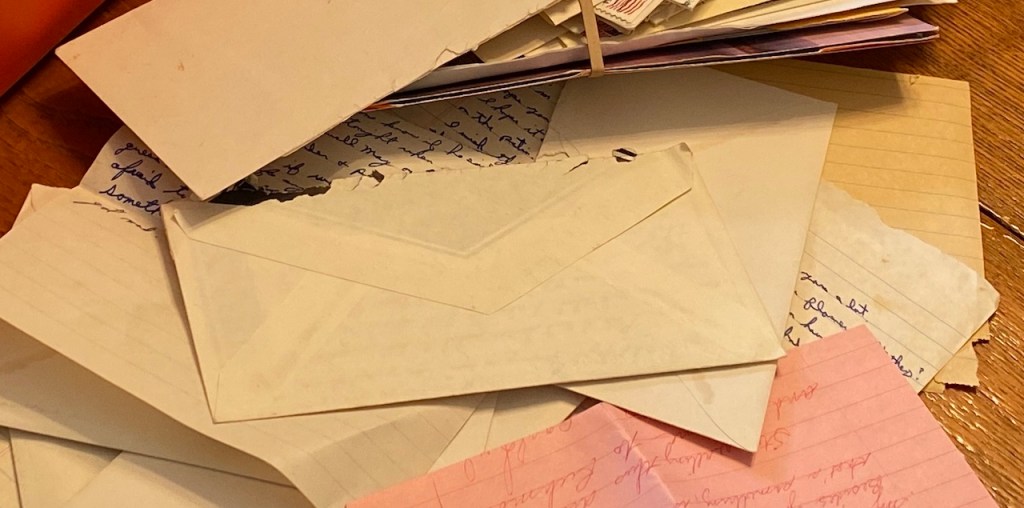


 Linda's Literary Home