Linda's Literary Home

Category: Phillis Wheatley

  • Phillis Wheatley’s “A Hymn to the Evening”

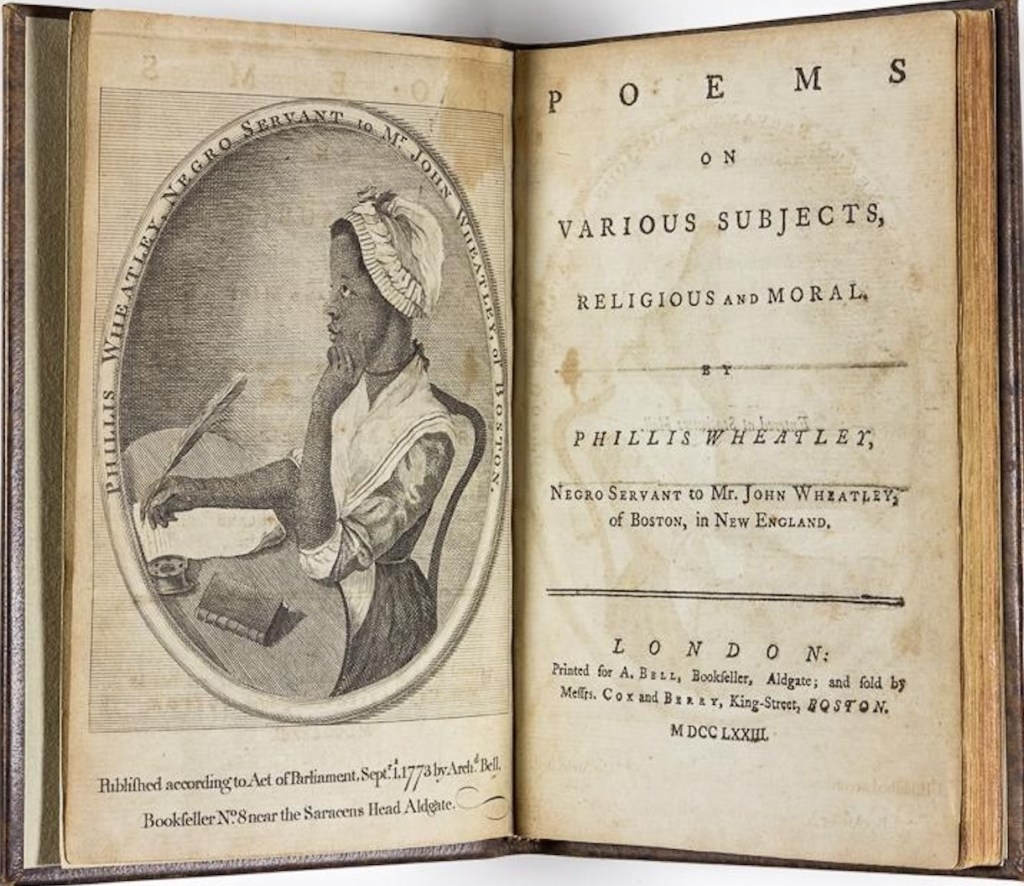
    Image: Phillis Wheatley:  Engraving, reproduced from her book, “Poems on Various Subjects, Religious and Moral.” London, 1773.  New York Public Library

    Phillis Wheatley’s “A Hymn to the Evening”

    The speaker in Phillis Wheatley’s “A Hymn to the Evening” offers her spiritually motivated song/prayer as a tribute  to evening, the part of the day when nightly slumber is arriving in all its glory.

    Introduction and Text of “A Hymn to the Evening”

    The speaker in Phillis Wheatley’s “A Hymn to the Evening” is delighting in the beauty surrounding her.  She is especially cognizant of how all events seem to be accruing for the purpose of making a beautiful day to close with a delightful, colorful evening. 

    The speaker finds the evening sky glorious as it yield the “deepest red” hue, as all other various colors are also displaying across the sky.  She also observes the scenery around her on earth; she takes measure of streams and especially the songs of birds.  She demonstrates her love and admiration for the creation that the Divine Creator has bestowed on all of His children.

    The poem consists of nine riming couplets, with the first couplet featuring an internal rime as well as an end rime.  The second couplet features the rare poetic device, similar to personification, of metaphorically comparing a gentle wind to a bird.  The couplet-formed verse lends to the high tone with which the poet has flavored her hymn.

    By labeling her poem a hymn, the poet has elevated its purpose from a simple tribute to a time of day, to a supplication for gratitude.  As she has observed much beauty about her and is thankful for the opportunity to engage that loveliness, she wishes that same gratitude for all of humankind.  

    The speaker is also offering her song as she is praying that the simple act of appreciating one’s environment may uplift and keep humankind on a virtuous path, on which avoidance of all that cause harm and corruption may be avoided.

    A Hymn to the Evening

    Soon as the sun forsook the eastern main
    The pealing thunder shook the heav’nly plain;
    Majestic grandeur! From the zephyr’s wing,
    Exhales the incense of the blooming spring.
    Soft purl the streams, the birds renew their notes,
    And through the air their mingled music floats.
    Through all the heav’ns what beauteous dies are spread!
    But the west glories in the deepest red:
    So may our breasts with ev’ry virtue glow,
    The living temples of our God below!
    Fill’d with the praise of him who gives the light,
    And draws the sable curtains of the night,
    Let placid slumbers sooth each weary mind,
    At morn to wake more heav’nly, more refin’d;
    So shall the labours of the day begin
    More pure, more guarded from the snares of sin.
    Night’s leaden sceptre seals my drowsy eyes,
    Then cease, my song, till fair Aurora rise.  

    Commentary on “A Hymn to the Evening”

    The speaker is inspired by the beauty of the day’s events that she has been observing both in the sky and on the land around her, as the end of the day is arriving.  She turns her simple awareness into a tribute and supplication for all humankind’s spiritual betterment.

    First Movement:  Opening of Day

    Soon as the sun forsook the eastern main
    The pealing thunder shook the heav’nly plain;
    Majestic grandeur! From the zephyr’s wing,
    Exhales the incense of the blooming spring.

    The speaker opens her tribute by describing how the day had begun with a thunder storm as soon as morning had ended.  She finds the event an example of “[m]ajestic grandeur.” On a soft gentle breeze, the fragrance of spring’s flowers came wafting.

    The inspired speaker then has the sun “forsaking” its domain in the east.  After having arisen, the big star does does not wait but keeps traveling across the sky, literally, forsaking all it leaves behind.  By beginning with the opening of the day, the speaker then gathers images throughout the day that accumulate to a marvelous evening at the close of that day.

    The speaker describes the thunder as “pealing” and that it colorfully caused to tremble the area around it. The thunder strikes the speaker as a grand event, one fitting to collect as evidence that a glorious evening may be in the offing.

    The first couplet includes an internal rime, as well as and end rime: “forsook – shook.”  Also, interestingly, the poet has employed avianification (akin to the device, “personification”) by metaphorically giving a gentle breeze a “wing,” a feature belonging to a bird.

    Second Movement:   The Colors of Beauty

    Soft purl the streams, the birds renew their notes,
    And through the air their mingled music floats.
    Through all the heav’ns what beauteous dies are spread!
    But the west glories in the deepest red:

    The speaker then notes that the streams are babbling gently and birds are continuing to offer their songs to the atmosphere.  The birds’ music seems to blend with other features of the landscape as their singular notes continue to waft on the breeze.  

    She has the stream purling, instead of merely babbling; this speaker is colorfully describing each natural object for the purpose of incorporating them into her collection of images, which she will offer to the day’s end.

    The speaker then remarks that through the sky swirl many various colors that she deems to be “beauteous,” as they stretch across the blue expanse.  However, she finds those hues that appear in “the west” to be the “deepest red,” and she implies that the oncoming sunset will cap the day in a marvelous and glorious procession.

    The speaker finds unusual as well as deeply spiritual ways of describing what she sees.   She is offering her words, her images, and her thoughts to her Divine Creator. Thus, she remains careful to choose each image and description with precision, for example, the west does not merely feature “deepest red,”  but it also “glories” in that color.  Making each word and each image work its magic demonstrates the poet’s skill and mastery of her art.

    Third Movement:  A Supplication for Gratitude

    So may our breasts with ev’ry virtue glow,
    The living temples of our God below!
    Fill’d with the praise of him who gives the light,
    And draws the sable curtains of the night,

    The speaker then turns to the hearts and minds of humanity, prayerfully supplicating for those hearts and minds to “glow,” filled with “ev’ry virtue.”  She hopes that the lives of all humankind become and remain “temples” on earth dedicated to the Belovèd Creator.  She includes all of humanity in her supplication as she effuses, “may our breasts” glow as living temples.

    The speaker wishes that all of humanity become full of praise for the Blessèd Creator of the cosmos; that Creator, Who had given “the light” also will close the “curtains of the night”: again the speaker has shown her marvelous skill by describing those “curtains” as “sable.”

    The speaker then prays that all of humanity may sleep peacefully and become refreshed so that the next day’s existence becomes “more heav’nly, more refin’d.”  She hopes and prays that each day will find humanity to be living more and more on a grand scale of plain living and high thinking.  As she includes herself in her prayer, she demonstrates her humility and deep inner awareness of the needs of all humankind.

    Fourth Movement:  Prayer for Virtuous Living

    Let placid slumbers sooth each weary mind,
    At morn to wake more heav’nly, more refin’d;
    So shall the labours of the day begin
    More pure, more guarded from the snares of sin.
    Night’s leaden sceptre seals my drowsy eyes,
    Then cease, my song, till fair Aurora rise.  

    After a night’s peaceful, invigorating rest of the body and mind, each child of the Divine Creator may begin his/her work, chastened and strengthened by the gratitude of finding a safe harbor in the Blessèd Lord.  

    The speaker prays that all be turned from “the snares of sin.”  Again, the speaker is demonstrating her ethical and moral strength as she wishes for all of humankind the same rectitude she desires for herself.

    The speaker then closes her song of praise for the Belovèd Creator’s beauty in creation by colorfully comparing the closing of her own sleepy eyes—her “drowsy eyes”—to being touched by a royal, magical wand.  

    She then bids her hymn end and allow her the sleep she now needs; thus, she prays for herself a soothing slumber until morning, when the Roman goddess, “Aurora,” brings in a new day with dawn.
  • Phillis Wheatley’s “On Virtue”

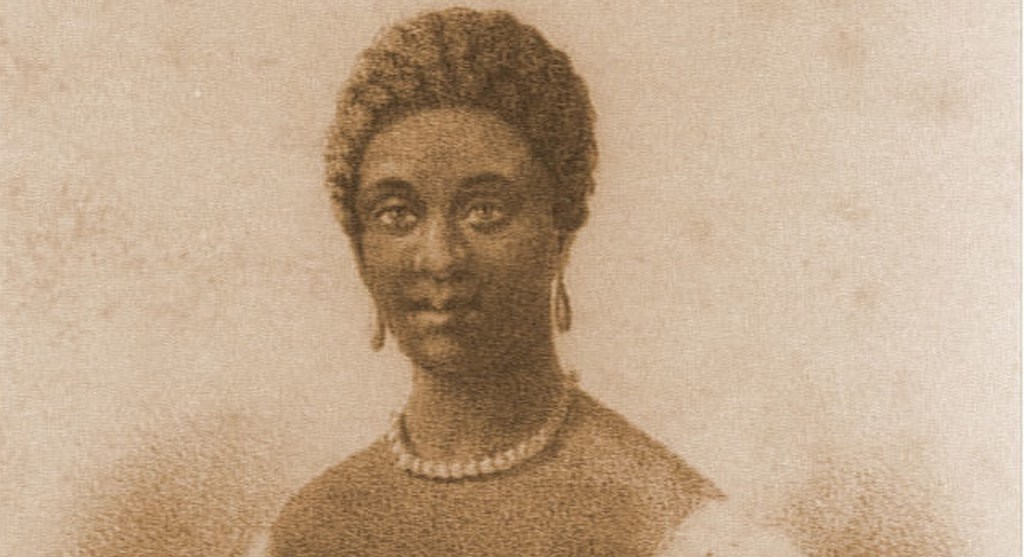
    Image a:  Phillis Wheatley

    Phillis Wheatley’s “On Virtue”

    The speaker in Phillis Wheatley’s “On Virtue” is describing the characteristics of that quality, as she supplicates to the heavenly realms to enrich and enliven her creative ability to produce useful, genuine, and delightful poems.

    Introduction and Text of “On Virtue”

    Phillis Wheatley’s “On Virtue” creates a speaker who is paying tribute to the coveted life goal of virtue or the characteristic that results from righteousness, integrity, and dedication to the truth.  Virtue takes its substance from behavior, that is, right behavior.  

    The virtuous are those who conduct their life in ways that contribute to freedom, prosperity, peace, and calmness of community. Without a plurality of virtuous folks, a community breaks down, becomes unlivable, causing the virtuous to flee.

    The speaker is personifying the quality of virtue, invoking its essential quality to lend its powers to her, and especially to her ability to create her art:  she wishes to create “a nobler lay.”  Thus, after offering a colorful description of the behavior of “virtue,” the speaker offers a supplication, almost a prayer, that virtue visit her and direct her abilities.

    On Virtue

    O Thou bright jewel in my aim I strive
    To comprehend thee. Thine own words declare
    Wisdom is higher than a fool can reach.
    I cease to wonder, and no more attempt
    Thine height t’explore, or fathom thy profound.
    But, O my soul, sink not into despair,
    Virtue is near thee, and with gentle hand
    Would now embrace thee, hovers o’er thine head.
    Fain would the heav’n-born soul with her converse,
    Then seek, then court her for her promis’d bliss.

    Auspicious queen, thine heav’nly pinions spread,
    And lead celestial Chastity along;
    Lo! now her sacred retinue descends,
    Array’d in glory from the orbs above.
    Attend me, Virtue, thro’ my youthful years!
    O leave me not to the false joys of time!
    But guide my steps to endless life and bliss.
    Greatness, or Goodness, say what I shall call thee,
    To give an higher appellation still,
    Teach me a better strain, a nobler lay,
    O thou, enthron’d with Cherubs in the realms of day!

    Commentary on “On Virtue”

    The speaker is Phillis Wheatley’s “On Virtue” is describing the qualities of virtue. As she muses upon the nature of that outstanding quality, she hopes not only to understand it better but also that it will assist her in creating her poems and songs.

    First Stanza: A Valued Quality

    O Thou bright jewel in my aim I strive
    To comprehend thee. Thine own words declare
    Wisdom is higher than a fool can reach.
    I cease to wonder, and no more attempt
    Thine height t’explore, or fathom thy profound.
    But, O my soul, sink not into despair,
    Virtue is near thee, and with gentle hand
    Would now embrace thee, hovers o’er thine head.
    Fain would the heav’n-born soul with her converse,
    Then seek, then court her for her promis’d bliss

    The speaker begins by addressing her subject as “bright jewel.” This appellation demonstrates the value that the speaker is placing on her subject, virtue. To her, virtue is like a precious stone that is bright, thus, cheerful.  She expresses the wish to understand exactly what “virtue” is. Virtue’s own synonyms demonstrate that the status of “wisdom” remains out of reach for the “fool.”

    The speaker then confesses that she will stop musing and trying to examine a quality that remains at such a height and depth that it seems impossible for her to attain. Then the prospect that her soul might sink into despair at abandoning that quality gives rise to her command to her soul not to “sink . . . into despair.”

    While she may not become one with virtue, that quality remains “near” her. Also, the “gentle hand” of that quality will continue to “embrace” the speaker. And it will continue to protect her as it “hovers o’er thine head.”

    The soul gladly seeks to attain virtue, for that force is “heav’n-born.” The soul wishes to hold court with virtue, and it will seek to do so. And the soul will continue to pursue that quality in order to reach its goal of “bliss”—promised by all great spiritual leaders and avatars.

    Second Stanza: A Supplication for Guidance

    Auspicious queen, thine heav’nly pinions spread,
    And lead celestial Chastity along;
    Lo! now her sacred retinue descends,
    Array’’d in glory from the orbs above.
    Attend me, Virtue, thro’ my youthful years!
    O leave me not to the false joys of time!
    But guide my steps to endless life and bliss.
    Greatness, or Goodness, say what I shall call thee,
    To give an higher appellation still,
    Teach me a better strain, a nobler lay,
    O thou, enthron’d with Cherubs in the realms of day!

    The speaker then addresses the quality of virtue as “[a]uspicious queen,” again sending the status of that quality into the higher realms, such as royalty.   But this special queen possesses wings like an angel, and those wings not only fan out but also motivate the quality of “Chastity,” the state of purity that those seeking virtue gladly embrace.

    The speaker begins describing the movement of that “auspicious queen,” as her “retinue” moves downward dressed in “glory” that belongs to the heavenly realm above it. She then commands “Virtue” to listen to her cries for guidance for her young soul during her maturing years.

    She then requests that virtue not allow her to remain in the “false joys of time”—a supplication reminiscent of “lead us not into temptation but deliver us from evil” (Matthew 6:5-15 KJV). She is seeking the genuine that she knows her soul requires and craves.

    She asks to be guided to a life of eternal bliss—the very desire that yoga avatars, such as Paramahansa Yogananda, insist remains inherent in every human soul that incarnates upon Mother Earth. The speaker then describes the quality of virtue as containing greatness and goodness, as she seeks an even “an high appellation” for the name of the quality.

    Finally, the speaker supplicates for this blessed, high-moral quality to instruct her so that she may create “a nobler lay.” She reminds that quality—as a way of reminding herself—that virtue retains a celestial, mystic power because it is encircled by “Cherubs” even as the daylight hours grace the atmosphere.

  • Phillis Wheatley’s “An Hymn to the Morning”

    Phillis Wheatley’s “An Hymn to the Morning”

    Phillis Wheatley was influenced by Greek and Roman classical literature, as well as by early 18th century British poets, who were also influenced by that same literature.

    Introduction and Text of “An Hymn to the Morning”

    Phillis Wheatley’s talent was recognized by George Washington, who became a fan of the poet.  Wheatley’s verse has earned her the status of a first class American poet, whose style resembles the great British poets, who were also influenced by the classical literature of the early Greeks and Romans.

    Phillis Wheatley’s poem “An Hymn to the Morning” consists of ten riming couplets, separated into two quatrains (first and fourth stanzas) and two sestets (second and third stanzas).

    An Hymn to the Morning

    Attend my lays, ye ever honour’d nine,
    Assist my labours, and my strains refine;
    In smoothest numbers pour the notes along,
    For bright Aurora now demands my song.

    Aurora hail, and all the thousand dies,
    Which deck thy progress through the vaulted skies:
    The morn awakes, and wide extends her rays,
    On ev’ry leaf the gentle zephyr plays;
    Harmonious lays the feather’d race resume,
    Dart the bright eye, and shake the painted plume.

    Ye shady groves, your verdant gloom display
    To shield your poet from the burning day:
    Calliope awake the sacred lyre,
    While thy fair sisters fan the pleasing fire:
    The bow’rs, the gales, the variegated skies
    In all their pleasures in my bosom rise.

    See in the east th’ illustrious king of day!
    His rising radiance drives the shades away—
    But Oh! I feel his fervid beams too strong,
    And scarce begun, concludes th’ abortive song.

    Commentary “An Hymn to the Morning”

    Phillis Wheatley was influenced by Greek and Roman classical literature, as well as by early 18th century British poets, who were also influenced by that same literature.

    First Quatrain:  Invocation to the Muses

    Attend my lays, ye ever honour’d nine,
    Assist my labours, and my strains refine;
    In smoothest numbers pour the notes along,
    For bright Aurora now demands my song.

    As the early 18th century poets such as Alexander Pope did, the speaker of Wheatley’s poem addresses the nine muses, asking them to guide her hand, heart, and mind as she composes her song.

    The nine muses are the goddesses who guide and guard the various arts and sciences: Cleo (heroes), Urania (astronomy), Calliope (music), Melpomene (tragedy), Euterpe (lyric poetry), Erato (love), Terpsichore (dance), Thalia (comedy), and Polyhymnia (sacred hymns). 

    Then the speaker says that dawn, “Aurora” or goddess of dawn, is motivating her to write her song dedicated to the goddess of morning, and the speaker wants the song to flow smoothly like a gentle brook, so she asks the muses to “pour the notes along.”  The speaker want to be sure her song is worthy of being dedicated to the important morning deity. 

    First Sestet:  Honoring Dawn’s Arrival

    Aurora hail, and all the thousand dies,
    Which deck thy progress through the vaulted skies:
    The morn awakes, and wide extends her rays,
    On ev’ry leaf the gentle zephyr plays;
    Harmonious lays the feather’d race resume,
    Dart the bright eye, and shake the painted plume.

    As morning approaches, the stars recede from view, and the speaker asks the muses to help her honor dawn’s victory of arrival. The speaker describes the morning’s sun with its far-reaching rays of light. She observes that the light is falling on every leaf, and a gentle breeze is playing upon them. 

    The humble speaker pays homage to the songs of the birds as she describes their singing as “harmonious,” and she notes that as the birds are looking around, their eyes are darting about, and they are shaking their feathers as they wake up. 

    Second Sestet:  Playful Foregrounding

    Ye shady groves, your verdant gloom display
    To shield your poet from the burning day:
    Calliope awake the sacred lyre,
    While thy fair sisters fan the pleasing fire:
    The bow’rs, the gales, the variegated skies
    In all their pleasures in my bosom rise.

    The speaker bids the trees to “shield your poet from the burning day.” She is over-emphasizing a bit, calling the shade of the trees, “verdant gloom.” The playful comparison moves in service of  foregrounding the sun’s brightness as well as the colorful morning’s sun rise. 

    She addresses Calliope, the muse of music, to play upon the lyre, while her sisters, the other muses, “fan the pleasing fire.” Fanning fire makes it burn brighter, and she is celebrating the rising sun that becomes warmer and brighter as it becomes more visible. The little drama is pleasing the poet as she composes. 

    Second Quatrain:  Light into the Darkness

    See in the east th’ illustrious king of day!
    His rising radiance drives the shades away—
    But Oh! I feel his fervid beams too strong,
    And scarce begun, concludes th’ abortive song.

    The speaker thinks of leafy alcoves, and gentle breezes, and the sky with its many colors of purple, pink, orange stretching across the vast panorama of blue, and these things give her much pleasure. Then she suddenly exclaims, “look! the sun!,” to whom she refers as the “king of day.”

    As the sun rises, all darkness has gradually faded away. The radiance of the sun inspires the speaker so immensely, but then she feels something of a let down: “But Oh! I feel his fervid beams too strong, / And scarce begun, concludes th’ abortive song.”  As soon as the sun has fully arrived, then the morning is gone, and her song was celebrating morning, and thus the song must end.

  • Phillis Wheatley’s “On Imagination”

    Image 1:  Phillis Wheatley:  Engraving, reproduced from her book, “Poems on Various Subjects, Religious and Moral.” London, 1773.  New York Public Library

    Phillis Wheatley’s “On Imagination”

    Phillis Wheatley’s classically influenced poem, “On Imagination,” explores the powerful force of human imagination.  Wheatley demonstrates her remarkable talent for use of mythological allusion and the classical forms in which she was trained and in which she excelled.

    Introduction and Text of “On Imagination”

    Phillis Wheatley’s “On Imagination” explores the nature of the human mind as it engages in the fanciful act of imagining.   In the opening movement, Wheatley’s speaker offers an invocation [1] to the “imperial queen,” on whom she bestows the royal label, while personifying her subject.  

    Phillis Wheatley’s classical training in poetry is on full display as she composes a useful “invocation” that helps set the tone for her poem.  Wheatley’s invocation also performs the traditional function of supplicating to the muses or to a deity for guidance and inspiration in composing the poem in progress. 

    The poet has her speaker follow such luminaries as the world-renowned, classical Greek poet, Homer, in his Odyssey [2 ]and the British mastercraftsman and classic poet, John Milton, in his Paradise Lost [3] .

    On Imagination

    Thy various works, imperial queen, we see,
        How bright their forms! how deck’d with pomp by thee!
    Thy wond’rous acts in beauteous order stand,
    And all attest how potent is thine hand.

        From Helicon’s refulgent heights attend,
    Ye sacred choir, and my attempts befriend:
    To tell her glories with a faithful tongue,
    Ye blooming graces, triumph in my song.

        Now here, now there, the roving Fancy flies,
    Till some lov’d object strikes her wand’ring eyes,
    Whose silken fetters all the senses bind,
    And soft captivity involves the mind.

        Imagination! who can sing thy force?
    Or who describe the swiftness of thy course?
    Soaring through air to find the bright abode,
    Th’ empyreal palace of the thund’ring God,
    We on thy pinions can surpass the wind,
    And leave the rolling universe behind:
    From star to star the mental optics rove,
    Measure the skies, and range the realms above.
    There in one view we grasp the mighty whole,
    Or with new worlds amaze th’ unbounded soul.

        Though Winter frowns to Fancy’s raptur’d eyes
    The fields may flourish, and gay scenes arise;
    The frozen deeps may break their iron bands,
    And bid their waters murmur o’er the sands.
    Fair Flora may resume her fragrant reign,
    And with her flow’ry riches deck the plain;
    Sylvanus may diffuse his honours round,
    And all the forest may with leaves be crown’d:
    Show’rs may descend, and dews their gems disclose,
    And nectar sparkle on the blooming rose.

        Such is thy pow’r, nor are thine orders vain,
    O thou the leader of the mental train:
    In full perfection all thy works are wrought,
    And thine the sceptre o’er the realms of thought.
    Before thy throne the subject-passions bow,
    Of subject-passions sov’reign ruler thou;
    At thy command joy rushes on the heart,
    And through the glowing veins the spirits dart.

        Fancy might now her silken pinions try
    To rise from earth, and sweep th’ expanse on high:
    From Tithon’s bed now might Aurora rise,
    Her cheeks all glowing with celestial dies,
    While a pure stream of light o’erflows the skies.
    The monarch of the day I might behold,
    And all the mountains tipt with radiant gold,
    But I reluctant leave the pleasing views,
    Which Fancy dresses to delight the Muse;
    Winter austere forbids me to aspire,
    And northern tempests damp the rising fire;
    They chill the tides of Fancy’s flowing sea,
    Cease then, my song, cease the unequal lay.

    Commentary on “On Imagination”

    The speaker of Phillis Wheatley’s “On Imagination” is dramatizing the power of the human imagination to create any situation it desires.  However, remaining a rational, thinking mind ensconced in reality, the speaker returns to the physical plane of being to make a humble claim about her own use of imagination.

    Opening Movement:  The Classical Invocation

    Thy various works, imperial queen, we see,
        How bright their forms! how deck’d with pomp by thee!
    Thy wond’rous acts in beauteous order stand,
    And all attest how potent is thine hand.

        From Helicon’s refulgent heights attend,
    Ye sacred choir, and my attempts befriend:
    To tell her glories with a faithful tongue,
    Ye blooming graces, triumph in my song.

        Now here, now there, the roving Fancy flies,
    Till some lov’d object strikes her wand’ring eyes,
    Whose silken fetters all the senses bind,
    And soft captivity involves the mind.

    The speaker begins by describing some of the creations that have resulted from the works of this imperial queen, Imagination.  She asserts that the queen’s many varied “works” reveal bright forms that have been accompanied by “pomp.”   The works are also “wond’rous” as they appear in a “beauteous order.”  And they all prove the exquisite power that rests in that imperial queen’s hand.

    The speaker engages an allusion to the Greek mythological mountain of Helicon [4], whose springs became known as a fount of poetic inspiration. It was there that the poet, Hesiod, was inspired to compose his Theogony, a work that offers a narration about the origin of the world as it was formed from chaos.

    Hesiod’s famous opus also describes the genesis and historical progression of the Greek gods. Also allusive is her brilliant invocation. This speaker wishes to tell with “a faithful tongue” the glories of the work of the Imagination. She avers that as “Fancy flies,” that facility eventually lands on some object of intense interest, and then the mind takes over to wrap that object in “silken fetters.”

    Second Movement:  The Astonishing Force

    The second movement begins the intense exploration of the “force” that the human mind through employment of its tool, the imagination, wields upon nature, time, and space.  

    The speaker implies that the imagination, in fact, has such a force that it is likely that no one can do it justice by speaking about it: no one can “sing” it force, and no one can fully “describe” the speed at which the imagination can move along its path.  Still, she is motivated to offer her attempt to shed some light on the subject.

    The speaker avers that through the powerful force of imagination the human mind can fly through space in search of the abode of the “thund’ring God.”  The mind through the imagination can fly past the wind and abandon the confines of the “rolling universe.”  

    On the wings of imagination, the human mind may flit from “star to star” and take a measuring tape to the skies, while roaming above the sky.  The mind through imagination can bring the human consciousness to a pinnacle from which s/he may “grasp the mighty whole,” while also discovering new places that will astonish even the “unbounded soul.”

    Third Stanza:   Imaginative Declarations

    The speaker then makes an amazing claim that through the imagination the ravages of the season of winter can be transformed, and spring-like weather may again become refulgent.  

    The fields may again hold the growing grain.  Frozen soil and streams may come alive and move unfettered. Flowers again may send out their fragrance as their colorful beauty again decorates the landscape.  

    Alluding to the Roman god, Sylvanus [5], the speaker insists that the “forest”—”silva” is Latin for “forest”—may become festooned with green leaves, replacing the brown, bare branches of winter.

    Spring rains may sprinkle the landscape while dew may form and gleam in the morning sunlight.  And roses may hold their “nectar sparkle.”  All of this is made possible by the forceful functioning of the mental process known as “imagination.”

    Fourth Stanza:   The Powerful Force for Creativity

    The speaker then affirms that what she has described as issuing from the force of imagination is, in fact, true.   She asserts that the power of imagination remains in effect and what that power orders comes into being because imagination is the “leader of the mental train.”  According to the dictates of this speaker’s thinking, the central invigorating feature of the mind is imagination.

    After the imperial queen, the imagination, lifts her staff over the heads of the “realms of thought,” her subjects, like all good subjects, “bow.”  This queen remains their “sovereign ruler.”  

    Interestingly, the speaker finds that as this ruler asserts her power, instead of resistance and doubt claiming the subjects, their hearts are filled with joy.  This joy rushes in and then “spirits dart” through those “glowing veins.”

    Thus, the presence and powerful force of the imagination offers the host mental facility only positive attributes.  With an inspirational joy flooding the body and mind, the host remains in a regenerative state of awareness.

    Fifth Movement:   A Humble Return to Reality

    The speaker next refers to the wildly imaginative venture of “ris[ing] from earth” and rushing through the expanse far distant above the earth-planet.   Alluding again to Greek mythology, she employs the character Tithon [6], whose bed from which dawn (Aurora) may awaken in a stream of pure light—an occasion that would be quite different from the activities experienced by those characters.  

    The imagination can change all negativity to positivity, but the speaker, however, must return to earthly reality by admitting that she must leave those halcyon realms to which her imaginative journey has aspired.  While an imaginative winter may turn to spring, the reality of the empirical winter forbids such flights of fancy.

    Thus, the speaker reluctantly returns to “northern tempests” that will douse the fire of pure imagination.  While Fancy’s “flowing sea” begins to chill, the speaker must end her song, which she claims is inferior to the imaginative heights she had reached earlier in her singing.

    Sources

    [1]  Editors.  “Invocation.”  Britannica.  Accessed August 26, 2023.

    [2]  Homer. Odyssey. Translation by  Classics Archive.  Accessed August 26, 2023.

    [3]  John Milton.Paradise Lost.   Poetry Foundation.  Accessed August 26, 2023.

    [4]  Curators. “Helicon.”  Fandom: Greek Mythology. Accessed August 26, 2023.

    [5]  Editors. “Sylvanus: Roman God.”  Britannica.  Accessed August 26, 2023.

    [6]  Curators.  “Tithon.”  GreekMythology.com.  Accessed August 26, 2023.

  • Phillis Wheatley

    Image: Phillis Wheatley 

    Life Sketch of Phillis Wheatley

    Phillis Wheatley’s talent was questioned but then authenticated during her lifetime, and she is now hailed by all but the most cynical as one of America’s finest poetic voices.

    Two Versions of a Publication History

    Although Phillis Wheatley’s talent was at first questioned [1], her authenticity was finally established during her lifetime. Today, she is widely recognized by all, except the most cynical [2], as one of America’s finest poetic voices.  

    Phillis Wheatley’s first and only collection of published poetry was titled Poems on Various Subjects, Religious and Moral; it was published in England.

    There are two versions of the history of this book’s publication [3]: one is that the Countess Selina of Huntington invited Phillis to London and found a publisher for the poet; the other is that Phillis suffered from asthma, and so the Wheatley family took her to England to recuperate, and while there, they sought publication of her work.  

    Either way, the book was published and Wheatley’s career was established. The Wheatley family’s insight played a major role in helping a slave rise above the hardships of that vile institution.

    The Value of One Poem

    In May 1968, one poem written by Phillis Wheatley brought $68,500 at Christie’s auction [4], Rockefeller Center in New York. It had been estimated to bring between $18,000 and $25,000.  

    The poem is titled “Ocean”; its seventy lines were written on three pages that had yellowed with time. It is thought to be the only copy.  

    Ocean

    Now muse divine, thy heav’nly aid impart,
    The feast of Genius, and the play of Art.
    From high Parnassus’ radiant top repair,
    Celestial Nine! propitious to my pray’r.
    In vain my Eyes explore the wat’ry reign,
    By you unaided with the flowing strain.
    When first old Chaos of tyrannic soul
    Wav’d his dread Sceptre o’er the boundless whole,
    Confusion reign’d till the divine Command
    On floating azure fix’d the Solid Land,
    Till first he call’d the latent seeds of light,
    And gave dominion o’er eternal Night.
    From deepest glooms he rais’d this ample Ball,
    And round its walls he bade its surges roll;
    With instant haste the new made seas complyd,
    And the globe rolls impervious to the Tide;
    Yet when the mighty Sire of Ocean frownd
    “His awful trident shook the solid Ground.”
    The King of Tempests thunders o’er the plain,
    And scorns the azure monarch of the main,
    He sweeps the surface, makes the billows rore,
    And furious, lash the loud resounding shore.
    His pinion’d race his dread commands obey,
    Syb’s, Eurus, Boreas, drive the foaming sea!
    See the whole stormy progeny descend!
    And waves on waves devolving without End,
    But cease Eolus, all thy winds restrain,
    And let us view the wonders of the main
    Where the proud Courser paws the blue abode,
    Impetuous bounds, and mocks the driver’s rod.
    There, too, the Heifer fair as that which bore
    Divine Europa to the Cretan shore.
    With guileless mein the gentle Creature strays.
    Quaffs the pure stream, and crops ambrosial Grass.
    Again with recent wonder I survey
    The finny sov’reign bask in hideous play.
    (So fancy sees) he makes a tempest rise
    And intercept the azure vaulted skies.
    Such is his sport:—but if his anger glow
    What kindling vengeance boils the deep below!
    Twas but e’er now an Eagle young and gay
    Pursu’d his passage thro’ the aierial way.
    He aim’d his piece, would C[ale]f’s hand do more ?
    Yes, him he brought to pluto’s dreary shore.
    Slow breathed his last, the painful minutes move
    With lingring pace his rashness to reprove;
    Perhaps his father’s Just commands he bore
    To fix dominion on some distant shore.
    Ah! me unblest he cries. Oh! had I staid
    Or swift my Father’s mandate had obey’d.
    But ah! too late.—Old Ocean heard his cries.
    He stroakes his hoary tresses and replies:
    What mean these plaints so near our wat’ry throne,
    And what the Cause of this distressful moan?
    Confess. Iscarius, let thy words be true
    Not let me find a faithless Bird in you.
    His voice struck terror thro’ the whole domain.
    Aw’d by his frowns the royal youth began,
    Saw you not. Sire, a tall and Gallant ship
    Which proudly skims the surface of the deep?
    With pompous form from Boston’s port she came.
    She flies, and London her resounding name.
    O’er the rough surge the dauntless Chief prevails
    For partial Aura fills his swelling sails.
    His fatal musket shortens thus my day
    And thus the victor takes my life away.
    Faint with his wound Iscarius said no more.
    His Spirit sought Oblivion’s sable shore.
    This Neptune saw, and with a hollow groan
    Resum’d the azure honours of his Throne.

    Coming to America

    Phillis Wheatley was born in Senegal/Gambia, Africa, in 1753. At age seven, she was brought to America and sold to John and Susannah Wheatley of Boston. She soon became a family member instead of a slave.  The Wheatleys taught Phillis to read, and she was soon reading classic literature in Greek and Latin, as well as English. 

    But her talent did not stop with reading, because she began to write poetry, influenced by the Bible and the English poets, particularly John Milton, Alexander Pope, and Thomas Gray. Her poetry reflected the classical forms and content which she closely studied [5].

    Phillis wrote her first poem at age thirteen, “On Messrs. Hussey and Coffin,” which was published in 1767 in the Newport Mercury [6]. But she gained wide recognition as a poet with “On the Death of the Reverend Mr. George Whitefield,” which appeared only three years later.   Chiefly, because of this poem, Phillis’ first book was later published. It is thought that she had a second book of poems, but the manuscript seems to have disappeared.

    In 1778, Phillis married John Peters, a failed businessman. They had three children, all of whom died in childhood. Phillis’ final years were spent in extreme poverty, despite her work as a seamstress.   She continued to write poetry and tried in vain to publish her second book of poetry. She died at age 31 in Boston.

    The Poet’s Authenticity Questioned

    As one might surmise, there was, indeed, a controversy over the authenticity of Phillis’ writing.   That a young black slave girl could write like a John Milton was not a fact easily digested back in Colonial America, when slaves were considered something less than human.

    Even Thomas Jefferson [7] showed disdain for Phillis’ writing; in his Notes on the State of Virginia, he remarked, “Religion indeed has produced a Phyllis Whately [sic] but it could not produce a poet. The compositions published under her name are below the dignity of criticism.”

    Yet Jefferson goes ahead and offers criticism in his next remark, “The heroes of the Dunciad are to her, as Hercules to the author of that poem.”

    Unlike Jefferson, George Washington [8].proved to be a fan; in 1776, she wrote a poem and a letter to Washington, who praised her efforts and invited her to visit. I wonder how seriously we can take Jefferson’s criticism, when he so badly misspelled her name; one wonders if he might be speaking of someone else.

    Important American Poet

    Readers can sample Phillis’ poetry online; her book of poems, Poems on Various Subjects, Religious and Moral, is offered in its entirety, including the front material that shows how strong the controversy over her talent was [9].  After suffering the ambivalence of the Colonial mind-set during her lifetime, today Phillis Wheatley is hailed as one of the most important early American poets.

    Sources

    [1]  Joel Gladd.  “Phillis Wheatley, Thomas Jefferson, and the Debate over Poetic Genius.”  CWI.  Accessed August 25, 2023.

    [2]  R. Lynn Matson.  “Phillis Wheatley—Soul Sister?Phylon (1960-), vol. 33, no. 3, 1972, pp. 222–30. JSTOR.

    [3]   Sondra A. O’Neale.  “Phillis Wheatley.”  Poetry Foundation.  Accessed August 25, 2023.

    [4] Paul P. Reuben.  “Phillis Wheatley.”  Perspectives in American Literature.  Accessed August 25, 2023.

    [5] Sydney Vaile.  “Phillis Wheatley’s Poetic Use of Classical Form and Content in Revolutionary America, 1767–1784.”  Researchgate. April 2015.

    [6]  Debra Michals.  “Phillis Wheatley.”  National Women’s History Museum.  2015.

    [7] Thomas Jefferson.  “Notes on the State of Virginia: Queries 14 and 18.”  Teaching American History.  Accessed August 25, 2023.

    [8] George Washington.  “George Washington to Phillis Wheatley, February 28, 1776.” Library of Congress.  Accessed August 25, 2023.

    [9]  Phillis Wheatley.  Poems on Various Subjects, Religious and Moral.  Gutenberg Project.  Accessed August 25, 2023.

    Commentaries on Phillis Wheatley Poems