Ralph Waldo Emerson’s short poem “Days” has been the target of much critical attention, which focuses on the ambiguity in the employment of the term “hypocritic.”
Introduction and Text of “Days”
Ralph Waldo Emerson’s “Days” displays eleven lines, an American Innovative Near-Sonnet. Near-Sonnets, also known as “curtal sonnet,” as coined by Father Gerard Manley Hopkins, allow for more intensity than the traditional sonnet, as they continue to reveal the beauty of the traditional form.
Emerson’s “Days” has garnered its share of ink from critics and scholars, who opine about the use of the term “hypocritic” in the first line “Daughters of Time, the hypocritic Days.”
Some argue that the term be thought of as “deceivers” while others assert that hypocritic interprets as”actors.” The extended literary device in the poem is personification; therefore, both “actors” and “deceivers” work meaningfully.
Days
Daughters of Time, the hypocritic Days, Muffled and dumb like barefoot dervishes, And marching single in an endless file, Bring diadems and fagots in their hands. To each they offer gifts after his will, Bread, kingdoms, stars, and sky that holds them all. I, in my pleached garden, watched the pomp, Forgot my morning wishes, hastily Took a few herbs and apples, and the Day Turned and departed silent. I, too late, Under her solemn fillet saw the scorn.
Commentary on “Days”
Emerson’s short poem features a personification of “Days,” the common label for the time period of 24 hours. His speaker wishes to castigate himself and others for wasting their time on foolishness, when they could be employing their efforts in worthy causes.
First Movement: The Days Move On
Daughters of Time, the hypocritic Days, Muffled and dumb like barefoot dervishes, And marching single in an endless file, Bring diadems and fagots in their hands.
The speaker is observing that the march of days looks like a long line of women, colorfully labeled “barefoot dervishes.” These colorful ladies are “marching single” endlessly as they bring various items and events to the humans, experiencing their allotment of time.
The speaker asserts that what the “Daughters of Time” fetch each individual depends upon the human mind that becomes a receiving container. For some, the daughters bring precious stones but to others they bring only bundles of sticks.
Second Movement: Various Gifts
To each they offer gifts after his will, Bread, kingdoms, stars, and sky that holds them all.
Time brings to each individual heart and mind only that which it needs or perhaps anticipates. The “sky,” meanwhile, holds all that exists, as each day fetches those various “gifts” to mankind.
Third Movement: Confusion of Guilt
I, in my pleached garden, watched the pomp, Forgot my morning wishes, hastily Took a few herbs and apples
The speaker confesses that he too had merely been watching the passage of times/days, while not employing his allotment of time/days for the best purposes. He has permitted his garden to become entwined in vines and branches. He has become negligent of his “morning wishes.” He has also merely settled for taking a few pieces of fruit and “herbs.”
Fourth Movement: The Disdainful Day
and the Day Turned and departed silent. I, too late, Under her solemn fillet saw the scorn.
Because of the speaker’s complacent observance, the day has become a bit vexed because the speaker has not attempted to procure as much out of his valuable allotment of time/days as he should have done. The day as a “daughter of time” had thus become dismayed by the heedless human being who should have known better and thus behaved more enthusiastically.
The Use of Ambiguity
The resonating value of poetic language sometimes permits words to work with many layers of meaning. The word “hypocritic” resonates with two meanings: deceivers and actors.
The words are not opposites, and they are not mutually exclusive. Actors are essentially “deceivers” because they perform in rôles that represent persons or beings other than who the actors are. In Emerson’s “Days,” the impact of the poem depends greatly upon the experience of each reader.
A human mind has conceived of the personification of time as “daughters,” and, therefore, it is human perception that perceives the meaning of “deceiver” vs “actor.”
The poem’s speaker, offering his personal view after watching these “Daughters of Time,” has decided that these daughters are “hypocritic Days.” He thus demonstrates that he has discovered something valuable and profound from the “daughters”—these personified days.
Even though his learning experience may have lasted his entire lifetime, he is revealing that he now comprehends that each day is offering each individual human being what he needs or wants, all after “his own will.”
The speaker then reveals his understanding so that his fellow beings may benefit from his learning. He understands that those “days” serve as actors, and so he has placed them in a specific rôle as personified days, that is, “daughters.” They also behave as “barefoot dervishes,” while they march in that limitless parade.
In their rôles as actors, the daughter-days appear to play no part in hypocrisy, but then the human mind can reason that if the human being were to choose the valuable as easily as the valueless, then why did those days not influence one to move in the proper direction? Clearly, such a thought indicates that some deception might be part of the equation.
Therefore, the human mind can easily interpret the meaning of “hypocritic” to suggest that those “days” are behaving as both actor and deceiver. The human mind can perceive the actions of the “daughters of Time” and be able to decide their true identify as well as purpose of those “dervishes” who continue to march in that long parade.
As time flows by, the human mind that has become a keen observer becomes aware of itself as holding both ideas of acting and deceiving. It is obviously the human mind that has conceived of and named each action. It is, also, the human mind that has decided that it possesses the ability to share experiences, even as those deceiving “actors” continue to move on, one day at time.
The ExplicatorandESQDebate
In the November 1945 volume 4 issue 2 of The Explicator, the prestigious publication, dedicated only to short explications, the editors elucidated their reasons for interpreting the term “hypocritic” in the first line of Emerson’s “Days” as meaning “deceivers.”
Five months later, Joseph Jones, in the April 1946 issue of The Explicator, suggested that the term should be interpreted as “actors.” One year later in the April 1947 issue, Edward G. Fletcher brought the argument back to “deceivers. After almost two decades, James E. White had moved back to “actors” as he argued his ideas in the 1963 issue of the now defunct Emerson Society Quarterly.
Part of my article here Ralph Waldo Emerson’s “Days” appeared in the Fall 1986 issue of The Explicator. I argued that the meaning of the term is ambiguous and can be interpreted to support both meanings —”actors” and deceivers.”
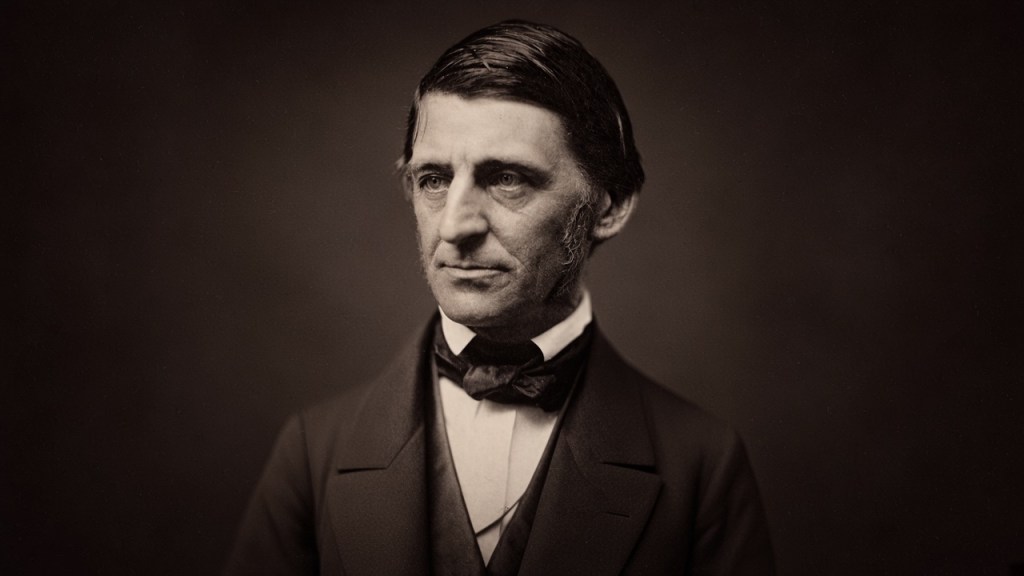
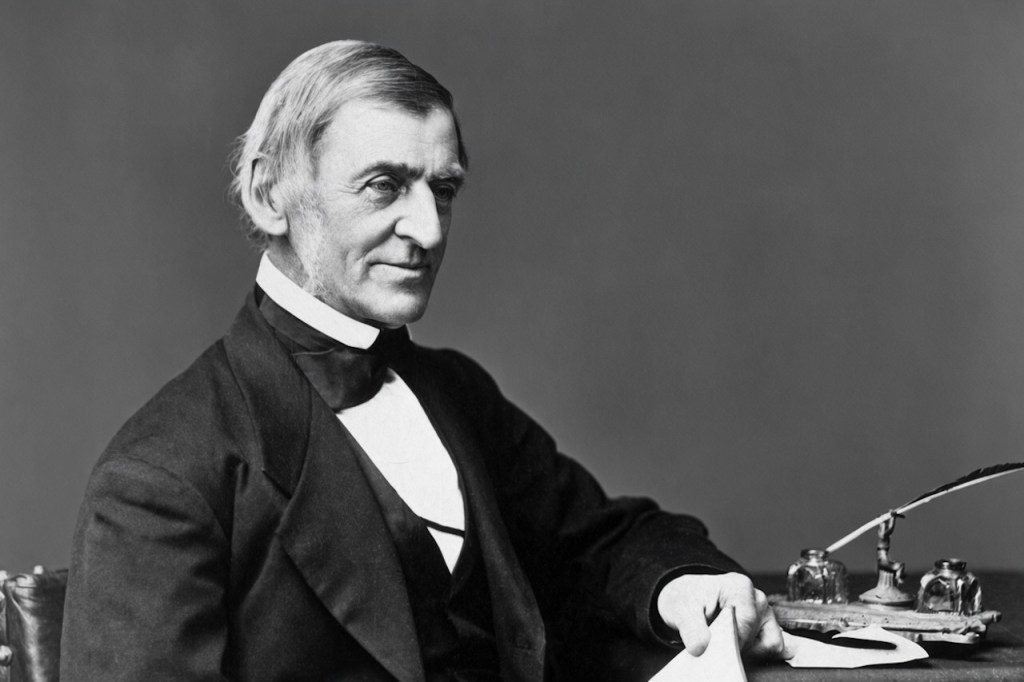
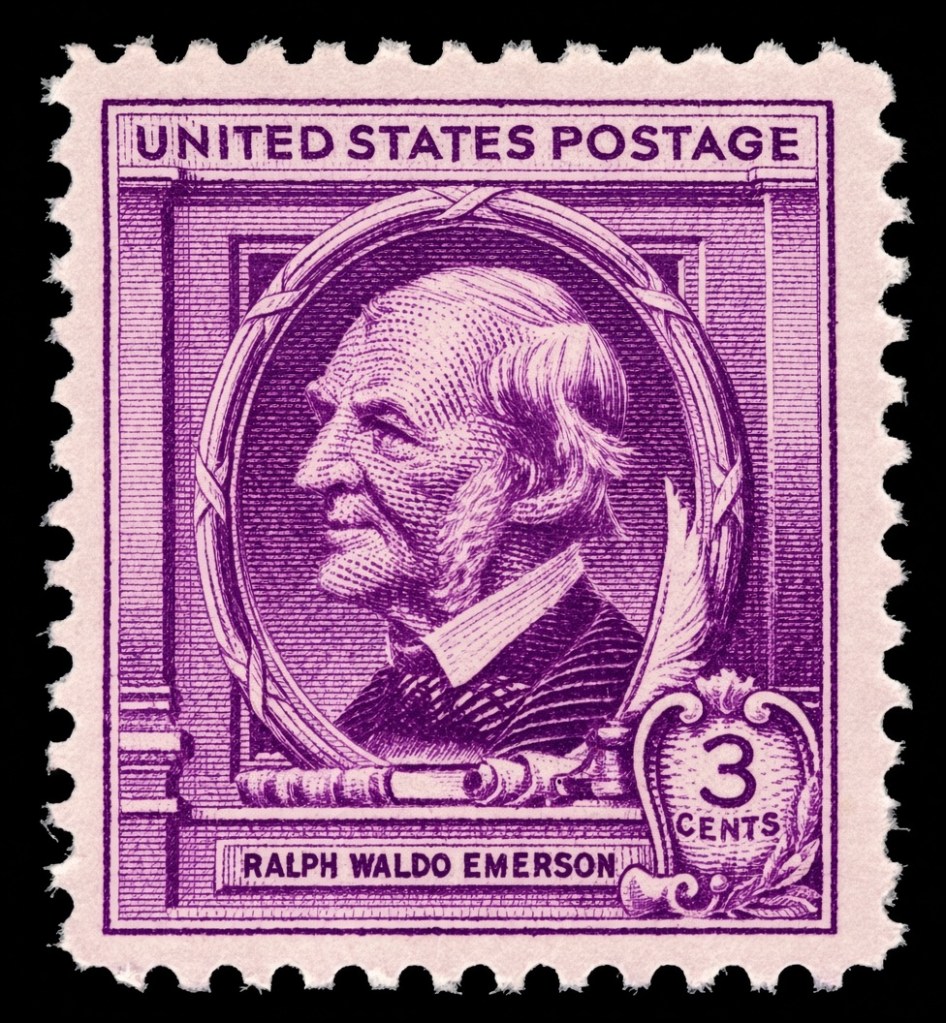
Ralph Waldo Emerson, born in Boston, overcame early poverty, later becoming a major figure in the Transcendental Movement. His essays, such as “Self-Reliance,” shaped American individualism; his lectures and activism left a lasting legacy bridging romanticism and pragmatism.
Early Life and Education
Ralph Waldo Emerson was born on May 25, 1803, in Boston, Massachusetts, into a lineage of New England clergymen. His father, William Emerson, a Unitarian minister, instilled early intellectual rigor until his death in 1811 [1]. This loss plunged the family into poverty, compelling young Emerson to cultivate resilience, a trait later evident in his philosophical writings.
Emerson’s childhood unfolded amid modest circumstances, yet his mother, Ruth Haskins Emerson, prioritized education. His formative years shaped a mind attuned to introspection and perseverance, qualities foundational to his later transcendentalist ideals.
He attended Boston Latin School, excelling in classical studies despite financial strain. At fourteen, he entered Harvard College in 1817, supporting himself through tutoring. Graduating in 1821, he ranked thirtieth in a class of fifty-nine [2], reflecting steady but unremarkable academic progress.
Following Harvard, Emerson briefly taught school, finding the rôle uninspiring. In 1825, he enrolled at Harvard Divinity School, preparing for the ministry. This trajectory mirrored familial expectations, yet foreshadowed his eventual divergence from traditional religious orthodoxy.
Health issues, including temporary blindness, delayed his studies, yet he persevered [3]. Ordained in 1829, he assumed the junior pastorate at Boston’s Second Church, beginning his initial embrace of a religious vocation. This rôle sparked an early commitment to spiritual leadership, though his intellectual evolution soon prompted a broader philosophical exploration beyond ecclesiastical confines.
Marriage, Ministry, and Transcendentalism
In September 1829, Ralph Waldo Emerson married Ellen Louisa Tucker, a union that featured a significant turning point in his life. Ellen’s death from tuberculosis in 1831 devastated him, prompting a shift from orthodox Christianity to personal revelation [4]. This period of intense grief and questioning laid the groundwork for Emerson’s future philosophical explorations.
The loss of Ellen profoundly affected Emerson, leading him to reevaluate his religious beliefs and practices. By 1832, he found himself increasingly uncomfortable with the traditional rituals of the church, particularly the administration of the Lord’s Supper. This discomfort ultimately led to his resignation from his ministerial post.
Emerson’s decision to resign signaled a break from his former religious vocation. He began to explore new intellectual and spiritual horizons, seeking answers to the existential questions that had arisen during his period of mourning. This journey of self-discovery would eventually lead him to the transcendentalist philosophy.
In 1833, Emerson embarked on a transformative journey to Europe. During this trip, he met influential thinkers such as Thomas Carlyle, whose ideas significantly impacted Emerson’s evolving philosophical outlook. These encounters played a crucial role in shaping the transcendentalist movement that would soon emerge.
Upon his return from Europe, Emerson settled in Concord, Massachusetts, in 1834 [5]. This decision to make Concord his home would prove important, as the town would become a central hub for transcendentalist thought and activity in the years to come.
In 1835, Emerson married Lydia Jackson, whom he affectionately renamed “Lidian”. This union provided him with companionship and support as he transitioned from cleric to secular thinker [6]. Emerson began lecturing publicly, refining and disseminating his philosophical ideas to a wider audience.
His first major work, Nature, published in 1836, articulated transcendentalist principles, rejecting received tradition and promoting intuitive truth, establishing him as a visionary [7]. This seminal text emphasized the interconnectedness of humanity and the natural world, positing that nature was an extension of the human mind and spirit.
The publication of Nature heralded the official birth of transcendentalism as a philosophical movement. Its ideas resonated with many intellectuals of the time, inspiring them to join Emerson in Concord and form what became known as the Transcendental Club. This group of thinkers and writers would go on to shape American literature and philosophy for generations to come.
Emerson’s transition from orthodox minister to transcendentalist leader was not without its challenges. His departure from traditional religious practices and embrace of more individualistic spiritual ideas drew criticism from some quarters. However, it also attracted a growing number of followers who were inspired by his vision of personal enlightenment and spiritual freedom.
The years following the publication of Nature saw Emerson continue to develop and refine his philosophical ideas. He delivered numerous lectures and essays, each building upon and expanding the core principles of transcendentalism. His work emphasized the importance of self-reliance, intuition, and the inherent goodness of both humanity and nature.
Emerson’s influence extended beyond philosophy into the realm of literature and social reform. His ideas inspired a generation of writers, including Henry David Thoreau and Walt Whitman, who would go on to create some of the most enduring works of American literature. Additionally, transcendentalist principles played a role in shaping various social reform movements of the 19th century, including abolitionism and women’s rights.
The period from Emerson’s first marriage to the publication of Nature represents a profound transformation in his personal life, professional career, and philosophical outlook. Through personal tragedy, spiritual questioning, and intellectual exploration, Emerson emerged as the leading voice of transcendentalism, a movement that would leave an indelible mark on American thought and culture.
His journey from orthodox minister to visionary thinker exemplifies the power of individual reflection and the pursuit of intuitive truth, core principles that would define both his life and his enduring legacy.
Literary Peak and Intellectual Influence
On August 31, 1837, Ralph Waldo Emerson delivered his seminal address, The American Scholar, at Harvard University. This speech, later hailed as America’s “intellectual Declaration of Independence” by Oliver Wendell Holmes, signaled a pivotal moment in the nation’s cultural and intellectual history.
Emerson’s oration was a clarion call for original thought [8] and a distinctly American approach to scholarship, challenging the prevailing norms of European intellectual influence.
The address, delivered to the Phi Beta Kappa Society, emphasized the importance of self-reliance and independent thinking for American scholars. Emerson urged his audience to break free from the shackles of European intellectual traditions and forge a new path uniquely suited to the American experience.
He posited that the true scholar should be “Man Thinking” rather than a mere receptacle of others’ ideas, advocating for a more active and engaged approach to intellectual pursuits.
Emerson’s speech resonated deeply with his audience, articulating a vision of American intellectual life that was both ambitious and distinctly national in character. He argued that the American scholar had a responsibility to contribute to the formation of a new cultural identity, one that reflected the values and experiences of the young nation. This call for intellectual independence [9] aligned with the broader spirit of American individualism and self-reliance that was emerging in the early 19th century.
In 1841, Emerson further developed and expanded his philosophical ideas with the publication of Essays: First Series. This collection included some of his most influential works, such as “Self-Reliance” and “Compensation.” These essays delved deeper into Emerson’s philosophy of individualism, emphasizing the importance of trusting one’s own instincts and ideas rather than conforming to societal expectations.
The essay “Self-Reliance” in particular became a cornerstone of Emerson’s philosophical legacy. In it, he expounded on the virtues of independent thinking and the dangers of conformity, famously declaring, “Trust thyself: every heart vibrates to that iron string.” This work further cemented Emerson’s reputation as a leading intellectual figure of his time and continued to influence American thought for generations to come.
Following the success of his first essay collection, Emerson published Essays: Second Series in 1844. This volume built upon the themes explored in his earlier works, further developing his ideas on individualism, nature, and the human spirit. The continued exploration of these themes demonstrated Emerson’s commitment to developing a comprehensive philosophical framework for American intellectual life.
During this period, Emerson’s home in Concord, Massachusetts, became a hub for transcendentalist thought and activity. The philosopher’s residence served as a gathering place for like-minded thinkers and writers, fostering a vibrant intellectual community. This environment proved particularly influential for Henry David Thoreau, whom Emerson mentored and supported in his literary endeavors.
Emerson’s home also hosted other notable figures of the transcendentalist movement, including Amos Bronson Alcott [10]. These gatherings and discussions helped to shape and refine the transcendentalist philosophy, which emphasized the inherent goodness of individuals and nature, and the importance of self-reliance and intuition over established doctrines and institutions.
Throughout the 1840s, Emerson’s reputation as a public intellectual continued to grow. He embarked on a series of popular lectures covering a wide range of topics, including ethics, history, and aesthetics. These lectures drew large crowds across the country, reflecting the public’s growing appetite for intellectual discourse and Emerson’s skill as an orator.
The success of Emerson’s lecture circuit provided him with financial stability [11], allowing him to focus on his writing and philosophical pursuits. This period of financial security was crucial in enabling Emerson to continue developing and disseminating his ideas, further solidifying his influence on American intellectual life.
Emerson’s lectures and essays during this period contributed significantly to the development of a distinctly American philosophical tradition. His emphasis on self-reliance, individualism, and the relationship between human beings and nature resonated with the American public and helped to shape the nation’s cultural identity. The philosopher’s work during this time laid the foundation for what would become known as American Transcendentalism.
The period from Emerson’s The American Scholar address in 1837 through the 1840s was a time of immense intellectual productivity and influence for the philosopher. His writings and lectures during this era not only established him as a preeminent American thinker but also played a crucial role in shaping the nation’s intellectual landscape.
Emerson’s call for original thought and his philosophy of individualism continue to resonate in American culture to this day, underscoring the enduring impact of his contributions to the nation’s intellectual heritage.
Family, Activism, and Later Works
Ralph Waldo Emerson, one of America’s most influential thinkers, experienced profound personal and intellectual shifts throughout his life, shaped by tragedy, family, and an evolving socio-political landscape.
The death of his son Waldo in 1842 heralded another pivotal moment, plunging Emerson into a deeper contemplation of mortality. This loss found expression in his elegiac poem “Threnody,” a work that struggles with grief and the fragility of human existence.
At the same time, his wife Lidian and their surviving children—Ellen, Edith, and Edward—provided an anchor, tethering him [12] to the tangible joys and responsibilities of family life amid his philosophical musings. These dual forces of sorrow and domestic stability enriched his perspective, infusing his writings with both emotional depth and a grounded realism.
By the 1850s, Emerson’s intellectual journey took a decisive turn toward social activism as he embraced abolitionism with fervor. The moral outrage over slavery, particularly catalyzed by the Fugitive Slave Act of 1850, spurred him to denounce the institution in works such as “The Fugitive Slave Law” (1854) [13]. In this address, he condemned the legislation that mandated the return of escaped slaves, calling it a betrayal of American ideals.
His rhetoric sharpened, reflecting a growing belief that transcendentalist principles—self-reliance, individual conscience, and the inherent goodness of humanity—demanded active resistance to systemic injustice. This period noted a shift from the abstract idealism of his earlier essays to a more engaged, pragmatic critique of society.
Emerson’s travels also played a significant rôle in broadening his worldview. His 1847-1848 tour of Britain inspired English Traits (1855), a book that offered a nuanced critique of English culture [14]. Drawing on observations from his lectures and interactions with figures like Thomas Carlyle, Emerson examined the strengths and flaws of British society—its industrial prowess, class rigidity, and intellectual traditions.
The work showcased his ability to blend personal experience with cultural analysis, revealing a mind attuned to both the universal and the particular. While admiring England’s achievements, he remained critical of its materialism and conformity, contrasting these traits with the individualism he championed.
In The Conduct of Life (1860), Emerson further refined his philosophy, adapting transcendentalism to the practical demands of everyday ethics. Published on the cusp of the Civil War, this collection of essays addressed fate, power, and wealth, urging readers to align their inner convictions with outward actions. It reflected his maturation as a thinker, one who recognized life’s complexities without abandoning his core optimism.
As the Civil War erupted, Emerson’s commitment to the Union cause deepened. Through lectures like American Civilization (1862) [15], he articulated a vision of national identity rooted in moral purpose and egalitarian promise. He saw the conflict as a crucible for testing America’s values, advocating for emancipation as both a practical and spiritual necessity [16].
Throughout these years, Emerson’s life and work embodied a dynamic interplay between personal loss, intellectual growth, and civic engagement. The death of Waldo, the influence of his family, his abolitionist turn, and his reflections on culture and ethics all converged to shape a legacy that bridged the personal and the political.
By the early 1860s, as the nation grappled with division, Emerson stood as a voice of conscience, blending transcendental ideals with a resolute call for justice. His writings from this period remain a testament to his ability to navigate life’s trials while inspiring others to do the same.
Decline, Death, and Legacy
After the conclusion of the American Civil War in 1865, Emerson experienced a gradual but noticeable decline in his physical and cognitive health. Most notably, he began to suffer from memory lapses that significantly impaired his ability to deliver public lectures, an activity that had long been central to his intellectual life and public influence. Despite these challenges, Emerson continued to contribute to the literary and philosophical discourse of his time.
His final major work, Society and Solitude (1870), reflects a revisitation of many of the core themes that had permeated his earlier writings, including individualism, nature, self-reliance, and the relationship between solitude and social engagement [17]. This collection of essays demonstrates a contemplative return to foundational ideas, suggesting both a culmination and reaffirmation of his intellectual commitments during the later stages of his career.
Emerson died of pneumonia on April 27, 1882, in his hometown of Concord, Massachusetts; he was interred in Sleepy Hollow Cemetery, a site that holds symbolic significance for American literary history. His grave remains a site of pilgrimage for admirers of his work and legacy.
The influence of Emerson’s thought extended well beyond his own lifetime, exerting a profound impact on generations of American writers, thinkers, and educators. Among those deeply shaped by Emersonian philosophy were Walt Whitman and Maria Montessori. Whitman, inspired by Emerson’s call for self-expression and spiritual democracy, found in his work a model for poetic innovation and national identity.
Montessori, a leading figure in hands-on education and respect for the child’s natural development, similarly was influenced by Emersonian ideals that inform his vision of individual learning and experiential inquiry [18].
Scholarly interpretations of Emerson have frequently revolved around the tension between his idealism and his practical engagement with social and intellectual issues. While some critics emphasize the metaphysical abstraction in his transcendentalist vision, others highlight the pragmatic implications of his advocacy for individual agency and moral autonomy.
As a principal architect of American transcendentalism, Emerson’s enduring legacy lies in his unwavering call for self-trust and inner integrity. These values continue to resonate across disciplines such as education, literature, and philosophy, serving as a bridge between the romantic idealism [19] of the early nineteenth century and the emerging pragmatism of the late nineteenth and early twentieth centuries.
Ralph Waldo Emerson’s “Days” Ralph Waldo Emerson’s short poem “Days” has been the target of much critical attention, which focuses on the ambiguity in the employment of the term “hypocritic.”
Ralph Waldo Emerson’s “Good-Bye Bidding the “proud world” adieu, the speaker in Ralph Waldo Emerson’s “Good-Bye” puts forth his announcement as a critique of certain aspects of worldliness that he has come to disdain and now is happy to relinquish in favor of retiring to his paradisiacal home in a sylvan setting.
Ralph Waldo Emerson’s “Threnody” As a grieving father, Ralph Waldo Emerson composed his most famous poem “Threnody,” offering it as a tribute to his son Waldo, who succumbed to scarlet fever at the tender age of five.