Linda's Literary Home

Category: Robert Frost

  • Robert Frost’s  “And All We Call American”

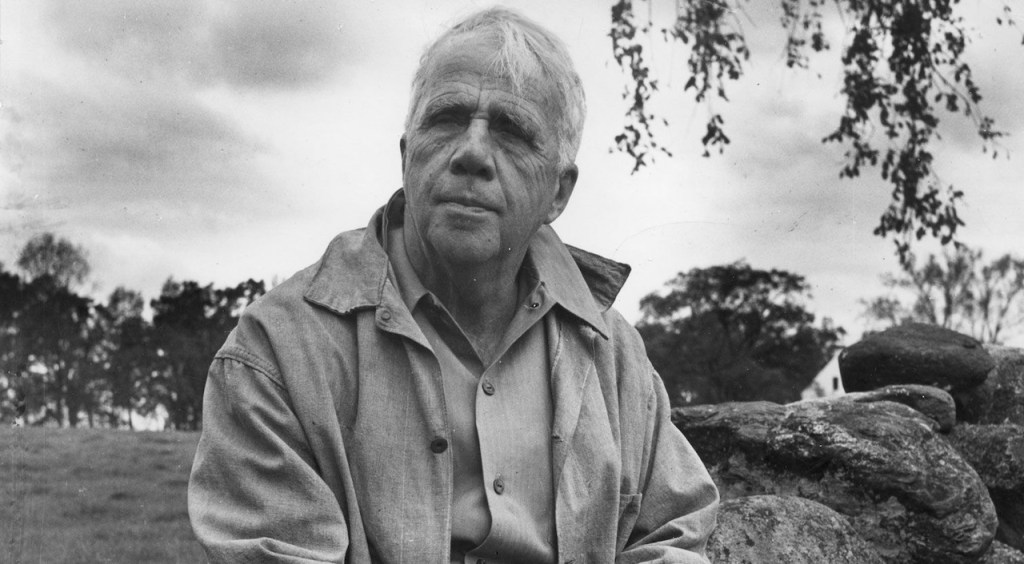
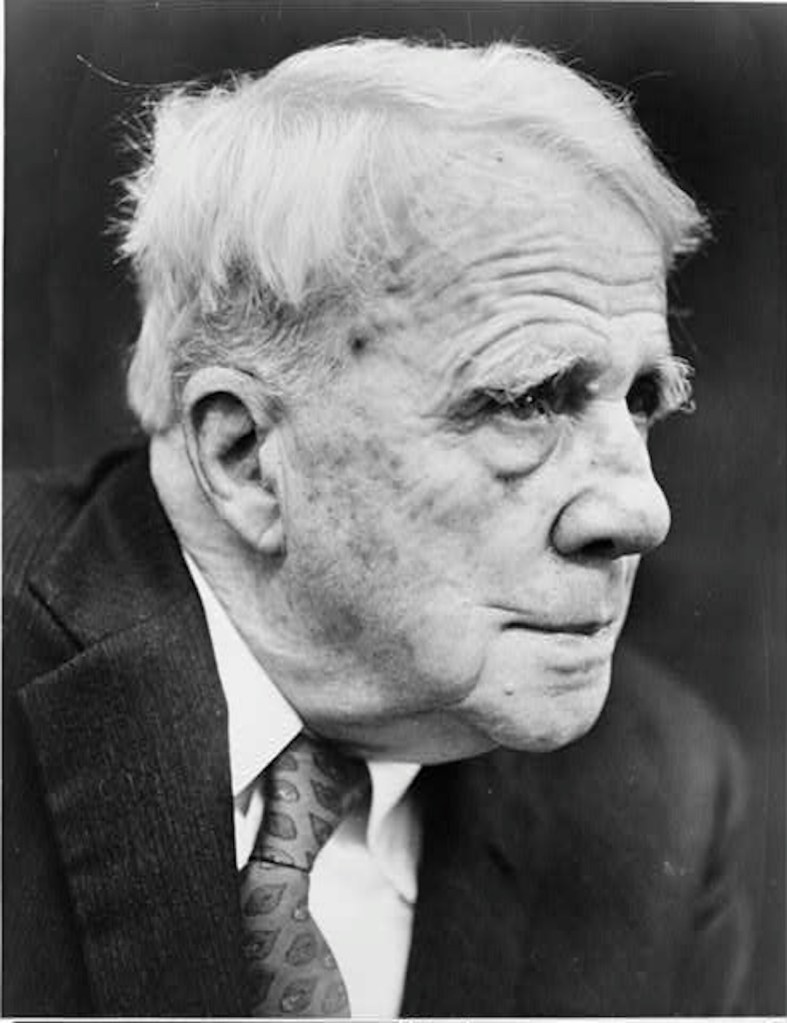
    Image: Robert Frost –  robertfrost.org

    Robert Frost’s  “And All We Call American”

    The speaker in Robert Frost’s “And All We Call American” attempts to play down the Columbian heroic status by castigating the great explorer for not having the ability to predict the future.

    Introduction and Text of “And All We Call American”

    The speaker in Robert Frost’s poem “And All We Call American” attempts a retelling of the familiar story of Christopher Columbus. In so doing,  he questions the legendary heroism of the explorer.

    No one can deny that the miscalculation of landing on what is now the North American continent instead of the South Asian country of the exploration’s intent—India—opens itself to a certain level of scrutiny.

    But the ultimate consequence of the discovery greatly outweighs the unintended nature of the discovery.  The importance of the North American continent, particularly the United States of America, for the world remains undeniable.  Despite the current failure to appreciate these Western values, those values continue to uplift cultures from the dire straits of physical and moral poverty. 

    Frostian Curmudgeonry

    Even as he took on the reputation of a belovèd poet of nature and human feeling, Robert Frost remained a life-long contrarian and a specialized curmudgeon.  Thus instead of celebrating the Columbian legendary figure who opened up the Old World to a New World, he has his speaker concentrate of the limitations of the explorer.

    That Columbus was not capable of imagining what the United States of America, Canada, and Mexico would become is not a particularly egregious failure.  Excepting clairvoyants, no one else of the time period would have been able to predict any better.

    While Frost has attempted to produce a poem that is both historical and philosophical

    by having his speaker employ the Columbian expedition, the poem’s cranky bitterness ultimately says more about the speaker/poet himself than about the objective nature of the significance of the voyage of Christopher Columbus.

    And All We Call American

    Columbus may have worked the wind
    A new and better way to Ind
    And also proved the world a ball,
    But how about the wherewithal?
    Not just for scientific news
    Had the  queen backed him for a cruise.

    Remember he had made the test
    Finding the East by sailing West.
    But had he found it ? Here he was
    Without one trinket from Ormuz
    To save the  queen from family censure
    For her investment in his future.

    There had been something strangely wrong
    With every coast he tried along.
    He could imagine nothing barrener.
    The trouble was with him the mariner.
    He wasn’t off a mere degree;
    His reckoning was off a sea.

    And to intensify the drama
    Another mariner Da Gama
    Came just then sailing into port
    From the same general resort,
    But with the gold in hand to show for
    His claim it was another Ophir.

    Had but Columbus known enough
    He might have boldly made the bluff
    That better than Da Gama’s gold
    He had been given to behold
    The race’s future trial place,
    A fresh start for the human race.

    He might have fooled them in Madrid.
    I was deceived by what he did.
    If I had had my way when young
    I should have had Columbus sung
    As a god who had given us
    A more than Moses’ exodus.

    But all he did was spread the room
    Of our enacting out the doom
    Of being in each other’s way,
    And so put off the weary day
    When we would have to put our mind
    On how to crowd but still be kind.

    For these none too apparent gains
    He got no more than dungeon chains
    And such small posthumous renown
    (A country named for him, a town,
    A holiday) as where he is
    He may not recognize as his.

    They say his flagship’s unlaid ghost
    Still probes and dents our rocky coast
    With animus approaching hate,
    And for not turning out a strait
    He has cursed every river mouth
    From fifty north to fifty south.

    Some day our navy I predict
    Will take in tow this derelict
    And lock him through Culebra Cut,
    His eyes as good (or bad) as shut
    To all the modern works of man
    And all we call American.

    America is hard to see.
    Less partial witnesses than he
    In book on book have testified
    They could not see it from outside —
    Or inside either for that matter.
    We know the literary chatter.

    Columbus, as I say, will miss
    All he owes to the artifice
    Of tractor-plow and motor-drill.
    To naught but his own force of will
    Or at most some Andean quake
    Will he ascribe this lucky break.

    High purpose makes the hero rude:
    He will not stop for gratitude.
    But let him show his haughty stern
    To what was never his concern
    Except as it denied him way
    To fortune-hunting in Cathay.

    He will be starting pretty late.
    He’ll find that Asiatic state
    Is about tired of being looted
    While having its beliefs disputed.
    His can be no such easy raid
    As Cortez on the Aztecs made.

    Commentary on Robert Frost’s “And All We Call American”

    The speaker in Robert Frost’s “And All We Call American” attempts to play down the Columbian heroic status by castigating the great explorer for not having the ability to predict the future.

    First Stanza: Promise vs Problem

    Columbus may have worked the wind
    A new and better way to Ind
    And also proved the world a ball,
    But how about the wherewithal?
    Not just for scientific news
    Had the  queen backed him for a cruise.

    In the opening stanza, the speaker refers to the  Columbian legendary mission that confirmed the scientific theory that Earth was round and that one could end up in the East by sailing West. 

    The speaker then throws shade at the feat by implying that not enough loot had been procured from the journey:  after all, the  queen was not especially interested in confirming a scientific theory; she wanted gold, spices, and other goods that usually took an arduous overland journey to reach her part of the world.

    At this point, the speaker has introduced a conflict, placing bold discovery against material possession.  Because that conflict is inherent in nearly every worldly endeavor, to complain about it, or even point it out, is somewhat naïve.

    Second Stanza: Discovery vs Disappointment

    Remember he had made the test
    Finding the East by sailing West.
    But had he found it ? Here he was
    Without one trinket from Ormuz
    To save the  queen from family censure
    For her investment in his future.

    In the second stanza, the speaker spotlights Columbus’ achievement of sailing west to get to the East. He then poses a question:  what did the explorer really find?  But then he jarringly shifts to the material possessions that the  queen was expecting by claiming that the explorer brought back not even “one trinket from Ormuz.”  

    The Ormuz trinket becomes a symbol for the Eastern wealth that the  queen had been counting on.  The speaker implies that the  queen’s family would not be happy with her for backing such an unprofitable “investment.”  

    Third Stanza: Columbus’ Miscalculation

    There had been something strangely wrong
    With every coast he tried along.
    He could imagine nothing barrener.
    The trouble was with him the mariner.
    He wasn’t off a mere degree;
    His reckoning was off a sea.

    The speaker now shows clear disdain for Columbus for not recognizing that he had not landed in India.  The speaker imagines that the mariner searching the barren coasts for the Indian riches and not finding them simply remains perplexed.

    The speaker emphasizes the fact that Columbus not only managed to be off by a degree or so, but that he was off by a whole ocean.  The speaker seems to take glee in revealing such an error by such a brave man, who has in fact sailed over a whole ocean and has now discovered a heretofore unknown land.  Thus the speaker’s lack of empathy and imagination are revealed more than the fact that the a brave sea-farer had failed to reach India.

    Fourth Stanza: Da Gama’s Success

    And to intensify the drama
    Another mariner Da Gama
    Came just then sailing into port
    From the same general resort,
    But with the gold in hand to show for
    His claim it was another Ophir.

    The speaker now doubles down on his Columbian criticism.  While Columbus returned home without riches in tow, the explorer Vasco da Gama came home with gold from Africa.

    The speaker’s harsh tone furthers his grift against the brave Columbus.  By concentrating on material wealth, he is sure he has a good case for humiliating the failed Columbus by playing up the success of da Gama.

    But that comparison in hindsight levels the criticism to failure, for the voyage of Columbus is much more widely known than that of da Gama.  The importance of da Gama’s gold pales in comparison to the importance of the Columbian discovery of a whole New World.

    Fifth Stanza: The Absurdity of a Missed Bluff

    Had but Columbus known enough
    He might have boldly made the bluff
    That better than Da Gama’s gold
    He had been given to behold
    The race’s future trial place,
    A fresh start for the human race.

    The speaker now presents the ridiculous notion that if Columbus had been smart enough, if could have told the queen and any others dejected by lack of material riches that he had discovered a place where the future of humanity might reside.

    Such a notion is patently absurd.  The speaker is looking back about five centuries, castigating a man for not realizing that a place called the United States of America would provide a “fresh start for the human race.”  

    The line if “Columbus [had] known enough” demonstrates a level of ignorance that borders on the profane:  In any endeavor, it is not necessarily the amount of knowing that is important; it is the nature of the knowledge.  He is decrying Columbus for not being prescient, a seer, a clairvoyant.

    To cover the fact that he is calling for Columbus to predict the future, the speaker positions the notion that the mariner could have used a “bluff” to suggest the future importance of his discovery.  Such a notion remains petty and irresponsible and again shows more about the speaker/poet’s mind than it does the reality of history.

    Sixth Stanza: A Youthful Misreading of Columbus

    He might have fooled them in Madrid.
    I was deceived by what he did.
    If I had had my way when young
    I should have had Columbus sung
    As a god who had given us
    A more than Moses’ exodus

    The speaker now inserts a phony self-deprecation.  He admits that he once upon a time thought of Columbus as a hero, but now he recognizes that since Columbus was not able to predict the value of the New World he had discovered, then credit for his accomplishment of actually finding that New World should be withdrawn. 

    The speaker is attempting a bait and switch operation.  By claiming that Columbus could have “fooled them in Madrid” the speaker is again referring to the “bluff” suggested in the preceding stanza.

    But he then seems to be confessing to being deceived by the Columbus legend.  The issue is not however that the speaker/poet was deceived; it is that now the speaker wishes to denigrate an Italian-American hero, and he is reaching beyond reality to form the basis for that derogatory image.

    Seventh Stanza: Room and Doom

    But all he did was spread the room
    Of our enacting out the doom
    Of being in each other’s way,
    And so put off the weary day
    When we would have to put our mind
    On how to crowd but still be kind.

    The speaker now goes completely off the rails. Adding to Columbus’ inability to predict the future is the idea that even if he had bluffed his peers about the future of a New World, what he actually did was just give the world population more room to spread out and be mean.

    Such a suggestion implies that if people had just remained in the Europe, Africa, and other reaches of the known world, they could have worked on learning to kind to one another as they continued to live in a “crowd.”

    Again, such a suggestion is not only naïve, but it does not take into account that human nature remains the same whether humans are spread out or in a crowd.  There is/was no such phenomenon that learning to be “kind” was postponed by the discovery of a New World.  Did the folks who remained in Old World learn to be “kind”?

    According to this line of thinking, they should have.  But again the speaker has come up with a notion this is absurd, while exposing his real purpose of smearing 15th century explorer.

    Eighth Stanza: Columbus’ Rewards

    For these none too apparent gains
    He got no more than dungeon chains
    And such small posthumous renown
    (A country named for him, a town,
    A holiday) as where he is
    He may not recognize as his.

    The speaker’s gross depiction of Columbus having been thrown in prison and receiving little attention crosses into the obscene.  First, through instrumentality of the corrupt Francisco de Bobadilla, Columbus was sent back to Castile in “chains.” 

    But the Bobadilla’s abject lies about the explorer became immediately obvious, and Columbus was released and restored to his earlier prominence.  And the claim of “small posthumous renown”—places named for him—is mind-numbing.   

    There are over 6000 places in the United States alone named after the explorer.   Virtually every state in the USA has a town, city, park, or some landmark named after Christopher Columbus: some “small posthumous renown”!

    Ninth Stanza: The Restless Ghost of Discovery

    They say his flagship’s unlaid ghost
    Still probes and dents our rocky coast
    With animus approaching hate,
    And for not turning out a strait
    He has cursed every river mouth
    From fifty north to fifty south.

    In this stanza, the speaker concocts sheer fantasy that would make today’s Columbus bashers proud.  Every creative writer has the unleashed opportunity to foist onto historical figures their own proclivities.

    The lame narrative in this stanza is immediately revealed with the vague “They say.”  Who are they?  How reliable are they?  Well, “they” are the demons living in the imagination of the curmudgeon infested brain of the speaker/poet.

    Tenth Stanza: Modern Discovery

    Some day our navy I predict
    Will take in tow this derelict
    And lock him through Culebra Cut,
    His eyes as good (or bad) as shut
    To all the modern works of man
    And all we call American.

    Here the speaker is not really predicting anything.  He is merely setting up another pin to bowl down with his castigation of a fifteenth century man being unable to see into the future.

    That Columbus could not image what the United States would look like in the 20th century is hardly an earthshaking discovery.  But the speaker is no doubt self-congratulatory for implying that if Columbus has thought to sail through the Panama Canal he would have been on his way to discovering the real India.

    Eleventh Stanza:  Elusive America

    America is hard to see.
    Less partial witnesses than he
    In book on book have testified
    They could not see it from outside —
    Or inside either for that matter.
    We know the literary chatter.

    The speaker then takes a dramatic shift from beating up on Columbus to asserting the daft opinion that “America is hard to see.”  Besides the flabby language, signifying less than nothing, it makes a brainless claim.  

    Because anything that extends for miles beyond human vision would be “hard to see,” one might as well say a railroad, New York, or the ocean— each is hard to see.  But the speaker seems to be trying to say that America is not only a place but is also a political entity that continues in a mysterious vortex.  Thus the “literary chatter” suggests that “America” cannot be expressed clearly in words.

    Twelfth Stanza: Columbus’ View of America’s Advancement

    Columbus, as I say, will miss
    All he owes to the artifice
    Of tractor-plow and motor-drill.
    To naught but his own force of will
    Or at most some Andean quake
    Will he ascribe this lucky break.

    The speaker now makes a delusional claim that Columbus’ selfishness would blind him to the genuine causes of America’s development—that is, if the explorer were able to see America in its current iteration.

    The speaker has no idea how Columbus would view the advances in the modern technological influence of “tractor-plow and motor-drill.”  That he would impute such an attitude to the explorer is beyond damnable.

    Thirteenth Stanza:  A Speaker’s Obtuseness

    High purpose makes the hero rude:
    He will not stop for gratitude.
    But let him show his haughty stern
    To what was never his concern
    Except as it denied him way
    To fortune-hunting in Cathay.

    This stanza again is just another putrid display of a speaker whose own jealousy is out of control.  Criticizing a historian figure through the lens of an contemporary set of scruples just does not work in a piece of discourse purporting to be a poem.

    Fourteenth Stanza: The Futility of Defaming Hero

    He will be starting pretty late.
    He’ll find that Asiatic state
    Is about tired of being looted
    While having its beliefs disputed.
    His can be no such easy raid
    As Cortez on the Aztecs made.

    The final stanza serves as a monument to the failure of the speaker’s position so eloquently laid throughout this piece of drivel masquerading as a poem, for in this stanza the speaker is pretending to predict the future.

    The future finds the explorer reaching Asia only to be rebuffed and rebuked because the Asias are tired being “looted” and “disrupted.”  And lastly, Columbus will be humiliated that Cortez was so successful in conquering the Aztecs.

    The sheer fantasy falls apart immediately because no such voyage was ever made by Christopher Columbus; therefore, he could not have been rebuffed and rebuked by people tired of being “looted” and “disrupted.”  

    In classical rhetoric such a concoction is called a straw man, fashioned solely for the purpose of burning it down.  The speaker fancies an exploration that never existed simply to ridicule it for having failed. If an event is never begun, it cannot be considered to have failed, just as it cannot be deemed to have succeeded.

    Robert Frost’s Worse Poem

    Robert Frost’s “And All We Call American” is without a parallel; it is Frost’s absolute worst poem.  The only quality that keeps this piece from being an contemptible piece of doggerel is the fact that it was composed one of the world’s most noted and beloved poets.  Taking as his subject Christopher Columbus, Frost creates a speaker who reveals a deficiency of thought that seems remarkably reminiscent of adolescent self-absorption.  

    Instead of celebrating the remarkable discoveries of the great explorer, this speaker chooses to downplay achievement, offering in its place ignorant criticism that Columbus living in the fifteenth century was unable to know what would take place the 20th century.

    When a fine, reputable poet throws out a stinker like this one, the only reason for studying such a piece is to understand the complex inconsistency of the human brain.    If a student or novice poetry reader begins a study of Frost with this one, that individual has in store a shocking experience in discovering Frost’s later works such “The Road Not Taken,” “Birches,” “Bereft,” “The Gift Outright,” and “Stopping by Woods on a Snowy Evening.”
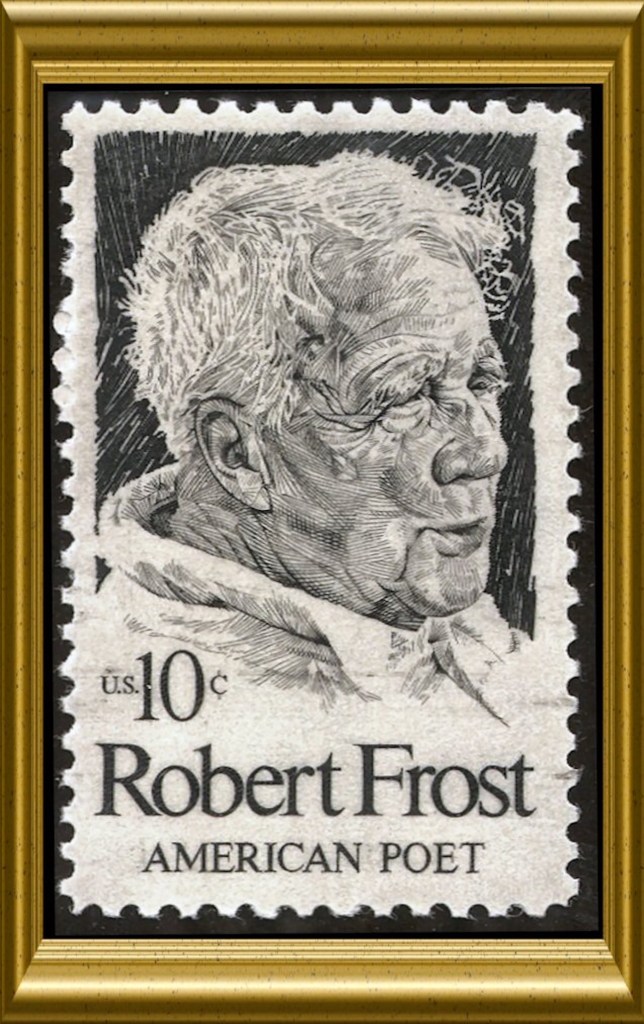
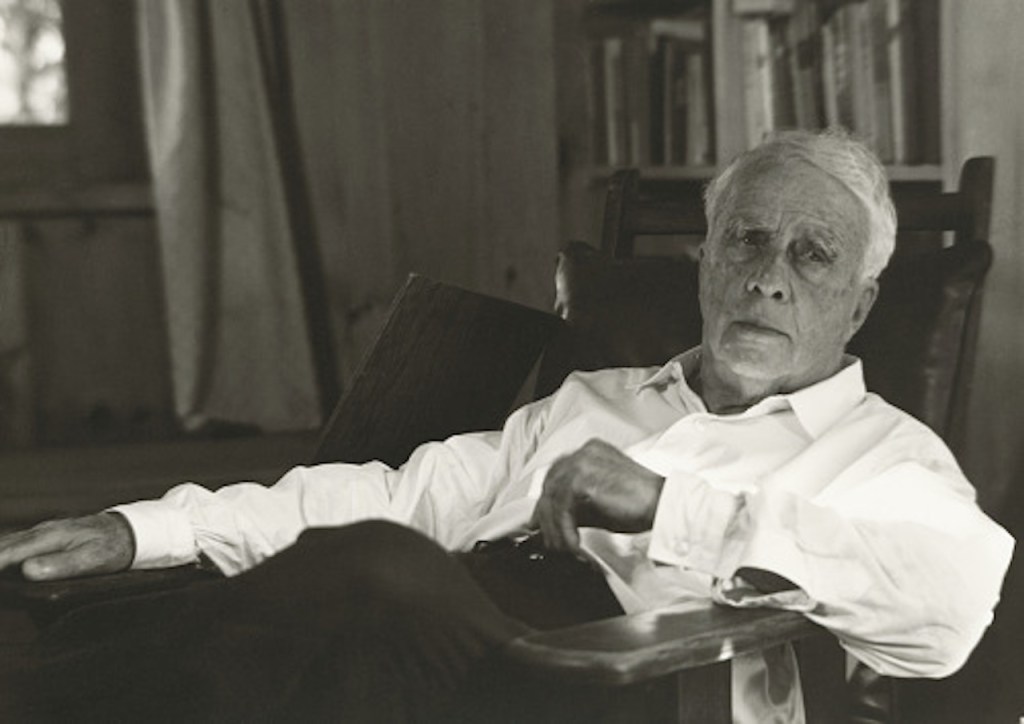
    Robert Frost – Commemorative Stamp
  • Robert Frost’s “The Freedom of the Moon”

    Image: Robert Frost – Lotte Jacobi – NPG Smithsonian

    Robert Frost’s “The Freedom of the Moon

    Robert Frost’s “The Freedom of the Moon” muses on the nature of the free will possessed by humankind, as the moon’s freedom foreshadows the greater freedom of humankind.

    Introduction and Text of “The Freedom of the Moon”

    Robert Frost’s versanelle*, “The Freedom of the Moon,” consists of two sestets, each with the rime scheme, ABABCC. The poem dramatizes the phases of the moon and makes a statement about human freedom.

    The speaker in Frost poem demonstrates the complete freedom of humanity by dramatizing the ability of the human mind to use its physical body paradoxically to relocate the moon’s positions. The freedom of the moon heralds the greater freedom of humankind.

    *A versanelle isa short lyric, usually 20 lines or fewer, that comments on human nature or behavior, and may employ any of the usual poetic devices (I coined this term specifically for use in my poetry commentaries.

    The Freedom of the Moon

    I’ve tried the new moon tilted in the air
    Above a hazy tree-and-farmhouse cluster
    As you might try a jewel in your hair.
    I’ve tried it fine with little breadth of luster,
    Alone, or in one ornament combining
    With one first-water start almost shining.

    I put it shining anywhere I please.
    By walking slowly on some evening later,
    I’ve pulled it from a crate of crooked trees,
    And brought it over glossy water, greater,
    And dropped it in, and seen the image wallow,
    The color run, all sorts of wonder follow.

    Commentary on “The Freedom of the Moon”

    The important possession of free will extends to metaphor making by poets.

    First Sestet, First Tercet:  Ways of Contemplating the Moon

    I’ve tried the new moon tilted in the air
    Above a hazy tree-and-farmhouse cluster
    As you might try a jewel in your hair.

    Beginning his list of ways he has contemplated the moon, the speaker first asserts that he has “tried the new moon tilted in the air.” At that phase, the orb was hanging over a little clump of trees alongside a farmhouse. He compares his consideration of the moon at that point to his lady companion’s trying a “jewel in [her] hair.” 

    The oddity about the speaker’s claim is that he says he considered the “new moon” which is barely visible. And the moon was tilted in the air. It seems more likely that a crescent phase of the moon would lend itself more accurately to being “tilted.” 

    An explanation for this claim is simply that the particular phase was new to the  speaker; he had been ignoring the moon and when finally he was motivated to observe it, the newness of it prompts him to call it “the new moon.” 

    First Sestet, Second Tercet:  Probing the Nature of the Moon’s Freedom 

    I’ve tried it fine with little breadth of luster,
    Alone, or in one ornament combining
    With one first-water start almost shining.

    The speaker has furthermore probed the nature of the moon’s freedom when it was even in a thinner crescent phase; it was “fine with little breadth of luster.” He has mused on that phase when he saw it without stars and also when he has seen it with one star, a configuration from which the Islamic religion takes its icon.

    The moon at that phase looked like the first burst of water when one turns on a spigot. It was not exactly shining but only “almost shining.” The speaker seems to marvel at the unheavenly ways in which the moon at times may assert its freedom. 

    Second Sestet, First Tercet:  Freeing a Captured Orb

    I put it shining anywhere I please.
    By walking slowly on some evening later,
    I’ve pulled it from a crate of crooked trees,

    The speaker then proclaims that he has placed the moon “anywhere” he pleased, but that placement always occurred while it was bright, allowing him the vitality to work with it. 

    He then cleverly asserts his true theme that he is focusing on human freedom, not moon freedom, when he avers that he was able to place the moon anywhere he wanted because he was able to ambulate.  His ability to walk allowed him the freedom to wander “slowly on some evening later.” He was thus able to “pull[ ] [the moon] from a crate of crooked trees.”

    The trees seemed to be containing the moon as a wooden box would hold onions or melons. But the speaker was able to walk from the tree-contained moon thus metaphorically freeing the captured orb from the tree box. 

    Second Sestet, Second Tercet:   Carrying the Orb to a Lake

    And brought it over glossy water, greater,
    And dropped it in, and seen the image wallow,
    The color run, all sorts of wonder follow.

    After removing the moon from the tree-crate by simply continuing his evening walk, the speaker metaphorically carried the orb to a lake, in which he metaphorically “dropped it in.”  He then watched awestruck by the “wallow[ing]” image; he observed that like a piece of cloth losing its dye in water, the colors of the moon ran leaching out into the lake water. 

    The speaker then commits what is usually a grave poetic error; he makes an open ended statement without a hint of support, “all sorts of wonder follow.” But this speaker can get by with the ordinarily unforgivable poetic sin because of the great and wide implications that all of his lines heretofore have gathered. 

    The speaker, because he has given the moon freedom and has also shown that humankind is blessed with an even more profound freedom, has thus declared that all those “sorts of wonder” that “follow” from the possession of that free will and freedom of expression are indeed blessed with a golden freedom.    He has revealed the unmistakeable and eternal free will of humankind.

  • Robert Frost’s “War Thoughts at Home”

    Image:  Robert Frost – Britannica

    Robert Frost’s “War Thoughts at Home”

    Robert Frost’s “War Thoughts at Home” is a collection of seven stanzas, which sounds more like a list of notes than a poem, as the title clearly reveals. It seems likely that Frost did not consider “War Thoughts at Home” to be a finished, polished poem.  Clearly, it is a list of “thoughts” as the title states.

    Introduction and Text of “War Thoughts at Home”

    Robert Frost’s “War Thoughts at Home” consists of seven “notes,” with the rime scheme ABCCB in each. 

    A Sow’s Ear, not a Silk Purse

    This piece seems to be most aware of itself as trying to be poetic. It is for this reason that critics and scholars should understand that it is not a poem at all, but merely a list of thoughts. And, in fact, Frost did not publish this piece as a poem.  This “list of thoughts” was found among his archival materials, jotted down on a flyleaf of his book, North of Boston.

    As a poem, this list is seriously flawed. Robert Frost would probably be embarrassed that people are fawning over it as an important Frostian find, or he might also get a belly laugh at the vacuity of contemporary people of letters.

    It is merely a list that seems to wax profound trying to compare a bird fight to the war in France. But it is obviously not meant to be a finished poem; likely Frost’s trickster nature had him put the notes in rime, just to throw people off. Frost’s best works demonstrate how much better than this he was as a poet.

    War Thoughts at Home 

    On the back side of the house 
    Where it wears no paint to the weather 
    And so shows most its age, 
    Suddenly blue jays rage 
    And flash in blue feather. 

    It is late in an afternoon 
    More grey with snow to fall 
    Than white with fallen snow 
    When it is blue jay and crow
    Or no bird at all. 

    So someone heeds from within 
    This flurry of bird war, 
    And rising from her chair 
    A little bent over with care 
    Not to scatter on the floor 

    The sewing in her lap 
    Comes to the window to see. 
    At sight of her dim face 
    The birds all cease for a space 
    And cling close in a tree. 

    And one says to the rest 
    “We must just watch our chance 
    And escape one by one— 
    Though the fight is no more done 
    Than the war is in France.” 

    Than the war is in France! 
    She thinks of a winter camp 
    Where soldiers for France are made. 
    She draws down the window shade 
    And it glows with an early lamp. 

    On that old side of the house 
    The uneven sheds stretch back 
    Shed behind shed in train 
    Like cars that long have lain 
    Dead on a side track. 

    Commentary on “War Thoughts at Home”

    Robert Frost, no doubt, would laugh heartily at contemporary scholars for mistaking this list of notes for a poem.

    First Note:   Blue Birds Fighting

    On the back side of the house 
    Where it wears no paint to the weather 
    And so shows most its age, 
    Suddenly blue jays rage 
    And flash in blue feather. 

    The speaker describes a house, noting that the s “back side” seems to take the brunt of the bad weather; as a result of all this tumultuous weather, the paint has worn off, and this side of the house shows its age more than the other sides.

    It is on this weather-beaten side of the house that a bunch of blue jays starts to rustle about. The speaker colorfully claims that the jays are flashing their blue feathers as they tussle all in a rage.

    Second Note:   Bleak Atmosphere

    It is late in an afternoon 
    More grey with snow to fall 
    Than white with fallen snow 
    When it is blue jay and crow
    Or no bird at all. 

    The speaker continues to describe a bleak atmosphere. The time is late afternoon, and it looks as if it will be snowing soon; there is a gray (British spelling “grey”) look to the scene, a time when there may be present a blue jay or a crow or more likely still, “no bird at all.”

    Third Note:  Weather-Beaten Woman

    So someone heeds from within 
    This flurry of bird war, 
    And rising from her chair 
    A little bent over with care 
    Not to scatter on the floor 

    The speaker introduces a woman inside the house who has heard the birds’ racket, and she goes to the window. She is old and as weather-beaten as the house, “A little bent over with care.” She has been sewing so she gets up from her chair carefully placing her sewing aside so she won’t drop it on the floor.

    The term “bird war” is employed, and for the first time the list begins to reveal the nature of its claim to be thoughts of war. The reader might feel that the house has already demonstrated a kind of war with the weather; then the birds reveal of kind of war. And now enters a human being who will add  the “war thoughts.”

    Fourth Note:   Repetition

    The sewing in her lap 
    Comes to the window to see. 
    At sight of her dim face 
    The birds all cease for a space 
    And cling close in a tree. 

    The third and fourth stanzas are connected by sharing the same sentence. The woman comes to the window to see the birds, but the birds stop warring for a bit and remain huddled in a tree.  The reader is to infer that they see this woman’s face staring at them and they cease their “war.”

    Fifth Note:    WW I Prattles on

    And one says to the rest 
    “We must just watch our chance 
    And escape one by one— 
    Though the fight is no more done 
    Than the war is in France.” 

    Then one bird begins to speak, asserting that they must remain alert so they can escape a fight, similar to the “war in France.” Frost is said to have “inscribed a new poem” into a copy of his published North of Boston in 1918.   Thus, the war is World War I. 

    The bird says that they can escape this human if they lay low and leave one at a time, but he admits that the fight is not over yet, just as the fight in France is not over yet; however, the war in Europe did end by September of 1918.

    Sixth Note:   Who Says What?

    Than the war is in France! 
    She thinks of a winter camp 
    Where soldiers for France are made. 
    She draws down the window shade 
    And it glows with an early lamp. 

    In the sixth stanza, the speaker repeats the line, “Than the war is in France!” But it is unclear whose words these are. The bird said that same line, but now the same line appears unattributed. Then the speaker is telling the reader what the woman is thinking:  she is thinking of an undisclosed place where soldiers train before being sent to France.  She calls it a “winter camp.”

    Again, it is not clear. Where is the winter camp? Is it in the United States, which only entered the war a year earlier? Is it in France? There is nothing to clarify why this woman would know these things.  Perhaps the reader is to assume that she has a relative who was sent to this war, but the reader cannot determine so. Then the woman draws the shade, which “glows with an early lamp.”

    Seventh Note:   Out the Back Window

    On that old side of the house 
    The uneven sheds stretch back 
    Shed behind shed in train 
    Like cars that long have lain 
    Dead on a side track. 

    The seventh stanza simply gives a description of what one would see if one were looking out back from “that old side of the house.” This sounds strange because in the opening stanza, it seemed that the weather had been responsible for making the house look old, but now the speaker actually calls that side “that old side of the house.”

    One has to wonder how one side might be any older than the other sides. And what one sees there is a line of old sheds that give the appearance of railroad cars that have “lain / Dead on a side track” for a long time.

    Turning this list into a poem rides on the notion of turning a sow’s ear into a silk purse.

  • Robert Frost’s “Two Tramps in Mud Time”

    Image: Robert Frost – Library of America

    Robert Frost’s “Two Tramps in Mud Time”

    The speaker in “Two Tramps in Mud Time” dramatizes his encounter with two unemployed lumberjacks who covet the speaker’s wood-splitting task.  He also features a philosophical take on the situation that leads him to continue chopping, instead of handing the job off to the two tramps.

    Introduction and Text of “Two Tramps in Mud Time”

    The speaker in Robert Frost’s “Two Tramps in Mud Time” fashions his dramatic performance,  focusing on his brief meeting with two unemployed lumberjacks who seek to take over the speaker’s wood-splitting task. Calling them “tramps,” the speaker then provides a fascinating philosophical discussion about his reason for electing to keep on performing his chore, instead of letting these two needy individuals finish it for him.  

    It is likely that at times true altruism might come into play as a part of spiritual progress. And it also likely that the speaker would condescend to this idea.  But the speaker may also have been annoyed that his “aim” at the wood was interrupted by the snide remark voiced by one of the mud tramps.  

    Two Tramps In Mud Time

    Out of the mud two strangers came
    And caught me splitting wood in the yard,
    And one of them put me off my aim
    By hailing cheerily “Hit them hard!”
    I knew pretty well why he had dropped behind
    And let the other go on a way.
    I knew pretty well what he had in mind:
    He wanted to take my job for pay.

    Good blocks of oak it was I split,
    As large around as the chopping block;
    And every piece I squarely hit
    Fell splinterless as a cloven rock.
    The blows that a life of self-control
    Spares to strike for the common good,
    That day, giving a loose my soul,
    I spent on the unimportant wood.v

    The sun was warm but the wind was chill.
    You know how it is with an April day
    When the sun is out and the wind is still,
    You’re one month on in the middle of May.
    But if you so much as dare to speak,
    A cloud comes over the sunlit arch,
    A wind comes off a frozen peak,
    And you’re two months back in the middle of March.

    A bluebird comes tenderly up to alight
    And turns to the wind to unruffle a plume,
    His song so pitched as not to excite
    A single flower as yet to bloom.
    It is snowing a flake; and he half knew
    Winter was only playing possum.
    Except in color he isn’t blue,
    But he wouldn’t advise a thing to blossom.

    The water for which we may have to look
    In summertime with a witching wand,
    In every wheelrut’s now a brook,
    In every print of a hoof a pond.
    Be glad of water, but don’t forget
    The lurking frost in the earth beneath
    That will steal forth after the sun is set
    And show on the water its crystal teeth.

    The time when most I loved my task
    The two must make me love it more
    By coming with what they came to ask.
    You’d think I never had felt before
    The weight of an ax-head poised aloft,
    The grip of earth on outspread feet,
    The life of muscles rocking soft
    And smooth and moist in vernal heat.

    Out of the wood two hulking tramps
    (From sleeping God knows where last night,
    But not long since in the lumber camps).
    They thought all chopping was theirs of right.
    Men of the woods and lumberjacks,
    They judged me by their appropriate tool.
    Except as a fellow handled an ax
    They had no way of knowing a fool.

    Nothing on either side was said.
    They knew they had but to stay their stay
    And all their logic would fill my head:
    As that I had no right to play
    With what was another man’s work for gain.
    My right might be love but theirs was need.
    And where the two exist in twain
    Theirs was the better right–agreed.

    But yield who will to their separation,
    My object in living is to unite
    My avocation and my vocation
    As my two eyes make one in sight.
    Only where love and need are one,
    And the work is play for mortal stakes,
    Is the deed ever really done
    For Heaven and the future’s sakes. 

    Robert Frost Reading  “Two Tramps in Mud Time” 

    Commentary on “Two Tramps in Mud Time”

    The speaker in “Two Tramps in Mud Time” is dramatizing his encounter with two unemployed lumberjacks who would like to relieve the speaker of his wood-splitting task. He offers an interesting take on why he chooses to continue his chore, instead of turning it over to these two needy individuals.

    First Stanza:  Accosted by Two Strangers

    Out of the mud two strangers came
    And caught me splitting wood in the yard,
    And one of them put me off my aim
    By hailing cheerily “Hit them hard!”
    I knew pretty well why he had dropped behind
    And let the other go on a way.
    I knew pretty well what he had in mind:
    He wanted to take my job for pay.

    The speaker in “Two Tramps in Mud Time” is busy cutting logs of oak; he is suddenly accosted by a couple of strangers who seem to appear out from the muddy ground.  One of the strangers calls out to the speaker telling him to hit the oak logs hard.

    The man who called out had lagged behind his companion, and the speaker of the poem believes he does so in order to attempt to take the speaker’s work.  Paying jobs are lacking in this period of American history, and men had to do all they could to get a day’s wage.

    The speaker complains that the sudden call out from the tramp has disturbed his “aim” likely making him miss the split he had planned to make of the log.  The speaker is not happy about the intrusion into his private activity.

    Second Stanza:  The Ability to Split Wood

    Good blocks of oak it was I split,
    As large around as the chopping block;
    And every piece I squarely hit
    Fell splinterless as a cloven rock.
    The blows that a life of self-control
    Spares to strike for the common good,
    That day, giving a loose my soul,
    I spent on the unimportant wood.

    The speaker counters the criticism of the tramp by detailing his own proven ability to split wood.  He describes every piece he cut as “splinter less as a cloven rock.”  The speaker then begins to muse in a philosophical manner.

    Although a well-disciplined individual might think that philanthropy is always in order, today this speaker decides to continue cutting his own wood, despite the fact that the tramp/strangers desperately need cash and could well use what they would earn by cutting the wood.

    The speaker, who normally might be amenable to allowing the two unemployed men to take on the wood-splitting for some pay, is now put off by the remark and continues to concoct reasons for continuing the work himself.

    Third Stanza: Musing on the Weather

    The sun was warm but the wind was chill.
    You know how it is with an April day
    When the sun is out and the wind is still,
    You’re one month on in the middle of May.
    But if you so much as dare to speak,
    A cloud comes over the sunlit arch,
    A wind comes off a frozen peak,
    And you’re two months back in the middle of March.v

    In the third stanza, the speaker muses over the weather. It is a nice warm day even though there is a chilly wind. It’s that Eliotic “cruelest month” of April, when sometimes the weather may seem like the middle of May and then suddenly it’s like the middle of March again.

    The speaker seems to reason that he had no time to turn over the job because by the time he explained what he wanted done and how much he was willing to pay them, the weather might take a turn for the worse and then the job would have to be abandoned.

    Fourth Stanza:  Weather Still On Edge

    A bluebird comes tenderly up to alight
    And turns to the wind to unruffle a plume,
    His song so pitched as not to excite
    A single flower as yet to bloom.
    It is snowing a flake; and he half knew
    Winter was only playing possum.
    Except in color he isn’t blue,
    But he wouldn’t advise a thing to blossom.

    Then the speaker dramatizes the actions and the possible thoughts of a bluebird who ” . . . comes tenderly up to alight / And turns to the wind to unruffle a plume.” The bird sings his song but is not enthusiastic yet, because there are still no flowers blooming. 

    A snowflake appears, and the speaker and the bird realize that, “[w]inter was only playing possum.” The bird is happy enough, but he would not encourage the flowers to bloom yet, because he knows there is still a good chance of frost. Beauties of nature are always contrasted with ugliness, warm with cold, light with dark, soft with sharp.

    Fifth Stanza:  The Philosophy of Weather and The Pairs of Opposites

    The water for which we may have to look
    In summertime with a witching wand,
    In every wheelrut’s now a brook,
    In every print of a hoof a pond.
    Be glad of water, but don’t forget
    The lurking frost in the earth beneath
    That will steal forth after the sun is set
    And show on the water its crystal teeth.

    Water is plentiful in mid-spring, whereas in summer they have to look for it “with a witching wand.” But now it makes a “brook” of “every wheelrut[ ],” and “every print of a hoof” is “a pond.” 

    The speaker offers the advice to be appreciative of the water but admonishes his listeners not to dismiss the notion that frost could still be just beneath the surface and could in a trice spill forth showing “its crystal teeth.”

    The speaker seems to be in a Zen-mood, demonstrating the pairs of opposites that continue to saddle humankind with every possible dilemma.  His philosophical musing has turned up the perennial truth that every good thing has its opposite on this earth.

    Sixth Stanza:   Back to the Tramps

    The time when most I loved my task
    The two must make me love it more
    By coming with what they came to ask.
    You’d think I never had felt before
    The weight of an ax-head poised aloft,
    The grip of earth on outspread feet,
    The life of muscles rocking soft
    And smooth and moist in vernal heat.

    In the sixth stanza, the speaker returns to the issue of the tramps. The speaker loves splitting the oak logs, but when the two tramps come along covertly trying to usurp his beloved task, that “make[s him] love it more.” It makes the speaker feel that he had never done this work before, he is so loathe to give it up.

    Likely, the speaker resents deeply that these two would be so brazen as to try to interrupt his work, much less try to usurp it.  The speaker is doing this work not only because he will need to wood to heat his house but also because he enjoys it.   That anyone would consider relieving him of performing a task he loves makes him realize more intensely that he does, in fact, love the chore.

    Seventh Stanza: Likely Lazy Bums

    Out of the wood two hulking tramps
    (From sleeping God knows where last night,
    But not long since in the lumber camps).
    They thought all chopping was theirs of right.
    Men of the woods and lumberjacks,
    They judged me by their appropriate tool.
    Except as a fellow handled an ax
    They had no way of knowing a fool.

    The speaker knows that these two tramps are likely just lazy bums, even though they had earlier been lumberjacks working at the lumber camps nearby. He knows that they have sized him up and decided they deserved to be performing his beloved task.

    That the speaker refers to these men as “tramps” shows that he has little, if any, respect for them.  The fact that they might have been lumberjacks does not give them the right to judge the speaker and his ability to split wood.  

    That they thought chopping wood was only their purview further infuriates the speaker.  He suspects they think he is just some fool noodling around with tools only they could wield properly.

    Eighth Stanza:  Who Really Has the Better Claim?

    Nothing on either side was said.
    They knew they had but to stay their stay
    And all their logic would fill my head:
    As that I had no right to play
    With what was another man’s work for gain.
    My right might be love but theirs was need.
    And where the two exist in twain
    Theirs was the better right—agreed.

    The speaker and the tramps did not converse. The speaker claims that the tramps knew  they did not have to say anything. They assumed it would be obvious to the speaker they deserved to be splitting the wood. 

    They would split wood because they needed the money, but the speaker is splitting the wood for the love of it. It did not matter that the tramps had “agreed” that they had a better claim.

    The speaker suggests that even if they had the better claim on the job, he could think his way out of this conundrum in order to continue working his wood himself.  He did not owe them anything, despite their superior notions about themselves, their ability, and their present needs.

    Ninth Stanza:  Uniting Love and Need

    But yield who will to their separation,
    My object in living is to unite
    My avocation and my vocation
    As my two eyes make one in sight.
    Only where love and need are one,
    And the work is play for mortal stakes,
    Is the deed ever really done
    For Heaven and the future’s sakes. 

    The speaker philosophically reasons that he has the better claim to his wood-splitting and is, in fact, more deserving of his labor then the mud tramps.  His task is more than just wood-splitting.   He is striving in his life to unite the two aspects of human existence: the physical and spiritual.  He has determined to bring together his “avocation” and his “vocation.”

    The speaker is convinced that only when a human can unite into a spiritual whole his need with his love can the job truly be said to have been accomplished.  The two tramps do not understand this philosophical concept; they want only money.  

    The speaker is actively striving to unite his love and his need together into that significant, spiritual whole.  Maybe sometime in future the two mud tramps too will learn this valuable lesson of conjoining love and need.  But for now they just need to scoot along and leave the speaker to his chores.

  • Robert Frost’s “A Girl’s Garden”

    Image: Robert Frost – Library of America

    Robert Frost’s “A Girl’s Garden”

    Robert Frost’s “A Girl’s Garden” dramatizes a little tale often told by the speaker’s neighbor, who enjoys narrating her little story about her experience in growing and nurturing a garden as a young girl. 

    Introduction and Text of “A Girl’s Garden”

    Robert Frost’s fine little narrative “A Girl’s Garden” reveals that the Frostian speaker enjoys pure narrative offered just for the fun of it. The speaker is recounting an old woman’s experience with a youthful endeavor in gardening on her family’s farm.

    The poem features 12 quatrains displayed in four movements, each quatrain features the rime scheme, ABCB. The nostalgia presented here remains quite lucid without any saccharine overstating or melancholy self-pity that is so prevalent in many postmodern poems of this type: it is a simple tale about a simple girl told by a simple speaker.

    A Girl’s Garden

    A neighbor of mine in the village
    Likes to tell how one spring
    When she was a girl on the farm, she did
    A childlike thing.

    One day she asked her father
    To give her a garden plot
    To plant and tend and reap herself,
    And he said, “Why not?”

    In casting about for a corner
    He thought of an idle bit
    Of walled-off ground where a shop had stood,
    And he said, “Just it.”

    And he said, “That ought to make you
    An ideal one-girl farm,
    And give you a chance to put some strength
    On your slim-jim arm.”

    It was not enough of a garden
    Her father said, to plow;
    So she had to work it all by hand,
    But she don’t mind now.

    She wheeled the dung in a wheelbarrow
    Along a stretch of road;
    But she always ran away and left
    Her not-nice load, 

    And hid from anyone passing.
    And then she begged the seed.
    She says she thinks she planted one
    Of all things but weed.

    A hill each of potatoes,
    Radishes, lettuce, peas,
    Tomatoes, beets, beans, pumpkins, corn,
    And even fruit trees.

    And yes, she has long mistrusted
    That a cider-apple
    In bearing there today is hers,
    Or at least may be.

    Her crop was a miscellany
    When all was said and done,
    A little bit of everything,
    A great deal of none.

    Now when she sees in the village
    How village things go,
    Just when it seems to come in right,
    She says, “I know!

    “It’s as when I was a farmer…”
    Oh never by way of advice!
    And she never sins by telling the tale
    To the same person twice.

    Reading

    Commentary on “A Girl’s Garden”

    Robert Frost’s “A Girl’s Garden” dramatizes a little story often told by the speaker’s neighbor, who enjoys telling her little tale about growing and nurturing a garden when she was just a girl.

    First Movement:  A Conversation With a Neighbor 

    A neighbor of mine in the village
    Likes to tell how one spring
    When she was a girl on the farm, she did
    A childlike thing.

    One day she asked her father
    To give her a garden plot
    To plant and tend and reap herself,
    And he said, “Why not?”

    In casting about for a corner
    He thought of an idle bit
    Of walled-off ground where a shop had stood,
    And he said, “Just it.”

    The first movement finds Robert Frost’s speaker in “A Girl’s Garden” relating a conversation he remembers with his neighbor in the village.  The speaker reports that the woman has always been quite fond of retelling an experience from her childhood about “a childlike thing” she did when she lived on a farm. 

    While still a child, the woman one fine spring season, requests from her father some land upon which she might grow a garden.   The father eagerly agrees, and in the next few days, searches his farm for just the right plot of land for his daughter’s endeavor.

    After finding the little plot of land he deemed just right for his daughter’s gardening experiment, the father tells his daughter about his choice.  The few acres had at one time sported a shop, and it was walled off from the road.  The father thus deemed this little plot a fine place for his daughter’s experiment in gardening.

    Second Movement:  Her Father Hands over a Plot

    And he said, “That ought to make you
    An ideal one-girl farm,
    And give you a chance to put some strength
    On your slim-jim arm.”

    It was not enough of a garden
    Her father said, to plow;
    So she had to work it all by hand,
    But she don’t mind now.

    She wheeled the dung in a wheelbarrow
    Along a stretch of road;
    But she always ran away and left
    Her not-nice load,

    After the father reports his choice to his daughter, telling her that the plot of land should be just right for her “one-girl farm,” he informs her that because the plot is too small to plow, she will have to dig the dirt and get it ready by hand.

    This work would be good for her; it would give her strong arms.  The daughter is delighted to have the plot of land and is very enthusiastic about starting the work.  She does not mind having to ready the soil by hand.

    The woman reports in her narrative that she transported the necessary items to her garden plot with a wheelbarrow.  She adds a comic element, saying the smell of the dung fertilizer made her run away.

    Third Movement:  A Wide Variety of Plants 

    And hid from anyone passing.
    And then she begged the seed.
    She says she thinks she planted one
    Of all things but weed.

    A hill each of potatoes,
    Radishes, lettuce, peas,
    Tomatoes, beets, beans, pumpkins, corn,
    And even fruit trees.

    And yes, she has long mistrusted
    That a cider-apple
    In bearing there today is hers,
    Or at least may be.

    The woman reports that she would then go hide, so no one could observe that she ran away from the dung smell.  She next imparts the information about what she planted.  The story-teller reckons that she planted one of everything, except weeds.  She then lists her plants: “potatoes, radishes, lettuce, peas / Tomatoes, beets, beans, pumpkins, corn, / And even fruit trees.” 

    She further reckons that she planted quite a lot of vegetables and fruits for such a small plot of farmland.  She recounts that today a “cider apple tree”  is growing there, and she harbors the suspicion that the tree might be the result of her farming experiment that year.

    Fourth Movement:  The Poet’s Kind of Storyteller

    Her crop was a miscellany
    When all was said and done,
    A little bit of everything,
    A great deal of none.

    Now when she sees in the village
    How village things go,
    Just when it seems to come in right,
    She says, “I know!

    “It’s as when I was a farmer…”
    Oh never by way of advice!
    And she never sins by telling the tale
    To the same person twice.

    The story-teller reports that she was able to harvest quite a variety of crops, though not very much of each one. After having experienced that summer as a gardener, now as she observes that the useful, abundant gardens the folks in the village have grown on their small plots of land around their homes, she remembers her own experience of growing a garden on her father’s farm when she was just a young girl.

    The speaker, who is recounting the old woman’s story, is amazed that this woman is not the kind of repetitive story-teller that so many seniors of nostalgia are.  He says that though he has heard her tell that story many times, she never repeats the same story to the same villager.  

    That she remembers to whom she has already told her little story indicates that she has a good memory and also that she does not indulge in wasting time.  And the old gal never condescends to be offering advice; she merely adds her quips as fond memories.  The poet/speaker seems to admire that kind of storyteller.

    🕉

    You are welcome to join me on the following social media:
    TruthSocial, Locals, Gettr, X, Bluesky, Facebook, Pinterest 

    🕉

    Share

  • Robert Frost’s “Bereft”

    Image: Robert Frost – Library of America

    Robert Frost’s “Bereft”

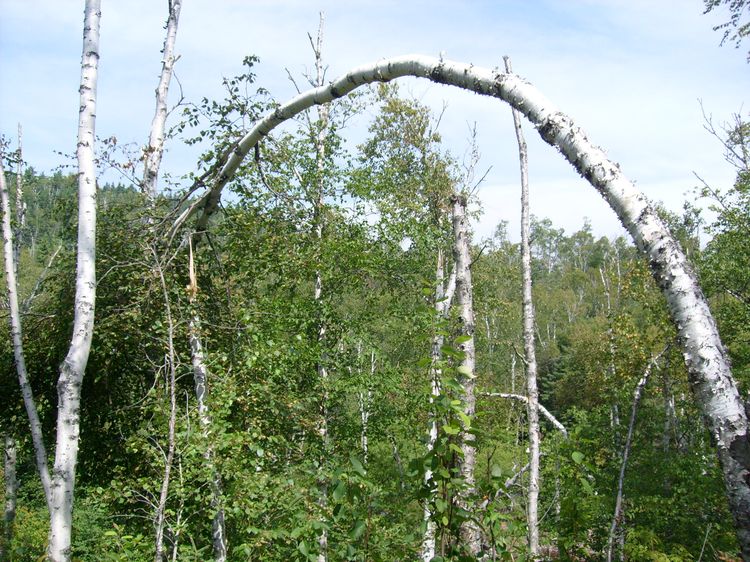
    Robert Frost’s poem, “Bereft,” displays one the most amazing metaphors to be encountered in poetry: “Leaves got up in a coil and hissed / Blindly struck at my knee and missed.”  Like “The Road Not Taken,” however, this poem offers up a tricky feature.

    Introduction with Text of “Bereft”

    Robert Frost masterfully guides his metaphor to render his poem “Bereft” a significant American poem. Despite the sadness and seriousness of the poem’s subject, readers will delight in the masterful use of the marvelous metaphor displayed within it.  

    The speaker in this poem is living alone and he is sorrowful.  He says he has “no one left but God.” The odd rime-scheme of the poem—AAAAABBACCDDDEDE— bestows a mesmerizing effect, perfectly complementing the haunting grief of the subject.

    The important metaphor—”Leaves got up in a coil and hissed, / Blindly struck at my knee and missed”—remains one of the best in the English language.  The visual imagery of this metaphor is stark and startling, yet clear and powerful.

    Sometimes the concept and function of metaphor is difficult for beginning poetry students and readers to grasp, and the leaves as snake metaphor should be in every teacher’s toolkit for explaining the concept and function of metaphor to students.

    Serving as a clarifying example, that metaphor is one of the most useful and beneficial to help novices read and understand poetry.  Robert Frost, in this poem, demonstrates his strongest poetic powers.  And he also adds a little trick that has become part of his modus operandi.

    Bereft

    Where had I heard this wind before
    Change like this to a deeper roar?
    What would it take my standing there for,
    Holding open a restive door,
    Looking down hill to a frothy shore?
    Summer was past and the day was past.
    Sombre clouds in the west were massed.
    Out on the porch’s sagging floor,
    Leaves got up in a coil and hissed,
    Blindly struck at my knee and missed.
    Something sinister in the tone
    Told me my secret must be known:
    Word I was in the house alone
    Somehow must have gotten abroad,
    Word I was in my life alone,
    Word I had no one left but God. 

    Reading

    Commentary on “Bereft”

    The speaker in Robert Frost’s “Bereft” expresses his melancholy aloneness.  He is in his life as well as in his house alone.   His haunting description of nature around him bespeak shis utter sorrow, and a mysterious aura seems to hang on his every image.

    First Movement:  A Man Alone in His Life

    Where had I heard this wind before
    Change like this to a deeper roar?
    What would it take my standing there for,
    Holding open a restive door,
    Looking down hill to a frothy shore? 

    In the first two lines, the poem commences with a question as the speaker asks about having heard a similar sound in the wind prior to this moment.  The wind had intensified to a “deeper roar.”  The speaker, who is a man alone in his life, is sharply cognizant of sounds; it is human nature that when one is alone, one seems to hear every little sound.

    Then the speaker poses another question. He wonders what the wind might be thinking of him just standing idly holding the door open, as he stares down at the shore of a body of water, perhaps a lake.   The lake’s waters have been whipped up into a spume that is landing on the bank. 

    He continues  musing on what such a roaring wind would think of his just standing there quietly holding open his door with the wind shoving itself against it.  He continues to give a blank stare down to the lake that looks like a tornado or hurricane is swirling it up in to billows with a roaring wind.  Somehow it feels to him that the wind must be judging him in his odd movements.

    Second Movement: Funereal Clouds

    Summer was past and the day was past.
    Sombre clouds in the west were massed.

    Then in a riming couplet, the speaker observes that summer is over, and the end of the day begins to represent more than the actual season and day.  Those endings take on the function of a symbol as the speaker paints metaphorically his own age: his youth is already gone and old age has taken him.   He intuits that the funereal clouds are heralding his own demise.

    Third Movement: Sagging Life

    Out on the porch’s sagging floor,
    Leaves got up in a coil and hissed,
    Blindly struck at my knee and missed.

    The speaker steps out onto the porch that is sagging, and here is where that magnificent metaphor makes its appearance:  

    Leaves got up in a coil and hissed,
    Blindly struck at my knee and missed.

    The speaker metaphorically likens the leaves to a snake without even employing the word “snake.”  He allows the leaves to make an image of a snake as he dramatizes their action.  The wind whips the leaves up into a coil, and they aim for the speaker’s knee, but before they could strike, the wind lets them drop.

    Fourth Movement: Alone Only with God

    Something sinister in the tone
    Told me my secret must be known:
    Word I was in the house alone
    Somehow must have gotten abroad,
    Word I was in my life alone,
    Word I had no one left but God. 

    The entire scene is sober, as are the clouds that were accumulating in the west.  The speaker describes the scene as “sinister”:  The wind’s deep roar, the sagging porch, the leaves acting snakelike—all calculate as something “sinister” to the speaker.  

    The speaker then guesses that the dark and sinister scene has been effected because word had gotten out that he is alone—he is in this big house alone.  Somehow the secret had gotten out, and now all of nature is conspiring to remind him of his aloneness.  But even more important than the fact that he is living in his house alone is the fact that he is living “in [his] life alone.” 

    The appalling secret that he has “no left but God” is prompting the weather and even the supposedly insensate nature to act in a disturbing manner just because they have the power to do so. And nature along with the weather possesses that power because it is so easy to disturb and intimidate a bereaved individual who is alone in his life. The speaker’s circumstance as a bereaved individual appears to move all of nature to collude against his peace of mind.

    Nevertheless, readers will recall that the speaker has said he has God in his life—even if he had phrased it quite negatively.  Still, if all one has in one’s life is God, that life will, in fact, remain full.

    As usual, Robert Frost has created a very tricky poem.  All the sadness, loneliness, natural wizardry, and lamentation amount to very little when the realization of having God in his life is noted and affirmed. 

  • Robert Frost’s “Carpe Diem”

    Image: Robert Frost 

    Robert Frost’s “Carpe Diem”

    The phrase “carpe diem” meaning “seize the day” originates with the classical Roman poet Horace. Frost’s speaker offers a different view that questions the usefulness of that idea.  This poem offers a sample of the themes and the style in which Frost wrote most of his more successful poems.

    Introduction with Text of “Carpe Diem”

    The speaker in Robert Frost’s “Carpe Diem” offers a rebuttal to the philosophical advice portrayed in the notion “seize the day.”  Frost’s speaker has decided that the present is not really that easy or valuable enough for capturing.   Thus, this rebel has some subterfuge advice for his listeners.  Let art and life coalesce on a new notion.

    Carpe Diem

    Age saw two quiet children
    Go loving by at twilight,
    He knew not whether homeward,
    Or outward from the village,
    Or (chimes were ringing) churchward,
    He waited, (they were strangers)
    Till they were out of hearing
    To bid them both be happy.
    “Be happy, happy, happy,
    And seize the day of pleasure.”
    The age-long theme is Age’s.
    ‘Twas Age imposed on poems
    Their gather-roses burden
    To warn against the danger
    That overtaken lovers
    From being overflooded
    With happiness should have it.
    And yet not know they have it.
    But bid life seize the present?
    It lives less in the present
    Than in the future always,
    And less in both together
    Than in the past. The present
    Is too much for the senses,
    Too crowding, too confusing-
    Too present to imagine.

    Reading 

    Commentary on “Carpe Diem”

    The phrase “carpe diem” meaning “seize the day” originates with the classical Roman poet Horace around 65 B. C. Frost’s speaker offers a different notion that questions the usefulness of that idea.

    First Movement:  Age as a Person

    Age saw two quiet children
    Go loving by at twilight,
    He knew not whether homeward,
    Or outward from the village,
    Or (chimes were ringing) churchward,
    He waited, (they were strangers)
    Till they were out of hearing
    To bid them both be happy.
    “Be happy, happy, happy,
    And seize the day of pleasure.” 

    In the first movement of Robert Frost’s “Carpe Diem,” the speaker creates a metaphor by personifying “Age,” who is observing a pair of young lovers.  The lovers are on a journey—to where the speaker is not privy.  

    Because the speaker does not know exactly whither the couple is bound, he speculates that they may be simply going home, or may be traveling out of their home village, or they may be headed to church.  

    The last guess is quite possible because the  speaker suggest that he is hearing the ringing of bells.  Because the lovers are “strangers” to the speaker, he does not address them personally.  

    But after the couple can no longer hear, the speaker wishes for them happiness in their lives.  He also adds the “carpe diem” admonition, elongating it to a full, “Be happy, happy, happy, / And seize the day of pleasure.”

    Second Movement:  A New Take on an Old Concept

    The age-long theme is Age’s.
    ‘Twas Age imposed on poems
    Their gather-roses burden
    To warn against the danger
    That overtaken lovers
    From being overflooded
    With happiness should have it.
    And yet not know they have it. 

    At this point, after presenting a little drama exemplifying the oft touted employment of the expression in question, the speaker commences his evaluation of the age-old adage, “carpe diem.”   The speaker first notes that is it always the old folks who foist this faulty notion upon the young.  

    This questionable command of the aged has spilled into poems the rose-gathering obligation related to time.  His allusion to Robert Herrick’s “To the Virgins to Make Much of Time” will not be lost on the observant and the literary.  The implication that a couple in love must stop with basking in that all-consuming feeling and take note of it is laughable to the speaker.  

    Lovers know they are in love, and they enjoy quite tangibly in the here-and-now that being in love.  Telling them to “seize” that moment is like telling a toddler to stop and enjoy laughing as she enjoys playing with her toddler toys.   One need not make a spectacle of one’s enjoyment for future use.

    Third Movement:  The Faulty Present

    But bid life seize the present?
    It lives less in the present
    Than in the future always,
    And less in both together
    Than in the past. The present
    Is too much for the senses,
    Too crowding, too confusing-
    Too present to imagine.

    Lovers know they are in love and enjoy that state of being.   They are, in fact, seizing the present with all their might.  But for this speaker, the very idea of life in general being lived in the present only is faulty, cumbersome, and finally unattainable simply because of the way the human brain is naturally wired. 

    This speaker believes that life is lived “less in the present” than in the future.   Folks always live and move with their future in mind.  But surprisingly, according to this speaker, people live more in the past than in both the present and the future.   

    How can that be?  Because the past has already happened.  They have the specifics with which to deal.  So the mind returns again and again to the past, as it merely contemplates the present and gives a nod to the future.  Why not live more in the present?  Because the present is filled with everything that attracts and stimulates the senses. 

    The senses, the mind, the heart, the brain become overloaded with all of the details that surround them.  Those things crowd in on the mind and the present becomes “too present to imagine.”  

    The imagination plays such vital role in human life that the attempt to confine it to an area of overcrowding renders it too stunned to function.  And the future:  of course, the first complaint is that it has not happened yet.  But the future is the fertile ground of the imagination.  

    Imagining what will come tomorrow is a popular way of spending time:  What will we have for lunch?  What job will I train for?  Where will I live when I get married?  What will my children look like?  

    These brain sparks all indicate future time. Thus the speaker has determined that the human mind lives more in the future than in the present.     The “carpe diem” notion which this speaker has demoted to a mere suggestion remains a shining goal that is touted but few ever feel they can reach. 

    Maybe because they have not considered the efficacy of American poet Frost’s suggestion over the latinate command of Roman poet Horace, that notion will remain that shining yet seldom attained goal for mosts folks.

    Robert Frost Commemorative Stamp – Linn’s Stamp News

  • Robert Frost’s “Stopping by Woods on a Snowy Evening”

    Image: Robert Frost – Library of Congress

    Robert Frost’s “Stopping by Woods on a Snowy Evening”

    Robert Frost’s “Stopping by Woods on a Snowy Evening” seems simple, but its repeated phrase, “And miles to go before I sleep,” offers room for speculation.  Many of Frost’s poems present a tricky element, as he quipped about “The Road Not Taken” being “very tricky.”

    Introduction with Text of “Stopping by Woods on a Snowy Evening”

    The beloved American poet, Robert Frost, wrote many “tricky poems.” Frost has even quipped that his “The Road Not Taken” is a “very tricky poem.” One might wonder if he also thought that many of his other poems are tricky.  Chiefly because of the final repeated line, his “Stopping by Woods on a Snowy Evening” may also be considered a highly tricky poem.

    The main event of the poem remains uncomplicated: a man has paused his trek home  and sits by a woodland viewing the scene as the snow is piling up in the woods.  And the man’s thoughts as he continues to view the scene and what he expresses as he watches may suggest many questions regarding his thoughts and musings. 

    The speaker’s audience then must remain curious about the speaker’s reasons for stopping to muse: was it only to watch the snow filling up the woods?  Why does he think his stopping is “queer”—a qualification he projected onto his horse?  Why does he care if the owner of the woods would see him?

    The questions raised are only suggested in the speaker’s report but never answered.  Although the poem is very simple and uncomplicated without even the use of a literary device such as metaphor, it encourages much speculation. 

    Then too, a further puzzlement might be: what seemed to cause him to return to his ordinary consciousness from his trance-like musing on the loveliness of snow piling up in the woods?

    Although critics who have interpreted the notion of suicide from the last repeated line can offer nothing concrete for such a bizarre reading,  still that repetition may suggest something other than its literal claim.  Readers are, of course, free to speculate about the difference in meanings of the repeated line, but at the same time they can still enjoy the simple beauty of the poem.

    Stopping by Woods on a Snowy Evening

    Whose woods these are I think I know. 
    His house is in the village though; 
    He will not see me stopping here  
    To watch his woods fill up with snow.   

    My little horse must think it queer   
    To stop without a farmhouse near   
    Between the woods and frozen lake   
    The darkest evening of the year.   

    He gives his harness bells a shake   
    To ask if there is some mistake.
    The only other sound’s the sweep   
    Of easy wind and downy flake.  

    The woods are lovely, dark and deep,   
    But I have promises to keep,   
    And miles to go before I sleep,   
    And miles to go before I sleep.

    Reading


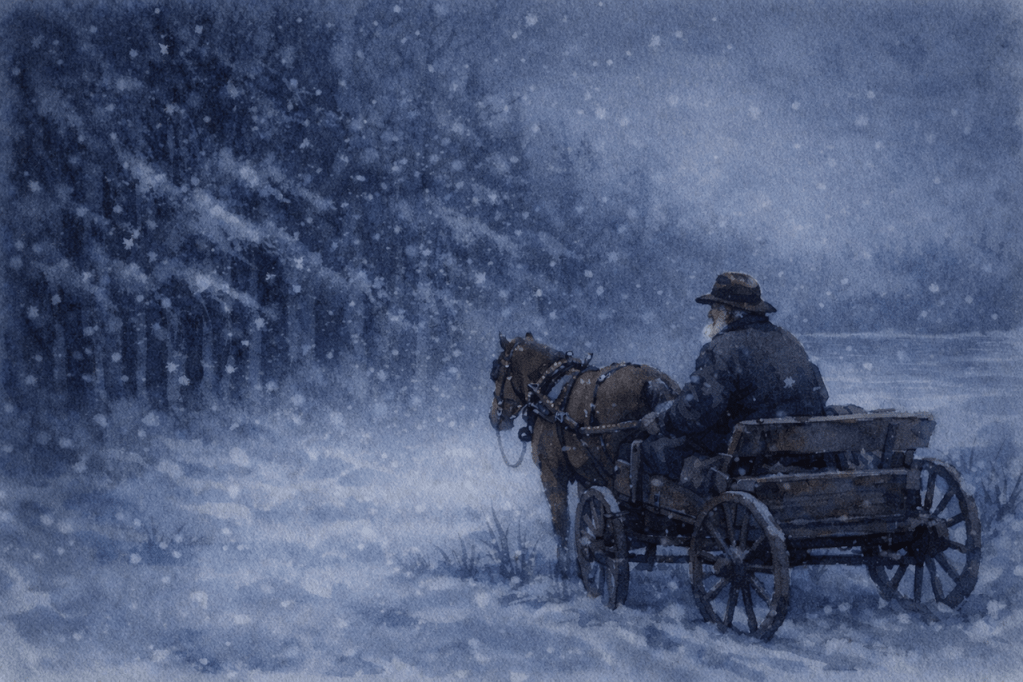
    Image: “Musing on a Snowy Evening” – Created by ChatGPT – Titled by Linda Sue Grimes

    Commentary on “Stopping by Woods on a Snowy Evening”

    One of his tricky poems, Robert Frost’s “Stopping by Woods on a Snowy Evening” seems simple, but the repetition of its nuanced phrase, “And miles to go before I sleep,” offers room for interpretation.

    Stanza 1: The Reason for Stopping

    Whose woods these are I think I know. 
    His house is in the village though; 
    He will not see me stopping here  
    To watch his woods fill up with snow. 

    Robert Frost’s simple poem, “Stopping by Woods on a Snowy Evening,” offers an uncomplicated scene wherein a man who was riding a horse pauses his ride by the roadside near a wooded area to observe as the snow is falling and piling up in the woods.

    The poem is executed without extensive figurative language and literary devices such as metaphor and metonymy.  However, the speaker’s claims do herald questions as noted in the introduction.

    One is likely to wonder if the speaker would not have stopped if he thought the owner of the land would see him.  Because the speaker mentions that fact, the listener cannot help but wonder why.

    Stanza 2:  The Horse Thinks What the Man Thinks

    My little horse must think it queer   
    To stop without a farmhouse near   
    Between the woods and frozen lake   
    The darkest evening of the year.   

    The speaker then reports what he thinks his horse thinks:  he claims that his horse must be thinking it an odd thing to be stopping before reaching home, and equally strange that the man would want to stop beside a woodland and lake while it is becoming dark outside.

    The speaker suggests that the time of year is around December 22, the shortest day of the year and the beginning of winter in the Northern Hemisphere.  That is the reason it is “the darkest evening of the year.”

    It is obvious that it is the speaker himself who thinks his behavior is odd, stopping in the cold, dark winter weather to watch snow falling in a woods.  That he projects his thoughts onto his “little horse” is, of course, merely a ruse that dramatizes his own actions.

    Stanza 3: Soft Breezes and Flaky Snow

    He gives his harness bells a shake   
    To ask if there is some mistake.
    The only other sound’s the sweep   
    Of easy wind and downy flake.  

    In stanza 3, the speaker reveals that he thinks the horse has deemed this stopping as odd because the horse is shaking his head and rattling his harness.  The speaker continues to speculate about what the horse thinks; this time he suggests that his horse thinks he made a “mistake.”  Such speculation about the cogitation of a horse actually becomes rather comical.

    It has become quite clear that all of the thoughts the speaker has speculated about what the horse thinks is simply what the speaker himself is thinking.  He seems to want to suggest that this stopping to watch snow filling up a woods is somehow unseemly or at least “queer”—in the original definition of the term.

    The speaker then notices that other than the rattling of the horse’s harness it is utterly quiet with the only sound he hears being the wind gently blowing as the snowflakes whirl around and into the woodland.

    Stanza 4: Many Miles to Keep Promises

    The woods are lovely, dark and deep,   
    But I have promises to keep,   
    And miles to go before I sleep,   
    And miles to go before I sleep.

    In stanza 4,  the speaker paints the only pictorial details about what he is viewing, as he reports that the woodland is “lovely, dark and deep.”  The bulk of the poem simply offers speculation about who might have seen him and what his little horse may be thinking.  

    Finally, the speaker ends his musing by claiming that he has made promises, and he must keep them.  He must still be a fairly great distance from his residence as he claims that he has miles yet to travel before he can “sleep.”  Those final three lines, actually, state the reason that the speaker must cease his musing on the beauty and quiet of the woodland and continue on with he journey back home.

    But the claim that he “has miles to go before [he] sleep[s]” because it is repeated offers room for interpretation.  Perhaps the second repetition has a different meaning from the first, or just perhaps that is the only way to end poem.

    The Rime Scheme

    It is quite likely that the final repetition has no further meaning from it first iteration.  The rime scheme that the poet has crafted simply offers no way out of the poem except to repeat the line:  AABA BBCB CCDC DDDD.

    Notice that the poet has taken the last word in the third line of the first stanza—”here”—and rimed it with last word in the first—”queer,” second—”near,” and fourth—”year” lines in the second stanza.

    He then repeats that scheme until the end of the poem.  In theory, he could have continued down through the entire alphabet. With such a connected system of riming, there is no useful, harmonious way to end the poem, except the way he actually did.

    Perhaps merely stopping is a option but not as graceful, and too, by the repetition in this particular poem, because of the subject matter, the repetition adds a nuance of meaning, promulgating the suggestion that the first part of the repetition has a different meaning form the second.

    Repeated Line Open to Interpretation

    By repeating the line, “And miles to go before I sleep,” the speaker has crafted an intriguing curiosity that cannot be mollified by the reader, scholar, critic, or commentarian.   The poem offers no support for the idea that the speaker is suggesting he might be thinking about suicide.  That interpretive speculation is overly melodramatic.  

    However, the speaker seems to awaken from a trance-like musing as he watches the snow piling up in the woods, and it does remain unclear what caused him to wake up from that dream-like musing. As laid out in the introduction, the piece does herald questions without providing any concrete answers.

    Because these questions are not answered by the speaker of the poem, but also because Robert Frost called his poem, “The Road Not Taken,” “a tricky poem,” readers may possibly speculate that Frost held that his “Stopping by Woods on a Snowy Evening” was also a “very tricky poem.” 

    Ultimately, answers to those questions do not matter.  The poem offers a serene scene of a man observing nature and then moving on.  The meaningful beauty of the poem, one might argue, is in the lack of details and how a consummate poet can create a stunning, impressive piece of art based on such simplicity.

    Image:  Robert Frost – Library of Congress

  • Robert Frost’s “Birches”

    Image: Robert Frost in 1943. (Eric Schaal/The LIFE Picture Collection/Getty Images)

    Robert Frost’s “Birches”

    RobertFrost’s “Birches” is one of his most famous poems.  It features a speaker looking back on a boyhood experience that he cherishes and would like to do again. Unfortunately, this “tricky poem” has suffered ludicrous readings that insert onanism into its innocent nostalgia.

    Introduction and Text of “Birches”

    The speaker in Robert Frost’s “Birches” is musing on a boyhood activity that he enjoyed.  As a “swinger of birches,” he rode trees and felt the same euphoria that children feel who experience carnival rides such as ferris wheels or tilt-a-whirls. 

    The speaker also gives a rather thorough description of birch trees after an ice-storm.  In addition, he makes a remarkable statement that hints at the yogic concept of reincarnation:  “I’d like to get away from earth awhile / And then come back to it and begin over.”  However, after making that striking remark, he backtracks perhaps thinking such a foolish thought might disqualify him from rational thought.  

    That remark however demonstrates that as human beings our deepest desires correspond to truth in ways that our culture in the Western world has plastered over through centuries of materialistic emphasis on the physical level of existence.   The soul knows the truth and once in a blue moon a poet will stumble across it, even if he does not have the ability to fully recognize it.

    Birches

    When I see birches bend to left and right
    Across the lines of straighter darker trees,
    I like to think some boy’s been swinging them.
    But swinging doesn’t bend them down to stay
    As ice-storms do. Often you must have seen them
    Loaded with ice a sunny winter morning
    After a rain. They click upon themselves
    As the breeze rises, and turn many-colored
    As the stir cracks and crazes their enamel.
    Soon the sun’s warmth makes them shed crystal shells
    Shattering and avalanching on the snow-crust—
    Such heaps of broken glass to sweep away
    You’d think the inner dome of heaven had fallen.
    They are dragged to the withered bracken by the load,
    And they seem not to break; though once they are bowed
    So low for long, they never right themselves:
    You may see their trunks arching in the woods
    Years afterwards, trailing their leaves on the ground
    Like girls on hands and knees that throw their hair
    Before them over their heads to dry in the sun.
    But I was going to say when Truth broke in
    With all her matter-of-fact about the ice-storm
    I should prefer to have some boy bend them
    As he went out and in to fetch the cows—
    Some boy too far from town to learn baseball,
    Whose only play was what he found himself,
    Summer or winter, and could play alone.
    One by one he subdued his father’s trees
    By riding them down over and over again
    Until he took the stiffness out of them,
    And not one but hung limp, not one was left
    For him to conquer. He learned all there was
    To learn about not launching out too soon
    And so not carrying the tree away
    Clear to the ground. He always kept his poise
    To the top branches, climbing carefully
    With the same pains you use to fill a cup
    Up to the brim, and even above the brim.
    Then he flung outward, feet first, with a swish,
    Kicking his way down through the air to the ground. 
    So was I once myself a swinger of birches.
    And so I dream of going back to be.
    It’s when I’m weary of considerations,
    And life is too much like a pathless wood
    Where your face burns and tickles with the cobwebs
    Broken across it, and one eye is weeping
    From a twig’s having lashed across it open.
    So was I once myself a swinger of birches.
    And so I dream of going back to be.
    It’s when I’m weary of considerations,
    And life is too much like a pathless wood
    Where your face burns and tickles with the cobwebs
    Broken across it, and one eye is weeping
    From a twig’s having lashed across it open.
    I’d like to get away from earth awhile
    And then come back to it and begin over.
    May no fate willfully misunderstand me
    And half grant what I wish and snatch me away
    Not to return. Earth’s the right place for love:
    I don’t know where it’s likely to go better.
    I’d like to go by climbing a birch tree,
    And climb black branches up a snow-white trunk
    Toward heaven, till the tree could bear no more,
    But dipped its top and set me down again.
    That would be good both going and coming back.
    One could do worse than be a swinger of birches.

    Reading

    Commentary on “Birches”

    Robert Frost’s “Birches” is one of the poet’s most famous and widely anthologized poems.  And similar to his famous poem “The Road Not Taken,” “Birches” is also a very tricky poem, especially for certain onanistic mindsets.

    First Movement:  A View of Arching Birch Trees

    When I see birches bend to left and right
    Across the lines of straighter darker trees,
    I like to think some boy’s been swinging them.
    But swinging doesn’t bend them down to stay
    As ice-storms do. Often you must have seen them
    Loaded with ice a sunny winter morning
    After a rain. They click upon themselves
    As the breeze rises, and turn many-colored
    As the stir cracks and crazes their enamel.

    The speaker begins by painting a scene wherein birch trees are arching either “left or right” and contrasting their stance with “straighter darker tree.”  He asserts his wish that some young lad has been riding those trees to bend them that way.

    Then the speaker explains that some boy swinging on those trees, however, would not bend them permanently “[a]s ice-storms do.”    After an ice-storm they become heavy with the ice that begins making clicking sounds.  In the sunlight, they “turn many-colored” and they move until the motion “cracks and crazes their enamel.”

    Second Movement:   Ice Sliding off Trees

    Soon the sun’s warmth makes them shed crystal shells
    Shattering and avalanching on the snow-crust—
    Such heaps of broken glass to sweep away
    You’d think the inner dome of heaven had fallen.
    They are dragged to the withered bracken by the load,
    And they seem not to break; though once they are bowed
    So low for long, they never right themselves:
    You may see their trunks arching in the woods
    Years afterwards, trailing their leaves on the ground
    Like girls on hands and knees that throw their hair
    Before them over their heads to dry in the sun. 

    The sun then causes the crazy ice to slide off the trees as it “shatter[s] and avalanch[es]” on to the snow.  Having fallen from the trees, the ice looks like big piles of glass, and the wind comes along and brushes the piles into the ferns growing along the road.

    The ice has caused the trees to remain bent for years as they continue to “trail their leaves on the ground.”  Seeing the arched birches puts the speaker in mind of girls tossing their hair “over the heads to dry in the sun.”

    Third Movement:   Off on a Tangent

    Before them over their heads to dry in the sun.
    But I was going to say when Truth broke in
    With all her matter-of-fact about the ice-storm
    I should prefer to have some boy bend them
    As he went out and in to fetch the cows—
    Some boy too far from town to learn baseball,
    Whose only play was what he found himself,
    Summer or winter, and could play alone.
    One by one he subdued his father’s trees
    By riding them down over and over again
    Until he took the stiffness out of them,
    And not one but hung limp, not one was left
    For him to conquer. He learned all there was
    To learn about not launching out too soon
    And so not carrying the tree away
    Clear to the ground. He always kept his poise
    To the top branches, climbing carefully
    With the same pains you use to fill a cup
    Up to the brim, and even above the brim.
    Then he flung outward, feet first, with a swish,
    Kicking his way down through the air to the ground.  

    At this point, the speaker realizes that he has gone off on a tangent with his description of how birches get bent by ice-storms.  His real purpose he wants the reader/listener to know lies in another direction. That the speaker labels his aside about the ice-storm bending the birch tree “Truth” is somewhat bizarre.  While his colorful description of the trees might be a true one, it hardly qualifies as “truth” and with a capital “T” no less.

    “Truth” involves issues that relate to eternal verities, especially of a metaphysical or spiritual nature—not how ice-storms bend birch trees or any purely physical detail or activity. The speaker’s central wish in this discourse is to reminisce about this own experience of what he calls riding trees as a “swinger of birches.”  Thus he describes the kind of boy who would have engaged in such an activity.

    The boy lives so far from other people and neighbors that he must make his own entertainment; he is a farm boy whose time is primarily taken up farm work and likely some homework for school.  He has little time, money, inclination for much of a social life, such as playing baseball or attending other sports games. 

    Of course, he lives far from the nearest town. The boy is inventive, however, and discovers that swinging on birch trees is a fun activity that offers him entertainment as well as the acquisition of a skill.  He had to learn to climb the tree to the exact point where he can then “launch” his ride.

    The boy has to take note of the point and time to swing out so as not to bend the tree all the way to ground.  After attaining just the right position on the tree and beginning the swing downward, he can then let go of the tree and fling himself “outward, feet first.”  And “with a swish,” he can begin kicking his feet as he soars through the air and lands on the ground.

    Fourth Movement:   The Speaker as a Boy

    So was I once myself a swinger of birches.
    And so I dream of going back to be.
    It’s when I’m weary of considerations,
    And life is too much like a pathless wood
    Where your face burns and tickles with the cobwebs
    Broken across it, and one eye is weeping
    From a twig’s having lashed across it open.
    So was I once myself a swinger of birches.
    And so I dream of going back to be.
    It’s when I’m weary of considerations,
    And life is too much like a pathless wood
    Where your face burns and tickles with the cobwebs
    Broken across it, and one eye is weeping
    From a twig’s having lashed across it open. 

    Now the speaker reveals that he himself once engaged in the pastime of swinging on birches.  That is how he knows so much about the difference it makes of a boy swinging on the trees and ice-storms for the arch of the trees.  And also that he was once a “swinger of birches” explains how he knows the details of just how some boy would negotiate the trees as he swung on them.

    The speaker then reveals that he would like to revisit that birch-swinging activity.  Especially when he is tired  of modern-day life, running the rat-race, facing all that the adult male has to contend with in the workday world, he day-dreams about this carefree days of swinging on birch trees.

    Fifth Movement:   Getting off the Ground

    I’d like to get away from earth awhile
    And then come back to it and begin over.
    May no fate willfully misunderstand me
    And half grant what I wish and snatch me away
    Not to return. Earth’s the right place for love:
    I don’t know where it’s likely to go better.
    I’d like to go by climbing a birch tree,
    And climb black branches up a snow-white trunk
    Toward heaven, till the tree could bear no more,
    But dipped its top and set me down again.
    That would be good both going and coming back.
    One could do worse than be a swinger of birches.

    The speaker then asserts his wish to leave earth and come back again.  Likely this speaker uses the get-away-from-earth notion to refer to the climbing of the birch tree, an act that would literally get him up off the ground away from earth. But he quickly asks that “no fate willfully misunderstand” him and snatch him away from the earth through death—he “knows” that such a snatch would not allow him to return.  

    The speaker then philosophizes that earth is “the right place for love” because he has no idea that there is any other place it could “go better.” So now he clarifies that he simply would like to climb back up a birch tree and swing out as he did when a boy: that way he would leave earth for the top of the tree and then return to earth after riding it down and swinging out from the tree. Finally, he offers a summing up of the whole experience that being swinger of birches—well, “one could do worse.”  

    Image: Bent Birch– hotographer: Dale L. Hugo – Universities Space Research Association

    Tricked by Robert Frost’s “Birches”

    Robert Frost claimed that his poem, “The Road Not Taken,” was a very tricky poem.  He was correct, but other poems written by Frost have proved to be tricky as well. This poem is clearly and unequivocally a nostalgic piece by a speaker looking back at a boyhood pastimes that he cherishes.  Some readers have fashioned an interpretation of masturbatory activity from this poem.

    Robert Frost’s second most widely known poem “Birches” has suffered an faulty interpretation that equals the inaccurate call-to-nonconformity so often foisted onto “The Road Not Taken.”  At times when readers misinterpret poems, they demonstrate more about themselves than they do about the poem. They are guilty of “reading into a poem” that which is not there on the page but is, in fact, in their own minds.

    Readers Tricked by “Birches”

    Robert Frost claimed that his poem “The Road Not Taken” was a tricky poem, but he must have known that any one of his poems was likely to trick the over-interpreter or the immature, self-involved reader.  The following lines from Robert Frost’s “Birches” have been interpreted as referring to a young boy learning the pleasures of self-gratification:

    One by one he subdued his father’s trees
    By riding them down over and over again
    Until he took the stiffness out of them,
    And not one but hung limp, not one was left
    For him to conquer. He learned all there was
    To learn about not launching out too soon

    About those lines, Elizabeth Gregory, who used to post on the now defunct site Suite101, once claimed: “The lexical choices used to describe the boy’s activities are unmistakably sexual and indicate that he is discovering more than a love of nature.”

    Indeed, one could accurately interpret that the boy is discovering something “more than the love of nature,” but what he is discovering (or has discovered actually since the poem is one of nostalgic looking back) is the spiritual pull of the soul upward toward heaven, not the downward sinking of the mind into sexual dalliance.

    In the Mind of the Beholder, Not on the Page

    Gregory’s interpretation of  sexuality from these lines simply shows the interpretive fallacy of “reading into” a poem that which is not there, and that reader’s proposition that “the boy’s activities are unmistakably  sexual” exhausts reason or even common sense. 

    The “lexical choices” that have tricked this reader are, no doubt, the terms “riding,” “stiffness,” “hung limp,” and “launching out too soon.” Thus that reader believes that Robert Frost wants his audience to envision a tall birch tree as a metaphor for a penis: at first the “tree (male member)” is “stiff (ready for employment),” and after the boy “rides them (has his way with them),” they hang “limp (are satiated).” 

    And from riding the birches, the boy learns to inhibit “launching out too soon (premature release).” It should be obvious that this is a ludicrous interpretation that borders on the obscene. 

    But because all of these terms refer quite specifically to the trees, not to the male genitalia or  sexual activity, and because there is nothing else in the poem to make the reader understand them to be metaphorical, the thinker who applies a  sexual interpretation is quite simply guilty of reading into the poem that which is not in the poem but quite obviously is in the thinker’s mind.

    Some beginning readers of poems believe that a poem always has to mean something other than what is stated.  They mistakenly think that nothing in a poem can be taken literally, but everything must be a metaphor, symbol, or image that stands in place of something else. And they often strain credulity grasping at the unutterably false notion of a “hidden meaning” behind the poem.

    That Unfortunate Reader Not Alone

    Gregory is not the only uncritical thinker to be tricked by Frost’s “Birches.” Distinguished critic and professor emeritus of Brown University, George Monteiro, once scribbled: “To what sort of boyhood pleasure would the adult poet like to return? Quite simply; it is the pleasure of onanism.”   Balderdash!  The adult male remains completely capable of self-gratification; he need not engage boyhood memories to commit that act. 

    One is coaxed to advise Professor Monteiro—and all of those who fantasize self-gratification in “Birches”—to keep their minds above their waists while engaging in literary criticism and commentary.

  • Robert Frost’s “The Road Not Taken”

    Image:   Robert Frost in 1943

    Robert Frost’s “The Road Not Taken”

    Robert Frost’s “The Road Not Taken” is often misinterpreted; it does not encourage nonconformity.  It dramatizes the difficulty of making choices and then living with the consequences. 

    Introduction with Text of “The Road Not Taken”

    Robert Frost’s “The Road Not Taken” has been one of the most anthologized, analyzed, and quoted poems in American poetry.   It has also remained one of the most misunderstood and thus misinterpreted poems in the English language.

    Published in 1916 in Robert Frost’s poetry collection titled, Mountain Interval, the poem has since been interpreted primarily as piece that prompts non-conforming behavior, a philosophy of the efficacy of striking out on one’s own, instead of following the herd.  Thus the poem is often quoted at commencement ceremonies.  However, a close look at the poem reveals a different focus.

    Instead of offering a moralizing piece of advice, the poem merely demonstrates how memory often glamorizes past choices despite the fact that the differences between the choices were not so great.  It also shows how the mind tends to focus on the choice one had to abandon in favor of the one selected.

    Edward Thomas and “The Road Not Taken”

    Robert Frost lived in England from 1912 to 1914; he became fast friends with fellow poet Edward Thomas.  Frost has explained that “The Road Not Taken” was prompted by Thomas, who would continue to fret over the path the couple could not take as they were out walking in the woods near their village.

    The Road Not Taken

    Two roads diverged in a yellow wood,
    And sorry I could not travel both
    And be one traveler, long I stood
    And looked down one as far as I could
    To where it bent in the undergrowth;

    Then took the other, as just as fair,
    And having perhaps the better claim,
    Because it was grassy and wanted wear;
    Though as for that the passing there
    Had worn them really about the same,

    And both that morning equally lay
    In leaves no step had trodden black.
    Oh, I kept the first for another day!
    Yet knowing how way leads on to way,
    I doubted if I should ever come back.

    I shall be telling this with a sigh
    Somewhere ages and ages hence:
    Two roads diverged in a wood, and I—
    I took the one less traveled by,
    And that has made all the difference.

    Robert Frost Reads “The Road Not Taken” 

    Commentary on “The Road Not Taken”

    Robert Frost called “The Road Not Taken” “very tricky.”   Some readers have not heeded his advice to be careful with this one. Thus, a misunderstanding brings this poem into places for which it is not suitable, such as graduation ceremonies, wherein the speaker has taken as his theme the efficacy of strong individualism as opposed to herd conformity.

    First Stanza:  The Decision and the Process of Deciding

    Two roads diverged in a yellow wood,
    And sorry I could not travel both
    And be one traveler, long I stood
    And looked down one as far as I could
    To where it bent in the undergrowth;

    In the first stanza, the speaker reveals that he has been out walking in the woods, and he approaches two diverging pathways; he stops and peers down each path as far as he can.  He then avers that he would like to walk down each path, but he is sure he does not have enough time to experience both.  He knows he must take one path and leave the other behind, and so he commences his decision making process.

    Second Stanza:  The Reluctant Choice

    Then took the other, as just as fair,
    And having perhaps the better claim,
    Because it was grassy and wanted wear;
    Though as for that the passing there
    Had worn them really about the same,

    After scrutinizing both pathways, he decides to start walking down the one that seems “less traveled.” He admits they were “really about the same.”  They were, of course, not exactly the same, but in reality there was not much difference between them as far as he could tell from where he stood. Both paths had been “traveled,” but he fancies that he chooses the one because it was a little less traveled than the other.

    Notice at this point how the actual choice in the poem seems to deviate from the title.  The speaker takes the road less taken, not the one “not taken,” as the title seems to suggest.  That fact was, no doubt, part of the trickiness that Frost mentioned as he discussed the genesis of this poem, calling it “very tricky.”

    The title also lends to  the moralizing interpretation.  The path not taken is the one not taken by the speaker—both roads have been taken by others, but the speaker being just one individual could take only one.

    Third Stanza:  Really More Similar Than Different

    And both that morning equally lay
    In leaves no step had trodden black.
    Oh, I kept the first for another day!
    Yet knowing how way leads on to way,
    I doubted if I should ever come back.

    Because the decision making process can be complex and lengthy, the speaker continues to reveal his thinking about the two paths into the third stanza.  But again he reports how the paths were really more similar than different.

    Fourth Stanza:  The Ambiguous Sigh

    I shall be telling this with a sigh
    Somewhere ages and ages hence:
    Two roads diverged in a wood, and I—
    I took the one less traveled by,
    And that has made all the difference.

    In the final stanza, the speaker projects how he  will look back on his decision in the distant future.  He surmises that he will remember taking a “less traveled” road, and that decision “has made all the difference.”  

    The problem with interpreting the poem as advice for individualism and non-conformity is that the  speaker is only speculating about how his decision will affect his future.  He cannot know for certain that his decision was a wise one, because he has not yet lived it.  

    Even though he predicts that he will think it was a positive choice when he says, it “made all the difference,” a phrase that usually indicates a good difference, in reality, he cannot know for sure.  

    The use of the word “sigh” is also ambiguous.  A sigh can indicate relief or regret——two nearly opposite states of mind.  Therefore, whether the sigh comports with a positive difference or negative cannot be known to the speaker at the time he is musing in the poem.  He simply has not lived the experience yet.  

    “Tricky Poem”

    Frost referred to this poem as a tricky poem, and he admonished readers “to be careful of that one.” He knew that human memory tends to gloss over past mistakes and glamorize the trivial.   He also was aware that a quick, simplistic perusal of the poem could yield an erroneous understanding of it.  

    The poet also has stated that this poem reflects his friend Edward Thomas’ attitude while out walking in the woods near London, England.  Thomas continued to wonder what he might be missing by not being able to walk both paths, thus the title’s emphasis on the road “not taken.”

    “Road” as a Symbol for Life’s “Path”

    In this commentary, readers may notice that I have used the term “path” instead of road in most the references to that entity in the poem.  The poem begins by placing the speaker in a “yellow wood.” Thus, the speaker has encountered two different pathways through the wood because it more likely that a wood has paths (pathways) than roads.  Paths are for walking; roads are for vehicle traffic.  

    Thus, I suggest that the speaker is employing the term “road” as a symbol of one’s pathway through life——not a a literal road in a wood. Even though the speaker had used the term “travel” in the opening lines, he later limits that mode of travel to foot travel when he says, “long I stood” and later, “In leaves no step had trodden black.” He “stood” because he had been walking.  And “step had trodden black” refers to the condition of the leaves having been walked upon. 

    Image:  Robert Frost and Edward Thomas