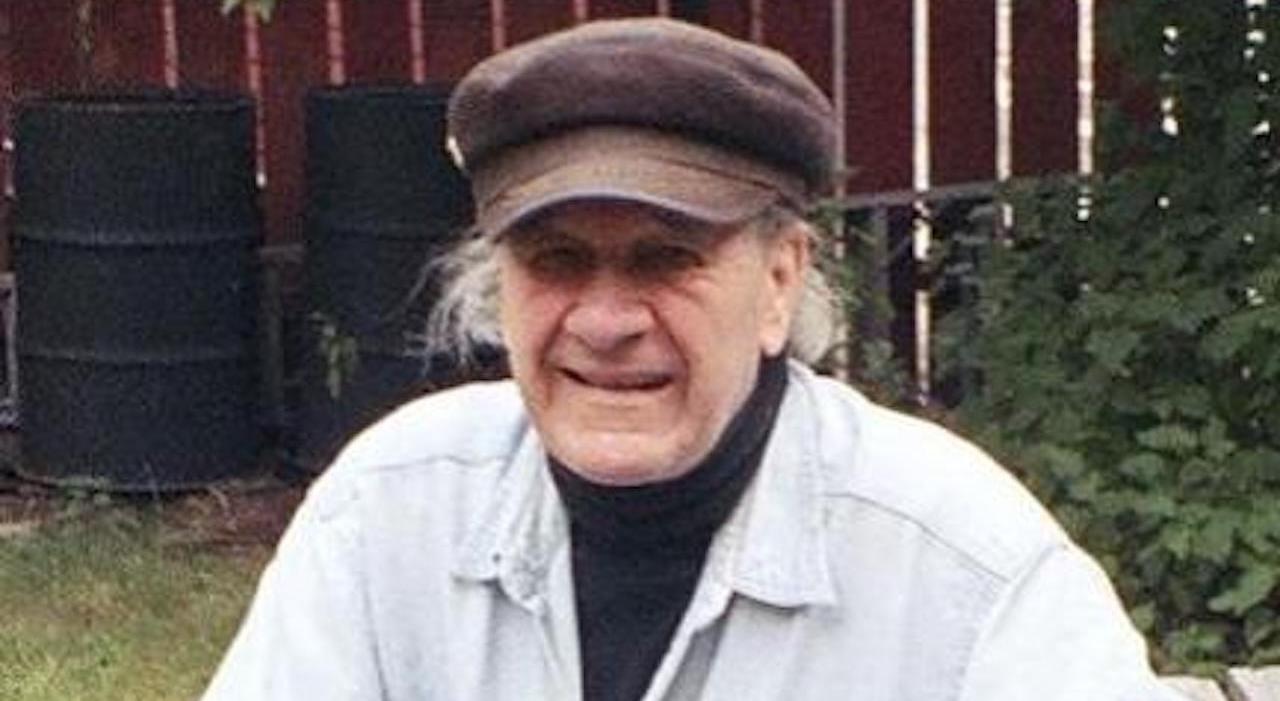
Image: Thomas Thornburg
Thomas Thornburg’s “Serving the South”
The irony in the title of Thomas Thornburg’s “Serving the South” serves the hatred spewed by a Northern bigot on a fancied journey through the Southland of the United States of America, as he engages stereotypes to disparage Southerners.
Introduction with Text of “Serving the South”
The speaker in Thomas Thornburg’s “Serving the South” from his final published collection American Ballads: New and Selected Poems is a bigoted northerner who is ostensibly reporting his observations about his southern neighbors.
However, all he actually accomplishes is a warming up and reworking of a handful of worn out clichés and stereotypes about the American South. An especially egregious example of these ignorant stereotypes plays out in the speaker’s deliberate misspelling of the word, “eccyclema” as “ekkuklema” [1].
All those “k’s” and the replacement of the “y” with “u” is meant to trigger in the minds of readers an image of the KKK—Ku Klux Klan—which for many northerners like this speaker remains one of the few things they actually know about the American South. The speaker comes across as a pathetic yet pedantic wielder of left-over 20th century animus of the North that continues to castigate the South for its culture.
And yet while no contemporary southerners believe that slavery represents a useful and gloried past to which they would gladly return, some northerners (along with some westerners and easterners) continue to tar the entire South with that broad brush of racism. That tarring is most often done for political purposes. This speaker is engaging in that atrocious act primarily for poetic drama.
Serving the South
deadended on a siding in Midway, Alabama,
stand 6.5 miles of RR cars.
covered in kudzu and time, they stand,
iron cheeks squaring their gothic mouths;
they are Southern and Serve the South
(hub-deep in red clay) this land,
this ekkuklema of southern drama.
still, it is Bike Week in Daytona,
and the Lady is sold in yards from rucksacks
where a tattooed mama fucks & sucks
(her name is not Ramona).
here will come no deus ex machina,
this American South, this defeated dream.
drunken, drugged, dolorous in their dementia,
forbidden by Law to wear their colors,
these cavaliers race their engines and scream
where the marble figure in every square
shielding his eyes as the century turns
stands hillbilly stubborn and declares.
heading back north having spent our earnings,
honeyed and robbed we are fed on hatred
cold as our dollar they cannot spurn,
and we are in that confederate.
“Serving the South,” from American Ballads: New and Selected Poems
© Thomas Thornburg 2009
Reading
Commentary on “Serving the South”
A northern bigot looks down his nose at the people of the South. As he does so, his use of stereotypes reveals inaccuracies as well as his shallow understanding of his target. Employment of mere stereotypes nearly always results in wrong-headedness and even gross but often wide-spread fabrications.
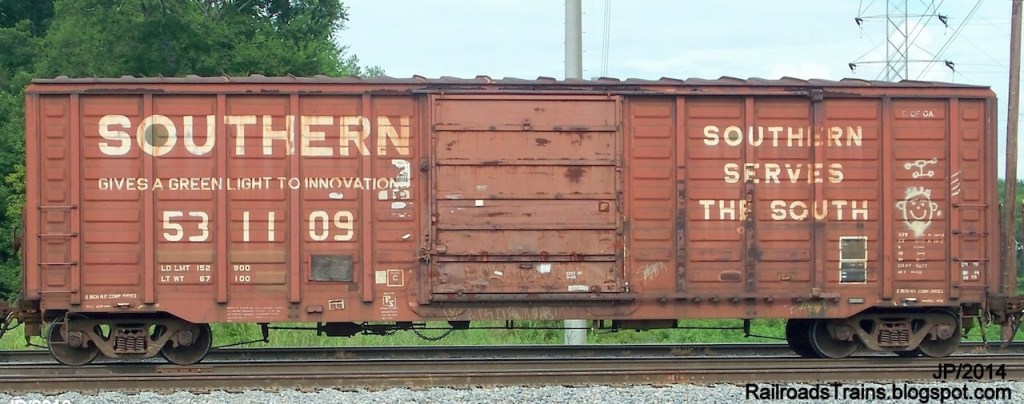
Image 2: Southern Serves the South
First Movement: Symbolizing of the South
deadended on a siding in Midway, Alabama,
stand 6.5 miles of RR cars.
covered in kudzu and time, they stand,
iron cheeks squaring their gothic mouths;
they are Southern and Serve the South
(hub-deep in red clay) this land,
this ekkuklema of southern drama.
The speaker begins his rant in what, at first, seems to be a mere description of a length of railroad cars that have been sitting in Midway, Alabama, unattended so long that kudzu is growing on them. The cars have seemingly begun to sink into the “red clay”—(Northerners are often taken aback at the sight of southern “red clay.”)
The drama that plays out in this opening movement reveals the bigotry and ignorance of this low-information speaker. He employs the term “ekkuklema” to describe the railroad cars. This usage could signal a useful metaphor, as the Greek term refers to the vehicle used in Greek dramas to assist in shifting scenes.
However, this speaker’s usage merely signals an attempt to focus readers on the despicable and now nearly defunct and everywhere debunked group that blackened the reputation of the South following the American Civil War.
The traditional, anglicized spelling of this Greek term is “eccyclema” (pronounced ɛksɪˈkliːmə), but it does have an alternate spelling “ekkyklēma.” However, no alternate spelling exists that replaces the “y” with a “u.” This speaker has coined his own term, and for a very clever reason, he, no doubt, believes.
In choosing to spell “eccyclema” as “ekkuklema,” the speaker points to the most heinous organizations that did, in fact, develop in the South, the Ku Klux Klan. The organization served as an unofficial terror group for the Democratic Party [2], after the first Republican president, Abraham Lincoln, and the Civil War put an end to slavery.
The KKK attempted to dismantle the citizenship rights of former slaves through cross burnings, lynchings, and intimidation. The Klan also attempted to overthrow Republican governors by assassinating black leaders.
With one simple, innocent word, this speaker has alluded to that despicable group that began in the South, specifically in Pulaski, Tennessee, December 24, 1865. The stone-throwers of the North like to pretend innocence in such ventures, but the KKK spread North, and by 1915, Indiana and many other northern states [3] could boast their own branches of the Klan.
This speaker’s sole purpose in coining a new spelling for the Greek stage term is to remind readers of that Southern flaw, with which he hopes his readers will be instructed to believe that all southerners remain racists.
As the railroad cars become a symbol of non-productive laziness—stuck in red clay—the speaker lays on the stereotype of racism as a quality of the South. The South is served by these railroad cars that go nowhere, having sat idle so long that kudzu is covering them, while they sink into the mud of “red clay.”
Second Movement: From Alabama on to Florida
still, it is Bike Week in Daytona,
and the Lady is sold in yards from rucksacks
where a tattooed mama fucks & sucks
(her name is not Ramona).
The speaker has now moved on from Alabama to Florida, where it is “Bike Week in Daytona.” His participation in Bike Week remains a mystery, but what he actually does pay attention to is most revealing: he is after cocaine and c*nt.
The speaker reports that he can get cocaine, “White Lady,” or “Lady” from dealers anywhere selling from backpacks. He seems especially interested in purchasing from a woman with tattoos from whom he can also receive sexual service because this “mama f*cks & sucks.” The tattooed mama is not a looker, that is, she is not a “Ramona”—slang term for a very good-looking woman.
The speaker has done such a marvelous job of condemning the South in his first movement that he lets the second movement slide a bit, except for the fact that cocaine is flowing freely. And ugly women with tattoos continue selling coke and c*nt during “Bike Week” in Daytona. But what about the bikers?
Third Movement: The Colors
here will come no deus ex machina,
this American South, this defeated dream.
drunken, drugged, dolorous in their dementia,
forbidden by Law to wear their colors,
these cavaliers race their engines and scream
where the marble figure in every square
shielding his eyes as the century turns
stands hillbilly stubborn and declares.
Indeed, there cannot be any happy ending involving this God-forsaken place. No “god” is going to jump out of the “machine” called the South and save it from perdition, according to this stereotype-wielding bigot from the North.
Now the speaker is ready let loose how he really feels about the American South: it is a “defeated dream.” Southerners are nothing but demented druggies and drunks. His cleverly alliterative line-and-a-half reeks of desperation: “defeated dream. / drunken, drugged, dolorous in their dementia.”
The speaker then makes a huge error with the line, “forbidden by Law to wear their colors.” Actually, there is no “Law” that forbids bikers to wear their patches or “colors.” The speaker is confusing the controversy that erupted in Florida and other states that resulted in many bars and restaurants refusing services to bikers wearing their club insignia.
There has been a decades-old movement [4] seeking legislation to end the unfair discrimination against bikers, as some areas continue to post signs demanding “No colors. No guns.”
That demand violates both the first and second amendment rights of bikers: wearing their club insignia is protected speech under the first amendment, and carrying a gun is protected by the second amendment.
The speaker then concocts an unseemly image of the bikers, whom he refers to as “cavaliers,” racing their engines and screaming under the statues of the Confederate war heroes, which the speaker places in “every square.” Oddly, many of those bikers would not be southerners at all because bikers from all over the world attend events such as Daytona’s Bike Week.
The speaker further describes the men in the statues as covering their eyes and standing “hillbilly stubborn” at the turn of the century. According to the implications of this speaker, the dirty, dastardly southerners should be becoming more like their betters in the North.
Fourth Movement: Seriously Confederate
heading back north having spent our earnings,
honeyed and robbed we are fed on hatred
cold as our dollar they cannot spurn,
and we are in that confederate.
Finally, this speaker reports that he and his group are “heading back north.” They have spent all their money, but he calls the money “earnings,” leaving it a mystery whether he means the money they earned up North at their jobs, or money they might have earned wagering at the bike track.
The speaker now blames the southerners he has encountered for his and his group’s spending all their money. Southern flattery (“honeyed”) has motivated these savvy northerners to spend their money, but now he translates the act of voluntary spending into being “robbed.”
And what, in fact, did they buy—well, nothing, really, they were just “fed on hatred.” This speaker would have his readers believe that southern hate is notorious for robbing innocent, white northerners who are just out to have a good time.
Then the speaker offers a surprising revelation: the southerners could not spurn those northern dollars, even though those dollars were cold like the southern hatred that the speaker et al apparently experienced at every turn.
The speaker is subtly suggesting that southerners make up the bulk of that now iconic and famous Clintonian “basket of deplorables,” who are “racist, sexist, homophobic, xenophobic, Islamaphobic—you name it” [5]. The speaker then remarks that on the issue of money, or “earnings,” he, his group, and the southerners are “confederate,” or in agreement, or so it seems.
So money is after all the great leveler. Everybody needs cash, is trying to secure cash—North, South, East, and West—all groups become “confederate” in their need for financial backing on this mud ball of a planet.
But still the cliché dictates that when “other” people—in this case those deplorable southerners—work to get the money they need, they are still deplorable. But when the virtuous northerner and his little group work for their cash, they are virtuous, and only “confederate” with those “others” in the mere fact that they need it.
No doubt the speaker’s cuteness in thus employing the term “confederate” elicits from him a wild-eyed, wide-mouthed guffaw. He and his group are, after all, heading home to the North, where things are sober, sane, and sympathetic to the political correctness that is flaying the world and turning stereotypes sprinkled with clichés into models for language and behavior.
Sources
[1] Editors. “Eccyclema.” Britannica. Accessed April 5, 2023.
[2] Editors. “Ku Klux Klan.” History. Accessed April 5, 2023.
[3] Gail Schontzler. “Bozeman’s Hidden History with the Ku Klux Klan.” Bozeman Daily Chronicle. September 17, 2017.
[4] Andrew Gant. “Bikers Rally in Daytona Beach for End to Ban on Club Patches.” The Daytona Beach News-Journal. March 2, 2014.
[5] Rick Fuentes. “What’s in a Basket of Deplorables?” American Thinker. April 25, 2021.
🕉
You are welcome to join me on the following social media:
TruthSocial, Locals, Gettr, X, Bluesky, Facebook, Pinterest
🕉
Share
 Linda's Literary Home