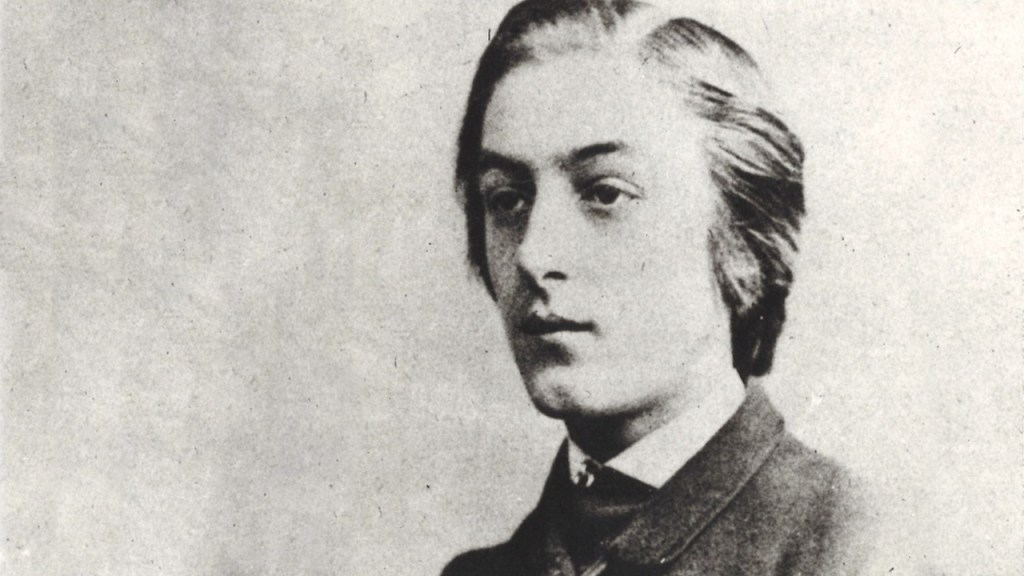
Gerard Manley Hopkins’ “No worst, there is none. Pitched past pitch of grief”
The third in the group of sonnets widely known as “the terrible sonnets, this one,“No worst, there is none. Pitched past pitch of grief,” presents a speaker experiencing grief so intense that it feels beyond limit or measure.
In the octave, suffering overwhelms his body and spirit and leads to urgent appeals for divine comfort. In the sestet, the speaker turns inward, describing his mind as dangerous terrain. The sonnet ends with a grim acknowledgment of mortality and the daily release offered by sleep.
Introduction and Text of “No worst, there is none. Pitched past pitch of grief”
Father Hopkins’ “No worst, there is none. Pitched past pitch of grief” is a sonnet that records extreme mental and spiritual suffering. Written in the traditional Petrarchan form, it moves from an octave of mounting anguish to a sestet of reflection and hard-earned recognition.
The speaker struggles to express grief that feels limitless and that is unrelieved by faith or prayer. Dense sound patterns and abrupt phrasing mirror the pressure of despair. Rather than offering comfort, the poem confronts pain directly, showing how the mind and soul endure when consolation seems absent.
No worst, there is none. Pitched past pitch of grief
No worst, there is none. Pitched past pitch of grief,
More pangs will, schooled at forepangs, wilder wring.
Comforter, where, where is your comforting?
Mary, mother of us, where is your relief?
My cries heave, herds-long; huddle in a main, a chief-
Woe, wórld-sorrow; on an áge-old ánvil wínce and síng —
Then lull, then leave off. Fury had shrieked “No ling-
Ering! Let me be fell: force I must be brief.”
O the mind, mind has mountains; cliffs of fall
Frightful, sheer, no-man-fathomed. Hold them cheap
May who ne’er hung there. Nor does long our small
Durance deal with that steep or deep. Here! creep,
Wretch, under a comfort serves in a whirlwind: all
Life death does end and each day dies with sleep.
Reading
Commentary on “No worst, there is none. Pitched past pitch of grief”
The sonnet moves from outward cries of anguish to inward examination of mind. The octave presents grief as limitless, cumulative, and shared with the world at large. In the sestet, suffering becomes psychological, depicted as dangerous inner terrain. The poem ends without relief, settling instead on a sober recognition of death and the temporary rest found in sleep.
Octave: “No worst, there is none. Pitched past pitch of grief”
No worst, there is none. Pitched past pitch of grief,
More pangs will, schooled at forepangs, wilder wring.
Comforter, where, where is your comforting?
Mary, mother of us, where is your relief?
My cries heave, herds-long; huddle in a main, a chief-
Woe, wórld-sorrow; on an áge-old ánvil wínce and síng —
Then lull, then leave off. Fury had shrieked “No ling-
Ering! Let me be fell: force I must be brief.”
The octave opens with a blunt assertion, denying that suffering reaches a final point. Grief, in this view, has no bottom and no boundary. The phrase “pitched past pitch of grief” reinforces this idea by suggesting that pain has gone beyond any scale by which it might be measured. Grief is not merely intense; it has surpassed all known limits.
In the second line, the speaker explains how pain increases rather than diminishes. Each new pang learns from the last. Suffering becomes more violent because it has practiced its activity and method. The verb “wring” suggests twisting pressure, as if grief grips and contorts the speaker from within. Pain is physical as well as mental, as the grip tightens.
The speaker then turns to directly address urgency and confusion. The repetition of “where” emphasizes abandonment rather than disbelief. The speaker still believes in comfort but cannot find it.
The following line continues the appeal. The speaker invokes maternal mercy and protection, yet relief does not come. These lines reveal a faith under strain, not a faith rejected, but one tested by silence.
Next, the speaker describes the sheer force of personal grief. The cries are compared to herds, large and uncontrollable. Individual anguish gathers into a single overwhelming mass. By calling it “world-sorrow,” the speaker enlarges private suffering into something shared by humanity across time. The grief feels ancient, collective, and unavoidable.
This sorrow plays out “on an age-old anvil,” an image suggesting repeated blows over centuries. The anvil implies endurance and also punishment. On it, the cries “wince and sing.” Pain produces sound, and suffering is shaped into expression. The poem itself becomes the product of this hammering, forged under pressure.
The octave ends with the sudden emotional recoil. The intensity momentarily subsides, only to be replaced by fury that demands an end: “No lingering!” The speaker feels forced to compress suffering into brevity, not because it is resolved, but because it is unbearable. The octave closes without comfort, suspended between eruption and exhaustion.
Sestet: “O the mind, mind has mountains; cliffs of fall”
O the mind, mind has mountains; cliffs of fall
Frightful, sheer, no-man-fathomed. Hold them cheap
May who ne’er hung there. Nor does long our small
Durance deal with that steep or deep. Here! creep,
Wretch, under a comfort serves in a whirlwind: all
Life death does end and each day dies with sleep.
The sestet turns inward, shifting attention from external cries to internal experience. The mind is described as a vast landscape, filled not with beauty but with danger. These “mountains” are steep and unstable, ending in sudden drops. Mental suffering is portrayed as perilous terrain.
The cliffs are terrifying because they are steep and impossible to measure. Those who have not faced such depths cannot understand them. The two half lines “Hold them cheap / May who ne’er hung there” conspire to dismisses the judgments of outsiders. Only those who have been suspended over these mental precipices know their true danger.
The speaker then acknowledges human limitation. Endurance is described as “small,” easily overwhelmed. Prolonged suffering exceeds what a person can reasonably bear. This admission removes any suggestion of weakness or failure. The problem is not the sufferer but the scale of the suffering.
At this point, the speaker addresses the self (sou) directly; he recognizes personal vulnerability and degradation. The command to “creep” suggests retreat rather than triumph. Survival, not victory, becomes the goal.
The comfort that follows is limited and unstable. Any relief comes amid turbulence. There is no calm resolution, only brief shelter within chaos. Comfort exists, but it is fragile and temporary.
The sonnet ends with a stark conclusion. Life moves inevitably toward death. Each day rehearses that ending through sleep, which brings both rest and unconsciousness. Sleep offers a small mercy, a pause from suffering, but it also mirrors death itself.
The sestet does not undo the despair of the octave. Instead, it reframes it. The speaker accepts the limits of endurance and the reality of mortality. The sonnet closes with clarity rather than consolation, acknowledging that while suffering may not be cured, it can, at least, be named and endured one day at a time.
🕉
You are welcome to join me on the following social media:
TruthSocial, Locals, Gettr, X, Bluesky, Facebook, Pinterest
🕉
Share
 Linda's Literary Home