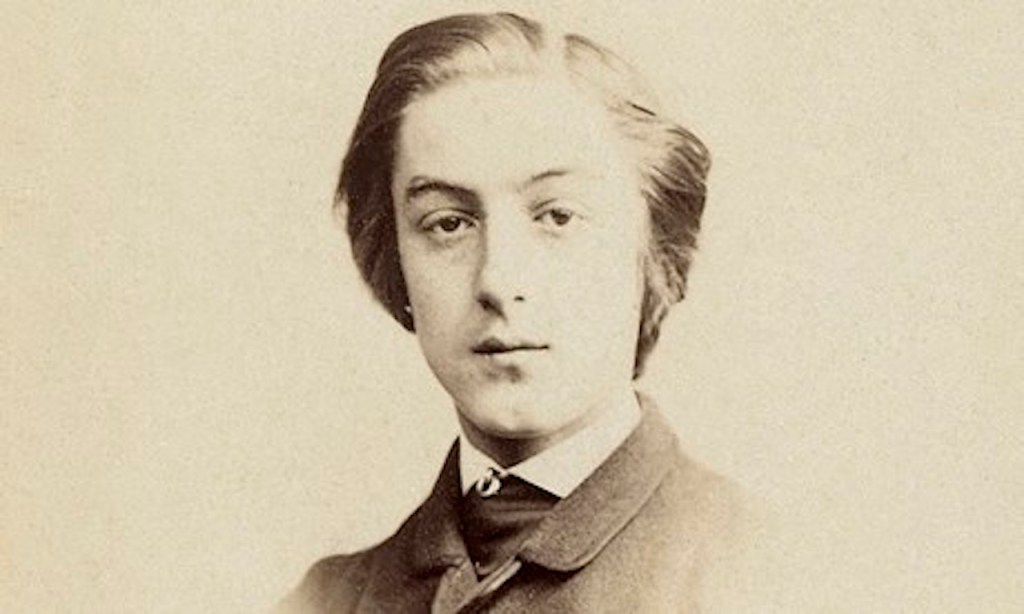
Gerard Manley Hopkins’ “Not, I’ll not, carrion comfort, Despair, not feast on thee”
Father Hopkins’ “Not, I’ll not, carrion comfort, Despair, not feast on thee” dramatizes an intense spiritual struggle in which the speaker resists despair while enduring profound inner torment. Through violent imagery and compacted language, the sonnet records the wrestling with divine force that wounds as well as purifies.
The octave emphasizes resistance and fear, while the sestet reveals the purpose of suffering as refinement, culminating in a paradoxical affirmation of faith forged through darkness.
Introduction and Text of “Not, I’ll not, carrion comfort, Despair, not feast on thee”
One of the so-called “terrible sonnets,” this one presents a mind under siege yet refusing to surrender. The speaker confronts despair not as an abstract mood but as a predatory force eager to consume him.
Written in the poet’s highly compressed, sprung rhythm that mirrors psychic pressure, the sonnet follows the Petrarchan structure, with an octave of resistance and a sestet of reckoning. Though religious in subject, the sonnet is not devotional in tone; it is agonistic, depicting faith as something fought for rather than serenely possessed.
Incidentally, Father Hopkins did not label this group himself; his editors, likely Robert Bridges in particular, gave this group of sonnets that label of “the terrible sonnets.” Editors and publishers also gave titles to some of Hopkins’ sonnet that he had left untitled, especially sonnets, which are often left untitled.
Not, I’ll not, carrion comfort, Despair, not feast on thee
Not, I’ll not, carrion comfort, Despair, not feast on thee;
Not untwist — slack they may be — these last strands of man
In me ór, most weary, cry I can no more. I can;
Can something, hope, wish day come, not choose not to be.
But ah, but O thou terrible, why wouldst thou rude on me
Thy wring-world right foot rock? lay a lionlimb against me? scan
With darksome devouring eyes my bruisèd bones? and fan,
O in turns of tempest, me heaped there; me frantic to avoid thee and flee?
Why? That my chaff might fly; my grain lie, sheer and clear.
Nay in all that toil, that coil, since (seems) I kissed the rod,
Hand rather, my heart lo! lapped strength, stole joy, would laugh, chéer.
Cheer whom though? the hero whose heaven-handling flung me, fóot tród
Me? or me that fought him? O which one? is it each one? That night, that year
Of now done darkness I wretch lay wrestling with (my God!) my God.
Reading
Commentary on “Not, I’ll not, carrion comfort, Despair, not feast on thee”
The sonnet’s octave stages a desperate refusal of despair through images of assault and exhaustion, while the sestet reframes suffering as a purifying trial.
The speaker’s struggle is both psychological and theological, portraying God as an overpowering adversary whose violence refines rather than annihilates. The sonnet ultimately affirms faith not through comfort but through endurance, emerging from darkness clarified, though scarred.
Octave: “Not, I’ll not, carrion comfort, Despair, not feast on thee”
Not, I’ll not, carrion comfort, Despair, not feast on thee;
Not untwist — slack they may be — these last strands of man
In me ór, most weary, cry I can no more. I can;
Can something, hope, wish day come, not choose not to be.
But ah, but O thou terrible, why wouldst thou rude on me
Thy wring-world right foot rock? lay a lionlimb against me? scan
With darksome devouring eyes my bruisèd bones? and fan,
O in turns of tempest, me heaped there; me frantic to avoid thee and flee?
The octave opens with a defiant double negation: “Not, I’ll not, carrion comfort, Despair, not feast on thee.” The speaker immediately personifies despair as a scavenger, a creature that feeds on decay.
By calling it “carrion comfort,” the speaker exposes the false consolation despair offers—relief through surrender, peace through annihilation. The refusal is not calm or confident; it is strained, repetitive, and urgent, suggesting that resistance itself requires immense effort.
In the second line, the speaker describes himself as held together by “these last strands of man / In me.” The phrase implies near-total depletion. Humanity is no longer a stable essence but a fraying rope barely resisting collapse. Even so, the speaker insists he will not “untwist” those strands.
Though slack, they still hold. This insistence introduces one of the sonnet’s central tensions: the speaker is exhausted to the point of despair, yet refuses to relinquish the will to exist.
The third and fourth lines enact this tension through self-correction. The speaker contradicts himself mid-thought, dramatizing the mind’s oscillation between defeat and endurance. Hope here is not triumphant but minimal—“something,” a wish that “day come,” a refusal “not to be.” Existence itself becomes the final act of resistance.
At the volta or turn of the octave, despair is eclipsed by a more terrifying presence. The speaker addresses “thou terrible,” shifting from inner affliction to external assault. This figure, heavily implied to be divine, is described in violent physical terms: a “wring-world right foot” crushing the speaker, a “lionlimb” laid against him, eyes that devour rather than console. God is not presented as shepherd or healer but as overpowering force.
The imagery intensifies the sense of vulnerability. The speaker’s “bruisèd bones” are scanned like prey. He is fanned by “turns of tempest,” piled helplessly in the wreckage. The verbs—rock, lay, scan, fan—suggest methodical domination. The speaker is not merely suffering; he is being handled, examined, and tested.
Yet even here, the octave retains its theme of resistance. The speaker is “frantic to avoid thee and flee,” acknowledging fear without yielding to despair. The struggle is not resolved, but neither is it abandoned. The octave ends with flight frustrated, not faith extinguished. The speaker remains battered but conscious, resisting annihilation even while facing what seems an unrelenting divine force.
Sestet: “Why? That my chaff might fly; my grain lie, sheer and clear”
Why? That my chaff might fly; my grain lie, sheer and clear.
Nay in all that toil, that coil, since (seems) I kissed the rod,
Hand rather, my heart lo! lapped strength, stole joy, would laugh, chéer.
Cheer whom though? the hero whose heaven-handling flung me, fóot tród
Me? or me that fought him? O which one? is it each one? That night, that year
Of now done darkness I wretch lay wrestling with (my God!) my God.
The sestet opens with a single question word—“Why?”—signaling the sonnet’s turn from protest to interpretation. The speaker now seeks meaning in the suffering he has endured. The answer arrives immediately in a farming metaphor: “That my chaff might fly; my grain lie, sheer and clear.” Chaff is the useless husk; grain is the essential substance. The violence of the octave is reimagined as threshing, a process that separates what is false or superficial from what endures.
This metaphor reframes the divine assault not as cruelty but as purification. The tempest and trampling are not meant to destroy the speaker but to clarify him. Importantly, this realization does not erase the pain. The sonnet does not suggest suffering is pleasant or easily justified. Instead, it asserts that suffering has purpose beyond punishment.
The speaker recalls that since he “kissed the rod,” he has paradoxically gained strength. The rod, traditionally a symbol of discipline, is here acknowledged rather than rejected. Yet the speaker quickly revises the image: it was not the rod but the “hand rather” that mattered. Discipline is not an impersonal force but a personal engagement. Through this contact, the speaker’s heart “lapped strength, stole joy, would laugh, cheer.”
This moment of joy is startling, given the sonnet’s pain and anguish. It suggests that endurance has yielded not numbness but vitality. However, the speaker immediately complicates this insight by questioning the source of that joy. Whom does he cheer? The hero who crushed him, or himself for resisting? Is triumph located in divine power or human endurance?
The wrestling metaphor becomes explicit. The speaker recalls being flung and trodden, yet also fighting back. The ambiguity—“is it each one?”—refuses simple hierarchy. Faith here is a reciprocal struggle, not passive submission. God is antagonist as well as sustainer; the speaker is victim and also combatant.
The sonnet’s final lines recall “that night, that year / Of now done darkness,” expanding the struggle from a moment to an extended season of suffering. This trial was not brief but a prolonged ordeal. The speaker calls himself “wretch,” acknowledging weakness without self-pity.
The sonnet concludes with a repetition charged with intensity: “(my God!) my God.” The parentheses suggest both distance and intimacy. God is invoked not with doctrinal calm but with exhausted insistence. The repetition echoes Christ’s cry of abandonment, situating the speaker’s suffering within a biblical tradition of faithful anguish.
The sestet thus completes the sonnet’s movement. Despair is not defeated by comfort but by meaning wrested from pain. The speaker emerges not unscarred, but clarified—grain separated from chaff. Faith survives not because suffering ends, but because it has been endured without surrender.
This moment of joy is startling, given the sonnet’s pain and anguish. It suggests that endurance has yielded not numbness but vitality. However, the speaker immediately complicates this insight by questioning the source of that joy. Whom does he cheer? The hero who crushed him, or himself for resisting? Is triumph located in divine power or human endurance?
🕉
You are welcome to join me on the following social media:
TruthSocial, Locals, Gettr, X, Bluesky, Facebook, Pinterest
🕉
Share
 Linda's Literary Home