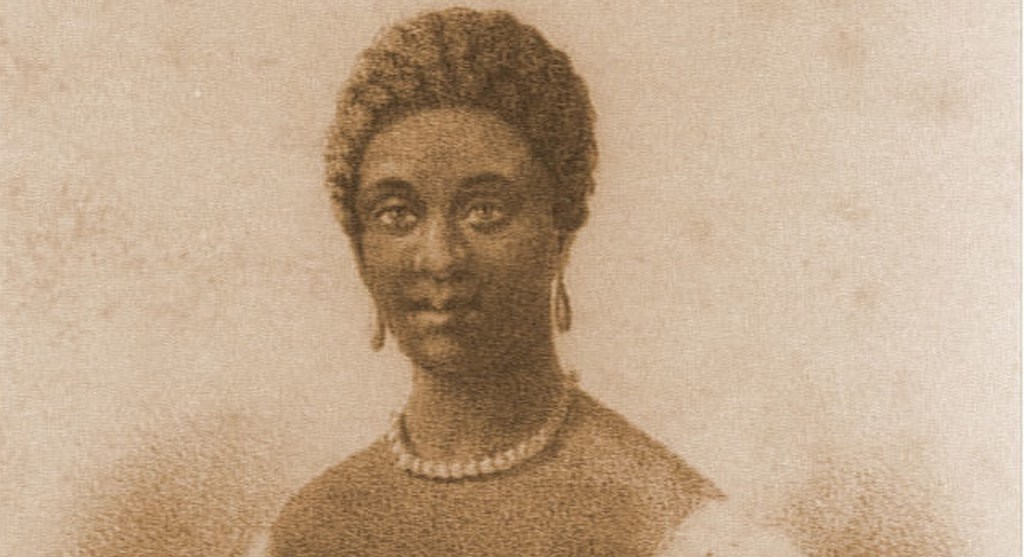
Phillis Wheatley’s “An Hymn to the Morning”
Phillis Wheatley was influenced by Greek and Roman classical literature, as well as by early 18th century British poets, who were also influenced by that same literature.
Introduction and Text of “An Hymn to the Morning”
Phillis Wheatley’s talent was recognized by George Washington, who became a fan of the poet. Wheatley’s verse has earned her the status of a first class American poet, whose style resembles the great British poets, who were also influenced by the classical literature of the early Greeks and Romans.
Phillis Wheatley’s poem “An Hymn to the Morning” consists of ten riming couplets, separated into two quatrains (first and fourth stanzas) and two sestets (second and third stanzas).
An Hymn to the Morning
Attend my lays, ye ever honour’d nine,
Assist my labours, and my strains refine;
In smoothest numbers pour the notes along,
For bright Aurora now demands my song.
Aurora hail, and all the thousand dies,
Which deck thy progress through the vaulted skies:
The morn awakes, and wide extends her rays,
On ev’ry leaf the gentle zephyr plays;
Harmonious lays the feather’d race resume,
Dart the bright eye, and shake the painted plume.
Ye shady groves, your verdant gloom display
To shield your poet from the burning day:
Calliope awake the sacred lyre,
While thy fair sisters fan the pleasing fire:
The bow’rs, the gales, the variegated skies
In all their pleasures in my bosom rise.
See in the east th’ illustrious king of day!
His rising radiance drives the shades away—
But Oh! I feel his fervid beams too strong,
And scarce begun, concludes th’ abortive song.
Commentary “An Hymn to the Morning”
Phillis Wheatley was influenced by Greek and Roman classical literature, as well as by early 18th century British poets, who were also influenced by that same literature.
First Quatrain: Invocation to the Muses
Attend my lays, ye ever honour’d nine,
Assist my labours, and my strains refine;
In smoothest numbers pour the notes along,
For bright Aurora now demands my song.
As the early 18th century poets such as Alexander Pope did, the speaker of Wheatley’s poem addresses the nine muses, asking them to guide her hand, heart, and mind as she composes her song.
The nine muses are the goddesses who guide and guard the various arts and sciences: Cleo (heroes), Urania (astronomy), Calliope (music), Melpomene (tragedy), Euterpe (lyric poetry), Erato (love), Terpsichore (dance), Thalia (comedy), and Polyhymnia (sacred hymns).
Then the speaker says that dawn, “Aurora” or goddess of dawn, is motivating her to write her song dedicated to the goddess of morning, and the speaker wants the song to flow smoothly like a gentle brook, so she asks the muses to “pour the notes along.” The speaker want to be sure her song is worthy of being dedicated to the important morning deity.
First Sestet: Honoring Dawn’s Arrival
Aurora hail, and all the thousand dies,
Which deck thy progress through the vaulted skies:
The morn awakes, and wide extends her rays,
On ev’ry leaf the gentle zephyr plays;
Harmonious lays the feather’d race resume,
Dart the bright eye, and shake the painted plume.
As morning approaches, the stars recede from view, and the speaker asks the muses to help her honor dawn’s victory of arrival. The speaker describes the morning’s sun with its far-reaching rays of light. She observes that the light is falling on every leaf, and a gentle breeze is playing upon them.
The humble speaker pays homage to the songs of the birds as she describes their singing as “harmonious,” and she notes that as the birds are looking around, their eyes are darting about, and they are shaking their feathers as they wake up.
Second Sestet: Playful Foregrounding
Ye shady groves, your verdant gloom display
To shield your poet from the burning day:
Calliope awake the sacred lyre,
While thy fair sisters fan the pleasing fire:
The bow’rs, the gales, the variegated skies
In all their pleasures in my bosom rise.
The speaker bids the trees to “shield your poet from the burning day.” She is over-emphasizing a bit, calling the shade of the trees, “verdant gloom.” The playful comparison moves in service of foregrounding the sun’s brightness as well as the colorful morning’s sun rise.
She addresses Calliope, the muse of music, to play upon the lyre, while her sisters, the other muses, “fan the pleasing fire.” Fanning fire makes it burn brighter, and she is celebrating the rising sun that becomes warmer and brighter as it becomes more visible. The little drama is pleasing the poet as she composes.
Second Quatrain: Light into the Darkness
See in the east th’ illustrious king of day!
His rising radiance drives the shades away—
But Oh! I feel his fervid beams too strong,
And scarce begun, concludes th’ abortive song.
The speaker thinks of leafy alcoves, and gentle breezes, and the sky with its many colors of purple, pink, orange stretching across the vast panorama of blue, and these things give her much pleasure. Then she suddenly exclaims, “look! the sun!,” to whom she refers as the “king of day.”
As the sun rises, all darkness has gradually faded away. The radiance of the sun inspires the speaker so immensely, but then she feels something of a let down: “But Oh! I feel his fervid beams too strong, / And scarce begun, concludes th’ abortive song.” As soon as the sun has fully arrived, then the morning is gone, and her song was celebrating morning, and thus the song must end.
🕉
You are welcome to join me on the following social media:
TruthSocial, Locals, Gettr, X, Bluesky, Facebook, Pinterest
🕉
Share
 Linda's Literary Home