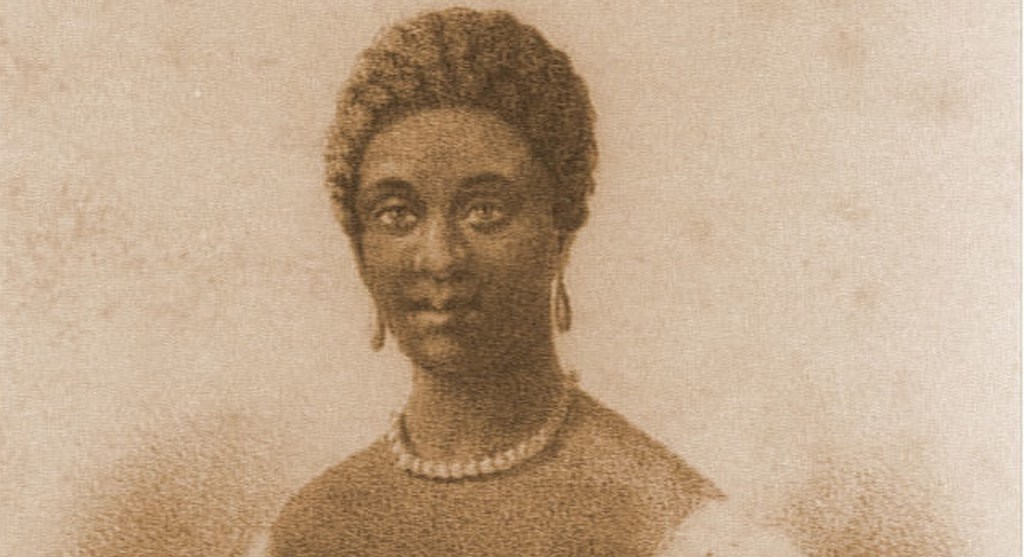
Image a: Phillis Wheatley
Phillis Wheatley’s “On Virtue”
The speaker in Phillis Wheatley’s “On Virtue” is describing the characteristics of that quality, as she supplicates to the heavenly realms to enrich and enliven her creative ability to produce useful, genuine, and delightful poems.
Introduction and Text of “On Virtue”
Phillis Wheatley’s “On Virtue” creates a speaker who is paying tribute to the coveted life goal of virtue or the characteristic that results from righteousness, integrity, and dedication to the truth. Virtue takes its substance from behavior, that is, right behavior.
The virtuous are those who conduct their life in ways that contribute to freedom, prosperity, peace, and calmness of community. Without a plurality of virtuous folks, a community breaks down, becomes unlivable, causing the virtuous to flee.
The speaker is personifying the quality of virtue, invoking its essential quality to lend its powers to her, and especially to her ability to create her art: she wishes to create “a nobler lay.” Thus, after offering a colorful description of the behavior of “virtue,” the speaker offers a supplication, almost a prayer, that virtue visit her and direct her abilities.
On Virtue
O Thou bright jewel in my aim I strive
To comprehend thee. Thine own words declare
Wisdom is higher than a fool can reach.
I cease to wonder, and no more attempt
Thine height t’explore, or fathom thy profound.
But, O my soul, sink not into despair,
Virtue is near thee, and with gentle hand
Would now embrace thee, hovers o’er thine head.
Fain would the heav’n-born soul with her converse,
Then seek, then court her for her promis’d bliss.
Auspicious queen, thine heav’nly pinions spread,
And lead celestial Chastity along;
Lo! now her sacred retinue descends,
Array’d in glory from the orbs above.
Attend me, Virtue, thro’ my youthful years!
O leave me not to the false joys of time!
But guide my steps to endless life and bliss.
Greatness, or Goodness, say what I shall call thee,
To give an higher appellation still,
Teach me a better strain, a nobler lay,
O thou, enthron’d with Cherubs in the realms of day!
Commentary on “On Virtue”
The speaker is Phillis Wheatley’s “On Virtue” is describing the qualities of virtue. As she muses upon the nature of that outstanding quality, she hopes not only to understand it better but also that it will assist her in creating her poems and songs.
First Stanza: A Valued Quality
O Thou bright jewel in my aim I strive
To comprehend thee. Thine own words declare
Wisdom is higher than a fool can reach.
I cease to wonder, and no more attempt
Thine height t’explore, or fathom thy profound.
But, O my soul, sink not into despair,
Virtue is near thee, and with gentle hand
Would now embrace thee, hovers o’er thine head.
Fain would the heav’n-born soul with her converse,
Then seek, then court her for her promis’d bliss
The speaker begins by addressing her subject as “bright jewel.” This appellation demonstrates the value that the speaker is placing on her subject, virtue. To her, virtue is like a precious stone that is bright, thus, cheerful. She expresses the wish to understand exactly what “virtue” is. Virtue’s own synonyms demonstrate that the status of “wisdom” remains out of reach for the “fool.”
The speaker then confesses that she will stop musing and trying to examine a quality that remains at such a height and depth that it seems impossible for her to attain. Then the prospect that her soul might sink into despair at abandoning that quality gives rise to her command to her soul not to “sink . . . into despair.”
While she may not become one with virtue, that quality remains “near” her. Also, the “gentle hand” of that quality will continue to “embrace” the speaker. And it will continue to protect her as it “hovers o’er thine head.”
The soul gladly seeks to attain virtue, for that force is “heav’n-born.” The soul wishes to hold court with virtue, and it will seek to do so. And the soul will continue to pursue that quality in order to reach its goal of “bliss”—promised by all great spiritual leaders and avatars.
Second Stanza: A Supplication for Guidance
Auspicious queen, thine heav’nly pinions spread,
And lead celestial Chastity along;
Lo! now her sacred retinue descends,
Array’’d in glory from the orbs above.
Attend me, Virtue, thro’ my youthful years!
O leave me not to the false joys of time!
But guide my steps to endless life and bliss.
Greatness, or Goodness, say what I shall call thee,
To give an higher appellation still,
Teach me a better strain, a nobler lay,
O thou, enthron’d with Cherubs in the realms of day!
The speaker then addresses the quality of virtue as “[a]uspicious queen,” again sending the status of that quality into the higher realms, such as royalty. But this special queen possesses wings like an angel, and those wings not only fan out but also motivate the quality of “Chastity,” the state of purity that those seeking virtue gladly embrace.
The speaker begins describing the movement of that “auspicious queen,” as her “retinue” moves downward dressed in “glory” that belongs to the heavenly realm above it. She then commands “Virtue” to listen to her cries for guidance for her young soul during her maturing years.
She then requests that virtue not allow her to remain in the “false joys of time”—a supplication reminiscent of “lead us not into temptation but deliver us from evil” (Matthew 6:5-15 KJV). She is seeking the genuine that she knows her soul requires and craves.
She asks to be guided to a life of eternal bliss—the very desire that yoga avatars, such as Paramahansa Yogananda, insist remains inherent in every human soul that incarnates upon Mother Earth. The speaker then describes the quality of virtue as containing greatness and goodness, as she seeks an even “an high appellation” for the name of the quality.
Finally, the speaker supplicates for this blessed, high-moral quality to instruct her so that she may create “a nobler lay.” She reminds that quality—as a way of reminding herself—that virtue retains a celestial, mystic power because it is encircled by “Cherubs” even as the daylight hours grace the atmosphere.
🕉
You are welcome to join me on the following social media:
TruthSocial, Locals, Gettr, X, Bluesky, Facebook, Pinterest
🕉
Share
 Linda's Literary Home