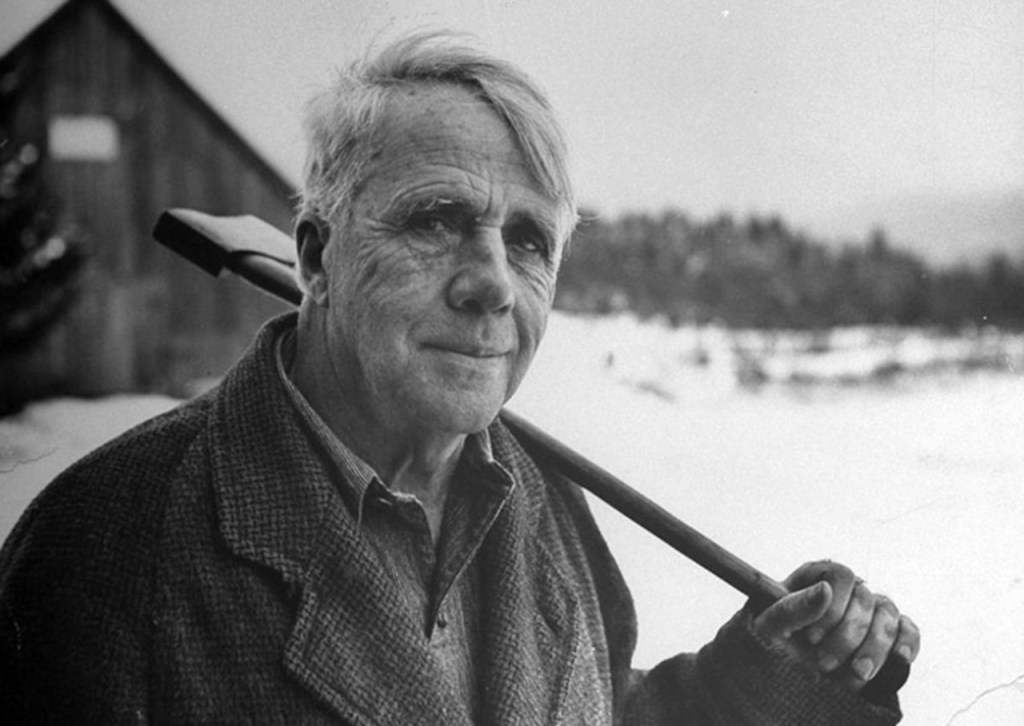
Robert Frost’s “A Girl’s Garden”
Robert Frost’s “A Girl’s Garden” dramatizes a little tale often told by the speaker’s neighbor, who enjoys narrating her little story about her experience in growing and nurturing a garden as a young girl.
Introduction and Text of “A Girl’s Garden”
Robert Frost’s fine little narrative “A Girl’s Garden” reveals that the Frostian speaker enjoys pure narrative offered just for the fun of it. The speaker is recounting an old woman’s experience with a youthful endeavor in gardening on her family’s farm.
The poem features 12 quatrains displayed in four movements, each quatrain features the rime scheme, ABCB. The nostalgia presented here remains quite lucid without any saccharine overstating or melancholy self-pity that is so prevalent in many postmodern poems of this type: it is a simple tale about a simple girl told by a simple speaker.
A Girl’s Garden
A neighbor of mine in the village
Likes to tell how one spring
When she was a girl on the farm, she did
A childlike thing.
One day she asked her father
To give her a garden plot
To plant and tend and reap herself,
And he said, “Why not?”
In casting about for a corner
He thought of an idle bit
Of walled-off ground where a shop had stood,
And he said, “Just it.”
And he said, “That ought to make you
An ideal one-girl farm,
And give you a chance to put some strength
On your slim-jim arm.”
It was not enough of a garden
Her father said, to plow;
So she had to work it all by hand,
But she don’t mind now.
She wheeled the dung in a wheelbarrow
Along a stretch of road;
But she always ran away and left
Her not-nice load,
And hid from anyone passing.
And then she begged the seed.
She says she thinks she planted one
Of all things but weed.
A hill each of potatoes,
Radishes, lettuce, peas,
Tomatoes, beets, beans, pumpkins, corn,
And even fruit trees.
And yes, she has long mistrusted
That a cider-apple
In bearing there today is hers,
Or at least may be.
Her crop was a miscellany
When all was said and done,
A little bit of everything,
A great deal of none.
Now when she sees in the village
How village things go,
Just when it seems to come in right,
She says, “I know!
“It’s as when I was a farmer…”
Oh never by way of advice!
And she never sins by telling the tale
To the same person twice.
Reading
Commentary on “A Girl’s Garden”
Robert Frost’s “A Girl’s Garden” dramatizes a little story often told by the speaker’s neighbor, who enjoys telling her little tale about growing and nurturing a garden when she was just a girl.
First Movement: A Conversation With a Neighbor
A neighbor of mine in the village
Likes to tell how one spring
When she was a girl on the farm, she did
A childlike thing.
One day she asked her father
To give her a garden plot
To plant and tend and reap herself,
And he said, “Why not?”
In casting about for a corner
He thought of an idle bit
Of walled-off ground where a shop had stood,
And he said, “Just it.”
The first movement finds Robert Frost’s speaker in “A Girl’s Garden” relating a conversation he remembers with his neighbor in the village. The speaker reports that the woman has always been quite fond of retelling an experience from her childhood about “a childlike thing” she did when she lived on a farm.
While still a child, the woman one fine spring season, requests from her father some land upon which she might grow a garden. The father eagerly agrees, and in the next few days, searches his farm for just the right plot of land for his daughter’s endeavor.
After finding the little plot of land he deemed just right for his daughter’s gardening experiment, the father tells his daughter about his choice. The few acres had at one time sported a shop, and it was walled off from the road. The father thus deemed this little plot a fine place for his daughter’s experiment in gardening.
Second Movement: Her Father Hands over a Plot
And he said, “That ought to make you
An ideal one-girl farm,
And give you a chance to put some strength
On your slim-jim arm.”
It was not enough of a garden
Her father said, to plow;
So she had to work it all by hand,
But she don’t mind now.
She wheeled the dung in a wheelbarrow
Along a stretch of road;
But she always ran away and left
Her not-nice load,
After the father reports his choice to his daughter, telling her that the plot of land should be just right for her “one-girl farm,” he informs her that because the plot is too small to plow, she will have to dig the dirt and get it ready by hand.
This work would be good for her; it would give her strong arms. The daughter is delighted to have the plot of land and is very enthusiastic about starting the work. She does not mind having to ready the soil by hand.
The woman reports in her narrative that she transported the necessary items to her garden plot with a wheelbarrow. She adds a comic element, saying the smell of the dung fertilizer made her run away.
Third Movement: A Wide Variety of Plants
And hid from anyone passing.
And then she begged the seed.
She says she thinks she planted one
Of all things but weed.
A hill each of potatoes,
Radishes, lettuce, peas,
Tomatoes, beets, beans, pumpkins, corn,
And even fruit trees.
And yes, she has long mistrusted
That a cider-apple
In bearing there today is hers,
Or at least may be.
The woman reports that she would then go hide, so no one could observe that she ran away from the dung smell. She next imparts the information about what she planted. The story-teller reckons that she planted one of everything, except weeds. She then lists her plants: “potatoes, radishes, lettuce, peas / Tomatoes, beets, beans, pumpkins, corn, / And even fruit trees.”
She further reckons that she planted quite a lot of vegetables and fruits for such a small plot of farmland. She recounts that today a “cider apple tree” is growing there, and she harbors the suspicion that the tree might be the result of her farming experiment that year.
Fourth Movement: The Poet’s Kind of Storyteller
Her crop was a miscellany
When all was said and done,
A little bit of everything,
A great deal of none.
Now when she sees in the village
How village things go,
Just when it seems to come in right,
She says, “I know!
“It’s as when I was a farmer…”
Oh never by way of advice!
And she never sins by telling the tale
To the same person twice.
The story-teller reports that she was able to harvest quite a variety of crops, though not very much of each one. After having experienced that summer as a gardener, now as she observes that the useful, abundant gardens the folks in the village have grown on their small plots of land around their homes, she remembers her own experience of growing a garden on her father’s farm when she was just a young girl.
The speaker, who is recounting the old woman’s story, is amazed that this woman is not the kind of repetitive story-teller that so many seniors of nostalgia are. He says that though he has heard her tell that story many times, she never repeats the same story to the same villager.
That she remembers to whom she has already told her little story indicates that she has a good memory and also that she does not indulge in wasting time. And the old gal never condescends to be offering advice; she merely adds her quips as fond memories. The poet/speaker seems to admire that kind of storyteller.
🕉
You are welcome to join me on the following social media:
TruthSocial, Locals, Gettr, X, Bluesky, Facebook, Pinterest
🕉
Share
 Linda's Literary Home