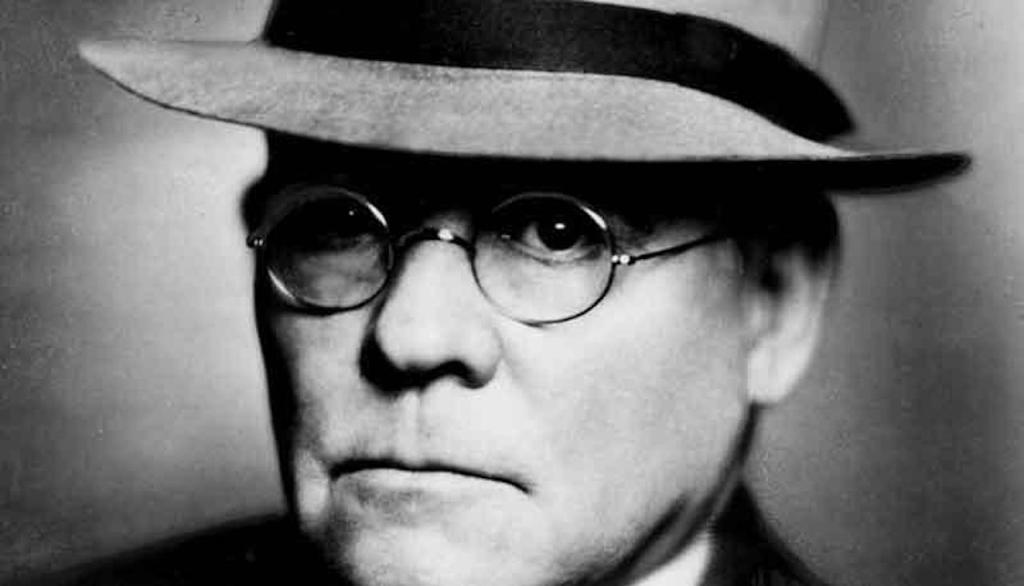
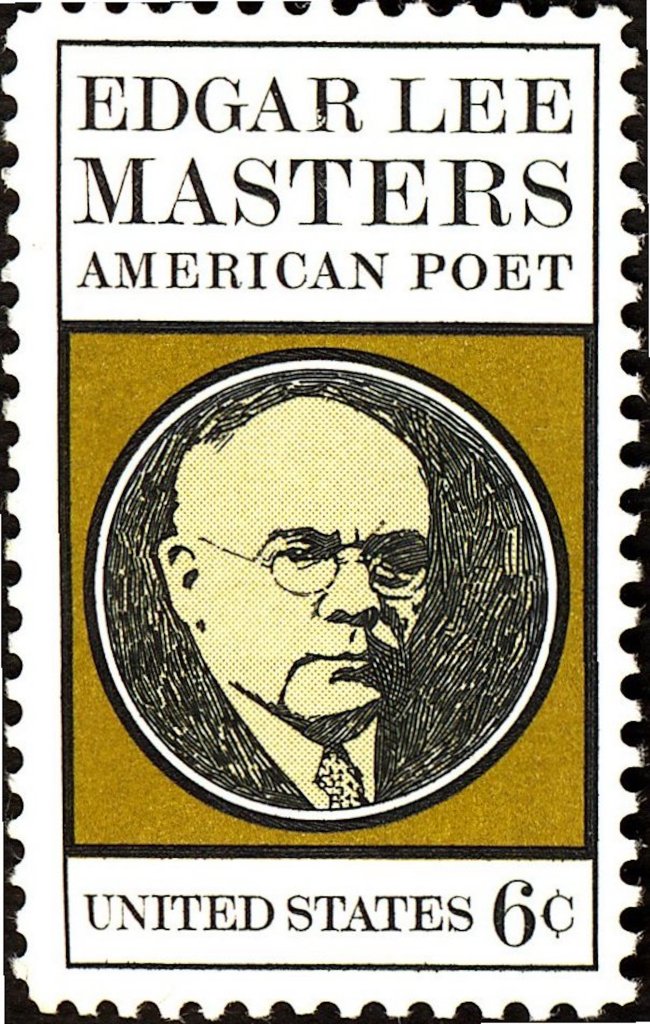
Edgar Lee Masters’ American classic, Spoon River Anthology, brought the poet into the literary world, and no other work from his extensive writings has garnered more attention, including his sequel to the original, The New Spoon River.
Early Life and Education
Edgar Lee Masters was born on August 23, 1868, to Hardin Wallace Masters and Emma Dexter Masters in Garnett, Kansas, where Hardin Masters had established a law firm [1]. After the failure of his law firm, Masters moved his family to his parents’ farm near Petersburg, IL. In 1880, the Masters family relocated to Lewistown, Illinois, where Edgar attended high school.
After high school, Edgar attended the Knox Academy preparatory program offered by Knox College, but he had to drop out because his family was unable to financially support his education. Despite his lack of a college education, Edgar studied law in his father’s law office and successfully passed the bar in 1891.
Law Career
After being admitted to the bar in 1891, Edgar worked in his father’s law firm and then in 1893 joined the firm of Kickham Scanlan. He later entered a partnership in the law office of Clarence Darrow, whose fame spread far and wide because of the Scopes Trial—The State of Tennessee v. John Thomas Scopes—also known jeeringly as the “Monkey Trial.” At the Darrow firm, Edgar’s worked mainly on cases involving the poor.
After his three-year stint in the Darrow firm, Edgar left and formed his own firm. His years with Darrow has been turbulent owing to arguments with Darrow, as well as Edgar’s own misbehavior of engaging in adulterous affairs, damaging the firm’s reputation.
Marriage
In 1898, Edgar married Helen Jenkins, and his marriage brought him nothing but heartache. In his memoir, Across Spoon River, his wife features prominently in his narrative, but he never reveals her name; he calls Helen the “Golden Aura,” and he is doing so in a derisive tone. Clearly he hated the woman and all she stood for.
Edgar and the “Golden Aura” produced three children but finally divorced in 1923. He had abandoned his marriage by 1920 as well as the practice of law, relocating to New York to concentrate on his writing. In 1926, he married Ellen Coyne and together they produced one child, Hardin.
Literary Career
Edgar Lee Masters wrote and published some 39 books in addition to his American classic, Spoon River Anthology, but nothing in his canon ever gained the wide-spread fame and acclaim that the 243 reports of people speaking from the beyond the grave brought him. Even the sequel to Spoon River Anthology, titled The New Spoon River [2], failed to garner success equal to the original.
Even though Spoon River Anthology was banned for a time in his hometown, it returned because of its popularity elsewhere and that fact that it contained some the best poetry even penned in America [3].
Masters was awarded the Poetry Society of America Award, the Academy Fellowship, the Shelley Memorial Award, and he was also the recipient of a grant from the American Academy of Arts and Letters.
Edgar Lee Masters had an unpleasant personality. His behavior often bordered on misanthropic in his displays of jealousy and hatred. He likely diminished his literary reputation through his unseemly, disingenuous portrayal of Abraham Lincoln in his 1931 biographical piece focusing on the sixteenth president, titled Lincoln: The Man.
Bethany Villaruz [4] has opined that the Lincoln diatribe was aimed more at Carl Sandburg than the former president:
Sandburg’s Lincoln books were “so popular that it was making people think of Sandburg rather than Masters when they spoke of the New Salem-Petersburg area.” Masters regarded Sandburg’s success as an encroachment on the literary landscape that he believed his own work had helped define.
Carl Sandburg was likely aware of Masters’ petty jealousy and wrote the following in his personal copy of Masters’ Lincoln biography: “long sustained Copperhead hymn of hate reversing the views of a Masters I knew well 10 and 15 years before he wrote these sickly venomous pages” (my emphasis added.)
Agreeing with Sandburg’s estimation, a New York Times reviewer opined that the book featured views that not even a Jefferson Davis would write, but instead sounded more in line with venom spewed by a Ku Klux Klan member.
Masters had been an admirer of Stephen Douglas and Douglas’ defeat by Lincoln was likely part of Masters’ motivation to trash Lincoln in his book for which he did little to no research. Regarding Masters’ motivation and the subsequent reception of the Lincoln biography, Matthew D. Norman [5] has explained,
Lincoln: The Man was a product of the Great Depression, written by a disillusioned champion of Stephen A. Douglas and Jeffersonian republicanism. Though Spoon River Anthology was both a critical and commercial success that established Masters’s reputation as a poet, nothing he wrote during the 1920s came close to matching his initial triumph. By early 1930, he and the country were in distress. Masters was far removed from his “spiritual home” of Menard County in the spring of 1930 when he wrote Lincoln: The Man in less than two months while residing at the Hotel Chelsea in New York City. Lincoln scholar Harry Pratt and Carl Sandburg both believed that Lincoln: The Man revealed much more about Masters’s own personal tribulations than it did about the life of Abraham Lincoln. Pratt concluded that Masters’s financial troubles and conflicts with wives, publishers, and Clarence Darrow caused him to build up so much bile that “It just boiled out on Lincoln by chance.”
Masters claimed he wanted to present only a true account of the man called Abraham Lincoln, but he completely misread the mood of the nation when he decided to trash Lincoln instead of reveal him. It is likely that Masters’ reputation took a greater hit than did Lincoln’s, even though those misanthropes who seize on any discourse to denigrate Republicans have put Masters’ nastiness to use.
Spoon River Anthology
Spoon River is a fictional town, which is a composite of Lewistown and Petersburg, IL, where Edgar grew up and where his grandparents lived respectively. Although the town of Spoon River was a fictional creation of Edgar’s imagination, there is an Illinois river named “Spoon River,” which is a tributary of the Illinois River in the west-central part of the state, running a 148-mile-long stretch between Peoria and Galesburg.
In 1914, Edgar had begun to publish his poems focusing on the rantings of disgruntled dead people interred in the Spoon River Cemetery, located atop a hill overlooking the fictional town of Spoon River. Edgar had seized on an ancient structural form to have these characters working out their dirty laundry as they speak from beyond the grave.
Nevertheless, he published under the pseudonym Webster Ford in Reedy’s Mirror, a literary magazine based in St. Louis. Likely fearing controversy that would clash with his profession as an attorney, he employed the nom de plume until after he left the legal profession.
In addition to the individual reports, or “epitaphs,” as Edgar called them, the Anthology sports three other long poems, offering summaries or other material relevant to the cemetery reporters or the atmosphere of the fictional town of Spoon River: #1 “The Hill,”#245 “The Spooniad,” and #246 “Epilogue.”
Harriet Monroe, editor of Poetry Magazine in Chicago, encouraged and assisted with the publication of Spoon River Anthology, and the collection became an instant success. After having been published in 1915, by 1961 the collection had gone through seventy editions. It has been made into an American play and an Italian opera, performed at La Scala. Spoon River Anthology has also been translated into eight languages.
Death
Five months before turning 82, Edgar Lee Masters died on March 5, 1950, in a nursing facility in Melrose Park, Pennsylvania. His body was transported back to Oakland Cemetery in Petersburg, Illinois, for burial. The following inscription appears on his grave marker:
Good friends, let’s to the fields . . . After a little walk and by your pardon, I think I’ll sleep, there is no sweeter thing. Nor fate more blessed than to sleep.
I am a dream out of a blessed sleep — Let’s walk, and hear the lark.
And on a stone nearby his grave, Masters’ epitaph, “Anne Rutledge,” which contains an ironic dig at Lincoln, the Mastersian nemesis, is carved:
Ann Rutledge
Out of me unworthy and unknown The vibrations of deathless music; “With malice toward none, with charity for all.” Out of me the forgiveness of millions toward millions, And the beneficent face of a nation Shining with justice and truth. I am Anne Rutledge who sleep beneath these weeds, Beloved in life of Abraham Lincoln, Wedded to him, not through union, But through separation. Bloom forever, O Republic, From the dust of my bosom!
Masters spent his lifetime producing a plethora of writings, including 19 books of poems, 12 plays, six novels, and seven biographies. His biographies, in addition to the Lincoln embarrassment, include those of Walt Whitman, Mark Twain, and Vachel Lindsay.
Edgar Lee Masters was the sad little man, but no one can diminish the success he achieved with his Spoon River Anthology, which has risen to the status of an American classic, despite its being filled with disgruntled individuals. He well understood the nature of those characters, being himself a disgruntled, agitated soul.
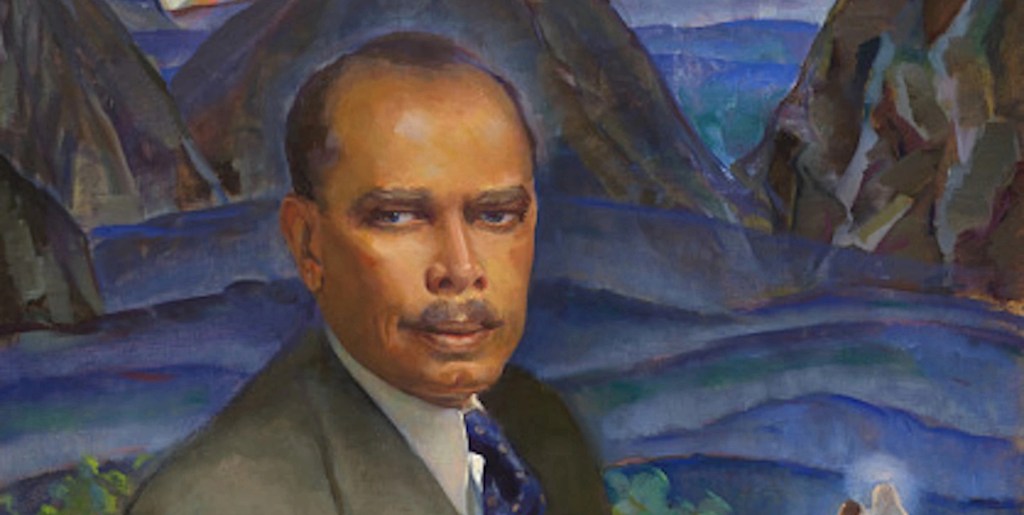
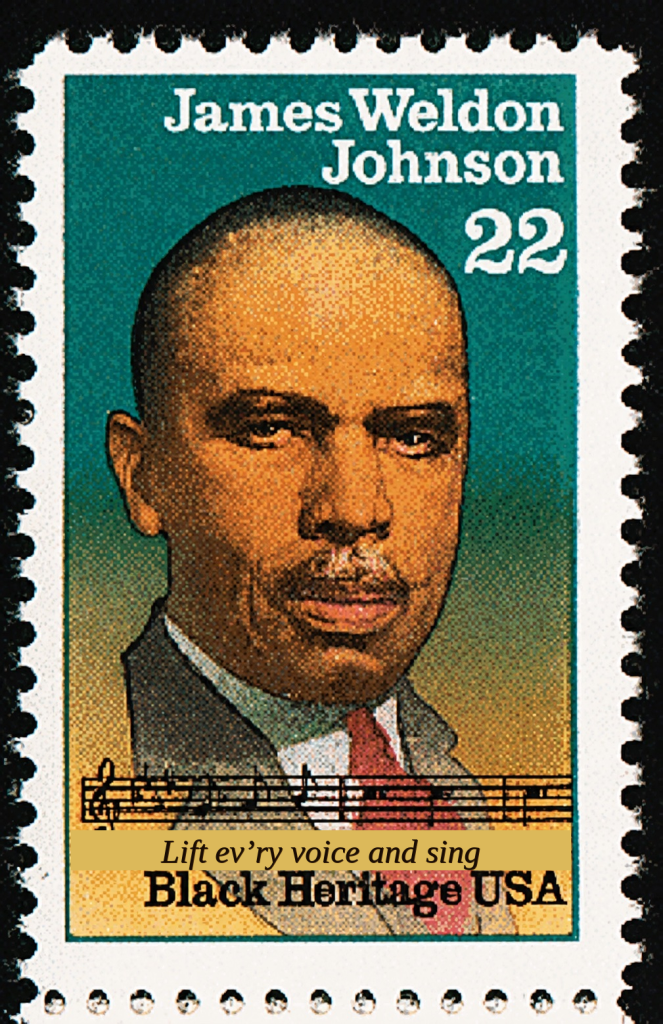
James Weldon Johnson’s “Lift Ev’ry Voice and Sing”
James Weldon Johnson penned the poem “Lift Ev’ry Voice and Sing” in 1900 to celebrate the birthday anniversary of the great emancipator, President Abraham Lincoln.
Introduction and Text of “Lift Ev’ry Voice and Sing”
After James Weldon Johnson wrote the poem “Lift Ev’ry Voice and Sing” in 1900 to celebrate the birthday anniversary of the great emancipator, President Abraham Lincoln, his brother John Rosamond Johnson composed the musical melody for the poem.
The song was later entered into the United States Congressional Record, and in 1919, the National Association for Advancement of Colored People (NAACP) selected the song to serve as the “Negro National Hymn (Anthem)”—also referred to as the “Black National Anthem.” The NAACP employed the song as a cry for unity during the civil rights struggles of the 1950s and 1960s.
The poem shares a common theme with the American National Anthem, “The Star Spangled Banner”; both works celebrate and offer gratitude to the Divine Belovèd (God) for the rewards of freedom and individual liberty.
Johnson’s poem is especially significant for the black experience, including liberation from slavery and the subsequent struggle against the Black Codes and Jim Crow laws that the Democratic Party continued to enforce to foster segregation and denigration of the former slaves and their descendants after the American Civil War (1861–1865).
Lift Ev’ry Voice and Sing
Lift every voice and sing, Till earth and heaven ring, Ring with the harmonies of Liberty; Let our rejoicing rise High as the list’ning skies, Let it resound loud as the rolling sea. Sing a song full of the faith that the dark past has taught us, Sing a song full of the hope that the present has brought us; Facing the rising sun of our new day begun, Let us march on till victory is won.
Stony the road we trod, Bitter the chast’ning rod, Felt in the days when hope unborn had died; Yet with a steady beat, Have not our weary feet Come to the place for which our fathers sighed? We have come over a way that with tears has been watered. We have come, treading our path through the blood of the slaughtered, Out from the gloomy past, Till now we stand at last Where the white gleam of our bright star is cast.
God of our weary years, God of our silent tears, Thou who hast brought us thus far on the way; Thou who hast by Thy might, Led us into the light, Keep us forever in the path, we pray. Lest our feet stray from the places, our God, where we met Thee, Lest our hearts, drunk with the wine of the world, we forget Thee; Shadowed beneath Thy hand, May we forever stand, True to our God, True to our native land.
Reading by Phylicia Rashad
Commentary on “Lift Ev’ry Voice and Sing”
James Weldon Johnson’s “Lift Ev’ry Voice and Sing,” also known as the Negro National Anthem and the Negro National Hymn, was sung publicly for the first time on February 2, 1900, by a choir of 500 children at the Stanton School in Jacksonville, Florida.
Johnson was serving as principal of the school at the time, and the occasion was a celebration of the birthday anniversary of President Abraham Lincoln.
First Stanza: Sing Joyfully, Loudly with Determination
Lift every voice and sing, Till earth and heaven ring, Ring with the harmonies of Liberty; Let our rejoicing rise High as the list’ning skies, Let it resound loud as the rolling sea. Sing a song full of the faith that the dark past has taught us, Sing a song full of the hope that the present has brought us; Facing the rising sun of our new day begun, Let us march on till victory is won.
The speaker begins by enjoining his listeners to sing joyfully and loudly in order to raise their voices to the Heavens. Such thankful voices should spread throughout the seascape and sky. The joy of singing about freedom can become infectious, as it uprights the minds and hearts of the downtrodden.
The singing must be filled with the joy and faith that these people have been taught in the past, even during times that were dark with many shames. But that singing must also ring out with the hope they must foster as they look to the present and future for better times.
The speaker/singer encourages his hearers/listeners to continue their struggle until they meet with victory over oppression. He insists that victory is not the final reward, but victory for freedom will demand constant vigilance, eternally watching and fighting to maintain that precious commodity.
The human race in all its various hues and shades has learned nothing, if not that there is never a guarantee of freedom without effort. Keeping that emphasis on constant effort must remain part of every generation’s thinking and behavior.
There are always groups afoot, conspiring to take the freedom and property of others. Lest defeat be snatched from the jaws of victory, each human being must remain watchful to protect their hard-won freedoms.
As the third American president, Thomas Jefferson, averred in his 1787 letter to the son-in-law of John Adams, William Stephens Smith:
. . . what country can preserve it’s liberties if their rulers are not warned from time to time that their people preserve the spirit of resistance? Let them take arms. . . . The tree of liberty must be refreshed from time to time with the blood of patriots and tyrants.
While celebrating the joy of great accomplishments, it is often prudent to acknowledge that there is no such thing as heaven on earth. Perfection must be left for heaven, while life on earth will always entail certain risks and require vigilance.
Second Stanza: Remaining Undeterred by Tears and Death
Stony the road we trod, Bitter the chast’ning rod, Felt in the days when hope unborn had died; Yet with a steady beat, Have not our weary feet Come to the place for which our fathers sighed? We have come over a way that with tears has been watered. We have come, treading our path through the blood of the slaughtered, Out from the gloomy past, Till now we stand at last Where the white gleam of our bright star is cast.
The speaker reminds his listeners of the difficulties they have faced. The road has been “stony”—not impossible to travel but not at all easy. And he does not anticipate the travel will become any easier, especially without the proper attitudes and behavior.
Their struggles made having hope a weary task, but through unwavering courage and much hard work, they know they have gained certain goals and have the ability to hold on to them; thus, they must celebrate and be thankful for all the strides forward that they have achieved.
They have continued their march, undeterred by tears and even death. They have traveled on despite the blood shed, the gloom, and the often dashed hopes and dreams.
They now can see that they stand in the much desired light of both hope and faith. That faith gleams like a “bright star” and casts light on all those who strive for it.
They can finally visualize and realize that their struggles have resulted from faith, hope, and have resulted in a certain measure of success in the achievement of freedom.
Third Stanza: Prayer, Devotion, and Gratitude
God of our weary years, God of our silent tears, Thou who hast brought us thus far on the way; Thou who hast by Thy might, Led us into the light, Keep us forever in the path, we pray. Lest our feet stray from the places, our God, where we met Thee, Lest our hearts, drunk with the wine of the world, we forget Thee; Shadowed beneath Thy hand, May we forever stand, True to our God, True to our native land.
In the third and final movement, the speaker offers a prayer of gratitude to the Divine Reality (God). The speaker/singer recognizes that the Creator (God as Father) has always guided them as they have been met with struggles for freedom. They have come through all the “weary years with silent tears.”
The speaker/singer acknowledges that with the love and guidance of the Divine Reality (God), they have been led into the light, and he fervently prays that they will continue down the bright path of righteousness that leads to and maintains individual liberty.
The speaker asks of his Divine Creator that he have the ability to keep his feet from straying away from His mercy and guidance. He knows that only his deep faith can continue to guide and guard him through the vicissitudes of life’s trials and tribulations.
He also petitions the Divine Guide to assist them all and not allow them to descend into drunkenness with worldly affairs that would divert their attention away from the Only Reality.
With this concluding, holy image—”Shadowed beneath [God’s] hand”—the speaker places his life, his trust, and his faith in the only Hand that matters. This celebration in song offers a historical glimpse into the enduring qualities that always mattered most in achieving improvements in the human condition.
As all hymns turn hearts and minds Godward, this important song remains a necessary part of American history, uplifting the spiritual stature of all who experience the performance of its sentiment.
James Weldon Johnson’s poem, “Fifty Years,” recalls the struggle for civil rights in America that began with President Abraham Lincoln proclaiming the end of slavery with the Emancipation Proclamation.
Introduction and Text of “Fifty Years”
James Weldon Johnson begins his commemorative poem, “Fifty Years,” with the epigraph, “(1863–1913) On the Fiftieth Anniversary of the Signing of the Emancipation Proclamation.“
The speaker is paying homage to the many abolitionists who helped end slavery. And while many citizens still held the view that their black brothers and sisters should remain second class citizens, the speaker offers the rationale for the blessings of equality and respect among all citizens.
This speaker possesses a cosmic view of historical procedure, and he shares his awareness with his compatriots of all shades of skin color that God is always in control, and freedom must ring for those who seek it and work to maintain it—a view that remains as operative today as it did back in the early twentieth century.
Fifty Years
“(1863–1913) On the Fiftieth Anniversary of the Signing of the Emancipation Proclamation.“
O brothers mine, to-day we stand Where half a century sweeps our ken, Since God, through Lincoln’s ready hand, Struck off our bonds and made us men.
Just fifty years—a winter’s day— As runs the history of a race; Yet, as we look back o’er the way, How distant seems our starting place!
Look farther back! Three centuries! To where a naked, shivering score, Snatched from their haunts across the seas, Stood, wild-eyed, on Virginia’s shore.
This land is ours by right of birth, This land is ours by right of toil; We helped to turn its virgin earth, Our sweat is in its fruitful soil.
Where once the tangled forest stood,— Where flourished once rank weed and thorn,— Behold the path-traced, peaceful wood, The cotton white, the yellow corn.
To gain these fruits that have been earned, To hold these fields that have been won, Our arms have strained, our backs have burned, Bent bare beneath a ruthless sun.
That Banner which is now the type Of victory on field and flood— Remember, its first crimson stripe Was dyed by Attuckss’ willing blood.
And never yet has come the cry— When that fair flag has been assailed— For men to do, for men to die, That we have faltered or have failed.
We’ve helped to bear it, rent and torn, Through many a hot-breath’d battle breeze Held in our hands, it has been borne And planted far across the seas.
And never yet,—O haughty Land, Let us, at least, for this be praised— Has one black, treason-guided hand Ever against that flag been raised.
Then should we speak but servile words, Or shall we hang our heads in shame? Stand back of new-come foreign hordes, And fear our heritage to claim?
No! stand erect and without fear, And for our foes let this suffice— We’ve bought a rightful sonship here, And we have more than paid the price.
And yet, my brothers, well I know The tethered feet, the pinioned wings, The spirit bowed beneath the blow, The heart grown faint from wounds and stings;
The staggering force of brutish might, That strikes and leaves us stunned and dazed; The long, vain waiting through the night To hear some voice for justice raised.
Full well I know the hour when hope Sinks dead, and ’round us everywhere Hangs stifling darkness, and we grope With hands uplifted in despair.
Courage! Look out, beyond, and see The far horizon’s beckoning span! Faith in your God-known destiny! We are a part of some great plan.
Because the tongues of Garrison And Phillips now are cold in death, Think you their work can be undone? Or quenched the fires lit by their breath?
Think you that John Brown’s spirit stops? That Lovejoy was but idly slain? Or do you think those precious drops From Lincoln’s heart were shed in vain?
That for which millions prayed and sighed, That for which tens of thousands fought, For which so many freely died, God cannot let it come to naught.
Commentary on “Fifty Years”
This speaker of this poem is offering a tribute to the struggle for civil rights in America that began with President Abraham Lincoln proclaiming the end of slavery with the Emancipation Proclamation, as he cites several of the most noted abolitionists.
Stanza 1 – Stanza 3: Celebrating 50 Years Since the Emancipation Proclamation
James Weldon Johnson’s narrator of “Fifty Years” is celebrating the fiftieth anniversary of President Abraham Lincoln’s affixing his signature to the Emancipation Proclamation [1], beginning the long process of ending slavery in the United States. The speaker addresses the sufferers of slavery as well as his own contemporaries, “brothers,” many who are the descendants of slaves.
Johnson’s speaker is dramatizing the signing the Emancipation Proclamation, implying that President Lincoln had erased the vicious practice of slavery and raised the status of the slaves to manhood—a status they had been denied.
The speaker looks back in time as he compares those “fifty years” to a “winter’s day.” Historically, fifty years is, indeed, short, but this half century has been like a very cold season of winter for this Africans and their descendants.
Johnson then takes the reader/listener even farther back in time with the disconcerting image of the slave standing, “naked, shivering,” who were “[s]natched from their haunts across the seas,” and who “[s]tood, wild-eyed, on Virginia’s shore.”
Stanza 4 – Stanza 6: Proudly Claiming a Heritage
Proudly and rightly, the speaker decrees, “this land is ours by right of birth”; he and his ancestors have developed the fallow earth with their “sweat,” which has resulted in “fruitful soil.”
Instead of merely,”tangled forest,” now, through their labor there are “peaceful wood,” cotton, and corn fields yielding valuable products for the American people. The speaker claims that to turn this nature-wild land into a domesticated home, “[o]ur arms have strained, our backs have burned, / Bent bare beneath a ruthless sun.”
Stanza 7 – Stanza 9: Dramatizing Patriotism
The speaker dramatizes the patriotism of his fellows who have died fighting for America even before it recognized them as equal patriots and full citizens. His allusion to Crispus Attucks [2], the first patriot to die in the American Revolutionary War, offers a stark reminder: “Remember, its first crimson stripe / Was dyed by Attucks’ willing blood.”
The speaker highlights the fact that Attucks died willingly for his country, not forced because he was a slave. He stresses that this race of American patriots has always stepped forward to defend America, even in foreign wars.
Stanza 10 – Stanza 12: They Have Already Secured Their Rights
The speaker is adamant in reporting to a land still roiled in racism (Johnson was writing this 1913) that at no time has “one black, treason-guided hand / Ever against that flag been raised.”
Because of the genuine qualities that his African American brothers and sisters have demonstrated since the founding of America, the speaker maintains that they do not deserve to “hang [their] heads in shame” or “speak but servile word,” or be timid in claiming their heritage as true, patriotic Americans.
Therefore, the speaker demands that his contemporaries, “stand erect and without fear.” They have procured the right to their “sonship here,” and they have tendered more than should be required of anyone.
The speaker never makes light of the black experience in America; he knows very well the physical and mental humiliation that his fellow patriots have suffered—as well as the broken spirit. He is aware of the deep levels of discouragement such treatment causes. He understands that there are always times that all one can rely on is prayer.
However, this speaker also understands that such oppression cannot endure. He, therefore, commands his listeners to become fearless and to look forward to the future and retain “[f]aith in your God-known destiny! / We are a part of some great plan.”
The speaker then alludes to William Lloyd Garrison [3] and Wendell Phillips [4], two strong abolitionists. He inquires, rhetorically, if his fellows believe that the “fire lit by their breath” could be snuffed out.
He further asks if his brothers can imagine that the spirit of John Brown [5] and Elijah Lovejoy [6] has become lifeless and departed. He wants them to consider the death of Abraham Lincoln [7] —did the great emancipator die “in vain”?
The speaker delivers an affirmation that all of those great abolitionists and the great emancipator did not resist only to die in vain.
He insists, “millions have prayed” for and “tens of thousands have fought” for and “many freely died,” so that dark-skinned people could know the equality they deserved. And of most importance, he treasures and maintains an abiding faith that, “God cannot let it come to naught.”
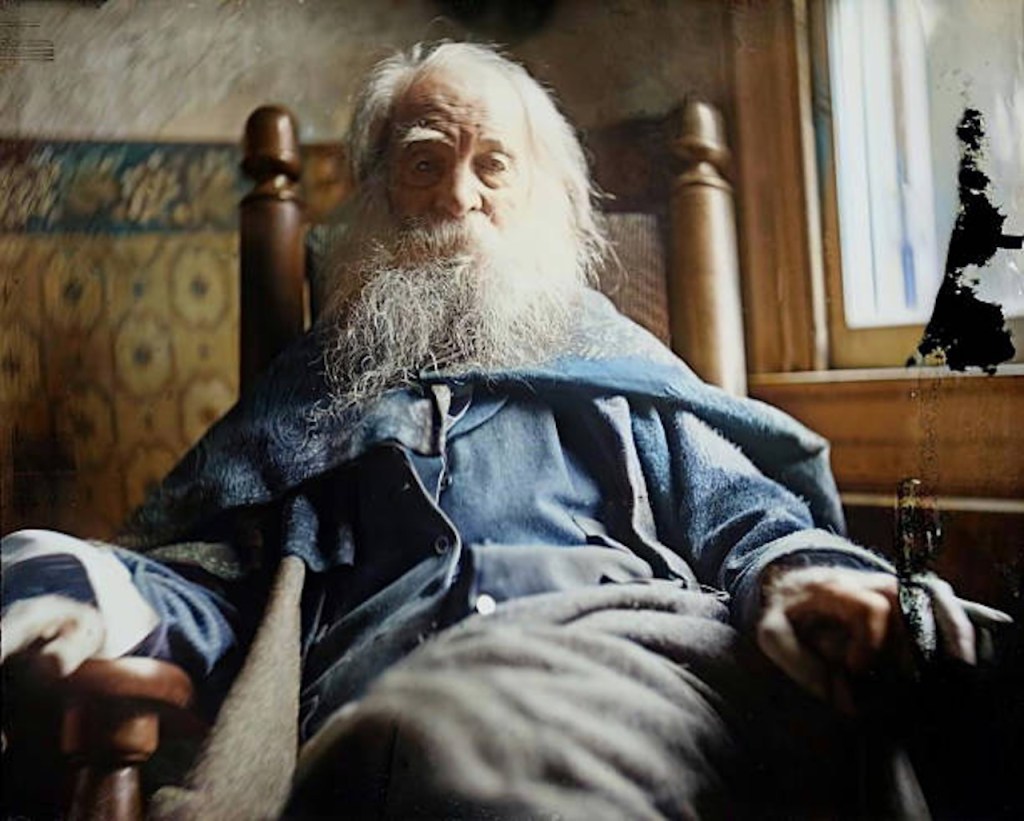
Walt Whitman in Camden, N.J., c. 1891. (Colorised black and white print). Creator: Thomas Eakins. (Photo by Heritage Art/Heritage Images via Getty Images)
Walt Whitman’s “When Lilacs Last in the Dooryard Bloom’d”
Walt Whitman’s admiration for President Lincoln is dramatized in the poet’s elegy “When Lilacs Last in the Dooryard Bloom’d,” mourning the death while celebrating the presidency of the sixteenth president, Abraham Lincoln.
Introduction and Text of “When Lilacs Last in the Dooryard Bloom’d”
In Walt Whitman’s “When Lilacs Last in the Dooryard Bloom’d,” the speaker laments the death of President Lincoln, but he does much more than merely offer his own sad and melancholy state of mind. This speaker creates a sacred myth through which he not only offers a tribute to the fallen president but also creates a symbolic triad that will henceforth bring readers’ and listeners’ attention to the momentous event.
The speaker also composes a “Death Carol,” in which rests the irony of elevating death from the lamentation it usually brings for a celebrated friend whom all suffering humanity can afford the fealty of welcome.
It might be observed that poet Walt Whitman sectioned his elegy into 16 parts, symbolizing the fact that Abraham Lincoln, the heroic subject of the poem, had served as the sixteenth president of the United States.
When Lilacs Last in the Dooryard Bloom’d
1
When lilacs last in the dooryard bloom’d, And the great star early droop’d in the western sky in the night, I mourn’d, and yet shall mourn with ever-returning spring.
Ever-returning spring, trinity sure to me you bring, Lilac blooming perennial and drooping star in the west, And thought of him I love.
2
O powerful western fallen star! O shades of night—O moody, tearful night! O great star disappear’d—O the black murk that hides the star! O cruel hands that hold me powerless—O helpless soul of me! O harsh surrounding cloud that will not free my soul.
3 In the dooryard fronting an old farm-house near the white-wash’d palings, Stands the lilac-bush tall-growing with heart-shaped leaves of rich green, With many a pointed blossom rising delicate, with the perfume strong I love, With every leaf a miracle—and from this bush in the dooryard, With delicate-color’d blossoms and heart-shaped leaves of rich green, A sprig with its flower I break.
4
In the swamp in secluded recesses, A shy and hidden bird is warbling a song.
Solitary the thrush, The hermit withdrawn to himself, avoiding the settlements, Sings by himself a song.
Song of the bleeding throat, Death’s outlet song of life, (for well dear brother I know, If thou wast not granted to sing thou would’st surely die.)
5
Over the breast of the spring, the land, amid cities, Amid lanes and through old woods, where lately the violets peep’d from the ground, spotting the gray debris, Amid the grass in the fields each side of the lanes, passing the endless grass, Passing the yellow-spear’d wheat, every grain from its shroud in the dark-brown fields uprisen, Passing the apple-tree blows of white and pink in the orchards, Carrying a corpse to where it shall rest in the grave, Night and day journeys a coffin
6
Coffin that passes through lanes and streets, Through day and night with the great cloud darkening the land, With the pomp of the inloop’d flags with the cities draped in black, With the show of the States themselves as of crape-veil’d women standing, With processions long and winding and the flambeaus of the night, With the countless torches lit, with the silent sea of faces and the unbared heads, With the waiting depot, the arriving coffin, and the sombre faces, With dirges through the night, with the thousand voices rising strong and solemn, With all the mournful voices of the dirges pour’d around the coffin, The dim-lit churches and the shuddering organs—where amid these you journey, With the tolling tolling bells’ perpetual clang, Here, coffin that slowly passes, I give you my sprig of lilac.
7
(Nor for you, for one alone, Blossoms and branches green to coffins all I bring, For fresh as the morning, thus would I chant a song for you O sane and sacred death.
All over bouquets of roses, O death, I cover you over with roses and early lilies, But mostly and now the lilac that blooms the first, Copious I break, I break the sprigs from the bushes, With loaded arms I come, pouring for you, For you and the coffins all of you O death.)
8
O western orb sailing the heaven, Now I know what you must have meant as a month since I walk’d, As I walk’d in silence the transparent shadowy night, As I saw you had something to tell as you bent to me night after night, As you droop’d from the sky low down as if to my side, (while the other stars all look’d on,) As we wander’d together the solemn night, (for something I know not what kept me from sleep,) As the night advanced, and I saw on the rim of the west how full you were of woe, As I stood on the rising ground in the breeze in the cool transparent night, As I watch’d where you pass’d and was lost in the netherward black of the night, As my soul in its trouble dissatisfied sank, as where you sad orb, Concluded, dropt in the night, and was gone.
9
Sing on there in the swamp, O singer bashful and tender, I hear your notes, I hear your call, I hear, I come presently, I understand you, But a moment I linger, for the lustrous star has detain’d me, The star my departing comrade holds and detains me.
10
O how shall I warble myself for the dead one there I loved? And how shall I deck my song for the large sweet soul that has gone? And what shall my perfume be for the grave of him I love?
Sea-winds blown from east and west, Blown from the Eastern sea and blown from the Western sea, till there on the prairies meeting, These and with these and the breath of my chant, I’ll perfume the grave of him I love.
11
O what shall I hang on the chamber walls? And what shall the pictures be that I hang on the walls, To adorn the burial-house of him I love?
Pictures of growing spring and farms and homes, With the Fourth-month eve at sundown, and the gray smoke lucid and bright, With floods of the yellow gold of the gorgeous, indolent, sinking sun, burning, expanding the air, With the fresh sweet herbage under foot, and the pale green leaves of the trees prolific, In the distance the flowing glaze, the breast of the river, with a wind-dapple here and there, With ranging hills on the banks, with many a line against the sky, and shadows, And the city at hand with dwellings so dense, and stacks of chimneys, And all the scenes of life and the workshops, and the workmen homeward returning.
12
Lo, body and soul—this land, My own Manhattan with spires, and the sparkling and hurrying tides, and the ships, The varied and ample land, the South and the North in the light, Ohio’s shores and flashing Missouri, And ever the far-spreading prairies cover’d with grass and corn.
Lo, the most excellent sun so calm and haughty, The violet and purple morn with just-felt breezes, The gentle soft-born measureless light, The miracle spreading bathing all, the fulfill’d noon, The coming eve delicious, the welcome night and the stars, Over my cities shining all, enveloping man and land.
13
Sing on, sing on you gray-brown bird, Sing from the swamps, the recesses, pour your chant from the bushes, Limitless out of the dusk, out of the cedars and pines.
Sing on dearest brother, warble your reedy song, Loud human song, with voice of uttermost woe.
O liquid and free and tender! O wild and loose to my soul—O wondrous singer! You only I hear—yet the star holds me, (but will soon depart,) Yet the lilac with mastering odor holds me.
14
Now while I sat in the day and look’d forth, In the close of the day with its light and the fields of spring, and the farmers preparing their crops, In the large unconscious scenery of my land with its lakes and forests, In the heavenly aerial beauty, (after the perturb’d winds and the storms,) Under the arching heavens of the afternoon swift passing, and the voices of children and women, The many-moving sea-tides, and I saw the ships how they sail’d, And the summer approaching with richness, and the fields all busy with labor, And the infinite separate houses, how they all went on, each with its meals and minutia of daily usages, And the streets how their throbbings throbb’d, and the cities pent—lo, then and there, Falling upon them all and among them all, enveloping me with the rest, Appear’d the cloud, appear’d the long black trail, And I knew death, its thought, and the sacred knowledge of death.
Then with the knowledge of death as walking one side of me, And the thought of death close-walking the other side of me, And I in the middle as with companions, and as holding the hands of companions, I fled forth to the hiding receiving night that talks not, Down to the shores of the water, the path by the swamp in the dimness, To the solemn shadowy cedars and ghostly pines so still.
And the singer so shy to the rest receiv’d me, The gray-brown bird I know receiv’d us comrades three, And he sang the carol of death, and a verse for him I love.
From deep secluded recesses, From the fragrant cedars and the ghostly pines so still, Came the carol of the bird.
And the charm of the carol rapt me, As I held as if by their hands my comrades in the night, And the voice of my spirit tallied the song of the bird.
Death Carol
Come lovely and soothing death, Undulate round the world, serenely arriving, arriving, In the day, in the night, to all, to each, Sooner or later delicate death.
Prais’d be the fathomless universe, For life and joy, and for objects and knowledge curious, And for love, sweet love—but praise! praise! praise! For the sure-enwinding arms of cool-enfolding death.
Dark mother always gliding near with soft feet, Have none chanted for thee a chant of fullest welcome? Then I chant it for thee, I glorify thee above all, I bring thee a song that when thou must indeed come, come unfalteringly.
Approach strong deliveress, When it is so, when thou hast taken them I joyously sing the dead, Lost in the loving floating ocean of thee, Laved in the flood of thy bliss O death.
From me to thee glad serenades, Dances for thee I propose saluting thee, adornments and feastings for thee, And the sights of the open landscape and the high-spread sky are fitting, And life and the fields, and the huge and thoughtful night.
The night in silence under many a star, The ocean shore and the husky whispering wave whose voice I know, And the soul turning to thee O vast and well-veil’d death, And the body gratefully nestling close to thee.
Over the tree-tops I float thee a song, Over the rising and sinking waves, over the myriad fields and the prairies wide, Over the dense-pack’d cities all and the teeming wharves and ways, I float this carol with joy, with joy to thee O death.
15
To the tally of my soul, Loud and strong kept up the gray-brown bird, With pure deliberate notes spreading filling the night.
Loud in the pines and cedars dim, Clear in the freshness moist and the swamp-perfume, And I with my comrades there in the night.
While my sight that was bound in my eyes unclosed, As to long panoramas of visions.
And I saw askant the armies, I saw as in noiseless dreams hundreds of battle-flags, Borne through the smoke of the battles and pierc’d with missiles I saw them, And carried hither and yon through the smoke, and torn and bloody, And at last but a few shreds left on the staffs, (and all in silence,) And the staffs all splinter’d and broken.
I saw battle-corpses, myriads of them, And the white skeletons of young men, I saw them, I saw the debris and debris of all the slain soldiers of the war, But I saw they were not as was thought, They themselves were fully at rest, they suffer’d not, The living remain’d and suffer’d, the mother suffer’d, And the wife and the child and the musing comrade suffer’d, And the armies that remain’d suffer’d.
16
Passing the visions, passing the night Passing, unloosing the hold of my comrades’ hands, Passing the song of the hermit bird and the tallying song of my soul, Victorious song, death’s outlet song, yet varying ever-altering song, As low and wailing, yet clear the notes, rising and falling, flooding the night, Sadly sinking and fainting, as warning and warning, and yet again bursting with joy, Covering the earth and filling the spread of the heaven, As that powerful psalm in the night I heard from recesses, Passing, I leave thee lilac with heart-shaped leaves, I leave thee there in the door-yard, blooming, returning with spring.
I cease from my song for thee, From my gaze on thee in the west, fronting the west, communing with thee, O comrade lustrous with silver face in the night.
Yet each to keep and all, retrievements out of the night, The song, the wondrous chant of the gray-brown bird, And the tallying chant, the echo arous’d in my soul, With the lustrous and drooping star with the countenance full of woe, With the holders holding my hand nearing the call of the bird, Comrades mine and I in the midst, and their memory ever to keep, for the dead I loved so well, For the sweetest, wisest soul of all my days and lands—and this for his dear sake, Lilac and star and bird twined with the chant of my soul, There in the fragrant pines and the cedars dusk and dim.
Commentary on “When Lilacs Last in the Dooryard Bloom’d”
Walt Whitman was deeply affected by the assassination of President Lincoln on April 14, 1865. The poet’s admiration is dramatized in his elegy as it emphasizes three symbols: a lilac, a star, and a bird.
First Movement 1-6: Springtime when Lilacs Bloom
The speaker begins by setting the time frame in spring when lilacs bloom. He is in mourning and suggests that Americans will continue to mourn this time of year, when three events continue to come together: the lilacs bloom, the star Venus appears, and the speaker’s thoughts of the president he venerated return.
The lilacs and the star of Venus immediately become symbolic of the speaker’s feelings and the momentous event that has engendered them. In the second section of the first movement, the speaker offers a set of keening laments prefaced by “O”:
O powerful western fallen star! O shades of night—O moody, tearful night! O great star disappear’d—O the black murk that hides the star! O cruel hands that hold me powerless—O helpless soul of me! O harsh surrounding cloud that will not free my soul.
Each keen grows more intense as it progresses to the final, ” O hard surrounding cloud that will not free my soul.” He picks a sprig of lilac whose leaves are heart-shaped. This act indicates that the lilac will henceforth become symbolic for the speaker; the lilac will symbolize the love the speaker bears for the fallen president.
The speaker then introduces the singing hermit thrush whose song will elevate the bird to symbolic significance for the speaker, as well as the lilacs and star. In the final two sections of the first movement, the speaker describes the landscape through which President Lincoln’s casketed body moved to its final resting place in Illinois.
Second Movement 7: The Symbolic Offering
The second movement consists of a parenthetical offering of flowers to the casketed corpse of the president but also suggests that the speaker would overlay the coffins of all the war dead with roses and lilies, “But mostly and now the lilac that blooms the first.”
Again, the suggestion that the lilac will remain a symbol because it is the first flower to bloom every spring. While showering the coffins of the fallen, the speaker says he will “chant a song for you O sane and sacred death.”
Third Movement 8-9: The Star of Venus
The speaker now confronts the “western orb” that star of Venus that he had observed a month earlier. He imagines that the symbolic star had been speaking to him of the tragic events to come.
The star seemed to drop to the speaker’s side as the other stars watched. The speaker felt a sadness as the star “drops in the night, and was gone.” Now that the month has passed, the speaker feels that he was being forewarned by the symbolic star.
The speaker says that the “star of my departing comrade hold and detains me,” as he addresses the “singer bashful and tender,” that is, the hermit thrush who sings his solitary song from the covering of leaves.
Fourth Movement 10-13: A Personal Shrine to a Slain President
The speaker now muses on how he will be able to “warble . . . for the dead one there I loved.” He continues to lament but knows he must compose a “song for the large sweet soul that has gone.”
The speaker then considers what he will “hang on the chamber walls,” indicating he will erect a personal shrine to the slain president. He offers a number of items that he feels must decorate that shrine, as he catalogues them; for example, “Pictures of growing spring and farms and homes.”
The famous Whitman catalogue finds its way into several movements of this elegy. As it is the president of the country who has died, the speaker places scenes from the country in his elegy:
Lo, body and soul—this land, My own Manhattan with spires, and the sparkling and hurrying tides, and the ships,The varied and ample land, the South and the North in the light, Ohio’s shores and flashing Missouri, And ever the far-spreading prairies cover’d with grass and corn.
The speaker then commands the bird to sing as he prepares to offer a “Death Carol” in the next movement.
Fifth Movement 14: A Hymn to Death
The speaker creates a moving tribute to the president by replacing the sorrow of death with the dignity and necessity of death. Death becomes a friend who gives respite to the weary body—a fact often referenced by the “Father of Yoga in the West” Paramahansa Yogananda.
The speaker prefaces his “Death Carol” with a scene of himself walking between two friends: “knowledge of death” walked on one side of the speaker, and the “thought of death” occupied the other.
The “Death Carol” virtually lovingly addresses death, inviting it to “come lovely and soothing death.” He welcomes death to “undulate round the world.” He has almost fully accepted that death comes “in the day, in the night, to all, to each, / Sooner or later.” The speaker’s lament has transformed death from a dreaded event to a sacred, sweet one to which he will float a song full of joy.
Sixth Movement 15-16: Entwining the Images and Symbols
The speaker credits the bird with the composition of the “Death Carol.” This crediting indicates that the speaker had become so closely in tune with the warbling bird that he cognizes a hymn from the singing.
The speaker then catalogues scenes that he had actually witnessed as he traveled the battlefields of the war during which time he had nursed the wounded and dying. He saw “battle-corpses, myriads of them.”
But he finally realizes something vital to the awareness of the reality of death: “. . . I saw they were not as was thought, / They themselves were fully at rest, they suffer’d not.” The speaker realized that it is the living who suffer the death of the deceased and not the deceased, who remained, “fully at rest.”
The speaker’s parting words offer his summation of the entwined images that now have become and will retain their symbolic significance for the speaker: “For the sweetest, wisest soul of all my days and lands—and this for his dear sake, / Lilac and star and bird twined with the chant of my soul.”
Debunking the Big Lie That Democrats and Republicans Switched Sides on Race
Republican failure to refute Democrats’ “big lie” that their parties switched sides on race has allowed that falsehood to spread. Republicans need to refute the Democrats’ lie to reclaim for their Party its history in fighting slavery and racism. The GOP has always been the party of Civil Rights.
The Big Lie and American Politics
The phrase “the big lie” [1] was popularized by Adolf Hitler [2] and his propaganda minister, Joseph Goebbels. The primary purpose of the big lie technique as employed by Hitler and the Nazis was to turn German citizens against the Jews.
The technique worked so well that the Holocaust, resulting in the deaths of upward of eleven million people, including at least six million Jews, became a stain on humanity and a historical reference point.
Unfortunately, American politics has never become immune to the diseased concept of the big lie.
Numerous fabrications have flourished and influenced in heinous ways the relationship between various identities groups that make up the United States of America.
Debunking a Pernicious Myth
One of the biggest of the big lies in American politics is that the two major political parties, Democratic and Republican, switched sides on the issue of race. In Dan O’Donnell’s “The Myth of the Republican-Democrat ‘Switch’,” the writer offers a useful introduction to the issue:
When faced with the sobering reality that Democrats supported slavery, started the Civil War when the abolitionist Republican Party won the Presidency, established the Ku Klux Klan to brutalize newly freed slaves and keep them from voting, opposed the Civil Rights Movement, modern-day liberals reflexively perpetuate the rather pernicious myth—that the racist southern Democrats of the 1950s and 1960s became Republicans, leading to the so-called “switch” of the parties. This is as ridiculous as it is easily debunked. [3]
Because the Republican Party was founded to abolish slavery and has always been the party of Civil Rights—including the struggle for women’s suffrage—in the U.S.A, the Democratic Party seized the issue, turning racism into a Republican problem by claiming that the parties switched sides of race.
The big lie of the parties switching sides on race, however, is not the only falsehood that litters the political landscape. Various factions have filled historical reportage with inaccurate claims that persist; for example, a 2015 Washington Post headline blares, “We used to count black Americans as 3/5 of a person” [4].
Political ideologues and agenda-driven academics often claim that in establishing the Constitution, the Founding Fathers thought that blacks were only three/fifths human because of the three-fifths compromise; however, the “Three/Fifths Compromise” focused on representation to congress not on the humanity of each person.
Even Condoleezza Rice [5], an educated, accomplished former secretary of state, fell for this lie: “In the original U.S. Constitution, I was only three-fifths of a person.” Such a misstatement by a sophisticated and knowledgeable person just shows how widespread and deep some errors have been carved into the culture.
Then there is the false assertion that “Nazis” are right wing. The term “Nazi” is short for National Socialist German Worker Party, translation from the German, “Nationalsozialistische Deutsche Arbeiterpartei.”
The political right has never endorsed “socialism.” Along with “fascism,” the term by definition includes statism or government control of the lives of citizens—the antithesis of the political right’s stance.
Confronting an Inconvenient Past
When confronted with the inconvenient history of their party regarding the issue of race, the American Democratic Party members and its sycophants insist that the Republican and Democratic Parties simply switched positions on race, after the Republicans had ushered in the Civil Rights Act of 1964. This ludicrous claim can easily be laid to rest with a few pertinent facts.
On January 1, 1863, Republican President Abraham Lincoln signed the Emancipation Proclamation, which stated “that all persons held as slaves are, and henceforward shall be free.”
The country had already been suffering two years of a bloody Civi War to end slavery. Democrats had been lobbying for and passing legislation such as the Jim Crow laws and Black Codes for over a century—all designed to keep the black population from enjoying the fruits of citizenship.
President Lyndon Johnson, a Democrat, signed the Civil Right Act of 1964 in to law; however, Johnson himself had labored tirelessly against earlier civil rights legislation.
By signing that bill, Johnson merely demonstrated that he had come to understand that the way for Democrats to acquire and maintain power in future was to pacify and humor blacks, instead of denigrating them and segregating them from whites as the Democrats had always done in the past.
Allegedly, Johnson had quipped, “I’ll have those ni**ers voting Democrat for the next 200 years.” That infamous statement clearly reveals where Johnson’s loyalties lay: with acquiring power for the Democratic Party and not for recognizing African Americans as citizens. Endeavoring to deconstruct Johnson’s racist position, David Emery at snopes.com labels the claim regarding Johnson’s remark “unproven” [6].
But then as he continues his biased analysis, Emery reveals other suggestions that make it clear that Johnson’s beliefs rendered him the consummate racist. For example, Emery offers the report, in which according to Doris Kearns Godwin, Johnson quipped,
These Negroes, they’re getting pretty uppity these days and that’s a problem for us since they’ve got something now they never had before, the political pull to back up their uppityness. Now we’ve got to do something about this, we’ve got to give them a little something, just enough to quiet them down, not enough to make a difference. (my emphasis)
After continued biased bloviating, David Emery admits, “Circling back to the quote with which we started, it wouldn’t have been entirely out of character for LBJ to have said something like, ‘I’ll have those ni**ers voting Democratic (sic) for 200 years’”; however, Emery doubts it, of course.
House and Senate Vote Tally for the Civil Rights Act 1964
The following is a breakdown of the voting tally in the House and Senate [7] for the Civil Rights Act of 1964 of members voting for the bill:
Democrats: House 153 out of 253 = approx. 60% Republicans: House 136 out of 178 = approx. 80% Democrats: Senate 46 out of 67 = 69% Republicans: Senate 27 out of 33 = 82%
While about 80% of the Republicans in the House of Representatives voted for the Civil Rights Act of 1964, only about 60% of the Democrats voted aye. Also while in the Senate, 82% percent of Republicans voted for the bill, only 69% of Democrats did.
Attempting to Rehabilitate by Geography
In order to try to rehabilitate the Democrats’ negative voting record on civil rights, Democrat apologists point out that when one accounts for geographical positioning [8] of the members of the house and senate, the voting tallies this way:
Southern Democrats: 1–20 (5%–95%) (Ralph Yarborough of Texas voted yea) Southern Republicans: 0–1 (0%–100%) (John Tower of Texas voted nay)
Northern Democrats: 45–1 (98%–2%) (Robert Byrd of West Virginia voted nay) Northern Republicans: 27–5 (84%–16%)
This set of votes shows that no southern senate Republicans voted for the act, but there was only one southern Republican in the senate at the time. And also no house Republican voted for the act, but again there were only ten southern Republicans in the house.
This low number of Republicans in the house and senate when converted to percentages skews the reality of the fact that the overall vote, which is the vote that counts, clearly outs the Democrats as opposers of the act. And the Democrats’ main reason for voting against the act was based on race, especially in the south.
However, all of the Republican senators, both north and south, who voted against the act, did so because they favored Senator Barry Goldwater’s position, who remained against the act, not because of racial animus but because of his belief that it was unconstitutional in usurping states’ rights, especially in the area of private business.
The Republican Party was founded, primarily in order to abolish slavery. Yet over a century later, modern-day Democrats such as former house member, Charlie Rangel, continue to spread the big lie that the Republican and Democratic parties simply “changed sides” in the 1960s on civil rights issues.
That excuse is widely exercised by Democrats when confronted with their own undeniably racist past [9]. However, the facts do not support but rather reveal that claim as a big lie.
Three Misrepresented Issues
The persistent inaccuracy that the two parties switched sides is partially based on three significant issues that have been misrepresented by Democrats and their sycophants in the mainstream media:
1.Barry Goldwater’s position regarding the Civil Right Act of 1964. Goldwater [10] did oppose that bill in its final form because he argued that it was unconstitutional, in that it usurped state and individual rights. Goldwater had helped found Arizona’s National Association for the Advancement of Colored People (NAACP), and he had voted for earlier versions of civil rights legislation.
Thus, Goldwater’s opposition was not similar to the Democrats’ opposition based on racism; Goldwater’s opposition was based on his interpretation of the Constitution.
2.The Southern Strategy. With this strategy [11], the Republican Party was attempting to demonstrate to southern Democrats that by continuing to vote for racist/socialist Democrats they were voting against their own economic interests.
What gave Democrats the opening to use this strategy against Republicans was that the Republicans utilized racist political bigots, who were, in fact, Democrats themselves, to help win votes for Republicans.
This strategy prompted the GOP opponents to misrepresent the Republican’s purpose and thus label it primarily racist, when it was, in fact, based on economic growth, not racism.
3. The American South turning to Red from Blue. This claim falls apart with the fact that the “Deep South”—Alabama, Mississippi, Georgia, South Carolina, and Louisiana—took 30 years to begin changing from Democrat to Republican.
It was only in the peripheral South—Florida, Texas, Tennessee, Virginia, North Carolina, and Arkansas—that many working-class transplants, relocating from the northern states as well as from other parts of the United States, understood that the Republican Party offered policies that promoted business, commerce, and entrepreneurial success.
Those transplants, after all, had relocated south to improve their financial status through their new jobs. Gerard Alexander explains in his review:
The myth that links the GOP with racism leads us to expect that the GOP should have advanced first and most strongly where and when the politics of white solidarity were most intense.
The GOP should have entrenched itself first among Deep South whites and only later in the Periphery. The GOP should have appealed at least as much, if not more, therefore, to the less educated, working-class whites who were not its natural voters elsewhere in the country but who were George Wallace’s base.[12]
If the myth of the switched sides were accurate, the Republican Party would have taken hold more strongly first among the traditional racists—that is, the older voters would have become Republicans before the younger ones and the transplants. But that did not happen, because the Republican Party attracted those who were “upwardly mobile” and “non-union.”
After the passage of the Civil Rights Act of 1964, racism in the country’s history had begun to wane as a social and political force. But the Democratic Party continued to foment unrest between the races in order to employ racism as an issue against their opponents in the Republican Party. That tactic is still in place.
After the election of 2020, under the Democratic administration of Joe Biden, the racial unrest began to escalate further with the ideas touted by proponents of Critical Race Theory [13] and the insistence that white supremacy [14] remains the country’s greatest threat.
Poverty Producing Policies
The main reason that the Democratic Party concocted the idea that the parties simply switched positions was to gain power. Reverend Wayne Perryman explains:
Many believed the Democrats had a change of heart and fell in love with blacks. To the contrary, history reveals the Democrats didn’t fall in love with black folks, they fell in love with the black vote knowing this would be their ticket into the White House.[15]
Economist Thomas Sowell [16] has also shed light on the subject: “some of the most devastating policies, in terms of their actual effects on black people, have come from liberal Democrats.”
Sowell emphasizes that the “minimum wage laws” everywhere they have been established have a “track record of increasing unemployment, especially among the young, the less skilled and minorities.”
According to historian Sam Jacobs [17], the 1960s Great Society and War on Poverty, the programs established by the Johnson administration, brought about conditions, which furthered the rise of poverty among black families.
By discouraging marriage, these policies have resulted in out-of-wedlock birthrates that have skyrocketed, “among all demographic groups in the U.S., but most notably African Americans.”
The U.S. out-of-wedlock birthrate in the 1960s hovered around 3% for whites and close to 8% for all Americans; that rate was around 25% for blacks. But, by the mid 1970s, those rates had increased to 10% for whites, 25% for all Americans, and over 50% for blacks.
Then by late 1980s, the birth-rate of unmarried black women had become greater than for married black women. In 2013, the out-of-wedlock birth rate for blacks had climbed to almost 75%.
The Census Bureau [18] maintains that poverty is closely associated with out-of-wedlock births. By instituting a system that keeps blacks at a disadvantage, the Democrats have a captive audience to which they pander for votes.
The Democratic Party stations itself as the protector of blacks and other minorities, not with policies that assist those demographics but with policies that keep them dependent on government.
Unfair Race Policies Unsystematized
Despite the revisionist history and unsupportable claims of the CRT and white supremacy advocates, there is no argument that can refute the fact that racism as an issue of public policy has been unsystematized since the passage of the civil rights acts of the 1960s. No more Jim Crow laws or Black Codes anywhere call for racial discrimination as they had done before the passage of those civil right laws.
Before the passage of those acts, not only did racist laws exist, they were enforced by legal authorities as well as the Ku Klux Klan, which, according the North Carolina historian Allen W. Trelease [19] in his book, White Terror: The Ku Klux Klan Conspiracy and Southern Reconstruction, “The Klan became in effect a terrorist arm of the Democratic Party.”
And Eric Foner [20], Columbia University historian, in his study, A Short History of Reconstruction, 1863–1877, has averred that the KKK was “a military force serving the interests of the Democratic Party.”
Still, statist historians such as Carole Emberton, an associate professor of history at the University at Buffalo, continue to employ the “party lines of the 1860s/1870s are not the party lines of today” [21] bromide attempting to separate the Democratic Party’s engagement from the Ku Klux Klan.
Yet in the same breath, Emberton admits, “that various ‘Klans’ that sprung up around the South acted as a ‘strong arm’ for many local Democratic politicians during Reconstruction.”
Democrats continue to employ the often debunked claim that racism is still a “systemic” problem. They offer this prevarication so they can insist that only the Democratic Party is willing to fight against that “systemic” blight on society.
But again and again, the Democratic Party’s policies have been used, as Lyndon Johnson used them, to placate blacks by making them think they are getting something that no political party even has the power to give: financial security and equality with guaranteed outcomes.
Political parties, when in power, can help the voting public only by instituting policies that encourage financial success and individual freedom. They cannot guarantee that success. They cannot legislate individual success through identity politics.
Strategy to Gain Power
The Democratic Party and its allies continue to employ the big lie that the two parties exchanged positions on race, in an attempt to gain power and to rehabilitate the party’s racist past.
Party members and its minions continue to tie most issues to race because that tactic seems to have worked for gaining power. But when voters look at the basic facts, that claim begins to lose its strength.
For example, citing the voter ID issue as a racist Republican strategy simply bolsters the evidence that Republicans are, in fact, not racist. A majority [22] of black citizens and voters are in favor of the voter ID laws.
However, the Democrats continue to rail against voter ID laws because they know that those laws would impede voter fraud—a demonstrably proven staple in the machine [23] to elect Democrats to government.
Democrats have been attempting to whitewash their racist past for decades; to do so, they often fabricate history. For example, as a candidate for the presidency in 2000, Al Gore falsely stated [24] to the NAACP that his father, Al Gore, Sr., had lost his senate seat because he voted for the Civil Rights Act of 1964.
But Gore, Sr., voted against that act [25], as he supported and joined in the filibuster against that act. Gore, Sr. then sponsored an amendment [26] that would take the teeth out of the enforcement power of that bill, just in case it passed.
Did Dixiecrats Become Republicans?
Democrats also point to the rise of the Dixiecrats that supposedly shows racist Democrats becoming Republicans. However, only two major politicians who had been Dixiecrats switched to the Republican Party.
Fewer than 1% [27] of the more than 1500 Democrats-turned-Dixiecrats left the Democratic Party for the Republican Party. They were prompted to switch party allegiance primarily for economic reasons rather than racial animus.
As the Democratic Party began moving toward socialism, many former Democrats experienced disdain for that socialist impact on business and entrepreneurship.
Senator Strom Thurmond traded in his party alliance with the Democrats to join the Republicans in 1964—not because he continued to support racism, but because he began repudiating it.
Frances Rice [28] explains: “Thurmond was never in the Ku Klux Klan and, after he became a Republican, Thurmond defended blacks against lynching and the discriminatory poll taxes imposed on blacks by Democrats.”
Governor Mills E. Godwin, Jr. of Virginia [29] abandoned the Democrats for the Republican Party in 1974. But again, like Thurmond, Godwin simply abandoned his racist past. Godwin also served as Virginia governor first while a Democrat and then as a Republican.
Hypocrisy about Racist Past
West Virginia’s Robert Byrd, a former Ku Klux Klan Exalted Cyclops and long serving Democratic senator, did renounce his earlier support for segregation and racism. However, Byrd voted against confirmation to the Supreme Court of Justice Thurgood Marshall [30], a Democrat and the first black to be appointed to the high Court.
Byrd also joined 47 of his fellow Democratic senators as he voted against Justice Clarence Thomas [31], a Republican. Neither a black Democrat nor a black Republican could pass muster with the former Klansman.
Senator Christopher Dodd [32] praised Byrd highly by stating that Byrd would have been “a great senator for any moment.” To this potentially inflammatory remark, the Democrats remained silent.
Then later after Senator Trent Lott spoke kind words of Senator Strom Thurmond, the Democrats with their usual hypocrisy lambasted Lott unmercifully. It made no difference that Thurmond had never served as a member of the Ku Klux Klan while Byrd had risen to the high position of Exalted Cyclops.
Regarding Democrat hypocrisy, John Feehery [33] has remarked: “. . . Democrats are super-sizing their hypocrisy to levels never seen. It is their embrace of nihilism that is pushing them to these extremes.”
Policies Harmful to All Citizens
Undoubtedly, the majority of the members of the Democratic Party are not racists today. Yet, it remains unconscionable that so many Democrats label Republicans racists and bigots in pursuit of political power against their opponents.
Democrats cannot legitimately deny the many studies that offer support to the argument proffered by Republicans that Democratic policies are detrimental not only to black citizens but to all citizens.
The current theoretical philosophy of Democratic Party consists of seizing through taxation the financial rewards from “the rich” and giving those rewards to “the poor.” In practice, this Robin Hood scam ultimately means taking from those who earn and redistributing it to friends and allies of the redistributors. Such a system cannot possibly succeed. It can only create victims whose ability to produce becomes atrophied by the false promises of pandering politicians.
Democrats continue to play the race card because they have become utter failures at convincing the majority of the electorate that their policies work. Citizens have become dissatisfied with the actual theft of their earnings, as they have watched as shabby, crime filled cities are, in fact, the result of Democrat policy fecklessness and fraud.
Rose and Milton Friedman Senior Fellow at the Hoover Institution Thomas Sowell has pointed out repeatedly that the policies of Democrats have prevented the black population from rising out of poverty.
Many of the poorest cities in the USA have been run by Democrats for decades. According to Investor’s Business Daily,
When Democrats are in control, cities tend to go soft on crime, reward cronies with public funds, establish hostile business environments, heavily tax the most productive citizens and set up fat pensions for their union friends. Simply put, theirs is a Blue State blueprint for disaster. [34]
Surely, it is time that African Americans, women, and minorities adopt a different mind-set and realize, as Rev. Perryman avers, that the Democratic Party is interested only in their vote, not in their welfare. And, in fact, there seems to be a shift coming in the voting preferences of blacks and Hispanics.
According to Darvio Morrow [35], CEO of the FCB radio network, Democrats for decades have relied on the theory that as the USA grows less white, its voters will become more firmly entrenched as a Democratic Party voting block.
However, Morrow explains, “The problem with this theory is that it relied on the premise that minorities were going to remain solid Democrats. And that premise is turning out to be false.”
American politics is a complex machine, and the force of big lies remains strong. Whether the republic can remain in tact will depend on refuting those lies and in their place establishing a culture of truth, in which facts dominate and falsehoods are rejected.
Despite their fervent support for the Marxist movement touting “Black Lives Matter,” today’s Democrats, including the former occupier of the Oval Office, Joe Biden, [36] continue to support the abortion provider known as Planned Parenthood.
Planned Parenthood is one of the greatest perpetrators of violence against African Americans in this country. It is founded on racism, perpetuates racism, and kills more than 850 African Americans every day. [37]
While blacks constitute roughly 13% of the USA population, they account for 36% of the abortions. Nearly 80% of all Planned Parenthood clinics are located near black neighborhoods [38]. Activists such as Candace Owens [39] and Kanye West [40] have labeled this set of circumstances genocide.
According to the educational website, blackgenocide.org, blacks are the only declining minority population in the USA, and “if the current trend continues, by 2038 the black vote will be insignificant.” Because abortion accounts for most deaths of black lives in the USA [41], those pandering for black votes might want to give that claim some serious thought.
Sources
[1] “Big Lie.” Merriam-Webster Dictionary.com. Accessed May 17, 2023.
 Linda's Literary Home