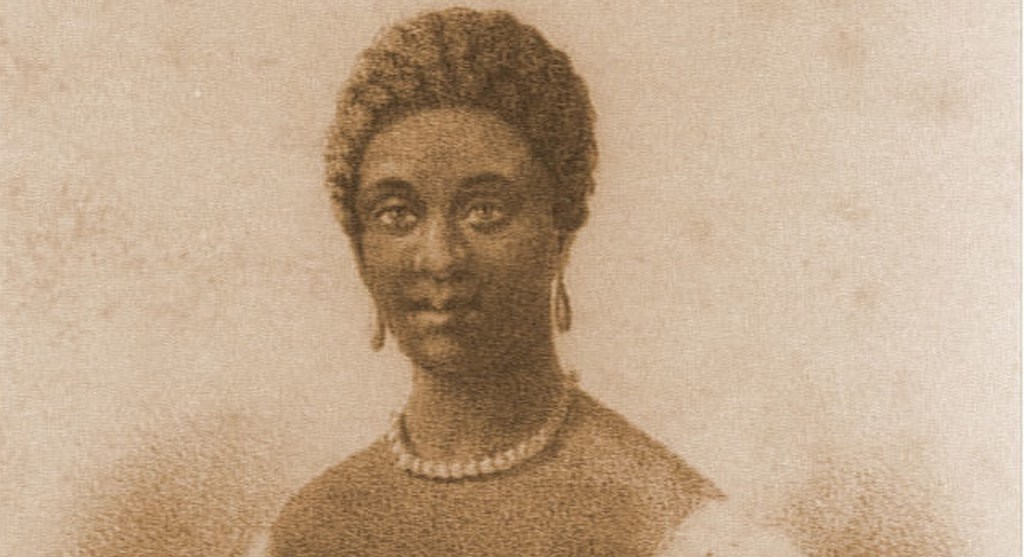
Phillis Wheatley was influenced by Greek and Roman classical literature, as well as by early 18th century British poets, who were also influenced by that same literature.
Introduction and Text of “An Hymn to the Morning”
Phillis Wheatley’s talent was recognized by George Washington, who became a fan of the poet. Wheatley’s verse has earned her the status of a first class American poet, whose style resembles the great British poets, who were also influenced by the classical literature of the early Greeks and Romans.
Phillis Wheatley’s poem “An Hymn to the Morning” consists of ten riming couplets, separated into two quatrains (first and fourth stanzas) and two sestets (second and third stanzas).
An Hymn to the Morning
Attend my lays, ye ever honour’d nine, Assist my labours, and my strains refine; In smoothest numbers pour the notes along, For bright Aurora now demands my song.
Aurora hail, and all the thousand dies, Which deck thy progress through the vaulted skies: The morn awakes, and wide extends her rays, On ev’ry leaf the gentle zephyr plays; Harmonious lays the feather’d race resume, Dart the bright eye, and shake the painted plume.
Ye shady groves, your verdant gloom display To shield your poet from the burning day: Calliope awake the sacred lyre, While thy fair sisters fan the pleasing fire: The bow’rs, the gales, the variegated skies In all their pleasures in my bosom rise.
See in the east th’ illustrious king of day! His rising radiance drives the shades away— But Oh! I feel his fervid beams too strong, And scarce begun, concludes th’ abortive song.
Commentary “An Hymn to the Morning”
Phillis Wheatley was influenced by Greek and Roman classical literature, as well as by early 18th century British poets, who were also influenced by that same literature.
First Quatrain: Invocation to the Muses
Attend my lays, ye ever honour’d nine, Assist my labours, and my strains refine; In smoothest numbers pour the notes along, For bright Aurora now demands my song.
As the early 18th century poets such as Alexander Pope did, the speaker of Wheatley’s poem addresses the nine muses, asking them to guide her hand, heart, and mind as she composes her song.
The nine muses are the goddesses who guide and guard the various arts and sciences: Cleo (heroes), Urania (astronomy), Calliope (music), Melpomene (tragedy), Euterpe (lyric poetry), Erato (love), Terpsichore (dance), Thalia (comedy), and Polyhymnia (sacred hymns).
Then the speaker says that dawn, “Aurora” or goddess of dawn, is motivating her to write her song dedicated to the goddess of morning, and the speaker wants the song to flow smoothly like a gentle brook, so she asks the muses to “pour the notes along.” The speaker want to be sure her song is worthy of being dedicated to the important morning deity.
First Sestet: Honoring Dawn’s Arrival
Aurora hail, and all the thousand dies, Which deck thy progress through the vaulted skies: The morn awakes, and wide extends her rays, On ev’ry leaf the gentle zephyr plays; Harmonious lays the feather’d race resume, Dart the bright eye, and shake the painted plume.
As morning approaches, the stars recede from view, and the speaker asks the muses to help her honor dawn’s victory of arrival. The speaker describes the morning’s sun with its far-reaching rays of light. She observes that the light is falling on every leaf, and a gentle breeze is playing upon them.
The humble speaker pays homage to the songs of the birds as she describes their singing as “harmonious,” and she notes that as the birds are looking around, their eyes are darting about, and they are shaking their feathers as they wake up.
Second Sestet: Playful Foregrounding
Ye shady groves, your verdant gloom display To shield your poet from the burning day: Calliope awake the sacred lyre, While thy fair sisters fan the pleasing fire: The bow’rs, the gales, the variegated skies In all their pleasures in my bosom rise.
The speaker bids the trees to “shield your poet from the burning day.” She is over-emphasizing a bit, calling the shade of the trees, “verdant gloom.” The playful comparison moves in service of foregrounding the sun’s brightness as well as the colorful morning’s sun rise.
She addresses Calliope, the muse of music, to play upon the lyre, while her sisters, the other muses, “fan the pleasing fire.” Fanning fire makes it burn brighter, and she is celebrating the rising sun that becomes warmer and brighter as it becomes more visible. The little drama is pleasing the poet as she composes.
Second Quatrain: Light into the Darkness
See in the east th’ illustrious king of day! His rising radiance drives the shades away— But Oh! I feel his fervid beams too strong, And scarce begun, concludes th’ abortive song.
The speaker thinks of leafy alcoves, and gentle breezes, and the sky with its many colors of purple, pink, orange stretching across the vast panorama of blue, and these things give her much pleasure. Then she suddenly exclaims, “look! the sun!,” to whom she refers as the “king of day.”
As the sun rises, all darkness has gradually faded away. The radiance of the sun inspires the speaker so immensely, but then she feels something of a let down: “But Oh! I feel his fervid beams too strong, / And scarce begun, concludes th’ abortive song.” As soon as the sun has fully arrived, then the morning is gone, and her song was celebrating morning, and thus the song must end.
A no-achievement president confounds the ability of a poet, who tries to celebrate the outgoing leader but can find no achievements to celebrate.
Introduction with Text of Ben Okri’s “Obama”
On Thursday, January 19, 2017, one day before the inauguration of Donald Trump as the 45th president of the United States of America, the U.S.A. edition of The Guardian published Ben Okri’s poem [1] simply titled “Obama,” about which the publication claimed, “With Donald Trump about to enter the White House, a poet celebrates the achievements of the outgoing president.”
One will peruse Okri’s poem in vain looking of any achievements that might be associated with President #44. One will also peruse this poem in vain looking for any “celebration.” The poem offers four musings of a philosophical nature, each handled in each of the four movements that structure the piece:
“Sometimes the world is not changed / Till the right person appears who can / Change it.”
“For it is our thoughts that make / Our world.”
“Being a black president is not a magic wand / That will make all black problems disappear.”
“And so what Obama did and did not do is neither / Here nor there, in the great measure of things.”
Each musing remains a vague utterance, especially in relationship to its avowed subject. The promise of celebrating achievements becomes a dumbfounded leitmotiv that like the Obama presidency fails to deliver anything substantial.
Toward the end of the piece, the speaker even seems to have become aware that he had not, in fact, offered anything concrete regarding the achievements of this president. Thus, he rehashes an old lie that people wanted this president to fail so they could support their racism.
For any opposition to a black president has to be racist!
The opposition cannot be opposing a black president because they do not agree with his policies; that opposition must be the result of the “race-hate, twin deity of America,” despite the blaring fact that that race-hateful America elected this black man to their highest office twice.
Okri usually provides level-headed, balanced thinking on most issues, even the race issue. He knows the difference between achievement and lack thereof; thus, in this poem, he has his speaker spouting philosophical stances and then only implying that they apply to Barack Obama.
Okri, the thinking man, knows that Barack Obama is the epitome of an “empty-suit.” Obama can lay no claim to achievements accept negative ones. This poem might even be considered one of those that “damn with faint praise” [2].
Obama
Sometimes the world is not changed Till the right person appears who can Change it. But the right person is also In a way the right time. For the time And the person have to work The secret alchemy together. But to change the world is more than Changing its laws. Sometimes it is just Being a new possibility, a portal Through which new fire can enter This world of foolishness and error. They change the world best who Change the way people think.
For it is our thoughts that make Our world. Some think it is our deeds; But deeds are the children of thought. The thought-changers are the game-changers, Are the life-changers. We think that achievements are symbols. But symbols are not symbols. Obama is not a mere symbol. Sometimes even a symbol is a sign That we are not dreaming potently Enough. A sign that the world is the home Of possibility. A sign that our chains Are unreal. That we are freer than we Know, that we are more powerful than We dare to think. If he is a symbol at all, Then he is a symbol of our possible liberation. A symbol also that power in this world Cannot do everything. Even Moses could Not set his people free. They too had to Wander in the wilderness. They too turned Against their leaders and their God And had to overcome much in their Make up and their history to arrive At the vision their prophets had long before.
Being a black president is not a magic wand That will make all black problems disappear. Leaders cannot undo all the evils that Structural evils make natural in the life Of a people. Not just leadership, but Structures must change. Structures of thought Structures of dreams structures of injustice Structures that keep a people imprisoned To the stones and the dust and the ash And the dirt and the dry earth and the dead Roads. Always we look to our leaders To change what we ourselves must change With the force of our voices and the force Of our souls and the strength of our dreams And the clarity of our visions and the strong Work of our hands. Too often we get fixated On symbols. We think fame ought to promote Our cause, that presidents ought to change our Destinies, that more black faces on television Would somehow make life easier and more just For our people. But symbols ought to only be A sign to us that the power is in our hands. Mandela ought to be a sign to us that we cannot Be kept down, that we are self-liberating. And Obama ought to be a sign to us that There is no destiny in colour. There is only Destiny in our will and our dreams and the storms Our “noes” can unleash and the wonder our “yesses” Can create. But we have to do the work ourselves To change the structures so that we can be free. Freedom is not colour; freedom is thought; it is an Attitude, a power of spirit, a constant self-definition.
And so what Obama did and did not do is neither Here nor there, in the great measure of things. History knows what he did, against the odds. History knows what he could not do. Not that His hands were tied, but that those who resent The liberation of one who ought not to be liberated Blocked those doors and those roads and whipped Up those sleeping and not so sleeping demons Of race-hate, twin deity of America. And they turned His yes into a no just so they could say they told us so, Told us that colour makes ineffectuality, that colour Makes destiny. They wanted him to fail so they could Prove their case. Can’t you see it? But that’s what Heroes do: they come through in spite of all that blockage, All those obstacles thrown in the path of the self-liberated. That way the symbol would be tainted and would fail To be a beacon and a sign that it is possible To be black and to be great.
CommentaryonBen Okri’s “Obama”
Ben Okri is a fine poet and thinker. His unfortunate choice of subject matter for this piece, however, leads his speaker down a rocky path to nowhere.
First Movement: “Change”? But Where is the “Hope”?
The speaker of Okri’s “Obama” has a mighty task before him: he must transform a sow’s ear into a silk purse. And of course, that cannot be done. But the speaker tries, beginning with some wide brush strokes that attempt to sound profound: only the right person appearing at the right time can change with world.
Changing laws is not sufficient to change the world, so sometimes it is only a “new possibility” which functions like a new door “through with a new fire can enter.”
The speaker is, of course, implying that his subject, Obama, is that “portal” through which a new fire has entered. Readers will note that the speaker is only implying such; he does not make any direct statement about Obama actually being that new door or new fire.
The election of 2016, after eight years of this implied new fire that has supposedly changed the way people think, proved that American citizens were indeed thinking differently.
They had grown tired of stagnant economic growth, the destruction of their health care system, the rampant lawlessness of illegal immigrants, the war on law enforcement officers fueled by that “hope and change” spouting candidate, the ironically deteriorated race relations, and the installation of a petty dictatorship fueled by political correctness.
This beckon of hope and change had promised to fundamentally change [3] the United States of America, and his policies indeed had put the country on a path to an authoritarian state from which the Founders had guarded the country through the U. S. Constitution. Obama proceeded to flout that document as he ruled by executive order, circumventing the congress.
Indeed, after those abominable, disastrous eight years, people’s minds had changed, and they wanted no more of those socialistic policies that were driving the country to the status of a Banana Republic.
The speaker, of course, will never refer to any of the negative accomplishments of his subject, but also he will never refer to any positive accomplishment because there simply are none. Thus, no achievement is mentioned in the opening movement.
Five days away:
Second Movement: Symbols, Signs, Still No Achievements
The speaker then continues with the mere philosophizing, offering some useful ideas that have nothing to do with his subject. He asserts the importance of thought, how thought is the mother of deeds. He then begins an equivocating series of lines that indeed fit quite well with the shallow, misdirection of the subject about which he tries to offer a celebration.
The speaker makes a bizarre, false claim, “We think that achievements are symbols.” We do not think any such thing; we think that achievements are important, useful accomplishments.
A presidential achievement represents some act which the leader has encouraged that results in better lives for citizens.
Americans had high hopes [4] that the very least this black president could achieve would be the continued improvement of race relations. Those hopes were dashed as this president from his bully pulpit denigrated whole segments of society—the religious, the patriotic, and especially the members of law enforcement [5].
Obama damaged the reputation of the entire nation as he traveled on foreign soil, apologizing for American behavior [6] that had actually assisted those nations in their times of distress.
The speaker then ludicrously states, “symbols are not symbols,” which he follows with “Obama is not a mere symbol.”
In a kind of syllogistic attempt to define a symbol, the speaker admits the truth that Obama actually had no achievements. If achievements are symbols, and Obama is not a “mere” symbol, then we hold the notion that Obama does not equal achievements, except for whatever the word “mere” might add to the equation.
But the speaker then turns from symbols to signs. Signs can show us whether we are dreaming correctly or not. Signs can show us that we are more free than we know. But if Obama is any kind of symbol, he symbolizes “our possible liberation.”
But he is also a symbol that “power in this world / Cannot do everything.” He then turns to Moses’ inability to liberate his people.
The sheer inappropriateness of likening the lead-from-behind, atheistic Obama to the great historical, religious figure Moses boggles the mind. The speaker then makes an astoundingly arrogant inference that Americans turning against Obama equates to Moses’ people turning against him “and their God.”
Americans turning against leader Obama means they will have to “wander in the wilderness” until they at last come to their senses and return to the “vision of their prophets.”
The speaker again has offered only musings about symbols, signs, power, lack of power, dreams, and misdirection, but he offers nothing that Obama has done that could be called an achievement.
Third Movement: Color Is not Destiny
This movement offers a marvelous summation of truths, which essentially places all leaders in their proper places. Leaders can serve only as symbols or signs to remind citizens that only the people themselves have the power to change the structures of society that limit individuals.
Black presidents possess no “magic wand” with which to make all “black problems disappear.” Even Nelson Mandela should serve only as a sign that we are all “self-liberating.”
The speaker rightly laments that we tend to look to our leaders to perform for us the very acts that we must perform for ourselves. Our leaders cannot guarantee our inner freedom, only we can do that.
He asserts that Obama must remain only a sign that there is “no destiny in colour.” Our destiny is in our own will and in our own dreams.
The speaker correctly asserts, “Freedom is not colour; freedom is thought; it is an / Attitude, a power of spirit, a constant self-definition.”
Sadly, Obama has never demonstrated that he understands the position taken in Okri’s third movement. Obama is so steeped in political correctness and radical collectivism that he always denigrates the stereotypical white privileged over the stereotypical groups of race, gender, nationality, and religion.
Obama’s warped, highly partisan stance would never accept the statements about freedom as described by Okri. Obama believes that only the state can grant freedom to the proper constituencies as it punishes others. Okri’s analysis runs counter to the Obama worldview [7].
Thus, again, in its third movement, this poem that claims to be a celebration of the presidential achievements of the 44th president offers only philosophical musings, and although some of those musings state an accurate position, there still remains no positive achievement that can attach to Obama.
Fourth Movement: Obama, Neither Here nor There
With complete accuracy once again, Okri’s speaker states baldly, “And so what Obama did and did not do is neither / Here nor there, in the great measure of things.” Certainly, one who looks for positive achievements will find the blandness of this statement on the mark. The speaker then adds that history will record what Obama did and also what he was unable to do.
Then the narrative goes totally off the rails. American racists, those “racists” who had elected this black president twice, threw up road blocks that limited this president’s accomplishments.
They wanted him to fail because being black he had no right to succeed. The speaker implies that those American racists thought that this black president did not deserve liberation, meaning they thought he should be a slave—a ludicrous, utterly false claim.
The speaker then concludes with a weak implication that Obama is a hero, who demonstrated that it is possible to be “black and to be great”:
They wanted him to fail so they could Prove their case. Can’t you see it? But that’s what Heroes do: they come through in spite of all that blockage, All those obstacles thrown in the path of the self-liberated. That way the symbol would be tainted and would fail To be a beacon and a sign that it is possible To be black and to be great.
The problem with this part of the narrative again is, on the one hand, that it is only an implication, not a positive statement making the claim that Obama was, in fact, a hero; on the other hand, it is obvious why the speaker would only imply these positive qualities to Obama: the man is not a hero; indeed, he is a fraud [8].
Fraudulent Claims of Literary Prowess
There is a certain bit of irony in having a poem attempt to celebrate the achievements of a colossal fraud [9]. Nowhere is the evidence of Obama’s characteristic as a fraud more evident than in his claims to have written his two books, Dreams from My Father, and The Audacity of Hope.
Jack Cashill’s “Who Wrote Dreams from My Father?” [10] offers convincing evidence that Barack Obama could not have written the books he claims to have authored. And Cashill continues his analysis of Obama’s writing skills in “Who Wrote Audacity of Hope?” [11].
Writing in the Illinois Review, Mark Rhoads [12] poses the same question regarding the Obama works. Even Obama’s presidential library [13] will offer no evidence that the president possessed any literary skills.
Clearly, Okri’s poem provides a mélange of attitudes toward its subject. On the one hand, it wants to praise the outgoing president, but on the other, it simply can find nothing with which to do so.
That the poem concludes with a bald-face lie is unfortunate, but understandable. Still, it cannot hide the truth: that Barack Obama offered it no achievements, which it could celebrate; at best, only phony ones [14].
Image: Open AI created inspired by the lines “Noise blossoms in the mind / Bursting into a riot of sound color”
Quotations
Paramahansa Yogananda: People interested in developing their memory should avoid the regular use of stimulants such as coffee, tea, and tobacco, which contain caffeine, theine, and nicotine, respectively.* Strictly avoid using strong stimulants such as liquor and drugs. Such substances intoxicate, drug, and deteriorate the intelligence and memory cells of the brain, preventing them from recording noble ideas and sense impressions in general. Memory cells that are constantly anesthetized by intoxicants lose their retentive power, and become lazy and inert. Intoxication obliterates the functions of the conscious mind by harmful chemicals, hence injures the cerebral memory-organ. When the brain is affected the memory is impaired. — SRF Lesson 51: “Yoga Methods for Developing Memory” (*Editor’s Note: Some modern research indicates that light to moderate use of caffeine improves short-term memory for brief periods. Yogis, however, assert that continuous use over a long period erodes rather than enhances the capacity of this divine faculty.)
Paramahansa Yogananda: In the natural course of evolution through reincarnation, souls are automatically reincarnated by cosmic law in a higher form or species in each incarnation. The soul is never reborn in the same animal species: a dog is never a dog again. — SRF Lesson 78: “Conscious Evolution”
Paramahansa Yogananda: There is nothing more powerful than will. Everything in this universe is produced by will. Physiological changes may even be made to occur in the body by will power. There is no time element involved; place a thought in the mind and hold it there, and think that the thing is done and your whole body and mind will respond to it. Nor does it take time to acquire or discard a habit if you exercise sufficient will power. It is all in your mind. —SRF Lesson S-4 P-79
Paramahansa Yogananda: Remember that when you are unhappy it is generally because you do not visualize strongly enough the great things that you definitely want to accomplish in life, nor do you employ steadfastly enough your will power, your creative ability, and your patience until your dreams are materialized. —SRF Lessons and Spiritual Diary, April 22 – Will Power, Creative Ability, & Patience
Paramahansa Yogananda: The Sanskrit word for ‘musician’ is bhagavathar, “he who sings the praises of God.” —Autobiography of a Yogi
Sri Yukteswar: Forget the past. The vanished lives of all men are dark with many shames. Human conduct is ever unreliable until man is anchored in the Divine. Everything in future will improve if you are making a spiritual effort now. —Autobiography of a Yogi
Sri Yukteswar: “How can sense slaves enjoy the world? Its subtle flavors escape them while they grovel in primal mud. All nice discriminations are lost to the man of elemental lusts.” —Autobiography of a Yogi
Sri Yukteswar: Sri Yukteswar’s interpretation of the Adam and Eve creation story in Genesis—from Autobiography of a Yogi, pages 169-171, Twelfth Edition, First quality paperback printing 1994:
Genesis is deeply symbolic, and cannot be grasped by a literal interpretation; its “tree of life” is the human body. The spinal cord is like an upturned tree, with man’s hair as its roots, and afferent and efferent nerves as branches. The tree of the nervous system bears many enjoyable fruits, or sensations of sight, sound, smell, taste, and touch. In these, man may rightfully indulge; but he was forbidden the experience of sex, the “apple” at the center of the body (“in the midst of the garden”). (my emphasis)
The “serpent” represents the coiled-up spinal energy that stimulates the sex nerves. “Adam” is reason, and “Eve” is feeling. When the emotion or Eve-consciousness in any human being is overpowered by the sex impulse, his reason or Adam also succumbs.
God created the human species by materializing the bodies of man and woman through the force of His will; He endowed the new species with the power to create children in a similar “immaculate” or divine manner. Because His manifestation in the individualized soul had hitherto been limited to animals, instinct-bound and lacking the potentialities of full reason, God made the first human bodies, symbolically called Adam and Eve. To these, for advantageous upward evolution, He transferred the souls or divine essence of two animals. In Adam or man, reason predominated; in Eve or woman, feeling was ascendant. Thus was expressed the duality or polarity that underlies the phenomenal worlds. Reason and feeling remain in the heaven of cooperative joy so long as the human mind is not tricked by the serpentine energy of animal propensities.
The human body was therefore not solely a result of evolution from beasts, but was produced through an act of special creation by God. The animal forms were too crude to express full divinity; man was uniquely given the potentially omniscient “thousand-petaled lotus” in the brain, as well as acutely awakened occult centers in the spine.
God, or the Divine Consciousness present within the first created pair, counseled them to enjoy all human sensibilities, with one exception: sex sensations. These were banned, lest humanity enmesh itself in the inferior animal method of propagation. (my emphasis) The warning not to revive subconsciously present bestial memories was unheeded. Resuming the way of brute procreation, Adam and Eve fell from the state of heavenly joy natural to the original perfect man. When “they knew they were naked,” their consciousness of immortality was lost, even as God had warned them; they had placed themselves under the physical law by which bodily birth must be followed by bodily death.
The knowledge of “good and evil,” promised Eve by the “serpent,” refers to the dualistic and oppositional experiences that mortals under maya must undergo. Falling into delusion through misuse of his feeling and reason, or Eve- and Adam-consciousness, man relinquishes his right to enter the heavenly garden of divine self-sufficiency. The personal responsibility of every human being is to restore his “parents” or dual nature to a unified harmony or Eden.
Alexander Pope: Hope springs eternal in the human breast. —An Essay on Man: “Epistle 1”
Alexander Pope: All are but parts of one stupendous whole, / Whose body Nature is, and God the soul. —An Essay on Man: “Epistle 1”
Alexander Pope: And, spite of pride, in erring reason’s spite, / One truth is clear, Whatever is, is right. —An Essay on Man: “Epistle 1”
Alexander Pope: Know then thyself, presume not God to scan; / The proper study of mankind is man. —An Essay on Man: “Epistle 2”
Alexander Pope: What Reason weaves, by Passion is undone. —An Essay on Man: “Epistle 2”
T. S. Eliot: Man is man because he can recognize supernatural realities, not because he can invent them.
Evan Sayet: “The modern liberal will invariably side with evil over good, wrong over right, and the behaviors that lead to failure over those that lead to success.”


 Linda's Literary Home