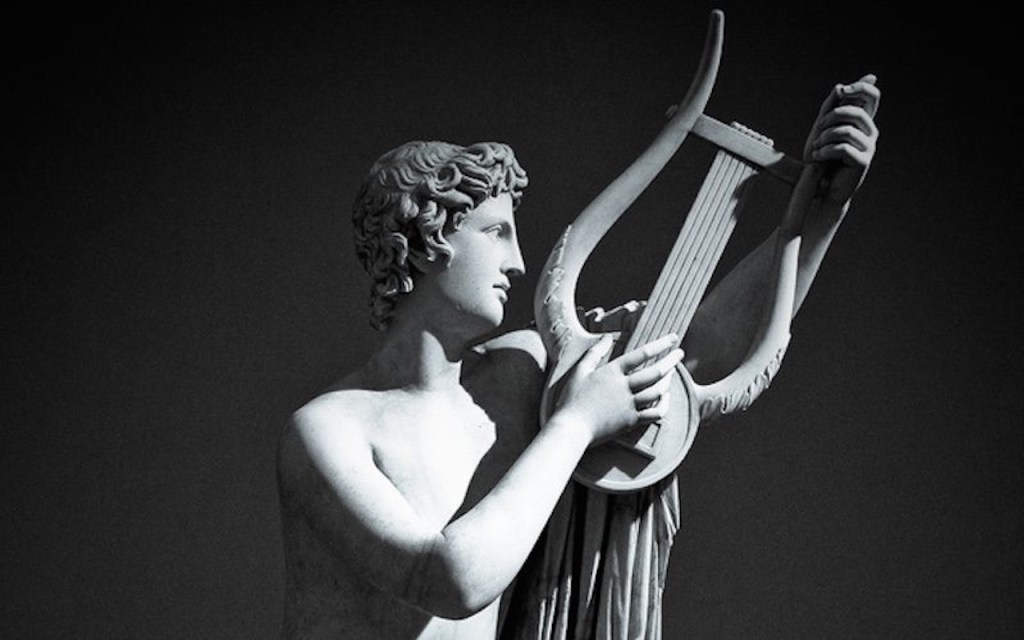
The Shakespeare Lyric “Orpheus”
The Shakespearean speaker presents Orpheus as the embodiment of music’s power, showing how art, particularly music, has the ability to harmonize nature and relieve human suffering through its transformative, calming influence.
Introduction and Text of the “Shakespeare Lyric ‘Orpheus’”
Excerpted from Henry VIII (Act III, Scene 1), this brief lyric distills the ancient myth of Orpheus into a musing on the transformational and consolatory power of music.
The speaker expresses a vision in which art exerts a gentle but irresistible authority over nature itself, bringing harmony where there is chaos, motion where there is stillness, and rest where there is unrest.
The figure of Orpheus becomes less a mythological character than an emblem of art’s highest potential: to reshape the external world and quiet the inward life. I have employed the Orpheus ethos in my plea for more control and better expression in the art of poetry.
“Orpheus” (from Henry VIII – Act III, Scene 1)
Orpheus with his lute made trees
And the mountain tops that freeze
Bow themselves when he did sing:
To his music plants and flowers
Ever sprung; as sun and showers
There had made a lasting spring.
Every thing that heard him play,
Even the billows of the sea,
Hung their heads and then lay by.
In sweet music is such art,
Killing care and grief of heart
Fall asleep, or hearing, die.
Commentary on “The Shakespeare Lyric ‘Orpheus’”
In this Shakespeare excerpt that functions as a stand-alone poem, the speaker is alluding to the Greek mythological character Orpheus to celebrate music as a force of order, renewal, and inward healing. Orpheus was the god of music and poetry i Greek mythology.
Stanza 1: Music’s Powerful Influence
Orpheus with his lute made trees
And the mountain tops that freeze
Bow themselves when he did sing:
To his music plants and flowers
Ever sprung; as sun and showers
There had made a lasting spring
The speaker opens with a striking assertion of music’s powerful influence over the natural world. The phrasing remains condensed, as though the act of music itself compresses time and causation. Trees and mountain tops do not merely respond; they are “made” or commanded to respond by bowing to the sound of Orphean singing.
This shaping force exerts itself to images of rigidity and lifeless cold. That mountain summits are called to “bow themselves” introduces a paradox: what is fixed becomes responsive, what is cold becomes animate, and what is elevated yields in humility.
The verb “bow” carries a dual resonance. It suggests both submission and grace, implying that nature’s response is not actually coerced but harmonized. The speaker presents music not as domination but as persuasion, a gentle authority that draws all things into alignment. Even the harshest elements—frozen peaks—are softened by sound, indicating that art reaches where physical force cannot.
The hyperbole exerted in these images is astounding, leading not to disbelief but to the famous Romantic assertion by Samuel Taylor Coleridge “that willing suspension of disbelief for the moment, which constitutes poetic faith.” After all, the purpose of exaggeration is only to emphasize a claim, not to make a melodramatic spectacle.
The stanza then shifts from gesture to growth: “plants and flowers / Ever sprung.” The effect is not momentary but continuous, captured in the word “ever.” Music generates an ongoing fertility, a perpetual blossoming that resists decay.
The comparison to “sun and showers” grounds this transformation in natural cycles, yet the phrase “lasting spring” exceeds ordinary seasonal change. Spring, typically transient, becomes permanent under the influence of music. The speaker thus elevates art above nature’s own processes, suggesting that while sun and rain produce life, music sustains it indefinitely.
The imagery moves from rigidity (mountains) to vitality (flowers), tracing a progression from stillness to generative abundance. The speaker’s syntax reinforces this flow, with lines that seem to unfold organically, mirroring the growth they describe. Music becomes both cause and condition of harmony, a principle that unifies disparate elements—earth, air, and life itself.
What emerges is not merely a portrait of Orpheus but an argument about art’s capacity to reconcile opposites: cold and warmth, height and humility, barrenness and fertility. The speaker implies that music achieves what nature alone cannot—a permanence of renewal, a “lasting spring” that suspends the ordinary limits of time and change.
Again, as in most successful art, the tension of the pairs of opposites makes an appearance. As the great Guru Paramahansa Yogananda has explained, the force of Maya, the very cause of the material level of being, works through the pairs of opposites.
Stanza 2: The Universal Influence of Music
Every thing that heard him play,
Even the billows of the sea,
Hung their heads and then lay by.
In sweet music is such art,
Killing care and grief of heart
Fall asleep, or hearing, die.
The second stanza broadens the scope from land to sea, extending the reach of music to “Every thing that heard him play.” The universality is emphatic; nothing remains outside the sphere of music’s influence.
While the first stanza emphasizes growth and animation, the second turns toward quieting and rest. The “billows of the sea,” emblematic of motion and unrest, are personified “h[anging] their heads and then l[ying] by.” The image suggests human beings becoming calm after turbulence, with ceaseless motion transforms into stillness.
The phrase “hung their heads” echoes the earlier “bow themselves,” reinforcing the motif of submission, yet here it carries a more subdued, almost weary connotation. The sea, often a symbol of emotional excess or instability, is brought into repose. The progression from bowing to lying still marks a deepening effect: music does not merely elicit acknowledgment; it also induces tranquility.
The final lines turn inward with even more gravity, shifting from the external world to the human condition: “care and grief of heart.” The speaker identifies these as persistent burdens, analogous to the restless sea.
Music’s power is now psychological and emotional, not merely physical. The phrase “killing care” is striking in its severity; music does not soothe lightly but eradicates distress at its root.
Yet the resolution is nuanced: care and grief either “fall asleep, or hearing, die.” The dual possibility suggests degrees of relief. Sleep implies temporary suspension, while death indicates permanent release. The ambiguity allows for a range of experience—music may offer respite or complete transformation. In either case, it alters the condition of suffering.
The line “In sweet music is such art” functions as a reflective statement, drawing together the stanza’s implications. “Sweet” emphasizes harmony and pleasure, but “art” underscores intention and craft. The speaker presents music as both aesthetic and efficacious, capable of shaping not only perception but feeling itself.
The movement of the stanza—from the vast sea to the inner heart—compresses the scale of influence, suggesting that the same force governs both realms. The calming of waves parallels the quieting of grief, establishing a correspondence between outer and inner worlds. Music becomes a mediating principle, aligning nature and human emotion within a single order of harmony.
The final stanza affirms that art’s highest function lies not merely in delight but in restoration. It brings the restless to rest, the troubled to peace, and in doing so, offers a vision of existence in which discord is not denied but resolved.

 Linda's Literary Home