Linda's Literary Home

Tag: bible

  • James Weldon Johnson’s “The Creation”

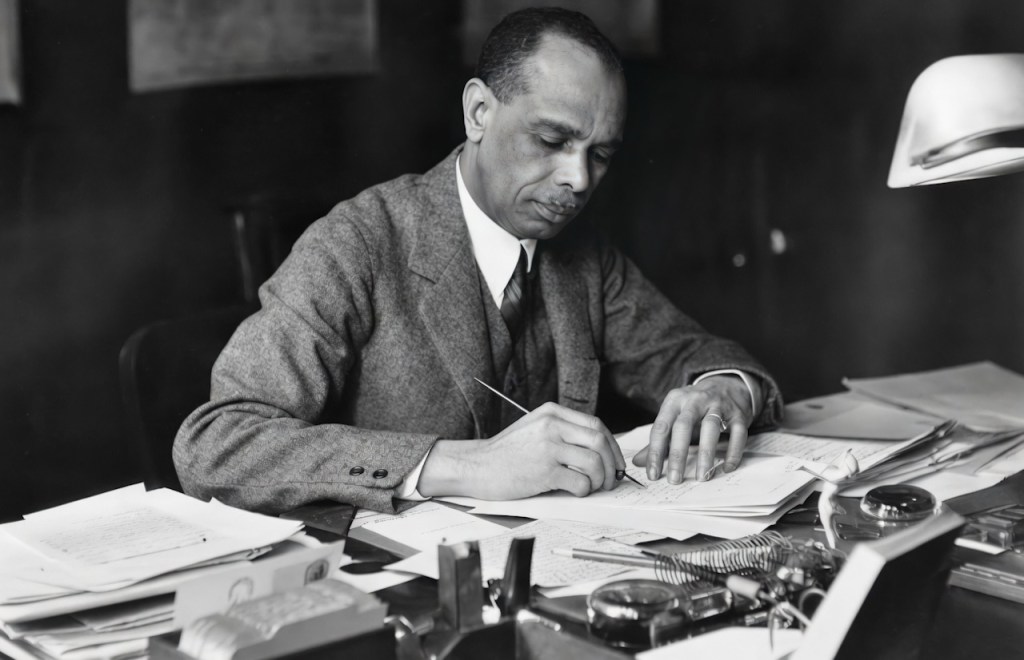
    Image: James Weldon Johnson - https://www.green-wood.com/event/the-autobiography-of-an-ex-colored-man-110-years-later/
    Image: James Weldon Johnson

    James Weldon Johnson’s “The Creation”

    James Weldon Johnson’s “The Creation” remains a marvelous example of the poet’s depth of spirituality as well as his skilled craftsmanship at creating speakers who perform in his poetry compositions.

    Introduction with Text of “The Creation”

    In James Weldon Johnson’s “The Creation,” the speaker dramatizes Genesis chapter 1, verses 1-25.   The speaker employs the voice of a Southern preacher, exemplified by the lines, “Down in a cypress swamp” and “Like a mammy bending over her baby.”  

    The Wintley Phipps recitation of James Weldon Johnson’s “The Creation” is magnificent.  Phipps performs a perfect interpretation of Johnson’s poem.  The experience of listening to a fine poem always adds a nuance of meaning that a simple quiet reading lacks.

    The Creation

    And God stepped out on space,
    And he looked around and said:
    I’m lonely—
    I’ll make me a world.

     And far as the eye of God could see
    Darkness covered everything,
    Blacker than a hundred midnights
    Down in a cypress swamp.

    Then God smiled,
    And the light broke,
    And the darkness rolled up on one side,
    And the light stood shining on the other,
    And God said: That’s good!

    Then God reached out and took the light in his hands,
    And God rolled the light around in his hands
    Until he made the sun;
    And he set that sun a-blazing in the heavens.
    And the light that was left from making the sun
    God gathered it up in a shining ball
    And flung it against the darkness,
    Spangling the night with the moon and stars.
    Then down between
    The darkness and the light
    He hurled the world;
    And God said: That’s good!

    Then God himself stepped down—
    And the sun was on his right hand,
    And the moon was on his left;
    The stars were clustered about his head,
    And the earth was under his feet.
    And God walked, and where he trod
    His footsteps hollowed the valleys out
    And bulged the mountains up.

    Then he stopped and looked and saw
    That the earth was hot and barren.
    So God stepped over to the edge of the world
    And he spat out the seven seas—
    He batted his eyes, and the lightnings flashed—
    He clapped his hands, and the thunders rolled—
    And the waters above the earth came down,
    The cooling waters came down.

    Then the green grass sprouted,
    And the little red flowers blossomed,
    The pine tree pointed his finger to the sky,
    And the oak spread out his arms,
    The lakes cuddled down in the hollows of the ground,
    And the rivers ran down to the sea;
    And God smiled again,
    And the rainbow appeared,
    And curled itself around his shoulder.

    Then God raised his arm and he waved his hand
    Over the sea and over the land,
    And he said: Bring forth! Bring forth!
    And quicker than God could drop his hand,
    Fishes and fowls
    And beasts and birds
    Swam the rivers and the seas,
    Roamed the forests and the woods,
    And split the air with their wings.
    And God said: That’s good!

    Then God walked around,
    And God looked around
    On all that he had made.
    He looked at his sun,
    And he looked at his moon,
    And he looked at his little stars;
    He looked on his world
    With all its living things,
    And God said: I’m lonely still.

    Then God sat down—
    On the side of a hill where he could think;
    By a deep, wide river he sat down;
    With his head in his hands,
    God thought and thought,
    Till he thought: I’ll make me a man!

    Up from the bed of the river
    God scooped the clay;
    And by the bank of the river
    He kneeled him down;
    And there the great God Almighty
    Who lit the sun and fixed it in the sky,
    Who flung the stars to the most far corner of the night,
    Who rounded the earth in the middle of his hand;
    This great God,
    Like a mammy bending over her baby,
    Kneeled down in the dust
    Toiling over a lump of clay
    Till he shaped it in is his own image;

    Then into it he blew the breath of life,
    And man became a living soul.
    Amen.      Amen.

    Wintley Phipps’ recitation of “The Creation” 

    Commentary on “The Creation”

    Johnson’s speaker offers an imaginative, dramatic rendering of the origin of creation, based on the creation story in Genesis from the King James Version of the Holy Bible.

    First and Second Stanzas:  Personification of God

    And God stepped out on space,
    And he looked around and said:
    I’m lonely—
    I’ll make me a world.

     And far as the eye of God could see
    Darkness covered everything,
    Blacker than a hundred midnights
    Down in a cypress swamp.

    The speaker personifies God, giving the Deity the very human quality of loneliness and having Him “step [ ] out on space,” where He observes the vastness and decides, “I’m lonely / I’ll make me a world.” 

    The corresponding Genesis verse states,”In the beginning God created the heaven and the earth.” Johnson’s speaker gives God anthropomorphic qualities in order metaphorically explain the process of creation as revealed in the Holy Scripture.

    In Genesis, the darkness was on the face of the deep, because the world was formless. Johnson’s speaker dramatically describes pre-creation as “blacker than a hundred midnights / Down in a cypress swamp.” Of course, the speaker knows that his audience, likely his congregation, would be able to visualize that cypress swamp darkness.

    Third and Fourth Stanzas:   Calling for Light

    Then God smiled,
    And the light broke,
    And the darkness rolled up on one side,
    And the light stood shining on the other,
    And God said: That’s good!

    Then God reached out and took the light in his hands,
    And God rolled the light around in his hands
    Until he made the sun;
    And he set that sun a-blazing in the heavens.
    And the light that was left from making the sun
    God gathered it up in a shining ball
    And flung it against the darkness,
    Spangling the night with the moon and stars.
    Then down between
    The darkness and the light
    He hurled the world;
    And God said: That’s good!

    Genesis reveals that God called for light by heralding, “Let there be light.” Johnson’s speaker creatively allows that first light to beam when God smiled. In addition, the speaker metaphorically has the light causing the darkness to “roll [ ] up on one side” while “light stood shining on the other.” 

    To all this drama, God says, “That’s good!” Johnson’s speaker makes God an even more active entity than the Genesis version, where instead of speaking, God’s thoughts are exposed: “God saw the light, and it was good.” At this point, only God could have had that thought.

    The speaker then takes the liberty of having God create the sun by taking light in his hands and rolling the light into a ball and setting the sun “a-blazing in the heavens.” Using the light remaining after making the sun, God gathered it up in “a shining ball / And flung it against the darkness / Spangling the night with the moon and stars.” 

    The importance of light motivates Johnson’s speaker to elaborate on the creation of the earth’s only source of light. And again, as is repeated in Genesis, the speaker has God aver, “That’s good!”

    Fifth and Sixth Stanzas:  The Significance of the Sun

    Then God himself stepped down—
    And the sun was on his right hand,
    And the moon was on his left;
    The stars were clustered about his head,
    And the earth was under his feet.
    And God walked, and where he trod
    His footsteps hollowed the valleys out
    And bulged the mountains up.

    Then he stopped and looked and saw
    That the earth was hot and barren.
    So God stepped over to the edge of the world
    And he spat out the seven seas—
    He batted his eyes, and the lightnings flashed—
    He clapped his hands, and the thunders rolled—
    And the waters above the earth came down,
    The cooling waters came down.

    The importance of the sun is further emphasized as the speaker continues his drama. God begins to walk on the earth with the sun “on his right hand / And the moon on his left.”  And the stars were “clustered about his head.”  

    As God walked on the earth, His feet “hollowed the valleys out / And bulged the mountains up.” Genesis more vaguely reveals God’s creation process than this speaker, who imaginatively fills in the gaps as he creates his own creation myth.

    In Genesis, God separates the heavens from the earth. This speaker has God spitting out the seven seas and after clapping His hands, the thunder begins and rain comes down, “cooling waters came down.”

    Seventh and Eighth Stanzas:  Nature Comes into Being

    Then the green grass sprouted,
    And the little red flowers blossomed,
    The pine tree pointed his finger to the sky,
    And the oak spread out his arms,
    The lakes cuddled down in the hollows of the ground,
    And the rivers ran down to the sea;
    And God smiled again,
    And the rainbow appeared,
    And curled itself around his shoulder.

    Then God raised his arm and he waved his hand
    Over the sea and over the land,
    And he said: Bring forth! Bring forth!
    And quicker than God could drop his hand,
    Fishes and fowls
    And beasts and birds
    Swam the rivers and the seas,
    Roamed the forests and the woods,
    And split the air with their wings.
    And God said: That’s good!

    After the rain, grasses appear, and “little red flowers blossomed” and “A pine tree “pointed his finger to the sky.” This speaker gives specific details again not found in Genesis. He has the oak “spread out his arms.”

    He has lakes appearing as they “cuddled down in the hollows of the ground.” He has rivers running to the ocean, and God smiling as “a rainbow appeared / And curled itself around his shoulder.”

    In his eighth stanza, the speaker has God creating “Fishes and fowls / And beasts and birds.” God creates by raising His arm and waving His hand and commanding, “Bring forth! Bring forth!” Again, God evaluates His creation, declaring, “That’s good!”

    Ninth and Tenth Stanzas:  A Lonely God

    Then God walked around,
    And God looked around
    On all that he had made.
    He looked at his sun,
    And he looked at his moon,
    And he looked at his little stars;
    He looked on his world
    With all its living things,
    And God said: I’m lonely still.

    Then God sat down—
    On the side of a hill where he could think;
    By a deep, wide river he sat down;
    With his head in his hands,
    God thought and thought,
    Till he thought: I’ll make me a man!

    The speaker says that God walked about and observed all that He had created. Nevertheless, just as before He created all these things, God again found Himself lonely. Of course, Genesis does not anthropomorphize God; thus, there are no claims in Scripture that God was ever lonely.

    In trying to understand the mind of God, the human mind assigns human qualities to the Deity. As long as one realizes the limitation of such assignment, no problem occurs and much understanding can be gained through metaphor and personification.

    God then sits down to think about how to assuage His loneliness. Just as a man would do, He sits by a river with His head in His hands, thinking and thinking, and He finally gets the thought to make a man. 

    Eleventh and Twelfth Stanzas:  Bodies of Clay

    Up from the bed of the river
    God scooped the clay;
    And by the bank of the river
    He kneeled him down;
    And there the great God Almighty
    Who lit the sun and fixed it in the sky,
    Who flung the stars to the most far corner of the night,
    Who rounded the earth in the middle of his hand;
    This great God,
    Like a mammy bending over her baby,
    Kneeled down in the dust
    Toiling over a lump of clay
    Till he shaped it in is his own image;

    Then into it he blew the breath of life,
    And man became a living soul.
    Amen.      Amen.

    The speaker now has God create the first human being by “scoop[ing] the clay from the riverbed.” He employs the image of a mammy bending over her baby while she kneeled down in the dust working over a lump of clay. God shaped this lump of clay in his own image, as Genesis says, “Let us make man in our image, after our likeness.”

    Finally, God blew the breath of life into the body of the clay God-like image, and “man became a living soul.” At this point, the speaker/preacher concludes his drama/sermon with the traditional, “Amen. Amen.”

  • James Weldon Johnson’s “Mother Night”

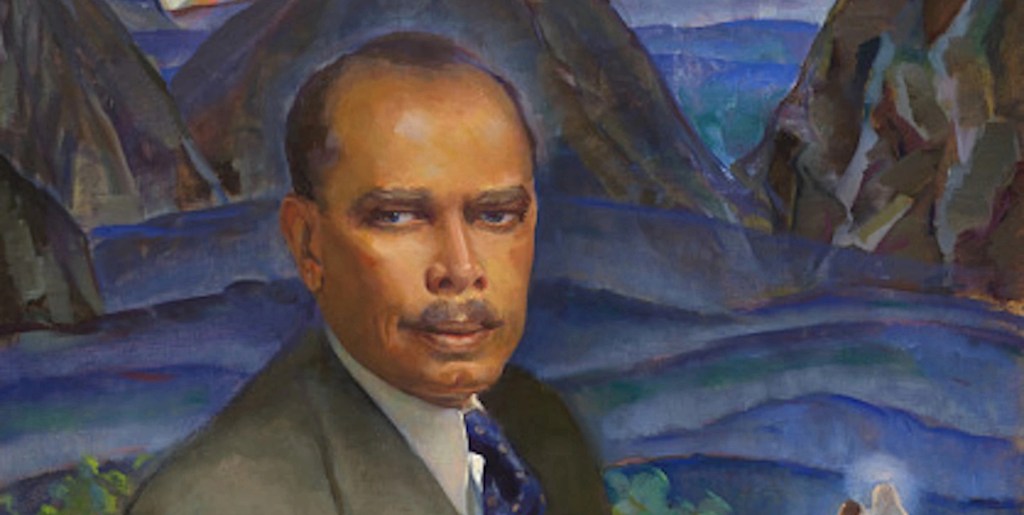
    Image: James Weldon Johnson - Portrait by Laura Wheeler Waring https://npg.si.edu/object/npg_NPG.67.40
    Image: James Weldon Johnson – Portrait by Laura Wheeler Waring

    James Weldon Johnson’s “Mother Night”

    The speaker in Johnson’s sonnet, “Mother Night,” likens his own existence and protection to that of the planets—all are created and protected by the same Divine Entity.  Thus his soul remains a spark from the Original Divine Flame.

    Introduction with Text of “Mother Night”

    James Weldon Johnson’s “Mother Night,” a Petrarchan (or Italian) sonnet, metaphorically dramatizes night as the calm union of the soul with the Oversoul or the individual self with Divine Self.

    The speaker, influenced by Eastern as well as Christian philosophical tenets, draws a parallel between the conflict of day and night in the cosmos and his own struggle with the pairs of opposites in his earthly sojourn.   This sonnet’s form offers polished Petrarchan rime-scheme:  ABBAABBA in the octave, and CDECDE in the sestet.

    Mother Night

    Eternities before the first-born day,
    Or ere the first sun fledged his wings of flame,
    Calm Night, the everlasting and the same,
    A brooding mother over chaos lay.
    And whirling suns shall blaze and then decay,
    Shall run their fiery courses and then claim
    The haven of the darkness whence they came;
    Back to Nirvanic peace shall grope their way. 

    So when my feeble sun of life burns out,
    And sounded is the hour for my long sleep,
    I shall, full weary of the feverish light,
    Welcome the darkness without fear or doubt,
    And heavy-lidded, I shall softly creep
    Into the quiet bosom of the Night.

    Commentary on “Mother Night”

    All creation is protected by its Creator, Who performs in various guises somewhat like a mother bird, who protects her progeny.  Nighttime is the time for rest, peaceful contemplation, and retreat from the hustle and bustle of day time activities.

    Thus, nighttime may be perceived as a protecting entity that offers solace and comfort to those in need and those who wish for such qualities in their lives.

    First Quatrain:  Existence Was Brooding before the First Created Day

    Eternities before the first-born day,
    Or ere the first sun fledged his wings of flame,
    Calm Night, the everlasting and the same,
    A brooding mother over chaos lay.

    Like a brooding mother, that is, a mother bird who is sitting on her brood of eggs and then who continues to protect and keep them warm as baby birds, “Calm Night” kept watch over the unmanifested entity until the first-born day, before the first planets were created and hurled into activity: “ere the first sun fledged his wings of flame.” 

    The mature planet of the sun is like a bird that is now flying off on its own, after having been tenderly nurtured by its mother.

    Mother Night tenderly nurtured the growing cosmos that ultimately resulted in planets and people. Johnson’s metaphoric Night represents the non-vibratory realm of reality where nothing is manifested, and only the mind of God exists in that vibrationless realm.

    There is no creation only a peaceful possibility, a potential. Until God chooses to create beings to populate His cosmos, He simply broods like a mother over chaos. 

    Here the term chaos does not refer to our modern usage of confusion and disorder but to infinite formlessness. The term originates from the Greek Khaos, indicating a dark void from which the gods originated.

    Second Quatrain:  The Projection of Light as It Creates the Cosmos

    And whirling suns shall blaze and then decay,
    Shall run their fiery courses and then claim
    The haven of the darkness whence they came;
    Back to Nirvanic peace shall grope their way. 

    The second quatrain describes the plight of whirling suns as they “blaze and then decay.” Those planets of fire will eventually burn out and after they do, they will return “[b]ack to Nirvanic peace.” 

    The speaker employs the term Nirvanic, adjectival form for “Nirvana,” the Buddhist term for God-union, which is “Samadhi” in  Hinduism, “Salvation” in Christianity, and “Fana” in Sufism, the mystical branch of Islam.

    The speaker cleverly plays by punning “whirling suns,” whereas sun puns son. With God as Mother Night, Her suns (sons) will “run their fiery courses” (live their passionate lives) and then recede back into the arms of the brooding mother or God. 

    First Tercet:  The Individual Self as It Careens Toward Oblivion

    So when my feeble sun of life burns out,
    And sounded is the hour for my long sleep,
    I shall, full weary of the feverish light,

    The sestet then shifts from the cosmos to the speaker himself, a son of the night mother. The speaker vows that he will react to his death a certain way, but he does not clarify that way yet, but merely sets up the conditions for his final claim. 

    As his life comes to an end, as he knows that it “is the hour for [his] long sleep,” he will be fully aware that his life is ebbing.

    Second Tercet:  Faith That Leads the Faithful toward Their True Home

    Welcome the darkness without fear or doubt,
    And heavy-lidded, I shall softly creep
    Into the quiet bosom of the Night.

    And the speaker will “[w]elcome the darkness without fear or doubt.” His strong faith and intuition allow him to realize that his soul is going home. 

    This speaker has mused long and hard upon the profundities that puzzle every thinking brain.  He has contemplated what science has discovered about the nature of the created Cosmos.

    The speaker has likewise compared the knowledge  of scientists to that of the tenets of religion and philosophy.  And the result of his in depth study now allows him to formulate a pathway to Divine Reality.  

    This prescient speaker has come to understand that his own soul is simply a spark of the Divine Flame, Who has fashioned out of chaos a marvelous entity of joy, peace, hope, and love.

    This speaker’s eyelids may droop, but his soul is ever ensconced in the omnipresent protection of the beautiful mother, the Mother Night—who parallels the Blessèd Divine Reality—who will throughout eternity continue to brood over and fiercely guide and guard her beloved son.  

  • Emily Dickinson’s “By such and such an offering”

    Image: Emily Dickinson - Amherst College - Daguerrotype of the poet at age 17, circa 1847 - likely the only authentic, extant likeness of the poet
    Image: Emily Dickinson – Amherst College – Daguerrotype of the poet at age 17, circa 1847 – likely the only authentic, extant likeness of the poet https://www.amherst.edu/library/archives/holdings/edickinson

    Emily Dickinson’s “By such and such an offering”

    The speaker in Emily Dickinson’s “By such and such an offering” is exploring the nature of duplicity by those who feign elevated status through appropriating experience that they have not in fact endured.

    Introduction and Text of “By such and such an offering”

    The speaker in Emily Dickinson’s four-line verse begins mysteriously but then suggests a remarkable indictment of those who feign martyrdom.  Those who exaggerate their suffering in life but have little to show for it are often those who put on display their complaints.  

    The phony religious who amble about with colorless, sad expressions, those who suffer from physical ailments but exaggerate for attention, those who remain boastful of their contributions to society that anyone paying attention will realize are meagre—these supposed “martyrs” remain so only to their own confused thinking.

    The speaker is calling attention to such bombastic displays.  As the “web of life” is woven, it does remain salient that it “takes all kinds.”  This speaker offers no remedy—just an insightful observation that such ilk exists, and perhaps a warning to watch out for them and not be fooled by insincerity and lack of clarity.

    By such and such an offering

    By such and such an offering
    To Mr. So and So,
    The web of life woven –
    So martyrs albums show!

    Commentary on “By such and such an offering”

    The speaker is offering an observation of a certain segment of the social order whose exaggerated rhetoric attempts to hoist their pettiness to the exalted status of martyrdom.

    First Movement:  The Undeclared

    By such and such an offering
    To Mr. So and So,

    The speaker begins with two prepositional phrases that point to some activity being directed to an unknown entity: specifically something is being given to someone.  The phrases “such and such” and “So and So” indicate that the speaker is not identifying the gift nor is she naming to whom the gift is given.  

    The speaker does, however, qualify the receiver of the gift as a masculine human being, signaled by “Mr.”; thus, the terms of the phrase “So and So” stand for a name and are capitalized.

    The speaker has thus set up a puzzling dynamic by essentially reporting somewhat mysteriously that something was given, or perhaps will be given, to someone (some man).  She allows her audience to remain puzzled by not only what the gift may be, or will be, but also by who will be, or has been, the receiver of that gift.

    At this point, the speaker has simply claimed that what was given was an “offering.”  She does not say that what was given was a “present” or a “gift”; instead she uses the more weighty term “offering,” which differs from other items given through its special status: an offering connotes something given for religious or worship purposes, or some other universally relevant purpose. An ordinary gift is usually something presented to an individual or small group of individuals.

    Thus this gift retains a different status from an ordinary gift, in that it must have some purpose other than the mere giving of a gift for Christmas or birthday or other culturally personalized holiday.  Thus instead of a personal gift, this offering will retain a wider, more inclusive purpose.

    Second Movement:  Completed Mystery

    The web of life woven –
    So martyrs albums show!

    The speaker then completes the thought begun in the first movement, but she still remains quite mysterious because she does not actually offer a complete sentence or statement.  Her musing thus remains fragmented, as if she were merely jotting down a note for later employment in a larger context.

    The speaker then makes the lofty claim about life: life’s “web” has been woven.  While only life’s Creator can be credited with weaving the “web of life,” the speaker again indicates that she will remain mysterious in her remarks by not elaborating her claim but by diverting the direction of her report to individuals who have experienced extreme suffering perhaps even death (“martyrs”), who then display their suffering through a series of blank pages (“albums”) filled with images from their history.

    The speaker has thus suggested her own puzzlement that life can be filled with so many perplexing events.  But she seizes upon the one turn of events that has impressed her mightily in likely a negative or perhaps even a humorous way:  that the sufferers who offer their oblations at the feet materiality and yet portend to suffer as martyrs nevertheless gather their badges and demonstrate them to an unsuspecting world.

    The true martyr to the spiritual cause may be celebrated by others down through the centuries.  Their adherence to truth is to be emulated, but it will be hoped that their being martyred unto death may be avoided.  

    But those who put on display their suffering through flagitiousness or deleterious behavior will be adjudicated duplicitous as they “show” their “albums” instead allowing them to work through the mystery of silent, masterful ascendance.

    Thus the vaunted “offering” is revealed as a profligate collection garnered by the supposed “martyrs” and bestowed on “Mr. So and So,” who has remained merely a nebulous, unsuspecting target of the feigning, exaggerating sufferers. 

    That unknown citizen—representing the conglomerate of the world’s citizens—remains an amorphous being to whom the would-be martyrs may put on display their imperfections and bleared commodities.

  • Elizabeth Barrett Browning’s Sonnet 43 “How do I love thee? Let me count the ways”

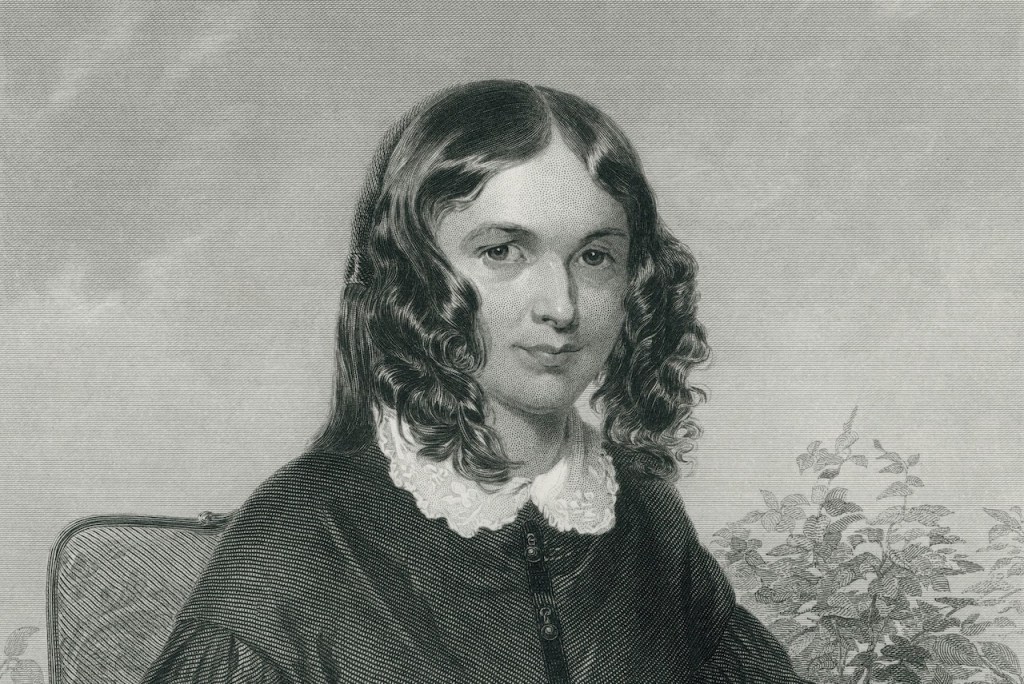
    Image: Elizabeth Barrett Browning – Engraving from original Painting by Chappel, 1872. (Photo by: Universal History Archive/Universal Images Group via Getty Images)

    Elizabeth Barrett Browning’s Sonnet 43 “How do I love thee? Let me count the ways

    The sonnet “How do I love thee? Let me count the ways”—number 43 in Sonnets from the Portuguese—remains the most famous and widely read sonnet of the sequence.  The speaker is offering a summary of all the ways she has come to love her soon to be husband.

    Introduction and Text of Sonnet 43 “How do I love thee? Let me count the ways”

    Sonnet 43 “How do I love thee?  Let me count the ways” is the most widely anthologized sonnet from Elizabeth Barrett Browning’s sequence titled Sonnets from the Portuguese. It is likely the many high school or college graduates remember that line but may have remained unaware that it is only #43 from its accompanying sequence of 43 other sonnets.  

    The sonnet is a Petrarchan sonnet as are all of the other sonnets in the sequence.  In the octave, the speaker is musing about how much she loves her belovèd suitor, and she asks the question, “How do I love thee?” 

    Then the speaker proceeds to answer the question, so the reader becomes aware that the speaker is not literally addressing her belovèd, but she is addressing the thought or perhaps even an image of that belovèd.  In the sestet, the speaker counts three definite ways and one possible way that she will love him throughout eternity.

    Sonnet 43 “H0w do I love thee? Let me count the ways”

    How do I love thee? Let me count the ways.
    I love thee to the depth and breadth and height
    My soul can reach, when feeling out of sight
    For the ends of Being and ideal Grace.
    I love thee to the level of everyday’s Most quiet need, by sun and candle-light.
    I love thee freely, as men strive for Right;
    I love thee purely, as they turn from Praise.
    I love thee with the passion put to use
    In my old griefs, and with my childhood’s faith. I love thee with a love I seemed to lose
    With my lost saints,—I love thee with the breath,
    Smiles, tears, of all my life!—and, if God choose,
    I shall but love thee better after death.

    Commentary on Sonnet 43 “How do I love thee? Let me count the ways”  

    Sonnet 43 “How do I love thee? Let me count the ways” remains the most famous and widely read sonnet of the sequence.

    First Quatrain:  An Emphatic Rhetorical Question

    How do I love thee? Let me count the ways.
    I love thee to the depth and breadth and height
    My soul can reach, when feeling out of sight
    For the ends of Being and ideal Grace.

    The speaker asks an obvious rhetorical question that requires only her feeling to fill out; thus she continues, “Let me count the ways.” She loves him with all her soul, as that soul strives for an idealism that has to be left up to faith.  The soul searches in all directions through “depth and breadth and height” for this idealism, which this speaker calls “the ends of Being and ideal Grace.”

    Second Quatrain:  Love and All Levels

    I love thee to the level of everyday’s Most quiet need, by sun and candle-light.
    I love thee freely, as men strive for Right;
    I love thee purely, as they turn from Praise.

    The speaker has begun with the sublime, ethereal level of her love by invoking how she loves her belovèd on the spiritual level.  The speaker then brings herself quickly back to the mundane activities of daily life by saying that another way she loves him is through even the smallest daily act whether that act is performed during the daylight hours or during the night, “by sun and candle-light.”

    The speaker then asserts that her love for her belovèd is spontaneous and “freely” given; therefore, she loves him in the way humankind loves freedom and acts correctly in striving to secure and maintain that freedom. She then claims that her love is as pure as those who are humble when praised.  In the octave, the speaker has signified four ways she loves her belovèd: spiritually, materially, “freely,” and “purely.”

    First Tercet:   All Encompassing Love

    I love thee with the passion put to use
    In my old griefs, and with my childhood’s faith. I love thee with a love I seemed to lose

    The speaker loves him with the same ardor that used to grip her when she faced difficulties, but this “passion” is tempered by the fact that that love is also similar to the love that childhood provided her, an opposite kind of emotion from the one that caused her “old griefs.”  This love includes the polar opposites of fear and love, with love tempering the fear in a balanced and useful way.

    The speaker also loves her belovèd life mate with a kind of respect and admiration that she thought she had outgrown; this group of people could be a fairly large one, including friends, teachers, relatives, and even religious “saints,” the term she uses.  But the key word is that she “seemed” to lose this love, but with her belovèd suitor, that love is returned to her.

    Second Tercet:   Love unto Eternity

    With my lost saints,—I love thee with the breath,
    Smiles, tears, of all my life!—and, if God choose,
    I shall but love thee better after death.

    The next way she loves her belovèd she asserts in a breathless, almost ecstatic pronouncement: “— I love thee with the breath, / Smiles, tears, of all my life! —.”  Placed between dashes, these terms then signal an emphasis of expression.

    This assertion captures the excitement and underscores the passion in the speaker’s claim, while it prepares the reader or listener, for the last breathtaking claim that, “if God choose, I shall but love thee better after death.”

    So in the sestet, the speaker again professes four ways in which she loves the belovèd: with a passion of meeting former challenges but tempered by a childlike faith, with a kind of love she thought she had lost, and with her whole being.  But most importantly for this speaker, she has faith that she will love this belovèd soul mate eternally.

  • Brad McClain’s “Cowboy Christmas”

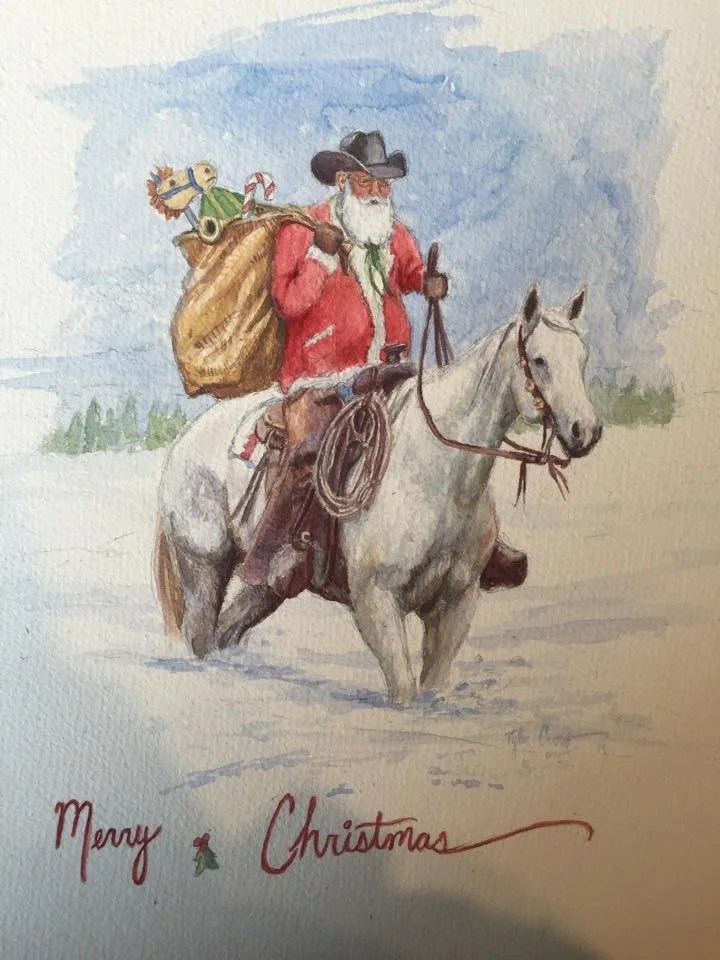
    Image: Merry Christmas  – Art by Tyler Crow, used by permission

    From an internet site dedicated to his Christian faith and affinity for cowboy culture God’s Horseback Gospel, Brad McClain’s “Cowboy Christmas” celebrates the congeniality of friends gathering to observe the Christmas season.  It offers the traditional energy and fun-loving atmosphere of most cowboy Christmas poetry.

    The two prose pieces following the poem further extend the faithful worship included in Mr. McClain’s purpose for creating his webpage—to glorify God and introduce others to a kind of spiritual awakening that they may not have known existed.

    Brad McClain’s “Cowboy Christmas”

    A countrified tradition,
    Was part of yester-year,
    When the cowboys’ main ambition,
    Was to spread some Christmas cheer.

    The ranch folk friend and families,
    Would come from far and wide,
    Trottin’ through the winter breeze,
    On Christmas Eve they’d ride.

    For food and fun and merriment,
    Twin fiddles filled the air,
    And everyone’s so glad they went,
    And goodwill everywhere.

    Kids a’chasin’ kids around,
    Oldsters smile and wave,
    All the festive sights and sounds,
    And a cowboy gettin’ brave,

    Enough to ask that gal to dance,
    And of course she says she will,
    He never thought he had a chance,
    And if a look could kill,

    Her Daddy watches carefully,
    He remembers to that age,
    Her mama takes it prayerfully,
    It helps her fear assuage.

    But nothin’ like a Christmas waltz,
    And nothin’ like young love,
    And nobody is findin’ faults,
    And lots to be proud of.

    And when the egg nog’s mostly gone,
    And the kids are ‘bout asleep,
    The hugs and handshakes linger long,
    And the night is gettin’ deep,

    And then all head for hearth and home,
    They jingle all the way,
    Snow drifts ‘cross the sandy loam,
    And soon comes Christmas Day.

    The evening wanes, kids tucked in bed,
    Gifts set beneath the tree,
    Stockings filled all green and red,
    A prayer for you and me.

    The Cowboy Christmas, all are blessed,
    Praise for the Savior’s birth,
    God gave to each His gracious rest,
    Good will and peace on earth.

    “Praise the Lord, the God of Israel, because He has visited and redeemed His people.  He has sent us a mighty Savior from the royal line of His servant David.” (Luke 1:68-69, NLT)

    Christmas is a festival of praise.  All the fun, food, music, lights and fellowship are because God has given us His greatest give- the Savior!  God has always been the One who saves, but now the ultimate salvation has entered the world and for one reason- to save that which is lost.  How sad that some of those who need it the most seem to feel it the least.  And how wonderful it is when someone discovers the love that meets them exactly where they are in order to take them where they have always should have been!  The devil lies when he claims to have the best party.  Jesus is the Lord of the dance and it’s time we put aside our fickleness and followed Him.  Christmas is a good time to get the party started!

  • S. Omar Barker’s “A Cowboy’s Christmas Prayer”

    Image:  S. Omar Barker – Texas Trail of Fame

    S. Omar Barker’s “A Cowboy’s Christmas Prayer”

    S. Omar Barker’s Christmas poem “A Cowboy’s Christmas Prayer” features a humble cowpoke, who is not accustomed to praying but is offering his heart-felt supplication at Christmas time.  As he prays, he reveals the qualities and issues of his life that are most important to him.

    Introduction with Text of “A Cowboy’s Christmas Prayer”

    This Christmas prayer/poem composed by cowboy poet, S. Omar Barker, allows a humble rider-of-the-range to express his deeply held wishes as he offers a supplication to the Lord for the good of all mankind.  The cowboy prayer is framed as a ballad-style narration emphasizing the simple, humble nature of the cowpoke.

    The ballad-influenced piece plays out in cowboy dialect and  in riming couplets.  Its stanza breaks are uneven with two single-line bridges that dissect the drama at important points to emphasize the shift in theme and tone.

    A Cowboy’s Christmas Prayer

    I ain’t much good at prayin’, and You may not know me, Lord —
    For I ain’t much seen in churches, where they preach Thy Holy Word.
    But you may have observed me out here on the lonely plains,
    A-lookin’ after cattle, feelin’ thankful when it rains.

    Admirin’ Thy great handiwork.

    The miracle of the grass,
    Aware of Thy kind Spirit, in the way it comes to pass
    That hired men on horseback and the livestock that we tend
    Can look up at the stars at night, and know we’ve got a Friend.

    So here’s ol’ Christmas comin’ on, remindin’ us again
    Of Him whose coming brought good will into the hearts of men.
    A cowboy ain’t a preacher, Lord, but if You’ll hear my prayer,
    I’ll ask as good as we have got for all men everywhere

    Don’t let no hearts be bitter, Lord.
    Don’t let no child be cold.
    Make easy the beds for them that’s sick and them that’s weak and old.
    Let kindness bless the trail we ride, no matter what we’re after,
    And sorter keep us on Your side, in tears as well as laughter.

    I’ve seen ol’ cows a-starvin’ — and it ain’t no happy sight;
    Please don’t leave no one hungry, Lord, on Thy Good Christmas Night —
    No man, no child, no woman, and no critter on four feet
    I’ll do my doggone best to help you find ’em chuck to eat.

    I’m just a sinful cowpoke, Lord — ain’t got no business prayin’
    But still I hope you’ll ketch a word or two, of what I’m sayin’:
    We speak of Merry Christmas, Lord—

    I reckon You’ll agree —

    There ain’t no Merry Christmas for nobody that ain’t free!
    So one thing more I ask You, Lord: just help us what You can
    To save some seeds of freedom for the future Sons of Man!

    Reading

    Commentary on “A Cowboy’s Christmas Prayer”

    S. Omar Barker’s “A Cowboy’s Christmas Prayer” dramatizes the prayer offered by a humble cowboy who is unaccustomed to praying and unacquainted with church services but who holds the blessings from the Creator very dear to his heart.  He expresses his gratitude for the simple life he lives and asks his Creator to bless others with kindness and prosperity.

    First Movement:  A Humble Prayer

    I ain’t much good at prayin’, and You may not know me, Lord —
    For I ain’t much seen in churches, where they preach Thy Holy Word.
    But you may have observed me out here on the lonely plains,
    A-lookin’ after cattle, feelin’ thankful when it rains.

    In the first quatrain, the supplicating cowboy begins by addressing the Lord, suggesting that the Lord may not even be acquainted with the cowboy; he then gives the reasons that he feels the Lord may not know him.  He has not attended church very often, and he knows that’s where they preach His “Holy Word.”

    However, the cowboy then suggests that perhaps the Creator has seen him out on the plains doing his work of watching “after cattle.”  The cowboy adds what he likely feels may be a useful introduction to the Lord Creator:  he has felt thankful for the rain that keeps life supported.

    Second Movement:  A Single-Line Bridge

    Admirin’ Thy great handiwork.

    The cowboy adds another positive feature in his heretofore somewhat tentative relationship with the Almighty: he has always admired the “great handiwork” that he often observes as he rides the range in the great outdoors.

    This line appears alone and emphasizes the important idea that the cowboy has always kept the Creator near to his heart by feeling enthralled by all of what He has created.  The cowboy is likely remembering the wide-open plains, the mountains, the trees, vegetation of the prairie, the night sky full of stars, and the cattle that he himself drives and protects. 

    This single line offers a useful bridge between the moments of prayer that supplicates, as it brings the Divine back into the cowboy’s consciousness.

    Third Movement:   Miracles in Creation

    The miracle of the grass,
    Aware of Thy kind Spirit, in the way it comes to pass
    That hired men on horseback and the livestock that we tend
    Can look up at the stars at night, and know we’ve got a Friend.

    The next quatrain offers a few specific examples of the great Lord’s “handiwork.”  The cowboy first mentions the grass, which he describes as a “miracle.”  He then avers that even as a simply cowpoke he feels the nature of the Lord is kindness.

    And through that “kind Spirit,” he reports that somehow the graceful occasion exists that those hired hands who work riding horseback and tending livestock are able to observe the sky full of “stars at night.”

    The cowboy makes it clear that such a sight fills his heart with gratitude that he and his fellow workers “got a Friend.”  His relationship with the Lord has blossomed even as he admits his tentative relationship with church and prayer.

    Fourth Movement:  Good Will

    So here’s ol’ Christmas comin’ on, remindin’ us again
    Of Him whose coming brought good will into the hearts of men.
    A cowboy ain’t a preacher, Lord, but if You’ll hear my prayer,
    I’ll ask as good as we have got for all men everywhere.

    Likely the coming of the season of Christmas has been the impetus for the cowboy to be offering this halting prayer.  So he now tells the Lord that the coming of Christmas has reminded him of Jesus the Christ, Who “brought good will” into men’s hearts.

    Even though he “ain’t a preacher,” the cowboy expresses the hope that the Lord will still hear his prayer.  He promises to supplicate for the “good” of everyone everywhere.  He wishes that all men may be as blessed as he his.  His gratitude keeps his own heart open to the Lord’s grace.

    Fifth Movement:  Prayer of a Simple Soul

    Don’t let no hearts be bitter, Lord.
    Don’t let no child be cold.
    Make easy the beds for them that’s sick and them that’s weak and old.
    Let kindness bless the trail we ride, no matter what we’re after,
    And sorter keep us on Your side, in tears as well as laughter.

    In the next cinquain, the speaker offers a catalogue of blessings that he wishes to ask of the Lord.  He asks that no bitterness reside in the hearts of men, as he asks that “no child be cold.”  

    He asks the Lord comfort those who are ill and make their convalescence go smoothly.  He also wish ease and comfort for those who are old and weak.  He asks kind-heartedness remain a feature of the “trail we ride.” He then asks the Creator to keep humanity on His side throughout good times as well as bad times.

    Sixth Movement:  Praying for Others’ Welfare

    I’ve seen ol’ cows a-starvin’ — and it ain’t no happy sight;
    Please don’t leave no one hungry, Lord, on Thy Good Christmas Night —
    No man, no child, no woman, and no critter on four feet
    I’ll do my doggone best to help you find ’em chuck to eat.

    Returning to the quatrain-form for the sixth movement, the speaker focuses on hunger; he has observed cows that are starving to death, and that sight weighs heavily on his heart and mind; thus, he begs the Lord to “leave no one hungry.” 

    This deprivation is so important to him that he asks that “no man, no child, no woman” be allowed to go hungry.  But he also wants the Lord to protect all animals from the fate of hunger.  He then promises to help the Lord in finding food for all who are hungry.

    Seventh Movement:  Self-Deprecation 

    I’m just a sinful cowpoke, Lord — ain’t got no business prayin’
    But still I hope you’ll ketch a word or two, of what I’m sayin’:
    We speak of Merry Christmas, Lord—

    In the next tercet, the cowboy again engages in self-deprecation, saying he is “just a sinful cowpoke” and he does not deserve to be “prayin’.”  Still, he expresses the hope that the Creator will hear at least “a word or two” of his prayer.  

    The cowboy/speaker then begins a thought which is so important that he offers merely the opening of it, allowing its conclusion to spread over another bridge and into the final tercet.  He begins by reporting that “[w]e speak of Merry Christmas, Lord—.”

    Eighth Movement:  Agreement with His Lord

    I reckon You’ll agree —

    The speaker then creates a second bridge between thoughts.  This time he inserts the important notion he thinks the Lord will agree with what he is about to propose. By beginning the thought in the conclusion of the seventh movement, allowing it to marinate through the eighth bridge movement, he has created a small mystery that emphasizes the utterly vital importance of his final thought.

    Ninth Movement:  Freedom Is Vital

    There ain’t no Merry Christmas for nobody that ain’t free!
    So one thing more I ask You, Lord: just help us what You can
    To save some seeds of freedom for the future Sons of Man!

    Finally, the cowboy issues his important claim before God and world that the most important possession that mankind must retain is “freedom.”  There can be no “Merry Christmas” unless humanity is free to enjoy it; no happiness can exists for any individual “that ain’t free!”

    Thus, the cowboy’s final supplication is that the Lord “save some seeds of freedom for the future Sons of Man!”  He asks his Creator to allow the love and hope of freedom to grow with mankind in all lands for all time.

  • Badger Clark’s “A Cowboy’s Prayer”

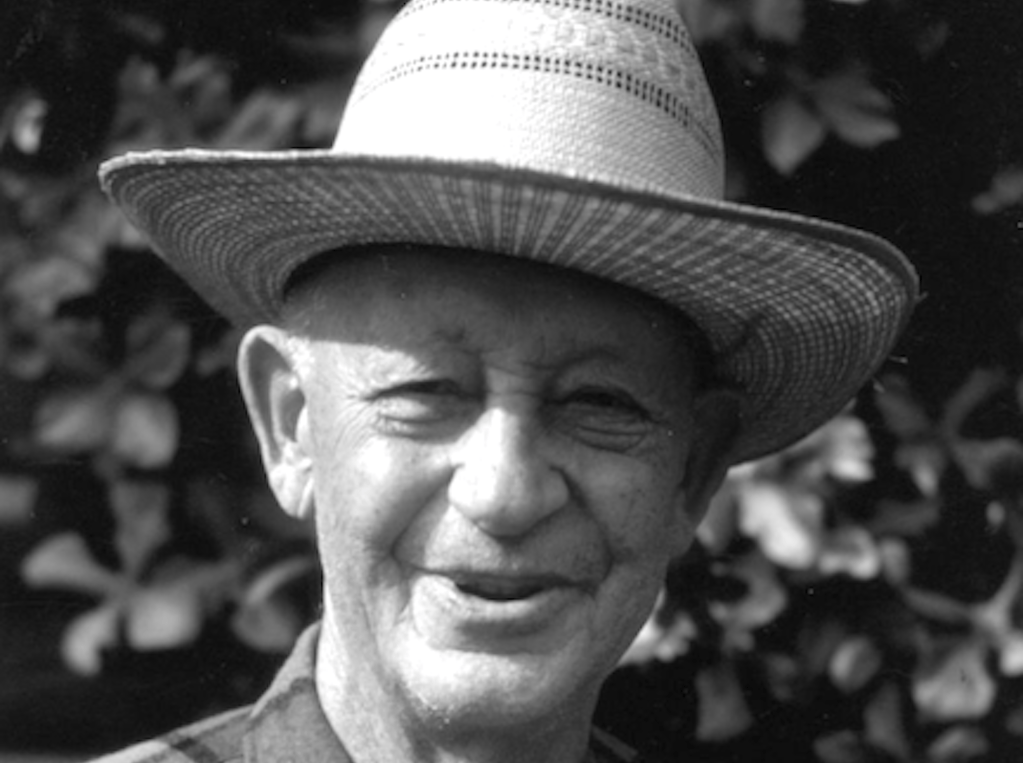
    Image: Badger Clark

    Badger Clark’s “A Cowboy’s Prayer”

    Badger Clark’s ballad consists of four riming octets, nostalgically dramatizing a celebration of his gratitude to God for his way of life.

    Introduction and Text of “A Cowboy’s Prayer”

    Badger Clark’s “A Cowboy’s Prayer” with the subtitle “Written for Mother”offers a prayer that would make any mother proud, as he celebrates his free lifestyle of living on the open range. Each octet stanza features the rime scheme ABABCDCD. This Badger classic was first published in  The Pacific Monthly, in December of 1906.

    About this poem/prayer, Katie Lee writes in her classic history of cowboy songs and poems starkly titled Ten Thousand Goddam Cattle, A History of the American Cowboy in Song, Story, and Verse, “The language is true to his free-roving spirit and gives insight to the code he lived by the things he expected of himself.”

    A Cowboy’s Prayer

    (Written for Mother)

    Oh Lord, I’ve never lived where churches grow.
    I love creation better as it stood
    That day You finished it so long ago
    And looked upon Your work and called it good.
    I know that others find You in the light
    That’s sifted down through tinted window panes,
    And yet I seem to feel You near tonight
    In this dim, quiet starlight on the plains. 

    I thank You, Lord, that I am placed so well,
    That You have made my freedom so complete;
    That I’m no slave of whistle, clock or bell,
    Nor weak-eyed prisoner of wall and street.
    Just let me live my life as I’ve begun
    And give me work that’s open to the sky;
    Make me a pardner of the wind and sun,
    And I won’t ask a life that’s soft or high.

    Let me be easy on the man that’s down;
    Let me be square and generous with all.
    I’m careless sometimes, Lord, when I’m in town,
    But never let ’em say I’m mean or small!
    Make me as big and open as the plains,
    As honest as the hawse between my knees,
    Clean as the wind that blows behind the rains,
    Free as the hawk that circles down the breeze!

    Forgive me, Lord, if sometimes I forget.
    You know about the reasons that are hid.
    You understand the things that gall and fret;
    You know me better than my mother did.
    Just keep an eye on all that’s done and said
    And right me, sometimes, when I turn aside,
    And guide me on the long, dim, trail ahead
    That stretches upward toward the Great Divide.

    Clark’s “A Cowboy’s Prayer”

    Commentary on “A Cowboy’s Prayer”

    This poem, written in the traditional ballad form, reveals a grateful cowboy, who loves his rustic way of life and gives thanks for God for it. 

    First Stanza:  Addressing the Lord

    Oh Lord, I’ve never lived where churches grow.
    I love creation better as it stood
    That day You finished it so long ago
    And looked upon Your work and called it good.
    I know that others find You in the light
    That’s sifted down through tinted window panes,
    And yet I seem to feel You near tonight
    In this dim, quiet starlight on the plains. 

    The speaker begins his payer by addressing the Lord, telling Him that he has never been one to attend church, because “[he’s]  never lived where churches grow.” But he admits that he loves creation just as the Lord finished it before mankind began to build things.

    The speaker then confides that while others may find the Lord “in the light that is sifted down through tinted window panes,” he feels Him near, “In this dim, quiet starlight on the plains.” The speaker wants to assure the Divine that despite his absence from houses of worship, he worships without a house while simply stationed out on the open plains created by the Great Creator.

    Second Stanza:  Thanking the Lord

    I thank You, Lord, that I am placed so well,
    That You have made my freedom so complete;
    That I’m no slave of whistle, clock or bell,
    Nor weak-eyed prisoner of wall and street.
    Just let me live my life as I’ve begun
    And give me work that’s open to the sky;
    Make me a pardner of the wind and sun,
    And I won’t ask a life that’s soft or high.

    The speaker offers his heartfelt gratitude to the Lord for his blessings. He is especially grateful that the Lord has made “[his] freedom so complete.” He then catalogues the places where he would not feel so free, places where he would have to heed the call “of whistle, clock or bell.”

    He asks the Lord to continue blessing him this way: “Just let me live my life as I’ve begun / And give me work that’s open to the sky.” He avers that he will not ever be asking “for a life that’s soft or high.”

    Third Stanza:  Praying for Wisdom

    Let me be easy on the man that’s down;
    Let me be square and generous with all.
    I’m careless sometimes, Lord, when I’m in town,
    But never let ’em say I’m mean or small!
    Make me as big and open as the plains,
    As honest as the hawse between my knees,
    Clean as the wind that blows behind the rains,
    Free as the hawk that circles down the breeze!

    The speaker then asks for the guidance and wisdom to treat other people with respect and honor. He admits that sometimes he is careless, especially when he is in town. But he asks that he never be mean or small. He wants others to think well of him because he behaves properly.

    The speaker asks for three things, honesty, cleanliness, and freedom. Thus, he asks the Lord to make him,  “As honest as the hawse between my knees, / Clean as the wind that blows behind the rains, / Free as the hawk that circles down the breeze!”

    Fourth Stanza:  Praying for Guidance

    Forgive me, Lord, if sometimes I forget.
    You know about the reasons that are hid.
    You understand the things that gall and fret;
    You know me better than my mother did.
    Just keep an eye on all that’s done and said
    And right me, sometimes, when I turn aside,
    And guide me on the long, dim, trail ahead
    That stretches upward toward the Great Divide.

    Again, the speaker acknowledges that he is not perfect, that at times he forgets proper behavior. He admits that he does not know all that God knows: “You know about the reasons that are hid.” And he declares that the Lord knows him “better than my mother did.”

    So the speaker asks God to guard and guide him by watching over him, and when he misbehaves, he begs the Lord to “right me, sometimes, when I turn aside.” He asks God to be with him as he moves “on the long, dim, trail ahead / That stretches up toward the Great Divide”. He masterly employs the metaphoric Great Divide to signal the afterworld as well as a great Western geological phenomenon.

    Image: Badger Clark