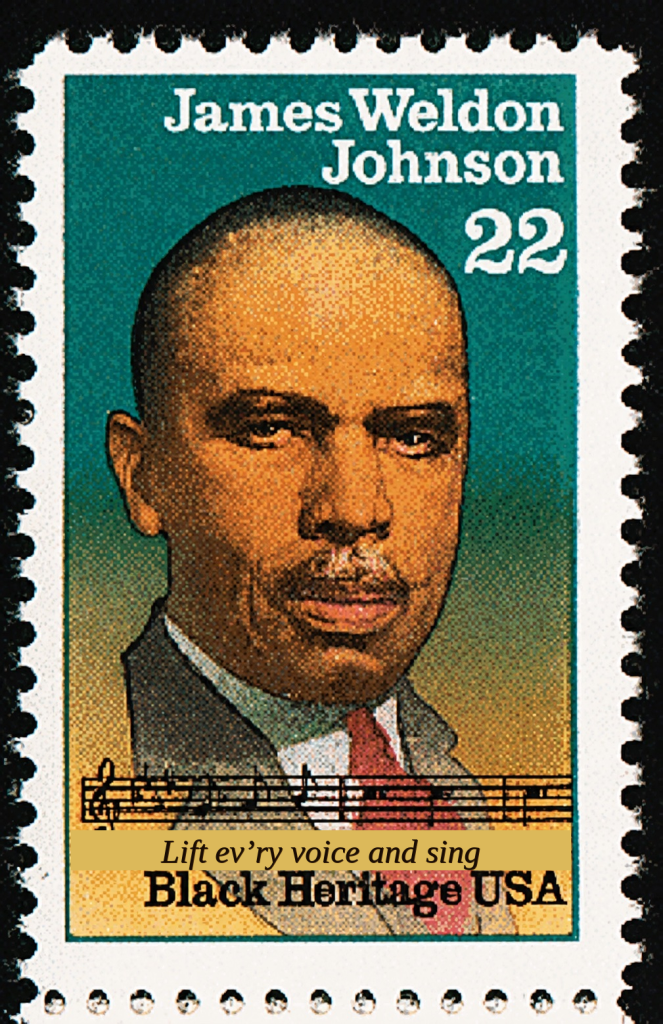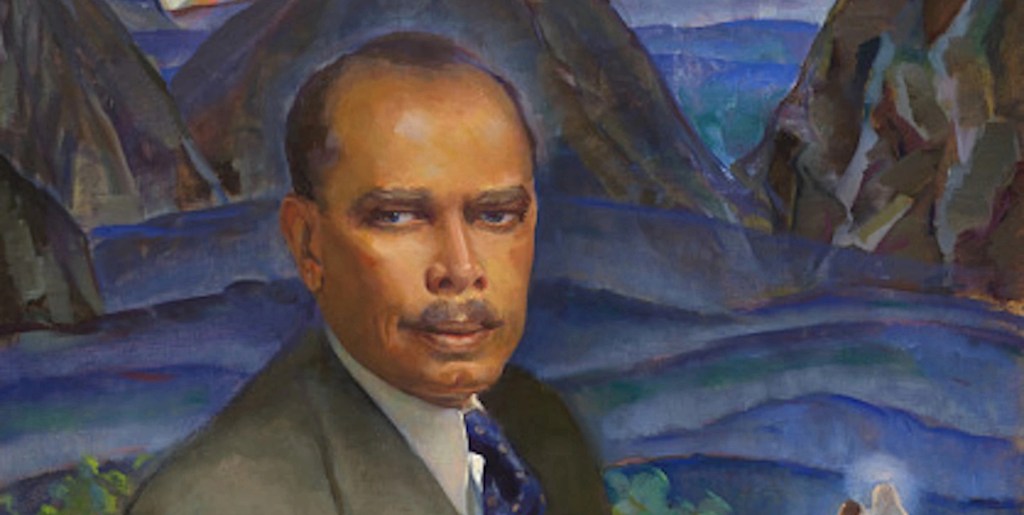
James Weldon Johnson’s “Lift Ev’ry Voice and Sing”
James Weldon Johnson penned the poem “Lift Ev’ry Voice and Sing” in 1900 to celebrate the birthday anniversary of the great emancipator, President Abraham Lincoln.
Introduction and Text of “Lift Ev’ry Voice and Sing”
After James Weldon Johnson wrote the poem “Lift Ev’ry Voice and Sing” in 1900 to celebrate the birthday anniversary of the great emancipator, President Abraham Lincoln, his brother John Rosamond Johnson composed the musical melody for the poem.
The song was later entered into the United States Congressional Record, and in 1919, the National Association for Advancement of Colored People (NAACP) selected the song to serve as the “Negro National Hymn (Anthem)”—also referred to as the “Black National Anthem.” The NAACP employed the song as a cry for unity during the civil rights struggles of the 1950s and 1960s.
The poem shares a common theme with the American National Anthem, “The Star Spangled Banner”; both works celebrate and offer gratitude to the Divine Belovèd (God) for the rewards of freedom and individual liberty.
Johnson’s poem is especially significant for the black experience, including liberation from slavery and the subsequent struggle against the Black Codes and Jim Crow laws that the Democratic Party continued to enforce to foster segregation and denigration of the former slaves and their descendants after the American Civil War (1861–1865).
Lift Ev’ry Voice and Sing
Lift every voice and sing,
Till earth and heaven ring,
Ring with the harmonies of Liberty;
Let our rejoicing rise
High as the list’ning skies,
Let it resound loud as the rolling sea.
Sing a song full of the faith that the dark past has taught us,
Sing a song full of the hope that the present has brought us;
Facing the rising sun of our new day begun,
Let us march on till victory is won.
Stony the road we trod,
Bitter the chast’ning rod,
Felt in the days when hope unborn had died;
Yet with a steady beat,
Have not our weary feet
Come to the place for which our fathers sighed?
We have come over a way that with tears has been watered.
We have come, treading our path through the blood of the slaughtered,
Out from the gloomy past,
Till now we stand at last
Where the white gleam of our bright star is cast.
God of our weary years,
God of our silent tears,
Thou who hast brought us thus far on the way;
Thou who hast by Thy might,
Led us into the light,
Keep us forever in the path, we pray.
Lest our feet stray from the places, our God, where we met Thee,
Lest our hearts, drunk with the wine of the world, we forget Thee;
Shadowed beneath Thy hand,
May we forever stand,
True to our God,
True to our native land.
Reading by Phylicia Rashad
Commentary on “Lift Ev’ry Voice and Sing”
James Weldon Johnson’s “Lift Ev’ry Voice and Sing,” also known as the Negro National Anthem and the Negro National Hymn, was sung publicly for the first time on February 2, 1900, by a choir of 500 children at the Stanton School in Jacksonville, Florida.
Johnson was serving as principal of the school at the time, and the occasion was a celebration of the birthday anniversary of President Abraham Lincoln.
First Stanza: Sing Joyfully, Loudly with Determination
Lift every voice and sing,
Till earth and heaven ring,
Ring with the harmonies of Liberty;
Let our rejoicing rise
High as the list’ning skies,
Let it resound loud as the rolling sea.
Sing a song full of the faith that the dark past has taught us,
Sing a song full of the hope that the present has brought us;
Facing the rising sun of our new day begun,
Let us march on till victory is won.
The speaker begins by enjoining his listeners to sing joyfully and loudly in order to raise their voices to the Heavens. Such thankful voices should spread throughout the seascape and sky. The joy of singing about freedom can become infectious, as it uprights the minds and hearts of the downtrodden.
The singing must be filled with the joy and faith that these people have been taught in the past, even during times that were dark with many shames. But that singing must also ring out with the hope they must foster as they look to the present and future for better times.
The speaker/singer encourages his hearers/listeners to continue their struggle until they meet with victory over oppression. He insists that victory is not the final reward, but victory for freedom will demand constant vigilance, eternally watching and fighting to maintain that precious commodity.
The human race in all its various hues and shades has learned nothing, if not that there is never a guarantee of freedom without effort. Keeping that emphasis on constant effort must remain part of every generation’s thinking and behavior.
There are always groups afoot, conspiring to take the freedom and property of others. Lest defeat be snatched from the jaws of victory, each human being must remain watchful to protect their hard-won freedoms.
As the third American president, Thomas Jefferson, averred in his 1787 letter to the son-in-law of John Adams, William Stephens Smith:
. . . what country can preserve it’s liberties if their rulers are not warned from time to time that their people preserve the spirit of resistance? Let them take arms. . . . The tree of liberty must be refreshed from time to time with the blood of patriots and tyrants.
While celebrating the joy of great accomplishments, it is often prudent to acknowledge that there is no such thing as heaven on earth. Perfection must be left for heaven, while life on earth will always entail certain risks and require vigilance.
Second Stanza: Remaining Undeterred by Tears and Death
Stony the road we trod,
Bitter the chast’ning rod,
Felt in the days when hope unborn had died;
Yet with a steady beat,
Have not our weary feet
Come to the place for which our fathers sighed?
We have come over a way that with tears has been watered.
We have come, treading our path through the blood of the slaughtered,
Out from the gloomy past,
Till now we stand at last
Where the white gleam of our bright star is cast.
The speaker reminds his listeners of the difficulties they have faced. The road has been “stony”—not impossible to travel but not at all easy. And he does not anticipate the travel will become any easier, especially without the proper attitudes and behavior.
Their struggles made having hope a weary task, but through unwavering courage and much hard work, they know they have gained certain goals and have the ability to hold on to them; thus, they must celebrate and be thankful for all the strides forward that they have achieved.
They have continued their march, undeterred by tears and even death. They have traveled on despite the blood shed, the gloom, and the often dashed hopes and dreams.
They now can see that they stand in the much desired light of both hope and faith. That faith gleams like a “bright star” and casts light on all those who strive for it.
They can finally visualize and realize that their struggles have resulted from faith, hope, and have resulted in a certain measure of success in the achievement of freedom.
Third Stanza: Prayer, Devotion, and Gratitude
God of our weary years,
God of our silent tears,
Thou who hast brought us thus far on the way;
Thou who hast by Thy might,
Led us into the light,
Keep us forever in the path, we pray.
Lest our feet stray from the places, our God, where we met Thee,
Lest our hearts, drunk with the wine of the world, we forget Thee;
Shadowed beneath Thy hand,
May we forever stand,
True to our God,
True to our native land.
In the third and final movement, the speaker offers a prayer of gratitude to the Divine Reality (God). The speaker/singer recognizes that the Creator (God as Father) has always guided them as they have been met with struggles for freedom. They have come through all the “weary years with silent tears.”
The speaker/singer acknowledges that with the love and guidance of the Divine Reality (God), they have been led into the light, and he fervently prays that they will continue down the bright path of righteousness that leads to and maintains individual liberty.
The speaker asks of his Divine Creator that he have the ability to keep his feet from straying away from His mercy and guidance. He knows that only his deep faith can continue to guide and guard him through the vicissitudes of life’s trials and tribulations.
He also petitions the Divine Guide to assist them all and not allow them to descend into drunkenness with worldly affairs that would divert their attention away from the Only Reality.
With this concluding, holy image—”Shadowed beneath [God’s] hand”—the speaker places his life, his trust, and his faith in the only Hand that matters. This celebration in song offers a historical glimpse into the enduring qualities that always mattered most in achieving improvements in the human condition.
As all hymns turn hearts and minds Godward, this important song remains a necessary part of American history, uplifting the spiritual stature of all who experience the performance of its sentiment.
Rendered in song by the Southern Sons