Linda's Literary Home

Tag: chant

  • Wake Me, O Belovèd Guruji

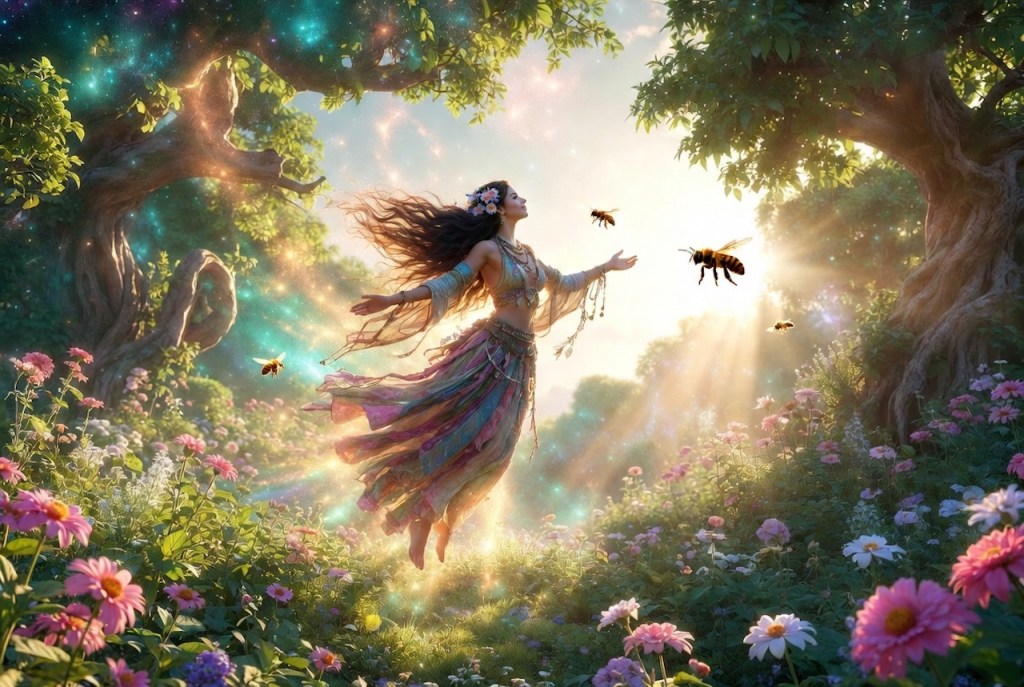
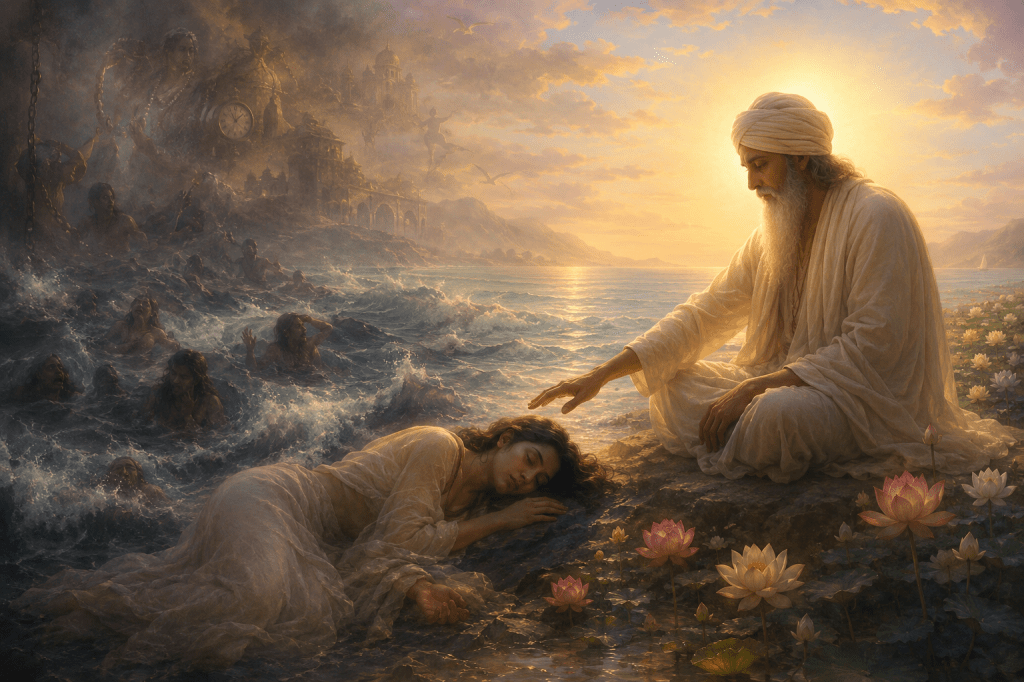
    Image/Created by ChatGPT inspired by the poem.
    Image: Created by ChatGPT inspired by the poem

    Wake Me, O Belovèd Guruji

    —after “Do Not Dry the Ocean of my Love”

    Wishing to wake in the arms
    Of the Divine:

    Wake me, O my belovèd Guruji, wake me
    From this delusion!

    Swimming in this sea of sorrow,
    Let me swim in Thy sea of mirth.

    Dying to rise again on Thy sacred bosom sea
    No more sleep of death, no more dream of life!

    Restless sleep in the dreamland of desires
    Suffering the clack and clutter.

    From restlessness and desires that singe,
    Wake me, my belovèd Guruji, wake me!

  • Awaken In Me Divine Joy

    Image:  Created by Grok inspired by the poem/chant
    Image: Created by Grok inspired by the poem/chant

    Awaken In Me Divine Joy

    —after “O Thou King of the Infinite”

    Divine Belovèd,
    Awaken in me that joy—
    Bright and sustaining joy

    That comes only in union
    With Thee, O Belovèd Divine,
    Awaken in me that joy!

  • Emily Dickinson’s “I taste a liquor never brewed”

    Image: Emily Dickinson - Amherst College - Daguerrotype of the poet at age 17, circa 1847 - likely the only authentic, extant likeness of the poet
    Image: Emily Dickinson – Amherst College – Daguerrotype of the poet at age 17, circa 1847 – likely the only authentic, extant likeness of the poet

    Emily Dickinson’s “I taste a liquor never brewed”

    Emily Dickinson’s “I taste a liquor never brewed” is one of her most enthralling little poems.  In this poem, the speaker is likening spiritual ardor to drunkenness.

    Introduction and Text of  “I taste a liquor never brewed”

    The theme of Emily Dickinson’s “I taste a liquor never brewed” is similar to Paramahansa Yogananda’s chant: “I will sing thy Name,  I will drink thy Name, and get all drunk, O, with thy Name!”   

    Dickinson’s speaker proclaims a spiritual consciousness. The poem extends the metaphor of drunkenness to describe the status of a soul in mystical union with the Divine.

    Dickinson’s speaker in “I taste a liquor never brewed” describes a consciousness steeped in a mystical state that mimics inebriation. She is inspired and enthralled seemingly just by breathing the air around her.  

    The speaker’s consciousness becomes aware of itself and propels her into an immense universe that is difficult to describe. Thus she uses the alcohol metaphor to approximate the physical sensation of what she is experiencing spiritually.

    Thomas H. Johnson numbered this poem #214 in his useful work, The Complete Poems of Emily Dickinson, which restored Dickinson’s peculiar punctuation and elliptical style. As usual, Dickinson employed slant rime or near rime; for example, she rimes Pearl and Alcohol.

    I taste a liquor never brewed

    I taste a liquor never brewed –
    From Tankards scooped in Pearl –
    Not all the Vats upon the Rhine
    Yield such an Alcohol!

    Inebriate of Air – am I –
    And Debauchee of Dew –
    Reeling – thro endless summer days –
    From inns of Molten Blue –

    When “Landlords” turn the drunken Bee
    Out of the Foxglove’s door –
    When Butterflies – renounce their “drams” –
    I shall but drink the more!

    Till Seraphs swing their snowy Hats –
    And Saints – to windows run –
    To see the little Tippler
    Leaning against the – Sun —

    Commentary on “I taste a liquor never brewed”

    Emily Dickinson’s “I taste a liquor never brewed” is one of the poet’s most enthralling little poems, employing the metaphor of drunkenness to describe spiritual ardor.

    Stanza 1:  Imbibing a Non-Brewed Beverage

    I taste a liquor never brewed –
    From Tankards scooped in Pearl –
    Not all the Vats upon the Rhine
    Yield such an Alcohol!

    The speaker announces that she has been imbibing a drink, but that beverage is not one that has been brewed, which eliminates alcohol, tea, and coffee, this is, the beverages which have mind-altering capabilities.  She then begins an extended metaphor, likening the effect of her “liquor” to that of an alcoholic beverage.

    The “Tankards scooped in Pearl” simulate the vessels from which the speaker has been imbibing her rare concoction. The consciousness which the speaker wishes to describe transcends the physical consciousness of an alcohol hum; thus the speaker must resort to metaphor to communicate as nearly as possible this ineffable state.

    Those rare tankards having been “scooped in Pearl” spiritually correspond to the nature of the soul. She has, in fact, drunk a beverage that has not been brewed from a vessel that has not been manufactured by human hands.

    Stanza 2: It Resembles Being Drunk

    Inebriate of Air – am I –
    And Debauchee of Dew –
    Reeling – thro endless summer days –
    From inns of Molten Blue –

    Dickinson’s speaker continues her metaphor by revealing that the feeling she is experiencing is like being drunk on air; thus the act of simply taking a breath of air has the power to intoxicate her. 

    Not only air, but the “Dew” has this delicious effect. Further physical realities like a summer day make her feel that she has been drinking at a tavern, “Inns of Molten Blue.” All this imbibing leaves her “reeling” from this rare form of intoxicant.

    Stanza 3:  A Drunken State That Never Ceases

    When “Landlords” turn the drunken Bee
    Out of the Foxglove’s door –
    When Butterflies – renounce their “drams” –
    I shall but drink the more!

    On the stage of nature, the speaker is accompanied by “bees and butterflies,” and these fellow creatures quite literally imbibe nectar from flowers. The speaker’s brand of liquor has an advantage over that of the bees.  They have to stop their imbibing and leave their blossoms or else they will become trapped as the petals close up for the night.  

    But because of the spiritual nature of this speaker’s intoxication, she does not have stop drinking. She can enjoy her drunken state without end.   Only on the physical plane do activities begin and end; on the spiritual plane, the intoxication has no need to cease. The eternal soul is without boundaries of space and time.

    Stanza 4;  The Dash That Runs to Eternity

    Till Seraphs swing their snowy Hats –
    And Saints – to windows run –
    To see the little Tippler
    Leaning against the – Sun –

    The speaker boasts that she will never have to curtail her mode of mystical intoxication. As the penultimate stanza ends with the claim, “I shall but drink the more!,” the idea continues into the final stanza.  By placing the time of her stopping her drinking at two fantastic events that will never occur, she emphatically asserts that she will never have to stop her drinking binge.

    When the highest order of angels, the “Seraphs,” commit the unlikely act of “swing[ing] their snowy Hats,” and curious saints run to windows, only then shall she cease her imbibing. That time is never because Seraphs and saints do not comport themselves with such behavior. 

    The speaker calls herself “the little Tippler” and positions herself “[l]eaning against the — Sun.” Another impossible act on the physical level, but one quite possible on the mystical.

    The final clue that the speaker is asserting her ability never to stop drinking of the mystical wine is the final punctuation of the dash — that concludes her report. The period, question mark, or exclamation mark, as some editors have employed, denote finality while the dash does not.

    Thomas H. Johnson has restored the dash — to this poem in his The Complete Poems of Emily Dickinson. When other versions lose the Dickinsonian dash, they also lose a nuance of her meaning.

  • Langston Hughes’ “The Negro Speaks of Rivers”

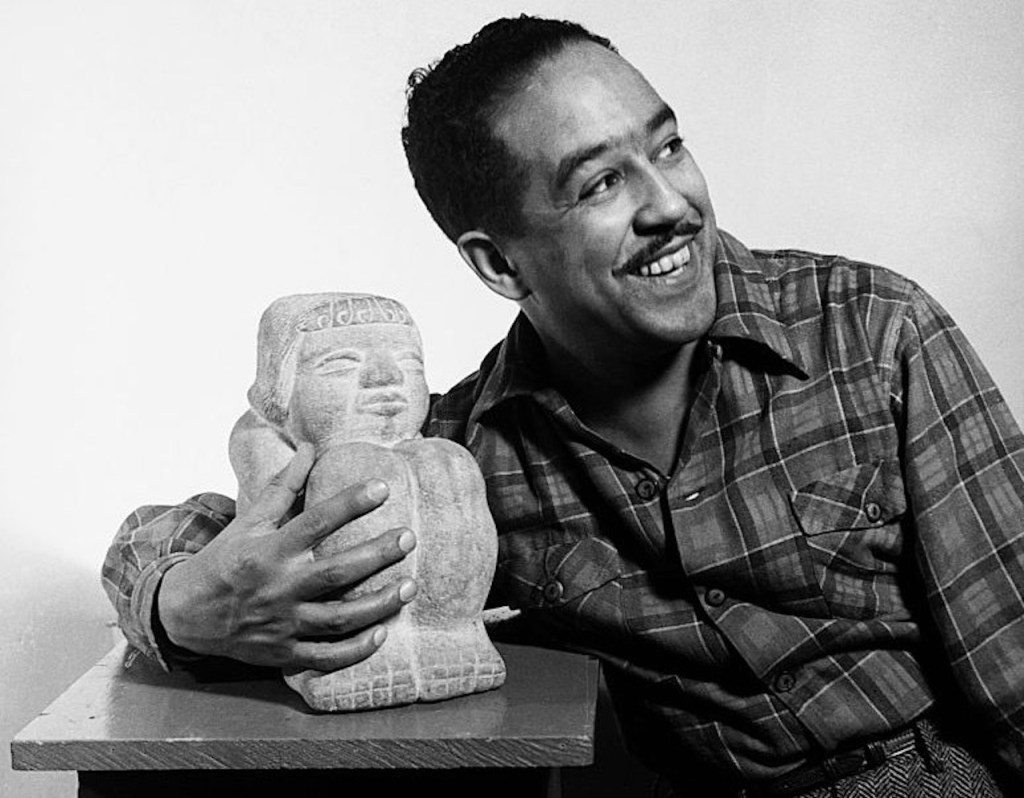
    Image:  Langston Hughes.  Library of Congress. Photographer Gordon Parks 

    Langston Hughes’ “The Negro Speaks of Rivers”

    Langston Hughes’ speaker in “The Negro Speaks of Rivers” displays his message in five versagraphic movements, thematically exploring his soul experience with a “cosmic voice,” which includes and unites all of humanity.

    Introduction and Text of “The Negro Speaks of Rivers”

    Langston Hughes’ speaker in “The Negro Speaks of Rivers” displays his message with a “cosmic voice,” which includes and unites all of humanity.  The poem plays out in five versagraphic movements, focusing on the theme of soul exploration.

    The Cosmic Voice in Poetry

    Writers, especially poets, often employ the “cosmic voice” in order to provide a deep and wide view of historical events and vast swaths of space.  A device called the omniscient speaker is often used in fiction; that voice is similar to the cosmic voice but much more limited.

    Time and space may stretch or contract as needed as the cosmic seer narrates what he experiences.  The “cosmic voice” may come to a poet through a vivid imagination; however, it transcends the imagination as a truth teller.   Only a few poets have been blessed with such a voice; examples are Emily Dickinson, Rabindranath Tagore, Paramahansa Yogananda, and to a limited degree Walt Whitman.

    The cosmic voice imparts truth through deep intuition.  The soul of the speaker employing the cosmic voice is, even if only temporarily as is the case with Langston Hughes, becomes aware of its vast and profound knowledge.  The cosmic voice speaks from a place far beyond ordinary sense awareness.  

    Individuals who comprehend the cosmic voice are bequeathed a consciousness far beyond their own sense awareness and thus comprehend the unity of all created things.  Those individuals are heralded into the realm of the Cosmic Creator and often remain transformed beings for having experienced that Sacred Locus.

    Langston Hughes and the Cosmic Voice

    The voice employed in “The Negro Speaks of Rivers” is not a whining, complaining one so often heard in the protest voices of activists; instead Hughes is employing the cosmic voice—the voice of the soul that knows itself to be a divine entity.  That voice speaks with inherent authority; it reports its intuitions so that others might hear and regain their own experiences through its guidance.

    Langston Hughes’ speaker in “The Negro Speaks of Rivers” imparts his discourse in five versagraphic movements.  His theme explores with the cosmic voice that unites all of humanity.  

    The vital lines that serve as a refrain—”I’ve known rivers” and “My soul has grown deep like the rivers”—work like a chant, instilling in the listener the truth that the speaker wishes to impart.  That Langston Hughes was able to employ a cosmic voice in a poem at age seventeen is quite remarkable.  

    Although some of his later work, even as much of it remained important and very entertaining, descended into the banal and at times even slipshod, no one can deny his marvelous accomplishment with this early poem in which he speaks as a master craftsman.

    The Negro Speaks of Rivers 

    I’ve known rivers:
    I’ve known rivers ancient as the world and older than the flow
    of human blood in human veins.

    My soul has grown deep like the rivers.

    I bathed in the Euphrates when dawns were young.
    I built my hut near the Congo and it lulled me to sleep.
    I looked upon the Nile and raised the pyramids above it.
    I heard the singing of the Mississippi when Abe Lincoln
         went down to New Orleans, and I’ve seen its muddy
         bosom turn all golden in the sunset.

    I’ve known rivers:
    Ancient, dusky rivers.

    My soul has grown deep like the rivers.

    Reading:   Langston Hughes reads his poem “The Negro Speaks of Rivers”

    Commentary on “The Negro Speaks of Rivers”

    Langston Hughes’ speaker in “The Negro Speaks of Rivers” stands as high testimony to the poet’s ability to craft genuine, heartfelt poetry.  To have composed such a profound piece of art at such an early age bespeaks a literary marvel.

    First Movement:  The River as a Symbol

    I’ve known rivers:
    I’ve known rivers ancient as the world and older than the flow
    of human blood in human veins.

    The poem opens with the speaker remarking rather nonchalantly that he has experienced the natural phenomenon known as “rivers.”  He has no doubt observed rivers flowing in their channels, and he has become aware that rivers flow through the earth as blood flows through the veins of human beings.  

    Both flowing rivers and flowing blood must be ancient, but the speaker intuits that the flow of the rivers surely predates that of the appearance of the human being upon the planet. The river image becomes a symbol linking all of humanity from the pre-historic era to the present day.   

    As the “river” has served to carry the physical encasements (bodies) and mental bodies over the rough terrain of land and rocks, the symbolic river carries the soul on its Divine journey.   Readers and listeners will easily intuit the significance of the speaker’s focus as it ranges far beyond the boundaries of the physical, material universe.

    Second Movement:  Intuitive Awareness

    My soul has grown deep like the rivers.

    This line indicates that the speaker has become aware that through his own soul he can intuit historical events, places, and people, who have existed from the beginning to time.  The line becomes a refrain and will be encountered again in the poem because of its great importance.  

    It becomes quite obvious that the speaker would not have been able to know literally the rivers of antiquity that he claims to “know.”  However, through his soul, or mystical awareness, he can.  Thus, he again employs the cosmic, thus mystical, voice to fashion his assertion.

    Third Movement: Historical Unity

    I bathed in the Euphrates when dawns were young.
    I built my hut near the Congo and it lulled me to sleep.
    I looked upon the Nile and raised the pyramids above it.
    I heard the singing of the Mississippi when Abe Lincoln
         went down to New Orleans, and I’ve seen its muddy
         bosom turn all golden in the sunset.

    The speaker claims that he “bathed in the Euphrates” at the dawning of Western civilization.  From the Euphrates to the Mississippi Rivers, the speaker offers a huge expansion of time and place.  

    In biblical times to present time, he lays claim to knowledge, again impossible except for soul consciousness. Awareness through the soul is unlimited, unlike the limitations of body and mind.  The speaker could not have experienced the Euphrates when “dawns were young.”  

    But the cosmic voice of the speaker can place itself at any point along the time line of civilization or cosmic creation. In claiming to have built his “hut near the Congo,” the speaker continues his cosmic, mystically inspired journey.  He “looked upon the Nile”  and “raised the pyramids” only as a cosmic-voiced speaker.

    People of all times and climes have been influenced by the river experience.  The speaker can thus unite all races, nationalities, creeds, and religions in his gathering of historic experiences within which all those peoples have lived.   And he accomplishes this feat through employment of the symbolic force of the “river.” 

    Emphasizing the American experience, the speaker claims to have “heard the singing of the Mississippi when Abe Lincoln / went / down to New Orleans . . . .”   The allusion to President Abraham Lincoln reminds the reader of the process of slave emancipation.

    As with all the rivers mentioned, the Mississippi River, an American river, stands as a symbol of the blood of the human race—not naturally segregated into color and national categories. The American Mississippi River, as the earlier mention of rivers has done, symbolizes the human blood of the human race—the only race that scientifically exists.

    Fourth Movement:  A Soul Chant

    I’ve known rivers:
    Ancient, dusky rivers.

    Because of the importance of the “river” as a symbol, the speaker repeats the line, “I’ve known rivers.”  Like the line, “My soul has grown deep like the rivers,” this one also  serves as a refrain.   If the speaker had chanted the line many more times, the poem’s delightful charm would have even been enhanced—that line is that crucial!

    The soul, the river, the depth of the soul and the river—all force history to yield a mighty blessing on those who have “known rivers,”  and whose souls have grown deep like those rivers. 

    Thus the speaker offers a brief description of how those river appear:  they are extremely old, and they are mystically dark, a measure that alludes to the dark-skinned race with graceful precision, even as it holds all races as having experienced the nature of the mystic river.

    Fifth Movement: Life Force and the Symbol of the River

    My soul has grown deep like the rivers.

    The speaker’s soul has grown profoundly deep like the rivers and along with the rivers.  Civilizations have grown up and grown deep along rivers all over Planet Earth. The soul that possesses the body is the life force informing and maintaining that body. 

    Likewise, rivers streaming through the earth give life force to civilizations and also assist in maintaining those civilization with the products and supplies that river travel has allowed over the centuries.

    The speaker is taking his own identity from the energetic force of the soul and the river force of the earth.  The children of the Divine Creative Reality (God) all spring forth from a common ancestry, a symbolic set of original parents.   It has always been rivers that link all of those ancestors as the blood in their veins links them into one family—the Human Race.

    The cosmic voice of a young poet—who happened possess the darker hue of skin along the color spectrum—has rendered a statement that could enlighten and reconnect all peoples if only they could listen with their own cosmic awareness.  

    At the soul level, all human beings remain eternally linked as children of the Great Divine River King (God). That River God flows in the blood of His offspring. And that same River God flows in the rivers of the planet on which they find themselves too often segregated by ignorance of their own common being as sparks of the Divine.

    Instead of identifying with the perishable body and changeable mind that too often rule, the simple act of identifying with their own cosmic nature would allow individuals to experience the cosmic voice of their own soul. The simple poet named Langston Hughes has offered a useful template for viewing the world through a cosmic lens in his nearly perfect poem.

    🕉

    You are welcome to join me on the following social media:
    TruthSocial, Locals, Gettr, X, Bluesky, Facebook, Pinterest 

    🕉

    Share