From an internet site dedicated to his Christian faith and affinity for cowboy culture God’s Horseback Gospel, Brad McClain’s “Cowboy Christmas” celebrates the congeniality of friends gathering to observe the Christmas season. It offers the traditional energy and fun-loving atmosphere of most cowboy Christmas poetry.
The two prose pieces following the poem further extend the faithful worship included in Mr. McClain’s purpose for creating his webpage—to glorify God and introduce others to a kind of spiritual awakening that they may not have known existed.
Brad McClain’s “Cowboy Christmas”
A countrified tradition, Was part of yester-year, When the cowboys’ main ambition, Was to spread some Christmas cheer.
The ranch folk friend and families, Would come from far and wide, Trottin’ through the winter breeze, On Christmas Eve they’d ride.
For food and fun and merriment, Twin fiddles filled the air, And everyone’s so glad they went, And goodwill everywhere.
Kids a’chasin’ kids around, Oldsters smile and wave, All the festive sights and sounds, And a cowboy gettin’ brave,
Enough to ask that gal to dance, And of course she says she will, He never thought he had a chance, And if a look could kill,
Her Daddy watches carefully, He remembers to that age, Her mama takes it prayerfully, It helps her fear assuage.
But nothin’ like a Christmas waltz, And nothin’ like young love, And nobody is findin’ faults, And lots to be proud of.
And when the egg nog’s mostly gone, And the kids are ‘bout asleep, The hugs and handshakes linger long, And the night is gettin’ deep,
And then all head for hearth and home, They jingle all the way, Snow drifts ‘cross the sandy loam, And soon comes Christmas Day.
The evening wanes, kids tucked in bed, Gifts set beneath the tree, Stockings filled all green and red, A prayer for you and me.
The Cowboy Christmas, all are blessed, Praise for the Savior’s birth, God gave to each His gracious rest, Good will and peace on earth.
“Praise the Lord, the God of Israel, because He has visited and redeemed His people. He has sent us a mighty Savior from the royal line of His servant David.” (Luke 1:68-69, NLT)
Christmas is a festival of praise. All the fun, food, music, lights and fellowship are because God has given us His greatest give- the Savior! God has always been the One who saves, but now the ultimate salvation has entered the world and for one reason- to save that which is lost. How sad that some of those who need it the most seem to feel it the least. And how wonderful it is when someone discovers the love that meets them exactly where they are in order to take them where they have always should have been! The devil lies when he claims to have the best party. Jesus is the Lord of the dance and it’s time we put aside our fickleness and followed Him. Christmas is a good time to get the party started!
Buck Ramsey’s “Christmas Waltz” dramatizes a holiday celebration on the ranch. The participants all join in a joyful preparation for their celebration as they keep their faith central and focused.
Introduction and Text of “Christmas Waltz”
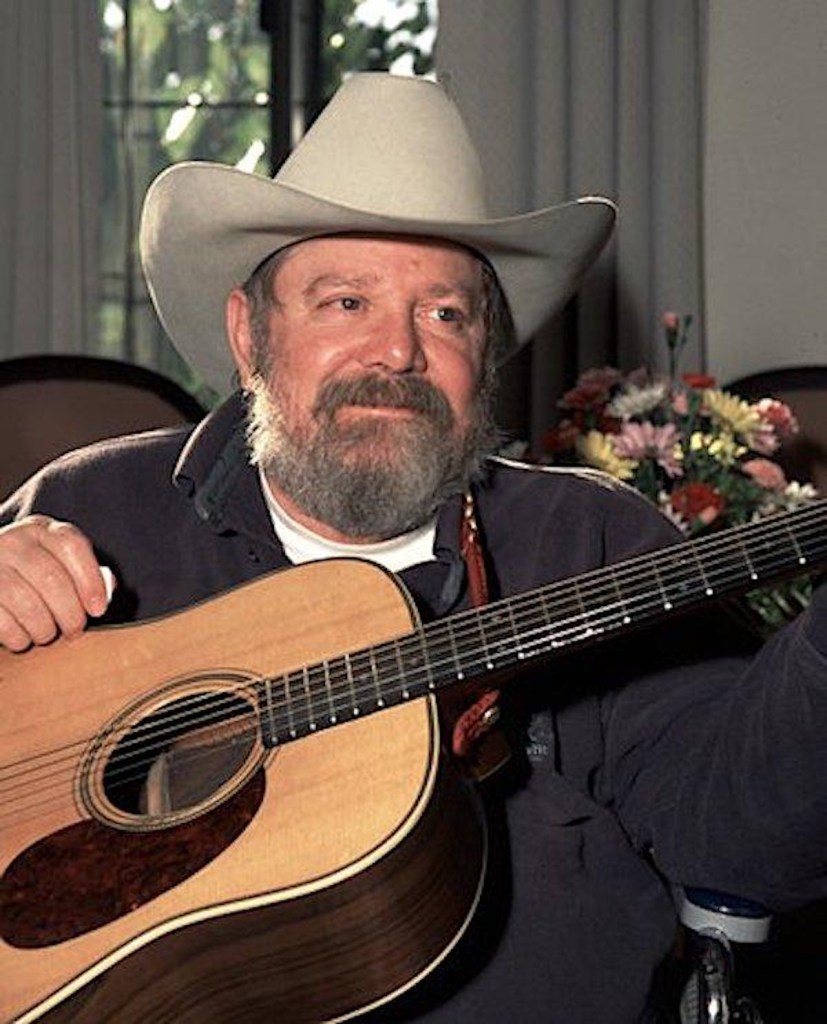
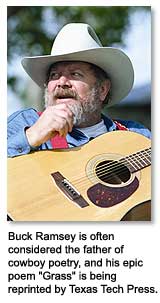
Buck Ramsey is considered the “Father of Cowboy Poetry.” Many of his poems, which have also been rendered in song, have become classics in the cowboy poetry genre.
Ramsey’s “Christmas Waltz” stages a cowboy Christmas celebration with a tree from the big ranch that was selected way back in summer. The ranch hands then experience a rambunctious good time as they acknowledge their joy in the birth of a “baby boy born in a cow shed.”
This traditionally flavored ballad offers many colorful images of cowboy culture from the American West as the folks prepare for a big feast to recognize and celebrate their faith that keeps them grounded throughout the year.
Christmas Waltz
The winter is here and the old year is passing, The sun in its circle winds far in the south. It’s time to bring cheer to a cold, snowbound cow camp, It’s Christmas tree time of the year for the house.
Go ride to the cedar break rim of a canyon, Down by where the river takes creek water clear, And saddle-sleigh home us a fine shapely evergreen Picked out while prowling the pasture this year.
While Fair strings the berries and popcorn and whatnots And Ty braids the wreaths out of leather and vines, Old Dunder, he whittles and whistles old carols And fills them with stories of fine olden times.
He talks of a baby boy born in a cow shed, All swaddled in tatters and laid in a trough, Who, growing up, gave away all he could gather And taught us that what is not given is lost.
It’s morning of Christmas and long before dawning The camp hands are risen to ready the feast. But with the fires glowing they don warm apparel And go out to gaze on the Star of the East.
They cobbler the plums they put up back in summer, They bake a wild turkey and roast backstrap deer, They dollop the sourdough for rising and baking, And pass each to each now the brown jug of cheer.
The dinner is done and they pass out the presents, Their three each they open with handshakes and hugs, Then Ty gets his guitar and Fred gets his fiddle While Dunder and Fair laugh and roll back the rugs.
The tunes that they play melt the chill from the winter As Dunder and Fair waltz and two-step along. They play, sing and dance till the next morning’s dawning Then all of the their slumbers are filled with this song.
Musical Version Buck Ramsey’s “Christmas Waltz”
Commentary on “Christmas Waltz”
A cowboy Christmas filled with family, friends, and good times allows the narrator to colorfully describe even scientific facts.
First Stanza: It Winter Time
The winter is here and the old year is passing, The sun in its circle winds far in the south. It’s time to bring cheer to a cold, snowbound cow camp, It’s Christmas tree time of the year for the house.
The cowboy/speaker starts off his celebration of the Christmas season by reporting, “winter is here”; he continues to offer a description of the time of year by averring that the old year is almost over, and the sun has moved “far to the south.”
Around Christmas time, the sun is in the Tropic of Capricorn in the southern hemisphere; thus, the speaker colorfully reports that scientific fact, “sun in its circle winds far in the south.”
Interestingly, the speaker then describes the Christmas holiday season as being “Christmas tree time” at the ranch, placing emphasis on the tree as the center of decoration for the season. The speaker is full of joy that a big Christmas tree will soon stand tall in the ranch house.
Second Stanza: The Big Christmas Tree
Go ride to the cedar break rim of a canyon, Down by where the river takes creek water clear, And saddle-sleigh home us a fine shapely evergreen Picked out while prowling the pasture this year.
The cowboy/speaker then reports to his audience where that big Christmas tree comes from: during the summer, while looking over the pasture, the speaker had spotted the perfect tree that stood down along the river where the water was clear as crystal.
The speaker had made a mental note to remember exactly where it stood so he could send another cowboy to fetch it as Christmas time was on its way. He so admired that “shapely evergreen” that he had no difficulty remembering exactly where he saw it.
Third Stanza: Fair Decorating
While Fair strings the berries and popcorn and whatnots And Ty braids the wreaths out of leather and vines, Old Dunder, he whittles and whistles old carols And fills them with stories of fine olden times.
A gal named “Fair” will help decorate the grand tree with berries and popcorn on a string. Another cow-hand named “Ty” will put up wreaths fashioned out of vines and leather.
While each ranch hand attends to his part in the decorating, the old cowboy they call “Old Dunder” will be whittling while he whistles old Christmas carols, and he will be telling stories of the olden days.
The speaker makes it clear that everyone involved with this celebration is fulled with the joy of the season as they tend to their appointed tasks. Each member of the party, no doubt, looks forward to the fine gathering they are anticipating as they work to bring about the holiday appearance.
Fourth Stanza: Testimony
He talks of a baby boy born in a cow shed, All swaddled in tatters and laid in a trough, Who, growing up, gave away all he could gather And taught us that what is not given is lost.
Old Dunder will be the one who will offer testimony regarding the reason for the season, “a baby boy born in a cow shed.” He will mention how Jesus “gave away” all material possessions in order to demonstrate for humanity the vital importance of giving.
The cowboy colloquial of having the baby Christ “born in a cow shed” adds to the American West flavor of the ballad. The “born in a manger” theme easily translates to cowboy lingo for the cow poke who retains his love and respect for American culture, influenced by Jesus the Christ.
Each aspect of the American culture can be expressed through unique images and language common to each group that has become integral to the melting pot of languages and cultures while remaining purely American.
Fifth Stanza: Christmas Morning
It’s morning of Christmas and long before dawning The camp hands are risen to ready the feast. But with the fires glowing they don warm apparel And go out to gaze on the Star of the East.
Finally, Christmas day has arrived. Even well before the light of day, the ranch hands are up and wide awake, getting ready to start blazing up fires for cooking. But before they commence their chores for the big celebration, they go outside, “to gaze on the Star of the East”; this annual ritual is the heart of their cowboy prayer that they gratefully offer as part of their celebration.
While the partying and feasting remain a central part of the poem’s theme, the birth of their Christian faith also figures strongly in that celebration as they ready the ranch and their hearts and minds for keeping their faith strong and vibrant.
Sixth Stanza: Time to Cook
They cobbler the plums they put up back in summer, They bake a wild turkey and roast backstrap deer, They dollop the sourdough for rising and baking, And pass each to each now the brown jug of cheer.
Finally, the cooking begins. They whip up plum cobbler using the plums they had stored up back in summer. The revelers bake wild turkey and roast backstrap deer; they also bake sourdough bread, as they continue to pass around “the brown jug of cheer.”
Seventh Stanza: A Big Dinner
The dinner is done and they pass out the presents, Their three each they open with handshakes and hugs, Then Ty gets his guitar and Fred gets his fiddle While Dunder and Fair laugh and roll back the rugs.
They all enjoy their big dinner, and then they all gather around the beautiful Christmas tree to exchange their gifts. Each partier receives at least three presents for which they are very grateful and easily express their gratitude to one another. They hug and shake hands to show gratitude for their bounty.
After the gift exchange, they are now ready for music and dancing. Old Dunder and Fair roll back the rugs for the dancing. Fred starts his fiddle-playing, while Ty warms up his guitar.
Eighth Stanza: Music and Fun Times
The tunes that they play melt the chill from the winter As Dunder and Fair waltz and two-step along. They play, sing and dance till the next morning’s dawning Then all of the their slumbers are filled with this song.
The music is rollicking and lively, and everyone has a great time. It seems the robust celebration takes the chill off the bitter winter weather. The dancing continues way past dawn; every one sings and dances until morning. After the partiers finally say good-night and drift off to sleep, the music and singing will keep on playing in their dreams.
The theme of Christmas cheer and the beautiful faith each cowboy experiences will play out as the images from this ballad continue to influence their work and play in the coming year.
A “hard-bitten ol’ cowpoke” experiences a mystical experience that changes his heart in the Christmas ballad. He will carry his new change of heart into his daily cow poking life as he honors “the Great Trail Boss in the Sky.”
Introduction with Text of “Cowboy Christmas Carol”
The speaker in cowboy poet David Althouse’s “Cowboy Christmas Carol” spins a deeply spiritual yarn about an old cowboy whose mystical experience leads him to a state of grace and thankfulness that he had been lacking—even though he had lived a relatively carefree life in the open prairie that he loved.
Cowboy Christmas Carol
For a hard-bitten ol’ cowpoke like me a Christmas ain’t always merry; I’ve spent most of ’em a-ridin’ fences, a-sleepin’ in line cabins out on the prairie. So for most a my hard life the spirit of Christmas did not abide within my heart. How I come to possess the spirit is the story I hafta impart.
Tha year was ’87 and I was a-follerin’ doggie trails, A-drinkin’ rot gut whiskey to forget about my life’s travails. Ih was two days from the line cabin, at a far off lonely place, A-roundin’ up some strays, the snow whippin’ crost my face.
Night came of a-suddin’ so’s I bedded down to rest, A tin can full o’ hot coffee a-restin’ crost my chest. Of a-suddin’ I heard somthin’ a-flutterin’ down from the skies. I taken a closer look an I couldn’t believe my eyes.
It looked to be some kind o’ Christmas Angel from the first I did suspect, What with all the sugar plums a-hangin’ ’round ‘er neck. Holly laced ‘er halo an’ lustrous pearls adorned ‘er wings, An’ ‘er sweet little silver bell voice was a-trillin’ little ting-a-ling-a-lings.
“Cast away your fears, cowboy,” she says, “I’m an Angel sent from on High, And I’m here to do the bidding of the Great Trail Boss in the Sky.” Dadgumit she talked! She’s a bonafide Angel fer shore! Was I’a-goin’ feral or was it that bad hooch I drank the night afore?
“It isn’t the whiskey,” she says, a-readin’ my mind. “You don’t even know it cowboy, but it’s Christmas time.” She had me dead to rights on that one, an’ it caused me much chagrin, Causin’ the last time I partook a Christmas was back in … heck, I don’t know when.
“Why, thar ain’t no time fer Christmas out ‘ere Angel,” I says. “It’s absolut’ absurd. I’ve got fences to mend an’ orn’ry doggies to git back to the herd!” She says, “You’ve sunk lower than the wild beasts, lower than a longhorn steer, For even the furry animals keep Christmas once a year.”
“Critters a-keepin’ Christmas?” I says. “Now this I gotta see!” “Very well, cowboy,” she says. “Come fly the night sky with me.” Well my eyes got as big as poker chips when flyin’ she did suggest. “Just take hold of my arm, cowboy,” she says, “and I’ll do the rest.”
To a quiet faraway meadow we flew, to a lonely stand o’ pines, An’ when I looked down a’neath them trees I was in fer a big surprise. Fer a-layin’ thar a’neath them trees all cuddled up on the ground, Was ever’ kind o’ furry critter anywhere to be found.
Rabbits, squirrels, birds and deer all a-layin’ in one spot, With a coyote, wolf and mountain lion a-standin’ guard over the entire lot. She says, “They’re huddled together because the spirit of Christmas fills the air.” “Mebbe so,” I says, “But them smaller critters should be a-scampin’ outa thar!”
“They’ve nothing of which to worry,” she says. “Peace fill their hearts upon this night.” “Whatever ya thank,” I says, ” but they’d best make dust afore first light.” Yet, as I beheld this miracle, I recollect I shed some tears, A-rememberin’ all the wasted Christmases of my long-gone yesteryears.
I vowed I’d do thangs different, that I’d make another start, That ever’ day I had left I’d keep Christmas merry in my heart. Then I gave thanks to this ‘ere Angel fer a-savin’ me from my demise. She just smiled an angelic smile then she a-fluttered back up to the skies.
A-many a year has passed since I beheld that angelic sight, An’ I’ve tried to keep the promise I made to her upon that night. Now I’m proud to herd these doggies, an watch over ’em with all I know — Like extry hay fer the runt calves, when it’s a-freezin’ an’ a-blowin’ snow.
And now I’m thankful that I’m a cowboy, a-roamin’ the trails a-wild an’ free, A-watchin’ over these orn’ry doggies like the Great Trail Boss a-watches over me.
Commentary on “Cowboy Christmas Carol”
The idea that the sentiment of Christmas belongs in each heart every day of the year and not just on one celebrated day enjoys widespread lip-service, although it is seldom achieved. This old cowboy intends to change that fact, at least, for himself .
First Movement: Cowboy Work Comes First
For a hard-bitten ol’ cowpoke like me a Christmas ain’t always merry; I’ve spent most of ’em a-ridin’ fences, a-sleepin’ in line cabins out on the prairie. So for most a my hard life the spirit of Christmas did not abide within my heart. How I come to possess the spirit is the story I hafta impart.
Tha year was ’87 and I was a-follerin’ doggie trails, A-drinkin’ rot gut whiskey to forget about my life’s travails. Ih was two days from the line cabin, at a far off lonely place, A-roundin’ up some strays, the snow whippin’ crost my face.
The speaker is a cowboy who has been practicing his profession for many years, and he admits that mending fences while tending cattle out on the prairie has not always been conducive to observing and celebrating Christmas. He has felt that his mind and heart had been spiritually dry for a long time, but then something happened to change his heart.
During one Christmas season, the speaker was out on the prairie rounding up some stray “doggies,” drinking “rot gut whiskey,” which helped him forget his hard life. He found himself alone, many miles from the “line cabin.” It was cold with snow whipping about his face.
Second Movement: A Mystical Being Appears
Night came of a-suddin’ so’s I bedded down to rest, A tin can full o’ hot coffee a-restin’ crost my chest. Of a-suddin’ I heard somthin’ a-flutterin’ down from the skies. I taken a closer look an I couldn’t believe my eyes.
It looked to be some kind o’ Christmas Angel from the first I did suspect, What with all the sugar plums a-hangin’ ’round ‘er neck. Holly laced ‘er halo an’ lustrous pearls adorned ‘er wings, An’ ‘er sweet little silver bell voice was a-trillin’ little ting-a-ling-a-lings.
The speaker has bedded down for the night with a tin of hot coffee placed on his chest to help drive out some of the cold. With the night’s seemingly sudden arrival, he sees a celestial being approaching from the sky.
The cowboy describes the being in typical cowboy fashion, mentioning “sugar plums,” decorating the form of what appears to be an angel with “lustrous pearls” on her wings. He even hears her voice that sounds like a “sweet little silver bell.”
Third Movement: Sent by the “Great Trail Boss”
“Cast away your fears, cowboy,” she says, “I’m an Angel sent from on High, And I’m here to do the bidding of the Great Trail Boss in the Sky.” Dadgumit she talked! She’s a bonafide Angel fer shore! Was I’a-goin’ feral or was it that bad hooch I drank the night afore?
“It isn’t the whiskey,” she says, a-readin’ my mind. “You don’t even know it cowboy, but it’s Christmas time.” She had me dead to rights on that one, an’ it caused me much chagrin, Causin’ the last time I partook a Christmas was back in … heck, I don’t know when.
The being does not keep the cowboy guessing who she is; she identifies herself as an “Angel,” and she informs him that she is being sent by the Divine or in cowboy talk that “Great Trail Boss in the Sky.” Furthermore, she instructs him not to fear.
Of course, the speaker is wonderstruck at first that this Angel sent from “on High” would be visiting him. He suspects he is hallucinating from the bad whiskey or that he is just going wild in the brain.
The Angel tells him that her appearance has nothing to do with the whiskey. He knows then he is in the presence of something divine because she is reading his mind. She then informs him that it is Christmas time, insisting that he did not even know that season was upon him.
The cowboy has to admit that she has him “dead to rights”—he had not been aware of Christmas for so long that he had actually forgotten the last time he had thought about that season.
Fourth Movement: Too Busy to Celebrate
“Why, thar ain’t no time fer Christmas out ‘ere Angel,” I says. “It’s absolut’ absurd. I’ve got fences to mend an’ orn’ry doggies to git back to the herd!” She says, “You’ve sunk lower than the wild beasts, lower than a longhorn steer, For even the furry animals keep Christmas once a year.”
“Critters a-keepin’ Christmas?” I says. “Now this I gotta see!” “Very well, cowboy,” she says. “Come fly the night sky with me.” Well my eyes got as big as poker chips when flyin’ she did suggest. “Just take hold of my arm, cowboy,” she says, “and I’ll do the rest.”
Then the speaker protests that there is no opportunity for observing Christmas out here on the prairie with “orn’ry doggies” and “fences to mend.” But to his excuses, the Angel counters that he has allowed himself to sink lower than the animals, adding that at this time of year even the animals celebrate the spirit of Christmas.
The cowboy protests that “critters a-keepin’ Christmas” is something he would have to see to believe. And so the Angel tells him to take hold of her arm, and they will “fly the night sky” to a place where she will prove the truth of her statement. With eyes as big as “poker chips,” the cowboy obeys the Angel, and they fly off.
Fifth Movement: An Astral Meadow
To a quiet faraway meadow we flew, to a lonely stand o’ pines, An’ when I looked down a’neath them trees I was in fer a big surprise. Fer a-layin’ thar a’neath them trees all cuddled up on the ground, Was ever’ kind o’ furry critter anywhere to be found.
Rabbits, squirrels, birds and deer all a-layin’ in one spot, With a coyote, wolf and mountain lion a-standin’ guard over the entire lot. She says, “They’re huddled together because the spirit of Christmas fills the air.” “Mebbe so,” I says, “But them smaller critters should be a-scampin’ outa thar!”
The Angel brings him to an astral meadow that looks very much like a place the cowboy would recognize with a “lonely stand o’ pines.” But when he looks down, he can see “rabbits, squirrels, birds and deer,” and “a coyote, wolf and mountain lion” are guarding them all as they rest peacefully in one area.
This inspiring scene offers an allusion to Isaiah 11:6 (KJV), describing the peace that reigns with the experience of Christ-consciousness:
The wolf also shall dwell with the lamb, and the leopard shall lie down with the kid; and the calf and the young lion and the fatling together; and a little child shall lead them.
The Angel explains that the animals had all huddled together because the spirit of Christmas is filling the atmosphere But the cowboy, practical man that he is, remarks that those little critters ought be scampering away from those bigger, dangerous ones.
Sixth Movement: The Peaceful Night
“They’ve nothing of which to worry,” she says. “Peace fill their hearts upon this night.” “Whatever ya thank,” I says, ” but they’d best make dust afore first light.” Yet, as I beheld this miracle, I recollect I shed some tears, A-rememberin’ all the wasted Christmases of my long-gone yesteryears.
I vowed I’d do thangs different, that I’d make another start, That ever’ day I had left I’d keep Christmas merry in my heart. Then I gave thanks to this ‘ere Angel fer a-savin’ me from my demise. She just smiled an angelic smile then she a-fluttered back up to the skies.
The Angel insists that it is only peace that reigns upon this night; yet the cowboy still insists that those little critter better be making “dust” before dawn. Yet, even in his practical, worldly stance, the cowboy finds himself moved to tears, remembering all of his many past “wasted Christmases.” And he then finds that his heart is changed.
The cowboy vows to keep Christmas in his heart from now on. He knows that his life has been saved from his “demise” by this Angel of God, who after smiling at the cowboy’s gratitude “a-fluttered back up” from whence she came.
Seventh Movement: Thankful for Being a Cowboy
A-many a year has passed since I beheld that angelic sight, An’ I’ve tried to keep the promise I made to her upon that night. Now I’m proud to herd these doggies, an watch over ’em with all I know— Like extry hay fer the runt calves, when it’s a-freezin’ an’ a-blowin’ snow.
And now I’m thankful that I’m a cowboy, a-roamin’ the trails a-wild an’ free, A-watchin’ over these orn’ry doggies like the Great Trail Boss a-watches over me.
The cowboy’s story demonstrates a change of heart, from one who had focused too much on the material world to one who would henceforth keep the spiritual world in his consciousness. Although he had always been a good man, because of the mystical experience of being reminded to keep Christ-Consciousness in his heart, mind, and soul, he becomes even better.
From the moment of that experience on, the speaker becomes thankful for his life. He becomes more aware that “the Great Trail Boss” watches over him the way He watches over the cattle. That mystical experience places God’s essence in the cowboy’s awareness, allowing the cowboy to realize his love for the Divine every day of his life.
This inspirational tale reminds readers of the omnipresence of God. The cowboy speaks his own language and honors his Maker in his own personal terms. The name of God used by the cowpoke—”the Great Trail Boss”—demonstrates the uniqueness and closeness that he personally maintains with his Divine Creator.
The many names for God simply represent God’s different aspects and varied relationships with His children, as only One Divine Being exists and unifies each heart, mind, and soul of humanity.
The legendary hero, Pecos Bill, gargling with nitroglycerin and chewing on habanero peppers, saved Christmas one year. Accompanied by his horse, Widow Maker, Pecos Bill performs his extreme acts throughout cowboy folklore.
Introduction with Text of “How Pecos Bill Saved Christmas”
The legend of Pecos Bill first appeared in 1917 [1] when Edward O’Reilly published a collection of the tales about Bill in The Century Magazine. In 1923, the stories were reprinted in a book titled The Saga of Pecos Bill.
Like other characters from the folklore genre such as Paul Bunyan [2], Pecos Bill remains a figure of controversy. According to F. E. Abernethy, “Pecos Bill seems to have been more the product of journalism than folklore” [3].
Journalist Edward O’Reilly had claimed that the stories of Pecos Bill were told by cowboys who handed them down in the oral tradition as they expanded westward settling Texas, New Mexico, and Arizona. But then O’Reilly filed a lawsuit against a plagiarizer of one of his articles featuring Pecos Bill.
O’Reilly then admitted that he had invented Pecos Bill. J. Frank Dobie of the Texas Folklore Society has affirmed that Pecos Bill had not been heard of until O’Reilly’s stories began appearing in 1917.
Whether Pecos Bill is genuine “folklore” or “fakelore” [4], his character has stolen the hearts of readers since he first appeared. A widely known version of the Pecos Bill legend is James Cloyd Bowman’s Pecos Bill: The Greatest Cowboy of All Time, first published in 1937, winning the Newbery Honor in 1938.
After remaining out of print since 1970, the book was republished in 2007 with added illustrations by Laura Bannon.
Pecos Bill and Christmas
Cowboy poet David Althouse, in his hilarious drama titled “How Pecos Bill Saved Christmas,” features this controversial but still fascinating character from cowboy lore, who performs extraordinary acts and boasts a bizarre history.
For example, Pecos Bill was supposedly bounced off a wagon heading west as a newborn infant, was left behind by his unwitting parents, and then raised by coyotes. That auspicious (or perhaps inauspicious) beginning sets the stage for the many fantastic events in the adventures of Pecos Bill.
Narrated in 16 riming couplets, Althouse’s “How Pecos Bill Saved Christmas” represents one of those bizarre, outrageous events that readers have come to expect from this unlikely hero.
How Pecos Bill Saved Christmas
You’ve heard the tales of Pecos Bill, a western hero bold and true— Like his paintin’ deserts, ridin’ twisters, and marryin’ up with Slue-Foot Sue.
Atop Widow Maker, his cantankerous steed, live rattlesnake whip in tow, Pecos swung a mighty wide loop, ‘twas a one-man Wild West show.
So it would’ve come to no surprise to those who knew him best, Pecos once saved Christmas when it was almost cancelled way out west.
Pecos was winterin’ in Colorado at his cabin two miles high, When he stood up to look southwesterly to the Arizona sky.
His eagle eyes could take in country most normal eyes couldn’t see, And he spotted somethin’ white where the Grand Canyon was supposed to be.
The worst winter storm in history had filled the great chasm up with snow, And soon he spotted reindeer antlers stickin’ up from down below.
Well, Pecos knew no such reindeer lived out in Arizona land, So he knew St. Nick was trapped with his sleigh and reindeer band.
Great times call for great men, and such was true upon this night; Christmas hung in the balance, and Pecos aimed to set it right.
Pecos whistled for Widow Maker, and the ornery hoss was there post haste, And they took off like a lightening bolt with little time to waste.
In just a couple of minutes they were at the canyon rim; Pecos looks at Widow Maker and then he says to him,
“I’m gonna gargle some nitroglycerin mixed with habaneros don’t you know, And I’m gonna blow it through the canyon and melt down all that snow!”
Now, Pecos was a known spitter, and could prove it with his deeds, Having practiced with tobacco juice and watermelon seeds.
He chews on the habaneros and swishes the nitroglycerin all around, Plants his feet, pulls in some air, and then—he unwound!
This fireball of a concoction blast through the canyon—end-to-end— Allowin’ the Christmas sleigh to elevate and fly off in the wind.
Now if you doubt this story, and think it doesn’t make much sense, Next time you’re at the canyon just look at the evidence.
Great fire-burnt canyon rocks were left behind from Bill’s fiery spray, Which is why they’re reddish orange even to this day.
Why are the rocks in the Grand Canyon a burnt-orange color? Find out what saving Christmas has to to with the color of canyon rocks.
First Movement: Following Tradition
You’ve heard the tales of Pecos Bill, a western hero bold and true— Like his paintin’ deserts, ridin’ twisters, and marryin’ up with Slue-Foot Sue.
Atop Widow Maker, his cantankerous steed, live rattlesnake whip in tow, Pecos swung a mighty wide loop, ‘twas a one-man Wild West show.
So it would’ve come to no surprise to those who knew him best, Pecos once saved Christmas when it was almost cancelled way out west.
Pecos was winterin’ in Colorado at his cabin two miles high, When he stood up to look southwesterly to the Arizona sky.
The first movement treats readers to some of the traditional accoutrements of Pecos Bill: he painted desserts, rode tornadoes (was said to have lassoed one), rode a horse named Widow Maker, used a live rattlesnake as whip, and married an equally outlandish character named “Slue-Foot Sue.”
This movement also introduces the first element that will result in Pecos Bill’s saving Christmas. He was spending his winter in Colorado in his “two mile high” cabin, and he happened to look toward the southwest observing the “Arizona sky.”
Second Movement: Farsighted
His eagle eyes could take in country most normal eyes couldn’t see, And he spotted somethin’ white where the Grand Canyon was supposed to be.
The worst winter storm in history had filled the great chasm up with snow, And soon he spotted reindeer antlers stickin’ up from down below.
Well, Pecos knew no such reindeer lived out in Arizona land, So he knew St. Nick was trapped with his sleigh and reindeer band.
Great times call for great men, and such was true upon this night; Christmas hung in the balance, and Pecos aimed to set it right.
Pecos Bill was able to see Arizona from Colorado because of his “eagle eyes,” and he saw that the Grand Canyon was filled with snow from “the worst winter storm in history.” But he also saw “antlers stickin’ up” through that snow, and he knew there were no deer like that in Arizona. He figured immediately that Santa Claus had gotten trapped during that worst blizzard in history.
Third Movement: Spewing Nitro
Pecos whistled for Widow Maker, and the ornery hoss was there post haste, And they took off like a lightening bolt with little time to waste.
In just a couple of minutes they were at the canyon rim; Pecos looks at Widow Maker and then he says to him,
“I’m gonna gargle some nitroglycerin mixed with habaneros don’t you know, And I’m gonna blow it through the canyon and melt down all that snow!”
Now, Pecos was a known spitter, and could prove it with his deeds, Having practiced with tobacco juice and watermelon seeds.
So Bill whistles for Widow Maker, and they are off “like a lightning bolt.” In only two minutes, they arrive on the rim of the Grand Canyon. Bill announces to Widow Maker that he is going to mix up a batch of nitroglycerin and habanero peppers in his throat and them spew that mixture through the canyon to melt the snow.
Pecos Bill had practiced spitting using “tobacco juice and watermelon seeds,” and he had become quite expert in that practice. Thus, he could spew the nitro and habanero juice through the canyon to melt the snow to release Santa Claus and his hapless reindeer.
Fourth Movement: Evidence That It Happened
He chews on the habaneros and swishes the nitroglycerin all around, Plants his feet, pulls in some air, and then—he unwound!
This fireball of a concoction blast through the canyon—end-to-end— Allowin’ the Christmas sleigh to elevate and fly off in the wind.
Now if you doubt this story, and think it doesn’t make much sense, Next time you’re at the canyon just look at the evidence.
Great fire-burnt canyon rocks were left behind from Bill’s fiery spray, Which is why they’re reddish orange even to this day.
So Bill does as he said he would. He chews up some habanero peppers, the hottest of the peppers, along with some nitroglycerin. He then stands and spits it through the canyon.
The combination of nitro and hot peppers raises a “fireball of a concoction” which flashes through the canyon melting the snow and then Santa and his sleigh pulled by the reindeer could rise out of the canyon, catch the wind, and fly off to complete their task of delivering gifts to the world’s children.
The narrator then remarks that even though his readers/listeners might think the story sounds too fantastic to be true, he points out the the evidence of its veracity is the color of the canyon rocks which have remained even to the present day a color he calls “great fire-burnt” or “reddish orange.”
Most important of all, however, is that Pecos Bill saved Christmas that year, and everyone can be grateful for that.
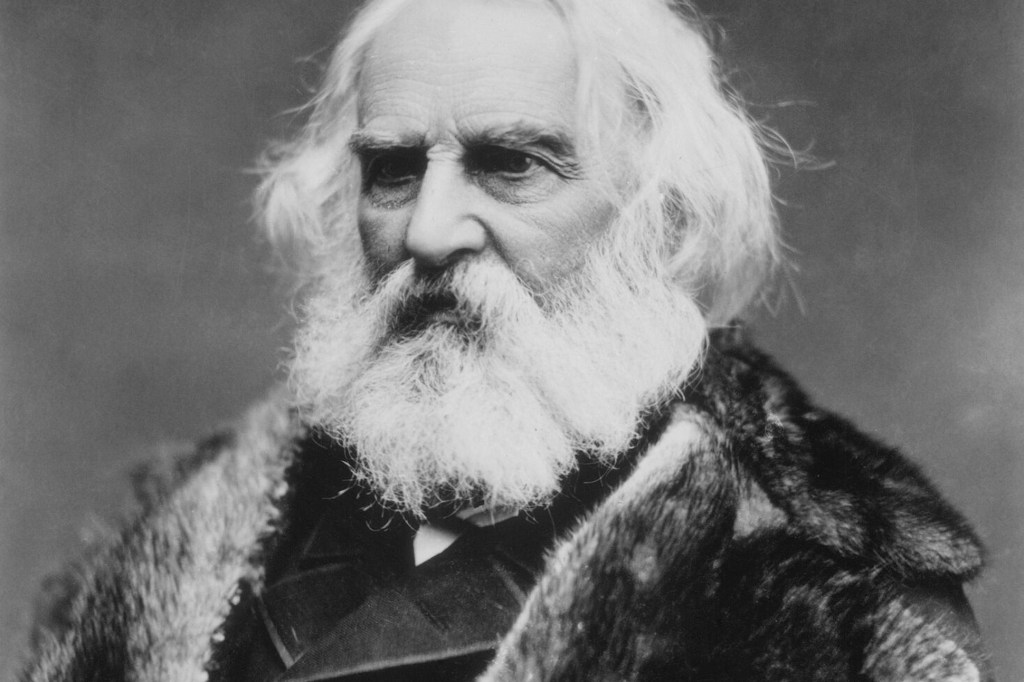
Henry Wadsworth Longfellow’s” Christmas Bells” is a widely anthologized poem that celebrates the winter holiday. It features a phrase associated famously with the Christmas season in its chant, “Of peace on earth / Good-will to men.”
Introduction and Text of “Christmas Bells”
Henry Wadsworth Longfellow’s “Christmas Bells” is remarkable not only for its tribute to Christmas but also for its commentary regarding the American Civil War, which was in progress at the time the poet composed this poem on Christmas Day 1864. This poem was published in 1865, and by 1872, it was set to music, becoming a world famous Christmas carol, covered by many singers, including Frank Sinatra.
The poem plays out in seven cinquains, each with the riming scheme, AABBC. It repeats the phrase, “peace on earth, good-will to men,” which has become a widely chanted invocation for world peace.
Christmas Bells
I heard the bells on Christmas Day Their old, familiar carols play, And wild and sweet The words repeat Of peace on earth, good-will to men!
And thought how, as the day had come, The belfries of all Christendom Had rolled along The unbroken song Of peace on earth, good-will to men!
Till ringing, singing on its way, The world revolved from night to day, A voice, a chime, A chant sublime Of peace on earth, good-will to men!
Then from each black, accursed mouth The cannon thundered in the South, And with the sound The carols drowned Of peace on earth, good-will to men!
It was as if an earthquake rent The hearth-stones of a continent, And made forlorn The households born Of peace on earth, good-will to men!
And in despair I bowed my head; “There is no peace on earth,” I said; “For hate is strong, And mocks the song Of peace on earth, good-will to men!”
Then pealed the bells more loud and deep: “God is not dead, nor doth He sleep; The Wrong shall fail, The Right prevail, With peace on earth, good-will to men.”
Reading with musical accompaniment:
Commentary on “Christmas Bells”
Since its original publication in 1865, the concluding year of the American Civil War, Henry Wadsworth Longfellow’s” Christmas Bells” has enjoyed widespread distribution and attention.
The poem’s refrain, “Of peace on earth / Good-will to men,” has served as an appeal for a common goal, uplifting the minds and hearts of all people the world over. And while the poem’s association with the Christmas holiday is obvious, the sentiment for peace and world-wide goodwill remain regnant throughout the year.
First Cinquain: Ringing in Christmas
I heard the bells on Christmas Day Their old, familiar carols play, And wild and sweet The words repeat Of peace on earth, good-will to men!
The speaker reports that upon hearing the church bells pealing and the singing of carols in celebration of Christ’s birth, he is reminded of the purpose of Christmas celebration of peace and harmony among the world’s citizens. He avers that the words and sentiment are very well-known to him.
He also reports that those words hold a special place in his heart. The speaker’s tribute thus reveals the nature of the season that had become and still remain one of the most important celebrations of the year, especially in Western culture.
The line—”Of peace on earth, good-will to men!”—becomes the refrain in this poem that may also serve as a hymn. The refrain allows the poem to function as a chant. It has been invoked many times in many places for that purpose since its composition in 1863.
Those important words have also been employed to remind a warring world of the true goal human endeavor, that peace and harmony are ever more desirable than war and chaos.
Second Cinquain: A Reminder of Peace
And thought how, as the day had come, The belfries of all Christendom Had rolled along The unbroken song Of peace on earth, good-will to men!
Hearing the bells and the caroling also reminds the speaker of the “unbroken song” of Christ’s birth that is celebrated in all places where Christians and others of a spiritual nature acknowledge and love Jesus Christ.
Again, the speaker repeats that all important idea, “Of peace on earth, good-will to men!” The chanted line remains an important feature of this poem for its ability to alter even the speaker’s mood as he continues to describe his reaction to hearing the bells.
For the speaker, the continuation of the celebration of the birth of Jesus Christ as the savior of humankind has informed his remembrance, even as life has progressed and often descended into the chaos that all of humankind would prefer to avoid.
He is writing during the time of war, and thus he desires to achieve peace, but that desire may be contrasted with outward events that hem him round. As he writes his tribute, motivated by the words of sacredness from the carols, he is reminded of calmness and the nature of life as he would have it.
Third Cinquain: Heavenly Sounds
Till ringing, singing on its way, The world revolved from night to day, A voice, a chime, A chant sublime Of peace on earth, good-will to men!
The sounding of the bells and voices singing Christmas carols continues throughout the day as the day turns into night. The speaker describes the sounds he hears as voices and chimes. He finds those sounds to be heavenly; they remind him of all things sublime. And the chant he has fashioned again closes the cinquain.
The simple chanting of an uncomplicated but seemingly unattainable state of earthly tranquility provides the atmosphere in which a mind may rest, if only for a moment. The necessity of that rest becomes paramount during times of holy day recognition, and the celebration of the birth of Christ offers “Christendom” that opportunity for solemn meditation on the soul.
The speaker throughout his tribute remains intensely focused on the refrain that is chanted, and the peace and goodwill that he is asserting then become part of a prayer. As he asserts that the words of the carols remind him of sacredness, he yearns to bring about that very situation through concentration on the peace and harmony that such chanting is not only describing but also demanding.
Fourth Cinquain: A Moment of Bleak Melancholy
Then from each black, accursed mouth The cannon thundered in the South, And with the sound The carols drowned Of peace on earth, good-will to men!
While the speaker is enjoying of the beautiful peeling of the bells and the singing of carols, he enjoyment is suddenly interrupted by a loud, explosive reminder that war is raging.
Symbolizing the war, cannons are loudly reminding the speaker of the unfortunate events that are being played out, especially in the southern part of his country. Those likely metaphoric sounds have intruded into the speaker’s consciousness at a time when he is musing on beautiful qualities that should exist, specially at this time of year.
The loud cannons that “thunder” become a dark cloud, covering the beauty of the carols that proclaim earthly peace and the lovely fellow feeling that should exist among all citizens.
This interlude of remembrance of war contrasts greatly with the opening emphasis on beauty, tranquility, along with peace and goodwill. The stark image of a cannon’s “black, accursed mouth” startles the mind that has heretofore been soothed by the reminders of celebration of spirituality through peace and goodwill.
Fifth Cinquain: Peace Broken by War
It was as if an earthquake rent The hearth-stones of a continent, And made forlorn The households born Of peace on earth, good-will to men!
Continuing the contrasting stark interlude of war that has pushed its way into the speaker’s awareness, this stanza then likens the war to a different calamity. Thus the narrative moves from the cannons of war to the natural phenomenon of an earthquake that breaks up the very ground beneath the feet of the citizens.
The households seem to be suddenly stripped of the serenity that should be aglow with the peace and harmony for each family. This interlude of melancholy and pain, however, still contains the seeds of hope as the cinquain concludes again with the refrain for peace.
The speaker is aware that too many families have been affected by the war as husbands, wives, sons, daughters, brothers, and sisters have gone off to war to defend what they consider their homeland. This “earthquake” of war has caused a melancholy atmosphere to fall over the citizenry, but the speaker still continues to chant his prayer of yearning for peace and goodwill.
Sixth Cinquain: No Peace—Just Despair and Hatred
And in despair I bowed my head; “There is no peace on earth,” I said; “For hate is strong, And mocks the song Of peace on earth, good-will to men!”
Into the third stanza also comes the painful interlude of melancholy, which continues to serve as a reminder that this poem is being composed during a time of war. The speaker looks down, bowing his head, feeling desperate for better times.
He bemoans the fact that currently peace does not reign over the land. His country is engaged in a bloody battle for its soul; it is being pulled apart by differences that reflect strong hatred on both sides.
Political differences have spoiled the peace that should be spreading over the landscape and into the hearts and minds of the citizenry, instead of the suffering and chaos that war and hatred are bringing.
Because there is such strong hatred in the world, the song of peace is mocked by the brutality of war, which contrasts so violently with the notion of peace and harmony. Sadly then, the speaker is experiencing a moment of hopelessness that there is no truth in chanting about peace, love, and goodwill.
The contrast between his earlier feeling regarding peace and harmony reflected by his repeated refrain and this painful realization that peace is lacking must have been excruciating for the speaker as he passes through that dark moment brought on by the reality of war raging in his country.
That the speaker is forced to concede, “There is no peace on earth,” remains a painful reminder of the chaos that hatred brings into the lives all people. The very hope that peace can be achieved on earth becomes difficult to maintain in the midst of all the pain and suffering caused by the destruction of weapons and brute force against citizens.
Seventh Cinquain: The Return to Faith and Joy
Then pealed the bells more loud and deep: “God is not dead, nor doth He sleep; The Wrong shall fail, The Right prevail, With peace on earth, good-will to men.”
Just as suddenly as the melancholy had momentarily overtaken him, the speaker’s mind fortunately returns to its faith that all will be well. The bells’ tone now seems to become even deeper and louder, causing the speaker’s musings to be uplifted.
His heart and mind become filled with the notion that the wrong of the world will be defeated by the right, which will win. The speaker assures himself that God is in control, and that God never abandons His children. The sound of the bells continues to peal in the speaker’s consciousness as they deliver his mood from sadness to hope and faith again.
The speaker then is able to assert with strongest faith, “God is not dead.” He also asserts with assurance, “nor doth He sleep.” The speaker’s faith thus returns him to the knowledge that right will overcome wrong because God is still controlling all events.
The speaker can thus continue emphasizing the sentiment of his controlling refrain. He can again with renewed faith place that emphasis on that refrain that had brightened all the preceding stanzas of his discourse. He can chant again his invocation for peace and goodwill for all his earthly brethren.
Thus, because of the return of his faith in his deep heart’s core, he can proclaim the repeated truth that God still fills the world’s faithful “With peace on earth, good-will to men.”


 Linda's Literary Home