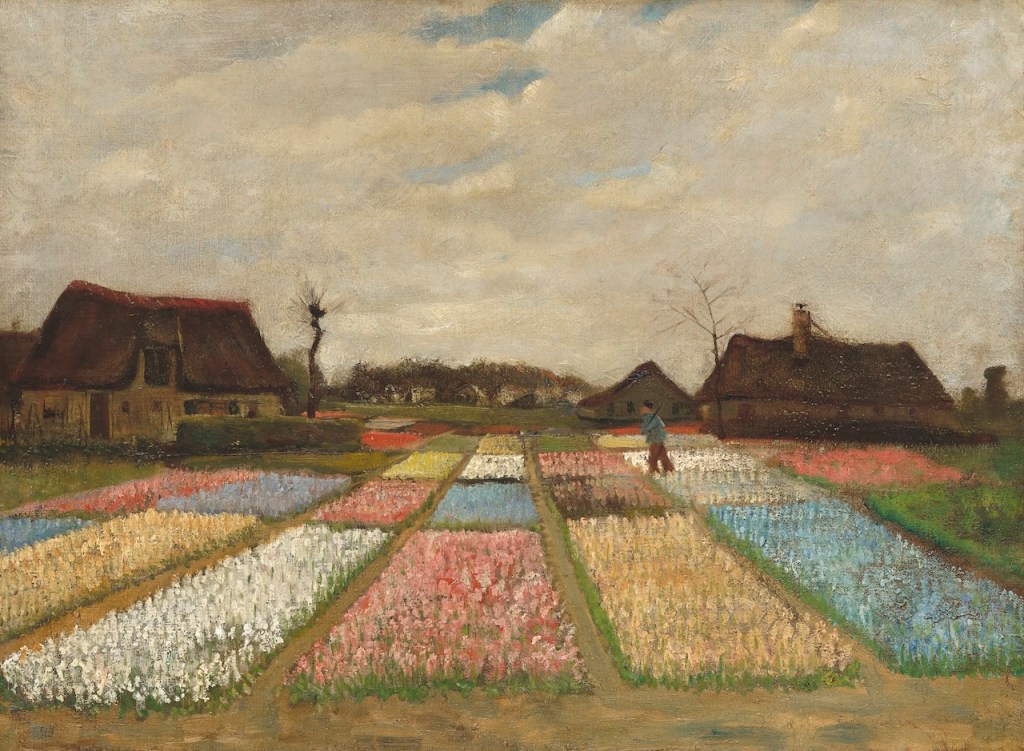
Who is that man walking between the white tulips Carrying a rifle? we will hunker down out of sight Until he has passed. he will probably disappear beyond That cottage in a moment and then we can pull up close To the tulips and watch their lips cup the bees. you Will say my lips are the color of the frosty pinks, and I Will say your eyes match the dreamy blues. someday, I tell you, I will have a dress like those golden-hues and You will have a shirt as delicious as the peach-blush. You tell me that your mother grows beautiful flowers, But she has never been able to cultivate a healthy African violet, so I say, let’s go back into the house And I pick one out for her. you take her the plant. And leave me contemplating the painting. years Of contemplating and many poems later I study the Flower Beds in Holland and wonder About the African violet in your mother’s house.
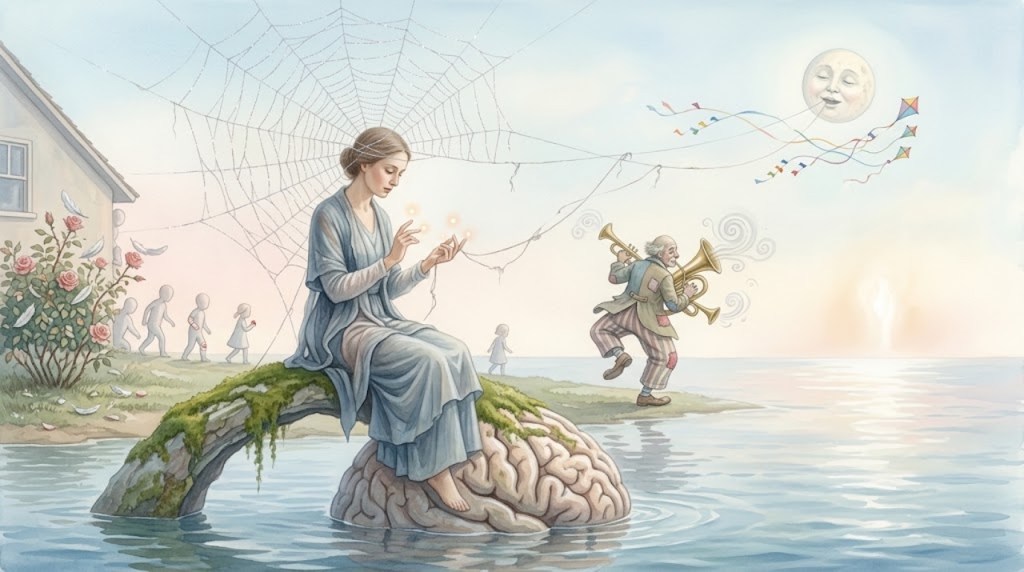
After sorrow has settled, and the breath has become a gentle wind, you will sit in the dark and count on your fingers the day’s blessings. You will not let a spider cross your eyes, nor the moon come singing far-off sea songs that tug your heart like the strings of a colorful kite.
Motherhood assumed your body, and strange children came running out. They played a mystery-game in your backyard. Feathers from scared birds stuck in the thorns of the rose-bushes, and the bloody fingers you had to wipe, and the knees bandage, until your house squeezed them out.
Age and departure have settled in your heart and play in your mind. You are not starting anything new, and now you know you never have begun a thing though you have spun like a sense clown, decked out in duds that toot. Now you will carry your load of dreams in the belly of your pregnant brain
until you can finally sit and have a quiet talk with God and tell Him all you have learned about how to love, and He suddenly understands you.
Image: Emily Dickinson – Amherst College – Daguerrotype of the poet at age 17, circa 1847 – likely the only authentic, extant likeness of the poet
Emily Dickinson’s “If I should die”
The speaker in Emily Dickinson’s “If I should die” is contemplating the ongoing, indifferent progression of world enterprise following mortal departure. The speaker finds quiet comfort in the uninterrupted continuation of earthly life.
Introduction and Text of “If I should die”
Emily Dickinson’s “If I should die” focuses on human mortality. The poem consists of four movements, utilizing Dickinson’s customary short lines and characteristic slant rime. The speaker considers the inevitable continuation of nature and human activity after individual physical presence ceases entirely.
This short work presents a calm acceptance of death. The speaker reflects on the fact that daily routines proceed without pause: the morning sun, seasonal bird activity, and economic transactions continue unabated. However, instead of expressing grief or dread, this speaker takes solace in knowing that earthly affairs remain active, orderly, and bright.
In my earlier essays on Dickinsonian poems, I have discussed the poet’s creation of speakers who view physical departure through calmness and detachment. By observing nature and business, the speaker comes to terms with personal transience while celebrating the enduring colorful vitality of the surrounding physical and social world.
If I should die
If I should die, And you should live – And time should gurgle on – And morn should beam – And noon should burn – As it has usual done – If Birds should build as early And Bees as bustling go – One might depart at option From enterprise below! ‘Tis sweet to know that stocks will stand When we with Daisies lie – That Commerce will continue – And Trades as briskly fly – It makes the parting tranquil And keeps the soul serene – That gentlemen so sprightly Conduct the pleasing scene!
Commentary on “If I should die”
The speaker in Emily Dickinson’s “If I should die” is exploring with tranquil acceptance the nature of mortality through the steady, ongoing operations of nature and society.
First Movement: “If I should die”
If I should die, And you should live – And time should gurgle on – And morn should beam – And noon should burn – As it has usual done –
In the opening lines, the speaker introduces a hypothetical situation involving personal death alongside the survival of others: time continues to flow without interruption, described with the word “gurgle.” Morning light shines and noon heat burns just as it always has on the earthly plane.
The speaker emphasizes that natural cycles remain completely indifferent to individual mortality. Morning and noon retain their established routines. This consistency shows that the physical world does not stop or mourn. The universe keeps its steady pace regardless of human absence, maintaining its ongoing, familiar rhythms.
Second Movement: “If Birds should build as early”
If Birds should build as early And Bees as bustling go – One might depart at option From enterprise below!
Continuing the conditional thought, the speaker observes that birds will still construct nests early in the day. Bees will continue their energetic gathering tasks. Nature’s industrious activity persists without pause, demonstrating that life’s fundamental forces carry on seamlessly even after an individual’s physical life has ended.
Because natural activity persists so reliably, departing from earthly work becomes a manageable choice. The word “enterprise” summarizes all human endeavor. The speaker recognizes that any one individual’s involvement is not required to sustain the world’s grand design, making personal departure feel far less disruptive or alarming.
Third Movement: “’Tis sweet to know that stocks will stand”
‘Tis sweet to know that stocks will stand When we with Daisies lie – That Commerce will continue – And Trades as briskly fly –
Moving into the third movement, the speaker shifts focus from natural phenomena to human society. It is comforting to realize that financial institutions remain stable. While humans lie beneath the flowers, economic markets and business transactions proceed with their customary energy and speed across the world.
The contrast between lying with flowers and active trade highlights human transience. Society’s institutions outlasts individual lives. The speaker gains comfort from this stability, recognizing that human civilization maintains its energetic flow and enterprise long after any single participant has departed from the physical world.
Fourth Movement: “It makes the parting tranquil”
It makes the parting tranquil And keeps the soul serene – That gentlemen so sprightly Conduct the pleasing scene!
In the final lines, the speaker highlights the soothing effect of this ongoing activity. Knowing that lively individuals continue to manage social and commercial affairs brings peace. The departure becomes quiet and smooth because the overall societal picture remains well-ordered, active, and thoroughly pleasing.
This assurance helps maintain inner stillness during life’s final transition. As Paramahansa Yogananda explains, an individual grounded in inner peace remains radiantly serene regardless of life’s shifting circumstances. He has colorfully described that attitude as standing “unshaken midst the crash of breaking worlds.” This speaker maintains this calm state while recognizing that earthly existence will flourish continuously.