Linda's Literary Home

Tag: cowpoke

  • S. Omar Barker’s “A Cowboy’s Christmas Prayer”

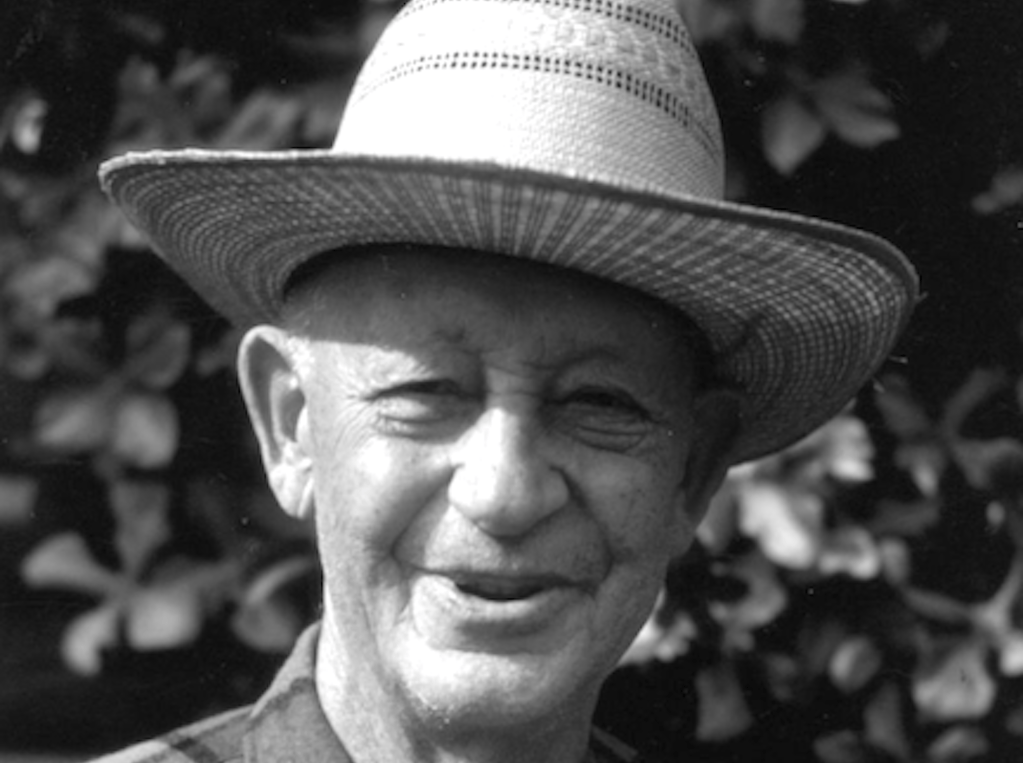
    Image:  S. Omar Barker – Texas Trail of Fame

    S. Omar Barker’s “A Cowboy’s Christmas Prayer”

    S. Omar Barker’s Christmas poem “A Cowboy’s Christmas Prayer” features a humble cowpoke, who is not accustomed to praying but is offering his heart-felt supplication at Christmas time.  As he prays, he reveals the qualities and issues of his life that are most important to him.

    Introduction with Text of “A Cowboy’s Christmas Prayer”

    This Christmas prayer/poem composed by cowboy poet, S. Omar Barker, allows a humble rider-of-the-range to express his deeply held wishes as he offers a supplication to the Lord for the good of all mankind.  The cowboy prayer is framed as a ballad-style narration emphasizing the simple, humble nature of the cowpoke.

    The ballad-influenced piece plays out in cowboy dialect and  in riming couplets.  Its stanza breaks are uneven with two single-line bridges that dissect the drama at important points to emphasize the shift in theme and tone.

    A Cowboy’s Christmas Prayer

    I ain’t much good at prayin’, and You may not know me, Lord —
    For I ain’t much seen in churches, where they preach Thy Holy Word.
    But you may have observed me out here on the lonely plains,
    A-lookin’ after cattle, feelin’ thankful when it rains.

    Admirin’ Thy great handiwork.

    The miracle of the grass,
    Aware of Thy kind Spirit, in the way it comes to pass
    That hired men on horseback and the livestock that we tend
    Can look up at the stars at night, and know we’ve got a Friend.

    So here’s ol’ Christmas comin’ on, remindin’ us again
    Of Him whose coming brought good will into the hearts of men.
    A cowboy ain’t a preacher, Lord, but if You’ll hear my prayer,
    I’ll ask as good as we have got for all men everywhere

    Don’t let no hearts be bitter, Lord.
    Don’t let no child be cold.
    Make easy the beds for them that’s sick and them that’s weak and old.
    Let kindness bless the trail we ride, no matter what we’re after,
    And sorter keep us on Your side, in tears as well as laughter.

    I’ve seen ol’ cows a-starvin’ — and it ain’t no happy sight;
    Please don’t leave no one hungry, Lord, on Thy Good Christmas Night —
    No man, no child, no woman, and no critter on four feet
    I’ll do my doggone best to help you find ’em chuck to eat.

    I’m just a sinful cowpoke, Lord — ain’t got no business prayin’
    But still I hope you’ll ketch a word or two, of what I’m sayin’:
    We speak of Merry Christmas, Lord—

    I reckon You’ll agree —

    There ain’t no Merry Christmas for nobody that ain’t free!
    So one thing more I ask You, Lord: just help us what You can
    To save some seeds of freedom for the future Sons of Man!

    Reading

    Commentary on “A Cowboy’s Christmas Prayer”

    S. Omar Barker’s “A Cowboy’s Christmas Prayer” dramatizes the prayer offered by a humble cowboy who is unaccustomed to praying and unacquainted with church services but who holds the blessings from the Creator very dear to his heart.  He expresses his gratitude for the simple life he lives and asks his Creator to bless others with kindness and prosperity.

    First Movement:  A Humble Prayer

    I ain’t much good at prayin’, and You may not know me, Lord —
    For I ain’t much seen in churches, where they preach Thy Holy Word.
    But you may have observed me out here on the lonely plains,
    A-lookin’ after cattle, feelin’ thankful when it rains.

    In the first quatrain, the supplicating cowboy begins by addressing the Lord, suggesting that the Lord may not even be acquainted with the cowboy; he then gives the reasons that he feels the Lord may not know him.  He has not attended church very often, and he knows that’s where they preach His “Holy Word.”

    However, the cowboy then suggests that perhaps the Creator has seen him out on the plains doing his work of watching “after cattle.”  The cowboy adds what he likely feels may be a useful introduction to the Lord Creator:  he has felt thankful for the rain that keeps life supported.

    Second Movement:  A Single-Line Bridge

    Admirin’ Thy great handiwork.

    The cowboy adds another positive feature in his heretofore somewhat tentative relationship with the Almighty: he has always admired the “great handiwork” that he often observes as he rides the range in the great outdoors.

    This line appears alone and emphasizes the important idea that the cowboy has always kept the Creator near to his heart by feeling enthralled by all of what He has created.  The cowboy is likely remembering the wide-open plains, the mountains, the trees, vegetation of the prairie, the night sky full of stars, and the cattle that he himself drives and protects. 

    This single line offers a useful bridge between the moments of prayer that supplicates, as it brings the Divine back into the cowboy’s consciousness.

    Third Movement:   Miracles in Creation

    The miracle of the grass,
    Aware of Thy kind Spirit, in the way it comes to pass
    That hired men on horseback and the livestock that we tend
    Can look up at the stars at night, and know we’ve got a Friend.

    The next quatrain offers a few specific examples of the great Lord’s “handiwork.”  The cowboy first mentions the grass, which he describes as a “miracle.”  He then avers that even as a simply cowpoke he feels the nature of the Lord is kindness.

    And through that “kind Spirit,” he reports that somehow the graceful occasion exists that those hired hands who work riding horseback and tending livestock are able to observe the sky full of “stars at night.”

    The cowboy makes it clear that such a sight fills his heart with gratitude that he and his fellow workers “got a Friend.”  His relationship with the Lord has blossomed even as he admits his tentative relationship with church and prayer.

    Fourth Movement:  Good Will

    So here’s ol’ Christmas comin’ on, remindin’ us again
    Of Him whose coming brought good will into the hearts of men.
    A cowboy ain’t a preacher, Lord, but if You’ll hear my prayer,
    I’ll ask as good as we have got for all men everywhere.

    Likely the coming of the season of Christmas has been the impetus for the cowboy to be offering this halting prayer.  So he now tells the Lord that the coming of Christmas has reminded him of Jesus the Christ, Who “brought good will” into men’s hearts.

    Even though he “ain’t a preacher,” the cowboy expresses the hope that the Lord will still hear his prayer.  He promises to supplicate for the “good” of everyone everywhere.  He wishes that all men may be as blessed as he his.  His gratitude keeps his own heart open to the Lord’s grace.

    Fifth Movement:  Prayer of a Simple Soul

    Don’t let no hearts be bitter, Lord.
    Don’t let no child be cold.
    Make easy the beds for them that’s sick and them that’s weak and old.
    Let kindness bless the trail we ride, no matter what we’re after,
    And sorter keep us on Your side, in tears as well as laughter.

    In the next cinquain, the speaker offers a catalogue of blessings that he wishes to ask of the Lord.  He asks that no bitterness reside in the hearts of men, as he asks that “no child be cold.”  

    He asks the Lord comfort those who are ill and make their convalescence go smoothly.  He also wish ease and comfort for those who are old and weak.  He asks kind-heartedness remain a feature of the “trail we ride.” He then asks the Creator to keep humanity on His side throughout good times as well as bad times.

    Sixth Movement:  Praying for Others’ Welfare

    I’ve seen ol’ cows a-starvin’ — and it ain’t no happy sight;
    Please don’t leave no one hungry, Lord, on Thy Good Christmas Night —
    No man, no child, no woman, and no critter on four feet
    I’ll do my doggone best to help you find ’em chuck to eat.

    Returning to the quatrain-form for the sixth movement, the speaker focuses on hunger; he has observed cows that are starving to death, and that sight weighs heavily on his heart and mind; thus, he begs the Lord to “leave no one hungry.” 

    This deprivation is so important to him that he asks that “no man, no child, no woman” be allowed to go hungry.  But he also wants the Lord to protect all animals from the fate of hunger.  He then promises to help the Lord in finding food for all who are hungry.

    Seventh Movement:  Self-Deprecation 

    I’m just a sinful cowpoke, Lord — ain’t got no business prayin’
    But still I hope you’ll ketch a word or two, of what I’m sayin’:
    We speak of Merry Christmas, Lord—

    In the next tercet, the cowboy again engages in self-deprecation, saying he is “just a sinful cowpoke” and he does not deserve to be “prayin’.”  Still, he expresses the hope that the Creator will hear at least “a word or two” of his prayer.  

    The cowboy/speaker then begins a thought which is so important that he offers merely the opening of it, allowing its conclusion to spread over another bridge and into the final tercet.  He begins by reporting that “[w]e speak of Merry Christmas, Lord—.”

    Eighth Movement:  Agreement with His Lord

    I reckon You’ll agree —

    The speaker then creates a second bridge between thoughts.  This time he inserts the important notion he thinks the Lord will agree with what he is about to propose. By beginning the thought in the conclusion of the seventh movement, allowing it to marinate through the eighth bridge movement, he has created a small mystery that emphasizes the utterly vital importance of his final thought.

    Ninth Movement:  Freedom Is Vital

    There ain’t no Merry Christmas for nobody that ain’t free!
    So one thing more I ask You, Lord: just help us what You can
    To save some seeds of freedom for the future Sons of Man!

    Finally, the cowboy issues his important claim before God and world that the most important possession that mankind must retain is “freedom.”  There can be no “Merry Christmas” unless humanity is free to enjoy it; no happiness can exists for any individual “that ain’t free!”

    Thus, the cowboy’s final supplication is that the Lord “save some seeds of freedom for the future Sons of Man!”  He asks his Creator to allow the love and hope of freedom to grow with mankind in all lands for all time.

  • David Althouse’s “Cowboy Christmas Carol”

    Image:  David Althouse

    David Althouse’s “Cowboy Christmas Carol”

    A “hard-bitten ol’ cowpoke” experiences a mystical experience that changes his heart in the Christmas ballad.  He will carry his new change of heart into his daily cow poking life as he honors “the Great Trail Boss in the Sky.”

    Introduction with Text of “Cowboy Christmas Carol”

    The speaker in cowboy poet David Althouse’s “Cowboy Christmas Carol” spins a deeply spiritual yarn about an old cowboy whose mystical experience leads him to a state of grace and thankfulness that he had been lacking—even though he had lived a relatively carefree life in the open prairie that he loved.

    Cowboy Christmas Carol

    For a hard-bitten ol’ cowpoke like me a Christmas ain’t always merry;
    I’ve spent most of ’em  a-ridin’ fences, a-sleepin’ in line cabins out on the prairie.
    So for most a my hard life the spirit of Christmas did not abide within my heart.
    How I come to possess the spirit is the story I hafta impart.

    Tha year was ’87 and I was a-follerin’ doggie trails,
    A-drinkin’ rot gut whiskey to forget about my life’s travails.
    Ih was two days from the line cabin, at a far off lonely place,
    A-roundin’ up some strays, the snow whippin’ crost my face.

    Night came of a-suddin’ so’s I bedded down to rest,
    A tin can full o’ hot coffee a-restin’ crost my chest.
    Of a-suddin’ I heard somthin’ a-flutterin’ down from the skies.
    I taken a closer look an I couldn’t believe my eyes.

    It looked to be some kind o’ Christmas Angel from the first I did suspect,
    What with all the sugar plums a-hangin’ ’round ‘er neck.
    Holly laced ‘er halo an’ lustrous pearls adorned ‘er wings,
    An’ ‘er sweet little silver bell voice was a-trillin’ little ting-a-ling-a-lings.

    “Cast away your fears, cowboy,” she says,  “I’m an Angel sent from on High,
    And I’m here to do the bidding of the Great Trail Boss in the Sky.”
    Dadgumit she talked! She’s a bonafide Angel fer shore!
    Was I’a-goin’ feral or was it that bad hooch I drank the night afore?

    “It isn’t the whiskey,” she says, a-readin’ my mind.
    “You don’t even know it cowboy, but it’s Christmas time.”
    She had me dead to rights on that one, an’ it caused me much chagrin,
    Causin’ the last time I partook a Christmas was back in … heck, I don’t know when.

    “Why, thar ain’t no time fer Christmas out ‘ere Angel,” I says. “It’s absolut’ absurd.
    I’ve got fences to mend an’ orn’ry doggies to git back to the herd!”
    She says, “You’ve sunk lower than the wild beasts, lower than a longhorn steer,
    For even the furry animals keep Christmas once a year.”

    “Critters a-keepin’ Christmas?” I says. “Now this I gotta see!”
    “Very well, cowboy,” she says. “Come fly the night sky with me.”
    Well my eyes got as big as poker chips when flyin’ she did suggest.
     “Just take hold of my arm, cowboy,”  she says, “and I’ll do the rest.”

    To a quiet faraway meadow we flew, to a lonely stand o’ pines,
    An’ when I looked down a’neath them trees I was in fer a big surprise.
    Fer a-layin’ thar a’neath them trees all cuddled up on the ground,
    Was ever’ kind o’ furry critter anywhere to be found.

    Rabbits, squirrels, birds and deer all a-layin’ in one spot,
    With a coyote, wolf and mountain lion a-standin’ guard over the entire lot.
    She says, “They’re huddled together because the spirit of Christmas fills the air.”
    “Mebbe so,” I says, “But them smaller critters should be a-scampin’ outa thar!”

    “They’ve nothing of which to worry,” she says. “Peace fill their hearts upon this night.”
    “Whatever ya thank,” I says, ” but they’d best make dust afore first  light.”
    Yet, as I beheld this miracle, I recollect I shed some tears,
    A-rememberin’ all the wasted Christmases of my long-gone yesteryears.

    I vowed I’d do thangs different, that I’d make another start,
    That ever’ day I had left I’d keep Christmas merry in my heart.
    Then I gave thanks to this ‘ere Angel fer a-savin’ me from my demise.
    She just smiled an angelic smile then she a-fluttered back up to the skies.

    A-many a year has passed since I beheld that angelic sight,
    An’ I’ve tried to keep the promise I made to her upon that night.
    Now I’m proud to herd these doggies, an watch over ’em  with all I know —
    Like extry hay fer the runt calves, when it’s a-freezin’ an’ a-blowin’ snow.

    And now I’m thankful that I’m a cowboy, a-roamin’ the trails a-wild an’ free,
    A-watchin’ over these orn’ry doggies like the Great Trail Boss a-watches over me.

    Commentary on “Cowboy Christmas Carol”

    The idea that the sentiment of Christmas belongs in each heart every day of the year and not just on one celebrated day enjoys widespread lip-service, although it is seldom achieved.  This old cowboy intends to change that fact, at least, for himself .

    First Movement:   Cowboy Work Comes First

    For a hard-bitten ol’ cowpoke like me a Christmas ain’t always merry;
    I’ve spent most of ’em  a-ridin’ fences, a-sleepin’ in line cabins out on the prairie.
    So for most a my hard life the spirit of Christmas did not abide within my heart.
    How I come to possess the spirit is the story I hafta impart.

    Tha year was ’87 and I was a-follerin’ doggie trails,
    A-drinkin’ rot gut whiskey to forget about my life’s travails.
    Ih was two days from the line cabin, at a far off lonely place,
    A-roundin’ up some strays, the snow whippin’ crost my face.

    The speaker is a cowboy who has been practicing his profession for many years, and he admits that mending fences while tending cattle out on the prairie has not always been conducive to observing and celebrating Christmas.  He has felt that his mind and heart had been spiritually dry for a long time, but then something happened to change his heart.

    During one Christmas season, the speaker was out on the prairie rounding up some stray “doggies,” drinking “rot gut whiskey,” which helped him forget his hard life.  He found himself alone, many miles from the “line cabin.”  It was cold with snow whipping about his face.

    Second Movement:   A Mystical Being Appears

    Night came of a-suddin’ so’s I bedded down to rest,
    A tin can full o’ hot coffee a-restin’ crost my chest.
    Of a-suddin’ I heard somthin’ a-flutterin’ down from the skies.
    I taken a closer look an I couldn’t believe my eyes.

    It looked to be some kind o’ Christmas Angel from the first I did suspect,
    What with all the sugar plums a-hangin’ ’round ‘er neck.
    Holly laced ‘er halo an’ lustrous pearls adorned ‘er wings,
    An’ ‘er sweet little silver bell voice was a-trillin’ little ting-a-ling-a-lings.

    The speaker has bedded down for the night with a tin of hot coffee placed on his chest to help drive out some of the cold.  With the night’s seemingly sudden arrival, he sees a celestial being approaching from the sky.

    The cowboy describes the being in typical cowboy fashion, mentioning “sugar plums,” decorating the form of what appears to be an angel with “lustrous pearls” on her wings.  He even hears her voice that sounds like a “sweet little silver bell.”  

    Third Movement:   Sent by the “Great Trail Boss”

    “Cast away your fears, cowboy,” she says,  “I’m an Angel sent from on High,
    And I’m here to do the bidding of the Great Trail Boss in the Sky.”
    Dadgumit she talked! She’s a bonafide Angel fer shore!
    Was I’a-goin’ feral or was it that bad hooch I drank the night afore?

    “It isn’t the whiskey,” she says, a-readin’ my mind.
    “You don’t even know it cowboy, but it’s Christmas time.”
    She had me dead to rights on that one, an’ it caused me much chagrin,
    Causin’ the last time I partook a Christmas was back in … heck, I don’t know when.

    The being does not keep the cowboy guessing who she is; she identifies herself as an “Angel,” and she informs him that she is being sent by the Divine or in cowboy talk that “Great Trail Boss in the Sky.”   Furthermore, she instructs him not to fear.

    Of course, the speaker is wonderstruck at first that this Angel sent from “on High” would be visiting him.  He suspects he is hallucinating from the bad whiskey or that he is just going wild in the brain.

    The Angel tells him that her appearance has nothing to do with the whiskey.  He knows then he is in the presence of something divine because she is reading his mind.  She then informs him that it is Christmas time, insisting that he did not even know that season was upon him.

    The cowboy has to admit that she has him “dead to rights”—he had not been aware of Christmas for so long that he had actually forgotten the last time he had thought about that season.

    Fourth Movement:   Too Busy to Celebrate

    “Why, thar ain’t no time fer Christmas out ‘ere Angel,” I says. “It’s absolut’ absurd.
    I’ve got fences to mend an’ orn’ry doggies to git back to the herd!”
    She says, “You’ve sunk lower than the wild beasts, lower than a longhorn steer,
    For even the furry animals keep Christmas once a year.”

    “Critters a-keepin’ Christmas?” I says. “Now this I gotta see!”
    “Very well, cowboy,” she says. “Come fly the night sky with me.”
    Well my eyes got as big as poker chips when flyin’ she did suggest.
     “Just take hold of my arm, cowboy,”  she says, “and I’ll do the rest.”

    Then the speaker protests that there is no opportunity for observing Christmas out here on the prairie with “orn’ry doggies” and “fences to mend.”  But to his excuses, the Angel counters that he has allowed himself to sink lower than the animals, adding that at this time of year even the animals celebrate the spirit of Christmas.

    The cowboy protests that “critters a-keepin’ Christmas” is something he would have to see to believe.  And so the Angel tells him to take hold of her arm, and they will “fly the night sky” to a place where she will prove the truth of her statement. With eyes as big as “poker chips,” the cowboy obeys the Angel, and they fly off.

    Fifth Movement:   An Astral Meadow

    To a quiet faraway meadow we flew, to a lonely stand o’ pines,
    An’ when I looked down a’neath them trees I was in fer a big surprise.
    Fer a-layin’ thar a’neath them trees all cuddled up on the ground,
    Was ever’ kind o’ furry critter anywhere to be found.

    Rabbits, squirrels, birds and deer all a-layin’ in one spot,
    With a coyote, wolf and mountain lion a-standin’ guard over the entire lot.
    She says, “They’re huddled together because the spirit of Christmas fills the air.”
    “Mebbe so,” I says, “But them smaller critters should be a-scampin’ outa thar!”

    The Angel brings him to an astral meadow that looks very much like a place the cowboy would recognize with a “lonely stand o’ pines.”  But when he looks down, he can see “rabbits, squirrels, birds and deer,” and “a coyote, wolf and mountain lion” are guarding them all as they rest peacefully in one area.

    This inspiring scene offers an allusion to Isaiah 11:6 (KJV), describing the peace that reigns with the experience of Christ-consciousness:  

    The wolf also shall dwell with the lamb, and the leopard shall lie down with the kid; and the calf and the young lion and the fatling together; and a little child shall lead them.

    The Angel explains that the animals had all huddled together because the spirit of Christmas is filling the atmosphere  But the cowboy, practical man that he is, remarks that those little critters ought be scampering away from those bigger, dangerous ones.

    Sixth Movement:   The Peaceful Night

    “They’ve nothing of which to worry,” she says. “Peace fill their hearts upon this night.”
    “Whatever ya thank,” I says, ” but they’d best make dust afore first  light.”
    Yet, as I beheld this miracle, I recollect I shed some tears,
    A-rememberin’ all the wasted Christmases of my long-gone yesteryears.

    I vowed I’d do thangs different, that I’d make another start,
    That ever’ day I had left I’d keep Christmas merry in my heart.
    Then I gave thanks to this ‘ere Angel fer a-savin’ me from my demise.
    She just smiled an angelic smile then she a-fluttered back up to the skies.


    The Angel insists that it is only peace that reigns upon this night; yet the cowboy still insists that those little critter better be making “dust” before dawn. Yet, even in his practical, worldly stance, the cowboy finds himself moved to tears, remembering all of his many past “wasted Christmases.”   And he then finds that his heart is changed.  

    The cowboy vows to keep Christmas in his heart from now on. He knows that his life has been saved from his “demise” by this Angel of God, who after smiling at the cowboy’s gratitude “a-fluttered back up” from whence she came.

    Seventh Movement:   Thankful for Being a Cowboy

    A-many a year has passed since I beheld that angelic sight,
    An’ I’ve tried to keep the promise I made to her upon that night.
    Now I’m proud to herd these doggies, an watch over ’em  with all I know—
    Like extry hay fer the runt calves, when it’s a-freezin’ an’ a-blowin’ snow.

    And now I’m thankful that I’m a cowboy, a-roamin’ the trails a-wild an’ free,
    A-watchin’ over these orn’ry doggies like the Great Trail Boss a-watches over me.

    The cowboy’s story demonstrates a change of heart, from one who had focused too much on the material world to one who would henceforth keep the spiritual world in his consciousness.   Although he had always been a good man, because of the mystical experience of being reminded to keep Christ-Consciousness in his heart, mind, and soul, he becomes even better.

    From the moment of that experience on, the speaker becomes thankful for his life.  He becomes more aware that “the Great Trail Boss” watches over him the way He watches over the cattle.  That mystical experience places God’s essence in the cowboy’s awareness, allowing the cowboy to realize his love for the Divine every day of his life.

    This inspirational tale reminds readers of the omnipresence of God.  The cowboy speaks his own language and honors his Maker in his own personal terms.  The name of God used by the cowpoke—”the Great Trail Boss”—demonstrates the uniqueness and closeness that he personally maintains with his Divine Creator. 

    The many names for God simply represent God’s different aspects and varied relationships with His children, as only One Divine Being exists and unifies each heart, mind, and soul of humanity.