Linda's Literary Home

Tag: creation

  • James Weldon Johnson’s “The Creation”

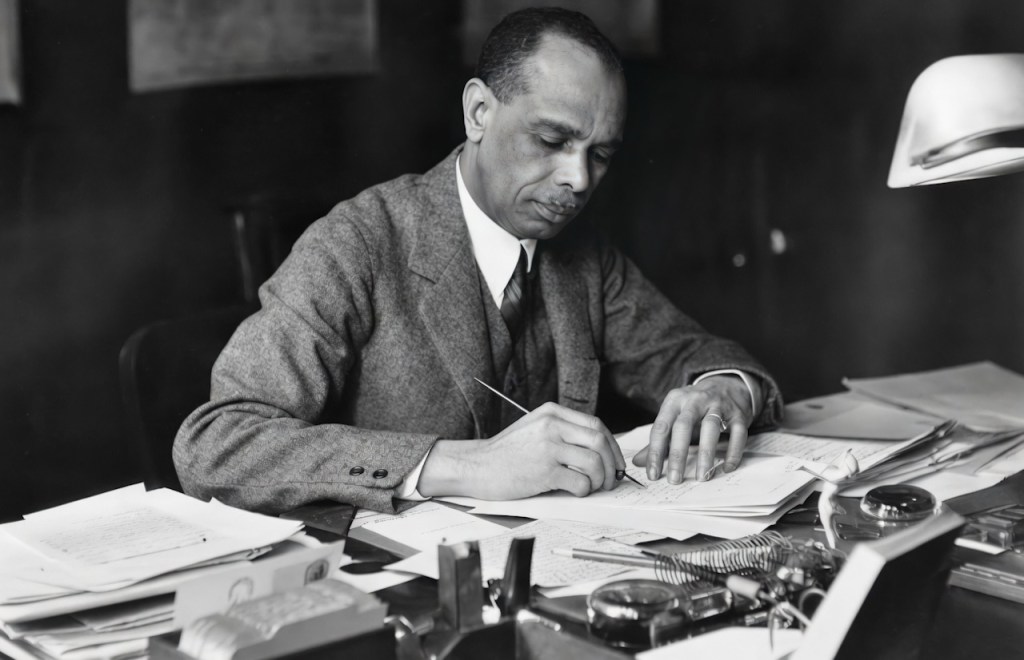
    Image: James Weldon Johnson - https://www.green-wood.com/event/the-autobiography-of-an-ex-colored-man-110-years-later/
    Image: James Weldon Johnson

    James Weldon Johnson’s “The Creation”

    James Weldon Johnson’s “The Creation” remains a marvelous example of the poet’s depth of spirituality as well as his skilled craftsmanship at creating speakers who perform in his poetry compositions.

    Introduction with Text of “The Creation”

    In James Weldon Johnson’s “The Creation,” the speaker dramatizes Genesis chapter 1, verses 1-25.   The speaker employs the voice of a Southern preacher, exemplified by the lines, “Down in a cypress swamp” and “Like a mammy bending over her baby.”  

    The Wintley Phipps recitation of James Weldon Johnson’s “The Creation” is magnificent.  Phipps performs a perfect interpretation of Johnson’s poem.  The experience of listening to a fine poem always adds a nuance of meaning that a simple quiet reading lacks.

    The Creation

    And God stepped out on space,
    And he looked around and said:
    I’m lonely—
    I’ll make me a world.

     And far as the eye of God could see
    Darkness covered everything,
    Blacker than a hundred midnights
    Down in a cypress swamp.

    Then God smiled,
    And the light broke,
    And the darkness rolled up on one side,
    And the light stood shining on the other,
    And God said: That’s good!

    Then God reached out and took the light in his hands,
    And God rolled the light around in his hands
    Until he made the sun;
    And he set that sun a-blazing in the heavens.
    And the light that was left from making the sun
    God gathered it up in a shining ball
    And flung it against the darkness,
    Spangling the night with the moon and stars.
    Then down between
    The darkness and the light
    He hurled the world;
    And God said: That’s good!

    Then God himself stepped down—
    And the sun was on his right hand,
    And the moon was on his left;
    The stars were clustered about his head,
    And the earth was under his feet.
    And God walked, and where he trod
    His footsteps hollowed the valleys out
    And bulged the mountains up.

    Then he stopped and looked and saw
    That the earth was hot and barren.
    So God stepped over to the edge of the world
    And he spat out the seven seas—
    He batted his eyes, and the lightnings flashed—
    He clapped his hands, and the thunders rolled—
    And the waters above the earth came down,
    The cooling waters came down.

    Then the green grass sprouted,
    And the little red flowers blossomed,
    The pine tree pointed his finger to the sky,
    And the oak spread out his arms,
    The lakes cuddled down in the hollows of the ground,
    And the rivers ran down to the sea;
    And God smiled again,
    And the rainbow appeared,
    And curled itself around his shoulder.

    Then God raised his arm and he waved his hand
    Over the sea and over the land,
    And he said: Bring forth! Bring forth!
    And quicker than God could drop his hand,
    Fishes and fowls
    And beasts and birds
    Swam the rivers and the seas,
    Roamed the forests and the woods,
    And split the air with their wings.
    And God said: That’s good!

    Then God walked around,
    And God looked around
    On all that he had made.
    He looked at his sun,
    And he looked at his moon,
    And he looked at his little stars;
    He looked on his world
    With all its living things,
    And God said: I’m lonely still.

    Then God sat down—
    On the side of a hill where he could think;
    By a deep, wide river he sat down;
    With his head in his hands,
    God thought and thought,
    Till he thought: I’ll make me a man!

    Up from the bed of the river
    God scooped the clay;
    And by the bank of the river
    He kneeled him down;
    And there the great God Almighty
    Who lit the sun and fixed it in the sky,
    Who flung the stars to the most far corner of the night,
    Who rounded the earth in the middle of his hand;
    This great God,
    Like a mammy bending over her baby,
    Kneeled down in the dust
    Toiling over a lump of clay
    Till he shaped it in is his own image;

    Then into it he blew the breath of life,
    And man became a living soul.
    Amen.      Amen.

    Wintley Phipps’ recitation of “The Creation” 

    Commentary on “The Creation”

    Johnson’s speaker offers an imaginative, dramatic rendering of the origin of creation, based on the creation story in Genesis from the King James Version of the Holy Bible.

    First and Second Stanzas:  Personification of God

    And God stepped out on space,
    And he looked around and said:
    I’m lonely—
    I’ll make me a world.

     And far as the eye of God could see
    Darkness covered everything,
    Blacker than a hundred midnights
    Down in a cypress swamp.

    The speaker personifies God, giving the Deity the very human quality of loneliness and having Him “step [ ] out on space,” where He observes the vastness and decides, “I’m lonely / I’ll make me a world.” 

    The corresponding Genesis verse states,”In the beginning God created the heaven and the earth.” Johnson’s speaker gives God anthropomorphic qualities in order metaphorically explain the process of creation as revealed in the Holy Scripture.

    In Genesis, the darkness was on the face of the deep, because the world was formless. Johnson’s speaker dramatically describes pre-creation as “blacker than a hundred midnights / Down in a cypress swamp.” Of course, the speaker knows that his audience, likely his congregation, would be able to visualize that cypress swamp darkness.

    Third and Fourth Stanzas:   Calling for Light

    Then God smiled,
    And the light broke,
    And the darkness rolled up on one side,
    And the light stood shining on the other,
    And God said: That’s good!

    Then God reached out and took the light in his hands,
    And God rolled the light around in his hands
    Until he made the sun;
    And he set that sun a-blazing in the heavens.
    And the light that was left from making the sun
    God gathered it up in a shining ball
    And flung it against the darkness,
    Spangling the night with the moon and stars.
    Then down between
    The darkness and the light
    He hurled the world;
    And God said: That’s good!

    Genesis reveals that God called for light by heralding, “Let there be light.” Johnson’s speaker creatively allows that first light to beam when God smiled. In addition, the speaker metaphorically has the light causing the darkness to “roll [ ] up on one side” while “light stood shining on the other.” 

    To all this drama, God says, “That’s good!” Johnson’s speaker makes God an even more active entity than the Genesis version, where instead of speaking, God’s thoughts are exposed: “God saw the light, and it was good.” At this point, only God could have had that thought.

    The speaker then takes the liberty of having God create the sun by taking light in his hands and rolling the light into a ball and setting the sun “a-blazing in the heavens.” Using the light remaining after making the sun, God gathered it up in “a shining ball / And flung it against the darkness / Spangling the night with the moon and stars.” 

    The importance of light motivates Johnson’s speaker to elaborate on the creation of the earth’s only source of light. And again, as is repeated in Genesis, the speaker has God aver, “That’s good!”

    Fifth and Sixth Stanzas:  The Significance of the Sun

    Then God himself stepped down—
    And the sun was on his right hand,
    And the moon was on his left;
    The stars were clustered about his head,
    And the earth was under his feet.
    And God walked, and where he trod
    His footsteps hollowed the valleys out
    And bulged the mountains up.

    Then he stopped and looked and saw
    That the earth was hot and barren.
    So God stepped over to the edge of the world
    And he spat out the seven seas—
    He batted his eyes, and the lightnings flashed—
    He clapped his hands, and the thunders rolled—
    And the waters above the earth came down,
    The cooling waters came down.

    The importance of the sun is further emphasized as the speaker continues his drama. God begins to walk on the earth with the sun “on his right hand / And the moon on his left.”  And the stars were “clustered about his head.”  

    As God walked on the earth, His feet “hollowed the valleys out / And bulged the mountains up.” Genesis more vaguely reveals God’s creation process than this speaker, who imaginatively fills in the gaps as he creates his own creation myth.

    In Genesis, God separates the heavens from the earth. This speaker has God spitting out the seven seas and after clapping His hands, the thunder begins and rain comes down, “cooling waters came down.”

    Seventh and Eighth Stanzas:  Nature Comes into Being

    Then the green grass sprouted,
    And the little red flowers blossomed,
    The pine tree pointed his finger to the sky,
    And the oak spread out his arms,
    The lakes cuddled down in the hollows of the ground,
    And the rivers ran down to the sea;
    And God smiled again,
    And the rainbow appeared,
    And curled itself around his shoulder.

    Then God raised his arm and he waved his hand
    Over the sea and over the land,
    And he said: Bring forth! Bring forth!
    And quicker than God could drop his hand,
    Fishes and fowls
    And beasts and birds
    Swam the rivers and the seas,
    Roamed the forests and the woods,
    And split the air with their wings.
    And God said: That’s good!

    After the rain, grasses appear, and “little red flowers blossomed” and “A pine tree “pointed his finger to the sky.” This speaker gives specific details again not found in Genesis. He has the oak “spread out his arms.”

    He has lakes appearing as they “cuddled down in the hollows of the ground.” He has rivers running to the ocean, and God smiling as “a rainbow appeared / And curled itself around his shoulder.”

    In his eighth stanza, the speaker has God creating “Fishes and fowls / And beasts and birds.” God creates by raising His arm and waving His hand and commanding, “Bring forth! Bring forth!” Again, God evaluates His creation, declaring, “That’s good!”

    Ninth and Tenth Stanzas:  A Lonely God

    Then God walked around,
    And God looked around
    On all that he had made.
    He looked at his sun,
    And he looked at his moon,
    And he looked at his little stars;
    He looked on his world
    With all its living things,
    And God said: I’m lonely still.

    Then God sat down—
    On the side of a hill where he could think;
    By a deep, wide river he sat down;
    With his head in his hands,
    God thought and thought,
    Till he thought: I’ll make me a man!

    The speaker says that God walked about and observed all that He had created. Nevertheless, just as before He created all these things, God again found Himself lonely. Of course, Genesis does not anthropomorphize God; thus, there are no claims in Scripture that God was ever lonely.

    In trying to understand the mind of God, the human mind assigns human qualities to the Deity. As long as one realizes the limitation of such assignment, no problem occurs and much understanding can be gained through metaphor and personification.

    God then sits down to think about how to assuage His loneliness. Just as a man would do, He sits by a river with His head in His hands, thinking and thinking, and He finally gets the thought to make a man. 

    Eleventh and Twelfth Stanzas:  Bodies of Clay

    Up from the bed of the river
    God scooped the clay;
    And by the bank of the river
    He kneeled him down;
    And there the great God Almighty
    Who lit the sun and fixed it in the sky,
    Who flung the stars to the most far corner of the night,
    Who rounded the earth in the middle of his hand;
    This great God,
    Like a mammy bending over her baby,
    Kneeled down in the dust
    Toiling over a lump of clay
    Till he shaped it in is his own image;

    Then into it he blew the breath of life,
    And man became a living soul.
    Amen.      Amen.

    The speaker now has God create the first human being by “scoop[ing] the clay from the riverbed.” He employs the image of a mammy bending over her baby while she kneeled down in the dust working over a lump of clay. God shaped this lump of clay in his own image, as Genesis says, “Let us make man in our image, after our likeness.”

    Finally, God blew the breath of life into the body of the clay God-like image, and “man became a living soul.” At this point, the speaker/preacher concludes his drama/sermon with the traditional, “Amen. Amen.”
  • Gerard Manley Hopkins’ “Pied Beauty”

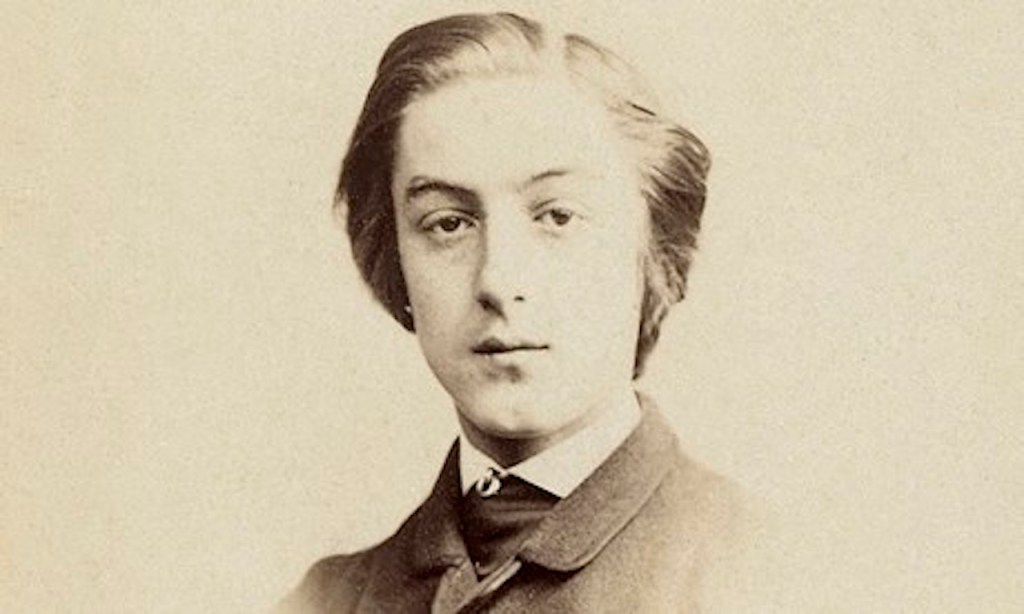
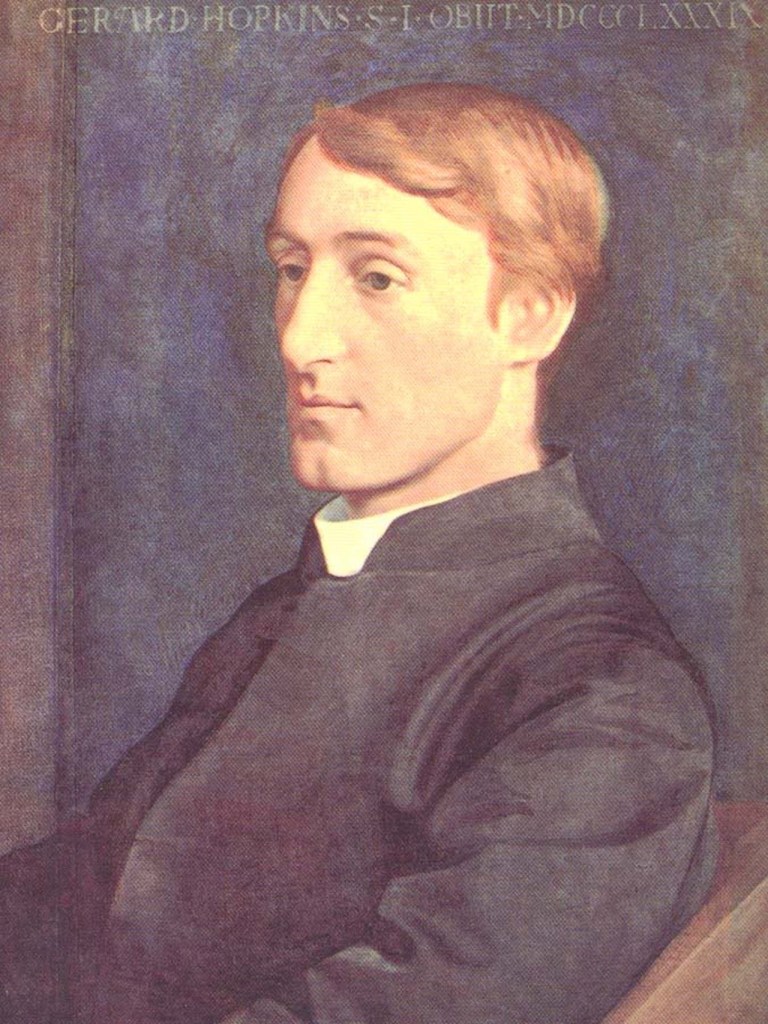
    Gerard Manley Hopkins – National Portrait Gallery, London

    Gerard Manley Hopkins’ “Pied Beauty”

    Gerard Manley  Hopkins’ “Pied Beauty” is an eleven-line curtal sonnet, dedicated to honoring and praising God for the special beauty of His creation.  Father Hopkins coined the term “curtal” to label his eleven-line sonnets.

    Introduction and Text of “Pied Beauty”

    The speaker in Gerard Manley Hopkins’ poem/hymn “Pied Beauty” offers a tribute to the Creator for all things natural and human inspired, with special emphasis on things that are multi-colored, dotted, striped, or patterned in ingenious ways.  The poem employs Father Hopkins’ famed sprung rhythm and unique rime scheme: ABCABCDBCDC.  

    The poem is an eleven-line sonnet called a curtal, a term which Father Hopkins coined to describe the form he employed in certain of his poems, including “Pied Beauty.”  While the speaker emphasizes beauty by contrasting things that are widely touted as unpleasant yet possess a certain aura of unique loveliness, he ultimately is affirming that God has made all of creation to reflect various styles of beauty.

    Thus, the speaker begins by giving all “glory” to God for all these created things, and he concludes by insisting that God be praised for giving humankind these many patterned objects of beauty.   

    God and beauty are being weighed in special terms as the speaker creates in his hymn a drama of oppositional tension that results in the creation of balance and harmony.    Through appreciation and praise of God for His gifts, humankind learns that balance and harmony in order to complete life’s goals and purposes. 

    Pied Beauty

    Glory be to God for dappled things –
       For skies of couple-colour as a brinded cow;
          For rose-moles all in stipple upon trout that swim;
    Fresh-firecoal chestnut-falls; finches’ wings;
       Landscape plotted and pieced – fold, fallow, and plough;
          And áll trádes, their gear and tackle and trim. 

    All things counter, original, spare, strange;
       Whatever is fickle, freckled (who knows how?)
          With swift, slow; sweet, sour; adazzle, dim;
    He fathers-forth whose beauty is past change:
                                    Praise him.

    Recitation of “Pied Beauty”

    Commentary on “Pied Beauty”

    Father Hopkins’ poem remarkably enlists several synonyms for the important title term “pied.”  Those synonyms are dappled, couple-colour, brinded (archaic form of brindled), stipple, and freckled.   All of those terms refer to multi-color or dotted patterns that so often appear in nature, that this observant human heart finds divinely inspired.

    The poem is, therefore, a hymn honoring the Supreme Creator of all that exists.  The piece offers gratitude that the Heavenly Father-Creator has fashioned His world to provide delight for His children.

    First Movement:  A Pattern of Gratitude

    Glory be to God for dappled things –

    The speaker begins by glorifying Creator-God for having effected His world to include objects that are multi-spotted and multi-colored.  While the speaker undoubtedly offers God all glory to everything in creation, he also glorifies his Creator for not only things but also events.  The act of creation remains of particular interest.

    The speaker appears to be concentrating on a certain style and pattern that the Almighty has chosen to bestow on certain of His creatures and things.  And this devout speaker remains most appreciative of those patterns.  Thus, the glory, the honor, and the achievement of God have infused this speaker’s heart and mind to express gratitude.

    Second Movement:  Examples of All Things Dappled

    For skies of couple-colour as a brinded cow;
          For rose-moles all in stipple upon trout that swim;
    Fresh-firecoal chestnut-falls; finches’ wings;
       Landscape plotted and pieced – fold, fallow, and plough;
          And áll trádes, their gear and tackle and trim.

    The speaker then offers examples of those “dappled” things for which he is offering glory to God. He appreciates the sky that ofttimes appears as multi-colored as a spotted bovine.  The speaker is thankful also for the patterns that are dotted over the bodies of “trout that swim.”  These stippling patterns resemble small mole-like roses as they decorate the skin of those fish.

    This observant, devout speaker also adores the beauty of fallen chestnuts that resemble freshly set-ablaze fire coals on a grate or in a stove.   He also uses the “finches’ wings” to exemplify his appreciation for things “dappled.”  The wings of finches are often layered strips.  The speaker then widens his example to include even the “[l]andscape” or the farmers’ fields that the farmer has “plotted and pieced” in order to plough and “fold” or allow to lie “fallow.”  

    He finds those patterns to be offering the glory that all “dappled” things offer; thus, he honors them by mentioning them as an example. In fact, every commercial endeavor deserves a nod along with the instruments, their tools, which he refers to as “gear,” “tackle,” and “trim.”

    Third Movement:  The Spice of Variety

     All things counter, original, spare, strange;

    In the second stanza, beginning with the third movement, the speaker shifts from simple  spotted, multi-colored things to everything remaining that runs against expectation, or that is original and unique, or things that seem simple, and things that appear odd.

    Because creation seems to offer an infinite number of styles, patterns, and ways of being, the speaker now wishes to praise God and glorify the Divine Maker by recognizing the Creator’s penchant for variety. 

    If the old adage “variety is the spice of life” possesses any truth, then certainly the Heavenly Father-God is responsible for the creation of those spices.  This speaker thus widens his scope for gratitude.

    Fourth Movement:  Things That Change

     Whatever is fickle, freckled (who knows how?)
          With swift, slow; sweet, sour; adazzle, dim; 

    The speaker then offers further elucidation for the other components that make up his glossary of things that deserve attention and appreciation because of their having been offered to humankind by the Ultimate Reality, the Supreme Creator of the cosmos.

    So the speaker reports that all things, beings, creatures that possess the quality of fickleness or changeability belong to his list of things that honor and give glory to God.  Even “freckled” things, of which no one can define the origin, belong to this category.

    Those “fickle” and “freckled” things all have several qualities in common; thus, they may exist and behave with speed or move measuredly.   They may possess the opposite flavors of sweetness or sourness.  Some may also reflect light blazingly while others remain muted and subdued.

    Regardless of the unique qualities, they are all part of the Blessèd Creator’s offerings to His children for their pleasure or for their edification or to light whatever pathway they are destined to follow.

    Fifth Movement:  That Which Does not Change

    He fathers-forth whose beauty is past change:
                                    Praise him.

    The speaker then concludes with a command—”Praise him.”  In the beginning, he made it clear that he was offering all glory to God for the things He has given through creation. Now he offers his stern command, but before that command, he offers the reason that such praise is due Him. 

    The Father of all this beauty continues, and although He Himself is “past change” or without the necessity to change Himself, He continues to offer through creation a beauty that is many faceted, multi-colored, multi-stippled, and brindled. And all things remain on a spectrum that humankind cannot duplicate but is surely obligated to honor, appreciate, and glorify in the name of Father God.

  • Gerard Manley Hopkins’ “God’s Grandeur”

    Image: Gerard Manley Hopkins

    Gerard Manley Hopkins’ “God’s Grandeur”

    Despite the “smudge” and “smear” from some human activity, the speaker is offering assurance that the Creator’s blessings and restoration of Planet Earth remain in effect through the “grandeur” of that Creative Force-God.  Instead of instilling fear of earthly events, he encourages worship.

    Introduction with Text of  “God’s Grandeur”

    Father Gerard Manley Hopkins’ motivation to imitate Spirit (God) prompts him to craft his poems in forms, as Spirit creates entities in forms—from rocks to animals to plants to the human body. 

    Father Hopkins often employs the sonnet form. “God’s Grandeur” is a sonnet—fourteen lines, more similar to the Petrarchan than the Elizabethan. The first eight lines (octave) present an issue; then, the remaining six lines (sestet) address that issue.  

    Father Hopkins’ rime scheme is typically ABBAABBA CDCDCD, which also resembles the Petrarchan rime scheme in the octave. He employs iambic pentameter but varies from spondee to trochee.  Father Hopkins’ called his unique form “sprung rhythm.”

    God’s Grandeur

    The world is charged with the grandeur of God.
        It will flame out, like shining from shook foil;
        It gathers to a greatness, like the ooze of oil
    Crushed. Why do men then now not reck his rod?
    Generations have trod, have trod, have trod;
        And all is seared with trade; bleared, smeared with toil;
        And wears man’s smudge and shares man’s smell: the soil
    Is bare now, nor can foot feel, being shod. 

    And for all this, nature is never spent;
        There lives the dearest freshness deep down things;
    And though the last lights off the black West went
        Oh, morning, at the brown brink eastward, springs —
    Because the Holy Ghost over the bent
        World broods with warm breast and with ah! bright wings.

    Reading:  

    Commentary on “God’s Grandeur”

    Decrying the “smudge” and “smear” from human activity, the speaker asserts that despite humankind’s penchant for defiling nature, the Creator continues to bless and restore the world—a message that flies in the face of climate alarmists.

    However, in today’s smudged, postmodern world, one pays a price for criticizing climate alarmists who have replaced faith in the Creator with constant agitation for political ascendency.

    The Octave:  Pantheistic View of God

    The world is charged with the grandeur of God.
        It will flame out, like shining from shook foil;
        It gathers to a greatness, like the ooze of oil
    Crushed. Why do men then now not reck his rod?
    Generations have trod, have trod, have trod;
        And all is seared with trade; bleared, smeared with toil;
        And wears man’s smudge and shares man’s smell: the soil
    Is bare now, nor can foot feel, being shod. 

    The speaker in this Petrarchan sonnet sees God everywhere: “The world is charged with the grandeur of God.”  His soul is convinced, but his senses tell him that people do not behave as if this were true: “Why do men then not reck his rod?” 

    Not only do men, i.e. humankind, not heed the Divine, they also seem content to exist in darkness from where they spread gloom on the environment.   The speaker contends that whole generations of humanity have trampled the earth, defiling nature as they apply their systems of “trade.”

    The speaker is dramatizing Father Hopkins’ sense that human beings have become more interested in materialistic gain and possessions than in celebrating the glory of a loving, merciful, Heavenly Father. 

    The Sestet:  God’s Gifts Cannot Be Exhausted

    And for all this, nature is never spent;
        There lives the dearest freshness deep down things;
    And though the last lights off the black West went
        Oh, morning, at the brown brink eastward, springs —
    Because the Holy Ghost over the bent
        World broods with warm breast and with ah! bright wings.

    The octave has presented the issue: humankind is oblivious to God’s gifts and thus defiles them.  The sestet addresses the issue: despite indifference to the Creator, humankind cannot exhaust the gifts that the Creator bestows, because nature continues to renew itself through the agency of the Divine.  

    Thus, a “dearest freshness” continues to assert itself, despite the dirty ways of humankind.  Humankind may disregard God’s grandeur, but everything renews despite human activity.

    The speaker’s faith leaves him no room for doubt, because that faith has infused in him the intuition that the “Holy Ghost” is always watching over humankind, the children of Spirit-God, somewhat like a mother bird watches over her little flock.

    The Holy Ghost (Divine Mother) will ever mother humanity—Her little birds. Father Hopkins’ mystical insight brings him to the faith that throbs in his soul—in his “inscape,” his unique term for his inner landscape. 

    The Mystical Poet and God’s Creation

    And “in the beginning was the Word, and the Word was with God, and the Word was God” (KJV, John 1:1).  This line speaks gently but firmly to the inner ear of mystically inclined poets.  

    As originally determined, a poet is a word craftsman, and when the poet of genuine faith builds with words, he is imitating God, taking his discourse out of dogma and into true spirituality.  The form of “God’s Grandeur” closely resembles Father Hopkins’ other poems. 

    In “The Windhover,” the rime scheme is the same as that of “God’s Grandeur.” The same is true for “The Lantern out of Doors,” “Hurrahing in Harvest,” and “As Kingfishers Catch Fire.”

    Father Hopkins sonnets celebrate Spirit and continue the search for a deeper relationship with the Mastercraftsman (God). Occasionally, as he structures his sonnets, they produce an order that further marks a style uniquely his own.

    Readers do not encounter any structure resembling “Stirred for a birds, the achieve of, the mastery of the thing” in a Thomas Hardy or A. E. Housman poem—or that of any other poet—the uniqueness of Father Hopkins is so firmly established. 

    Also, a typical line of Father Hopkins is “Let him easter in us, be a dayspring to the dimness of us, be a crimson-cresseted east,” which contains the example of his meter and content.

    Divine Melancholy 

    The melancholy experienced by Father Gerard Manley Hopkins is of divine origin. The ameliorist in Thomas Hardy produces in his poems a different sort of melancholy.    Father Hopkins has faith; Hardy has hope.  One may deem Hardy spiritually adrift on the sea of humankind’s woe, even when he sings, 

    I talk as if the things were born
    With sense to work its mind;
    Yet it is but one mask of many worn
    By the Great Face behind.

    Referring to the veiled nature of God, Hardy seems to bemoan it rather than celebrate it, as Father Hopkins does.   Housman is preoccupied with endings. He says, “And since to look at things in bloom / Fifty springs are little room” and “sharp the link of life will snap.” 

    Of course, all poets are concerned with endings, but each poet in his work will treat those concerns in distinctive ways, according to their levels of understanding and faith.   Hardy, Housman, and many other poets remain earthbound looking for answers to ultimate questions among the various outlets for human intellectual expression.  And their search is a vital one for humankind.

    However, Father Hopkins’ “God’s Grandeur” along with the rest of his canon affords the reader the experience of hearing beautiful singing loud and sweet a poet’s song of the love for the Divine.  

    Father Hopkins’ faith set him free to pursue and express Divine Love, instead of endless searching for that something-else that the faithless heart craves as it laments the trammels of Earth.