Linda's Literary Home

Tag: creative writing

  • Malcolm M. Sedam’s Poem “The Hill Maiden”

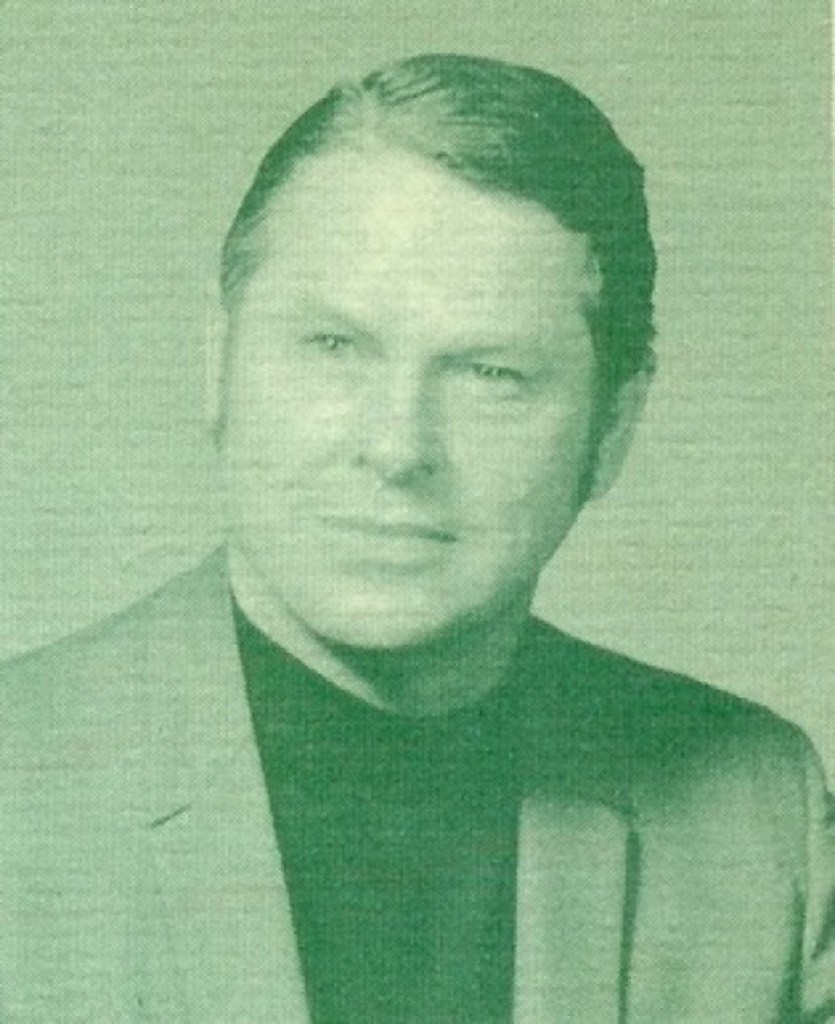
    Image: Malcolm M. Sedam

    Malcolm M. Sedam’s “The Hill Maiden”

    In his poem, “The Hill Maiden,” Malcolm M. Sedam has created a speaker voicing cheerful vaticination that his teenage angst-ridden protégé will one day shed her nihilism and burst into life affirming joy.  The best teachers are those who can inspire as well as instruct their students.  This poem represents a stellar example of that kind of inspirational educator.

    Introduction and Text of “The Hill Maiden”

    Malcolm M. Sedam‘s “The Hill Maiden” features a teacher dramatizing his observations about a particularly inquisitive but melancholy student.  His ultimate purpose is to instill in the student the notion that she will ultimately be able to appreciate the life that she seems to disdain.

    The poem plays out in three movements of unrimed stanzas.  This organization allows the speaker to touch lightly on the physical reality of the subject but then move more intensely to the mental and finally the spiritual possibility of the subject’s inclinations. 

    Because the speaker can only infer certain facts about his student, the poem remains metaphorically and imagistically implicative  instead of unequivocally literal.  For example, the teacher has no exact idea what the student does at her home; thus he places her in an image of “moving among the phantom rocks of reverie.”  

    The teacher/speaker knows from the negativity the student has been expressing to him that she mentally resides among hardness that causes her to imagine that things are worse than they are.

    Mentally she travels like a rocket through her ghostly musings until night fall when she sleeps but likely gets little rest, accounting for the nervous, brittle energy the educator perceives in his young scholar.

    Likely the adolescent girl is simply suffering the turbulence of teenage angst through which most individuals of that age group must travel.  But the best, most effective teachers are those who can inspire as well as instruct their students.  This poem represents a stellar example of that kind of inspirational educator.

    As an educator, Mr. Malcolm M. Sedam wrote poems to many of his students, always with the goal of inspiring them to high thinking and plain living.  Mr. Sedam once said he felt that his function as an educator was “to kick the dirt off of his students.”  By that he meant to help them see life more clearly without the fog of stereotypes, prejudice, and provincialism.  

    The Hill Maiden

    (for Linda, over in the valley)

    She is moving among the phantom
    Rocks of reverie hurtling through
    By mind bringing days into darkness
    Where the pull of growth rings
    The heart and spurs the soul

    Where her wish strings questions
    In the mysterious night of snow
    Bringing a promise that only the hills can sing.
    Her smile waits behind a frown of swords
    That rend her days

    In the melancholy of the deep valley
    Of dreams where she lives among flowers
    Gathering her moods that may bring peace
    Once the sorrow of lonely distance
    Has closed on hands—

    The same hands that Zen-like reach
    To answer each knock at the door of her heart
    Broken to be mended by tender time.
    Her mind is speeding through a galaxy
    Of intensity where the blood rose

    Will speak to her frozen will
    All forgiven by decree in warring winds—
    The nature of her plight?
    Without wings
    She will still spring into flight.

    Commentary on “The Hill Maiden”

    Malcolm M. Sedam’s “The Hill Maiden” features a teacher, who is also a practicing poet, dramatizing his observance of an inquisitively intelligent but extremely melancholy student.  

    His only purpose is to instill in the student the notion that she will ultimately be able to appreciate the life that she seems now to disdain.

    First Movement:  Dreaming amongst the Hills

    She is moving among the phantom
    Rocks of reverie hurtling through
    By mind bringing days into darkness
    Where the pull of growth rings
    The heart and spurs the soul

    Where her wish strings questions
    In the mysterious night of snow
    Bringing a promise that only the hills can sing.

    The speaker begins by placing the object of his speculative musing in an image that implies sharp but dream-like rigidity.  Rocks appear ghost-like through a dream-scape as they bewilder the mental musings of the young girl with whom the mature educator is engaging both as a poetry mentor as well as a teacher.

    Teachers often counsel their students who seek out their advice and direction even in issues outside of the academic sphere as well as within the educational arena.  Those teachers who must essentially become counselors will either direct the students to other professionals, or they will attempt to offer their own gleanings from their life experience.

    The teacher in this poem demonstrates that he is the latter kind of teacher, and he has given the mind of the young student some serious analysis.  Thus he not only describes her environment, but he also speculates and then foreshadows what is likely to befall the girl once she is able to erase her current adolescent fog.

    Until that glowing day arrives, however, the speaker sees that the girl’s maturing process weighs heavily on her heart and soul.  She is full of questions brought on by the mystery of life.  

    The “snow” that brings beauty as it covers the hills also brings bitter cold and slippery conditions the cause the girl to miss the music that her hill-valley home affords her.

    By pointing out these images of beauty and placing them a context of mystery and difficulty, the speaker hopes to allow his charge to contemplate the possibility that life is real and offers hope to those who search its reaches with an open mind and cheerful heart.

    Second Movement:  Frowning Swords

    Her smile waits behind a frown of swords
    That rend her days

    In the melancholy of the deep valley
    Of dreams where she lives among flowers
    Gathering her moods that may bring peace
    Once the sorrow of lonely distance
    Has closed on hands—

    The same hands that Zen-like reach
    To answer each knock at the door of her heart
    Broken to be mended by tender time.

    The speaker has observed the teen’s unwillingness to show a cheerful countenance.   Her bitterness “behind a frown of swords” likely often gives the mentor a shudder at the likelihood that the girl is suffering intensely.

    No doubt, he believes that at this point in her life, she should be dancing merrily among “flowers” and allowing her sorrowful moods to dissolve in the “deep valley of dreams.”

    But again, he returns to prognostication that once she has learned to fold her hands in wonder and listen to the love that knocks at the “door of her heart,” her melancholy will be rendered null and void as “tender time” moves her through the rough spots of her anguish.

    Again, the speaker chooses beauty—”flowers gathering”—to balance the “frown.”  He offers the image of the heart’s door to harmonize with the environment that will reach her with the “Zen-like” hands of mystery and the ultimate gain-of-wisdom.  

    Like a Zen koan, the riddle of life will remain before her as she continues to search for answers to her perplexing questions.  

    Third Movement:  Springing into Flight

    Her mind is speeding through a galaxy
    Of intensity where the blood rose

    Will speak to her frozen will
    All forgiven by decree in warring winds—
    The nature of her plight?
    Without wings
    She will still spring into flight.

    Finally, the speaker makes his most striking vaticination after asserting that his young charge has a strong mind but also a tender heart that is quick to show intense emotion.  

    That the “blood rose” will speak itself undeniably to the girl’s will portends that all of her negativity and nihilism will be “forgiven” as she continues to navigate through the conflicts that life bestows on all searching souls.

    Then the speaker offers the question that he is likely very content to answer.  The frustrating situation that befuddles the young scholar’s mind and heart has been implied by all the imagery that went before, but then what will eventually be the path chosen by and/or for the student?   

    She will be able to navigate through all the trials and tribulations as a bird that so easily lifts it wings to the wind and takes to the air through the abundant space of sky.

    The speaker is not so naïve as to insist that such navigation will come easily, but he does remain assured that the path will open to the girl, and she will become willing to follow it. Thus the speaker can conclude affirmatively that “Without wings, she will still spring into flight.”

    Offered by a beloved and well-respected mentor, such faith in a young scholar’s ability to navigate life is bound to redound in blessings, despite the pitfalls and rough spots that her life, no doubt, will place sphinx-life before her mind and heart.

  • ~Maya Shedd’s Temple~

    Image: SRF Mother Center Lotus – Photo by Ron W. G.

    My spiritual journey began in earnest in 1978, when I became a devotee of Paramahansa Yogananda’s teachings and a member of his organization Self-Realization Fellowship.  As a Kriyaban since 1979, I have completed the four Kriya Initiations, and I continue to study the teachings and practice the yoga techniques as taught by the great spiritual leader, who is considered to be the “Father of Yoga in the West.”

    I practice the chants taught by the great guru accompanying myself on the harmonium and serve at the local SRF Meditation Group as one of the chant leaders.

    “By ignoble whips of pain, man is driven at last into the Infinite Presence, whose beauty alone should lure him.” –a wandering sadhu, quoted in Autobiography of a Yogi by Paramahansa Yogananda

    I am a Self-Realization Yogi because the teachings of Paramahansa Yogananda, who in 1920 founded Self-Realization Fellowship, make sense to me.  Paramahansa Yogananda teaches that we are immortal souls, already connected to the Divine Reality, but we have to “realize” that divine connection.  

    Knowing the Great Spirit (God) is not dependent upon merely claiming to believe in a divine personage, or even merely following the precepts of a religion such as the Ten Commandments.  

    Knowing the Creator is dependent upon “realizing” that the soul is united with that Creator.  To achieve that realization we have to develop our physical, mental, and spiritual bodies through exercise, scientific techniques, and meditation. 

    There are many good theorists who can help us understand why proper behavior is important for our lives and society, but Paramahansa Yogananda’s teachings offer definite, scientific techniques that we practice in order to realize our oneness with the Divine Power or God. 

    It makes sense to me that my salvation should be primarily my own responsibility.

    I did not grow up with a religious tradition.  My mother was a Baptist, who claimed that at one time she felt she was saved, but then she backslid.  I learned some hymns from my mother.  But she never connected behavior with religion.  

    My father was forced to attend church when he was young, and he complained that his church clothes were uncomfortable as was sitting on the hard pews.  

    My father disbelieved in the miracles of Jesus, and he poked fun at people who claimed to have seen Jesus “in the bean rows.”  My mother would not have doubted that a person might see Jesus, because she saw her father after he had died.  

    My mother characterized my father as agnostic, and she lived like an agnostic, but deep down I think she was a believer after the Baptist faith.

    Here’s a little story that demonstrates how ignorant about religion I was as a child:  When I was in first or second grade, I had a friend.  At recess one day at the swings, she wanted to confide something to me, and she wanted me to keep it secret.  

    She said I probably wouldn’t believe it, but she still wanted to tell me.  I encouraged her to tell me; it seemed exciting to be getting some kind of secret information.  So she whispered in my ear, “I am a Quaker.”  

    I had no idea what that was.  I thought she was saying she was magic like a fairy or an elf or something.  So I said, “Well, do something to prove it.”  It was my friend’s turn to be confused then.  

    She just looked very solemn.  So I asked her to do something else to prove it.  I can’t remember the rest of this, but the point is that I was so ignorant about religion.

    Looking back on my life as a child, teenager, young adult, and adult up to the age of 32, I realize that the lack of a religious tradition left a great void in my life.  Although my father was on the fence regarding religion, he would listen to Billy Graham preach on TV.  

    I hated it whenever Billy Graham was preaching on TV.  His message scared me.  Something like the way I felt when my father’s mother would come and visit us, and when my father would let out a “Goddam” or other such swear word, Granny would say he was going to hell for talking that way.  

    I was afraid for my father.  And Billy Graham made me afraid for myself and all of us because we did not attend church.   I never believed that things like swearing and masturbation could send a soul to hell.   But then back then I had no concept of “soul” or “hell.”  I believed it was wrong to kill, steal, and to lie.  But I’m not sure how these proscripts were taught to me.  

    I guess by example.   It seems that I had no real need for God and spirituality until I was around thirty years old.  

    My life went fairly smoothly except for two major traumas before age thirty.  The first trauma was experiencing a broken heart at age eighteen and then undergoing a failed marriage, after which I thought I would never find a mate to love me.  But I did meet a wonderful soulmate when I was 27.

    A second trauma that added to my confusion was being fired twice from the same job at ages 22 and 27.  By age 27 things started to make no sense.  And it started to bother me intensely that things made no sense.  

    I had always been a good student in grade school and high school, and I was fairly good in college, graduating from Miami University with a 3.0 average.  That grade point average bothered me because I thought I was better than that, but I guess I was wrong.  

    But then not being able to keep my teaching job and not being able to find another one after I had lost it very much confused me.  It seemed that I had lost touch with the world.  School had been my world, and my teachers and professors had expected great things from me.  But there I was at age 27 and couldn’t get connected to school again.

    I began reading feminist literature starting with Betty Friedan’s Feminine Mystique, continuing with Ms. Magazine, and many others.  The result of taking in the feminist creed led me to believe that I had someone to blame for my failure—men; men had caused the world to be arranged so that women cannot succeed outside the home.  

    I began writing again, an endeavor I have sporadically engaged in most of my life from about age sixteen.  

    I decided to apply for a graduate assistantship in English at Ball State University, feeling that I was ready to get out in the man’s world and show it what a woman could do.  I felt confident that I could succeed now that I knew what the problem was.  But that didn’t work out either.  

    I finished the year without a master’s degree in English, and then there I was, confused again, and still searching for something that made sense. 

    I had heard about the Eastern philosophy known as “Zen” at Ball State, and I started reading a lot about that philosophy.  Zen helped me realize that men were not the problem, attitude was.  I kept on writing, accumulating many poems, some of which I still admire.  

    And I kept reading Zen, especially Alan Watts, but after a while the same ideas just kept reappearing with no real resolution, that is, even though the Zen philosophy did help me understand the world better, it was not really enough.  I got the sense that only I could control my life, but just how to control it was still pretty much a mystery.

    In 1977, my husband Ron and I went on one of our book shopping trips.  I spied a book, Paramahansa Yogananda’s “Autobiography of a Yogi,” and I recommended it to Ron because he liked biographies.  Strangely, I said to him about the man on the cover: “He’s a good guy!”  Strange, because I had no idea if the individual was a good guy or not, being the first time I ever saw him.  So, we purchased poetry books, and we also purchased the autobiography for him.  

    Ron did not get around to reading it right away, but I did, and I was totally amazed at what I read.  It all made sense to me; it was such a scholarly book, clear and compelling.   There was not one claim made in the entire 500 plus pages that made me say “what?” or even feel any uncertainty that this writer knew exactly whereof he spoke.  

    Paramahansa Yogananda was speaking directly to me, at my level, where I was in my life, and he was connecting with my mind in a way that no writer had ever done. For example, the book offers copious notes, references, and scientific evidence that academics will recognize as thorough research. 

    This period of time was before I had written a PhD dissertation, but all of my years of schooling including the writing of many academic papers for college classes had taught me that making claims and backing them up with explanation, analysis, evidence, and authoritative sources were necessary for competent, persuasive, and legitimate exposition.

    Paramahansa Yogananda’s autobiography contained all that could appeal to an academic and much more because of the topic he was addressing.   As the great spiritual leader recounted his own journey to self-realization, he was able to elucidate the meanings of ancient texts whose ideas have remained misunderstood for many decades and even centuries.

    The book contained a postcard that invited the reader to send for lessons that teach the techniques for becoming self-realized.  I sent for them, studied them, and I have been practicing them since 1978.  They do, indeed, hold the answer to every human problem.

    I know it is difficult for most educated people to believe that all human problems can be solved, but that’s because they get stuck in the thought that they cannot. 

    If you believe that you can never really know something, then you can’t, because if you believe that you can never really know something, you won’t try to know it. 

    Yogananda gives a map with directions to reaching God, and realizing that one’s soul is united with God brings about the end of all sorrow and the beginning of all joy. 

    Just knowing the precepts intellectually does not cause this realization, but it goes a long way toward eliminating much suffering.  

    The faith that we can overcome all suffering is a great comfort, even if we are not there yet.   I realize that God is knowable, but most important is that I know I am the only one who can connect my soul to God—and that is the spiritual journey I am now on.

    🕉

    Entries

    1. Thought of the Day
    2. Life Sketch of Paramahansa Yogananda
    3. My Life in Little Stories
    4. Autobiography of a Hoosier Hillbilly
    5. “Forget the Past”: A 10-Sonnet Sequence
    6. A Suite of “Samadhi” Villanelles
    7. Overcoming Fear
    8. The Bad Man Who Was Preferred by God
    9. Quotations
    10. Names for the Ineffable God
    11. An Orphic Oath: To Enshrine a Standard of Excellence for Poets 
    12. Brief Sketches of the Five Major World Religions
    13. The Stifling of Spirituality

  • An Orphic Oath: To Enshrine a Standard of Excellence for Poets

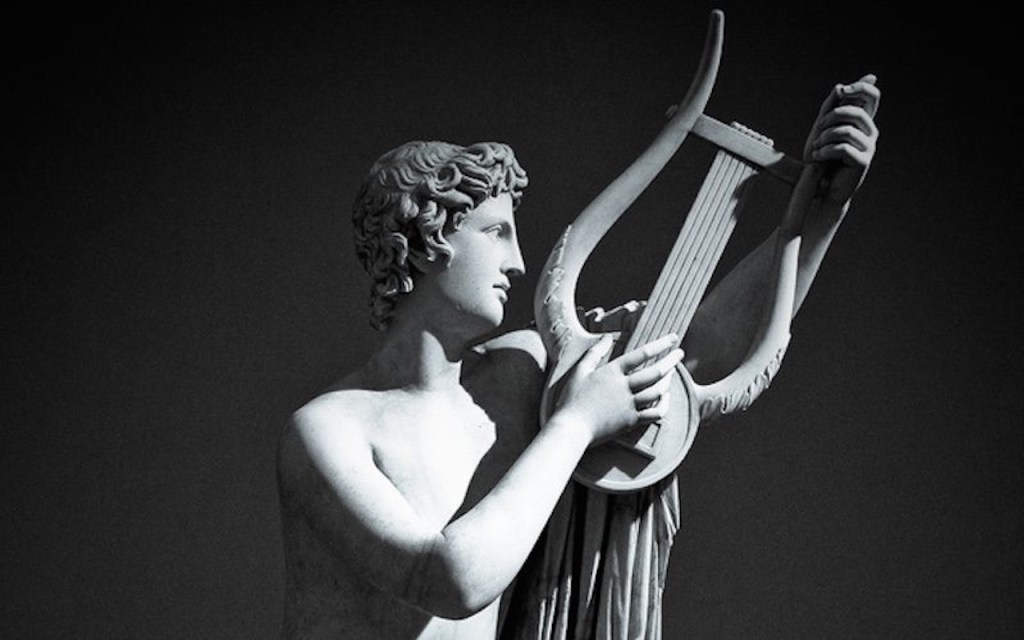
    Image 1:  Orpheus Playing Lyre 

    An Orphic Oath: To Enshrine a Standard of Excellence for Poets

    Beginning poets should be required to take a vow equivalent of the medical “Hippocratic Oath.”  If poets could be held to a standard of excellence, less doggerel would plague the literary world.

    A Hippocratic-Style Oath for Poets

    The Hippocratic Oath [1] is a covenant between the beginning physician and his profession regarding his conduct with patients. Perhaps such an oath for poets could be called an “Orphic Oath,” after Orpheus [2], the mythical father of music and poetry, who descended into Hades and then returned to Earth.

    If beginning poets were required to take a vow equivalent of the medical “Hippocratic Oath” and, therefore, could be held to a standard of excellence, less doggerel would plague the literary world.

    While all poets, established or aspiring, could benefit by adhering to a standard of excellence, it is the beginning poet who could most benefit from taking an artistic equivalent to the physicians’ famed “Hippocratic Oath.”

    Does Poetry Make Sense?

    Poets require standards. Many novice poets believe that anything that occurs to them to spew across the page in lines shorter than prose should be regarded as poetry. And many novices are convinced that poetry does not make sense and should not.  

    They think that words in poems always have altered meanings:  light never means light, dark never means dark, smile never means smile—but must be interpreted or translated into some meaning that never approaches the literal meaning of the word.

    For far too many beginning wordsmiths, words in poems take on a magic spell that renders them so other worldly that only the expert poetry reader or teacher can ever really understand them.  

    During my stint at Ball State University as an assistant professor teaching English composition, I discovered that some students thought of poetry as a discourse that could mean anything they wanted it to mean. And others believed that only the teacher could tell them what it meant; most students believed that as students could never figure it out for themselves.

    As I was walking across the Ball State University campus, outside Bracken library, I heard a young woman remark about her composition professor, “She says my writing doesn’t make sense. But I write poetry and it’s not supposed to make sense.”  

    That remark told me a lot about many students’ attitude toward poetry.  Many students begin with notion that poetry is “not supposed to make sense,” while others believe that somehow it might make sense to a teacher.

    Aspiring Poets Need to Know Better

    It is understandable for general studies students to begin with inaccurate beliefs about poetry, but by the time a young person has decided to write poetry, it seems that that aspiring poet would know better.  

    One wonders which poets such future poets admire. But the sad fact is that many would-be poets likely do not admire any poets, because they have never actually read and studied any poets or poems.

    Another immature yet wide-spread belief about poetry usually held by those who have moved to a mid-level stage but who have not yet learned enough to remain humble is that to explicate, analyze, or otherwise comment upon a poem is to diminish its value as a poem.  

    That mistaken idea also stems from the notion that words in a poem always mean other than their literal meaning.  These mid-level beginners hold that critical commentary on a poem turns out the light that mystically shines from the poem left unscrutinized.

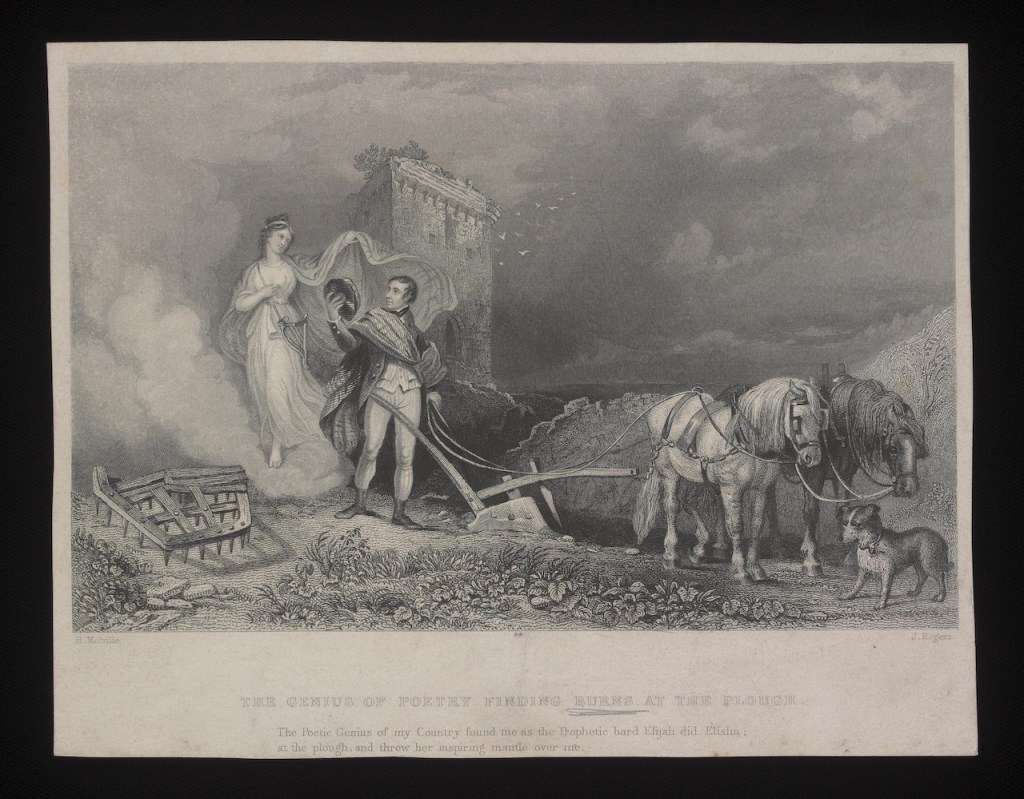
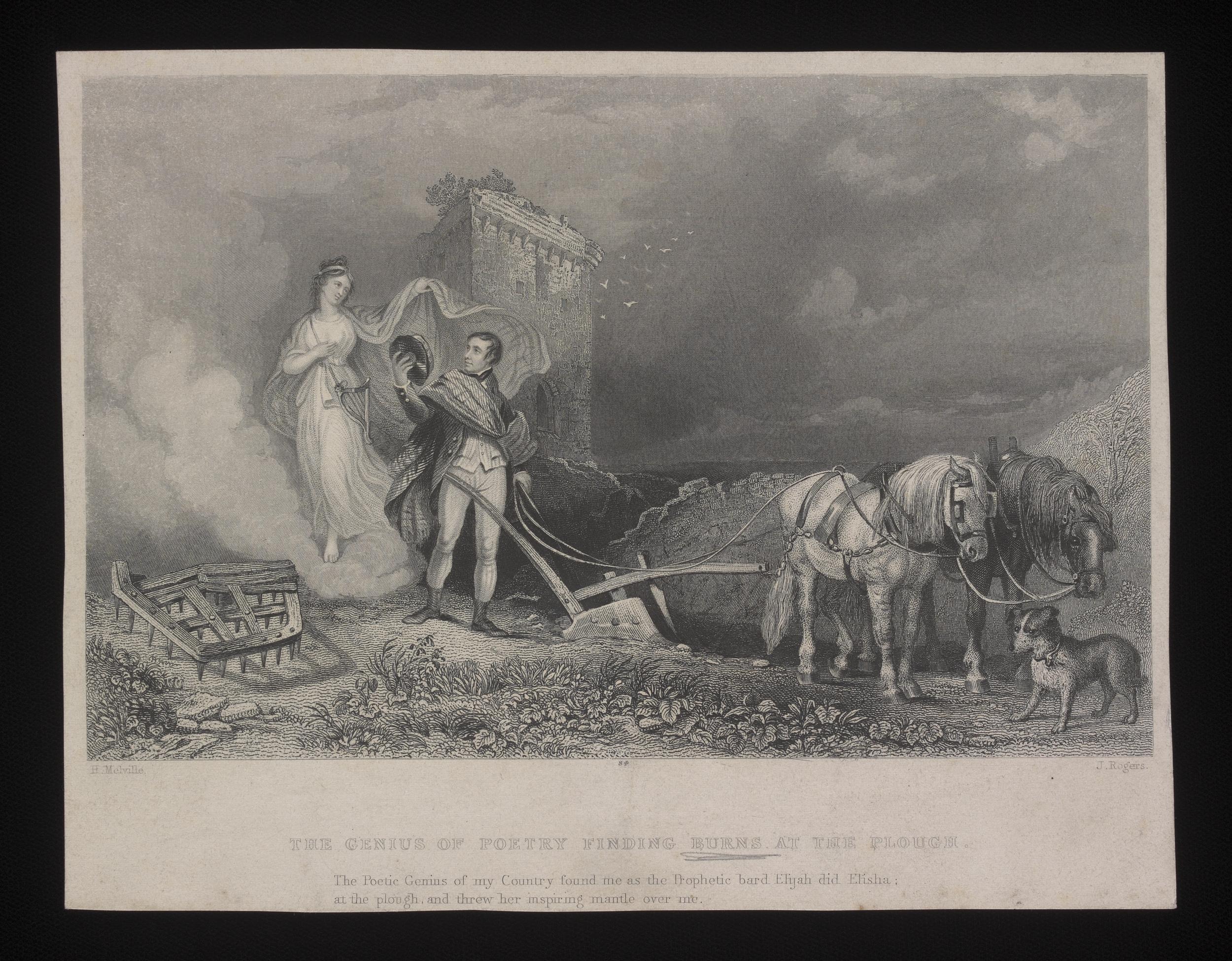
    Image 2:  The Genius of Poetry Finding Burns at the Plough 

    The Oath

    If you are a beginning poet, or a mid-level beginner—even seasoned, published poets could benefit from this oath—you might do well to consider the following oath, which I have refashioned, based on the Hippocratic Oath to which physicians swear at the beginning of their careers:

    As I [state your name] engage in my career as a poet, I solemnly swear to remain faithful to the tenets of the following covenant to the best of my ability:

    1. I will respect and study the significant artistic achievements of those poets who precede me, and I will humbly share my knowledge with those who seek my advice. I will dedicate myself to my craft using all my talent while avoiding those two evils of (1) effusiveness of self-indulgence and (2) pontification on degradation and nihilism.
    2. I will remember that there is a science to poetry as well as an art, and that spirituality, peace, and love always eclipse metaphors and similes. I will not bring shame to my art by pretending to knowledge I do not have, and I will not cut off the legs of colleagues that I may appear taller. 
    3. I will respect readers and ever be aware that not all readers are as well-versed in literary matters as I am. I will not take advantage of their ignorance by writing nonsense and then pretending it is the reader’s fault for not understanding my disingenuity. Regardless of the level of fame and fortune I reach, I will remain humble and grateful, not arrogant nor condescending.
    4. I will remember that poetry requires revision and close attention; it does not just pour out of me onto the page, as if opening a vein and letting it drip. Writing poetry requires thinking as well as feeling.
    5. I will continue to educate myself in areas other than poetry so that I may know a fair amount about history, geography, science, math, philosophy, foreign language, religion, economics, sociology, politics, and other fields of endeavor that result in bodies of knowledge.
    6. I will remember that I am no better than prose writers, songwriters, musicians, or politicians; all human beings deserve respect as well as scrutiny as they perform their unique duties, whether artist or artisan.
    7. I will not rewrite English translations of those who have already successfully translated and pretend that I too am a translator. I will not translate any poem that I cannot read and comprehend in the original.

    If young poets treat their art as a trust between themselves and all they hold sacred, they will gladly follow this covenant and represent their chosen art gracefully and successfully.

    Supporting Yourself by Writing Poetry

    Aspiring poets needs to be aware that making a living solely by writing poetry is unlikely. They will, therefore, need to support themselves by other means, at least until they can ultimately parlay their literary reputations into full-time writing. An example of a contemporary poet who was able to parlay that reputation is Dana Gioia [3].

    Sources

    [1]  Editors. “The Hippocratic Oath.”  Greek Medicine. National Library of Medicine.  First published: September 16, 2002.  Last updated:  February 7, 2012.

    [2]  Editors.  “Orpheus.”  GreekMythology.com. Accessed September 29, 2023.

    [3]  Dana Gioia.  Official Web Site. Accessed September 29, 2023.