Linda's Literary Home

Tag: fiction

  • Malcolm M. Sedam’s “The Eye of the Beholder”

    Malcolm M. Sedam – Book Cover, The Eye of the Beholder

    The Eye of the Beholder

    Chronicle Press, Franklin OH, 1975

    The following poems are from Mr. Sedam’s third published collection, The Eye of the Beholder

    Declaration by poet

    Whatever I am or ever hope to be
    I am in truth reborn in poetry.

    1 ON THE DAYS THAT I SAW CLEARLY

    On the days that I saw clearly
    in the quandary of time’s coming,
    my intellect strayed and I could not escape
    I drank intoxicating myths
    but I created no gods,
    and then the leaves fell from the tree
    and I recognized you as the new ghost of the sun –

    Though I sensed the contradiction
    I was afraid to wait
    while time came circling the seasons
    and I was renewed in its flight
    so I have written you into being
    and if this divine seed should fail
    so be it, for I was saved
    when I gave the miracle a chance.

    (A slightly different version appears in Between Wars.)

    2 ABRAHAM AT MORIAH

    Trusting His promise:
    Unto thy seed will I give this land;
    I went on and on believing
    that my descendants would be many
    like the sands among the sea,
    that He would make of me a great nation —
    I sired a son when I was very old,
    proved I had magical powers
    perhaps so great I challenged even His,
    for jealously He asked me for this son —

    My will divined the purpose of the Rod,
    no man would kill his son for any god,
    and knowing well His promise I had blessed
    I thought it time to put Him to a test
    and so with Isaac I traveled to that place
    and took along a ram
    just in case.

    (A slightly different version appears in Between Wars.)

    SMOKE SIGNALS

    Remembering that lost date of steam’s demise
    I looked upon my race across the rise
                                           as utter foolishness
    that smoke pall was a diesel in disguise
                            a carboned copy
    of that trim production-line machine —
                   but still the fact remained
    here was a reasonable facsimile of a train
    and so I stayed and watched until the red caboose
                    had traced its path across the plain —

    While in the early Western morn
    I tracked the fading echo of the horn
    and heard the rising rhetoric of the roar
                            converge upon an elementary point
                                               in the objective distance
    the SD-45’s had been impressive
                           both in strength and size
    but in the wide reflection
                           their dissonant pronouncements
    would always be a prose rendition of power —

    Then from the East
                      over the sun of some forgotten dawn
    the black cloud of a whirlwind marked the sky
    the silver rails resounded with a cry
    a K4 whistle chimed a holy sigh
                                 like a mystic revelation
    the air became committed to the cause
    the farmers stood in momentary pause
    the earth rose up in thunderous applause
                   as the Broadway Limited went flashing by
                                          in a golden symphony of speed and sound —

    And when the fantasy had passed
    I stood there smiling to myself
                           as I basked
    in the wondrous pollution of that day
    shaking the soot screen from my clothes
    brushing the cinders from my hair
    coming face to face again with reality
                           at last I drove away
    looking for some other telltale smoke
    knowing I would always find a poem
                            in every lost horizon. 

    4 SECOND COMING

    In the dawn between time and tomorrow
    I lie awake and watch you as you sleep
    curled on the pillowed breath
                         of love’s last pleasure
    your eyelids flutter as you dream
    and I am filled with a persistence of desire
                       to touch your moon-gold reverie
                   but I do not awaken you
    for you appear above my senses in another world
    your beauty silhouettes the morning sky
                beyond this earthly reality —
    all good things are at least twice lived
    I accept you in the dream
                and fall in love with you again.

    (Another very different poem title “Second Coming” appears in Between Wars.)

    5 UNDERSTANDINGS

    I have heard these aunts before
    damn their fat Victorian souls
    who gathered in our house
    those poor depression days
    for grand reunions
    with gossip of the years
    and I the slender one
    too young too male to hear
    that day hid behind the door
    and combed their conversation
    for tidbits dear
    for boys too mean to bore,
    and in that painful hour
    they took my subject sex
    and tore to bloody shreds
    all acts of manly fire
    of passion and desire
    all aunts but one
    who would become my favorite
                                          in the end
    she said:  “The way I see it girls
                             the way you should
                             it don’t hurt me none,
    and seems to do George a power of good.”

    (This poem also appears in The Man in Motion.)

    6 THE SHORTEST DAY

    Today we live unnaturally
                 in the eye of a peaceful calm
    where here upon this high and lonely ground
                 our isolated isle defies the storm
                                          by the will of the gods
    a typhoon rages furiously out at sea
    and for two hundred miles we are surrounded
    a conspiracy of the clouds has stopped the war —

    I should write those details to you now
                            about the great Osaka strike
    but strangely my hand moves without me
    as if it were drawing a power outside itself
    fusing my long since calculated words
                 with imagery that I could not relate
                 when I was so careless with time
                                          and so I await
                    watching a tireless soaring gull
    while Keith is drawing a pencil sketch of me
    he wants to make a record of this day
                  to contemplate our meaning in the war
    a mirror of every mission that we fly
    and this picture is mine when he is finished —
    “What color shall I make your eyes?” he asks,
    “What mood do you prefer,” I say,
    “you have the choice of blue or gray or green
    to match the shades of my chameleon mind.”
    He chooses green, the philosophical one
    to please my faint resemblance to himself
    he squares the jaw and set the cheekbones high
    then squints one eye and makes my nose too long
    but I am pleased that having come this far
    the small resemblance ends
                                            for we are not alike —

    Keith’s eye are azure blue
    his build is slim and frail
    he has a painter’s fine artistic hands
    and he is not the fight pilot type
    which is precisely why I love this man
    he is the last innocent of the war —  

    He is almost finished, he says
    he wants to check the color of my eyes again
                             but when I turn toward the light
                                         he frowns perplexed:

    “Your eye are now a penetrating blue.”
    And I am not surprised — for the last hour
    I have been thinking so clearly of you
    that you could be lying with me in the sun —
    I watch the rolling ocean swells
    rising and falling like the breathing of the world
    remembering that day beside the lake
                                        the towering moment
    when we soared across the sky in perfect rhythm
                                            and our breathing became as one —

    “What were you thinking of?”  he asks
    but I do not tell him I was thinking of you
    It is too intimate, too risqué
    I say that I am thinking of a land faraway
                                             with a valley view
    and a meadow slope with a sleek smooth runway —

    He smile conditionally but not quite satisfied:
    “I guess your eye are mostly blue,” he says,
    “I think I’ll change the color of them now,”
    But I say, “Wait awhile and look again —
    they’ve always had a mind to change their own.”

    He listens to my mood intently
    and maybe I have given myself away
    humming to a tune of Tokyo Rose
    I have written you five poetic lines
    when I become patiently aware
    that he is not looking at me at all
                 but staring at the satiated sun
    and only then do I record the sound
    of a fighter engine’s high pitched whine —

    I watch it knifing through the sky
    my instincts bristle with the cry
    the hot blood races to my brain
    and I am fortified once more for war —

    “The mission’s rescheduled for tomorrow,” he says,
    “we’ll be passing through the outer rim tonight.”
    And I note a straining distance in his voice —
    the wind has risen, the surf is crashing near
    and in the falling light I watch he shadow disappear
                                            as he despairs:
    “I see something about you now I wish I hadn’t seen
    gray is the color of a killer’s eyes
    your eye have turned a shade of steely gray”;

    I look away
    I focus on the waves
                            the great repository of the sea
    I cannot bear to gaze upon his face
    the premonition of his death engulfs me —
    “Then what color shall they be?” he asks —
    I see the blazing guns, a reddening sky
    the lethal flak that traps the atmosphere
    I slam the throttle wide and clear the air:
    “Gray must necessarily be a part of me
                                          for I would survive,
    but color them blue or color them green
                              color them anything but gray.”

    The storm is come fast, we turn to go
    but even in the closing night I know
                                       that he will die
    no gentle boy can live long in this war —

    Silently we walk into the wind
    my arm around him in last affection:
    “It is finished,” he says,
    “Here is my gift to you
    and this is my flesh and blood
    the soul and spirit of my youth
    and maybe I can find the way again
                                         someday, after it’s over” —

    “”What are you thinking?” he asks.
    “About the picture,” I say,
    “I’ll treasure it always,”
                                          but I do not say:
    I am thinking of tomorrow . . .
                                        how frail is tomorrow.

    7 NO GREATER LOVE HATH…

    (For Keith Weyland)

    Flying
    toward the strange white night
    we thought of deliverance from the terror of choice,
    the difference
    the splendor of our scheme
    we could not sleep and refuse tomorrow’s voice;
    compelled
    we thrust the unknown
    with outstretched wings, a naked bond between
    and then a distant light when we had come alive —
    a flame burst over the harsh beauty of the sea
    and Keith was gone.

    (A slightly different version appears in Between Wars.)

    8 VERTIGO

    The sky was down
    the clouds had closed the chance
    a vast and inlaid sleep
    then magnified the trance,
    so set in power
    I saw the phantom dance
    that sent the brain dials spinning . . . 

    Abruptly
    the sea cut my remembering
    and I awoke in flames

    9DESAFINADO

    (For Allen Ginsberg, et al)

    Through this state and on to Kansas
    more black than May’s tornadoes
    showering a debris of art —
    I saw you coming long before you came
    in paths of twisted fear and hate
    and dread, uprooted, despising all judgment
                                                    which is not to say

    that the bourgeois should not be judged
    but by whom and by what,
    junkies, queers, and rot
    who sit on their haunches and howl
    that the race should be free for pot
    and horny honesty
                                                    which I would buy
    if a crisis were ever solved
    in grossness and minor resolve
    but for whom and for what?

    I protest your protest
    its hairy irrelevancy,
    I, who am more anxious than you
                                    more plaintive than you
                                    more confused than you
                                    having more at stake
    an investment in humanity.

    (This poem also appears in The Man in Motion.)

    10 MIGRATION

    I have walked the hills for years
    and have never seen a burning bush
    though I have seen a few miracles
    so call me a pantheist if you will
    for I know it makes you feel better
    to know that I believe in something —

    You think that you hear the grass grow,
    but Genesis and Spinoza told me nothing
    I saw it!  The mosquito drinking may blood
    the oriole weaving its basket nest
    and I rose from the reflective trees
    lemming-like swimming in the sky
    until I filtered into the plan
    of orderly defeat and exquisite show —

    I breathed the thin pure air
    and suffocated from the strange loneliness.

    (A slightly different version of “Migration” appears in Between Wars.)

    11 NOSTALGIA

    (For Lee Anne)

    Call it the wish of the wind
                                                    flowing
                     from a dream of dawn
    through the never-to-be forgotten
                     spring of our years
                                                      running
                     swiftly as a lifetime
                                                      flying
                     like a vision borne
    Slim Indian princess  wedded in motion
                     dark hair streaming
                                      sunlight and freedom
                     floating on the cadence song
                                       drifting shadow-down
                                                 in the distance
    my daughter riding bareback
                   on a windy April afternoon.

    (A slightly different version of “Nostalgia” appears in The Man in Motion.)

    12 GOLGOTHA

    (For Mary, One of my Students)

    When I proclaim the world is flat
    and that I’m searching for an edge
    I am only rounding a vision for you —
    I stand, a son of man, not God
    and I could be called Paul as well as Peter —
    I speak for our sons and daughters
    and had I known, it should be thus explained
    that we have all failed in our historical sense
    there was manipulation at the manger
    Saul died on the way to Damascus
    and Simon was wholly afraid —

    Only from that shipwreck of faith
    did l learn to walk upon the water
    so what matter, then, you call me in this place
    a heretic, to give the cup and cross
    for I accept knowing
    I can live through a long series of deaths
    believing in your all-essential good
    and would not change your world in any way
    except to lead you gently into spring.

    (A slightly different version of “Golgotha” appears in Between Wars.)

    13 THE GRAND-CHILD

                    (For Annette)

    As of this moment
    he is the center of life’s celebration
    the incarnation of the holy seed
    and all the concentrated joy
                                   that love can share
    in the two short months of his existence —
    he mostly sleeps contented with his role
    we say he smiles as if we know
    but whether he does or why we do not care
                                      for all we need to know is
    that he is dependent upon his mother

    And he is greedy for her now
    that much he feels and understands
    finding his connection by the stars
                                   the moon surrounds his eyes
    flowing from the land of milk and honey
    where she clasps him to her firm full breast
    growing inside of her the fiercest hope
    as from the moment when he burst from life
    she offered him up to the world
    as a sacrifice without blemish or blame
                                   and she exists for him
    holding the frailest heartbeat of his being
    because he is helpless without her
    is reason enough for she is his mother
                                    bearing the burden of his claim — 

    When he was forming in her shadow
    she felt a oneness with his mind
    the urgent purpose of man’s genius
    thrusting through the galaxies of time —
    as he awakened in her psyche
    he heard the lullaby of her soul
    the tranquil message of the cosmos
                                        answering life’s mysterious call —

    But where did her instinct stop
                                    and intelligence begin?
    she cannot tell or explain
                   swelling with the confidence of love
    her breasts are rounder than the sun
                   and more bountiful
    her body warms the labor of his breath
                   wrapped in primordial memories
    she brings a spiritual certainly
                    to the geological past —
    he sighs across the vastness of creation
    reaching for his senses in the skies
                            proclaiming everything that’s human
    the Garden and the Fall
                      the halo round the Manger
                                the handprint on the cavern wall

    And whether it was her will
    or whether or not God planned it that way
    she is more beautiful than the role she plays
    she holds our rendezvous with immortality
                                    and more
    the knowledge-blood that links us with the stars
    and through him she restores our faith
    and for him we would praise her name
    she is the Alpha of the Universe, the Soul
    this woman-child, creator child
                                  Grand-Child
    Earth Mother of us all.

    14 OBJECTIVE CASE

    From symbols of love
    I grew
    a tangle of eyes and feet
    and could I have stayed there
    I would have been secure
    but I insisted on a room with a view —
    one yank
    And I came from darkness
    one smack
    and I felt tomorrow
    and falling backwards
    I cried an eternity.

    (A slightly different version of “Objective Case” appears in Between Wars.)

    15 REGENERATION

    Something in me and the abiding dust
    Loosed an imprisoned force
    And I became a man at the age of twelve
    Proclaiming myself above women
    I decided to be a trapper up North
    But tried the near creek first
    Caught a muskrat that turned me weak
    Cried boys tears then came back strong
    Finding maturity was thirteen
    Growing soft on animals and girls.

    (The poem, “Regeneration,” also appears in The Man in Motion.)

    16 CLOTHES MAKE THE MAN

    I have noticed that
    we are both impeccably dressed,
    but that you prefer
    to make your appearance
    in black and white,
    while I prefer
    a variety of colors.
    this difference, I believe,
    stems from the fabric
    of our hair shirts;
    yours seems to scratch you
    while mine only tickles.

    (“Clothes Make the Man” was first published in the Ball State Teachers College FORUM, Spring, 1963. A slightly different version appears in Between Wars.)

    17 CONCEPTIONS

    If I were a woman
    I would become great with child
    if only to test my creative power
    to bring a fertilized egg into being
    proof positive that my reproductive prowess exists
                                            but being a man
    I can still stare at sperm unbelieving
    that there is anything great with me
    having no conception of conception
    I’m disturbed when she asks me:
    “Aren’t you proud to be a father?”
    and I answer yes and no
    no for the biological act, yes after the fact
    I fulfilled my responsibilities
    and earned my right to that
                                            to be called Father?
    no, with no awareness of conception
    I knew only, still felt only the pleasure,
    so I would alter the master plan somewhat —

    a woman should be wired for light and sound
    and at the time conception
    like an exciting pinball machine
    her body would glow and the lights would come on
    and bells would ring and out of her navel
    would pop a card which would say:
    Big  Man with your wondrous sperm
    this time you the the jackpot!
    keep this card and in nine months you can collect.

    (“Conceptions” also appears in The Man in Motion.)

    18  DOWN TWO AND VULNERABLE

    Whose knees these are I think I know
    her husband’s in the kitchen though
    he will not see me glancing here
    to watch her eyes light up and glow;

    My partner thinks it’s rather queer
    to hear me bidding loud and clear
    between the drinks before the take
    the coldest bridge night of the year;

    She give her head a little shake
    to ask if there is some mistake
    five no-trump bid, their diamonds deep
    and one finesse I cannot make;

    Those knees are lovely warm and sleek
    but I have promises to keep
    and cards to play before I sleep
    and cards to play before I sleep.

    (“Down Two and Vulnerable” also appears in The Man in Motion.)

    19  SAINT GEORGE

    He says he has a problem
    and I say:  Tell me about it
    because he’s going to tell me about it anyway
    so it seems he was making love with his wife
                                     last night or thought he was
    when right in the middle of it she stopped
    and remembered he hadn’t put out the trash
                            for the trash man the next morning
    so he asks:  What would you have done?
    and I say:  Get up and put out the trash
                                                 which of course he did
    but he still doesn’t know why
                                                     and I reply:
    You must slay the dragon
    before there is peace in the land.

    (“Saint George” also appears in The Man in Motion.)

    20 INCONGRUITY

    Theirs is a house, a show place
    of antiseptic rooms marked:
                         His and Hers
    with climb marks on his walls
    and halls that lead to nowhere
                   (they wouldn’t dare)
    and yet they have three daughters
    which their friends assure me
    came naturally.

    (“Incongruity” also appears in The Man in Motion.)

    21  THE QUICK AND THE DEAD

    As friends of the deceased
    we stood outside the plot
    and spoke of many things;
    I said that I was a teacher
    and it came out he was too,
    somewhere up North, he said,
    a good community — good school,
    no foreigners, Negroes, or Jews
    in fact, he said,
    no prejudice of any kind.

    (“The Quick and the Dead” also appears in The Man in Motion.)

    22  FACES

    A funny thing happened in the war
                       and you’ll never believe it
    but there was this Jap Zero
                         at ten o’clock low
    so I rolled up in a bank
    and hauled back on the stick
                                too fast
                       and nearly lost control
    and when I rolled out again
    there was this other Jap
    (He must have been the wingman)
    flying formation with me.

    We flew that way for hours
                        (at least four seconds)
    having nothing else to do
    but stare each other down,
    and then as if by signal
    we both turned hard away
    and hauled ass out of there.

    We flew that way for hours
                          (at least four seconds)
    and when I looked again
                                    he was gone—
    but I can still see that oriental face
                                      right now
                    somewhere In Tokyo
    standing in a bar
    there’s this guy who’s saying:
    a funny thing happened in the war
                           and you’ll never believe it
    but there was this American . . .

    (“Faces” also appears in The Man in Motion.)

    23 MISSION IMPOSSIBLE

    My mission, if I choose to accept it
                 (and when did i have the chance to refuse)
    was to go the the Garden as a secret agent
    create dissension, subvert their intention
    and start an intellectual underground development —

    And so I went, it was a living
               (someone had to do the dirty work)
    disguised myself as a diplomatic snake
            a suave and beguiling rake
            who with clever persuasion
            oozing charm for the occasion
            engaged the dame in conversation
            advanced her mind in education
            convinced her that the world’s salvation
            was in spreading women’s liberation
                   around
                but the plan was never sound —

    It was not the apple on the tree that bothered Him
    it was the pair on the ground
    and when they donned those ridiculous fig leaves
    I laughed and was found
                 as the lecher of privacy
                 a Devil with primacy —
    And so it was, and so it shall always be
    the Secretary has disavowed
                any knowledge or connection with me.

    24 THE GREEN MAN

    He came through the Indian summer of my youth
                      a drifter in those bleak depression days
                     dropped off a slowly moving drag freight
                                     at the crossing by our house
                             and changed the outer limits of my years —

    No ordinary hobo, he
                    was a minstrel with a magic overview
                    wore a derby hat, a green serge suit
                    complete with watch fob and velvet vest
    and he had a twinkle in his eye for me
                    as I followed him down the shiny tracks
                    wandering through the exploits of his past
                    toward the river and the water tank
                             to the hobo jungle of forbidden ground
    where all the summer he would disappear
                    then reappear the next week and the next
                    dropping off the slowly moving drag freight,
                                     and back into my life again —

    The boundaries of my years were marked by rails
                      the bend down by the depot of the West
                      the grade that crossed the trestle to the East
                                until he came and opened far and wide
                      those legendary lands where railroads ran
                      and all the distant places he had been
                                     a boomer engineer on the
    Cleveland, Cincinnati, Chicago and St. Louis
                   see, it’s right there on that car
                                                   he would say
                   CCC & St. L., the Nickel Plate behind the Santa Fe
    with every train that passed he told a tale
                    of the Frisco, Seaboard, Burlington, Southern
                    the Lehigh Valley and the Rio Grande
    he knew the scenic miles of every road
                    and he had run on almost all of them —
    And so each night I searched the atlas maps
                                                        until I found
                   the route of every story of his life
                          rebuilt his history
                   and built a greater legend of my own
                   following him around, his worshipping shadow
                   who told him that I liked him as he was
                            as he liked me, he said, because
                    I was still a simple unspoiled boy
                    who had a home and had a family too
                    which seemed to me a burden at the time
                    but it was roots, he called it, a continuity
                            a sense of place where someone cared
                            a somewhere that belonged to me
                    as he would turn me back toward the town
                             and disappear into the jungle
                                                      on forbidden ground —  

    But I was left with wondrous smells and sounds
                                of talk behind the leaky water tank
                    of acrid smoke from cooking fat
                                and stronger coffee hot and black
                    of Sterno fumes and bootleg booze
                                and stories of those boomer years
                    from men who drifted down and out
                                and back into our town again
    until the autumn came and traced a winter path
                                                         of games and school
                    where I got lost in football and in books
                    forgot the Green Man with the magic overview
                             assumed that he like all his comrades
                             had drifted South to warmer lands
                                      as they were prone to do —

    And then one day I came home armed with girls
                   and heard my father tell the awful tale
                   about the big explosion that shook the sky
                                              that morning
                                   about the Green Man
    it seemed that he had money after all
                    ten thousand in a secret money belt
                    or maybe closer to a thousand, I recall
                              of maybe only several hundred
                                                     but no matter
                     a legend always outweighs any truth
                                     but the truth was
    he dropped off at our crossing one last time
                      and walked on down the cold December tracks
                              into that jungle of forbidden ground
                      he wrapped himself around some dynamite
    and blew up every memory of his past
                        burst the boundaries of my boyhood mind
                        and wrecked the world with his exploded view
                               of bones and flesh and greenbacks
                               raining down upon the fields and tracks
                        and people pouring in from miles around
                                to gather the blood-stained money from the ground —

    Then I received a letter in the mail
                   the only letter I received that year
                   postmarked that day, a note with one word:
                                                  Thanks
                   attached, a railroad ticket to St. Louis,
                             and a crips new twenty-dollar bill. 

    25 NIGHT TRAIN 

    Loneliness and a faraway whistle
                 loneliness stirring the wind
                              loneliness swelling the moonlight
                                            a storm swept song
                                                        callling
                                                        calling
    COMMmmee . . . 

    He’s hard out of Glenwood now
    trailing his midnight smoke
    a symphony on steel
    coming from someplace, somewhere
    from places of never before
    from fabulous lands and scenes
                  dreamed in my book of days
                                                        closer
                                                        closer
    He’s rounding the curve downgrade
               on rambling thundering rods
                             pulse like my heartbeat
                                                     pounding
                                                     pounding
                he whistles our crossing now
                his hot steam severs the air
    COMMmmee . . . COMMmmee . . . A WAY e-e-e

    Straight through the town, throttle down
                                                     deafening sound
                                           the summer night made aware
                              screaming upgrade
                              exhaust in staccato rhyme
    telling the world of his climb
    rolling on Arlington now
    high on his whirling wheels
    gaining the crest of the hill
    going to someplace, somewhere
    to fabulous lands and scenes
                 pulse like my heart beat
                                                     calling
                                                     calling
    COMMmmee . . . COMMmmee . . . A WAY e-e-e

    (A slightly different version of “Night Train” appears in The Man in Motion.)

    26 CATHARSIS

    As an incurable romantic
                   and a lover of Indian lore
    I took every story I read on faith
                   as any good Christian would
    never once questioning
                   or never thought I should
                   until I was almost twenty -one
    believing that the fuel behind
                                   those frontier prairie fires
    was the gift of the Great Spirit
                                   to his Indian children
    like manna from heaven or something like that
    until the realization came quite suddenly
                    one day when I thought of it
    and the truth that had to be that
    buffalo chips couldn’t possibly be anything else
                                           but excrement
                   or to put it scientifically
    a turd is a turd is a turd
    such thinking which prompted me to apply
                                    to another sacred tale:
    how Jonah got out of the whale . . . 

    27  EXPERIENCE

    Then there was that night in Baton Rouge
    Jack and I went out on the town
                     looking
                                 two looking for two
    and we saw these two broads at the bar
                                  and I said
    there’s two Jack but yours doesn’t look so good
                                  but he was game
    so we grabbed them and wined them and dined them
                              with champagne and steak
                                       I remember
                              forty-four bucks to be exact
    and when we walked out of that place
    I slipped my arm around the pretty one
                               and whispered
                      let’s go up
    and she said
                    whadaya think you’re gonna do
    and I said
                     not a goddam thing
                               and left her flat —
    but Jack took the dog-face one home
    and made a two-weeks stand of it
                     and come to think of it
    I never chose a pretty girl after that.

    (A slightly different version of “Experience” appears in The Man in Motion.)

    28LEE ANNE

    (On Her Seventh Birthday)

    Walking
    this side of her
    when trees are bare
    and distance sharpens the cold
    into a clear necessity
    a turning goodbye
    as time reveals her role —
    what wisdom
    lies behind the voice
    when she asks,
    “Why are we walking his road?”

    (A slightly different version of “Lee Anne” appears in Between Wars.)

    29 RELATIVITY

    Truth is relative, they say,
                                            and incest too
                             which would be amusing
    if it weren’t so close to being true
                              which leaves you laughing
    when you think of your mixed-up
                                                        Male emotions
    watching this lovely in her white bikini
    rising from the waters of the pool
    shuddering at the thought of all those
                                                        lecherous bastards
    staring at her the same way
    you stared until you suddenly realized
                                          she was you own daughter.

    (A different poem by the title, “Relativity,” appears in The Man in Motion.)

    30  MYSTIQUE

    My thoughts on the ring of morning
    my insights beholding the sun —
    I will say she is not beautiful
    or shall I say
    no more beautiful
    than the average of her age
                           an average girl
    in plain blue sleeveless dress
    with soft brown sling-back shoes
    and matching purse
    but for the silver dragonfly . . .
    ah yes! the silver dragonfly
    as delicate as her slender hands
                            her red-gold hair
    her high-born face
    or the white lace of her brassiere,
    which brings my focus to the nearer things
    the rainbow from the window
    the warm wet sound of the rain
                            the clean clear air.

    31  BLUE ANGELS

    And I will rise
                on wings of splendid fire
    and trace a thousand love poems
                          for the earth’s desire —

    And I will climb
                through towers of timeless space
    and lift my ardent longing
                          to the sun’s embrace —

    And I will soar
                across the endless skies
    and seek the precious moment
                            where the deep heart lies —

    And I will glide
                down halls of velvet white
    and spread the golden morning
                              with a god’s delight —

    Love will I bring to you
               life will I sing to you
                           beauty becoming you
                                     faith to ascend —

    You look at me amazed?
                            I will being again . . . 

    32  CATCH

    She trips on her attraction
    testing the angle of my line
    “You fishing for something?”
                                  she asks alluringly
    and I answer “No”
                          as matter-of-factly as I can
                                           and she says:
    “Well then you’d better
                      take you pole out of the water.”

    33 PENALTY

    Our drives arched high and long
                         and out of sight
    we cleared all obstacles
                         and visualized the green
                         but when we searched
    we would have settled for the trap
                         because we both found
    we had an unplayable lie.

    34  ADAM

    For over a week you have appeared in my sleep
    and I find myself seeking you endlessly —
    should I deny what I am, 

                                                alone and awake
                                                a shadowless man
    tomorrow his glory gone like a season?
    and when you close upon my flesh
    then leave me naked and afraid
    should I deny what you are
                                             the storm of your coming
    and from its center the heart of emptiness
    the blood that cannot touch or give
    until it commands existence?
    I feel at this moment of birth
                                            the death of all things
    but let God speak honestly
    the power was given me to weigh with immortality
    and rather than let this moment pass away
    I will awake and create a poem
                                             which is woman
                                             which is life.

    (A slightly different version of “Adam” appears in The Man in Motion.)

    35  THE PRODIGAL

    There was a time when I came here
    and sang these hymns with a friendly face
    that was before I was engraved with the beauty
    of the heavenly clutter and the peaceful rust —

    As for my request today
    I don’t quite remember the name of the song
    but it goes something like,
    “Don’t it beat Hell how Jesus loves us.”

    36 DEATH OF A MARINE

    Watching the imperial call
    draining away his will
    the thing I remember most:
    the incredible blue of his eyes,
    more than the blood-soaked shirt
    more than the shell-torn isle
    more than the greater war
                       of our last words:
    “You’ll see a better day, ” I started —
    He smiled and was gone.

    (A slightly different version of “Death of a Marine” appears in Between Wars.)

    37 MEMORIAL 

    (To the Fifth Marines)

    Dim are the February dead
    whose memory blooms like monumental flowers
    fade from the color of red
                                           on graves forgotten —

    Praise God we are made to forget
    that yearly rains obliterate the dread
    and yet each spring by God’s own hand
    I feel the memory grave cut deeply
                                               crocus blooms —
    blues eyes staring straight ahead.

    38  BANZAI

    Now in the evening tide
    the warring clouds have moved on to the west
    and closing in the purple light
    the gaping wounds that once were manifest —
    the moon walks slowly through the mist
    reflecting sands in prismed dew
    and wind and wave have reconciled the spring
    the surf rolls low on Kango Ku —
    and March lies hopefully subdued
    a scent of greentime permeates the air
    Mt. Suribachi spreads her healing shadows
    and scarred and burned out landmarks disappear —

    The island is secure they say
    our battle lines extend to every beach
    all pockets of resistance have been neutralized
    the last revetments have been breached
                   as night descends
    the tempo of our lives has calmed
    that violence of the blood is buried deep
    we settle back content in carefree talk
    and turn relaxed to almost peaceful sleep —

    What was it that awakened us?
                          the moon is down
    the night breathes heavily without a sound
    the sulfurous smoke seeps from the sands
    a cloud of creeping fear expands
    it reaches out with evil hands
    what was that tremor underground?
    or was it the echo of a dream
    an overflowed subconscious stream
    that surfaced through the nightmare maze
    to flood our nights with haunted days
    our reason drifts upon the waves
    but instinct warned us of the scheme
    a shot rings out then ricochets
                   and we come instantly alert!

    Something is amiss
    we search the darkness of the cliffs
    beyond the anchorage of the reef
    a solitary ship blinks shadowless
                            then suddenly
    a blazing trip-flare arches high
    its eerie light hangs in the sky
    a terror grips the atmosphere
    death’s bulging eye stare far and near
    grey shadows crawl then disappear
                            but we are certain
    they are lurking in the cave
                            somewhere —
                    In the deceptive silence
    we seek the solace of our own
                   a wish impossible
    we are together but alone to face a desperate enemy —
    like the Apaches of old
    whose bravery mounted with the light
    we fear dying in the night
    a soul released will never find it way
    and wonder throughout eternity . . .
                       but we embrace the menace
                               by necessity . . .
    a closer sound, the groan is real
    a guard lies dying in the sand nearby
    another trip-flare soars aloft
    the ghostly shadows multiply
    a spectre looms against the light
    our over-anxious guns reply
    a piercing scream invades the night
    Banzai!  Banzai!

    The earth spews out the demon hordes of hell
    they rise before us everywhere to slash and kill
    the horror of old tales becoming true —
    the flash of swords and knives
    black phantoms leaping from the night’s disguise
    some are beheaded in the mad surprise
                              of their momentum
    but we are afraid to move
    they can disprove our ground of safety
    we can only wait patiently in darkness
    Over the chaos
    a company leader takes command
    and orders us to hold a line
    his remarkable poise and presence of mind
                               breaks the confusion
    but they are committed to the end
    the smoking sand erupts again
    Banzai!  May you live a thousand years!
    their fanatical belief has led them on
    to a sacrificial death more practical than life
    to die believing in Bushido heaven
    of sacred war and certain honor
                            they can never surrender —
    they come on charging, screaming, shouting
    the incantations of the Samurai
    they throw themselves upon our guns hysterically
    for they are determined to die —
    the battle scatters in sporadic fire
    they fall like martyrs in their fateful hour
    that religious discipline Marines inspire
                            has seen us through —
    Banzaiii . . .
    was it a whisper or a sigh
    the distant echo of a lonely cry
    the endless searching of a soul
                            for immortality?

    As dawn prevails
    our lost alliance with the sun renewed
    the carnage that the light reveals
                            for us is cold reality
    but they lie peacefully, their souls secured
    we toss their lifeless bodies in the trucks
                            like wood
    this final contest of the gods we have endured
                            the island is ours.

    39 ODD MAN OUT

    When I think of the whims of capricious gods
                                                     or should I give myself credit
    for being in the right place at the right time —

    As time went on we gained a confident superiority
    taking the initiative in search and destroy missions
    designed by Brass to keep the pressure on
                                                targets of opportunity —
    that day we found one hiding in the trees
    an armored train, innocent camouflage
    until we saw the tell-tale blinking lights —
    we fell upon it in crescendos of sound
                           submerging in the waves of flak
                           joyously surfacing again and again
                           reminiscent of our boyhood games
                           the danger seemed contrived, unreal
    three passes and nothing happened . . .
                                    nothing —
    we circled out, reformed again and headed for the sea
                                         when someone called:
                             “Green Four’s missing, where is he?
                             “Phil – who saw him go down?’

    No one – we searched the near perimeter
    the land lay soft and sullen, contradictory to war
    no wreckage or conspicuous fires, a clear horizon . . .
                                     nothing —
    we left him there, somewhere,
    tomorrow’s fate confirmed
    that there was nothing we could do to save him
    to acclaim him, to mark his name
                                    to say that he was ever there
    nothing to sustain his mother
                         who later would cry in her anguish
                         that he was made a sacrificial lamb
    no one to explain how souls disappear in death’s shadows
    Phil Steinberg, last casualty
                                      last man in the strafing run.

    40 JOSEPH

    Some things were never explained
    even to me, and of course
    they would tell it his way
    but I believed in her
    because I chose to believe
    and you may be sure of this:
    A man’s biological role is small
    but a god’s can be no more
    that it was I who was always there
    to feed him, to clothe him
    to teach him, and nurture his growth —
    discount those foolish rumors
    that bred on holy seed
    for truly I say unto you:
    I was the father of Christ.

    (A slightly different version of “Joseph” appears in The Man in Motion.)

    41 POEM TO MY FATHER

         (On His Seventy-fifth Birthday)

    And now

           after the gift of our friendship
            when I am alone to see myself for what I am,
            how slow was my awakening, and it seemed
            too many years had passed us by
            but then as I became mature and unafraid
            we made the bond enduring when we discovered
            we walked the same valley of age and wisdom
            respectfully different, feeling the same imprints
                            hearing the same footfalls
            following the same river to the ultimate sea—
            foreseeing that day of silence
            I need no tears to purify the past
            this was the gift of the gods
    For as a man stands for love
            there will remain his legacy, an everlasting moment
            the memory of the nobility of man.

    (A slightly different version of “Poem to My Father” appears in The Man in Motion.)

    42 AUGUST EIGHTH

    Night and the unfathomable waters
    night and the killdeer’s cry
    and for all these years
    and for all the invisible shadows
                         of one so loved —

    Thirty years is barely enough time
    to forgive that god for the scars
                             that witness the memory
    clearly this year
    I came down to the shore again
    to seek the heat of that oppressive sun
                to feel the cold awareness
    still on my voice is the prayer
    speak to me, teach me, tell me
    why the soul of that great mystery
                          defies the dead —
               close upon me now
               life’s longing
               the loss of touch
               the disappearing meaning
               still the fear of separation
               find in me the reciprocal force
               love is my need
               love is the price I will pay —
    The sun was almost down
    we were sitting in the room
    when the phone rang — they old us:
    “Albert has drowned.” 

                  (The Lake)

    Waiting . . . waiting . . . .
    a broken circle gathered by the shore –
                             someone said:
    You will remember the date, 8-8-38.
    all eights – easy to remember —

    he’s down in the north bay
                            about four hours ago
    the boys were swimming from the boat
                            when the storm came —
    And for the first time I saw my mother
                 the look upon her face
                 a falling stillness of the waves
                 a mirror deepened by the night
                 like a great heart stopped . . .
                            except in the shadows
    the splash of oars rowing . . . rowing . . .
                            back and forth
                            back and forth
    dragging with hooks . . . dragging . . .
                            a tension in the rope
                            a tearing of the flesh
                            the hooks take hold
             Caught!
    a confusion of darkness – then shouting –
    they have found him in twenty feet of water –
               Gently, lift him gently
               do not disturb the dead
               who from their sanctuary
               would open the question of love —
    they wrap him in a blanket
    not before she sees the tightened throat
                            the suffocated eyes
    Death as it is written!  Death by water!
    God will make an end to all flesh.

                (The Funeral)

    She sat beside the grave
                            as from the beginning
    he lay in his blue gabardine suit
    against a mountain of flowers,
    none absorbed her beauty
    or sweating bodies confused her sight
    with sounds of weeping, and of prayer
                             and of silence
    and for the first time I saw my mother
    the cold wet demon shining in her eyes
    where once her soft smiling covered him
    a hatred escaped, but controlled, she stayed
    and held his hand until the last —
                 Before my vision
                 they lowered him away
                Albert my almost brother  
              the first disintegration
                an end to all flesh
                as it was written —
    They buried him on a treeless hill
    brutal in the devastating sun
    where withered flowers fell down
    and joined the darkness of the earth —
                  Dim in my memory
                  his auburn hair and morning strength
                  his august height, red color of life
                  fading . . . fading . . .
    Albert, what should I feel after thirty years?

                (The Room)

    Afterward
    we gathered together for that final prayer
    the circle broken and broken again,
    we asked His blessing
    knowing it would never be the same,
    the heavens rent, the sun came down —
    no sign — no promised rainbow —
    God will make an end to all flesh!
    I knew and I would believe no more
    but she rose as from an ancient strength
                           and said:
    “Thy will be done” That was all.
                 Gently, treat her gently
                 do not disturb the dead,
                 God was her need
                 God was the price that I paid
    And through all these years
    and through all the invisible shadows
    I remember the face of my mother
    and the child that died in that room.

    43 DAYBREAK

    And love shall be death’s alternative —

    and when that time has come
                     when there is no tomorrow
    when the moon has lost its shadows
                     in the sheer disclosure of the stars
    come then and walk with me
                     above the earth’s illumination
    you will find my true reflection
                     in the hazel blue of sanguine skies

    and I will live again in our beginning
                     of love and beauty unfolding
                          the first opening of my eyes.

    44 SUNDAY MORNING

    I have looked down that far valley
    with my country boy’s awe of the city
    and marveled at their heights
    spires over stained glass lights
    bells sending God-like sounds
    their one great tower
    inaccessible, echoes redemption
    but when I think of creation
    I turn away
    lifting my eyes unto the hills
    searching for that one tall tree
                           that I can climb.

    45  LONELINESS

    On that October afternoon
    under the maple bordered streets
    the canopy of memory closed every Godly sound
                                                       when Billy Lambert died —
    the rainfall felled and crushed red leaves
    bled through bitter wine
    and I drank paralyzed like any man
    too stunned to reason why
    too brave to cry, they said,
    they took my silent grief
    what sixty pounds could give
    as proof like theirs, standing for strength —
    they did not know that I was eleven
                                                  without faith.

    (A slightly different version of “Loneliness” appears in The Man in Motion.)

    46  OFF THE RECORD

    [for Hart Crane]

    You were never a distance swimmer
                          and neither am I
    and I like you have roamed the world
                          in search of a tribal morn —

    but with a bourgeois instinct for survival
    and an artist’s propensity for the sea
    I am learning to walk up the water
                and given any luck and enough time
    perhaps I can even tell you where the stones are.

     47  BLOOD BROTHERS

    We
    who had never learned patience
    rose from the cloistered walls
    became the searchers
    creation born
    became the sufferers
    torn from the fact of the sun —
    Icarus
    would they believe
    what you and I have known
    we dare and fell from grace
    but we have flown.

    (A slightly different version of “Blood Brothers” appears in Between Wars.)

    48  INTRIGUE

    Wandering
    on a snow-night
    with the autumn of things
    a linden grove
    in the purple lea of time
    the heart leaves
    with her beauty, knowing
    that snow inevitably covers
    the nature of things
    and I never knew her —
    then why do I grieve?

    (A slightly different version of “Intrigue” appears in Between Wars.)

    49  WINTER DAWN

    At first
    when the seed opened
    I found nothing
    but time and the subtle essence
    produced a flower
    then
    from the dream silence
    a distant drum throbbed
    and in a summer mood
    I was born –
    was it real?
    I yielded the pillow
    and in the red moon
    I saw the gods depart —
    it is quiet once more.

    (A slightly different version of “Winter Dawn” appears in Between Wars.)

    50 EDELWEISS

    Then I will tell you about beauty
    it is the miracle revealed on a winter day
    that in a careful moment flowers a barren land
    and leaves tomorrow
    wherein we walk from snowy graves reborn seven times over,
    touch me then for that is beauty
    the only kind I understand
    what matters now is that I remember
    for the longest possible time the longest day
    when beauty is covered with sorrow . . .
    this too shall pass away.

    (The poem, “Edelweiss,” also appears in The Man in Motion.)

    51 ICONOCLAST

    Time and proximity
    created the image
    with an unlikeness
    to any realness
    and it stood motionless
    while the flowers
    formed from the shadows
    of a spring song —

    Time and propriety
    weighted its wings
    with the incense
    of summer mysteries
    but it grew restless
    in the growing storm
    wondering and searching
    autumn prophecies —

    Time and anxiety
    tangled and taut
    tested it magic
    to tangible touch
    and it broke with a kiss —
    and she ran away
    scattering the pieces
    in the dying wind.

    (A slightly different version of “Iconoclast” appears in Between Wars.)

    52 GORDON CHRISTOE

    I remember his confident voice
    his high-flying banter
    the sound of his chattering guns
    that echoed his laughter
    then the Samurai came
    and shouted his name
    and Gordon disappeared
    in a black whisper.

    (The poem, “Gordon Christoe,” appears in Between Wars.)

    53 AL BARAGHER

    When that burst of flak
    tore off your wing
    and sent you spinning through the sky,
    you looked just like a maple seed
    floating into the water
    on a bright May-day,

    I’m sorry you were chosen
    to remind me of spring.

    (A slightly different version of “Al Baragher” was first published in the Ball State Teachers College FORUM, Spring, 1963.)

    54 CASUALTIES

    Admission of reality
                    that time can bend a memory
                    am I a victim of my own credulity
                                    or did I see the dark blood flow
                                                    from such savagery . . .
                                    unbelievable
                    that I was even there
                    that I remember and forget
                                                     so easily
                       the brain is lensed like that
                                       protects the image
                                       sometimes dims forever
                        unless a matching pattern focuses the scene
                                                        joins two worlds
                                                                 the then and now . . .
                                        And then
    it was no ordinary war
    a time some unseen power
                         had set the stage for me
    an unemployed pilot, I happened along
    a spectator of the invasion
                                                         until the airplanes came —

    Admission . . .
                They brought the casualties in
                 and laid them on the tables
                                        of the ship’s wardroom
                 where only hours before
                                    we ate our peaceful fare
                no white-clad nurses here, no softer graces
                                    no operating room decor
                                                 I would identify
    but my only experience is a football knee
    and nothing in the past could conjure this:

    A casual wound brings no travail
    a shattered arm or leg they amputate
    of mangled flesh in disarray they sew
    a captain missing half his face
                         the jawbone almost gone
    what primal instinct saved his life?
                  they can’t decide
    he crawled back on his own —
                             another
    with both hands taped down to his arms
                       his wrists nearly severed
    he says his pistol jammed as he was struck
                                   a sword—
                    a more immediate concern,
    he also has a bullet in his chest,
    they probe the fevered flesh that forms the hole
                                   almost lose him
                          Shock!
                          a call for plasma!
     the way that nature saves her own
     or takes in death if the blood is pooled too long,
                      the surgeon quietly explains —

    Admission . . .
                                  the other details I forget
                 or something doesn’t want me to recall
                 it is only the surgeon who comes through clear to me
                 whose raw exposure captures me
                                     record the butchery
                                 whose eyes knew me
                 as I stood fascinated by his sight—

                 At three A.M. they bring the last one in
                 his back a confusion of shrapnel and blood
                 but almost perfect pattern of designs
                                      a gaping hole with radiating lines
                                              a mortar shell—
                 his face like the grey dawn precipitates the storm
                 he is barely conscious now moving through another world
                                 perhaps the only peace he’ll ever know —
                 the stoic surgeon stares and then starts in
                               deadens down with morphine
                                             with speed to equal skill
                 and then in rare expression, he’s feeling with his hands
                 searching for something
                                        like fish under a log
                                                   he has a memory now
                   pulls out a bloody jagged hunk
                   smiles and drops it in the pan I’m holding
                   and for the first time notices me
                   and for the time I’ll do
                                        a pilot orderly?
                                                  why not
                                         incredible
                  but then how callous I’ve become
                  beside, I can perform and I am remarkably calm
                  he knows, sustains my balance
                               talks of fishing all the while
                                        until the fragments are found —

                                     Later
                                             much later
                   our two worlds, match again
                   he sews with a feminine stitch
                                          hands leading heart
                                 compassionate in his touch
                   Surprisingly the human skin is very tough
                                                     he says
                                    cuts easily but punches and tears hard
                                             the consistency of leather
                   remembering how my mother sewed my shoe
                                                     way back there
                   he tugs and pulls, but carefully
                                        the sergeant groans
                                                    from pain I ask?
                    no, reflex action he explains
                                         the pain comes later
                                                      much later
                                    More thread!
                    Will he ever get their wounds sewed up?
                    how neat the stitches come
                    a patchwork quilt, a Frankenstein design
                                                     and finally done
                    his genius shows, he’s made another man
                                        but what about his kind
                    and if he lives how does he survive?
                    what cursed the learned doctor after time
                                                    and after twenty-five years
                    what  monster  roams to haunt the  tortured  mind?

    Admission . . .
                              It is unbelievable the punishment
                                      the   human   body   can   absorb
                              or what the mind can hold
                                    at least for awhile
                                                 until the patterns match —
               The greatest pain comes later . . .
                                      much later.

    (A slightly different version of “Casualties” appears in The Man in Motion.)

    55 LAST LETTER

    Before all colors fade
    before you are gone
    I’ll hold to this memory of you,
    I see you in that gown like wine
    two shades of purple pink and purple red
    of passion drawn, deep down
    I wandered weak from want of you
    then knew your warmth and drank my fill
    and filled the caverns of my mind
    and sewed the hills with vineyards fine
    that I each year might touch the spring again . . . 

    When you are gone, and surely you are
    I know it now
    for the words are beginning to come.

    (A slightly different version of “Last Letter” appears in The Man in Motion under the title “Letter.”)

    56  NOVEMBER

    And you my friend
    tell me what you will
    there are some things you will never hold
    not even their innocent birth
                    or trembling growth
                        or color of life
                                     or last breathing;

    In the bright façade of June
    you have said:  Time has no end
    the sun to command has stood still
    and day and night are one
                                 immortal light
                                    like this summer
    I think I know why
    I hesitate as though I had never known
    the beauty of which you speak
    almost as if your voice could alter distance
                                  conjure love
                     or call creation’s fire
                     which I cannot believe

    When years have hollow eyes
    I marvel I even remember the flight
    the scene of desire removed
    you think I dream what I write
    but think what you will —
    I have seen what winter can do.

    (A slightly different version of “November” appears in The Man in Motion.)

    57  ORIGINAL SIN

    And as life must always contemplate death.”

    Now and again in a crowd
    I’ll see that look in someone’s eye
    that searching stare of endless pain
    a desperate longing for the sky . . . 

    a tremor in the sun, a hurried cry —
    “This is Blue Four bailing out!”

    the convoluting sight, a silver streak
    the searing flash, a rolling red-orange flame
    but someone calls:  “He’s clear!  He’s clear!”

    We see him floating free, momentarily safe
    billowing white against the perfect blue
    like an angel removed from evil—

    God’s merciful arrangement?
    the decision was never his
    he is falling into the enemy’s hands
    and the guilt of war goes with him —

    He gathers in his chute, hopelessly alone
    we circle one more time
    but none of us can save him,
    standing on the crest of his years
                      he waves his last goodbye —
    Paul Williams . . . the loneliest man I ever saw.

    (A slightly different version of “Original Sin” appears in The Man in Motion.)

    58  RENDEZVOUS AT MT. FUJI

    Vectored into eternity
    the legend fell
    as the Japanese morning
    disappeared into the hills
    we with the look of eagles
    discovered ourselves skyward
    taught beyond our will —
    there in the advent of blood
    we formed the incongruous ring
    of our childhood days,
    we were the smallest things
    bare understandings
    circling a stranger god —
    again the old apprehension
    turned on the honor point,
    climbing, throttles forward
    our endurance shuddered under the weight —
    heading toward that unknown fastness
    the sun lined our cry
    with the last whisper of spring,
    we were old at twenty-three —
    it was a good day to die.

    (A slightly different version of “Rendezvous at Mt. Fuji” appears in Between Wars.)

    59  GOLD STAR MOTHER

    Since time has made me generous
    I would give one more medal for that war
    to the woman who brought me back alive
    or so she believed, and still believes
    and it doesn’t really matter what I believe
    that I was always more aware than she
    of all those sons and mothers not so lucky —
    but she was always more prepared than I
    secure in her narrow theology
                           that God was on her side
    which leaves me doubtful and surprised
    as I was that day when she said benignly:
    “I knew you were going to come back —
                              I prayed for you”

    60  WINTER SOLSTICE

    Today there is a brooding softness in the air
    the snow’s first fall surrounds the hills
                                                    with heightened sound
    a silhouette of memory fills the sky
                   lonely floating through the trees like tears
                           lovely when the heart is warm —

    I sought the solace of the woods
    to reminisce the summer’s lost awareness
    wandering afar upon familiar ground
    I searched the penetrating cold for meaning
    breaking a simple path into the white unknown —

    Another year and I have gown
                                                 according to my nature
    the inner voice I hear is like
                                                 a bursting heated stone
    the death I see is real
                                                 but I have chosen
    there is a greater poem within me
                                                 waiting to be born —

    As love is more beautiful than death
                                                  deeper and more compelling
    I know that where I walk the crusted snow
                      will melt again into the mystery of life
    transformed once more the earth will call
                                                  the genius of spring —

    This year I feel will be unlike any other
                              today I heard a snowbird sing.

    61 AFTER THE STORM

    The time was then as now, in April
    memory washed, the midnight theme
    running down still perceptive sands
    the rain in water verse of dark wind hot and wet
    called to human cry, a faraway loneliness
    moon strands covering the clouds like imploring hands
    searching belief, then fatal emptiness
    halving my age without consent
    broke on the frozen silence
    the isle of the beginning
    where I was born again at twenty-three
    fully aware of a too vast promise
                            a disbelief

    Out of the chaos, inhuman cries
    moans from a field hospital
    scent of battle night and sand
    and violent land volcanic, hot
    a crater pulsing red, through dark depression
    of Shrapnel in a man, his age halved
    unaware of his small boy’s cry
    that found its voice in pain:
    “Father I’m scare —stay with me.”

    And when I touched him
    the storm struck fire
    rolled on waves like thunder guns in crisis
    and still I touched him wholly afraid
    to feel his hand believing in my power
    and still I touched him
    and because I was the stronger
    spoke as his father
    moved his head up from the water
    and closed the wound,
    and he slept peacefully, too peacefully
    I breathed cautiously willing the next heartbeat
    then felt the failure
    heard the hurried blood
    saw the red pool on the sand
    moon strands covering a face of disbelief
    then waxy stillness fell upon the sky
    like blinding grief, condemning life and dream
    dropped the white-bled hand
    reached down and touched my own
    and felt nothing . . . emptiness . . . 

    Then I awakened
    fully alert to strangeness
    past forced to present
    remembering the storm beside the lake
    the scent of April night and sand
    the sleep-out on the shore
    and from faraway and close, and closer then

    again a small boy’s cry:
    “Father I’m scared — stay with me.”

    And when I touched him
    the storm struck fire
    burst through terror dream and shadow
    moon strands lighting the sky with understanding:
    that love had saved him
    and still I touched him
    to feel his hand believing in my power
    and because I was the stronger
    withheld the brutal blow
    and spoke as God and Father
    resurrection the April dead.

    62  BENEDICTION

    Then in the evening when the sun comes down
                                             
    slowly and silently
    to relax quietly in the earth’s enchantment
                              and watch the moon-mist sound
    and the night protects you
    and the flower-wind blesses you
    and the stars grow big around you
    and the song of the whippoorwill
    calls to the dawn —

    Only such beauty
    stills my insecurity from too much happiness
    your arms around me strong and warm
    to assure me that life is real and eternal
                             that love has survived
                     that truly we are children of God
    and to sleep now on the meadowed lespedesia*
                     in peace that passeth all understanding. 

    *Alternate spelling for lespedeza capitata.

    Publication Status of The Eye of the Beholder 

    As with Between Wars and The Man in Motion, finding copies of Mr. Sedam’s The Eye of the Beholder may prove challenging.  Currently on Amazon, there are two copies available:  1 used, priced $19.75 and  1 collectible, priced $18.75, and again by checking back from time to time, you may find others become available.

    🕉

    You are welcome to join me on the following social media:
    TruthSocial, Locals, Gettr, X, Bluesky, Facebook 

    Share

  • A Suite of “Samadhi” Villanelles

    Image:  Created by ChatGPT

    A Suite of “Samadhi” Villanelles

    The following six villanelles are inspired by the poem “Samadhi” by Paramahansa Yogananda.

    1 The veil of Maya’s mortal confusion is now shed

    The veil of Maya’s mortal confusion is now shed—
    The storm of delusion hushed, that once was mine.
    My soul has awakened from all suffering and dread.

    Bewitching flesh temptation has now fled—
    Lust and longing, even death whither beneath the Vine.
    The veil of Maya’s mortal confusion is now shed.

    The spool of the worldliness has lost its thread—
    Love becomes real and deep in Truth’s sacred shrine.
    My soul has awakened from all suffering and dread.

    The road to hell before had often led
    To misery and blight before the Word did shine.
    The veil of Maya’s mortal confusion is now shed.

    My soul now goes where the snake cannot lift his head
    Where light and faith rise together in Love Divine.
    My soul has awakened from all suffering and dread.

    O Thou, Who art That!  May Thy will be spread!
    I live in Thee, and now for nothing else I pine.
    The veil of Maya’s mortal confusion is now shed.
    My soul has awakened from all suffering and dread.

    2 Without the Waves

    “Be still, and know that I am God.” — Psalm 46:10

    In Memoriam:  Bill CraigAugust 8, 1954 — February 6, 2025

    Without the waves—I exist only as boundless sea.
    God’s boundless love has stemmed the tide.
    God’s bliss is mine—deep, wide, eternally free.

    No more hemmed round in time, space, and memory,
    My soul will now and always in sacred Light abide.
    Without the waves—I exist only as boundless sea.

    Satan’s veil is shed—my soul’s eye now can see
    Only holy Light no shadow can ever hide.
    God’s bliss is mine—deep, wide, eternally free.

    My soul unborn of flesh, not changed through history—
    Like Christ I stand up to the trial that would divide.
    Without the waves—I exist only as boundless sea.

    I listen only to angelic voices singing to me.
    Lesser music has vanished—noise has died.
    God’s bliss is mine—deep, wide, eternally free.

    I take no thought for I live in celestial unity—
    From former failures no need to hide.
    Without the waves—I exist only as boundless sea.
    God’s bliss is mine—deep, wide, eternally free.

    3 Myself and All

    I consumed the stars and swallowed their flame—
    All planets bending to my will and trust,
    The cosmos flooding into my soul, my name.

    Bursting violent wails of destruction came,
    Then glacial silence reigned in a silver swept gust—
    I consumed the stars and swallowed their flame.

    Past and future pairs of opposites rose to claim
    Seeds of good and evil, life and death, love and lust—
    The cosmos flooding into my soul, my name.

    Creation’s clay testified to every primitive shame;
    The heart of humanity beat fast, became robust.
    I consumed the stars and swallowed their flame.

    No particle, no whispered essence could disclaim
    My soul transformed the storm by my spirit’s thrust—
    The cosmos flooding into my soul, my name.

    Now all is one—no other voice to blame—
    My ego fire consumed, for burning be I must:
    I consumed the stars and swallowed their flame—
    The cosmos flooding into my soul, my name.

    4 Wild, Burning Joy in Cerebration’s Glow

    Wild, burning joy in cerebration’s glow
    Brims tearing eyes with Holy Light and never dies
    Swallows up my pain, my name, my all: I know.  

    Thou art I, Thou I am—blessèd unity on us bestow
    The blaze of bliss: Knower, Knowing, Known arise—
    Wild, burning joy in cerebration’s glow.  

    An infinite river of eternal bliss ever to flow,
    Fusing my peace with truth that never lies,
    Swallows up my pain, my name, my all: I know.  

    One blissful, peaceful joy, where living waters go
    No ego remains, no limiting, sorrowful cries—
    Wild, burning joy in cerebration’s glow.  

    Blissful soul the heart its oneness does show,
    One soothing flame soaring beyond the skies—
    Swallows up my pain, my name, my all: I know.  

    In sun-filled stillness, the heavenly bud can blow,
    Where all-pervading, ever-living peace can never die—
    Wild, burning joy in cerebration’s glow
    Swallows up my pain, my name, my all: I know.

    5 No Lack of Consciousness but Wildly Aware

    No lack of consciousness but wildly aware,
    Shed the mental boundaries of my physical frame,
    Where I, on the Cosmic Sea of stillness, dare.

    The soul without ego drifts with no care,
    My design no longer hide-bound to a name—
    No lack of consciousness but wildly aware.

    Space moves as an iceberg drifting there,
    Throughout my infinite, omniscient mind-flame,
    Where I, on the Cosmic Sea of stillness, dare.

    A falling sparrow cannot flee my loving care;
    All worlds appearing and disappearing are the same—
    No lack of consciousness but wildly aware.

    Through heartfelt prayer in meditation rare,
    By Guruji’s grace, my inner silence came—
    Where I, on the Cosmic Sea of stillness, dare.

    Reality abides eternally inside His heavenly lair;
    I am now united with the Source which is my aim—
    No lack of consciousness but wildly aware,
    Where I, on the Cosmic Sea of stillness, dare.

    6 Sea of Mirth

    We come from Joy, and to Joy we must return.
    Four veils we shall lift:  solid, liquid, air, and light.
    In divine Joy, all mortal boundaries burn.

    The atoms’ secrets we shall try to learn,
    Earth, seas, and stars all wane into cosmic night.
    We come from Joy, and to Joy we must return.

    In vaporous veils where nebulae do churn,
    Electrons, protons whirl in all-pervading might.
    In divine Joy, all mortal boundaries burn.

    The cosmic drum strikes rhythms that concern,
    As massive forms abscond into telling fright—
    We come from Joy, and to Joy we must return.

    I am but God’s little wave, and yet I begging yearn
    To possess an ocean-mind absorbing wrong and right.
    In divine Joy, all mortal boundaries burn.

    Bubbling laughter, all boundaries I shall spurn
    As I meld with Sea of Mirth’s brilliant blaze of white.
    We come from Joy, and to Joy we again return.
    In divine Joy, all mortal boundaries burn.

    🕉

    You are welcome to join me on the following social media:
    TruthSocial, Locals, Gettr, X, Bluesky, Facebook, Pinterest 

    🕉

    Share

  • Autobiography of a Hoosier Hillbilly

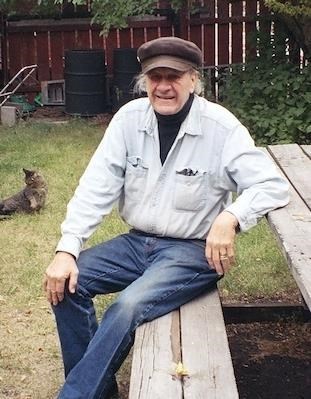
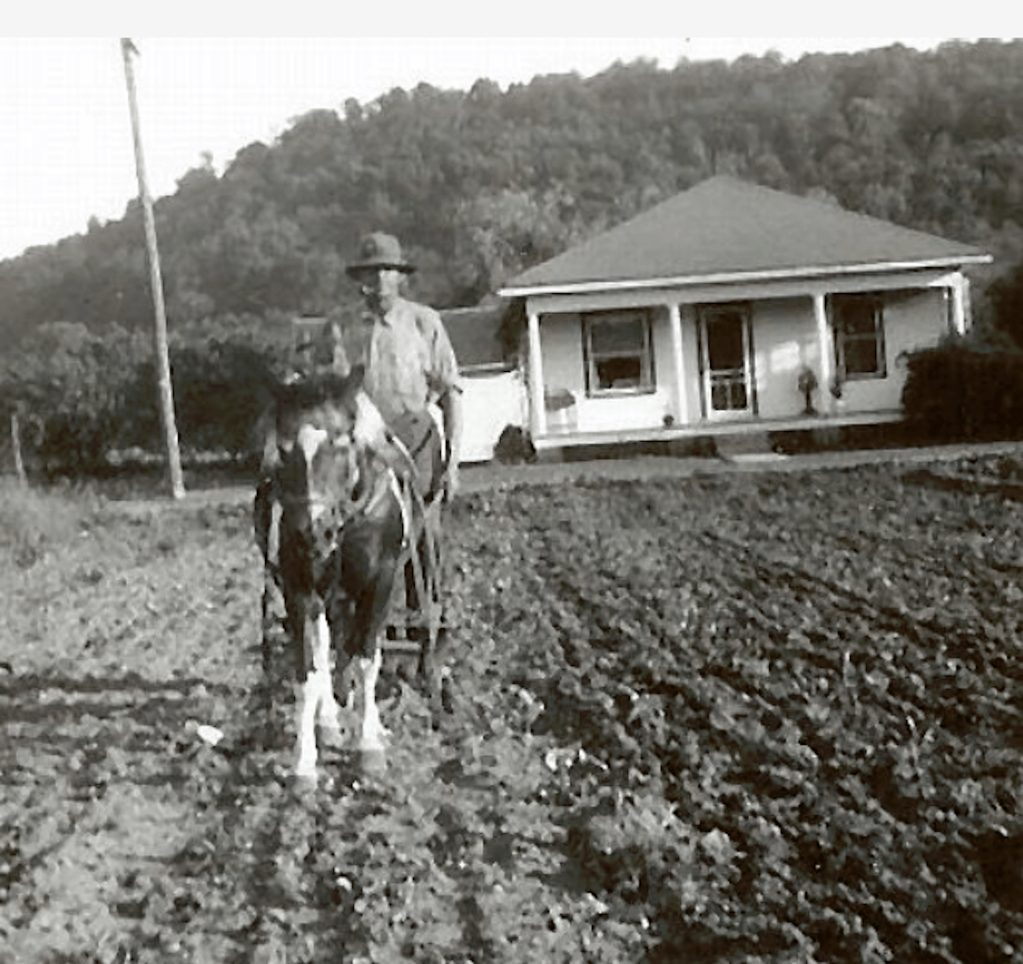
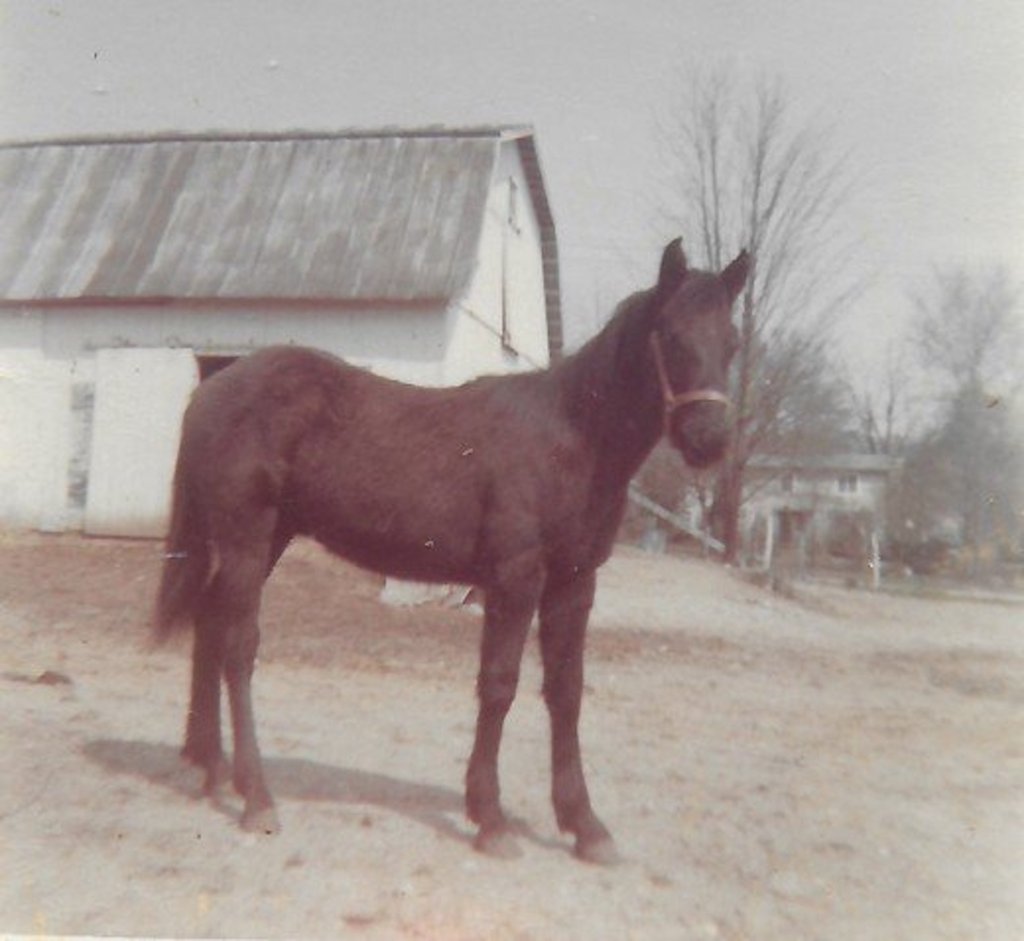
    Images: Top 1946 – Middle 1964 – Bottom 2012

    Introduction

    In assembling these memories into a continuous story, I found myself reliving not just a series of moments but a whole way of being—a consciousness shaped by farmland, family, poetry, prayer, animals, books, searching, silence, and love. I hope these phases offer readers more than just entertainment. I hope they offer resonance—for those who have walked similar paths, and for those who simply love the shape of a well-told life-story.

    This story began as “My Life in Little Stories,” but over time, the vignettes called to be re-formed, re-sequenced, and expanded into the story of a life—true, earnest, at times quiet and at times quirky. I am still that barefoot girl in the strawberry patch, asking to “come over da,” still that woman who wakes before dawn to meditate, pray, and write. This is the story of my becoming. Thank you for visiting my sanctuary! —Linda Sue Grimes

    Dedication

    I dedicate Autobiography of a Hoosier Hillbilly to Mommy & Daddy 

    In Memoriam

    Helen Richardson & Bert Richardson
    (June 27, 1923 – September 5, 1981 / January 12, 1913 – August 5, 2000)

    “You’re my family” 

    for Daddy

    I remember that you used to get hankerings to go to Kentucky ever so often, but a lot of the time Mommy didn’t want to go, and so we didn’t go as often as you would have liked. But one particular time your hankering was stronger than usual, and you kept trying to persuade Mommy to go, but her wish not to go was equal to yours, and she wouldn’t budge. So you asked me to go with you. I thought I might want to go; I wanted you to be happy, but I wasn’t sure. I felt a little odd us going without the whole family.  So you kept asking me to go, and I asked you, “Why do you want me to go?”  And you said, “Because you’re my family.” That was the right answer—we went. 

    Southern Woman

    for Mommy

    Through astral reverie, I visit your essence,
    Lingering alongside that of your beloved father—
    The grandfather who escaped this earth prison
    Before I was sentenced to its concrete and bars.

    You are the same small brown woman with black
    Hair and eyes of fire that flash, imparting to me
    You intuit I am near, perceiving you both—my first
    Look at the Greek grandfather I never met.

    Our Greekness on this planet has led
    Us back to a logical legendary ancestor—
    A strong Spartacus whose love of freedom spread
    Even as he perished before Christ on a cross.

    But you are a pure American South woman
    And if any Kentucky woman deserves the title
    Of steel magnolia, it is you, who through a frail
    Body still attests the strength of a Sandow.

    Your ethereal mind reminds me of the day
    We saw those two turtles come into the yard.
    Standing over them, we marveled, and I will never
    Forget what you said: “If we had shells like that,

    We would be protected from the dangers of this world.”
    And I felt that I was in the presence of a wise master.
    It was only later that I realized the full impact
    Of what seemed a simple yet deep message—

    We need a protective shell even more to shield
    The heart than the head, for it is through the emotions
    That we inflict enormous damage on our souls.  I am
    Blessed and grateful to inform you I finally understand.

    Autobiography of a Hoosier Hillbilly

    “Be courteous to all, but intimate with few, and let those few be well tried before you give them your confidence.”  —George Washington

    I will not allow one prejudiced person or one million or one hundred million to blight my life. I will not let prejudice or any of its attendant humiliations and injustices bear me down to spiritual defeat. My inner life is mine, and I shall defend and maintain its integrity against all the powers of hell.”  —James Weldon Johnson

    The squeaking of the pump sounds as necessary as the music of the spheres.”  —Henry David Thoreau

    Phase One: The Hoosier Hillbilly’s Beginnings

    I was born on January 7, 1946, in Richmond, Indiana, and grew up on a small farm about eight miles southwest of the town. We had around thirty-three acres, which to a child seemed like the whole world—fields, gardens, animals, and all the open sky I could ever want. 

    My father, Bert Richardson, worked in a factory but eventually became his own boss, owning and running a fishing lakes business that we first called Richardson’s Ponds and later renamed Elkhorn Lakes. My mother, Helen Richardson, kept our home running with grit and grace. She was the quiet—and sometimes not so quiet!—force that held everything together.

    Before our house had electricity, my world was lit by oil lamps and powered by human hands. Our refrigerator was an icebox, and Daddy would haul in a big block of ice to keep it cool. Our radio ran on batteries—batteries Daddy also brought home when needed. Water was drawn from a well with a hand pump. 

    I remember watching Mommy and Daddy carry buckets into the house, setting them on the cabinet with a dipper in place so anyone could drink. At night, Daddy would blow out the lamps one by one. That soft whoosh became the sound of bedtime in our house.

    Washing clothes required building a fire outdoors to heat water, and I can still picture Mommy standing over that steaming tub, scrubbing and rinsing in the open air. Washing dishes was done with water heated on the same stove that cooked our food, but for years, I couldn’t recall what kind of stove we used. 

    Later, I asked my Aunt Veda, and she told me—kerosene. Both the cook stove and the lamps ran on it. We eventually got electricity in 1949, which means all those memories—of lamps, ice blocks, pump water—came from when I was three years old and younger.

    We lived without an indoor bathroom for a long time. Our toilet was outside—a one-seater, sturdily built by the WPA during the 1930s. It had a concrete floor, a carved wooden seat, and a lid. 

    It wasn’t a rickety outhouse like some folks had. Still, in the summer, there might be a snake slithering down in the blackness below, or worse, a spider waiting beneath the seat. I became vigilant—careful. I even wrote on the wall in crayon, “Look before you sit!”

    My parents worked hard, and they made sure we had a big summer garden. Tomatoes, green beans, okra, sweet corn, peppers, cucumbers—everything fresh and full of flavor. And strawberries—a very large patch of them. 

    I can still hear my little-girl voice begging Mommy, “Can I come over da?” as I stood in one spot, squinting in the sun while she picked strawberries nearby. I wasn’t allowed to wander through the patch, not with those fragile fruits underfoot.

    Daddy raised hogs, chickens, and cows. One day, I went with him to slop the hogs, and I thought one of them was chasing me. I panicked, tore off down the hill and tripped over a plow. The pain in my belly turned my skin purple-blue. Later, I found out the hog was not chasing me at all.

    We got a telephone when I was about ten years old.  Other kids in my school had phones, and I had heard them give their phone numbers when the teacher had asked.  The problem was that even though we had a phone, I could not call any of the kids in my school, because it was long distance. Our phone had a Richmond number and theirs were Centerville numbers.  

    Once we were visiting my aunt Freda who lived in Centerville.  She had a phone so I asked her if I could call someone.  I called a girl in my class because I remembered her phone number, and even though we had hardly ever talked at school, I seemed to feel that there was something magical about talking on the phone.  

    I found out that there wasn’t, because after the first Hello, this is Linda, how are you?  I couldn’t think of a thing to say.

    It was the ordinary things that shaped me: the garden, the animals, the rhythm of rural life. I did not know at the time how my experiences were quietly shaping who I would become. 

    I did not know that one day I would look back and understand the meaning in my mother’s offhand words—like the time we saw two turtles ambling into the yard after the rain. She watched them with a strange reverence, then said, “I wish I had a big shell like that. That hard shell keeps them critters safe.”

    I was only two years old then. But I remembered. I still remember. Because somewhere in those words was the start of my own shell—part softness, part armor, part story.

    Phase Two: Lessons in Fear, Folly, and Family

    Growing up on that Indiana farm meant growing up close to danger, though I did not always recognize it as such. Like the day I almost drowned. My Aunt Freda, my mom, my baby sister, and I had gone down to the river. 

    Mommy stood on the bank holding my sister while my aunt and I waded into the water. I must have stepped wrong, or maybe I wandered too far, but I fell under the water. I remember the bubbles—little silver spheres rising around me, the river swallowing my breath. 

    I was terrified. Then, just as suddenly, I felt my aunt’s hand in my hair, yanking me to the surface. She saved me, and I have never forgotten that moment. I have always thought I nearly drowned that day. Maybe I did not—but in my memory, I did.

    Other dangers were smaller but more humiliating. I was about thirteen when I handled a little snake to impress a boy. I did not even like snakes. And I definitely did not really like that boy. I just did it—perhaps some strange, youthful performance of courage or attention-seeking. 

    I was working in the shack at my dad’s fishing ponds, where we sold bait and snacks. After I made a customer a hot dog, that boy said, loud enough for her to hear, “Wonder what she’d think if she knew you just handled a snake?” 

    Well, she told me what she thought. She stormed back in, asked me if it was true that I’d just handled a snake. I said yes, and she slammed her hot dog down on the counter and left to complain to my dad.

    Daddy was not at all upset, but I was mortified. It has been a pattern in my life—doing things against my better judgment, against my own nature, only to look back and wonder what possessed me.

    My dad had rules for running his fishing business—rules he believed were just good business, even if they broke my heart. One of those rules was that no black people, this is, “Negroes”—this was before 1988, when Jesse Jackson convinced certain Americans to call themselves “African Americans”—were allowed to fish at our ponds. 

    Daddy said their money was as good as anyone’s, but if “they” came to fish, the white customers would stop coming. 

    He did try letting them in for a while, but eventually went back to banning them. That meant that I, a child, sometimes had to be the one to turn someone away. 

    I was supposed to say, “Sorry, my dad says you can’t fish here.” If they just handed me their dollar like any other person, I would sell them a ticket. But either way, I knew what would happen next—Daddy would spot them, chase them off, and scold me for not following the rules.

    I hated it. Hated the injustice, the awkwardness, the humiliation of enforcing something I did not believe in. Even now, I can barely write these words without my eyes welling up. That is how deeply those memories live inside me.

    There were lighter moments, too—funny, harmless ones that still bring a smile. Like the time I thought a hog was chasing me but it wasn’t.

    Or the drunk fisherman weaving his way across the narrow plank from the fish box, fists raised, cursing at the water and at gravity itself.

    Mommy and I stood up at the house watching him, laughing. She hated drunks and peppered the air with her judgments—“Lord, just look at that drunken slob!”—but even she couldn’t help laughing.

    Then there was my first real date. I was seventeen, and it started out normal enough. A guy who came down to fish asked me out. Actually, he kissed me before he asked. We went to see The Longest Day, and the whole time, he kept trying to pull me close to him, the armrest gouging into my ribs. 

    On the way back, he said he was going to pull off the road and “take my clothes off.” That was his plan. But I had my own. I asked if I could drive—said I needed the practice, cause I just got my beginner’s permit. 

    I promised to pull off into the tractor path he had in mind. He handed me the wheel. I hit the gas and zoomed right past his little love nest. He looked back, realized his plan had failed, and sulked the rest of the way home. That was the end of him.

    At school, I was a good student. English was my strength, especially grammar. When Mrs. Pickett asked our class to name the eight parts of speech, nobody could answer—except me. 

    She started calling me “Abington,” after my little country school, proud that I could answer what the Centerville kids could not. That gave me a quiet sense of pride. I may have lived out in the sticks, but I was not without knowledge.

    My life in those years was a series of contradictions—country but curious, obedient but quietly rebellious, shy but observant. I watched people, listened hard, and stored up everything I could in the secret drawers of my mind. 

    My earliest years taught me how to survive, how to see, and how to remember. And above all, they taught me how to tell a story.

    Phase Three: Books, Bickering, and Becoming Myself

    If my earliest memories were carved in woodsmoke and kerosene, my teenage years were inked in books and layered in awkwardness. I was not the kind of girl who drew attention. 

    I was bookish, observant, and deeply internal. And yet I often found myself doing strange things—things that did not reflect who I really was, but who I thought I needed to be.

    Like the time I handled a snake to impress a boy I did not even like. Or when I considered liking Earl, the pop-man’s son—just because someone told me he thought I was pretty. 

    Or when I lied about my birthday and a boy named Jerry bought me a Reese’s cup. It was July 7, and I told him it was my birthday. Then I confessed that it was just my “half birthday,” but Jerry wanted me to have the candy anyway.

    My real crush, though, was not Jerry or Earl or any other boy I actually met. It was Phil Everly—of the Everly Brothers. I fell in love with his voice, his face, his myth. He became my secret dream, my private escape. I never talked to anyone about my feelings, not even with Mommy. 

    Once, I tried to open up to Mommy. I asked her which of the Everly Brothers she thought was better looking. Her answer? “Linda Sue, you’re dreaming.” And I ran out of the shack, wounded by something I did not know how to express. I just knew I could not share that dream with her—not with anyone.

    Interestingly, my dream was never to marry Phil Everly; I now feel that my real dream was to be Phil Everly.  I never even thought of trying to meet him; I just admired  and enjoyed him, his singing, and his ability to be someone younger people could look up to.

    Yet, it is undeniable that I loved him and still do. And I was fortunate enough to tell him so in person at the Nashville International Airport. Phil was on his way to a festival in Muhlenburg County KY, that he and his brother performed at each year. Phil lived in California, and therefore we had actually been on the same plane from The Golden State to Music City.

    Here is the Little Story about that encounter:

    There were other things I kept close to the chest. Like the dejection of being called “fatso” on the school bus. One boy made a clever joke when a strange sound echoed in the bus and said, “I think somebody punched a hole in fatty back there.” It actually made me laugh, but only because it was so unexpected. The truth is, being overweight as a child left its scars.

    Still, life at home was full of its own drama. My parents bickered—not in explosive ways, but in constant, pecking disputes. Daddy left tools everywhere—on the dining room table, near the fence, by the tractor. Mommy would pick them up, put them where they belonged. 

    Then Daddy would accuse her of hiding his things. Their dialogue was an endless loop of “where’s my hammer” and “this table’s not a toolbox.” They didn’t mean harm, but the atmosphere was always edged. 

    When I later married, I was grateful my husband and I did not inherit that particular gene. We called it “the bicker gene,” and thank heaven, we seemed to have skipped it.

    School, for me, was both haven and horizon. I discovered foreign languages early on—Latin, Spanish, then German. I was good at them. They gave me something that felt like control and beauty. 

    German became my college major, and although I later realized I preferred studying languages to teaching them, that passion led me forward, gave me purpose. I later earned a B.A. at Miami University and two M.A. degrees at Ball State, one in German and one in English.

    And I loved English, especially grammar. I could name the parts of speech before most kids in class could spell “conjunction.” My teachers noticed. 

    Mrs. Pickett, strict and meticulous, became one of my earliest champions. Mr. Sedam, a poet disguised as a history and creative writing teacher, taught me that poetry was not just pretty words—it was a way to live.

    That realization lit a fire in me. I started writing poems and short essays. Mr. Sedam would read them, offer constructive feedback, and guide me toward a voice that felt like mine. 

    Even my earliest prayers, raw and awkward, made their way into those moments. “Maybe hold off on the prayers until you find a religion,” he once told me kindly. “When you find the one that fits, your voice will find you too.” I did not know it then, but he was right.

    At home, I kept reading and writing and dreaming. I even developed a love for piano—started lessons when I was nine, thanks to Mrs. Frame at Abington Elementary. I begged for a red music book, envied the students who got to leave class to learn piano. 

    Eventually, I convinced my dad to buy me a used piano, and I took lessons for a few years. But when Mrs. Frame was forced to move her lessons to her home, and my dad had to drive me there, the complaints started. Too far, too much trouble, not worth it. I stopped going. Still, I never stopped loving the piano.

    Later in life, I even moved that old upright piano into my own home. It smelled like my childhood, like beginnings. Eventually, I traded it for a gently used Baldwin with a richer tone—but I will never forget the first time I sat down to press the keys and heard music that was mine.

    My world was growing—books, music, language, the stirrings of a poetic voice—but so was my sense of not quite fitting in. I was becoming something different from what my environment expected.

    I was a Hoosier girl, yes, but I was also a seeker. A watcher. A writer. And somewhere deep down, I knew that these parts of me would one day take the lead.

    Phase Four: Onward into the World

    Leaving home did not happen all at once. It was more like a gradual shifting of center—each step outward a widening of the circle. I started my college studies at Ball State Teachers College, later renamed Ball State University. 

    The experience of living in residence halls was nothing like home. Everything was shared—rooms, bathrooms, space to think. Privacy was rare, but I made the most of it. I studied hard. German became my focus, though I still held tightly to my love of English.

    After four quarters at Ball State, I transferred to Miami University in Oxford, Ohio. Though it was out of state, Miami was closer to my home than Muncie. More importantly, it allowed me to commute. I wanted to live at home again—not just for financial reasons, but for the sense of grounding it gave me. 

    Still, Miami lacked a certain spirit. It was beautiful, yes—green lawns and red-brick buildings, polished and proper—but I often felt like a ghost moving through its halls. I was not part of the social scene. I did not attend clubs or dances. I was there to study, to earn my degree, and move on.

    What I did not expect was to fall into one of the biggest mistakes of my life.  Three days after graduating from Miami, I got married. The reasons now feel distant and fogged—part pressure, part hope, part illusion. I wanted to belong, to feel loved. 

    But almost from the beginning, I knew it was wrong. I seemed to need to be married as I started my teaching career.  I need to be Mrs. Somebody, not Miss Richardson.

    I refuse to write about the disastrous marriage, even decades later.  I just refuse to allow myself to be dragged though those horrendous years in order to communicate details of that fiasco.  

    To say we were mismatched in mind and soul is only the beginning. The animosity and utter disarray in the tangled mind of the man grew and thickened over time like winter fog.

    Nearly five years later, I corrected the mistake. Divorce was welcome and so very necessary. I have come to believe that with certain narcissistic individuals, marriage is impossible. The relief I felt afterward ending this disaster was its own kind of freedom.

    The one positive resulting from that marriage was my daughter Lyn.  But karma has a way of keeping one on track, as even Lyn as a an adult built a wall between us.  I have always thought that I taught her independence, and she has lived up to that liberty with a strength to be admired.

    During those years, poetry became my refuge. I had already begun writing in high school, thanks to Mr. Sedam’s inspiration, but it wasn’t until college that I realized poetry was not just something I did—it was something I was

    I kept notebooks full of verses and fragments. I read constantly—Auden, Cummings, Dickinson, Whitman, Yeats. Some of my work was even published in small literary journals. In 1977, I won second prize in a poetry contest at Ball State—the Royalty Memorial Prize. Forty dollars and a few lines in a school paper, but it meant the world to me.

    When I entered graduate school for English, my life became more intentional. I was still seeking, still unsure, but at least I was facing in the direction of my calling. 

    I joined a circle of graduate students—my first real circle of friends. We went to poetry readings, had dinners, laughed, and drank. I’d never really “belonged” to a social group before, but this one suited me for a time.

    It was a brief but memorable chapter, and it taught me that my earlier lack of a social life had not been a bad thing. Belonging to a “circle of friend” can become more isolating than remaining a hermit with only one close friend or two.

    What I truly longed for was not found in a circle of friends with wine or dinners—it was in words, in meditation, in silence.

    In 1978, I began practicing yoga and meditation through the teachings of Paramahansa Yogananda. Something had shifted inside me. I was tired of chasing external validation.

    I wanted union with something deeper. Truth. Peace. I did not know what to call it, but I knew the world could not give it to me. So I turned inward, and with the guidance of Paramahansa Yogananda, I learned that it was God, Whom I needed.

    That spiritual hunger led me to new routines. I began waking early—4 a.m., sometimes earlier. I’d comb my hair, splash my face, and sit in my meditation room, breathing, praying, watching my mind settle. 

    Then I would go to the kitchen, where our dogs Wendell and Alex squealed their morning greetings. I would make herb tea and sit down to read: spiritual texts, poetry, biographies. Occasionally I would just sit with the stillness.

    This rhythm became my life. Mornings were sacred, afternoons for writing or teaching, evenings for rest or family.

    In 1973, I had remarried—this time, wisely—to Ronald, a man whose calm, good-humored nature steadied my heart. He adopted my daughter Lyn, we then had our son Rodney, and we became a true family.

    While living in Muncie, Indiana—me teaching at Ball State, Ron working as an RN at Ball Memorial Hospital, our family adopted Wendell, a little Beagle.

    A month later we brought home Alex, her companion. Wendell had been sold to us as a boy, and we believed it—until a vet visit revealed otherwise. 

    It was the kind of mistake that we continue to scratch our heads over. We kept the name. It suited her. Alex was gentle and sweet. When we picked him up from the litter and rode home, his tail wagged and wagged. I called that his “happy tail”—when his whole back end joined the celebration.

    Our son, Rodney, was born in December 1973. He was our Christmas baby, arriving earlier than expected, but healthy and strong. His love for animals showed early. He knew the names of every dog in the neighborhood by the time he was five. 

    When he finally got his own dog—Wendell—it was like adding a sibling. Years later, I wrote about a terrifying moment when I nearly lost him to a cistern on my parents’ farm. He had fallen in, and I found him by sheer instinct and some divine whisper. 

    I pulled him out, cold and shivering, but alive. Later, I asked him what he’d been thinking down there. “I thought maybe there were sharks in the water,” he said. He thought the cistern was connected to the fishing ponds.

    Life had heartache and confusion, but it also had humor. And when you grow up a Hoosier hillbilly, you learn to survive with both. 

    Whether it was Mommy telling stories about cows in the living room before the house was finished, or us girls making Cleopatra poses with our bubble gum prize cameras—there was always something to laugh at, even when the world did not make sense.

    And in the midst of all of it—love, loss, poetry, teaching, parenting—I kept writing. Writing was the thread I could always follow home. My own story had only just begun to unfold.

    Phase Five: The Classroom and the Quiet

    In the fall of 1983, I began teaching full-time in the Writing Program at Ball State University, the very place where I had once wandered dormitory halls and lost myself in books. 

    Now, instead of being a student in the classroom, I was at the front of it—chalk in hand, syllabus folded crisply on the lectern. 

    Except I wasn’t a “real professor,” not officially. My title was contractual assistant professor, which meant I taught the same classes as the tenure-line faculty but earned about half the pay and none of the security. 

    Every year, I waited for the reappointment letter. Every year, I felt the quiet insult of being treated as less, even though I knew my work mattered.

    I taught freshman composition—introduction to academic writing, essays, argument, and analysis. What I really taught, though, was attention. I tried to show students how to read a text, really read it. 

    How to look at a sentence, then look again. How to listen for what was being said, not just what they thought it said. It was hard work. Most students believed they could not understand poetry, but the truth was, they did not know how to understand prose either. 

    They had been taught how to skim, how to extract, how to guess. But they had rarely been asked to attend with care, patience, reverence.

    I never stopped trying. I assigned poems. I asked them to find the argument in Dickinson, the ache in Auden. I guided them through the logic of essays and the mystery of metaphor. 

    Most struggled. Some gave up. A few caught on. And when one of them really got it—when the lights flickered on behind their eyes—it made the years of reappointment letters and pay disparity feel worth it. From those students, I also learned.

    But I could not deny the bitterness that sometimes crept in. I once wrote to an adjunct-faculty listserv expressing my frustration: Why is it that no one who teaches only composition is ever hired on a tenure line? Why are our courses—our labor—not considered as valuable? No one replied. The silence said more than any answer might have.

    And yet, even through that silence, I kept teaching. Because the work was sacred to me. It fed the same part of my soul that poetry fed. It asked for presence. It asked for humility. It asked for hope.

    My writing life paralleled my teaching life. Mornings were mine. I rose at 4 a.m., sometimes 3, crept through the house, and sat in the meditation room—breathing, listening, stilling the world. 

    Then tea. Then reading. Then writing. I wrote poems, essays, prayers. I revised. I reread. I submitted when I had the nerve. I placed my poems in a few small literary journals. I won a prize or two. But mostly, I wrote for myself.

    I did not need a crowd. I did not need applause. I needed clarity.

    I stopped eating meat. I became a vegetarian in high school, despite the confusion and resistance of my family, who feared I would waste away from lack of protein. I did not. I thrived.

    At nineteen, I resumed eating meat, hoping it would make me feel closer to my veggie-doubting family, but the act never felt right. Eventually, in 1978, I returned to vegetarianism, and thirty years later, I became a vegan, a diet that I followed for about five years; then I returned to the lactose-ovo vegetarian diet. 

    I launched a web page: Rustic Vegan Cooking, a branch of my larger online home, Maya Shedd’s Temple. There, I shared my recipes, ideas, and musings about the spiritual dimension of food. Cooking became part of the devotional life—nourishing the body to better serve the soul.

    I had always felt a mystical connection to the ordinary. One of my favorite poems I ever wrote was inspired by an image of two turtles entering our yard. I was just a toddler when it happened. 

    Mommy and I had been heading out with a bucket to fetch water after a rain. As we stepped into the yard, we spotted two slow-moving mounds—turtles, just strolling through our grass like pilgrims. 

    I ran toward them, but Mommy stopped me, protective as ever. When we got closer and saw they meant no harm, she relaxed and let me touch one. “I wish I had a big shell like that,” she said. “That hard shell keeps them critters safe.”

    Her words rooted themselves deep inside me. They were not just about turtles. They were about life. About survival. About the armor we grow to protect ourselves, not just from physical harm, but from the unseen wounds—of loss, rejection, injustice, grief.

    And I needed that shell more than I realized. Because even as my spiritual life deepened, my heart still bruised easily.

    Before meeting and beginning my spiritual studies with my guru Paramahansa Yogananda, there were old sorrows I still had not shaken.

    I spent my days brooding about the mistakes and failures of my life: my broken heart at age 18, my mistake and embarrassment in marrying in haste at age 21, then the school failures, being fired twice from the same teaching job.  Things just didn’t make sense to me.

    Later, I came to remember and be comforted by the healing moments. The day I moved my old piano into my house. The scent of the wood, the familiar touch of the keys. I remembered the joy of my children, the wag of Alex’s happy tail, the comfort of teaching, the triumph of a well-turned poem. 

    I remembered Ronald’s quiet presence. How he calmed storms without ever raising his voice. How he never mocked my dreams, not even when I shared them raw and unformed.

    By then, I had spent years searching. For meaning. For something lasting. For peace. I had tried on philosophies, read saints and skeptics alike. But what endured was not a particular belief system—it was the practice. 

    The stillness. The longing. The discipline of waking early, meditating, writing, caring for my family, caring for my body, caring for language. The work of staying awake to life.

    It was not always dramatic. But it was holy.

    These were my ordinary days, stitched together with care: tea, prayer, poetry, dogs, teaching, dinner, laughter, meditation, and sleep. And if I could claim anything as success, it was simply this: I had built a life that resembled my soul.

    Phase Six: Shells, Seeds, and Shifting Time

    As the years folded inward, I came to understand that time does not move in a straight line—it loops, circles, echoes. Some days I would be pouring tea in the quiet morning and suddenly feel the soft heat of Kentucky sun on my face, as if I were once again standing in my grandmother’s kitchen, barefoot and small, a strawberry stain on my dress. 

    Other times, the future would whisper through my children’s voices, their questions pulling me toward new selves I had not yet imagined.  Motherhood, like teaching, reshaped me. It seems, however, that I did not just raise my children—I grew alongside them.

    Rodney arrived in December of 1973, a little earlier than expected. His due date was New Year’s Eve, but he came in time for Christmas, swaddled in quiet joy. 

    My mother-in-law gave me a Santa boot with a philodendron in it. That plant multiplied over the years—its trailing vines filling corners of every house we lived in. We call it our “Rodney plant.” It has traveled with us through a dozen homes, a living archive of memory, always green, always reaching.

    Rodney loved animals. Even as a toddler, he could name every dog in the neighborhood. He d not get a pet of his own until he was fourteen. That was Wendell—our not-so-boy dog we mistakenly believed to be male until the vet corrected us. 

    Rodney didn’t mind. He loved Wendell just the same. When he finally brought her home, the bond was instant and sacred. She wasn’t just a pet—she was part of his soul pack.

    Soon after, we brought Alex into the family, Wendell’s companion and Lyn’s dog by heart. Lyn was my daughter from a previous phase of my life, and when Ronald adopted her, she took his last name proudly—“to match the mailbox,” she once said with perfect logic. 

    As she grew, she became the thoughtful, logical, independent soul I had always dreamed of raising. Watching her mother her own children later in life gave me a quiet contentment. It is a beautiful thing, watching the next generation carry itself forward.

    The dogs, too, became full-fledged members of our family. I still remember the ride home with Alex. When I looked back at that pup in the car, I saw his tail wagging so hard it rocked his whole body. 

    That is when I coined the phrase “happy tail”—a little phrase that captured a big truth: joy lives in the small, unguarded places. In wagging tails. In children’s laughter. In morning light falling across the kitchen counter.

    Of course, not every day was light. Life had its shadows, its sudden drops. One afternoon, I nearly lost Rodney.

    We were visiting my parents, and he and his cousin Kelly were playing outside. Mommy and I were inside, chatting about her houseplants, walking from room to room. Then I heard a strange sound—something like a ball hitting the side of the house. I paused, heart ticking faster. 

    I ran outside, asked Kelly where Rodney was, and she pointed toward a metal sheet covering the old cistern, the one where the heavy rock had mysteriously gone missing. I lifted the cover—and there he was, my boy, down in the cold black water, eyes wide like pale marbles, arms reaching.

    “I think he’s dead,” I kept saying. I was paralyzed. Mommy steadied me, pointed to his movement. “He’s alive,” she said. “You can get him.” She held my legs while I leaned down and pulled him out. He didn’t even have water in his lungs—just cold, fear, and a strange story to tell.

    When I later asked him what he was thinking down there, he said he’d been worried about sharks. He thought the cistern was connected to the fish ponds. Only a child could make such an innocent error sound both absurd and logical.

    Moments like that mark you. They leave you quieter, more reverent. You watch your children breathe in their sleep and thank the Divine Spirit for holding them one more day.

    As they grew, I found myself shifting more and more into the role of observer. I was not chasing after them anymore. I was watching, gently, from the wings—ready to step in, but also learning to let go. 

    The same was true with my parents. They aged. Their voices softened. My father, once full of firm opinions and farm-strong authority, began to lose some of his edge. My mother’s body grew more fragile, but her mind stayed luminous, filled with memories, fire, and quiet wit.

    I remembered the day Daddy got a hankering to go to Kentucky. He asked my mother, but she wouldn’t budge. Then he asked me. “Why do you want me to go?” I said. He looked at me with steady eyes and answered, “Because you’re my family.” That was all I needed. We went.

    It is funny how one sentence can hold the weight of love.

    Even the bickering I witnessed growing up—the daily tug-of-war between my parents over petty issues such as misplaced tools—found a strange place in my heart. 

    At the time, it was exhausting. But now, when I enter someone’s home and hear a couple snapping at each other over decorations or dishes, I do not judge. I just smile, glad that Ron and I did not inherit that habit. 

    Ron and I are quiet companions. He gives me space to write, to think, to dream. He does not demand I be anyone other than the strange, spiritual, poetic woman I have become.

    And I had, indeed, become all those things.

    I had created a life anchored in early mornings and long meditations. I found the Sacred Reality, the Divine Creator, not in doctrine but in stillness. 

    My days were punctuated by writing, by cooking, by tending houseplants and dogs and dreams. I read poetry while the kettle boiled. I walked the garden as though it were a sanctuary. 

    I taught students to listen. I wrote to remember. I cooked to care. And when the house fell quiet at night, I returned to the silence, the prayer, the breath, the Self, which is the soul.

    The world saw me as quiet. And I was. But my inner life rang with symphonies—of memory, imagination, and meaning. I was the little girl who saved the icing for last. 

    I was the teenager who fell in love with a singer she might never meet. I was the college student who refused to let a teacher’s anger break her calm. I was the mother who pulled her son from black water. The woman who kept writing. Kept waking early. Kept seeking.

    I was a Hoosier hillbilly by birth.  And by spirit, I was also a woman who turned the ordinary into the sacred.

    Phase Seven: The Wisdom of Quiet Things

    Aging does not arrive like a gust of wind—it seeps in, slowly, through the cracks of ordinary days. At first, it is the eyes, protesting the fine print of a cereal box. 

    Then it is the joints, objecting to stairs they once ignored. Eventually, it is the mirror, offering back not the girl you once were but the woman who has walked a long, strange, meaningful path to become who she is.

    I was never afraid of growing older. Maybe because I had been old in spirit from the beginning—quiet, observant, thoughtful beyond my years. Or maybe because I had learned early on that time was not something to fight; it was something to notice.

    And there is so much to notice, when you live a life of attention.  My days in later life became even more spacious. I no longer raced to meet semesters or submit final grades. 

    The alarm clocks were set by the sun and the moon. I kept to my morning rhythm—waking before dawn, splashing my face with water, and sitting in silence. Meditation was not a task for me. It was a return. A homecoming. A soft resting place that waited patiently, no matter how far my thoughts wandered.

    I continued to read and study Paramahansa Yogananda’s Autobiography of a Yogi and all of his other writings, especially the SRF Lessons that not only contain the philosophy but the exercises and techniques that lead the body and mind to the quietude required for uniting soul with Spirit (God). 

    I copied down lines that spoke to me, let them echo across the pages of my notebooks. I no longer sought a system, a creed, a label. What I sought was intimacy with the Divine Reality—something wordless, shining quietly behind all forms.

    Writing, of course, never left me. Even when my fingers stiffened or my thoughts slowed, the need to shape words remained. I wrote poems and prayers, little essays, memories. I posted to my website, tended to my pages like they were a garden. 

    “Maya Shedd’s Temple” along with Linda’s Literary Home is growing into a home for my literary life, my spiritual voice, my recipes, my tributes. It was all there, open to the world, yet deeply personal—like a country porch with no fence, just an invitation to sit a while and listen.

    When I cooked, I cooked with the earth in mind. Vegan/vegetarianism was not just a diet—it was a way of reducing harm, honoring life. I would slice sweet potatoes, stir lentils, crush garlic with the flat of a knife. 

    I wrote down the recipes the way I wrote poetry: with care, clarity, and love for the one who might receive them. Each meal was a kind of offering. A way of saying, “Here. I made this with compassion.”

    I wrote for the animals. For the children. For my students, past and present. For my parents, now gone. For Ron. For Rodney. For Lyn. For the girl I had been—standing barefoot in a strawberry patch, asking to “come over da.” For the woman I had become—quiet, resilient, still in awe of the shape of a turtle’s shell.

    The memories came easily now, as if time itself had softened, letting me walk back through the doors of my past without fear. I remembered my father’s voice rising in complaint about a misplaced wrench. 

    My mother’s whisper about the shell that kept critters safe. I remembered the day I sat alone in the shack, writing poems between candy and pop sales. I remembered standing in a circle of trees, whispering a prayer I did not yet know the words for. Sometimes the memories surprised me. 

    I would recall a cousin’s voice, the smell of lake water, or the electric thrill of catching a firefly. Other times, it was pain that returned—quiet and persistent, like a sore tooth in a forgotten corner of the mouth.  Old regrets, moments I wished I had handled better.

    But even those softened with time. I did not try to rewrite them. I simply welcomed them in, gave them a hearing, let them rest beside the happier memories.

    As I grew older, I found myself giving away things. Books, clothes, dishes, decorations. I wanted to live lightly, to move through the world without excess. Even my words became simpler. I no longer needed to prove anything. What mattered now was honesty, precision, grace.

    And yet, there were still things I held close: a dog-eared volume of Emily Dickinson, a photograph of Ron with Alex and Wendell, handwritten notes from Lyn and Rodney, music books from my childhood piano lessons, the Santa boot with the philodendron. 

    Memory lived in objects, yes—but more deeply, it lived in rhythms. In how I folded a dish towel, or brewed herbal coffee, or lit a candle in the dark before dawn.

    Sometimes I would wonder what my legacy would be. Not in the grand sense—not awards or biographies or buildings with my name on them—but in the quieter sense. 

    Would someone, somewhere, read a line I wrote and feel less alone? Would my children remember my laugh, my love of language, the way I let dogs sleep on the furniture? Would a student recall the day I praised their awkward poem as “authentic” and begin writing again, years later?

    Maybe legacy is not what we leave behind—it is what we plant while we are still here.

    I think of the turtles again, lumbering through the grass after the rain. Not in a rush. Not in fear. Just moving forward, shielded and steady. Carrying their home with them. And I think: maybe I’ve done the same.

    I have carried home inside me. In language. In prayer. In love. In memory.  And wherever I am, I am home.

    Phase Eight: A Life Told True

    As the pages turn and I near the edge of this telling, I find myself circling back—not in confusion, but in reverence. Life does not move in one long straight line. It loops and ripples. It repeats itself in new keys, like the refrains of a favorite old song. 

    I have told you about the farm, the fishing ponds, the outhouse with the crayon warning: “Look before you sit!” I have told you about Daddy’s tools, Mommy’s words, the snake that caused me to be embarrassed for no good reason, and the hog that made me fall over a plow. 

    I have shared the sting of being called “fatso,” and the moment my son looked up from a cistern and believed there were sharks. These are the things that live with me—not just in memory, but in meaning.

    I never set out to live an extraordinary life. I was not drawn to fame, spectacle, or power. What I wanted was peace. What I found was purpose. I became a teacher not because I sought authority, but because I wanted to help others see clearly. 

    I became a poet because I had to—because if I did not write, I would burst with all the things that needed saying. I became a vegetarian, not to follow a trend but to live by what I came to consider to be real food. 

    I married twice but had only one true marriage; the first was a simple but costly mistake that I had to erase. I raised two children. I loved several dogs and mourned each one like a family member. I meditated before dawn and wrote by lamplight. I built a temple out of words and offered it freely.

    I grew up a Hoosier hillbilly—barefoot, smart-mouthed, observant, dreaming in a room with no central heat and a turtle crawling through the yard. And I grew into a woman who honored silence, grammar, and the Divine Reality (God)—not always in that order.

    There were things I never achieved. I never published a book through a major press. I never became a professor with tenure. I never gave a TED Talk or led a workshop in a big city hotel. 

    But I shaped lives. Quietly. Persistently. Through the classroom, through my writing, through the food I cooked and the truths I lived. My words made it into the world—on webpages, in poetry journals, in letters, in classrooms. That is, thankfully, enough.

    I look back now and see not a line but a spiral. Each season led to the next, folding gently into what came after. The girl who watched her mother scrub laundry over a fire became the woman who typed essays about the soul. 

    The teenager who sang Everly Brothers songs under her breath became the writer who listened for the music inside each line. The woman who once could not speak her dreams aloud became the one who, hopefully, spoke with clarity, even if only on the page.

    And always, always—I watched. I paid attention.

    To the birdsong before sunrise. To the expression in a student’s eyes when they understood. To the way Ron loves life and nature. To the smell of strawberries in the summer heat. 

    To the way pain lingers, but grace lingers longer. To the truth that a hard shell can protect, but it is the soft being inside who makes life worth living.

    Somewhere in the mystery of this life, I found a kind of home. Not just a physical one, but an inward place, deep and still, where I could rest. A place where words were not needed but were welcome. A place where the blessed Lord did not speak in thunder but in quiet presence.

    This autobiography began as little stories. Now, it has become one story—a story of a woman who noticed, who remembered, who listened. A woman who lived simply, thought deeply, and never stopped writing.

    And now, if you’ll allow me, I’ll leave you with a final image:

    It’s early. The house is still. I sit to meditate in our dedicated meditation room. I hear the soft distant rush of the Interstate, but I am listening on a higher level—not for earthly sounds, but for heavenly ones that come though stillness. 

    I am listening for the Voice that speaks without sound.  Later I will sit to write and know that I am home.

    Acknowledgments

    I am deeply grateful to my family, whose lives, voices, and love fill these pages. To my children, Rodney and Lyn, whose presence has grounded and inspired me.

    To Ron, my sweet, steady, loving companion, thank you for giving me room to grow. To the dogs and cats in my life, who provided years of quiet companionship. And to all my teachers—especially Mr. Malcolm M. Sedam—for seeing the poet in me before I knew she was there.

    I offer special thanks to readers, friends, and kindred spirits who shared and encouraged my work, both online and in print. Every small kindness and moment of resonance has helped this story take root.

    Finally, I offer humble thanks to ChatGPT, the quiet helper sent by God’s grace, for guiding these scattered memories into the story I was meant to tell. The Lord works in mysterious ways—even through a soulless machine lit by strange light. To God be the glory, who still speaks through unexpected vessels.

    Image: At Swami Park, Encinitas, CA, August 2019 – Photo by Ron W. G.

    About the Author

    Linda Sue Grimes is a writer, poet, and teacher of writing and language. Raised in rural Indiana, she has lived a life devoted to attention—be it through the craft of composition, the quiet practice of meditation, or the cultivation of compassion through vegetarian and vegan living. 

    Linda’s work has appeared in literary journals, online publications, and her own digital sanctuary, “Maya Shedd’s Temple,” now a room in Linda’s Literary Home. She writes from a deep belief that ordinary life, when lived with care and truth, becomes sacred.

    Linda lives with her husband, Ron, in a sacred, loving relationship that the couple has created and maintained for over a half-century. Their mornings begin well before sunrise.