D. H. Lawrence’s Women in Love offers a study of the 20th-century issue of the divided nature of the human mind. The flawed characters of Rupert and Ursula reveal an unsolvable problem that continues to plague the conscience of humanity, as it struggles for proper behavior.
Lawrentian Irony
D. H. Lawrence’s novel Women in Love has remained the novelist’s most complex yet subtle works. A superficial reading seems to reveal that the two main characters, Rupert Birkin and Ursula Brangwen, are moving toward Lawrence’s notion of the ideal love, that is, unity in love.
On the contrary, however, is the fact that the couple’s unsatisfactory marriage highlights the Lawrentian irony that promotes the satire in which the novelist has steeped his most complex novel.
The Symbol of Fidelity
In A Reader’s Guide to D. H. Lawrence, Philip Hobsbaum points out that the opal ring that Rupert gives to Ursula symbolizes fidelity. Of the trio of rings Rupert casually hands Ursula—a sapphire and a topaz as well as the opal—only the opal fits her ring finger.
Lawrence’s use of the opal indicates irony; a literal interpretation of the meaning of the opal would render the novel a simplistic story with a happy ending. A close analysis of the characters in this work and of Lawrence’s idea of modern man’s divided nature reveals that this novel is a highly complex satire of that divided nature.
Both Hobsbaum and Richard Aldington have applauded Lawrence’s genius for satire as it is demonstrated in Women in Love. According to Lawrence’s own ethic expounded in Psychoanalysis and the Unconscious, “the goal in life is the coming to perfection of each single individual” (100).
Lawrence further explains that “recognition of the abysmal other” and “the twofold passionate flux of sympathetic love, subjective abdominal and objective devotional” must balance and be equally accepted by the individual. Individuals must achieve this equilibrium before they can experience an ideal relationship.
The Lawrentian Balance
According to his ideas of equilibrium, Lawrence creates the characters of his novels who thus satirize the imbalance in modern man and woman. Ursula, at the point in the novel that she is fitted with the ring symbolizing fidelity, has not achieved the Lawrentian balance. And neither has the character, Rupert, who is about to become her lover. Both Rupert and Ursula have a void in their lives—a void that they never know how to fill.
Ursula’s former lover Skrebensky, whom readers met in The Rainbow, was unable to fill the void for her, and Rupert’s relationship with Hermione has left him empty as well. Because these characters are not perfected as individuals, they bring their imperfections to their relationships with their lovers.
That the ring fitting Ursula’s ring finger symbolizes fidelity highlights the irony of their situations. Neither character—Rupert who gives the ring, nor Ursula whom it fits—is capable of fidelity because they are still unfaithful to their own true nature, the unified nature that knows how to recognize and accept that “abysmal other.”
These characters exemplify modern man and woman who have not reached the Lawrentian perfection, whose failure to recognize that they have divided their psyches “has torn the modern world into two halves, the one half warring for the voluntary, objective, separatist control, the other for the pure sympathetic” (100).
Appearances
The fact that Rupert and Ursula do marry and verbally declare fidelity effects the situation against which the irony is directed. Ostensibly, the couple strives to unite, but at the deep personal level where unity ultimately prevails, they remain divided. According to F. H. Langman,
The tale, if we can trust it, simply does not present the marriage of Birkin and Ursula as ideal in itself or as an adequate solution to the problems presented. On the contrary, an important thesis of the novel is that no fully satisfying personal relationship is possible to people placed, like Birkin and Ursula, in a social and religious vacuum. (81-82)
Lawrence emphasizes repeatedly in his Psychoanalysis and the Unconscious: “No human being can develop save through the polarized connection with other beings” (108). His character Rupert Birkin insists that he cannot feel complete without a deep bond of love with a man as well as with a woman.
It is Rupert’s failure to come to terms with his sexual orientation that underscores his split psyche, and his marriage to Ursula cannot serve to weld it. In his original opening chapter to Women in Love called “A Prologue,” Lawrence explicitly elucidates Rupert’s affinities:
He wanted to be in love with a woman. He wanted all the while to feel this kindled, loving attraction towards a beautiful woman, that he would often feel toward a handsome man. But he could not. Whenever it was a case of a woman, there entered in too much spiritual, sisterly love; or else, in reaction, there was only a bestial, callous sort of lust. (58)
Lawrence delineates Rupert’s sexual orientation quite clearly in his rejected draft and the impact of Rupert’s repressing that nature becomes the focus, however covert, in the published version.
According to George H. Ford, Lawrence decided against the explicit portrayal of Rupert’s same-sex attraction because he feared censorship. He had just been through the ordeal of censorship with The Rainbow and could not afford it again so soon (39-40).
Split Psyche
Ursula does not relieve Rupert’s burden of a split psyche; she cannot even understand him. Their violent disagreements continue throughout their relationship. On occasions, she merely acquiesces to his wishes; an example of this acquiescence is the “Chair” episode. They purchase an old chair and Rupert declaims against materialism.
The couple then bickers about the merits of Jane Austen’s England and their own, and finally, for what seems an unmotivated capitulation, Ursula just gives in and says she agrees that they need no possessions, and thus she donates the chair to a young, scruffy-looking city couple whom Lawrence describes as a couple also falling far from his ideal of balance and perfection in love.
Lawrence tells readers in his rejected chapter that Rupert is divided against himself: “he kept this secret [‘his spasmodic affinity for the men he saw’] even from himself” (61). Because he cannot even bring his feelings before his own scrutiny, he has little hope of making the Lawrentian connection with Ursula—a connection which only balanced beings can achieve.
Infidelity to Self
As Langman writes, “The most painful question in the whole novel, a question that precisely reveals the limited value of the experiment in marriage, is Ursula’s question: ‘why aren’t I enough?’” (86) Ursula claims that Rupert is enough for her, and because she feels this way, she cannot come to terms with Rupert’s inclinations. Rupert has learned to repress his nature, but according to Lawrence, that kind of repression goes against the self—it represents infidelity to the self (Psych. 108).
Rupert and Ursula’s relationship, therefore, is not the nourishing meeting of souls that they at times during their affair have claimed it to be. The opal ring serves as an important device for satirizing that relationship. The irony that Ursula’s ring finger fits the symbol of fidelity foreshadows the marriage which solves no problems, but, in the words of George H. Ford, “the possibility is left, as in the best of Lawrence’s writings, dangling” (41).
At the end of the couple’s final conversation, readers observe that they are indeed left only with a possibility. Rupert and Ursula are still not united but still struggling with conflicting attitudes. The death of Gerald has left Rupert without a man to love; he says: “I wanted eternal union with a man too: another kind of love.” Ursula counters: “I don’t believe it. It’s an obstinacy, a theory, a perversity.”
Ursula then continues: “You can’t have two kinds of love. Why should you!” And Rupert responds: “It seems as if I can’t. Yet I wanted it.” And Rupert’s and the novel’s final words are: “‘I don’t believe that,’ he answered.” Whether this couple ever finds that Lawrentian ideal of perfection no doubt remains a possibility, but the satire remains intact. The opal ring, symbol of fidelity, fits Ursula’s finger, but the fidelity between the partners remains illusive.
A slightly abbreviated version of this article first appeared in The Explicator, Volume 46, Number 2, Winter 1988.
Works Cited
Aldington, Richard. Introduction. Women in Love. By D. H. Lawrence. New York: Viking P, 1960. ix-xii. Print.
Ford, George H. “Notes to Lawrence’s Prologue to Women in Love.” The Rainbow and Women in Love: A Casebook. Ed. Colin Clarke. London: Macmillan, 1969. 35-42. Print.
Hobsbaum, Philip. A Reader’s Guide to D. H. Lawrence. New York: Thames and Hudson, 1981. Print.
Langman, F. H. “Women in Love.” Critics on D. H. Lawrence: Readings in Literary Criticism. Ed. W. T. Andrews. 81-87. Print.
Lawrence, D. H. “Prologue to Women in Love.” The Rainbow and Women in Love: A Casebook. Ed. Colin Clarke. London: Macmillan, 1969. 43-64. Print.
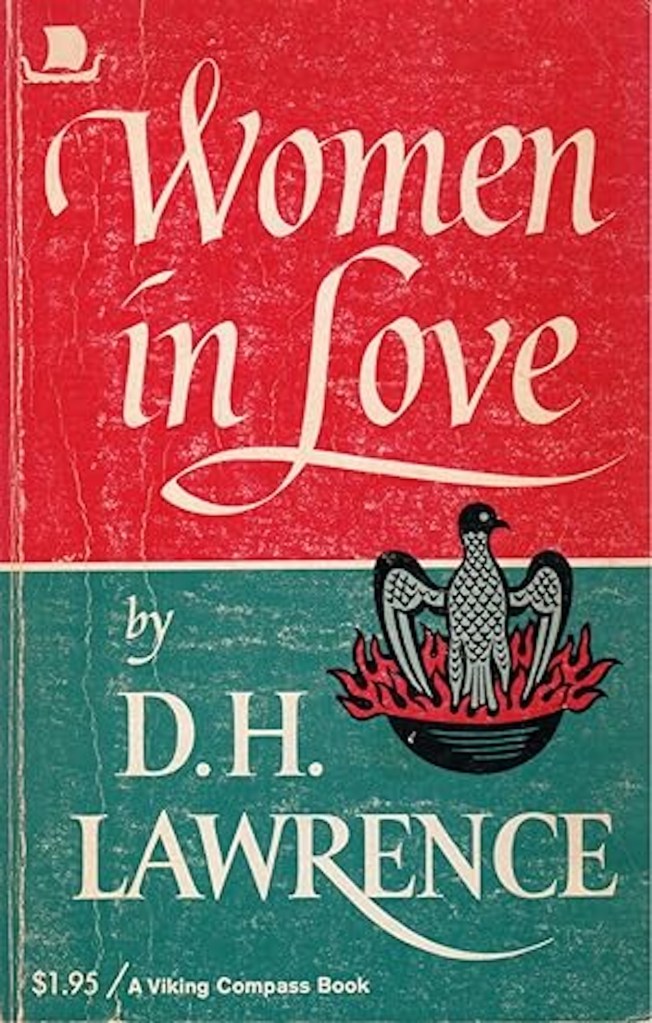
Image: Book cover Women in Love from my personal library
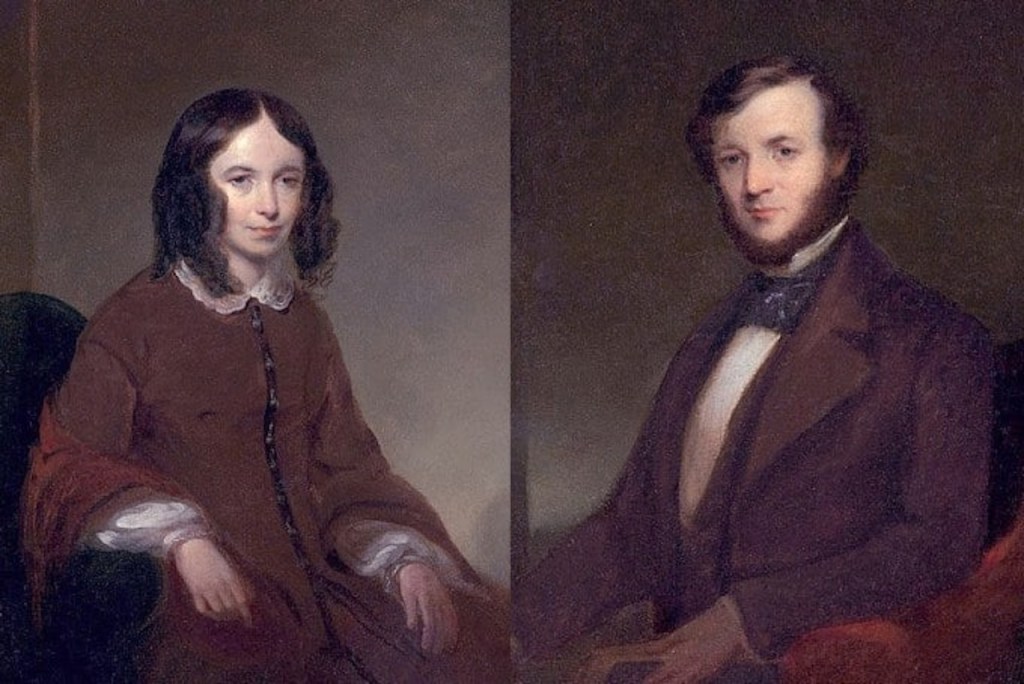
Image: Emily Dickinson – Amherst College – Daguerrotype of the poet at age 17, circa 1847 – likely the only authentic, extant likeness of the poet
Emily Dickinson’s “Sleep is supposed to be”
Dickinson’s “Sleep is supposed to be” redefines two common terms employed daily but, to the speaker’s mind, remain misidentified.
Introduction with Text of “Sleep is supposed to be”
While the speaker in “The morns are meeker than they were” offers a playful riddle in order to elaborate on the beauty of the fall season, the speaker of “Sleep is supposed to be” has a very different purpose; this speaker disputes the common conception of “sleep” and “morning.”
The speaker then offers the common notion about what sleep and morning are understood to be and contrasts it with a different level of awakening. She is referring to the spiritual awakening, when the soul and the Oversoul become one. Dickinson often describes those states of awareness that transcend the physical level of existence.
Sleep is supposed to be
Sleep is supposed to be By souls of sanity The shutting of the eye.
Sleep is the station grand Down which, on either hand The hosts of witness stand!
Morn is supposed to be By people of degree The breaking of the day.
Morning has not occurred!
That shall Aurora be – East of Eternity – One with the banner gay – One in the red array – That is the break of Day.
Reading of “Sleep is supposed to be”
Commentary on “Sleep is supposed to be”
The speaker wants to redefine a term that by her reasoning has been mischaracterized.
First Stanza: Normal Sleep
Sleep is supposed to be By souls of sanity The shutting of the eye.
The speaker begins by stating that normally folks think of sleep as the act when people shut their eyes. Those normal people are just everyday folk who go about their day waking, eating, working, playing, procreating, and of course shutting their eyes to sleep, before the next day finds them doing those ordinary things again.
Those individuals are the “sane” souls because they all agree on the common definition of “sleep.” For them there is no other definition of “sleep”; thus the speaker must now enlighten them.
Second Stanza: Opening Up a Mystic Paradise
Sleep is the station grand Down which, on either hand The hosts of witness stand!
After asserting that the normal, sane folks of the world have defined “sleep” a certain way, the speaker must now insert a new definition into the lexicon of society’s manners and language. Instead of being merely a “shutting of the eye,” this speaker has discovered that sleep also allows a new world to emerge—one that is “grand.”
This world is a mystic paradise, where the angels appear everywhere. They appear as “hosts” who give witness that this seemingly unusual realm exists. The speaker has thus elevated the common activity in which all creatures worldwide engage to a metaphysical activity that she can be sure very few have experienced.
The speaker therefore likely knows that what she is reporting will be understood by very few folks, but by dramatizing it in a poem she may reach some on some intuitive level. And even if they think she is merely describing dreams, well, that is better than continuing to devalue sleep as merely “shutting of the eye.”
Third Stanza: Considering Morning
Morn is supposed to be By people of degree The breaking of the day.
The speaker now moves on to the second term which she is urged to redefine for humanity—”Morn” or morning. As with “sleep,” she tells her readers/listeners what people who deem themselves knowledgeable consider “morn” to be. Those illustrious but limited folks consider morning to be merely the time that day begins, that time between the “shutting of the eye” and the “breaking of the day .”
Fourth Stanza: Morning Every Morning
Morning has not occurred!
The speaker then startles her readers/listeners by boldly asserting with emphasis, placing her announcement in one line, in order to draw maximum attention to its content.
This speaker insists that, in fact, there has been no “Morning” yet. Despite the thinking of those smart people that morning is simply the time that day breaks, she courageously declares that “Morning has not occurred!” Such a startling statement throws open all the windows of the mind. What could the speaker be thinking? After all morning occurs every morning, does it not?
Fifth Stanza: The True Morning
That shall Aurora be – East of Eternity – One with the banner gay – One in the red array – That is the break of Day.
The speaker then describes what a true “Morning” is. A true morning is the time that the souls greets their Maker. A great light appears that spreads from the forehead (“East”) out into that Heaven beyond the physical cosmos.
That union of soul and Oversoul is a time that is marked by a brilliant flag, marked by spreading of the brightest light beyond all physical light and sight.
The speaker then concludes: “That is the break of Day.” (Or “That is the break of Day.”) She emphasizes her description by emphasizing the word, “That.” Modern-day type-script uses italics; Dickinson underlined the word, as is necessary without modern-day technological advances with the use of word processing.
Elizabeth Barrett Browning’s Sonnet 36 “When we met first and loved, I did not build”
In sonnet 36 “When we met first and loved,” the speaker reveals her inability to fully accept the love relationship that is growing with her belovèd suitor. She is constantly trying to prevent her heart from being broken, in case the relationship fails to reach it full potential.
Introduction and Text of Sonnet 36 “When we met first and loved, I did not build”
Elizabeth Barrett Browning’s sonnet 36 “When we met first and loved, I did not build” from Sonnets from the Portuguese reveals the speaker’s apprehension that the first moments of a new love might prove to be illusive; thus, she refuses to believe unwaveringly in the possibility that love had arrived.
This speaker always remains aware that she must protect her heart from disaster. And at this point in their relationship, she knows that she could suffer a terrible broken heart if the relationship fails to flourish.
Sonnet 36 “When we met first and loved, I did not build”
When we met first and loved, I did not build Upon the event with marble. Could it mean To last, a love set pendulous between Sorrow and sorrow? Nay, I rather thrilled, Distrusting every light that seemed to gild The onward path, and feared to overlean A finger even. And, though I have grown serene And strong since then, I think that God has willed A still renewable fear … O love, O troth … Lest these enclaspèd hands should never hold, This mutual kiss drop down between us both As an unowned thing, once the lips being cold. And Love, be false! if he, to keep one oath, Must lose one joy, by his life’s star foretold.
Commentary on Sonnet 36 “When we met first and loved, I did not build”
The speaker again is demonstrating her inability to fully accept the love relationship that is growing with her belovèd suitor. The speaker must protect her poor heart, which could so easily be shattered if the love relationship should end.
First Quatrain: Love between Sorrow
When we met first and loved, I did not build Upon the event with marble. Could it mean To last, a love set pendulous between Sorrow and sorrow? Nay, I rather thrilled,
The speaker says that when she and her belovèd first met and love began to flower, she did not readily accept that the feelings were genuine; she refused to imagine that such a relationship could become solid. She must continue to guard her heart by holding in abeyance only the possibility of a lasting love relationship.
She questions whether love could endure for her because of the many sorrows she has experienced. She, instead, continued to think of only the potential of love, existing between one sorrow after the next sorrow. She felt more confident that sorrow would remain in the offing than that love would come to rescue her out of her melancholy.
The reader is by now quite familiar with the sadness, pain, and grief this speaker has suffered in her life and that she continues to suffer these maladies. For this melancholy speaker to accept the balm of love remains very difficult. Her doubts and fears continue to remain more real to her than these new, most cherished feelings of love and affection.
Second Quatrain: Continuing Fear
Distrusting every light that seemed to gild The onward path, and feared to overlean A finger even. And, though I have grown serene And strong since then, I think that God has willed
Answering her own question in the negative, the speaker asserts that she preferred to remain skeptical of the hints that seemed to suggest a progression toward the loving relationship.
The speaker’s fears continue to prompt her to hold back her heart because she continued to remains afraid that if she gave way at even a “finger[’s]” length, she would regret the loss so much that she would suffer even more than she already had done.
Quite uncharacteristically, the speaker admits that since that early time at the very beginning of this love relationship, she has, indeed, “grown serene / And strong.” Such an admission is difficult for the personality of this troubled speaker, but she does remain aware that she must somehow come to terms with her evolving growth.
First Tercet: Skepticism for Protection
A still renewable fear … O love, O troth … Lest these enclaspèd hands should never hold, This mutual kiss drop down between us both
Still, even though this wary speaker is cognizant of her growth in terms of serenity and strength, she believes that God has instilled in her the ability to remain somewhat skeptical in order to protect herself from certain torture at having been wrong about the relationship.
This speaker knows that if, “these enclaspèd hands should never hold,” she would be devastated if she had not protected her heart by retaining those doubts. If the “mutual kiss” should “drop between us both,” this ever-thinking speaker is sure her life would be filled with even more grief and sorrow.
Second Tercet: Wrenching Feeling
As an unowned thing, once the lips being cold. And Love, be false! if he, to keep one oath, Must lose one joy, by his life’s star foretold.
The speaker then spreads across the border of the tercets the wrenching feeling that her words are causing her. This melancholy speaker feels that she must give utterance to these thoughts, but she knows that they will cause pain, even to her belovèd. But if, “Love, be false,” then she simply must acknowledge that possibility for both their sakes.
The speaker anticipates the likelihood that she might have to “lose one joy” which may already be written in her stars, and not knowing which joy that might be, she must remain watchful that it might be the very love she is striving so mightily to protect.
Literary studies is the academic discipline devoted to the analysis, interpretation, evaluation, and contextualization of literature; it also includes the generalized act of commentary on literary works.
Literary studies examines written works—from poetry, fiction, and drama to essays and emerging digital forms—not simply as artistic objects but as cultural, historical, philosophical, linguistic, and aesthetic expressions. At its core, literary studies asks:
What do texts mean?
How do they work?
Why do they matter?
The field draws from a range of approaches, including philology, historical scholarship, theory, philosophy, linguistics, theology, and cultural analysis. Each special focus from analysis to commentary engages its own experts who employ each of these fields in unique combinations of endeavor.
For example, the analyst may emphasize historical scholarship in explicating a poem, while the commentarian will dip into any number of those approaches in order to elucidate meaning from informed personal experience.
At the core of the literary field is human experience. From humankind’s first finding itself in world of pairs of opposites that operate sometimes for good and sometimes for ill, the mind of mankind has grappled with the very meaning of existence. Literature provides a written record of that grappling.
That record makes it so that humanity need not learn all over again and again everything required for living a well-seasoned and reasonably comfortable, prosperous life. Human beings can read about many more experiences than they can ever actually experience.
And while personal experience is always central to one’s psyche, it serves as a bedrock for understanding those contemporaries living in the immediate environment and those ancestors who lived in the past.
Literature and literary studies offer a treasure trove of material keeping the mind and heart balanced and harmonious as each human being travels a unique path to spiritual understanding and ultimate awakening to soul-reality—the final stage in understanding and uniting the soul with the Creator of creation (God).
Historical Development
1. Origins in Antiquity
The roots of literary studies reach back to ancient civilizations.
Greece: Thinkers such as Plato and Aristotle explored poetry’s moral and aesthetic value, laying foundational concepts in mimesis, genre, and rhetoric.
Rome: Critics such as Horace, Longinus, and Quintilian systematized literary technique and rhetorical education.
These early traditions treated literature as part of a wider program of moral, civic, and rhetorical training.
2. Medieval and Renaissance Scholarship
During the Middle Ages, literature was primarily studied through the lens of theology and classical rhetoric. With the Renaissance, renewed attention to classical texts and humanism broadened interpretation, emphasizing:
textual editing
authorial biography
moral philosophy
artistic imitation and originality
Figures such as Petrarch, Erasmus, and later Sir Philip Sidney were important for literary criticism as an intellectual discipline.
3. Philology and the Birth of Modern Literary Studies (18th–19th
Centuries)
The modern university model grew out of European philology—systematic study of languages, manuscripts, and textual origins. Key figures included:
Friedrich August Wolf, who formalized classical philology
Wilhelm Dilthey, who argued for the humanities as a distinct form of knowledge
The Grimm brothers, whose linguistic scholarship shaped historical study of culture
In Britain and the United States, literary study emerged gradually as its own discipline, often housed in departments of English language and rhetoric.
4. The Rise of Criticism and Theory (20th Century)
The 20th century saw a dramatic diversification of methodologies, often called literary theory. Important movements and contributors include:
New Criticism (T. S. Eliot, Cleanth Brooks, I. A. Richards): close reading, textual autonomy
Feminist and gender studies (Woolf, Gilbert & Gubar, Butler)
Postcolonial studies (Said, Spivak, Bhabha)
Reader-response theories (Iser, Fish)
This pluralism made literary studies one of the most interdisciplinary fields in the humanities.
5. Literary Studies in the 21st Century
The field continues to evolve with:
digital humanities (text mining, digital archives, computational analysis)
environmental humanities (ecocriticism)
narrative medicine
world literature studies
renewed interest in classical rhetoric and formal aesthetics
Today, literary studies includes both traditional close reading and technologically advanced methodologies.
Internal Tensions and Contemporary Challenges in Literary Studies
Despite its intellectual richness and adaptability, literary studies has faced sustained internal tensions and external pressures, particularly since the late twentieth century. Acknowledging these challenges is essential for an honest account of the discipline’s current condition.
1. Debates over Theory and Method
One of the most persistent internal debates concerns the role and dominance of literary theory. While theory expanded the field’s conceptual reach and interdisciplinary influence, critics have argued that its institutionalization sometimes displaced close reading, historical knowledge, and aesthetic judgment.
This tension has produced ongoing disagreements between theoretically driven approaches and those advocating a return to formal analysis, philology, rhetoric, or historically grounded criticism. The result has been both fragmentation and productive pluralism.
2. Institutional Pressures and Decline
Literary studies has also experienced institutional contraction, particularly in Anglophone universities. Declining enrollments, reduced funding, and departmental closures have forced the field to defend its place within increasingly market-driven educational systems.
These pressures have reshaped curricula, hiring priorities, and research agendas, often privileging demonstrable “impact” over long-term scholarly depth.
3. Economic Justification of the Humanities
A related challenge is the growing demand to justify literary studies in economic or utilitarian terms. Arguments emphasizing transferable skills—critical thinking, communication, adaptability—have helped defend the discipline, but they risk narrowing its intellectual and cultural aims.
Many scholars contend that literature’s value cannot be fully captured by metrics of employability, insisting instead on its role in ethical reflection, cultural memory, and imaginative freedom.
4. Public Relevance and Authority
Literary studies has also confronted questions about its public authority. As cultural commentary has migrated to digital platforms and popular media, academic criticism has sometimes appeared insular or inaccessible.
In response, there has been renewed interest in public humanities, essayistic criticism, and teaching-oriented scholarship that reconnects academic work with broader audiences.
5. Renewal through Self-Critique
These tensions have not merely weakened the discipline; they have also prompted self-examination and renewal. Contemporary literary studies increasingly combines theoretical sophistication with historical depth, formal attentiveness, and ethical seriousness. The field’s willingness to critique its own assumptions remains one of its defining strengths.
By recognizing these internal debates and structural challenges, literary studies presents itself not as a settled or complacent discipline, but as one engaged in ongoing reflection about its methods, purposes, and responsibilities in a changing cultural and institutional landscape.
Purpose of Literary Studies
Interpretation and Meaning
The primary purpose of literary studies is to interpret texts richly and responsibly, explaining how literature creates meaning through form, language, imagery, voice, and structure.
2. Preservation of Cultural Heritage
Through editing, archiving, and historical scholarship, literary studies preserves important works and makes them accessible to future generations.
3. Critical and Ethical Inquiry
Literature is a testing ground for human experience. Studying literature helps individuals:
examine moral and philosophical questions
understand diverse viewpoints
confront social issues
explore the imagination’s power
4. Training in Analytical and Communicative Skills
Literary discipline develops skills essential across professions:
close attention to detail
critical thinking
persuasive writing
interpretive reasoning
cultural literacy
5. Exploration of Aesthetics
Literary studies also seeks to understand the pleasures and structures of artistry—why poetry moves us, how narrative creates suspense, how style functions, and what beauty means in language.
Importance of Literary Studies
Cultural Understanding and Memory
Literature is a record of humanity’s inner life. Studying it helps societies remember, reflect, and interpret their history, values, and aspirations.
2. Empathy and Human Connection
Reading literature strengthens the capacity to imagine the lives of others, fostering empathy and reducing cultural isolation.
3. Intellectual Freedom
Literary analysis encourages questioning, debate, and openness to multiple interpretations—essential qualities for democratic societies.
4. Preservation of Language
Through the study of style, genre, and linguistic change, literary studies enriches and preserves the expressive possibilities of language itself.
5. Influence Across Disciplines
The methods employed in literary studies inform philosophy, history, sociology, psychology, political theory, theology, and even medicine and law.
Place in Society
1. Education
Literary studies is central to curricula from primary schools to graduate programs. It cultivates literacy, imagination, ethical reflection, and intellectual maturity.
2. Cultural Institutions
Libraries, publishing houses, museums, and arts organizations rely on literary scholars for:
editing and curating texts
creating anthologies
interpreting archives
preserving rare works
3. Public Discourse
Literary critics influence cultural conversations through essays, reviews, public scholarship, and commentaries.
4. Media and the Arts
Film, theater, screenwriting, advertising, and media studies use literary analysis to shape storytelling, symbolism, and audience impact.
5. Humanities and Civic Life
As part of the broader humanities, literary studies sustains thoughtful civic engagement by nurturing critical reflection, historical awareness, and nuanced communication.
Cornerstone of the Humanities
Literary studies is a cornerstone of the humanities, offering tools to understand texts not only as artistic creations but as expressions of human thought, feeling, and cultural identity. Its long history—from ancient rhetoric to digital humanities—shows a discipline continuously reinventing itself to meet new forms of storytelling and new intellectual challenges.
By cultivating interpretation, empathy, cultural memory, and critical reasoning, literary studies plays a vital role in shaping educated citizens and sustaining a thoughtful, imaginative, and spiritually enlightened society.
🕉️
My Personal Engagement with Literary Studies
From my earliest love of music to my first unpleasant encounter with literary studies as a high school sophomore, it may seem rather odd that I did ever so engage.
Music: My First Love
It is true that my first love was music. I especially loved piano. As I was but a toddler, I watched and listened with awe as my Aunt Winnie played the piano during visits to my paternal grandparents home in Kentucky. Winnie was in her teens and played beautifully only by ear. So I fell in love with the piano, later thrilling to the TV performances of Liberace.
I also persuaded my parents to let me take piano lessons at our little four-room school house in Abington, Indiana, when I was in about the third grade around age 9. The music teacher, Mrs. Frame, came once a week and gave lessons to students, who were permitted the leave the classroom for about a half hour for the lessons.
Unfortunately, the school board decided after about three years into my lessons to ban Mrs. Frame from using out little school to give her lessons; she then continued them at her home. But we had to then travel to her home, and my dad was often too busy to take me to my lessons.
To relieve my dad of that chore, I stopped the lessons fairly soon after Mrs. Frame’s banishment. I have often wished I could have continued the lessons beyond the three years. But I have continued to keep a piano in my home and to play it from time to time.
Literature in High School
During my sophomore year in high school, Mrs. Edna Pickett was my English teacher. The first semester we studied grammar, and I was a straight A student in grammar.
On the first day’s meeting in Mrs. Pickett’s class, she asked the class to name the 8 parts of speech. No one offered to do it, so I raised my hand a spouted them off for her; she was impressed, and she remained impressed with my ability to handle English grammar.
Then second semester arrived. And instead of my beloved grammar, the focus was on general literature. We would read stories and poems in the literature text book—a big thick thing that I had no love for—and then discuss them.
Oddly, I had no yardstick for measuring the height, depth, and width of those works. It seemed that we were supposed to fathom something in the stories that I could not seem to fathom. The study seemed terribly vague and unwieldy, not like grammar, which had real answers and followed logical patterns.
To make matters worse, Mrs. Pickett required us to write book reports. If we did not write a book report, we could not get a A, regardless of our accumulated number.
I thought that book report requirement was unfair, and I refused to write one. True to her word, Mrs. Pickett marked me down to a B, even though my grad average was in the high 90s as usual, which under normal circumstances would have given me my usual A.
I’m not sure how I managed to get A’s on the literature tests, but somehow I did. And Mrs. Pickett said when she assigned the B that she was sad about it, also. That B really stung, and from then on, I went ahead and read books and reported on them.
After sophomore English came junior English which was focused on American literature, in addition to the grammar, of course. By then I had fallen in love the poetry and began to appreciate literature more. So my American literature focus caused me no real consternation.
However, I did not take British literature with Mrs. Pickett in my senior year; that year a course in creative writing was offered and it fulfilled the requirement for academic curricula specialty, so I enrolled in creative writing instead of senior English. I have often regretted not taking both the Brit lit and the creative writing. I could have done so because I had two study hall periods that year.
Curiously, it is also the oddity that I ended up taking British/Irish literature as the main concentration for my PhD studies, writing my dissertation of William Butler Yeats’ focus on Eastern philosophy and religion.
PhD in British Literature
So the next part of this story ends on a reversal that could not have been predicted. And it has some twists and turns. As I enjoyed grammar in early high school, I also enjoyed and was good at foreign language, beginning with Latin. The study of Latin even enhanced my aptitude for English grammar.
I took Latin my freshman year, then I took Spanish my sophomore year; my junior year I took Latin II and Spanish II and then took French my senior year (Mrs. Pickett taught the French class, and it was the first year French had been offered. She even spent the summer at the Sorbonne in Paris boning up on her French stills.)
So my interest become completely ensconced in foreign language, and I knew that in college I would major in foreign language—likely Spanish. But then my creative writing teacher, Mr. Malcolm Sedam, who was working on a masters degree in history, let me know that he needed to translate some works from German. He was writing his thesis on Johannes Erwin Eugen Rommel, known as The Desert Fox, a German Generalfeldmarschall during World War II.
I had begun to study German, Italian, and Brazilian Portuguese on my own. And I had been apprized of the similarities between German and English, and I decided that in college I would likely major in German.
So I made an attempt to translate some the text that Mr. Sedam needed. Of course, that was a total bust; I had only a smattering of German, not nearly enough to translate such material.
Nevertheless, I went ahead and began my German major at Ball State Teachers College which I entered summer quarter 1964. I had to wait until fall quarter to take my first course in German however.
I thoroughly enjoyed studying German at Ball State, transferred to Miami University after studying four quarters at BSU, graduated with a major in German from Miami in April 1967. I then taught German at Brookville, Indiana, for one year. I earned my MA in German from BSU in 1971 then taught 2 more years of German at Brookville.
By this time, I had discovered that a career teaching German was not for me; to do a truly efficient job of such teaching and engaging such scholarship, I would have to travel and study in Germany probably on a yearly basis—a venture that I did not relish.
Besides, I had begun writing and studying poetry written in English and became convinced that as a native speaker of English and dedicated literary studies enthusiast, a concentration in literature written in English was my best focus.
I began an MA in English at BSU in 1976 but did not finish it. Then with many pages of poems, essays, and other writings, especially songs, in 1983, I began anew with the MA in English at BSU, and by this time I had decided that I would earn my PhD in English at BSU. And that’s what I did—finishing the MA in 1984 and the PhD in November 1987.
From 1983, I taught in the BSU writing program as graduate assistant, (1983-1984), doctoral fellow (1984-1987), and assistant professor (1987-1999.) In the fall of 1987, I accepted an offer of a teaching job at a now-defunct college in Virginia, but the job was so much different from what the administration had described that I left and returned to BSU by winter quarter that same year.
Independent Literary Scholar
After leaving the BSU writing program in 1999, I have become an independent scholar, writing, researching, and posting my works online on various sites that accept such works.
An example of my online writing endeavor is that I spent almost ten years posting on the recently defunct HubPages, accumulating over a thousand essays on poetry commentaries, political and social issues—even a few recipes and songs—along with several of my original poems and short stories.
Currently, I curate my own literary website at Linda’s Literary Site. The site features my writings in poems, songs, essays, short stories, fables, recipes, and commentaries.
The financial gain is close to non-existent, whereas I was able to gain a pittance on HubPages, but the satisfaction is enormous with no editorial noise to interrupt by voice.
Useful or Not?
The twists and turns featured in this overview are offered primarily to give readers the opportunity to decide for themselves whether they find my offerings in literary studies of any value for their own perusal.
As mentioned earlier, where I ended up regarding the study of literature had an inauspicious beginning. But it nevertheless has ended with me dedicating my time and effort to my once adversarial subject of literary studies.
Elizabeth Barrett Browning’s Sonnet 8 “What can I give thee back, O liberal”
The speaker continues to deny her good fortune as she reveals her gratitude for the attention of her illustrious suitor; she begins to accept her lot but reluctantly.
Introduction and Text of Sonnet 8 “What can I give thee back, O liberal”
Sonnet 8 from Elizabeth Barrett Browning’s Sonnets from the Portuguese finds the speaker continuing to doubt and deny her great fortune in attracting such an accomplished and generous suitor. However, she is slowly beginning to accept the possibility that this amazing man could have affection for her.
Sonnet 8 “What can I give thee back, O liberal”
What can I give thee back, O liberal And princely giver, who hast brought the gold And purple of thine heart, unstained, untold, And laid them on the outside of the wall For such as I to take or leave withal, In unexpected largesse? am I cold, Ungrateful, that for these most manifold High gifts, I render nothing back at all? Not so; not cold,—but very poor instead. Ask God who knows. For frequent tears have run The colors from my life, and left so dead And pale a stuff, it were not fitly done To give the same as pillow to thy head. Go farther! let it serve to trample on.
Reading
Commentary on Sonnet 8 “What can I give thee back, O liberal”
The speaker continues to deny her good fortune as she reveals her gratitude for the attention of her illustrious suitor; she begins to accept her lot but reluctantly.
First Quatrain: Baffled by Attention
What can I give thee back, O liberal And princely giver, who hast brought the gold And purple of thine heart, unstained, untold, And laid them on the outside of the wall
The speaker once again finds herself baffled by the attention she receives from one who is so much above her station in life. He has given her so much, being a “liberal / And princely giver.” The term “liberal” here means openly generous.
Her suitor has brought his valuable poetry to her along with his own upper-class qualities and manners. She metaphorically assigns all of those gifts to the status of “gold and purple,” the colors of royalty, and she locates them “outside the wall.”
The suitor romances her by serenading her under her window, and she is astonished by the good fortune she is experiencing. She cannot comprehend how one so delicate and lowly positioned as herself can merit the attention she continues to garner from this handsome, accomplished poet.
Second Quatrain: Rejecting or Accepting
For such as I to take or leave withal, In unexpected largesse? am I cold, Ungrateful, that for these most manifold High gifts, I render nothing back at all?
The handsome suitor provides the speaker with the choice of taking his affections and attentions or rejecting them, and she is very grateful for all she receives even as she regrets that she has nothing to offer in return. She declaims: “I render nothing back at all?” She frames her lack into a question that answers itself, implying that even though she may seem “ungrateful,” nothing could be further from the truth.
The rhetorical intensity achieved through dramatizing her feelings in a rhetorical question enhances not only the sonnet’s artistry but also adds dimension to those same feelings. The rhetorical question device magnifies the emotion. Instead of employing overused expressions along the lines of “definitely” or “very,” the speaker uses the rhetorical question to fuse the poetic tools into a dramatic expression that fairly explodes with emotion.
First Tercet: No Lack of Passion
Not so; not cold,—but very poor instead. Ask God who knows. For frequent tears have run The colors from my life, and left so dead
The speaker, however, does not leave the question open to possible misinterpretation; she then quite starkly answers, “No so; not cold.” She does not lack passion about the gifts her suitor bestows upon her; she is merely “very poor instead.”
She insists that it is “God who knows” the extent of her poverty as well as the depth of her gratitude. She then admits that through much shedding of tears, she has caused the details of her life to fade as clothing rinsed many times in water would become “pale a stuff.”
Second Tercet: Low Self Esteem
And pale a stuff, it were not fitly done To give the same as pillow to thy head. Go farther! let it serve to trample on.
The speaker’s lack of a colorful life, her lowly station, her simplicity of expression have all combined to make her denigrate herself before the higher class suitor with whom she feels compelled to contrast herself.
She is still not able to reconcile her lack to his plenty, and again she wants to urge him to go from her because she feels her lack is worth so little that it might “serve to trample on.” Her hopes and dreams she will keep hidden until they can override the reality of her personal lack of experience and life station.
Image: Emily Dickinson – Amherst College – Daguerrotype of the poet at age 17, circa 1847 – likely the only authentic, extant likeness of the poet
The speaker in Emily Dickinson’s “I had a guinea golden” is expressing melancholy at the loss of a friend, whom she describes metaphorically in terms of three dear objects: a guinea, a robin, and a star.
Introduction with Text of “I had a guinea golden”
This fascinating Emily Dickinson poem of loss offers quite a tricky subversion of thought. The first three stanzas seem to explain the loss of three separate loved ones. Then the final stanza packs a wallop unloading on only one “missing friend,” who has caused the speaker to create this “mournful ditty” with tears in her eyes.
This poem demonstrates the depth of Dickinson’s education as she employs metaphors of the British coinage system and allusions to Greek mythology, which has been further employed by the science of astronomy to name stars.
Not only did Dickinson study widely in many subject areas, she possessed the ability to employ her learning in creative ways to fashion those beautiful flowers, allowing them to grow in her garden of verse.
I had a guinea golden
I had a guinea golden – I lost it in the sand – And tho’ the sum was simple And pounds were in the land – Still, had it such a value Unto my frugal eye – That when I could not find it – I sat me down to sigh.
I had a crimson Robin – Who sang full many a day But when the woods were painted, He, too, did fly away – Time brought me other Robins – Their ballads were the same – Still, for my missing Troubador I kept the “house at hame.”
I had a star in heaven – One “Pleiad” was its name – And when I was not heeding, It wandered from the same. And tho’ the skies are crowded – And all the night ashine – I do not care about it – Since none of them are mine.
My story has a moral – I have a missing friend – “Pleiad” its name, and Robin, And guinea in the sand. And when this mournful ditty Accompanied with tear – Shall meet the eye of traitor In country far from here – Grant that repentance solemn May seize upon his mind – And he no consolation Beneath the sun may find.
Reading
Commentary on “I had a guinea golden”
Each stanza builds to a magnificent crescendo of outrage that allows the speaker to lavish affection as well as harsh rebuke to the one leaving her in a state of melancholy.
First Stanza: The Value of Small Things
I had a guinea golden – I lost it in the sand – And tho’ the sum was simple And pounds were in the land – Still, had it such a value Unto my frugal eye – That when I could not find it – I sat me down to sigh.
The speaker begins by referring to the coin “guinea,” which was a British coin manufactured with the gold from the African nation of Guinea. The coin was worth 21 shillings and ceased circulating in 1813. The speaker maintains the British monetary metaphor by referring also to “pounds” in the fourth line of the poem.
Metaphorically, the speaker is calling her lost friend a “golden” coin, which she lost “in the sand.” She then admits that it was a small loss for much more valuable moneys—”pounds”—were all about her. Nevertheless, to her, because of her frugality, the value of the small coin was huge, and because it was lost to her, she just “sat down to sigh.”
Second Stanza: Missing the Music
I had a crimson Robin – Who sang full many a day But when the woods were painted, He, too, did fly away – Time brought me other Robins – Their ballads were the same – Still, for my missing Troubador I kept the “house at hame.”
The speaker then employs the metaphor of “crimson Robin.” This time she is likening her friend to the singing robin who “sang full many a day.” But when the autumn of the year came around, she loses this friend also.
Just as other moneys were abounding after the loss of a simple guinea, other robins presented themselves to the speaker after she lost her robin. But even though they sang the same songs as her lost robin, it just was not the same for the speaker. She continues to mourn the loss of her robin; thus she kept herself harnessed to her house, likely in case her own robin should show up again.
Third Stanza: The Mythology of Science
I had a star in heaven – One “Pleiad” was its name – And when I was not heeding, It wandered from the same. And tho’ the skies are crowded – And all the night ashine – I do not care about it – Since none of them are mine.
The speaker then finds herself once again mourning the loss of a loved one. This one she labels “Pleiad.” Pleiad is an allusion to Greek mythology but also a reference to astronomy.
In Greek mythology, the seven daughters of Atlas went into hiding up in the sky among the stars to escape being pursued by Orion. One the seven seems to disappear perhaps out of shame or grief.
In the science of astronomy, the constellation known as Taurus features a group of seven stars, but oddly enough only six can be seen, resulting in the same “Lost Pleiad” as exists in the Greek myth.
Dickinson, who studied widely the subjects of mythology, history, and science thus alludes to the myth of the “Lost Pleiad” to again elucidate the nature of her third lost beloved. She has now experienced the loss of money, a bird, and now a star–each more precious than the last.
The speaker loses the star as she was being heedless–not paying attention. In her negligent state, her star wanders away from her. Again, although the sky is full of other stars, they just don’t measure up because “none of them are mine.”
Fourth Stanza: Admonishing a Traitor
My story has a moral – I have a missing friend – “Pleiad” its name, and Robin, And guinea in the sand. And when this mournful ditty Accompanied with tear – Shall meet the eye of traitor In country far from here – Grant that repentance solemn May seize upon his mind – And he no consolation Beneath the sun may find.
While wildly famous for her riddles, Dickinson often breaks the riddle’s force by actually naming the object described. In the final stanza, she blatantly confesses that her little story “has a moral.” She then blurts out, “I have a missing friend.”
It is now that the reader understands the loss is not three different loved ones, but only one. She has thus been describing that “missing friend” using three different metaphoric images.
Now, however, she has a message for this friend whose description has revealed multiple times how much she misses the friend and laments the loss. After again rather baldly admitting her sorrow told in “this mournful ditty” and even “[a]ccompanied with tear,” she refers to that missing friend as a “traitor.”
If this friend who has betrayed her happens to see this “mournful ditty,” she hopes that it will grab that individual’s mind so that the person will experience “repentance solemn.” Furthermore, she wishes that the friend be unable to find any solace for the individual’s contrition no matter where that friend goes.
Image: Thomas Thornburg, Back Book Cover American Ballads
American Ballads
Published by Author House, Bloomington IN, 2009
Bag Ladies
Bag ladies are this season wearing field-jackets gleaned from K-MART shoppers and KEDS cast off by charioteers on skateboards fleeing from the cops; hooded and rope-cinched at their waists (doomed matched pairs shuffling westward). vespers et matins in their quest they toss and comb the city’s trash, each empty can discovered, cash. Sometimes drunk they will confess it, and sometimes cough the alley retching pink spittle in their sad kermess. Sometimes we talk (they ask my pardon for sifting through these things discarded) for better homes and other gardens.
Other Gardens
When children, we dreamed Of sailing to Baghdad. Hoosier gardens teemed Like Iram; Kaikobad Led Persian cavalry Down to an inland sea.
Those magic minarets Are with childhood hidden, Our children in the desert Killing children.
Serving the South
deadended on a siding in Midway, Alabama, stand 6.5 miles of RR cars. covered in kudzu and time, they stand, iron cheeks squaring their gothic mouths; they are Southern and Serve the South (hub-deep in red clay) this land, this ekkuklema of southern drama. still, it is Bike Week in Daytona, and the Lady is sold in yards from rucksacks where a tattooed mama fucks & sucks (her name is not Ramona). here will come no deus ex machina, this American South, this defeated dream. drunken, drugged, dolorous in their dementia, forbidden by Law to wear their colors, these cavaliers race their engines and scream where the marble figure in every square shielding his eyes as the century turns stands hillbilly stubborn and declares. heading back north having spent our earnings, honeyed and robbed we are fed on hatred cold as our dollar they cannot spurn, and we are in that confederate.
Poor Eddie Poe collapsed in the snow and exhaled no more in old Baltimore
Poor Mary Mallon wept o’er many a gallon of soapsuds, avoiding the cops, and typhoiding.
W. B. Yeats believed in the fates, but on Sunday in Spiritus Mundi.
. . .
Koan
Once in this journey, following the call I broke my bones falling Now I go hobbled to a distant star My shippe a heavy bar Friends come asking how we are My friends, my friends, we are alone. He who would know must break his own bones
A Ballad of My Grandfather
My grandfather was a Wobbly, sirs, And as such he was banned And blackballed from his daily bread Across your promised land.
My grandfather polished metal, sirs, And ripped his skilly hands Whenever you allowed him to Across your promised land.
My grandfather suffered somewhat, sirs, And worked till he could stand No more before your wheel; he loafs Beneath your promised land.
My father walked a picket, sirs, In nineteen-forty-five, His son beside, and with them walked His father, man alive.
That was a bitter solstice, sirs, The wind complained like ghosts, The cold struck home, the striker stood Frozen to their posts.
The people in the city, sirs, Sequestered in their hate, Supped in communal kitchens there And massed at every gate.
Consider all such service, sirs, Kindred to your time, A long apprenticeship to cast Such mettle into rime:
The pain these fathers weathered, sirs, The freedoms you forsook, Is polished into pickets here And winters in their book.
to be continued, check back for updates
Publication status of American Ballads
Copies of American Ballads are readily available on Amazon and reasonably priced at $10.99, even offered as Prime. This Amazon page features a commentary by the wife of the poet, who felt that the book deserved further description.
This is my experience of a recurring nightmare that came true.
In 1970 I was 16 years old. We lived in a small town in Southeastern Indiana, in a little neighborhood just across the river from town. Our house was on the main road, and we had horses in a barn and pen area on the other side of the neighborhood. To get to the barn, we walked along a path that led past our grandparents’ house. The path led from our driveway, all the way across the neighborhood to the back road.
On the way to the barn, our grandparents’ house was to the right, up a small hill past a yard with lots of trees and beautiful landscaping with flowers and shrubs.
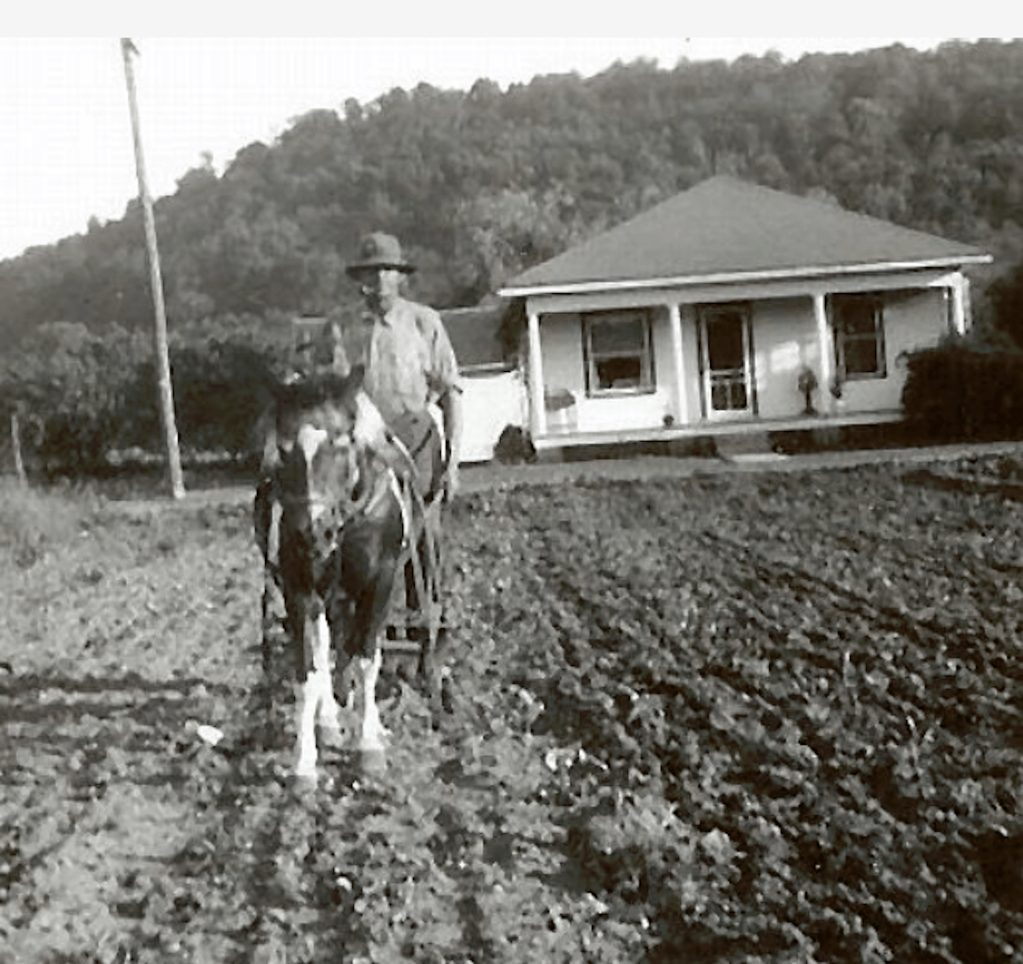
Grandpa Plowing the Garden
On the left side of the path was a huge flower garden with a grape arbor and many shrubs, small trees, and hundreds of flowers that bloomed in spring and summer.
Our Grandparents Loved Animals
When we were very little, our grandparents always had ponies and horses, and many other pets and animals. Grandpa used to take us for pony cart rides.
Picture of grandpa and us on a pony cart ride
Our grandparents had passed away years ago. From them, we inherited our love for animals. We usually had a couple of ponies and horses, as well as several dogs. I loved horses and everything about them, so one of my chores was to feed the horses every morning before school. In the winter, that meant that I had to walk along the path across the neighborhood to the barn in the dark. That didn’t bother me at all. I carried a flashlight so I could see, but I wasn’t afraid of the dark. We knew everyone in the neighborhood, and I always felt completely safe there.
The Nightmare
One night I dreamed that when I went to the barn to feed the horses, there was a man in the barn. In the dream, as I was giving the horses hay, a man came up behind me. It scared me, and I usually woke up right away. I didn’t think too much about it at the time, but then I started having that dream every night. It started to scare me a lot, so I told my mom about the dreams. I told her that I was afraid to go over to the barn.
We had three German Shepherd dogs at the time, and Mom said, “Well, take the dogs with you.” So I started taking the dogs with me every morning. The dogs loved the early morning trek to the barn, and they were always eager to join me. Once I started taking the dogs with me, the dream stopped.
A few weeks later, I started having the dream again. In one of the dreams, when the man in the barn came at me, I grabbed a pitchfork and stabbed him. That only happened in one of the dreams. In all the other dreams, I just saw a man in the barn, it scared me, and I woke up right away.
After a few more nights of these dreams, I told mom that I was having that dream again and that I was afraid to go to the barn even though the dogs were with me. Mom said, “Take Randy with you.” Randy, my younger brother, was 14 years old at the time. He wasn’t obsessed with horses like I was, and he wasn’t exactly thrilled that he had to go out in the dark early morning cold, but he went along anyway. He loved the dogs, and he enjoyed seeing how excited they were to go on our morning excursions.
The Dream Stops for Awhile
After I started taking the dogs, and my brother with me to feed the horses, the dreams stopped, and all was good for a while.
Then one night I had the dream again. I didn’t tell Mom or Randy that I had had the dream again. I didn’t know what else could be done, and since I had been having the dream on and off for several weeks and nothing bad had happened, I wasn’t too worried about it.
That morning as we reached the barn, we noticed that the dogs were excitedly sniffing at the barn doors and running back and forth in front of the doors. I thought that they had probably just caught the scent of an animal, maybe a rabbit or something. I slid open the huge double barn doors, and the dogs immediately ran inside barking and growling. Inside the barn toward the back was the haystack.
A man jumped up out of the hay and yelled as the dogs were at his feet. I couldn’t tell if the dogs bit him, but they were loudly barking and growling. Randy and I screamed and ran as fast as we could back to our house. The back door of our house faced the south side of the neighborhood and it was closest to the barn. The back door opened directly into the kitchen.
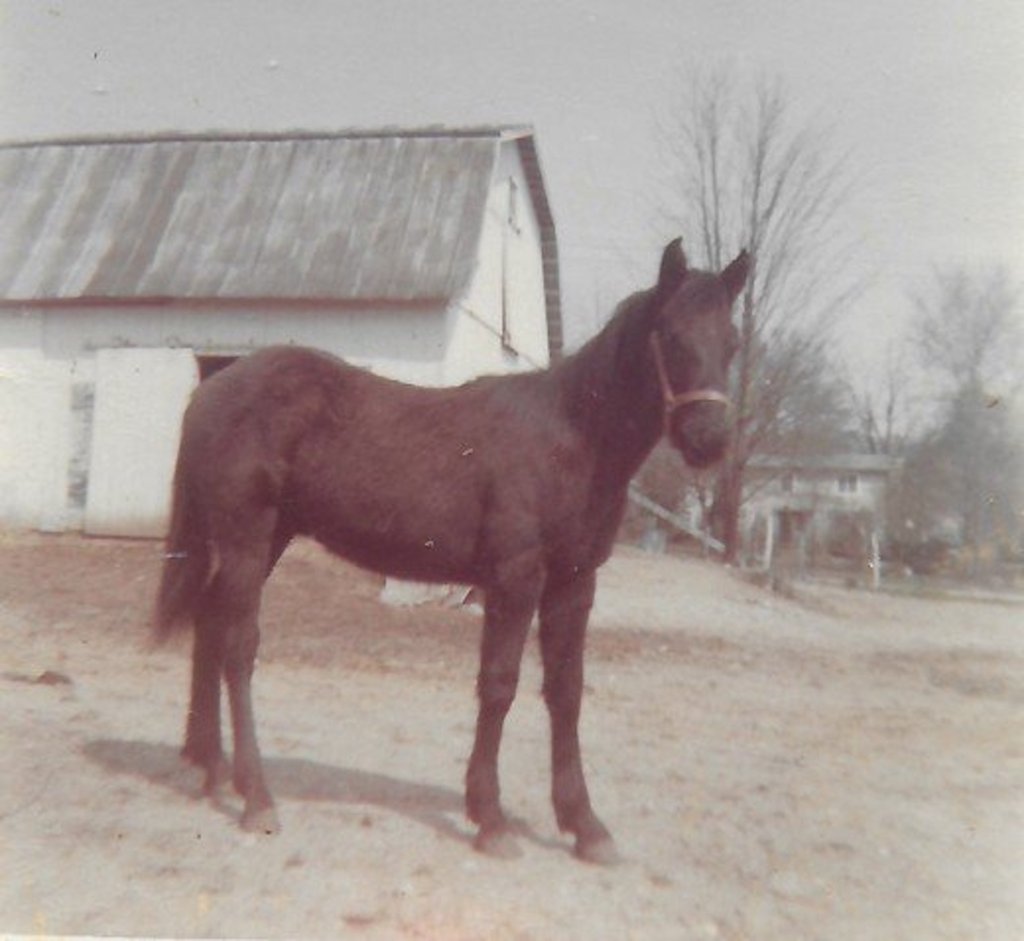
My horse in back of the barn
Randy and I ran in through the back door, and we both screamed, at the same time, “There’s a man in the barn!” In the kitchen were our Mom, our older brother Chuck, and our little sister Faye. At this point, I didn’t know if the dogs were still over at the barn, or if they had followed us back home. Our older brother, Chuck, grabbed a baseball bat and said, “Let’s go.” I remember being very impressed that Chuck was so brave.
The dogs had come home, and they joined us as we returned to the barn. When we got to the barn, the man was gone. We could see where he had been sleeping in the hay, and where he had taken a leak on the floor. I fed the horses and we returned home. Mom said that she had called the sheriff, and he said that it was probably a bum just getting out of the cold. Then I felt sorry for the man. It must have been horrible to wake up with dogs attacking you.
I Had Told My Family and Girlfriend About the Dreams
I had told only my family and my girlfriend about those recurring dreams. My girlfriend lived just two houses down the road from our barn, and she loved horses as much as I did.
After school that day, I was walking over to the barn as my girlfriend was walking up the road. When she got to the little hill which was on the back road just in front of the barn, I said, “There was a man in the barn this morning.” She said, “I just pinched myself to make sure I wasn’t dreaming.”
The Dream Stops for Good
I never had that dream again, and after a while, I no longer had to make Randy go with me to feed the horses. I did keep taking the dogs though since they loved going with me, and I enjoyed their company.
I will admit that even though I wasn’t afraid anymore, I think that I was more alert as to my surroundings after that. I often wonder what might have happened if I had not had those dreams and if I had not told my mom about them.
Stephen Vincent Benét’s “The Ballad of William Sycamore”
Not strictly a cowboy poem, Benét’s ballad, however, offers the mind-set of an individual close to the land, preferring the rural life to the urban.
Introduction and Text of “The Ballad of William Sycamore”
Stephen Vincent Benét’s “The Ballad of William Sycamore” features 19 rimed, stanzas of traditional ballad form. The subject is the rustic life of William Sycamore, narrated by Sycamore himself from just before his birth to after his death.
The Ballad of William Sycamore
My father, he was a mountaineer, His fist was a knotty hammer; He was quick on his feet as a running deer, And he spoke with a Yankee stammer.
My mother, she was merry and brave, And so she came to her labor, With a tall green fir for her doctor grave And a stream for her comforting neighbor.
And some are wrapped in the linen fine, And some like a godling’s scion; But I was cradled on twigs of pine In the skin of a mountain lion.
And some remember a white, starched lap And a ewer with silver handles; But I remember a coonskin cap And the smell of bayberry candles.
The cabin logs, with the bark still rough, And my mother who laughed at trifles, And the tall, lank visitors, brown as snuff, With their long, straight squirrel-rifles.
I can hear them dance, like a foggy song, Through the deepest one of my slumbers, The fiddle squeaking the boots along And my father calling the numbers.
The quick feet shaking the puncheon-floor, And the fiddle squealing and squealing, Till the dried herbs rattled above the door And the dust went up to the ceiling.
There are children lucky from dawn till dusk, But never a child so lucky! For I cut my teeth on “Money Musk” In the Bloody Ground of Kentucky!
When I grew as tall as the Indian corn, My father had little to lend me, But he gave me his great, old powder-horn And his woodsman’s skill to befriend me.
With a leather shirt to cover my back, And a redskin nose to unravel Each forest sign, I carried my pack As far as a scout could travel.
Till I lost my boyhood and found my wife, A girl like a Salem clipper! A woman straight as a hunting-knife With eyes as bright as the Dipper!
We cleared our camp where the buffalo feed, Unheard-of streams were our flagons; And I sowed my sons like the apple-seed On the trail of the Western wagons.
They were right, tight boys, never sulky or slow, A fruitful, a goodly muster. The eldest died at the Alamo. The youngest fell with Custer.
The letter that told it burned my hand. Yet we smiled and said, “So be it!” But I could not live when they fenced the land, For it broke my heart to see it.
I saddled a red, unbroken colt And rode him into the day there; And he threw me down like a thunderbolt And rolled on me as I lay there.
The hunter’s whistle hummed in my ear As the city-men tried to move me, And I died in my boots like a pioneer With the whole wide sky above me.
Now I lie in the heart of the fat, black soil, Like the seed of the prairie-thistle; It has washed my bones with honey and oil And picked them clean as a whistle.
And my youth returns, like the rains of Spring, And my sons, like the wild-geese flying; And I lie and hear the meadow-lark sing And have much content in my dying.
Go play with the towns you have built of blocks, The towns where you would have bound me! I sleep in my earth like a tired fox, And my buffalo have found me.
Reading:
Commentary on “The Ballad of William Sycamore”
Speaking from two unlikely locales, William Sycamore narrates a fascinating tale of a fanciful life.
First Movement: Rough and Tumble Parents
The speaker describes his parents as scrappy, rough survivors. His mountaineer father had fists that resembled hammers; he ran as fast as a deer, and had a Yankee accent. His mother was merry and brave and also quite a tough woman, giving birth to the narrator under a tall green fir with no one to help her but “a stream for her comforting neighbor.”
While some folks can boast of clean linen fine to swaddle them, Sycamores cradle was a pile of pine twigs and he was wrapped in the skin of a mountain lion. Instead of “a starched lap / And a ewer with silver handles,” he recalls “a coonskin cap / And the smell of bayberry candles.”
Thus, Sycamore has set the scene of his nativity as rustic and rural, no modern conveniences to spoil him. He idealizes those attributes as he sees them making him strong and capable of surviving in a dangerous world.
Second Movement: Fun in the Cabin
Sycamore describes the cabin in which he grew up by focusing on the fun he saw the adults have when they played music and danced. Their visitors were tall, lank, “brown as snuff,” and they brought their long, straight squirrel rifles with them.
He focuses on the fiddle squealing and the dancing to a foggy song. The raucous partying was so intense that it rattled the herbs hanging over the door and caused a great cloud of dust to rise to the ceiling. He considers himself a lucky child to have experienced such, as well as being able to “cut [his] teeth on ‘Money Musk’ / In the Bloody Ground of Kentucky!”
Third Movement: Tall as Indian Corn
The speaker reports that he grew as tall as the Indian corn, and while his father had little to offer him in things, his father did give him a woodsman skill, which he found helpful. With his homespun gear, a leather shirt on his back, he was able to navigate the woodlands like a profession scout.
Fourth Movement: A Sturdy Wife
Reaching adulthood, Sycamore married a sturdy woman, whom he describes as “straight as a hunting-knife / With eyes as bright as the Dipper!” The couple built their home where the buffalo feed, where the streams had no names. They raised sons who were “right, tight boys, never sulky or slow.”
The oldest son died at the Alamo, and the youngest died with Custer. While the letters delivering the news of their fallen sons “burned [his] hand,” the grieving parents stoically said, “so be it!” and push ahead with their lives. What finally broke the speaker’s heart, however, was the fencing of his land, referring the government parceling land to individual owners.
Fifth Movement: Gutsy, Self-Reliance
The speaker still shows his gutsy, self-reliance in his breaking of a colt that bucked him off and rolled over him. After he recovered, however, he continues to hunt, and while the “city-men tried to move [him],” he refused to be influenced by any city ways. He died “in [his] boots like a pioneer / With the whole wide sky above [him].”
Sixth Movement: Speaking from Beyond
Speaking from beyond the grave somewhat like a Spoon River resident, only with more verve and no regret, William Sycamore describes his astral environment as a fairly heavenly place.
He is young again, reminding him of spring rain that returns every year, and his sons are free souls reminding him of wild geese in flight. He hears the meadow-lark, and he avers that he is very contented in his after-life state.
Sycamore disdained the city, as most rustics do, so he uses his final stanza to get in one last dig: “Go play with the town you have built of blocks.” He then insists that he would never be bound by a town, but instead he sleeps “in my earth like a tired fox, / And my buffalo have found me.” In his peaceful, afterlife existence, William Sycamore differs greatly from the typical Spoon River reporter.
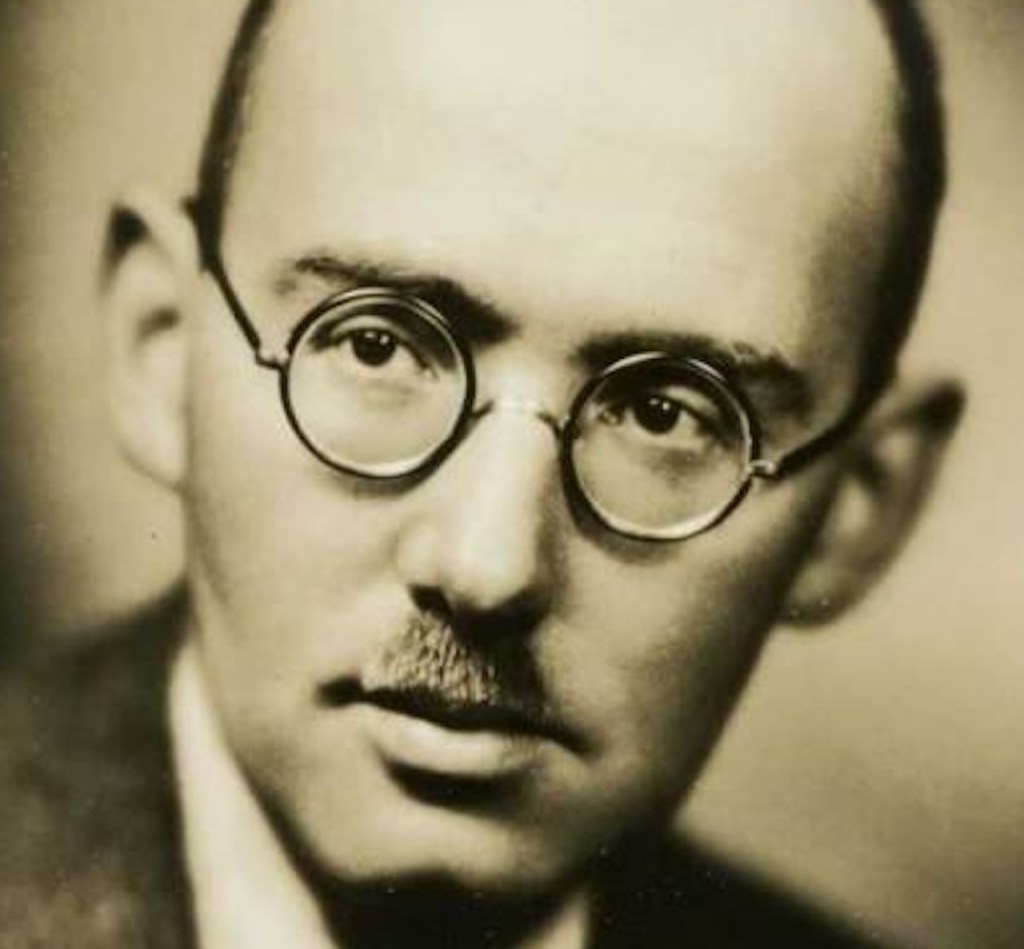
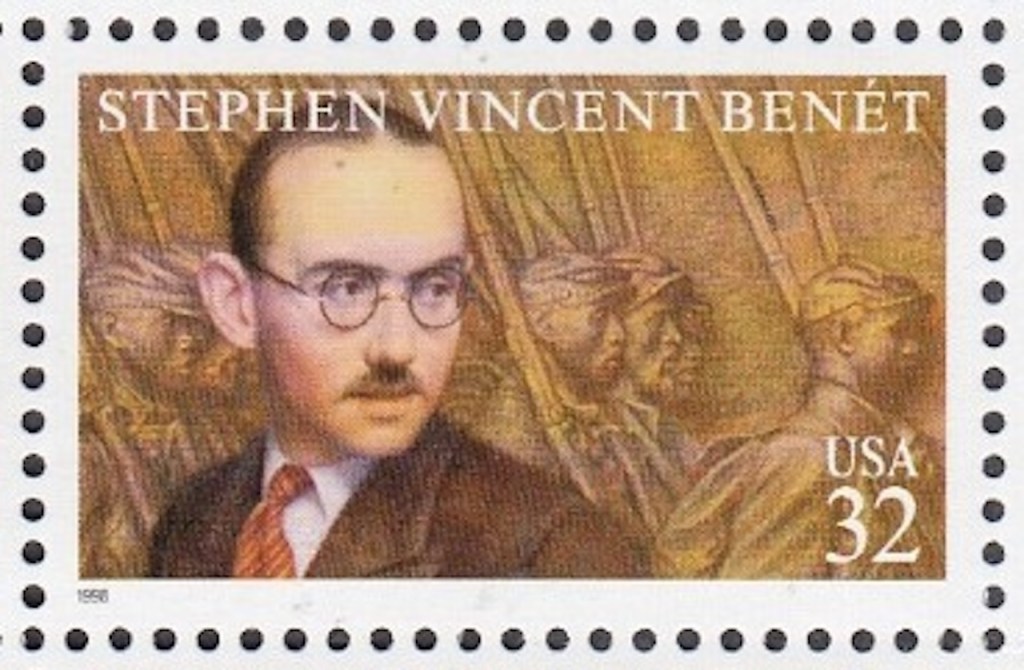
The works of Stephen Vincent Benét (1898–1943) [1] have influenced many other writers. Cowboy poet Joel Nelson claims that “The Ballad of William Sycamore” made him fall in love with poetry. Dee Brown’s title Bury my Heart at Wounded Knee comes directly from the final line of Benét’s poem titled “American Names” [2].
The book-length poem, John Brown’s Body, won him his first Pulitzer Prize in 1929 and remains the poet’s most famous work. Benét first published “The Ballad of William Sycamore” in the New Republic in 1922. Benét’s literary talent extended to other forms, including short fiction and novels. He also excelled in writing screenplays, librettos, an even radio broadcasts.
Born July 22, 1898, in Bethlehem, Pennsylvania [3] Benét graduated from Yale University in 1919 where instead of a typical thesis, he substituted his third collection of poems. His father was a military man who appreciated literary studies. His brother William and his sister Laura both became writers as well.
Benét’s first novel The Beginning of Wisdom was published in 1921, after which he relocated to France to study at the Sorbonne. He married the writer Rosemary Carr, and they returned to the USA in 1923, where his writing career blossomed.
The writer won the O. Henry Story Prize and a Roosevelt Medal, in addition to a second Pulitzer Prize, which was awarded posthumously in 1944 for Western Star. Just a week before spring of 1943, Benét succumbed to a heart attack in New York City; he was four month shy of his 45th birthday.
Sources
[1] Editors. “Stephen Vincent Benét.” Academy of American Poets. Accessed January 13, 2026.
[2] Darla Sue Dollman. “Buy My Heart at Wounded Knee and Stephen Vincent Benét.” Wild West History. October 4, 2013.
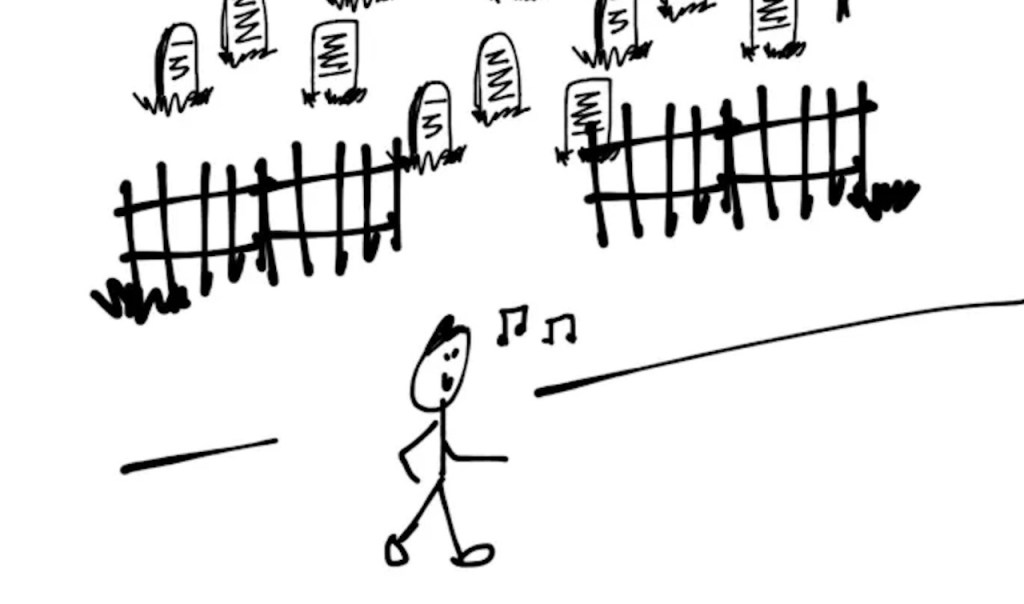
Original Short Fiction: “Graveyard Whistler’s Fourth Flash Fiction Find” (4)
The Graveyard Whistler has become quite enthusiastic about “flash fiction,” offering his fourth installment of the little stories. Stay tuned for a brief bio of “Belmonte Segwic” (aka “The Graveyard Whistler”) coming soon!
Fiction Alert! This story is fiction. It does not depict any real person or actual event.
Introduction by the Graveyard Whistler
Graveyard Whistler at it, again! I continue to find pieces of literature that just blow my mind, so I feel compelled to share them. Thus, I am continuing with this series of little narrations that have come to be known as “flash fiction.”
There are several online sites that offer this genre of literature, but most have upward of a 500 words or more. These little gems that I found seldom break 50, including the title! They exemplify an amazing feat and thus continue to fascinate me! I think I am in love!
And now I am considering a new label for this very, very short narrative. “Flash fiction” does not seem to fit. I’ll get back to you on that. Maybe I could run a contest to get help me rename this genre. Maybe! Maybe! Maybe!
A Bit of Background
The following set of five that I offer here are reconstituted narratives based on a set I found on a site that no longer exists, “Stone Gulch Literary Arts,” also known as “Stone Gulch Literary Home,” whose owner has given me permission to use the literary offerings he had place on the site. He lost his interest in literature and will likely become an attorney once he finishes law school and passes the bar exam.
Interestingly, “Stoney,” my nickname for him because he refuses to reveal his identity, sports a PhD in American Literature and serves as a full professor in the English department at a midwestern state university. He has given me permission to anything I want with his abandoned works.
And I might add, for my purposes, that lit site offers a treasure chest of goodies—from the flash fiction to highly sensual poems to short stories full of dark and dreary twists and turns to airy mystical stuff. It even delves into some political treatises analysis that is quite fascinating even insightful.
Five Flash Fiction Pieces
So, I am continuing to share the flash fiction pieces. Here are the new five. Each story contains only five sentences. But each boasts an opening, a conflict, and a conclusion—a feat which I am finding fascinating!
Getting Forgetful
The unsigned card arrived two days after Edna’s birthday. The card was beautiful and very personal. But it gave no clue as to who had posted it. Edna asked relatives and friends about the card. Six weeks later, Edna’s mother remembered sending the card.
A Country Picnic
I’ll bring the tea, and Sue can bring the cake. Where should we have our picnic this year? Same as last year, at Eddie’s Country Hide-a-Way. But Eddie sold that home. Yeah, I know; I bought it but kept the name!
Poems with Chunks of Ice
Winton wanted so much to become a famous poet. At college she became friends with Ashton and Flannory. Flannory became jealous that Ashton liked Winton’s poems. Winton had no interest in Ashton, Flannory, or their poems. After graduation, Flannory left Ashton for a novelist.
Raising the Pane
Lucette did not understand English well. She hired Johann to help her with her English lessons. Johann asked Lucette for a raise to keep tutoring her. Lucette put up the window. Johann jumped out and never returned.
Of Course, You Don’t Know Me
Candy brought six pies to the reunion banquet at Chicago Town High School. Jackson brought his fiddle and played it for the dancing. Astrid danced and ate pie and conversed with everyone. Martha finally admitted she did not know Astrid. Astrid finally admitted she had crashed the reunion and had actually graduated from a school in Toledo.
A Final Statement from the Graveyard Whistler
This installment features five of these flash fiction pieces. I’ll continue to add more later. But I’ll probably explore into other genres before I continue with these.
I am procrastinating hugely in writing my dissertation because at this point I am not finding as much information as I had anticipated on the topic of irony. I am considering changing my focus to a simple ideas of “variety” in the literary world because I am finding that literature, both ancient and modern contemporary, does offer such a wide array of different topics, genres, issues, attitudes, and styles. I could likely revamp a whole new glossary of literary devices if I put my mind to it, and I might just have to do that!
My advisor is somewhat dismayed at my dilly-dallying but hey, it’s my life—not hers!