Image: Emily Dickinson – Amherst College – Daguerrotype of the poet at age 17, circa 1847 – likely the only authentic, extant likeness of the poet
Emily Dickinson’s “I know a place where Summer strives”
In Emily Dickinson’s “I know a place where Summer strives,” the speaker personifies summer as a woman who struggles to overcome the coldness of late spring.
Introduction with Text of “I know a place where Summer strives”
The poet especially loved summer, and in this fascinating poem, she allows her speaker to convert summer into a gardener who experiences the obstacles that sometimes accompany the difficult birth of the summer season.
Sometimes it seems that it takes great effort or striving to overcome the coldness of late spring in New England, where residents may suffer snow and frost before the warmth of summer blossoms into the promised reality.
The poem offers a unique look at the arrival of the summer season. The speaker’s personification of summer as a woman tending her garden creates a magnificent drama that occurs every late spring.
Emily Dickinson’s poem, “I know a place where Summer strives,” consists of three stanzas. Each stanza has the rime scheme ABCB. The poems is #337 in Thomas H. Johnson’s The Complete Poems of Emily Dickinson.
I know a place where Summer strives
I know a place where Summer strives With such a practised Frost – She – each year – leads her Daisies back – Recording briefly – “Lost” –
But when the South Wind stirs the Pools And struggles in the lanes – Her Heart misgives Her, for Her Vow – And she pours soft Refrains
Into the lap of Adamant – And spices – and the Dew – That stiffens quietly to Quartz – Upon her Amber Shoe –
Commentary on “I know a place where Summer strives”
In Emily Dickinson’s “I know a place where Summer strives,” the speaker personifies summer as a woman who struggles to overcome the coldness of late spring.
First Stanza: Summer Endeavoring to Become
I know a place where Summer strives With such a practised Frost – She – each year – leads her Daisies back – Recording briefly – “Lost” –
In the first stanza, the speaker makes the puzzling claim that she knows “a place where Summer strives.” This remark is startling; one does not think of seasons as having the ability or the need to “strive.”
Only people are capable of striving. But in this poem, the speaker is, in fact, dramatizing the onset of summer by personifying Summer as a woman; Summer becomes a gardener who is endeavoring to accomplish the arrival of the summer growing season.
Unlike those who find the arrival of each season an automatic transition that is hardly noticeable, this speaker dramatically reveals that sometimes the Summer growing season is won by fits and starts. The speaker says that Summer “strives / With such a practised Frost.”
Late spring can remain cold in New England, where Dickinson lived all of her life. So it would seem that summer sometimes had a difficult birth, contending with frost and even snow. But Summer makes a great effort, and her endeavors result in bringing back the flowers, which seemed lost during the winter.
Second Stanza: A Helping Hand
But when the South Wind stirs the Pools And struggles in the lanes – Her Heart misgives Her, for Her Vow – And she pours soft Refrains
The speaker then asserts that for all the difficult attempts at arriving, a situation arises that offers a helping hand to Summer in bringing the season to full bloom. The “South Wind stirs the Pools,” and a summer storm blows up.
But Summer then still has some doubt about her success, and she has a promise to keep in delivering summer qualities of warmth and fertility so that seeds in the ground may grow into viable plants for food for people and animals. But then the rains begin, and Summer does absolutely arrive. All her striving has paid off.
Third Stanza: A Fierce Attempt
Into the lap of Adamant – And spices – and the Dew – That stiffens quietly to Quartz – Upon her Amber Shoe –
Summer “pours soft Refrains // Into the lap of Adamant”; she strives fiercely to arrive. She brings rain to the plants that will flourish during the growing season, which she had promised.
The rains will convert the landscape to a glowing green grassy hue that will illuminate the summer’s growing season. The Summer as a woman will tend her garden, and she will get mud on her shoes. That mud will become hardened like “Quartz.” Thus “Sumner” will sport shoes of “Amber.”
But happily, all her arduous striving will have succeeded: the flowers will gloriously come back. The frost will have finally departed, and the summer rains will be moistening the thirsty mouths of the plants.
Marvelous spices will result from Summer’s loving care of sun and rain. And even the gardener’s shoes will wear a beautiful “amber” because she has trampled in the mud caring for all the varieties of plants that help fill her larder for winter.
Dickinson’s “I know a place where Summer strives” rendered in song
Image: Percy Bysshe Shelley – Amelia Curran 1819 – National Portrait Gallery, London
Percy Bysshe Shelley’s “The Sensitive Plant”
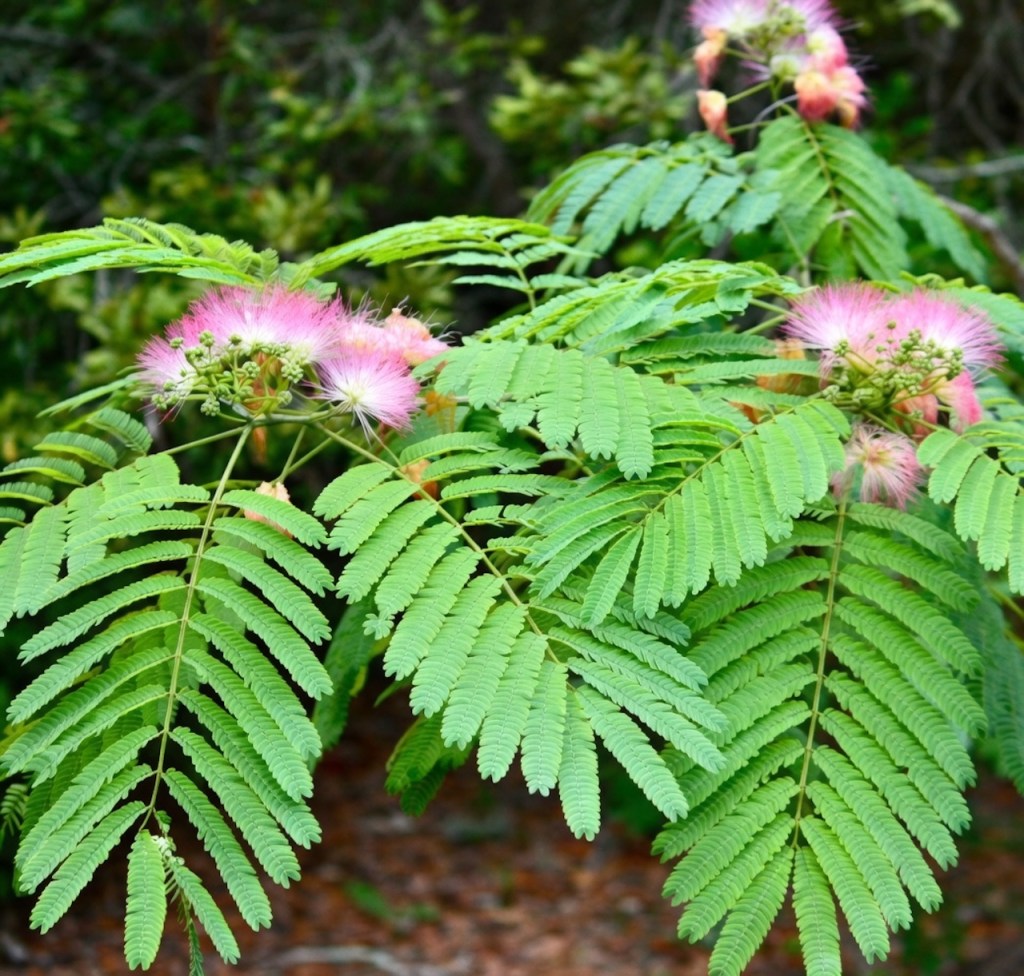
Percy Bysshe Shelley’s “The Sensitive Plant” features a poetic drama of an Eden-like garden with the mimosa plant and a Mother-Nature-like personification, a presence that tends the garden. After the drama plays out, the speaker engages in a philosophical musing on the meaning of life and death.
Introduction with Text of “The Sensitive Plant”
Percy Bysshe Shelley’s “The Sensitive Plant” plays out in three numbered parts and a conclusion.
Part 1 yields a whopping 28 stanzas: 26 quatrains and 2 cinquains); Part 2 contains 15 quatrains; Part 3 again another whopping 27 quatrains and one cinquain; the Conclusion plays out with only 6 quatrains.
The piece is a rather long 311-line poem with its 74 quatrains, each of which consists of two riming couplets, and three cinquains, each featuring a riming couplet and a riming tercet.
Shelley’s philosophical bent is on full display in this piece. While it portends to describe the mimosa plant, whose leaves will move in response to touch, it also offers a statement about humankind by comparison.
The Sensitive Plant
Part 1
A Sensitive Plant in a garden grew, And the young winds fed it with silver dew, And it opened its fan-like leaves to the light. And closed them beneath the kisses of Night.
And the Spring arose on the garden fair, Like the Spirit of Love felt everywhere; And each flower and herb on Earth’s dark breast Rose from the dreams of its wintry rest.
But none ever trembled and panted with bliss In the garden, the field, or the wilderness, Like a doe in the noontide with love’s sweet want, As the companionless Sensitive Plant.
The snowdrop, and then the violet, Arose from the ground with warm rain wet, And their breath was mixed with fresh odour, sent From the turf, like the voice and the instrument.
Then the pied wind-flowers and the tulip tall, And narcissi, the fairest among them all, Who gaze on their eyes in the stream’s recess, Till they die of their own dear loveliness;
And the Naiad-like lily of the vale, Whom youth makes so fair and passion so pale That the light of its tremulous bells is seen Through their pavilions of tender green;
And the hyacinth purple, and white, and blue, Which flung from its bells a sweet peal anew Of music so delicate, soft, and intense, It was felt like an odour within the sense;
And the rose like a nymph to the bath addressed, Which unveiled the depth of her glowing breast, Till, fold after fold, to the fainting air The soul of her beauty and love lay bare:
And the wand-like lily, which lifted up, As a Maenad, its moonlight-coloured cup, Till the fiery star, which is its eye, Gazed through clear dew on the tender sky;
And the jessamine faint, and the sweet tuberose, The sweetest flower for scent that blows; And all rare blossoms from every clime Grew in that garden in perfect prime.
And on the stream whose inconstant bosom Was pranked, under boughs of embowering blossom, With golden and green light, slanting through Their heaven of many a tangled hue,
Broad water-lilies lay tremulously, And starry river-buds glimmered by, And around them the soft stream did glide and dance With a motion of sweet sound and radiance.
And the sinuous paths of lawn and of moss, Which led through the garden along and across, Some open at once to the sun and the breeze, Some lost among bowers of blossoming trees,
Were all paved with daisies and delicate bells As fair as the fabulous asphodels, And flow’rets which, drooping as day drooped too, Fell into pavilions, white, purple, and blue, To roof the glow-worm from the evening dew.
And from this undefiled Paradise The flowers (as an infant’s awakening eyes Smile on its mother, whose singing sweet Can first lull, and at last must awaken it),
When Heaven’s blithe winds had unfolded them, As mine-lamps enkindle a hidden gem, Shone smiling to Heaven, and every one Shared joy in the light of the gentle sun;
For each one was interpenetrated With the light and the odour its neighbour shed, Like young lovers whom youth and love make dear Wrapped and filled by their mutual atmosphere.
But the Sensitive Plant which could give small fruit Of the love which it felt from the leaf to the root, Received more than all, it loved more than ever, Where none wanted but it, could belong to the giver,—
For the Sensitive Plant has no bright flower; Radiance and odour are not its dower; It loves, even like Love, its deep heart is full, It desires what it has not, the Beautiful!
The light winds which from unsustaining wings Shed the music of many murmurings; The beams which dart from many a star Of the flowers whose hues they bear afar;
The plumed insects swift and free, Like golden boats on a sunny sea, Laden with light and odour, which pass Over the gleam of the living grass;
The unseen clouds of the dew, which lie Like fire in the flowers till the sun rides high, Then wander like spirits among the spheres, Each cloud faint with the fragrance it bears;
The quivering vapours of dim noontide, Which like a sea o’er the warm earth glide, In which every sound, and odour, and beam, Move, as reeds in a single stream;
Each and all like ministering angels were For the Sensitive Plant sweet joy to bear, Whilst the lagging hours of the day went by Like windless clouds o’er a tender sky.
And when evening descended from Heaven above, And the Earth was all rest, and the air was all love, And delight, though less bright, was far more deep, And the day’s veil fell from the world of sleep,
And the beasts, and the birds, and the insects were drowned In an ocean of dreams without a sound; Whose waves never mark, though they ever impress The light sand which paves it, consciousness;
(Only overhead the sweet nightingale Ever sang more sweet as the day might fail, And snatches of its Elysian chant Were mixed with the dreams of the Sensitive Plant);—
The Sensitive Plant was the earliest Upgathered into the bosom of rest; A sweet child weary of its delight, The feeblest and yet the favourite, Cradled within the embrace of Night.
Part 2
There was a Power in this sweet place, An Eve in this Eden; a ruling Grace Which to the flowers, did they waken or dream, Was as God is to the starry scheme.
A Lady, the wonder of her kind, Whose form was upborne by a lovely mind Which, dilating, had moulded her mien and motion Like a sea-flower unfolded beneath the ocean
Tended the garden from morn to even: And the meteors of that sublunar Heaven, Like the lamps of the air when Night walks forth, Laughed round her footsteps up from the Earth!
She had no companion of mortal race, But her tremulous breath and her flushing face Told, whilst the morn kissed the sleep from her eyes, That her dreams were less slumber than Paradise:
As if some bright Spirit for her sweet sake Had deserted Heaven while the stars were awake, As if yet around her he lingering were, Though the veil of daylight concealed him from her.
Her step seemed to pity the grass it pressed; You might hear by the heaving of her breast, That the coming and going of the wind Brought pleasure there and left passion behind.
And wherever her aery footstep trod, Her trailing hair from the grassy sod Erased its light vestige, with shadowy sweep, Like a sunny storm o’er the dark green deep.
I doubt not the flowers of that garden sweet Rejoiced in the sound of her gentle feet; I doubt not they felt the spirit that came From her glowing fingers through all their frame.
She sprinkled bright water from the stream On those that were faint with the sunny beam; And out of the cups of the heavy flowers She emptied the rain of the thunder-showers.
She lifted their heads with her tender hands, And sustained them with rods and osier-bands; If the flowers had been her own infants, she Could never have nursed them more tenderly.
And all killing insects and gnawing worms, And things of obscene and unlovely forms, She bore, in a basket of Indian woof, Into the rough woods far aloof,—
In a basket, of grasses and wild-flowers full, The freshest her gentle hands could pull For the poor banished insects, whose intent, Although they did ill, was innocent.
But the bee and the beamlike ephemeris Whose path is the lightning’s, and soft moths that kiss The sweet lips of the flowers, and harm not, did she Make her attendant angels be.
And many an antenatal tomb, Where butterflies dream of the life to come, She left clinging round the smooth and dark Edge of the odorous cedar bark.
This fairest creature from earliest Spring Thus moved through the garden ministering All the sweet season of summer tide, And ere the first leaf looked brown—she died!
Part 3
Three days the flowers of the garden fair, Like stars when the moon is awakened, were, Or the waves of Baiae, ere luminous She floats up through the smoke of Vesuvius.
And on the fourth, the Sensitive Plant Felt the sound of the funeral chant, And the steps of the bearers, heavy and slow, And the sobs of the mourners, deep and low;
The weary sound and the heavy breath, And the silent motions of passing death, And the smell, cold, oppressive, and dank, Sent through the pores of the coffin-plank;
The dark grass, and the flowers among the grass, Were bright with tears as the crowd did pass; From their sighs the wind caught a mournful tone, And sate in the pines, and gave groan for groan.
The garden, once fair, became cold and foul, Like the corpse of her who had been its soul, Which at first was lovely as if in sleep, Then slowly changed, till it grew a heap To make men tremble who never weep.
Swift Summer into the Autumn flowed, And frost in the mist of the morning rode, Though the noonday sun looked clear and bright, Mocking the spoil of the secret night.
The rose-leaves, like flakes of crimson snow, Paved the turf and the moss below. The lilies were drooping, and white, and wan, Like the head and the skin of a dying man.
And Indian plants, of scent and hue The sweetest that ever were fed on dew, Leaf by leaf, day after day, Were massed into the common clay.
And the leaves, brown, yellow, and gray, and red, And white with the whiteness of what is dead, Like troops of ghosts on the dry wind passed; Their whistling noise made the birds aghast.
And the gusty winds waked the winged seeds, Out of their birthplace of ugly weeds, Till they clung round many a sweet flower’s stem, Which rotted into the earth with them.
The water-blooms under the rivulet Fell from the stalks on which they were set; And the eddies drove them here and there, As the winds did those of the upper air.
Then the rain came down, and the broken stalks Were bent and tangled across the walks; And the leafless network of parasite bowers Massed into ruin; and all sweet flowers.
Between the time of the wind and the snow All loathliest weeds began to grow, Whose coarse leaves were splashed with many a speck, Like the water-snake’s belly and the toad’s back.
And thistles, and nettles, and darnels rank, And the dock, and henbane, and hemlock dank, Stretched out its long and hollow shank, And stifled the air till the dead wind stank.
And plants, at whose names the verse feels loath, Filled the place with a monstrous undergrowth, Prickly, and pulpous, and blistering, and blue, Livid, and starred with a lurid dew.
And agarics, and fungi, with mildew and mould Started like mist from the wet ground cold; Pale, fleshy, as if the decaying dead With a spirit of growth had been animated!
Spawn, weeds, and filth, a leprous scum, Made the running rivulet thick and dumb, And at its outlet flags huge as stakes Dammed it up with roots knotted like water-snakes.
And hour by hour, when the air was still, The vapours arose which have strength to kill; At morn they were seen, at noon they were felt, At night they were darkness no star could melt.
And unctuous meteors from spray to spray Crept and flitted in broad noonday Unseen; every branch on which they alit By a venomous blight was burned and bit.
The Sensitive Plant, like one forbid, Wept, and the tears within each lid Of its folded leaves, which together grew, Were changed to a blight of frozen glue.
For the leaves soon fell, and the branches soon By the heavy axe of the blast were hewn; The sap shrank to the root through every pore As blood to a heart that will beat no more.
For Winter came: the wind was his whip: One choppy finger was on his lip: He had torn the cataracts from the hills And they clanked at his girdle like manacles;
His breath was a chain which without a sound The earth, and the air, and the water bound; He came, fiercely driven, in his chariot-throne By the tenfold blasts of the Arctic zone.
Then the weeds which were forms of living death Fled from the frost to the earth beneath. Their decay and sudden flight from frost Was but like the vanishing of a ghost!
And under the roots of the Sensitive Plant The moles and the dormice died for want: The birds dropped stiff from the frozen air And were caught in the branches naked and bare.
First there came down a thawing rain And its dull drops froze on the boughs again; Then there steamed up a freezing dew Which to the drops of the thaw-rain grew;
And a northern whirlwind, wandering about Like a wolf that had smelt a dead child out, Shook the boughs thus laden, and heavy, and stiff, And snapped them off with his rigid griff.
When Winter had gone and Spring came back The Sensitive Plant was a leafless wreck; But the mandrakes, and toadstools, and docks, and darnels, Rose like the dead from their ruined charnels.
Conclusion
Whether the Sensitive Plant, or that Which within its boughs like a Spirit sat, Ere its outward form had known decay, Now felt this change, I cannot say.
Whether that Lady’s gentle mind, No longer with the form combined Which scattered love, as stars do light, Found sadness, where it left delight,
I dare not guess; but in this life Of error, ignorance, and strife, Where nothing is, but all things seem, And we the shadows of the dream,
It is a modest creed, and yet Pleasant if one considers it, To own that death itself must be, Like all the rest, a mockery.
That garden sweet, that lady fair, And all sweet shapes and odours there, In truth have never passed away: ’Tis we, ’tis ours, are changed; not they.
For love, and beauty, and delight, There is no death nor change: their might Exceeds our organs, which endure No light, being themselves obscure.
Parts 1–3 dramatize spring/summer growth in a garden and fall/winter death and decay. In the conclusion, the speaker offers his philosophical musing on the meaning of it all.
Part 1: Observing a Unique Plant
In Part 1 of Percy Bysshe Shelley’s long piece, the speaker makes the observation that the mimosa plant is the only one that “tremble[s]” when touched.
He adds the claim that when touched, the plant not only trembled, but it also “panted with bliss.” He calls the “Sensitive Plant” companionless, likely because it is the only plant that produces that movement upon being touched.
The speaker goes through all manner of machinations to imbue the plant with favorable yet ultimately human qualities.
An example is in the 26th stanza when the speaker remarks that the plant actually has “consciousness”—not a new idea entirely but one seldom observed in intellectual discourse.
Part 2: The Ministering Lady
In Part 2 of Shelley’s long drama, the speaker introduces the presence of “A Lady,” who tends the garden.
This feminine presence is also referred to as “a Power” and an “Eve in this Eden,” whose relationship with the inmates of the garden resembles that of “God [ ] to the starry scheme.”
While this “Lady” functions as Mother Nature in many ways with her caring for the plants, her own nature departs markedly from Mother Nature, for as summer moves into autumn, the Lady dies.
Mother Nature does not die; she continues to minister through all seasons and all weather conditions. Indeed, Mother Nature is simply a metaphoric mother aspect of the one father God, Who is the Creator of all things.
Nevertheless, the “Lady,” who ministers in Shelley’s edenic piece, remains a Mother-Nature-like presence; she is the personification of the force that maintains the plants and other garden creations during their heyday of spring and summer.
Thus, in this piece, after the Lady dies, autumn brings on what that season always fetches—death and decay.
Without the presence of this nurturing Lady, a sinister force takes hold and as always happens during the cooling of the weather, the plant kingdom experiences death or dormancy until the reawakening the next spring.
Part 3: The Lady’s Death Heralds Autumn/Winter
Part 3 features the continued act of dying and decaying of the plants in the garden. After a three-day respite, the on-set of autumn becomes apparent to the “Sensitive Plant,” which “Felt the sound of the funeral chant.”
The speaker reports the mourning of the garden members for the late Lady; her passing has brought about great sorrow in the garden.
Images of darkness and dread engulf the atmosphere as the Lady’s dead presence is laid to rest: “And the smell, cold, oppressive, and dank, / Sent through the pores of the coffin-plank.”
The fourth quatrain of Part 3 exemplifies the mood heralded by the passing of the Lady: the grass is dark; the flowers yielded tears and sighs that resulted in a “mournful tone,” and the pines sent out many groans.
The speaker then turns the seasonal onset into a drama with images that describe the result from death of the mother-like presence.
In the final cinquain, the onset of autumn is revealed: the garden is now “cold and foul” wherein it once was “fair.” It resembles a corpse, having lost its “soul.” It becomes so grievous as to make men tremble.
Such a change in the countenance of the garden creatures was enough to affect even the most guarded manly qualities of those men who “never weep,” but yet now they “tremble” at the onslaught of the deathly season.
The remaining quatrains continue to provoke sorrow and loss with such couplets as “Swift Summer into the Autumn flowed, / And frost in the mist of the morning rode” and “Then the rain came down, and the broken stalks / Were bent and tangled across the walks.”
And the “Sensitive Plant” itself suffered the changing conditions: it “wept” and the tears caused its “folded leaves” to turn into “a blight of frozen glue.”
Then winter arrives: “For Winter came: the wind was his whip: / One choppy finger was on his lip.” And winter continues to perform his duties of transforming all living things to brown, stiff, still models of their former selves.
The speaker describes the “weeds” as being “forms of living death” and as those forms flee from the frost, their “decay” is likened to the “vanishing of a ghost!”
Again, the speaker returns to the “Sensitive Plant” to describe how under the plant’s roots “mold and dormice died for want.” And birds simply stiffen and drop from the sky, their lifeless bodies “caught in the branches naked and bare.”
After a “thawing rain,” whose “dull drops” immediately froze in the trees, a freezing dew “steamed up” which continued the freeze.
The speaker then describes this severe winter with its “northern whirlwind” as a “wolf” that has sniffed out “a dead child.” That wind shook the frozen tree limb so hard they snapped.
Then suddenly, winter is gone and spring is returning, but the Sensitive Plant is now a “leafless wreck.”
However, other woodland creatures, including “the mandrakes, and toadstools, and docks, and darnels,” “rose like the dead from their ruined charnels.”
Thus, the speaker has ended his foray into reimagining the changes involved in seasonal moving from spring/summer with its fecund growth and beauty to fall/winter with its death and decay.
Conclusion: A Philosophical Musing
The speaker now engages in a philosophical discourse which includes his musing on his description of the natural occurrence and what it all means.
He first confesses that he does not know how the “Sensitive Plant” might have felt about “this change.”
Furthermore, he cannot hazard a guess as to how the “Lady” felt about the situation.
He wonders if she felt sadness. And though he dares not guess how the “Sensitive Plant” and the “Lady” felt, he is now ready to offer his own thoughts on the issue of life and death.
He declares that this life is filled with “error, ignorance, and strife,” and “we” (humanity) seem to be little more than the “shadows of a dream.”
Thus, he has determined what he calls a “modest creed” is nevertheless pleasant to consider that “death” is nothing more than a “mockery.”
In fact, it is all a mockery. He then states that all of the sweetness and beauty contained within the Edenic garden, which he has so thoroughly described, remain, that is, those etheric qualities did not and do not change.
He says, “’Tis we, ’tis ours, are changed; not they.”
He then declares that love, beauty, and delight do not die or change. Those qualities, being ineffable, possess a power (“might”) that surpasses the human ability to comprehend.
Our human capacity—presented here by “our organs”—remains in darkness for those “organs” “endure / No light, being themselves obscure.”
The speaker is implying that the human heart and mind are, in fact, capable of enduring light.
But because of a willful blindness, many remain in a state of moribund, abject mental and spiritual poverty—where light cannot penetrate until a change of heart and mind is effected.
Note: Use of “Rime” vs “Rhyme”
Dr. Samuel Johnson introduced the form “rhyme” into English in the 18th century, mistakenly thinking that the term was a Greek derivative of “rythmos.”