
Image 1: Williams Butler Yeats – Chicago History Museum
William Butler Yeats’ “The Indian upon God”
Alluding to the Genesis concept of the image of God, the speaker parallels the Eastern spiritual tradition of pantheism to dramatize the full implication of that venerable concept.
Introduction with Text of “The Indian upon God”
William Butler Yeats’ poem “The Indian upon God” is displayed in ten riming couplets. The theme of the poem dramatizes the biblical concept that God made man in His own image:
So God created man in his own image, in the image of God created he him; male and female created he them… (King James Version, Genesis 1:27).
The full implication of this fascinating dictum is that God, in fact, created all of creation after His own image. And while—because of the influence of postmodernism—that concept often receives short shrift in Western art culture, Eastern culture has long embraced it fully.
William Butler Yeats became fascinated by Eastern philosophy and religion. And while Yeats also fell victim to the “romantic misunderstanding” of many of the concepts pointed out by T. S. Eliot, Yeats still managed to dramatize certain ideas appropriately.
This poem “The Indian upon God” remains one of his most accurate offerings from among the pieces that he based upon his take on Eastern philosophy.
The Indian upon God
I passed along the water’s edge below the humid trees,
My spirit rocked in evening light, the rushes round my knees,
My spirit rocked in sleep and sighs; and saw the moorfowl pace
All dripping on a grassy slope, and saw them cease to chase
Each other round in circles, and heard the eldest speak:
Who holds the world between His bill and made us strong or weak
Is an undying moorfowl, and He lives beyond the sky.
The rains are from His dripping wing, the moonbeams from His eye.
I passed a little further on and heard a lotus talk:
Who made the world and ruleth it, He hangeth on a stalk,
For I am in His image made, and all this tinkling tide
Is but a sliding drop of rain between His petals wide.
A little way within the gloom a roebuck raised his eyes
Brimful of starlight, and he said: The Stamper of the Skies,
He is a gentle roebuck; for how else, I pray, could He
Conceive a thing so sad and soft, a gentle thing like me?
I passed a little further on and heard a peacock say:
Who made the grass and made the worms and made my feathers gay,
He is a monstrous peacock, and He waveth all the night
His languid tail above us, lit with myriad spots of light.
Commentary on “The Indian upon God”
The speaker is paralleling the Eastern spiritual tradition of pantheism to dramatize the full impact of that venerable concept presented in Genesis: creation—including all created beings along with humankind—is created in the image of the Creator (God).

Image 2: Moorfowl Bird Guides
First Movement: The Moorfowl
I passed along the water’s edge below the humid trees,
My spirit rocked in evening light, the rushes round my knees,
My spirit rocked in sleep and sighs; and saw the moorfowl pace
All dripping on a grassy slope, and saw them cease to chase
Each other round in circles, and heard the eldest speak:
Who holds the world between His bill and made us strong or weak
Is an undying moorfowl, and He lives beyond the sky.
The rains are from His dripping wing, the moonbeams from His eye.
The speaker of the poem opens his musings by placing himself alongside a body of water as he walks under trees that he senses to have been moistened likely by a recent rain. In a meditative mood, he muses on the spiritual atmosphere of his locus.
He spies some birds pacing about and begins to consider how the moorfowl would elucidate his existence if he could do so in words. He continues musing on the birds as they are leisurely moving about.
Finally, the speaker, in his mind’s ear, imagines that the oldest bird begins to declaim about his existence. That discourse is roughly paraphrased by the following:
my Maker is an immortal moorfowl, Who has created all the world, and He remains hidden behind His skyey perch from where He sends the rains and lights His creation with “His eye.”
The moorfowl visualizes his Creator as a glorious version of himself. His Creator possesses a “bill” and a “wing,” and the rains drop from His wings, while the moonbeams shoot from His eye.

Image 3 Lotus – Photo by Ron Grimes
Second Movement: Lotus
I passed a little further on and heard a lotus talk:
Who made the world and ruleth it, He hangeth on a stalk,
For I am in His image made, and all this tinkling tide
Is but a sliding drop of rain between His petals wide.
The speaker then moves on a short distance and begins his musing on what a lotus might say in explaining his origin: thus, the lotus also holds forth about his Creator:
my Maker and the ruler of the world “hang[s] on a stalk.” I am made in His image, and this rain He is sending from between His enormous petals
The lotus also describes his Creator as an embellished version of himself. His Creator “hangeth on a stalk,” just as the lotus flower does, and his Maker also causes the rain to fall.
And similar to the moorfowl’s conception that the rain drips from the Supreme Moorfowl’s wings, the lotus’ Creator lets the rain “slide” between His petals.

Image 4: Roebuck – iStock
Third Movement: Roebuck
A little way within the gloom a roebuck raised his eyes
Brimful of starlight, and he said: The Stamper of the Skies,
He is a gentle roebuck; for how else, I pray, could He
Conceive a thing so sad and soft, a gentle thing like me?
The speaker continues on and crafts the fulmination of a roebuck, whose eyes were full of “starlight,” as he, too, explains his creative origin, labeling his Maker, “The Stamper of the Skies“:
the creator of the world is a tender and mild roebuck, who else could have thought to fashion such a being as myself who remains so sorrowful yet so softly gentle?
The roebuck concludes that his Creator has to be like himself in order to be able to fashion his unique characteristics of sadness, softness, and gentleness. It is noteworthy that the roebuck makes his claim through a rhetorical question, which appears to humble his claim yet at the same time gives it particular emphasis.
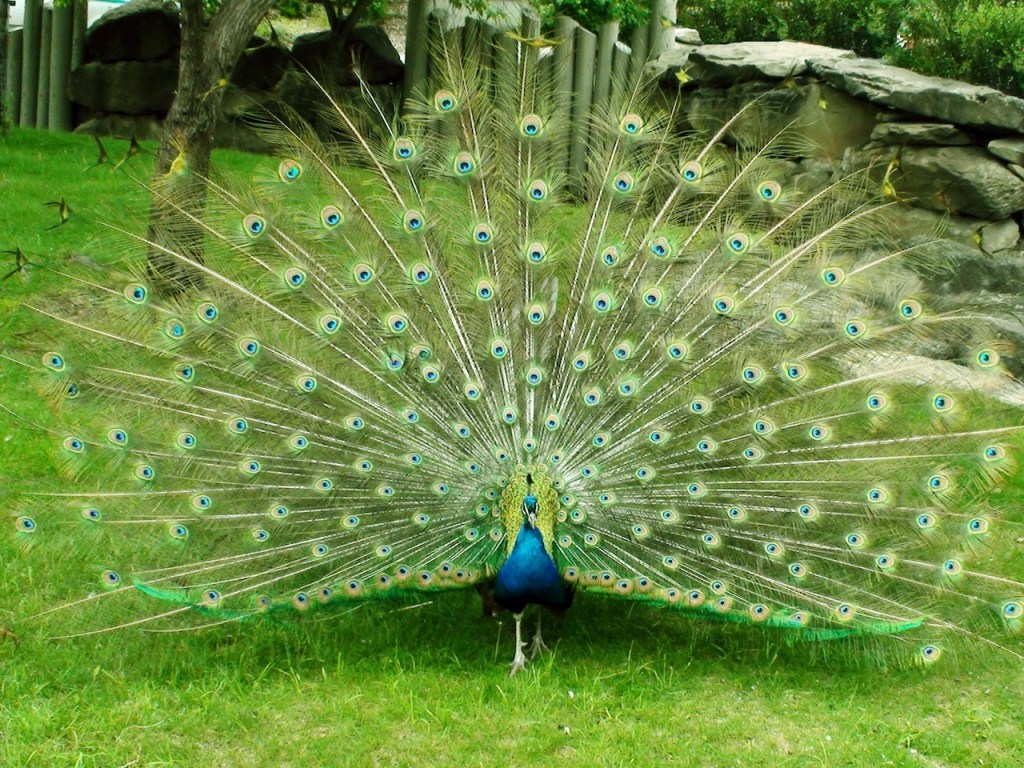
Image 5: Peacock – Animal Wildlife
Fourth Movement: Peacock
I passed a little further on and heard a peacock say:
Who made the grass and made the worms and made my feathers gay,
He is a monstrous peacock, and He waveth all the night
His languid tail above us, lit with myriad spots of light.
The speaker moves farther along, and listening to a peacock, he muses that the bird would describe his origin as the following:
I was created by a huge peacock who also created all vegetation and all other animals. My Maker moves His bright features through the sky, from where He sends to us the light from the stars.
Again, the animal describes his Creator in terms of his own characteristics. The peacock, however, verges on the boastful with his description, claiming that the “monstrous peacock,” or more glorious version of himself, also made the grass and worms.
The peacock implies that his Creator has made these creatures for the sake of the peacock. And the peacock also likens his beautiful tail feathers to stars hanging in the skies.
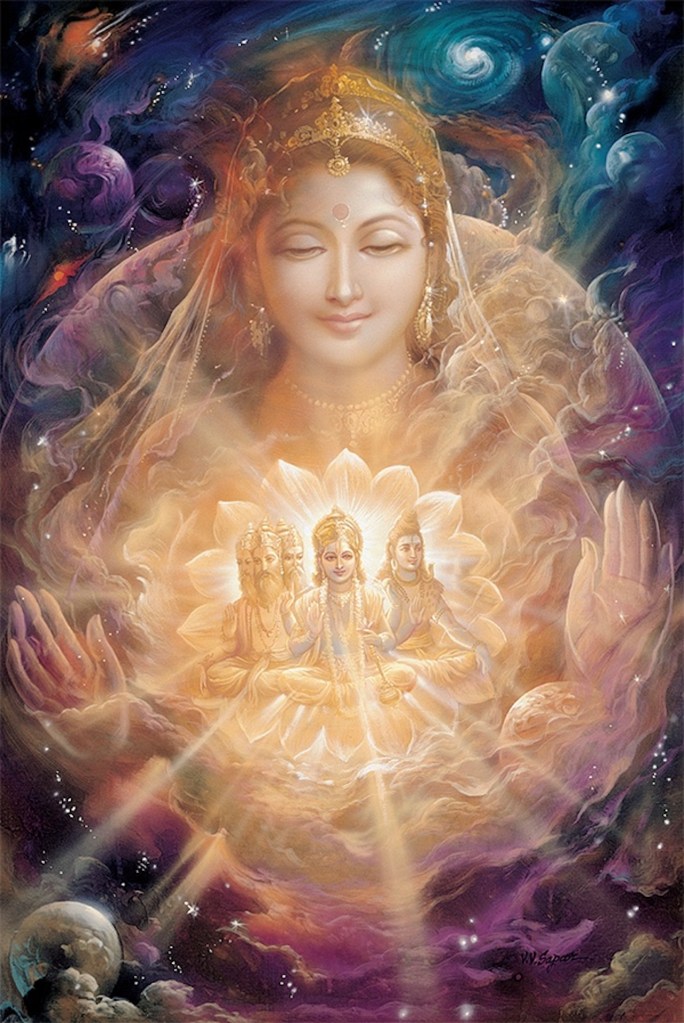
Image 6: Divine Mother – Self-Realization Fellowship
Creation: Image of the Divine
The philosophy portrayed in William Butler Yeats’ poem is pantheism, the concept that God is everything. If man (humankind) correctly discerns that God created human beings in His image, then God, in fact, created everything else that exists in His image.
If all things are reflections of one Creator, then each thing created can rightly aver that it is made in the image of the Divine. Pantheism is also logically monotheism: all of creation taken together is one entity.
The monotheistic religions of empirical reality—as opposed to that of the mythological Greek and Roman pantheon of gods—all expound the nature of God as a trinity—one being expressing in three aspects. For example, in Hinduism the trinity is Sat-Tat-Aum (also expressed as Sat-Chit-Ananda). The Christian trinity is expressed a Father-Son-Holy Spirit.
All of the five major world religions—Hinduism, Buddhism, Judaism, Christianity, and Islam—are monotheistic. Hinduism is often mistakenly referred to a a polytheistic religion by commentators who confuse the names for the various aspects of God as separate gods.
Capitalizing Pronouns Referring to God
The King Jame Version of the Holy Bible does not capitalize the pronouns referring to God; that custom is a 19th century invention. However, I usually capitalize pronouns referring to the Deity to make clear that such references are, in fact, referring to God. In this commentary, I have capitalized the pronouns primarily to make clear that the various individuals are referring to their Maker or God.

 Linda's Literary Home