Linda's Literary Home

Tag: Genesis

  • James Weldon Johnson’s “The Creation”

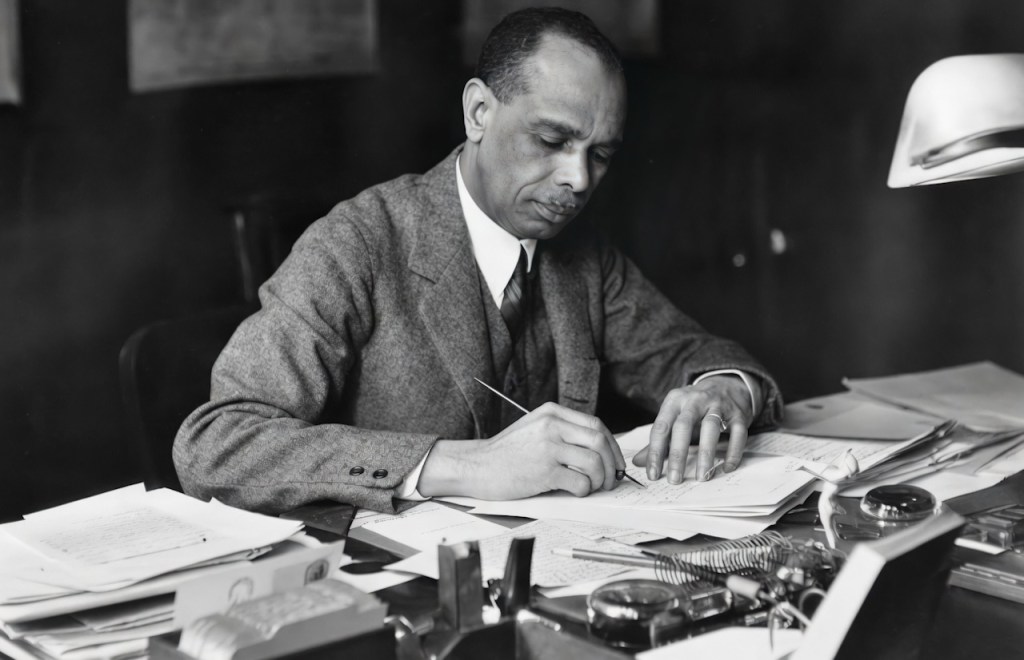
    Image: James Weldon Johnson - https://www.green-wood.com/event/the-autobiography-of-an-ex-colored-man-110-years-later/
    Image: James Weldon Johnson

    James Weldon Johnson’s “The Creation”

    James Weldon Johnson’s “The Creation” remains a marvelous example of the poet’s depth of spirituality as well as his skilled craftsmanship at creating speakers who perform in his poetry compositions.

    Introduction with Text of “The Creation”

    In James Weldon Johnson’s “The Creation,” the speaker dramatizes Genesis chapter 1, verses 1-25.   The speaker employs the voice of a Southern preacher, exemplified by the lines, “Down in a cypress swamp” and “Like a mammy bending over her baby.”  

    The Wintley Phipps recitation of James Weldon Johnson’s “The Creation” is magnificent.  Phipps performs a perfect interpretation of Johnson’s poem.  The experience of listening to a fine poem always adds a nuance of meaning that a simple quiet reading lacks.

    The Creation

    And God stepped out on space,
    And he looked around and said:
    I’m lonely—
    I’ll make me a world.

     And far as the eye of God could see
    Darkness covered everything,
    Blacker than a hundred midnights
    Down in a cypress swamp.

    Then God smiled,
    And the light broke,
    And the darkness rolled up on one side,
    And the light stood shining on the other,
    And God said: That’s good!

    Then God reached out and took the light in his hands,
    And God rolled the light around in his hands
    Until he made the sun;
    And he set that sun a-blazing in the heavens.
    And the light that was left from making the sun
    God gathered it up in a shining ball
    And flung it against the darkness,
    Spangling the night with the moon and stars.
    Then down between
    The darkness and the light
    He hurled the world;
    And God said: That’s good!

    Then God himself stepped down—
    And the sun was on his right hand,
    And the moon was on his left;
    The stars were clustered about his head,
    And the earth was under his feet.
    And God walked, and where he trod
    His footsteps hollowed the valleys out
    And bulged the mountains up.

    Then he stopped and looked and saw
    That the earth was hot and barren.
    So God stepped over to the edge of the world
    And he spat out the seven seas—
    He batted his eyes, and the lightnings flashed—
    He clapped his hands, and the thunders rolled—
    And the waters above the earth came down,
    The cooling waters came down.

    Then the green grass sprouted,
    And the little red flowers blossomed,
    The pine tree pointed his finger to the sky,
    And the oak spread out his arms,
    The lakes cuddled down in the hollows of the ground,
    And the rivers ran down to the sea;
    And God smiled again,
    And the rainbow appeared,
    And curled itself around his shoulder.

    Then God raised his arm and he waved his hand
    Over the sea and over the land,
    And he said: Bring forth! Bring forth!
    And quicker than God could drop his hand,
    Fishes and fowls
    And beasts and birds
    Swam the rivers and the seas,
    Roamed the forests and the woods,
    And split the air with their wings.
    And God said: That’s good!

    Then God walked around,
    And God looked around
    On all that he had made.
    He looked at his sun,
    And he looked at his moon,
    And he looked at his little stars;
    He looked on his world
    With all its living things,
    And God said: I’m lonely still.

    Then God sat down—
    On the side of a hill where he could think;
    By a deep, wide river he sat down;
    With his head in his hands,
    God thought and thought,
    Till he thought: I’ll make me a man!

    Up from the bed of the river
    God scooped the clay;
    And by the bank of the river
    He kneeled him down;
    And there the great God Almighty
    Who lit the sun and fixed it in the sky,
    Who flung the stars to the most far corner of the night,
    Who rounded the earth in the middle of his hand;
    This great God,
    Like a mammy bending over her baby,
    Kneeled down in the dust
    Toiling over a lump of clay
    Till he shaped it in is his own image;

    Then into it he blew the breath of life,
    And man became a living soul.
    Amen.      Amen.

    Wintley Phipps’ recitation of “The Creation” 

    Commentary on “The Creation”

    Johnson’s speaker offers an imaginative, dramatic rendering of the origin of creation, based on the creation story in Genesis from the King James Version of the Holy Bible.

    First and Second Stanzas:  Personification of God

    And God stepped out on space,
    And he looked around and said:
    I’m lonely—
    I’ll make me a world.

     And far as the eye of God could see
    Darkness covered everything,
    Blacker than a hundred midnights
    Down in a cypress swamp.

    The speaker personifies God, giving the Deity the very human quality of loneliness and having Him “step [ ] out on space,” where He observes the vastness and decides, “I’m lonely / I’ll make me a world.” 

    The corresponding Genesis verse states,”In the beginning God created the heaven and the earth.” Johnson’s speaker gives God anthropomorphic qualities in order metaphorically explain the process of creation as revealed in the Holy Scripture.

    In Genesis, the darkness was on the face of the deep, because the world was formless. Johnson’s speaker dramatically describes pre-creation as “blacker than a hundred midnights / Down in a cypress swamp.” Of course, the speaker knows that his audience, likely his congregation, would be able to visualize that cypress swamp darkness.

    Third and Fourth Stanzas:   Calling for Light

    Then God smiled,
    And the light broke,
    And the darkness rolled up on one side,
    And the light stood shining on the other,
    And God said: That’s good!

    Then God reached out and took the light in his hands,
    And God rolled the light around in his hands
    Until he made the sun;
    And he set that sun a-blazing in the heavens.
    And the light that was left from making the sun
    God gathered it up in a shining ball
    And flung it against the darkness,
    Spangling the night with the moon and stars.
    Then down between
    The darkness and the light
    He hurled the world;
    And God said: That’s good!

    Genesis reveals that God called for light by heralding, “Let there be light.” Johnson’s speaker creatively allows that first light to beam when God smiled. In addition, the speaker metaphorically has the light causing the darkness to “roll [ ] up on one side” while “light stood shining on the other.” 

    To all this drama, God says, “That’s good!” Johnson’s speaker makes God an even more active entity than the Genesis version, where instead of speaking, God’s thoughts are exposed: “God saw the light, and it was good.” At this point, only God could have had that thought.

    The speaker then takes the liberty of having God create the sun by taking light in his hands and rolling the light into a ball and setting the sun “a-blazing in the heavens.” Using the light remaining after making the sun, God gathered it up in “a shining ball / And flung it against the darkness / Spangling the night with the moon and stars.” 

    The importance of light motivates Johnson’s speaker to elaborate on the creation of the earth’s only source of light. And again, as is repeated in Genesis, the speaker has God aver, “That’s good!”

    Fifth and Sixth Stanzas:  The Significance of the Sun

    Then God himself stepped down—
    And the sun was on his right hand,
    And the moon was on his left;
    The stars were clustered about his head,
    And the earth was under his feet.
    And God walked, and where he trod
    His footsteps hollowed the valleys out
    And bulged the mountains up.

    Then he stopped and looked and saw
    That the earth was hot and barren.
    So God stepped over to the edge of the world
    And he spat out the seven seas—
    He batted his eyes, and the lightnings flashed—
    He clapped his hands, and the thunders rolled—
    And the waters above the earth came down,
    The cooling waters came down.

    The importance of the sun is further emphasized as the speaker continues his drama. God begins to walk on the earth with the sun “on his right hand / And the moon on his left.”  And the stars were “clustered about his head.”  

    As God walked on the earth, His feet “hollowed the valleys out / And bulged the mountains up.” Genesis more vaguely reveals God’s creation process than this speaker, who imaginatively fills in the gaps as he creates his own creation myth.

    In Genesis, God separates the heavens from the earth. This speaker has God spitting out the seven seas and after clapping His hands, the thunder begins and rain comes down, “cooling waters came down.”

    Seventh and Eighth Stanzas:  Nature Comes into Being

    Then the green grass sprouted,
    And the little red flowers blossomed,
    The pine tree pointed his finger to the sky,
    And the oak spread out his arms,
    The lakes cuddled down in the hollows of the ground,
    And the rivers ran down to the sea;
    And God smiled again,
    And the rainbow appeared,
    And curled itself around his shoulder.

    Then God raised his arm and he waved his hand
    Over the sea and over the land,
    And he said: Bring forth! Bring forth!
    And quicker than God could drop his hand,
    Fishes and fowls
    And beasts and birds
    Swam the rivers and the seas,
    Roamed the forests and the woods,
    And split the air with their wings.
    And God said: That’s good!

    After the rain, grasses appear, and “little red flowers blossomed” and “A pine tree “pointed his finger to the sky.” This speaker gives specific details again not found in Genesis. He has the oak “spread out his arms.”

    He has lakes appearing as they “cuddled down in the hollows of the ground.” He has rivers running to the ocean, and God smiling as “a rainbow appeared / And curled itself around his shoulder.”

    In his eighth stanza, the speaker has God creating “Fishes and fowls / And beasts and birds.” God creates by raising His arm and waving His hand and commanding, “Bring forth! Bring forth!” Again, God evaluates His creation, declaring, “That’s good!”

    Ninth and Tenth Stanzas:  A Lonely God

    Then God walked around,
    And God looked around
    On all that he had made.
    He looked at his sun,
    And he looked at his moon,
    And he looked at his little stars;
    He looked on his world
    With all its living things,
    And God said: I’m lonely still.

    Then God sat down—
    On the side of a hill where he could think;
    By a deep, wide river he sat down;
    With his head in his hands,
    God thought and thought,
    Till he thought: I’ll make me a man!

    The speaker says that God walked about and observed all that He had created. Nevertheless, just as before He created all these things, God again found Himself lonely. Of course, Genesis does not anthropomorphize God; thus, there are no claims in Scripture that God was ever lonely.

    In trying to understand the mind of God, the human mind assigns human qualities to the Deity. As long as one realizes the limitation of such assignment, no problem occurs and much understanding can be gained through metaphor and personification.

    God then sits down to think about how to assuage His loneliness. Just as a man would do, He sits by a river with His head in His hands, thinking and thinking, and He finally gets the thought to make a man. 

    Eleventh and Twelfth Stanzas:  Bodies of Clay

    Up from the bed of the river
    God scooped the clay;
    And by the bank of the river
    He kneeled him down;
    And there the great God Almighty
    Who lit the sun and fixed it in the sky,
    Who flung the stars to the most far corner of the night,
    Who rounded the earth in the middle of his hand;
    This great God,
    Like a mammy bending over her baby,
    Kneeled down in the dust
    Toiling over a lump of clay
    Till he shaped it in is his own image;

    Then into it he blew the breath of life,
    And man became a living soul.
    Amen.      Amen.

    The speaker now has God create the first human being by “scoop[ing] the clay from the riverbed.” He employs the image of a mammy bending over her baby while she kneeled down in the dust working over a lump of clay. God shaped this lump of clay in his own image, as Genesis says, “Let us make man in our image, after our likeness.”

    Finally, God blew the breath of life into the body of the clay God-like image, and “man became a living soul.” At this point, the speaker/preacher concludes his drama/sermon with the traditional, “Amen. Amen.”

  • William Butler Yeats’ “The Indian upon God”

    Image 1:  Williams Butler Yeats – Chicago History Museum

    William Butler Yeats’ “The Indian upon God”

    Alluding to the Genesis concept of the image of God, the speaker parallels the Eastern spiritual tradition of pantheism to dramatize the full implication of that venerable concept.

    Introduction with Text of “The Indian upon God”

    William Butler Yeats’ poem “The Indian upon God” is displayed in ten riming couplets.   The theme of the poem dramatizes the biblical concept that God made man in His own image: 

    So God created man in his own image, in the image of God created he him; male and female created he them… (King James Version, Genesis 1:27).

    The full implication of this fascinating dictum is that God, in fact, created all of creation after His own image.   And while—because of the influence of postmodernism—that concept often receives short shrift in Western art culture, Eastern culture has long embraced it fully.

    William Butler Yeats became fascinated by Eastern philosophy and religion.  And while Yeats also fell victim to the “romantic misunderstanding” of many of the concepts pointed out by T. S. Eliot, Yeats still managed to dramatize certain ideas appropriately.

    This poem “The Indian upon God” remains one of his most accurate offerings from among the pieces that he based upon his take on Eastern philosophy.

    The Indian upon God

    I passed along the water’s edge below the humid trees,
    My spirit rocked in evening light, the rushes round my knees,
    My spirit rocked in sleep and sighs; and saw the moorfowl pace
    All dripping on a grassy slope, and saw them cease to chase
    Each other round in circles, and heard the eldest speak:
    Who holds the world between His bill and made us strong or weak
    Is an undying moorfowl, and He lives beyond the sky.
    The rains are from His dripping wing, the moonbeams from His eye.
    I passed a little further on and heard a lotus talk: 
    Who made the world and ruleth it, He hangeth on a stalk,
    For I am in His image made, and all this tinkling tide
    Is but a sliding drop of rain between His petals wide.
    A little way within the gloom a roebuck raised his eyes
    Brimful of starlight, and he said: The Stamper of the Skies,  
    He is a gentle roebuck; for how else, I pray, could He
    Conceive a thing so sad and soft, a gentle thing like me?
    I passed a little further on and heard a peacock say:
    Who made the grass and made the worms and made my feathers gay,
    He is a monstrous peacock, and He waveth all the night      
    His languid tail above us, lit with myriad spots of light.   

    Commentary on “The Indian upon God”

    The speaker is paralleling the Eastern spiritual tradition of pantheism to dramatize the full impact of that venerable concept presented in Genesis:  creation—including  all created beings along with humankind—is created in the image of the Creator (God).

    Image 2:   Moorfowl Bird Guides

    First Movement:  The Moorfowl

    I passed along the water’s edge below the humid trees,
    My spirit rocked in evening light, the rushes round my knees,
    My spirit rocked in sleep and sighs; and saw the moorfowl pace
    All dripping on a grassy slope, and saw them cease to chase
    Each other round in circles, and heard the eldest speak:
    Who holds the world between His bill and made us strong or weak
    Is an undying moorfowl, and He lives beyond the sky.
    The rains are from His dripping wing, the moonbeams from His eye. 

    The speaker of the poem opens his musings by placing himself alongside a body of water as he walks under trees that he senses to have been moistened likely by a recent rain. In a meditative mood, he muses on the spiritual atmosphere of his locus.  

    He spies some birds pacing about and begins to consider how the moorfowl would elucidate his existence if he could do so in words.  He continues musing on the birds as they are leisurely moving about.

    Finally, the speaker, in his mind’s ear, imagines that the oldest bird begins to declaim about his existence.  That discourse is roughly paraphrased by the following:  

    my Maker is an immortal moorfowl, Who has created all the world, and He remains hidden behind His skyey perch from where He sends the rains and lights His creation with “His eye.”

    The moorfowl visualizes his Creator as a glorious version of himself.  His Creator possesses a “bill” and a “wing,” and the rains drop from His wings, while the moonbeams shoot from His eye.

    Image 3 Lotus – Photo by Ron Grimes

    Second Movement:  Lotus

    I passed a little further on and heard a lotus talk: 
    Who made the world and ruleth it, He hangeth on a stalk,
    For I am in His image made, and all this tinkling tide
    Is but a sliding drop of rain between His petals wide. 

    The speaker then moves on a short distance and begins his musing on what a lotus might say in explaining his origin: thus, the lotus also holds forth about his Creator:  

    my Maker and the ruler of the world “hang[s] on a stalk.”  I am made in His image, and this rain He is sending from between His enormous petals

    The lotus also describes his Creator as an embellished version of himself.  His Creator “hangeth on a stalk,” just as the lotus flower does, and his Maker also causes the rain to fall.  

    And similar to the moorfowl’s conception that the rain drips from the Supreme Moorfowl’s wings, the lotus’ Creator lets the rain “slide” between His petals. 

    Image 4: Roebuck – iStock

    Third Movement: Roebuck

    A little way within the gloom a roebuck raised his eyes
    Brimful of starlight, and he said: The Stamper of the Skies,  
    He is a gentle roebuck; for how else, I pray, could He
    Conceive a thing so sad and soft, a gentle thing like me? 

    The speaker continues on and crafts the fulmination of a roebuck, whose eyes were full of “starlight,” as he, too, explains his creative origin, labeling his Maker, “The Stamper of the Skies“:

    the creator of the world is a tender and mild roebuck, who else could have thought to fashion such a being as myself who remains so sorrowful yet so softly gentle?

    The roebuck concludes that his Creator has to be like himself in order to be able to fashion his unique characteristics of sadness, softness, and gentleness.  It is noteworthy that the roebuck makes his claim through a rhetorical question, which appears to humble his claim yet at the same time gives it particular emphasis.

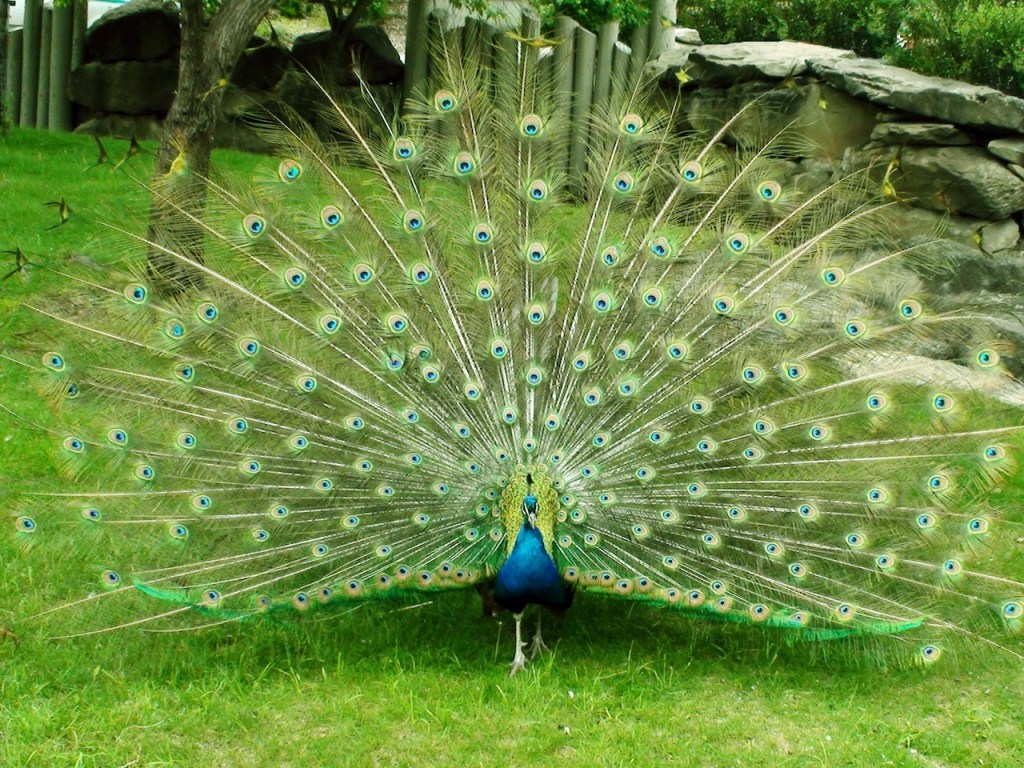
    Image 5: Peacock – Animal Wildlife

    Fourth Movement:  Peacock

    I passed a little further on and heard a peacock say:
    Who made the grass and made the worms and made my feathers gay,
    He is a monstrous peacock, and He waveth all the night      
    His languid tail above us, lit with myriad spots of light. 

    The speaker moves farther along, and listening to a peacock, he muses that the bird would describe his origin as the following: 

    I was created by a huge peacock who also created all vegetation and all other animals.  My Maker moves His bright features through the sky, from where He sends to us the light from the stars.

    Again, the animal describes his Creator in terms of his own characteristics. The peacock, however, verges on the boastful with his description, claiming that the “monstrous peacock,” or more glorious version of himself, also made the grass and worms.  

    The peacock implies that his Creator has made these creatures for the sake of the peacock.  And the peacock also likens his beautiful tail feathers to stars hanging in the skies.

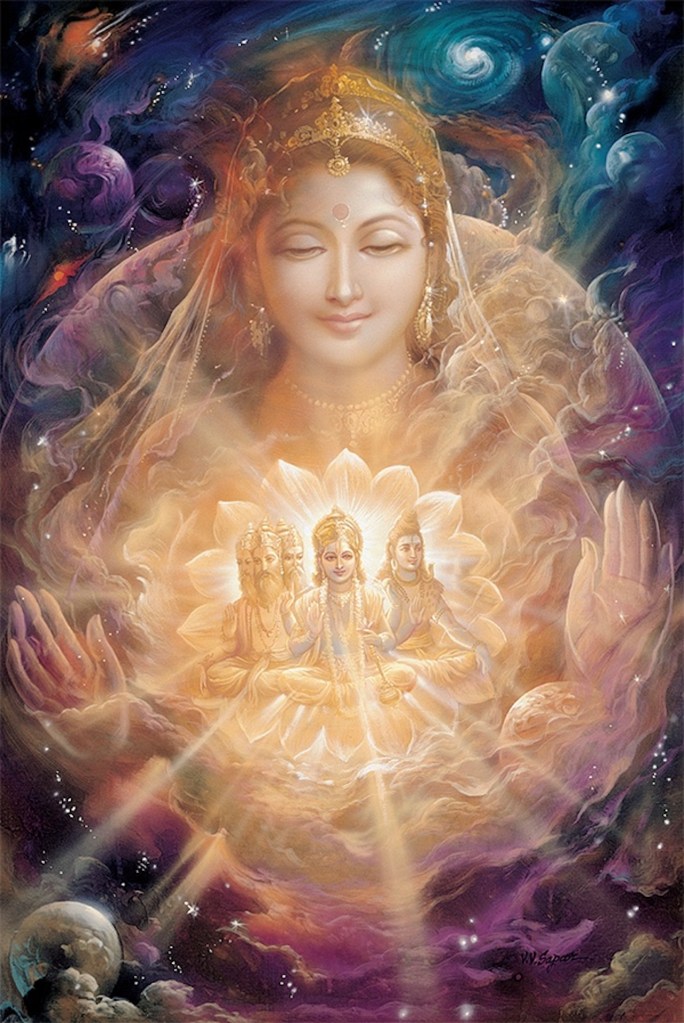
    Image 6: Divine Mother  – Self-Realization Fellowship

    Creation: Image of the Divine

    The philosophy portrayed in William Butler Yeats’ poem is pantheism, the concept that God is everything.  If man (humankind) correctly discerns that God created human beings in His image, then God, in fact, created everything else that exists in His image.  

    If all things are reflections of one Creator, then each thing created can rightly aver that it is made in the image of the Divine. Pantheism is also logically monotheism:  all of creation taken together is one entity.  

    The monotheistic religions of empirical reality—as opposed to that of the  mythological Greek and Roman pantheon of gods—all expound the nature of God as a trinity—one being expressing in three aspects.  For example, in Hinduism the trinity is Sat-Tat-Aum (also expressed as Sat-Chit-Ananda).  The Christian trinity is expressed a Father-Son-Holy Spirit.

    All of the five major world religions—Hinduism, Buddhism, Judaism, Christianity, and Islam—are monotheistic.  Hinduism is often mistakenly referred to a a polytheistic religion by commentators who confuse the names for the various aspects of God as separate gods. 

    Capitalizing Pronouns Referring to God

    The King Jame Version of the Holy Bible does not capitalize the pronouns referring to God; that custom is a 19th century invention.   However, I usually capitalize pronouns referring to the Deity to make clear that such references are, in fact, referring to God.   In this commentary,  I have capitalized the pronouns primarily to make clear that the various individuals are referring to their Maker or God.

  • Quotations

    Image:  Open AI created inspired by the lines “Noise blossoms in the mind / Bursting into a riot of sound color”

    Quotations

    Paramahansa Yogananda:  People interested in developing their memory should avoid the regular use of stimulants such as coffee, tea, and tobacco, which contain caffeine, theine, and nicotine, respectively.* Strictly avoid using strong stimulants such as liquor and drugs.  Such substances intoxicate, drug, and deteriorate the intelligence and memory cells of the brain, preventing them from recording noble ideas and sense impressions in general.  Memory cells that are constantly anesthetized by intoxicants lose their retentive power, and become lazy and inert. Intoxication obliterates the functions of the conscious mind by harmful chemicals, hence injures the cerebral memory-organ.  When the brain is affected the memory is impaired. — SRF Lesson 51:  “Yoga Methods for Developing Memory” (*Editor’s Note: Some modern research indicates that light to moderate use of caffeine improves short-term memory for brief periods.  Yogis, however, assert that continuous use over a long period erodes rather than enhances the capacity of this divine faculty.)

    Paramahansa Yogananda:  In the natural course of evolution through reincarnation, souls are automatically reincarnated by cosmic law in a higher form or species in each incarnation.  The soul is never reborn in the same animal species:  a dog is never a dog again. — SRF Lesson 78: “Conscious Evolution”

    Paramahansa Yogananda:  There is nothing more powerful than will.  Everything in this universe is produced by will.  Physiological changes may even be made to occur in the body by will power.  There is no time element involved; place a thought in the mind and hold it there, and think that the thing is done and your whole body and mind will respond to it.  Nor does it take time to acquire or discard a habit if you exercise sufficient will power.  It is all in your mind. —SRF Lesson S-4 P-79

    Paramahansa Yogananda:   Remember that when you are unhappy it is generally because you do not visualize strongly enough the great things that you definitely want to accomplish in life, nor do you employ steadfastly enough your will power, your creative ability, and your patience until your dreams are materialized. —SRF Lessons and Spiritual Diary, April 22 – Will Power, Creative Ability, & Patience

    Paramahansa Yogananda: The Sanskrit word for ‘musician’ is bhagavathar, “he who sings the praises of God.” —Autobiography of a Yogi

    Sri YukteswarForget the past.  The vanished lives of all men are dark with many shames.  Human conduct is ever unreliable until man is anchored in the Divine.  Everything in future will improve if you are making a spiritual effort now.   —Autobiography of a Yogi

    Sri Yukteswar: “How can sense slaves enjoy the world? Its subtle flavors escape them while they grovel in primal mud. All nice discriminations are lost to the man of elemental lusts.”  —Autobiography of a Yogi

    Sri YukteswarSri Yukteswar’s interpretation of the Adam and Eve creation story in Genesis—from Autobiography of a Yogi, pages 169-171, Twelfth Edition, First quality paperback printing 1994:

    Genesis is deeply symbolic, and cannot be grasped by a literal interpretation; its “tree of life” is the human body.  The spinal cord is like an upturned tree, with man’s hair as its roots, and afferent and efferent nerves as branches.  The tree of the nervous system bears many enjoyable fruits, or sensations of sight, sound, smell, taste, and touch.  In these, man may rightfully indulge; but he was forbidden the experience of sex, the “apple” at the center of the body (“in the midst of the garden”).  (my emphasis)

    The “serpent” represents the coiled-up spinal energy that stimulates the sex nerves.  “Adam” is reason, and “Eve” is feeling.  When the emotion or Eve-consciousness in any human being is overpowered by the sex impulse, his reason or Adam also succumbs.

    God created the human species by materializing the bodies of man and woman through the force of His will; He endowed the new species with the power to create children in a similar “immaculate” or divine manner.  Because His manifestation in the individualized soul had hitherto been limited to animals, instinct-bound and lacking the potentialities of full reason, God made the first human bodies, symbolically called Adam and Eve.  To these, for advantageous upward evolution, He transferred the souls or divine essence of two animals.  In Adam or man, reason predominated; in Eve or woman, feeling was ascendant.  Thus was expressed the duality or polarity that underlies the phenomenal worlds.  Reason and feeling remain in the heaven of cooperative joy so long as the human mind is not tricked by the serpentine energy of animal propensities.

    The human body was therefore not solely a result of evolution from beasts, but was produced through an act of special creation by God.  The animal forms were too crude to express full divinity; man was uniquely given the potentially omniscient “thousand-petaled lotus” in the brain, as well as acutely awakened occult centers in the spine.

    God, or the Divine Consciousness present within the first created pair, counseled them to enjoy all human sensibilities, with one exception: sex sensations.  These were banned, lest humanity enmesh itself in the inferior animal method of propagation.  (my emphasis)  The warning not to revive subconsciously present bestial memories was unheeded.  Resuming the way of brute procreation, Adam and Eve fell from the state of heavenly joy natural to the original perfect man.  When “they knew they were naked,” their consciousness of immortality was lost, even as God had warned them; they had placed themselves under the physical law by which bodily birth must be followed by bodily death.

    The knowledge of “good and evil,” promised Eve by the “serpent,” refers to the dualistic and oppositional experiences that mortals under maya must undergo.  Falling into delusion through misuse of his feeling and reason, or Eve- and Adam-consciousness, man relinquishes his right to enter the heavenly garden of divine self-sufficiency.  The personal responsibility of every human being is to restore his “parents” or dual nature to a unified harmony or Eden.

    Alexander Pope: Hope springs eternal in the human breast. —An Essay on Man: “Epistle 1”

    Alexander Pope:  All are but parts of one stupendous whole, / Whose body Nature is, and God the soul. —An Essay on Man: “Epistle 1”

    Alexander Pope: And, spite of pride, in erring reason’s spite, / One truth is clear, Whatever is, is right. —An Essay on Man: “Epistle 1”

    Alexander Pope:  Know then thyself, presume not God to scan; / The proper study of mankind is man.  —An Essay on Man: “Epistle 2”

    Alexander Pope: What Reason weaves, by Passion is undone.  —An Essay on Man: “Epistle 2”

    T. S. Eliot:  Man is man because he can recognize supernatural realities, not because he can invent them.

    Evan Sayet:  “The modern liberal will invariably side with evil over good, wrong over right, and the behaviors that lead to failure over those that lead to success.”