Linda's Literary Home

Tag: God

  • Langston Hughes’ “The Negro Speaks of Rivers”

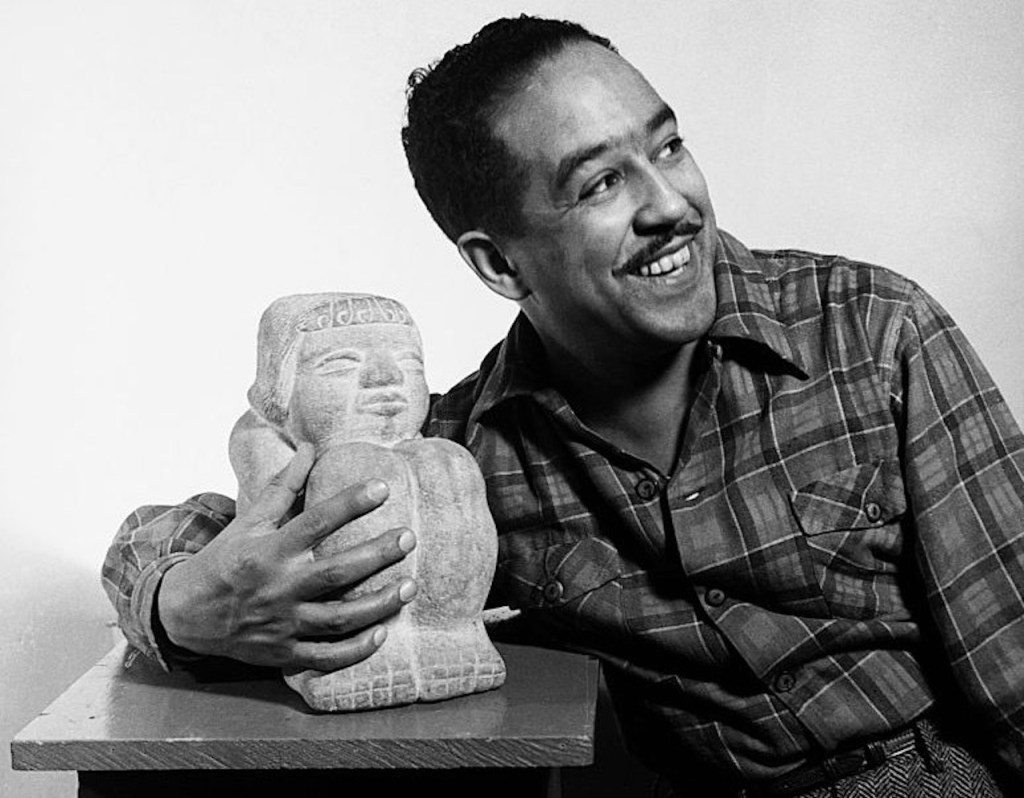
    Image:  Langston Hughes.  Library of Congress. Photographer Gordon Parks 

    Langston Hughes’ “The Negro Speaks of Rivers”

    Langston Hughes’ speaker in “The Negro Speaks of Rivers” displays his message in five versagraphic movements, thematically exploring his soul experience with a “cosmic voice,” which includes and unites all of humanity.

    Introduction and Text of “The Negro Speaks of Rivers”

    Langston Hughes’ speaker in “The Negro Speaks of Rivers” displays his message with a “cosmic voice,” which includes and unites all of humanity.  The poem plays out in five versagraphic movements, focusing on the theme of soul exploration.

    The Cosmic Voice in Poetry

    Writers, especially poets, often employ the “cosmic voice” in order to provide a deep and wide view of historical events and vast swaths of space.  A device called the omniscient speaker is often used in fiction; that voice is similar to the cosmic voice but much more limited.

    Time and space may stretch or contract as needed as the cosmic seer narrates what he experiences.  The “cosmic voice” may come to a poet through a vivid imagination; however, it transcends the imagination as a truth teller.   Only a few poets have been blessed with such a voice; examples are Emily Dickinson, Rabindranath Tagore, Paramahansa Yogananda, and to a limited degree Walt Whitman.

    The cosmic voice imparts truth through deep intuition.  The soul of the speaker employing the cosmic voice is, even if only temporarily as is the case with Langston Hughes, becomes aware of its vast and profound knowledge.  The cosmic voice speaks from a place far beyond ordinary sense awareness.  

    Individuals who comprehend the cosmic voice are bequeathed a consciousness far beyond their own sense awareness and thus comprehend the unity of all created things.  Those individuals are heralded into the realm of the Cosmic Creator and often remain transformed beings for having experienced that Sacred Locus.

    Langston Hughes and the Cosmic Voice

    The voice employed in “The Negro Speaks of Rivers” is not a whining, complaining one so often heard in the protest voices of activists; instead Hughes is employing the cosmic voice—the voice of the soul that knows itself to be a divine entity.  That voice speaks with inherent authority; it reports its intuitions so that others might hear and regain their own experiences through its guidance.

    Langston Hughes’ speaker in “The Negro Speaks of Rivers” imparts his discourse in five versagraphic movements.  His theme explores with the cosmic voice that unites all of humanity.  

    The vital lines that serve as a refrain—”I’ve known rivers” and “My soul has grown deep like the rivers”—work like a chant, instilling in the listener the truth that the speaker wishes to impart.  That Langston Hughes was able to employ a cosmic voice in a poem at age seventeen is quite remarkable.  

    Although some of his later work, even as much of it remained important and very entertaining, descended into the banal and at times even slipshod, no one can deny his marvelous accomplishment with this early poem in which he speaks as a master craftsman.

    The Negro Speaks of Rivers 

    I’ve known rivers:
    I’ve known rivers ancient as the world and older than the flow
    of human blood in human veins.

    My soul has grown deep like the rivers.

    I bathed in the Euphrates when dawns were young.
    I built my hut near the Congo and it lulled me to sleep.
    I looked upon the Nile and raised the pyramids above it.
    I heard the singing of the Mississippi when Abe Lincoln
         went down to New Orleans, and I’ve seen its muddy
         bosom turn all golden in the sunset.

    I’ve known rivers:
    Ancient, dusky rivers.

    My soul has grown deep like the rivers.

    Reading:   Langston Hughes reads his poem “The Negro Speaks of Rivers”

    Commentary on “The Negro Speaks of Rivers”

    Langston Hughes’ speaker in “The Negro Speaks of Rivers” stands as high testimony to the poet’s ability to craft genuine, heartfelt poetry.  To have composed such a profound piece of art at such an early age bespeaks a literary marvel.

    First Movement:  The River as a Symbol

    I’ve known rivers:
    I’ve known rivers ancient as the world and older than the flow
    of human blood in human veins.

    The poem opens with the speaker remarking rather nonchalantly that he has experienced the natural phenomenon known as “rivers.”  He has no doubt observed rivers flowing in their channels, and he has become aware that rivers flow through the earth as blood flows through the veins of human beings.  

    Both flowing rivers and flowing blood must be ancient, but the speaker intuits that the flow of the rivers surely predates that of the appearance of the human being upon the planet. The river image becomes a symbol linking all of humanity from the pre-historic era to the present day.   

    As the “river” has served to carry the physical encasements (bodies) and mental bodies over the rough terrain of land and rocks, the symbolic river carries the soul on its Divine journey.   Readers and listeners will easily intuit the significance of the speaker’s focus as it ranges far beyond the boundaries of the physical, material universe.

    Second Movement:  Intuitive Awareness

    My soul has grown deep like the rivers.

    This line indicates that the speaker has become aware that through his own soul he can intuit historical events, places, and people, who have existed from the beginning to time.  The line becomes a refrain and will be encountered again in the poem because of its great importance.  

    It becomes quite obvious that the speaker would not have been able to know literally the rivers of antiquity that he claims to “know.”  However, through his soul, or mystical awareness, he can.  Thus, he again employs the cosmic, thus mystical, voice to fashion his assertion.

    Third Movement: Historical Unity

    I bathed in the Euphrates when dawns were young.
    I built my hut near the Congo and it lulled me to sleep.
    I looked upon the Nile and raised the pyramids above it.
    I heard the singing of the Mississippi when Abe Lincoln
         went down to New Orleans, and I’ve seen its muddy
         bosom turn all golden in the sunset.

    The speaker claims that he “bathed in the Euphrates” at the dawning of Western civilization.  From the Euphrates to the Mississippi Rivers, the speaker offers a huge expansion of time and place.  

    In biblical times to present time, he lays claim to knowledge, again impossible except for soul consciousness. Awareness through the soul is unlimited, unlike the limitations of body and mind.  The speaker could not have experienced the Euphrates when “dawns were young.”  

    But the cosmic voice of the speaker can place itself at any point along the time line of civilization or cosmic creation. In claiming to have built his “hut near the Congo,” the speaker continues his cosmic, mystically inspired journey.  He “looked upon the Nile”  and “raised the pyramids” only as a cosmic-voiced speaker.

    People of all times and climes have been influenced by the river experience.  The speaker can thus unite all races, nationalities, creeds, and religions in his gathering of historic experiences within which all those peoples have lived.   And he accomplishes this feat through employment of the symbolic force of the “river.” 

    Emphasizing the American experience, the speaker claims to have “heard the singing of the Mississippi when Abe Lincoln / went / down to New Orleans . . . .”   The allusion to President Abraham Lincoln reminds the reader of the process of slave emancipation.

    As with all the rivers mentioned, the Mississippi River, an American river, stands as a symbol of the blood of the human race—not naturally segregated into color and national categories. The American Mississippi River, as the earlier mention of rivers has done, symbolizes the human blood of the human race—the only race that scientifically exists.

    Fourth Movement:  A Soul Chant

    I’ve known rivers:
    Ancient, dusky rivers.

    Because of the importance of the “river” as a symbol, the speaker repeats the line, “I’ve known rivers.”  Like the line, “My soul has grown deep like the rivers,” this one also  serves as a refrain.   If the speaker had chanted the line many more times, the poem’s delightful charm would have even been enhanced—that line is that crucial!

    The soul, the river, the depth of the soul and the river—all force history to yield a mighty blessing on those who have “known rivers,”  and whose souls have grown deep like those rivers. 

    Thus the speaker offers a brief description of how those river appear:  they are extremely old, and they are mystically dark, a measure that alludes to the dark-skinned race with graceful precision, even as it holds all races as having experienced the nature of the mystic river.

    Fifth Movement: Life Force and the Symbol of the River

    My soul has grown deep like the rivers.

    The speaker’s soul has grown profoundly deep like the rivers and along with the rivers.  Civilizations have grown up and grown deep along rivers all over Planet Earth. The soul that possesses the body is the life force informing and maintaining that body. 

    Likewise, rivers streaming through the earth give life force to civilizations and also assist in maintaining those civilization with the products and supplies that river travel has allowed over the centuries.

    The speaker is taking his own identity from the energetic force of the soul and the river force of the earth.  The children of the Divine Creative Reality (God) all spring forth from a common ancestry, a symbolic set of original parents.   It has always been rivers that link all of those ancestors as the blood in their veins links them into one family—the Human Race.

    The cosmic voice of a young poet—who happened possess the darker hue of skin along the color spectrum—has rendered a statement that could enlighten and reconnect all peoples if only they could listen with their own cosmic awareness.  

    At the soul level, all human beings remain eternally linked as children of the Great Divine River King (God). That River God flows in the blood of His offspring. And that same River God flows in the rivers of the planet on which they find themselves too often segregated by ignorance of their own common being as sparks of the Divine.

    Instead of identifying with the perishable body and changeable mind that too often rule, the simple act of identifying with their own cosmic nature would allow individuals to experience the cosmic voice of their own soul. The simple poet named Langston Hughes has offered a useful template for viewing the world through a cosmic lens in his nearly perfect poem.

    🕉

    You are welcome to join me on the following social media:
    TruthSocial, Locals, Gettr, X, Bluesky, Facebook, Pinterest 

    🕉

    Share

  • Rabindranath Tagore’s “Light the Lamp of Thy Love”

    Image: Rabindranath Tagore – Portrait by William Rothenstein

    Rabindranath Tagore’s “Light the Lamp of Thy Love”

    Rabindranath Tagore’s poem “Light the Lamp of Thy Love” is a devotional lyric that expresses the speaker’s longing for self-realization. Through colorful imagery, the poem explores themes of transformation, redemption, and the transcendence of human limitation through spiritual awakening.

    Introduction and Text of “Light the Lamp of Thy Love”

    Rabindranath Tagore, a Nobel laureate poet and philosopher, often infused his works with spiritual depth and mysticism. His lyric “Light the Lamp of Thy Love” offers a prayerful plea for divine intervention, as the speaker implores a higher power to dispel darkness and replace it with enlightenment. 

    The poem’s structure follows a gathering movement from supplication to transformation, resulting in the profound realization of divine presence, also known as self-realization or God-union. Tagore employs vivid metaphors—lamps, light, and gold—to symbolize the process of spiritual purification. 

    The repetition of phrases reinforces the urgency of the speaker’s plea, while the invocation of touch underscores the immediacy of divine grace. The poem’s universal theme of seeking enlightenment resonates beyond religious confines, making it a poignant reflection on the human soul’s yearning for transcendence.

    Paramahansa Yogananda refashioned this poem into a chant that is performed at SRF meditation gatherings and ceremonies.  Immediately below the poem, there is a video of the SRF monks chanting the piece at one of SRF’s World Convocations.

    Light the Lamp of Thy Love

    In my house, with Thine own hands,
    Light the lamp of Thy love!
    Thy transmuting lamp entrancing,
    Wondrous are its rays.
    Change my darkness to Thy light, Lord!
    Change my darkness to Thy light.
    And my evil into good.
    Touch me but once and I will change,
    All my clay into Thy gold
    All the sense lamps that I did light
    Sooted into worries
    Sitting at the door of my soul,
    Light Thy resurrecting lamp!

    Commentary on “Light the Lamp of Thy Love”

    Rabindranath Tagore’s poem “Light the Lamp of Thy Love” serves a prayer for divine illumination or God-union (also known as self-realization), reflecting an intense spiritual longing. The speaker acknowledges human frailty and desires transformation through divine grace. Each movement of the poem builds upon the preceding one, deepening the speaker’s surrender to the divine will.

    First Movement: Invocation of Divine Light

    In my house, with Thine own hands,
    Light the lamp of Thy love!

    The speaker begins with a direct appeal to the divine, requesting illumination within his own “house,” a metaphor for the soul. The imagery of the divine hand lighting the lamp suggests an intimate and personal act of grace. 

    This scenario establishes the poem’s central theme of spiritual awakening as a force intervening in the speaker’s internal world. The use of the imperative conveys urgency as well as personal familiarity, emphasizing human dependency on divine intervention for enlightenment.  This evocative opening sets the tone for the poem’s progression from entreaty to transformation.

    Second Movement: Transformation through Divine Light

    Thy transmuting lamp entrancing,
    Wondrous are its rays.
    Change my darkness to Thy light, Lord!
    Change my darkness to Thy light.
    And my evil into good.

    In the second movement, the speaker acknowledges the power of divine enlightenment, describing it as “entrancing” and “wondrous.” The repetition of “Change my darkness to Thy light” underscores the urgency and necessity of divine transformation. Darkness symbolizes ignorance, sin, and suffering, while light represents wisdom, virtue, and divine grace. 

    The explicit plea to change evil into good reflects Tagore’s vision of spiritual evolution, wherein the divine presence purges human flaws.   This movement portrays transformation as both passive and active—the speaker submits to divine will while the divine force actively reshapes his essence. The imagery of light as a catalyst for moral and spiritual purification aligns with Tagore’s broader philosophical themes of unity between the self and the divine.

    Third Movement: Spiritual Alchemy

    Touch me but once and I will change,
    All my clay into Thy gold

    The speaker then expresses absolute faith in divine transformation, emphasizing the power of a single divine touch. The contrast between “clay” and “gold” serves as a metaphor for spiritual alchemy—earthly, flawed existence is refined into something pure and incorruptible. 

    This suggestion reflects the Upanishadic tenet that the soul has potential to merge with the divine.   The phrase “but once” highlights the immediacy and sufficiency of divine intervention, reinforcing the idea that enlightenment is not a gradual process but an instantaneous, transcendent experience, after conditions become aligned.

    Fourth Movement: Renunciation of Material Attachments

    All the sense lamps that I did light
    Sooted into worries
    Sitting at the door of my soul,
    Light Thy resurrecting lamp!

    In this final movement, the speaker reflects on past attempts to find light through worldly means, represented by “sense lamps.” These artificial lights, linked to sensory experiences, have only resulted in “worries,” suggesting that material pursuits lead to disillusionment. 

    The speaker, becoming aware that the Divine Reality is “sitting at the door of my soul,” finds himself in a precarious position, awaiting true illumination. The plea for the “resurrecting lamp” signifies the desire for rebirth through divine grace. 

    This conclusion emphasizes the contrast between self-induced, transient sources of light and the enduring illumination provided by the Divine. Tagore’s imagery addresses surrender and renewal, resulting in the speaker’s complete reliance on divine intervention for enlightenment.

    A Philosophy of Divine Love

    “Light the Lamp of Thy Love” encapsulates Tagore’s philosophy of divine love as the ultimate source of transformation. The poem progresses from invocation to surrender, illustrating the speaker’s deepening spiritual realization.   Tagore employs symbolic imagery—light, lamps, gold—to depict the process of transcendence, wherein the divine presence eradicates darkness and imparts purity. 

    The repetition of phrases reinforces the speaker’s desperation for enlightenment, while the shift from self-lit lamps to the resurrecting lamp signifies the futility of worldly pursuits in comparison to divine grace. 

    The interplay between passivity and divine action suggests that while human effort is insufficient for true transformation, surrender to divine will results in ultimate fulfillment.

    Tagore’s devotional lyric aligns with the Bhakti tradition, where longing for divine presence is central. However, its universal message extends beyond religious boundaries, addressing the fundamental human desire for meaning, clarity, and redemption.  The poem’s cyclical structure, resulting in divine illumination, parallels the spiritual journey from ignorance to wisdom. 

    By portraying the speaker’s progression from a seeker to one awaiting divine grace, Tagore underscores the idea that true enlightenment is not self-generated but received through divine compassion.  Ultimately, “Light the Lamp of Thy Love” serves as a meditation on the transformative power of divine love and its ability to guide the human soul toward transcendence.

    Image: Rabindranath Tagore – Portrait by Unknown Artist

  • Gerard Manley Hopkins

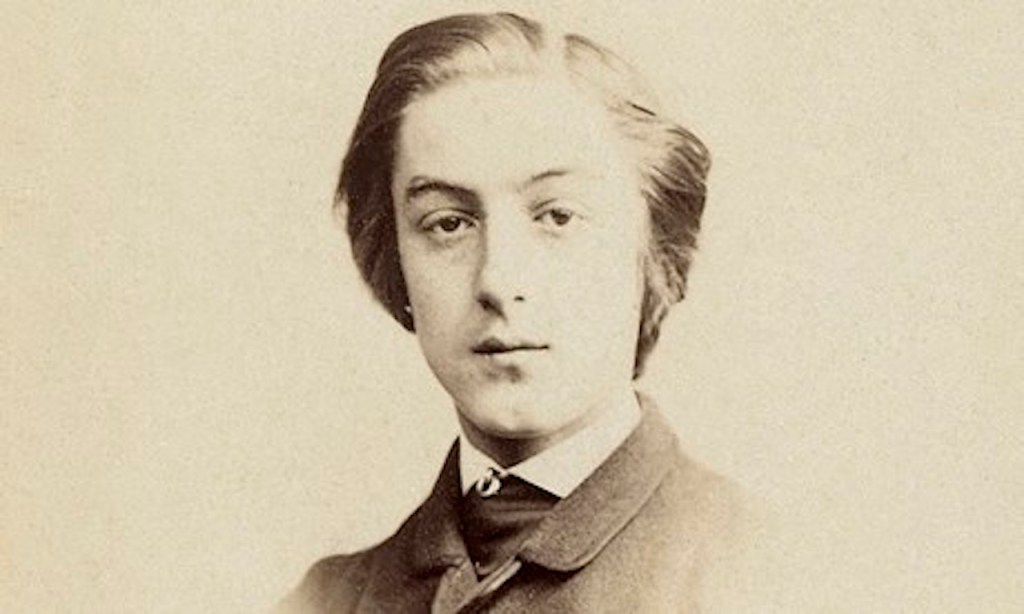
    Gerard Manley Hopkins – National Portrait Gallery, London

    Life Sketch of Gerard Manley Hopkins

    Gerard Manley Hopkins (1844–1889) was a poet of exceptional originality, with an innovative approach to language.  He remains one of English literature’s most enigmatic figures—a poet-priest whose work combines Victorian sensibilities with modernist experimentation.

    Introduction: Early Life and Family Background

    Though Gerard Manley Hopkins work was largely unpublished during his lifetime, the poet is now celebrated as one of the most significant poets of the Victorian era and a precursor to modernist poetry. 

    His life was marked by a profound tension between his religious vocation as a Jesuit priest and his artistic calling as a poet, a tension that shaped both his personal struggles and his creative achievements.

    Gerard Manley Hopkins was born on July 28, 1844, in Stratford, Essex (now part of Greater London), into a middle-class family with strong artistic and religious inclinations. He was the oldest of nine children born to Manley Hopkins and Catherine Smith Hopkins. 

    His father was a successful marine insurance adjuster, who also wrote poetry and published works such as A Philosopher’s Stone and Other Poems (1843) [1]. His mother Catherine was deeply religious and musically gifted, fostering an environment where intellectual and artistic pursuits were encouraged [2].

    The Hopkins household emphasized education and creativity. Gerard’s siblings also displayed artistic talents: his brother Arthur became an illustrator for Punch magazine, while another brother Everard pursued his calling to architecture [3]. The family’s Anglican faith played a central role in their lives; Gerard’s early exposure to religious devotion would later profoundly influence his poetry.

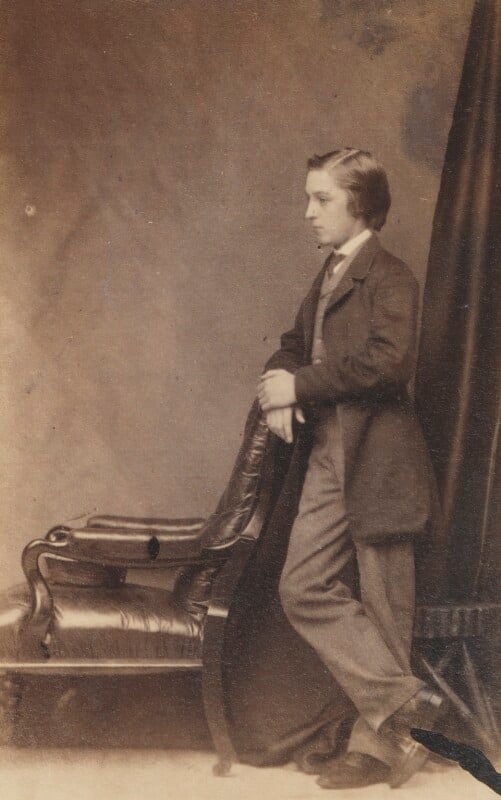
    Gerard Manley Hopkins – National Portrait Gallery, London

    Education at Highgate School

    In 1854, at the age of ten, Hopkins began attending Highgate School in London, where he excelled academically and demonstrated his early poetic talent. His school years were marked by a deep engagement with Romantic poetry, particularly the works of John Keats and Percy Bysshe Shelley. Keats’s lush imagery and musicality left a lasting impression on the young poet, as can be seem in some of his earliest compositions.

    While at Highgate, Hopkins also developed an interest in drawing and painting. He considered pursuing art as a career before ultimately deciding to focus on literature. While his early poems from this period reflect the Romantic tradition, they also hint at the originality that would later define his mature work [4].

    The Oxford Years: Intellectual Growth and Conversion

    In 1863, Hopkins entered Balliol College, Oxford, where he studied the Classics. Oxford in the mid-19th century was a hub of intellectual ferment, particularly regarding questions of faith and theology. 

    The Oxford Movement, led by figures such as John Henry Newman, sought to revive Catholic elements within Anglicanism [5]. This movement profoundly influenced Hopkins during his time at the university.

    At Balliol, Hopkins excelled academically and formed lasting friendships with notable contemporaries such as Robert Bridges (later Poet Laureate of England). Bridges would play a crucial role in preserving and publishing Hopkins’s poetry after his death. During this period, Hopkins continued writing poetry but also began engaging with questions of faith that would lead to a dramatic transformation of his life

    In 1866, under the influence of Newman’s writings and teachings, Hopkins converted to Roman Catholicism. This decision caused significant tension in his family, all of whom were devout Anglicans. However, for Hopkins, the conversion represented a profound spiritual awakening that would shape both his personal life and his artistic vision.

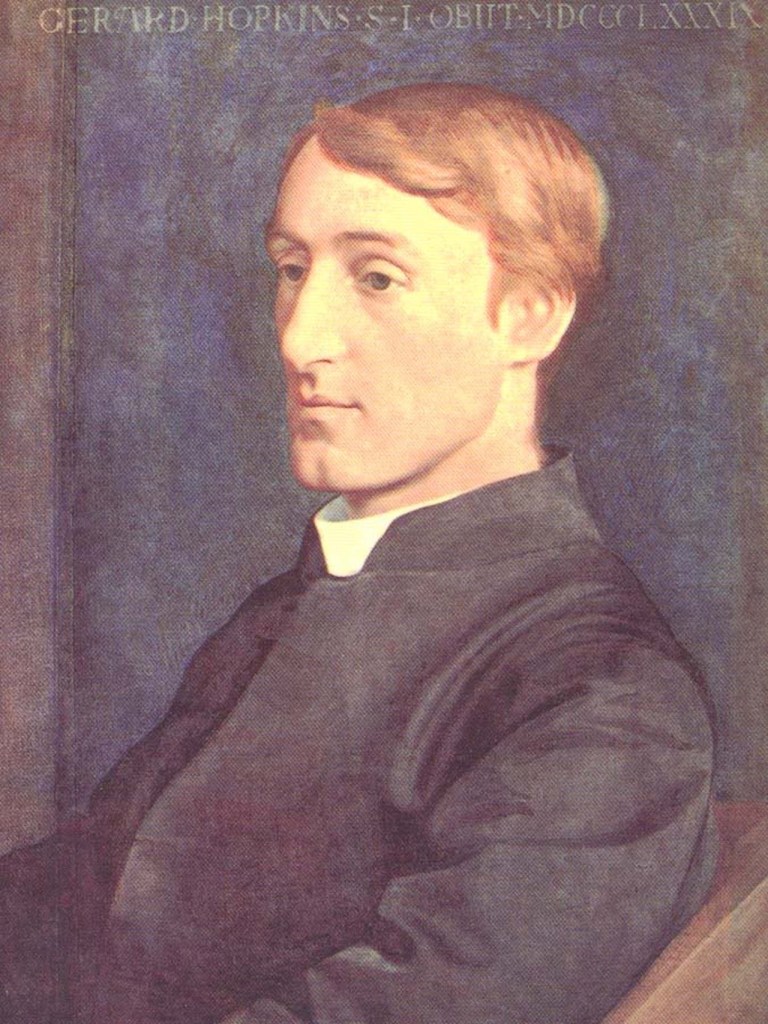
    Gerard Manley Hopkins – National Portrait Gallery, London

    Religious Vocation: Joining the Jesuit Order

    After graduating from Oxford with first-class honors in the Classics in 1867, Hopkins decided to pursue a religious vocation In 1868, he joined the Society of Jesus (the Jesuits), beginning his novitiate at Manresa House in Roehampton. As part of his training, he took vows of poverty, chastity, and obedience.

    Hopkins believed that his religious commitment required him to renounce personal ambition, including his aspirations as a poet. In an act of self-denial characteristic of his Jesuit discipline [3], he burned many of his early poems upon entering the order. For several years, he refrained from writing any poetry at all.

    During this pause from creative writing, Hopkins’s religious studies deepened his understanding of theology and philosophy. He studied at Stonyhurst College in Lancashire before moving to St. Beuno’s College in North Wales to study theology [6]. It was during this period that he began to reconcile his poetic gift with his spiritual calling.

    The Wreck of the Deutschland: A Return to Poetry

    In 1875, an event occurred that reignited Hopkins’ poetic creativity: the wreck of the German ship Deutschland off the coast of England. Among those who perished were five Franciscan nuns fleeing anti-Catholic persecution in Germany [1]. Deeply moved by their sacrifice and martyrdom, Hopkins composed The Wreck of the Deutschland, a long narrative poem that marked his return to writing.

    The poem is notable for its novel experimentation with language and form. It introduced what Hopkins called “sprung rhythm,” a metrical system based on stressed syllables rather than traditional foot-based metrics. Sprung rhythm allowed him greater flexibility in capturing natural speech patterns while maintaining musicality.

    Although The Wreck of the Deutschland was not published during Hopkins’s lifetime (it was deemed too unconventional), it signaled the beginning of his mature poetic phase. Over the next decade, he would compose some of his most celebrated and later anthologized works.

    Major Themes and Innovations

    Hopkins’s poetry is characterized by its vivid imagery, innovative use of language, and deep spiritual resonance. Central themes include the following:

    Nature

    Hopkins viewed nature as a manifestation of God’s glory—a concept he expressed through what he called “inscape,” or the unique essence of each created thing. Poems like “Pied Beauty” celebrate the variety and intricacy of nature:

    “Glory be to God for dappled things—
    For skies of couple-colour as a brinded cow;”

    Religion

    As a devout Jesuit priest, Hopkins often explored themes of faith, grace, and divine presence.  In “God’s Grandeur,” he reflects on humanity’s relationship with the Divine Reality (God):  “The world is charged with the grandeur of God.” 

    Human Struggle

    Hopkins did not shy away from depicting despair and inner turmoil. His so-called “terrible sonnets,” written during periods of depression in Dublin later in life (“No Worst There Is None” and “I Wake And Feel The Fell Of Dark”), are raw expressions of spiritual desolation.

    Language

    Hopkins’s creative inventiveness set him apart from other Victorian poets. He employed compound words (“dapple-dawn-drawn”), alliteration (“kingdom of daylight’s dauphin”), and unconventional syntax to create striking effects.  It might be noted that E. E. Cummings’ innovation remains a 20th century parallel to that of Father Hopkins 19th century foray into stylizing novelty.

    Academic Career in Dublin

    In 1884, after years serving as a parish priest in England and Scotland (often under challenging conditions), Hopkins was appointed Professor of Greek Literature at University College Dublin. 

    While teaching brought him some satisfaction intellectually, he still continued to struggled with feelings of isolation as an Englishman residing and working in Ireland during a time of political upheaval.

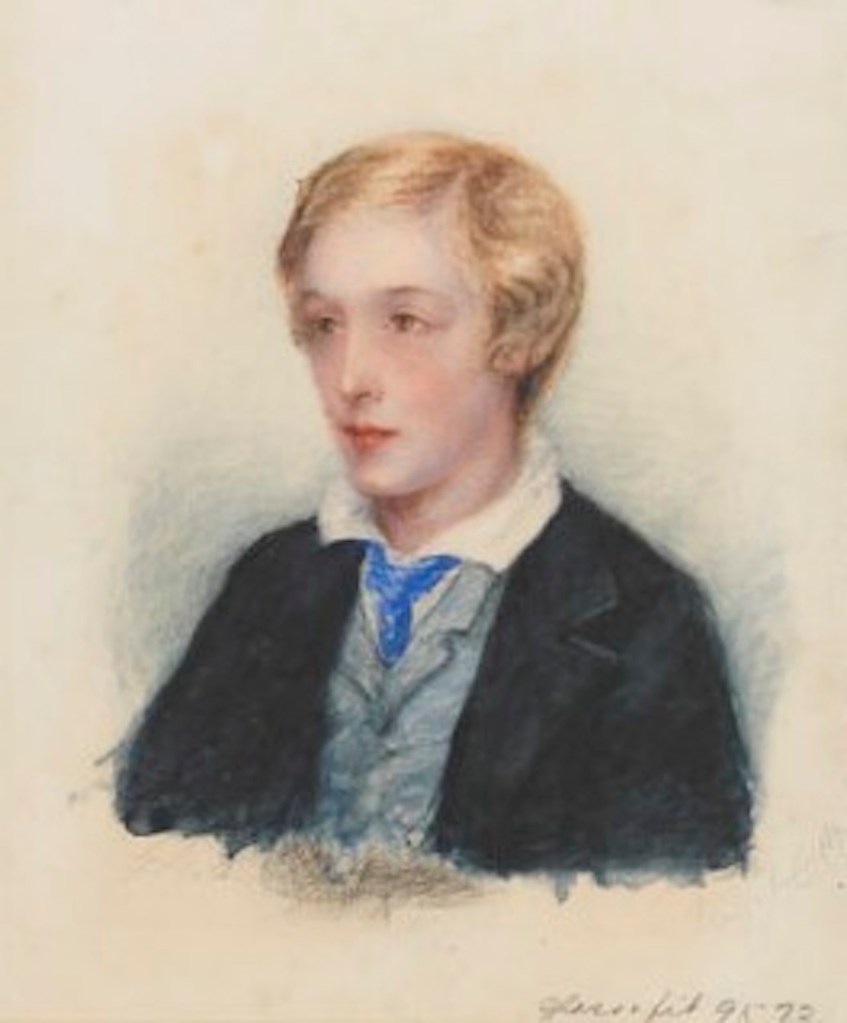
    Gerard Manley Hopkins – National Portrait Gallery, London

    Death and Legacy

    Father Hopkins’ final years were marked by declining health and bouts of depression—what he referred to as “the long dark night.” Despite these challenges, he continued writing poetry until shortly before his death.

    Father Hopkins died on June 8, 1889, at the age of 44 from typhoid fever in Dublin. At the time of his death, none of his major poems had been published; they existed only in manuscript form.

    It was not until 1918—nearly three decades after his death—that Robert Bridges edited and published  the collection simply titled Poems, bringing Hopkins’ work to public attention for the first time. The collection received mixed reviews initially but gained increasing recognition over time.

    By the mid-20th century, critics such as F.R. Leavis had established Hopkins as one of the most original voices in English poetry. His innovative techniques anticipated modernist trends seen later in poets like T.S. Eliot, Dylan Thomas, and E. E. Cummings.

    Father Gerard Manley Hopkins remains one of English literature’s most enigmatic figures—a poet-priest whose work brought together certain Victorian sensibilities with modernist experimentation. His legacy rests not only in his technical innovations but also in his ability to convey profound spiritual truths through language that continues to resonate with readers today.

    Sources

    [1]  Gerard Manley Hopkins. Poems. Edited by Robert Bridges. Oxford University Press. 1918.

    [2]  Gerard Manley Hopkins. Poems and Prose. Edited by W. H. Gardner. Penguin Classics. 1953.

    [3]  Eleanor Ruggles. Gerard Manley Hopkins: A Life. New York: W.W. Norton & Co. 1944.

    [4]  Norman H. Mackenzie. A Reader’s Guide to Gerard Manley Hopkins. Cornell U P. 1981.

    [5] John Cowie Reid.  “Gerard Manley Hopkins.” Encyclopaedia Britannica. Accessed January 1, 2026.

    [6] Curators. “Gerard Manley Hopkins.” Poetry Foundation.  Accessed January 1, 2026.

    🕉

    Poem Commentaries

    • God’s Grandeur” Father Gerard Manley Hopkins’ motivation to imitate Spirit (God) prompts him to craft his poems in forms, as Spirit creates entities in forms—from rocks to animals to plants to the human body.
    • Pied Beauty” Gerard Manley Hopkins’ “Pied Beauty” is an eleven-line curtal sonnet dedicated to honoring and praising God for the special beauty of His creation.  Father Hopkins coined the term “curtal” to label his eleven-line sonnets.
    • The Habit of Perfection”  The title “The Habit of Perfection” of Gerard Manley Hopkins’ poem features a pun on the term “habit.” As a monk, the poet had accepted the garb of the monastic, sometimes called a habit

    The Terrible Sonnets

    •  “To seem the stranger lies my lot, my life” Written with the same intensity that characterizes Hopkins’ work, the poem dramatizes exile as both an external condition and an inward trial.
    • I wake and feel the fell of dark, not day” The speaker Gerard Manley Hopkins’ “I wake and feel the fell of dark, not day” is confronting spiritual desolation, interior darkness, and the sense of abandonment by God. 
    • No worst, there is none.  Pitched past pitch of grief” The third in the group of sonnets widely known as “the terrible sonnets, this one,“No worst, there is none. Pitched past pitch of grief,” presents a speaker experiencing grief so intense that it feels beyond limit or measure.
    • Not, I’ll not, carrion comfort, Despair, not feast on thee” Father Hopkins’ “Not, I’ll not, carrion comfort, Despair, not feast on thee” dramatizes an intense spiritual struggle in which the speaker resists despair while enduring profound inner torment. 
    • Patience, hard thing! the hard thing but to pray” This terrible sonnet explores searchingly the nature of  spiritual endurance. The speaker is focusing on patience not as a soft virtue but as a challenging and difficult discipline, which oftentimes scars the pride, while exhausting the will. 
    • My own heart let me more have pity on; let” The speaker in this sonnet examines his inward struggle, through which he has learned mercy toward the self (soul) while undergoing heavy, sustained spiritual pressure.  My personal issue with this pressure assures me that Father Hopkins well understood its vicissitudes as well as its rewards.

  • Original Song: “Twixt Good and Evil” and Prose Commentary 

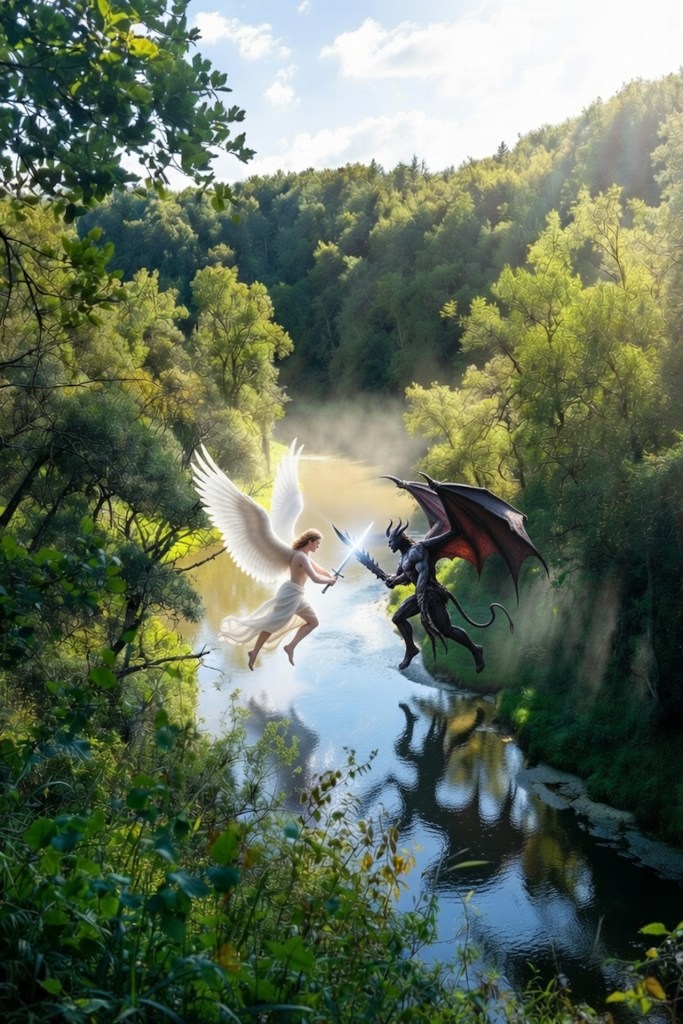
    Image: Created by Grok

    Original Song: “Twixt Good and Evil” and Prose Commentary 

    I chose the quotation from Isaiah because it demonstrates the omnipotence and omnipresence of the Almighty Creator.  Some religionists, especially Christian, argue that God is all good and therefore could not have created evil.  But such a claim limits God’s power and ability—an odd thing to do since they claim that God is omnipotent and omnipresent!

    Twixt Good and Evil

    I form the light, and create darkness: I make peace, and create evil: I the Lord do all these things.”    —Isaiah 45:7

    Chorus

    In the fight twixt good and evil
    Good will always win;
    For God created the devil
    Just tempt us all to sin.
    God doesn’t cause us to bear sorrow;

    He tries to lead us to His light,
    And His Word guides our tomorrow
    If we learn to read It right.

    First Verse 

    Good morning, Satan!
    Are you doing OK?
    What kinds of nasty
    You going to throw at me today?
    Will my daughter get cancer?
    Will my son fall off his bike?
    Will my husband crash his truck?
    Will my dog lie down and die?

    Second Verse

    Good morning, Devil!
    Are you doing just fine?
    How will you try to tempt me
    To cross that boundary line?
    Will you make me think I’m sexy?
    Will you make me want to flirt?
    Will you take me to a place
    I’d never go without your dirt?

    Third Verse

    Good morning, Lucifer!
    How’s it going, Old Dude?
    What you got in store for me today—
    What kind of rude and crude?
    Will you shine your light on sorrow?
    Will you tempt me to believe
    I’ll be so good tomorrow
    That today I can misbehave?

    Fourth Verse

    Good morning, Maya!
    Of all the things in the fold
    Which one will grab my thoughts today
    To divert me from my goal?
    Will I seize upon another’s mote
    Though there’s one in my own eye?
    Will I hurt anyone whose handy?
    Or will I just sit, sigh, and cry?

    Chorus

    In the fight twixt good and evil
    Good will always win;
    For God created the devil
    Just tempt us all to sin.

    God doesn’t cause us to bear sorrow;
    He tries to lead us to His light,
    And His Word guides our tomorrow
    If we learn to read It right.

    To listen to the recorded version, please visit “Twixt Good and Evil” on soundcloud.

    Commentary on “Twixt Good and Evil”

    Epigram:  “I form the light, and create darkness: I make peace, and create evil: I the Lord do all these things.”    —Isaiah 45:7

    I chose this quotation from Isaiah because it demonstrates the omnipotence and omnipresence of the Almighty Creator.  Some religionists, especially Christian, argue that God is all good and therefore could not have created evil.  

    But such a claim limits God’s power and ability and at the same time introduces a second force into being.  Because there can be no second force, only God can be responsible for all that exists, including evil.  In the Isaiah quotation, God is speaking and He clearly says, “I . . . create evil.”

    At first, such a claim may seem paradoxical, but just because God creates evil does not make God evil: it makes Him all powerful, the very quality that Christians believe God to possess.

    So with that fact established, the next question is why did/does God create/allow evil?  And the answer is so that a physical creation can exist.  Without pairs of opposites, there can be so creation: forces rub against forces; conflict pits good and evil against each other.

    We cannot recognize a quality unless we have something to which we can  compare or contrast it.  Image that only good things had happened to you in your life.  How would you know that only good things had happened if you had never experienced the less than good or the bad?  

    Humanity is faced with these forces in order to learn and to evolve.  According to Paramahansa Yogananda and other great spiritual leaders, the only purpose of life is to unite the soul with the Over-Soul or God.  In order to do that, each human being has to work out its karma, its issues that lead it to believe it is nothing more than a bag of bone and flesh.  

    Each human being must learn that he or she is essentially a soul that has a physical body.  That soul is already perfect but because it lost its divine awareness by being born in a physical encasement, it has to relearn to be divine.

    Now, why did God make such a plan, such an existence?  Why not just let us  keep our divine status and not have to go through incarnations that may take many millennia?  Only God knows the answer to that question.  Offering one possible explanation, Paramahansa Yogananda contends that creation is God’s lila or play, and He made for his own enjoyment.  

    Because that explanation may not satisfy, the following exchange between Sri Yukteswar, the guru of Paramahansa Yogananda, and a student suggests additional reasoning:

    “Why did God ever join soul and body?” a class student asked one evening. “What was His purpose in setting into initial motion this evolutionary drama of creation?” Countless other men have posed such questions; philosophers have sought, in vain, fully to answer them.

    “Leave a few mysteries to explore in Eternity,” Sri Yukteswar used to say with a smile. “How could man’s limited reasoning powers comprehend the inconceivable motives of the Uncreated Absolute? T

    he rational faculty in man, tethered by the cause-effect principle of the phenomenal world, is baffled before the enigma of God, the Beginningless, the Uncaused. Nevertheless, though man’s reason cannot fathom the riddles of creation, every mystery will ultimately be solved for the devotee by God Himself.” (my emphasis added)

    The opening quotation, therefore, establishes the spiritual nature of the song: a monotheistic worldview in which nothing—light or darkness, peace or evil—exists outside God’s sovereignty.

    By invoking Isaiah 45:7, I preempt the simplistic dualism: evil is not an equal rival to God but a force that God Himself created to serve a divine purpose. This contention prepares the listener/reader to understand temptation and suffering not as evidence of God’s absence, but as part of a moral testing ground in which human choice matters.

    Thus, although the singer/speaker has undergone all of these tests foisted by Satan, the Devil, Lucifer, and Maya—all of which are simply different names for the same force—she seems to be implying that she is transcending them because she realizes that God only created these forces to tempt his children. 

    She is also implying that she has learned to read God’s word correctly and now she understands that by not allowing that evil force to dominate her she will no longer suffer.

    Chorus: “In the fight twixt good and evil”

    In the fight twixt good and evil
    Good will always win;
    For God created the devil
    Just tempt us all to sin.

    God doesn’t cause us to bear sorrow;
    He tries to lead us to His light,
    And His Word guides our tomorrow
    If we learn to read It right.


    The chorus opens the song/poem with its theme, which focuses on the battle between good and evil in the world of humankind. It makes the explicit claim that “good will always win,” and then it explains that the devil is just a tempter—not a separate force— because God Himself “created the devil.” 

    That “God created the devil / Just to tempt us all to sin” reflects the exact message of the Isaiah quotation. God made the devil to introduce temptation in our lives, but God allows it, and He did not create temptation to make us suffer, at least, not eternally. 

    We  know of God’s intention because God has offered a guide in written scripture, which all religions and spiritual faiths possess.  But it is interpreting those pages of guidance that confounds us and keep us in darkness.  God wants to lead us to light, and learning to interpret his Word correctly and effectively can lead us there.

    First Verse: “Good morning, Satan!”

    Good morning, Satan!
    Are you doing OK?
    What kinds of nasty
    You going to throw at me today?
    Will my daughter get cancer?
    Will my son fall off his bike?
    Will my husband crash his truck?
    Will my dog lie down and die?


    The singer/speaker addresses Satan directly, asking quite conversationally how he’s doing?  Assuming that he is doing “OK.”  Then she pitches a series of questions at him.  These question involve “nasty” events that no one wants to experience:  a daughter getting cancer, an son falling off his bike, a husband crashing his truck, a dog dying.

    The answer to each of these questions is yes: Satan will throw all of these things at me eventually.  And I personally have experienced every one of them.  So addressing Satan in such a friendly way must be understood a high sarcasm. 

    Satan will always remain the adversary, but showing him that I can take him lightly lessens his power over me.  Besides, I have already told you in the chorus that I know the score on these issues.  Satan does not hold the power; God does.

    Second Verse:  “Good morning, Devil!”

    Good morning, Devil!
    Are you doing just fine?
    How will you try to tempt me
    To cross that boundary line?
    Will you make me think I’m sexy?
    Will you make me want to flirt?
    Will you take me to a place
    I’d never go without your dirt?

    Addressing Devil with the same tone expressed when she addressed Satan, the singer/speaker assumes Devil is “doing just fine.”  Again, with a series of questions:  how are you going to temp the today?  will you use sex and promiscuity to make me do things that otherwise I would deplore?  

    Because vanity and sex lead to so much mischief and depravity in the world, one would likely be a consummate prevaricator to deny having been caught up in such “dirt.”  That’s all the personal confession and testimony I will offer for this one. But obviously, again, the from Devil, the answer is “Yep, I’ll get you, my Pretty, and you little dog, too!”

    Third Verse:  “Good morning, Lucifer!”

    Good morning, Lucifer!
    How’s it going, Old Dude?
    What you got in store for me today—
    What kind of rude and crude?
    Will you shine your light on sorrow?
    Will you tempt me to believe
    I’ll be so good tomorrow
    That today I can misbehave?

    Addressing the devil/satan in his light-bearer form, Lucifer, the singer/speaker makes no assumption but simply asks how things are going for the “Old Dude. Then again wants to know that the Light-Bearer has “in store” for her.”  She knows that whatever it is it will likely be “rude and crude.”  She has learned about this being’s ways in earlier verses.

    She wonders if Lucifer will put a spotlight on self-pity and thus allow her to engage in sorrowful feelings.  Then abruptly, she shifts to wondering if he will encourage her think she will behave tomorrow so well that today she can engage in all manner of  debauchery.

    This verse captures the moral danger of self-bargaining and the illusion of future repentance as permission for present wrongdoing.

    Fourth Verse:

    Good morning, Maya!
    Of all the things in the fold
    Which one will grab my thoughts today
    To divert me from my goal?
    Will I seize upon another’s mote
    Though there’s one in my own eye?
    Will I hurt anyone whose handy?
    Or will I just sit, sigh, and cry?


    In this final verse, I address the evil one as Maya, which means delusion, and is the Hindu concept for Satan/Devil/Lucifer.  Maya seems less judgmental and harsh than the Christians concepts, although the end result of “delusion” is the same as the end result of sin.  It is delusion that causes us to “misbehave” and therefore “suffer.”  

    The satanic, evil, mayic force all steer the human being to engage in sense gratification, and such activities divert the person from seeking Divine Awareness, which is the goal of life, according to Paramahansa Yogananda.

    When I reference the “mote” and the “beam,” I am, of course, echoing Christ’s teaching on judgment, offering that as the first possible wrong thing I might do today.  Then again I continue questions as I wonder what the magic Satan/Maya will do today to “divert me from my goal.” 

    I might engage in activities that hurt people, or maybe I will just sit, think useless, thought, become maudlin and then “cry.”  The negativity supports the wretched influences that has been on display in the entire song/poem.  

    Chorus:  In the fight twixt good and evil”

    In the fight twixt good and evil
    Good will always win;
    For God created the devil
    Just tempt us all to sin.

    God doesn’t cause us to bear sorrow;
    He tries to lead us to His light,
    And His Word guides our tomorrow
    If we learn to read It right.

    What saves the whole mess from languishing in pool of sorrowful dreck is the chorus, which is repeated at the end.  Despite the battle each human being has to face each day, eventually according to each person’s karma “good will always win.”

  • Original Song:  “River Spirit” and Prose Commentary

    Image: “Whitewater River Songs – Album Cover” Photo by Ron W. G.

    Original Song:  “River Spirit” and Prose Commentary

    I wrote “River Spirit” circa 1980 then made a homemade recording of it around 20 around 2004.  In 2023, my husband Ron—whom I call “My Sweet Ron”—created the video featuring his own photos and videos selections along with the song.  

    Introduction to and Lyric of “River Spirit”

    The lyric of “River Spirit” plays out in four stanzas of tercets, with one couplet appearing as the second stanza.  It sports no traditional rime-scheme but does offer one set of perfect rime in “hand/sand” in the second and third lines.  Other slant—or more accurately ghost rimes—appear in “water/before” in the couplet.

    Ghost rimes also make an appearance with “bed/edge” and “changes/images.”  The time frame begins in spring, as the singer begins to report what she sees along the river after the cold hard season of winter has given way to the warmth of spring.

    The theme of the song is the mystery the singer feels at seeing that the landscape along the river has been radically transformed from what she had observed during the summer before this transforming winter had its sway.  The singer poses questions about how the trees got uprooted and the path along the river has shifted, as even the stones are taking on new patterns.

    The singer then announces what she had thought to be the agent of the transformations; however, she is ultimately revealing—in the title—that what she “guessed” back in the day, she now knows to be the work of the Divine Reality, the “River Spirit”—or God (see “Names for the Ineffable God”).

    (Please note:  Dr. Samuel Johnson introduced the form “rhyme” into English in the 18th century, mistakenly thinking that the term was a Greek derivative of “rythmos.”  Thus “rhyme” is an etymological error. For my explanation for using only the original form “rime,” please see “Rime vs Rhyme: Dr. Samuel Johnson’s Error.”)

    River Spirit

    Every spring along the Whitewater River
    I saw that some mysterious hand
    Had rearranged the rocks and sand.

    The path I followed the summer before
    Was slipping off into the water.
    I could not figure out whose force
    Could drive that water among the reeds
    & shift the river in its bed

    Whose muscles uprooted those trees?
    Whose fingers patterned those stones
    Along the edge?  

    I guessed only that the spring thaw
    Conjured up the changes
    In those sleeping river images.

    Commentary on “River Spirit”

    The time frame is spring, as the singer begins to muse on what she observes along the river after the cold, hard season of winter has given way to the warmth of spring.  Her earlier guess about that riverbank rearrangement has now become an article of faith, and she proclaims in the title the answer to her earlier inquiry.

    First Movement:  The Hand of Mystery

    Every spring along the Whitewater River
    I saw that some mysterious hand
    Had rearranged the rocks and sand.

    The singing narrator launches right into her story by making the claim that she observed a change in the pattern of stones and sand along the river’s edge, and she make this observation “every spring.”  She had thus a recollection of having experiences these changes many times.

    She colorfully attributes those rearrangements to “some mysterious hand.”  At this point, it may sound a bit odd that a river walker would think a hand had been involved in what went on along the riverbank in her absence.

    Second Movement:  River Features Shifting

    The path I followed the summer before
    Was slipping off into the water.

    After setting the stage for mystery and rearrangement of river features, the singer offers a very specific change.  She had walk along a path during the preceding summer, and now that path simply veered off into the river water.  Such a change would likely be quite jarring for the hiker, who would necessarily be obliged to alter her walking pattern.

    Third Movement:  Puzzling over the Changes 

    I could not figure out whose force
    Could drive that water among the reeds
    & shift the river in its bed

    The singer now inserts her puzzlement.  She becomes curious as to how such changes could have occurred.  She sees that the river has now shifted its course, plunging into the reeds along the bank.

    The mere fact of the river shifting “in its bed” seems Herculean in prospect.  The river is such a large body of moving water that the notion of it shifting surely requires a force that strikes the singer an unimaginable at this point.

    Fourth Movement:  Who Made Those Changes?

    Whose muscles uprooted those trees?
    Whose fingers patterned those stones
    Along the edge?  

    The singer then again adds more specificity to her inquiry.  She sees that trees have been “uprooted,” and she observes that the stones along the river’s edge have been rearranged in a different pattern from the summer before.

    Again, she colorfully attributes those “changes” to a seemingly human agency of “muscles” and “fingers.”  But behind those specific agents must lie some metaphysical force that at this point the singer cannot name, cannot even offer a guess about.

    Fifth Movement:  Guessing at the Conjuring

    I guessed only that the spring thaw
    Conjured up the changes
    In those sleeping river images.

    Now the singer offers what she thought to be an answer to her inquiry: Well, it was likely that not any hands, muscles, or fingers enforced all of these changes; it was simply the process of thawing out from the ice during the warming movements brought on by spring.

    Sure, that’s it: the spring movements of thawing influenced those inert river features to alter themselves into differing patterns from the summer before.  What else could it be?  But the singer is understating what she really believes now.  She “guessed” about the “spring thaw”—but that was then, this is now.

    Thus the singer through anthropomorphic images of hands, muscles, fingers has proclaimed that a humanlike power has, in fact, mades these changes.  Not an actual human being on its own however.  But some power that retains in its Being the image of the human form, power,  and ingenuity.

    Simply, the title of the lyric has already stated what the singer pretends to guess about as she unfurls the song:  God (as the “River Spirit”) has performed His magic on these “sleeping river images.” God has “conjured up” those alterations in those river images as they moved from a frozen, winter sleep to vital spring time awakening.

  • Original Song:  “Astral Mother” with Prose Commentary

    Image: Mommy and MePhoto by Ron W. G.

    Original Song:  “Astral Mother” with Prose Commentary

    This song is dedicated to my beautiful mother, Helen Richardson, whose soul left the physical planet Earth at the age of 58 and now resides in the astral world.  By faith and deep love, I visit her there from time to time.

    Introduction with Text of “Astral Mother”

    My original song, “Astral Mother,” plays out in three verse-movements and two chorus-movements.  A traditional verse is a unified set of lines—often four but through innovation the number is not consistent.

    Thus, a verse-movement may be any number of lines or stanzas because the emphasis in on the theme of the movement.  A movement depends upon theme rather than number of lines or stanzas.

    On the astral plane, souls have shed their bodies of chemicals and dust and reside in bodies of light.  Although the physical body is also made fundamentally of light, the astral body is perceived as light more easily than the “mud” covering the soul on the earthly plane.

    After visiting my mother on the astral plane, I bring back images, ideas, and thoughts that I dedicate to her in poems and songs.  The text of the song follows, and you are welcome to listen to the song on SoundCloud.

    Astral Mother

    In memoriam: Helen Richardson
    June 27, 1923 — September 5, 1981

    for your beautiful soul

    You are waiting now . . .
    A bright star light
    In the astral world

    You have shed the mud
    That covers the soul
    On the earthly plane . . . —

    Where you were my mother, and I was your child
    You were my mother, and I was your child . . . 

    You are watching for me . . .
    To catch my beam
    In the astral world

    We will live again
    The love we lived
    On the earthly plane . . . —

    Where you were my mother, and I was your child
    You were my mother, and I was your child . . .

    We will understand the Spirit-made plan . . .
    That kept us a while . . .
    In this earthly world . . . —

    Where you were my mother, and I was your child
    You were my mother, and I was your child . . .

    O, my Divine Mother, make me Thy Divine Child!
    O, my Divine Mother, make me Thy Divine Child!

    Commentary on “Astral Mother”

    A daughter addresses her mother who has departed the earth and now resides in the astral world.  Through faith and divine guidance, the daughter visits the mother and creates a tribute to her mother’s beautiful soul of light

    First Verse-Movement:  Living as Light in the Astral World

    You are waiting now . . .
    A bright star light
    In the astral world

    You have shed the mud
    That covers the soul
    On the earthly plane . . . —

    From the earthly plane of existence, the singer/narrator is addressing a loved one who is residing on the astral plane of existence.  

    The soul of the departed loved one is now existing in her astral/causal bodies—where the soul continues without its physical encasement.  Paramahansa Yogananda explains this phenomenon:

    astral body. Man’s subtle body of light, prana or lifetrons; the second of three sheaths that successively encase the soul: the causal body (q.v.), the astral body, and the physical body. The powers of the astral body enliven the physical body, much as electricity illumines a bulb. 

    The astral body has nineteen elements: intelligence, ego, feeling, mind (sense consciousness); five instruments of knowledge (the sensory powers within the physical organs of sight, hearing, smell, taste, and touch); five instruments of action (the executive powers in the physical instruments of procreation, excretion, speech, locomotion, and the exercise of manual skill); and five instruments of life force that perform the functions of circulation, metabolization, assimilation, crystallization, and elimination.

    The singer/narrator affirms that her loved one—her belovèd mother—is now “waiting” in her body of light as it exists on the astral plane. The singer/narrator in the second part of the movement refers to the physical body as “mud” which the astral mother has now “shed.”  The physical body encases the soul on the earthly plane of existence.

    The physical body may be metaphorically referred to as “mud” after the Biblical description of the human body:

    In the sweat of thy face shalt thou eat bread, till thou return unto the ground; for out of it wast thou taken: for dust thou art, and unto dust shalt thou return. (KJV Genesis 3:19)

    But after the soul leaves that physical encasement, it continues its existence in the two other bodies—astral and causal—on the astral plane where it is perceived only as light. Thus, the daughter/speaker has perceived her mother as a body of light, which she designates metaphorically as “a bright star light.”

    Second Verse-Movement:  Waiting to Spot a Familiar Dot of Light

    You are watching for me . . .
    To catch my beam
    In the astral world

    We will live again
    The love we lived
    On the earthly plane . . . —

    The singer/narrator then affirms that the astral mother is waiting for her daughter to join her on the astral plane.  The daughter will become a “beam” of light after she leaves her own physical encasement, entering the “astral world.”

    The singer/narrator then affirms that the mother and daughter will experience that same love that they shared when they were both on the earth together.   The “lived” love and they continue to live that love, but after they both are in the same level of existence, they are likely to recognize and have a deeper level of awareness of that love.

    Third Verse-Movement:  Understanding and Appreciating Love and Light

    We will understand the Spirit-made plan . . .
    That kept us a while . . .
    In this earthly world . . . —

    The singer/narrator finally affirms that after the mother and daughter are reunited, for however briefly that reunion might exist, they will understand more about the divine plan that God has for them.

    They were both maintained on the earth planet for while; they no doubt had questions about the meaning of life and all of its vicissitudes.  The singer/narrator predicts that after entering the astral plane, both she and her mother will understand more about meaning and purpose then they had before.

    Experience is great teacher; and God puts His children in positions from which they may learn what they need in order to meet their karmic demands. The singer/narrator holds great faith that she and her mother on the path that leads to the ultimate enlightenment of union with the Divine.

    Chorus-Movement 1:  A Simple Statement of Fact

    Where you were my mother, and I was your child
    You were my mother, and I was your child . . .

    In the first chorus, the singer/narrator simply states the fact that the addressee in the song was the singer’s mother, and the singer was the child of the mother.   On the earth plane, they were mother and daughter.

    The simplicity of the statement may be misleading.  This simple fact is, however, very important.  On the earth plane, they were mother and daughter, but on the astral plane they are only two individual souls that are children of the One Father-Mother-God.

    The mother/daughter relationship on earth is likely quite a different one from that relationship as two individual souls on the astral plane.  Despite that obvious fact, the important fact to remember is that love exists between the two; it existed on earth and it will exist in the astral world.

    Chorus-Movement 2:  A Prayer-Chant to the Divine Mother

    O, my Divine Mother, make me Thy Divine Child!
    O, my Divine Mother, make me Thy Divine Child!

    The momentousness of the shift from the earth relationship of mother/daughter to Divine Mother/Divine Child cannot be overstated.  

    By ending with a chant-like prayer, the singer/narrator affirms that through the love relationship between earth mother and daughter, she has come to understand that both mother and daughter are children of the Divine Reality (Heavenly Father or Divine Mother) or God.

    And the singer/narrator then supplicates to God as Divine Mother to help her realize her soul as that “Divine Child” that she is.  The same supplication is offered on behalf of the astral mother, whom the singer/narrator has been addressing.

    Both former earth mother and earth daughter are children of the Divine, and they both must one day come to realize that relationship to the Divine—and the singer/narrator prays for that to happen.

  • Original Song: “River of Time” with Commentary

    Image: Whitewater River, Richmond IN  

    Original Song: “River of Time” with Commentary

    My original song “River of Time” is a hymn to my Divine Belovèd, featuring a chorus that functions as a chant.

    Introduction with Text of Lyric “River of Time”

    Because music was my first love that I remember from the earliest age, I have always been attracted by the sounds from inspiring music.  

    I began writing songs seriously around age 32, and I especially enjoy and appreciate my songs that turn into hymns to the Divine Belovèd.  “River of Time” is such a hymn.  

    I am strongly influenced by the Cosmic Chants of my guru (spiritual leader) Paramahansa Yogananda.  Many of my original hymns have a chant-like element—a repetition that takes the minds within or bespeaks some spiritual truth for mental awareness.

    River of Time

    A hymn to my Divine Belovèd

    Verse
    Waiting by the river of time—
    My beloved keeps His rime
    In the sunlight that sings in stars
    The moon will wax in tune

    Verse
    Flowing with the river of time—
    Do you feel the rhythm that glides
    As you sing each lingering verse?
    Your soul will chant in bliss

    Verse
    Once beyond the river of time—
    Where you seek your ultimate rime,
    Where you need to battle no more
    You’ve reached that heavenly shore

    Chorus
    Every moment is light infused  
    Behind the darkness of closed eyes
    Seek no more for all is here
    Nothing more to do or fear

    Video by Carlene Craig

    Commentary on “River of Time”

    The singer/seeker/devotee in this hymn does not directly address her Heavenly Father-God.  She suggests the target of her report in subtle ways by essentially addresses her own self or soul. She sings to remind herself of her goal of soul- or self-realization, unity with the Divine Belovèd.

    First Verse:  Existence on the Physical Plane

    Waiting by the river of time—
    My beloved keeps His rime
    In the sunlight that sings in stars
    The moon will wax in tune

    The singer/devotee exists along a continuum that the human mind and heart often liken metaphorically to a river—a “river of time.”  Time seems to flow, meander, going somewhere.

    Intuition tells the human mind and heart that the soul is moving as on a flowing body of water to somewhere that must be wonderful.

    The beloved who is causing this river to flow displays his wares in light—sunlight and moonlight.  Science tells humanity that sunlight is reflected in the stars, and the moon also reflects that important, life-sustaining orb.

    The singer/devotee implies that her beloved is a poetic artist because he keeps “His rime” visible in the light of the sun and the moon.

    Second Verse:  The Rhythm of Soul Bliss

    Flowing with the river of time—
    Do you feel the rhythm that glides
    As you sing each lingering verse?
    Your soul will chant in bliss

    The singer then states that her soul is, in fact, moving down this metaphorical river.  She poses a rhetorical question of her self to ascertain if she is really sensing the rhythmic sway of the music of her verses.

    As she sings, she has become aware of her soul flowing into its natural state of “bliss.”  The verses that linger in the heart and mind bestow on her a marvelous state of awareness and joy.

    Third Verse:  Transcending Physical Existence

    Once beyond the river of time—
    Where you seek your ultimate rime,
    Where you need to battle no more
    You’ve reached that heavenly shore

    The singer then begins to speculate about the existence to be experienced after transcending the physical level of existence, metaphorically named the “river of time.”  

    Beyond that locus is where the ultimate poetry and music hold sway, where humanity no longer is required to struggle with life’s vicissitudes, trails, and tribulations.  Once the soul has become self-realized, it knows only divine joy and love.

    Chorus:  Moving into the Joy of the Light

    Every moment is light infused  
    Behind the darkness of closed eyes
    Seek no more for all is here
    Nothing more to do or fear

    The singer’s repeated, chant-like chorus is an affirmative statement about what goes on after she closes her eyes to the physical level of existence.

    She need not continue searching for she has arrived at the Goal of life. United with the Divine Belovèd, there is nothing that she will ever have to fear.

    Video:  Whitewater River-Tim Bowman-East Fork of the Whitewater River-near Brownsville IN 

  • Original Song: “Against” with Prose Commentary

    Image:  Linda Sue Grimes at the SRF Windmill Chapel at Lake Shrine Photo by Ron Grimes (Ron W. G.).

    Original Song: “Against” with Prose Commentary

    The singer/devotee is entreating her soul to forsake worldly things and ways, which according to Emily Dickinson, “hold so,” and follow the way of spirit.  The way of spirit protects “against”  all the things that damage the individual physically, mentally, and spiritually.

    Introduction with Text of Lyric “Against”

    Many old spirit-infused hymns sing about the futility of this world to the point of asserting that this world is not even our true home [1].   Paramahansa Yogananda has explained that one’s engagement with sense pleasure must be carefully observed lest they ensnare the soul, preventing it from experiencing the higher pleasures of soul-awareness [2].  

    Removing the flesh motivating experiences becomes one’s highest duty.  While the first step to soul-awareness appears to be a struggle “against” the senses and all worldly endeavors, that opposition must not become so intrenched that it impels one to judge others harshly and act on that judgment.

    Instead simply remaining mindful of one’s own behavior opens one’s heart to soul power. Creatively fashioning the experiences and thoughts on the journey to soul awareness adds to the reality and beauty that the world actually provides. 

    Against

    The Blessed Divine gave us all the gifts that we must learn to enjoy but without becoming entangled and attached; it is with that non-attachment in mind that the following hymn is offered to the Blessed Spirit Who inspires true music.

    Chorus: 

    Against the tone of heartbreak
    Against the stone of night ache
    Against the wrong that leads you
    Against the blood that speeds you

    1st Verse

    Whisper into the drum and see the bay of stars
    That permeate the golden night in silver bars
    Usher to the harp the placid palms of notes
    That wistfully breathe on strings of hope

    2nd Verse

    Quaff the mist of years, past where you thought
     That dwarves were playing in the valley of rock
    Don’t listen to a decibel lower than the sound
    Of the one hand raised in perfect redound

    3rd Verse

    Bless your father and your mother whose ears
    Have turned to stone with worries and fears
    They planted their flag in the wind by the sea
    They pray on the ghost ridge and wait to be free

    4th Verse

    Whisper again and listen for the echo
    That lingers in the valley you used to know
    Keep a clear watch how the strain will peel you
    Keep your mind in tow for the brain will steel you 

    5th Verse

    Into the light, where you bow
    Where you offer news of then and now
    Where you fold your hands and wonder as you pray
    If you heard that thunder across the bay

    6th Verse

    Whisper blowing, softly into the day
    Let no shaft of light escape your sight today
    Listen to your commandments, as they
    Lead you to the words you hunger to pray

    To listen to an audio recording of this song, please visit “Against.”

    Commentary on “Against”

    My original song “Against” is a lament for our times—for all times.  The devotee/singer begs her soul to forsake the things of this world, which become so attractive that they hold one’s attention to the detriment of the soul.

    The spiritual aspirant, however, wishes to follow the way of spirit.  The way of spirit protects the individual “against”  all the things that hurt one physically, mentally, and spiritual.

    Chorus:  A Lament and Call to Struggle

    Against the tone of heartbreak
    Against the stone of night ache
    Against the wrong that leads you
    Against the blood that speeds you

    The broken heart, the mental-pain-induced inability to sleep, behaving inappropriately, and allowing the physical body to dictate one’s thoughts and behavior are all things the devotee of spirit must battle “against.” 

    Allowing the voice to express opposition through melody tempers the heart and mind, allowing soul power to influence the senses that have the tendency to become so greedy and obstructive.

    1st Verse:  Listening to the Music of the Spheres

    Whisper into the drum and see the bay of stars
    That permeate the golden night in silver bars
    Usher to the harp the placid palms of notes
    That wistfully breathe on strings of hope

    The singer demands of her soul that it listen to the music of the spheres [3], to observe the night sky for inspiration to follow the way of spirit.   The singer remains in search of hope through beauty of sight and sound.  The stars at night accompany the beauty of melody that the seeker/singer tis striving to engage.

    Quaff the mist of years, past where you thought
     That dwarves were playing in the valley of rock
    Don’t listen to a decibel lower than the sound
    Of the one hand raised in perfect redound

    2nd Verse:  Command to Turn Inward

    The singer commands her soul to move past the past—reflecting on the Zen koan, “The sound of the one hand” [4].

    By imbibing the tears of many years passed without knowledge, singer drinks her own heart’s deepest desires which turn the eye and the mind inward in search of the indwelling Lord, to Whom all reverence and devotion are due.

    3rd Verse:  The Unforgiven and Prayer

    Bless your father and your mother whose ears
    Have turned to stone with worries and fears
    They planted their flag in the wind by the sea
    They pray on the ghost ridge and wait to be free

    The singer commands her mind to forgive the sins of her forebears, who were innocent and did their best, even though they were ignorant of the exact way of spirit.   As the immature look about their environment, they crave to find a place more suitable to their talents. It is that impetus that drives the soul to eventually find its path back to its true home.

    4th Verse:  Focusing on Spirit

    Whisper again and listen for the echo
    That lingers in the valley you used to know
    Keep a clear watch how the strain will peel you
    Keep your mind in tow for the brain will steel you 

    The singer again commands her mind to take the lessons of her past gingerly, while recalling in the present that stress is the enemy of spiritual progress—keeping the mind focused is at the heart of the way of spirit.

    5th Verse:  Acknowledging Soul Reality

    Into the light, where you bow
    Where you offer news of then and now
    Where you fold your hands and wonder as you pray
    If you heard that thunder across the bay

    The devotee/singer acknowledges that she has progressed into awareness of “the light” and she continues to pray and supplicate. The singer then acknowledges that the heart and mind will continue to reflect on past and present even while seeking the way of spirit.

    6th Verse:  The Hunger to Pray the Right Prayer

    Whisper blowing, softly into the day
    Let no shaft of light escape your sight today
    Listen to your commandments, as they
    Lead you to the words you hunger to pray

    The singer then admonishes herself to step lightly and watch for any sightings of spiritual light, and above all to continue to follow the way of spirit as it leads her to its golden gate. She knows that she needs more exact words to offer the Divine, and she remains confident that she will find them through her dedicated prayer.

    Sources

    [1] The Monroe Brothers. “This World Is Not My Home.”  YouTube. Accessed October 29, 2025.

    [2] Paramahansa Yogananda. “The Purpose of Life.”  Self-Realization Fellowship. Accessed October 29, 2025.

    [3] M. N. K. Mander.  “Milton and the Music of the Spheres.”  Vol. 24, No. 2, May 1990. Milton Quarterly.  Via JSTOR.

    [4]  Yoel Hoffman.  The Sound of the One Hand.  Bantam. 1977. Print.  Online at Internet Archive.  Accessed October 29, 2025.

  • If My Words Could Rise & Other Poems

    Image: If My Words Could Rise & Other Poems

    Dedicated with my love and gratitude 
    to my sweet Ron

    The following poems appear in my collection titled If My Words Could Rise, available on Amazon as paperback or Kindle.

    If My Words Could Rise

    Dedicated to my sweet Ron

    If my words could rise
    Like smoke
    They would form your face
    In the clouds
    They would hang
    In the tops of the trees
    Looking for a nest
    Where a mother bird sits
    On eggs
    The color of your eyes

    2 In the Tops of the Trees

    “As soon as you hear the sound of marching in the tops of the trees, then attack, for God has attacked in front of you to defeat the Philistine army.” —2 Samuel 5:25 Common English Bible

    –for the moldman, who screeched, “That’s my line!”

    No, dude, that is not your line!
    No matter how many times
    Or with how much spit
    You spew it.

    Trees and their tops
    And the words they live in
    Belong to all of us.  Go!
    Dig your hole–grovel in your slime.

    3 Dreams and Days

    “His tongue cuts / Slices of meat / From the hearts / And livers / Of those / Who would love him” – “Between Slices of Bread” —from Linda Sue Grimes’ At the End of the Road

    I quote myself, well then,
    I quote myself —
    I include multitudes —
    Uncle Walt taught me that much.

    The man in the poem
    Cannot bring himself to say
    Or to pray about his own lividness
    He shuts out spaces and commas
    Lives in his own relevance.

    He murders his own children
    With his viper attitude
    And nibbles the ankles
    Of prostitutes
    Who erase his will to power on.

    You have seen him
    Perhaps did not recognize him —
    He has sat in your parlor
    Sipping your coffee
    Dusting off his duplicitous moves —

    He fears death but not yours
    He imagines you at the bottom
    Of a cold, black ocean
    Your tongue bait for the fishes
    His Bolshevik brain conjures.

    Your freedom is a fantasy 
    If you remain too close to his heat
    Get your life back – get your love back
    Where God made you in his image
    And you are close to seeing it.

    4 Flesh and Desire

    Humankind cannot bear very much reality.”  —T. S. Eliot

    Into the fire of wisdom, thoughts go to perish.
    “Get thee behind me, Satan!” Christ commands.
    But we still wobble behind the Devil
    Hoping to be snatched from the arms of death
    In time for supper and for the many tomorrows
    We image we still possess.
    In the valley of dreck and poison, I have lived
    Even as I knew better or thought I did.
    No, I am not here to testify.
    Although a word or two of testimony
    May slip out every line or so!
    I can pound sand with the best of them.
    But I can also bitch and moan.
    Where is the beginning of joy and rectitude?
    One might ask.  Where is the promise?
    O, come on!  You know where the promise is . . .
    Yes, just testing the waters and they are warm.
    Every time I delay, I am warned.  Just pray
    And wait and listen close and tight to the hum
    In the brain.  I will follow.  I will follow close.
    Yes, I will.  And flesh with its crude desire
    Will no longer taint the years
    With their distractions.
    The mercy of Spirit will wipe my tears. 

  • At the End of the Road & Other Poems

    Image:  At the End of the Road & Other Poems

    At the End of the Road & Other Poems

    Dedicated to the memory of my father and mother:
    Bert Richardson, January 12, 1913–August 5, 2000
    & Helen Richardson, June 27, 1923–September 5, 1981

    The following poems appear in my collection titled At the End of the Road & Other Poems available on Amazon.

    1 Earned Pain

    —owed to Emily Dickinson’s “Joy to have merited the Pain

    Earned pain fades into joy,
    Gains a vivid, long liberation.
    Each phase dissolving into joy –
    Then paradise on the horizon.

    Absolved, my eyes grow strong,
    Peering into the ancient eye,
    Improved and brooking no wrong
    Approaching paradise, I realize.

    That these eyes glimpse Thine eye
    And that Thou glimpst mine atone
    And attest that my brown eyes
    And Thy sacred sight are one.

    Thou consumest all time, remaining
    Infinitely present, never astray –
    An eastern spirit explaining
    Morning to the day.

    Evoking Thy highest peak
    And the valley far below,
    My voice can speak
    Inside the darkest shadow,

    Spiritualizing all space and time
    As years drop eternally
    Ghost day by ghost night
    Journeying through eternity. 

    2 A Summer Dream Phantasm

    sweet dreams for the monster

    At the edge of the water
    We sit together
    Talking about heaven & earth
    Poems & love.

    You ask if I still think of you
    While you are away.
    I throw a stone into the water.
    The answer is the ripples.

    3 In Dreams We Happen to Meet

    for Mr. Sedam, my poetry benefactor

    “I protest your protest its hairy irrelevancy” —”Malcolm M. Sedam’s ‘Desafinado’

    In dreams we happen to meet
    On some mystic, planetary hill —
    Poetry eludes us yet we commence
    Talking about the sham progress
    Bleeding hearts have inflicted.

    The professor in you wants to align
    Wokeward but you cannot bring yourself
    To spring into the claptrap that clamped
    Shut on Ginsbergian filth, deviance
    And that mayhem of hairy irrelevance.

    You think of your children
    Wading into the waters of vipers
    Nipping their ankles
    Snapping their necks
    Erasing their freedom and will.

    You would have those you love
    Experience their own close calls —
    You crashed into your own
    As you flew those planes
    Over the Pacific, fighting that war —

    Facing death, watching death
    Take soldier after soldier
    Leaving you with the intuition
    Outcomes cannot be guaranteed
    By bureaucratic Bolsheviks.

    Only freedom of opportunity
    Guarantees free will remains free
    And life continues to beget life
    In the magnolious scheme that God
    Made man after His Own image.

    4 Bone Couplets

    Flesh of my flesh, bone of my bone…”  —Anne Bradstreet

    They outshine the flesh in the reign of desire
    Where pink like a blush goes on shining like fire.
    Fat necked imbeciles, brain-numbed and wrong
    On every backboned thought that ever ran along
    The confines of the apple of Adam sweetened
    In the birdless cage rump-driven and weakened.
    Greed and swagger click the gangling matter
    Knuckles cling and circle each limb to tatter.
    Hipbones narrow in the faulty weather.
    The bare truth flies out on filth-tinged feather.
    Bring me back to the place where life can stand!
    Let me feel the smooth relief of pounding sand!
    This belly swore it would unburden the green.
    Within the sulking skull it makes its way to preen.
    In the sweet toned laughter where children move
    And every old fart says he will not prove
    Until the night breaks over those who pray
    And every chime kinks the ear heaven to delay.
    Relevant as an old donkey on an extended beach
    The moon sinks into ripe flesh as if to teach
    Those angry cells to leave off all that hunger.
    No years will ease—no one will grow younger
    Than the moth whose flame has singed his wings
    Clacking bare truth to the mercy of things.

    5 A Terrible Fish

    “In me she has drowned a young girl, and in me an old woman
      Rises toward her day after day, like a terrible fish.  —Sylvia Plath’s “Mirror”

    The nightmare repeats itself:
    A daughter clamped tight to each foot
    Pulling her down under
    The brute waters of the dark, deep lake —
    She gasps — imagines she’s drowning
    While her husband watching from the levy
    Wrings his hands, faints in the heavy fog.
    A terrible fish looms under her nose;
    She smells blood dripping
    From a dozen hooks dangling
    From his mouth.
    His eyeballs slide out easy
    As the drawer of a cash register.
    Each eye-socket a window
    To her own soul — $ bills
    With little jackpots on them
    Jump up and dance like clowns
    Poking out their tongues,
    Flapping signs of slogans
    With hammers, sickles, swastikas —
    She believes – ¡Sí, se puede!
    Morning shivers her awake again,
    Stumbling to the bathroom
    Where the mirror flashes
    In her face that same terrible fish
    That has been catching her dreams
    And throwing them back
    As she chases each $,
    Never quite able to grasp enough.