Introduction to the Shakespeare 154-Sonnet Sequence
The Shakespeare 154-sonnet sequence offers a study of the mind of the poet. The first 17 have a speaker persuading a young man to marry and produce lovely offspring. Sonnets 18–126 address issues relating to talent and art creation. The final 28 explore and lament an unhealthy romance.
Commentaries on the Shakespeare 154-Sonnet Sequence
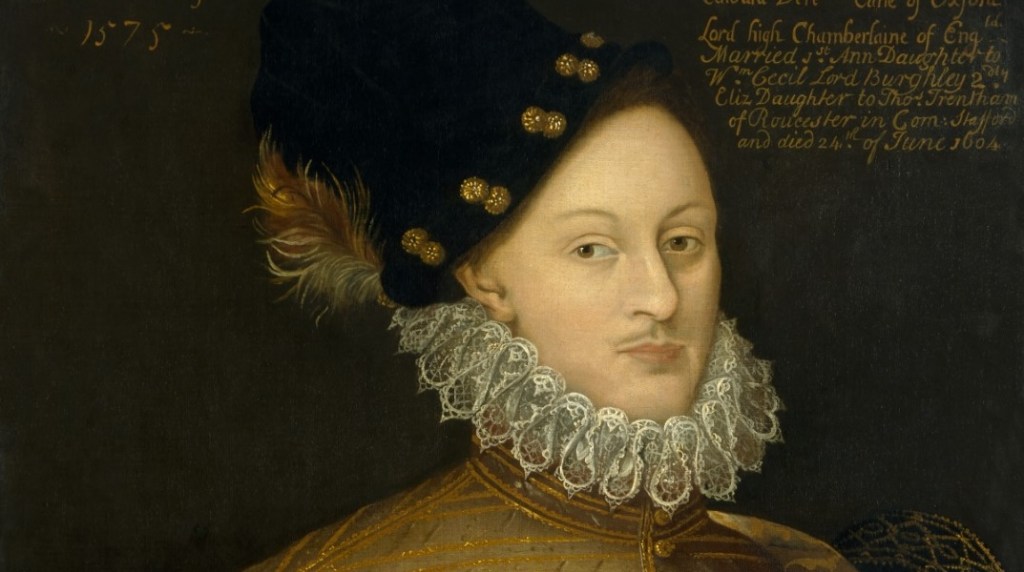
My Shakespeare sonnet commentaries are being offered to assist beginning poetry readers and students in understanding and appreciating the Shakespeare sonnet sequence. Because I argue alongside the Oxfordians regarding the identity of “William Shakespeare,” some of my commentaries on the sonnets include information related to the Shakespeare writer as Edward de Vere, 17th Earl of Oxford.
However, consideration of the poet’s biography remains only one small factor in understanding and appreciating his art, especially the sonnets. The sonnets’ messages are what they are regardless of the biography of who wrote them. The “Shakespeare” identity is not the only issue with which I take exception to traditional Shakespeare studies.
I do not agree with the traditional view that sonnets 18–126 focus on a “fair youth.” I will show that in most of that group of sonnets there is no person at all, much less a “fair youth” or young man.
I assert instead that those sonnets put on display the theme of the poet’s relationships with his muse, with his own heart and mind, with his art—including his doubts and fears regarding his ability to maintain and perfect his writing abilities.
The Sonnet Sequence
Some online Shakespeare sonnet enthusiasts have divided the 154 sequence into two thematic categories: “The Fair Youth Sonnets” (1–126) and “The Dark Lady Sonnets” (127–154). Such a categorization remains problematic because there is a distinct change of subject matter from the first section 1-17 to the second 18–126.
In the first section of sonnets 1–17, the speaker is clearly imploring a young man to marry and procreate; in the second section 18–126, the speaker remains highly contemplative as he muses upon his considerable talent.
The only feature that the first two categories have in common would be a “fair youth”; however, it is a misinterpretation that assigns a “fair youth” to sonnets 18–126. As I mentioned above, in most of that group of sonnets there is no person at all.
In opposition to the two category theory, a number of scholars and critics of Elizabethan literary studies have categorized the Shakespeare 154-sonnet sequence into three thematic groups:
1. Marriage Sonnets: 1–17 (17 total) 2. Fair Youth Sonnets: 18–126 (109 total) 3. Dark Lady Sonnets: 127–154 (28 total)
Sonnets 1–17: The Marriage Sonnets
The group labeled the “Marriage Sonnets” stars a speaker, attempting to persuade a young man to marry and produce beautiful children. Oxfordians, who hold that the actual Shakespeare writer was Edward de Vere, 17th Earl of Oxford, suggest that the young man is probably Henry Wriothesley, the third Earl of Southhampton and that the speaker of sonnets 1–17 is striving to convince the young earl to marry Elizabeth de Vere, the eldest daughter of Edward de Vere.
Sonnets 18–126: The Fair Youth Sonnets
By tradition, the “Faith Youth Sonnets” are interpreted as further entreaties to a young man. However, there is no young man in these sonnets; there are no persons at all in that group of sonnets. Even though sonnets 108 and 126 do address a “sweet boy” or “lovely boy,” they remain problematic and are likely miscategorized.
The Category “Muse Sonnets” Replaces the “Fair Youth Sonnets”
Instead of speaking directly to a young man, as the “Marriage Sonnets” quite obviously do, the speaker in sonnets 17–126 is musing on, examining, and exploring issues of writing, thinking, and making poetry. In some of the sonnets, the speaker addresses his muse, and in others, his talent, and in still others, he is speaking directly to the sonnet itself.
The speaker in sonnet after sonnet is exploring the entire territory of his talent, his dedication to writing and the power of his heart and soul. He even goes into battle with the bane of a writer’s existence—periods of low inspiration for creating. He also struggles with the ennui and dryness that the writing experience undergoes.
The result of my understanding and interpretation of this “Fair Youth” category offers a very different line of thinking from the traditionally received position of this issue. I have, therefore, relabeled the category the “Muse Sonnets”—replacing the traditional “Fair Youth Sonnets.”
The motive for the continued labeling the bulk of the Shakespeare sonnets “Fair Youth” likely rests with the social justice movement in rehabilitation of the same-sex orientation. Finding evidence of homosexuality in long respected writers and artists has become a cottage industry, especially for the statist-leaning, higher education system.
While a number of academics have bloviated in the direction of finding of Shakespeare was “gay,” others have convincingly debunked the notion. Interestingly, those who favor the gay Shakespeare use the “Fair Youth” sonnets as their main supporting evidence.
Also interestingly, the debunking of the notion of same-sex orientation in “Shakespeare” would be much easier if those critics assumed the real “Shakespeare” to be Edward de Vere, whose biography is known and well documented, while that of the traditional “Shakespeare,” Gulielmus Shakspere of Stratford, remains rather thin and sketchy.
Sonnets 127–154: The Dark Lady Sonnets
The “Dark Lady” sonnets offer an exploration of an adulterous relationship with a woman who possesses an unsavory character. The term “dark” is describing the woman’s shady character flaws, rather than the shade or hue of her complexion.
Six Problematic Sonnets: 108, 126, 99, 130, 153, 154
Sonnets 108 and 126 offer a different kind of categorization issue. Most of the “Muse Sonnets” are speaking to writing issues, wherein the speaker examines his talent, dedication, and other issues relating to his artist skills. There are no other human beings in most of these muse sonnets.
However, sonnets 108 and 126 do address a young man, calling him “sweet boy” and “lovely boy.” And then poem 126 is not technically a “sonnet.” It plays out in six rimed couplets, not the traditional sonnet form with three quatrains and one couplet.
The possibility remains that sonnets 108 and 126 have helped cause the misnaming of this group of sonnets as the “Fair Youth Sonnets.” Those poems should logically reside with the “Marriage Sonnets,” which do address a young man.
Sonnets 108 and 126 could also be responsible for some scholars categorizing the sonnets into two groups, instead of three—combining the “Marriage Sonnets” with the “Fair Youth Sonnets” and naming them the “Young Man Sonnets.”
However, the two category alternative remains flawed because the bulk of the “Fair Youth Sonnets” do not address a young man, nor do they address any person, except on occasion as the speaker addresses himself.
Sonnet 99 contains 15 lines, instead of the traditional sonnet form with 14 lines. The first quatrain expands to a cinquain, converting its rime scheme from ABAB to ABABA. The rest of the sonnet continues traditionally, following the rime, rhythm, and function of the traditional sonnet.
Although sonnet 130 “My mistress’ eyes are nothing like the sun” is grouped with the “Dark Lady” subsequence, it seems to prove an anomaly because in many of the others in this group the lady does not merit such positive effusions as offered in the speaker’s claim that his “love” for her is rare.
The “Dark Lady” sonnets explore the negative results of unchecked lust, while the execution of sonnet 130 takes for its purpose the criticism of hyperbolic displays that idealize cosmetic beauty. This speaker remains consistent in his striving for truth as well as his striving for beauty.
The Two Final Sonnets
Sonnets 153 and 154 are problematic also, at least to some extent. Although they are categorized thematically with the “Dark Lady Sonnets,” they function a bit differently from most of the poems in that thematic group. Sonnet 154 simply features a paraphrase of sonnet 153, dramatizing identical messaging—the complaint of unrequited love.
Those two final sonnets then decorate that complaint with the tinsel of mythological allusion. The speaker alludes to the force of Cupid, the Roman god of love and the power of the goddess Diana.
The speaker thereby maintains a secure distance from his feelings. He possibly hopes such distancing may liberate him from the oppression of his lust and then re-establish for him the harmonious balance of mind and heart.
In the majority of the “Dark Lady Sonnets,” the speaker has continued to offer a monologue to the woman, making it clear that he intends for her to hear about that which he is complaining.
Finally, in the two concluding sonnets, the speaker is no longer addressing the dark lady. He does mention her, but instead of speaking directly to her, he is declaiming about her. He is employing this strategy to engage and demonstrate that he is withdrawing from the woman and her unsavory mannerisms.
The conclusion of this sequence seems to be dramatizing the fact that the speaker has become disillusioned by and weary from his battle for this disagreeable woman’s love, affection, and respect.
The speaker concludes that he is determined to fashion a high-principled, classic, dramatic statement to put an end to this ill-omened relationship, with an unmistakeable pronouncement that he is finished, it is over, he is through.
Continued research seems to be confirming the claim by the Oxfordians that Edward de Vere, 17th Earl of Oxford—not Gulielmus Shakspere of Stratford-upon-Avon as insisted by the Stratfordians—wrote the canon of plays and poems left by the pseudonymous “William Shakespeare.”
Who Is the Authentic “Shakespeare” Writer”?
The mystery regarding the true identity of the writer traditionally known as “William Shakespeare” actually began in Elizabethan England, during the period in which most of the likely candidates for the position lived and wrote.
The controversy [1] has continued, and today there are two main groups that argue the point: the Oxfordians contend that the most likely writer of the Shakespeare canon is Edward de Vere, 17th Earl of Oxford. Arguing the other side are the Stratfordians, who maintain that Gulielmus Shakspere of Stratford-upon-Avon, the traditionally held choice, remains the actual writer.
The first biographical work on “William Shakespeare” appeared in 1769. It focuses on Gulielmus Shakspere, the man from Stratford-upon-Avon in Warwickshire, traditionally hailed as the Shakespeare writer.
That same year, Herbert Lawrence in his work titled, The Life and Adventures of Common Sense, suggests the idea that “William Shakespeare” was likely the nom de plume of some other writer but not the Stratford man.
In 1780 a clergyman/scholar in Warwickshire, James Wilmot, examined records near and surrounding Stratford-upon-Avon, searching for data on William Shakespeare and the Shakespeare works. Wilmot found nothing about the writer or his works.
After Wilmot lacked success in locating any information leading to the identity of the Stratford man as the Shakespeare writer, he floated the notion that Francis Bacon using “William Shakespeare” nom de plume had written those plays and sonnets. Wilmot, to the detriment of historical literary research, mandated that all of his research materials be burned upon his death.
In 1857, Delia Bacon, an American short story writer and Shakespeare enthusiast, offered the suggestion that perhaps a committee and not just one individual had composed the Shakespeare canon. For her suggested committee, Delia Bacon chose Edmund Spencer, Sir Walter Ralegh, and Edward de Vere; she placed Francis Bacon in the committee as its chairman.
Since those early suggestions that an individual other than the Stratford man wrote the Shakespeare canon, the controversy has raged on. Currently, the Oxfordians, who continue to gather evidence for Edward de Vere, 17th Earl of Oxford, as the Shakespeare writer are putting forth the strongest, most convincing argument.
Literary scholars and critics are increasingly coming to the conclusion that the man from Stratford, Gulielmus Shakspere, widely held as the traditional Shakespeare, is the least qualified candidate for playing that authorial rôle. From that conclusion emerges the likelihood that Edward de Vere, 17th Earl of Oxford, is the best candidate for consideration as the Shakespeare writer.
Walt Whitman, one of America’s greatest poets, agrees with the Oxfordians, who argue that the 17th Earl of Oxford is the actual author of the works published under the nom de plume, “William Shakespeare”:
Conceiv’d out of the fullest heat and pulse of European feudalism — personifying in unparalleled ways the medieval aristocracy, its towering spirit of ruthless and gigantic caste, with its own peculiar air and arrogance (no mere imitation) — only one of the “wolfish earls” so plenteous in the plays themselves, or some born descendant and knower, might seem to be the true author of those amazing works — works in some respects greater than anything else in recorded literature. [2]
From other respected writers such as Henry James and Ralph Waldo Emerson to actors such as Charlie Chaplin and Sir Derek Jacobi to supreme court justices such as Harry A. Blackmun and John Paul Stevens, famous individuals have expressed doubt about the tradition identification of the Shakespeare writer [3].
Why the Oxfordians Are Likely Correct
A study of the background of each man—Gulielmus Shakspere of Stratford-upon-Avon and Edward de Vere, 17th Earl of Oxford—reveals evidence that suggests that only Oxford possessed the ability to have produced the complex, historically based, geographically accurate works of the Shakespeare writer.
Gulielmus Shakspere—”Stratford”—was semi-literate; his parents, his wife, and his children were all semi-literate. He likely remained uneducated beyond age 14. No records have been found that demonstrate that he wrote anything more complex than a list of beneficiaries in his last will and testament.
But if the Stratfordians are correct, this semi-literate individual who traveled no farther than to London (if that far) and left no early writings just suddenly commenced the composition of complex historical dramas and perfectly modulated sonnets during the time period Shakespeare scholars call “Shakespeare’s Lost Years.”
In contrast, Edward de Vere—”Oxford”—had received a first class education, had traveled widely throughout the world, and had actually been known to be a writer of plays and poetry.
It remains as unlikely that the man Gulielmus Shakspere could have composed any of the works attributed to “William Shakespeare,” as he could have invented the horseless carriage or discovered the Pacific Ocean.
Life Sketch of Gulielmus Shakspere: Birth Date in Doubt
The biographical documents of “William Shakespeare” are virtually blank pages, upon which scholars, critics, and enthusiasts have written versions of a life, for example, no record exists of the birth date of “William Shakespeare,” even under the name Gulielmus Shakspere. Biographers, therefore, can only speculate [4]:
William Shakespeare was born in Stratford-upon-Avon, England, in April 1564. The exact date of his birth is not recorded, but it is most often celebrated around the world on 23 April. . . . Shakespeare also died on 23 April; in 1616, when he was 52 years of age.
And the speculation continues; the following represents a further example that is typical of any attempt to state when “William Shakespeare” was born:
No birth records exist, but an old church record indicates that a William Shakespeare was baptized at Holy Trinity Church in Stratford-upon-Avon on April 26, 1564.
From this, it is believed he was born on or near April 23, 1564, and this is the date scholars acknowledge as Shakespeare’s birthday. [5]
As would-be biographers speculate about the birth date and other details regarding the Shakespeare writer, they employ the nom de plume “William Shakespeare” instead of Gulielmus Shakspere, the name that appears on the man’s baptismal record.
Remaining a nebulous figure, “William Shakespeare” as Gulielmus Shakspere has no actual day of birth. His speculated birth date is April 23, 1564, as is his death date, April 23, 1616. The fabulous coincidence of any man dying on his unknown birth date further suggests the vulnerability of the claim that Stratford is the actual Shakespeare writer.
The Education of “William Shakespeare”
While uncertainty abounds regarding the birth date of “William Shakespeare,” equal uncertainty persists regarding his education. Again, no records [6] have been found to designate the level of education to which Stratford might have risen.
Supposition and guess-work suggest that Stratford might have attended King Edward VI Grammar School between the ages of seven and fourteen. After age fourteen, his formal education was finished. However, speculation regarding Stratford’s education has been offered as actual biographical history:
Stratford enjoyed a grammar school of good quality, and the education there was free, the schoolmaster’s salary being paid by the borough.
No lists of the pupils who were at the school in the 16th century have survived, but it would be absurd to suppose the bailiff of the town did not send his son there.
The boy’s education would consist mostly of Latin studies—learning to read, write, and speak the language fairly well and studying some of the Classical historians, moralists, and poets.
Shakespeare did not go on to the university, and indeed it is unlikely that the scholarly round of logic, rhetoric, and other studies then followed there would have interested him. (my emphasis on “no lists of the pupils”) [7]
It may seem absurd to deem that the Shakespearean father would not have insisted that his son attend an illustrious grammar school funded by the state. In such a school, the boy would have been immersed in Latin studies and the classics. However, such deeming does not record that boy’s name in documents that reveal that he did actually attend such an illustrious grammar school.
Also, if the son of the town’s bailiff had received such an excellent education and was taught to read and write Latin, which he did “fairly well,” one has to remain perplexed that Gulielmus Shakspere remained unable to write his own name and spell it consistently throughout his lifetime (see below “The Spelling of the Stratford’s Name”).
The Importance of Education
Although no documentation exists to validate the education of Stratford and only speculations are extant that he attended King Edward VI Grammar School in Stratford-upon-Avon, the educational record [8] for Edward de Vere is extensive.
Edward de Vere became a ward of the Crown and was educated by the Royal Court of Wards. He attended Queen’s College, Cambridge, and later underwent training at Gray’s Inn in the study of law.
De Vere was early on considered a wunderkind; his mentor and tutor Laurence Nowell asserted in 1563, as de Vere turned 13 years old, that his “work for the Earl of Oxford cannot be much longer required.” By the next year, at age 14, de Vere had been awarded a Cambridge degree. In 1566, at age 16, he earned a master of arts degree from the universities of Oxford and Cambridge.
Stratfordians like to emphasize the fact that genius can overcome station in life, but such is true only to a point. The late Shakespeare scholar Daniel Wright [9] has elucidated the issue of education vs natural genius:
A writer’s genius can elevate his or her poetry or prose beyond the mundane (indeed, in Shakespeare’s case, it endows his achievement with a magnificence that is almost transcendent in its resplendence), but it cannot of itself impart to any writer—not even to Shakespeare—a knowledge of particular facts.
Genius may animate the hand, but it does not do that which is not its office—it does not, for it cannot, supply the material with which the hand performs its work. Some things even a genius simply must be taught.
The issue of education presents one of the best supports for the fact that Stratford would not have had knowledge of the facts needed to have written the Shakespeare canon. Professor Wright has pointed out that “knowledge of particular facts” cannot come without the input of experience to the mind, even to a genius.
No evidence exists that Stratford had traveled even to London—only 100 miles from Stratford-upon-Avon—much less that he could have traveled a great deal in Italy. Such a set of facts is necessary for the writer, who wrote the plays, to have experienced. Despite natural talent and genius, an intimate knowledge of the Italian landscape cannot simply appear within the mind of said genius.
“The Lost Years”
The concept of “Lost years” in the lives of any biographical target provides a delicious opportunity to the biographer, who then has the opportunity to fill in those lost years. Because “there is no documentary evidence of his life during this period of time,” suitable scenarios may be invented that have little or no relationship to real events. Thus the would-be biographer is allowed to opine as he wishes, such as the following:
‘The Lost Years’ refers to the period of Shakespeare’s life between the baptism of his twins, Hamnet and Judith in 1585 and his apparent arrival on the London theatre scene in 1592.
We do not know when or why William Shakespeare left Stratford-upon-Avon for London, or what he was doing before becoming a professional actor and dramatist in the capital. There are various traditions and stories about the so-called ‘lost years’.
There is no documentary evidence of his life during this period of time. A type of mythology has developed around these mysterious years, and many people have their favourite version of the story. (my emphasis added) [10]
These speculating Shakespearean biographers not only do not know “when or why” Stratford left Stratford-upon-Avon for London, but they also do not even know that he actually did make that trip to London. That Stratford became “a professional actor and dramatist in the capital” remain likely one part of the confusion that has fused aspects from the lives of Stratford and Oxford.
Further Evidence Oxford Is the Real “Shakespeare”
In addition to the issue of the vast differences between the Stratford man and the Oxford earl in education, further issues advocate that Oxford continues to remain the better candidate for the real “Shakespeare” than Stratford.
The Spelling of the Stratford’s Name
The many variations in the spelling of the name “Shakspere” offer further evidence for the claim the Stratford could not have authored the Shakespeare canon. Stratford could barely write his own name, much less a complex literary canon. Stratford’s signature [11] varied, as he affixed his name with six different spellings in four legal documents:
deposition of the lawsuit, Bellott v Mountjoy (1612)
deed for a house sold in Blackfriars, London (1613)
the mortgage document for a house acquired in Blackfriars (1613)
a 3-page Last Will and Testament (1616), which he signed at the bottom of each page.
Interestingly, none of the Stratford man’s many variations on the spelling of his name includes the spelling “Shakespeare” (12).
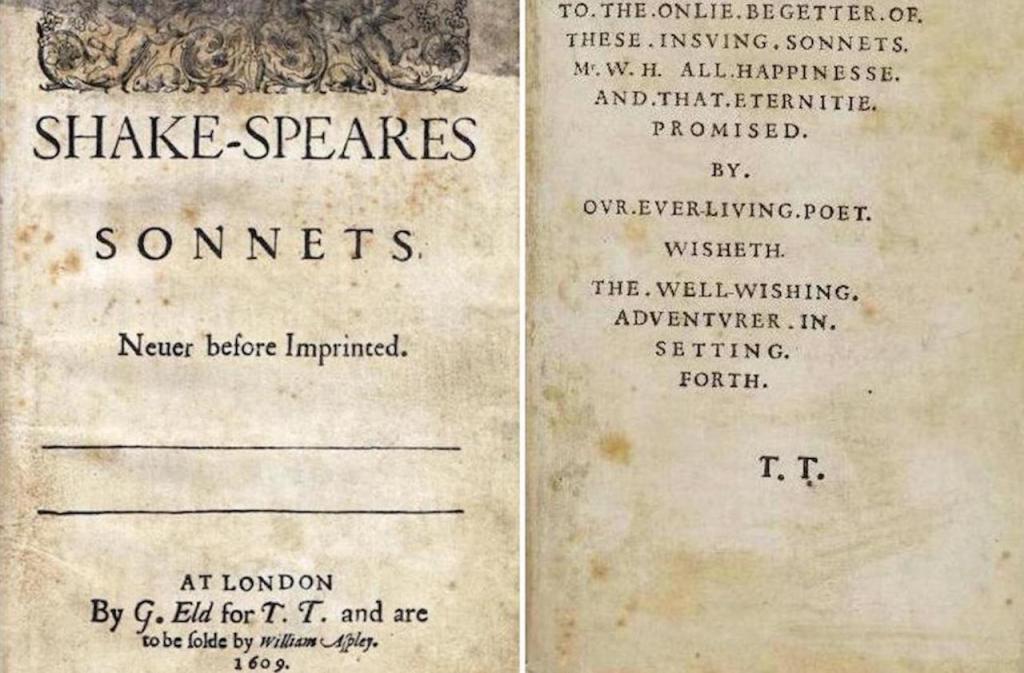
Thomas Regnier on “Our Ever-Living Poet”
Thomas Regnier, Shakespeare scholar and prominent Oxfordian, delineates the top “18 Reasons Why Edward de Vere, Earl of Oxford, Was “Shakespeare.” Regnier’s Reason 18 clarifies the use of the phrase, “Our ever-living poet,” thus demonstrating that it refers to Oxford instead of Stratford:
Shakespeare’s Sonnets were first published in 1609. There are indications on the dedication page that the author was no longer living at that time.
First, the dedication is signed by the publisher, Thomas Thorpe, not by the author, suggesting that the author was not alive to write the dedication.
More significantly, the dedication refers to the author as “ever-living.” This is a phrase that was used metaphorically to refer to a person who was no longer alive, but who would live on through his works in our minds and hearts.
The Earl of Oxford was no longer living in 1609, while the man from Stratford, who is usually credited with writing the works of Shakespeare, would live on for another seven years. Stratfordian scholars have never been able to explain why the phrase “ever-living” would have been applied to a living person. [13]
The controversy at the heart of the Stratford vs Oxford debate will likely continue because of the simple nature of the past, which perpetually remains in a kind of fog. An unfortunate encumbrance that may interfere with the legitimacy of the debate to ultimately find the truth is that it might come to depend on which side affords the debaters greater financial and prestigious awards.
Questions that could use an airing are: Do university grants go more often to those researchers who contend that Stratford is the real “William Shakespeare”? Does Oxfordianism label one a royalist and an elitist while Stratfordianism offers the veneer of humbleness and dedication to the “little man”?
The Stigma Attached to Oxfordianism
The Stratfordians have in the past attached a stigma to the Oxfordians, for example, in 1920, J. Thomas Looney identified Oxford as the Shakespeare writer and offering the claim that “William Shakespeare” was a pseudonym (pen name or nom de plume.) While Looney’s name is pronounced with a long ō, stigmatizing Stratfordians engaging in the rhetorical fallacy called name-calling revels in calling Looney “loony” (14).
Also if one entertains any lingering doubt that the Stratfordians have an equal argument to wield against the Oxfordians, one might want to have a look at the comments offered on amazon.com after Looney’s book, “Shakespeare” Identified,” a centenary edition edited by James Warren.
John Crowe Ransom’s New Criticism movement of the middle 20th century placed emphasis on the text above biography of the writer:
The central issue that new critical thought brought to literary studies is the emphasis on the text itself, rather than on the biography of the writer or the historical and societal circumstances in which the writer composed. While these issues may be considered overall, the first consideration must be the text itself. [15]
Nevertheless, each scholar, critic, commentarian, or reader has to decided for himself which of the known facts are important and in which direction they point. It is also important to remember that biography is only one portion of the information needed to understand and appreciate any work of literary art.
My Personal View of the Shakespeare Controversy
I have written commentaries on the 154 sonnets in the Shakespeare canon, and I have posted them on this site; thus I feel it necessary to make known my thoughts on the controversy and how they likely impact issues that I focus on in my sonnet commentaries.
After studying the research of Oxfordians such as the late Professor Daniel Wright, Thomas Regnier, and many others, as well as the many who remain traditional Stratford supporters, I conclude that the Oxfordians have the far better argument, and the evidence is clear that the Shakespeare writer is most likely, if not in fact, Edward de Vere, 17th Earl of Oxford.
I agree that the name “William Shakespeare” is most likely the pen name (nom de plume) of the Earl of Oxford. I find no reason that Gulielmus Shakspere should have adopted a pen name, when as it has been fairly established the he seldom put pen to paper.
Edward de Vere, as a ranking nobleman, needed to hide his association with the lower classes who engaged in writing and putting on plays. Thus he did have the need for employing the use of a nom de plume, especially as he began to publish. It is quiet easy to see that de Vere’s choice of a pen name “William Shakespeare” could be confused with the Stratford man’s name “Gulielmus Shakspere.”
Because I find most compelling that argument that “William Shakespeare” is the nom de plume of Edward de Vere, 17th Earl of Oxford, I choose to refer to the works attributed to “William Shakespeare” as the “Shakespeare works” or the “Shakespeare sonnets,” instead of “Shakespeare’s works” or “Shakespeare’s sonnets.”
I suggest that ownership shown by the apostrophe should be reserved for a person, not a nom de plume. In cases such a “Mark Twain” and “Lewis Carroll,” I relent because of their proximity to our contemporary world, and their identities are not in question. In my opinion, however, the sonnets are Edward de Vere’s sonnets, but because they are published and traditionally known as “Shakespeare” sonnets, I refer to them as such.

 Linda's Literary Home