Linda's Literary Home

Tag: Henry Wadsworth Longfellow

  • Henry Wadsworth Longfellow’s “A Psalm of Life”

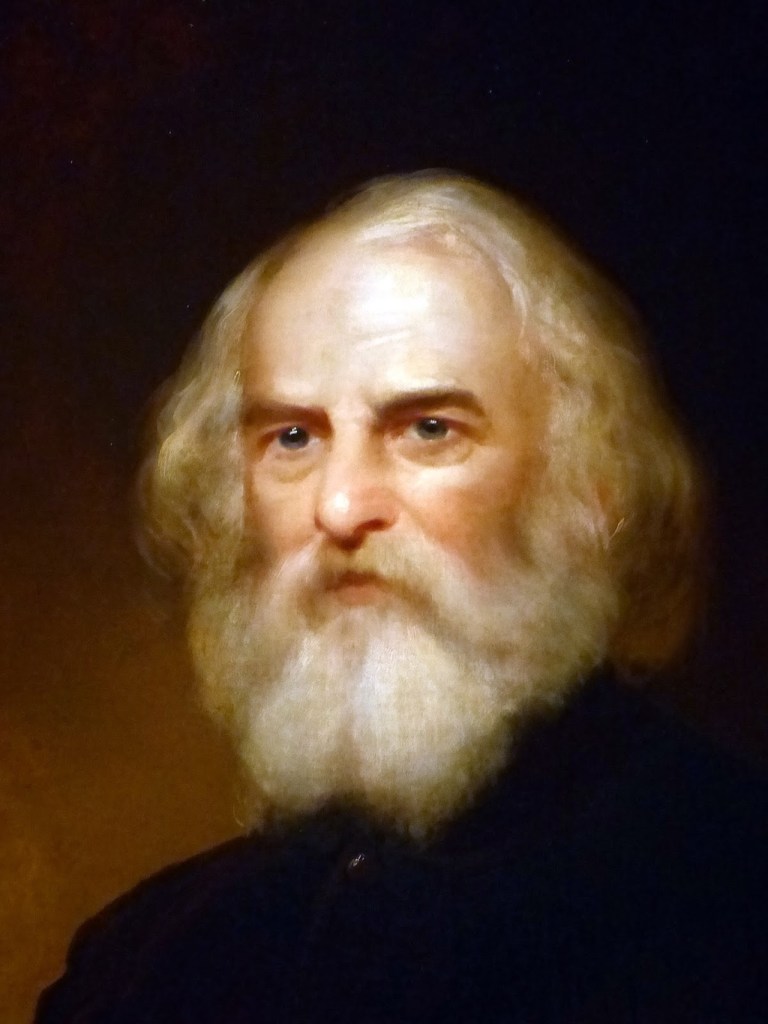
    Image: Henry Wadsworth Longfellow

    Henry Wadsworth Longfellow’s “A Psalm of Life”

    The speaker in Henry Wadsworth Longfellow’s “A Psalm of Life” is offering sage advice regarding the notion that each individual must face life with determination to be successful and fill one’s life with achievements.  The alternative renders the soul dead or simply slumbering without purpose.

    Introduction and Text of “A Psalm of Life”

    Henry Wadsworth Longfellow’s poetry was enormously popular and influential in his own lifetime. Today, most readers have heard his quotations so often that they have become “part of the culture.”

    For example, many readers will recognize the line, “Into each life some rain must fall,” and they will find that line in his poem called “The Rainy Day.” No doubt it is this Longfellow poem that helped spread the use of “rain” as a metaphor for the melancholy times in our lives.

    Longfellow was a careful scholar, and his poems reflect an intuition that allowed him to see into the heart and soul of his subject.  Critic and editor J. D. McClatchy says that Longfellow was “fluent in many languages,” and the poet translated such works as Dante’s The Divine Comedy.

    Other Longfellow translations include “The Good Shepherd” by Lope de Vega, “Santa Teresa’s Book-Mark” by Saint Teresa of Ávila, “The Sea Hath Its Pearls” by Heinrich Heine, and several selections by Michelangelo [1].

    The poet also achieved fame as a novelist with his novel Kavanaugh: A Tale. This work was touted by Ralph Waldo Emerson for its contribution to the development of the American novel.  Longfellow also excelled as an essayist with such works as “The Literary Spirit of Our Country,” “Table Talk,” and “Address on the Death of Washington Irving.”

    The poet’s highly spiritual poem “A Psalm of Life” offers a wise piece of advice regarding the issue of facing life with a proper positive attitude.  The alternative is to allow life to defeat one’s spirit which leads to failure and lack of achievement.  

    Longfellow has said that the poem is “a transcript of my thoughts and feelings at the time I wrote, and of the conviction therein expressed, that Life is something more than an idle dream” [2].

    A Psalm of Life

    What The Heart Of The Young Man Said To The Psalmist.

    Tell me not, in mournful numbers,
    Life is but an empty dream!
    For the soul is dead that slumbers,
    And things are not what they seem.

    Life is real! Life is earnest!
    And the grave is not its goal;
    Dust thou art, to dust returnest,
    Was not spoken of the soul.

    Not enjoyment, and not sorrow,
    Is our destined end or way;
    But to act, that each to-morrow
    Find us farther than to-day.

    Art is long, and Time is fleeting,
    And our hearts, though stout and brave,
    Still, like muffled drums, are beating
    Funeral marches to the grave.

    In the world’s broad field of battle,
    In the bivouac of Life,
    Be not like dumb, driven cattle!
    Be a hero in the strife!

    Trust no Future, howe’er pleasant!
    Let the dead Past bury its dead!
    Act,— act in the living Present!
    Heart within, and God o’erhead!

    Lives of great men all remind us
    We can make our lives sublime,
    And, departing, leave behind us
    Footprints on the sands of time;

    Footprints, that perhaps another,
    Sailing o’er life’s solemn main,
    A forlorn and shipwrecked brother,
    Seeing, shall take heart again.

    Let us, then, be up and doing,
    With a heart for any fate;
    Still achieving, still pursuing,
    Learn to labor and to wait.

    Sources for the Introduction

    [1] J. D. McClatchy, editor.  Longfellow: Poems and Other Writings. The Library of America. 2000.  Print.

    [2] Andrew Hilen, editor. The Letters of Henry Wadsworth Longfellow. Harvard University Press. 1966.

    Commentary on “A Psalm of Life”

    The speaker in Henry Wadsworth Longfellow’s “A Psalm of Life” presents life as an instrument for striving and achievement; he challenges individuals to think and peer beyond the certainty of death and to tirelessly work toward achieving worthwhile goals. 

    The poem urges readers to take inspiration from the lives of great men of high accomplishments, to act in the eternal now, and to leave behind a legacy (“footprints in the sands of time” ) that will inspire others to follow their own goals on their personal paths through life.

    First Stanza:  Confronting and Rebutting Pessimism

    Tell me not, in mournful numbers,
    Life is but an empty dream!
    For the soul is dead that slumbers,
    And things are not what they seem.

    In one of his most widely anthologized poems “A Psalm of Life,” Henry Wadsworth Longfellow creates a speaker who is openly and  directly confronting pessimism.  The command, “Tell me not, in mournful numbers,” immediately heralds a defiant tone, indicating that the speaker eschews the notion that life remains nothing more than an “empty dream.” 

    The speaker opines and asserts that a passive, slumbering soul is “dead” and that appearances can be deceiving—life’s true value is not found in relinquishment of duty or rolling over and playing dead.

    Second Stanza:  A Declaration of  Transcendental Life

    Life is real! Life is earnest!
    And the grave is not its goal;
    Dust thou art, to dust returnest,
    Was not spoken of the soul.

    In the second stanza, the speaker is declaring that life is real and earnest. He refutes the notion that the graveyard is life’s ultimate destinational goal.  By quoting the Biblical injunction, “dust thou art, to dust returnest,” he distinguishes an important, vital difference between the physical encasement and the eternal soul, which confirms that the true purpose of living the life of a human being is to transcend mortality.

    Third Stanza:  Defeating the Pairs of Opposites

    Not enjoyment, and not sorrow,
    Is our destined end or way;
    But to act, that each to-morrow
    Find us farther than to-day.

    The third stanza reveals that pleasure, sorrow, and other sense factors involving the pairs of opposites are also not the ultimate aim of existence. 

    Instead, the speaker calls for active duty and acceptance of responsibilities as the way to progressive evolution. Each day should fulfill some advancement in one’s goal, and not merely remain a repetition of mundane activities or a  stagnation of routine.

    Fourth Stanza:  Time Marches On, but Keep On Keeping On

    Art is long, and Time is fleeting,
    And our hearts, though stout and brave,
    Still, like muffled drums, are beating
    Funeral marches to the grave.

    The speaker then addresses the struggle between human desires and ambition and the relentless onslaught of time as it ticks on and on.  The metaphor of “muffled drums” beating “funeral marches to the grave” emphasizes drearily the inevitability that death continues to approach, yet the speaker continues to urge his fellow human beings to remain “stout and brave” despite these unsavory facts.

    Fifth Stanza:  Confronting the Battlefield of Life

    In the world’s broad field of battle,
    In the bivouac of Life,
    Be not like dumb, driven cattle!
    Be a hero in the strife!

    The speaker in the fifth stanza then turns to a military metaphor, likening life to a battlefield. He exhorts readers again not to remain passive or herd-like (“dumb, driven cattle”), but to always strive heroically as they meet life’s struggles and set-backs.

    Sixth Stanza:  The Importance of the Eternal Now

    Trust no Future, howe’er pleasant!
    Let the dead Past bury its dead!
    Act,— act in the living Present!
    Heart within, and God o’erhead!

    The speaker now is admonishing his fellows against both relying on the future or on dwelling on the past. The command to “act in the living Present” becomes cardinal to the poem’s message. 

    The phrase “Heart within, and God o’erhead!” states in no uncertain terms that inner determination and divine protection and guidance are major sources of the necessary strength required to meet all the challenges that life is apt to throw at the human mind and heart.

    Seventh Stanza:  Emulating the Example of Greatness

    Lives of great men all remind us
    We can make our lives sublime,
    And, departing, leave behind us
    Footprints on the sands of time;

    In the seventh stanza, the speaker is providing the example of great men to inspire the reader.  The lives of great men of the past and present clearly and convincingly demonstrate that it is possible for each human being to achieve greatness and to leave a lasting mark in the fields of endeavor to which they have been called.

    By keeping in clear sight worthy goals and determining to work assiduously to achieve those goal, any individual can surely succeed and leave “footprints on the sands of time.”   Those “footprints” are found in the histories of those great men and women who achieved their goals and gave to humankind tangible tools. 

    One thinks of such people as the Founding Fathers, who worked tirelessly to bestow on their country a document called the Constitution, which would allow the citizens to live in freedom instead of a monarchy or dictatorship.  Or one might bring to mind Thomas Edison with his inventions such as the light bulb that ordinary life uses on a daily basis. 

    Eighth Stanza:  Setting a Positive Example

    Footprints, that perhaps another,
    Sailing o’er life’s solemn main,
    A forlorn and shipwrecked brother,
    Seeing, shall take heart again.

    The speaker then expands on the idea of a life legacy to all others who may just need a boost to continue marching down their own chosen paths.  One need not aim for fame and renown to leave behind those “footprints.” 

    Whatever good one leaves behind can offer hope and encouragement to others who are struggling.  This notion emphasizes the importance of setting a positive example for others because one can never know who might benefit by learning about or seeing how hard we worked for our own goals.

    Ninth Stanza:  Perfecting a Stalwart Attitude 

    Let us, then, be up and doing,
    With a heart for any fate;
    Still achieving, still pursuing,
    Learn to labor and to wait.

    The speaker concludes his psalm with a solemn call to action. He urges his readers to remain focused on their goals and duties, and to remain resilient in facing adversity.  He wants his fellows to pursue their goal with great determination.

    He also wants humanity to nurture perseverance and patience.  He admonishes and urges his audience to be industrious and resilient, to pursue goals with determination, and to cultivate a stalwart attitude.  Each individual must”Learn to labor and to wait” as they continue to pursue and achieve.

    The Power of Longfellow’s Psalm

    Henry Wadsworth Longfellow’s “A Psalm of Life” remains a powerful musing on the human condition, as it performs its function through a pleasant meter, sophisticated rime-scheme, and motivating calls for action. 

    Longfellow’s psalm is not merely an harangue against mortality; it offers instead a set of instructions for deliberate living, as Henry David Thoreau insisted that we went to Walden’s Pond to learn to “live deliberately.”

    The psalm’s abiding appeal is that it has the ability to inspire readers to rise above despair and lethargy, to act courageously, and to hopefully leave a meaningful legacy of guideposts for coming generations.
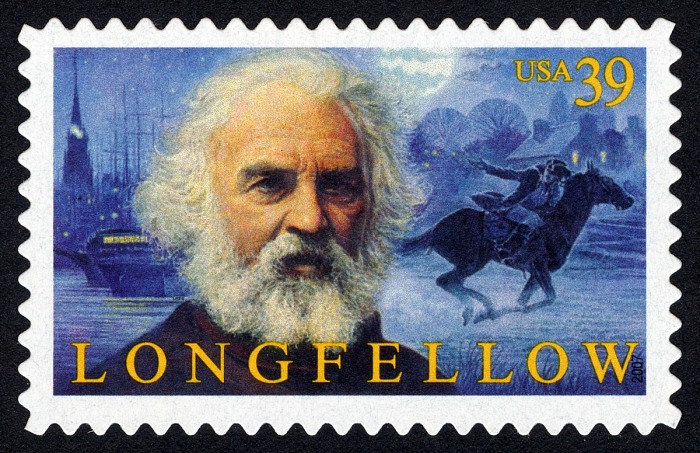
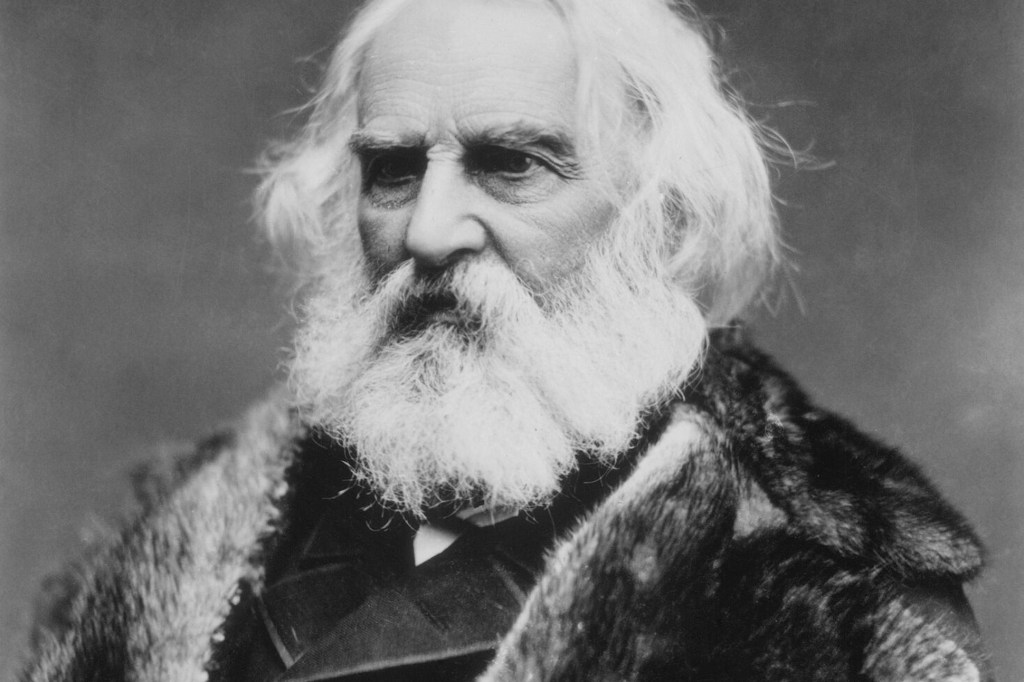
    Image: Henry Wadsworth Longfellow   Commemorative Stamp

  • Henry Wadsworth Longfellow’s “Christmas Bells”

    Image: Henry Wadsworth Longfellow

    Henry Wadsworth Longfellow’s “Christmas Bells”

    Henry Wadsworth Longfellow’s” Christmas Bells” is a widely anthologized poem that celebrates the winter holiday.   It features a phrase associated famously with the Christmas season in its chant, “Of peace on earth / Good-will to men.”

    Introduction and Text of “Christmas Bells”

    Henry Wadsworth Longfellow’s “Christmas Bells” is remarkable not only for its tribute to Christmas but also for its commentary regarding the American Civil War, which was in progress at the time the poet composed this poem on Christmas Day 1864.   This poem was published in 1865, and by 1872, it was set to music, becoming a world famous Christmas carol, covered by many singers, including Frank Sinatra.

    The poem plays out in seven cinquains, each with the riming scheme, AABBC.  It repeats the phrase, “peace on earth, good-will to men,” which has become a widely chanted invocation for world peace.

    Christmas Bells

    I heard the bells on Christmas Day
    Their old, familiar carols play,
        And wild and sweet
        The words repeat
    Of peace on earth, good-will to men! 

    And thought how, as the day had come,
    The belfries of all Christendom
        Had rolled along
        The unbroken song
    Of peace on earth, good-will to men! 

    Till ringing, singing on its way,
    The world revolved from night to day,
        A voice, a chime,
        A chant sublime
    Of peace on earth, good-will to men! 

    Then from each black, accursed mouth
    The cannon thundered in the South,
        And with the sound
        The carols drowned
    Of peace on earth, good-will to men! 

    It was as if an earthquake rent
    The hearth-stones of a continent,
        And made forlorn
        The households born
    Of peace on earth, good-will to men! 

    And in despair I bowed my head;
    “There is no peace on earth,” I said;
        “For hate is strong,
        And mocks the song
    Of peace on earth, good-will to men!” 

    Then pealed the bells more loud and deep:
    “God is not dead, nor doth He sleep;
        The Wrong shall fail,
        The Right prevail,
    With peace on earth, good-will to men.”

    Reading with musical accompaniment:  

    Commentary on “Christmas Bells”

    Since its original publication in 1865, the concluding year of the American Civil War, Henry Wadsworth Longfellow’s” Christmas Bells” has enjoyed widespread distribution and attention.  

    The poem’s refrain, “Of peace on earth / Good-will to men,” has served as an appeal for a common goal, uplifting the minds and hearts of all people the world over.  And while the poem’s association with the Christmas holiday is obvious, the sentiment for peace and world-wide goodwill remain regnant throughout the year.

    First Cinquain:  Ringing in Christmas

    I heard the bells on Christmas Day
    Their old, familiar carols play,
        And wild and sweet
        The words repeat
    Of peace on earth, good-will to men!

    The speaker reports that upon hearing the church bells pealing and the singing of carols in celebration of Christ’s birth, he is reminded of the purpose of Christmas celebration of peace and harmony among the world’s citizens.  He avers that the words and sentiment are very well-known to him. 

    He also reports that those words hold a special place in his heart.  The speaker’s tribute thus reveals the nature of the season that had become and still remain one of the most important celebrations of the year, especially in Western culture.

    The line—”Of peace on earth, good-will to men!”—becomes the refrain in this poem that may also serve as a hymn. The refrain allows the poem to function as a chant.  It has been invoked many times in many places for that purpose since its composition in 1863.  

    Those important words have also been employed to remind a warring world of the true goal human endeavor, that peace and harmony are ever more desirable than war and chaos.

    Second Cinquain:  A Reminder of Peace 

    And thought how, as the day had come,
    The belfries of all Christendom
        Had rolled along
        The unbroken song
    Of peace on earth, good-will to men!

    Hearing the bells and the caroling also reminds the speaker of the “unbroken song” of Christ’s birth that is celebrated in all places where Christians and others of a spiritual nature acknowledge and love Jesus Christ.  

    Again, the speaker repeats that all important idea, “Of peace on earth, good-will to men!” The chanted line remains an important feature of this poem for its ability to alter even the speaker’s mood as he continues to describe his reaction to hearing the bells.

    For the speaker, the continuation of the celebration of the birth of Jesus Christ as the savior of humankind has informed his remembrance, even as life has progressed and often descended into the chaos that all of humankind would prefer to avoid. 

    He is writing during the time of war, and thus he desires to achieve peace, but that desire may be contrasted with outward events that hem him round.  As he writes his tribute, motivated by the words of sacredness from the carols, he is reminded of calmness and the nature of life as he would have it.

    Third Cinquain:  Heavenly Sounds 

    Till ringing, singing on its way,
    The world revolved from night to day,
        A voice, a chime,
        A chant sublime
    Of peace on earth, good-will to men!

    The sounding of the bells and voices singing Christmas carols continues throughout the day as the day turns into night.  The speaker describes the sounds he hears as voices and chimes.  He finds those sounds to be heavenly; they remind him of all things sublime.  And the chant he has fashioned again closes the cinquain.

    The simple chanting of an uncomplicated but seemingly unattainable state of earthly tranquility provides the atmosphere in which a mind may rest, if only for a moment.   The necessity of that rest becomes paramount during times of holy day recognition, and the celebration of the birth of Christ offers “Christendom” that opportunity for solemn meditation on the soul.

    The speaker throughout his tribute remains intensely focused on the refrain that is chanted, and the peace and goodwill that he is asserting then become part of a prayer. 
     As he asserts that the words of the carols remind him of sacredness, he yearns to bring about that very situation through concentration on the peace and harmony that such chanting is not only describing but also demanding.

    Fourth Cinquain:  A Moment of Bleak Melancholy

    Then from each black, accursed mouth
    The cannon thundered in the South,
        And with the sound
        The carols drowned
    Of peace on earth, good-will to men! 

    While the speaker is enjoying of the beautiful peeling of the bells and the singing of carols, he enjoyment is suddenly interrupted by a loud, explosive reminder that war is raging.

    Symbolizing the war, cannons are loudly reminding the speaker of the unfortunate events that are being played out, especially in the southern part of his country.  Those likely metaphoric sounds have intruded into the speaker’s consciousness at a time when he is musing on beautiful qualities that should exist, specially at this time of year.  

    The loud cannons that “thunder” become a dark cloud, covering the beauty of the carols that proclaim earthly peace and the lovely fellow feeling that should exist among all citizens.

    This interlude of remembrance of war contrasts greatly with the opening emphasis on beauty, tranquility, along with peace and goodwill.  The stark image of a cannon’s “black, accursed mouth” startles the mind that has heretofore been soothed by the reminders of celebration of spirituality through peace and goodwill.

    Fifth Cinquain:  Peace Broken by War 

    It was as if an earthquake rent
    The hearth-stones of a continent,
        And made forlorn
        The households born
    Of peace on earth, good-will to men! 

    Continuing the contrasting stark interlude of war that has pushed its way into the speaker’s awareness, this stanza then likens the war to a different calamity.  Thus the narrative moves from the cannons of war to the natural phenomenon of an earthquake that breaks up the very ground beneath the feet of the citizens.  

    The households seem to be suddenly stripped of the serenity that should be aglow with the peace and harmony for each family.  This interlude of melancholy and pain, however, still contains the seeds of hope as the cinquain concludes again with the refrain for peace.

    The speaker is aware that too many families have been affected by the war as husbands, wives, sons, daughters, brothers, and sisters have gone off to war to defend what they consider their homeland.  This “earthquake” of war has caused a melancholy atmosphere to fall over the citizenry, but the speaker still continues to chant his prayer of yearning for peace and goodwill.

    Sixth Cinquain:  No Peace—Just Despair and Hatred 

    And in despair I bowed my head;
    “There is no peace on earth,” I said;
        “For hate is strong,
        And mocks the song
    Of peace on earth, good-will to men!” 

    Into the third stanza also comes the painful interlude of melancholy, which continues to serve as a reminder that this poem is being composed during a time of war.  The speaker looks down, bowing his head, feeling desperate for better times. 

    He bemoans the fact that currently peace does not reign over the land.  His country is engaged in a bloody battle for its soul; it is being pulled apart by differences that reflect strong hatred on both sides.  

    Political differences have spoiled the peace that should be spreading over the landscape and into the hearts and minds of the citizenry, instead of the suffering and chaos that war and hatred are bringing.

    Because there is such strong hatred in the world, the song of peace is mocked by the brutality of war, which contrasts so violently with the notion of peace and harmony.  Sadly then, the speaker is experiencing a moment of hopelessness that there is no truth in chanting about peace, love, and goodwill.  

    The contrast between his earlier feeling regarding peace and harmony reflected by his repeated refrain and this painful realization that peace is lacking must have been excruciating for the speaker as he passes through that dark moment brought on by the reality of war raging in his country.

    That the speaker is forced to concede, “There is no peace on earth,” remains a painful reminder of the chaos that hatred brings into the lives all people.  The very hope that peace can be achieved on earth becomes difficult to maintain in the midst of all the pain and suffering caused by the destruction of weapons and brute force against citizens.  

    Seventh Cinquain:  The Return to Faith and Joy 

    Then pealed the bells more loud and deep:
    “God is not dead, nor doth He sleep;
        The Wrong shall fail,
        The Right prevail,
    With peace on earth, good-will to men.”

    Just as suddenly as the melancholy had momentarily overtaken him,  the speaker’s mind fortunately returns to its faith that all will be well.  The bells’ tone now seems to become even deeper and louder, causing the speaker’s musings to be uplifted.

    His heart and mind become filled with the notion that the wrong of the world will be defeated by the right, which will win.  The speaker assures himself that God is in control, and that God never abandons His children.   The sound of the bells continues to peal in the speaker’s consciousness as they deliver his mood from sadness to hope and faith again.

    The speaker then is able to assert with strongest faith, “God is not dead.”  He also asserts with assurance, “nor doth He sleep.”  The speaker’s faith thus returns him to the knowledge that right will overcome wrong because God is still controlling all events.  

    The speaker can thus continue emphasizing the sentiment of his controlling refrain.  He can again with renewed faith place that emphasis on that refrain that had brightened all the preceding stanzas of his discourse.  He can chant again his invocation for peace and goodwill for all his earthly brethren.

    Thus, because of the return of his faith in his deep heart’s core, he can proclaim the repeated truth that God still fills the world’s faithful “With peace on earth, good-will to men.”

  • Essays: Poems and Songs with Commentaries

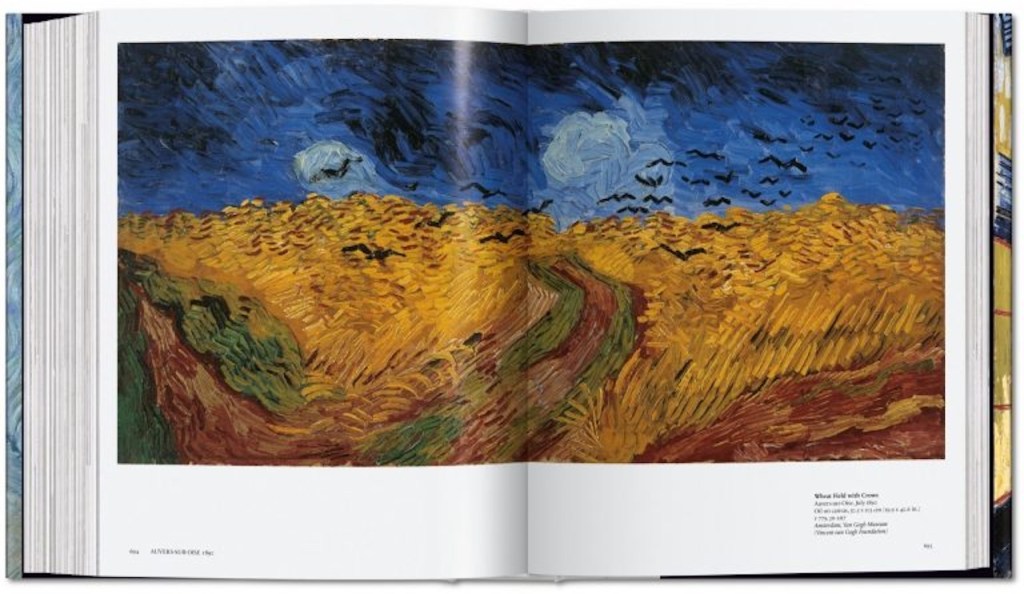
    Image:   Van Gogh: The Complete Paintings

    Essays: Poems and Songs with Commentaries

    This room in my literary home holds links to poems primarily written by others along with my personal commentaries on the poems.   Some of these additions include commentaries that appear on HubPages.

    Thank you for visiting my literary home.  Questions, comments, and suggestions offered in good faith are always welcome.

    Poems with Commentaries

    1. Sterling A. Brown’s “Southern Cop”
    2. Barack Obama’s “Pop”
    3. Barack Obama’s “Underground”
    4. Malcolm M. Sedam’s “The Hill Maiden”
    5. W. B. Yeats’ “The Second Coming”
    6. Al Gore’s “One thin September soon”
    7. W. H. Auden’s “Doggerel by a Senior Citizen”
    8. Gloria’s “To the Man I Married”  
    9. Sharon Olds’ “The Victims”
    10. Ben Okri’s Poem “Obama”
    11. Ella Wheeler Wilcox’s “The Queen’s Last Ride”
    12. Audre Lorde’s “Father Son and Holy Ghost”
    13. Seamus Heaney’s “Whatever You Say, Say Nothing”
    14. Walter de la Mare’s “Silver”
    15. Henry Wadsworth Longfellow’s “Christmas Bells”
    16. Henry Wadsworth Longfellow’s “A Psalm of Life”  
    17. D. H. Lawrence’s “Afternoon in School: The Last Lesson”
    18. Paul Laurence Dunbar’s “Sympathy” 
    19. Robert Bly’s “The Cat in the Kitchen” and “Driving to Town Late to Mail a Letter” 
    20. Thomas Thornburg’s “Serving the South”
    21. Sara Teasdale’s “Barter
    22. Sylvia Plath’s “Mirror” 
    23. Renée Nicole Macklin’s “On Learning to Dissect Fetal Pigs”
    24. Sara Teasdale’s “I Am Not Yours”
    25. Cornelius Eady’s “Renée Nicole Good Is Murdered”  
    26. Malcolm M. Sedam’s “Desafinado” 
    27. Walt Whitman’s “When Lilacs Last in the Dooryard Bloom’d”
    28. Thomas Gray’s “Elegy Written in a Country Churchyard”
    29. Amanda Gorman’s “For Renee Nicole Good”  
    30. Robert Hayden’s “Those Winter Sundays”
    31. Alfred, Lord Tennyson’s “Come not, When I Am Dead”
    32. E. A. Robinson’s “Richard Cory”

    Songs with Commentaries

    1. Gary Clarks’s “Mary’s Prayer”: A Yogic Interpretation 
    2. .38 Special’s “Second Chance”