Linda's Literary Home

Tag: Holy Bible

  • James Weldon Johnson’s “Noah Built the Ark”

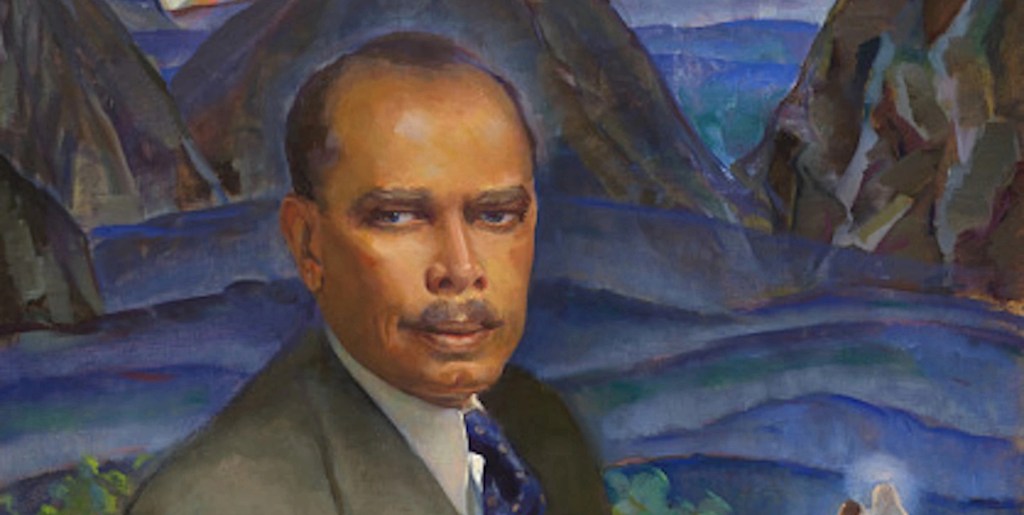
    Image: James Weldon Johnson – National Portrait Galley – Smithsonian

    James Weldon Johnson’s “Noah Built the Ark”

    A poetic retelling of the story about Noah and the Ark, this dramatic poem is one of Johnson’s seven sermons in verse from his collection, God’s Trombones.  At certain points in the story, the narrator offers his own interpretations, embellishing the tale and adding further interesting features.

    Introduction and Text of “Noah Built the Ark”

    James Weldon Johnson’s “Noah Built the Ark” offers an entertaining and educational experience in poetry.  Johnson’s clear vision in biblical lore is on full display in his narrative retelling of the Noah and the Ark story from Genesis 6:9–9:17 KJV.    The poet is offering an oratory tone in the style of a southern black preacher.  His retelling features such plain language that even a child can understand the images and events immediately.

    Johnson brought out his collection God’s Trombones: Seven Negro Sermons in Verse in 1927.  The collection begins with a prayer, “Listen Lord–A Prayer,” and then features seven verse-sermons, “The Creation,” “The Prodigal Son,” “Go Down Death,” “Noah Built the Ark,” “The Crucifixion,” “Let My People Go,” and “The Judgment Day.”

    During his lifetime, Johnson had attended many church services throughout the South, and he was inspired by the oratorical style of the many black preachers, whose preaching he admired.   A Southerner himself born in Jacksonville, Florida, Johnson had an ear for dialect and rhythms in speech.  All of his poetry is enhanced by his talent for language and its specialties of speech.

    Noah Built the Ark

    In the cool of the day—
    God was walking—
    Around in the Garden of Eden.
    And except for the beasts, eating in the fields,
    And except for the birds, flying through the trees,
    The garden looked like it was deserted.
    And God called out and said: Adam,
    Adam, where art thou?
    And Adam, with Eve behind his back,
    Came out from where he was hiding.
    And God said: Adam,
    What hast thou done?
    Thou hast eaten of the tree!
    And Adam,
    With his head hung down,
    Blamed it on the woman.

    For after God made the first man Adam,
    He breathed a sleep upon him;
    Then he took out of Adam one of his ribs,
    And out of that rib made woman.
    And God put the man and woman together
    In the beautiful Garden of Eden,
    With nothing to do the whole day long
    But play all around in the garden.
    And God called Adam before him,
    And he said to him;
    Listen now, Adam,
    Of all the fruit in the garden you can eat,
    Except of the tree of knowledge;
    For the day thou eatest of that tree,
    Thou shalt surely die.

    Then pretty soon along came Satan.
    Old Satan came like a snake in the grass
    To try out his tricks on the woman.
    I imagine I can see Old Satan now
    A-sidling up to the woman,
    I imagine the first word Satan said was:
    Eve, you’re surely good looking.
    I imagine he brought her a present, too,—
    And, if there was such a thing in those ancient days,
    He brought her a looking-glass.

    And Eve and Satan got friendly—
    Then Eve got to walking on shaky ground;
    Don’t ever get friendly with Satan.—
    And they started to talk about the garden,
    And Satan said: Tell me, how do you like
    The fruit on the nice, tall, blooming tree
    Standing in the middle of the garden?
    And Eve said:
    That’s the forbidden fruit,
    Which if we eat we die.

    And Satan laughed a devilish little laugh,
    And he said to the woman: God’s fooling you, Eve;
    That’s the sweetest fruit in the garden,
    I know you can eat that forbidden fruit,
    And I know that you will not die.

    And Eve looked at the forbidden fruit,
    And it was red and ripe and juicy.
    And Eve took a taste, and she offered it to Adam,
    And Adam wasn’t able to refuse;
    So he took a bite, and they both sat down
    And ate the forbidden fruit.—
    Back there, six thousand years ago,
    Man first fell by woman—
    Lord, and he’s doing the same today.

    And that’s how sin got into this world.
    And man, as he multiplied on the earth,
    Increased in wickedness and sin.
    He went on down from sin to sin,
    From wickedness to wickedness,
    Murder and lust and violence,
    All kinds of fornications,
    Till the earth was corrupt and rotten with flesh,
    An abomination in God’s sight.

    And God was angry at the sins of men.
    And God got sorry that he ever made man.
    And he said: I will destroy him.
    I’ll bring down judgment on him with a flood.
    I’ll destroy ev’rything on the face of the earth,
    Man, beasts and birds, and creeping things.
    And he did—
    Ev’rything but the fishes.

    But Noah was a just and righteous man.
    Noah walked and talked with God.
    And, one day, God said to Noah,
    He said: Noah, build thee an ark.
    Build it out of gopher wood.
    Build it good and strong.
    Pitch it within and pitch it without.
    And build it according to the measurements
    That I will give to thee.
    Build it for you and all your house,
    And to save the seeds of life on earth;
    For I’m going to send down a mighty flood
    To destroy this wicked world

    And Noah commenced to work on the ark.
    And he worked for about one hundred years.
    And ev’ry day the crowd came round
    To make fun of Old Man Noah.
    And they laughed and they said: Tell us, old man,
    Where do you expect to sail that boat
    Up here amongst the hills?

    But Noah kept on a-working.
    And ev’ry once in a while Old Noah would stop,
    He’d lay down his hammer and lay down his saw,
    And take his staff in hand;
    And with his long, white beard a-flying in the wind,
    And the gospel light a-gleaming from his eye,
    Old Noah would preach God’s word:

    Sinners, oh, sinners,
    Repent, for the judgment is at hand.
    Sinners, oh, sinners,
    Repent, for the time is drawing nigh.
    God’s wrath is gathering in the sky.
    God’s a-going to rain down rain on rain.
    God’s a-going to loosen up the bottom of the deep,
    And drown this wicked world.
    Sinners, repent while yet there’s time
    For God to change his mind.

    Some smart young fellow said: This old man’s
    Got water on the brain.
    And the crowd all laughed—Lord, but didn’t they laugh;
    And they paid no mind to Noah,
    But kept on sinning just the same.

    One bright and sunny morning,
    Not a cloud nowhere to be seen,
    God said to Noah: Get in the ark!
    And Noah and his folks all got in the ark,
    And all the animals, two by two,
    A he and a she marched in.
    Then God said: Noah, Bar the door!
    And Noah barred the door.

    And a little black spot begun to spread,
    Like a bottle of ink spilling over the sky;
    And the thunder rolled like a rumbling drum;
    And the lightning jumped from pole to pole;
    And it rained down rain, rain, rain,
    Great God, but didn’t it rain!
    For forty days and forty nights
    Waters poured down and waters gushed up;
    And the dry land turned to sea.
    And the old ark-a she begun to ride;
    The old ark-a she begun to rock;
    Sinners came a-running down to the ark;
    Sinners came a-swimming all round the ark;
    Sinners pleaded and sinners prayed—
    Sinners wept and sinners wailed—
    But Noah’d done barred the door.

    And the trees and the hills and the mountain tops
    Slipped underneath the waters.
    And the old ark sailed that lonely sea—
    For twelve long months she sailed that sea,
    A sea without a shore.

    Then the waters begun to settle down,
    And the ark touched bottom on the tallest peak
    Of old Mount Ararat.
    The dove brought Noah the olive leaf,
    And Noah when he saw that the grass was green,
    Opened up the ark, and they all climbed down,
    The folks, and the animals, two by two,
    Down from the mount to the valley.
    And Noah wept and fell on his face
    And hugged and kissed the dry ground.

    And then—
    God hung out his rainbow cross the sky,
    And he said to Noah: That’s my sign!
    No more will I judge the world by flood—
    Next time I’ll rain down fire.

    Recitation of “Noah Built the Ark”:  

    Commentary on “Noah Built the Ark”

    While the basic story remains a parallel to the original, the narrator offers his own embellishments at certain points that any listener will recognize as departures from the biblical version.  This embellishments stem from the narrator’s personal interpretations of the image and events.

    First Movement:  Original Creation

    The actual story featuring Noah and the ark begins in the third movement; the narrator first builds up to the purpose for Noah having to build the ark.  Thus, the opening scenes show God just after having created Adam and Eve, summoning them to hold them responsible for their disobedience.  

    God knows that they have done the one and only thing He had told them not to do: they have eaten of the “tree of knowledge.”  God had told them if they disobeyed this one rule, they would die.  

    Unfortunately, Satan had persuaded Eve to eat of the fruit, making her believe that God was lying to her.  Thus, she ate and convinced Adam to eat, and soon they had lost their paradise in Eden.

    The narrator creatively describes the characters in his narrative in colorful ways, for example he had “Old Satan” “[a]-silding up the woman.”  Then Satan, who moves “like a snake in the grass,” appeals to the woman’s vanity telling her “you’re surely good looking” and then imagining that Satan gave Eve a gift of a “looking-glass” to emphasize her vanity.

    Second Movement:  Satan’s Seduction

    The narrator now goes into some detail as he has Satan seducing Eve to commit the one sin she had been warned against.  Satan belts forth a “devilish little laugh” upon hearing that God had told that pair that they would die if they ate of the forbidden fruit.   Satan tells Eve, “God’s fooling you.”  He then tells her that the fruit she is forbidden is the “sweetest fruit in the garden” and insists that she can enjoy that fruit without dying.

    Eve is convinced, eats the fruit, convinces Adam to eat the fruit, and “Man first fell by woman— / Lord, and he’s doing the same today.”  The narrator jokingly demonstrates the rift that began between man and woman with the committing of the original sin.

    So now mankind multiplied upon the earth, and not only did people increase, but “wickedness and sin” also increased, and kept on increasing until the corruption became “[a]n abomination in God’s sight.”

    Third Movement:  Corruption and Anger

    The corruption made God angry, and the narrator states that “God got sorry that he ever made man.”  And then God decides to destroy mankind by flooding the earth.  The narrator says that God planned to destroy all life on earth—except “the fishes.”  

    The narrator is inserting a bit of comedy into his narration because he knows everyone already is aware that God, in fact, instructed Noah to save all animal life.  The claim that God would save only the “fishes” is funny, though, because the fishes are the only life forms that can live in the water, a fact that would obviate the necessity of bringing a pair of them into the ark for saving, as was done with the land animals.

    Because Noah was not a man of sin and corruption but a “just and righteous man,” who “walked and talked with God,” God chooses Noah to be his instrument in saving a portion of His Creation.  

    Thus, God instructs Noah to build an ark for which God gives specific instructions:  to be made of gopherwood, “good and strong,” pitched inside and out, and according to the dimensions handed down by the Creator.

    God tells Noah that He is going to send down a flood to “destroy this wicked world.”  But the house/family of Noah would be spared, and God wanted Noah to help Him “save the seeds of life on earth.”

    Noah then obeys God’s command, begins building the ark, working for “one hundred years,” experiencing ridicule daily as folks “make fun of Old Man Noah,” quipping, “Where do you expect to sail that boat / Up here amongst the hills?”

    Fourth Movement:  Building and Preaching

    Noah remains undeterred, working on the ark, but every now and then, he would cease his ark building and offer a sermon.  In his sermon, he would tell the “sinners” that they needed to repent because God was going to send “rain down rain on rain.”  

    Because of all the sinning and corruption, God’s wrath would “drown this wicked world.”  Noah encourages the sinners to turn their lives around while there is still time for “God to change his mind.” In response to Noah, a laughing young reprobate quips: “This old man’s / Got water on the brain.”  And then everyone else laughs.  

    Paying no attention to Noah’s warning, they keep on sinning. Then on a bright, sunny morning, the day had come.  God instructs Noah to gather pairs of animals and take them along with his family into the ark and “Bar the door!”  Then similar to ink spilling over a page, a black spot in the sky begins to spread, and the rain begins—pouring rain for forty days and night.

    And many sinners come to the ark “a-running” and “a-swimming” around the ark, pleading to be let in, but it is too late.  Though the sinners continue to weep and wail, “Noah’d done barred the door.”

    Fifth Movement:  The Promise

    The narrator then describes the flooded earth, where trees, hills, mountain tops all “slipped underneath the waters.”  And for “twelve long months,” the ark sails on a sea that possesses no shore.

    Finally, the waters begin to recede, and ark settles down on the tall peak of Mount Ararat.  A dove appears to Noah with an olive leaf, altering him that the flood is over, and anew beginning is at hand for all of the inmates of the Ark.

    After leaving the ark, the righteous Noah “wept and fell on his face / And hugged and kissed the dry ground.”  God then stretches a “rainbow across the sky” and promises Noah that the rainbow would be his reminder that He would never again “judge the world by flood.”

    But then God warns that “Next time I’ll rain down fire.”  Throughout his retelling of the Noah and the Ark story, the narrator has often added embellishments stemming from his own idiosyncratic interpretations.  

    The narrator’s final embellishment that God promised to end the world next by fire cannot be found in the biblical KJV version of that tale, but many instances in that version of the Holy Scripture do imply that God might employ the fire element the next time He feels compelled to destroy His Creation.
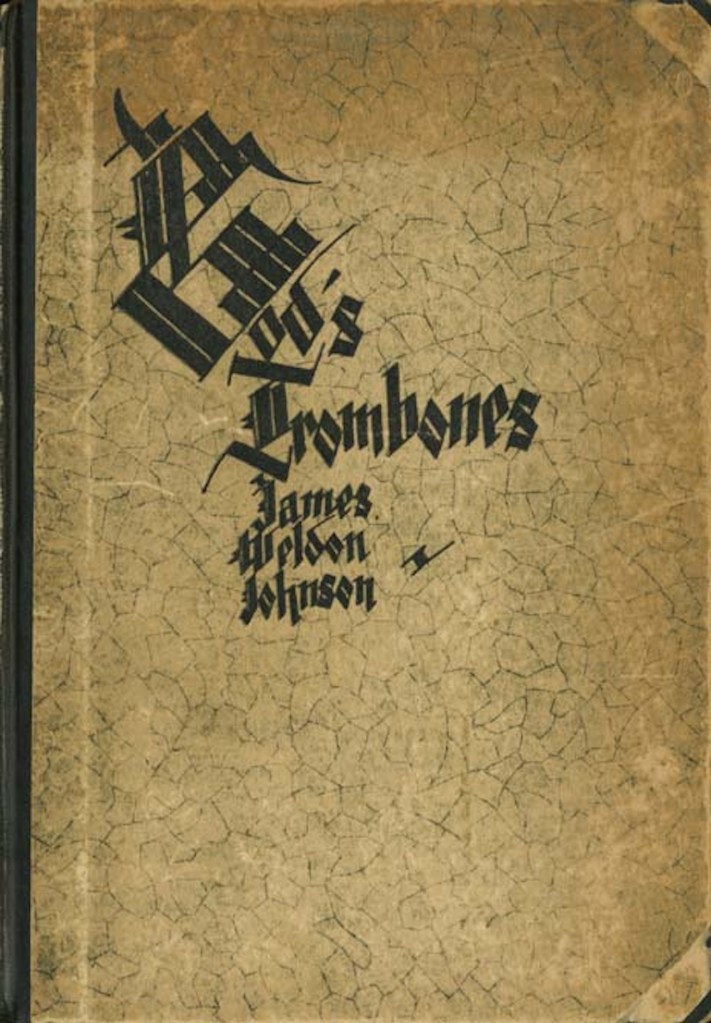
    Image:  Book Cover – Original Publication of God’s Trombones 

  • William Butler Yeats’ “The Indian upon God”

    Image 1:  Williams Butler Yeats – Chicago History Museum

    William Butler Yeats’ “The Indian upon God”

    Alluding to the Genesis concept of the image of God, the speaker parallels the Eastern spiritual tradition of pantheism to dramatize the full implication of that venerable concept.

    Introduction with Text of “The Indian upon God”

    William Butler Yeats’ poem “The Indian upon God” is displayed in ten riming couplets.   The theme of the poem dramatizes the biblical concept that God made man in His own image: 

    So God created man in his own image, in the image of God created he him; male and female created he them… (King James Version, Genesis 1:27).

    The full implication of this fascinating dictum is that God, in fact, created all of creation after His own image.   And while—because of the influence of postmodernism—that concept often receives short shrift in Western art culture, Eastern culture has long embraced it fully.

    William Butler Yeats became fascinated by Eastern philosophy and religion.  And while Yeats also fell victim to the “romantic misunderstanding” of many of the concepts pointed out by T. S. Eliot, Yeats still managed to dramatize certain ideas appropriately.

    This poem “The Indian upon God” remains one of his most accurate offerings from among the pieces that he based upon his take on Eastern philosophy.

    The Indian upon God

    I passed along the water’s edge below the humid trees,
    My spirit rocked in evening light, the rushes round my knees,
    My spirit rocked in sleep and sighs; and saw the moorfowl pace
    All dripping on a grassy slope, and saw them cease to chase
    Each other round in circles, and heard the eldest speak:
    Who holds the world between His bill and made us strong or weak
    Is an undying moorfowl, and He lives beyond the sky.
    The rains are from His dripping wing, the moonbeams from His eye.
    I passed a little further on and heard a lotus talk: 
    Who made the world and ruleth it, He hangeth on a stalk,
    For I am in His image made, and all this tinkling tide
    Is but a sliding drop of rain between His petals wide.
    A little way within the gloom a roebuck raised his eyes
    Brimful of starlight, and he said: The Stamper of the Skies,  
    He is a gentle roebuck; for how else, I pray, could He
    Conceive a thing so sad and soft, a gentle thing like me?
    I passed a little further on and heard a peacock say:
    Who made the grass and made the worms and made my feathers gay,
    He is a monstrous peacock, and He waveth all the night      
    His languid tail above us, lit with myriad spots of light.   

    Commentary on “The Indian upon God”

    The speaker is paralleling the Eastern spiritual tradition of pantheism to dramatize the full impact of that venerable concept presented in Genesis:  creation—including  all created beings along with humankind—is created in the image of the Creator (God).

    Image 2:   Moorfowl Bird Guides

    First Movement:  The Moorfowl

    I passed along the water’s edge below the humid trees,
    My spirit rocked in evening light, the rushes round my knees,
    My spirit rocked in sleep and sighs; and saw the moorfowl pace
    All dripping on a grassy slope, and saw them cease to chase
    Each other round in circles, and heard the eldest speak:
    Who holds the world between His bill and made us strong or weak
    Is an undying moorfowl, and He lives beyond the sky.
    The rains are from His dripping wing, the moonbeams from His eye. 

    The speaker of the poem opens his musings by placing himself alongside a body of water as he walks under trees that he senses to have been moistened likely by a recent rain. In a meditative mood, he muses on the spiritual atmosphere of his locus.  

    He spies some birds pacing about and begins to consider how the moorfowl would elucidate his existence if he could do so in words.  He continues musing on the birds as they are leisurely moving about.

    Finally, the speaker, in his mind’s ear, imagines that the oldest bird begins to declaim about his existence.  That discourse is roughly paraphrased by the following:  

    my Maker is an immortal moorfowl, Who has created all the world, and He remains hidden behind His skyey perch from where He sends the rains and lights His creation with “His eye.”

    The moorfowl visualizes his Creator as a glorious version of himself.  His Creator possesses a “bill” and a “wing,” and the rains drop from His wings, while the moonbeams shoot from His eye.

    Image 3 Lotus – Photo by Ron Grimes

    Second Movement:  Lotus

    I passed a little further on and heard a lotus talk: 
    Who made the world and ruleth it, He hangeth on a stalk,
    For I am in His image made, and all this tinkling tide
    Is but a sliding drop of rain between His petals wide. 

    The speaker then moves on a short distance and begins his musing on what a lotus might say in explaining his origin: thus, the lotus also holds forth about his Creator:  

    my Maker and the ruler of the world “hang[s] on a stalk.”  I am made in His image, and this rain He is sending from between His enormous petals

    The lotus also describes his Creator as an embellished version of himself.  His Creator “hangeth on a stalk,” just as the lotus flower does, and his Maker also causes the rain to fall.  

    And similar to the moorfowl’s conception that the rain drips from the Supreme Moorfowl’s wings, the lotus’ Creator lets the rain “slide” between His petals. 

    Image 4: Roebuck – iStock

    Third Movement: Roebuck

    A little way within the gloom a roebuck raised his eyes
    Brimful of starlight, and he said: The Stamper of the Skies,  
    He is a gentle roebuck; for how else, I pray, could He
    Conceive a thing so sad and soft, a gentle thing like me? 

    The speaker continues on and crafts the fulmination of a roebuck, whose eyes were full of “starlight,” as he, too, explains his creative origin, labeling his Maker, “The Stamper of the Skies“:

    the creator of the world is a tender and mild roebuck, who else could have thought to fashion such a being as myself who remains so sorrowful yet so softly gentle?

    The roebuck concludes that his Creator has to be like himself in order to be able to fashion his unique characteristics of sadness, softness, and gentleness.  It is noteworthy that the roebuck makes his claim through a rhetorical question, which appears to humble his claim yet at the same time gives it particular emphasis.

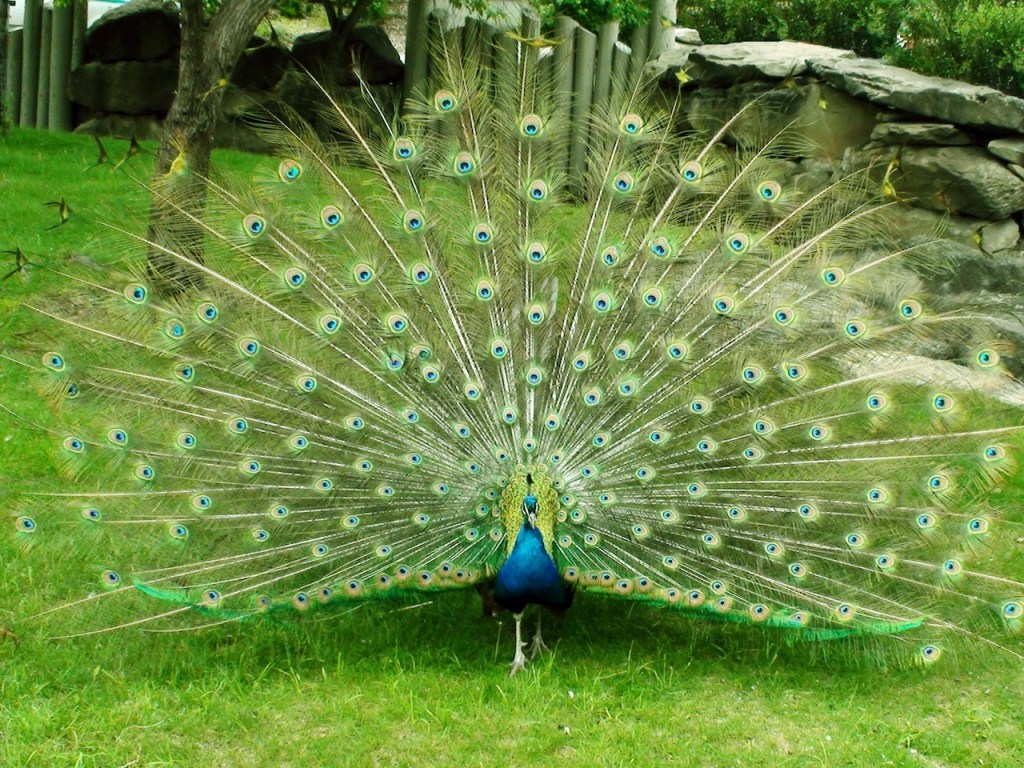
    Image 5: Peacock – Animal Wildlife

    Fourth Movement:  Peacock

    I passed a little further on and heard a peacock say:
    Who made the grass and made the worms and made my feathers gay,
    He is a monstrous peacock, and He waveth all the night      
    His languid tail above us, lit with myriad spots of light. 

    The speaker moves farther along, and listening to a peacock, he muses that the bird would describe his origin as the following: 

    I was created by a huge peacock who also created all vegetation and all other animals.  My Maker moves His bright features through the sky, from where He sends to us the light from the stars.

    Again, the animal describes his Creator in terms of his own characteristics. The peacock, however, verges on the boastful with his description, claiming that the “monstrous peacock,” or more glorious version of himself, also made the grass and worms.  

    The peacock implies that his Creator has made these creatures for the sake of the peacock.  And the peacock also likens his beautiful tail feathers to stars hanging in the skies.

    Image 6: Divine Mother  – Self-Realization Fellowship

    Creation: Image of the Divine

    The philosophy portrayed in William Butler Yeats’ poem is pantheism, the concept that God is everything.  If man (humankind) correctly discerns that God created human beings in His image, then God, in fact, created everything else that exists in His image.  

    If all things are reflections of one Creator, then each thing created can rightly aver that it is made in the image of the Divine. Pantheism is also logically monotheism:  all of creation taken together is one entity.  

    The monotheistic religions of empirical reality—as opposed to that of the  mythological Greek and Roman pantheon of gods—all expound the nature of God as a trinity—one being expressing in three aspects.  For example, in Hinduism the trinity is Sat-Tat-Aum (also expressed as Sat-Chit-Ananda).  The Christian trinity is expressed a Father-Son-Holy Spirit.

    All of the five major world religions—Hinduism, Buddhism, Judaism, Christianity, and Islam—are monotheistic.  Hinduism is often mistakenly referred to a a polytheistic religion by commentators who confuse the names for the various aspects of God as separate gods. 

    Capitalizing Pronouns Referring to God

    The King Jame Version of the Holy Bible does not capitalize the pronouns referring to God; that custom is a 19th century invention.   However, I usually capitalize pronouns referring to the Deity to make clear that such references are, in fact, referring to God.   In this commentary,  I have capitalized the pronouns primarily to make clear that the various individuals are referring to their Maker or God.

  • Gerard Manley Hopkins’ “My own heart let me more have pity on; let”

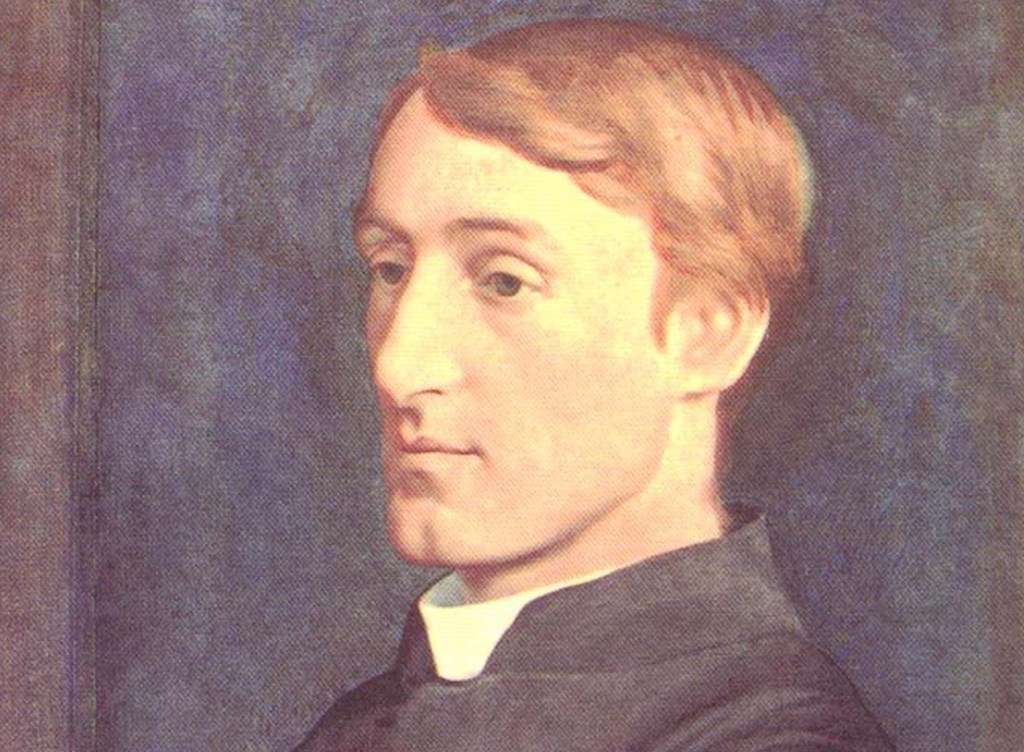
    Image: Gerard Manley Hopkins – National Portrait Gallery, London

    Gerard Manley Hopkins’ “My own heart let me more have pity on; let”

    The speaker in this sonnet examines his inward struggle, through which he has learned mercy toward the self (soul) while undergoing heavy, sustained spiritual pressure.  My personal issue with this pressure assures me that Father Hopkins well understood its vicissitudes as well as its rewards.

    Introduction and Text of “My own heart let me more have pity on; let”

    In this final terrible sonnet, the speaker turns inward to speak directly to his own heart; he does so with urgency but restraint. The sonnet foregrounds his own personal moral and spiritual reckoning.  In that accounting, he has found that self-pity is not indulgence but instead it is simply charity rightly ordered and affirmed. 

    The poetic language pushes as well as it knots itself into compression.  It portrays the pressure exerted on a mind that has been tormented to the point of exhaustion.  Thus, now that exhausted mind must seek a genuine place to rest.

    Readers may note that Father Hopkins has separated  both the octave and the sestet into two quatrains in the octave and two tercets in the sestet.  This kind of separation adds to the dramatic effect that each stanza represents.  

    The sonnet could be interpreted as consisting of four movements; however, for consistency of preserving the Petrarchan model, I have kept them grouped in my commentary as simply octave and sestet.

    My own heart let me more have pity on; let

    My own heart let me more have pity on; let
    Me live to my sad self hereafter kind,
    Charitable; not live this tormented mind
    With this tormented mind tormenting yet.

    I cast for comfort I can no more get
    By groping round my comfortless, than blind
    Eyes in their dark can day or thirst can find
    Thirst’s all-in-all in all a world of wet.

    Soul, self; come, poor Jackself, I do advise
    You, jaded, lét be; call off thoughts awhile
    Elsewhere; leave comfort root-room; let joy size

    At God knows when to God knows what; whose smile
    ‘S not wrung, see you; unforeseen times rather—as skies
    Betweenpie mountains—lights a lovely mile.

    Reading

    Commentary on “My own heart let me more have pity on; let”

    The sonnet dramatizes four movements, as mentioned above,  from self-laceration to self-mercy, which has led to the discovery of hope—not by force of harsh discipline but by soft, divinely inspired release.

    Octave: “My own heart let me more have pity on; let”

    My own heart let me more have pity on; let
    Me live to my sad self hereafter kind,
    Charitable; not live this tormented mind
    With this tormented mind tormenting yet.

    I cast for comfort I can no more get
    By groping round my comfortless, than blind
    Eyes in their dark can day or thirst can find
    Thirst’s all-in-all in all a world of wet.

    The speaker begins the octave by offering a plea that is, however, also a command.  He is directly addressing his own heart as both somewhat metaphorically as both judge and defendant. The line “Let me more have pity on” signals a deliberate act of will: pity must be allowed to exist and work its power, not merely be passively felt. 

    The speaker then labels his accustomed cruelty toward himself: he has become a “tormented mind” that compounds his suffering by continually rehearsing it. The repetition of “tormented” mimics the cycle he is condemning; his has become a mind that had kept turning upon itself without pause to rest. 

    Charity here does not engage merely for sentimental purposes; it remains a necessary,  ethical discipline, employing the discipline to refuse to continually inflict self-harm, even under the guise of rigor.

    The second quatrain moves quite quickly but assertively, and then it intensifies the uselessness of the same old, ordinary search for simple, quiet comfort. Casting “for comfort” metaphorically creates the two leisure activities of  fishing and gambling. Both of these activities involve chance, and uncertainty often hands over nothing to the player after plunging much effort into them. 

    The “blind/Eyes” image sharpens the deadlock: Blind eyes cannot see daylight simply by groping, while thirst cannot be slaked by being dunked in water that is not fit to drink.  Again, the poet has been performing his duty of giving back to the reader his own experience.  And the mark of a great poet is that he does so completely in a natural, believable voice, as Father Hopkins does here.

    The paradox of “thirst’s all-in-all in all a world of wet” completely and earnestly captures spiritual barrenness as it spirits about in a world of abundance, where remedies for maladies surround the suffering soul yet remain remote and unreachable. 

    The octave thus has closed every false door. The  activities of exerting much effort, of analyzing each sorrow’s parts, and then groping toward some restless search have only deepened the dryness of the  issue. The speaker’s understanding and honesty now clear the way for a genuine rejoinder that does not hang on mastery or grasping.

    The minds and hearts of all humanity remain in search of such genuineness, especially as it contemplates it own mortality.  The winds of change may threaten the material world, but the astral and causal levels of being hold promises that humanity keeps deep in its bosom.

    Sestet: “Soul, self; come, poor Jackself, I do advise”

    Soul, self; come, poor Jackself, I do advise
    You, jaded, lét be; call off thoughts awhile
    Elsewhere; leave comfort root-room; let joy size

    At God knows when to God knows what; whose smile
    ‘S not wrung, see you; unforeseen times rather—as skies
    Betweenpie mountains—lights a lovely mile.

    The speaker in the sestet now is able to turn advice into consolation, as he discovers joy; and this joy was not seized by groping fingers but granted by steady grace, which arrived without exertion and through patience.

    In the sestet, the direct address broadens as the “Soul, self” bring together the divided mind/heart into a single event. The affectionate diminutive “Jackself” calms the weather of judgment, while weariness is acknowledged but without contempt. 

    The advice remains as simple as it is radical—“let be.” Thought itself must be allowed to rest “awhile,” not disappeared but its temperature lowered. The speaker suggests a turning “elsewhere,” away from the former obsessive peer into inwardness, leaving “comfort root-room.” Comfort cannot be bludgeoned at the root, an joy must be afforded a place to increase.

    The speaker then suspends time as well as outcome, when he asserts “At God knows when to God knows what.” This line refuses acts that schedule or  measure. It finds that hope exists only under divine discretion. The smile then appears quite naturally because it is “not wrung”; it is not forced by circumstances , neither is it caught up by the will. Instead, this divine joy may come like a flash in “unforeseen times,” and the speaker compares that flash colorfully to the sudden light that appears between mountains. 

    This image then significantly gives honor to the obstruction without dragging in the issue of despair: the mountains still remain mountains, but between them, a mile or so  has been wonderfully lighted.   The sonnet concludes with a vista—limited, lovely, and sufficient. Mercy toward the self has become the condition for perceiving the divine light, for experiencing joy, and it is patience that remains the means by which that blessed condition endures.