Linda's Literary Home

Tag: humor

  • T. S. Eliot’s “Rhapsody on a Windy Night”

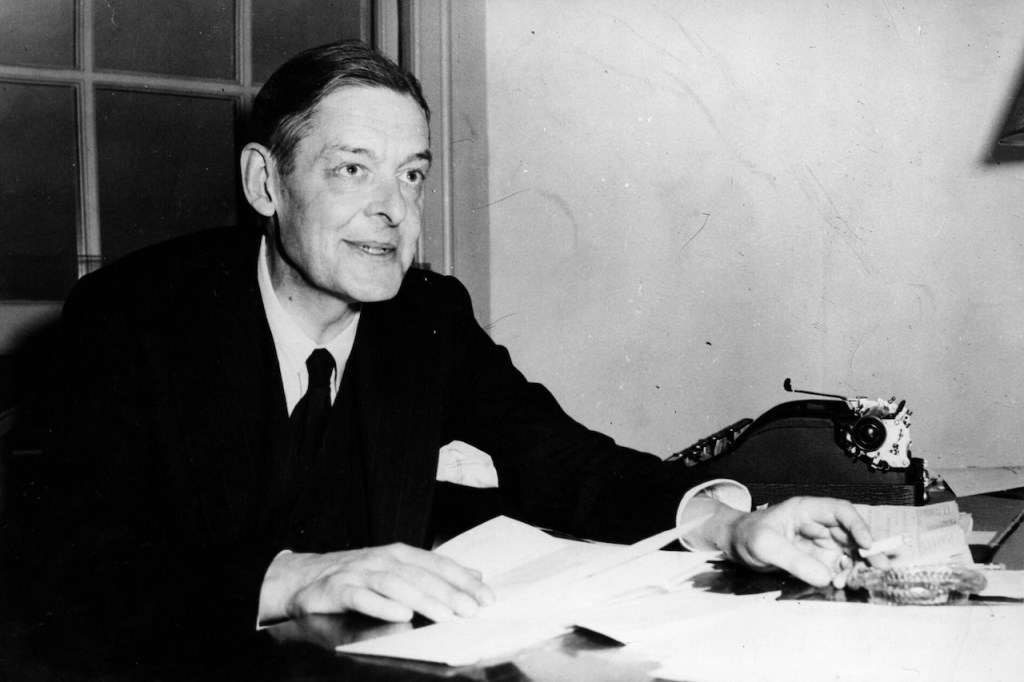
    Image:  T. S. Eliot - https://www.poetryfoundation.org/poets/t-s-eliot -  Poetry Foundation
    Image:  T. S. Eliot –  Poetry Foundation

    T. S. Eliot’s “Rhapsody on a Windy Night”

    The wildly famous show tune “Memory” by Andrew Lloyd Webber was inspired by T. S. Eliot’s “Rhapsody on a Windy Night” and “Preludes.” This article focuses on the former, which features a speaker whose rant exemplifies the very definition of a lunatic.

    Introduction with Text of “Rhapsody on a Windy Night”

    The speaker of T. S. Eliot’s “Rhapsody on a Windy Night” goes for a four-hour walk beginning at midnight in an undisclosed city. The poem consists of 78 lines contained in eight versagraphs.   Rime is sporadic as is rhythm, and the theme is the mocking desecration of the city coupled with a drunken fantasy.

    Although T. S. Eliot’s works have been taken as deeply serious social commentaries on society going-to-hell-in-a-handbasket, it is seldom pointed out that he did so with an often belly-laughable humor.   That humor appears raucously in “The Love Song of J. Alfred Prufrock,” and as well, it appears here in “Rhapsody on a Windy Night,” a seemingly straight-faced piece.

    Rhapsody on a Windy Night

    Twelve o’clock.
    Along the reaches of the street
    Held in a lunar synthesis,
    Whispering lunar incantations
    Dissolve the floors of memory
    And all its clear relations,
    Its divisions and precisions,
    Every street lamp that I pass
    Beats like a fatalistic drum,
    And through the spaces of the dark
    Midnight shakes the memory
    As a madman shakes a dead geranium. 

    Half-past one,
    The street lamp sputtered,
    The street lamp muttered,
    The street lamp said, “Regard that woman
    Who hesitates towards you in the light of the door
    Which opens on her like a grin.
    You see the border of her dress
    Is torn and stained with sand,
    And you see the corner of her eye
    Twists like a crooked pin.” 

    The memory throws up high and dry
    A crowd of twisted things;
    A twisted branch upon the beach
    Eaten smooth, and polished
    As if the world gave up
    The secret of its skeleton,
    Stiff and white.
    A broken spring in a factory yard,
    Rust that clings to the form that the strength has left
    Hard and curled and ready to snap. 

    Half-past two,
    The street lamp said,
    “Remark the cat which flattens itself in the gutter,
    Slips out its tongue
    And devours a morsel of rancid butter.”
    So the hand of a child, automatic,
    Slipped out and pocketed a toy that was running along the quay.
    I could see nothing behind that child’s eye.
    I have seen eyes in the street
    Trying to peer through lighted shutters,
    And a crab one afternoon in a pool,
    An old crab with barnacles on his back,
    Gripped the end of a stick which I held him. 

    Half-past three,
    The lamp sputtered,
    The lamp muttered in the dark. 

    The lamp hummed:
    “Regard the moon,
    La lune ne garde aucune rancune,
    She winks a feeble eye,
    She smiles into corners.
    She smoothes the hair of the grass.
    The moon has lost her memory.
    A washed-out smallpox cracks her face,
    Her hand twists a paper rose,
    That smells of dust and old Cologne,
    She is alone
    With all the old nocturnal smells
    That cross and cross across her brain.”
    The reminiscence comes
    Of sunless dry geraniums
    And dust in crevices,
    Smells of chestnuts in the streets,
    And female smells in shuttered rooms,
    And cigarettes in corridors
    And cocktail smells in bars.” 

    The lamp said,
    “Four o’clock,
    Here is the number on the door.
    Memory!
    You have the key,
    The little lamp spreads a ring on the stair,
    Mount.
    The bed is open; the tooth-brush hangs on the wall,
    Put your shoes at the door, sleep, prepare for life.” 

    The last twist of the knife.

    Reading by Jeremy Irons

    Commentary on “Rhapsody on a Windy Night”

    The speaker turns a four-hour walk into a social commentary through grotesque images, loopy sporadic rime, and hints of societal degradation being ushered in by the postmodernist mindset.

    First Versagraph:  Describing the Sights of the City

    Twelve o’clock.
    Along the reaches of the street
    Held in a lunar synthesis,
    Whispering lunar incantations
    Dissolve the floors of memory
    And all its clear relations,
    Its divisions and precisions,
    Every street lamp that I pass
    Beats like a fatalistic drum,
    And through the spaces of the dark
    Midnight shakes the memory
    As a madman shakes a dead geranium. 

    In the first versagraph, the speaker reports that it is “Twelve o’clock.” He then begins to dramatize his walk through the streets, describing what he sees: he asserts that the moon is encasing the streetscape, as it provides a kind of canvas on which to write his social commentary.  

    The “lunar synthesis” is the important backdrop for the streetscape.  The moon with its chant-like iterations causes the speaker’s memory to disappear like sugar in water.    The speaker is finding his ability to remember where he is a bit difficult; at this point, the reader might suspect that the speaker is considerably inebriated.

    The drunken portrayal of the street lamps offers further evidence that the speaker is possibly so drunk that his thoughts and memories are misaligned because he states that each “street lamp” by which he stumbles seems to be beating like a “fatalistic drum.”  

    It is likely that it is the speaker’s head that is beating like that deadly persuasion instrument.   The speaker then offers the hilarious image: he concocts a deranged fellow shaking a “dead geranium” and likens that preposterous image to his own memory being shaken by midnight because of the dark spaces which that time of day features.  

    He is finding that his memory as well as his drunken status are making it difficult for him to maneuver through the midnight streets.  The speaker is implying that only through a drunken stupor could a sane individual find the courage and wherewithal to try to navigate the filth through which he must move.

    Second Versagraph:  Sporadic Rhythm and Rime 

    Half-past one,
    The street lamp sputtered,
    The street lamp muttered,
    The street lamp said, “Regard that woman
    Who hesitates towards you in the light of the door
    Which opens on her like a grin.
    You see the border of her dress
    Is torn and stained with sand,
    And you see the corner of her eye
    Twists like a crooked pin.” 

    By the second versagraph, the speaker has been walking for an hour and half. The reader is treated to one of the sporadic rimes that pop up occasionally:   “The street lamp sputtered, / The street lamp muttered.”

    The speaker encounters another person out walking, and the street lamp tells him to look at her. She is undoubtedly a prostitute whose “dress / Is torn and stained with sand.” 

    The speaker’s mind again is strangely interpreting things as he sees “the corner of her eye / Twists like a crooked pin.” But then it is the street lamp that says all this, so one cannot place all the blame on the speaker for reporting such gibberish.

    It should be noted that T. S. Eliot was writing at the edge of postmodern gibberish, and thus he did not shy away from taking advantage of the latitude that was being offered up by that reckless and disingenuous style.    The important difference between Eliot and the postmods is that Eliot had an genuine point of view and the skill with which to express it.

    Third Versagraph:  Twisted Things

    The memory throws up high and dry
    A crowd of twisted things;
    A twisted branch upon the beach
    Eaten smooth, and polished
    As if the world gave up
    The secret of its skeleton,
    Stiff and white.
    A broken spring in a factory yard,
    Rust that clings to the form that the strength has left
    Hard and curled and ready to snap. 

    The third versagraph merely reports that his memory is vomiting a bunch of things that are twisted, things that are also “high and dry.”  He offers examples of those twisted things, such as “a twisted branch upon the beach.” This line alerts the reader that the speaker is walking in a coastal city.

    The speaker also notes that the twisted branch appears to be stripped so smooth that it reminds him of a skeleton, “still and white.”  He then marks a rusty “spring” in a “factory yard” which has been abandoned and which is likely dangerous because it appears to have hardened, and now it is “curled and ready to snap.”  

    A kid or any person walking by that loaded spring could become a victim akin to a stabbing.   The speaker places that possibility in the mind of readers for special effect to remind them that he is describing a degraded landscape that has the ability to take victims in unexpected places.

    Fourth Versagraph:  Keeping Track of Time

    Half-past two,
    The street lamp said,
    “Remark the cat which flattens itself in the gutter,
    Slips out its tongue
    And devours a morsel of rancid butter.”
    So the hand of a child, automatic,
    Slipped out and pocketed a toy that was running along the quay.
    I could see nothing behind that child’s eye.
    I have seen eyes in the street
    Trying to peer through lighted shutters,
    And a crab one afternoon in a pool,
    An old crab with barnacles on his back,
    Gripped the end of a stick which I held him. 

    It is now “Half-past two.”  The street lamp is talking again; this time it is reporting that a cat is in a gutter eating butter—an image that is offering up another sporadic rime.   Then the speaker likens the cat’s tongue lurching out to grab the butter to a street urchin grabbing a toy as he ran “along the quay.”  

    The speaker describes the child’s eye as holding “nothing”—a very disturbing image that again adds to his description of degradation and poverty that continue to flood the landscape—especially the streetscape.  The speaker then continues his report about empty eyes that he has seen before. He has seen such blank stares through “lighted shutters.” 

    Then he is ready to add another ridiculous image to his repertoire: he has observed an “old crab with barnacles on his back” and that old crab was grabbing the “end of a stick” that the speaker was holding out for him.

    Fifth and  Sixth Versagraphs:  The Lamp Rimes Again and Speaks French

    Half-past three,
    The lamp sputtered,
    The lamp muttered in the dark. 

    The lamp hummed:
    “Regard the moon,
    La lune ne garde aucune rancune,
    She winks a feeble eye,
    She smiles into corners.
    She smoothes the hair of the grass.
    The moon has lost her memory.
    A washed-out smallpox cracks her face,
    Her hand twists a paper rose,
    That smells of dust and old Cologne,
    She is alone
    With all the old nocturnal smells
    That cross and cross across her brain.”
    The reminiscence comes
    Of sunless dry geraniums
    And dust in crevices,
    Smells of chestnuts in the streets,
    And female smells in shuttered rooms,
    And cigarettes in corridors
    And cocktail smells in bars.” 

    The street lamp again offers the opportunity for a sporadic rime, again it is “sputtered” and then “muttered” as the dark continues to remain ascendent.    But now the street lamp begins to speak French as it describes the moon, telling the speaker, “La lune ne garde aucune rancune”: the moon never holds a grudge. 

    The moon lights the corners of memory, as she performs a number of operations such as winking a “feeble eye,” soothing the “hair of the grass,” offering up the image of a “smallpox” scar across her face.

    The speaker continues to lend the moon an array of odd activities, such as twisting “a paper rose” and exuding the smell of “dust and old Cologne.”  He claims that it is only the moon that arouses these strange smells of the night.   It is the speaker’s own drunken memory that is responsible for the concoction of these odd smells along with all of the other images he is creating.  

    Across the brain of the moon, he claims, come these smells that vary: “sunless dry geraniums,” dust in tight places, “chestnuts in the streets,” “female smells” in closed rooms, “cigarette” in hallways, and “cocktail smell in bars.”

    And interestingly, even though the “moon has lost her memory,” the speaker remembers  quite well all of these grotesque smells he has experienced—all of these grotesque smells that the power of the moonlight has brought to the forefront for the speaker, as he walks along the polluted streets of this polluted city.

    The term “lunatic” etymologically descends from the Latin “luna” moon; the original definition of “lunatic” described individuals who were adversely affected the phases of the moon.  

    This speaker’s outlandish images are influenced by the moonlight and the moon’s memory, a perfectly useful symbol for the speaker’s commentary on a spiritually dry and deplorable society.

    Seventh and Eight Versagraphs:  Back at the Flat, as the Knife-Key Turns

    The lamp said,
    “Four o’clock,
    Here is the number on the door.
    Memory!
    You have the key,
    The little lamp spreads a ring on the stair,
    Mount.
    The bed is open; the tooth-brush hangs on the wall,
    Put your shoes at the door, sleep, prepare for life.” 

    The last twist of the knife.

    It is now four o’clock in the morning and the speaker has arrived at presumably his flat. And again, the lamp is doing the speaking telling the speaker that the number he is seeing and remembering is, in fact, his. The speaker holds the key, which becomes a knife, as he finishes his dramatic reportage with a flourish.

    The speaker’s final thrust, appearing in the eighth versagraph, which is bizarrely and postmodernly the single line “The last twist of the knife,” rimes with the preceding line from the seventh versagraph, “Put your shoes at the door, sleep, prepare for life.” 

    The speaker’s whole midnight walk has consisted of nothing but metaphorical knife thrusts from the moon lighting up a decaying streetscape, to a cat lapping up rancid butter, to a prostitute’s eye twisting like “a crooked pin,” to a child’s blank expression, to all those rancid smells that have accosted him. 

    It is, however, his own memory that has brought all of this dissatisfaction and deadening spiritual dryness to the forefront of his thoughts.   Thus, it is hardly surprising that his final notion of sleeping and then starting life over again come morning should be nothing but another “twist of the knife.”

    Image:  T. S. Eliot - https://www.neh.gov/humanities/2016/fall/feature/what-make-t-s-eliot Caricature by John Cuneo
    Image:  T. S. Eliot – Caricature by John Cuneo

    Andrew Lloyd Webber’s “Memory”  

  • T. S. Eliot’s “The Love Song of J. Alfred Prufrock”

    Image a:  T. S. Eliot https://www.npg.org.uk/collections/search/portrait/mw57757/TS-Eliot  - Ida Kar - National Portrait Gallery, London
    Image a: T. S. Eliot – Ida Kar – National Portrait Gallery, London

    T. S. Eliot’s “The Love Song of J. Alfred Prufrock”

    T. S. Eliot’s “The Love Song of J. Alfred Prufrock” represents a conglomeration of many of the ridiculous traits of humankind—and the literati in particular; therefore, readers cannot take Prufrock seriously and are thus at liberty to laugh and enjoy the nutty things he thinks and says.

    Introduction with Text of “The Love Song of J. Alfred Prufrock”

    T. S. Eliot composed a little volume titled Old Possum’s Book of Practical Cats, which under the influence of composer Andrew Lloyd Webber, became Cats, one of the ten longest running musicals [1] on Broadway.

    How does one reconcile the lavish and hilarious persona responsible for the likes of old possum and the cats with the gloomy, spiritually dry personality of J. Alfred Prufrock and The Waste Land mentality?   That conflation is somewhat like confusing a man with little education and travel experience for the writer of the Shakespearean canon [2].

    The Love Song of J. Alfred Prufrock

    S’io credesse che mia risposta fosse
    A persona che mai tornasse al mondo,
    Questa fiamma staria senza piu scosse.
    Ma percioche giammai di questo fondo
    Non torno vivo alcun, s’i’odo il vero,
    Senza tema d’infamia ti rispondo.

    Let us go then, you and I,
    When the evening is spread out against the sky
    Like a patient etherized upon a table;
    Let us go, through certain half-deserted streets,
    The muttering retreats
    Of restless nights in one-night cheap hotels
    And sawdust restaurants with oyster-shells:
    Streets that follow like a tedious argument
    Of insidious intent
    To lead you to an overwhelming question …
    Oh, do not ask, “What is it?”
    Let us go and make our visit. 

    In the room the women come and go
    Talking of Michelangelo. 

    The yellow fog that rubs its back upon the window-panes,
    The yellow smoke that rubs its muzzle on the window-panes,
    Licked its tongue into the corners of the evening,
    Lingered upon the pools that stand in drains,
    Let fall upon its back the soot that falls from chimneys,
    Slipped by the terrace, made a sudden leap,
    And seeing that it was a soft October night,
    Curled once about the house, and fell asleep. 

    And indeed there will be time
    For the yellow smoke that slides along the street,
    Rubbing its back upon the window-panes;
    There will be time, there will be time
    To prepare a face to meet the faces that you meet;
    There will be time to murder and create,
    And time for all the works and days of hands
    That lift and drop a question on your plate;
    Time for you and time for me,
    And time yet for a hundred indecisions,
    And for a hundred visions and revisions,
    Before the taking of a toast and tea. 

    In the room the women come and go
    Talking of Michelangelo. 

    And indeed there will be time
    To wonder, “Do I dare?” and, “Do I dare?”
    Time to turn back and descend the stair,
    With a bald spot in the middle of my hair —
    (They will say: “How his hair is growing thin!”)
    My morning coat, my collar mounting firmly to the chin,
    My necktie rich and modest, but asserted by a simple pin —
    (They will say: “But how his arms and legs are thin!”)
    Do I dare
    Disturb the universe?
    In a minute there is time
    For decisions and revisions which a minute will reverse. 

    For I have known them all already, known them all:
    Have known the evenings, mornings, afternoons,
    I have measured out my life with coffee spoons;
    I know the voices dying with a dying fall
    Beneath the music from a farther room.
                   So how should I presume?

    And I have known the eyes already, known them all—
    The eyes that fix you in a formulated phrase,
    And when I am formulated, sprawling on a pin,
    When I am pinned and wriggling on the wall,
    Then how should I begin
    To spit out all the butt-ends of my days and ways?
                   And how should I presume? 

    And I have known the arms already, known them all—
    Arms that are braceleted and white and bare
    (But in the lamplight, downed with light brown hair!)
    Is it perfume from a dress
    That makes me so digress?
    Arms that lie along a table, or wrap about a shawl.
                   And should I then presume?
                   And how should I begin? 

    Shall I say, I have gone at dusk through narrow streets
    And watched the smoke that rises from the pipes
    Of lonely men in shirt-sleeves, leaning out of windows? … 

    I should have been a pair of ragged claws
    Scuttling across the floors of silent seas. 

    And the afternoon, the evening, sleeps so peacefully!
    Smoothed by long fingers,
    Asleep … tired … or it malingers,
    Stretched on the floor, here beside you and me.
    Should I, after tea and cakes and ices,
    Have the strength to force the moment to its crisis?
    But though I have wept and fasted, wept and prayed,
    Though I have seen my head (grown slightly bald) brought in upon a platter,
    I am no prophet — and here’s no great matter;
    I have seen the moment of my greatness flicker,
    And I have seen the eternal Footman hold my coat, and snicker,
    And in short, I was afraid. 

    And would it have been worth it, after all,
    After the cups, the marmalade, the tea,
    Among the porcelain, among some talk of you and me,
    Would it have been worth while,
    To have bitten off the matter with a smile,
    To have squeezed the universe into a ball
    To roll it towards some overwhelming question,
    To say: “I am Lazarus, come from the dead,
    Come back to tell you all, I shall tell you all”—
    If one, settling a pillow by her head
                   Should say: “That is not what I meant at all;
                   That is not it, at all.” 

    And would it have been worth it, after all,
    Would it have been worth while,
    After the sunsets and the dooryards and the sprinkled streets,
    After the novels, after the teacups, after the skirts that trail along the floor—
    And this, and so much more?—
    It is impossible to say just what I mean!
    But as if a magic lantern threw the nerves in patterns on a screen:
    Would it have been worth while
    If one, settling a pillow or throwing off a shawl,
    And turning toward the window, should say:
                   “That is not it at all,
                   That is not what I meant, at all.” 

    No! I am not Prince Hamlet, nor was meant to be;
    Am an attendant lord, one that will do
    To swell a progress, start a scene or two,
    Advise the prince; no doubt, an easy tool,
    Deferential, glad to be of use,
    Politic, cautious, and meticulous;
    Full of high sentence, but a bit obtuse;
    At times, indeed, almost ridiculous—
    Almost, at times, the Fool. 

    I grow old … I grow old …
    I shall wear the bottoms of my trousers rolled. 

    Shall I part my hair behind?   Do I dare to eat a peach?
    I shall wear white flannel trousers, and walk upon the beach.
    I have heard the mermaids singing, each to each. 

    I do not think that they will sing to me. 

    I have seen them riding seaward on the waves
    Combing the white hair of the waves blown back
    When the wind blows the water white and black.
    We have lingered in the chambers of the sea
    By sea-girls wreathed with seaweed red and brown
    Till human voices wake us, and we drown.

    Reading by Anthony Hopkins

    Commentary on “The Love Song of J. Alfred Prufrock”

    T. S. Eliot is really a very funny poet. His works are taken way too seriously.  A reader needs to think irony, satire, and sarcasm and then enjoy a few belly laughs when reading Eliot.  And his character J. Alfred Prufrock offers one of the finest examples of Eliot’s humor, as he, at the same time, skewers the direction of art in the 20th century.

    Prufrock Killed Poetry

    The American humorist Garrison Keillor [3] has offered his experience with and opinion of “old Pru,” claiming that the poem is

    a small, dark mopefest of a poem in which old Pru worries about whether to eat a peach or roll up his trousers.  This poem pretty much killed off the pleasure of poetry for millions of people who got dragged through it in high school.

    Keillor and his ilk who learned to hate poetry because of being “dragged through it in high school” might benefit from revisiting the poem and considering it through a lens of irony brushed with satire and sarcasm.

    For a more precise understanding of the poem, it is also important to realize that it is focusing on and providing a critique of the flaws of modernism, the movement that was having demoralizing effects on the art of poetry.

    The ironic humor of the poem clearly rails against the angst-infused positions that were rendering poetry not only unintelligible but ultimately without literary value.

    Who is J. Alfred Prufrock and what does he want?

    Critics regularly note the ironic disjointedness in the title as a love song apparently sung by a man with a business-suit name. But they then descend into the maudlin angst of this poor pathetic creature, and ultimately they take the work as a criticism of modern society in general, instead of a criticism of the skewed direction of art.

    Eliot was poking fun at such criticism and such stances. The poem itself is a mishmash of form, consisting of 131 lines separated into free-verse paragraphs (versagraphs), yet it has rime throughout, delivered in uneven rhythms. 

    The form itself makes fun of free-verse and phony erudition (the many allusions to classic works that seem so out of place) as it floats them down a stream-of-consciousness. 

    Opening Movement:  The Anesthetized Patient

    The first three lines set up the hilarious mood of the poem: 

    Let us go then, you and I,
    When the evening is spread out against the sky
    Like a patient etherised upon a table.

    The first line sounds as if the speaker of the poem is inviting someone to go somewhere in the evening, perhaps a social gathering or just an outing with a lady friend; after all it is a “love song.” 

    But the reader is slammed in the face as the evening is described as a patient on an operating table being prepared for surgery. The romance of supposed “love song” has died by line three.

    The speaker continues to mumble, describing the evening quite negatively, briefly mentioning one night stands in nasty hotels, disgusting eateries, and the boring streets that lead to boring places of ill-repute—yet all this leads on to “an overwhelming question.” 

    But then the speaker cuts off the thought by telling his listener not to bother asking what the “overwhelming question” is but instead says let’s just get going “and make our visit.” Now, it sounds as if the speaker and his companion are definitely going to a social gathering, maybe a dinner party. 

    But the dinner party never materializes, and it becomes quite apparent that the speaker is simply addressing himself, likely while looking at his face in a mirror.   There is no companion; there is no evening engagement, just a musing voice that is making fun of all the modernist techniques that the poet is employing in the poem through this pathetic speaker. 

    The Italian Epigram:  Professing an “Insidious Intent”

    S’io credesse che mia risposta fosse
    A persona che mai tornasse al mondo,
    Questa fiamma staria senza piu scosse.
    Ma percioche giammai di questo fondo
    Non torno vivo alcun, s’i’odo il vero,
    Senza tema d’infamia ti rispondo.

    The epigram that opens the poem alerts the reader to the “insidious intent” of the speaker in the poem.  The six lines feature a quotation from Dante’s Inferno (XXVII, 61–66).  The following is a rough translation from the Italian of the epigram:

    If I believed I was trying to bullshit
    someone who could return to the world,
    I would hold my tongue.
    But since no one ever lives to return
    to life again, at least so they say,
    I will spew forth whatever I please.

    The following is an interpretive paraphrase of the Italian epigram:

    if I thought such nonsense would really be foisted on the world, I would not concoct it, but since those who delve into the avant-garde poetry world have nothing to take back, I have deigned to let it fly

    Modern Boredom:  Vacuous Social Gatherings

    The speaker describes the fog in the metaphorical likeness of a dog: it rubs its back and muzzle on the window-panes, and it “[l]icked its tongue into the corners of the evening.” 

    The speaker is concerned about social gatherings; he has often encountered them, and the lines “In the room the women come and go / Talking of Michelangelo” become a mantra.   

    And the line “I have measured out my life with coffee spoons,” which follows his claim to have known all those bored people in offices, lounges, and evening affairs demonstrates the speaker’s awareness of his own boredom. 

    Floating Down the Stream:  Tricky Man, Very Tricky Man

    The speaker inserts telling images into his stream-of-consciousness descriptions of angst-filled scenes with outrageous images such as “I should have been a pair of ragged claws / Scuttling across the floors of silent seas.”  Another outlandish sight is “I grow old … I grow old … / I shall wear the bottoms of my trousers rolled.”

    And while these are famous lines often cited as showing the modern angst of Prufrock, they are quite humorous when one realizes that the speaker is making fun of the serious tone that critics will take regarding the style and highly allusive nature of the poem.  Eliot’s J. Alfred Prufrock has tricked many readers with his dry, spiritually destitute personality.

    Tricked by Eliot’s J. Alfred Prufrock

    The radio star Garrison Keillor blames “The Love Song of J. Alfred Prufrock” for “kill[ing] off the pleasure of poetry.” Keillor complains that the poem is “a small, dark mopefest of a poem in which old Pru worries about whether to eat a peach or roll up his trousers.” 

    It is somewhat puzzling that Keillor, whose own banter attempts to lace humor with reportage, does not see the humor in “Old Pru.” Robert Frost asserted that his poem “The Road Not Taken” was “a tricky poem—a very tricky poem.” 

    However, many other Frostian poems have turned out to be quite tricky as well. And T. S. Eliot became a master at composing some of the trickiest poems to grace the poetry world.

    The Character of J. Alfred Prufrock 

    The speaker of T. S. Eliot’s most widely anthologized classic is J. Alfred Prufrock himself, and his personality is the theme of the poem; he is a ridiculous character, utterly laughable.   As Roger Mitchell [4] has explained, 

    [Prufock] is the Representative Man of early Modernism. Shy, cultivated, oversensitive, sexually retarded (many have said impotent), ruminative, isolated, self-aware to the point of solipsism.

    In other words, “old Pru” is merely a conglomeration of many of the ridiculous traits of humankind—and the literati in particular; therefore, readers cannot take Prufrock seriously and are thus at liberty to laugh and enjoy the nutty things he thinks and says.

    Failure to Read Closely 

    Keillor refers to the following lines: “I shall wear the bottoms of my trousers rolled,” and “Shall I part my hair behind? Do I dare to eat a peach?”  The former radio personality has been tricked by Eliot’s poem, and in Keillor’s comment about the poem, two assertions demonstrate his misunderstanding.

    The first false assertion about the poem is that it is a “small, dark mopefest of a poem”: this is a false assertion because the poem is too funny to be a “dark mopefest,” plus it is really a longer poem than most lyrics; thus the descriptor “small” remains inaccurate.

    The second false assertion is that, “old Pru worries about whether to eat a peach or roll up his trousers”:  while “old Pru” does ask if he dares “eat a peach,” he does not question whether he will roll up his trousers.  

    These two false assertions suggest the reason that Keillor has been tricked by the poem; he simply has not read it carefully and closely enough, and likely his high school teacher was not adept at comprehending and teaching poetry. 

    Other Funny Lines 

    The opening of the poem, at first, may simply seem startling, but upon further study, the reader can see the hilarity in the absurdity of “the evening [ ] spread out against the sky / Like a patient etherized upon a table.”   The juxtaposition of “evening/sky” and “etherized patient/table” is just so ludicrous that it is laughable.

    “The yellow fog that rubs its back upon the window-panes”: fog becomes a cat or a dog, and the speaker likes that metaphor so well that he repeats it in the next stanza.   Fog as a dog jumps like a frog into the mind as one encounters those lines.

    A close consideration of the lines, “To wonder, ‘Do I dare?’ and, ‘Do I dare?’ / Time to turn back and descend the stair, / With a bald spot in the middle of my hair,”  reveals again the absurdity of taking Keillor’s criticism seriously.

    The jarring juxtaposition of a pathetic creature double questioning his traipsing down a stairway and then hastening to the bald spot in his pate cannot help but elicit a laugh, provided the reader/listener is paying close attention. 

    While Prufrock would be a sympathetic character were he less pitiful, he becomes a caricature, who instead of drawing sympathy draws derision from the reader.  Perhaps by tweaking their reading a bit and by reading closer, Keillor and other casual readers could learn to enjoy the misadventures of J. Alfred Prufrock.

    Sources

    [1] Mark A.Robinson. “Broadway’s 10 Longest-Running Musicals.”  Broadway Direct.  March 24, 2019.
    [2] Linda Sue Grimes. “The “Shakespeare” Writer.”  Linda’s Literary Home.  February 11, 2026.
    [3] Garrison Keillor.   “Choosing the Right Lunch Partners.” The Writer’s Almanac. February 20, 2007.
    [4] Roger Mitchell.  “On ‘The Love Song of J. Alfred Prufrock’.”  Modern American Poetry.  November 2, 2015.

  • However

    Image: Created by Grok inspired by the poem

    However

    “Don’t watch Fox News!” he barked.

    An individual of guilelessness,
    intelligence, warmth, fairness, honesty,
    pleasantness, open-mindedness,
    displaying a rare sense of humor
    should remain a virtuous human being. 

    Endowed with all of those fine qualities
    and given accurately informed sets of data,
    such a one could express original, useful takes
    on current events, news, and politics
    that would inform and inspire others.

    However, wasting those fine qualities
    imbibing the bias, spin, and lies
    spewed out by nit-wit comedians
    renders even a virtuous being
    a stone-cold, blunt-brained fool.