Linda's Literary Home

Tag: Ireland

  • William Butler Yeats’ “The Fisherman”

    William Butler Yeats’ “The Fisherman”

    The speaker in William Butler Yeats’ “The Fisherman” is dramatically promoting a style of poetry that will become and remain meaningful to and beloved by the common folk.

    Introduction with Text of “The Fisherman”

    William Butler Yeats’ poem “The Fisherman” appears in the poet’s The Wild Swans at Coole, which was brought out in 1919. The poet’s collection features many of his most widely anthologized poems.

    In “The Fisherman,” Yeats has created a speaker who is voicing a call for a genuine school of art for the common folk, an art that dramatizes the beauty and truth inherent in all great art. 

    The speaker is also decrying the cultural suicide being perpetrated by charlatans in art as well as their cohorts who are power-hungry politicians.  He thus reveals contempt for fakes and frauds, while promoting an ideal that he strongly believes should be steering art and the cultural life of the nation.

    Every nation throughout history has suffered from these same issues, as toppling governments and bloody wars testify.  The poets have often spoken up, calling out names and insisting on reforms.  

    Despite the fact that poetry’s first function arises from personal experience, political controversy often intrudes into the realm of the personal and that is when poets are compelled to use their platform for activism.

    Care must be taken, however, that the poet not become a brazen tool for propaganda. As an accomplished world poet and former Irish senator [1], Yeats possessed the acumen to broach issues of art, poetry, culture, and politics.

    The former politician and literary Nobel Laureate [2] boasts numerous works that address culture and politics: “The Fisherman” remains one of the most colorful and culturally significant poems of the era.

    The Fisherman

    Although I can see him still,
    The freckled man who goes
    To a grey place on a hill
    In grey Connemara clothes
    At dawn to cast his flies,
    It’s long since I began
    To call up to the eyes
    This wise and simple man.
    All day I’d looked in the face
    What I had hoped ’twould be
    To write for my own race  
    And the reality;  
    The living men that I hate,
    The dead man that I loved,
    The craven man in his seat,
    The insolent unreproved,
    And no knave brought to book  
    Who has won a drunken cheer,  
    The witty man and his joke
    Aimed at the commonest ear,
    The clever man who cries
    The catch-cries of the clown,
    The beating down of the wise
    And great Art beaten down.

    Maybe a twelvemonth since
    Suddenly I began,  
    In scorn of this audience,  
    Imagining a man
    And his sun-freckled face,  
    And grey Connemara cloth,
    Climbing up to a place  
    Where stone is dark under froth,
    And the down turn of his wrist
    When the flies drop in the stream:
    A man who does not exist,
    A man who is but a dream;
    And cried, “Before I am old
    I shall have written him one
    Poem maybe as cold
    And passionate as the dawn.”

    Reading of “The Fisherman”

    Commentary on “The Fisherman”

    The speaker in William Butler Yeats’ poem is heralding a style of poetry that will be beloved by the common folk.  He makes his contempt for charlatans known. He encourages the ideals that he believes must guide culture and art.  Yeats was a promoter of the style of art that he thought was closest to the hearts and minds of the Irish.

    First Movement:  Recalling an Admired Man

    Although I can see him still,
    The freckled man who goes
    To a grey place on a hill
    In grey Connemara clothes
    At dawn to cast his flies,
    It’s long since I began
    To call up to the eyes
    This wise and simple man.

    The speaker appears to be remembering a special man whom he has respected: “[t]he freckled man” wearing “Connemara clothes.”  This man has been in the habit of fishing at a “gray place on a hill.”  

    The speaker implies that in his mind’s eye, he can still perceive the man. And it may also be that the speaker literally meets the man occasionally in the village. However,  the speaker has not as of late mused upon the man.

    The speaker admires the man’s simple ways.  He assumes that the man is “wise and simple.”  The speaker then continues to cogitate upon those very same qualities as he continues his message.

    The speaker entertains a deep desire to praise the virtues of simplicity and wisdom.  He has observed those qualities in the folks who are doing ordinary, simple everyday tasks.

    Second Movement:  Researching History

    All day I’d looked in the face
    What I had hoped ’twould be
    To write for my own race  
    And the reality;  
    The living men that I hate,
    The dead man that I loved,
    The craven man in his seat,
    The insolent unreproved,

    The speaker has determined that he will make a plan to write for his own people, including the real experiences they all undergo.  With the plan in mind, he has begun to research the history of his nation and its people.  The speaker asserts that he hopes to reveal the reality of the lived experience of his fellow citizens. 

     Such a reality should well acquit itself and at the same time demonstrate and dramatize the exact truths that future generations will be likely to undergo.The speaker offers a catalogue of qualities that the men who make up the current political landscape have put on display.  

    Some of those men will be the recipients of his ire.  He brazenly states that there are living men whom he hates.  He then contrasts that negative emotion with its opposite by emphasizing that there is as well the “dead man that [he] loved.” 

    The speaker continues in his enflamed hatred by asserting that the “craven” exist while the “insolent” remain unrestricted in their perfidy. The speaker believes that by contrasting good and evil, he can demonstrate the efficacy of the arrival of a steady virtue upon which to build a better art and poetry that can represent Irish culture more faithfully and honestly.

    Third Movement:  The Guilty Avoiding Justice

    And no knave brought to book  
    Who has won a drunken cheer,  
    The witty man and his joke
    Aimed at the commonest ear,
    The clever man who cries
    The catch-cries of the clown,
    The beating down of the wise
    And great Art beaten down.

    The speaker continues referring to the rogues and knaves, who have thus far evaded justice though guilty. The speaker loathes those frauds who have “won a drunken cheer,” even as they have remained undeserving of celebrity and honor.  

    The speaker makes it clear that there is a sector of despicable characters who damage, cheapen, and pile shame on the culture.   The speaker accuses such unscrupulous scoundrels of attempting to destroy the art of the nation. 

    They, in effect, denigrate “the wise” as they dismantle the “great Art” that they have inherited.  The speaker grieves that these killers of culture have succeeded in their perfidy. Thus, he is calling attention to their misdeeds. He is proposing a change in focus in order to improve values.  He is not suggesting censorship of the charlatans.

    Fourth Movement:  Cultural Assassins

    Maybe a twelvemonth since
    Suddenly I began,  
    In scorn of this audience,  
    Imagining a man
    And his sun-freckled face,  
    And grey Connemara cloth,
    Climbing up to a place  
    Where stone is dark under froth,

    The speaker then reports that for a while he has been incubating the idea of creating an uncomplicated, “sun-freckled face”—the man in “Connemara cloth.”   For his effort, he has thus far received only “scorn” from the ilk of those culture killers and unscrupulous reprobates.

    Nevertheless, the speaker has been pressing on, striving to envision a simple fisherman, who “climb[s] up to a place / Where stone is dark with froth,” a natural place that continues to be pristine and still remains alluring.

    The speaker is crafting a symbolic being whom he can describe and on whom he can bestow the qualities that he deems must become and remain an important part of the natural art, belonging to the people of his environs.

    Fifth Movement:  The Importance of Simplicity

    And the down turn of his wrist
    When the flies drop in the stream:
    A man who does not exist,
    A man who is but a dream;
    And cried, “Before I am old
    I shall have written him one
    Poem maybe as cold
    And passionate as the dawn.”

    The speaker visualizes the fisherman’s wrist movement as the man casts his line into the water. He admits that this man does not yet exist, because  he is still “but a dream.”  The speaker’s keen sensibility is strong enough to bring to life such a simple, rustic character.  He is urged then to take all pains to bring such a character to life.

    Thus, while the poet is still young enough to use his God-given imagination, he vows to take on the task of writing this fisherman into existence and to compose for the man a poem “as cold / And passionate as the dawn.”   The speaker continues to muse on simplicity.  He passionately desires to create a new ideal that will produce meaningful, original, dramatic poetry.

    He insists that that new poetry must be able to speak with genuine originality and that it thus should become a harbinger of the beginning of a new era in art of poetry. The speaker hopes to accomplish all of this despite the wrong-headedness and power-grabbing of too many of the political phonies—and despite the fraudulent deceivers whose selfishness is spreading the destruction of their own culture.

    Sources

    [1]  Editors. “William Butler Yeats.” Poetry Foundation.  Accessed October 3, 2023.

    [2]  Daniel Mulhall. “W.B. Yeats and the Ireland of his time.” Embassy of Ireland.  Accessed October 3, 2023.
  • Gerard Manley Hopkins’ “To seem the stranger lies my lot, my life”

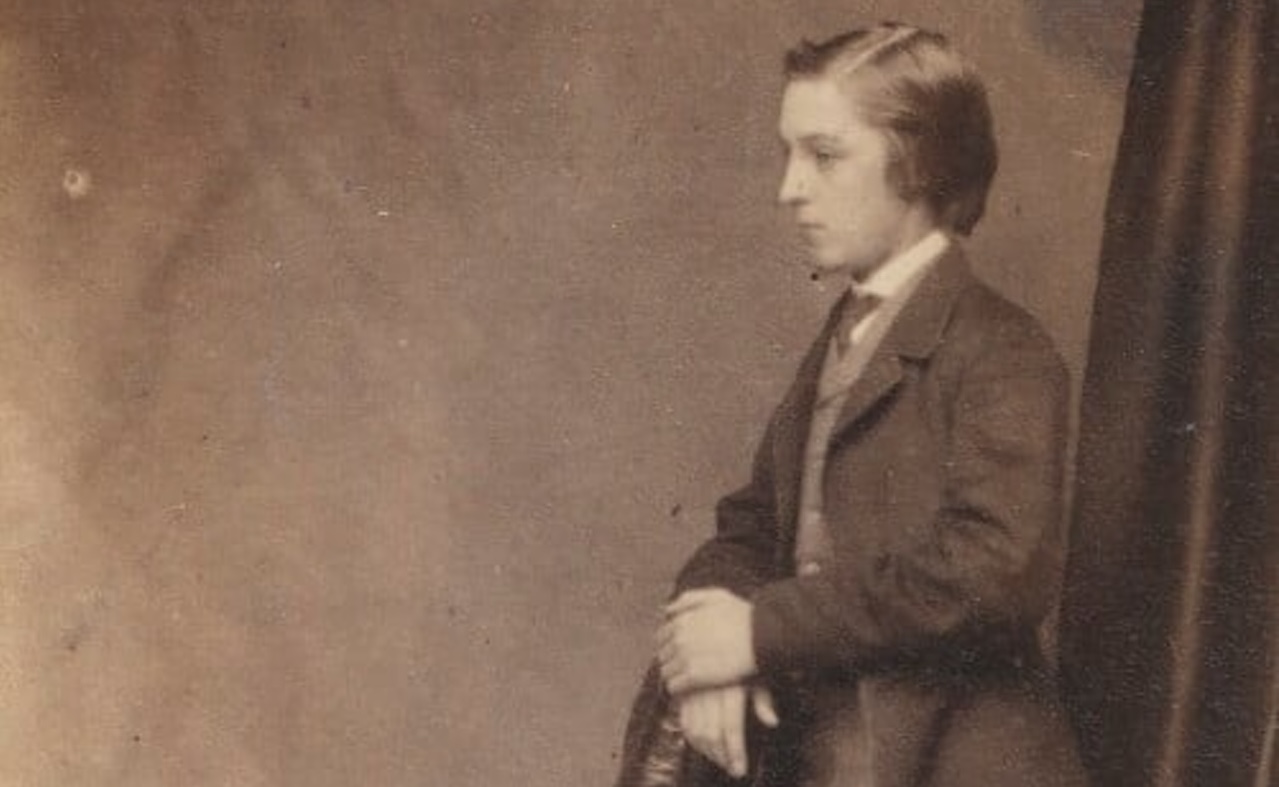
    Gerard Manley Hopkins – National Portrait Gallery, London

    Gerard Manley Hopkins’ “To seem the stranger lies my lot, my life”

    The speaker in Gerard Manley Hopkins’ sonnet “To seem the stranger lies my lot, my life” explores the sense of spiritual, national, and personal estrangement during years in Ireland.  Written with the same intensity that characterizes Hopkins’ work, the poem dramatizes exile as both an external condition and an inward trial. 

    In the octave, the speaker is focusing on separation from family and his country England, and in the sestet, he turns inward to the silence imposed by his vocation, leaving him isolated yet faithful.

    Introduction and Text of “To seem the stranger lies my lot, my life”

    Father Gerard Manley Hopkins, who was a Jesuit priest as well as a poet, wrote many of his most profound poems during periods of emotional strain and vocational doubt.  He wrote “To seem the stranger lies my lot, my life” in 1889 during his final years in Ireland; he created a speaker in the poem who is reflecting an acute sense of displacement—geographical, familial, and spiritual. 

    Although Father Hopkins remained consistently obedient to his religious calling, he often felt alienated from England, misunderstood by authority, and silenced as a poet. This sonnet, however, reveals not rebellion but suffering endured with disciplined faith, unveiling exile as a severe trial for spiritual testing.

    As the first of the six “terrible sonnets,” “To seem the stranger lies my lot, my life” remains distinctive because its sense of despair is aimed less at abstract spiritual terror and more at everyday human loss—failed relationships, missed vocations, and social estrangement. 

    However, like the others, it offers little comfort and speaks in a raw, urgent voice.  It is unusual in how little it turns to nature or directly to Christ. Instead, it keeps its focus on the speaker’s painful isolation from family, community, and any sense of being useful as a priest.

    To seem the stranger lies my lot, my life

    To seem the stranger lies my lot, my life
    Among strangers. Father and mother dear,
    Brothers and sisters are in Christ not near
    And he my peace my parting, sword and strife.
    England, whose honour O all my heart woos, wife
    To my creating thought, would neither hear
    Me, were I pleading, plead nor do I: I wear-
    y of idle a being but by where wars are rife.

    I am in Ireland now; now I am at a thírd
    Remove. Not but in all removes I can
    Kind love both give and get. Only what word
    Wisest my heart breeds dark heaven’s baffling ban
    Bars or hell’s spell thwarts. This to hoard unheard,
    Heard unheeded, leaves me a lonely began.

    Reading

    Commentary on “To seem the stranger lies my lot, my life”

    Father Hopkins’ sonnet is a meditation on exile and silence. The octave emphasizes outward separation—from family, country, and recognition—while the sestet deepens the conflict by revealing an inward blockage: the poet’s inability to speak or be heard. 

    Octave: “To seem the stranger lies my lot, my life”

    To seem the stranger lies my lot, my life
    Among strangers. Father and mother dear,
    Brothers and sisters are in Christ not near
    And he my peace my parting, sword and strife.
    England, whose honour O all my heart woos, wife
    To my creating thought, would neither hear
    Me, were I pleading, plead nor do I: I wear-
    y of idle a being but by where wars are rife.

    The speaker open the octave with a stark declaration: “To seem the stranger lies my lot, my life.” The phrasing is deliberate and emphatic, with “lot” and “life” placed side by side to suggest that estrangement is not incidental but foundational. The speaker does not merely feel like a stranger; seeming a stranger has become the defining pattern of his existence. The verb “lies” suggests fate or destiny, implying that this condition is imposed rather than chosen.

    The repetition of “stranger” in the second line—“Among strangers”—reinforces the sense of isolation. The speaker is not simply alone; he is surrounded by others from whom he feels fundamentally divided. This alienation is then specified in personal terms: separation from “Father and mother dear” and from “Brothers and sisters.” 

    These lines resonate deeply, as Hopkins had consciously embraced a religious vocation at the cost of ordinary familial intimacy. Yet the phrase “are in Christ not near” reveals a crucial nuance. The separation is not merely geographical or emotional but mediated through faith. His family exists “in Christ,” but spiritual unity does not erase physical absence.

    Line four intensifies the tension through paradox: “And he my peace my parting, sword and strife.” The “he” here refers unmistakably to Christ, echoing Christ’s own words in the Gospel that he came not to bring peace but a sword. 

    Christ is simultaneously the speaker’s source of peace and the cause of painful division.  This line crystallizes the poem’s central conflict: obedience to God has fractured his earthly attachments.

    England emerges next as a figure of longing and betrayal. The speaker personifies the nation as a beloved woman: “England, whose honour O all my heart woos, wife / To my creating thought.” England is not merely homeland; it is the imaginative and cultural source of his poetry. 

    The speaker’s “creating thought” is bound to England’s landscape, language, and traditions. Yet this beloved “wife” refuses to listen. England “would neither hear / Me, were I pleading.” The rejection is imagined even before the plea is made.

    Significantly, the speaker then states, “plead nor do I.” Either Pride, humility, or exhaustion restrains him from petitioning for recognition or return. The enjambment underscores weariness: “I wear- / y of idle a being but by where wars are rife.” The broken word “weary” visually enacts fatigue. 

    The speaker feels useless, idle, unless he is placed where conflict exists. The “wars” here may be literal—cultural and political unrest in Ireland—or spiritual, referring to inner trials. Either way, the octave closes with a man who sees struggle as the only justification for his continued existence.

    Throughout the octave, the speaker’s syntax becomes knotted and his clauses have become compressed. This density mirrors his emotional burden. There is no lyric ease, no pastoral consolation. Instead, the octave establishes exile as a lived reality—accepted but not softened.

    Sestet: “I am in Ireland now; now I am at a thírd”

    I am in Ireland now; now I am at a thírd
    Remove. Not but in all removes I can
    Kind love both give and get. Only what word
    Wisest my heart breeds dark heaven’s baffling ban
    Bars or hell’s spell thwarts. This to hoard unheard,
    Heard unheeded, leaves me a lonely began.

    The sestet shifts from the general condition of estrangement to a precise location: “I am in Ireland now.” The repetition of “now” emphasizes immediacy and finality. Ireland is not a temporary assignment but a present, enduring state. 

    The speaker then deepens the sense of displacement by calling this “a thírd / Remove.” The word “remove” suggests not travel but distance layered upon distance—England removed from family, and Ireland removed yet again from England.

    (Note the acute accent mark over the “i” in third:  Hopkins often placed accent marks to indicate a stress that might be passed over in a quick reading.  He wanted to assure that his sprung rhythm received its full impact.)

    The speaker then immediately qualifies this isolation: “Not but in all removes I can / Kind love both give and get.” Despite exile, he affirms the possibility of charity. This assertion is a theologically critical.

    Love is not extinguished by displacement; grace operates even in separation. The line resists self-pity and aligns the speaker’s world view with Jesuit discipline, which demands adaptability and service wherever one is sent.

    However, the speaker’s deepest anguish follows:  “Only what word / Wisest my heart breeds dark heaven’s baffling ban / Bars or hell’s spell thwarts.” Here the speaker turns inward, focusing not on where he is but on what he cannot do. His “wisest” words—his poetry—are blocked. 

    Heaven itself seems to be imposing a “ban,” a prohibition that frustrates expression. The phrase “dark heaven” is especially striking. Heaven, normally associated with clarity and illumination, becomes obscure and baffling.  The alternative force is equally terrifying: “hell’s spell.” Whether divine silence or demonic interference, the result is the same—his words are thwarted. 

    This line reveals one of the most painful aspects of the poet’s late life: the sense that his poetic gift, given by God, is simultaneously withheld by God. Silence becomes both command and punishment.

    The final couplet intensifies the tragedy: “This to hoard unheard, / Heard unheeded, leaves me a lonely began.” The speaker is forced to “hoard” his words, storing them without release. Even when heard, they are “unheeded.” 

    The repetition emphasizes futility. The phrase “a lonely began” is deliberately and strangely ungrammatical. “Began” suggests something unfinished, a life or vocation that never reached fulfillment.  The speaker is not calling himself a failure, but he is implying that he feel incomplete.

    Yet even here, the speaker sees despair as part of his discipline. He is not accusing God; he is only lamenting his lot.  The speaker conclude his revelation with witness not rebellion.  The speaker is recording his condition faithfully; he trusts that meaning may lie well beyond his own understanding. Although the loneliness is real, he can bear it through obedience.

    In the sestet, then, exile becomes interiorized. The outer fact of Ireland gives way to the inner trial of silence.  The speaker’s greatest suffering is not being far from England but being cut off from utterance. 

    For this speaker, this wound is the deepest. Yet the very existence of the poem contradicts the ban it describes. In writing this sonnet, the poet speaks from within silence, transforming isolation into testimony.

    Taken together, the octave and sestet reveal a soul suspended between fidelity and desolation. “To seem the stranger lies my lot, my life” is not a cry for rescue but a record of endurance. 

    The speaker/poet accepts exile as part of his vocation, even when it costs him voice, recognition, and comfort. The sonnet stands as one of his most austere achievements—a poem that does not resolve suffering but sanctifies it through truthful speech.

  • William Butler Yeats

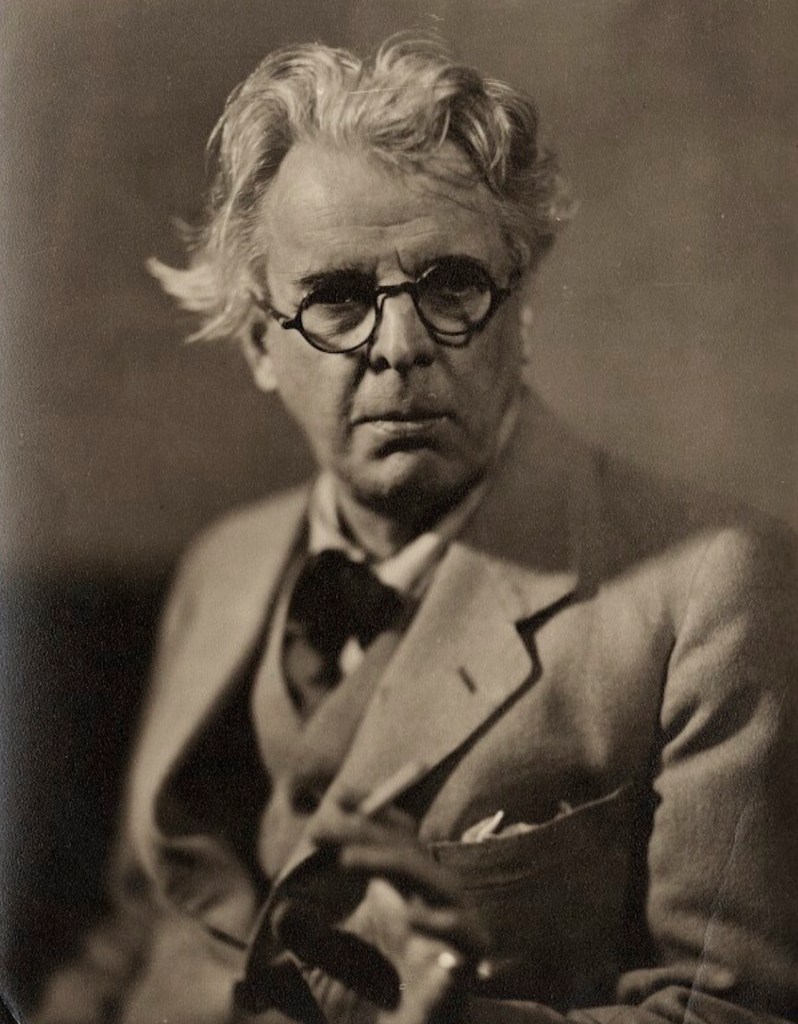
    Image:  William Butler Yeats NPG, London

    Life Sketch of William Butler Yeats

    William Butler Yeats possessed a lifelong dedication to the cultural and political rebirth of Ireland. He experienced life as a poet, playwright, and senator as he lived during turbulent shifts in Irish politics.  He had a lifelong unquenchable thirst for artistic and spiritual truth.

    William Butler Yeats remains one of the most influential literary figures of the modern era.  His canon, which includes examples of his interest in Eastern philosophy, Irish folklore, and the vicissitudes of life, eventually resulted in the production of various literary forms such as poetry, drama, and essays [1].

    Early Life and Education

    Born on June 13, 1865, in Sandymount, County Dublin, William Butler Yeats was raised in a household that placed a high value on intellectual curiosity bolstered by cultural heritage.

    His father, John Butler Yeats, was a skilled portrait painter, and his mother, Susan Pollexfen, created an environment steeped in Irish history and folklore. His early exposure to art, literature, and the stories of ancient Ireland instilled in Yeats a deep appreciation for myth and legend that would later become central themes in his work.

    As a young man, Yeats attended the Metropolitan School of Art in Dublin, where he developed keen observational skills and his ability to capture what he saw into dramatic literary form such as poetry and plays. 

    His early attempts to write poetry were heavily influenced by Romanticism, and he found inspiration in the rich treasure house of Irish mythology and the natural world. These early experiences laid the groundwork for a lifelong exploration of the interplay between the tangible and the transcendent [2].

    The Celtic Revival

    In the 1880s and 1890s, Yeats became as a principal figure in the Celtic Revival—a cultural movement, aimed at reclaiming Ireland’s heritage from centuries of British domination. 

    Along with contemporaries such as Lady Gregory and Edward Martyn, Yeats sought to regain Irish identity through renewed interest and influence of its ancient myths and folklore.   Yeats’ first poetry collections, including The Wanderings of Oisin and Other Poems (1889), offered a vision of Ireland as a land of fantastic beauty and heroic legend.

    Yeats’ involvement in the Irish literary revival was not merely rhetorical and philosophical; he assisted in the founding of the National Literary Society and became a driving force behind the establishment of the Abbey Theatre, which became the center stage for modern Irish drama. 

    Through the Abbey Theatre, Yeats teamed up with playwrights and dramatists to stage works, combining Irish mythology with contemporary social and political issues; thus he became responsible for creating a distinctly Irish voice in the performing arts [3].

    Changing Style and Interest in the Mysticism

    As Yeats’ career progressed, his creative writings faced an important transformation.  As he moved away from his early Romanticism, he took up themes of aging, disillusionment, and the search for spiritual meaning. This shift was influenced by his increasing interest in Eastern Philosophy and mystical traditions. 

    Yeats’ lifelong engagement with esoteric philosophy—ranging from Theosophy to the study of Eastern Philosophy—found expression in poems such as “The Second Coming” (1919) and “The Indian upon God” (1927). These works reflect a mind grappling with the decline of traditional values and the potential for rebirth through art and myth.

    Yeats’ fascination with mysticism was not a mere intellectual exercise; it became deeply personal. He was a member of the Hermetic Order of the Golden Dawn, an organization dedicated to the study and practice of magical rituals and mysticism. 

    This involvement influenced his poems with symbolic imagery and complex mythological references that continue to captivate readers. The cyclical view of history that Yeats espoused—wherein civilizations rise, decay, and ultimately transform—became a recurring theme of his later work.

    Unfortunately, Yeats’ study of Eastern Philosophy/Religion at times led him astray.  Some of his works demonstrated that he failed to understand [4] the most important aspects of the concepts that he tried to portray in his poems. 

    While his poem “The Indian upon God” accurately reflects Eastern tenets, his “The Second Coming” and “Lapis Lazuli” go far astray.  The bulk of his understanding of Eastern philosophical and religious concepts may be described no less than by the term assigned  by T. S. Eliot “romantic misunderstanding.”

    Politics and the Poet in Society

    The early twentieth century was a period of political upheaval in Ireland, and Yeats became increasingly involved with the nationalist movement.   Even though he never fully aligned himself with any particular political party, his writings and public statements often reflected a profound concern for the fate of his country. His poetry became the main medium through which he expressed hope but also anxiety about the future of his country.

    Poems such as “Easter 1916” suggest that whatever happens no one can deny that those rebels will have died for their dreams. This speaker still cannot completely commit to those dreams. All he can admit is that everything has changed and “A terrible beauty is born.”

    The Yeatsian musing of drama ultimately finds only that things have changed. The speaker cannot say if they have changed for better for worse. He and his generation will have to wait to see how that “terrible beauty” matures.   However, this duality—of destruction and creation—reflects the eternal cycles that he so frequently explored in his verse.

    Beyond his poetry, Yeats contributed directly to the political life of his nation. He served from 1922-1928 in the senate of the newly formed Irish Free State [5].  Although he was often seen as an outsider by both traditional nationalists and modernists, Yeats’ presence in the Senate suggested a belief in the vital role that artists and intellectuals play in shaping public discourse and guiding cultural evolution.

    Image b: Yeats and Gonne  

    Personal Life and Love

    Yeats’ personal life was distressed by a long, unrequited love for Maud Gonne [6], an Irish revolutionary and actress. His feelings for Gonne inspired many of his poems, imbuing them with themes of love, loss, and longing. Gonne’s rejection of his marriage proposals did not deter Yeats from writing some of his most passionate poetry, where she often appears as a muse or an ideal.

    Later in life, Yeats married Georgie Hyde-Lees, who not only became his companion but also a collaborator in his mystical explorations. They had two children, Anne and Michael, and their family life was documented in some of Yeats’ more personal poems, such as “A Prayer for My Daughter” and “The Circus Animals’ Desertion.”

    The Alignment of Myth and Modernity

    A central aspect of Yeats’ enduring appeal is his ability to weave together disparate strands of experience—myth and modernity, beauty and decay, hope and despair—into a coherent vision of the human condition. His poetry often reads as if it were both a dream and a prophecy, a blend of personal reflection and universal truth. 

    For instance, in “Sailing to Byzantium,” Yeats contrasts the ephemeral nature of the physical world with the possibility of spiritual transcendence [7]. The poem’s vivid imagery and rhythmic cadence invite readers to contemplate the eternal in the midst of the temporal, a duality that lies at the heart of Yeats’ artistic endeavor.

    Yeats’ engagement with myth was not limited to the realm of poetry; it also informed his political and cultural projects. By reviving ancient Irish legends and traditions, he sought to restore a sense of identity and continuity to a country grappling with the forces of modernity and colonialism. His poem “The Fisherman” offers an example of this engagement.

    His work with the Abbey Theatre was driven by the conviction that drama rooted in myth could foster a national spirit and provide a counterpoint to the homogenizing effects of globalization. In this way, Yeats not only redefined the poetic landscape but also contributed to a broader cultural renaissance in Ireland.

    An Enduring Influence on Literature and Beyond

    The influence of William Butler Yeats extends far beyond the confines of his own time. His exploration of spiritual and metaphysical themes paved the way for subsequent generations of poets and writers who sought to reconcile the material and the mystical. In the decades following his death, critics and scholars have revisited his work, probing its layers of symbolism and historical context to uncover new meanings and insights.

    Contemporary literary critics often highlight the innovative structure and language of Yeats’ later poetry, noting how his use of recurring symbols and motifs creates a dense network of associations that invites endless interpretation. 

    His ability to encapsulate the complexities of Irish identity, the ravages of time, and the interplay between art and life continues to resonate in today’s discussions of literature and culture. 

    Moreover, Yeats’ political engagement and his belief in the transformative power of art have inspired not only writers but also activists and cultural leaders who view the arts as a vital force for social change [8].

    That political engagement, however, begs for a caveat.  As postmodernism crept ever nearer the hearts of the contemporary artists, the loss of skill and lack of interest in truth began to blight both poetry and criticism.  That postmodern mind-set has little hope of heralding and power to transform society for the better.

    Yeats’ Legacy

    William Butler Yeats’ life and work remain a testament to the power of art to illuminate the deepest mysteries of existence. From his early days steeped in Irish folklore to his later explorations of mystical symbolism and political transformation, he navigated the tumultuous currents of change with a keen and reflective mind. His ability to articulate the paradoxes of beauty and decay, hope and despair, has left an indelible mark on the world of literature.

    Yeats’ legacy is a reminder that art is not merely a reflection of life but also can serve as an agent of transformation, when steeped in desire for truth. His vision of history as a series of cyclic renewals, his embrace of the occult and the mythical, and his commitment to cultural and political renewal have all contributed to a body of work that continues to inspire and challenge readers. In celebrating Yeats, one celebrates the eternal quest for meaning—a quest that, like his poetry, transcends time and place.

    Through his poetic innovations and his fervent commitment to the rebirth of Irish culture, William Butler Yeats carved out a unique space in the annals of literary history. His words continue to echo in classrooms, theaters, and the hearts of those who dare to dream beyond the confines of the everyday routine. 

    Death

    In his later years, Yeats’ poetry grew increasingly reflective and introspective. The themes of mortality, the nature of artistic creation, and the inexorable passage of time became ever more emphasized. 

    Works such as The Tower (1928) and The Winding Stair and Other Poems (1933) reveal a man deeply aware of his own aging and the inevitable approach of death. Yet, even as he grappled with the transient nature of human life, he remained committed to the idea that art could capture eternal truths.

    Despite experiencing poor health, Yeats continued to write and speak out on matters of art, politics, and philosophy until his final days. On the French Riviera, he spent his last months in quiet musing, as he sought solace and reflection away from the public eye. 

    On January 28, 1939, in Menton, France, [9] William Butler Yeats passed away peacefully . The world mourned not just the passing of a literary giant, but also the departure of a visionary who had continually challenged and enriched the cultural landscape of Ireland and beyond. 

    One of the most profound memorial poems to Yeats is W. H. Auden’s “In Memory of W. B. Yeats.”  The following excerpt contains some of the poem’s most memorable lines, for example, “Mad Ireland hurt you into poetry”:

    You were silly like us; your gift survived it all:
    The parish of rich women, physical decay,
    Yourself. Mad Ireland hurt you into poetry.
    Now Ireland has her madness and her weather still,
    For poetry makes nothing happen: it survives
    In the valley of its making where executives
    Would never want to tamper, flows on south
    From ranches of isolation and the busy griefs,
    Raw towns that we believe and die in; it survives,
    A way of happening, a mouth.

    Sources

    [1]  Richard Ellmann. Yeats. New York. Oxford University Press, 1989.

    [2]  Mark Fryer. The Life of W.B. Yeats: A Critical Biography. London. Bloomsbury Academic. 2001.

    [3]  A. Norman Jeffares. The Cambridge Companion to W.B. Yeats.  Cambridge University Press, 2006.

    [4]  Linda S. Grimes.  “William Butler Yeats’ Transformations of Eastern Religious Concepts.”  Ball State University. PhD Dissertation. 1987. 

    [5] Editors.  “W. B. Yeats:  Irish Author and Poet.”  Britannica.  Accessed February 22, 2025.

    [6] Lisa Fortin Jackson.  “Great Irish Romances: W.B. Yeats and Maud Gonne.”  Wild Geese.  February 4, 2014.

    [7]  C. S. Lieber. The Collected Works of W.B. Yeats. New York. Knopf.  1963.

    [8] William Butler Yeats. The Collected Poems of W.B. Yeats. Edited by Richard J. Finneran, New York. 2009.

    [9] Editors.  “William Butler Yeats.”  Biography. August 17, 2020.

    Commentaries on Yeats Poems

    • The Indian upon God” This poem is displayed in ten riming couplets. The theme of the poem dramatizes the biblical concept that God made man in His own image.
    • The Fisherman” In “The Fisherman,” Yeats has created a speaker who is voicing a call for genuine art for the common folk, an art that dramatizes the beauty and truth inherent in all great art.
    • The Second Coming” One of the most overrated and misunderstood works of the Western literary canon.
    • Sailing to Byzantium” This poem is a profound meditation on aging, art, and the quest for spiritual transcendence, despite his failure to clearly grasp the Eastern religious/philosophical concepts he strived to portray.
    • “Leda and the Swan”  Focuses on the ancient Greek myth, wherein the woman, Leda, wife of Tyndareus, was impregnated by the god Zeus in disguise as a swan. Yeats’ speaker is musing regarding the nature of such an act and how it might have impacted Leda’s mental capacities afterward.
    • “Among School Children”  One of Yeats’ most anthologized poems, this poem features numerous allusions to ancient Greek mythology and philosophy. Yeats was always a thinker, even if not always a clear thinking one.
    • “Lapis Lazuli”  In this poem,  William Butler Yeats has his speaker explore the issue of peace and tranquility despite a chaotic environment.
  • Seamus Heaney’s “Whatever You Say, Say Nothing”

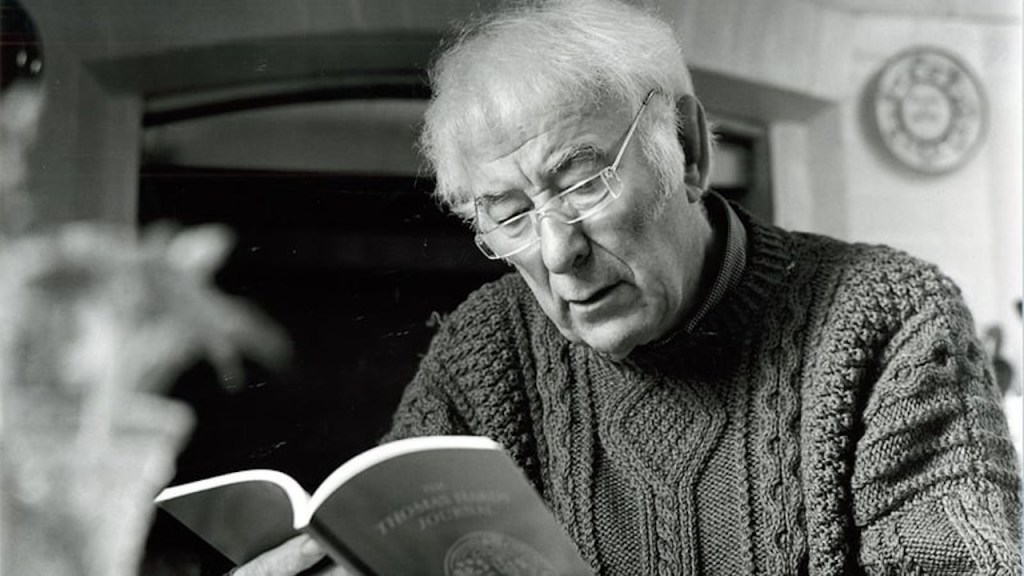
    Image:  Seamus Heaney

    Seamus Heaney’s “Whatever You Say, Say Nothing”

    Seamus Heaney’s “Whatever You Say, Say Nothing” is displayed in four parts. The piece dramatizes a rough-style free verse with an irregularly paced rime scheme. The speaker is describing the events surrounding the command for political operatives to be extremely careful with what they say.

    Introduction and Text of “Whatever You Say, Say Nothing”

    The title, “Whatever You Say, Say Nothing,” originates with the secretive activity of Northern Ireland’s rebel paramilitary that admonished its members with this demand. 

    Its purpose was to advise members to be extremely careful with what they say. If they speak to “civilians” at all, they should make their talk so small that it would reveal nothing about their activity. 

    Whatever You Say, Say Nothing

    I

    I’m writing just after an encounter
    With an English journalist in search of  ‘views
    On the Irish thing’.  I’m back in winter
    Quarters where bad news is no longer news,
    Where media-men and stringers sniff and point,
    Where zoom lenses, recorders and coiled leads
    Litter the hotels. The times are out of joint
    But I incline as much to rosary beads
    As to the jottings and analyses
    Of politicians and newspapermen
    Who’ve scribbled down the long campaign from gas
    And protest to gelignite and Sten,
    Who proved upon their pulses ‘escalate’,
    ‘Backlash’ and ‘crack down’, ‘the provisional wing’,
    ‘Polarization’ and ‘long-standing hate’.
    Yet I live here, I live here too, I sing,
    Expertly civil-tongued with civil neighbours
    On the high wires of first wireless reports,
    Sucking the fake taste, the stony flavours
    Of those sanctioned, old, elaborate retorts:
    ‘Oh, it’s disgraceful, surely, I agree.’
    ‘Where’s it going to end?’ ‘It’s getting worse.’
    ‘They’re murderers.’ ‘Internment, understandably …’
    The ‘voice of sanity’ is getting hoarse.

    II

    Men die at hand. In blasted street and home
    The gelignite’s a common sound effect:
    As the man said when Celtic won, ‘The Pope of Rome’s
    a happy man this night.’ His flock suspect

    In their deepest heart of hearts the heretic
    Has come at last to heel and to the stake.
    We tremble near the flames but want no truck
    With the actual firing. We’re on the make

    As ever. Long sucking the hind tit
    Cold as a witch’s and as hard to swallow
    Still leaves us fork-tongued on the border bit:
    The liberal papist note sounds hollow

    When amplified and mixed in with the bangs
    That shake all hearts and windows day and night.
    (It’s tempting here to rhyme on ‘labour pangs’
    And diagnose a rebirth in our plight

    But that would be to ignore other symptoms.
    Last night you didn’t need a stethoscope
    To hear the eructation of Orange drums
    Allergic equally to Pearse and Pope.)

    On all sides ‘little platoons’ are mustering-
    The phrase is Cruise O’Brien’s via that great
    Backlash, Burke-while I sit here with a pestering
    Drouth for words at once both gaff and bait

    To lure the tribal shoals to epigram
    And order. I believe any of us
    Could draw the line through bigotry and sham
    Given the right line, aere perennius.

    III

    “Religion’s never mentioned here”, of course.
    “You know them by their eyes,” and hold your tongue.
    “One side’s as bad as the other,” never worse.
    Christ, it’s near time that some small leak was sprung
    In the great dykes the Dutchman made
    To dam the dangerous tide that followed Seamus.
    Yet for all this art and sedentary trade
    I am incapable. The famous
    Northern reticence, the tight gag of place
    And times: yes, yes. Of the “wee six” I sing
    Where to be saved you only must save face
    And whatever you say, you say nothing.
    Smoke-signals are loud-mouthed compared with us:
    Manoeuvrings to find out name and school,
    Subtle discrimination by addresses
    With hardly an exception to the rule
    That Norman, Ken and Sidney signalled Prod
    And Seamus (call me Sean) was sure-fire Pape.
    O land of password, handgrip, wink and nod,
    Of open minds as open as a trap,
    Where tongues lie coiled, as under flames lie wicks,
    Where half of us, as in a wooden horse
    Were cabin’d and confined like wily Greeks,
    Besieged within the siege, whispering morse.

    IV

    This morning from a dewy motorway
    I saw the new camp for the internees:
    A bomb had left a crater of fresh clay
    In the roadside, and over in the trees
    Machine-gun posts defined a real stockade.
    There was that white mist you get on a low ground
    And it was déjà-vu, some film made
    Of Stalag 17, a bad dream with no sound.
    Is there a life before death? That’s chalked up
    In Ballymurphy. Competence with pain,
    Coherent miseries, a bite and sup,
    We hug our little destiny again.

    Commentary on “Whatever You Say, Say Nothing”

    The poem, “Whatever You Say, Say Nothing,” is displayed in four parts. The piece dramatizes a rough-style free verse with an irregularly paced rime scheme.

    First Part:  Harassed by Reporters

    I’m writing just after an encounter
    With an English journalist in search of  ‘views
    On the Irish thing’.  I’m back in winter
    Quarters where bad news is no longer news,
    Where media-men and stringers sniff and point,
    Where zoom lenses, recorders and coiled leads
    Litter the hotels. The times are out of joint
    But I incline as much to rosary beads
    As to the jottings and analyses
    Of politicians and newspapermen
    Who’ve scribbled down the long campaign from gas
    And protest to gelignite and Sten,
    Who proved upon their pulses ‘escalate’,
    ‘Backlash’ and ‘crack down’, ‘the provisional wing’,
    ‘Polarization’ and ‘long-standing hate’.
    Yet I live here, I live here too, I sing,
    Expertly civil-tongued with civil neighbours
    On the high wires of first wireless reports,
    Sucking the fake taste, the stony flavours
    Of those sanctioned, old, elaborate retorts:
    ‘Oh, it’s disgraceful, surely, I agree.’
    ‘Where’s it going to end?’ ‘It’s getting worse.’
    ‘They’re murderers.’ ‘Internment, understandably …’
    The ‘voice of sanity’ is getting hoarse.

    In Part I, the speaker reports that he is being harassed by reporters.  They seek information about how the Irish feel about their situation.  The intrusive reporters shove cameras and microphones into the faces of the locals.  They “litter” the localities and disturb the peace.    

    The speaker then describes the chaos of the political situation.  He claims that he leans more toward religion than politics, but because he is also a citizen he has to pay some attention to current events.

    The speaker portrays the situation as fractious and obstreperous.  As the citizens discuss the chaos, each has his own opinion.  But this speaker/observer notes that certain phrases keep popping up as the folks wonder how all the fighting and back-biting will end.   They all agree that the situation is disagreeable even full of disgrace.

    The speaker even hears his neighbors complaining and keening cries about murderers.  They seem to have no recourse to keep themselves safe.  There seems to be no one around them who possesses a healthy attitude.   

    The speaker’s attitude runs the gamut from amusement to sheer philosophical angst as he looks on the chaos.  He becomes Yeastian at times as he marvels, condemns, and pontificates. 

    Second Part:  After Centuries of War Zone Living

    Men die at hand. In blasted street and home
    The gelignite’s a common sound effect:
    As the man said when Celtic won, ‘The Pope of Rome’s
    a happy man this night.’ His flock suspect

    In their deepest heart of hearts the heretic
    Has come at last to heel and to the stake.
    We tremble near the flames but want no truck
    With the actual firing. We’re on the make

    As ever. Long sucking the hind tit
    Cold as a witch’s and as hard to swallow
    Still leaves us fork-tongued on the border bit:
    The liberal papist note sounds hollow

    When amplified and mixed in with the bangs
    That shake all hearts and windows day and night.
    (It’s tempting here to rhyme on ‘labour pangs’
    And diagnose a rebirth in our plight

    But that would be to ignore other symptoms.
    Last night you didn’t need a stethoscope
    To hear the eructation of Orange drums
    Allergic equally to Pearse and Pope.)

    On all sides ‘little platoons’ are mustering-
    The phrase is Cruise O’Brien’s via that great
    Backlash, Burke-while I sit here with a pestering
    Drouth for words at once both gaff and bait

    To lure the tribal shoals to epigram
    And order. I believe any of us
    Could draw the line through bigotry and sham
    Given the right line, aere perennius.

    The speaker is, however, also capable of spouting the same jeremiads that the Irish have spouted for centuries of residing in a war zone.  Understandably, they have become hardened and discouraged seeing people dying around them as homes are bombed and streets are littered with fire power and debris.   

    The speaker claims that a common sound is the explosion of  “gelignite.” He seems fascinated by the term “gelignite,” which he continues to spread liberally throughout his passages. 

    The speaker is also, however, dramatizing the socialist nature of the crowd and manages to fling off a worked-over cliché:  “cold as a witch’s tit” becomes “hind tit / Cold as a witch’s”—his colorful way of dramatizing the angst. 

    The speaker’s colorful portrayals lurch the poem forward, even if the politics gives it a decided lag, as he confounds the papal intrusion with emptiness.   The continued explosions, however, rip the night and rattle the people’s minds and hearts as well as the windows of their houses.

    Of course, the reader is aware that eventual outcomes depend totally upon which side one is shouting for.  The speaker philosophizes that all the citizens could find the correct solution given enough time and space.  

    They would likely be better at cutting through the bigotry and fake political posturing than those seeking personal gain at the expense of others.  Enough time and anything could be accomplished, the speaker wants to suggest. 

    Third Part:  The Resistance vs Authority

    “Religion’s never mentioned here”, of course.
    “You know them by their eyes,” and hold your tongue.
    “One side’s as bad as the other,” never worse.
    Christ, it’s near time that some small leak was sprung
    In the great dykes the Dutchman made
    To dam the dangerous tide that followed Seamus.
    Yet for all this art and sedentary trade
    I am incapable. The famous
    Northern reticence, the tight gag of place
    And times: yes, yes. Of the “wee six” I sing
    Where to be saved you only must save face
    And whatever you say, you say nothing.
    Smoke-signals are loud-mouthed compared with us:
    Manoeuvrings to find out name and school,
    Subtle discrimination by addresses
    With hardly an exception to the rule
    That Norman, Ken and Sidney signalled Prod
    And Seamus (call me Sean) was sure-fire Pape.
    O land of password, handgrip, wink and nod,
    Of open minds as open as a trap,
    Where tongues lie coiled, as under flames lie wicks,
    Where half of us, as in a wooden horse
    Were cabin’d and confined like wily Greeks,
    Besieged within the siege, whispering morse.

    In Part III, the poem’s title appears, warning that the members of the resistance should take great care not to tip their hand.  If they speak to anyone, they must keep their conversation as neutral as possible.

    They must be quiet, so quiet that a smoke-signal would sound louder.  They must keep their talk to a level of mum.  They must not reveal their plans to anyone lest some authority figure get hold of them.

    Fourth Part:  Is There Life Before Death?

    This morning from a dewy motorway
    I saw the new camp for the internees:
    A bomb had left a crater of fresh clay
    In the roadside, and over in the trees
    Machine-gun posts defined a real stockade.
    There was that white mist you get on a low ground
    And it was déjà-vu, some film made
    Of Stalag 17, a bad dream with no sound.
    Is there a life before death? That’s chalked up
    In Ballymurphy. Competence with pain,
    Coherent miseries, a bite and sup,
    We hug our little destiny again.

    In the final part, the speaker describes what he has seen.  He saw a crater in the middle of an internee camp.  The bomb has carved out the crater and the fresh clay has been spewed all over the trees and the road.

    The speaker then sums up his report with a statement filled with questions.  He wonders if there is life before death.  He also questions the notions of pain and competence.  It seems that life is filled with contradictions, that misery can be coherent stands in his mind as a blind trust.  

    If they are to enjoy their dinner, they must grasp their own destiny repeatedly as they wait for each bit of knowledge that will eventually lead them out of chaos. 

    Reading: Seamus Heaney reading Part 3 of his poem: