
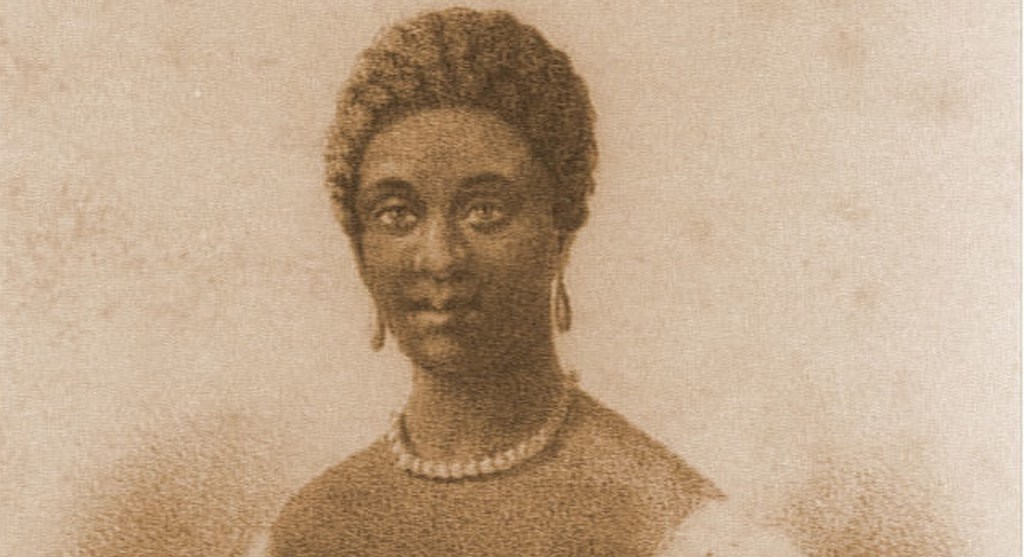
Image 1: Phillis Wheatley: Engraving, reproduced from her book, “Poems on Various Subjects, Religious and Moral.” London, 1773. New York Public Library
Phillis Wheatley’s “On Imagination”
Phillis Wheatley’s classically influenced poem, “On Imagination,” explores the powerful force of human imagination. Wheatley demonstrates her remarkable talent for use of mythological allusion and the classical forms in which she was trained and in which she excelled.
Introduction and Text of “On Imagination”
Phillis Wheatley’s “On Imagination” explores the nature of the human mind as it engages in the fanciful act of imagining. In the opening movement, Wheatley’s speaker offers an invocation [1] to the “imperial queen,” on whom she bestows the royal label, while personifying her subject.
Phillis Wheatley’s classical training in poetry is on full display as she composes a useful “invocation” that helps set the tone for her poem. Wheatley’s invocation also performs the traditional function of supplicating to the muses or to a deity for guidance and inspiration in composing the poem in progress.
The poet has her speaker follow such luminaries as the world-renowned, classical Greek poet, Homer, in his Odyssey [2 ]and the British mastercraftsman and classic poet, John Milton, in his Paradise Lost [3] .
On Imagination
Thy various works, imperial queen, we see,
How bright their forms! how deck’d with pomp by thee!
Thy wond’rous acts in beauteous order stand,
And all attest how potent is thine hand.
From Helicon’s refulgent heights attend,
Ye sacred choir, and my attempts befriend:
To tell her glories with a faithful tongue,
Ye blooming graces, triumph in my song.
Now here, now there, the roving Fancy flies,
Till some lov’d object strikes her wand’ring eyes,
Whose silken fetters all the senses bind,
And soft captivity involves the mind.
Imagination! who can sing thy force?
Or who describe the swiftness of thy course?
Soaring through air to find the bright abode,
Th’ empyreal palace of the thund’ring God,
We on thy pinions can surpass the wind,
And leave the rolling universe behind:
From star to star the mental optics rove,
Measure the skies, and range the realms above.
There in one view we grasp the mighty whole,
Or with new worlds amaze th’ unbounded soul.
Though Winter frowns to Fancy’s raptur’d eyes
The fields may flourish, and gay scenes arise;
The frozen deeps may break their iron bands,
And bid their waters murmur o’er the sands.
Fair Flora may resume her fragrant reign,
And with her flow’ry riches deck the plain;
Sylvanus may diffuse his honours round,
And all the forest may with leaves be crown’d:
Show’rs may descend, and dews their gems disclose,
And nectar sparkle on the blooming rose.
Such is thy pow’r, nor are thine orders vain,
O thou the leader of the mental train:
In full perfection all thy works are wrought,
And thine the sceptre o’er the realms of thought.
Before thy throne the subject-passions bow,
Of subject-passions sov’reign ruler thou;
At thy command joy rushes on the heart,
And through the glowing veins the spirits dart.
Fancy might now her silken pinions try
To rise from earth, and sweep th’ expanse on high:
From Tithon’s bed now might Aurora rise,
Her cheeks all glowing with celestial dies,
While a pure stream of light o’erflows the skies.
The monarch of the day I might behold,
And all the mountains tipt with radiant gold,
But I reluctant leave the pleasing views,
Which Fancy dresses to delight the Muse;
Winter austere forbids me to aspire,
And northern tempests damp the rising fire;
They chill the tides of Fancy’s flowing sea,
Cease then, my song, cease the unequal lay.
Commentary on “On Imagination”
The speaker of Phillis Wheatley’s “On Imagination” is dramatizing the power of the human imagination to create any situation it desires. However, remaining a rational, thinking mind ensconced in reality, the speaker returns to the physical plane of being to make a humble claim about her own use of imagination.
Opening Movement: The Classical Invocation
Thy various works, imperial queen, we see,
How bright their forms! how deck’d with pomp by thee!
Thy wond’rous acts in beauteous order stand,
And all attest how potent is thine hand.
From Helicon’s refulgent heights attend,
Ye sacred choir, and my attempts befriend:
To tell her glories with a faithful tongue,
Ye blooming graces, triumph in my song.
Now here, now there, the roving Fancy flies,
Till some lov’d object strikes her wand’ring eyes,
Whose silken fetters all the senses bind,
And soft captivity involves the mind.
The speaker begins by describing some of the creations that have resulted from the works of this imperial queen, Imagination. She asserts that the queen’s many varied “works” reveal bright forms that have been accompanied by “pomp.” The works are also “wond’rous” as they appear in a “beauteous order.” And they all prove the exquisite power that rests in that imperial queen’s hand.
The speaker engages an allusion to the Greek mythological mountain of Helicon [4], whose springs became known as a fount of poetic inspiration. It was there that the poet, Hesiod, was inspired to compose his Theogony, a work that offers a narration about the origin of the world as it was formed from chaos.
Hesiod’s famous opus also describes the genesis and historical progression of the Greek gods. Also allusive is her brilliant invocation. This speaker wishes to tell with “a faithful tongue” the glories of the work of the Imagination. She avers that as “Fancy flies,” that facility eventually lands on some object of intense interest, and then the mind takes over to wrap that object in “silken fetters.”
Second Movement: The Astonishing Force
The second movement begins the intense exploration of the “force” that the human mind through employment of its tool, the imagination, wields upon nature, time, and space.
The speaker implies that the imagination, in fact, has such a force that it is likely that no one can do it justice by speaking about it: no one can “sing” it force, and no one can fully “describe” the speed at which the imagination can move along its path. Still, she is motivated to offer her attempt to shed some light on the subject.
The speaker avers that through the powerful force of imagination the human mind can fly through space in search of the abode of the “thund’ring God.” The mind through the imagination can fly past the wind and abandon the confines of the “rolling universe.”
On the wings of imagination, the human mind may flit from “star to star” and take a measuring tape to the skies, while roaming above the sky. The mind through imagination can bring the human consciousness to a pinnacle from which s/he may “grasp the mighty whole,” while also discovering new places that will astonish even the “unbounded soul.”
Third Stanza: Imaginative Declarations
The speaker then makes an amazing claim that through the imagination the ravages of the season of winter can be transformed, and spring-like weather may again become refulgent.
The fields may again hold the growing grain. Frozen soil and streams may come alive and move unfettered. Flowers again may send out their fragrance as their colorful beauty again decorates the landscape.
Alluding to the Roman god, Sylvanus [5], the speaker insists that the “forest”—”silva” is Latin for “forest”—may become festooned with green leaves, replacing the brown, bare branches of winter.
Spring rains may sprinkle the landscape while dew may form and gleam in the morning sunlight. And roses may hold their “nectar sparkle.” All of this is made possible by the forceful functioning of the mental process known as “imagination.”
Fourth Stanza: The Powerful Force for Creativity
The speaker then affirms that what she has described as issuing from the force of imagination is, in fact, true. She asserts that the power of imagination remains in effect and what that power orders comes into being because imagination is the “leader of the mental train.” According to the dictates of this speaker’s thinking, the central invigorating feature of the mind is imagination.
After the imperial queen, the imagination, lifts her staff over the heads of the “realms of thought,” her subjects, like all good subjects, “bow.” This queen remains their “sovereign ruler.”
Interestingly, the speaker finds that as this ruler asserts her power, instead of resistance and doubt claiming the subjects, their hearts are filled with joy. This joy rushes in and then “spirits dart” through those “glowing veins.”
Thus, the presence and powerful force of the imagination offers the host mental facility only positive attributes. With an inspirational joy flooding the body and mind, the host remains in a regenerative state of awareness.
Fifth Movement: A Humble Return to Reality
The speaker next refers to the wildly imaginative venture of “ris[ing] from earth” and rushing through the expanse far distant above the earth-planet. Alluding again to Greek mythology, she employs the character Tithon [6], whose bed from which dawn (Aurora) may awaken in a stream of pure light—an occasion that would be quite different from the activities experienced by those characters.
The imagination can change all negativity to positivity, but the speaker, however, must return to earthly reality by admitting that she must leave those halcyon realms to which her imaginative journey has aspired. While an imaginative winter may turn to spring, the reality of the empirical winter forbids such flights of fancy.
Thus, the speaker reluctantly returns to “northern tempests” that will douse the fire of pure imagination. While Fancy’s “flowing sea” begins to chill, the speaker must end her song, which she claims is inferior to the imaginative heights she had reached earlier in her singing.
Sources
[1] Editors. “Invocation.” Britannica. Accessed August 26, 2023.
[2] Homer. Odyssey. Translation by Classics Archive. Accessed August 26, 2023.
[3] John Milton.Paradise Lost. Poetry Foundation. Accessed August 26, 2023.
[4] Curators. “Helicon.” Fandom: Greek Mythology. Accessed August 26, 2023.
[5] Editors. “Sylvanus: Roman God.” Britannica. Accessed August 26, 2023.
[6] Curators. “Tithon.” GreekMythology.com. Accessed August 26, 2023.
 Linda's Literary Home