Linda's Literary Home

Tag: Langston Hughes

  • Langston Hughes’ “Night Funeral in Harlem”

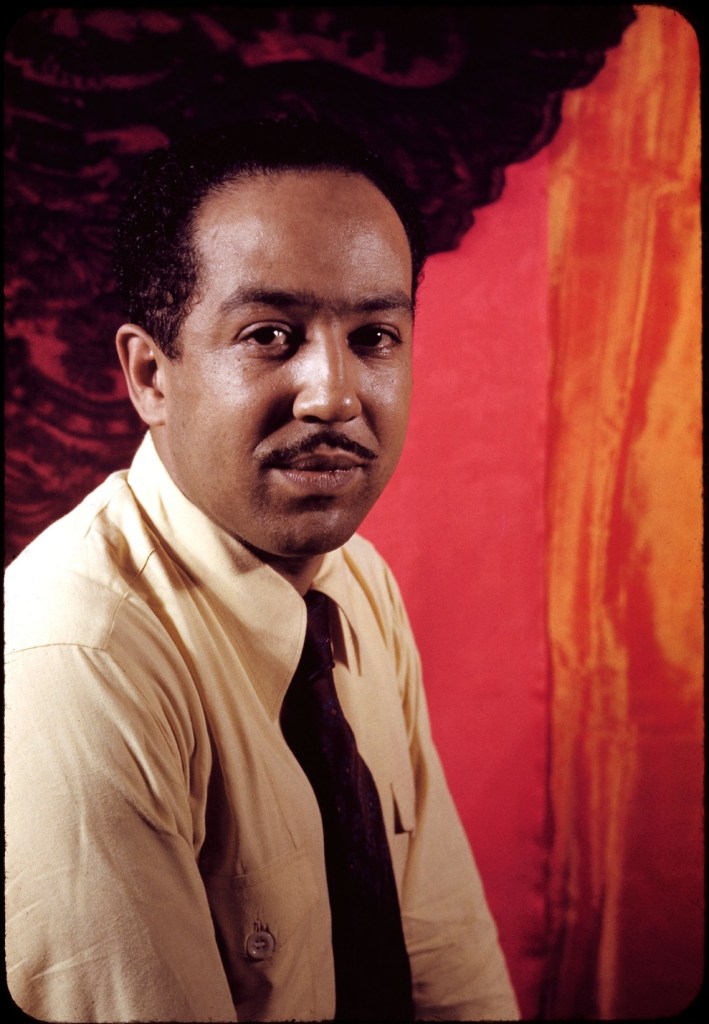
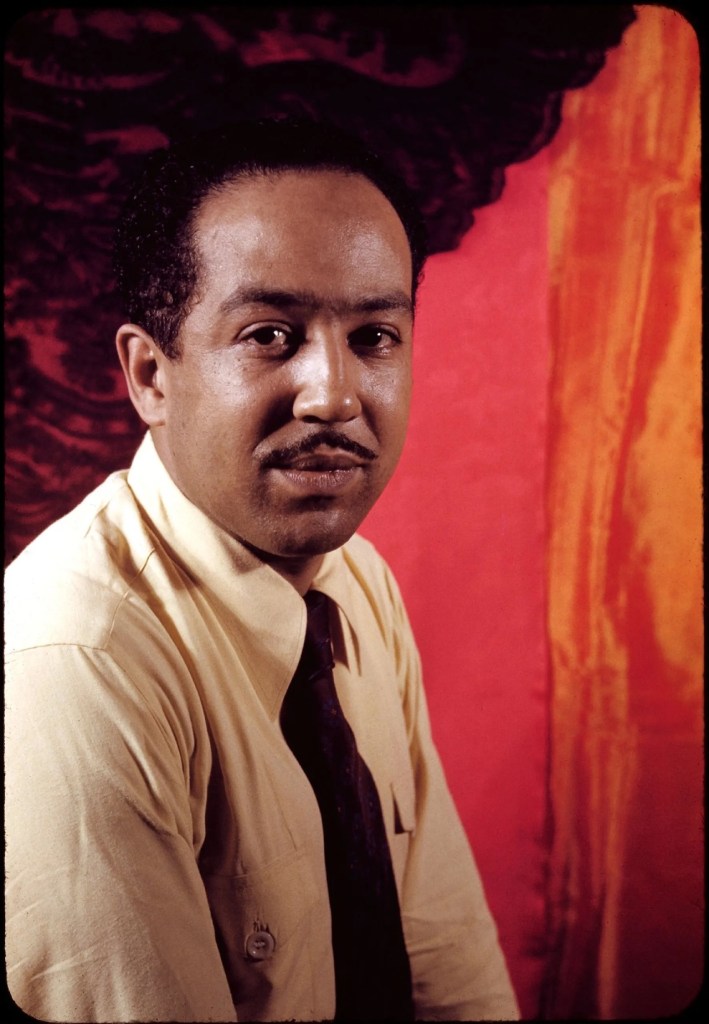
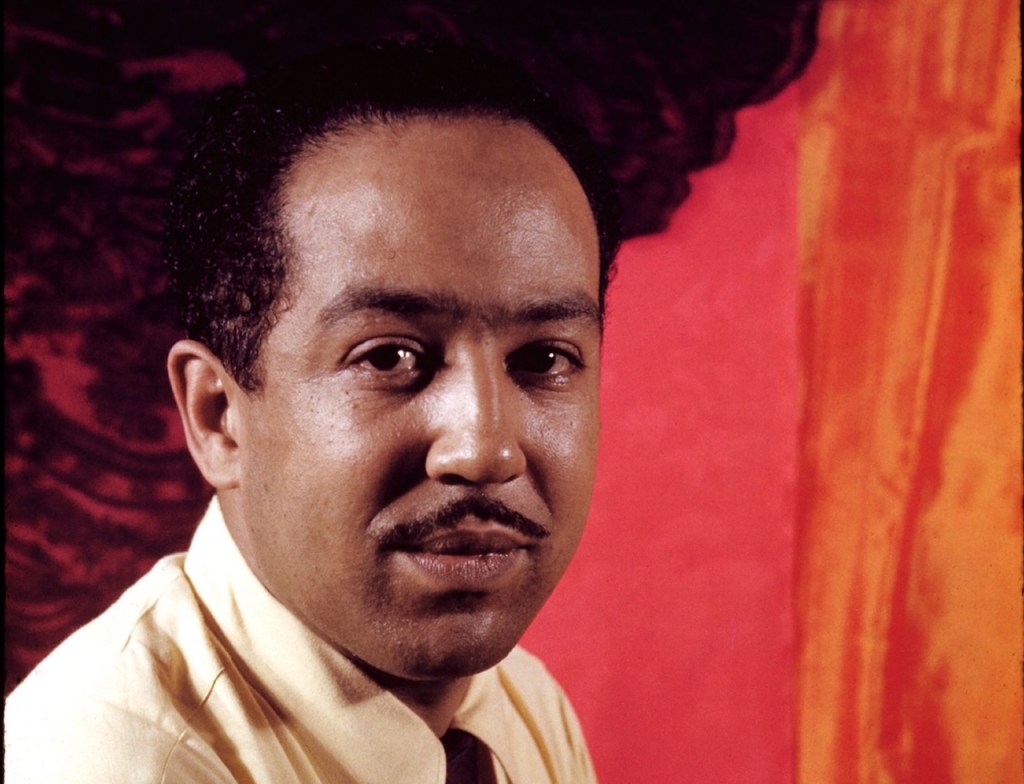
    Langston Hughes - https://www.newyorker.com/magazine/2015/02/23/sojourner - Photograph by Carl Van Vechten / Carl Van Vechten Trust / Beinecke Library, Yale - 1280
    Image: Langston Hughes – Photograph by Carl Van Vechten / Carl Van Vechten Trust / Beinecke Library, Yale – 1280

    Langston Hughes’ “Night Funeral in Harlem”

    The speaker in Langston Hughes’ “Night Funeral in Harlem” wonders how this poor dead boy’s friends and relatives are able to afford such a lavish funeral.

    Introduction and Text of “Night Funeral in Harlem”

    Langston Hughes’ “Night Funeral in Harlem” is an example of the poet’s affinity for the blues. He employs a form that includes the blues flavor, allowing the reader to hear a mournful voice that implies issues that he never actually discusses.

    The speaker’s questions are more than mere decoration, and their implications attempt to make a political and sociological, as well as religious, evaluation. The poem’s form features an inconsistent conglomeration of rimed stanzas, with varied refrains.

    Night Funeral in Harlem

         Night funeral
         In Harlem:

         Where did they get
         Them two fine cars?

    Insurance man, he did not pay—
    His insurance lapsed the other day—
    Yet they got a satin box
    for his head to lay.

         Night funeral
         In Harlem:

         Who was it sent
         That wreath of flowers?

    Them flowers came
    from that poor boy’s friends—
    They’ll want flowers, too,
    When they meet their ends.

         Night funeral
         in Harlem:

         Who preached that
         Black boy to his grave?

    Old preacher man
    Preached that boy away—
    Charged Five Dollars
    His girl friend had to pay.

         Night funeral
         In Harlem:

    When it was all over
    And the lid shut on his head
    and the organ had done played
    and the last prayers been said
    and six pallbearers
    Carried him out for dead
    And off down Lenox Avenue
    That long black hearse done sped,
         The street light
         At his corner
         Shined just like a tear—
    That boy that they was mournin’
    Was so dear, so dear
    To them folks that brought the flowers,
    To that girl who paid the preacher man—
    It was all their tears that made
         That poor boy’s
         Funeral grand.

         Night funeral
         In Harlem.

    Reading:  

    Commentary on “Night Funeral in Harlem”

    The speaker in Langston Hughes’ “Night Funeral in Harlem” jabs insults at these mourners as he wonders how this poor dead boy’s friends and relatives are able to afford such a lavish funeral.

    First Movement:  An Critical Observer

         Night funeral
         In Harlem:

         Where did they get
         Them two fine cars?

    Insurance man, he did not pay—
    His insurance lapsed the other day—
    Yet they got a satin box
    for his head to lay.

         Night funeral
         In Harlem:

         Who was it sent
         That wreath of flowers?

    The speaker begins with his refrain that features his subject, “Night funeral / In Harlem.” He then shoots in his first question that is ultimately insulting to the mourners. The speaker wonders, “Where did they get / Them two fine cars?” 

    The speaker’s dialect is intended to reveal him as an intimate with the mourners, yet his questions actually separate him from them. If he is one of them, why does he have to ask where the cars come from? His concern, therefore, comes across as disingenuous.

    The speaker then introduces the “insurance man,” who might be the reason for the “fine cars,” but no, the poor boy’s “insurance lapsed the other day.” Again, the speaker’s knowledge of the particulars of the situation clash; he knows the people well enough to know that their insurance lapsed, but yet not well enough to know who, in fact, is paying for the lavish funeral. 

    And then the speaker offers a further bit of incongruity that these poor folks have managed to supply a “satin box / for [the deceased’s] head to lay.” The speaker offers these incongruities but never manages to make clear his purpose.

    Second Movement:  A Question of Integrity

    Them flowers came
    from that poor boy’s friends—
    They’ll want flowers, too,
    When they meet their ends.

         Night funeral
         in Harlem:

         Who preached that
         Black boy to his grave?

    The speaker again introduces his next stanza with a variation on the opening refrain: “Night funeral / In Harlem: / / Who was it sent / That wreath of flowers?” Again, the speaker reveals that his distance from the mourners is so great that he has to ask about the flowers. But then he admits that he does actually know that the flowers came from “that poor boy’s friends.”

    But the speaker then insults those friends by accusing them of sending them only because “They’ll want flowers, too, / When they meet their ends,” and also implying that he wonders how those friends paid for the flowers.

    Third Movement:  Is Race Really the Issue?

    Night funeral
      Night funeral
         in Harlem:

         Who preached that
         Black boy to his grave?

    Old preacher man
    Preached that boy away—
    Charged Five Dollars
    His girl friend had to pay.

    The third stanza’s opening varied refrain asks, “Who preached that / Black boy to his grave?” He reveals for the first time that the deceased is black but does not clarify why he should offer the race of the dead at this point.  

    The had been implying that the deceased was black all along by using stereotypical Black English and placing the funeral in Harlem, which was heavily populated by African Americans at the time that the poet was writing.

    The preacher is portrayed then as a money-grubber, charging five dollars to “preach[ ] that boy away,” and the poor boy’s girlfriend had to pay the preacher the five dollar charge.  Again, how it is that the speaker knows the girlfriend paid the preacher, but that he does not know who paid for two limousines, casket, flowers?

    Fourth Movement:   Despite the Insults

        Night funeral
         In Harlem:

    When it was all over
    And the lid shut on his head
    and the organ had done played
    and the last prayers been said
    and six pallbearers
    Carried him out for dead
    And off down Lenox Avenue
    That long black hearse done sped,
         The street light
         At his corner
         Shined just like a tear—
    That boy that they was mournin’
    Was so dear, so dear
    To them folks that brought the flowers,
    To that girl who paid the preacher man—
    It was all their tears that made
         That poor boy’s
         Funeral grand.

         Night funeral
         In Harlem.

    The final stanza is a rather flabby summation of what has happened during this Harlem funeral at night. The opening refrain merely reiterates the subject, “Night funeral / In Harlem.”

    Gone is the additional commentary as appeared in the three opening refrains, but the speaker does leave the affair on a compassionate note; at least he can admit, “It was all their tears that made / That poor boy’s / Funeral grand.”  

    Despite his probing, insulting questions, he finally admits that the importance of the event is that it shows the love the mourners had for their dearly departed.
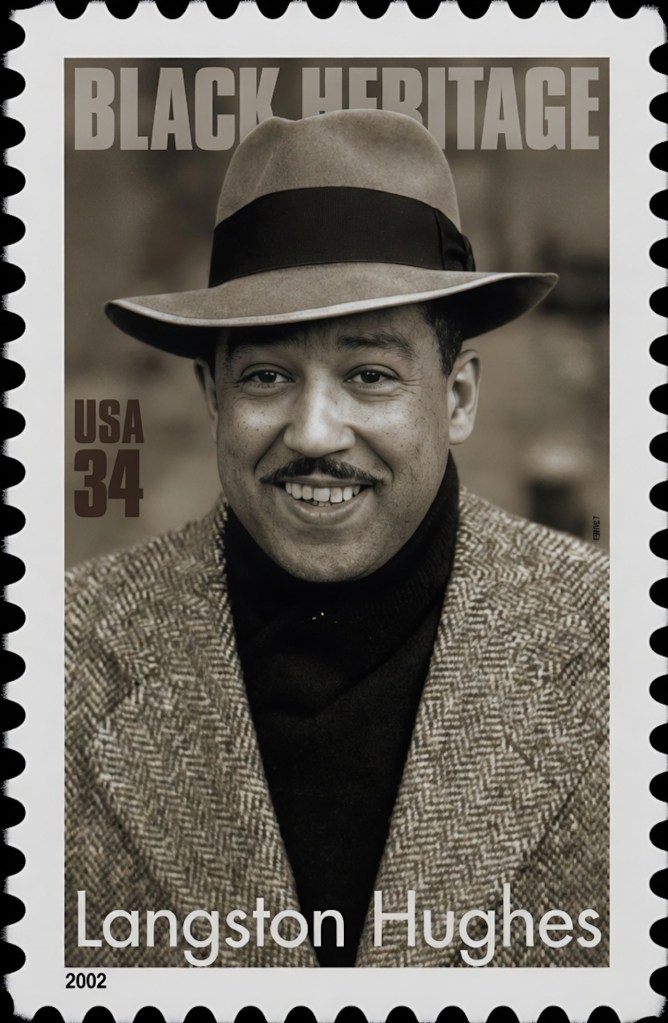
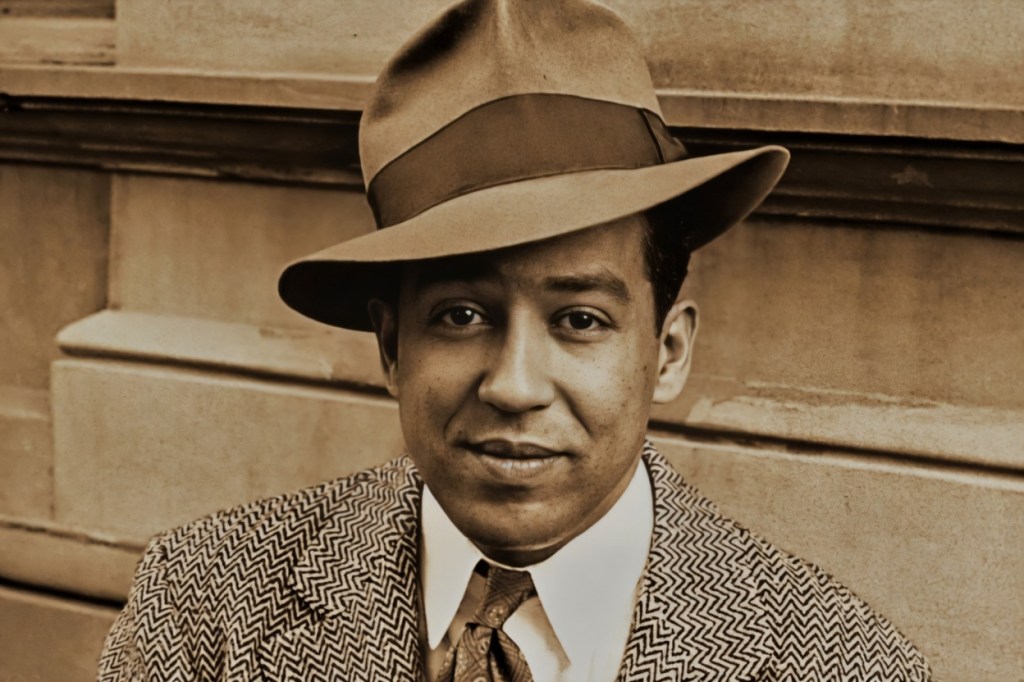
    Image:  Langston Hughes - Commemorative Stamp  http://usstampgallery.com/view.php?id=0787693b268f0944d0264088b300c02721d73814&Langston_Hughes&st=Langston%20Hughes&ss=&t=&s=8&syear=&eyear=  US Stamp Gallery
    Image: Langston Hughes – Commemorative Stamp  – US Stamp Gallery
  • Langston Hughes’ “Mother to Son”

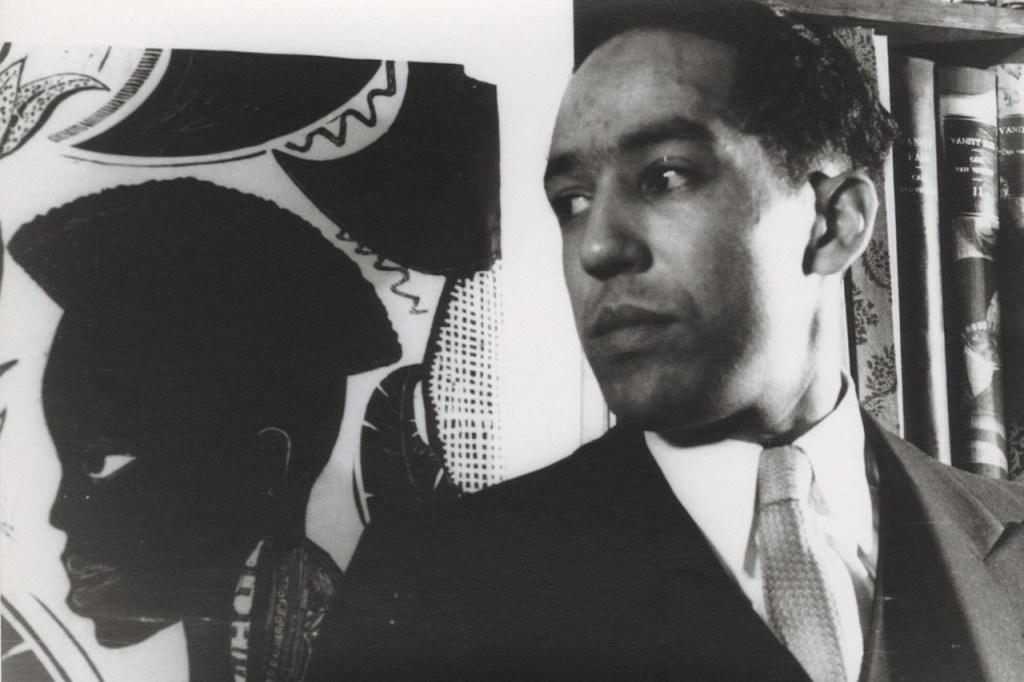
    Image: Langston Hughes - Eakins Press Foundation - photo by Carl Van Vechten (1880-1964) https://www.sfgate.com/entertainment/article/Inspired-by-poet-Hughes-Influential-writer-was-2875941.php
    Image: Langston Hughes – Eakins Press Foundation – photo by Carl Van Vechten (1880-1964)

    Langston Hughes’ “Mother to Son”

    Comparing her life to a stairway in an extended metaphor in Langston Hughes’ “Mother to Son,” a mother encourages her son to face life, despite its difficulties. 

    Introduction with Text of “Mother to Son”

    The speaker in Langston Hughes’ narrative poem “Mother to Son” is engaging the literary device known as the dramatic monologue, a poetic device employed with expertise by the English poet, Robert Browning. In Langton Hughes’ narrative, a ghetto mother is advising her son about his direction in life. 

    She is employing a ghetto dialect, a device Langston Hughes has often used as he dramatizes his characters. This mother wishes to guide her son in the right direction in life and encourage him to face the challenges he will sure face.  

    She thus employs the metaphor of climbing a difficult stairway which compares to her hard life struggles.  Her stairway was not made of “crystal,” and instead, it offered her a series of challenged that she had to face and overcome.

    Mother to Son

    Well, son, I’ll tell you:
    Life for me ain’t been no crystal stair.
    It’s had tacks in it,
    And splinters,
    And boards torn up,
    And places with no carpet on the floor—
    Bare.
    But all the time
    I’se been a-climbin’ on,
    And reachin’ landin’s,
    And turnin’ corners,
    And sometimes goin’ in the dark
    Where there ain’t been no light.
    So, boy, don’t you turn back.
    Don’t you set down on the steps.
    ‘Cause you finds it’s kinder hard.
    Don’t you fall now—
    For I’se still goin’, honey,
    I’se still climbin’,
    And life for me ain’t been no crystal stair.

    Commentary on “Mother to Son”

    Comparing her life to a stairway in an extended metaphor, a mother in this poem encourages her son to face life, even though it can be full of difficulties with twists and turns.

    First Movement:  A Stairway Metaphor

    Well, son, I’ll tell you:
    Life for me ain’t been no crystal stair.
    It’s had tacks in it,
    And splinters,
    And boards torn up,
    And places with no carpet on the floor—
    Bare.
    But all the time
    I’se been a-climbin’ on,
    And reachin’ landin’s,
    And turnin’ corners,

    Addressing her son with advice based on her own life, the mother in this poem begins by fashioning a metaphor of her life as a stairway.  She asserts that although it has not been easy to climb these step through life, she has never permitted herself the cowardly act of not striving to climb to the next higher step.   She then exclaims, “Life for me ain’t been no crystal stair. “

    The “crystal stair” emphasizes an imaginary pathway with ease, comfort, and even beauty.  The “crystal” would likely render the climb smooth and clear, much less difficult.  Such stairway would with comfort and remain without the slog that she has had to suffer.  

    The stairway that this mother has climbed has been full of difficulties, metaphorically rendered by “tacks and splinters.”  Often as she landed on certain steps, the step did not even feature the softness of carpet that would has also made the walk less arduous on the feet and legs. 

    And as in life with its many tumultuous twists and turns,  the stairway the mother has has to negotiate has yielded its many drastic and difficult share of trials and tribulations.  However, she emphasizes the fact that she has never just thrown up her hand and quit climbing, regardless of how difficult and steep the climb was; instead, she insists, “I’se been a-climbin’ on.”  

    And she has continued to make progress by being rewarded for her effort as she was “reachin’ landin’s / and turnin’ corners.” These features on the stairway—landings and corners—are parts of the extended metaphor as they are real features of a literal stairway.  Reaching each landing, thus, represents the real-life achievements that the mother has made as she vigilantly struggled. 

    Second Movement:  The Mother’s Advice 

    And sometimes goin’ in the dark
    Where there ain’t been no light.
    So, boy, don’t you turn back.
    Don’t you set down on the steps.
    ‘Cause you finds it’s kinder hard.
    Don’t you fall now—
    For I’se still goin’, honey,
    I’se still climbin’,
    And life for me ain’t been no crystal stair.

    The mother then counsels her son, admonishing him not to quit climbing his own stairway and not to just sit down and give up. 

    She has experienced much darkness on her climb up the stairway; however, she recommends that her son now allow anything to dishearten him.  Even though life can be difficult, he must continue to struggle on.  He must never give up on life, despite all the trials and tribulations that might come his way.

    The mother is striving to convince her son that he must continue to metaphorically climb that metaphoric stairway that is his life. The metaphorical  act of sitting down on a step means giving up and then failing to confront the hardships that he will be required to overpower.

    Then three times, the mother reiterates that she has never permitted herself to give up on the fights to meet the challenges on her own life stairway.  She insists that she has kept on climbing, and she is still in the process of climbing that stairway.  She keeps on climbing. And she has no regrets that is continuing to climb.

    The mother also repeats the line in which she first employed the stairway metaphor: “Life for me ain’t been no crystal stair,” in the second and last lines.  

    The mothers has used her own experience to try to instill in her son the important idea that despite all the difficult challenges that life might throw in one’s way, the continued effort to strive boldly and tenaciously offers the only pathway that will take an individual to victory. 

    A Simple, Poignant Classic Poem

    The simply poignancy of Langston Hughes’ “Mother to Son” has resulted in the poem’s becoming a classic.  Hughes’ employment of the ghetto dialect adds vitality and accuracy to the poem. The son never speaks in the poem so the audience cannot know what he might have said or done to motivate the advice given by his mother.  

    Even whether the son understands and/or agrees with that advice cannot be known. But such facts are not germane to the wisdom of the advice.  Such advice would always be appropriate in spite of any problems that the mother and son might have been experiencing.  

    Hypothetical issues such as gang-life, poverty, or drug abuse remain largely irrelevant when placed up against the traditional values of trying to behave well and become all that one can be despite one’s original circumstances in life.

    The narrative’s actual function is to impart the very uncomplicated yet highly profound idea that no one should ever relinquish the struggle to better oneself and one’s lot in life.  In the struggle of life, each individual must soldier on to vanquish each challenge or hardship. 

    The true winners, without fail, assert that they have gathered small achievements in life as they have completed each step of their journey. Continuing  to climb is always, at least, half the battle.

    If life has not bestowed upon you a cushy “crystal stair,” you must climb it nevertheless, and even in spite of the “splinters and tacks.”  The act of climbing is far more vital to success than the physical reality of what the stairway is made of.

  • Langston Hughes

    Image: Langston Hughes  Carl Van Vechten Trust / Beinecke Library, Yale

    Life Sketch of Langston Hughes

    Hoyt W. Fuller, critic, editor, and founder of the Organization of Black American Culture (OBAC), has pointed out that Langston Hughes possessed a “deceptive and profound simplicity.”  Fuller insists that understanding these qualities in Hughes is key to understanding and appreciating his poetry.

    Early Life and Education

    On February 1, 1902, Langston Hughes was born in Joplin, Missouri, to James Nathaniel Hughes and Caroline Mercer Langston. The poet’s full name is James Mercer Langston Hughes. His parents divorced when Langston was very young, and he was raised primarily by his grandmother in Lawrence, Kansas [1].    In his first autobiography, The Big Sea, Hughes reveals,

    My grandmother raised me until I was twelve years old.  Sometimes I was with my mother, but not often.  My mother and father had separated.  And my mother, who worked, always traveled about a great deal, looking for a better job.

     When I first started to school, I was with my mother a while in Topeka. (And later, for a summer in Colorado, and another in Kansas City.)  She was a stenographer for a colored lawyer in Topeka, named Mr. Guy.  She rented a room near his office, downtown. So I went to a “white” school in the downtown district.[2]

    The poet’s father James Hughes had studied law and had planned to practice, but Jim Crow laws prevented him from taking the bar exam.  The elder Hughes then moved to Mexico, where not only was he admitted to the bar, but he also became very successful through the practice of law.  

    Langstons’ father’s financial success allowed him to become the owner of much property in Mexico City, where nearby he purchased and resided on a huge ranch in the hills.  He also became a money lender and foreclosed on mortgages.

    About his father, the poet has remarked, “my father was interested in making money to keep.”  This attitude contrasted with his mother and his stepfather, who were interested in making money to spend.  Thus, his mother and stepfather moved around a great deal to take advantage of better employment.

    In 1920, Langston Hughes graduated from Central High School in Cleveland, Ohio.  He had hopes of attending Columbia University to study to become a writer, but his father refused to pay for his son’s schooling unless the younger Hughes studied engineering. 

    Hughes started his university studies at Columbia but stayed for only a year.  He found racism at the school intolerable, so he left the university and took a number of jobs to support himself.  

    In 1929, Hughes completed his university studies at Lincoln University in Pennsylvania.   The school pays tribute to their most famous graduate with a library named in his honor, Langston Hughes Memorial Library [3].

    Full Image: Langston Hughes  Carl Van Vechten Trust / Beinecke Library, Yale

    Poetry

    Langston Hughes opens his first autobiography, The Big Sea, by reporting on a melodramatic event: he is tossing into the ocean one by one all the books he had studied while at Columbia University.  

    He had recently joined the large merchant ship S. S. Malone as a seaman; he was only twenty-one years old, and he made up his mind that nothing would ever again happen to him that he did not want to have happen.  

    He became intent on  securing his own freedom with his little dramatic ritual of unloading his college books into the ocean.  In the life of Langston Hughes, one poetic act often led to another.   Four years before this important, liberating act, however, the poet had traveled to Mexico to visit his father to ask for financial assistance to attend the university.  

    But he reports that his visits with his father in Mexico were mostly unsatisfactory; he could not identify with his father’s mindset.  His father hated his own race of people, and he was interested only in making money.  However, Langston needed his father’s financial support, so he spent time with him in Mexico.

    On this particular trip, while Hughes was only seventeen years old, the poet composed one of his most anthologized poems “The Negro Speaks of Rivers.”  He gives details of his inspiration for this poem in The Big Sea; he wrote the poem “just outside of St. Louis, as the train rolled toward Texas”:

    It came about in this way.  All day on the train I had been thinking about my father and his strong dislike of his own people.   I didn’t understand it, because I was a Negro, and I liked Negroes very much.

    He then describes meeting a number of blacks who had come “up from the South” as he worked at one of his “happiest jobs” at a soda fountain.   He reports that he enjoyed “hearing them talk, listening to the thunderclaps of their laughter, to their trouble, to their discussions of the war and the men who had gone to Europe from the Jim Crow South, their complaints over the high rent. . . .”   To Hughes, these people seemed to be the “gayest and bravest people possible” as they worked “trying to get somewhere in the world.”

    Crossing the Mississippi River at sunset, Hughes peered out of the Pullman window and saw “the great muddy river flowing down toward the heart of the South,” and he started musing on “what the river, the old Mississippi, has meant to Negroes in the past.”  

    He mused on the tragedy of slaves being sold down the river as the “worst fate” that a slave could suffer.  He then began musing on President Abraham Lincoln’s having rafted on the Mississippi down to New Orleans.  Lincoln had seen “slavery at it worst, and had decided within himself that it should be removed from American life.”

    Hughes’ musing in this creative reverie then turned to additional rivers that had affected the lives of members of his ethnicity: the Congo, the Niger, and the Nile.  And then the thought came to him: “I’ve known rivers.”  

    He wrote down that one line on an envelope holding the letter from his father which he carried in his pocket, and then within the next fifteen minutes, he had composed his magnificent poem, which he titled “The Negro Speaks of Rivers.”

    As one of the most important creative contributors to the Harlem Renaissance, Hughes has offered many poems to the American literary canon.  A small sample of his poems include “A Mother to Son,”  “Madame’s Calling Cards,” “Theme for English B,” “Night Funeral in Harlem,”  “Goodbye, Christ,” and “Cross.”

    Supporting Himself by Writing

    Langston Hughes has been most noted as a poet, and he managed to finish his college education after being awarded a full scholarship based on his proficiency as a poet.  After receiving his B.A. degree in 1929, he continued to publish widely, earning for himself the achievement of being a writer, who was able to support himself as an adult solely with his writings [4].

    In addition to poetry, which remained his first love, Hughes published three novels, Not without Laughter (1932), Scottsboro Limited (1932), and The Ways of White Folks (1934).   In 1935, Hughes was awarded a Guggenheim Fellowship.  The Gilpin Players (Karamu House) produced six of the poet’s plays in 1936 and 1937.  Hughes founded the Negro Theater in Los Angeles in 1939 and composed the script “Way Down South.”

    Hughes published eight collections of poems; he also published four books of fiction and six books for children and teens.  He added three books of humor to his resume as well as two autobiographies.  He also wrote essays and a number of books on black history.  As a prominent figure in the civil rights movement, he traveled and lectured widely throughout the world [5].

    Illness and Death

    In 1967,  at the Stuyvesant Polyclinic in New York City, Hughes submitted to t0 a surgical procedure to treat prostate cancer.  The surgery was a tragic failure, and he died from complications arising from that medical procedure [6].  Hughes’ body underwent cremation, and his ashes remain interred at the Schomburg Center for Research in Black Culture in Harlem, under the floor of the foyer in the institute.  

    The artwork on the flooring features a medallion of a human being formed by rivers and includes the line, “My soul has grown deep like the rivers,” from the poet’s inspirational poem “The Negro Speaks of Rivers.”

    Sources

    [1] Editors.  “Langston Hughes: 1902–1967.”  Poetry Foundation.  Accessed January 12, 2026.

    [2] Langston Hughes.  The Big Sea: An Autobiography.  Thunder’s Mouth Press.  New York.  1940. 1986. Print.

    [3] Editors.  “About the Library.”  Lincoln University.  Accessed January 12, 2026.

    [4] Langston Hughes.  I Wonder as I Wander: An Autobiographical Journey.  Thunder’s Mouth Press.  New York.  1956. 1986. Print.

    [5] Curators.  The Langston Hughes Society.  Horsham, Pennsylvania.  Accessed January 12, 2026.

    [6] Editors.  “Langston Hughes.”  Encyclopedia of Cleveland History: Case Western Reserve University.  Accessed January 12, 2026.

    Image: Langston Hughes – Poetry Foundation

    Commentaries on Langston Hughes Poems

    1. The Negro Speaks of Rivers
    2. Harlem
    3. Goodbye, Christ
    4. Theme for English B 
    5. A Mother to Son
    6. Cross
    7. Madam’s Calling Card 
    8. Night Funeral in Harlem

    Note on Term Usage:  Before the late 1980s in the United States, the terms “Negro,” “colored,” and “black” were accepted widely in American English parlance.   While the term “Negro” had started to lose it popularity in the 1960s, it wasn’t until 1988 that the Reverend Jesse Jackson began insisting that Americans adopt the phrase “African American.”  The earlier more accurate terms were the custom at the time that Langston Hughes was writing.

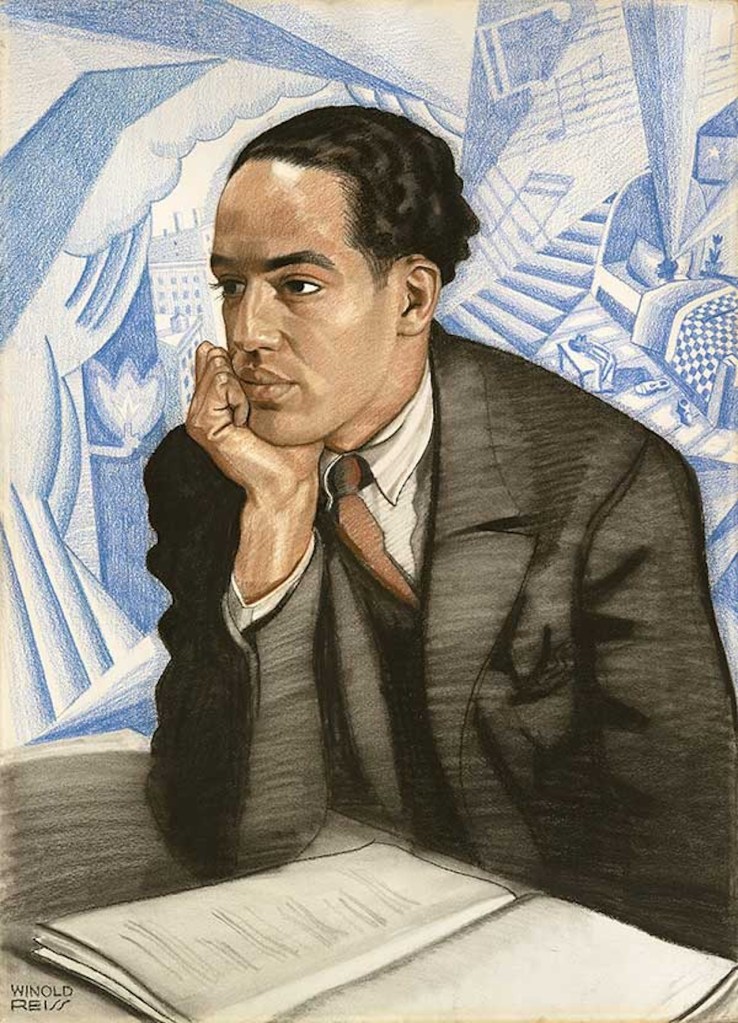
    Image: Langston Hughes.    Portrait by Winold Reiss (1886–1953) – National Portrait Gallery, Smithsonian Institution.