“Perhaps the time has already come . . . when the sluggard intellectof this continent will look from under its iron lids and fill the postponed expectation of the world with something better than the exertions of mechanical skill.” —Ralph Waldo Emerson, “The American Scholar” 1837
You have mistaken the hands for the heart, The craft for the art, The brain for the mind, The plane for the destination.
The scholar schooled on Man Thinking must ask:
When the fountain replaced the quill, Did the masters tout it as the solution To all pedagogical problems? a fount of creativity?
When the ball point edged out the fountain, Did they once again shout “panacea”? Ideas become more liquid?
When typewriters lined up in classrooms, Did English professors march their students in to improve The essay? keys take on mind power?
All are fragile, who would teach and learn. But our students know the difference Between a tool and a work.
They come to us to search, if not seek, their souls. If we demand that Man Thinking is Man Computing We impede their ability to search and seek.
II. Those Who Fear Big Brother
“Let the scholar not quit his belief that a popgun is a popgun, though the ancient and honorable of the earth affirm it to be the crack of doom.” —Ralph Waldo Emerson, “The American Scholar” 1837
You finger the edge of the new page But refuse to read it: Maybe you can’t control the syntax, Maybe you’ll have to ask someone to help you— Someone who is not as good as you are, Some morale-less underling.
You do fine with your pen and ink— You do write type, though, if the machine Does not plug into the wall.
You suspect that invisible criminal activity Is playing in the network of the system: Whiz-kids accessing your bank accounts, Administrators processing your thoughts.
Your students laugh loud at the clever insults You spit at the machine, But they know the difference between A stagecoach and an airplane.
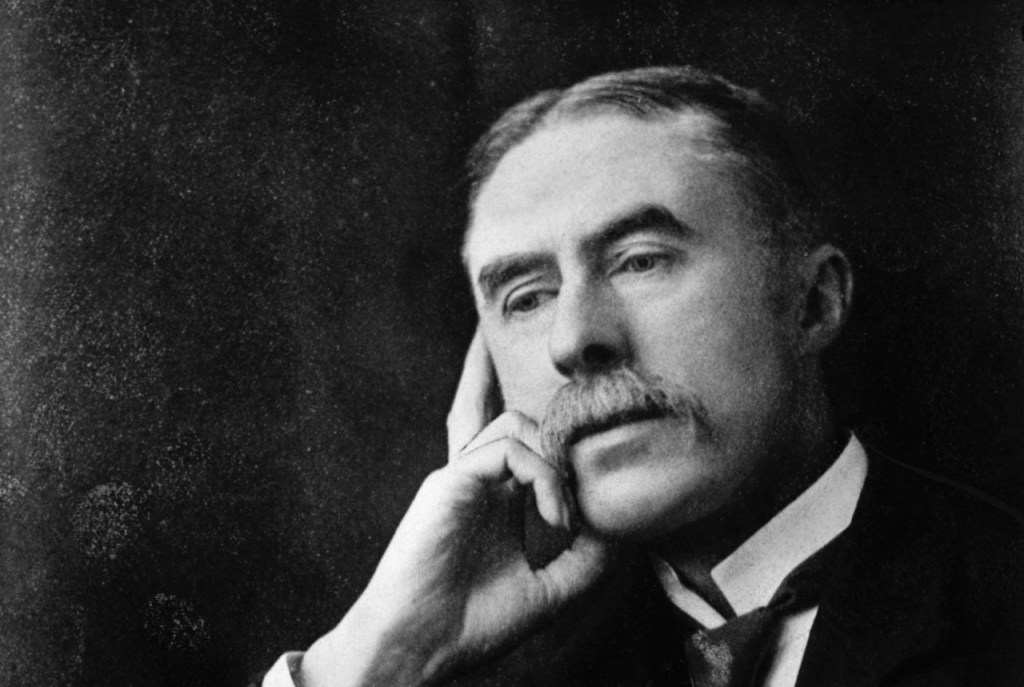
Image: A. E. Housman Photo by Hulton-Deutsch/Hulton-Deutsch Collection/Corbis via Getty Images
A.E. Housman’s Poem XXVII “Is my team ploughing”
Two speakers appear in A. E. Housman’s “Is my team ploughing”: one a dead man, the other his living friend. The dead man asks for a report about how things are going now that he has died.
Introduction and Text of “Is my team ploughing”
A E. Housman’s “Is my team ploughing” (XXVII) appears in A Shropshire Lad, the poet’s well-known, somewhat autobiographical collection. In the poem, a deceased man questions a living friend about various aspects of their life together before the dead man died.
The eight stanzas are sectioned into question and response, similar to an interview, with the dead man beginning with a question. The dead man’s questions appear in quotation marks, followed by the living friend’s response without quotation marks.
XXVII Is my team ploughing
“Is my team ploughing, That I was used to drive And hear the harness jingle When I was man alive?”
Ay, the horses trample, The harness jingles now; No change though you lie under The land you used to plough.
“Is football playing Along the river shore, With lads to chase the leather, Now I stand up no more?”
Ay the ball is flying, The lads play heart and soul; The goal stands up, the keeper Stands up to keep the goal.
“Is my girl happy, That I thought hard to leave, And has she tired of weeping As she lies down at eve?”
Ay, she lies down lightly, She lies not down to weep: Your girl is well contented. Be still, my lad, and sleep.
“Is my friend hearty, Now I am thin and pine, And has he found to sleep in A better bed than mine?”
Yes, lad, I lie easy, I lie as lads would choose; I cheer a dead man’s sweetheart, Never ask me whose.
Commentary on “Is my team ploughing”
Two speakers appear in these lines: one a dead man, the other his living friend. The dead man asks for a report about how things are going now that he has died.
First Stanza: The Dead Man Asks a Question
“Is my team ploughing, That I was used to drive And hear the harness jingle When I was man alive?”
The dead man begins by asking a question of his friend who is still alive. The deceased wishes to find out if his team of horses that he employed in ploughing his fields is still performing that function.
Therefore he puts the question to his friend: “Is my team ploughing?” Continuing he adds, “That I used to drive, / And hear the harness jingle.” The dead speaker, no longer possessing the capability of tilling his farm fields, nor of listening to the jingling of the horses’ harnesses, seeks answers to the mystery of how those still living are functioning now that the deceased is no longer “man alive.”
Second Stanzas: The Living Man Responds
Ay, the horses trample, The harness jingles now; No change though you lie under The land you used to plough.
The friend immediately responds that the horses are indeed continuing to plough and their harnesses are still making their jingling sounds. Life has continued on as before the deceased became deceased. Everything goes on as it did before the poor dead farmer’s body was placed “under / The land [he] used to plough.”
Third Stanza: No Longer Able to Play
“Is football playing Along the river shore, With lads to chase the leather, Now I stand up no more?”
The dead speaker then wants to know if their other friends are still playing football; he shows that he remembers where they used to play, adding the colorful fact of the boys chasing the ball as they played their game.
He emphasizes his current status to his living friend that he can no long join in the game. He makes sure the friend does not forget that being dead he can no longer play and enjoy himself as he did before.
Fourth Stanzas: Contrast Between the Living and the Dead
Ay the ball is flying, The lads play heart and soul; The goal stands up, the keeper Stands up to keep the goal.
The friend then responds that yes the boys are still playing their lively game. He stresses his positive answer, saying, the goal is still in place and the goalie still performs his task in the game. By repeating the term “stands” the speaker emphasizes the contrast between the living players and the deceased questioner who can no longer “stand.”
Fifth Stanza: Hated to Leave His Sweetheart
“Is my girl happy, That I thought hard to leave, And has she tired of weeping As she lies down at eve?”
The dead man then queries after his girlfriend. He hated having to leave her, and he says, he “thought hard” on the issue. He wonders if she has ceased mourning the loss of him, as he surmises that his sweetheart would have bitterly mourned his passing and that she might still be in mourning for him.
Sixth Stanza: A Well-Satisfied Sweetheart
Ay, she lies down lightly, She lies not down to weep: Your girl is well contented. Be still, my lad, and sleep.
However, the friend assures the dead man that the sweetheart is well satisfied, and as she lies down in bed at night, she is not pining nor shedding tears. This turning point reveals that the friend may not be such a good friend to the dead man as it might have seemed; the living friend knows too much about the sweetheart and has revealed to the dead man more than the poor fool would have wanted to know.
Seventh Stanza: His Hearty Friend
“Is my friend hearty, Now I am thin and pine, And has he found to sleep in A better bed than mine?”
The dead speaker then poses a final question about his friend, the one he has been interviewing all along. The dead man asks if his friend is “hearty,” as he once again emphasizes his own status as a dead man. Instead of “hearty,” he is “thin and pine.” Thus he asks if the still living friend has found a better place to sleep than the grave. Is it possible that the dead already knows, or suspects, the answer to that question?
Eighth Stanza: Quite Well and Sleeping Well
Yes, lad, I lie easy, I lie as lads would choose; I cheer a dead man’s sweetheart, Never ask me whose.
The living friend then assures his dead friend that he is quite well, and he sleeps well. And he adds, “I cheer a dead man’s sweetheart.” When the living friend, who has usurped the place of the dead man with the latter’s sweetheart, adds, “Never ask me whose,” the questioning does cease.
But how likely is it that the dead man does not already have the answers to all of his questions? The dead man’s questions seem to elicit responses that unveil the treachery of his so-called living friend. Such an examination of possibilities places before the minds of readers and listeners the unending route of knowledge, experience, and truth that does not end with death.
The Extended Paradox of a Dead Man Speaking
Readers of A.E. Housman’s “Is my team ploughing” may react to the implausibility of a dead man holding a conversation with a living man. That reaction will depend on how literally one takes the conversation. Obviously, a literal conversation is impossible; thus, one must consider the fact that the conversation itself is a figure of speech, an extended paradox.
Paradoxes, which at first seem absurd, are justified upon further explanation. But how does one justify a conversation between a dead man and a living man? Only the living man can be offering a report of this conversation; thus, the dead man’s part of the conversation is also coming from the mind of the living man. But why would a living man hold such a conversation, even if imaginary?
The answer is that the living man is being tormented with guilt at the way he treated the dead man while the latter was living, and now that his so-called friend is dead, he is committing the ultimate sin against their friendship by taking his place with the dead man’s sweetheart. The living friend is merely attempting to assuage his own guilty conscience by holding the imaginary conversation in which he seems to be attempting to solace his former friend.
Speculative Literary Fiction Alert! This text is speculative literary fiction. It does not depict any real person or actual event.
Original Short Literary Fiction: “Transformation through the Ages: Two Letters to Myself“
The process of aging asks us to move from one version of ourselves into another—slowly learning how to carry memory, change, loss, wisdom, and time within the same person.
Dear Older Me,
I’m writing to you from age twenty, which feels impossibly young and impossibly certain all at once, right on the edge of adulthood. Everyone keeps telling me that life will change me, but I still wake up every morning believing I will somehow remain recognizable to myself forever. I wonder if you remember feeling that way.
Lately I’ve been thinking about aging—not in the dramatic sense of illness or endings, but in the quieter sense of becoming someone new over time. I look at photographs from just a few years ago and already feel strange about them.
The girl in those pictures is me, but also not entirely me anymore. Her worries were smaller. Her body was different, plumper, rosier, full of some kind of strange awareness. But her understanding of herself was unfinished.
I wonder what it’s like for you now, at nearly ninety, carrying six plus decades of former selves inside you.
Do you still feel connected to me? Or do I seem like a distant relative you remember fondly but imperfectly?
People talk so much about youth as though it’s the truest version of a person, and aging as though it’s some slow departure from that truth. But I’m beginning to suspect that every age is temporary, and every version of ourselves eventually becomes a kind of memory.
That thought frightens me sometimes.
I notice already how language changes around age. Adults speak of young people with nostalgia, impatience, envy, and tenderness all at once. And young people speak about aging as though it’s something abstract—something happening to other people. Yet every day we are all moving quietly toward another stage of ourselves.
I wonder what it feels like to look into the mirror at eighty plus. Do you still recognize your expressions even if the face has changed? Do you still feel young somewhere underneath everything time has altered?
I’ve also been thinking about photographs and memories. Right now, my room is full of snapshots from childhood, school dances, birthdays, awkward haircuts, and vacations that already feel far away. I can’t imagine ever wanting to hide those versions of myself, even the embarrassing ones. But I wonder if, by your age, those images begin to feel less like evidence and more like archaeology.
Do old photographs comfort you, or do they ache? I hope you’ve kept them all anyway.
I hope you understand that the younger versions of yourself were not mistakes. I hope you speak kindly about us—the insecure teenager, the reckless twenty-year-old, the exhausted middle-aged woman trying to hold everything together. I hope you see all of them not as separate people, but as chapters in the same long story. Most of all, I hope you haven’t become embarrassed by change itself.
Right now, growing older seems terrifying because everything around me celebrates beginnings and quietly fears decline. But perhaps aging is not a process of disappearing. Maybe it’s a process of accumulation. Maybe the older face simply carries more life within it. If you could tell me anything from where you are now, I think I’d want reassurance that becoming older does not mean becoming less.
I hope you still laugh easily. I hope you still feel wonder. I hope you still believe your life mattered. And I hope, somehow, that you are grateful for me too—for this young girl standing at the beginning, trying so hard to understand time before she has truly lived it.
Love, Your Former Self
Dear Former Self,
Your letter arrived like a voice carried across water—young, searching, and achingly sincere. I read it slowly, not because age has made me slower, though perhaps it has, but because your words reopened rooms in my memory I had not visited in years.
Yes, I remember you. More importantly, I remember being you.
At twenty, you believe identity is something you must discover once and then defend forever. What age eventually teaches is that the self is not a monument. It is weather. It shifts continuously—sometimes gently, sometimes violently—and survives through adaptation rather than permanence.
You ask whether I still feel connected to you. I do, though not in the simple way you imagine. You are not buried beneath the years; you are woven through them. I still recognize your idealism, your sensitivity, your fear of being forgotten or diminished by time. Those things remain, though softened now by experience.
And yes, there are moments when I look into the mirror and feel startled. Aging happens so gradually that you scarcely notice it while living through it, and then suddenly you catch sight of your mother’s face in your own reflection, or your grandmother’s hands resting in your lap.
The body changes first in obvious ways. The knees complain. The spine stiffens. Sleep becomes lighter. Faces hollow and soften simultaneously. But the deeper transformation is stranger: the realization that inside the aging body, consciousness remains largely untouched by chronology.
I am eighty-nine, yet some mornings I still feel eighteen until I stand up. That is one of the great hidden truths of aging: the young self never fully leaves. She simply becomes surrounded by additional selves gathered over a lifetime.
You asked whether old photographs comfort or ache. The answer is both. Photographs become less about appearance and more about vanished worlds. You stop focusing on how pretty you once were and begin noticing who is no longer standing beside you. An old picture can break your heart because time is visible there in a way it never feels while you are living it.
But keep the photographs anyway. Keep all of them. One day you will treasure the evidence that ordinary afternoons once existed at all.
You fear that aging may mean becoming less. I understand that fear because our culture speaks of aging almost entirely in the language of loss. Loss of beauty. Loss of relevance. Loss of strength. Loss of possibility.
And yes, there are losses. I will not lie to you about that. You will lose people you cannot imagine living without. You will lose certain ambitions. You will lose versions of your body that once felt effortless. But aging is not merely subtraction. It is also refinement.
At twenty, you experience life intensely because everything is new. At ninety, you experience life intensely because you finally understand how temporary everything always was. A simple morning light across the kitchen table can move you to tears. An ordinary conversation can feel sacred. Youth burns brightly, but age glows.
You asked whether I still laugh easily. I do—more easily, in fact. Young people often believe seriousness gives life meaning, but age teaches the opposite. Much of survival depends upon learning when to laugh at yourself gently.
And wonder? Yes, wonder remains too. Perhaps even more so. The older you become, the more miraculous existence itself begins to feel. Not because life becomes easier, but because you finally understand how improbable it always was.
As for whether your life mattered: meaning does not arrive as a grand declaration. It accumulates quietly through small acts of love, attention, endurance, forgiveness, and presence. A meaningful life rarely feels monumental from the inside.
You hoped I would be grateful for you. I am.
I am grateful for your impatience, your hunger for understanding, your belief that life must contain something beautiful and true. You carried us forward. Without your courage to begin, I would never have arrived here with so much tenderness intact.
So let me leave you with this:
Do not spend your youth mourning age in advance. Become fully each version of yourself when it arrives.
The frightened girl, the ambitious woman, the joyful grandmother—they all belong to you. None of them are failures of the others. They are simply the many forms a human life must take in order to become complete.
Human beings have a persistent tendency to classify themselves, often believing that such classifications clarify identity and improve understanding. Yet, when examined closely, many of these categories—whether rooted in physical identity, behavior, or personality—can obscure deeper truths about human nature.
Human Being: A Soul with a Body
While classification can offer a sense of order, it can also encourage individuals to identify too strongly with external labels, neglecting the deeper dimensions of consciousness, character, and inner development that define human experience.
According to Paramahansa Yogananda, the human being is essentially a soul who has a body. The human essence cannot be quantified, qualified, and classified. Any attempt to do so, simply limits the true nature of humanity to materialistic standards that remain incapable of distinguishing truth from fiction.
At the core of this argument is the distinction between essence and expression. The human being may be understood not merely as a physical organism, but as a conscious entity whose identity transcends bodily and social categories. When individuals define themselves primarily through classifications such as sex, race, or nationality, they risk losing sight of this deeper identity.
These classifications, though often fixed and socially reinforced, are ultimately temporary conditions of embodiment. For example, a person born in the United States, identified as female, and categorized within a particular racial group may spend much of her life navigating those labels. Yet none of these descriptors addresses her inner consciousness, moral capacity, or spiritual awareness.
A similar issue arises with psychological classifications such as “introvert” and “extrovert.” While these terms can describe tendencies, they often become limiting identities. Modern psychology acknowledges that personality exists on a spectrum, with most individuals exhibiting both introverted and extroverted traits depending on context [1].
For instance, a person who identifies as introverted may still display extroverted behavior when speaking on a subject of passion or when among trusted friends. Conversely, an extroverted individual may crave solitude after prolonged social interaction. These examples illustrate that such classifications are not fixed identities but fluctuating expressions of a more complex mind.
The broader philosophical concern is that classification often mistakes behavior for being. Actions, preferences, and tendencies are sometimes elevated to defining characteristics of the self, when in fact they represent only partial aspects of a person’s existence.
A person who prefers solitude is more than the label “introvert,” just as a person who engages in particular patterns of behavior cannot be reduced to those behaviors alone. Human identity encompasses thought, intention, awareness, and the capacity for change—qualities that resist rigid categorization.
Real-world examples further illustrate the limitations of classification. Consider the workplace: employees are often categorized as “team players” (extroverted) or “independent workers” (introverted).
While these distinctions can help with task allocation, they can also restrict growth. An employee labeled as introverted may be overlooked for leadership roles, despite possessing strong decision-making skills and emotional intelligence.
Research in organizational psychology shows that introverted leaders can be highly effective, particularly in environments that require careful listening and thoughtful strategy [2]. This demonstrates how labels, when taken too rigidly, can hinder both individual development and institutional success.
Another example arises in education. Students are frequently grouped by learning styles or personality traits, which can influence teacher expectations. A quiet student may be assumed disengaged, while a talkative student may be seen as more capable.
However, studies indicate that quieter students often process information deeply and may excel in written or reflective tasks [3]. Here again, classification simplifies what is actually a nuanced interplay of cognitive and emotional factors.
From a more reflective perspective, the danger of classification becomes even more pronounced when individuals neglect inner development. Practices such as meditation, contemplation, or prayer, which cultivate self-awareness and depth of understanding, often require stepping beyond labels altogether.
The inward turn associated with such practices resembles what is commonly labeled “introversion,” yet it is not a personality type so much as a universal human capacity. Even highly social individuals benefit from periods of silence and reflection, suggesting that the introvert-extrovert dichotomy reflects tendencies rather than fixed identities.
While classification can serve practical purposes, it becomes problematic when it is mistaken for essence. Both physical and psychological labels risk reducing the human being to partial truths, ignoring the deeper, unifying reality of human consciousness.
By recognizing that traits such as sociability, behavior, and identity categories are fluid and secondary, individuals can move toward a more integrated understanding of themselves. Such an understanding not only aligns with psychological evidence but also supports the broader view that the essence of the human being transcends all classification.
Image: Emily Dickinson – Amherst College – Daguerrotype of the poet at age 17, circa 1847 – likely the only authentic, extant likeness of the poet
Emily Dickinson’s “If those I loved were lost”
The speaker in Emily Dickinson’s “If those I loved were lost” is emphasizing the value she places on her loved ones. She likens their importance to significant events from the community level to the world stage, where bells ring to announce important happenings.
Introduction and Text of “If those I loved were lost”
Emily Dickinson’s “If those I loved were lost” features two stanzas, each with two movements. The speaker’s musing targets how the speaker would react to both losing and finding loved ones. Her emotions and behaviors signal the importance of those loved ones to her. The value she places on these individuals can only be suggested and not directly stated.
If those I loved were lost
If those I loved were lost The Crier’s voice would tell me – If those I loved were found The bells of Ghent would ring –
Did those I loved repose The Daisy would impel me. Philip – when bewildered Bore his riddle in!
Commentary on “If those I loved were lost”
This highly allusive poem takes readers from life in a small village to the world stage, on which famous bells herald momentous events. The allusions emphasize the significance the speaker places on those to whom she refers.
First Movement: An Important Announcement
If those I loved were lost The Crier’s voice would tell me –
The speaker is speculating about her emotions and behaviors after having lost a loved one, and then she adds a speculative note about those emotions and behavior as she suddenly has found a beloved.
The first movement finds the speaker claiming that the loss of a loved one would herald a “Crier” to announce the event. In earlier times, a “town crier” was employed to spread local news events on the streets of small villages.
The town crier’s position was noticeable because of his manner and elaborate dress: such a crier might be adorned in bright colors, a coat of red and gold with white pants, a three-cornered hat (tricon), and black boots. He usually carried a bell that he would ring to attract attention of the citizens. He often would begin his announcement with the cry, “Oyez! Oyez! Oyez!”
By making this simple claim that a “crier” would be letting her know about the loss of a loved one, the speaker is elevating the importance of everyone she loves to the status of a noted official or famous name in the community.
Second Movement: The Significance of Loss
If those I loved were found The bells of Ghent would ring –
The speaker then alludes to the famous Ghent Belfry, whose construction began in 1313 with ringing bells to announce religious events, later employed to signal other important occurrences.
The inscription on the belfry tower indicates the historical and legendary important of the construction: “My name is Roland. When I toll there is fire. / When I ring there is victory in the land.”
Dickinson was likely aware of Henry Wadsworth Longfellow’s lines, “Till the bell of Ghent responded o’er lagoon and dike of sand, I am Roland! I am Roland! there is victory in the land!”
Because the famous bells ring to herald important events, the speaker assigns great importance to the fact that she has found a loved one. Thus the speaker has molded her losing and finding those she loves into great and momentous events.
Third Movement: Daisy and Death
Did those I loved repose The Daisy would impel me.
The speaker then speculates about her reaction to the death of her loved ones. She refers to the flower, the “Daisy,” stating that it would “impel her.” The employment of the Daisy is likely prompted by the flower’s association with growing on graves as in Keats’ reference in the following excerpt from one of his letter to a friend:
I shall soon be laid in the quiet grave – thank God for the quiet grave – O! I can feel the cold earth upon me – the daisies growing over me – O for this quiet – it will be my first.
And, too, there is the old expression, “pushing up daisies,” of which Dickinson was, no doubt, aware. The flower would drive her to some of kind reaction which she fails to describe but only hints at. Although she simply suggests her reaction, she leaves a significant clue in the next movement, as she alludes again to Ghent, this time the leader named Philip.
Fourth Movement: The Riddle of Loss
Philip – when bewildered Bore his riddle in!
The speaker is then alluding to Philip van Artevelde (1340–82), who was a popular Flemish leader. He led a successful battle against the count of Flanders, but later met defeat and death. The Dickinson household library contained a book with a play that featured Philip’s last words before dying, “What have I done? Why such a death? Why thus?”
Thus the speaker makes it known that she would have many questions as she struggles with the death of a loved one. She would, like Philip, be overcome, having to bear such a “riddle.”
The speaker has shown how important and necessary her loved ones are to her, and she has also demonstrated that their loss would be devastating, and she has done all this through suggestions and hints, without any direct statement of pain and anguish. All of the sorrow is merely suggested by the high level of importance she is assigning to her loved ones.
Image: Emily Dickinson – Amherst College – Daguerrotype of the poet at age 17, circa 1847 – likely the only authentic, extant likeness of the poet
Emily Dickinson’s “Sleep is supposed to be”
Dickinson’s “Sleep is supposed to be” redefines two common terms employed daily but, to the speaker’s mind, remain misidentified.
Introduction with Text of “Sleep is supposed to be”
While the speaker in “The morns are meeker than they were” offers a playful riddle in order to elaborate on the beauty of the fall season, the speaker of “Sleep is supposed to be” has a very different purpose; this speaker disputes the common conception of “sleep” and “morning.”
The speaker then offers the common notion about what sleep and morning are understood to be and contrasts it with a different level of awakening. She is referring to the spiritual awakening, when the soul and the Oversoul become one. Dickinson often describes those states of awareness that transcend the physical level of existence.
Sleep is supposed to be
Sleep is supposed to be By souls of sanity The shutting of the eye.
Sleep is the station grand Down which, on either hand The hosts of witness stand!
Morn is supposed to be By people of degree The breaking of the day.
Morning has not occurred!
That shall Aurora be – East of Eternity – One with the banner gay – One in the red array – That is the break of Day.
Reading of “Sleep is supposed to be”
Commentary on “Sleep is supposed to be”
The speaker wants to redefine a term that by her reasoning has been mischaracterized.
First Stanza: Normal Sleep
Sleep is supposed to be By souls of sanity The shutting of the eye.
The speaker begins by stating that normally folks think of sleep as the act when people shut their eyes. Those normal people are just everyday folk who go about their day waking, eating, working, playing, procreating, and of course shutting their eyes to sleep, before the next day finds them doing those ordinary things again.
Those individuals are the “sane” souls because they all agree on the common definition of “sleep.” For them there is no other definition of “sleep”; thus the speaker must now enlighten them.
Second Stanza: Opening Up a Mystic Paradise
Sleep is the station grand Down which, on either hand The hosts of witness stand!
After asserting that the normal, sane folks of the world have defined “sleep” a certain way, the speaker must now insert a new definition into the lexicon of society’s manners and language. Instead of being merely a “shutting of the eye,” this speaker has discovered that sleep also allows a new world to emerge—one that is “grand.”
This world is a mystic paradise, where the angels appear everywhere. They appear as “hosts” who give witness that this seemingly unusual realm exists. The speaker has thus elevated the common activity in which all creatures worldwide engage to a metaphysical activity that she can be sure very few have experienced.
The speaker therefore likely knows that what she is reporting will be understood by very few folks, but by dramatizing it in a poem she may reach some on some intuitive level. And even if they think she is merely describing dreams, well, that is better than continuing to devalue sleep as merely “shutting of the eye.”
Third Stanza: Considering Morning
Morn is supposed to be By people of degree The breaking of the day.
The speaker now moves on to the second term which she is urged to redefine for humanity—”Morn” or morning. As with “sleep,” she tells her readers/listeners what people who deem themselves knowledgeable consider “morn” to be. Those illustrious but limited folks consider morning to be merely the time that day begins, that time between the “shutting of the eye” and the “breaking of the day .”
Fourth Stanza: Morning Every Morning
Morning has not occurred!
The speaker then startles her readers/listeners by boldly asserting with emphasis, placing her announcement in one line, in order to draw maximum attention to its content.
This speaker insists that, in fact, there has been no “Morning” yet. Despite the thinking of those smart people that morning is simply the time that day breaks, she courageously declares that “Morning has not occurred!” Such a startling statement throws open all the windows of the mind. What could the speaker be thinking? After all morning occurs every morning, does it not?
Fifth Stanza: The True Morning
That shall Aurora be – East of Eternity – One with the banner gay – One in the red array – That is the break of Day.
The speaker then describes what a true “Morning” is. A true morning is the time that the souls greets their Maker. A great light appears that spreads from the forehead (“East”) out into that Heaven beyond the physical cosmos.
That union of soul and Oversoul is a time that is marked by a brilliant flag, marked by spreading of the brightest light beyond all physical light and sight.
The speaker then concludes: “That is the break of Day.” (Or “That is the break of Day.”) She emphasizes her description by emphasizing the word, “That.” Modern-day type-script uses italics; Dickinson underlined the word, as is necessary without modern-day technological advances with the use of word processing.
One wonders whom the next elected Criminal for these troubled times Will the feckless public, suspect, Lever in the long direction (Between the last war and the next) We take in our quotidian crimes; How long our matrons skirt the leering Lawless on main ways to market; How long our aged folk in fear Imprisoned at their portals peering On them convicted in their derring And that with such cocksureness wear The scutum of their darknesses, Petronius? (I pray you, burn these letters.)
Agrippina
After the last trick had been turned in the game, The bumpers drunk, the galley fallen apart; The lying maid having drunk to a different name A cup for the journey, so to speak, at the start; One wonders whether that harried dame ever thought In terms of that fat man she and she father had wrought. Surely in knowing she would have aborted that plan Before it came forth in this world and assumed the shape of a man, Perhaps. Nine gods were enough of a problem; she laid it on fate; She even exclaimed on how simple it was and absurd (She was dead for some time before they came to kill her, too late) To have birthed and been part of the proof and power of Hate. The guise it assumed and its manner have also endured: Took its place in the capitol, developed a merchant for fire, Was witty and sullen, hired artists to teach it the lyre, Gave games for the people, and like an innocent bird.
Homage to Catullus
1
SWEET Lesbia,would you know the half of all my pleasure when your husband laughs delighted at your flyting and the flashing spite that lights your countenance when we two fight? watch out, my girl, your fat fool’s treasure, I may absent myself and rob the only pleasure he takes in both of us. O, what frustration should I reave your table of my conversation— no, no, do not start up so hastily to weep; this is a lover’s promise not to keep. but still . . . his pleasure when your latest insult flies against me, and the room lights from your brilliant eyes as when I goad you fast between your thighs.
2
OCTAVIA, you bitch, when you deride me in the taverns, it is time you knew you build the envious world you hide in, and every drunkard there suspects the true. why is it now, fat forty, you should blame my cold pursuits at something you’d not give me years ago, now when you wear my best friends’s name? sweet Mercury, the weird world we live in! how you condemn me, now I am a poet who never knew you slim, nor know you fat, so stop pretending, dear, your friends all know it, even they know that.
3
FLAVIVS, do you know rising in the Forum, lisping your meums, tuums, how your colleagues snicker to one another common knowledge about your extra-curricular quorums? could you believe the pupils would not talk you in their graffiti in the public stalls? why have you let the praetors and plebeians mock your courses you offer on the taverns walls? O tempora, mores! we all know you, dear, each several senator and charioteer.
to be continued, check back for updates
Publication Status of Ancient Letters
Amazon currently features one copy available at $7.00. This copy does not feature the original book cover. An additional option is offered by another seller, priced at $85.00 plus shipping.
This is my experience of a recurring nightmare that came true.
In 1970 I was 16 years old. We lived in a small town in Southeastern Indiana, in a little neighborhood just across the river from town. Our house was on the main road, and we had horses in a barn and pen area on the other side of the neighborhood. To get to the barn, we walked along a path that led past our grandparents’ house. The path led from our driveway, all the way across the neighborhood to the back road.
On the way to the barn, our grandparents’ house was to the right, up a small hill past a yard with lots of trees and beautiful landscaping with flowers and shrubs.
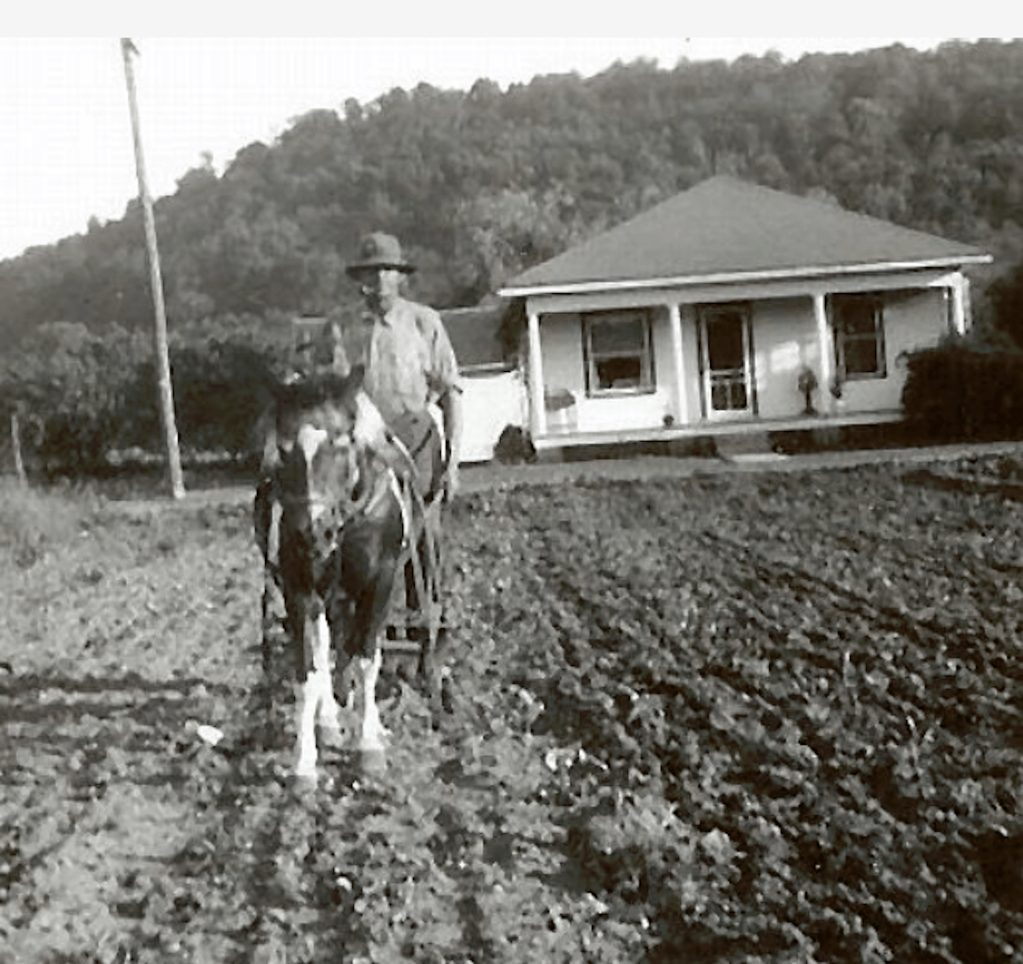
Grandpa Plowing the Garden
On the left side of the path was a huge flower garden with a grape arbor and many shrubs, small trees, and hundreds of flowers that bloomed in spring and summer.
Our Grandparents Loved Animals
When we were very little, our grandparents always had ponies and horses, and many other pets and animals. Grandpa used to take us for pony cart rides.
Picture of grandpa and us on a pony cart ride
Our grandparents had passed away years ago. From them, we inherited our love for animals. We usually had a couple of ponies and horses, as well as several dogs. I loved horses and everything about them, so one of my chores was to feed the horses every morning before school. In the winter, that meant that I had to walk along the path across the neighborhood to the barn in the dark. That didn’t bother me at all. I carried a flashlight so I could see, but I wasn’t afraid of the dark. We knew everyone in the neighborhood, and I always felt completely safe there.
The Nightmare
One night I dreamed that when I went to the barn to feed the horses, there was a man in the barn. In the dream, as I was giving the horses hay, a man came up behind me. It scared me, and I usually woke up right away. I didn’t think too much about it at the time, but then I started having that dream every night. It started to scare me a lot, so I told my mom about the dreams. I told her that I was afraid to go over to the barn.
We had three German Shepherd dogs at the time, and Mom said, “Well, take the dogs with you.” So I started taking the dogs with me every morning. The dogs loved the early morning trek to the barn, and they were always eager to join me. Once I started taking the dogs with me, the dream stopped.
A few weeks later, I started having the dream again. In one of the dreams, when the man in the barn came at me, I grabbed a pitchfork and stabbed him. That only happened in one of the dreams. In all the other dreams, I just saw a man in the barn, it scared me, and I woke up right away.
After a few more nights of these dreams, I told mom that I was having that dream again and that I was afraid to go to the barn even though the dogs were with me. Mom said, “Take Randy with you.” Randy, my younger brother, was 14 years old at the time. He wasn’t obsessed with horses like I was, and he wasn’t exactly thrilled that he had to go out in the dark early morning cold, but he went along anyway. He loved the dogs, and he enjoyed seeing how excited they were to go on our morning excursions.
The Dream Stops for Awhile
After I started taking the dogs, and my brother with me to feed the horses, the dreams stopped, and all was good for a while.
Then one night I had the dream again. I didn’t tell Mom or Randy that I had had the dream again. I didn’t know what else could be done, and since I had been having the dream on and off for several weeks and nothing bad had happened, I wasn’t too worried about it.
That morning as we reached the barn, we noticed that the dogs were excitedly sniffing at the barn doors and running back and forth in front of the doors. I thought that they had probably just caught the scent of an animal, maybe a rabbit or something. I slid open the huge double barn doors, and the dogs immediately ran inside barking and growling. Inside the barn toward the back was the haystack.
A man jumped up out of the hay and yelled as the dogs were at his feet. I couldn’t tell if the dogs bit him, but they were loudly barking and growling. Randy and I screamed and ran as fast as we could back to our house. The back door of our house faced the south side of the neighborhood and it was closest to the barn. The back door opened directly into the kitchen.
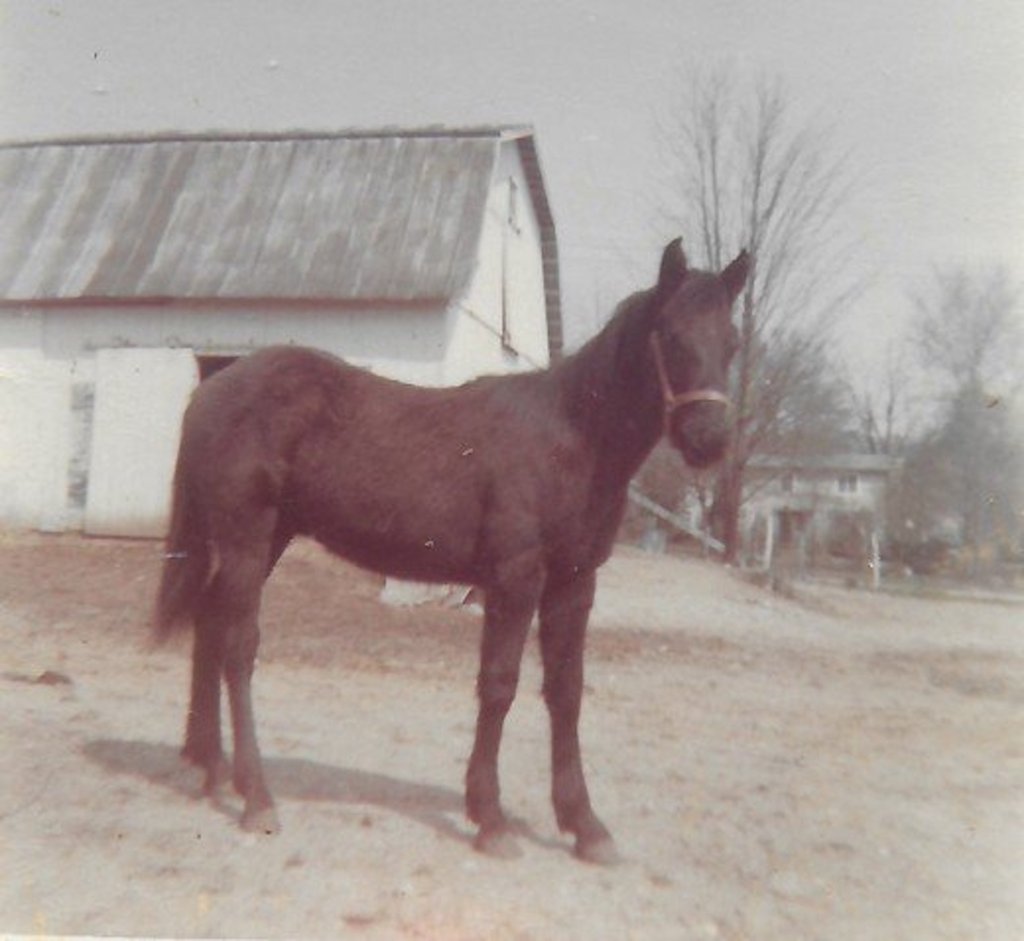
My horse in back of the barn
Randy and I ran in through the back door, and we both screamed, at the same time, “There’s a man in the barn!” In the kitchen were our Mom, our older brother Chuck, and our little sister Faye. At this point, I didn’t know if the dogs were still over at the barn, or if they had followed us back home. Our older brother, Chuck, grabbed a baseball bat and said, “Let’s go.” I remember being very impressed that Chuck was so brave.
The dogs had come home, and they joined us as we returned to the barn. When we got to the barn, the man was gone. We could see where he had been sleeping in the hay, and where he had taken a leak on the floor. I fed the horses and we returned home. Mom said that she had called the sheriff, and he said that it was probably a bum just getting out of the cold. Then I felt sorry for the man. It must have been horrible to wake up with dogs attacking you.
I Had Told My Family and Girlfriend About the Dreams
I had told only my family and my girlfriend about those recurring dreams. My girlfriend lived just two houses down the road from our barn, and she loved horses as much as I did.
After school that day, I was walking over to the barn as my girlfriend was walking up the road. When she got to the little hill which was on the back road just in front of the barn, I said, “There was a man in the barn this morning.” She said, “I just pinched myself to make sure I wasn’t dreaming.”
The Dream Stops for Good
I never had that dream again, and after a while, I no longer had to make Randy go with me to feed the horses. I did keep taking the dogs though since they loved going with me, and I enjoyed their company.
I will admit that even though I wasn’t afraid anymore, I think that I was more alert as to my surroundings after that. I often wonder what might have happened if I had not had those dreams and if I had not told my mom about them.
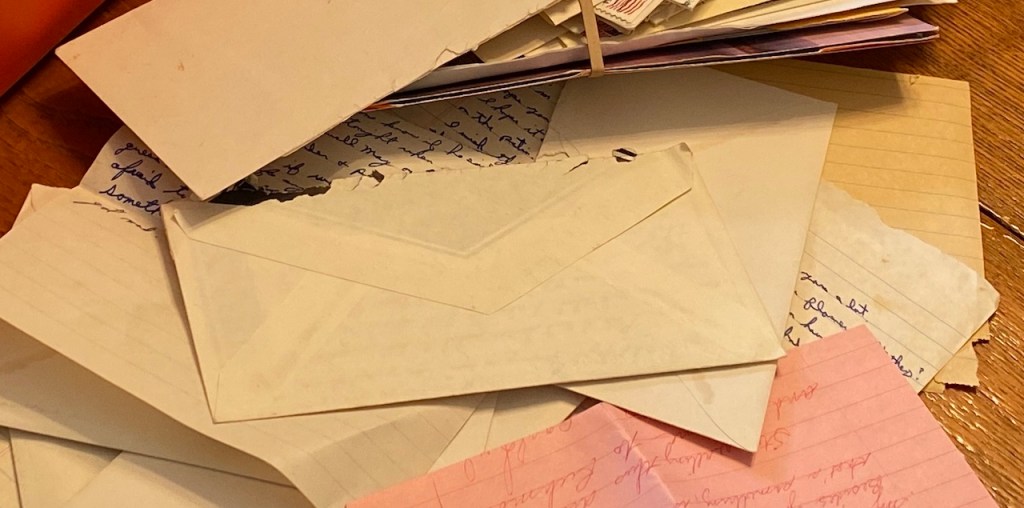
Literary letters have always been a marvelous find in literature. Graveyard Whistler found this series of letters and although they do not address his main interest in irony, they do offer an interesting take on some of life’s most intriguing conflicts.
Fiction Alert! This story is fiction. It does not depict any real person or actual event.
Graveyard Whistler’s Introduction to “The Lucy Light Letters”
As my faithful readers know by now, I am pursuing a PhD in literary history with a concentration on “irony.” The thing is I am finding such marvelous gems that do not actually address the issue of irony but which are just so fascinating I can’t let them drop without exposing their emotional plights to light.
This series of letters offers a delightful exchange between a professor and former student. They are obviously very much in love but have much baggage that prevents their ability to requite that love, that is, until certain unpleasant facts of life are overcome.
I apologize ahead of time for not being able to offer a completely satisfying ending to this story. I know my readers will be left with questions: did LJ succeed in persuading JL to relocate to SoCal.? does their love ever become physical? do they resume writing that corroborative collection that seems to have started this whole thing? and simply, do they live happily ever after?
I know I would like answers to those questions, and I will certainly keep looking for them. But for now, please enjoy the exchange. Their writing includes some clever and quirky turns of phrase. They both were definitely lovers of literary language, and they definitely loved each other with a rare love and affection that many of us only dream about finding on this fuzzy-mudded planet.
Letter #1
April 19, 19— Encinitas CA
Dear Jefferton,
It’s still difficult to call you that, even though I know it would be ridiculous to call you Professor Lawrence, considering our past relationship. I know you must be surprised getting a letter from me now; maybe you are shocked or annoyed, and are not even bothering to read this, so maybe I am writing in vain, but I will continue in the faith that you do still have at least a spark of interest in me and my life.
I owe you a huge apology for just vanishing the way I did, without one word of explanation or even good-bye. I hope you will accept it and know that I am truly sorry. I don’t really understand myself that well even now, but at the time of our relationship, I was thoroughly confused. That confusion—or my desire to try to work it out—is part of the reason I am writing you now. But there are other parts. I hope I will be clear; I’m not even sure I can be.
Before I get into that, I wanted to tell you that when I saw your book on our library’s new arrival shelf, I was tempted to check it out, but then I rushed over to the bookstore and ordered my own copy. You can be sure I will read it carefully and cover to cover as soon as it arrives.
Well, there are some things I have to say, and I might as well jump right into them. At the time we were working on that collection of poems, I was in a constant state of turmoil. I had written what I considered some of my best poems for the collection, but I feared they were too revealing, I mean, I feared they showed too clearly how I felt about you, and our growing closeness. I feared that if anyone we knew (your wife for example, and my parents and brothers) saw those poems, and saw that we, a professor and student, had authored them, they would make assumptions about the nature of our relationship. I could not face that. And I did not have the courage to tell you about my fears. You had such confidence in me, and you thought I was so bright and sophisticated for a twenty-year-old, but I didn’t feel that way, and it scared me and upset me to have you find out. I just couldn’t let you know how weak and insecure I felt, so I transferred to Miami to finish my BA in English.
Living at home was hell, but I’ll tell you about that later, if you are still speaking to me or listening and you still care.
I had thought I’d tell you everything I had been doing and thinking lately in this one letter, but I see that it is getting too long. And I really should not be so presumptuous as to assume you are still interested. Instead, I will just come right out and ask you: Are you still interested in hearing from me? Do you think we can be friends? I have never forgotten you for a minute. I really do love you, and I have missed our talks.
You were always so insightful; I look back now, and realize that I surely could have trusted you with my insecurities back then, but I just didn’t know it then. I am learning, but I am still full of confusion.
I hope you will let me know if it’s all right to write you more. Please let me know soon.
Your “Lucy Light” (I hope still) Lucinda Janson
Letter #2
21 May 19— Muncie, Indiana
My Dear Lucy Light,
I was delighted to get your letter. I have wondered about how you are doing and where you are. I have wondered if I had been the cause of your sudden disappearance and from your letter I gather I must bear some guilt in that regard. I should have realized that you were too young and inexperienced to become equal partners in that endeavor of authorship. But I will never take back what I said about your intelligence; you are still the brightest and most perceptive student ever to sit for my class in Mod Brit Poetry. You are also one of the most creative. I had occasion to teach a creative writing section last fall; as you know, I hated every minute of it, but at least now I know why I hate it so much. Because I totally agree with Auden that artists who take academic positions should do academic work. If I had my way, all creative writing courses would summarily be banished from the university. I have gotten upon my soapbox, and now I shall descend again to finish my lecturing to you alone.
Dear, dear girl—as you have apologized to me, let me say that if you truly think you owe one, then I accept it. But let me apologize to you in return. I am so sorry for what you have been through. I am more than willing to do anything that you feel will help you; I am more than willing to accept you back into my friendship, and may I say this, without pressure, if you feel you would like to resume collaboration on that collection, I would be happy to do it. I put the project away and have not had the heart to pick it up again, since my Lucy Light was extinguished.
I am so glad you are going to read my book; it’s just one of those critical pieces that takes up much more time to write than it is worth. But it did me favors when it came time to apply for promotion, which I did and won full professorship; now I have occupied the Glossmere Distinguished Chair in Rhetoric and Writing for the past five years. Unfortunately, my share of committee work has not lightened, but I do intend to take steps to reduce all outside distractions, so I can concentrate on my own poetry. I have published maybe five poems in the past two years, and I feel that is a disgrace, but as I said, I do plan to remedy that.
So Lucy, as you may have gathered thus far, I will be watching my mailbox with a greedy eye for your letter. Your place in my mind and heart has not been filled by another nor erased by time. Come back into my life, and let’s make life brighter and fuller for both of us.
I too have much news for you, but I wait for yours first. I wait and watch.
Yours for the works, JL
Letter #3
May 30, 19— Encinitas CA
Oh my dear Distinguished Professor,
You have made me so happy for accepting my foolishness and forgiving it. Now I feel relieved and confident that I can tell you my reasons for contacting you.
Do you remember Nathan Glass? He was a student in the Mod Brit Poetry the same semester I was. And maybe you remember that he and I were dating off and on, while you and I were working on that collection. Just before I transferred to Miami, Nathan asked me to marry him. I told him I couldn’t marry him because I was in love with someone else. And he pressured me to tell him who it was, but I never did tell him.
Without my knowing it, he was watching me; he contacted me at Miami, and insisted I see him, and when I did, he told me he knew that you and I were having an affair. I denied it, of course, but he said he had pictures of us. Well, I laughed in his face because I knew that was impossible, but he showed me pictures that looked exactly like us entering the Bevon Motel. He said it didn’t matter if they were real, because they looked so real, real enough to get you fired and divorced. Anyway, he insisted I marry him or he would show those pictures to your wife and department head. So that’s what I did, I married him. I hated him; I feel so guilty now, but I hated every minute of being married to him. Every time he touched me, I wished he were dead. He raped me; he never ever made love to me; he raped me, and he’d call me whore, slut, bitch, in love with that prig of professor, here bitch take this. That’s what he’d say. He would never leave bruises on me, and he bragged that I would never have any proof that he continued to rape me and curse me.
That went on for three years. I was working on my masters at the University of San Diego, and he was an assistant professor in history. At the beginning of last year, his department head gave a party for the new members of the department. It was some kind of record; they hired something like five new members, and they had many more new TAs than usual, so they wanted to celebrate. The department head held the party on his boat, and everyone got real boozed up. Nathan usually never drank, except for beer, and he had told me he was allergic to vodka; this is why I feel so guilty. The bartender set out on a tray three glasses of drinks, two had gin in them, and one had vodka; I picked up the one with vodka and took it to Nathan, and I said, “Here’s your gin.” He was talking to one of his colleagues and didn’t pay any attention and just drank it. About a half hour later, there was a big commotion and people looking over the side of the boat. And a couple of TAs jumped in. I rushed over to see what it was, and it was Nathan in the water. A female TA said he tried to unhook her bra, and she slapped his face, then he told her to watch, he could walk along the edge of the boat like a tight rope, but he couldn’t, and he fell in. They pulled him out, and he was dead.
Oh, Jefferton, I hate myself for these next words, but I can’t help them: I was so relieved, so happy. I cried and cried for days; of course, everyone thought I was crying in mourning for my dead husband, but I was crying in relief for myself.
Of course, I don’t miss him and I’m still glad he’s out of my life, but I also know that I never wished he was dead. I just wished he were a decent human being. But the guilt is eating me up. Jefferton, help me, if you can. I have no friends here yet. I am teaching two classes of composition at MiraCosta College in Oceanside, and I also work as a waitress in a natural foods restaurant. They think I will eventually get hired full time in both jobs. But for now, all I have is two jobs, and I need a friend with some advice.
LJ
Letter #4
1 September 19— Indianapolis IN
Dear Lucy,
I must apologize for not answering your last letter sooner. After I recovered somewhat from the shock of your plight, I discovered that Marie has been having an affair with—well, never mind with whom—but the horrific scene that played itself out at our home on the third of July this year has left me a shambles. I don’t want to go into the details of that yet though, because I know I must attend to your request. Let me just add that Marie and I have finally decided to end our thirty year marriage; you must have noticed my address change. I can no longer live in the town where I was born, the town where I fell in love, the town where I grew to manhood—leaving only to pursue my graduate degrees, and then returning to the town I had taken to my heart for what I thought was a lifetime. No, the very trees here mock me that my Marie would deceive me so, and so I have moved to Indianapolis and become a commuter to my beloved Ball State to finish out my days as Professor of Rhetoric and Writing. I cannot leave my undergraduate alma mater, the university that took me to its bosom to allow me to blossom in my career as professor of English and now Distinguished Professor of Rhetoric and Writing. No, I shall live those fifty miles away and drive to my university every day, and leave as soon as my teaching and other duties are over.
One other thing—Martha-Marie Vandover Lawrence will never teach at this university again. Over and over I thank my God in Heaven that we bore no offspring to suffer this slice of hell on earth.
I just re-read this opening paragraph, and I am tempted to delete it, but no, I want you to know my state of mind, so that you may better judge any “advice” I give you.
First, you are not guilty of anything. That lout simply got what he deserved and in that, you are getting what you deserve: to be rid of him. Yes, I remember that knot-head. His putrid essays left a stench on my fingers; I hated having to mark them, and how I would have reviled having to discuss further with him any point I might have marked, and if I had marked any of his inanities, he would have engaged me after class to elucidate further stupidities. So I always marked him A and let it fall at that, no comment, nothing to invite his further attention.
How I would give anything had you told me that that bastard was blackmailing you. Oh so many years between that blackguard’s deeds and now—but I would not have allowed him to get away with it. Still, nothing we can do to remedy that, except that I convince you that you have no reason for guilt, and you must know that—I insist. Of course, you did not wish him dead, and you did not kill him. His own perversion killed him; his overweening pride, his misogyny, his blatant disregard of decency and humanity.
Lucy, if you could come here I would so cherish a visit from you. I have my own confusions. All the years of my marriage I was never unfaithful to Marie, though I have found out that she was unfaithful many times. But she claims my infidelity was mental and emotional, and she found your letters, and uses them as evidence I was just as guilty of infidelity as she. Maybe I am just old and out of touch, but I do not see it that way. To me there must be a physical consummation to constitute marital infidelity, and you know that we never so much as held hands.
Dear Lucy, if there is anyway you could travel back to Indiana, I would cherish a visit from you. I feel that we both need a balm that we cannot hope to receive from anyone other than each other. I simply must convince you that you must leave any guilt for that villain’s death to the wolves. You deserve to make your life a haven of peace.
I will be waiting for your response with prayer that we may meet soon, resume a blessed friendship, and find the strength to live out the rest of our lives in harmony with each other and the world.
In love and friendship, JL
Letter #5
September 5, 19— Encinitas CA
Dear Jeff,
How to express the relief I feel from your kind words! No, I cannot. I am overwhelmed by the invitation to return to Hoosierland. You can be sure that I will begin immediately making preparations for that return.
It’s all so breathtaking—it makes me dizzy. My work here is not without its perks, and I do love the climate. A thought, maybe a crazy thought!, just popped into my head: how might I persuade you to relocate to southern Cali? No, we can jump off that bridge if and when we come to it. But just maybe your love for your school and native state has run its course?
Now, I am off to make a flight reservation. Before I go further than that, I feel we need to reconnect in person to discuss all the details of my relocation. Please know how grateful I am to you, and that I so look forward to seeing you, listening to your sage advice, and just generally unburdening myself of cares and issues that I know you have the wisdom to address.
I will let you know my flight information as soon as it is confirmed!
Thank you again, dear Professor!
With love and gratitude, LJ
PS/ Just in case, here is my phone number (760) 701-4619.
Letter #6
Post Card 15 Sept 19— Indianapolis IN
Lucy—
Our talk left me stunned and so grateful for our re-connection. Oct 7 cannot come soon enough. See you at the airport!
Always, JL
Final Word from the Graveyard Whistler
This couple remains a mystery. I wonder if they really re-connect and what re-connecting really means to them. Will they remain professor and student? Will they write and publish works together? Will they begin a steamy affair? Will they marry?
That’s the intriguing feature of this sequence: that it heralds more questions than answers. I guess the true value of studying this sequence of letters rests in analyzing the styles of each writer. The professor, for sure, has a unique voice, and the student, his “Lucy Light,” brings off some unique features of her own.
Interestingly, I did not revise a single word in this sequence of letters. Except for blocking out the date, I have left everything exactly the way I found it. I have been asked where I found these letters, but revealing that location would prove problematic for I don’t know if these people are alive or dead.
By the dates, they could very well still be living, and they would be quite old now, and if they happened to learn that their letters were now being spread all over the Internet, they might not approve, and they might even be hurt. So I simply must refuse to divulge the exact source for these letters.
Again, my purpose in publishing these letters is simply to reveal what I think is an interesting, unique professor-student relationship that is conveyed in unique literary language. Who they are is not important for the purpose. If I ever hear from anyone who knows who these people are, I will divulge whatever that individual will allow about the issue.
From that great treasure trove of the former Web site called “Stone Gulch Literary Arts,” the feature offered here is a one act play.
Fiction Alert! Belmonte Segwic, aka Graveyard Whistler, is a fictional character, created to explore the world of literary studies. Thus Graveyard Whistler is free to invent characters, events, and places—all fictional. Any resemblance to real people, living or deceased, to actual events, or to real geographic locations is unintentional.
Introductory Word from Graveyard Whistler
The late owner, Stoney, of the literary site was quite a prolific writer in many different genres. He has a grand total of ten one act plays. I don’t know if I’ll feature all of them here, but I just might.
Just to refresh memories: “Stoney,”—my nickname for him because he requested anonymity—the owner of the Stone Gulch lit site, gave me permission to use any of his essays and original fiction and poetry anyway I choose.
So as I base the pieces on the selections I make, I tinker a bit with them, for example, I always change names. I have no idea if Stoney used names of real people or not, but for my purposes, I intend to keep these entries pure fiction, so my tinkering is geared to mask as much as possible any telling details that someone who knew Stoney might recognize.
The last thing I need is someone from Stoney’s circle of folks to suspect he sees himself and feel he’s being targeted.
The following play features two characters who are engaging in a conversation through letters. It is sparse, but it tells a story about two very different characters revealing their various qualities, strengths, and weakness. It’s funny in some ways but mostly pathetic as it pulls the veil off of a decaying, dying, and possibly dead relationship between the two characters involved.
Its original title was “Two Pathetic Women.” I changed it, alluding to Bob Dylan’s song, “Don’t Think Twice, It’s All Right” because I felt that allusion summed up the tenor of the letters the two women have offered.
Enjoy!
I’ll Just Say, “Fare Thee Well”
A one act play by Stoney
The stage setting features two writing desks, a woman at each with pen and paper. The curtain opens as one is writing, speaking as she writes. The curtain closes then opens as the other woman, writes speaking as she writes. This toggling continues until the final curtain closes.
Two pathetic women are exchanging correspondences.
Pathetic Woman 1: It occurred to me that we could easily lose each other. And if that is what you want, I am willing to accept it and respect it and will not bother you again. But I suspect that deep down you do not want that and deep down I do not want that either. We have a lovely and deeply inspirational childhood that we shared, and that we both cherish. I know that it has seemed to me that when we reminisce about our common past we are most in sync. If any of this rings true with you, please let me know because I have an idea that may keep us in a relationship that we can both accept. If not, just ignore and continue on, I won’t bother you again, and blessings to you.
Pathetic Woman 2: You think you are such a smartass intellectual with you fancy-ass ways of trying to look down on me. I get it. This just another way of saying I am at fault for our lousy relationship. You are the one who left home and left me to take care of our family while they got old and died off. Where were you when meemaw was dying, when peepaw was dying, and all the others I had take care of all by my lonesume. You are a selfish fuckhead. You never come to visit even when you are in town. You never call me. Most people who love each at least stay in touch. As far as I am concerned you can take a flying leap and kiss my ass.
Pathetic Woman 1: I think I understand. As I said, I won’t bother you again. And blessings to you.
Pathetic Woman 2: You think your such a fucking saint with all your “blessing this” and “blessing that.” Your just a hypocrit and fraude and you think of no one but your own godam self. You always try to make me look like I’m wrong when you know down deep I the one who has the common sense—peepaw even said that. He said you had the book learning but I had the real smarts. That what alway pisses you off. You know I right about politiks and shit like that. But just because you have choosen the wrong side you think you can bully me and make me think you are the smart and right one. You don’t know shit. As far as I’m concerned to can rot in hell with all the other crapheads.
Pathetic Woman 1: OK. You’ve convinced me. I’m not worth having relationship with. I annoy you, and I promise from now on I will simply leave you alone. At the risk of flaunting sainthood, I’ll again wish you many blessings and a joyous life. But before I go, one last thing: because you did not yet ask about the idea I had for keeping in touch, I’ll just mention it now. Every week or so we could offer a “blast from the past.” Here is my first one: I was playing my guitar this morning and realized that I have this particular brand of guitar because of Uncle Jedediah.
I asked him on one occasion what the best brand of guitar was, and he said, “Martin.” So that’s the brand of guitar I have.” I thought it would be interesting and helpful for us if we could share such info from time to time, since we both think lovingly upon our past and our family.
However, I can see now that that thought was silly. You would be much better off not keeping up a relationship with someone who is so repugnant to you. So, as Bob Dylan once quipped, “I’ll just say fare thee well.”
Pathetic Woman 2: You know I love you more than anything, but I just wish you were different. I wish you understood how unsafe and stupid I feel every time I have to read what you write. I used to like to read you stories and shit, but now all I see is stupid shit that makes me feel like a looser. I AM NOT A LOOSER – NO MATTER HOW MUCH YOU TRY TO MAKE ME OUT ONE.
Pathetic Woman 1: All right then. I think I’ve got your answer. Won’t bother you again: “I’ll just say fare thee well.”
Pathetic Woman 2: No response.
The curtain closes. One woman lets out a blood curdling scream: the audience is left to wonder who screamed.
Finis
Afterword from Graveyard Whistler
Just a quick note to thank my readers, especially those who offer useful suggestions. I could do without the insults, smears, and ghastly stupidity that gets slung my way, but what the hey!, that’s to be expected by anyone who goes public in anyway. And I do treasure the kind words and helpful comments. Keep them coming, please!
Back to the drawing board, as the old saw goes . . .