Linda's Literary Home

Tag: literature

  • Audre Lorde’s “Father Son and Holy Ghost”

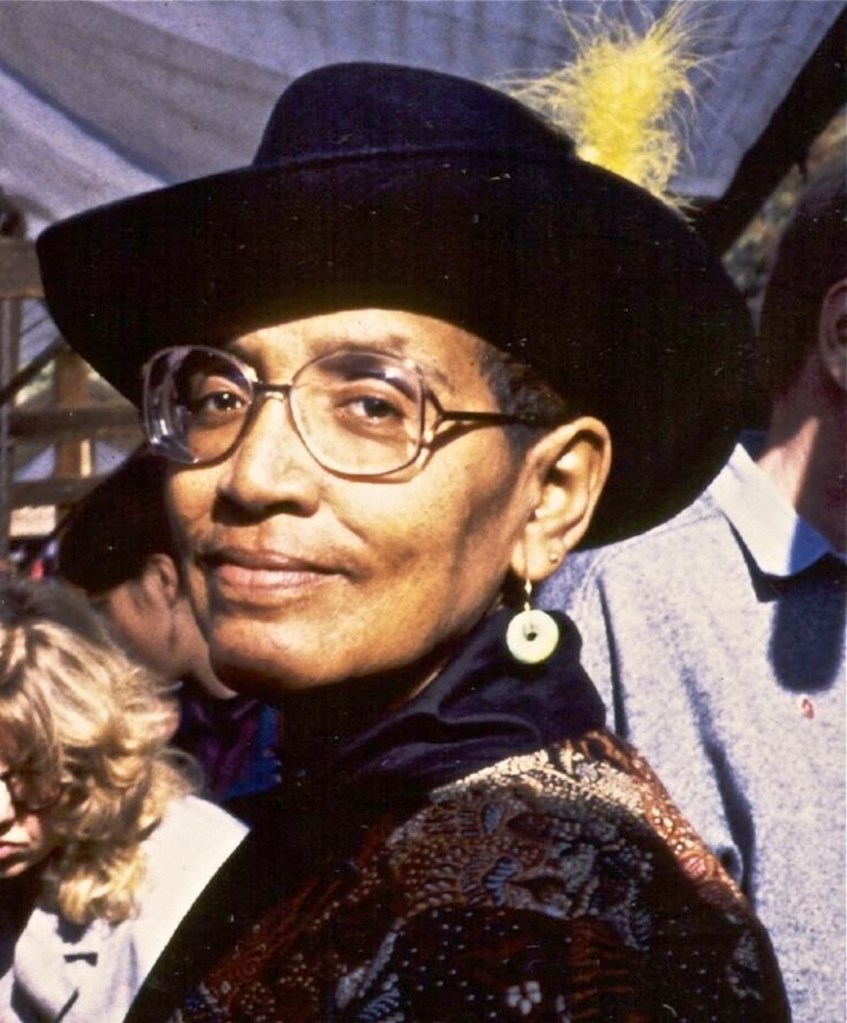
    Image:  Audre Lorde 

    Audre Lorde’s “Father Son and Holy Ghost”

    In Audre Lorde’s “Father Son and Holy Ghost,” the speaker revisits memories of a beloved father, who has died and who served as a rôle model for moral and ethical behavior.  The speaker reveals her deep affection for her late father as she relives special features of her father’s behavior and her reaction to them. 

    Introduction with Text of “Father Son and Holy Ghost”

    Although Audre Lorde is well known as a black lesbian poet, who wrote on issues of identity, she also wrote more personal pieces that address themes common to all of humanity.  The death of a father is one such theme.

    In her elegy “Father Son and Holy Ghost,” Lorde creates a speaker, who is remembering various aspects of her father’s behavior while he was alive.  But she begins by strangely emphasizing that she has not as yet visited her father’s grave. 

    That admission alerts the reader that the poem is focusing on earlier memories.  While that first impression prompts questions in the reader’s mind, answers begin to form in the second movement.  Another question might be begged regarding the title and what it implies. 

    By invoking the Christian Holy Trinity, the speaker is implying that the spiritual nature of her memory will include three levels of understanding of the father:  he was the progenitor of the speaker (Father), he lived a life of consistent, respectable, and moral behavior (Son), and he revered his wife, the mother of his children (Holy Ghost). 

    Her admiration for her father is displayed in a Dickinsonian, elliptical style; the poet has not added any unnecessary word to her drama.

    For example, instead of merely stating that her father arrived home in the evening, grasped the doorknob, and entered the home, she shrinks all of that information in “our evening doorknobs.”  

    Because doorknobs remain the same whether it be morning, noon, evening, or night, the speaker metaphorically places the time of her father’s arrival by describing the doorknob by the time of day of his arrival.

    Father Son and Holy Ghost

    I have not ever seen my father’s grave.

    Not that his judgment eyes
    have been forgotten
    nor his great hands’ print
    on our evening doorknobs
                one half turn each night
                and he would come
                drabbled with the world’s business   
                massive and silent
                as the whole day’s wish  
                ready to redefine
                each of our shapes
    but now the evening doorknobs  
    wait    and do not recognize us  
    as we pass.

    Each week a different woman   
    regular as his one quick glass
    each evening
    pulls up the grass his stillness grows  
    calling it weed.
    Each week    a different woman  
    has my mother’s face
    and he
    who time has    changeless
    must be amazed
    who knew and loved
    but one.

    My father died in silence   
    loving creation
    and well-defined response   
    he lived    still judgments  
    on familiar things
    and died    knowing
    a January 15th that year me.

    Lest I go into dust
    I have not ever seen my father’s grave. 

    Commentary on “Father Son and Holy Ghost”

    In her elegy to her father’s memory, the speaker is offering a tribute the demonstrates a special love and affection, along with her deep admiration for his fine qualities.

    First Movement: An Unusual Admission

    The speaker begins by reporting that she has never visited her father’s grave.  This startling suggestion has to wait for explanation, but the possibilities for the speaker’s reasons assert themselves for the reader immediately.  

    Because seeing the grave of a deceased loved one is customarily part of the funeral experience, it seems anomalous that the speaker would have skipped that part of the ceremony. 

    On the other hand, because she does not tell the reader otherwise, she might have skipped the funeral entirely.  But whether the failure to visit the grave is associated with a close or distant relationship with the father remains to be experienced.  

    And oddly, either situation could be prompting that failure to visit the grave or attend the funeral:  if there is resentment at the parent, one might fail to visit in order to avoid those feelings.

    Or if there is deep pain because of a close, loving relationship with the parent, then seeing the grave would remind the bereft that that relationship has been severed.

    By choosing not to explain or even assert certain facts, the speaker points only to the facts and events that are important for her purpose.  And her purpose, as the title alerts, will be to associate her father’s death with profundity and devotion stemming from his deep religious dedication.

    Second Movement:  Not Forgotten 

    The speaker now asserts that just because she had not visited his grave does not mean that she has forgotten her father’s characteristics; she still remembers his “judgment eyes.”  

    Her father demonstrated the ability to guide and guard his family through his ability to see the outcome of certain situations, likely retaining the ability to encourage positive results. He was able to steers his children in the right direction.

    She also remembers his arriving home from work in the evenings, turning the doorknobs just a “half turn.”  It was likely it was the sound of that doorknob that alerted the speaker that her father was home.

    The father’s work has left him “drabbled,” but he was a large man and remained “silent,” indicating that he was a thoughtful man, who likely entertained a “whole day’s wish” to return home to his family.  

    He apparently paid attention to his children, likely instructing them to “shape” up, assisting them in becoming the respectable people he knew they could be.

    Now, those same “evening doorknobs” that sounded out under the grasp of her father’s large hand simply “wait,” for he will no longer be grasping them and entering his home every evening. 

    Oddly, those doorknobs can no longer sense the household members as they pass them.  This personification of “doorknobs” indicates that the speaker is asserting that anyone seeing those family members would see a changed lot of people—changed because of the absence of a father.

    Third Movement: Consistency of Behavior

    The speaker then reports that her father brought home a “different woman” every week, and his act of bringing home that different woman was always the same. He also remained consistent in taking only one glass of liquor and a small amount of marijuana.

    That the father grew in “stillness” suggests that he took the alcohol and weed simply to calm his nerves from the day’s work, not to simply get high.

    The speaker seems to be suggesting that those women supplied the “weed,” pulling a bag of the herbage up out of their bags.  (The terms “grass” and “weed” are slang labels for marijuana, along with “pot” and “Mary Jane,” and many others.) That the women suppled the weed is in perfect alignment with the father’s character: he likely kept legal alcohol in his home but not illegal products like “weed.” 

    That the father took only one drink and a limited amount of “grass” or “weed” becomes a characteristic to be understood and admired, even emulated.  His consistency has made a positive impression upon the speaker, and she remains content in observing with respect his even-tempered behavior.

    Repeating the claim of a “different woman” every week, the speaker remarks that each woman had her “mother’s face.”  She then asserts the reason for the women with her mother’s face is that her father “knew and loved / but one.” 

    She is likely employing the term “knew” in the biblical sense; thus she may be implying that her father’s relationship with those women remained platonic.  The speaker remains cognizant of the father’s consistent personality and behavior.  

    While it may be expected that a man would engage with other women after his wife’s death, that he remained attached to his wife’s visage and engaged sexually only with his wife because he loved only her remains unusual and makes its mark on the speaker’s memory. Her father’s respectability and morality have caught the speaker’s attention and those qualities remain in her memory of his behavior.

    Fourth Movement: A Well-Lived Life

    The speaker says that her father “died in silence.”  She asserts that he loved “creation,” and he lived in a way that appropriately corresponded with that love. 

    Because of the positive, admirable aspects of her father’s personality and behavior, she understands the appropriateness of his “judgments” especially “on familiar things.”  As he judged his family, he was able to guide them in appropriate and uplifting ways.

    That he died on “January 15th” signals that everything he knew about his daughter stopped on that date, and the speaker/daughter knows that anything she accomplishes after that date will remain unknown to her father.  Likely, she is saddened, knowing this limit will remain, and she has no way of controlling that situation.

    Fifth Movement: Life’s Fulfillment

    The speaker then asserts again that she has never visited her father’s grave, but in concluding, she claims that she had never done so because it might make her “go into dust.”  The biblical passage in Genesis 3:19 asserts, 

    In the sweat of thy face shalt thou eat bread, till thou return unto the ground; for out of it wast thou taken: for dust thou art, and unto dust shalt thou return.

    The speaker seems to imply that she fears her strong reaction to visiting her father’s grave might result in her own death. And while she may also be remembering the Longfellow quatrain from “A Psalm of Life,” featuring the assertion, “‘Dust thou art, to dust returnest’, / Was not spoken of the soul,” she is not ready to leave her physical encasement just yet.

    The ultimate atmosphere of the poem “Father Son and Holy Ghost” suggests a certain understated fulfillment in the father’s life:  he strived to live a moral, well-balanced, consistent life, which the speaker can contemplate in loving memory, even if she may not be able to celebrate openly by visiting his grave.  
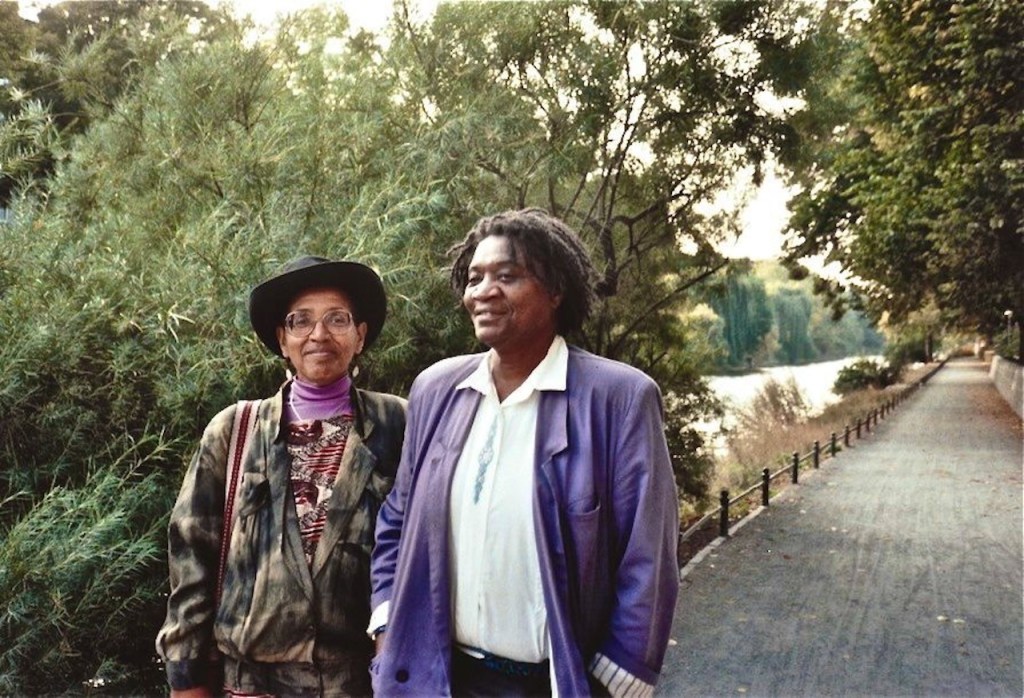
    Image:  Audre Lorde and Gloria Joseph 

    Brief Life Sketch of Audre Lorde

    Audre Lorde was born on February 18, 1934, in New York City to Frederic and Linda Lorde, who came to the USA from Grenada.  Her father was a carpenter and real estate agent, and her mother had been a teacher in Grenada.  Frederic Lorde was known for his nature as a well-disciplined man of great ambition.

    Their daughter Audre became a prominent American poet.  Her works are filled with passion, making her lyrical verses a riot of emotion.  But she also took an interest in social issues, seeking justice for the marginalized members of society.

    Lorde began writing poems as a high school student; she published her first poem  [1] while still in school.  After high school, she attended Hunter College, earning a B.A. degree in 1959.  She then went on to study at Columbia University and completed an MLS degree in 1961.

    Publication

    Audre Lorde’s first collection of poems, The First Cities, was published in 1968 [2].   Critics have described her voice as one that has developed though profound introspection, as she examines themes focusing on identity, the nature of memory, and how all things are affected by mortality.

    She followed up The First Cities in 1970 with Cables to Rage.  Three years later she published From a Land Where Other People Live. Then in 1974, she brought out the cleverly titled New York Head Shop and Museum.

    Lorde continued to focus on personal musings as she broadened her scope with criticism of cultural injustice.  She often created speakers who run up against unfair modes of behavior.  She also touches on issues that reveal the nature of individual sensuality and the power of inner fortitude in struggles with life’s trials and tribulations.

    In her first mainstream published collection titled Coal, which she brought out in 1976, she experimented with formal expressions.  In 1978, her collection, The Black Unicorn, earned for the poet her greatest recognition as critics and scholars labeled the work a masterpiece in poetry.

    In her masterpiece, Lorde employed African myths [3], coupled with tenets from feminism’s most widely acclaimed accomplishments.  She also gave a nod to spirituality as she seemed to strive for a more universal flavor in her works.

    Legacy and Death

    Audre Lorde’s work has received many prestigious awards, including the Walt Whitman Citation of Merit.  She also earned a fellowship from the National Endowment for the Arts.  She served as poet laureate of New York from 1919 until her death.

    Lorde died of breast cancer on November 17, 1992, in St. Croix, Virgin Islands, where she and her partner Gloria Joseph had been residing since 1986.  Lorde’s physical enactment was cremated, and her ashes were scattered over the ocean [4] around St. Croix.

    Sources for Life Sketch

    [1] Editors.  “Audre Lorde.”  Poetry Foundation.  Accessed June 29, 2025

    [2] Curators.  “Audre Lorde Collection: 1950-2002.”  Spelman College Archives. Accessed June 29, 2025.

    [3] Njeng Eric Sipyinyu. “Audre Lorde: Myth Harbinger of the Back to Africa Movement.” Journal of Emerging Technologies and Innovative Research. May 2024.

    [4] Curators.  “Audre Lorde.”  Find a Grave.  Accessed June 29, 2025.

    Tricky Lines

    As Robert Frost admitted that his poem “The Road Not Taken” was very tricky and admonished readers “to be careful with that one,” the following lines of the third movement from Audre Lorde’s poem “Father Son and Holy Ghost” have proved tricky:

    Each week a different woman   
    regular as his one quick glass
    each evening
    pulls up the grass his stillness grows  
    calling it weed.
    Each week    a different woman  
    has my mother’s face
    and he
    who time has    changeless
    must be amazed
    who knew and loved
    but one.

    Scouring the Internet for analyses of Lorde’s poem, one finds a particularly absurd interpretation of those lines has taken hold.  That misreading states that every week a different woman comes to the father’s grave to pull up weeds, thereby keeping the gravesite neat, and each woman’s face reminds the speaker of her mother.

    However, that reading misses the mark for several reasons:

    1. Misreading of the Terms “Grass” and “Weed”

    It is quite obvious that the terms “grass” and “weed” are not literally referring to the botanical herbage, growing in abundance on the soil virtually everywhere, but are slang terms for marijuana.  

    Notice that the terms are used in juxtaposition to the father’s having “one quick glass,” an obvious reference to an alcoholic beverage.  Also note that the speaker uses the term “weed” not “weeds” which would be the plants excised to keep a gravesite neat.

    2. Misreading the Time-Frame  

    The speaker is looking back to when the father was alive and how he behaved.  The different women pulling weeds (“weed”) at a grave jumps forward to the father being dead and in his grave.  

    But the speaker is reporting that the father brought home a different woman each week, have one small drink, and engage a small amount of marijuana—all while he was alive.

    3. Forgetting the Speaker’s First Claim

    The speaker begins by stating that she has never seen her father’s grave.  There is no way she could have seen these different women pulling up weeds (“weed”) at his grave if she has never been there.

    4. Misreading or Forgetting the Setting

    All of the images in the poem point to the speaker’s setting the poem in the home, not at his gravesite. For example, “evening doorknobs,” “one quick glass each evening,” and “his stillness grows” all place the father in the home, not in a cemetery. 

    Stillness in this sense after death is an absolute, not a situation in which stillness can grow. If anything the decaying body might be thought of as the opposite of stillness with the activity of bacterial organisms ravaging the flesh.  

    It bears repeating because it must be remembered that the speaker has claimed she has never seen her father’s grave; so reporting on any activity at a his gravesite is impossible.

    5. Father-Daughter Relationship

    According to Jerome Brooks, Frederick Lorde, Audre’s father, was, in fact, “a vital presence in her life.”  Her father provided “the solid ‘intellectual and moral’ vision that centered her sense of the world.”

    Unfortunately, feminist critics have so overemphasized Audre Lorde’s identity as a “black lesbian” that they can assume only a railing against the patriarchy for the poet.  Her true personal feelings for the first man in her life must blocked in order to hoist the poet onto the anti-patriarchal standard.

    But as Brooks has contended, 

    In Zami, Lorde implies that her father, who shared his decisionmaking power with his wife when tradition dictated it was his alone, was profoundly moral. She also felt most identified with and supported by him as she writes in Inheritance—His: “I owe you my Dahomian jaw/ the free high school for gifted girls/ no one else thought I should attend/ and the darkness we share.”

    Reading vs Appreciating a Poem

    Reading and appreciating a poem are two distinctive activities. While it may be unfair to claim absolute correctness in any interpretation, still some readings can clearly be flawed because poems can remain Frostian “tricky.”  It would seem that it is difficult if not impossible to appreciate a poem if one accepts a clearly inaccurate reading of the poem.

    Still, it is up to each reader to determine which interpretation he will accept. And the acceptance will most likely be based on experience both in life and in literary study. 
  • Between Us Is a Whirlwind

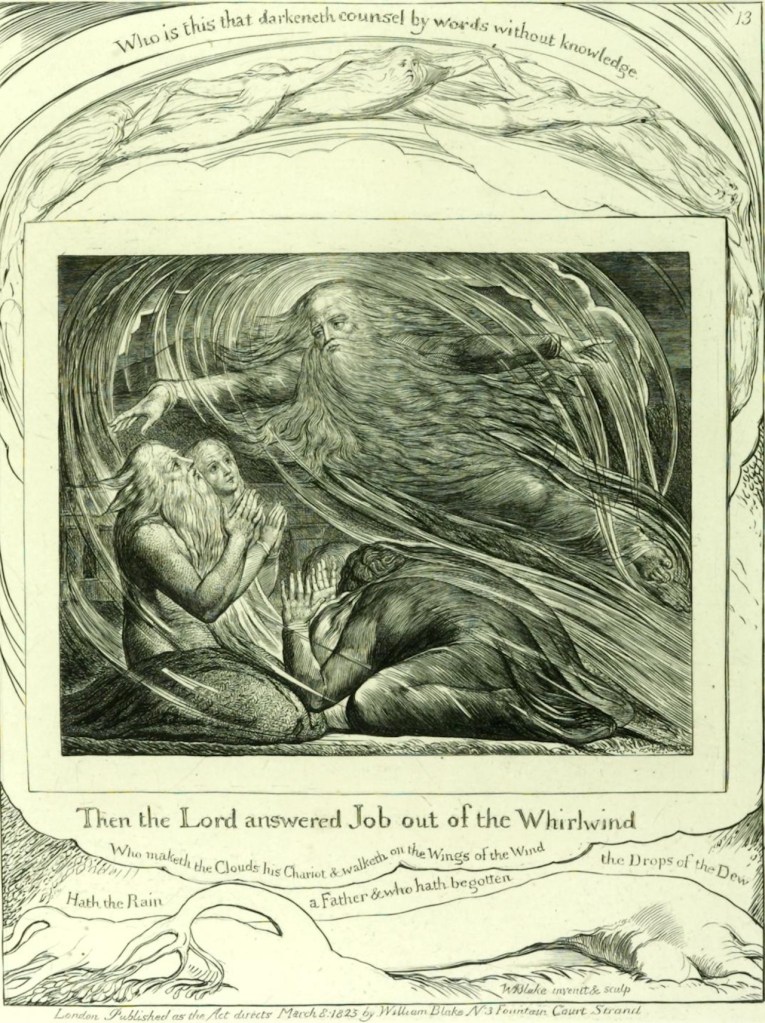
    Image: William Blake’s  The Lord Answering Job out of the Whirlwind  

    Between Us Is a Whirlwind

    What I owe you I must pay.
    The love that tried its young shoots
    Between our concrete hearts
    Will try again in a distant life
    Far from the rough clods we used to be.

    Between us is a whirlwind —
    We have no fairies to blame.
    We feed our fires with our own fantasies.
    I have seen the lighted match in your eyes.

    You have seen my hand tremble on the doorknob.
    We have spoken of the storm that topples empires.
    Nobody claims losses such as ours
    As we walk away from the heart of our heat.

    Between us is a whirlwind —
    The gyres are wont to play love our graves.

  • Love: Two Views

    Image:  Vincent van Gogh’s The Prayer before the Meal

    Love: Two Views

    I.

    Love dropped me naked in the middle of this riddle
    And when like a fat tick, I fell from the hound of life,
    My bloodless mother and soulless father
    Became statues in the hall of questions.

    Love dropped me naked in the heat of possession
    And when like a ripe melon I grew a belly
           and rounded the cape of womanhood,
    My gutless husband became a mindless boil
    On the ass of marriage.

    Love dropped me naked in a wax of indifference
    And when like a sculptor I shaped my opinion,
    Rage convinced my heart
    To feed upon itself in a birdless cage.

    II.

    Love leads my hand through pages of lore
    Where ageless wisdom plants seeds of knowledge.
    I pluck weeds of doubt by the light of Thy smile:
    I water tender shoots of Truth with the rain of Thy care.

    Love tilts my head to look to the stars
    Where eternity plays its game of light and dark.
    I feed on echoes
    That remind me that I am a soul—timeless, deathless.

    Love tempts my heart with the passion of passions
    Where blood is quickened by divine ardor.
    I sing only to glorify Thine image
    To magnify Thine image Thou hast fashioned in me.


  • The Gift

    Image:  Bert Richardson, circa 1960, Elkorn Lakes

    The Gift

    after the gift of our friendship
    when I am alone to see myself for what I am,
    how slow was my awakening
      –Malcolm M. Sedam, “Poem to My Father

    So I finally came to know that failing to be grateful for the gift our fathers give us, we fail to live.

    In Memoriam:  Bert Richardson
    January 12, 1913 – August 5, 2000

    Each human heart beats for love
    In the ever-new-time-place of Now—
    My father gave his heart’s love
    And I began to search God’s gifts
    For I was slow to awaken to giving.

    Passing this world off to offspring
    Takes a fearless, mature being.
    Pain endures in sorrow’s valley
    Where age eludes wisdom
    Where each brush with pride

    Engraves a puffed up chest.
    Waiting to hear the footsteps
    He followed to the river of doubt
    To the sea that forced its silence
    On the day that bore me,

    I had only tears to purify my past—
    God bestows the gift on beings
    Who erect monuments to love’s legacy
    To keep the child’s growth fixed
    For eternity and focused on nobility.

  • Original Poems

    Image: The Old Homestead by Ron W. G.
    The image is a painting by my sweet husband, Ron, who relied on a photo taken by my sister, Carlene Craig, who still lives there.  The old homestead is the place where I grew up—a place of beauty that holds many memories of a young girl growing up in the turbulent times of the 50s and 60s.

    Welcome to My Original Poems

    My literary focus remains primarily on poetry and songwriting, but as a life-long creative writer, I have also dabbled in many other forms: short stories, flash fiction, memoir.

    I also compose literary and expository essays, focusing on a variety of topics including history and politics—even some science/medical issues, especially those that remain controversial.    

    To sample some of my songs, please visit my “Original Songs.”  I also create vegetarian/vegan recipes.

    This room in my literary home provides links to my original poems. 

    Literary art—somewhat like science—is never truly settled or complete; thus I will be continuing to add—and even to revise— material from time to time.  

    Questions, comments, and suggestions offered in good faith are always welcome.

    Swearing to the Orphic Oath

    As a poet, I take the art of poetry very seriously and thus I swear to the following oath:

    As I, Linda Sue Grimes, engage in my career as a poet, I solemnly swear to remain faithful to the tenets of the following covenant to the best of my ability:

    1. I will respect and study the significant artistic achievements of those poets who precede me, and I will humbly share my knowledge with those who seek my advice. I will dedicate myself to my craft using all my talent while avoiding those two evils of (1) effusiveness of self-indulgence and (2) pontification on degradation and nihilism.
    2. I will remember that there is a science to poetry as well as an art, and that spirituality, peace, and love always eclipse metaphors and similes. I will not bring shame to my art by pretending to knowledge I do not have, and I will not cut off the legs of colleagues that I may appear taller.
    3. I will respect readers and ever be aware that not all readers are as well-versed in literary matters as I am. I will not take advantage of their ignorance by writing nonsense and then pretending it is the reader’s fault for not understanding my disingenuity. Regardless of the level of fame and fortune I reach, I will remain humble and grateful, not arrogant nor condescending.
    4. I will remember that poetry requires revision and close attention; it does not just pour out of me onto the page, as if opening a vein and letting it drip. Writing poetry requires thinking as well as feeling.
    5. I will continue to educate myself in areas other than poetry so that I may know a fair amount about history, geography, science, math, philosophy, foreign language, religion, economics, sociology, politics, and other fields of endeavor that result in bodies of knowledge.
    6. I will remember that I am no better than prose writers, songwriters, musicians, or politicians; all human beings deserve respect as well as scrutiny as they perform their unique duties, whether artist or artisan.
    7. I will not rewrite English translations of those who have already successfully translated and pretend that I too am a translator. I will not translate any poem that I cannot read and comprehend in the original.

    Original Poems

    1. To Profess Her a Fool
    2. Numbing Quiet
    3. Mushroom Heart
    4. Wolf
    5. Parting: Two Views
    6. Where Love Waits Restless
    7. Lamentation of the Muse for Everyman
    8. The Worm
    9. Dark Brain
    10. The Man in the Poem:  A Suite of 19 Poems
    11. Blue Haired Girl
    12. These Fish
    13. O Joy Is Mine
    14. Book of Frost
    15. Bird
    16. Fog on the Pond
    17. River God
    18. Starvers
    19. Once She’s Lost It
    20. Landscape & Me with Spot
    21. Love Among the Relics: A Suite in 8 Movements
    22. A Terrible Fish
    23. A Bitter Noise
    24. Iron Robert
    25. Alex as Artist
    26. Piercing the Veil
    27. Southern Woman
    28. In the Fog of Memory
    29. Prayer Sonnet for a Belovèd Father
    30. At the End of the Road
    31. Another Terrible Fish
    32. Singing like an Angel
    33. a salt sea
    34. Hagiography of Old Men
    35. Never Poke a Rough Beast from the Past
    36. The Everything-I-Say-Is-Wrong Blues Sonnet
    37. Greeting the Divine Reality as Bliss
    38. A Prayer for the Way
    39. Lift Thou This Veil of Blindness
    40. Do Not Ruffle What Hellish Beasts Conceal
    41. God Save Us from Our Protectors
    42. A Suite of Poems in Five Movements
    43. Two Sonnets in Praise of Stillness
    44. Corridors of the Mind
    45. Regret’s Return
    46. “Forget the Past”: 10-Sonnet Sequence
    47. Tangled Shadows
    48. Save the Earth from Our Protectors
    49. the captive
    50. Wanderers’ Psalm
    51. Whispers of Starlight
    52. Yesterday’s Turnip
    53. A Sonnet of Raw Couplets
    54. Instead
    55. Vowing to Ghosts
    56. Booking the Song
    57. Woven on a Veil of Love
    58. Colorado Singing to the Divine
    59. The Windows of Your Soul
    60. A Children’s Chorus
    61. Prayer for a Gentle Voice
    62. Without the Waves
    63. The Whitewater River Rolls On
    64. My Heart’s Deep Cry
    65. As God so Loved
    66. Divine Mother’s Gentle Dove
    67. In Time, O Belovèd
    68. What If, Only for Thee
    69. Ancient Tunes Belong to All
    70. A Sacred Act
    71. My Soul Chooses
    72. Crystal Bright
    73. My Love’s Most Quiet Wish
    74. Ode to the Paper Mill Bridge
    75. Low Key
    76. Whispers Rising
    77. The Stain of Mortal Doubt
    78. Cosmic Creators
    79. Joy Approaches Quiet or Grand
    80. The Rise of Blissful Silence
    81. Love’s Gratitude
    82. My Soul, My Heart, My Reason
    83. Storm for a Lost Soul
    84. Mockingbird in the Weeds
    85. My Kentucky Mother
    86. Without Wings My Sacred Soul Will Soar
    87. May I Become a Fountain of Song
    88. Little Songs from My Soul
    89. One Sunday
    90. Symbols
    91. Ready for Morning
    92. My Fleeting Dreams
    93. A Quiet Security
    94. A Raindrop in the Palm
    95. River of Soul Love
    96. This Salt Sea
    97. Seized by the Moment
    98. On the Brim of the Day
    99. Song of Silence
    100. My Soul in Search of Divine Romance
    101. Summer God
    102. Survivor
    103. Wailing
    104. Waiting in Shadows
    105. Great Wall of Silence
    106. Will & Testament
    107. Withered Soul
    108. Yea, though I Walk
    109. What Is It?
    110. You Escape Me
    111. Thy Tiny Bee
    112. “Dust of a Baptist” and “Southern Woman”: A Tribute to My Mother
    113. Abandoned Garden
    114. O Belovèd, My Divine Belovèd
    115. Love Thoughts Are Green Things
    116. Would that my sonnet shine
    117. Thou Hast a Sonnet’s Full Throat
    118. Lonely Offices
    119. Serendipity on a Gentle Breeze
    120. At Thy Sea
    121. A Soul Escaping the Soil
    122. Crickets in the Morning
    123. In Our Own Paradise
    124. The Open Window
    125. In the Shelter of Thy Glory
    126. Time—Being Precious
    127. Summer Arrives
    128. After the Affection of a Late Autumn
    129. Funky Notions
    130. A Love That Grows Far beneath the Skin
    131. Red Holiday
    132. As Tulips Dance & Sway
    133. Sacred Vision
    134. The Only Changeless
    135. A Rugged Vision She Loved, Loved
    136. The Exorcism
  • Robert Frost’s “Departmental”

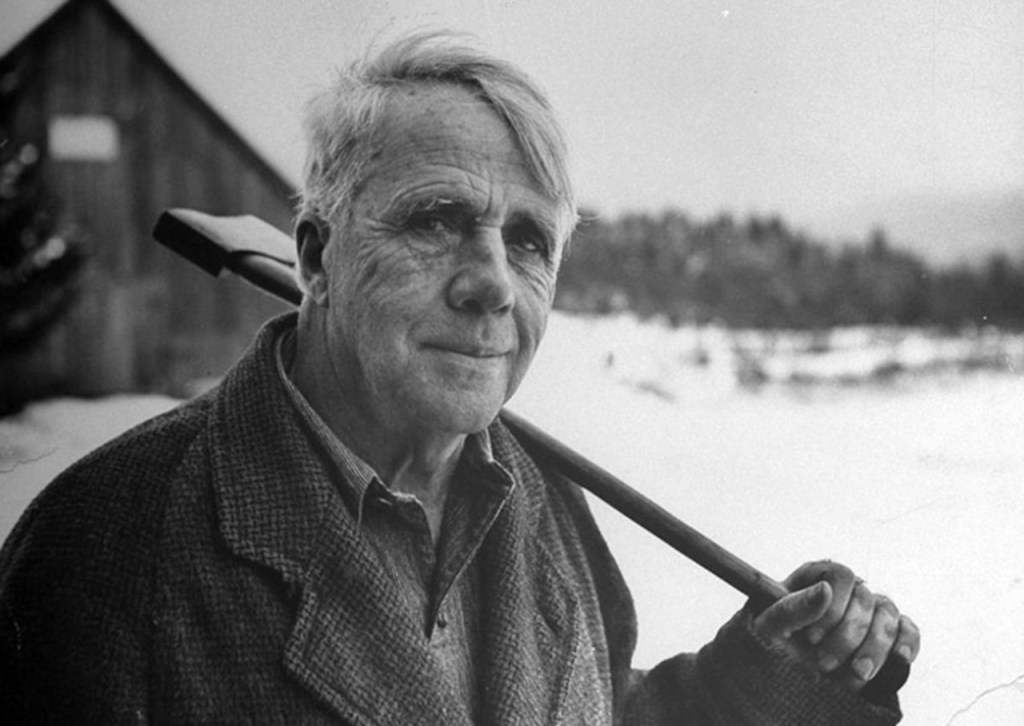
    Image: Robert Frost in 1943. (Eric Schaal/The LIFE Picture Collection/Getty Images)

    Robert Frost’s “Departmental”

    The speaker of Frost’s oft-anthologized “Departmental” observes an ant on his picnic table and imagines a dramatic, little scenario of an ant funeralThe use of personification and the pathetic fallacy mixes a colorful drama suffused with human arrogance.

    Introduction with Text of “Departmental”

    In Robert Frost’s “Departmental,” the speaker muses and speculates about the thoroughly compartmentalized lives of the busy ants.  He then creates a fascinating little drama, featuring the machinations of ants going through a funeral process.

    The speaker speculates about the thought processes of the ant world.  He seems to pass judgment on the lowly little fellows by insisting that their behavior represents a thoughtless kind of rote response.

    By failing to account for the influence of instinct on species below the evolutionary level of homo sapiens, the speaker reveals a supercilious attitude that injects a kind of bitterness into the narrative.

    While the speaker engages heavily in the pathetic fallacy, he does so with such aplomb that readers may come away from the piece without even noticing the sleight-of-hand that has been dealt them.

    The interweaving of personification, comedy, and human arrogance give the piece a dramatic flare that entertains while at the same time gives a glimpse of ant behavior that would be so easily overlooked, if not looked at by one who has special powers of observation—as most poets do possess.

    Departmental

    An ant on the tablecloth
    Ran into a dormant moth
    Of many times his size.
    He showed not the least surprise.
    His business wasn’t with such.
    He gave it scarcely a touch,
    And was off on his duty run.
    Yet if he encountered one
    Of the hive’s enquiry squad
    Whose work is to find out God
    And the nature of time and space,
    He would put him onto the case.
    Ants are a curious race;
    One crossing with hurried tread
    The body of one of their dead
    Isn’t given a moment’s arrest-
    Seems not even impressed.
    But he no doubt reports to any
    With whom he crosses antennae,
    And they no doubt report
    To the higher-up at court.
    Then word goes forth in Formic:
    ‘Death’s come to Jerry McCormic,
    Our selfless forager Jerry.
    Will the special Janizary
    Whose office it is to bury
    The dead of the commissary
    Go bring him home to his people.
    Lay him in state on a sepal.
    Wrap him for shroud in a petal.
    Embalm him with ichor of nettle.
    This is the word of your Queen.’
    And presently on the scene
    Appears a solemn mortician;
    And taking formal position,
    With feelers calmly atwiddle,
    Seizes the dead by the middle,
    And heaving him high in air,
    Carries him out of there.
    No one stands round to stare.
    It is nobody else’s affair
    It couldn’t be called ungentle
    But how thoroughly departmental. 

    Robert Frost reads “Departmental”  

    Commentary on “Departmental”

    In this widely anthologized Frost poem the speaker observes an ant on his picnic table and concocts a dramatic, little scenario of an ant funeral.  He seems to amuse himself with the rigidity of his own ideas about the functioning of nature.

    The literary device known as personification is employed by subtle means in this piece.  Human judgmental factors also enter into mix, making the poem a complex of entertainment along with a smattering of attention to scientific detail.

    First Movement:   An Ant’s Duty

    An ant on the tablecloth
    Ran into a dormant moth
    Of many times his size.
    He showed not the least surprise.
    His business wasn’t with such.

    The speaker observes an ant walking across a tablecloth; as he ambles forth, the ant happens upon a dead moth that is much larger than the ant. The ant is unperturbed by the dead moth, hardly even takes notice of it. 

    The speaker speculates that the ant was not surprised seeing the large moth and because the ant had business elsewhere, he hardly gave the creature a second thought. The ant, according the speaker’s musings, “was off on his duty run.” 

    Second Movement:  Imagination Engaged

    Yet if he encountered one
    Of the hive’s enquiry squad
    Whose work is to find out God
    And the nature of time and space,
    He would put him onto the case.
    Ants are a curious race;
    One crossing with hurried tread
    The body of one of their dead
    Isn’t given a moment’s arrest-
    Seems not even impressed.

    The speaker now thoroughly engages his imagination and concocts a whole scenario in which the ant happens upon a fellow ant lying dead. Again, as with the dead moth, the ant would not be perturbed; he would “seem[ ] not even impressed.” 

    The speaker again seems to desire to find some human element in ants, and that notion causes him to look down his nose at the little creatures.  He makes certain assertions based solely on the fact that he is an evolved homo sapiens, many levels above the little guys he is observing.

    Third Movement:   His Own Kind

    But he no doubt reports to any
    With whom he crosses antennae,
    And they no doubt report
    To the higher-up at court.

    However, with those of his own kind, a series of events will take place and without any doubt there will be a traditional set of events that must occur.  The speaker is heavily invested at this point into anthropomorphizing these tiny bugs.

    The speaker continues speculate about things he could not possibly know.  But readers also must keep in mind that the little drama is entertainment not enlightenment.  While the speaker may be revealing facts of details, he cannot be revealing any important truths about nature or nature’s Creator.

    Fourth Movement:  Ant Language

    Then word goes forth in Formic:
    ‘Death’s come to Jerry McCormic,
    Our selfless forager Jerry.
    Will the special Janizary
    Whose office it is to bury
    The dead of the commissary
    Go bring him home to his people.
    Lay him in state on a sepal.
    Wrap him for shroud in a petal.
    Embalm him with ichor of nettle.
    This is the word of your Queen.’

    The Latin word for ant is “formica”; thus the speaker cleverly claims that in the ant language of “Formic,” the death announcement is heralded: Jerry McCormic has died, he was a “selfless forager.” 

    Then orders are sent to the “special Janizary” to come retrieve the body, prepare it, “lay him in state on a sepal,” and bury it properly, according to ant procedure. This must be done because these orders come from “your Queen.”  The colorful drama allows the speaker assume communications that are obviously relayed simply through instinct baked into formica behavior.

    Fifth Movement:   The Ant Drama Plays On

    And presently on the scene
    Appears a solemn mortician;
    And taking formal position,
    With feelers calmly atwiddle,
    Seizes the dead by the middle,
    And heaving him high in air,
    Carries him out of there.
    No one stands round to stare.
    It is nobody else’s affair 

    The speaker’s imagination continues to develop the little ant drama. A “solemn mortician” appears and with a comic gesture takes up the body, lifts it high, and calmly bears it away from the scene.

    The speaker reports that no one comes to mourn the victim or even show some curiosity, even though the speaker had earlier reports that “ants are a curious race.” The curiosity seems to be the lack of curiosity in certain affairs.  Of course, no other ants come to gawk, because they all have their own duties to perform, and this burial “is nobody else’s affair.”

    The nature of personification allows the creator of  such narratives to engage any type of speculation that seems possible at the time.  The process of “willing suspension of disbelief” remains a vital part of experiencing this kind of narrative, especially if any enjoyment is to be gleaned from it.

    Sixth Movement:   Labels That Fit

    It couldn’t be called ungentle
    But how thoroughly departmental. 

    The speaker sums up his little speculative drama by asserting that the whole affair could not be considered “ungentle,” even though it might be labeled completely “departmental.”

    The speaker appears to be captivated by the whole scene that he himself has concocted for the sake of his own dramatic entertainment. He must wonder in amazement at his commingling art and science in such a leisurely way.   

    The speaker’s attention to detail and facility with imagery have helped him concoct a fascinating bit of speculation, but his condescending air reflects a supercilious attitude that sours the ultimate effect of the piece.

    Frostian Elitism

    It would seem that a certain amount of sympathy and compassion for such lowly creatures would have seeped into the narrative of “Departmental”; instead, the speaker just runs with his holier-than-thou position.

    The poet Robert Frost admitted to writing a “very tricky poem” with his “The Road Not Taken.”  Not only did he write other tricky poems, but he also put on airs at time that belied his reputation as a humble, nature poet with a grandfatherly demeanor; he could also take the stance of an elite looking down his nose at his inferiors.

  • Welcome to My Literary Home


    Rooms in My Literary Home

    poems, songs, essays, short stories, fables, recipes, commentaries

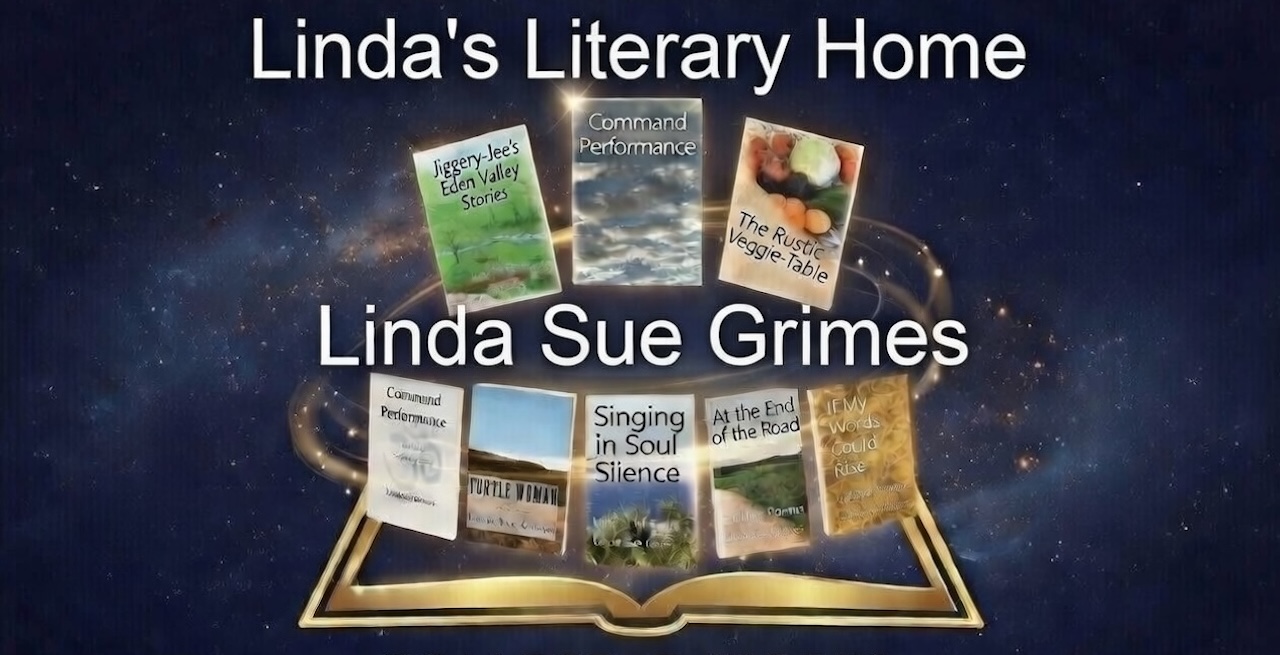
    Image: Created by Grok inspired by My 8 Books Photo by Linda Sue Grimes

    Thought of the Day

    March 18, 2026:

    Rooms in Linda’s Literary Home

    The rooms within my literary home include my library/music room where I compose and maintain my original writings in poetry, songs, literary fiction, expository essays, and poem commentaries.

    My literary home also includes rooms of tribute and memorials to beautiful souls who have graced my life and influenced my penchant for literary studies.

    In addition to literary works, I dabble in vegan/vegetarian cooking, so I dedicate my kitchen to holding and presenting the recipes that result from my adventures in the culinary arts.

    Because I remain spiritual-minded, I dedicate a temple/sanctuary to that spiritual inclination. ~Maya Shedd’s Temple~ holds personal musings about subjects that influence my life, especially my spiritual journey.

    Original Writings

    The following rooms will remain works in progress, as I continue to add to them from time to time.

    Life Sketches of and Commentaries on Poems by the following poets: 

    Image: The Whitewater River – Brookville, Indiana – Photo by Linda Sue Grimes

    A Special Soul

    One such room is an art gallery, featuring the paintings, as well as the prose renderings of the beautiful soul, Ron Grimes (Ron W. G., as he signs his paintings): Paintings and Prose.  My sweet Ron has continued to bring out the poetry in my life for over half a century; our married life together began on March 10, 1973.

    Beautiful Souls

    My literary home also offers dedicated rooms to beautiful souls who have graced my life and influenced my literary studies.

    My Kitchen

    Also in my literary home, I dedicate another room—my kitchen—to the recipes that result from adventures in the experimental culinary arts.

    I have been a vegetarian/vegan for most of my life, and thus I have found it necessary to revise or tweak most traditional recipes to accommodate my vegetarianism. So I am offering the results of that life journey.

    My Temple Sanctuary

    Finally, I have dedicated a sanctuary for meditation, prayer, and worship, “Maya Shedd’s Temple.” Before I rebuilt this lit site as Linda’s Literary Home, I maintained much of the construction here under the title “Maya Shedd’s Temple: Literary Home of Linda Sue Grimes.”

    In the temple, I place all things spiritual. I begin with a brief memoir explaining by reasons for following my spiritual path.

    The temple includes information about Paramahansa Yogananda and commentaries on his poetic works, beginning with Songs of the Soul.

    Guruji has explained that fallen humankind is under the spell of Maya or cosmic delusion. My goal is to lift that spell, thus “shed” the delusive veil of Maya: Maya Shedd.

    🕉

    Questions, comments, or suggestions offered in good faith are always welcome.

    Image: Swami Park, Encinitas, CA – August 2019 – Photo by Ron W. G.
    Image: Linda Sue Grimes – November 1, 2025 – Photo by Ron W. G.

    Come back and visit again soon!