Elizabeth Barrett Browning’s Sonnet 3 “Unlike are we, unlike, O princely Heart!”
The speaker in Elizabeth Barrett Browning’s sonnet 3 muses on how unlikely it seems that a plain individual such as herself would begin a relationship with a person who has attracted royalty.
Introduction and Text of Sonnet 3 “Unlike are we, unlike, O princely Heart!”
The speaker of Elizabeth Barrett Browning’s sonnet 3 from Sonnets from the Portuguese contemplates the differences between her belovèd and her humble self. She continues her study of unlikely love employing the use of the Petrarchan sonnet form for the sequence.
The speaker thus is dramatizing her musings as they focus on her relationship with her belovèd partner. She explores her many doubts and self-deprecation seeming to be looking for a reason to change her mind about what seems to be an impossible liaison.
Sonnet 3 “Unlike are we, unlike, O princely Heart!”
Unlike are we, unlike, O princely Heart! Unlike our uses and our destinies. Our ministering two angels look surprise On one another, as they strike athwart Their wings in passing. Thou, bethink thee, art A guest for queens to social pageantries, With gages from a hundred brighter eyes Than tears even can make mine, to play thy part Of chief musician. What hast thou to do With looking from the lattice-lights at me, A poor, tired, wandering singer, singing through The dark, and leaning up a cypress tree? The chrism is on thine head,—on mine, the dew,— And Death must dig the level where these agree.
Commentary on Sonnet 3: “Unlike are we, unlike, O princely Heart!”
The speaker in sonnet 3 is musing on how unlikely it seems that an unknown simple individual such as herself could attract and begin a relationship with a person who has attracted the attention and respect of royalty.
First Quatrain: Contemplating Differences
Unlike are we, unlike, O princely Heart! Unlike our uses and our destinies. Our ministering two angels look surprise On one another, as they strike athwart
The speaker begins with an excited utterance. The humble speaker and her newly formed romantic partner perform very different roles in life; thus, they would naturally be on the road to very different “destinies,” one would assume, as the speaker seems to do. The speaker then paints a fantastic image wherein a pair of angels look with surprise, “On one another, as they strike athwart / / Their wings in passing.”
This unusual pair of lovers possesses very different guardian angels, and those angels find themselves taken aback that such a couple with very differing stations in life should come together. Even more remarkable is that they seem to begin to flourish as they engaging in their new relationship. The angels’ wings begin fluttering, as they questioningly peer upon the unlikely couple.
Second Quatrain: A Guest of Royalty
Their wings in passing. Thou, bethink thee, art A guest for queens to social pageantries, With gages from a hundred brighter eyes Than tears even can make mine, to play thy part
The speaker reports that her new belovèd has often been the guest of royalty at their social events—something this speaker could never have accomplished. The speaker is only a shy and retiring individual; she thus offers the contrast between her own social station and skills to that of one who has shined so brightly as to attract the acceptance into the company of kings and queens.
The speaker assumes that the folks he surely meets at the spectacular affairs of royalty no doubt look at him with “a hundred brighter eyes” than her own. Even her tears cannot be enough to render her eyes as bright as what he must experience at such high level social affairs.
First Tercet: Her Lowly Self
Of chief musician. What hast thou to do With looking from the lattice-lights at me, A poor, tired, wandering singer, singing through
The speaker then contends that unlike her lowly self, her new found love has played the role of “chief musician” at those gatherings of royalty. She, therefore, must question the notion that he would even bother to give her a second thought, after encountering the glamor and glitz of upper class events.
The speaker then puts the question to her romantic partner in order to become informed as to why one such as he would be “looking from the lattice-lights” at one such as herself.
The speaker wants to know why one who can so easily attract and associate with royalty can at the same time seem to be like a commoner, as he “lean[s] up a cypress tree,” while peering up at her through her shaded-window.
She seems to harbor a suspicion that her new relationship might be based on some frivolous curiosity instead of genuine interest and affection. Thus, she continues to muse and examines all aspects of this new liaison, until she feels comfortable in allowing herself to enjoy the relationship.
Second Tercet: A Precious Oil
The dark, and leaning up a cypress tree? The chrism is on thine head,—on mine, the dew,— And Death must dig the level where these agree.
Finally, the speaker declaims that her loved one sustains “chrism” on his head, but she possesses only “dew.” The precious oil coming together with only plain dew boggles her mind; thus, she evokes the image, “Death must dig the level where these agree.”
On the earthly plane and in a definitely class based society, the speaker cannot reconcile the differences between herself and her beloved. She therefore suggests that she will just allow “Death” to establish the meaning and purpose of this seemingly bizarre, but happy, occurrence.
Elizabeth Barrett Browning’s Sonnet 5 from Sonnets from the Portuguese focuses on the speaker’s lack of confidence that her budding relationship will continue to grow.
Introduction with Text of Sonnet 5 “I lift my heavy heart up solemnly”
The speaker’s lack of confidence in her own value as a person and poet makes her doubt that budding relationship will continue to blossom.
Her little dramas continue to exude her lack of self esteem, while she also makes it known the she holds her beloved in the highest regard. Likely she feels unworthy of such an accomplished individual.
Sonnet 5 “I lift my heavy heart up solemnly”
I lift my heavy heart up solemnly, As once Electra her sepulchral urn, And, looking in thine eyes, I overturn The ashes at thy feet. Behold and see What a great heap of grief lay hid in me, And how the red wild sparkles dimly burn Through the ashen greyness. If thy foot in scorn Could tread them out to darkness utterly, It might be well perhaps. But if instead Thou wait beside me for the wind to blow The grey dust up,… those laurels on thine head, O My beloved, will not shield thee so, That none of all the fires shall scorch and shred The hair beneath. Stand further off then! Go.
Reading
Commentary on Sonnet 5 “I lift my heavy heart up solemnly”
The speaker in sonnet 5 focuses on her lack of confidence that her budding relationship will continue to grow.
First Quatrain: Dramatic Ashes
I lift my heavy heart up solemnly, As once Electra her sepulchral urn, And, looking in thine eyes, I overturn The ashes at thy feet. Behold and see
In the first quatrain of Sonnet 5 from Elizabeth Barrett Browning’s Sonnets from the Portuguese, the speaker likens her heart to the urn held by Electra, who thought she was holding the ashes of her dead brother Orestes in Sophocles’ tragic Greek play, Electra. The speaker is raising the “sepulchral urn” of her heart to her beloved, and then suddenly, she spills the ashes at his feet. She commands him to look at those ashes.
The speaker has established in her opening sonnets that not only is she but a humble poet shielded from the eyes of society, but she is also one who has suffered greatly from physical maladies as well as mental anguish. She has suffered thinking that she may never have the opportunity to love and be loved.
Second Quatrain: Dropping Grief
What a great heap of grief lay hid in me, And how the red wild sparkles dimly burn Through the ashen greyness. If thy foot in scorn Could tread them out to darkness utterly
The speaker continues the metaphor of her heart as filled with ashes by commanding her beloved to look and see, “What a great heap of grief lay hid in me.” She metaphorically compares the ashes held within the urn of her heart to her grief.
Now she has dropped those ashes of grief at the feet of her beloved. But she notices that there seem to be some live coals in the heap of ashes; her grief is still burning “through the ashen greyness.” She speculates that if her beloved could stomp out the remaining burning coals of her grief, that might be all well and good.
First Tercet: Burning Coals of Grief
It might be well perhaps. But if instead Thou wait beside me for the wind to blow The grey dust up,… those laurels on thine head,
If, however, he does not tread on those burning coals of grief and merely remains still beside her, the wind will stir up those ashes, and they may land on the head of the beloved, a head that is garlanded with laurels.
It will be remembered that the speaker has, in the two preceding sonnets, made it clear that her beloved has prestige and the attention of royalty. Thus, he is as one who is declared a winner with the reward of laurels.
Second Tercet: In the Throes of Sorrow
O My beloved, will not shield thee so, That none of all the fires shall scorch and shred The hair beneath. Stand further off then! Go.
The speaker avers that even those laurels will not be able to protect his hair from being singed, once the wind has blown those live coals upon his head. She therefore bids him, “Stand farther off then! go.”
In the throes of incredible sorrow, the speaker is awakening slowly to the possibility that she can be loved by someone whom she deems her superior in every way. Her head is bare, not garlanded with laurels as is his.
She must give him leave to forsake her because she believes that he will do so after he fully comprehends who she really is. Although she, of course, hopes he will protest and remain beside her, she does not want to deceive herself, falsely believing that he will, in fact, remain with her.
One wonders whom the next elected Criminal for these troubled times Will the feckless public, suspect, Lever in the long direction (Between the last war and the next) We take in our quotidian crimes; How long our matrons skirt the leering Lawless on main ways to market; How long our aged folk in fear Imprisoned at their portals peering On them convicted in their derring And that with such cocksureness wear The scutum of their darknesses, Petronius? (I pray you, burn these letters.)
Agrippina
After the last trick had been turned in the game, The bumpers drunk, the galley fallen apart; The lying maid having drunk to a different name A cup for the journey, so to speak, at the start; One wonders whether that harried dame ever thought In terms of that fat man she and she father had wrought. Surely in knowing she would have aborted that plan Before it came forth in this world and assumed the shape of a man, Perhaps. Nine gods were enough of a problem; she laid it on fate; She even exclaimed on how simple it was and absurd (She was dead for some time before they came to kill her, too late) To have birthed and been part of the proof and power of Hate. The guise it assumed and its manner have also endured: Took its place in the capitol, developed a merchant for fire, Was witty and sullen, hired artists to teach it the lyre, Gave games for the people, and like an innocent bird.
Homage to Catullus
1
SWEET Lesbia,would you know the half of all my pleasure when your husband laughs delighted at your flyting and the flashing spite that lights your countenance when we two fight? watch out, my girl, your fat fool’s treasure, I may absent myself and rob the only pleasure he takes in both of us. O, what frustration should I reave your table of my conversation— no, no, do not start up so hastily to weep; this is a lover’s promise not to keep. but still . . . his pleasure when your latest insult flies against me, and the room lights from your brilliant eyes as when I goad you fast between your thighs.
2
OCTAVIA, you bitch, when you deride me in the taverns, it is time you knew you build the envious world you hide in, and every drunkard there suspects the true. why is it now, fat forty, you should blame my cold pursuits at something you’d not give me years ago, now when you wear my best friends’s name? sweet Mercury, the weird world we live in! how you condemn me, now I am a poet who never knew you slim, nor know you fat, so stop pretending, dear, your friends all know it, even they know that.
3
FLAVIVS, do you know rising in the Forum, lisping your meums, tuums, how your colleagues snicker to one another common knowledge about your extra-curricular quorums? could you believe the pupils would not talk you in their graffiti in the public stalls? why have you let the praetors and plebeians mock your courses you offer on the taverns walls? O tempora, mores! we all know you, dear, each several senator and charioteer.
to be continued, check back for updates
Publication Status of Ancient Letters
Amazon currently features one copy available at $7.00. This copy does not feature the original book cover. An additional option is offered by another seller, priced at $85.00 plus shipping.
Literary letters have always been a marvelous find in literature. Graveyard Whistler found this series of letters and although they do not address his main interest in irony, they do offer an interesting take on some of life’s most intriguing conflicts.
Fiction Alert! This story is fiction. It does not depict any real person or actual event.
Graveyard Whistler’s Introduction to “The Lucy Light Letters”
As my faithful readers know by now, I am pursuing a PhD in literary history with a concentration on “irony.” The thing is I am finding such marvelous gems that do not actually address the issue of irony but which are just so fascinating I can’t let them drop without exposing their emotional plights to light.
This series of letters offers a delightful exchange between a professor and former student. They are obviously very much in love but have much baggage that prevents their ability to requite that love, that is, until certain unpleasant facts of life are overcome.
I apologize ahead of time for not being able to offer a completely satisfying ending to this story. I know my readers will be left with questions: did LJ succeed in persuading JL to relocate to SoCal.? does their love ever become physical? do they resume writing that corroborative collection that seems to have started this whole thing? and simply, do they live happily ever after?
I know I would like answers to those questions, and I will certainly keep looking for them. But for now, please enjoy the exchange. Their writing includes some clever and quirky turns of phrase. They both were definitely lovers of literary language, and they definitely loved each other with a rare love and affection that many of us only dream about finding on this fuzzy-mudded planet.
Letter #1
April 19, 19— Encinitas CA
Dear Jefferton,
It’s still difficult to call you that, even though I know it would be ridiculous to call you Professor Lawrence, considering our past relationship. I know you must be surprised getting a letter from me now; maybe you are shocked or annoyed, and are not even bothering to read this, so maybe I am writing in vain, but I will continue in the faith that you do still have at least a spark of interest in me and my life.
I owe you a huge apology for just vanishing the way I did, without one word of explanation or even good-bye. I hope you will accept it and know that I am truly sorry. I don’t really understand myself that well even now, but at the time of our relationship, I was thoroughly confused. That confusion—or my desire to try to work it out—is part of the reason I am writing you now. But there are other parts. I hope I will be clear; I’m not even sure I can be.
Before I get into that, I wanted to tell you that when I saw your book on our library’s new arrival shelf, I was tempted to check it out, but then I rushed over to the bookstore and ordered my own copy. You can be sure I will read it carefully and cover to cover as soon as it arrives.
Well, there are some things I have to say, and I might as well jump right into them. At the time we were working on that collection of poems, I was in a constant state of turmoil. I had written what I considered some of my best poems for the collection, but I feared they were too revealing, I mean, I feared they showed too clearly how I felt about you, and our growing closeness. I feared that if anyone we knew (your wife for example, and my parents and brothers) saw those poems, and saw that we, a professor and student, had authored them, they would make assumptions about the nature of our relationship. I could not face that. And I did not have the courage to tell you about my fears. You had such confidence in me, and you thought I was so bright and sophisticated for a twenty-year-old, but I didn’t feel that way, and it scared me and upset me to have you find out. I just couldn’t let you know how weak and insecure I felt, so I transferred to Miami to finish my BA in English.
Living at home was hell, but I’ll tell you about that later, if you are still speaking to me or listening and you still care.
I had thought I’d tell you everything I had been doing and thinking lately in this one letter, but I see that it is getting too long. And I really should not be so presumptuous as to assume you are still interested. Instead, I will just come right out and ask you: Are you still interested in hearing from me? Do you think we can be friends? I have never forgotten you for a minute. I really do love you, and I have missed our talks.
You were always so insightful; I look back now, and realize that I surely could have trusted you with my insecurities back then, but I just didn’t know it then. I am learning, but I am still full of confusion.
I hope you will let me know if it’s all right to write you more. Please let me know soon.
Your “Lucy Light” (I hope still) Lucinda Janson
Letter #2
21 May 19— Muncie, Indiana
My Dear Lucy Light,
I was delighted to get your letter. I have wondered about how you are doing and where you are. I have wondered if I had been the cause of your sudden disappearance and from your letter I gather I must bear some guilt in that regard. I should have realized that you were too young and inexperienced to become equal partners in that endeavor of authorship. But I will never take back what I said about your intelligence; you are still the brightest and most perceptive student ever to sit for my class in Mod Brit Poetry. You are also one of the most creative. I had occasion to teach a creative writing section last fall; as you know, I hated every minute of it, but at least now I know why I hate it so much. Because I totally agree with Auden that artists who take academic positions should do academic work. If I had my way, all creative writing courses would summarily be banished from the university. I have gotten upon my soapbox, and now I shall descend again to finish my lecturing to you alone.
Dear, dear girl—as you have apologized to me, let me say that if you truly think you owe one, then I accept it. But let me apologize to you in return. I am so sorry for what you have been through. I am more than willing to do anything that you feel will help you; I am more than willing to accept you back into my friendship, and may I say this, without pressure, if you feel you would like to resume collaboration on that collection, I would be happy to do it. I put the project away and have not had the heart to pick it up again, since my Lucy Light was extinguished.
I am so glad you are going to read my book; it’s just one of those critical pieces that takes up much more time to write than it is worth. But it did me favors when it came time to apply for promotion, which I did and won full professorship; now I have occupied the Glossmere Distinguished Chair in Rhetoric and Writing for the past five years. Unfortunately, my share of committee work has not lightened, but I do intend to take steps to reduce all outside distractions, so I can concentrate on my own poetry. I have published maybe five poems in the past two years, and I feel that is a disgrace, but as I said, I do plan to remedy that.
So Lucy, as you may have gathered thus far, I will be watching my mailbox with a greedy eye for your letter. Your place in my mind and heart has not been filled by another nor erased by time. Come back into my life, and let’s make life brighter and fuller for both of us.
I too have much news for you, but I wait for yours first. I wait and watch.
Yours for the works, JL
Letter #3
May 30, 19— Encinitas CA
Oh my dear Distinguished Professor,
You have made me so happy for accepting my foolishness and forgiving it. Now I feel relieved and confident that I can tell you my reasons for contacting you.
Do you remember Nathan Glass? He was a student in the Mod Brit Poetry the same semester I was. And maybe you remember that he and I were dating off and on, while you and I were working on that collection. Just before I transferred to Miami, Nathan asked me to marry him. I told him I couldn’t marry him because I was in love with someone else. And he pressured me to tell him who it was, but I never did tell him.
Without my knowing it, he was watching me; he contacted me at Miami, and insisted I see him, and when I did, he told me he knew that you and I were having an affair. I denied it, of course, but he said he had pictures of us. Well, I laughed in his face because I knew that was impossible, but he showed me pictures that looked exactly like us entering the Bevon Motel. He said it didn’t matter if they were real, because they looked so real, real enough to get you fired and divorced. Anyway, he insisted I marry him or he would show those pictures to your wife and department head. So that’s what I did, I married him. I hated him; I feel so guilty now, but I hated every minute of being married to him. Every time he touched me, I wished he were dead. He raped me; he never ever made love to me; he raped me, and he’d call me whore, slut, bitch, in love with that prig of professor, here bitch take this. That’s what he’d say. He would never leave bruises on me, and he bragged that I would never have any proof that he continued to rape me and curse me.
That went on for three years. I was working on my masters at the University of San Diego, and he was an assistant professor in history. At the beginning of last year, his department head gave a party for the new members of the department. It was some kind of record; they hired something like five new members, and they had many more new TAs than usual, so they wanted to celebrate. The department head held the party on his boat, and everyone got real boozed up. Nathan usually never drank, except for beer, and he had told me he was allergic to vodka; this is why I feel so guilty. The bartender set out on a tray three glasses of drinks, two had gin in them, and one had vodka; I picked up the one with vodka and took it to Nathan, and I said, “Here’s your gin.” He was talking to one of his colleagues and didn’t pay any attention and just drank it. About a half hour later, there was a big commotion and people looking over the side of the boat. And a couple of TAs jumped in. I rushed over to see what it was, and it was Nathan in the water. A female TA said he tried to unhook her bra, and she slapped his face, then he told her to watch, he could walk along the edge of the boat like a tight rope, but he couldn’t, and he fell in. They pulled him out, and he was dead.
Oh, Jefferton, I hate myself for these next words, but I can’t help them: I was so relieved, so happy. I cried and cried for days; of course, everyone thought I was crying in mourning for my dead husband, but I was crying in relief for myself.
Of course, I don’t miss him and I’m still glad he’s out of my life, but I also know that I never wished he was dead. I just wished he were a decent human being. But the guilt is eating me up. Jefferton, help me, if you can. I have no friends here yet. I am teaching two classes of composition at MiraCosta College in Oceanside, and I also work as a waitress in a natural foods restaurant. They think I will eventually get hired full time in both jobs. But for now, all I have is two jobs, and I need a friend with some advice.
LJ
Letter #4
1 September 19— Indianapolis IN
Dear Lucy,
I must apologize for not answering your last letter sooner. After I recovered somewhat from the shock of your plight, I discovered that Marie has been having an affair with—well, never mind with whom—but the horrific scene that played itself out at our home on the third of July this year has left me a shambles. I don’t want to go into the details of that yet though, because I know I must attend to your request. Let me just add that Marie and I have finally decided to end our thirty year marriage; you must have noticed my address change. I can no longer live in the town where I was born, the town where I fell in love, the town where I grew to manhood—leaving only to pursue my graduate degrees, and then returning to the town I had taken to my heart for what I thought was a lifetime. No, the very trees here mock me that my Marie would deceive me so, and so I have moved to Indianapolis and become a commuter to my beloved Ball State to finish out my days as Professor of Rhetoric and Writing. I cannot leave my undergraduate alma mater, the university that took me to its bosom to allow me to blossom in my career as professor of English and now Distinguished Professor of Rhetoric and Writing. No, I shall live those fifty miles away and drive to my university every day, and leave as soon as my teaching and other duties are over.
One other thing—Martha-Marie Vandover Lawrence will never teach at this university again. Over and over I thank my God in Heaven that we bore no offspring to suffer this slice of hell on earth.
I just re-read this opening paragraph, and I am tempted to delete it, but no, I want you to know my state of mind, so that you may better judge any “advice” I give you.
First, you are not guilty of anything. That lout simply got what he deserved and in that, you are getting what you deserve: to be rid of him. Yes, I remember that knot-head. His putrid essays left a stench on my fingers; I hated having to mark them, and how I would have reviled having to discuss further with him any point I might have marked, and if I had marked any of his inanities, he would have engaged me after class to elucidate further stupidities. So I always marked him A and let it fall at that, no comment, nothing to invite his further attention.
How I would give anything had you told me that that bastard was blackmailing you. Oh so many years between that blackguard’s deeds and now—but I would not have allowed him to get away with it. Still, nothing we can do to remedy that, except that I convince you that you have no reason for guilt, and you must know that—I insist. Of course, you did not wish him dead, and you did not kill him. His own perversion killed him; his overweening pride, his misogyny, his blatant disregard of decency and humanity.
Lucy, if you could come here I would so cherish a visit from you. I have my own confusions. All the years of my marriage I was never unfaithful to Marie, though I have found out that she was unfaithful many times. But she claims my infidelity was mental and emotional, and she found your letters, and uses them as evidence I was just as guilty of infidelity as she. Maybe I am just old and out of touch, but I do not see it that way. To me there must be a physical consummation to constitute marital infidelity, and you know that we never so much as held hands.
Dear Lucy, if there is anyway you could travel back to Indiana, I would cherish a visit from you. I feel that we both need a balm that we cannot hope to receive from anyone other than each other. I simply must convince you that you must leave any guilt for that villain’s death to the wolves. You deserve to make your life a haven of peace.
I will be waiting for your response with prayer that we may meet soon, resume a blessed friendship, and find the strength to live out the rest of our lives in harmony with each other and the world.
In love and friendship, JL
Letter #5
September 5, 19— Encinitas CA
Dear Jeff,
How to express the relief I feel from your kind words! No, I cannot. I am overwhelmed by the invitation to return to Hoosierland. You can be sure that I will begin immediately making preparations for that return.
It’s all so breathtaking—it makes me dizzy. My work here is not without its perks, and I do love the climate. A thought, maybe a crazy thought!, just popped into my head: how might I persuade you to relocate to southern Cali? No, we can jump off that bridge if and when we come to it. But just maybe your love for your school and native state has run its course?
Now, I am off to make a flight reservation. Before I go further than that, I feel we need to reconnect in person to discuss all the details of my relocation. Please know how grateful I am to you, and that I so look forward to seeing you, listening to your sage advice, and just generally unburdening myself of cares and issues that I know you have the wisdom to address.
I will let you know my flight information as soon as it is confirmed!
Thank you again, dear Professor!
With love and gratitude, LJ
PS/ Just in case, here is my phone number (760) 701-4619.
Letter #6
Post Card 15 Sept 19— Indianapolis IN
Lucy—
Our talk left me stunned and so grateful for our re-connection. Oct 7 cannot come soon enough. See you at the airport!
Always, JL
Final Word from the Graveyard Whistler
This couple remains a mystery. I wonder if they really re-connect and what re-connecting really means to them. Will they remain professor and student? Will they write and publish works together? Will they begin a steamy affair? Will they marry?
That’s the intriguing feature of this sequence: that it heralds more questions than answers. I guess the true value of studying this sequence of letters rests in analyzing the styles of each writer. The professor, for sure, has a unique voice, and the student, his “Lucy Light,” brings off some unique features of her own.
Interestingly, I did not revise a single word in this sequence of letters. Except for blocking out the date, I have left everything exactly the way I found it. I have been asked where I found these letters, but revealing that location would prove problematic for I don’t know if these people are alive or dead.
By the dates, they could very well still be living, and they would be quite old now, and if they happened to learn that their letters were now being spread all over the Internet, they might not approve, and they might even be hurt. So I simply must refuse to divulge the exact source for these letters.
Again, my purpose in publishing these letters is simply to reveal what I think is an interesting, unique professor-student relationship that is conveyed in unique literary language. Who they are is not important for the purpose. If I ever hear from anyone who knows who these people are, I will divulge whatever that individual will allow about the issue.
Belmonte Segwic, aka Graveyard Whistler, is a persona that I created to tell a story about a unique individual’s interaction with the study of the literary arts.
Fiction Alert!
Belmonte Segwic, aka Graveyard Whistler, is a fictional character, created to explore the world of literary studies. Thus Graveyard Whistler is free to invent characters, events, and places—all fictional. Any resemblance to real people, living or deceased, to actual events or to real geographic locations is unintentional.
Introduction by Graveyard Whistler
“We cannot choose what we are free to love.” —W. H. Auden, “Canzone”
Greetings! My name is Belmonte Segwic, aka “Graveyard Whistler,” a handle I used in my many Internet writings and communications in grad school. I fairly recently completed a master of arts degree in creative writing at the Iowa Writers’ Workshop at the University of Iowa.
After achieving that step in my education, I have been batting around the idea of pursuing a PhD in the history of letters.
Thus, I have transferred to a large university in the eastern United States that will remain nameless. My advisor advised me to keep it nameless because of my intentions to engage heavily on the Internet.
I guess she felt that my style might cramp that of this “prestigious” institution of higher learning.
Being the opinionated fool that I am, I would love nothing better than to engage in poking holes in the inflated balloon of reputation that these Ivy League monstrosities like to float over the heads of their inferiors.
But I will have to save that for another day because now I intend to seek, read, and research, looking backward into the history of literature.
I am particularly drawn to irony as a literary device, and likely I will offer lots of stuff pertaining to that device.
But I’m also easily swayed by intriguing narratives of all sorts, from flash fiction to gigantic tomes that seem never ending.
For my writing purposes though, I will likely stick to mid-sized works that can be handled in 1000 to 4000 words for the Internet, where attention spans diminish daily.
So those honorable mentions represent a brief overview of my literary intentions at the present time, and of course, I reserve the right change directions as speedily as I can close one text and open another.
My apparent lack of direction is somewhat upsetting to my advisor, but I have assured her that I will have a dandy dissertation all tied up in bows by end of the three-year limitation that has been imposed upon me.
A Little Bit about My Background
I was born on an undisclosed day in an undisclosed small hamlet in eastern Kentucky. I’d like nothing more than to disclose those bits of bio, but my parents are important people in Kentucky politics.
And I refuse commit any act that would limit where I will go in my Internet scribblings, which I would most definitely be called upon to do if it got out who my important parents are. No! Forget about it! It ain’t Mitch McConnell or the Pauls.)
Just let me say that they are decent, hard-working folks, highly educated, and even to my own politics-blighted view, important to the societal, cultural, as well as political fabric of Kentucky and the mid-South in general.
I am an only child and feel that I have not missed out on anything important by not having siblings. I did grow up with about a dozen cousins who seemed like siblings, some staying with us for extended visits.
It seems that there were always a cousin or two filling up our extra bedrooms, keeping our refrigerator perpetually empty but offering the best company a young tyke could ask for.
I always enjoyed having those cousins visit, learned a great deal from the older ones and was constantly entertained by the younger ones.
What I remember most is writing and putting on plays. All of cousins loved movies, theater, and books about imaginary characters.
From my age of six to seventeen we must have written and performed a couple hundred plays, all influenced by something some cousin had read and loved.
I hated acting but was always recruited to be one of the main characters. I loved doing the art for the backgrounds and working props like swords, capes, pistols, wands, fairy dust, make-up and other costumes—whatever we needed to make the play more colorful and life-like.
My Favorite Play
The summer after high school graduation when I seventeen, four of my cousins (all of us getting ready for college in the fall) came to stay for the entire summer.
The first few days we just goofed off—swimming, throwing baseballs around, riding bikes, watching TV, and cooking large meals every night.
Then about two weeks into the visit, the oldest cousin blurted out while we were sitting around trying to decide what to do that day, “Let’s do a play!” Everyone shouted in unison, “Of course, a play!”
The next question was—what will it be about? And after batting around ideas for about an hour, we decided it would be a play based on a Shakespeare play.
One girl-cousin then insisted it be based on The Tragedy of Romeo and Juliet, but then the other girl-cousin objected saying that one always made her “cryyy.”
But then a boy-cousin piped up, saying, no, let’s make it a comedy. It doesn’t have to be exactly like the Shakespeare, let’s turn it into a comedy. That will be a barrel of fun to turn a tragedy into a comedy.
To make a really, really long story much shorter than the original, we began right away to write our version of the Shakespeare tragedy into a comedy. We titled it “Raymond and Julie: A Funny Tale with a Happy Ending.”
We worked and worked. I painted sets, helped make costumes, and we then asked the principal of our high school to let us use the auditorium to put on the play. Then we got the brilliant idea of selling tickets.
I typed up a ticket, took it to Kinko’s and ran off a thousand copies. And we sold every one of them!
The auditorium only held 850 people. So on performance night, roughly 200 people had to stand around to watch this amateur group of ragamuffins scuffling across a stage performing their original version of one the great bard’s masterpieces.
Luckily, the play went off without a hitch, the audience loved it, some even asked if we would do it again!
Then all hell broke loose! The county clerk’s office contacted the principal of the high school and asked if a certain unapproved event had taken place at the high school.
The clerk asked for details such as tickets sold, capacity of the room, and what permits the administrators of the event had applied for and obtained.
Well, we had not applied for and obtained any permits, and when the clerk had gathered all that information, he sent the sheriff to our house for a little sit-down with our parents.
The sheriff found that we were in violation of a number of county and city ordinances, and the fines for those violations amounted to $15,000!
We had sold tickets for 50 cents each. We sold a 1000, so that means we took in $500 for the sale of the tickets. My parents were stupefied about all those ordinances and that’s how they got into politics.
They first ran for council positions to try to eliminate the coercive nature of government into the lives of young people who were actually doing good creative work.
But for the time being, before they could actually do anything politically, my parents owed $15,000 in fines for allowing us to perform a play for the community.
Luckily, they were friends with a neighbor who was a tax attorney. He also knew quite a lot about the ordinances that we had violated. He came over to our house one evening to explain what he had found out about satisfying that ridiculous fine.
He told us that we could retro-actively apply for a permit for the play, but that we would have to perform the play again after we received it—that is—if we received it.
He then said that if we apply and receive the permit and re-perform the play, we must turn over the proceeds to a county or city charity. We didn’t have to sell tickets again, we could just turn over the money we had collected from the first performance.
So here is how it went down: we had paid $50 to get the tickets copied. We took in $500 for the first performance of the play, which had left us with $450.
After the lawyer-friend told us about getting the permit, we shelled out $100 for the permit.
It didn’t cost us anything to re-perform the play, and actually we loved getting to do it again, and our audience loved it so much that they donated money because we had not charged them for the second performance.
And they donated big time: the 1000 people who attended, donated roughly $60 each.
That meant after we gave the original $500 to the charity (our three sets of parents made up the $150 missing from the original intake of $500 that paid for the tickets and application for the permit)—we chose to give to the “Little Brothers and Sisters of Saint Francis”—we ended up with roughly $55,000!
We did not have to pay the fines because we donated our $500 to the “Saint Francis” charity, so all that money was ours. So we gave $5000 more to “Saint Francis” and split up the rest of it among ourselves.
We each got $10,000, and we all were entering college in the fall.
When we get together now, we all wonder how we would have managed to enter college that fall without that windfall.
Sometimes we get silly and say things like, we should do that again, I got car payments that could use it, or who knew we could sell our skills so cheap and then reap a big payout like that?
It all seems surreal now, but the play, “Raymond and Julie: A Funny Tale with a Happy Ending,” will always be my favorite. I have a worn-out copy that I take out from time to time when I need a smile or two.
I thus have no doubt about what sealed my interest in the literary arts. Our play had included rich dialog, poems, songs, jokes, biography, and even a play within a play.
Thank you to those who have stayed with me to this point. I will now go off to play in the world of literary arts, and wherever you go off to, I wish you as much fun as I will have in mine.
Image 1: A Dog Named Spot – Helen Richardson – Family Album
Fiction Alert! This story is fiction. It does not depict any real person or actual event.
Dedalus
“To live, to err, to fall, to triumph, to recreate life out of life!” —James Joyce, A Portrait of the Artist as a Young Man
They had kids. Their kids were their dogs. Their kids may be strange; they had never asked for a dog.
At 4 a.m.
Lane Rushington rolled out of bed at four a.m. as usual, heated her new favorite morning drink orange juice, sewed a patch on her fast-becoming-threadbare jeans, before she began writing. She heated her juice, because she had quit coffee but still craved something hot before breakfast.
She could have drunk herbal beverages, as Jane Ralston had recommended, but she didn’t like those beverages, so she stayed with what she liked—orange juice, and it was working out quite nicely.
It kept her from bouncing back into the caffeine habit. It had worked for a year. So what if the heat destroyed the vitamin C—what did caffeine ever do for her but make her nervous and forgetful and cause her heart to beat funny? At least, she always blamed the caffeine for making her heart beat funny—sort of skip a beat and flutter once in a while. So what? As long as it helped her stay off coffee.
About 6:15 a.m.
About six fifteen right as she was popping bread into the toaster, the phone rang. It was Jane. She was the best friend Lane had in the English department, a college instructor like Lane, who wanted to write great novels that would become best-sellers. Of course, they always complained that great novels do not become best-sellers, but they could hope, couldn’t they?
They had published short stories in literary journals. Jane had even sold one to Redbook, but that was ten years before Lane met her. They both blamed teaching for their slow progress in their writing careers.
They had that complaint in common, but actually little else. It’s the little else that caused Lane to feel not quite the camaraderie with Jane that she might have liked. And except for their riming names, they found little else to joke about.
Lane thought that Jane acted like a victim of a great conspiracy. Jane insisted that her writing was a great calling that would profit mankind—womankind, she always said, that is, if it were ever recognized for its true worth. She disparaged anything new—including the one new thing that could aid her the most in her writing career, the computer.
When Lane got her computer, she didn’t tell Jane for three months. They weren’t close on a personal basis. They never visited each other’s homes. Lane had a husband. Jane had a husband. But they had never met each other’s husband.
A James Joyce Symposium
So that morning, when Jane called, Lane was surprised.
“Hi, where have you been? I haven’t seen you yet this semester. How’s everything?” Lane tried to sound friendly despite the surprise.
“Lane, dear, I need to ask you a big favor and I’m somewhat overcome by, oh, a bit of shyness. I don’t want to take advantage of our quiet friendship,” Jane prefaced her request.
“Oh, well, gee, what is it? I’ll do whatever I can,” she tried to sound willing but not too committed so that she could back out if the favor was too distasteful.
“Jason has to go to Hawaii for a literary convention—a Joyce symposium, and I’m going with him,” Jane explained, sounding somewhat humble at first. “Hawaii, can you imagine what that will do for my repertoire of place names? I’ve longed to cross the Pacific, but the opportunity has thus far eluded me. And Jason is ecstatic that his paper on Joyce was accepted. There are so few opportunities to present the work—the seminal work—Jason is doing on Joyce. We both feel that this trip is much more than the ordinary tourist on holiday. We both feel that this is the opportunity to grow and contribute.”
“Sure, you’re right, what a great chance,” Lane said.
One Concern
“There is one concern, and that’s why I’m calling you. We have a dog, a Dalmatian named Dedalus, and he’s in great need of some loving care while we are gone. We just don’t have the heart to board him. I remember your telling me about a Dalmatian you had when you were growing up, and I recalled the love in your voice as you spoke of him. And when this concern over Dedi arose I thought of you immediately and hoped so much that you could keep him for us. Oh, I do hope you do this, and we will pay you more than the boarding kennel charges. We are just so concerned that our baby gets the best of care. We know that he will miss us terribly.”
“Oh, well, gosh, I haven’t had a dog since Duke—he was a great dog, and I’ve always thought that if I ever had another dog, it would be a Dalmatian like Duke.”
Lane was stalling, unsure about this venture. Keeping a dog. What would Rob think? They’d never thought about having a dog. Of course not. They had kids. Their kids were their dogs. Their kids may be strange; they had never asked for a dog. They only wanted turtles and mice.
Why did their kids never ask for a dog? All kids want dogs. But their kids were twenty-three and twenty-five now. Come to think of it, they both had dogs now. Maybe they should have a dog—she and Rob. Well, if she kept Jane’s dog, they could get a taste of dog ownership. Who knows, maybe it would be an opportunity for them to grow and contribute.
“Well, I just might do it, but I’d better check with Rob first to make sure he doesn’t mind or have some plans that would make it impossible. How soon do you need us as dog-sitters?”
Leaving Next Week
“We leave early next week, let’s see, the 3rd of October and we’ll arrive back the 13th. We’d like to bring him over perhaps the 1st—just in case it doesn’t work out, and we have to make other arrangements.”
“Well, I’ll talk to Rob about it and let you know tonight. I get home around 5:30, and I could call you then, if that’s OK,” replied Lane.
“That will be superb, I’ll be expecting your call around 5:30.”
Later that morning, before Rob left for the hospital, Lane brought up the topic of dog-sitting. After explaining who Jane was, and what she and her husband would be doing in Hawaii, she emphasized their reason for asking her to be in charge of their dog. He thought for a moment and said he had been thinking about getting a dog. And that it was OK with him.
But he added that he thought she would get attached to the animal and not want to give him up, and that she would probably be hoping they never came back. She told him that was just silly, and besides they could get their own dog if they really liked having one around.
No Survivors
Lane called Jane and told her that they would be glad to keep Dedalus. Jane was relieved and couldn’t thank her enough.
Jane and Jason brought Dedalus to Lane’s house as planned on the first of October. Dedalus and Lane fell immediately in love. He followed her everywhere around the house that evening. He ate blackberries from her hand, and Jane and Jason were amazed; they claimed that he ate only the finest cuts of prime steak from Lamphen’s Butcher Shop. But the dog would became a vegetarian in Lane’s house.
Of course, she did not tell Jane and Jason that only vegetarian meals would be served to their dog. Surely, they would have reconsidered letting the animal stay with Lane. But they soon departed, and Dedalus did not grieve or act as if he much cared that they were gone.
On the last day that they were to enjoy each other’s company, Lane got up that morning, as usual, heated her juice, shared some with her charge—she had been calling him Duke, feeling a little guilty, that maybe she and Duke/Dedi had grown too close—and just as she was sitting down to brush him, the phone rang.
It was Martha Cruelling, chairman of the English department; Jason and Jane had left careful emergency instructions for contacting everyone who had anything to do with their trip, and Professor Cruelling was calling to tell Lane that the plane carrying Jason and Jane back to the mainland had crashed near Maui, leaving no survivors.
Fiction Alert! This story is fiction. It does not depict any real person or actual event.
Introducing Sharm Wilson
What will happen to Sharm? Is she doomed? Where is she going, walking these dark hallways?
In this bizarre tale, Sharm Wilson takes you on a bizarre journey, a slice of her life. She speaks her mind but seems to be trying to tell it like it is. Her off-the-wall language about her off-the-wall experience fosters the questions: What will happen to Sharm? Is she doomed? Where is she going, walking these dark hallways?
The story, like most pieces of fiction that writers write, stems from an incident in my own life, but it is greatly—and I emphasize “greatly”—embellished. And I am eternally grateful for that. Now just read the story and see what I mean!
Walking down Dark Hallways
Sharm was sleepwalking again. Oh, forget about it, I’m Sharm, and I’m not going to pretend again. I’m going to tell this story as myself. So if you don’t like it, that’s ok by me. Just don’t read it.
But ask yourself this, would a fakity fake bother to write all those words without some meaning. Hecky darn, don’t we all yearn for meaning? I just want to tell a little story here: so read or don’t. It’s totally up to you. I’ll try to keep it as clean as possible. I never intended for this to happen, but it did, and I wish so much that I could go back and make all the bad stuff go away, but then who don’t? Right?
At the Y
I was walking to my room at the Y, down the dark hallway. I shoved my key into the lock, opened the door, and went inside. I was so tired after a full day’s work at the salmon factory. (Oh please don’t expect me to tell you which salmon factory. If they knew that someone like me had been working there, they would probably arrest me.)
Anyway, I sat down on my bed and began to think about what I should do the rest of the evening. I decided to light up a joint to get me all relaxed. I knew pot was not allowed in this fine establishment, so I also lit an incense and a tobacco ciggy and went on with my tokes. Just as I was getting a good buzz, a knock comes at the door.
I moved the incense closer to the door, picked up my tobacco ciggy, tried to look as straight—meaning non-stoned—as I could, and then opened the door.
“Hello, Ms Wilson,” a matronly looking gal addressed me. “How are you this evening?”
“I’m ok,” I managed to spout out and then she laid it on me. “There have been complaints from other residents. Are you smoking marijuana in your room?” Feeling a little strained, I took a big puff off the ciggy and then announced, “Oh, no! I’m just smoking my regular Marlboros. I burn incense when I smoke because I like the smell of sandalwood better than tobacco. Is that a problem, ma’am?”
“Oh, no! You’re allowed to smoke in your room, for now. After September, I’m afraid even smoking cigarettes will not be allowed. So you might want to find a new residence, if you continue to smoke after September,” she explained, all the while seeming to buy that I was only smoking tobacco and not wacky tobacky.
“Well, thanks for letting me know. You know, I’ve been meaning to quit anyway. So maybe this is just another reason to do that.” She gave me a knowing look, an understanding look, and left.
It wasn’t five minutes later that another knock came at my door, and it was the cops, who pushed their way inside, found the four pounds of pot, and arrested me for drug dealing.
Tarnation, I had never dealt in drugs. Sometimes I had a lot of pot for personal use. They could never prove that I was a dealer so they had to let me go. But by that time, I had no job, no place to live, and so here I was walking down another dark hallway to another room in a dump called the Cozy Inn.
But I considered myself lucky. I had my freedom. I had the opportunity to look for work. And so when I found a job at the Cozy Dinner, I decided to turn over a new leaf, keep on the straight and narrow (I know that’s a cliché), and keep out of trouble.
Then Bruce came along. He was kind of cute, seemed to have lots of dough, and he started telling me stories about Vietnam. One time he and couple of buddies were captured and taken to a place where they were interrogated.
He thought they were going to become POWs, but that night he and the other two guys decided to break out of the little hut they are held in. They succeeded, made it back to their unit, and lived happily every after—they lived to be discharged from the Army with all their body parts in tact.
One night Bruce and I had just made out in the back seat of his station wagon down on River Road. He was a great lover—oh the stories I could make up, I mean tell, about his loving making! But then as we were getting our clothes back on, a big bang came down hard on the top of the car.
“Get out of there! You creeps! Step out of the vehicle!” a voice rang out loud and stern.
We could see the shape of a very large man, banging on the top of the vehicle, while he seemed to be encircling it, running fast.
Bruce opened the back hatch and yelled, “What the hell do you want? Who are you?”
The man suddenly was upon Bruce beating him with a huge flashlight. He kept beating and beating until Bruce lay a crumbled mass of flesh and bone, unrecognizable. Then the man spotted me.
He grabbed me like I was a sack of flour and headed for his own vehicle, where he dumped me inside on the passenger side and then entered the driver’s side.
I was so scared. I knew this was it. The day I would leave this world. The day I would be killed like an insect. I was shaking but suddenly I became very calm because I knew nothing mattered anymore. I was dead. And nothing mattered anymore.
What happened next is nothing short of bizarre, miraculous, out of this world,—oh crap, you decide!
Along Came Gerrod
“My name is Gerrod Slater,” Bruce’s killer started telling me about himself. “I’ve been looking for that sum-bitch for thirteen years. He killed my mother and sister while my father was serving in Vietnam. His name is not Bruce Slater; his name is Anton Norman. He would have killed you too, I’m damned sure of it.”
“How do you know all this?” I asked this new acquaintance.
“Like I said, I’ve been on his trail for 13 long, goddam years. I need to thank you for slowing him down. When he started making the moves on you, he kind of slipped. He stayed in the town a little too long. And I was able to follow him, check out his history, and then when I saw him on you pretty regular, I was able to catch him.”
Gerrod started his car and peeled out, leaving Bruce/Anton, leaving the night behind. The last night I would spend with Bruce. My mind was a chaos of images: but maybe I won’t die, but what do I do next?
Gerrod drove for several miles and then asked me, “Where do you want to go?”
“Oh, I’m staying at the Cozy Inn, next to the Cozy Dinner, where I work,” I said.
“Yeah, I knew where you worked, wasn’t sure where you stayed, though, but I know Anton lives in Darrtown with his wife and three kids. Wait, did I say, lives — I mean lived,” chuckled Gerrod.
“What are you going to do? How do you plan to get away with murdering Bruce?” I asked Gerrod.
“Well, you know, I hadn’t planned that far,” he said. “My only plan for the past 13 years has been to catch him and kill him. I guess all that planning took up my mind and I have no clue what to do next.”
“Won’t the cops be coming for you?” I asked. “If they come for me, what do you want me to tell them?”
“Look,” he said, giving a look that scared the crap out of me, “I don’t care what you tell anybody. I don’t care if the cops come for me. That’s just another story, another day. You get it. I reached a goal tonight that nobody can ever take away. Look, I’m free. You see, I could kill you too, and by all rights, I should, you are the only person on the planet who can put me at the scene of that scumbag’s death.”
I Ain’t No Rat
“Oh, yes, I see your point,” I said, as I started to exist the car. “I see I’ve asked too many questions. I hope you have a good life, whatever happens. Glad I could help you catch Bruce. Good-bye,” I said as I started to leave.
“Hey, wait!” Oh, God, he’s finally come to his senses, he’s going to kill me too.
“What?” I asked.
“Look, you seem like a nice young lady. Don’t go messing with the likes of Anton Norman again. You got your whole life ahead of you. Make something out of yourself,” advice from a guy who just slaughtered a fellow human being; still it made of lot of sense.
And Now?
That all happened five or so years ago. What have I done since? I’ve made up my mind to do as little as possible. All I really want is to live a life that doesn’t have my heart in my throat from time to time. Can you dig it?
I didn’t rat Gerrod out. Why should I? Just more crap that I’d have to suffer. I want to be as far away from law enforcement as possible, unless I’m being assaulted, robbed, or something.
But then that’s why I keep a very low profile now—just try to keep my waitress job and small apartment maintained. Took Gerrod’s advice about getting too close to handsome strangers.
Haven’t found the perfect answer though, and if you have a suggestion, I’d like to hear it.
Fiction Alert! This story is fiction. It does not depict any real person or actual event.
Tipi for the Twenty-First Century
Lucinda Robertson returns to school to complete a master’s degree. She encounters a fellow student who seemed so interesting and sensually attractive but turns out to be full of a bizarre kind of deceit.
I think I should explain here, that the flesh represents ignorance and, thus, as we dance and break the thong loose, it is as if we were being freed from the bonds of the flesh. —Black Elk, “Wiwanyag Wachipi: The Sun Dance,” The Sacred Pipe: Black Elk’s Account of the SevenRites ofthe Oglala Sioux
After fifteen years, three children, a failed marriage, and five years of moping around a tiny apartment on the south side of Muncie, I decided to return to school at Ball State University to finish my master’s degree in architecture.
I needed only six graduate credits, but my advisor suggested I take some undergraduate courses in English composition and math. He also advised me to audit some architecture courses, claiming that a lot of new material had been added to the curriculum, since I had studied here twenty years ago.
So as advised, I enrolled in English Composition 111. During the first meeting the professor put us in groups of four or five students. Our assignment was to interview each other and write a short essay based on the interview. I was grouped with two freshmen and a senior. The senior began the conversation.
“I guess the first thing is to find out each other’s names. I’m Sled Wheat.” He turned to me, and in his leadership tone asked, “What’s your name, ma’am?”
“I’m Lucinda Robertson. And I know I’m the oldest student in the room, but you don’t have to call me ‘ma’am’, do you?” I responded.
“Oh, I’m sorry; I didn’t mean to make you feel uncomfortable. There are a number of non-traditional students on campus now, and I’ve met many of them in my classes, but I didn’t even think you were a non-traditional, you look so young,” he schmoozed.
“Well, thank you, I think . . . I mean, well, are you a non-traditional?” I queried.
“Oh, no, that is, not in the ordinary meaning of the term. I’m somewhat non-traditional in that I’m a year younger than most seniors,” he said.
After the girls had introduced themselves, we paired off and began the interviewing. Sled Wheat was my partner, and he soon got into fairly personal matters.
“Do you think your ex-husband missed you that much and moped around those five years?” he inquired.
“I doubt it, since he was the one who left. I do have to admit I was lucky he helped me financially. My job at the bookstore couldn’t support me and our three children. But then Harold wasn’t stingy with money, just his love. And I wanted his love, not just his money. I’m sorry I babbled on about that. That can’t interest you. I always get down in the dumps when I talk about love. Let’s talk about our majors. What’s yours?” I replied.
“Psychology with a minor in classical studies,” he said.
“That sounds deep. And like a lot of work. Do you graduate this year?” I asked.
“Actually, I finish all my course work this quarter. But I’m hanging around for winter and spring to catch up on some courses I wanted to take but never had time for. How did you ever get into architecture?” he continued.
“I just always design stuff, kind of, in my head—mostly buildings, and usually buildings that look like tipis—and then I draw them as close as I can to my vision. My art teacher in high school was impressed with my drawings and suggested architecture as a major in college. I’ve always felt that was the right choice, even though I didn’t finish my master’s. I only have about 6 hours to finish. I didn’t expect to have to take undergraduate courses in English and math, but it’s kind of fun being in classes with all these young students,” I explained.
“Are you seeing anyone special right now?” he asked.
“You mean dating-seeing, like a boyfriend?”
“Well, yeah.”
“No, I haven’t had any relationships since Harold—well, one, but it didn’t go anywhere. I don’t know—I guess I’ve been hurt too much. I know that must sound sappy and like I’m sorry for myself, but in high school I got my heart broken really bad; I had a steady, Ed Jackson. He’s part Oglala Sioux, like me, and we studied our heritage together, we read everything we could find about our Lakota people; after we graduated we spent the summer on the Pine Ridge Reservation in South Dakota; we both have relatives there. He wanted to take part in the Sun Dance, but for some reason they wouldn’t let him, but we did participate in some other religious rituals. Anyway, I thought he loved me as much as I loved him, but then he dumps me and starts going with Kate Sooner. Kate had a reputation . . . you know, like she was kinda loose. I’d hear guys sniggering about her, saying stuff like, ‘see Sooner for a nooner’ and ‘I’d rather Sooner than later’ or something like that. Anyway, I freaked out, when Ed dumped me for her. I didn’t trust any guys for a long time. And by the time I met Harold, I had avoided relationships until I made it almost impossible for Harold to begin one with me. I think I must have something in my nature that makes men have difficulty committing to me permanently,” I explained, likely imparting too much information.
“Well, it’s probably not you. It must be them. Harold was probably intimidated by your strength, and Ed, well, if you were both in high school, you could probably blame that on youth. It seems that women are usually more stable earlier than men in relationships. That’s true I believe, and they disconcern [He actually used that “word” a lot. Later I found out it wasn’t really a word. I should have told him, I guess. Oh, well, surely someone in graduate school would set him straight.] the compatibility of psychological and physical make up which is highly ambiguous at best. But that provides the motive for devising a philosophical code of life. What do you feel is your own personal code of life?” he rambled on.
“I just want to live and let live,” I, becoming a bit uncomfortable, replied.
“Yeah, but that’s not always possible. You can’t always find that you can disconcern every detail of your existence. You have to take a stance, like with your son. Why don’t you suggest to him that he get his own apartment or live on campus in a dorm? That way your daughters couldn’t hassle you all the time about coddling him,” he now was becoming my advisor.
“But I don’t want him to do that. He has no money, no job. He’s just a freshman. If it weren’t for his scholarship, he wouldn’t be in school at all, and his scholarship only pays tuition. You said yourself that you still live at home with your parents, and look at you, you’re 21. My son has plenty pressure on him just being a student. You know that. And I don’t coddle him. He does a lot for me—he helps clean the apartment, and he usually does the grocery shopping. The girls are just too eager to be mothers. They’re practicing by bossing me around. Besides, what’s this got to do with a life code?” I was becoming a bit annoyed.
“It shows what your life code is. You are obviously over-influenced a great deal by your son—well, your children. Here you are at school primarily to upgrade your employment in order so you can buy a house because your daughters want a nice place to bring their children—children that they don’t even have as of yet. And your son does a little cleaning and grocery shopping for you, and you think that’s enough to warrant your still supporting him,” he pontificated again.
“Don’t your parents support you—didn’t you say you still live at home?” His impertinence was becoming annoying.
“I do, but I do have a job that covers the expenses for my recreational activities. I think there is a significant difference in the dynamic of my situation,” he rebutted.
“Well, I think I have enough to write my essay now. Thanks for the information,” I said, trying not to sound as disgusted as I really was.
Annoyed by this young man’s arrogance, I took my notes, turned away to begin writing. Sled turned his attention to the two freshmen girls in our group and talked with them the rest of the time. After about twenty minutes, the professor ended interview time and instructed us write our essays.
Since I had already been writing for that twenty minutes, I decided to revise what I had. As I read through my paper, I realized that the tone was bitter. I decided that I should not judge this Sled Wheat so harshly; after all, I hardly knew him.
So I filtered out the bitterness as much as I could. I could tell my writing needed some fine tuning. I decided it was a good thing I was taking a composition course.
By the end of the class period, I felt tense and tired; it had been a long day, and I couldn’t wait to get home to relax. Out in the parking lot, as I was unlocking my car, I heard a voice call out, “Lucinda.” I looked around, not many people have that name, and the voice sounded vaguely familiar.
“I wanted to tell you I enjoyed talking with you, and well, if you don’t have to get home right away, maybe we could continue our conversation; how about walking over to the Dug-Out, have come Cokes or something?” I will never know why I said yes to this suggestion.
We went for Cokes. And every Tuesday and Thursday night after class Sled suggested we continue our conversation. Usually we’d walk to the Student Center, or we’d go to the Dill Street Bar and Grill. We found we had a lot in common.
He told me that his mother’s father was part Hopi, and he had started studying the Hopi religion. He believed that the Native American religions were more natural and compatible with human life than the religion of preachers like Billy Graham.
I told him that I had been scared silly listening to preachers who promised sinners hell-fire and damnation. I could never figure out if I was a sinner or not. So I had just stopped listening to anything religious until I had started researching my Lakota background. We liked Mexican food—the hotter the better.
Sled had broken up with his girlfriend recently, and he, therefore, felt he understood how I felt about my marriage break up. He seemed so mature and intelligent and at the same time awkward and naive, and I think that combination of qualities endeared him to me.
I began to enjoy these conversations and looked forward to them, and when he didn’t appear in class one Tuesday night, I was disappointed and worried. But at Thursday’s class he told me he had to take his mother to the airport; her sister in Arizona had suddenly fallen ill.
He usually insisted on driving his mother places, because he didn’t trust his father’s driving. But he said he had really missed talking with me Tuesday night and asked if I was busy Saturday. He invited me to take a drive with him to Brookville Lake where his parents own a cabin.
The lake was beautiful. The cabin was more like a mansion than a cabin, I thought. Sled pulled out two beers from the refrigerator and said, “Let’s go sit on the deck. We can watch the boats. And maybe see some fish jump up out of the water.”
“So you and your family spend a lot of time here?” I asked.
“Mom and Dad come down almost every weekend. I come when I can. Especially when I think Dad isn’t really up to that long drive. I do worry about them driving. It’s certainly an irrational primal fear. I know Dad is healthy enough and a capable driver, but I almost lost my mother once in a car accident, and that latent fear motivates me to try to protect her,” the little psychiatrist offered his self-analysis.
“You care a great deal about your mother, don’t you? I admire that in a son. Daniel and I are close, but he doesn’t worry about me, which is good, because I couldn’t stand the thought of my child trying to protect me. I hated it when my parents tried to protect me,” I said.
“Well, my mother is the most important person in my life. Everything I do I try to think about the effect it could bring to bear on her. Of course, I don’t live the life of a celibate monk, and she knows it, but I do try to consider everything carefully. That’s part of my code of life.” Sled stopped talking and took a long drink of beer.
I stood up, walked to the railing of the deck, took a sip of my beer, and looked out over the lake. A warm breeze flustered the water into tiny ripples, and I enjoyed the feel of it on my face. I hadn’t been out of Muncie for several months, and this was turning out to be the most pleasant trip I had had in many years.
I took a deep breath, and felt Sled standing close behind me. He leaned against me, put his hands on my arms, and rubbed up and down. I leaned back against him. I felt nervous. All the time we had spent together was time spent talking. Now we were touching.
Sled lifted my hair and kissed my neck. I moved against him. He moved up to my face, and he took my mouth with his. Our tongues searched each other for a long moment.
“I’ve wanted to do that for a long time now. I hope you don’t mind too much,” he said.
“No, I don’t mind at all.” I wanted to be composed and cool, but inside I was trembling, and as I looked into his deep blue eyes, I fell in love. Some little voice kept taunting me, “you foolish woman, you foolish woman”—like a chant, but I ignored it; I ignored it because it was so warm and wet, swimming in those eyes.
“I want to make love to you, but I guess I’ve been a little bit afraid that you’d reject me, and that would crush my masculine ego. But I don’t want you to feel pressured. You know? Like I got you down here to trap you? I’d still enjoy being with you even if you don’t want sex with me. I wanted you to know that. I think about you a lot when we are apart, and I do really care about you,” he confessed, and I was captivated.
“Thank you for saying that. It makes me feel better. I think one of the worst things a woman can feel is that a man is interested in her only for sex. It’s not that we don’t want a man to be interested in the sex; it’s just that when sex is the only thing, it destroys even the sex. I’m babbling, I must sound idiotic—does that make sense?” I was becoming flustered.
“Perfect sense and I’d say men feel that way too. And I would assert that sex is only good between really good friends, and we have become the best of friends, wouldn’t you say so?” he inquired.
“Oh, yes, I would definitely say so,” I brazenly lied.
Then Sled leaned in close to me again. I felt his body against mine. I felt his hair, let it stream through my fingers. We kissed again, a long kiss, soft and sweet and warm; then he led me to the giant bed in the master bedroom.
“Oh mother, oh God, oh mother, oh sweet Jesus!” Abruptly, he pulled out, stood over me, just stood for a moment, dripping cum on my belly; he rubbed his eyes and looked at me as if he was seeing me for the first time, and said in a strange tone, “That was a real trip, lady.” And he went to the refrigerator and brought us two beers.
Sunday I worked on my architecture project. The assignment was to design a living space for the twenty-first century. I got out my old designs to search for ideas.
I had come to the conclusion that the only real way to move into the twenty-first century and be environmentally correct was to look back to the American Indian way of living and incorporate some of the features of the tipi.
I hoped it wasn’t racial pride that led me to believe that, and when I read about the feasibility of many Native American customs in my textbook, I felt I must be right.
So as I thought about the project, I knew I would have to do something with the idea of a tipi as living space.
I had thought a lot about Sled’s idea about a “code of life,” and I figured that mine was to love and be of service to those I love. I had long thought that the isolated nuclear family caused tension and stress that could be alleviated with an extended family concept.
Not only could children remain part of the family unit, but others could be brought in to form a family of friends who love one another.
It seemed to me that with such a change in attitude there would be no homeless, no abused children. Vast communities of loving extended families would cover the globe, and peace would finally arrive on earth.
What an idealist! Or was I just naive? No matter. I liked the idea. I guess my ideas were just throw-backs to the sixties, but after all I was influenced by hippies and civil rights activists.
It occurred to me as I worked on my “tipi for the 21st century” that maybe I could conduct an experiment to test my idealism; maybe Sled could be part of it.
My tipi project included a main building, with surrounding compartments, and each compartment as well as the main central building would have a central area that contained a huge fireplace ventilating upward like a tipi opening; the fireplace would serve as a gathering place for all the family members.
It would also serve as the place to cook meals as well as to keep each compartment warm. I wasn’t yet sure about other details such as sleeping arrangements and building materials; I had to research that. But by Sunday night I was truly excited with my ideas and plans, and I couldn’t wait to tell Sled about them and get his ideas.
I arrived at class a little early on Tuesday hoping to talk to Sled before class. I had tried to call him a couple of times Monday, but I never found him home. So I was doubly excited and terribly eager to see him.
But class had started by the time he arrived, so I couldn’t talk to him. When class finally ended, I got up and looked around, but Sled had left. He hadn’t even waited to speak to me at all. I was shocked, so I ran out to see if I could catch him. He had vanished. Wednesday I tried calling and could never find him home.
By Thursday I had begun to panic. I could not understand why he would deliberately avoid me. What had I done? I thought we were friends, lovers; what was going on? Instead of going into class, I waited at the door for Sled. He arrived ten minutes late.
“Sled, can we talk?” I said.
“Oh, hi, how’s it going?” he replied listlessly.
“Well, I’m a little confused. I haven’t heard from you. You bolted from the classroom Tuesday before I could even say hi. Is something wrong?” I asked.
“No, nothing. I’ve been pretty busy, but nothing’s wrong,” he said.
“I have some things to tell you about my tipi project. Remember? I told you a little about it on the way to Brookville Lake,” I said.
“Oh, yeah. I’d love to hear it, but I really have to run. I don’t have time right now. Maybe next week. It was nice talking to you. Really gotta run,” he said, bolting from me, again leaving me confused.
And that’s what he did. And that’s what he did every class night. He arrived late to class and ran as soon as class was over. I felt so confused. Just totally baffled. Everything he had said to me since that first night he asked me to go for Cokes had indicated to me that we were close friends. We had shared so many details of our lives.
I thought he was a fascinating individual, full of spirit and courage. And I thought he felt the same way about me. Once in a while the nasty thought occurred to me that all this young man had wanted was a sexual encounter with me, and every time I thought that I dismissed it as a silly idea.
That just didn’t make any sense. Why would a young man pursue a woman twice his age only for a sexual encounter? I reasoned that our relationship had to be based on more than sex; it had to include friendship—hadn’t he said so?—and I wanted his friendship back. I thought that if he would just tell me what I had done wrong, I could make amends and we could continue.
So I kept calling and finally reached him the day before our last Thursday class meeting; I asked him if we could just talk for a few minutes. He said he would have some time right after class on Thursday. So after class we went for coffee at the Student Center.
“Sled, I really miss you. I know you’ve been busy, but I feel like I’ve done something wrong. And I wish you’d tell me what it is, so I can fix it. I thought we were good friends, and even good lovers, I just don’t understand what’s happened.” I didn’t want to do it, but I started to cry. I tried to catch the tears before they ran down my cheeks.
“It’s not you. It’s . . . well, it’s something I realized about our relationship and quite frankly it made me sick. And it’s really me as much as it is you. I think it affects us both. But I am willing to accept my part of the perversity,” he began his confession.
“Perversity? What do you mean? Do you think there is something perverse about our relationship?” I responded, incredulous.
“Well, I’ve thought about it a lot, and I realize now exactly what our attraction was. At first I tried to disconcern myself to it but now I am facing it . . . it’s Oedipal. You see, you love your son a great deal and feel very close to him, and I love my mother and feel extraordinarily close to her. So it’s your latent sexual attraction to your son that attracts you to me, and the same for me.”
“You mean . . . you would like . . . to have sex with your mother? And so you think . . . having sex with me has something to do with that?” totally incredulous, I stammered.
“And the same for you, even though you try to disconcern yourself to it, you have a latent . . .” Before he could finish, I stood up, and for a long moment, I gazed at his beautiful, deceptive face. Then stunned and amazed, I turned and walked away.
“I loathed my mother with a furious passion for her incessant buzzing over the trivial details of a stupid, little dance. I despised the dress of putrid pink, and the asinine dance steps that made no sense, and I could never remember them.“
Fiction Alert! This story is fiction. It does not depict any real persons or actual events.
The Prom of Absolute Perfection
Rob Morris had annoyed me by asking me to the senior prom. He was always acting out as the class clown. But he was still very popular; he was liked by not only the “in-crowd” but was well tolerated by the “jocks,” and he seemed to have the admiration of almost everyone else. I despised him, but since no one else had asked me to the stupid dance, I gave it some thought.
It was like on the first day of spring that my mother, Merrywether—yes, that’s my full name too—started needling me, asking me if any young man had asked me to the prom yet. She literally kept buzzing with ideas for the perfect dress, the perfect hair-do, the perfect make-up, the perfect blah, blah, blah.
It made me wanna puke every time she had some perfect piece of crap to talk about. Every day before school and after school, she would bust into my room and offer me perfect prom advice. She never failed to mention that her senior prom had been the high point of her entire life; she simply cherished and adored every moment of it.
My perfect mother had attended her perfect senior year high school prom with the perfect man she would marry, my father—Garland Whitfield, III. My father did not remember anything about that perfect prom except that it provided the occasion for his first kiss with the perfect girl of his dreams.
After being raised by Garland and Merrywether Whitfield, the perfect couple, as their yearbook had labeled them, I was not the perfect daughter. I was morose, melancholy, moody for most of what I can remember of my childhood.
I’m sure I caused my happy, perfect parents untold agony, except for the fact that they were incapable of recognizing agony. I had two brothers and three sisters. All I can remember about them is that they were all perfect.
Every transgression of mine—from skipping school to cussing out teachers to shoplifting—received that same hopeful prediction that that I would grow out of my misbehavior after I met a fine, young man to settle down with, and then start giving them those perfect, beautiful grandchildren.
So, my parents were perfect; did I mention that? I was not. But I am telling this story primarily about the prom because it happened. The prom is the reason I am here today—serving life in prison without the possibility of parole.
Well, of course, that is not exactly true. It’s what I did at the prom that stuffed me into this fine institution. But I have begun to digress, I guess. Or jump too far ahead of this tale.
That Special Kiss
Okay. Now, readers, you must be bummed! No doubt you were waiting for me to report how wonderfully romantic the prom was, how gracious and manly that certain prom date was, and how I fell head over heals in love with that Rob and am now living the good life, after that special kiss that convinced me life was for marrying that special guy and giving your perfect parents perfect, beautiful grandchildren.
No, sorry! That’s not what happened. This is:
After much stewing over it, I decided I would go to the prom with that Rob. My mother had made sure I had the perfect dress and that I knew how to dance all the right dances. Day by day, I grew more and more angry.
I loathed everything I was doing. The dress made me cringe. The dancing made me want to puke my guts out. All the blathering bilge about female duty, female honor, female position in the community had dumped me into a deep rotting stupor of blind and utter hatred.
I loathed my mother with a furious passion for her incessant buzzing over the trivial details of a stupid, little dance. I despised the dress of putrid pink, and the asinine dance steps that made no sense, and I could never remember them.
Every night I had vivid nightmares about marrying that Rob Morris, spawning off a dozen little snot-nosed bratty monsters scampering around the house, all the while my perfect parents gushing and cooing in happiness over all the things that were making me wish I were dead.
That dreaded day finally arrived, and by God, I was ready for it. But not in the way my perfect parents, my perfect prom date, my perfect school had thought. My hatred had exploded in my head so many times I had no idea what I was doing, thinking, or going to do—well, no, not exactly!
Control Nuts!
Before I lay it out for you exactly what I did, I have to say this! All you gun control nuts can go straight to hell! I did what I did because of who I was/am, not because I could get my hands on a gun and do it or because my friend’s parents owned a gun to protect their family.
If I had not been able to get a hold of a gun, I would have probably driven my car into the prom dance hall and probably have done more damage than I did. So, go fuck off! for blaming the goddam gun! blame me! the one who committed the goddam crime!
Sorry for the spoiler, but here’s what I did: I stole the revolver from the desk of my friend’s father. I had often studied with her, and I knew her father kept a gun in his desk drawer. I guess she just enjoyed knowing that she was sharing a secret with me. I had no idea I would consider such a theft at the time she showed me the gun.
Unbeknownst to me at the time, the image of that weapon lying there in the drawer deeply engraved itself in my mind’s eye, and four years later, I spirited that gun away after my friend and I had studied for our senior year finals.
My mother had assembled the perfect evening bag, filled with everything the perfect female prom date would need, including my wallet with a few bucks and my identification, perfume, lipstick, compact, and comb.
She instructed me that at least twice I should excuse myself to the ladies room and freshen up with those make-up items: she’d always add, “be sure to comb your hair real nice after a few dances.”
I emptied out all that crap and I tucked the gun away in that evening bag. Back then they did not check bags when people went into buildings.
Popping Off at the Perfect Prom
“So, Merry, you look great tonight, could you go for a glass of punch?” my prom date Rob Morris put this inane question to me.
“Hell, no!” I snapped, pulled out the gun, and popped him in the head. He fell. I stepped over him and moved on to the punch table and popped everyone around it. People started scurrying for cover.
There was much screaming, everyone was screaming—but the music kept blaring, and a couple was still dancing cheek to cheek until I popped them.
I stopped, reloaded, and then I started popping anyone in sight. I felt so calm. I was starting to feel even calmer. But the screaming grew louder, the dancers kept on scattering out. I kept on popping people—here, there, everywhere—until finally I began to hear the sound of sirens.
Like kernels of corn staring to pop, cops popped through the door, into the hall, and I popped a couple cops before one cop popped me. I guess I fell . . . but I don’t remember anything after that, until I woke up in the hospital, shackled to the bed, restraints on my hands and feet.
I had killed a total of 81 people: 74 students, 5 teachers, and 2 cops. I did remember popping people with the gun, but at the time I did not recognize who any of them were. Only later, however, I found out that I did know them all, except for the cops.
My perfect parents got me the best public defender they could find, or so I have heard. And then they vanished from my life—which was certainly okay by me. I never really knew them, never had any idea what made them tick, and I never had any desire or reason to find out.
I avoided the death penalty just in time by a last minute confession. I had begged that stupid ass lawyer all along to let me confess, but the idiot wanted to claim something was wrong with me: “diminished capacity,” “mental illness causing inability to be responsible,” or some crap to that effect.
She just wanted to make a name for herself with a big fancy trial. All I wanted was what was coming to me.
Here I Sit, Paying
Hells bells, I knew I was the only one responsible. I couldn’t blame it on anyone or anything, because I was the one who committed the goddam crime. I knew exactly what I had done, and I thought I knew exactly why.
However, that “why” has become more screwed up confused in my mind as time moves along. I have been here in federal prison for twelve years. As I said earlier, I will be here until I die; I have no possibility of parole, unless, of course, some goody-two-shoes shit- for-brains politician smelling a passel of votes takes up the cause of people like me.
I have and will continue to have a big bunch of time to think, to ponder, to consider, to wonder, and to try to connect the many unconnected dots in my mind, and just generally to wallow in sorrow. I do spend a lot time reading. The prison library has become my best friend.
I hate what I did. I hate, loathe, and despise myself for killing all those innocent people. And for what did I do it? Because I chafed at trying to live up to the standards of perfect parents? That’s bullshit! Hell! Garland and Merrywether were not perfect. I now give them kudos because they never ever claimed to be perfect.
I now know that I just imagined that they thought they were perfect. Maybe it was because of my own personal failures that I imagined other people thought they were perfect, and that they thought I was just a screw-up. I can see now that it’s likely that only I thought I was a screw-up.
I still don’t know why I committed that crime. But I do regret what I did—deeply regret it! And most of the time, I keep thinking that is the one and only thing I have learned in this life: that I did a bad wrong and I now deeply regret it. I don’t even know what I might be thinking next.
I guess it just depends on what I can learn about how to live. And this might sound odd, even unbelievable, but I really do take some comfort just knowing that I am paying for my god-awful crime spree . . . but then I’ll turn gloomy again, when I realize that my “paying” will never bring back those poor souls that I with so much malice popped at the prom that awful night, that awful prom night.
This story narrates the strange events that occurred during the summer session of my final year of college. I was left with two emotional reactions that caused me to be stunned and confused. Even today years later, I remain amazed that I managed to graduate and continue living a fairly normal life.
Fiction Alert! This story is fiction. It does not depict any real person or actual event.
Laid Back Summer Sessions
During my senior year of college, I enrolled in a course in linguistics, “The Structure of American English.” It was summer session. I loved summer sessions; they were much more laid back than the academic year, and the big pay off was that I would graduate a whole year earlier by attending summer sessions. For some reason, I’ve always liked getting things done early.
The prof was a doofus but that wasn’t going to stop me from getting my three credits for the course. The class was really quite fun, and I learned a lot. Especially from one of the students. Her name was Rosaleigh Tompkins.
Rosaleigh was almost 6 feet tall and a little chunky, but she was brown-skinned beautiful. The prof was always referencing “Black English” and then asking Rosaleigh if she would substantiate his whitey take on that area of language.
One day just out of the blue, I decide to ask Rosaleigh what she thought when the doofus prof kept picking her out for Black English support. I must say here that such cheek was way out of character for me, but I was just so curious. I mean this jerk had no idea if Rosaleigh was an expert in Black English. He had no idea where she grew up, with whom she associated, or if she even spoke that nebulous language.
“Excuse me, Miss Tompkins, but could I ask you perhaps an impertinent question?”
“Wow, that sounds ominous, Miss Grace!” said Rosaleigh. Then she quickly added, “Dat be da right name, huh?”
I laughed so hard, and then Rosaleigh began to laugh. And I said, “Somehow I feel like you know what I’m going to ask you? I’ll bet others have asked the same thing.”
“No, but there is something in your face that tells me you might know something these others fools don’t,” she replied.
“Well, barring sounding redundant, let me just ask, here goes, how do you feel about being constantly asked about Black English by the prof?” I said.
“Do you have a couple of hours? I’d love the chance to unload about that. Seriously, my apartment is about four blocks from here. I make a mean cup of java. Would you care to join me?” she said.
We walked the four blocks to her apartment which was over the bookstore on High Street in the little town of Oxford, Ohio, home of our Miami University. I found out how she felt about the Black English thing, but because of what happened next during the visit to her apartment, the information fades into the background . . .
We talked for several hours sitting on her sofa. She plied me with wonderful snacks, her mean java, and several glasses of tasty wine. I never felt so comfortable, so warm, so involved as I did that day.
During one of our many effusive spells of laughter, we began to kiss deeply with such passion. We spontaneously stripped off our clothes; Rosaleigh led me to her shower where we lathered each other’s body, washed each other’s hair, then stood laughing like loons under cold water as it stripped off all the soap suds.
We dried off quickly with gigantic bath towels that were soft and comforting. She led me to her bed, and we spent what seemed like an eternity of pleasure exploring each other’s bodies. She did things with her vagina that I had no idea could be done.
I was not a virgin at this point in my life. I had experienced loss of that status with a man, a professor who was married and had no intention of changing his marital status. I was devastated when that affair ended and never considered falling in love again, especially with a woman.
But that one afternoon with Rosaleigh spoiled me for relationships with men. Or at least that’s what I felt until I had left Rosaleigh’s apartment, drove back home to my small town in Indiana, and my family.
Driving home, my mind seemed to break into two pieces. There is no way my father, mother, and younger sister would ever understand what I had just experienced. I had just made passionate love with a black lesbian. The race issue alone was enough that I could not possibly invite Rosaleigh to my parents’ home.
My family would never accept my just being friends with a black girl. And that she and I were lovers would not be possible for them to comprehend.
I kept envisioning my father and my sister pelting me with accusatory questions: my father says, what in the hell is the matter with you, Guilda? how could you do such a thing? how will you ever get a job as a teacher if you go around with those people? my sister sniffles and wants to know, how could you do this to Mommy and Daddy? how will I have any friends left if this gets out? All the while my mother is sitting off in a corner weeping her eyes out.
Almost home, I think I have returned to some kind of normalcy. Mommy wants to know why I am so late; that’s easy, I had to go to the library and look up some stuff for class. No problem.
Meldings: Minds and Bodies
Rosaleigh and I melded mind and body for two hours almost every day before our first class. Our love-making was the high point of my life the first four weeks of that fateful summer session. Then things started going a little haywire when Rosaleigh expressed to me that we would become a couple, get married, and live happily ever after.
“What do you mean, when we go back to Saint Louis?” I asked her about a week before the summer session’s end.
“After we graduate, we will go to Saint Louis, where I’m from. There’s an underground queer community there. I’m an activist for getting queers their rights,” she said.
We had been so busy with the pleasure of love-making and wild, general philosophical tenants that we had never talked about the real world. Now Rosaleigh was filling me in on what she had been concocting in her mind.
“I don’t think I can go to Saint Louis,” I said.
“Of course, you can, you can’t stay here, in this environment, nobody understands our way of life here. Eventually, we’ll have to go San Francisco. But first, I’ve got to do what I can to help out our people in Saint Louis.”
Lovers Yet Strangers
Rosaleigh seemed like a complete stranger to me at this point. I had no idea she was making such plans. My plans were pretty flabby, but I knew I could not do what she was planning. I could not leave my family this way. They would never understand, and they would never get over it. I could only imagine the pain and anguish they would experience.
At this point, I realized something important about my family: even though they were provincial bigots, they had feelings, and I could not be the culprit that would so deeply hurt and destroy these people I loved, who loved me, who raised me, cared for me, and made my very life possible.
In addition to my dad, mom, and sister, I had uncles, aunts, and cousins. Plus the many friends of the family who had shared in the glories of my many academic achievements. I couldn’t let all those people down.
At one point I considered telling them about my lovely black lesbian. But I just couldn’t imagine that they could wrap their minds around the situation. So I decided that I’d look for an occasion to make a joke that involved my situation and see what their reaction would be.
One night we were all gathered around the TV watching a comedy routine. Daddy loved comedy, Mommy tolerated it, and Pepper loved anything Daddy liked. The routine began with the words, “Two queer negroes walk into a wedding chapel in Las Vegas.”
I immediately piped up: “Hey, Pepper, would you attend my wedding if I was getting married to a big black dyke?”
“Eeww . . .” Pepper whined. “Daddy, what’s a dyke?” Pepper was only sixteen at the time. We can forgive her for not being acquainted with the term, “dyke”; after all “big black” were enough to turn her stomach.
“Pepper Jane, you’re better off not knowing that kind of shit!” my dad gruffly responded.
“Guilda Elane Grace, what the hell is the matter with you?” Daddy spit out the question he had so often addressed to me over the years.
“I was just joking. It’s a comedy routine, for Christ’s sake,” I tried to defend myself. “Can’t I offer my own take on a little joke?”
No Joke, It Would Kill Me Dead
“Guilda Elane, you shouldn’t joke about such things. It would kill me dead if you ever did such a thing,” Mommy added with her usual maudlin take on matters.
“Guilda, you’d better change your ways or you’ll never get a job as a teacher. You may be getting a college education, but you could take a lesson from your sister. She’s got more common sense in the tip of her little finger than you have in your whole body. You’d better do some changing in your head, young lady. I’d hate to think that all this money I’m spending to get you an education is going to waste. But goddamit, it looks like it is,” he shouted, his face turning red as he stormed out to seek his consolation somewhere I was not.
So, guess I had my answer. Rosaleigh and the queer life had to go . . . but how? Try as I might to convey these facts to Rosaleigh, I could not. She was adamant that we would be together always, and she based her belief on the fantastic love-making and incredible conversations we always experienced with each other.
Every time I left her apartment, she would say the same thing, “One day, my little Guilda, we will not have to part like this,” and she would give me kiss that made me almost believe her.
Still, I had never considered myself a lesbian. I knew that I still wanted to marry a man someday. Rosaleigh would always poo poo such an idea, and I would tell her over and over that I knew that was true. I would tell her how special she was and that I would never forget her, but I knew that someday I would want a man, a penis, a real marriage, and a traditional life.
I stewed and worried and thought and rethought how I could break off my affair with Rosaleigh. I had no idea how to do it. Partly, because I didn’t want to do it. My vagina was in love with her with all its heart, even while my brain said, you can’t keep doing this.
Which Hand?
I was not a praying person at the time, but my pleas to some invisible Being seemed real and continuous: I begged to be let loose from this conundrum. But over and over my mind keep saying, you just don’t have a clue what do you, do you?
But it turned out that I didn’t have to do anything.
The weekend before the last full week of classes, Rosaleigh flew back home to Saint Louis to attend one of her queer meetings. But then on Monday, Rosaleigh was not in class. We sat there waiting for class to begin. The prof was now late as well. The students began to fidget, and grumble, and some were preparing to leave, when in he ambles.
The prof looked quite serious as he announced, “I’m so sorry to have to announce this, but one of our class members was killed over the weekend. Miss Rosaleigh Sasha Thompkins— you might remember her, she was our expert in Black English—was killed in a riot on Saturday in Saint Louis. Sorry I don’t have more information about that. She offered such an important contribution to this class. And I’m so sorry to announce this. So let’s have a moment of silence in respect and memory of this student.”
I was stunned! I sat there during the moment of silence and wondered, “What the hell is this?”
On the one hand, I was devastated; I had thought I would have at least until the end of senior year to figure this out, while enjoying my love affair with Rosaleigh; now she was gone. What would I do? On the other hand, I was relieved that I did not have to face the eventual break up.



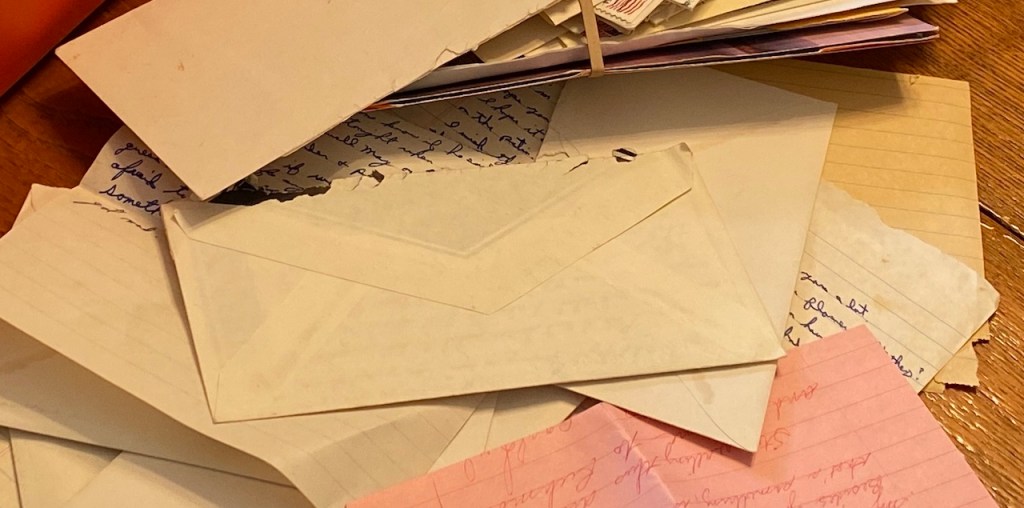







 Linda's Literary Home
