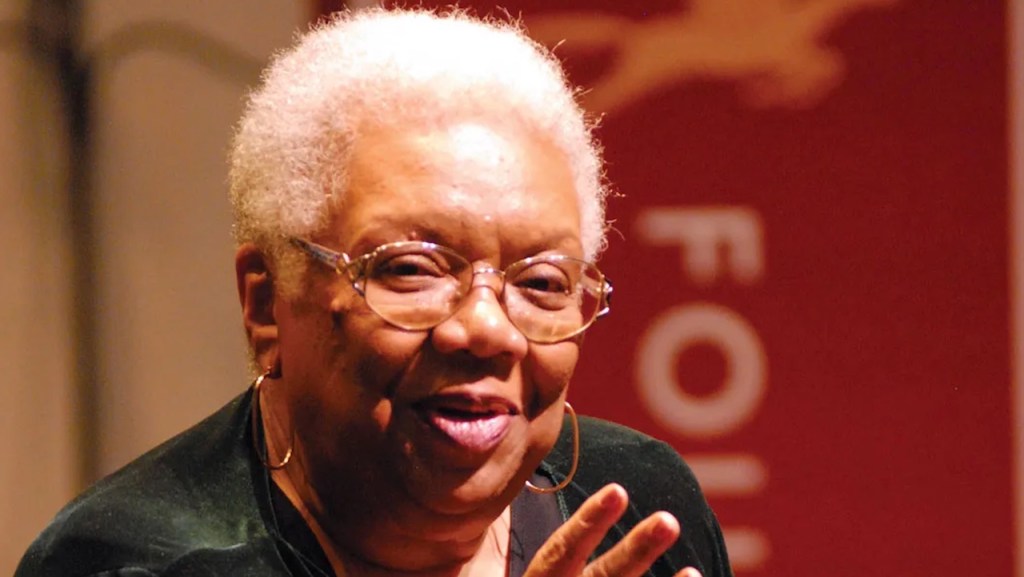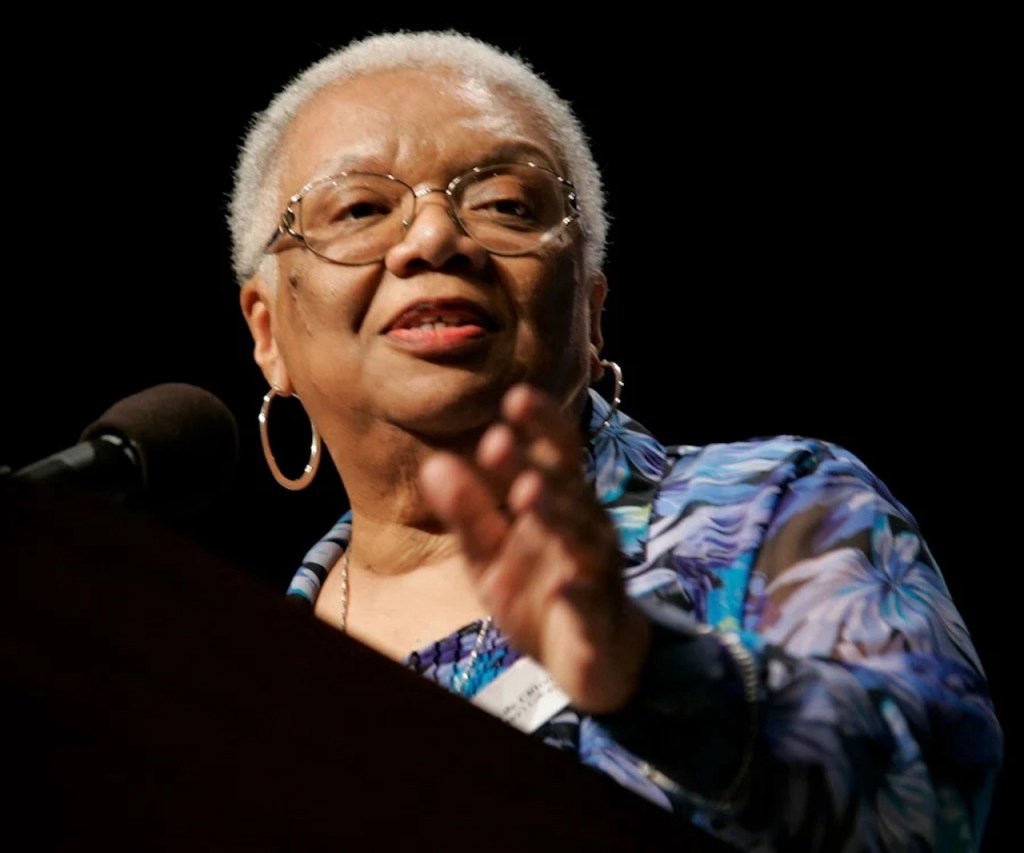
Lucille Clifton’s “at the cemetery, walnut grove plantation, south carolina, 1989”
In Lucille Clifton’s unconventionally capitalized titled poem “at the cemetery, walnut grove plantation, south carolina, 1989,” the speaker offers a lament that dramatizes the omission of the mention of slavery during a tour the poet took of Walnut Grove Plantation in South Carolina in 1989.
Introduction with the Text from “at the cemetery, walnut grove plantation, south carolina, 1989”
The United States of America in the twenty-first century has become replete with attempts to abolish history [1]. Examples include removing statues of noted individuals such as Frederick Douglass [2], and many others [3], changing names of public buildings, colleges, and streets [4].
Poet Lucille Clifton encountered a situation that had attempted to abolish history, and she was greatly offended by that attempt—so offended that she wrote this poem about this issue! Clifton has remarked, “You see, we cannot ignore history. History doesn’t go away. The past isn’t back there, the past is here too.”
After being asked, “Is it part of poetry’s job to recover history, to proclaim it, and to correct it when necessary?,” she responded, “Yes. All that may be needed is that the injustice in the world be mentioned so that nobody can ever say, ‘Nobody told me’.”
W. H. Auden once quipped in his tribute poem, “In Memory of W. B. Yeats” [5], “Poetry makes nothing happen.” However, sometimes in quiet ways that may snowball into movements, poetry may be able to start the ball rolling, and one might hope that Clifton’s little verse may serve to save history lessons from disappearance.
at the cemetery, walnut grove plantation, south carolina, 1989
among the rocks
at walnut grove
your silence drumming
in my bones,
tell me your names.
nobody mentioned slaves
and yet the curious tools
shine with your fingerprints.
nobody mentioned slaves
but somebody did this work
who had no guide, no stone,
who moulders under rock.
tell me your names,
tell me your bashful names
and I will testify.
the inventory lists ten slaves
but only men were recognized.
among the rocks
at walnut grove
some of these honored dead
were dark
some of these dark
were slaves
some of these slaves
were women
some of them did this honored work.
tell me your names
foremothers, brothers,
tell me your dishonored names.
here lies
here lies
here lies
here lies
hear
Reading: Lucille Clifton reading her poem, “at the cemetery, walnut grove plantation, south carolina, 1989”
Commentary on “at the cemetery, walnut grove plantation, south carolina, 1989”
This poem is voicing its plaintive lament that there was no mention of slavery during a tour the poet took of Walnut Grove Plantation in South Carolina in 1989. The omission is particularly galling because the place is a plantation in the South.
The history of such a place would be replete with information about that heinous institution. Simply ignoring an issue because it is unpleasant can do more harm than good. No problem was ever solved by ignoring it.
First Stanza: Addressing a Ghost-Like Presence
among the rocks
at walnut grove
your silence drumming
in my bones,
tell me your names.
In “at the cemetery, walnut grove plantation, south carolina, 1989,” the speaker addresses the ghost-like presences of the imagined slaves about which she knows nothing.
She is convinced that there had to be slaves on this large plantation that was thriving in the early nineteenth century. She dramatically claims that the silence of the slaves was “drumming / in [her] bones.” And she asks them to “tell [her] [their] names.”
Second Stanza: Intuiting a Presence
nobody mentioned slaves
and yet the curious tools
shine with your fingerprints.
nobody mentioned slaves
but somebody did this work
who had no guide, no stone,
who moulders under rock.
The speaker has likely come to take the plantation tour hoping to get a sense of the slaves that she believed worked there. She fancies that even though the tour guide has never mentioned slaves, she feels that she is intuiting their presence. Even though she did not hear the word “slave,” the very tools that are present seem to testify that slave left their fingerprints on them.
Since “somebody” had to have done that work, she reasons that it had to be the slaves. The owners of the plantation, Charles and Mary Moore, had ten children; those “fingerprints” may also be from those children who likely also worked on the plantation. Still, the speaker’s intuition allows her to create her speculative drama as she assumes that those slaves now “moulder[ ] under rock.”
Third Stanza: Who Are You?
tell me your names,
tell me your bashful names
and I will testify.
The speaker then begs the ghosts to tell her their names, and she “will testify” for them. Her testimony may not be thorough, but as least it is more than the nothing at all she is receiving from this historically filtered tour.
If the slaves existed, they lived and worked as such. Perhaps, she wishes simply to cite their names, which is an admirable thought, despite the impossibility of ever knowing those names.
Fourth Stanza: Proof of Their Existence
the inventory lists ten slaves
but only men were recognized.
The speaker then reports that the list of “inventory” did mention ten male slaves. This possible factoid affords the female speaker another issue over which to express indignation: that the female slaves are not even listed as inventoried property.
Fifth Stanza: Slaves in the Cemetery
among the rocks
at walnut grove
some of these honored dead
were dark
some of these dark
were slaves
some of these slaves
were women
some of them did this honored work.
tell me your names
foremothers, brothers,
tell me your dishonored names.
The speaker then muses that in the cemetery some of those buried must be slaves, and, of course, some of those slaves were women. They all did “honored work.” Again, the speaker demands of the imagined ghostly presences that they reveal their names.
They were “foremothers, brothers,” and she wants to know their “dishonored names.” They are “dishonored” because the speaker does not know their names and has no hope of finding out exactly who they were. While revision of historical facts remains an abomination, total erasure from the historical record is even worse.
Sixth Stanza: Who Lies Buried Here?
here lies
here lies
here lies
here lies
hear
The final five lines of the poem repeat the line “here lies” four times and ends with “hear.” She would like to add a name to each line, but since she is unable to do so, she offers one last command: she wants them to “hear” that she would honor them if she could.
Sources
[1] Annie Holmquist. “Abolishing History From the Classroom Is What Got Us Into This Mess.” The Epoch Times. August 17, 2020.
[2] Dinesh D’Souza. “Removal of Frederick Douglass Statue.” YouTube. Accessed February 23, 2023.
[3] Rachel Scully and James Bikales. “A List of the Statues across the US Toppled, Vandalized or Officially Removed amid Protests.” The Hill. June 12, 2020.
[4] Susie Marcus. “Naming, Renaming, and Rethinking History.” Classroom Law Project. March 6, 2018.
[5] W. H. Auden. “In Memory of W. B. Yeats.” Poets.org. Accessed February 23, 2023.
Lucille Clifton on Writing This Poem
—from an interview with Bill Moyers
CLIFTON: Well, let me tell you what happened with that poem. I went to Walnut Grove Plantation in South Carolina in 1989 and I was the only person of color on the tour. It’s a wonderful two thousand acres, but on the tour there was no mention of slaves. The plantation had the original furniture, and the guide talked about the difficulty of the work for a small family, but there was no mention of slavery. Now I’m very nosy–I want to know everything when I travel to give readings, all the gossip, everything. I like to know what happened here, so I always ask about the people who were here before these people? And then the uncomfortable question always is “Where are they now?”
Well, Walnut Grove Plantation has the family burying ground, and on the sides of the roped-off path leading to that burying ground there are crosses and rocks and other things sitting on edge that to me clearly mark the graves of slaves. So I asked, “Why don’t you mention slaves?” The first answer was “Maybe the guide didn’t want to embarrass you.” “Well,” I said, “I’m not a slave. I don’t know why he would think I’d be embarrassed.” Then I asked again, and the answer was, “Maybe they didn’t have any.” Well, they had two thousand acres in South Carolina in the early part of the nineteenth century. Be serious!
When I suggested that the guide check the inventory–because slaves were considered property and were often inventoried–they discovered that the plantation had an inventory of ten slaves, but they might have had more because women weren’t counted. Now, well, I had to find out about that! I mean, some things say, hey, like “No!” Then when I learned that the women were not considered valuable enough to inventory, I definitely wanted to write about that.
MOYERS: What do you want the readers to do at the end of the poem when you change the word “here” to “hear”?
CLIFTON: I want them to recognize that only half the truth was being told. At that time schoolchildren were taken there on field trips to Walnut Grove, and half the children in the town were denied the knowledge that their ancestors had helped to build that plantation. That is unjust, and I’m into justice big-time.
I read that poem in South Carolina a lot, and someone in the audience–I think she was the director of the group which has restored the plantation–wrote me a letter saying that she just didn’t realize. Two years ago they began building a model slave cabin, and now they are going to include all the people who lived there in the tour. So that’s one poem doing something, making a difference. Then once when I did a reading at the nearby town a woman came up and told me that her family had owned Walnut Grove, but she had never gone back—she was ashamed—so I said the next time I come here, we must go together. You see, we cannot ignore history. History doesn’t go away. The past isn’t back there, the past is here too.
MOYERS: Is it part of poetry’s job to recover history, to proclaim it, and to correct it when necessary?
CLIFTON: Yes. All that may be needed is that the injustice in the world be mentioned so that nobody can ever say, “Nobody told me.”