His squeal was not at all As pathetic as the barnyard pig Whose blood jets propelled That old expression, “bled like a stuck hog”— He bled beautifully, just the right color And sticky-sweet texture she expected from him And his flesh shucked off those bones easy And clean as pulling his t-shirt right off his back. His plump rump slid off as easy as his white cotton Undies. His joints unhooked quick as any brassiere She ever shucked.
Standing ankle-deep in guts She marveled at the cooperation Of the sum of his parts, They seemed to want to be put asunder.
Still, she’s truly sorry it had to end that way— She’d rather his tongue be sliding over hers Than down the gullet of those buzzards—but oh well, His cherubic face glowing like the moon Is a bright charm dangling from her bracelet of old lovers.
Image: Emily Dickinson – Amherst College – Daguerrotype of the poet at age 17, circa 1847 – likely the only authentic, extant likeness of the poet
Emily Dickinson’s “I never lost as much but twice”
Emily Dickinson’s “I never lost as much but twice” dramatizes the speaker’s confrontation with devastating earthly loss and her anguished appeal to divine compensation.
Introduction and Text of “I never lost as much but twice”
Emily Dickinson’s “I never lost as much but twice” features one of the poet’s most compressed spiritual dramas. In only eight lines, the speaker moves from grief to restoration and then back again into deprivation, as she attempts to understand the mysterious machinations of the Divine.
The poem’s minimalist structure intensifies its emotional force, while its startling metaphors—“beggar,” “Burglar,” “Banker,” and “Father”—reveal a speaker wrestling with the paradox of God as both giver and taker.
I never lost as much but twice
I never lost as much but twice, And that was in the sod. Twice have I stood a beggar Before the door of God!
Angels – twice descending Reimbursed my store – Burglar! Banker – Father! I am poor once more!
Commentary on “I never lost as much but twice”
Emily Dickinson’s “I never lost as much but twice” portrays the speaker’s struggle to reconcile unbearable sorrow with faith in divine providence.
First Stanza: The Two-Fold Sorrow of Human Loss
I never lost as much but twice, And that was in the sod. Twice have I stood a beggar Before the door of God!
The speaker begins with a striking declaration that she has endured catastrophic loss only “twice,” and both occasions involved “the sod,” that ancient symbol for the grave and burial earth. Readers have often speculated that the losses refer to the deaths of loved ones, but the speaker wisely leaves the reference broad enough to encompass any profound bereavement. By refusing specificity, she elevates her suffering from the merely personal into a universal human condition.
The phrase “stood a beggar / Before the door of God” reveals a soul stripped of earthly confidence. The speaker no longer approaches the Divine as an equal child of Spirit but as one emptied by grief and compelled to plead for mercy.
The image recalls the teaching of Paramahansa Yogananda, which cautions against approaching God in spiritual beggary, insisting instead that the soul possesses a divine inheritance. Dickinson’s speaker, however, dramatizes the raw emotional reality that grief often reduces even strong souls to desperation.
The tension between earthly sorrow and spiritual assurance appears frequently in Dickinson’s poetry. In additional commentaries on Dickinson poems, I reveal that her speakers are often in the process of confronting the distance between mortal experience and eternal truth. This speaker occupies precisely that threshold, poised between despair and faith, unable to relinquish either one.
The exclamation point concluding the fourth line intensifies the speaker’s emotional urgency. She does not quietly petition heaven; she cries out from the depths of deprivation. Yet even in anguish, she stands “before the door of God,” not outside divine awareness altogether.
This image clearly indicates that despite suffering, the speaker still believes the Divine Presence remains accessible. The stanza also demonstrates Dickinson’s genius for compression and minimalism. In four brief lines, the speaker moves from memory to theological speculation and then from graveyard imagery to metaphysical yearning.
The emotional trajectory resembles Paramahansa Yogananda’s teaching from his talk Removing All Sorrow and Suffering that human beings seek release from suffering by lifting consciousness toward divine awareness. Dickinson’s speaker has not yet transcended grief, but she instinctively turns toward the Divine as the only possible source of restoration.
Second Stanza: Facing Loss a Third Time?
Angels – twice descending Reimbursed my store – Burglar! Banker – Father! I am poor once more!
The second stanza shifts dramatically from deprivation to restoration. The speaker reports that “Angels” descended twice and “reimbursed” her losses, suggesting moments of spiritual consolation or renewed blessings after earlier grief.
The financial language of “reimbursed my store” transforms emotional recovery into an economic transaction, as though heaven keeps careful accounts of human suffering. Yet the restoration proves temporary.
The astonishing line “Burglar! Banker – Father!” presents the Divine through three contradictory metaphors. God becomes simultaneously the thief who removes blessings, the banker who restores them, and the loving father who presides over both actions. Dickinson’s speaker refuses sentimental religion; instead, she confronts the terrifying mystery of a God who both wounds and heals.
The emotional complexity of this address resembles the spiritual paradox explored in Paramahansa Yogananda’s talk Awake in the Cosmic Dream, where the great Guru explains that worldly conditions continually shift while God alone remains permanent reality. Dickinson’s speaker suffers precisely because earthly attachments are unstable. Every restored joy remains vulnerable to removal, leaving the soul “poor once more.”
The final declaration carries tremendous emotional weight because the speaker offers no resistance or argument after naming God as “Father.” Despite bewilderment and pain, she still recognizes divine parentage.
Her faith survives, though stripped of comfort and certainty. The speaker’s endurance reflects Dickinson’s recurring fascination with the soul’s ability to continue seeking meaning even after repeated disappointment.
The repeated emphasis on poverty also deepens the poem’s spiritual resonance. Material poverty often signifies lack of worldly goods, but Dickinson transforms it into a symbol of emotional and spiritual depletion. Yet mystical traditions frequently teach that emptiness prepares the soul for greater realization.
Paramahansa Yogananda revealed in his writings on “Meditation & Kriya Yoga” that lasting peace arises only when one discovers inward communion beyond external conditions. Dickinson’s speaker has not yet achieved such peace, but her anguish pushes her toward that realization.
By ending the poem with “I am poor once more!” the speaker leaves readers suspended between despair and revelation. The line may sound tragic, yet it also suggests spiritual awakening through repeated loss.
Earthly possessions, relationships, and consolations vanish, but the soul’s dialogue with the Divine continues. Dickinson’s speaker therefore transforms grief into a profound metaphysical/mystical inquiry, revealing that suffering often becomes the doorway through which the soul most intensely seeks God.
Image: Emily Dickinson – Amherst College – Daguerrotype of the poet at age 17, circa 1847 – likely the only authentic, extant likeness of the poet
Emily Dickinson’s “I robbed the Woods”
In “I robbed the Woods,” Emily Dickinson creates a speaker who confesses to a crime: she has robbed the “trusting” woods and “unsuspecting” trees, and she later wonders what those natural beings will say about her brazen act.
Introduction and Text of “I robbed the Woods”
Upon being faced with such a bizarre claim—”I robbed the Woods”—the reader has his/her curiosity immediately fetched to the forefront. How on earth can an individual rob a woods?—one has to wonder.
But then this is Emily Dickinson, whose mastery at confiding ideas in words leaves little doubt that that claims is exactly what happened—whether it ends up literal or figurative, although, one will likely bet on the figurative.
Emily Dickinson was a master at riddle-making, and in her poem, “I robbed the Woods,” her speaker’s metaphorical comparison of keen observation and mental note-taking to committing a robbery reveals how complex and insightful was her poet mind.
Her metaphor functions almost exactly as a riddle functions: she lays out details and as they stack up, she allows her listening audience/readers to guess what her exact vehicle remains and does.
While there is no one item to which the speaker is referring in “I robbed the Woods”—as in “It sifts from Leaden Sieves” and “I like to see it lap the Miles“—her metaphorical comparison itself becomes the target of the riddle-like device.
I robbed the Woods
I robbed the Woods – The trusting Woods. The unsuspecting Trees Brought out their Burs and mosses My fantasy to please. I scanned their trinkets curious –
I grasped – I bore away – What will the solemn Hemlock – What will the Oak tree say?
Commentary on “I robbed the Woods”
Emily Dickinson’s poem “I Robbed the Woods” reads almost like a riddle. The speaker likens the simple act of observing nature to committing a daring theft, creating a vivid and fascinating metaphor. The poem plays with ideas of observation, memory, and awareness—all essential tools for transforming everyday experiences into poetry.
At first glance, the speaker appears to be confessing to a crime. But, of course, Dickinson’s speaker is not confessing to an actual robbery. Instead, she is playing with metaphor, turning the act of noticing nature’s beauty into something mischievous and thrilling.
First Movement: A Startling Confession
I robbed the Woods – The trusting Woods.
Right away, the speaker makes a dramatic declaration: she has stolen something. Not just from anywhere, but from “the Woods.” This opening line grabs our attention. We instinctively wonder—what exactly has she stolen?
And how does one even “rob” a forest? Before we can fully process these questions, the speaker adds an unexpected detail: the woods were “trusting.” This makes the whole situation even more strange.
The natural world is not something we usually think of as trusting or naïve, but Dickinson’s speaker gives it a personality here. The woods, in its openness, has allowed itself to be “robbed.” This choice of words makes the supposed crime feel both playful and profound.
With this setup, the speaker draws us into a mystery. What was stolen? Why does the speaker consider it a robbery? And will the woods—so trusting and unguarded—react to this act of theft? These questions pull us deeper into the poem, eager for answers.
Second Movement: Pleasing Her Fantasy
The unsuspecting Trees Brought out their Burs and mosses My fantasy to please.
Now, the speaker begins to explain. The trees, completely unaware of her intentions, put their treasures on display—”Burs and mosses.” These details immediately paint a picture of the forest: rich textures, small natural wonders that might normally go unnoticed.
The way the speaker describes it, the trees act almost like merchants in a marketplace, showing off their goods. It is as if they are inviting admiration, just like a jeweler might showcase glistening diamonds and pearls.
But instead of precious stones, these trees offer their own organic “trinkets”—simple, earthy, yet still mesmerizing in their own way. The speaker tells us that all of this was done “to please [her] fantasy.” This line is very important.
It suggests that the entire experience—the observation, the appreciation, and ultimately the “robbery”—exists in the realm of imagination. This act is not a literal theft. Instead, it is about the way the speaker experiences nature: as something so generous and beautiful that it feels like a gift meant just for her.
Third Movement: Absconding with Treasures
I scanned their trinkets curious – I grasped – I bore away –
At this point, the speaker goes from passive observer to active participant. She doesn’t just look at the forest’s offerings—she takes them. The moment of action is quick and decisive: she scans, grasps, and then flees, just like a thief making off with stolen goods.
The word “trinkets” adds another layer of meaning. It reinforces the idea that what she is “stealing” isn not something grand or material, but rather small, delicate details—the kind of things most people might overlook. But for the speaker, these tiny elements of nature are priceless treasures.
What is striking here is the speaker’s sense of urgency. She does not linger or ask permission. Instead, she takes what she sees and makes off with it. This moment captures the essence of artistic inspiration.
Writers and artists often “steal” from the world around them—not in a dishonest way, but by absorbing details, emotions, and experiences to transform them into something new.
Fourth Movement: The Metaphor of Theft
What will the solemn Hemlock – What will the Oak tree say?
Now that the “crime” has been committed, the speaker pauses to consider the consequences. Will the trees—specifically the “solemn Hemlock” and “Oak tree”—react to her actions? By naming these trees, the speaker gives them weight and personality.
The hemlock, often associated with seriousness (and even poison, as in the case of Socrates), contrasts with the sturdy and dependable oak. The speaker seems to be wondering if these wise old trees will judge her for what she has done.
But, of course, trees do not speak. The question is rhetorical, reinforcing the idea that the “robbery” is symbolic. The speaker has not taken anything physical—no branches, no leaves, no moss. Instead, she has taken impressions, memories, and inspiration. The true theft is not from the forest itself, but from the experience of being in it.
A Crimeless “Crime”
In the end, Dickinson’s speaker has not done anything wrong. Her so-called “robbery” is simply a metaphor for the way we experience and internalize the world around us. The poet “steals” moments—images, sensations, emotions—and carries them away, transforming them into art.
This poem is a playful yet profound meditation on the relationship between nature and creativity of the human mind. It reminds us that beauty is all around us, freely given, just waiting for someone to notice.
And in noticing—really noticing the details involved—we take a little piece of it with us. We “steal” these glimpses of wonder, storing them in our minds and hearts, where they become part of us.
For Dickinson’s speaker, this act of “theft” is not a crime, but a necessary part of being a poet. Observing the world with keen awareness, collecting its details, and reshaping them into something new—this is what poetry is all about. And, as this poem suggests, the woods will not mind. They trust us to take what we need and carry it forward in our own way.
Celebrating Poetic Inspiration
Emily Dickinson’s “I Robbed the Woods” is more than just a clever metaphor—it is a celebration of artistic inspiration. It invites us to look at the world around us with fresh eyes, to appreciate the small details, and to recognize the quiet generosity of nature.
So the next time you find yourself walking through the woods, pay attention. Notice the way the moss clings to the bark, the way the light streams through the leaves, the way the air smells after the rain. Take it all in.
And if you feel as if you have stolen a little something in the process—you need not worry. The trees, the light, and smell of rain will not mind, because they were divinely offering all of this to you free of charge.
Image: Emily Dickinson – Amherst College – Daguerrotype of the poet at age 17, circa 1847 – likely the only authentic, extant likeness of the poet
Emily Dickinson’s “Adrift! A little boat adrift!”
In Emily Dickinson’s skilled employment of paradox and metaphor in her poem “Adrift! A little boat adrift!,” the speaker offers a complex drama played out seemingly on an earthly ocean but actually performed on the mystical sea, where life remains immortal and eternal.
Introduction and Text of “Adrift! A little boat adrift!”
Emily Dickinson enjoyed the riddle essence of poetry. She often employed that riddle essence in which she implies or directly asks a question. Other times, she simply offers her rather detailed description and allows the reader to answer. In this little drama, she elides the physical universe with the spiritual universe.
Metaphorically comparing the human being to a “little boat” floating without a guide on the sea of life, she deliberately sinks that boat before resurrecting that drowned life through the agency of the human soul, which cannot be drowned but which possesses all the power of its Creator to demolish all human suffering.
Adrift! A little boat adrift!
Adrift! A little boat adrift! And night is coming down! Will no one guide a little boat Unto the nearest town?
So Sailors say – on yesterday – Just as the dusk was brown One little boat gave up its strife And gurgled down and down.
So angels say – on yesterday – Just as the dawn was red One little boat – o’erspent with gales – Retrimmed its masts – redecked its sails – And shot – exultant on!
Commentary on “Adrift! A little boat adrift!”
This little drama offers a useful example of Dickinson’s most intense style, featuring her use of the riddle and her mystic appraisal of the human mind and heart, influenced by the human soul, whose guidance may seem rudderless, until that guidance becomes crucial.
First Stanza: Report of Danger
Adrift! A little boat adrift! And night is coming down! Will no one guide a little boat Unto the nearest town?
The speaker begins with an exclamation revealing that danger is on the horizon in the form of a small watercraft floating about unguided by a knowing pilot. Such a situation alerts the reader/listener that all sorts of calamity could ensue.
To make matters worse, nightfall is fast approaching. An unguided vessel drifting into the nighttime brings down a veil of fright and concern. Again the speaker is exclaiming for again she places the exclamation mark at the end of her brief outcry!
The speaker then cries for assistance for the little drifting sea craft, but instead of a command, she frames the cry as a question with a negative emphasis, “[w]ill no one . . . ?” She demonstrates that she suspects there is no one who will chaperone and usher this little vessel to a safe harbor, such as to “the nearest town.”
The painful negativity suggested by the speaker early on in her little drama foreshadows the ultimate outcome in her conclusion. She alerts her listeners that a likely catastrophe is on the horizon.
But truly alert readers/listeners will suspend judgment until the conclusion is revealed, for Emily Dickinson can be as tricky as any poet writing. She can out-trick Robert Frost by miles and miles.
Second Stanza: Disaster
So Sailors say – on yesterday – Just as the dusk was brown One little boat gave up its strife And gurgled down and down.
The speaker continues her report of the disastrous fate of this “little boat.” It has been reported by “Sailors,” those who would know, that this little sea vessel that so valiantly struggled nevertheless gave up the ghost and let the sea take it down into its depths.
The time of this sinking was dusk when the color of sunset spread its brown, saddening haze upon the land and sea. The sailors have reported that the vessel simply “gave up” because it could not overcome its “strife.”
It gave up its life, its cargo, all that was precious within it. It gave up and then went down with gurgling sounds–the sound of a living throat taking on water that will ultimately drown it.
The speaker has created a scenario of such pain and suffering that can only be assuaged with extraordinary finesse. The sinking of a little boat remains a sorrowful image, and the speaker has seared that painful image into the inner sight of her listeners/readers. She has dramatized the events surrounding that image in such a way as to heighten the pain and anguish experienced by her audience.
Third Stanza: Safety at Last
So angels say – on yesterday – Just as the dawn was red One little boat – o’erspent with gales – Retrimmed its masts – redecked its sails – And shot – exultant on!
Finally, the speaker quickly pulls the readers/listeners minds from the earthly tragedy on the physical level of existence on which the sinking of a sea craft causes pain and suffering. Despite what the “Sailors” have reported, there is another report by higher beings that will impart a different engagement, a different outcome of this earthly event.
Now, the report is brought by “angels.” The higher, mystical beings are reporting that this event happened the same day as the earthly report “yesterday.” But the time was early morning when “dawn was red,” setting up a dichotomy from yesterday when “dusk was brown.”
Instead of merely going down “gurgl[ing],” this little vessel when faced with ferocious “gales,” fought valiantly: it transformed itself by reshaping it “masts” and reinstalling stronger and better sea-worthy “sails.”
And after it completed those repairs, it sped past all earthy danger and triumphantly entered into the realm of mystic life (Christians call it “Heaven”) where no water can drown, no storm can toss, and no pain and suffering can stifle.
Paradox and Metaphor
Upon first encounter, the reader will detect what seems to be a contradiction or impossibility because of a reversal of two time periods. In the second stanza, it is reported that the little boat sank yesterday at “dusk.” But then in the third stanza, it is reported that the little boat encountered its difficulty yesterday at “dawn.”
The resolution of this paradox is accomplished through the realization that on the spiritual, mystical level of being, time remains eminently malleable. At the time the “little boat” experienced it difficulty, it realized its immortal, eternal aspect.
It became aware that it is, in fact, a spark of the Eternal, and therefore nothing can harm it. It realized that stature at dawn, thus by the time dusk had arrived to take its physical form, its mystic/spiritual form–or soul–had moved on.
This poem may be considered one of Emily Dickinson’s riddle poems. Although it does not seem to call for answering a riddle question, readers cannot fail to grasp that the “little boat” is a metaphor for a human being.
This metaphor becomes obvious, however, only after the angels offer their report. The “little boat” then is revealed to possess the human ability to realize its special power, its mystical spark, and its ability to transcend earthly trials and tribulations.
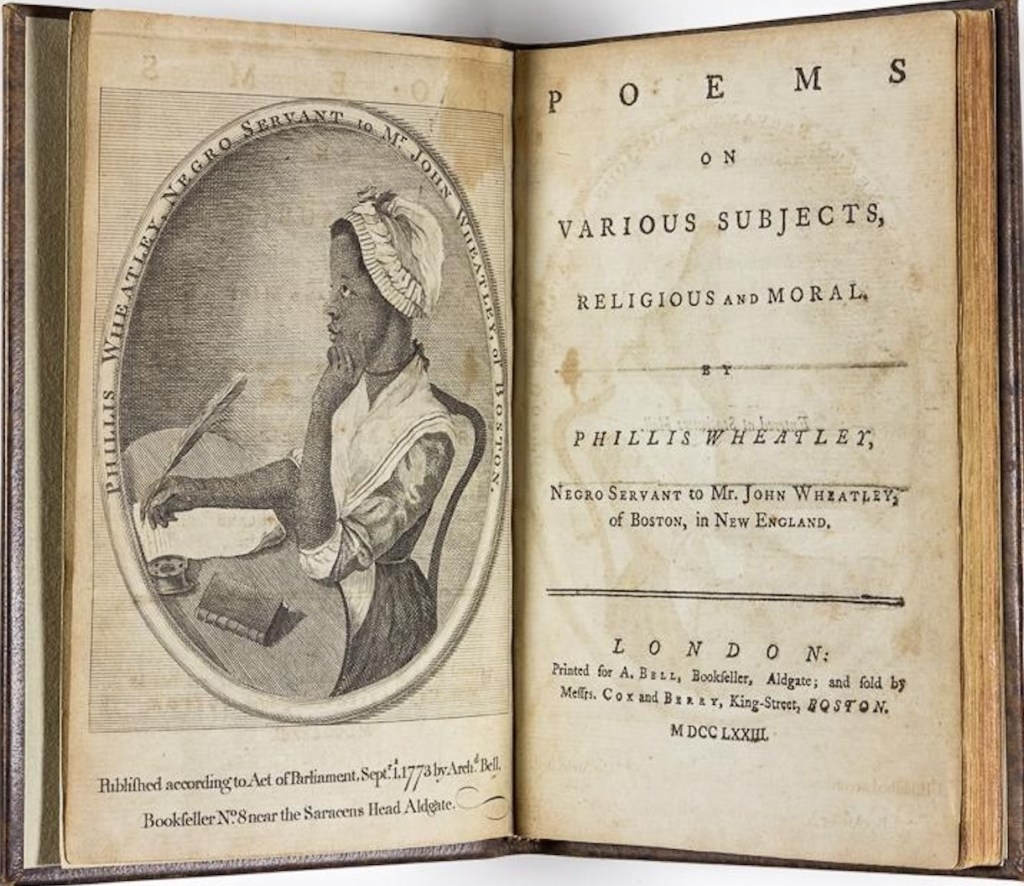
The speaker in Phillis Wheatley’s “A Hymn to the Evening” offers her spiritually motivated song/prayer as a tribute to evening, the part of the day when nightly slumber is arriving in all its glory.
Introduction and Text of “A Hymn to the Evening”
The speaker in Phillis Wheatley’s “A Hymn to the Evening” is delighting in the beauty surrounding her. She is especially cognizant of how all events seem to be accruing for the purpose of making a beautiful day to close with a delightful, colorful evening.
The speaker finds the evening sky glorious as it yield the “deepest red” hue, as all other various colors are also displaying across the sky. She also observes the scenery around her on earth; she takes measure of streams and especially the songs of birds. She demonstrates her love and admiration for the creation that the Divine Creator has bestowed on all of His children.
The poem consists of nine riming couplets, with the first couplet featuring an internal rime as well as an end rime. The second couplet features the rare poetic device, similar to personification, of metaphorically comparing a gentle wind to a bird. The couplet-formed verse lends to the high tone with which the poet has flavored her hymn.
By labeling her poem a hymn, the poet has elevated its purpose from a simple tribute to a time of day, to a supplication for gratitude. As she has observed much beauty about her and is thankful for the opportunity to engage that loveliness, she wishes that same gratitude for all of humankind.
The speaker is also offering her song as she is praying that the simple act of appreciating one’s environment may uplift and keep humankind on a virtuous path, on which avoidance of all that cause harm and corruption may be avoided.
A Hymn to the Evening
Soon as the sun forsook the eastern main The pealing thunder shook the heav’nly plain; Majestic grandeur! From the zephyr’s wing, Exhales the incense of the blooming spring. Soft purl the streams, the birds renew their notes, And through the air their mingled music floats. Through all the heav’ns what beauteous dies are spread! But the west glories in the deepest red: So may our breasts with ev’ry virtue glow, The living temples of our God below! Fill’d with the praise of him who gives the light, And draws the sable curtains of the night, Let placid slumbers sooth each weary mind, At morn to wake more heav’nly, more refin’d; So shall the labours of the day begin More pure, more guarded from the snares of sin. Night’s leaden sceptre seals my drowsy eyes, Then cease, my song, till fair Aurora rise.
Commentary on “A Hymn to the Evening”
The speaker is inspired by the beauty of the day’s events that she has been observing both in the sky and on the land around her, as the end of the day is arriving. She turns her simple awareness into a tribute and supplication for all humankind’s spiritual betterment.
First Movement: Opening of Day
Soon as the sun forsook the eastern main The pealing thunder shook the heav’nly plain; Majestic grandeur! From the zephyr’s wing, Exhales the incense of the blooming spring.
The speaker opens her tribute by describing how the day had begun with a thunder storm as soon as morning had ended. She finds the event an example of “[m]ajestic grandeur.” On a soft gentle breeze, the fragrance of spring’s flowers came wafting.
The inspired speaker then has the sun “forsaking” its domain in the east. After having arisen, the big star does does not wait but keeps traveling across the sky, literally, forsaking all it leaves behind. By beginning with the opening of the day, the speaker then gathers images throughout the day that accumulate to a marvelous evening at the close of that day.
The speaker describes the thunder as “pealing” and that it colorfully caused to tremble the area around it. The thunder strikes the speaker as a grand event, one fitting to collect as evidence that a glorious evening may be in the offing.
The first couplet includes an internal rime, as well as and end rime: “forsook – shook.” Also, interestingly, the poet has employed avianification (akin to the device, “personification”) by metaphorically giving a gentle breeze a “wing,” a feature belonging to a bird.
Second Movement: The Colors of Beauty
Soft purl the streams, the birds renew their notes, And through the air their mingled music floats. Through all the heav’ns what beauteous dies are spread! But the west glories in the deepest red:
The speaker then notes that the streams are babbling gently and birds are continuing to offer their songs to the atmosphere. The birds’ music seems to blend with other features of the landscape as their singular notes continue to waft on the breeze.
She has the stream purling, instead of merely babbling; this speaker is colorfully describing each natural object for the purpose of incorporating them into her collection of images, which she will offer to the day’s end.
The speaker then remarks that through the sky swirl many various colors that she deems to be “beauteous,” as they stretch across the blue expanse. However, she finds those hues that appear in “the west” to be the “deepest red,” and she implies that the oncoming sunset will cap the day in a marvelous and glorious procession.
The speaker finds unusual as well as deeply spiritual ways of describing what she sees. She is offering her words, her images, and her thoughts to her Divine Creator. Thus, she remains careful to choose each image and description with precision, for example, the west does not merely feature “deepest red,” but it also “glories” in that color. Making each word and each image work its magic demonstrates the poet’s skill and mastery of her art.
Third Movement: A Supplication for Gratitude
So may our breasts with ev’ry virtue glow, The living temples of our God below! Fill’d with the praise of him who gives the light, And draws the sable curtains of the night,
The speaker then turns to the hearts and minds of humanity, prayerfully supplicating for those hearts and minds to “glow,” filled with “ev’ry virtue.” She hopes that the lives of all humankind become and remain “temples” on earth dedicated to the Belovèd Creator. She includes all of humanity in her supplication as she effuses, “may our breasts” glow as living temples.
The speaker wishes that all of humanity become full of praise for the Blessèd Creator of the cosmos; that Creator, Who had given “the light” also will close the “curtains of the night”: again the speaker has shown her marvelous skill by describing those “curtains” as “sable.”
The speaker then prays that all of humanity may sleep peacefully and become refreshed so that the next day’s existence becomes “more heav’nly, more refin’d.” She hopes and prays that each day will find humanity to be living more and more on a grand scale of plain living and high thinking. As she includes herself in her prayer, she demonstrates her humility and deep inner awareness of the needs of all humankind.
Fourth Movement: Prayer for Virtuous Living
Let placid slumbers sooth each weary mind, At morn to wake more heav’nly, more refin’d; So shall the labours of the day begin More pure, more guarded from the snares of sin. Night’s leaden sceptre seals my drowsy eyes, Then cease, my song, till fair Aurora rise.
After a night’s peaceful, invigorating rest of the body and mind, each child of the Divine Creator may begin his/her work, chastened and strengthened by the gratitude of finding a safe harbor in the Blessèd Lord.
The speaker prays that all be turned from “the snares of sin.” Again, the speaker is demonstrating her ethical and moral strength as she wishes for all of humankind the same rectitude she desires for herself.
The speaker then closes her song of praise for the Belovèd Creator’s beauty in creation by colorfully comparing the closing of her own sleepy eyes—her “drowsy eyes”—to being touched by a royal, magical wand.
She then bids her hymn end and allow her the sleep she now needs; thus, she prays for herself a soothing slumber until morning, when the Roman goddess, “Aurora,” brings in a new day with dawn.
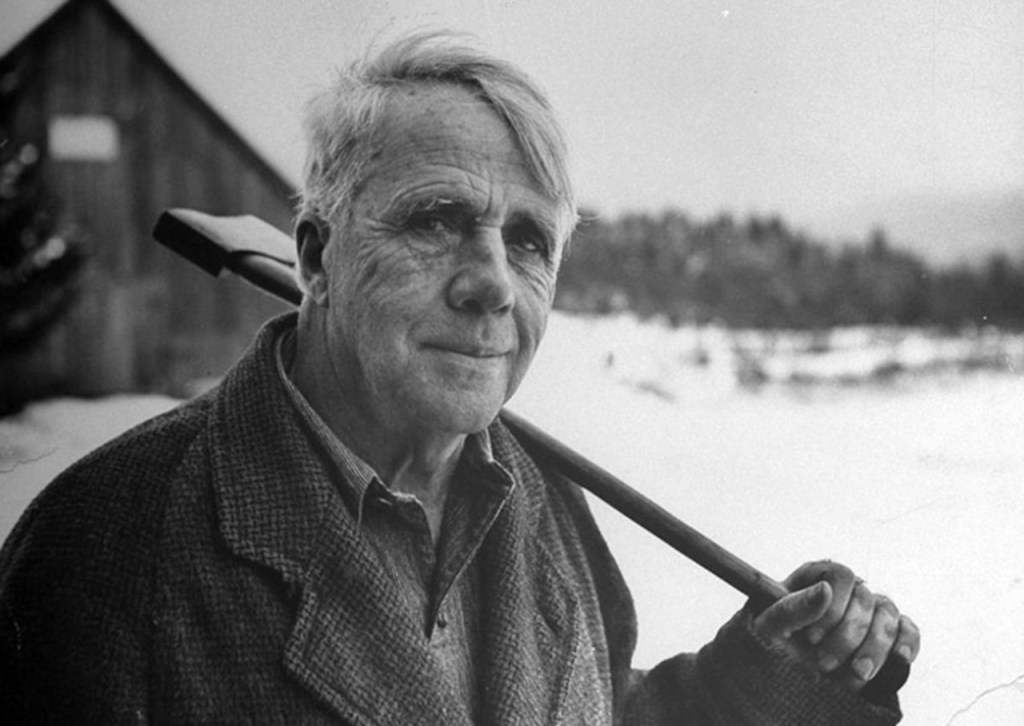
Robert Frost’s poem, “Bereft,” displays one the most amazing metaphors to be encountered in poetry: “Leaves got up in a coil and hissed / Blindly struck at my knee and missed.” Like “The Road Not Taken,” however, this poem offers up a tricky feature.
Introduction with Text of “Bereft”
Robert Frost masterfully guides his metaphor to render his poem “Bereft” a significant American poem. Despite the sadness and seriousness of the poem’s subject, readers will delight in the masterful use of the marvelous metaphor displayed within it.
The speaker in this poem is living alone and he is sorrowful. He says he has “no one left but God.” The odd rime-scheme of the poem—AAAAABBACCDDDEDE— bestows a mesmerizing effect, perfectly complementing the haunting grief of the subject.
The important metaphor—”Leaves got up in a coil and hissed, / Blindly struck at my knee and missed”—remains one of the best in the English language. The visual imagery of this metaphor is stark and startling, yet clear and powerful.
Sometimes the concept and function of metaphor is difficult for beginning poetry students and readers to grasp, and the leaves as snake metaphor should be in every teacher’s toolkit for explaining the concept and function of metaphor to students.
Serving as a clarifying example, that metaphor is one of the most useful and beneficial to help novices read and understand poetry. Robert Frost, in this poem, demonstrates his strongest poetic powers. And he also adds a little trick that has become part of his modus operandi.
Bereft
Where had I heard this wind before Change like this to a deeper roar? What would it take my standing there for, Holding open a restive door, Looking down hill to a frothy shore? Summer was past and the day was past. Sombre clouds in the west were massed. Out on the porch’s sagging floor, Leaves got up in a coil and hissed, Blindly struck at my knee and missed. Something sinister in the tone Told me my secret must be known: Word I was in the house alone Somehow must have gotten abroad, Word I was in my life alone, Word I had no one left but God.
Reading
Commentary on “Bereft”
The speaker in Robert Frost’s “Bereft” expresses his melancholy aloneness. He is in his life as well as in his house alone. His haunting description of nature around him bespeak shis utter sorrow, and a mysterious aura seems to hang on his every image.
First Movement: A Man Alone in His Life
Where had I heard this wind before Change like this to a deeper roar? What would it take my standing there for, Holding open a restive door, Looking down hill to a frothy shore?
In the first two lines, the poem commences with a question as the speaker asks about having heard a similar sound in the wind prior to this moment. The wind had intensified to a “deeper roar.” The speaker, who is a man alone in his life, is sharply cognizant of sounds; it is human nature that when one is alone, one seems to hear every little sound.
Then the speaker poses another question. He wonders what the wind might be thinking of him just standing idly holding the door open, as he stares down at the shore of a body of water, perhaps a lake. The lake’s waters have been whipped up into a spume that is landing on the bank.
He continues musing on what such a roaring wind would think of his just standing there quietly holding open his door with the wind shoving itself against it. He continues to give a blank stare down to the lake that looks like a tornado or hurricane is swirling it up in to billows with a roaring wind. Somehow it feels to him that the wind must be judging him in his odd movements.
Second Movement: Funereal Clouds
Summer was past and the day was past. Sombre clouds in the west were massed.
Then in a riming couplet, the speaker observes that summer is over, and the end of the day begins to represent more than the actual season and day. Those endings take on the function of a symbol as the speaker paints metaphorically his own age: his youth is already gone and old age has taken him. He intuits that the funereal clouds are heralding his own demise.
Third Movement: Sagging Life
Out on the porch’s sagging floor, Leaves got up in a coil and hissed, Blindly struck at my knee and missed.
The speaker steps out onto the porch that is sagging, and here is where that magnificent metaphor makes its appearance:
Leaves got up in a coil and hissed, Blindly struck at my knee and missed.
The speaker metaphorically likens the leaves to a snake without even employing the word “snake.” He allows the leaves to make an image of a snake as he dramatizes their action. The wind whips the leaves up into a coil, and they aim for the speaker’s knee, but before they could strike, the wind lets them drop.
Fourth Movement: Alone Only with God
Something sinister in the tone Told me my secret must be known: Word I was in the house alone Somehow must have gotten abroad, Word I was in my life alone, Word I had no one left but God.
The entire scene is sober, as are the clouds that were accumulating in the west. The speaker describes the scene as “sinister”: The wind’s deep roar, the sagging porch, the leaves acting snakelike—all calculate as something “sinister” to the speaker.
The speaker then guesses that the dark and sinister scene has been effected because word had gotten out that he is alone—he is in this big house alone. Somehow the secret had gotten out, and now all of nature is conspiring to remind him of his aloneness. But even more important than the fact that he is living in his house alone is the fact that he is living “in [his] life alone.”
The appalling secret that he has “no left but God” is prompting the weather and even the supposedly insensate nature to act in a disturbing manner just because they have the power to do so. And nature along with the weather possesses that power because it is so easy to disturb and intimidate a bereaved individual who is alone in his life. The speaker’s circumstance as a bereaved individual appears to move all of nature to collude against his peace of mind.
Nevertheless, readers will recall that the speaker has said he has God in his life—even if he had phrased it quite negatively. Still, if all one has in one’s life is God, that life will, in fact, remain full.
As usual, Robert Frost has created a very tricky poem. All the sadness, loneliness, natural wizardry, and lamentation amount to very little when the realization of having God in his life is noted and affirmed.