Linda's Literary Home

Tag: Metaphysical poets

  • John Donne’s “The Flea”

    Image: John Donne Portrait Unknown Artist – National Portrait Gallery, London

    John Donne’s “The Flea”

    John Donne’s “The Flea” is a seduction poem in which the speaker concocts a clever but outrageous notion to persuade his lady friend to engage with him in coitus.  This poem exemplifies Donne’s earlier work that contrasts with his later spiritual works including the Holy Sonnets.

    Introduction with Text of “The Flea”

    John Donne’s “The Flea” represents the subject matter that engaged the poet early on in his life.   Donne continues with similar exploits in other seduction poems such as “The Apparition,” “The Indifferent,” and “The Bait,” which is one of many replies to Christopher Marlowe’s “The Passionate Shepherd to His Love.”

    After Donne decided to forsake the wild side of life and settle into the spiritual life of a preacher, he composed amazing spiritual poetry most notable in the Holy Sonnets. The speaker in John Donne’s “The Flea” uses a twisted kind of reasoning, saying that his blood and that of his lady friend mingling in the flea’s body is not considered “a sin, nor shame” and not loss of virginity. 

    This speaker is dramatizing his clever notion that if he and his sweetheart have intercourse, they would also cause bodily fluids to “mingle” which would be less than the mingling of their blood in the flea.  

    The speaker wants his girlfriend to accept his logic that they have essentially already engaged in coitus by allowing the flea to conjoin their blood.  This type of extended metaphor is labeled a conceit, and the Metaphysical Poets are most known for employing that literary device.

    The Flea

    Mark but this flea, and mark in this,
    How little that which thou deniest me is;
    It sucked me first, and now sucks thee,
    And in this flea our two bloods mingled be;
    Thou know’st that this cannot be said
    A sin, nor shame, nor loss of maidenhead,
        Yet this enjoys before it woo,
        And pampered swells with one blood made of two,
        And this, alas, is more than we would do. 

    Oh stay, three lives in one flea spare,
    Where we almost, nay more than married are.  
    This flea is you and I, and this
    Our mariage bed, and marriage temple is; 
    Though parents grudge, and you, w’are met, 
    And cloistered in these living walls of jet.
        Though use make you apt to kill me,
        Let not to that, self-murder added be,
        And sacrilege, three sins in killing three. 

    Cruel and sudden, hast thou since
    Purpled thy nail, in blood of innocence?
    Wherein could this flea guilty be,
    Except in that drop which it sucked from thee?
    Yet thou triumph’st, and say’st that thou
    Find’st not thy self, nor me the weaker now;v
        ’Tis true; then learn how false, fears be:
        Just so much honor, when thou yield’st to me,
        Will waste, as this flea’s death took life from thee.

    Commentary on “The Flea”

    This seduction poem features the unique employment of the conceit, or extended metaphor, of a flea sucking blood.  The speaker creates an absurd scenario regarding the blood-sucking flea and the blood of the pair of lovers.

    First Stanza:  The Prick of a Flea-Bite

    Mark but this flea, and mark in this,
    How little that which thou deniest me is;
    It sucked me first, and now sucks thee,
    And in this flea our two bloods mingled be;
    Thou know’st that this cannot be said
    A sin, nor shame, nor loss of maidenhead,
        Yet this enjoys before it woo,
        And pampered swells with one blood made of two,
        And this, alas, is more than we would do.

    In the first stanza of John Donne’s “The Flea,” the speaker asks the woman to think about how little and insignificant would be the loss of her virginity. He compares it to the prick of a fleabite.  He then announces that first the flea bit him and then it bit her, both times sucking out some of their blood, which means that their blood is “mingl[ing]” in the flea’s body.

    The speaker then uses a twisted kind of reasoning, saying that their blood mingling in the flea’s body is not considered “a sin, nor shame” and not loss of virginity.  Yet if they had intercourse, they would also cause bodily fluids to “mingle” and that is less than the mingling of blood in the flea.   The speaker wants the girl to accept his reasoning that they have essentially already had sex by allowing the flea to cause their bloods to conjoin.

    Second Stanza:  A Venture in Absurdity

    Oh stay, three lives in one flea spare,
    Where we almost, nay more than married are.  
    This flea is you and I, and this
    Our mariage bed, and marriage temple is; 
    Though parents grudge, and you, w’are met, 
    And cloistered in these living walls of jet.
        Though use make you apt to kill me,
        Let not to that, self-murder added be,
        And sacrilege, three sins in killing three.

    The woman starts to whack the flea, but the speaker stops her and then begins another report of absurdity, likening the flea bite to their having engaged in coitus.  He audaciously groans, begging her not to smash the flea, after all because of that insect they are now “more than married.”   He implores her to spare the three lives. The three lives now living in the flea, of course, are the speaker, the woman, and the flea itself.

    And since they are, in the speaker’s warped reckoning, having sex in the flea’s body, they are, in fact, more married than ever, although they are obviously not married at all.  The speaker claims metaphorically that the flea has become their “marriage bed, and marriage temple.”

    The speaker then dramatizes her attempt to kill the flea by calling her act “self-murder” and “sacrilege” and that she would acquire “three sins in killing three.”  He exaggerates that if she kills the flea, she will be killing not only herself, but also the speaker and the flea.  The lad seems to have become quite desperate.

    Third Stanza: Specious Claim

    Cruel and sudden, hast thou since
    Purpled thy nail, in blood of innocence?
    Wherein could this flea guilty be,
    Except in that drop which it sucked from thee?
    Yet thou triumph’st, and say’st that thou
    Find’st not thy self, nor me the weaker now;v
        ’Tis true; then learn how false, fears be:
        Just so much honor, when thou yield’st to me,
        Will waste, as this flea’s death took life from thee.

    The woman does not fall for the specious claims made by her would-be seducer as she suddenly squashes the flea, which squirts the blood on her fingers.  The speaker acts alarmed that she could be so cruel and that she would be so careless as not to follow the logic of surrendering to him sexually.

    The woman has thrown his logic back in his face by remarking that they are not dead even though the flea is. And while the speaker has to concede that point, he then moves on to another point by turning the argument on her. 

    He says in effect, by killing the flea, she can realize how useless fears are.  She should not fear loss of her honor if she gives in and surrenders her virginity to him.   He argues that the amount of honor she will lose is just the same amount of blood the flea took from her.  He apparently knows the amount of blood a woman’s broken hymen sheds after first experiencing coitus.

  • John Donne’s “The Apparition”

    Image: John Donne Portrait Unknown Artist – National Portrait Gallery, London

    John Donne’s “The Apparition”

    John Donne’s “The Apparition” is similar in theme to his more famous poem, “The Flea.”  “The Apparition” offers a stunningly original metaphor (conceit) for a poem of seduction; the speaker claims that his ghost will haunt the lady if she does not give in to his pleas.

    Introduction with Text of “The Apparition”

    John Donne’s seventeen-line poem, “The Apparition” offers up the rime scheme of ABBABCDCDCEFFGGG.  Similar thematically to “The Flea,” this poem dramatizes the exploits that young men have used to seduce young women over the centuries.  The originality of this shocking strategy for a seduction poem is, however, quite fascinating and definitely unique.

    The Apparition

    When by thy scorn, O murd’ress, I am dead
             And that thou think’st thee free
    From all solicitation from me,
    Then shall my ghost come to thy bed,
    And thee, feign’d vestal, in worse arms shall see;
    Then thy sick taper will begin to wink,
    And he, whose thou art then, being tir’d before,
    Will, if thou stir, or pinch to wake him, think
             Thou call’st for more,
    And in false sleep will from thee shrink;
    And then, poor aspen wretch, neglected thou
    Bath’d in a cold quicksilver sweat wilt lie
             A verier ghost than I.
    What I will say, I will not tell thee now,
    Lest that preserve thee; and since my love is spent,
    I’had rather thou shouldst painfully repent,
    Than by my threat’nings rest still innocent.

    Commentary on “The Apparition”

    John Donne’s earlier poems contained a number of seduction pieces employing the Metaphysical conceit style.  His ability to engage fascinating conceits remains a unique accomplishment in the field of letters.

    One of his most outrageous and fascinating seduction strategies appears in “The Apparition.”  The absolute depravity involved in this poem contrasts mightily with Donne’s later spiritual works, as exemplified by the Holy Sonnets.  However, Donne’s melancholic physical decay as bemoaned in the Holy Sonnets follows karmically from his earlier behavior that resulted in his seduction poems.

    First Movement:  Murder by Abstinence

    When by thy scorn, O murd’ress, I am dead
             And that thou think’st thee free
    From all solicitation from me,
    Then shall my ghost come to thy bed,

    The speaker labels the young lady a murderer for refusing to satisfy his lust. The notion that not giving in to his sexual urges will kill a man has remained an ignorant superstition since the Renaissance era and quite likely even earlier.

    The speaker employs this absurd notion, anticipating that the young woman will be exploitable and therefore accept his ludicrous drivel.  Therefore, he labels her a murderer because he is “dying” to have sex with her.

    The speaker has obviously tried more than once to seduce this lady, but thus far she has succeeded in evading his advances.  Therefore, he cooks up this ghost/murder scheme, attempting to lure her to his bed.  He is insisting that she is killing him now, but his ghost will haunt and perhaps kill her later.

    After the speaker has died, his target lady will, at first, think she is free of him and his constant urgings.  However, he lets her know that his urges are so strong that even his neutered ghost will appear to her to continue his desired ravishment.

    Second Movement:  No Investment in Virginity

    And thee, feign’d vestal, in worse arms shall see;
    Then thy sick taper will begin to wink,
    And he, whose thou art then, being tir’d before,
    Will, if thou stir, or pinch to wake him, think
             Thou call’st for more,
    And in false sleep will from thee shrink;

    The clever, though mightily deluded, speaker then flings at the woman the term “feign’d vestal.” He is not, however, shaming her for not being a virgin.  He has no investment in virginity, hers, his, or anyone else’s.

    The speaker is merely insulting her intelligence again, asserting that she is pretending.  He is convinced that she will not remain a virgin, as the original Roman Vestal Virgin priestesses did for thirty years.  

    He assumes that it logically follows that if she does not remain a virgin, she should not worry about her virginal status now that she has this coitus-ready fellow before her raging to get his member into her nether region.

    Therefore, after she has seen his ghost, after she has killed him, she will be sore afraid.  She will try to awaken her sleeping bed partner, who will fail to pay any attention to her.  The bed partner will have been worn out from earlier love-making and merely think she wants it again.  Thus he will just slough her off.  This speaker’s penchant for the gross and obnoxious knows no bounds.

    Third Movement:  Sweaty Ghost Fear

    And then, poor aspen wretch, neglected thou
    Bath’d in a cold quicksilver sweat wilt lie
             A verier ghost than I.
    What I will say, I will not tell thee now,
    Lest that preserve thee; and since my love is spent,
    I’had rather thou shouldst painfully repent,
    Than by my threat’nings rest still innocent.

    The speaker finally makes the prediction that the object of his lust will transform into a “poor aspen wretch.”  She will turn pale from the fear of this poor wastrel’s ghost; thus, she will be “Bathed in a cold quicksilver sweat.” She will become all sweaty because of her fear of the ghost, the “Apparition.”

    The speaker reports to her that the words his ghost will utter to her when the time comes will make her even more fearful.  He refuses to tell her now what he will say.  He wants the shock and awe value to be greater later at the time they occur.  

    He figures that if he told her now, she could somehow steel herself, and the shock value would be lost.  We want her to suffer mightily for not letting him relieve his lust at the expense of her virginity.

  • John Donne

    Image 1:  John Donne Portrait – Unknown Artist – National Portrait Gallery, London

    John Donne’s canon features two vastly different themes.  One might argue that they are diametrically opposed; his earlier works focus on sensual debauchery.  His later works take the theme of spirituality.

    Early Life and Education

    John Donne was born on June 19, 1572, into a wealthy Catholic family during the period of English history that saw the rise of anti-Catholicism.  His father, John Donne, Sr., was a successful, prosperous iron worker.  Donne’s mother was related to Sir Thomas More; her father was the noted playwright John Heywood.  Donne’s father died in 1576, while the future poet was only four years of age. His mother struggled to raise John, Jr. and his two siblings.

    When Donne was 11 years old, he and his younger brother Henry  entered school at Hart Hall at Oxford University.  John continued his studies at Hart Hall for three years, and then he enrolled in Cambridge University.  

    Donne rejected taking the mandatory supremacy oath that declared King Henry VIII the head of the church; this declaration remained an abomination in the eyes of truly devout Catholics.  And because of this refusal to take that mandated oath, Donne was not permitted to graduate.   Donne then studied law as a member of Thavies Inn and Lincoln’s Inn.  The influence of the Jesuits remained with Donne throughout his student years [1].

    Marriage to Anne More

    In 1601, Donne secretly married Anne More, who was only 17 years old at the time.  This marriage put an end to Donne’s career in government positions.    Anne’s father arranged to have Donne arrested and imprisoned [2] along with Donne’s fellow compatriots who assisted Donne in keeping secret his courtship with Anne.  

    After losing his government position, Donne remained without gainful employment for nearly a decade.  His growing family, including twelve children, struggled with poverty during this period. 

    Donne quipped about those lean years, “John Donne, Anne Donne, Undone.”  The family depended greatly on family and friends for their sustenance.  A cousin of Anne’s supplied them with a residence at Pyrford in Surrey.  Friends, including Lady Magdalen Herbert, mother of George Herbert, and the Countess of Bedford assisted the family.  Those individuals had also assisted Donne in his literary career.

    Despite the largess of family and friends, the family struggled bitterly during those years.  Donne’s pride was bruised; he was well aware that his intellectual capacity far exceeded those responsible for his poverty.  In 1609, Donne’s father-in-law, Sir George More, finally relented and consented to a reconciliation with his son-in-law and his family, whereupon Sir More paid his daughter’s dowry.

    Questioning Catholicism

    John Donne began to question his Catholic faith after his brother Henry died in prison.  The brother had been arrested and sentenced to prison for assisting a Catholic priest [3].  Donne’s first collection of poems titled Satires addresses the issue of the efficacy of faith.  

    At age forty, Donne composed and published two treatises that denounced the Catholic Church.  These publications served as the final statement regarding of his severance from his earlier faith.  His polemic titled Pseudo-Martyr asserted that Catholics in England should be permitted to pledge allegiance to the king, James I, without being accused of disavowing their loyalty to the Pope.  This publication won Donne favor with King James.

    During these same years, Donne was composing his love/lust poems, Songs and Sonnets, from which many of his most widely anthologized poems are taken; three example poems are “The Apparition,” “The Flea,” and “The Indifferent.”  John Donne, going by the informal moniker of “Jack,” spent a significant portion of his youth and a sizable amount of an inherited fortune on travel and womanizing.  He traveled with Robert Devereux, 2nd Earl of Essex on a naval expedition to Cádiz, Spain.  

    Donne later journeyed with another expedition to the Azores; from that trip, he was  inspired to compose his piece, “The Calm.”  After his return to England, he accepted a position as a private secretary to Thomas Egerton, whose status was Lord Keeper of the Great Seal.

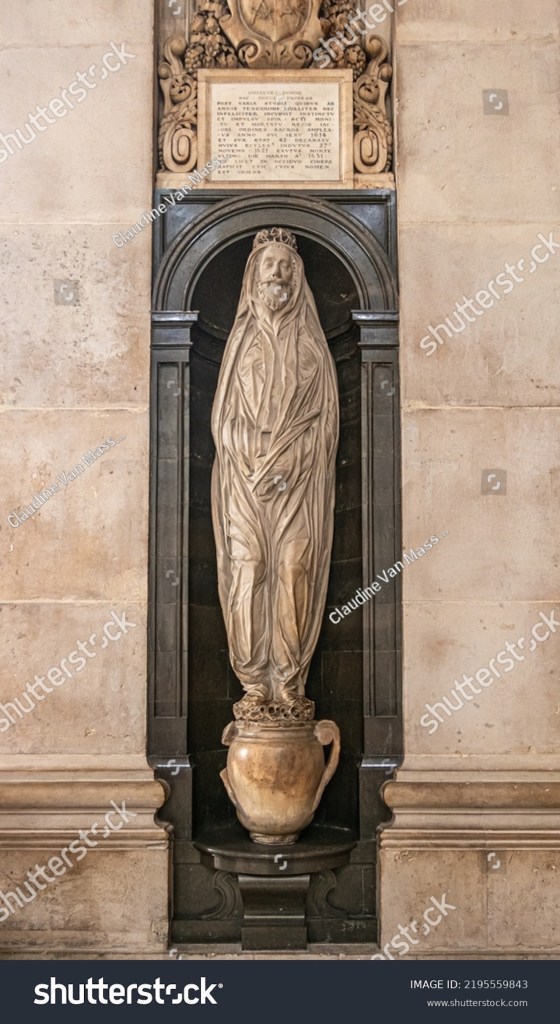
    Image 2:  John Donne Monument Effigy   Wenceslaus Hollar – National Portrait Gallery, London


    Renunciation of Catholics

    Although Donne had renounced Catholicism, King James insisted that Donne could receive no government employment unless it was church related.  Donne had continued to refuse to take Anglican orders.   However, in 1615, Donne finally entered the ministry and accepted the post of Royal Chaplain.

    After completing the doctorate in divinity, he was appointed to the post of Reader in Divinity at Lincoln’s Inn.   Donne’s elaborate style of oratory filled with spiritual metaphors and other religious symbols earned for him the reputation as one of the greatest ministers of that period.

    Although Donne had also practiced law for several years, his family had remained living at the substance level.  Then after he accepted the position of Royal Chaplain, life for the Donnes seemed to be improving [4].

    Anne’s Death

    However, tragedy struck the family when Anne at age 33 died on August 15, 1617, after giving birth to their twelfth child, who was stillborn.  Only seven of the couple’s children survived. The poet mourned his wife’s death in Holy Sonnet XVII: “Since she whom I lov’d hath paid her last debt.”

    According to Donne’s most important biographer and friend Izaak Walton [5], after Anne’s death Donne became “crucified to the world.”  Although Donne continued to compose his poems, he focused entirely upon the theme of spirituality and the search for meaning.

    Poems and Faith

    John Donne is often grouped with the Metaphysical poets.  However, according to T. S. Eliot, Donne’s poems along with other Metaphysicals such as Henry Vaughan, George Herbert,  and Andrew  Marvell do not, in fact, possess the attributes of the metaphysical label any “more than other serious poets” [6].

    The death of John Donn’e wife Anne exerted a strong influence on his poetic achievement.    He started composing his poems of faith, collected in The Holy Sonnets, including Hymn to God the Father,” “Batter my heart, three-person’d God,” and “Death, be not proud, though some have called thee”—three of the most widely anthologized holy sonnets.

    Donne also composed a collection of private meditations, published in 1624 as Devotions upon Emergent Occasions.   His collection of private meditations, a classic spiritual work, features “Meditation 17,” from which two of his most famous quotations have been taken:  “No man is an island” and “Therefore, send not to know  / For whom the bell tolls, / It tolls for thee.”

    In 1621, Donne was appointed Dean of St. Paul’s, and in 1624, he took up the position as vicar of St Dunstan’s-in-the-West [7],where he continued to serve as a minister until his death on March 31, 1631.   Interestingly, a mythology has grown up around the claim that he preached his own funeral sermon “Death’s Duel” only a few weeks before his death.

    Sources

    [1]  Anniina Jokinen.  “The Life of John Donne.”  Luminarium.  Accessed February 18, 2023.

    [2]  Editors.  “John Donne.”  Academy of American Poets.  Accessed February 18, 2023.

    [3]  Editors.  “Who Was John Donne?”  Biography.  Last Updated: November 12, 2021.

    [4]  Editors.  “John Donne – Biography.”  HumanitiesWeb.org.  Updated:  October 28, 2012.

    [5]  Izaak Walton.  The Life of Dr. John Donne.” Anglican History:  Project Canterbury.  Accessed February 18, 2023.

    [6] T. S. Eliot.  “Review of Metaphysical Lyrics and Poems of the Seventeenth Century: Donne to Butler.”  University of Wyoming.  Accessed February 23, 2023.

    [7] Editors.  “John Donne in the Archives.” City of London.  Date updated: May 15, 2022.

    Commentaries on Poems by John Donne

    1. Holy Sonnets 1—19
    2. The Apparition
    3. The Flea

    Reading of “Death’s Duel” 

    Image 3:  John Donne Luminarium