Linda's Literary Home

Tag: miracles

  • Walt Whitman’s “Miracles”

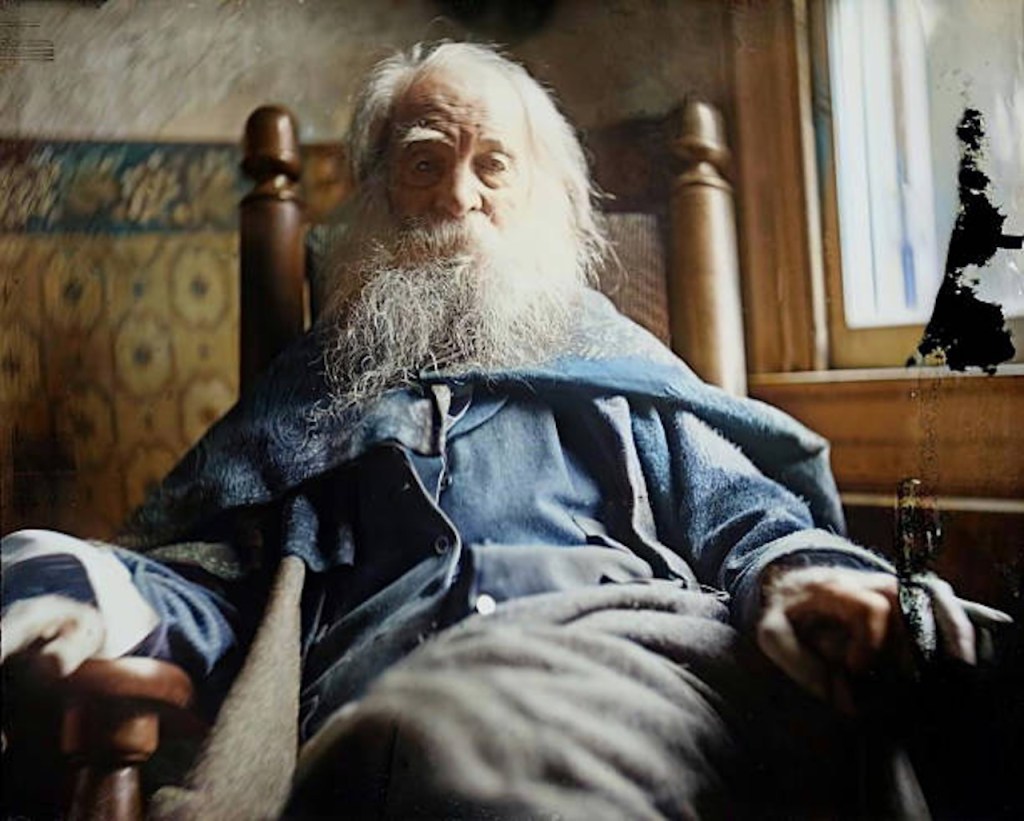
    Walt Whitman in Camden, N.J., c. 1891. (Colorised black and white print). Creator: Thomas Eakins. (Photo by Heritage Art/Heritage Images via Getty Images)
    Image: Walt Whitman in Camden, N.J., c. 1891. (Colorised black and white print). Creator: Thomas Eakins. (Photo by Heritage Art/Heritage Images via Getty Images)

    Walt Whitman’s “Miracles”

    In Walt Whitman’s “Miracles,” the speaker catalogues all the miracles he finds as he goes through life, concluding that he has encountered nothing but miracles.

    Introduction and Text of “Miracles”

    Walt Whitman’s “Miracles” consists of three versagraphs. (Please note: “Versagraph” is a term I coined; it is the conflation of “verse paragraph,” the primary unit of free verse poetry.) 

    The first versagraph features a long catalogue for which Whitman is noted, in which he begin his display of miracles. The second reinforces his notion that everything in creation is a miracle, and the third takes special note of the miracle of the ocean.

    The poem begins and ends with a question that rhetorically, as usual, answers itself. The speaker wishes to assert and defend the idea that all aspects of creation are, in fact, miracles, not just the so-called supernatural events that are often touted as miraculous.  

    The speaker intuits that anything that seems supernatural is merely not yet understood. By claiming that everything from a fish to a man is a miracle, he transcends the mundane notion that divides humanity as it strives to discern what is holy and what is not.

    Miracles 

    Why! who makes much of a miracle?
    As to me, I know of nothing else but miracles,
    Whether I walk the streets of Manhattan,
    Or dart my sight over the roofs of houses toward the sky,
    Or wade with naked feet along the beach, just in the edge of the water,
    Or stand under trees in the woods,
    Or talk by day with any one I love—or sleep in the bed at night with any one I love,
    Or sit at table at dinner with my mother,
    Or look at strangers opposite me riding in the car,
    Or watch honey-bees busy around the hive, of a summer forenoon,
    Or animals feeding in the fields,
    Or birds—or the wonderfulness of insects in the air,
    Or the wonderfulness of the sun-down—or of stars shining so quiet and bright,
    Or the exquisite, delicate, thin curve of the new moon in spring;
    Or whether I go among those I like best, and that like me best—mechanics, boatmen, farmers,
    Or among the savans—or to the soiree—or to the opera,
    Or stand a long while looking at the movements of machinery,
    Or behold children at their sports,
    Or the admirable sight of the perfect old man, or the perfect old woman,
    Or the sick in hospitals, or the dead carried to burial,
    Or my own eyes and figure in the glass;
    These, with the rest, one and all, are to me miracles,
    The whole referring—yet each distinct, and in its place.

    To me, every hour of the light and dark is a miracle,
    Every cubic inch of space is a miracle,
    Every square yard of the surface of the earth is spread with the same,  
    Every foot of the interior swarms with the same;
    Every spear of grass—the frames, limbs, organs, of men and women, and all that concerns them,  
    All these to me are unspeakably perfect miracles.

    To me the sea is a continual miracle;  
    The fishes that swim—the rocks—the motion of the waves—the ships, with men in them,
    What stranger miracles are there?

    Commentary on “Miracles”

    Whitman’s speaker in “Miracle” is cataloguing all the miracles he finds as he goes through life, concluding that he has encountered nothing but miracles.

    First Versagraph:   The Supernatural

    Why! who makes much of a miracle?
    As to me, I know of nothing else but miracles,
    Whether I walk the streets of Manhattan,
    Or dart my sight over the roofs of houses toward the sky,
    Or wade with naked feet along the beach, just in the edge of the water,
    Or stand under trees in the woods,
    Or talk by day with any one I love—or sleep in the bed at night with any one I love,
    Or sit at table at dinner with my mother,
    Or look at strangers opposite me riding in the car,
    Or watch honey-bees busy around the hive, of a summer forenoon,
    Or animals feeding in the fields,
    Or birds—or the wonderfulness of insects in the air,
    Or the wonderfulness of the sun-down—or of stars shining so quiet and bright,
    Or the exquisite, delicate, thin curve of the new moon in spring;
    Or whether I go among those I like best, and that like me best—mechanics, boatmen, farmers,
    Or among the savans—or to the soiree—or to the opera,
    Or stand a long while looking at the movements of machinery,
    Or behold children at their sports,
    Or the admirable sight of the perfect old man, or the perfect old woman,
    Or the sick in hospitals, or the dead carried to burial,
    Or my own eyes and figure in the glass;
    These, with the rest, one and all, are to me miracles,
    The whole referring—yet each distinct, and in its place.

    The speaker begins with an exclamation, “Why!,” that implies that he has just heard someone remark about some possible supernatural event that is being touted as a miracle. He then asks the question, “who makes much of a miracle?” The question is merely rhetorical because the speaker continues to answer his own question.  

    The speaker avers that he is not aware that there is anything in existence that is not a miracle, and he then begins a long catalogue of things he claims are miracles. It does not matter, he asserts, “whether he is walk[ing] the streets of Manhattan or merely looking toward the sky,” all he sees are miracles.

    When he wades “with bare feet along the beach and stand[s] under trees in the woods,” he perceives these acts as part of the great miracle. “Sit[ting] at table at dinner with [his] mother, seeing strangers opposite [him] riding the car, watching bees and animals feeding in the fields, or birds and insects”— all these events portend the miraculous for this speaker. 

     This speaker also finds miracles in the sun-down and the stars shining so quiet and bright, as well as the delicate, thin curve of the new moon in spring. Whether he associates with mechanics, boatmen, farmers or the fancy people who attend the opera, he still perceives all these people to be part of the great dramatic miracle of life.

    He also finds miracles in the movements of machinery and children at their sports. He admires the perfect old man, or the perfect old woman. Even sick people in hospitals, and the deceased headed for burial, he finds miraculous. When he views his own reflection in the mirror, he finds his own eyes and figure to be miracles.  

    The speaker finalizes his long catalogue by asserting that these things and even all those things he has not named are “one and all to me miracles.” Each miracle reflects the whole as it occupies its own space.

    Second Versagraph:  A Pantheistic View

    To me, every hour of the light and dark is a miracle,
    Every cubic inch of space is a miracle,
    Every square yard of the surface of the earth is spread with the same,  
    Every foot of the interior swarms with the same;
    Every spear of grass—the frames, limbs, organs, of men and women, and all that concerns them,  
    All these to me are unspeakably perfect miracles.

    The speaker then claims that both day and night are miracles, along with every inch of space. He emphasizes, “[e]very square yard of the surface of the earth is spread with the same.”  From the soil, to the grass, to bodies of all men and women, he finds “[a]ll these to me are unspeakably perfect miracles.”

    Third Versagraph:  The Miracle of the Ocean

    To me the sea is a continual miracle;  
    The fishes that swim—the rocks—the motion of the waves—the ships, with men in them,
    What stranger miracles are there?

    Almost as an afterthought the speaker asserts that to him the sea is a continual miracle with swimming fish, its rocks, the waves, and the ships that have men in them.  The speaker concludes with his final question: “What stranger miracles are there?” Of course, the answer is, none.

    Image d: Walt Whitman Commemorative Stamp http://usstampgallery.com/view.php?id=1b75f1a8ff3bff3ef7a72c6935c3d01a94da8969&Walt_Whitman
    Image: Walt Whitman – Commemorative Stamp
  • Emily Dickinson’s “There’s a certain Slant of light”

    Image: Emily Dickinson - Amherst College - Daguerrotype of the poet at age 17, circa 1847 - likely the only authentic, extant likeness of the poet
    Image: Emily Dickinson – Amherst College – Daguerrotype of the poet at age 17, circa 1847 – likely the only authentic, extant likeness of the poet

    Emily Dickinson’s “There’s a certain Slant of light”

    Dickinson closely observed and investigated her surroundings; she also keenly examined her own feelings then dramatized those feelings in poems.  In “There’s a certain Slant of light,” her speaker is infusing melancholy into her perception of light streaming through a window on a winter afternoon.

    Introduction with Text of “There’s a certain Slant of light”

    Emily Dickinson developed the habit of closely observing as she investigated her surroundings.  The poet then keenly examined and mused upon her own feelings, finally dramatizing those feelings in poems.

    The poet created this speaker in “There’s a certain Slant of light” to reveal a mood of slight melancholy as she muses on a shaft of light streaming in through her window on a winter afternoon.  

    That streaming light through the window seems to tip and tilt, that is, “slant,” in a way that causes the speaker to undergo that sense of melancholy, which is no ordinary gloom but brings with it a spiritual aspect. 

    The speaker creates a little drama based on her intense feeling of spiritual intuition which has been motivated by a simple “Slant of light” streaming in through the window on a cold, winter afternoon.

    There’s a certain Slant of light

    There’s a certain Slant of light,
    Winter Afternoons –
    That oppresses, like the Heft
    Of Cathedral Tunes –

    Heavenly Hurt, it gives us –
    We can find no scar,
    But internal difference,
    Where the Meanings, are –

    None may teach it – Any –
    ‘Tis the Seal Despair –
    An imperial affliction
    Sent us of the air –

    When it comes, the Landscape listens –
    Shadows – hold their breath –
    When it goes, ’tis like the Distance
    On the look of Death –

    Reading of “There’s a certain Slant of light” 

    Commentary on “There’s a certain Slant of light”

    A simple viewing of a shaft of light streaming into the room on a winter day engenders in this speaker a melancholy prompting this little drama.  The spiritual experience thus is rendered in paradox—the ultimate literary device for communicating the ineffable.

    First Stanza:  The Oppression of Tilting Light

    There’s a certain Slant of light,
    Winter Afternoons –
    That oppresses, like the Heft
    Of Cathedral Tunes –

    The speaker begins the drama by asserting that on certain winter afternoons the light shining in through her window comes in at a “certain Slant” and that tilting light “oppresses” her in the way the heavy tones of sacred chants might do. Although light is weightless, to the speaker in this particular mood, it seems heavy enough to oppress her into melancholy.

    A paradox results from the speaker finding the “light” to be as heavy as church music.  Music experienced in church is meant to uplift, not weigh one down.  If something that is meant to uplift does the opposite, then one has to explore the reasons for such oppression.  Why would music that ordinarily produces a spiritual upliftment become an instrument of oppression—that is, something that is heavy?

    Second Stanza:  The Human Craving for Meaning

    Heavenly Hurt, it gives us –
    We can find no scar,
    But internal difference,
    Where the Meanings, are –

    The deeply inspiring sound of “Cathedral Tunes” brings the speaker to a place of “Heavenly Hurt.”  Again, she paradoxically describes her experience:  Heaven is a spiritual place where there is no hurt, no pain, no distress, no oppression—only bliss. 

    The speaker confirms as much as she avers that this “hurt” never results in a “scar.”  And it also leaves no physical mark such as scar because this melancholy is inside of the speaker; it is her soul that has engaged with this music, this light, that has caused this spiritual experience.

    The speaker employs the term, “Meaning”—all human beings on all levels of awareness crave meaning in their lives, and the speaker has become aware of the meaning of an inner life that is more important than the corporeal.  True meaning come from the soul not from the body that changes and dies, nor from the mind that knows nothing but change.

    Third Stanza:  Soul Meaning

    None may teach it – Any –
    ‘Tis the Seal Despair –
    An imperial affliction
    Sent us of the air –

    The speaker then affirms that one cannot be taught this kind of soul meaning. The mystical state of the desire for meaning comes on one unbidden, as casually as taking a breath. “Despair” of the material world often leads one to ask the question, is this all there is to life?

    But the individual becomes a seeker after she begins to entertain such questions.  Divine cravings may be prompted by any outward experience such as light tilting in through a window, but those cravings for spiritual reality can be satisfied only through soul-union, which is Divine Awareness.  The melancholy of spiritual desire is a first step to that Ultimate Awareness.

    Fourth Stanza:  The Nature of Reality

    When it comes, the Landscape listens –
    Shadows – hold their breath –
    When it goes, ’tis like the Distance
    On the look of Death – 

    After the strong spiritual desire for meaning, that is, comprehending the nature of Reality approaches the sensibility of the individual, that individual wished to cease the flux of all phenomena in order to listen—”be still and know that I am God” (KJV, Psalm 46:10).

    This speaker creates her drama by asserting that “Shadows  – hold their breath.”  Shadows holding their breath suggests a depth of quietness that is nearly unfathomable.  A miraculous awareness engulfs the speaker.

    The speaker has discovered that this “heavenly hurt,” this spiritual melancholy, transforms itself into the light of understanding.  Death loses its grip and meaning after such a level of awareness is achieved, no longer grasping the heart and mind of the individual.  

    After death has become merely a distant force, the spiritual aspirant sees more clearly all other forces that operate in her sphere.  The speaker has thus reached that inner Goal.  Death is beaten and given its place to Awareness. 

    The Science and Symbolism of Light

    That a simple “Slant of light” should engender a deep mystic state of awareness in this speaker is quite apt.  Regarding the nature of light, in his spiritual classic, Autobiography of a Yogi [1], Paramahansa Yogananda has explained that the material universe is composed of light.  Many modern discoveries have revealed to humanity that the cosmos is composed of various expressions of one power—light—guided by Divine Intelligence.

    Paramahansa Yogananda has also explained that only differing rates of vibration account for the differing forms that exist throughout the cosmos:

    Modern science has shown that everything in the universe is composed of energy (light), and that the apparent differentiation between solids, liquids, gases, sound, and light is merely a difference in their vibratory rates.

    Also in his autobiography, Paramahansa Yogananda has explained in detail the nature of light, comparing it to other “waves”:

    Among the trillion mysteries of the cosmos, the most phenomenal is light. Unlike sound waves, whose transmission requires air or other material media, light waves pass freely through the vacuum of interstellar space. Even the hypothetical ether, held as the interplanetary medium of light in the undulatory theory, may be discarded on the Einsteinian grounds that the geometrical properties of space render unnecessary a theory of ether. Under either hypothesis, light remains the most subtle, the freest from material dependence, of any natural manifestation.

    The individual who has achieved the realization that “the essence of creation is light” is thus capable of operating the law of miracles.  The term miracle simply applies to any phenomenon whose operation science [2] has yet to discover.  

    What the soul knows through intuition will always be running miles and years ahead of what physical science [3] knows because physical science can explore and examine only the created cosmos not the Creator of that cosmos.  The soul, however, being a spark of the Creator, knows all that the Creator knows—either in fact or in potential.

    Emily Dickinson’s employment of light in this poem thus results from her deep intuitive awareness that light is the building substance of the cosmos.  Therefore, “light” becomes a symbol for that intuition that would continue to guide the poet as she continued to create her  mystical, metaphysical, metaphorical “garden” of poetry.

    Sources

    [1]  Paramahansa Yogananda.  Autobiography of a Yogi.  Self-Realization Fellowship.  Accessed June 3, 2026.
    [2]  Ard Louis.  “Miracles and Science: The Long Shadow of David Hume.”  The BioLogos Foundation.  March 12, 2018.
    [3]  Lisa Zyga.  “Quantum Mysticism: Gone but Not Forgotten.” Phys.org.  June 8, 2009.