In addition to poetry, James Weldon Johnson also composed many songs that have become popular. His bluesy poem/song “Sence You Went Away” features a southern dialect and captures the melancholy that surrounds the individual who has lost a loved one.
Introduction and Text “Sence You Went Away”
James Weldon Johnson’s “Sence You Went Away” creates a speaker/singer who bemoans the loss of a loved one. The poem/song consists of four stanzas, each with the rime scheme AAAB, wherein the final line constitutes the refrain in which the speaker reveals the reason for his melancholy.
The repetition of “seems lak to me” and “sence you went away” emphasizes the pain and sorrow the speaker is experiencing. The refrain becomes a chant-like repetition as he progresses through his report of all that is making him sad. And he is addressing his expressions of sorrow to the individual, who is now absent from his life.
As a poem this works quite well, and as a song it works even more nicely. The poem/song’s use of dialect gives it an authenticity that increases the communication of pain and sorrow. The speaker/singer incorporates and inflicts his sorrow on the world around him, while at the same time making it clear that these transformations are happening within himself.
Sence You Went Away
Seems lak to me de stars don’t shine so bright, Seems lak to me de sun done loss his light, Seems lak to me der’s nothin’ goin’ right, Sence you went away.
Seems lak to me de sky ain’t half so blue, Seems lak to me dat eve’ything wants you, Seems lak to me I don’t know what to do, Sence you went away.
Seems lak to me dat eve’ything is wrong, Seems lak to me de day’s jes twice ez long, Seems lak to me de bird’s forgot his song, Sence you went away.
Seems lak to me I jes can’t he’p but sigh, Seems lak to me ma th’oat keeps gittin’ dry, Seems lak to me a tear stays in ma eye, Sence you went away.
Commentary on “Sence You Went Away”
James Weldon Johnson, an accomplished poet, also composed many songs that have become quite popular. His bluesy “Sence You Went Away” features a southern dialect. Johnson was a Southerner, having been born in 1871 and raised in Jacksonville, Florida, only relocating to New York in 1901.
First Stanza: Expressing Sorrow
Seems lak to me de stars don’t shine so bright, Seems lak to me de sun done loss his light, Seems lak to me der’s nothin’ goin’ right, Sence you went away.
The speaker is addressing an individual, who is likely a former lover or very good friend. The speaker expresses his sorrow by reporting that both the sun and stars do not seem to be shedding light now because of the absence of the addressee. The reader/listener learns nothing about the person who has gone away, only that the speaker’s life has been adversely affected by the loved one’s absence.
Not only do the speaker’s eyes seem no longer to perceive light, but he also feels that nothing in his life is proceeding correctly. He makes it clear that he is not asserting that the world itself has changed; he is merely revealing how things “seem” to him as he repeats throughout the poem, “seems lak to me,” that is, “seems like to me.”
Second Stanza: Absence of Sun
Seems lak to me de sky ain’t half so blue, Seems lak to me dat eve’ything wants you, Seems lak to me I don’t know what to do, Sence you went away.
The absence of sun and starlight affect the shade of the blue sky, which is now presenting itself as only “half” its normal shade. Everything reminds him that he is missing his belovèd. It even appears that everything he sees and does yearns to have this individual back in its purview.
The speaker’s intense exaggeration emphasizes his desire for the return of his missing loved one. Everywhere he looks he sees merely an absence that causes him pain and suffering. He even confesses that he feels unable to decide what he should be doing, if anything at all.
Third Stanza: Nothing Is Right
Seems lak to me dat eve’ything is wrong, Seems lak to me de day’s jes twice ez long, Seems lak to me de bird’s forgot his song, Sence you went away.
Again, the speaker/singer asserts that nothing seems right for him anymore; thus, he feels that “ev’ything is wrong.” And he reveals that time seems to lag because of his sorrow. Pain and suffering cause the human mind and heart to feel time as an oppressor, and that kind of oppression makes minutes seem like hours and days like weeks.
Nature in the form of singing birds is lost on him, and he thus suggests that those birds have even forgotten to sings. His melancholy grays out all of his senses, especially seeing and hearing. Life has lost its luster, light has escaped him, and even pleasant sounds are no longer detectable. And still again, he repeats the reason for his feeling that everything is so wrong in his life.
Fourth Stanza: Fog of Sorrow
Seems lak to me I jes can’t he’p but sigh, Seems lak to me ma th’oat keeps gittin’ dry, Seems lak to me a tear stays in ma eye, Sence you went away.
Finally, the speaker reveals his own behavior has been influenced by the sad fact that the addressee has gone away. He cannot seem to stop sighing, and his throat dries up. He also continue to weep, as he endures the pain of loss.
His physical functions are out of kilter: what needs to be wet is dry, and what needs to be dry is wet. The speaker’s world has transformed into a melancholy fog of sorrow and disorientation—all because his belovèd has gone away.
Kris Delmhorst’s Musical Version of Johnson’s Lyric
There are extant several different musical versions of James Weldon Johnson’s lyric “Sence You Went Away.” I suggest that Kris Delmhorst’s rendition fits perfectly with the sentiment and atmosphere of that lyric. While the other versions are entertaining and well-done, Delmhorst’s version and her singing remain the best in accomplishing the task of capturing the exact feeling of Johnson’s lyric.
Kris Delmhorst singing her version of Johnson’s “Sense You Went Away”
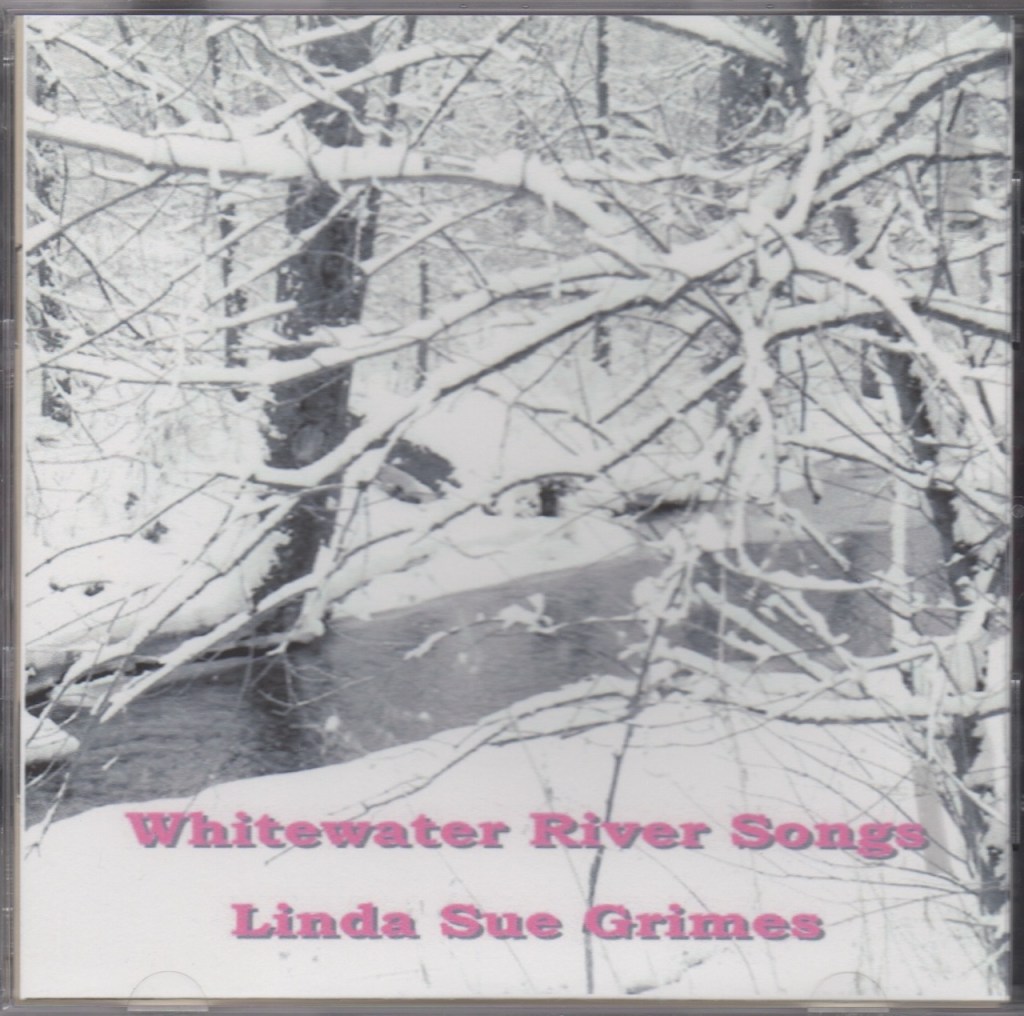
Image: “Whitewater River Songs – Album Cover” Photo by Ron W. G.
Original Song: “River Spirit” and Prose Commentary
I wrote “River Spirit” circa 1980 then made a homemade recording of it around 20 around 2004. In 2023, my husband Ron—whom I call “My Sweet Ron”—created the video featuring his own photos and videos selections along with the song.
Introduction to and Lyric of “River Spirit”
The lyric of “River Spirit” plays out in four stanzas of tercets, with one couplet appearing as the second stanza. It sports no traditional rime-scheme but does offer one set of perfect rime in “hand/sand” in the second and third lines. Other slant—or more accurately ghost rimes—appear in “water/before” in the couplet.
Ghost rimes also make an appearance with “bed/edge” and “changes/images.” The time frame begins in spring, as the singer begins to report what she sees along the river after the cold hard season of winter has given way to the warmth of spring.
The theme of the song is the mystery the singer feels at seeing that the landscape along the river has been radically transformed from what she had observed during the summer before this transforming winter had its sway. The singer poses questions about how the trees got uprooted and the path along the river has shifted, as even the stones are taking on new patterns.
The singer then announces what she had thought to be the agent of the transformations; however, she is ultimately revealing—in the title—that what she “guessed” back in the day, she now knows to be the work of the Divine Reality, the “River Spirit”—or God (see “Names for the Ineffable God”).
(Please note: Dr. Samuel Johnson introduced the form “rhyme” into English in the 18th century, mistakenly thinking that the term was a Greek derivative of “rythmos.” Thus “rhyme” is an etymological error. For my explanation for using only the original form “rime,” please see “Rime vs Rhyme: Dr. Samuel Johnson’s Error.”)
River Spirit
Every spring along the Whitewater River I saw that some mysterious hand Had rearranged the rocks and sand.
The path I followed the summer before Was slipping off into the water. I could not figure out whose force Could drive that water among the reeds & shift the river in its bed
Whose muscles uprooted those trees? Whose fingers patterned those stones Along the edge?
I guessed only that the spring thaw Conjured up the changes In those sleeping river images.
Commentary on “River Spirit”
The time frame is spring, as the singer begins to muse on what she observes along the river after the cold, hard season of winter has given way to the warmth of spring. Her earlier guess about that riverbank rearrangement has now become an article of faith, and she proclaims in the title the answer to her earlier inquiry.
First Movement: The Hand of Mystery
Every spring along the Whitewater River I saw that some mysterious hand Had rearranged the rocks and sand.
The singing narrator launches right into her story by making the claim that she observed a change in the pattern of stones and sand along the river’s edge, and she make this observation “every spring.” She had thus a recollection of having experiences these changes many times.
She colorfully attributes those rearrangements to “some mysterious hand.” At this point, it may sound a bit odd that a river walker would think a hand had been involved in what went on along the riverbank in her absence.
Second Movement: River Features Shifting
The path I followed the summer before Was slipping off into the water.
After setting the stage for mystery and rearrangement of river features, the singer offers a very specific change. She had walk along a path during the preceding summer, and now that path simply veered off into the river water. Such a change would likely be quite jarring for the hiker, who would necessarily be obliged to alter her walking pattern.
Third Movement: Puzzling over the Changes
I could not figure out whose force Could drive that water among the reeds & shift the river in its bed
The singer now inserts her puzzlement. She becomes curious as to how such changes could have occurred. She sees that the river has now shifted its course, plunging into the reeds along the bank.
The mere fact of the river shifting “in its bed” seems Herculean in prospect. The river is such a large body of moving water that the notion of it shifting surely requires a force that strikes the singer an unimaginable at this point.
Fourth Movement: Who Made Those Changes?
Whose muscles uprooted those trees? Whose fingers patterned those stones Along the edge?
The singer then again adds more specificity to her inquiry. She sees that trees have been “uprooted,” and she observes that the stones along the river’s edge have been rearranged in a different pattern from the summer before.
Again, she colorfully attributes those “changes” to a seemingly human agency of “muscles” and “fingers.” But behind those specific agents must lie some metaphysical force that at this point the singer cannot name, cannot even offer a guess about.
Fifth Movement: Guessing at the Conjuring
I guessed only that the spring thaw Conjured up the changes In those sleeping river images.
Now the singer offers what she thought to be an answer to her inquiry: Well, it was likely that not any hands, muscles, or fingers enforced all of these changes; it was simply the process of thawing out from the ice during the warming movements brought on by spring.
Sure, that’s it: the spring movements of thawing influenced those inert river features to alter themselves into differing patterns from the summer before. What else could it be? But the singer is understating what she really believes now. She “guessed” about the “spring thaw”—but that was then, this is now.
Thus the singer through anthropomorphic images of hands, muscles, fingers has proclaimed that a humanlike power has, in fact, mades these changes. Not an actual human being on its own however. But some power that retains in its Being the image of the human form, power, and ingenuity.
Simply, the title of the lyric has already stated what the singer pretends to guess about as she unfurls the song: God (as the “River Spirit”) has performed His magic on these “sleeping river images.” God has “conjured up” those alterations in those river images as they moved from a frozen, winter sleep to vital spring time awakening.
Original Song: “These Letters” with Prose Commentary
My original song “These Letters” is a rather uncategorizable love song: it does not exactly fit into the lost love category, nor does it fit into the romantic, idealism of most love songs.
Introduction and Lyric of “These Letters”
The singer and the individual addressed in the song have apparently had a friendly, loving relationship in the past—even likely lived together experiencing the life that the singer suggests with images in the song. However, the addressee at the time of the song remains at some distance from the singer. The fact that they have been exchanging letters reveals that a spacial distance exists between the two parties.
The singer does not reveal the reason for the two being apart, but the fact that she hopes the addressee will return to her leaves open the question for the addressee’s departure and even whether the addressee will ever return. The singer expresses the wish and hope that the addressee will return, and by that expression of that wish/hope, she is implying that the addressee many not ever return.
Interestingly, the mention of being “far apart” is not clear that the singer is referring only to distance in miles, but it is obvious that a spacial distance exists because of the very title of the song. The song cannot be considered a “lost love” song because the singer expresses her love for the distant individual and that she hopes the addressee will return to her. Whether the two reunite remains a mystery because the theme of the song is simply that letters are not sufficient to maintain a close relationship.
These Letters
First Verse
Here I sit with knitting needles Winter drawing near. Mind on fire with old desire Wishing you were here. So I’ll make this sweater To send to you With the love that’s in my heart And I’ll tell you that I long for you ‘Cause we’re so far apart.
Second Verse
The wine in the cellar gets better and better. I wish you could taste some with me. I try not to show The young plants as they grow How empty and sad I can be. The tomato vines hung so full this year I wish you had been here to see. I’ll send you some pictures and strawberry jam And my hopes that you’ll come back to me.
Chorus
These letters can’t take your place, my Love. I hope that you come back to me. No, these letters can’t take your place, my Love. I hope that you come back to me.
Commentary on “These Letters”
Because the title of the song is “These Letters,” the singer is placing great emphasis on that form of writing. But she is letting the recipient of her letters know that she finds such correspondence insufficient to maintain their relationship. While letters cannot take the place of the missing individual, she singer adds her hope their the addressee will return to their her and their life together.
First Verse: A Distant Relationship
Here I sit with knitting needles Winter drawing near. Mind on fire with old desire Wishing you were here. So I’ll make this sweater To send to you With the love that’s in my heart And I’ll tell you that I long for you ‘Cause we’re so far apart.
The singer begins by noting where she is and suggesting what she is doing: she is sitting somewhere, likely in her home, with a pair of “knitting needles.” She then alerts the addressee and her listeners to the fact that the winter season is coming soon.
The fact that the coldest season is nearly upon her prompts her to reveal the reason for her sitting with knitting needles: she is knitting a sweater for the individual, whom she is addressing in the song. She then tells the individual that she is sending the sweater to him/her. She adds the unexpected element that she will also be sending love the person.
Love resides in her heart for the person she is addressing, and she wishes they were not “so far apart.” She reports that she will tell the individual that she “long[s] for [the individual]” because of the vast separation.
Second Verse: Hopes for Return
The wine in the cellar gets better and better. I wish you could taste some with me. I try not to show The young plants as they grow How empty and sad I can be. The tomato vines hung so full this year I wish you had been here to see. I’ll send you some pictures and strawberry jam And my hopes that you’ll come back to me.
The singer then reveals that she and the individual whom she is addressing have made wine together. Their wine gets “better and better” as it rests in the cellar. This set of imagery “wine” and “cellar” implies that the singer and the individual reside in the country, in a bucolic setting as opposed to city living, where cellars are not common, nor is wine-making.
More evidence for the country living is that the singer next mentions the growing of the grapes for the wine, which likely represent other plants that the singer and her friend have formerly grown together.
Now that she and the individual have distance between them, she singer is “empty and sad,” but as the cultivates the garden, she attempts to put on a happier face for the sake of the plants, as plants can be sensitive to the mood of their caretaker.
She then tells her friend that the tomato harvest was especially good this year. And again she expresses the wish that her friend had been there to experience those full-hanging tomato vines. The singer then alerts her friend that she will send the individual pictures—likely images of those garden plants, particularly the tomatoes that grew so abundantly.
In addition to the pictures, she will send “strawberry jam”—another indication that the singer lives out in the country where she has the space to grow strawberries. And again, this singer expresses “hopes”—this time, somewhat more than a mere “wish”—that the individual will return to the singer.
Chorus: What Letters Cannot Do
These letters can’t take your place, my Love. I hope that you come back to me. No, these letters can’t take your place, my Love. I hope that you come back to me.
The chorus which is offered only twice expresses the fact that the two individuals have been exchanging letters. The singer makes her feelings known that letters are not sufficient to maintain the loving relationship that the two had earlier experienced.
The chorus itself even repeats the fact that the letters are not enough. The singer remains hopeful that the now distant former friend and likely housemate will return to her and their life together.
My original song “River of Time” is a hymn to my Divine Belovèd, featuring a chorus that functions as a chant.
Introduction with Text of Lyric “River of Time”
Because music was my first love that I remember from the earliest age, I have always been attracted by the sounds from inspiring music.
I began writing songs seriously around age 32, and I especially enjoy and appreciate my songs that turn into hymns to the Divine Belovèd. “River of Time” is such a hymn.
I am strongly influenced by the Cosmic Chants of my guru (spiritual leader) Paramahansa Yogananda. Many of my original hymns have a chant-like element—a repetition that takes the minds within or bespeaks some spiritual truth for mental awareness.
River of Time
A hymn to my Divine Belovèd
Verse Waiting by the river of time— My beloved keeps His rime In the sunlight that sings in stars The moon will wax in tune
Verse Flowing with the river of time— Do you feel the rhythm that glides As you sing each lingering verse? Your soul will chant in bliss
Verse Once beyond the river of time— Where you seek your ultimate rime, Where you need to battle no more You’ve reached that heavenly shore
Chorus Every moment is light infused Behind the darkness of closed eyes Seek no more for all is here Nothing more to do or fear
Video by Carlene Craig
Commentary on “River of Time”
The singer/seeker/devotee in this hymn does not directly address her Heavenly Father-God. She suggests the target of her report in subtle ways by essentially addresses her own self or soul. She sings to remind herself of her goal of soul- or self-realization, unity with the Divine Belovèd.
First Verse: Existence on the Physical Plane
Waiting by the river of time— My beloved keeps His rime In the sunlight that sings in stars The moon will wax in tune
The singer/devotee exists along a continuum that the human mind and heart often liken metaphorically to a river—a “river of time.” Time seems to flow, meander, going somewhere.
Intuition tells the human mind and heart that the soul is moving as on a flowing body of water to somewhere that must be wonderful.
The beloved who is causing this river to flow displays his wares in light—sunlight and moonlight. Science tells humanity that sunlight is reflected in the stars, and the moon also reflects that important, life-sustaining orb.
The singer/devotee implies that her beloved is a poetic artist because he keeps “His rime” visible in the light of the sun and the moon.
Second Verse: The Rhythm of Soul Bliss
Flowing with the river of time— Do you feel the rhythm that glides As you sing each lingering verse? Your soul will chant in bliss
The singer then states that her soul is, in fact, moving down this metaphorical river. She poses a rhetorical question of her self to ascertain if she is really sensing the rhythmic sway of the music of her verses.
As she sings, she has become aware of her soul flowing into its natural state of “bliss.” The verses that linger in the heart and mind bestow on her a marvelous state of awareness and joy.
Third Verse: Transcending Physical Existence
Once beyond the river of time— Where you seek your ultimate rime, Where you need to battle no more You’ve reached that heavenly shore
The singer then begins to speculate about the existence to be experienced after transcending the physical level of existence, metaphorically named the “river of time.”
Beyond that locus is where the ultimate poetry and music hold sway, where humanity no longer is required to struggle with life’s vicissitudes, trails, and tribulations. Once the soul has become self-realized, it knows only divine joy and love.
Chorus: Moving into the Joy of the Light
Every moment is light infused Behind the darkness of closed eyes Seek no more for all is here Nothing more to do or fear
The singer’s repeated, chant-like chorus is an affirmative statement about what goes on after she closes her eyes to the physical level of existence.
She need not continue searching for she has arrived at the Goal of life. United with the Divine Belovèd, there is nothing that she will ever have to fear.
Video: Whitewater River-Tim Bowman-East Fork of the Whitewater River-near Brownsville IN
Image: Pacific Ocean – August 2015 – Self-Realization Fellowship Meditation Gardens – Encinitas CA – Photo by Ron W. G.
Original Song: “Where You Are” with Prose Commentary
This song “Where You Are” is one of my original compositions. The video accompanying it was created by landscape artist/photographer Ron Grimes.
Introduction and Text of “Where You Are”
My original song “Where You Are”is based on a simple premise: the singer is addressing her Divine Belovèd (God), asserting to the Belovèd the desire to be where the Ultimate Loved One is.
Each verse features rhetorical questions and musings upon the actual location of the Divine Creator. Because the Creator/Father of all creation is both within creation and outside of creation, the answer to all of the rhetorical questions is, naturally, yes.
Nevertheless, being where the Divine Belovèd is cannot be the same situation as being where a human friend or beloved is. Because it seems that God is playing hide and seek with his children, the singer asserts that her soul “soul tugs at the veil hiding You from me.”
Where You Are
First Verse
Are You standing on top of a mountain? Are You sitting beside the vast grave sea? How can I ever approach You? Will You ever just come to me?
Second Verse
Are You speaking to me through my loved ones? Are You quietly whispering through the silver stars? Are You waiting to hear what my songs will sing? Do You listen to the rapid beat of my heart?
Third Verse
If I offer You all in my stillness— If I silently listen to the hum in my mind— If I patiently fast from all my senses— Will You break Your vow of silence and just come to me!
Chorus
Where You are is where I long to be. I cannot understand where else I could seek. My soul tugs at the veil hiding You from me. Where You are is where I long to be.
Video: Linda Sue Grimes performing “Where You Are”
After much questioning, contemplating, and ultimately meditating, the devotee will find that the soul will remove the veil hiding it from the Over-Soul—the soul’s Creator, the Divine Belovèd, or any of the preferred name for the Ineffable (God).
First Verse: “Are You standing on top of a mountain?”
Are You standing on top of a mountain? Are You sitting beside the vast grave sea? How can I ever approach You? Will You ever just come to me?
The singer opens with four rhetorical questions to the Divine Reality. The first two questions reveal earthly locations that are considered sanctuaries of sacredness, holiness, or just ordinary vacation escapes: mountain tops and sea sides.
The next two questions reveal that the devotee is still walking the sacred, devotional path to soul-realization (also known as self-realization or God-realization).
Before final liberation, the devotee experiences the separation from her Goal to be a heavy burden. That burden causes her to wonder if she, in fact, will ever be able to unite with the Creator/Father.
In her melancholy and sorrowful mourning because of the seeming distance, the devotee often wonders if the Lord will ever appear to her and make her know that she is His own child. Will she ever be able to attain the Sacred Goal of self-realization and experience unity with her Belovèd Divine Creator?
Second Verse: “Are You speaking to me through my loved ones?”
Are You speaking to me through my loved ones? Are You quietly whispering through the silver stars? Are You waiting to hear what my songs will sing? Do You listen to the rapid beat of my heart?
In the second verse, the singer/devotee continues with rhetorical questions. Intuiting the answer yet not knowing the fullness of each answer, she inquires of the Divine Belovèd if He is communicating with her through her family and friends.
The singer likely is aware that God is speaking to her through everyone she knows and meets. But without that last step in the process of enlightenment, she does not know exactly what is being said or exactly what all that conversation might ultimately mean to her.
Thus, she also wonders if the One Who fashioned the “silver stars” may be signaling to her through those heavenly entities. Again, she likely knows it to be a fact, but that separation continues to prompt questions.
The singer wonders if Divine Mother anticipates what she sings in her songs. She wonders if her musical worship is reaching its intended Goal.
The singer/devotee often becomes anxious with a rapid heart beat, knowing that that heart beat needs to become calm to achieve stillness. She therefore wonders if the Creator Divine cares to listen to that rapid heart beat. And she wonders if the Ultimate Physician will perform some medical heavenly magic to help her still her rapid heart.
Third Verse: “If I offer You all in my stillness”
If I offer You all in my stillness— If I silently listen to the hum in my mind— If I patiently fast from all my senses— Will You break Your vow of silence and just come to me!
The singer/devotee’s questioning becomes even more intense in the lyric of the final verse. She has shown that she knows that she must still the rapid beat of her heart, but she also must still all of her senses as she offers her every atom to the Divine Essence.
The devotee/singer shows awareness that she must listen the divine hum of the cosmic motor, the sacred AUM (Om) sound that upholds all of creation. She knows that she must remove her attention from worldly things and events and place that attention upon the locus beyond the senses, where the soul resides.
The singer/devotee remains certain that after she is able to accomplish all that is implied in her questions and musings, the Divine Belovèd Presence will, in fact, “break [that] vow of silence and [ ] come to [her].”
Chorus: “Where You are is where I long to be”
Where You are is where I long to be. I cannot understand where else I could seek. My soul tugs at the veil hiding You from me. Where You are is where I long to be.
The chorus, instead of offering mere rhetorical questions and musings, makes an affirmative statement: the singer asserts that she wants to be where her Divine Beloved is. She reveals her intuition that she cannot find love, peace, fulfillment on the physical, earthly plane.
The singer/devotee insists that her soul is attempting to rend the cloth of separation from the Divine, as it “tugs at the veil” that keeps her from uniting with the Creator Belovèd.
The final line emphasizes as it repeats the important desire: “Where You are is where I long to be.” The importance of the chorus is demonstrated by its repetition after every verse.
Original Song: “The Paper Mill Bridge Song” with Prose Commentary
My original song “The Paper Mill Bridge Song” was inspired by the beautiful Whitewater River in Indiana and its relationship to the beautiful relationship I have enjoyed for over half a century with my wonderful husband, native of the little town of Brookville, Indiana.
Introduction and Excerpt from “The Paper Mill Bridge Song”
My husband, landscape artist Ron Grimes, created the video featured in this article to accompany my original song “The Paper Mill Bridge Song.” He wrote the following introduction to the piece and placed his video on YouTube:
A celebration of life and love as witnessed by the Paper Mill Bridge over the Whitewater River in Brookville, Indiana.
September 10th, 2022. Linda and I walked to the middle of the new Papermill Bridge. I wanted to capture some scenes for this video. As soon as I started videoing, this Canada Goose flew right over us and honked as it if it were saying, “I want to be in your video.” It was a gift.
Innovative Chorus
The song undergoes an unusual arrangement; instead of an ordinary chorus, it features an middle octave which behaves as a second octave and chorus that gets repeated at a the end of the song.
The Paper Mill Bridge Song
Here’s where people paddle canoes Down the Whitewater River. I stand here on Paper Mill Bridge. Watch the water and remember The day we walked along the bank, Sand so warm to my feet. We talked about cattails, rocks, and stars And the moss that grows on old trees.
These are the things that fill my day, Things we’ve done together. Sunshine streaming down through the leaves, A storm in the clouds or snow in the fields. River water runs through my veins. The stars light up my eyes. Love for you turns in my heart Like the sun burns through the sky.
Through the years my heart has filled With love for this old river. I stand here on Paper Mill Bridge. Watch the water and remember The day we paddled down the stream, A cool breeze on my shoulders. The sun shone bright over Paper Mill Bridge And I knew I’d love you forever.
These are the things that fill my day, Things we’ve done together. Sunshine streaming down through the leaves, A storm in the clouds or snow in the fields. River water runs through my veins. The stars light up my eyes. Love for you turns in my heart Like the sun burns through the sky.
My original song—”The Paper Mill Bridge Song”—focuses on one relationship that progresses from good friends to life partner. In the opening verse, the friends experience a quiet walk and talk along the river. In the final verse, the life relationship is solidified.
First Octave/Verse: The View from the Bridge
Here’s where people paddle canoes Down the Whitewater River. I stand here on Paper Mill Bridge. Watch the water and remember The day we walked along the bank, Sand so warm to my feet. We talked about cattails, rocks, and stars And the moss that grows on old trees
The singing narrator is standing on a bridge, which turns out to be the subject of the song, the Paper Mill Bridge. She begins to report on the activities that are locally common to that bridge. The bridge spans the Whitewater River—a river in mideastern to southern Indiana—and from its perch one can from time to time see canoers paddling their barks down the river.
The narrator then focuses on a memory that is important to her regarding her hike along the riverbank with a friend. During that pleasant stroll, the two friends casually conversed about river-related entities such as water reeds that look like “cattails” and other features of nature such a “rocks and stars.”
The narrator recalls that her feet enjoyed the luxury of the warm sand. They also held forth about the fact that moss grows on old trees—likely that the moss grows mostly on the north side of those arbolian creatures.
Second Octave/Chorus: Recurring Images
These are the things that fill my day, Things we’ve done together. Sunshine streaming down through the leaves, A storm in the clouds or snow in the fields. River water runs through my veins. The stars light up my eyes. Love for you turns in my heart Like the sun burns through the sky.
The chorus has an usual placement, standing the middle of the song and containing an equal number of line as each verse, instead of following each verse with fewer lines. Essentially the piece offers three separate octaves, even as the middle octave performs as a chorus.
In this innovative chorus, the narrator has placed a heavy emphasis. While she has offered some concrete details in the opening verse-octave, in the chorus-octave she is stating a general take on what she may likely be thinking about during this particular time period in her life.
She thus has been focusing mentally on things that she and her friend have enjoyed together. But then she adds two images in the first quatrain of the chorus-octave that allow her thoughts to show their natural influences as she experiences weather conditions—specially the warmth of spring and summer and the cold of fall and winter.
The second quatrain of the chorus-octave becomes even more generalized: she is a creature of the river, so closely attuned to river culture that it seems that the very waters of the river flow “through [her] veins.”
The narrators suggests that her happiness is enhanced as if by starlight. She then asserts that she loves her friend with the same intensity that causes the “sun” to burn “through the sky.” The hyperbole serves to suggest the strong emotion that this narrator feels for her friend, their relationship, and the natural features that they have experienced together.
Third Octave/Verse: The Passage of Time
Through the years my heart has filled With love for this old river. I stand here on Paper Mill Bridge. Watch the water and remember The day we paddled down the stream, A cool breeze on my shoulders. The sun shone bright over Paper Mill Bridge And I knew I’d love you forever.
The third octave/verse again focuses on the narrators thoughts about her friend, and now it becomes apparent that they are indeed life partners. But first she places that river into her affections; she has come to love the river, and again, she is standing on the same bridge with pleasant memories coming to the fore.
This time she remembers that like the other folks one might see canoeing down the Whitewater River, she and her partner did such paddling. That day she recalls that she felt a breeze on the skin; it was a “cool breeze”—indicating that it was likely early to mid-spring.
However, she then asserts that over that bridge the sun was beaming down in bright rays. And suddenly, her heart told her then as it is telling her now that she would continue to hold her partner in her heart “forever.”
Second Octave/Chorus: Recurring Images Again
These are the things that fill my day, Things we’ve done together. Sunshine streaming down through the leaves, A storm in the clouds or snow in the fields. River water runs through my veins. The stars light up my eyes. Love for you turns in my heart Like the sun burns through the sky.
The purpose of the repetition remains the exact same purpose that is held for all choruses in songs: to emphasize the sentiment expressed in the verses and perhaps add an extra image or two.
Linda Sue on the new Paper Mill Bridge – Constructed1977– Photo by Ron W. G.
This love song “Dreaming of You Again” features an individual who is musing on his continued feelings for and thoughts about a loved one from whom he has had to separate.
Introduction with Lyric “Dreaming of You Again”
The chorus of “Dreaming of You Again” features a sequence of statements regarding the visions that appear to the individual in his dreams about his beloved: first, he envisions “what could have been”; next, he sees “what would have been,” and finally he insists that he envisions “what should have been.”
Clearly, the individual’s feelings remains so strong that he feels that the two former partners do belong together, although they likely never will again unite. Still, he has his dreams.
Dreaming of You Again
Written by Ron Grimes and Linda Sue Grimes. Performed by Linda Sue Grimes.
Introductory Note by Ron Grimes: This is a song I wrote in 2003. Linda put the song to music. This video was created on January 1st 2023. The scene of us walking along the river was captured January 1st 2023 at Henry Horton State Park in Tennessee. We walked along the Duck River.
Chorus
Dreaming of you again, making up what’s true again Seeing now what we saw then Visions of what could have been—Dreaming of you again
First Verse
Growing quite accustomed to these crazy little dreams of you Just a way to pass the time These crazy little dreams of mine—Dreaming of you again Your face lights up my darkest night, stay with me, hold me tight Show me now what we knew then Help me find that joy again—Dreaming of you again
Chorus
Dreaming of you again making up what’s true again Seeing now what we saw then Visions of what would have been—Dreaming of you again
Second Verse
We both knew you had to leave, you had to grow, you had to breathe It hurt me so to see you cry The night you said your last good-bye—Dreaming of you again Wish you peace and happiness, hope you’ll always have the best And me I’ll have these dream of you Dreams I’ll always hold on to—Dreaming of you again
Chorus
Dreaming of you again, making up what’s true again Seeing now what we saw then Visions of what should have been—Dreaming of you again
Commentary on “Dreaming of You Again”
Dreams figure widely and often in love songs. One of the most popular love songs of the early Rock and Roll movement of the late 1950s and early 1960s was the Everly Brothers’ “All I Have to Do Is Dream.” This song “Dreaming of You Again” offers a unique twist on the dreaming function, as it makes an affirmative claim held by the composer of the lyric.
Chorus: What Could Have Been
Dreaming of you again, making up what’s true again Seeing now what we saw then Visions of what could have been—Dreaming of you again
The singer begins by offering a chorus that sets the stage for the rest of the piece. He has been dreaming about the individual he is addressing, creating mental pictures about what the couple felt and did with some speculation about what could have become for them in future.
First Verse: Crazy Dreams Repeating Themselves
Growing quite accustomed to these crazy little dreams of you Just a way to pass the time These crazy little dreams of mine—Dreaming of you again Your face lights up my darkest night, stay with me, hold me tight Show me now what we knew then Help me find that joy again—Dreaming of you again
The composer begins by offering a chorus that sets the stage for the rest of the piece.He has been dreaming about the individual he is addressing, creating mental pictures about what the couple felt and did with some speculation about what could have become for them in future.
Chorus: What Would Have Been
Dreaming of you again making up what’s true again Seeing now what we saw then Visions of what would have been—Dreaming of you again
Again, the composer repeats the refrain, chant-like, revealing again his visions as well as that they also belonged to his belovèd. This time he claim that those visions would have been reality, if they had remained together to build a life together.
Second Verse: Had to Leave to Breathe
We both knew you had to leave, you had to grow, you had to breathe It hurt me so to see you cry The night you said your last good-bye—Dreaming of you again Wish you peace and happiness, hope you’ll always have the best And me I’ll have these dream of you Dreams I’ll always hold on to—Dreaming of you again
The composer then offers a glimpse into the reason for this couple’s split: the one had to leave to grow and breathe. The lack of specificity allows the listener to fill in the blanks. But such a situation is not unheard of.
Sometimes opportunities do not exist for both partners in one location; thus, they have to separate to reach their goals. It does seem that both partners are sad about the situation.
Nevertheless, the composer has accepted the departure and now hopes that his partner finds the fulfilled life for which the individual had to leave. He wishes his belovèd peace, happiness, and all the best in life. Finally, he asserts that he will continue to engage in the dreams that bring his beloved back to him. He makes peace with the simple enjoyment of dreams instead of reality.
Chorus: What Should Have Been
Dreaming of you again, making up what’s true again Seeing now what we saw then Visions of what should have been—Dreaming of you again
Lest the composer demonstrate too easily the giving in to the way things are, he states that now his dreams are envisioning how things should have been—not merely that they “could” or “would.”
His affirming that they “should have been” is likely offered to rouse new thoughts in the distant former belovèd. If the departed individual is made aware that the composer still thinks they should have remained together, what kind of fire might that thought kindle in the mind of the addressee? Of course, the composer does not address that issue, so the listener can only speculate.
Other Videos by Ron Grimes
Ron in Tennessee – YouTube I am grateful to God for the beauty and gifts of nature, and for all of His blessings.
Gary Clark’s “Mary’s Prayer”: A Yogic Interpretation
Employing the Christian iconic mother figure, the song “Mary’s Prayer” offers a marvelous corroboration of concepts between Christianity, taught by Jesus the Christ and Yoga, taught by Bhagavan Krishna.
Introduction and Excerpt from “Mary’s Prayer”
The song “Mary’s Prayer” is from the album Meet Danny Wilson by the 1980s Scottish rock band Danny Wilson. Lead singer of the group and the writer of the song is Gary Clark. About the song, Gary Clark, the songwriter, has explained,
There is a lot of religious imagery in the song but that is really just a device to relate past, present, and future. It is basically just a simple love song. In fact I like to think of it as being like a country and western song.
A Yogic Interpretation
By quipping that his song “is basically just a simple love song,” Gary Clark is being overly modest; on the other hand, he could possibly have meant the tune to be a “simple love song,” but its use of imagery opens the possibility of a deeper interpretation than one traditionally associated with a “simple love song.” Thus, I offer my interpretation of Clark’s song, based on my primary method of poetry interpretation, which I label “Yogic Interpretation.”
This yogic interpretation of Gary Clark’s “Mary’s Prayer” reveals the spiritual nature of the song. The allusion to the Christian icon “Mary” alerts the reader to the significance of the song as it transcends the stature of a love song to a human lover, although it can certainly be interpreted to include that possibility. The chorus of the tune offers a lengthening chant, which uplifts the mind directing it toward the Divine Goal of spiritual union.
The narrator/singer of the song “Mary’s Prayer” is revealing his desire to return to his path to Soul-Awareness, which he has lost by a mistaken act that turned his attention to the worldly thoughts and activities that replaced his earlier attention to his spiritual realm.
The noun phrase, “Mary’s Prayer,” functions as a metaphor for Soul-Awareness, (God-Union, Self-Realization, Salvation are other terms for this consciousness). That metaphor is extended by the allusions, “heavenly,” “save me,” “blessed,” “Hail Marys,” and “light in my eyes.” All of these allusions possess religious connotations often associated with Christianity.
The great spiritual leader, Paramahansa Yogananda, has elucidated the comparisons between original Christianity as taught by Jesus Christ and original Yoga as taught by Bhagavan Krishna.
Danny Wilson – “Mary’s Prayer”
Mary’s Prayer
Verse 1
Everything is wonderful Being here is heavenly Every single day she says Everything is free
Verse 2
I used to be so careless As if I couldn’t care less Did I have to make mistakes When I was Mary’s prayer?
Verse 3
Suddenly the heavens roared Suddenly the rain came down Suddenly was washed away The Mary that I knew
Verse 4
So when you find somebody to keep Think of me and celebrate I made such a big mistake When I was Mary’s Prayer
Chorus
So if I say save me, save me Be the light in my eyes And if I say ten Hail Marys Leave a light on heaven for me
Verse 5
Blessed is the one who shares Your power and your beauty, Mary Blessed is the millionaire Who shares your wedding day
Verse 6
So when you find somebody to keep Think of me and celebrate I made such a big mistake When I was Mary’s Prayer
Chorus
So if I say save me, save me Be the light in my eyes And if I say ten Hail Marys Leave a light on heaven for me
Save me, save me Be the light in my eyes And if I say ten Hail Marys Leave a light on heaven for me
Verse 7
If you want the fruit to fall You have to give the tree a shake But if you shake the tree too hard, The bough is gonna break
Verse 8
And if I can’t reach the top of the tree Mary you can blow me up there What I wouldn’t give to be When I was Mary’s prayer
Chorus
So if I say save me, me save me Be the light in my eyes And if I say ten Hail Marys Leave a light on heaven for me
Save me, save me Be the light in my eyes And if I say ten Hail Marys Leave a light on heaven for me
Save me, save me Be the light in my eyes
What I wouldn’t give to be When I was Mary’s prayer
What I wouldn’t give to be When I was Mary’s prayer
What I wouldn’t—save me—give to be When I was Mary’s prayer
Commentary on “Mary’s Prayer”
A yogic interpretation of Gary Clark’s “Mary’s Prayer” reveals the song’s spiritual nature. The allusion to the Christian icon “Mary” alerts the reader to the spiritual significance of the song causing it to transcend the stature of a love song to a human lover.
First Verse: Declaring a Spiritual Truth
Everything is wonderful Being here is heavenly Every single day, she says Everything is free
The narrator/singer begins by declaring a spiritual truth, “Everything is wonderful,” and that being alive to experience this wonderfulness is “heavenly.” The following lines report that each day provides a blank slate of freedom upon which each child of the Belovèd Creator may write his/her own life experiences.
“She” refers to Mary, who has authority to make such judgments, as the narrator states. The historical and biblical Mary, as the mother of one of the Blessèd Creator’s most important avatars, Jesus the Christ, holds special power to know the will of the Divine Creator and dispense wisdom to all children of that Creator.
Therefore, the prayer of Mary is dedicated to each child of the Heavenly Creator, and her only prayer can be for the highest good of the soul, and the highest good is that each offspring of the Belovèd Lord ultimately know him/herself as such.
Thus, Mary sends the faithful “every single day” and “everything is free.” Every creature, every human being, every creation of the Divine Creator’s is given for the nurturance, guidance, and progress of each soul made in the Creator’s image.
Second Verse: The Care and Feeding of the Soul
I used to be so careless As if I couldn’t care less Did I have to make mistakes? When I was Mary’s prayer
In the second verse, the narrator, having established his knowledge of the stature and desire of Mary, contrasts his own status. He was not been dedicated to his own salvation; he hardly paid any attention to the care and feeding of his soul. It’s as if he could not have “cared less” about the most important aspect of his being.
But that is the past, and the narrator now realizes that he made mistakes that have led him in the wrong direction, and he now wonders if he really had to make such a mess of his life. After all, he was “Mary’s prayer” — the Blessèd Mother had offered him the blessing of soul-union, but through his mistakes he had spurned that offering.
Third Verse: Losing Sight of the Blessèd Mother
Suddenly the heavens roared Suddenly the rain came down Suddenly was washed away The Mary that I knew So when you find somebody who gives Think of me and celebrate I made such a big mistake When I was Mary’s Prayer
The narrator then reveals that through some great and fearful event that caused the heavens to move and rain to pour down, his life had become devoid of the love and caring that had been bestowed on him by Mary. He no longer knew how to pray or how to feel the grace and guidance of the Blessèd Mother.
Fourth Verse: Missing a Great Opportunity
So when you find somebody to keep Think of me and celebrate I made such a big mistake When I was Mary’s Prayer
The singing narrator then offers his testimony that having a soul guide, who gives as the blessèd Mary gives, must be kept and celebrated and not merely cast off as the narrator had done. He confesses again that he “made such a big mistake” at a time that he could have just grasped the heavenly protection, while he was “Mary’s prayer.”
Chorus: Introduction of the Chant in Four Lines
So if I say save me save me Be the light in my eyes And if I say ten Hail Marys Leave a light on heaven for me
Turning to prayer can be difficult for the one who has deliberately left it behind and perhaps forgotten its efficacy. But the narrator is once again taking up his prayers. He is now calling out to the Blessèd One, even though he frames his supplication in “if” clauses: he cries, “So if I say save me, save me / Be the light in my eyes.” He demands from the Divine Mother that she return to him as the light of his eyes, which had left him.
Furthermore, and again framing his supplication in an “if” clause, he cries, “And if I say ten Hail Marys,” but yet again demands that she “Leave a light on in heaven for me.” The “if” clause followed by a demand seems contradictory, but the narrator is in distress and is confounded by his failures and his former indifference. The chorus of this song functions as a chant as it grows from four lines to its final iteration of sixteen lines that complete the song.
Fifth Verse: Rich in Spirit
Blessed is the one who shares The power and your beauty, Mary Blessed is the millionaire Who shares your wedding day
Still in supplication to the Divine Blessèd Mother, the narrator now simply voices what he knows to be the influence of the Divine One: anyone who accepts and transforms his life according to “the power and the beauty” of Mary will find him “a millionaire.” Not necessarily financially rich—but much more important, rich in spirit. The great wedding of the little soul to the Oversoul will be the richest blessing of all.
Sixth Verse: Emphasizing the Need to Celebrate and Remember
So when you find somebody to give Think of me and celebrate I made such a big mistake When I was Mary’s Prayer
The sixth verse is a repetition of the fourth. It functions to reiterate the importance of the narrator’s awareness of the need to celebrate those giving beings as well as the vital necessity that he realizes what a “big mistake” he made “when [he] was Mary’s Prayer.”
Chorus: Continuing the Chant with Repetition
So if I say save me, save me Be the light in my eyes And if I say ten Hail Marys Leave a light on heaven for me
Save me, save me Be the light in my eyes And if I say ten Hail Marys Leave a light on heaven for men
The chorus again becoming an enlarging presence serves to direct the mind Heaven-ward, while reminding the singer of his purpose for singing, for addressing his Divine Belovèd and keeping the mind steady.
Seventh Verse: Gathering the Effects of Yoga
If you want the fruit to fall You have to give the tree a shake But if you shake the tree too hard, The bough is gonna break
The penultimate verse offers a metaphor of gathering fruit from a tree which likens such gathering to the yoga practice that leads to Self-Realization or God-union. Shaking the tree gently will result in fruit falling, but shaking “the tree too hard” will break the bough. Yoga techniques must be practiced gently; straining in yoga practice is like shaking the tree too hard, which will result in failure to attain the yogic goals.
Eighth Verse: Upward Movement Through Faith
And if I can’t reach the top of the tree Mary you can blow me up there What I wouldn’t give to be When I was Mary’s prayer
The final verse also employs a tree metaphor. The narrator, who is once again firmly on his spiritual path, expresses an extremely important truth that each devotee must cultivate: faith that the target of his goal can lift the devotee at any time.
The narrator colorfully expresses this truth by stating, “And if I can’t reach the top of the tree / Mary you can blow me up there.” And finally, he expresses his regret for allowing Mary to escape him: he wants to become “Mary’s prayer” once again, and he would give anything to do so.
Chorus: The Efficacy of the Chant
So if I say save me, me save me Be the light in my eyes And if I say ten Hail Marys Leave a light on heaven for me
Save me, save me Be the light in my eyes And if I say ten Hail Marys Leave a light on heaven for me
Save me, save me Be the light in my eyes What I wouldn’t give to be When I was Mary’s prayer
What I wouldn’t give to be When I was Mary’s prayer What I wouldn’t—save me—give to be When I was Mary’s prayer
The chorus doubled from its first iteration of four lines featured after the fourth verse to eight lines following verse six. Then it doubles again following the final verse, finishing with sixteen lines.
The marvelous effect of the chant places the song squarely within the yogic practice of employing repetition to steady and direct the mind to its goal of union with the Divine. The song finishes with the much enlarged chorus, which is not only musically pleasing, but also shares the efficacy of a chant that draws the mind closer to its spiritual, yogic goal.
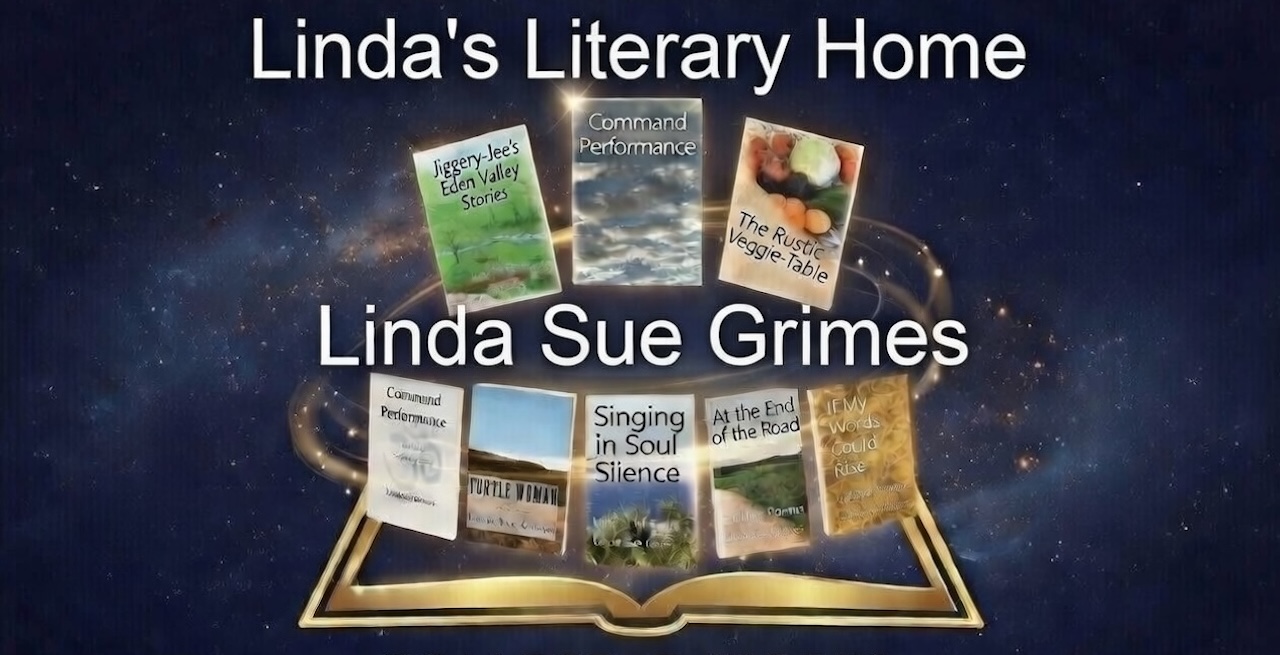
As a life-long creative writer, I have dabbled in many forms: poems, songs, short stories, flash fiction, memoir, and essays that focus on a variety of topics including history and politics, and philosophical issues. I also create vegetarian/vegan recipes.
This page is dedicated to providing links to a sampling of my songs; to sample some of my poems, please visit my “Original Poems.” Other works are forthcoming.
The rooms within my literary home include my library/music room where I compose and maintain my original writings in poetry, songs, literary fiction, expository essays, and poem commentaries.
My literary home also includes rooms of tribute and memorials to beautiful souls who have graced my life and influenced my penchant for literary studies.
In addition to literary works, I dabble in vegan/vegetarian cooking, so I dedicate my kitchen to holding and presenting the recipes that result from my adventures in the culinary arts.
Because I remain spiritual-minded, I dedicate a temple/sanctuary to that spiritual inclination. ~Maya Shedd’s Temple~ holds personal musings about subjects that influence my life, especially my spiritual journey.
Original Writings
The following rooms will remain works in progress, as I continue to add to them from time to time.
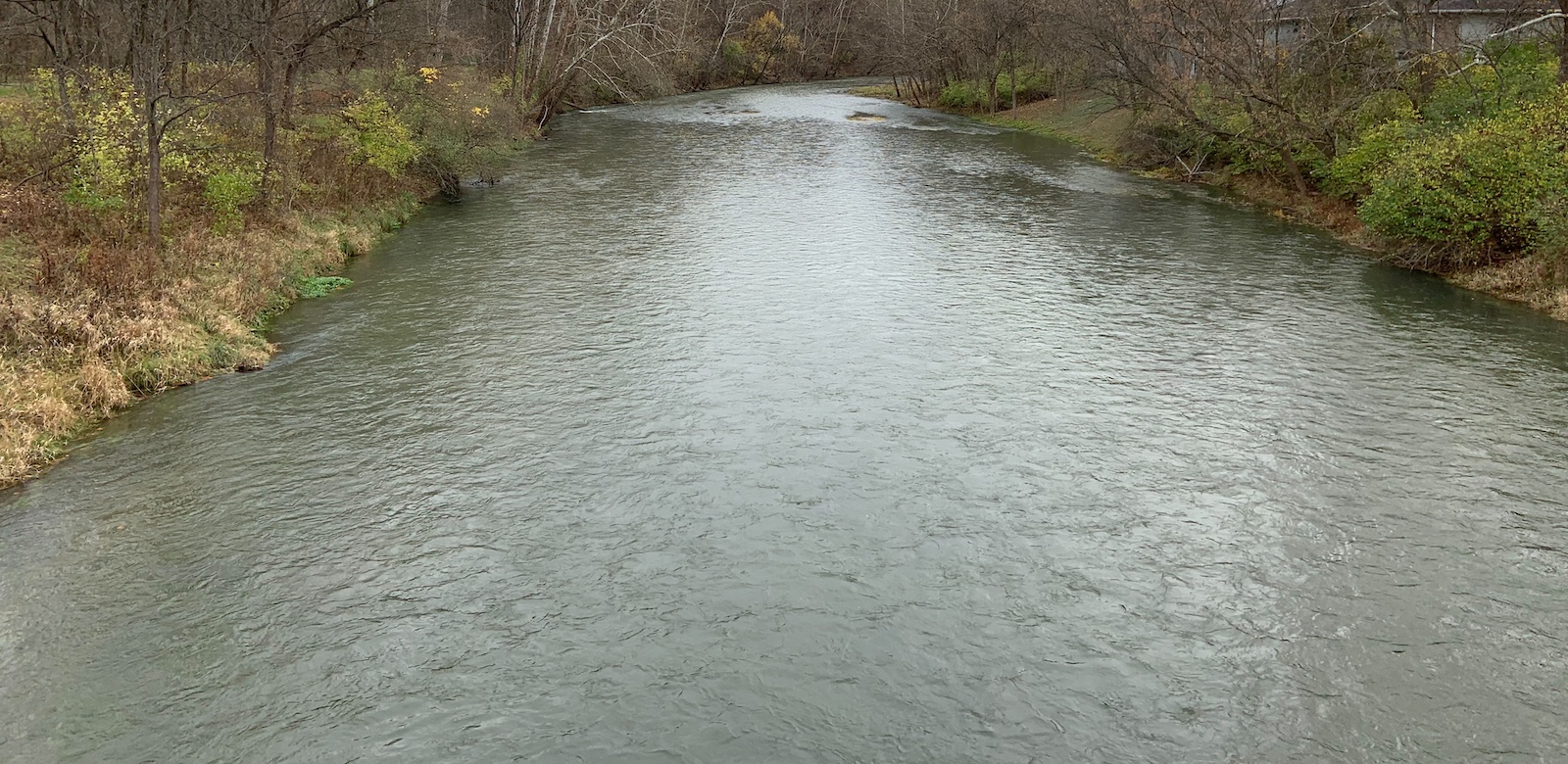
Image: The Whitewater River – Brookville, Indiana – Photo by Linda Sue Grimes
A Special Soul
One such room is an art gallery, featuring the paintings, as well as the prose renderings of the beautiful soul, Ron Grimes (Ron W. G., as he signs his paintings): Paintings and Prose. My sweet Ron has continued to bring out the poetry in my life for over half a century; our married life together began on March 10, 1973.
Also in my literary home, I dedicate another room—my kitchen—to the recipes that result from adventures in the experimental culinary arts.
I have been a vegetarian/vegan for most of my life, and thus I have found it necessary to revise or tweak most traditional recipes to accommodate my vegetarianism. So I am offering the results of that life journey.
My Temple Sanctuary
Finally, I have dedicated a sanctuary for meditation, prayer, and worship, “Maya Shedd’s Temple.” Before I rebuilt this lit site as Linda’s Literary Home, I maintained much of the construction here under the title “Maya Shedd’s Temple: Literary Home of Linda Sue Grimes.”
In the temple, I place all things spiritual. I begin with a brief memoir explaining by reasons for following my spiritual path.
The temple includes information aboutParamahansa Yogananda and commentaries on his poetic works, beginning with Songs of the Soul.
Guruji has explained that fallen humankind is under the spell of Maya or cosmic delusion. My goal is to lift that spell, thus “shed” the delusive veil of Maya: Maya Shedd.








 Linda's Literary Home