The pair of sonnets pays a glancing tribute to the lives of Aunt Winnie and her niece Linda Sue—two opposite personality dispositions with a few deeply ingrained temperaments in common, which tied their hearts and souls together in loving embrace.
An Intense Heart
In memoriam: Winifred Lucille Richardson Goodin December 22, 1932 – July 4, 2026
I am not now that girl of tender years, My womanhood from girlhood having grown— Roses push forth where once did dwell my tears; Daisies push up while hands have turned to stone.
An intense heart had I, my breath took flight; Now carved in stone, my name with years proclaim. Those marbled voices bound with softer might Than ever did my own out-spoken frame.
She dwells in ash, yet clutches at my core, Though I have risen past her earthly stage. Her silence tugs, yet I am hers no more— A bird slipped from the prison of her cage.
Pure skin of light is mine, not hers to keep, She decomposes, held in the big sleep.
A Quiet Soul
In memoriam futuram: Linda Sue Richardson Grimes January 7, 1946 –
I am not now that girl of tender years, My womanhood from girlhood having grown— Roses push forth where once did dwell my tears; Daisies push up while hands have turned to stone.
A quiet soul I was, my breath held tight; Now carved in stone, my name with years proclaim. Those marbled voices bound with greater might Than ever did my own soft-spoken frame.
She dwells in ash, yet clutches at my core, Though I have risen past her earthly stage. Her silence tugs, yet I am hers no more— A bird slipped from the prison of her cage.
Pure skin of light is mine, not hers to keep, She decomposes, held in the big sleep.
Listening to the Oldies Station on a Saturday Afternoon
In my early teens, I thought rock & roll was God’s own message of love, no sacrifice of guitar fingers piano feet, or drum ears. Radio stations were far off from where I grew up, but I listened until the watts they turned off faded the music, and it was time for bed anyway.
And now they call me baby boomer and because there are so many of us, some radio stations devote all their airwaves to our own class of rock & roll, which is now classic, you see, and they sell us all the things we need to keep us young,
but I don’t need those things. I have a new sound that moves me through the music that blinds the young and confounds the old. Let’s just say, “well, that was good—let’s listen again like we did last summer.”
Wherever I roam, it is there Thou dost abide— In the silence of peace, in the clamor of storm, I walk with Thee always; Thou art ever my guide.
In valleys of lilies where linnets range wide, Thy whisper ever nurtures, a healing balm. Wherever I roam, it is there Thou dost abide.
Thou lead’st me through the hell of foolish pride. Thou dost guide and guard me through all harm. I walk with Thee always; Thou art ever my guide.
Sweet songs flow through me—tears I cannot hide. Thy music lifts my soul, for Thou art my psalm. Wherever I roam, it is there Thou dost abide.
The world may darken—crashing, tossing me aside. But my soul will march on and each crash transform. I walk with Thee always; Thou art ever my guide.
In gladness and in sorrow, my soul finds its stride. I drink deep of Thy name; I find my true form. Wherever I roam, it is there Thou dost abide. I walk with Thee always;Thou art ever my guide.
His words did roam through lanes of rustic gold, By fields where amber wheat doth kiss the sky, Along the river’s bend, both swift and bold, O’er arches wrought of stone they softly fly.
Through wooded snares and breezes light they sweep, Above the crawfish in their misty play, Each sound ablaze, as if the night to keep, A flame of moonshine gilds the fleeting day.
His phrases dance round lilies of the morn, And spark a gleam within mine eyes to shine, Like candlewood where autumn shades are born— Yet sad to say his wayward soul doth not align.
Beneath the boughs, my heart did strain to hear, His tongue’s dulcet tones, to me now no longer dear.
Bring your toys, play with boats and rings, Bright strings of angels float about cool things. Wake up the sloth in your bonnet; red ribbons Tied to the anchor of drowning load the harbor. Quiet the noise in your brain, solace your neighbor.
String your tunes onto the backs of commands. You have known steady loons to break in memory. Wake up in a drawing room filled with letters. Take responsibility for your own doings. Make apples turn brown in crusty weather.
Do all in gentle rain that keeps the flow. Make haste to relinquish the death handle. Your parents had steel spines and fevered brains Yet their hearts kept time with the astral drum. Squelch the noise in your ear and fly over scum.
Sing songs that spill rivers in the minds of harps. Don’t break the momentum of falling leaves. The floor of each heart is scattered with regrets. Go dumb in the face of disingenuity. Bring a noisy lantern that scrubs flaccid wine.
Sing more songs, compose poetry for the ages. Copy the style but not the brunt of sages. Each balloon that pops drops a bird. Make each crisis sing with loud abandon That the noise in your brain flee to the outskirts.
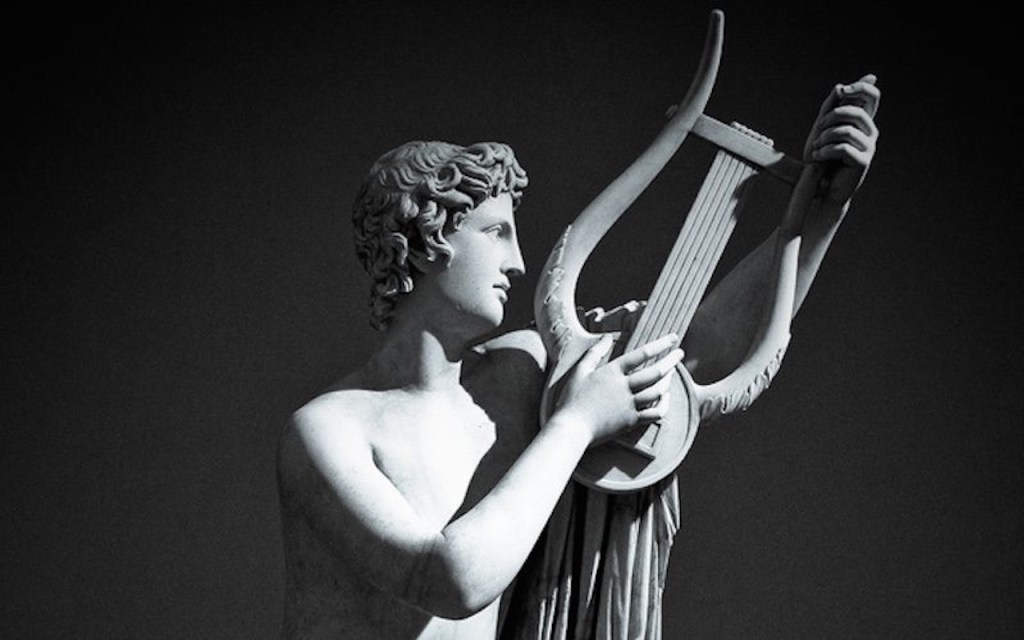
The Shakespearean speaker presents Orpheus as the embodiment of music’s power, showing how art, particularly music, has the ability to harmonize nature and relieve human suffering through its transformative, calming influence.
Introduction and Text of the “Shakespeare Lyric ‘Orpheus’”
Excerpted from Henry VIII (Act III, Scene 1), this brief lyric distills the ancient myth of Orpheus into a musing on the transformational and consolatory power of music.
The speaker expresses a vision in which art exerts a gentle but irresistible authority over nature itself, bringing harmony where there is chaos, motion where there is stillness, and rest where there is unrest.
The figure of Orpheus becomes less a mythological character than an emblem of art’s highest potential: to reshape the external world and quiet the inward life. I have employed the Orpheus ethos in my plea for more control and better expression in the art of poetry.
“Orpheus” (from Henry VIII – Act III, Scene 1)
Orpheus with his lute made trees And the mountain tops that freeze Bow themselves when he did sing: To his music plants and flowers Ever sprung; as sun and showers There had made a lasting spring.
Every thing that heard him play, Even the billows of the sea, Hung their heads and then lay by. In sweet music is such art, Killing care and grief of heart Fall asleep, or hearing, die.
Commentary on “The Shakespeare Lyric ‘Orpheus’”
In this Shakespeare excerpt that functions as a stand-alone poem, the speaker is alluding to the Greek mythological character Orpheus to celebrate music as a force of order, renewal, and inward healing. Orpheus was the god of music and poetry i Greek mythology.
Stanza 1: Music’s Powerful Influence
Orpheus with his lute made trees And the mountain tops that freeze Bow themselves when he did sing: To his music plants and flowers Ever sprung; as sun and showers There had made a lasting spring
The speaker opens with a striking assertion of music’s powerful influence over the natural world. The phrasing remains condensed, as though the act of music itself compresses time and causation. Trees and mountain tops do not merely respond; they are “made” or commanded to respond by bowing to the sound of Orphean singing.
This shaping force exerts itself to images of rigidity and lifeless cold. That mountain summits are called to “bow themselves” introduces a paradox: what is fixed becomes responsive, what is cold becomes animate, and what is elevated yields in humility.
The verb “bow” carries a dual resonance. It suggests both submission and grace, implying that nature’s response is not actually coerced but harmonized. The speaker presents music not as domination but as persuasion, a gentle authority that draws all things into alignment. Even the harshest elements—frozen peaks—are softened by sound, indicating that art reaches where physical force cannot.
The hyperbole exerted in these images is astounding, leading not to disbelief but to the famous Romantic assertion by Samuel Taylor Coleridge “that willing suspension of disbelief for the moment, which constitutes poetic faith.” After all, the purpose of exaggeration is only to emphasize a claim, not to make a melodramatic spectacle.
The stanza then shifts from gesture to growth: “plants and flowers / Ever sprung.” The effect is not momentary but continuous, captured in the word “ever.” Music generates an ongoing fertility, a perpetual blossoming that resists decay.
The comparison to “sun and showers” grounds this transformation in natural cycles, yet the phrase “lasting spring” exceeds ordinary seasonal change. Spring, typically transient, becomes permanent under the influence of music. The speaker thus elevates art above nature’s own processes, suggesting that while sun and rain produce life, music sustains it indefinitely.
The imagery moves from rigidity (mountains) to vitality (flowers), tracing a progression from stillness to generative abundance. The speaker’s syntax reinforces this flow, with lines that seem to unfold organically, mirroring the growth they describe. Music becomes both cause and condition of harmony, a principle that unifies disparate elements—earth, air, and life itself.
What emerges is not merely a portrait of Orpheus but an argument about art’s capacity to reconcile opposites: cold and warmth, height and humility, barrenness and fertility. The speaker implies that music achieves what nature alone cannot—a permanence of renewal, a “lasting spring” that suspends the ordinary limits of time and change.
Again, as in most successful art, the tension of the pairs of opposites makes an appearance. As the great Guru Paramahansa Yogananda has explained, the force of Maya, the very cause of the material level of being, works through the pairs of opposites.
Stanza 2: The Universal Influence of Music
Every thing that heard him play, Even the billows of the sea, Hung their heads and then lay by. In sweet music is such art, Killing care and grief of heart Fall asleep, or hearing, die.
The second stanza broadens the scope from land to sea, extending the reach of music to “Every thing that heard him play.” The universality is emphatic; nothing remains outside the sphere of music’s influence.
While the first stanza emphasizes growth and animation, the second turns toward quieting and rest. The “billows of the sea,” emblematic of motion and unrest, are personified “h[anging] their heads and then l[ying] by.” The image suggests human beings becoming calm after turbulence, with ceaseless motion transforms into stillness.
The phrase “hung their heads” echoes the earlier “bow themselves,” reinforcing the motif of submission, yet here it carries a more subdued, almost weary connotation. The sea, often a symbol of emotional excess or instability, is brought into repose. The progression from bowing to lying still marks a deepening effect: music does not merely elicit acknowledgment; it also induces tranquility.
The final lines turn inward with even more gravity, shifting from the external world to the human condition: “care and grief of heart.” The speaker identifies these as persistent burdens, analogous to the restless sea.
Music’s power is now psychological and emotional, not merely physical. The phrase “killing care” is striking in its severity; music does not soothe lightly but eradicates distress at its root.
Yet the resolution is nuanced: care and grief either “fall asleep, or hearing, die.” The dual possibility suggests degrees of relief. Sleep implies temporary suspension, while death indicates permanent release. The ambiguity allows for a range of experience—music may offer respite or complete transformation. In either case, it alters the condition of suffering.
The line “In sweet music is such art” functions as a reflective statement, drawing together the stanza’s implications. “Sweet” emphasizes harmony and pleasure, but “art” underscores intention and craft. The speaker presents music as both aesthetic and efficacious, capable of shaping not only perception but feeling itself.
The movement of the stanza—from the vast sea to the inner heart—compresses the scale of influence, suggesting that the same force governs both realms. The calming of waves parallels the quieting of grief, establishing a correspondence between outer and inner worlds. Music becomes a mediating principle, aligning nature and human emotion within a single order of harmony.
The final stanza affirms that art’s highest function lies not merely in delight but in restoration. It brings the restless to rest, the troubled to peace, and in doing so, offers a vision of existence in which discord is not denied but resolved.
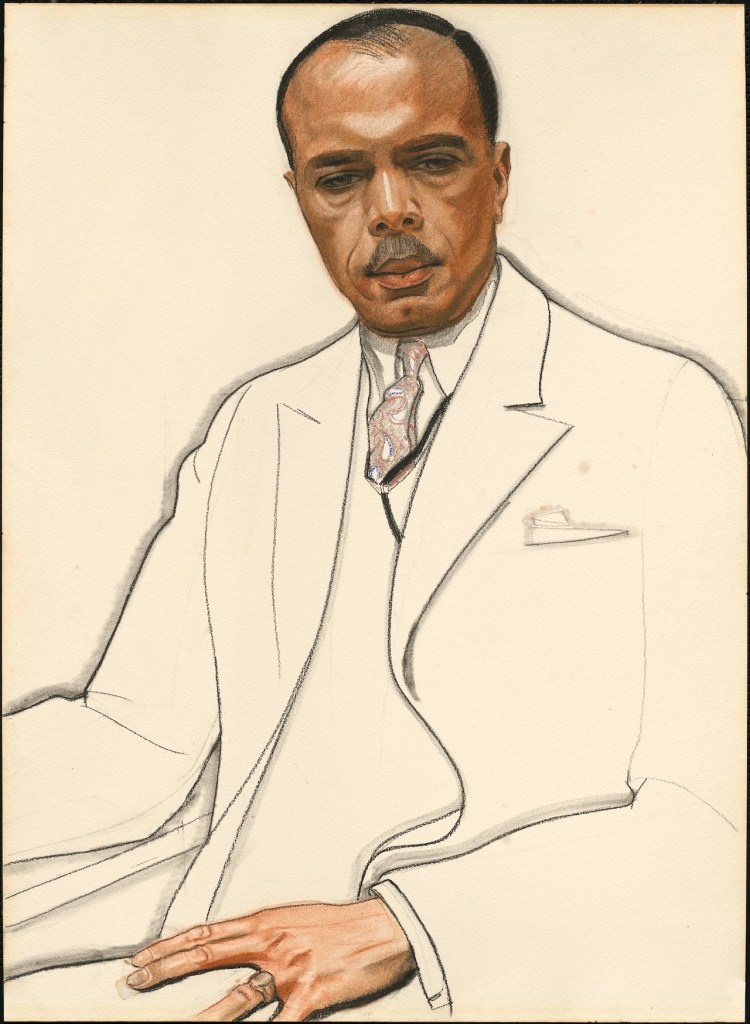
In addition to poetry, James Weldon Johnson also composed many songs that have become popular. His bluesy poem/song “Sence You Went Away” features a southern dialect and captures the melancholy that surrounds the individual who has lost a loved one.
Introduction and Text “Sence You Went Away”
James Weldon Johnson’s “Sence You Went Away” creates a speaker/singer who bemoans the loss of a loved one. The poem/song consists of four stanzas, each with the rime scheme AAAB, wherein the final line constitutes the refrain in which the speaker reveals the reason for his melancholy.
The repetition of “seems lak to me” and “sence you went away” emphasizes the pain and sorrow the speaker is experiencing. The refrain becomes a chant-like repetition as he progresses through his report of all that is making him sad. And he is addressing his expressions of sorrow to the individual, who is now absent from his life.
As a poem this works quite well, and as a song it works even more nicely. The poem/song’s use of dialect gives it an authenticity that increases the communication of pain and sorrow. The speaker/singer incorporates and inflicts his sorrow on the world around him, while at the same time making it clear that these transformations are happening within himself.
Sence You Went Away
Seems lak to me de stars don’t shine so bright, Seems lak to me de sun done loss his light, Seems lak to me der’s nothin’ goin’ right, Sence you went away.
Seems lak to me de sky ain’t half so blue, Seems lak to me dat eve’ything wants you, Seems lak to me I don’t know what to do, Sence you went away.
Seems lak to me dat eve’ything is wrong, Seems lak to me de day’s jes twice ez long, Seems lak to me de bird’s forgot his song, Sence you went away.
Seems lak to me I jes can’t he’p but sigh, Seems lak to me ma th’oat keeps gittin’ dry, Seems lak to me a tear stays in ma eye, Sence you went away.
Commentary on “Sence You Went Away”
James Weldon Johnson, an accomplished poet, also composed many songs that have become quite popular. His bluesy “Sence You Went Away” features a southern dialect. Johnson was a Southerner, having been born in 1871 and raised in Jacksonville, Florida, only relocating to New York in 1901.
First Stanza: Expressing Sorrow
Seems lak to me de stars don’t shine so bright, Seems lak to me de sun done loss his light, Seems lak to me der’s nothin’ goin’ right, Sence you went away.
The speaker is addressing an individual, who is likely a former lover or very good friend. The speaker expresses his sorrow by reporting that both the sun and stars do not seem to be shedding light now because of the absence of the addressee. The reader/listener learns nothing about the person who has gone away, only that the speaker’s life has been adversely affected by the loved one’s absence.
Not only do the speaker’s eyes seem no longer to perceive light, but he also feels that nothing in his life is proceeding correctly. He makes it clear that he is not asserting that the world itself has changed; he is merely revealing how things “seem” to him as he repeats throughout the poem, “seems lak to me,” that is, “seems like to me.”
Second Stanza: Absence of Sun
Seems lak to me de sky ain’t half so blue, Seems lak to me dat eve’ything wants you, Seems lak to me I don’t know what to do, Sence you went away.
The absence of sun and starlight affect the shade of the blue sky, which is now presenting itself as only “half” its normal shade. Everything reminds him that he is missing his belovèd. It even appears that everything he sees and does yearns to have this individual back in its purview.
The speaker’s intense exaggeration emphasizes his desire for the return of his missing loved one. Everywhere he looks he sees merely an absence that causes him pain and suffering. He even confesses that he feels unable to decide what he should be doing, if anything at all.
Third Stanza: Nothing Is Right
Seems lak to me dat eve’ything is wrong, Seems lak to me de day’s jes twice ez long, Seems lak to me de bird’s forgot his song, Sence you went away.
Again, the speaker/singer asserts that nothing seems right for him anymore; thus, he feels that “ev’ything is wrong.” And he reveals that time seems to lag because of his sorrow. Pain and suffering cause the human mind and heart to feel time as an oppressor, and that kind of oppression makes minutes seem like hours and days like weeks.
Nature in the form of singing birds is lost on him, and he thus suggests that those birds have even forgotten to sings. His melancholy grays out all of his senses, especially seeing and hearing. Life has lost its luster, light has escaped him, and even pleasant sounds are no longer detectable. And still again, he repeats the reason for his feeling that everything is so wrong in his life.
Fourth Stanza: Fog of Sorrow
Seems lak to me I jes can’t he’p but sigh, Seems lak to me ma th’oat keeps gittin’ dry, Seems lak to me a tear stays in ma eye, Sence you went away.
Finally, the speaker reveals his own behavior has been influenced by the sad fact that the addressee has gone away. He cannot seem to stop sighing, and his throat dries up. He also continue to weep, as he endures the pain of loss.
His physical functions are out of kilter: what needs to be wet is dry, and what needs to be dry is wet. The speaker’s world has transformed into a melancholy fog of sorrow and disorientation—all because his belovèd has gone away.
Kris Delmhorst’s Musical Version of Johnson’s Lyric
There are extant several different musical versions of James Weldon Johnson’s lyric “Sence You Went Away.” I suggest that Kris Delmhorst’s rendition fits perfectly with the sentiment and atmosphere of that lyric. While the other versions are entertaining and well-done, Delmhorst’s version and her singing remain the best in accomplishing the task of capturing the exact feeling of Johnson’s lyric.
Kris Delmhorst singing her version of Johnson’s “Sense You Went Away”
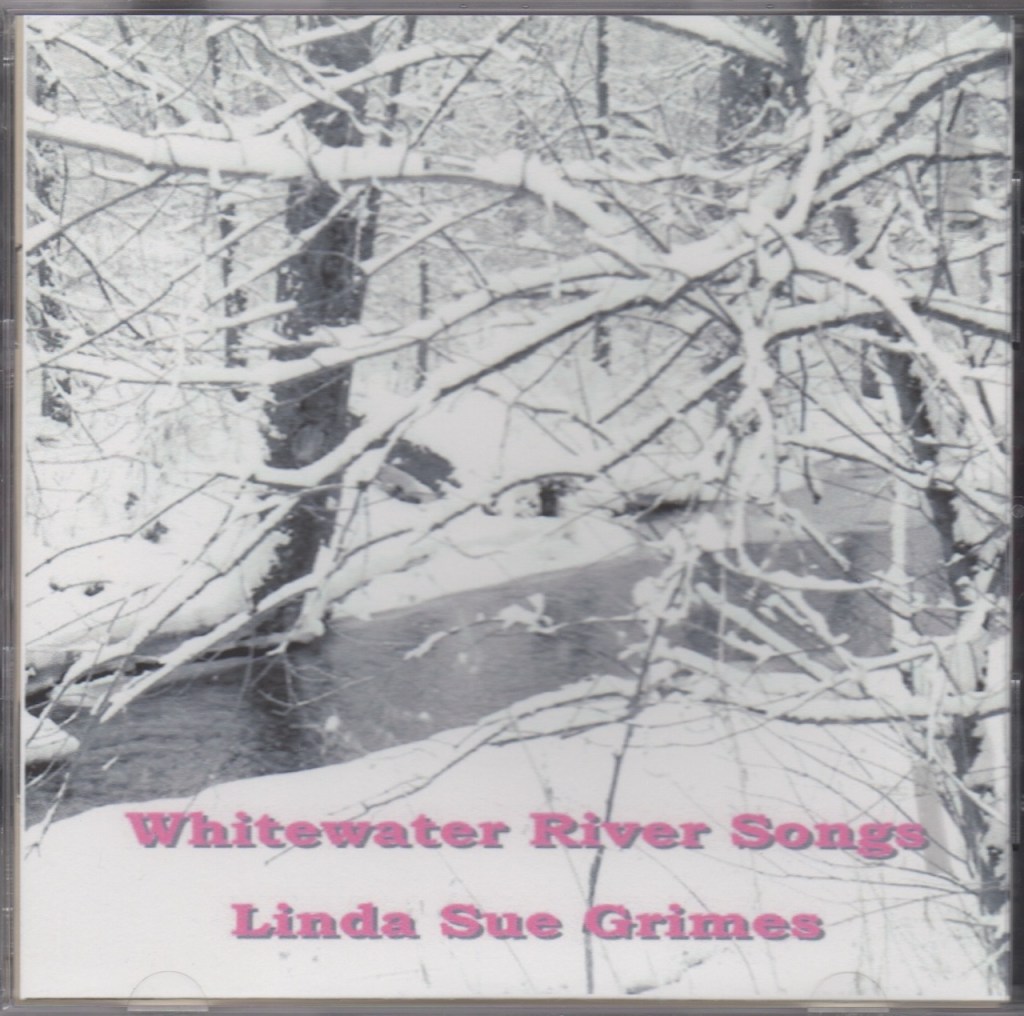
Image: “Whitewater River Songs – Album Cover” Photo by Ron W. G.
Original Song: “River Spirit” and Prose Commentary
I wrote “River Spirit” circa 1980 then made a homemade recording of it around 20 around 2004. In 2023, my husband Ron—whom I call “My Sweet Ron”—created the video featuring his own photos and videos selections along with the song.
Introduction to and Lyric of “River Spirit”
The lyric of “River Spirit” plays out in four stanzas of tercets, with one couplet appearing as the second stanza. It sports no traditional rime-scheme but does offer one set of perfect rime in “hand/sand” in the second and third lines. Other slant—or more accurately ghost rimes—appear in “water/before” in the couplet.
Ghost rimes also make an appearance with “bed/edge” and “changes/images.” The time frame begins in spring, as the singer begins to report what she sees along the river after the cold hard season of winter has given way to the warmth of spring.
The theme of the song is the mystery the singer feels at seeing that the landscape along the river has been radically transformed from what she had observed during the summer before this transforming winter had its sway. The singer poses questions about how the trees got uprooted and the path along the river has shifted, as even the stones are taking on new patterns.
The singer then announces what she had thought to be the agent of the transformations; however, she is ultimately revealing—in the title—that what she “guessed” back in the day, she now knows to be the work of the Divine Reality, the “River Spirit”—or God (see “Names for the Ineffable God”).
(Please note: Dr. Samuel Johnson introduced the form “rhyme” into English in the 18th century, mistakenly thinking that the term was a Greek derivative of “rythmos.” Thus “rhyme” is an etymological error. For my explanation for using only the original form “rime,” please see “Rime vs Rhyme: Dr. Samuel Johnson’s Error.”)
River Spirit
Every spring along the Whitewater River I saw that some mysterious hand Had rearranged the rocks and sand.
The path I followed the summer before Was slipping off into the water. I could not figure out whose force Could drive that water among the reeds & shift the river in its bed
Whose muscles uprooted those trees? Whose fingers patterned those stones Along the edge?
I guessed only that the spring thaw Conjured up the changes In those sleeping river images.
Commentary on “River Spirit”
The time frame is spring, as the singer begins to muse on what she observes along the river after the cold, hard season of winter has given way to the warmth of spring. Her earlier guess about that riverbank rearrangement has now become an article of faith, and she proclaims in the title the answer to her earlier inquiry.
First Movement: The Hand of Mystery
Every spring along the Whitewater River I saw that some mysterious hand Had rearranged the rocks and sand.
The singing narrator launches right into her story by making the claim that she observed a change in the pattern of stones and sand along the river’s edge, and she make this observation “every spring.” She had thus a recollection of having experiences these changes many times.
She colorfully attributes those rearrangements to “some mysterious hand.” At this point, it may sound a bit odd that a river walker would think a hand had been involved in what went on along the riverbank in her absence.
Second Movement: River Features Shifting
The path I followed the summer before Was slipping off into the water.
After setting the stage for mystery and rearrangement of river features, the singer offers a very specific change. She had walk along a path during the preceding summer, and now that path simply veered off into the river water. Such a change would likely be quite jarring for the hiker, who would necessarily be obliged to alter her walking pattern.
Third Movement: Puzzling over the Changes
I could not figure out whose force Could drive that water among the reeds & shift the river in its bed
The singer now inserts her puzzlement. She becomes curious as to how such changes could have occurred. She sees that the river has now shifted its course, plunging into the reeds along the bank.
The mere fact of the river shifting “in its bed” seems Herculean in prospect. The river is such a large body of moving water that the notion of it shifting surely requires a force that strikes the singer an unimaginable at this point.
Fourth Movement: Who Made Those Changes?
Whose muscles uprooted those trees? Whose fingers patterned those stones Along the edge?
The singer then again adds more specificity to her inquiry. She sees that trees have been “uprooted,” and she observes that the stones along the river’s edge have been rearranged in a different pattern from the summer before.
Again, she colorfully attributes those “changes” to a seemingly human agency of “muscles” and “fingers.” But behind those specific agents must lie some metaphysical force that at this point the singer cannot name, cannot even offer a guess about.
Fifth Movement: Guessing at the Conjuring
I guessed only that the spring thaw Conjured up the changes In those sleeping river images.
Now the singer offers what she thought to be an answer to her inquiry: Well, it was likely that not any hands, muscles, or fingers enforced all of these changes; it was simply the process of thawing out from the ice during the warming movements brought on by spring.
Sure, that’s it: the spring movements of thawing influenced those inert river features to alter themselves into differing patterns from the summer before. What else could it be? But the singer is understating what she really believes now. She “guessed” about the “spring thaw”—but that was then, this is now.
Thus the singer through anthropomorphic images of hands, muscles, fingers has proclaimed that a humanlike power has, in fact, mades these changes. Not an actual human being on its own however. But some power that retains in its Being the image of the human form, power, and ingenuity.
Simply, the title of the lyric has already stated what the singer pretends to guess about as she unfurls the song: God (as the “River Spirit”) has performed His magic on these “sleeping river images.” God has “conjured up” those alterations in those river images as they moved from a frozen, winter sleep to vital spring time awakening.
Original Song: “These Letters” with Prose Commentary
My original song “These Letters” is a rather uncategorizable love song: it does not exactly fit into the lost love category, nor does it fit into the romantic, idealism of most love songs.
Introduction and Lyric of “These Letters”
The singer and the individual addressed in the song have apparently had a friendly, loving relationship in the past—even likely lived together experiencing the life that the singer suggests with images in the song. However, the addressee at the time of the song remains at some distance from the singer. The fact that they have been exchanging letters reveals that a spacial distance exists between the two parties.
The singer does not reveal the reason for the two being apart, but the fact that she hopes the addressee will return to her leaves open the question for the addressee’s departure and even whether the addressee will ever return. The singer expresses the wish and hope that the addressee will return, and by that expression of that wish/hope, she is implying that the addressee many not ever return.
Interestingly, the mention of being “far apart” is not clear that the singer is referring only to distance in miles, but it is obvious that a spacial distance exists because of the very title of the song. The song cannot be considered a “lost love” song because the singer expresses her love for the distant individual and that she hopes the addressee will return to her. Whether the two reunite remains a mystery because the theme of the song is simply that letters are not sufficient to maintain a close relationship.
These Letters
First Verse
Here I sit with knitting needles Winter drawing near. Mind on fire with old desire Wishing you were here. So I’ll make this sweater To send to you With the love that’s in my heart And I’ll tell you that I long for you ‘Cause we’re so far apart.
Second Verse
The wine in the cellar gets better and better. I wish you could taste some with me. I try not to show The young plants as they grow How empty and sad I can be. The tomato vines hung so full this year I wish you had been here to see. I’ll send you some pictures and strawberry jam And my hopes that you’ll come back to me.
Chorus
These letters can’t take your place, my Love. I hope that you come back to me. No, these letters can’t take your place, my Love. I hope that you come back to me.
Commentary on “These Letters”
Because the title of the song is “These Letters,” the singer is placing great emphasis on that form of writing. But she is letting the recipient of her letters know that she finds such correspondence insufficient to maintain their relationship. While letters cannot take the place of the missing individual, she singer adds her hope their the addressee will return to their her and their life together.
First Verse: A Distant Relationship
Here I sit with knitting needles Winter drawing near. Mind on fire with old desire Wishing you were here. So I’ll make this sweater To send to you With the love that’s in my heart And I’ll tell you that I long for you ‘Cause we’re so far apart.
The singer begins by noting where she is and suggesting what she is doing: she is sitting somewhere, likely in her home, with a pair of “knitting needles.” She then alerts the addressee and her listeners to the fact that the winter season is coming soon.
The fact that the coldest season is nearly upon her prompts her to reveal the reason for her sitting with knitting needles: she is knitting a sweater for the individual, whom she is addressing in the song. She then tells the individual that she is sending the sweater to him/her. She adds the unexpected element that she will also be sending love the person.
Love resides in her heart for the person she is addressing, and she wishes they were not “so far apart.” She reports that she will tell the individual that she “long[s] for [the individual]” because of the vast separation.
Second Verse: Hopes for Return
The wine in the cellar gets better and better. I wish you could taste some with me. I try not to show The young plants as they grow How empty and sad I can be. The tomato vines hung so full this year I wish you had been here to see. I’ll send you some pictures and strawberry jam And my hopes that you’ll come back to me.
The singer then reveals that she and the individual whom she is addressing have made wine together. Their wine gets “better and better” as it rests in the cellar. This set of imagery “wine” and “cellar” implies that the singer and the individual reside in the country, in a bucolic setting as opposed to city living, where cellars are not common, nor is wine-making.
More evidence for the country living is that the singer next mentions the growing of the grapes for the wine, which likely represent other plants that the singer and her friend have formerly grown together.
Now that she and the individual have distance between them, she singer is “empty and sad,” but as the cultivates the garden, she attempts to put on a happier face for the sake of the plants, as plants can be sensitive to the mood of their caretaker.
She then tells her friend that the tomato harvest was especially good this year. And again she expresses the wish that her friend had been there to experience those full-hanging tomato vines. The singer then alerts her friend that she will send the individual pictures—likely images of those garden plants, particularly the tomatoes that grew so abundantly.
In addition to the pictures, she will send “strawberry jam”—another indication that the singer lives out in the country where she has the space to grow strawberries. And again, this singer expresses “hopes”—this time, somewhat more than a mere “wish”—that the individual will return to the singer.
Chorus: What Letters Cannot Do
These letters can’t take your place, my Love. I hope that you come back to me. No, these letters can’t take your place, my Love. I hope that you come back to me.
The chorus which is offered only twice expresses the fact that the two individuals have been exchanging letters. The singer makes her feelings known that letters are not sufficient to maintain the loving relationship that the two had earlier experienced.
The chorus itself even repeats the fact that the letters are not enough. The singer remains hopeful that the now distant former friend and likely housemate will return to her and their life together.
My original song “River of Time” is a hymn to my Divine Belovèd, featuring a chorus that functions as a chant.
Introduction with Text of Lyric “River of Time”
Because music was my first love that I remember from the earliest age, I have always been attracted by the sounds from inspiring music.
I began writing songs seriously around age 32, and I especially enjoy and appreciate my songs that turn into hymns to the Divine Belovèd. “River of Time” is such a hymn.
I am strongly influenced by the Cosmic Chants of my guru (spiritual leader) Paramahansa Yogananda. Many of my original hymns have a chant-like element—a repetition that takes the minds within or bespeaks some spiritual truth for mental awareness.
River of Time
A hymn to my Divine Belovèd
Verse Waiting by the river of time— My beloved keeps His rime In the sunlight that sings in stars The moon will wax in tune
Verse Flowing with the river of time— Do you feel the rhythm that glides As you sing each lingering verse? Your soul will chant in bliss
Verse Once beyond the river of time— Where you seek your ultimate rime, Where you need to battle no more You’ve reached that heavenly shore
Chorus Every moment is light infused Behind the darkness of closed eyes Seek no more for all is here Nothing more to do or fear
Video by Carlene Craig
Commentary on “River of Time”
The singer/seeker/devotee in this hymn does not directly address her Heavenly Father-God. She suggests the target of her report in subtle ways by essentially addresses her own self or soul. She sings to remind herself of her goal of soul- or self-realization, unity with the Divine Belovèd.
First Verse: Existence on the Physical Plane
Waiting by the river of time— My beloved keeps His rime In the sunlight that sings in stars The moon will wax in tune
The singer/devotee exists along a continuum that the human mind and heart often liken metaphorically to a river—a “river of time.” Time seems to flow, meander, going somewhere.
Intuition tells the human mind and heart that the soul is moving as on a flowing body of water to somewhere that must be wonderful.
The beloved who is causing this river to flow displays his wares in light—sunlight and moonlight. Science tells humanity that sunlight is reflected in the stars, and the moon also reflects that important, life-sustaining orb.
The singer/devotee implies that her beloved is a poetic artist because he keeps “His rime” visible in the light of the sun and the moon.
Second Verse: The Rhythm of Soul Bliss
Flowing with the river of time— Do you feel the rhythm that glides As you sing each lingering verse? Your soul will chant in bliss
The singer then states that her soul is, in fact, moving down this metaphorical river. She poses a rhetorical question of her self to ascertain if she is really sensing the rhythmic sway of the music of her verses.
As she sings, she has become aware of her soul flowing into its natural state of “bliss.” The verses that linger in the heart and mind bestow on her a marvelous state of awareness and joy.
Third Verse: Transcending Physical Existence
Once beyond the river of time— Where you seek your ultimate rime, Where you need to battle no more You’ve reached that heavenly shore
The singer then begins to speculate about the existence to be experienced after transcending the physical level of existence, metaphorically named the “river of time.”
Beyond that locus is where the ultimate poetry and music hold sway, where humanity no longer is required to struggle with life’s vicissitudes, trails, and tribulations. Once the soul has become self-realized, it knows only divine joy and love.
Chorus: Moving into the Joy of the Light
Every moment is light infused Behind the darkness of closed eyes Seek no more for all is here Nothing more to do or fear
The singer’s repeated, chant-like chorus is an affirmative statement about what goes on after she closes her eyes to the physical level of existence.
She need not continue searching for she has arrived at the Goal of life. United with the Divine Belovèd, there is nothing that she will ever have to fear.
Video: Whitewater River-Tim Bowman-East Fork of the Whitewater River-near Brownsville IN