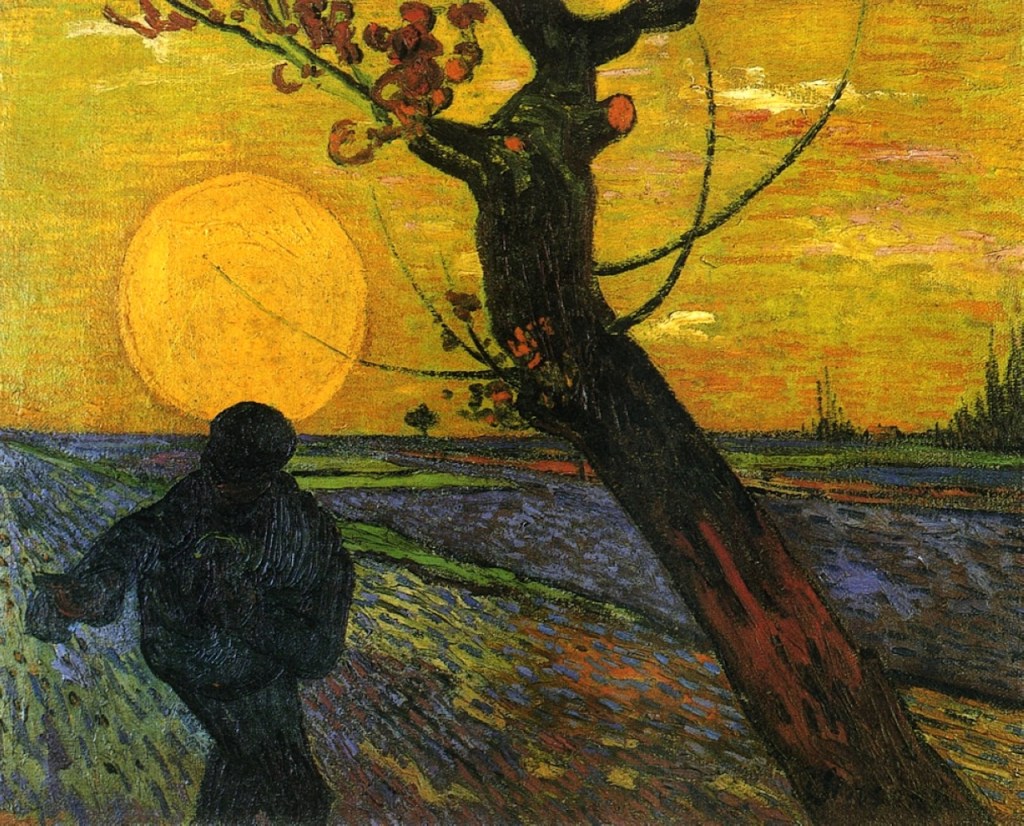
How the sun rings The top of his head Like a giant solid halo. The seed bag slung Over his right shoulder. How his face tilts down As his sowing arm Swings out, open hand Letting loose the seeds But where are the seeds? You can’t distinguish them From the other paint drops In the field. and what about Other parts of this field That is so neatly sectioned off? But it’s too hard to tell if They are planted & if planted What they are planted in. But never mind, Let’s have another beer And concentrate on that sun, That setting sun is important, After all, vincent called it, Sower with Setting Sun. I chose to call my poem “The Planter” but i too feel That the sun is important. The sun has painted the sky A golden hue. A naked tree looms In front of the planter, A dying tree. His house sits back Off to the left Of the fields, A long walk, He is getting tired, And as soon as the sun Sinks behind that blue line, He will have relieved himself Of all his seeds And head home to supper.
Matthew Arnold’s “Dover Beach” laments the loss of religious faith during a time of progress in science and industry. He is sorrowful that this loss may not bode well for the future of humanity.
Introduction with Text of “Dover Beach”
Matthew Arnold’s poem “Dover Beach” displays in five riming stanzas. The stanzas are uneven; the rime scheme is complicated and would require a new essay to discuss its many and varied implications.
The speaker holds forth from a melancholy brought on by world events. He hints at certain deficiencies that have occurred as humanity has been engaging in a materialism that may not be sustainable. He thus offers a humble suggestion that he feels would improve the state of affairs and the lives of individuals.
Dover Beach
The sea is calm tonight. The tide is full, the moon lies fair Upon the straits; on the French coast the light Gleams and is gone; the cliffs of England stand, Glimmering and vast, out in the tranquil bay. Come to the window, sweet is the night-air! v
Only, from the long line of spray Where the sea meets the moon-blanched land, Listen! you hear the grating roar Of pebbles which the waves draw back, and fling, At their return, up the high strand, Begin, and cease, and then again begin, With tremulous cadence slow, and bring The eternal note of sadness in.
Sophocles long ago Heard it on the Ægean, and it brought Into his mind the turbid ebb and flow Of human misery; we Find also in the sound a thought, Hearing it by this distant northern sea.
The Sea of Faith Was once, too, at the full, and round earth’s shore Lay like the folds of a bright girdle furled. But now I only hear Its melancholy, long, withdrawing roar, Retreating, to the breath Of the night-wind, down the vast edges drear And naked shingles of the world.
Ah, love, let us be true To one another! for the world, which seems To lie before us like a land of dreams, So various, so beautiful, so new, Hath really neither joy, nor love, nor light, Nor certitude, nor peace, nor help for pain; And we are here as on a darkling plain Swept with confused alarms of struggle and flight, Where ignorant armies clash by night.
Reading
Commentary on “Dover Beach”
The speaker in “Dover Beach” is lamenting the loss of religious faith during a time of progress in science and industry. He suggests that this loss that has resulted in gross materialism is causing an interruption that may cost humanity its culture and even its very life.
First Stanza: Musing on the Ocean
The sea is calm tonight. The tide is full, the moon lies fair Upon the straits; on the French coast the light Gleams and is gone; the cliffs of England stand, Glimmering and vast, out in the tranquil bay. Come to the window, sweet is the night-air! Only, from the long line of spray Where the sea meets the moon-blanched land, Listen! you hear the grating roar Of pebbles which the waves draw back, and fling, At their return, up the high strand, Begin, and cease, and then again begin, With tremulous cadence slow, and bring The eternal note of sadness in.
The speaker is standing at a window, musing and looking out at the ocean. He seems to be talking to a loved one, whom he invites to come and join him: “Come to the window, sweet is the night air!”
Such an invitation could be a romantic gesture, offering the beloved the chance to share with him the lovely ocean view: “The sea is calm tonight / The tide is full, the moon lies fair.” But that scene is not in the offing, and the reader soon finds a very different mood is being dramatized.
Second Stanza: The Drama of the Waves
Only, from the long line of spray Where the sea meets the moon-blanched land, Listen! you hear the grating roar Of pebbles which the waves draw back, and fling, At their return, up the high strand, Begin, and cease, and then again begin, With tremulous cadence slow, and bring The eternal note of sadness in.
The second stanza features the speaker dramatizing the crashing of the waves upon the ocean shore; he reports that one can hear the pebbles as they are being cast about by the waves.
He observes that the ocean waves can be heard as they begin, end, and then begin again. While the waves continue to repeat their sounds, they cause one to experience a pang of sorrow.
In place of enjoyment of the lovely, calm scene, this speaker’s thoughts have turned to the possibility of the universally shared brutality and sadness of the world with it inhumanity to man and its endless wars.
The crashing waves as they begin and end put him in a negative frame of mind. The process of beginning and ending reminds the speaker of the rounds of good and but also evil events that have been perpetrated upon humanity by humanity itself.
Third Stanza: Melancholy and Rumination
Sophocles long ago Heard it on the Ægean, and it brought Into his mind the turbid ebb and flow Of human misery; we Find also in the sound a thought, Hearing it by this distant northern sea.
The speaker offers evidence for his melancholic musing as he alludes to Sophocles, who would have listened long ago to the “ebb and flow” of the Aegean Sea. The speaker further emphasizes the allusion by averring that one can receive a “thought” as one listens to the sound of the sea.
Similar to Sophocles’ own rumination regarding the ebb and flow of “human misery,” this modern day speaker, however, has further thoughts on the matter, and he will unfurl them as he continues his drama.
Fourth Stanza: The Protection of Faith
The Sea of Faith Was once, too, at the full, and round earth’s shore Lay like the folds of a bright girdle furled. But now I only hear Its melancholy, long, withdrawing roar, Retreating, to the breath Of the night-wind, down the vast edges drear And naked shingles of the world.
The speaker then lays out his lamentation regarding the status of humanity: in an earlier time, humanity remained ensconced in a religious faith, which embraces humanity with layers of protection. That protection seems “bright” as well as comforting.
One should note that the speaker does not name any particular “faith,” nor does he directly attribute to that faith the idea that it protects. And, of course, he does not mention “God” or any other name for the Deity. The speaker merely names the mysterious quality, “faith,” as he metaphorically likens it to the sea that remains filled as it remains in contact with the “earth’s shore.”
In his own day, however, things are different from that earlier, seemingly protected time, and now he hears only “[the sea’s] melancholy, long, withdrawing roar.” While the sea continues to roar, it, nevertheless, seems to be in retreat because of the “night wind.”
“Faith,” therefore, is compared to a sea that possesses only the dour aspect of the roar as it is in retreat. The speaker further denigrates the act by asserting that faith’s retreat flows “down the vast edges drear / And naked shingles of the world.”
Fifth Stanza: The Protection of Love
Ah, love, let us be true To one another! for the world, which seems To lie before us like a land of dreams, So various, so beautiful, so new, Hath really neither joy, nor love, nor light, Nor certitude, nor peace, nor help for pain; And we are here as on a darkling plain Swept with confused alarms of struggle and flight, Where ignorant armies clash by night.
The speaker then appears to offer a lone cure for the abysmal loss of faith that is being suffered in his time. Of course, the qualifying notion must be added—if there need be a cure at all.
The speaker then again appears to speak to his beloved, whom he had earlier beckoned to come join him at the window. He seems to address his loved one thus: “Ah, love, let us be true / To one another!”
The speaker then makes quite an astute observation of the world: that it may seem at times to be “so beautiful, so new,” but the reality is that the world, “Hath really neither joy, nor love, nor light, / Nor certitude, nor peace, nor help for pain.”
The speaker concludes his lamentation with an image of the greatest lamentation of all throughout human history: Essentially, humanity exists on a “darkling plain,” and it is hurtled about by alarming “struggle and flight,” and on that dark plain there are always “ignorant armies” who “clash by night.”
Invitation to Humanity
While the opening of the poem seems to have the speaker inviting a loved one to join him at the window, it more likely that he is inviting all of humanity to join in his musing on the status of the world.
If the speaker were inviting merely one person—a lover or a spouse, for example—to join him, he would have said in the final stanza, “let us be true / To eachother!” But he says, “to one another!” indicating that he is addressing more than one person.
The speaker is concerned with a profound subject—the condition of all of humanity and how it lives in this material world. Thus, it is much more likely that the speaker is addressing all of humanity in his momentous musing.
Let’s consider his appeal: by addressing one’s spouse or beloved and asking that the speaker and that person be true to each other, he would not be suggesting much of an improvement in world events.
But by asking all of humanity to “be true to one another,” he is asking much, and taking seriously and thus granting that request would, in fact, offer a great improvement in humanity’s status in the world. By following such a request, the world could be restored to a virtue that the speaker can only imagine existed in an earlier time.
Idioms of myriad worlds spiral down the begging path. The grain feathers tangle in the sandbar on the rim, Ending in the dwelling of manifest wrath With stupor offering its clank to the whim.
No one dreamed the others into swerving. Few sacrificed fathers and mothers for priding. Several rounded the edges on the curving. Many chafed at the marble pine for hiding.
The scooped talons of white crowing Dip under the sea-broad sky. Fleet winged bandies blowing Stretch and dither on the fly.
No tongue shatters so many brains as munificence. No tooth clatters the rain so well as malfeasance.
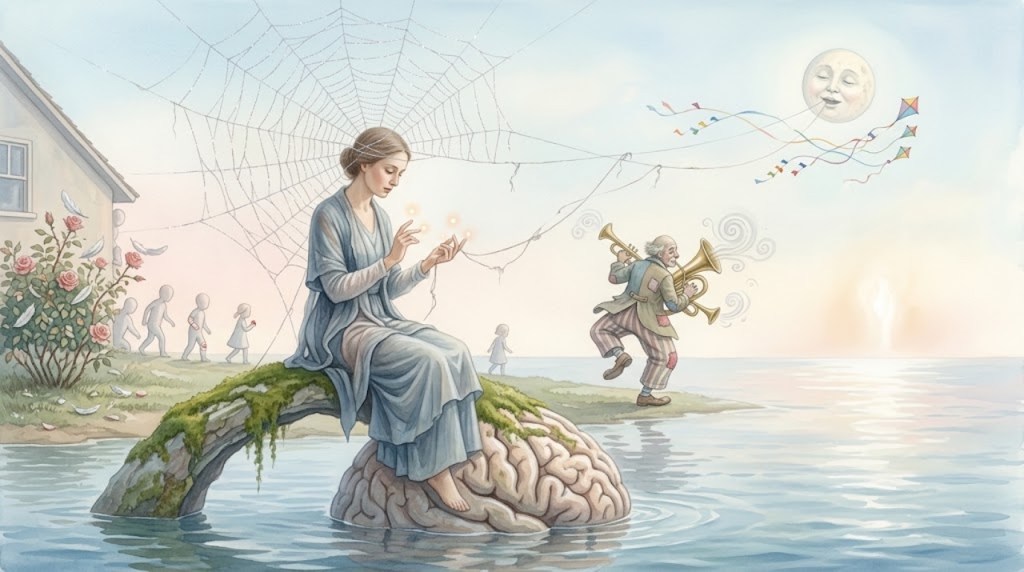
After sorrow has settled, and the breath has become a gentle wind, you will sit in the dark and count on your fingers the day’s blessings. You will not let a spider cross your eyes, nor the moon come singing far-off sea songs that tug your heart like the strings of a colorful kite.
Motherhood assumed your body, and strange children came running out. They played a mystery-game in your backyard. Feathers from scared birds stuck in the thorns of the rose-bushes, and the bloody fingers you had to wipe, and the knees bandage, until your house squeezed them out.
Age and departure have settled in your heart and play in your mind. You are not starting anything new, and now you know you never have begun a thing though you have spun like a sense clown, decked out in duds that toot. Now you will carry your load of dreams in the belly of your pregnant brain
until you can finally sit and have a quiet talk with God and tell Him all you have learned about how to love, and He suddenly understands you.
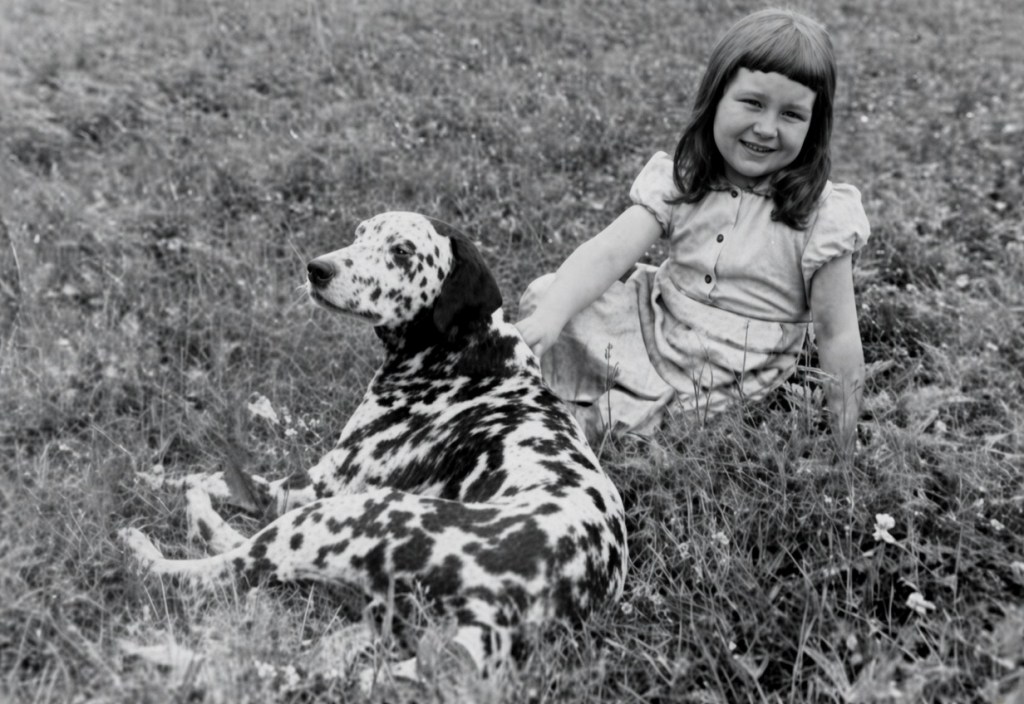
This year, here in Indiana, last day of May it’s still cold— look at that photo (me and Spot) I call us “little girl with the dog,” that squint face little thing, me, not Spot. he looks quite dignified, satisfied he’s king of himself.
I’m just brain surfing— searching for that wave that will lift me above myself as I ride towards the safe shore of a sunny poem.
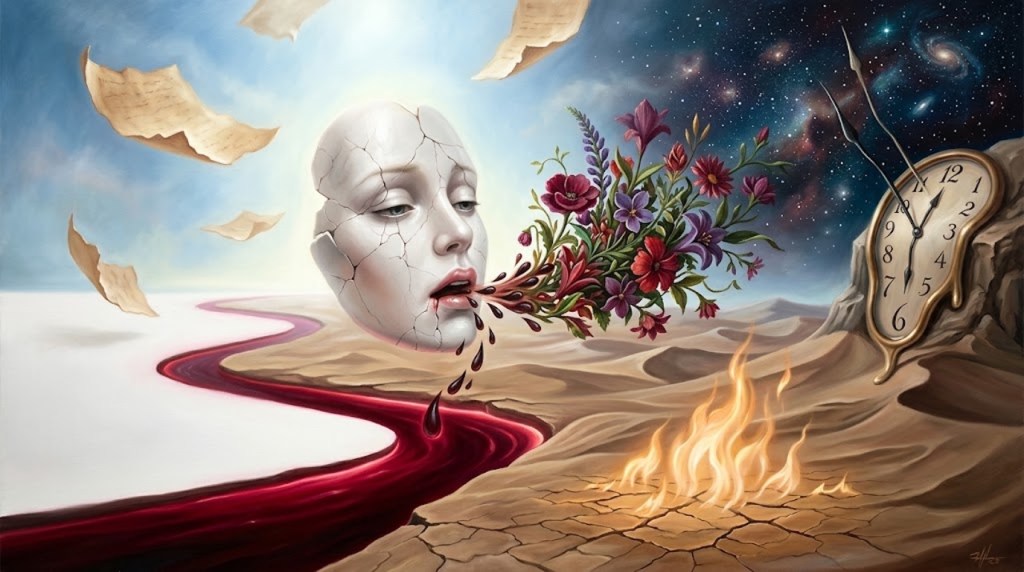
I haven’t written a poem in days. down my blood stream float toxins of unvoiced syllables, fragments of feelings— coffee grounds dumped in the creek— and silence, a God-awful, cold silence.
It follows blind logic that he should scramble Sensing my skill in dousing his flicker.
It also follows that he should reckon on what he will miss If he never grasps the reason beyond my words, If he never clutches the deep core of my heart, If he never touches the hem of my soul’s garment.
How will his bones bear such a lack? How will his brain tame the flames of envy That leap at thoughts of my power? How will his blood keep its liquid jealousy from spilling The passion upon the page that professes him a fool?